Home Blog Page 448

GWENPOOL STRIKES BACK Exclusive First-Look & Interview With Leah Williams and David Baldeon

Monkeys Fighting Robots

Gwenpool Strikes Back #1 is out August 7th, but thanks to Marvel Comics, Monkeys Fighting Robots has an exclusive first-look at the book, as well as an interview with writer Leah Williams and artist David Baldeon.

About the five-issue series:
POOL’S OUT FOR SUMMER! That’s right — everyone’s favorite comics-fan-turned-comics character is back, and this time, she’s playing for keeps! Gwen Poole is desperate not to disappear into comic book limbo, so she’s going to make an impact on the Marvel Universe! First up: Unmask Spider-Man! And heck, maybe see if she can get some real super-powers while she’s at it!

Gwenpool first appeared in 2015 on a variant cover for Deadpool’s Secret Secret Wars #2 designed by Chris Bachalo. She became an immediate fan-favorite, and was given her own series later that same year. She has since appeared in a number of other Marvel series, most notably as a member of the West Coast Avengers.

Gwenpool Strikes Back Marvel Comics Exclusive preview interview
Main cover by Terry Dodson.

Carry on to read our interview with Leah and David, and to get your first look at GWENPOOL STRIKES BACK:

Monkeys Fighting Robots: We know Gwen is going to try and unmask Spider-Man in the new series. What else can you tell us about the series? What other hijinks should fans expect?

Leah Williams: ”Expect the unexpected” is such a cop-out answer but it’s Gwenpool so it feels especially, urgently true in this case. I am writing this miniseries, but I do not feel like I am remotely in control of Gwen’s actions. I feel like I’m the person recording them. She’s captaining this miniseries, not the creative team. The choices she’s making are about her survival in this world, so she’s orchestrating optics that are wild beyond belief—she’s art directing her own covers in this miniseries. Fans should expect maximum hijinks and max earnestness. Gwen’s in a rough spot, honestly, but it’s not her fault. We’re not pulling any emotional punches and shying away from how this is making her feel.

MFR: What sets this series apart from Gwen’s previous series?

LW: Gwen’s a real person—she’s from our world. Like us, she carries the sum total of her life experiences at all times. In Earth 616, she carries the sum total of her appearances. Every book with Gwenpool adds to the snowball effect of her growing up and adapting to life inside Marvel comics. This miniseries is “go big or get retconned” for her because there are forces outside her control—within Marvel—working against her. So we’re catching Gwen at a time when she is literally fighting for her survival, fighting for her right to exist. She’s angry, she’s hurting, but…it’s Gwen. She loves us, loves comics, and is an earnest goofball. She wants to stay. She wants to be good. She’s also looking at things like sales figures for each of her books, and adjusting her own optics accordingly.
Gwenpool Strikes Back Marvel Comics Exclusive preview interview
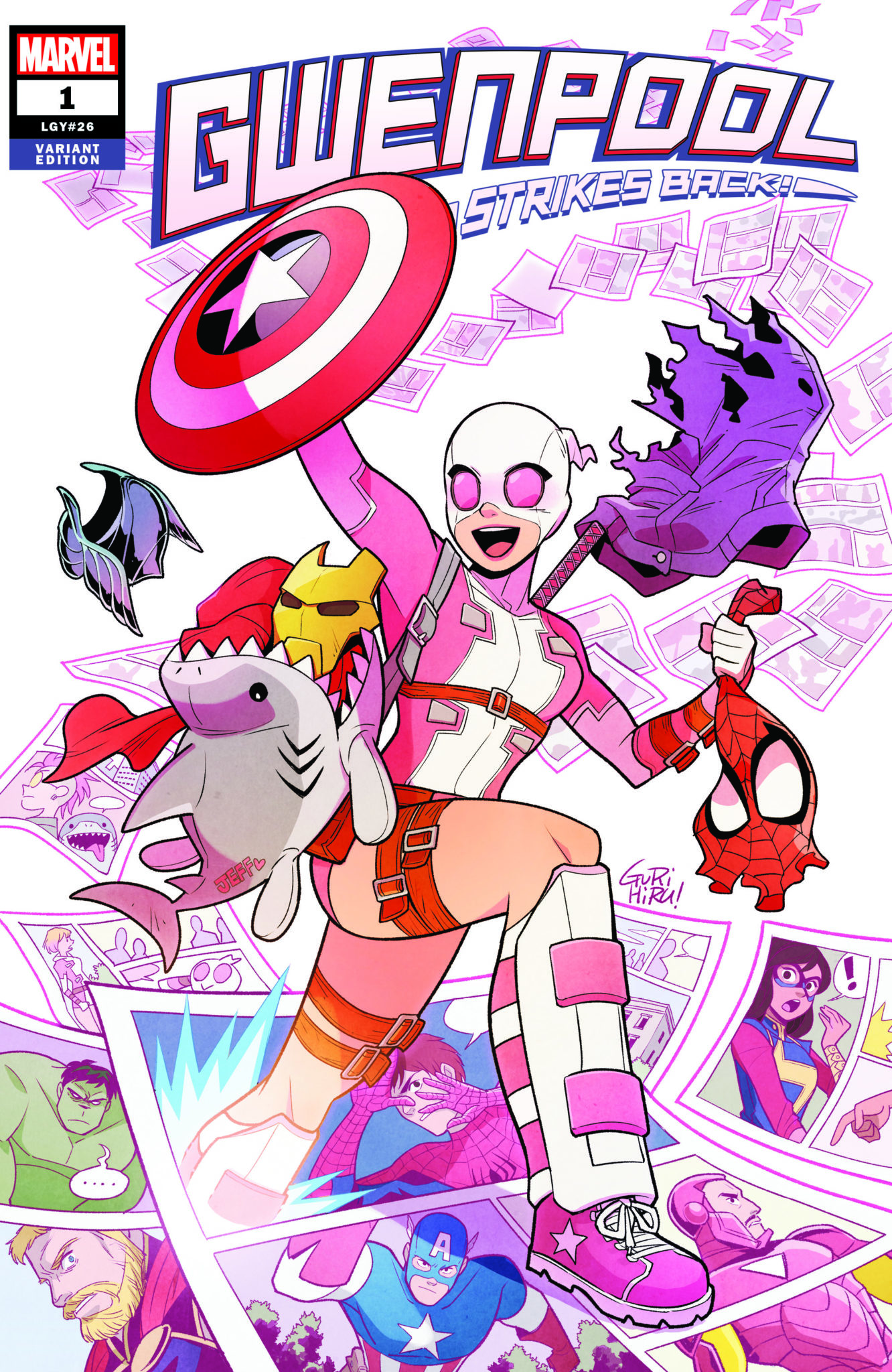
Variant cover by Gurihiru.

MFR: David, what are the artistic elements that make up Gwenpool? Like Spider-Man is all loose, The Thing is ridged, etc. What do you try to capture when drawing Gwen?

David Baldeon: Gwen is a tricky one to get, art-wise. Any other character has a very defined body language and, say, “style” to their art. As you say, Spider-Man is loose and all that. But Gwen… She is not just one thing. She’s a bit awkward, but also very relaxed. She has humor, but it takes a thousand different tones and covers a thousand different feelings. She’s not just the one thing. But then again, as Leah points out, Gwen is a person rather than a character. Spider-Man and the Thing and all these guys… You can trust that a certain couple strokes will be enough for the readers to understand certain things because, well, there’s an understanding on certain graphic cues built up for decades. But Gwen is another thing entirely. It’s not as much about imbuing her with a personality as it is about correctly capturing a lot of the stuff going on with her. Because of her very nature as an exile of our reality, one really needs to change the point of view ever so slightly so she does not get watered down. She is an entirely different creature, a completely new and very complex challenge altogether.

And then there’s the comic book language part. There is A LOT that Gwen (and Leah and Jordan!) is allowing me to do and explore and panic about a little, when it comen to twisting and squeezing out the possibilities of the comic book page… I had never had a chance like this one. This is not the way I usually deal with pages, narration wise. I try to be as inconspicuous as possible as a narrator, just picking the tone and the narrative tools that best suit the character and the story… But here’s Gwen that needs -or rather, demands- to make it explicit that we’re in a comic book. That she is in a comic book, that she knows and uses that fact, and that it must be felt in every page that that veil is thin and she can easily break it. It’s exhilarating, and I’m very much enjoying to explore that part of the book. Or rather, I’m enjoying Gwen grabbing my hand and giving me a tour of that part of the book!

MFR: How do you think Gwenpool was able to go from a variant cover one-off to a fan-favorite character with her own series? What about her speaks to you as a creator?

LW: Gwendolyn Poole went from a variant cover to becoming Gwenpool; the people’s champion of Marvel characters because Chris Bachalo designed that cover initially. Like, full stop. Chris has this uncanny ability to draw things that are stunningly expressive and that cover tapped into a zeitgeist of something unfulfilled that Marvel had been lacking up to that point—I never really know how to describe the kind of alchemical magic that happens within fandom, but that’s what happened there. And then, she became our champion because she’s one of us—meaning, a comics fan. She’s the only person in Earth 616 capable of listening to fans and making changes within the canon as a result. She’s not listening to me, David, Jordan, C.B., or anyone else working with her. She’s gone rogue within the pages of Marvel comics.
Gwenpool Strikes Back Marvel Comics Exclusive preview interview
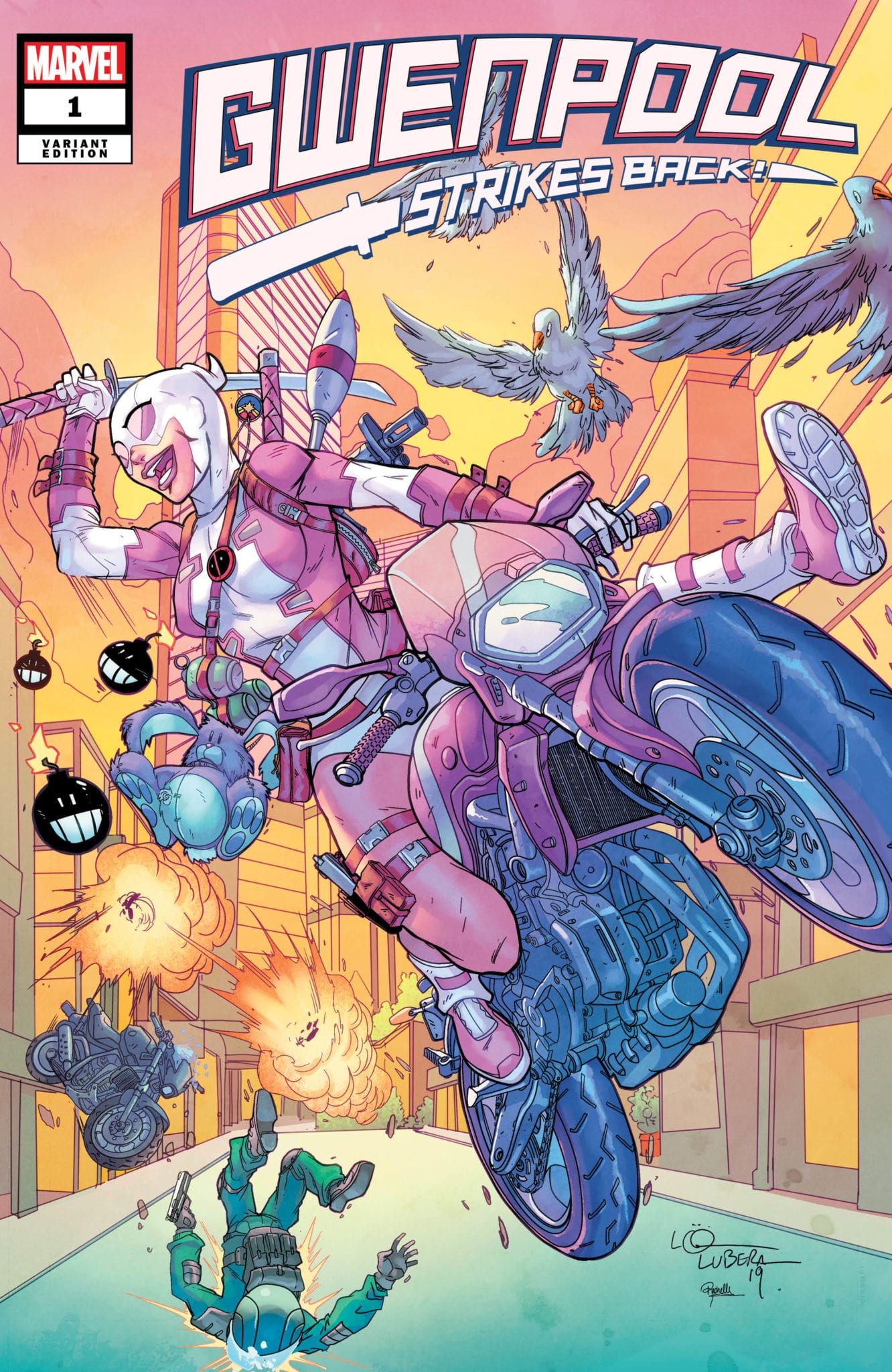
Variant cover by Logan Lubera.

MFR: Gwen and Deadpool both are cut from similar cloths and both have cult followings, and yet Gwen feels unique in her own right. What do you think makes her more than just a female Wade Wilson?

LW: “Girl Deadpool” or “Deadpool lite” is my litmus test for who’s read her books or not. That sounds bad and gatekeeper-y (because it is) but I really just don’t understand how anyone can read Christopher Hastings’ and Gurihiru’s stunning work with her in Gwen’s first solo run, The Unbelievable Gwenpool, and still reduce her to that. Wade Wilson is a comics character. Gwendolyn Poole is person.

MFR: How would you define the comedy of Gwenpool?

LW: Gen Z. Gwen’s gen z, and she grew up entrenched in internet culture so her humor is absurdist, Dadaist, and almost casually nihilist. But in Gwen’s age group she’d be called “meme trash” for the very same humor. It comes naturally to her as it does to a lot of Gen Z. They are a generation of Americans unlike anything we’ve ever seen before because they have an unparalleled understanding of the world informed by constant, unqualified access to high-speed internet. They are smarter and more adept, and in a way that’ll make (us) millennials look like dinosaurs by the time they’re entering the work-force. But this knowledgeability comes with a price, because staying informed means they’ve grown up with an understanding of how constantly dire world events are, and how much of the world is suffering all at the same time. Gen Z is anxious and depressed, and they are valid for that. They all go to school wondering if it’s their turn to get shot by a classmate that day. Humor is very much a powerful coping mechanism for them, and it’s something that edges past the widely-accepted understanding of how bleak modern life is, right on into making each other laugh about it as praxis. It’s dark and joyful at the same time. The stuff Gwen jokes about isn’t funny at all, but her desire to make the reader happy—make us laugh despite how bad the situation is—is sincere as hell. The tl;dr of what I just said is that Deadpool references memes; Gwenpool makes the memes. She’s the only sh*tposter operating within Earth-616. And she knows exactly what she’s doing.

Gwenpool Strikes Back Marvel Comics Exclusive preview interview

Gwenpool Strikes Back Marvel Comics Exclusive preview interview


Are you excited for Gwenpool Strikes Back? Comment and let us know your thoughts!
Monkeys Fighting Robots Youtube

Review: If The Music Doesn’t Get You..KILLER GROOVE #2

Monkeys Fighting Robots

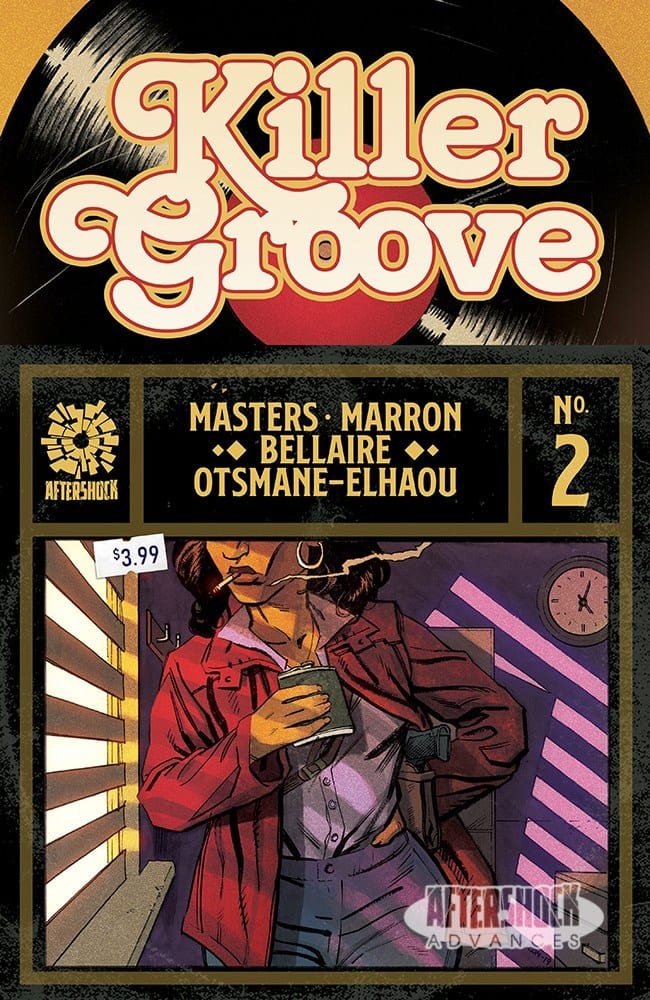
Murder, mystery, and music is the name of the game in AfterShock ComicsKiller Groove issue 2 out this week. Inspired by crime stories from throughout the 20th century, Ollie Masters throws the reader head first into the seedy underbelly of L.A. and doesn’t allow them to come up for air.

In 1970’s America, not everyone is living the high life and just surviving can be difficult. You do what you must and take whatever job you find. For Jackie, a private investigator, this means applying a little pressure to people she’d rather not mingle with. And for Jonny, washed out musician, this means picking up a gun.

If The Music Doesn't Get You..KILLER GROOVE #2
Killer Groove #2 Credit: AfterShock Comics

Ollie Masters is crafting a smart crime thriller that focuses on two different worlds. Throughout this second issue Masters is comparing these two worlds and the characters at the centre of each. Both are surrounded by violence but how that affects the characters is the central premise of Killer Groove.

Masters demonstrates Jonny’s reluctance to violence in the opening pages, setting up a classic target practice scene in a desert. This is followed up by a sequence of extreme violence which Jonny takes too far, lost in the moment. The two sequences together open up Jonny allowing the readers to see the true nature of the character and the anger buried within him. The reason for this anger and bitterness has been hinted at throughout the narrative so far but the consequences are fascinating; he is starting to get what he believes he deserves.

The relationship between Jonny and Ignatius is that of a mentor and his protégé. Their conversation bounces back and forth like a Quentin Tarantino film script but there is a detachment to Jonny. This is portrayed as an awkwardness, a difficulty making and understanding jokes. Masters uses these moments of conversation to highlight the difference between Jonny and the seemingly cold bloodied killer, Ignatius.

Masters’ contrasts this with Jackie’s relationship with her father. Jackie can feel the rug being pulled from under her but she is fighting to keep the balance. Instead of succumbing to the violence she makes a stand against it. This makes her job, and her life, harder but she chooses the moral high ground.

If The Music Doesn't Get You..KILLER GROOVE #2
Killer Groove #2 Credit: AfterShock Comics

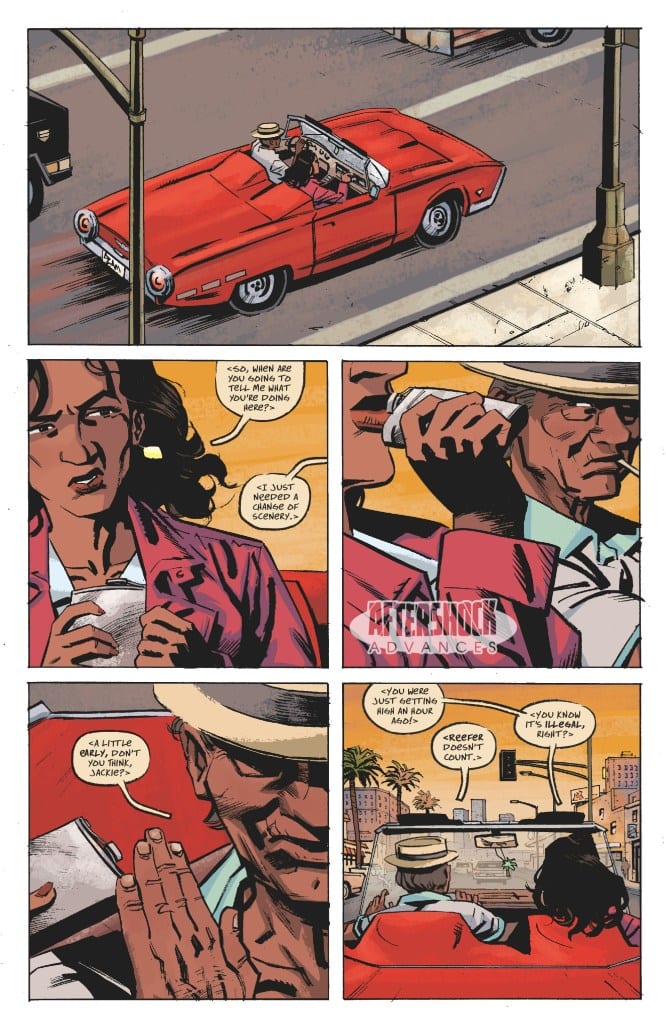
The story isn’t the only place this contrast is made, the art work highlights the difference in the central character’s outlooks. The color work by Jordie Bellaire makes a strong statement about the two personalities. Jonny is surrounded by red: backgrounds, furniture, blood. He is drenched in the violence although at this stage he doesn’t have any red on him directly, almost as if the violence isn’t touching his character.

Jackie, however wears a red jacket and is driven around in a bright red car; the violence infects her personally and leads her through life. The amount of violence in her story is considerable less, and not instigated by herself, but it has a bigger effect on her than on Jonny.

Eoin Marron treats the characters the same, focusing on their reactions to situations. The characters are extremely expressive allowing the reader to get to know them and understand them to a certain degree. Jonny has a coldness in this issue, a detachment from his actions. Marron often draws him with the same expression on his face; pensive yet removed from the world. This only changes during the violence and production of his music. Jackie has emotional reactions to everything that happens around her, she takes note and is a part of the world she lives in.

All of this comes through in Marron’s steady pencils and compositions. He treats the panels like a camera, starting with a wide, establishing shot before zooming in for reaction shots. He builds a sense of location early on each page so that he can drop the backgrounds to a minimum throughout the scenes. This leaves the reader focused on the characters and their interactions but the locale is firmly implanted in the reader’s mind.

The lettering is brilliantly blended into the art work, mostly by simply coloring the speech balloons an off white. The starkness usually associated with the speech is dampened and gives the conversations a natural, laid back feel. Hassan Otsmane-Elhaou also has a novel approach to balloon design with flat ended tails and over lapping balloons linked by parallel lines creating a canal for the speech to flow through from one balloon to another.

This layering gives the speech some rhythm. While the balloons are overlaid there is a faster, punchy pace to the speech. It’s a comfortable, flowing conversation. But when he separates the balloons this emphasises the break in the speech and slows it down. It adds dramatic pauses and moments of indifference.

If The Music Doesn't Get You..KILLER GROOVE #2
Killer Groove #2 Credit: AfterShock Comics

Killer Groove is an impressive thriller. The creative team use a number of clever gimmicks to tell the story but it doesn’t rely on these gimmicks to make it interesting. As a reader you are engaged in the comic first then notice the little storytelling tricks afterwards.

The plot reads like a 1970’s pulp novel mixed with characters from a modern thriller. The violence is harsh and in your face. It doesn’t apologise for what it is but also does not glorify it. Masters’ uses the character reactions to discuss the nature of violence and makes a general comment on the depiction and acceptance of that violence.

Killer Groove is entertaining but also hard hitting. Like a good Peter Luck novel or a Martin Scorsese film. In comic terms it falls somewhere between Sin City and Criminal;taking the harshness of the former and the aesthetic of the later.

Monkeys Fighting Robots Youtube

INTERVIEW: Adam Glass And Olivia Cuartero-Briggs Of MARY SHELLEY: MONSTER HUNTER

Monkeys Fighting Robots

The first three issues of MARY SHELLEY: MONSTER HUNTER written by Adam Glass and Olivia Cuartero-Briggs has a unique sense of horror when teamed up with Hayden Sherman’s artwork. The creators have put together a brilliant combination of grit and tension, one which has become a definite must read.

Glass and Cuartero-Briggs spoke with Monkeys Fighting Robots about their writing process and how Mary Shelley’s story is more relevant today in the current political climate. Check out the full interview below.

MFR: Both of you work in television. How has your experience in TV helped you as a comic book writer?

GLASS: It’s all storytelling at the end of the day. But tv shows, much like comics is truncated storytelling, you must hook your audience fast and leave them with a cliff hanger to come back for more. I started on TV but found the writing approach in graphic novels very similar.

CUARTERO-BRIGGS: Agreed, storytelling is storytelling, so working in any medium will help inform another, especially when it’s visual, like both comic books and television are. I would say where TV helps the most is the necessity that cliff hanger at the end of every act. It gets your mind thinking big, which is very useful when writing comics.

INTERVIEW: Adam Glass And Olivia Cuartero-Briggs Of MARY SHELLEY: MONSTER HUNTER

MFR: In film and TV, you can build tension with a musical score. MARY SHELLEY: MONSTER HUNTER is very tense; I could almost hear the music in my head as I read the first three issues. What are the elements you use to build tension?

GLASS: I feel as writers we’re always tapping into our own worse fears and putting ourselves into our characters head. So everything you see is how Olivia and I feel like we’d see it. I know I spend way to much time thinking about how to kill people in interesting ways then I should.

CUARTERO-BRIGGS: Adam and I agreed early on that this had to be a character-driven comic book. The central characters, Mary, Percy, Byron, Claire and Victoria had to be dynamic and psychologically complex to really make this story work the way we wanted it to. With that focus, we were able to slow down the plot a bit and really build suspense, not just through the situations they find themselves in and the frightening occurrences that build on one another, but through exploring their personalities, desires, and relationships as well.

INTERVIEW: Adam Glass And Olivia Cuartero-Briggs Of MARY SHELLEY: MONSTER HUNTER

MFR: Gender equality is a huge political topic right now, and as a society, it seems like we have lost our ability to have a civil debate. Do you think comic books can sneak into a political conversation and open up a few minds?

GLASS: What I’ve always loved about genre writing is it’s the perfect place to speak about societies woes without being preachy. Mary Shelley: Monster Hunter has this in spades because at the foundation of our story is the real-life journey of Mary Shelley, who was a feminist way before anyone even knew what the word meant. So, yes, just like the X-Men helped people accept race and differences I feel like our story can open a few eyes on feminism.

CUARTERO-BRIGGS: Yes. And with everything that’s going on right now in Middle America and the continual chipping away of women’s rights to healthcare, it is so important that we remind ourselves where we came from. Women like Mary Shelley – not to mention her mother, Mary Wollstonecraft – fought like hell for the rights we now enjoy. It’s crazy that we’re seeing similarities in the treatment of women from 1815 to today. We should be well past that kind of oppression, and the fact that we’re not should disturb people. Perhaps the reminder we’re giving folks in Mary Shelley Monster Hunter will inspire more people to stand up and fight.

INTERVIEW: Adam Glass And Olivia Cuartero-Briggs Of MARY SHELLEY: MONSTER HUNTER

MFR: What does Hayden Sherman bring to the table as an artist? His panel designs amped up the fear and had me hesitantly turning the page.

GLASS: Hayden was the perfect artist for this book because he understands the horror and how to pace it out so it has maximum effect.

CUARTERO-BRIGGS: From the moment Adam and I first saw his work, we knew he was the guy. His work has an elegance and creep factor all its own, and it has really helped to enhance the books. Thanks, Hayden!

INTERVIEW: Adam Glass And Olivia Cuartero-Briggs Of MARY SHELLEY: MONSTER HUNTER

MFR: The pacing of the book is solid, as it had me wanting to read the next issue immediately. Since you are a writing duo, what’re the conversations like when it comes to pacing and how you want to end each comic?

GLASS: Olivia and I are friends and have worked together on TV so we have a real shorthand when it comes to writing. But I think we talk about what we’d like to see and what we think is cool and then we just do that.

CUARTERO-BRIGGS: Absolutely. I’ve been really fortunate to work with Adam and benefit from his years of experience and talent, not just in comics, but in TV as well. He’s amazing at pacing, building to cliffhangers, and crafting those fun, impactful openings. So, while we definitely have a shorthand – and a lot of fun coming up with ideas together – I have to admit that I’ve learned a lot through this process that I will certainly take with me as I continue on in this crazy business.


What did you think of the interview? Comment below with your thoughts.

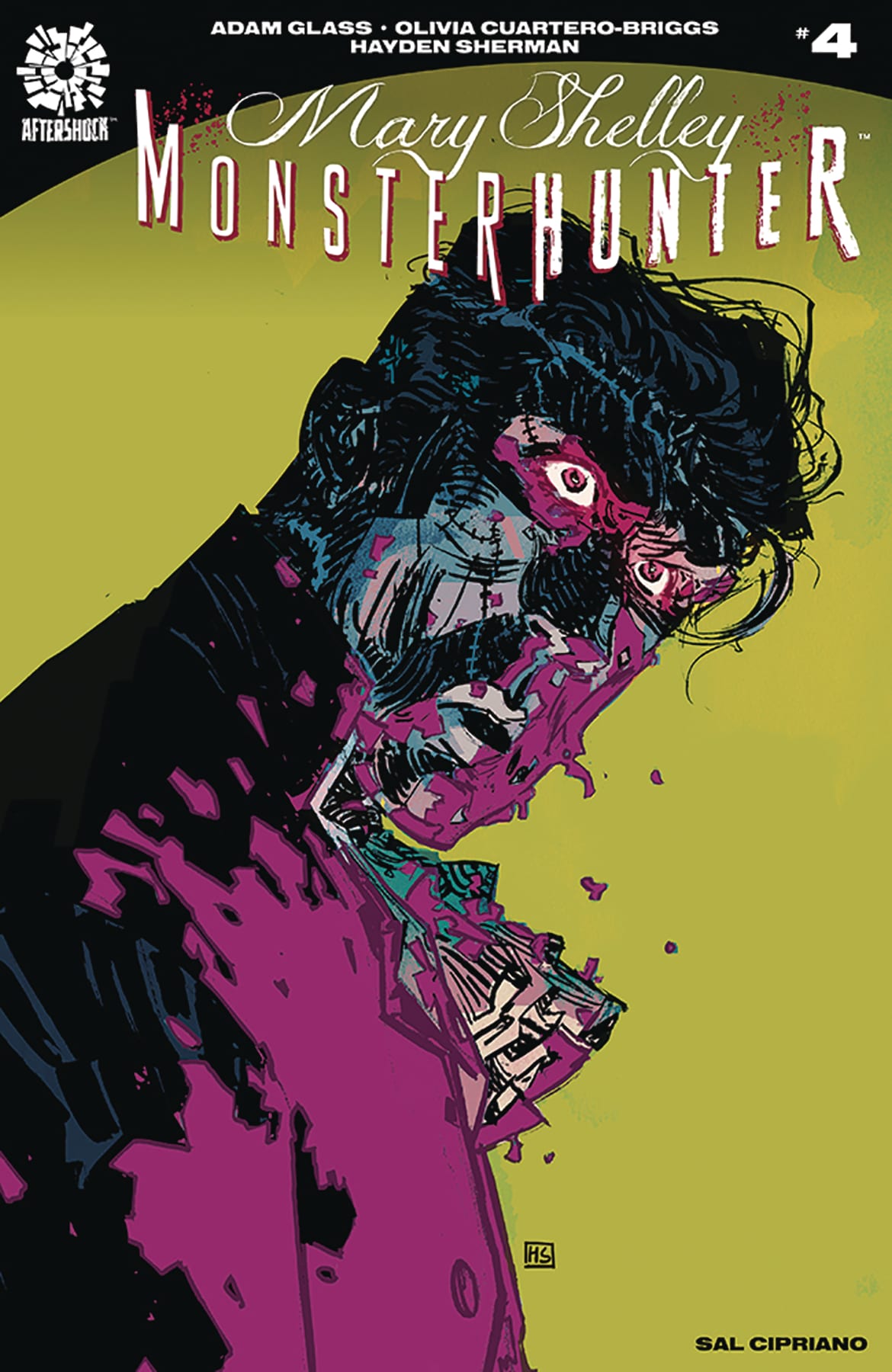
MARY SHELLEY: MONSTER HUNTER #4 hits your local comic book store on July 17, with final orders due on June 24, so bug your comic shop to order copies.

About MARY SHELLEY: MONSTER HUNTER from AfterShock Comics

For nearly two centuries, scholars have wondered how on earth Mary Shelley, a nineteen-year-old girl, was able to conjure one of the most frightening and enduring horror stories of all-time: Frankenstein. But with the recent discovery of Mary Shelley’s secret memoir, the truth is finally revealed: Mary Shelley didn’t just write Frankenstein, she lived it. Traveling back to that historic Geneva winter of 1816, Mary, her fiancé Percy, sisters Claire and Fanny, and the celebrated poet Lord Byron, find themselves guests of the eerie Frankenstein Estate. The macabre and frightening events that follow lead Mary to both a gruesome and shocking discovery. Their mysterious host is not at all what they expected, and their intentions will change the course of Mary’s life forever.

INTERVIEW: Adam Glass And Olivia Cuartero-Briggs Of MARY SHELLEY: MONSTER HUNTER

Monkeys Fighting Robots Youtube

J.J. Abrams Takes On Spider-Man

Monkeys Fighting Robots

Marvel continues to make big news for the 80th anniversary. We already know that Marvel Comics #1000 will bring an all-star lineup of creators, and that Mark Waid will be retelling the History of the Marvel Universe.

Now comes word that film and TV superstar creator J.J. Abrams will be co-writing a new Spider-Man comic with his son, Henry. Sara Pichelli will be on interior art while Olivier Coipel handles covers.

J.J. Abrams takes on Spider-Man

The New York Times first announced the story this week, including an interview with the father-son Abrams team. According to the story:

They are introducing a new villain, Cadaverous, who will cause problems for Spider-Man, his alter-ego, Peter Parker, and his beloved Mary Jane Watson, in a five-part series arriving in September. The Abramses are writing, and the comic will be drawn by Sara Pichelli and colored by Dave Stewart.

On how the project came about, J.J. Abrams said,

Nick [Lowe, the book’s editor] had been pressing me to do a book with him. A year or so ago, I started talking about it with Henry and it sort of happened organically. And that has been the joy of this. Even though I’ve been talking to Nick for a long time, weirdly, this feels like it just sort of evolved from the conversations of Henry and I, having ideas that got us excited and Nick being open to the collaboration.”

Henry Abrams added his thoughts on the character:

“Spider-Man is one of those superheroes where the more you read about him, for me at least, the less I understand him. He’s so anti-everything that you’d expect from a hero. I think Stan Lee said something about putting the human in superhuman. That is what we’re trying to do.”

Are you ready for a new Spidey book? Does having J.J. Abrams onboard get you more excited? Leave us a comment!

Monkeys Fighting Robots Youtube

Vertigo No More: DC Comics Ending Its Separate Imprints

Monkeys Fighting Robots

After weeks of rumors about the move, DC Comics has made it official: Vertigo and their other imprints will be shutting down as separate entities. DC Zoom and Ink, which just launched last year, are also part of the “sunsetting.”

In Dan DiDio’s words,

“We’re returning to a singular presentation of the DC brand that was present throughout most of our history until 1993 when we launched Vertigo to provide an outlet for edgier material.”

It wasn’t too long ago (2018 to be exact) that DC announced the Vertigo relaunch. Now, instead of the separate imprints, all books will be published under a general DC banner but categorized for different ages. Those will be Kids, DC, and Black Label.

According to Jim Lee,

“[DC] will also continue to publish creator-owned projects, and will evaluate and assign to the appropriate label to help our fans find the best books for their interests. These new labels not only bring greater consistency and focus to our characters, but they also open up a wealth of new opportunities for the talent working on our books.”

Some things we don’t yet know:

Will this lead to the cancellation of any comics?

What will become of the current Vertigo titles? (Seeing the Sandman Universe books under the regular DC label would be a first.)

Will reprints from the old Vertigo catalog — Preacher, 100 Bullets, etcstill carry the label? (DC already recategorized Killing Joke and Watchmen as Black Label.)

Here’s the full press release:

Beginning in 2020
All Content will be Organized Under Three Age-Specific Labels:
DC Kids, DC and DC Black Label

Vertigo Publishing Imprint to be Sunset at the End of the Year

DC announced today that beginning in 2020, all of its publishing content will be organized and marketed under the DC brand, creating three age-specific labels – DC Kids, DC and DC Black Label – that would absorb all of its existing imprints and focus DC’s publishing content around characters and stories that evolve and mature along with the awareness and sensibilities of DC’s readers. As a result of this new labeling strategy, DC will sunset the Vertigo publishing imprint at the end of the year.

The new segmentation, featuring the new age rating system, will launch in January 2020. Books currently being published under the recently launched DC Zoom and DC Ink imprints, which are focused on the middle grade and young adult segments, respectively, will be assigned to the DC Kids and DC labels depending on the content and intended audiences.

“We’re returning to a singular presentation of the DC brand that was present throughout most of our history until 1993 when we launched Vertigo to provide an outlet for edgier material,” said DC Publisher Dan DiDio. “That kind of material is now mainstream across all genres, so we thought it was the right time to bring greater clarity to the DC brand and reinforce our commitment to storytelling for all of our fans in every age group. This new system will replace the age ratings we currently use on our material.”

The three labels will be structured as follows:

  • DC Kids will focus on readers ages 8-12 and offer content created specifically for the middle-grade reader
  • DC, focusing on ages 13+, will primarily be the current DC universe of characters
  • DC Black Label will focus on content appropriate for readers 17 and older

“What we’ve done here is apply an ages and stages organizing philosophy that will strengthen what we’re already doing well, whether that is our move into the young adult and middle grade audience or our long track record of success with creator-driven pop-up lines,” said DC Publisher and Chief Creative Officer Jim Lee. “We will also continue to publish creator-owned projects, and will evaluate and assign to the appropriate label to help our fans find the best books for their interests. These new labels not only bring greater consistency and focus to our characters, but they also open up a wealth of new opportunities for the talent working on our books.”

Monkeys Fighting Robots Youtube

Review: BLACK MIRROR SEASON 5 – An Uninspired Entry to the Series

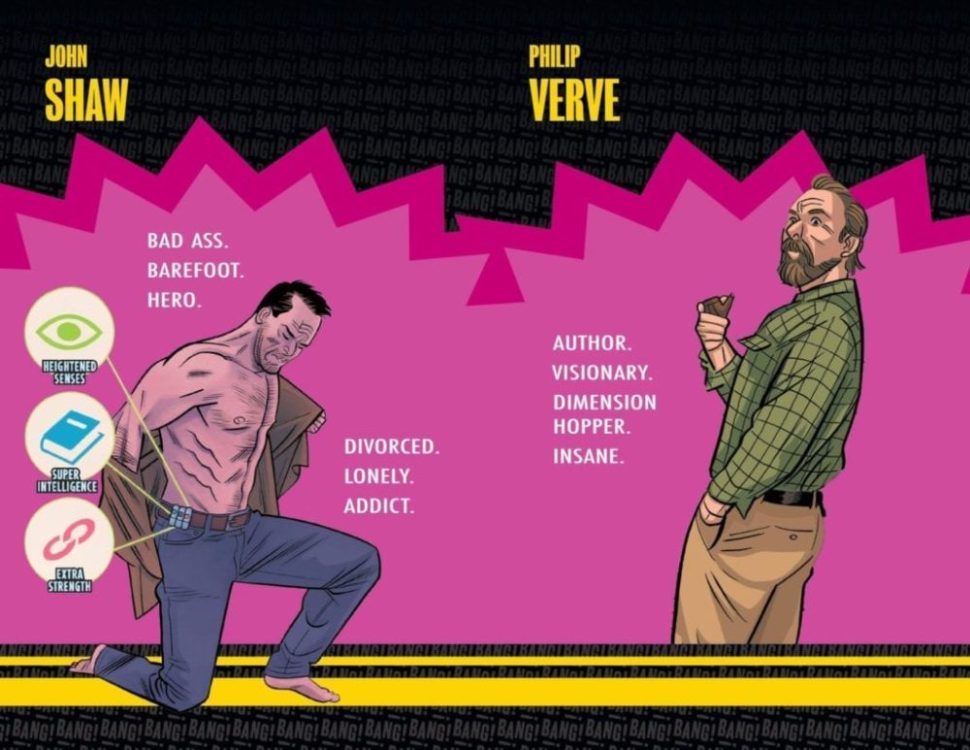
Exclusive Dark Horse Preview: BANG! #1

Black Mirror is one of the jewels in Netflix’s crown, attaching big name actors and directors to the anthology. Due to the complex production of Black Mirror: Bandersnatch the fifth season had a shorter run of three episodes instead of the usual six for Netflix. Sadly the fifth season is the most forgettable out of the seasons of the show.

“Striking Vipers”

“Striking Vipers” opens the season, following an illicit relationship in the virtual world. Anthony Mackie stars as Danny, a middle-aged man trying to have a baby with his wife (Nicole Beharie). Danny is given a new VR video game from his old roommate, Karl (Yahya Abdul-Mateen II) and their play time quickly turns from fighting to fucking.

Charlie Brooker is an enthusiastic gamer and with “Striking Vipers” he is taping into the past and future of video games. Brooker stated that this episode was influenced by his experience playing Tekken with his flatmates in the ’90s, the character designs and move set in “Striking Vipers” were similar to Street Fighter, and even the title of the game is similar to Fighting Vipers. As someone who grew up on ’90s fighting games these references were appreciated. Although I find it hard to believe that a VR fighting game could be turned into a sex simulation, at least not without some hacking of the software.

“Striking Vipers” is really a story about two male friends who enter into an affair. The game world allows for characters to meet up without even leaving their home. They could fulfill their wildest fantasies but it was underdeveloped. The relationships were also underdeveloped – there was no great exploration as what drives people to be closeted or why they can act differently online. The episode even missed a trick because it focused on Danny when it would have been more interesting to look at Karl who was a woman in the virtual world.

“Striking Vipers” is a disappointment, wasting its ideas. The episode had little to say about technology or the human condition.

It will be amusing for superhero fans to see Falcon, Mantis, and Black Mantra in the same episode.

“Smithereens”

“Smithereens” is the first contemporary set episode since “Shut Up and Down.” Brooker felt that Black Mirror moved too far into the sci-fi genre and wanted to make at least one episode that looks at the impact of social media.

Chris (Andrew Scott) is an Uber driver in London whose fiancé died 18 months prior. After a one night stand with another grief sufferer he decides to take action against the social media giant Smithereen (basically Twitter.) He plans to kidnap an employee and threatens to kill him if Chris doesn’t get to speak to the company’s CEO.

“Smithereens” is a standard plot for a thriller which has added social commentary about the tech age we live in. Most of the episode takes place in a field where Chris is surrounded by armed police, leading to a tense standoff between Chris and the police whilst Smithereen employees in California try to find out what Chris really wants. Smithereen ends up being the ones who find out about Chris because they have access to all his social media posts and are able to hack into Chris’ phone. It shows how easily personal information can be accessed and uses revelations by Edward Snowden as a part of the plot (i.e. hacking into phones so they can be used as bugging devices.)

“Smithereens” is one of the more human Black Mirror stories. Chris is a man of the edge and Brooker avoids the typical route of making out Smithereens to be a heartless corporation who only care about their profits. The people at the company are human beings who don’t want someone to get hurt, not even a lowly intern.

The episode needed to have great performances. “Smithereens” was lucky to have Andrew Scott who gives a strong, tortured performance as a smart man but quick to anger due to his delicate mental state. Scott has proven himself to be a talented actor in previous roles and he’s allowed to use his natural Irish accent.

It is a refreshing change of pace to have an episode that’s more grounded.

“Rachel, Jack and Ashley Too”

“Rachel, Jack and Ashley Too” will easily be one of the most divisive Black Mirror episodes with its 6.0 IMDB score reflecting this.

Rachel (Angourie Rice) is a lonely and awkward teenager and a huge fan of pop star Ashley O (Miley Cyrus.) Ashley O releases an interactive doll that’s a cross between Amazon’s Alexa and a Funko Pop doll. When Rachel gets an Ashley Too doll for her birthday she treats it as a friend, leading to her older sister, Jack (Madison Davenport), to worry. At the same time Ashley O life struggles creatively and is dominated by her aunt/manager (Susan Pourfar.)

The first half of “Rachel, Jack, and Ashley Too” is typical fare for Black Mirror where a new technology is released and someone becomes obsessed with it or it has a negative impact. This was done in “Be Right Back” and “Arkangel” and has the added dimension of focusing on a teenage girl. It easily draws on ideas that children and teens are too dependent on technology for socialization and validation.

As well as being a story about technology “Rachel, Jack and Ashley Too” is a story about siblings and this is where the episode was really relatable. Rachel and Jack are chalk-and-cheese, Jack is a moody rocker who scoffs at her younger sister’s tastes and often makes fun of her. But deep down Jack does care, from telling their dad when Rachel’s birthday is, to trying to protect Rachel from a negative influence. Anyone who has brothers or sisters could easily relate to their story.

Ashley O’s story is nothing out of the ordinary where a young pop star personal life is hell. Ashley O is forced to sing music she has outgrown and controlled by her handlers. The most interesting part of this story was it acted as a meta-commentary about Miley Cyrus’ career. She started out as a teen singer who wanted to break away from her Disney image when she got older. It did lead to the question of how the stories would connect.

When the stories do merge the episode turns into an outright comedy and this is where the point of contention arises. Cyrus was clearly having fun voicing Ashley Too who was allowed to swear like a sailor and the narrative turns from a slow boil to a fast-paced heist. It was tonally inconsistent but the humor make a change of pace from the usually depressing show and Cyrus was funny in her role.

“Rachel, Jack, and Ashley Too” had a lot of interesting ideas and the three leads gave strong performances. Rice was particularly impressive as the awkward teen and shows why her star is rising. The episode did need a bit of refining, especially for the final act where Brooker wanted to get to the end quickly.

Conclusion

Season 5 is sadly the weakest Black Mirror season so far in its consistency. The quality of the acting and the special effects were still of the same high standard and there are worst episodes as individual pieces. But this season has a rushed quality to the writing: the philosophical and social ideas and character development were not as rich as in the previous seasons.

Monkeys Fighting Robots Youtube

Marvel Comics Exclusive Preview: STAR WARS AGE OF REBELLION DARTH VADER #1

Monkeys Fighting Robots

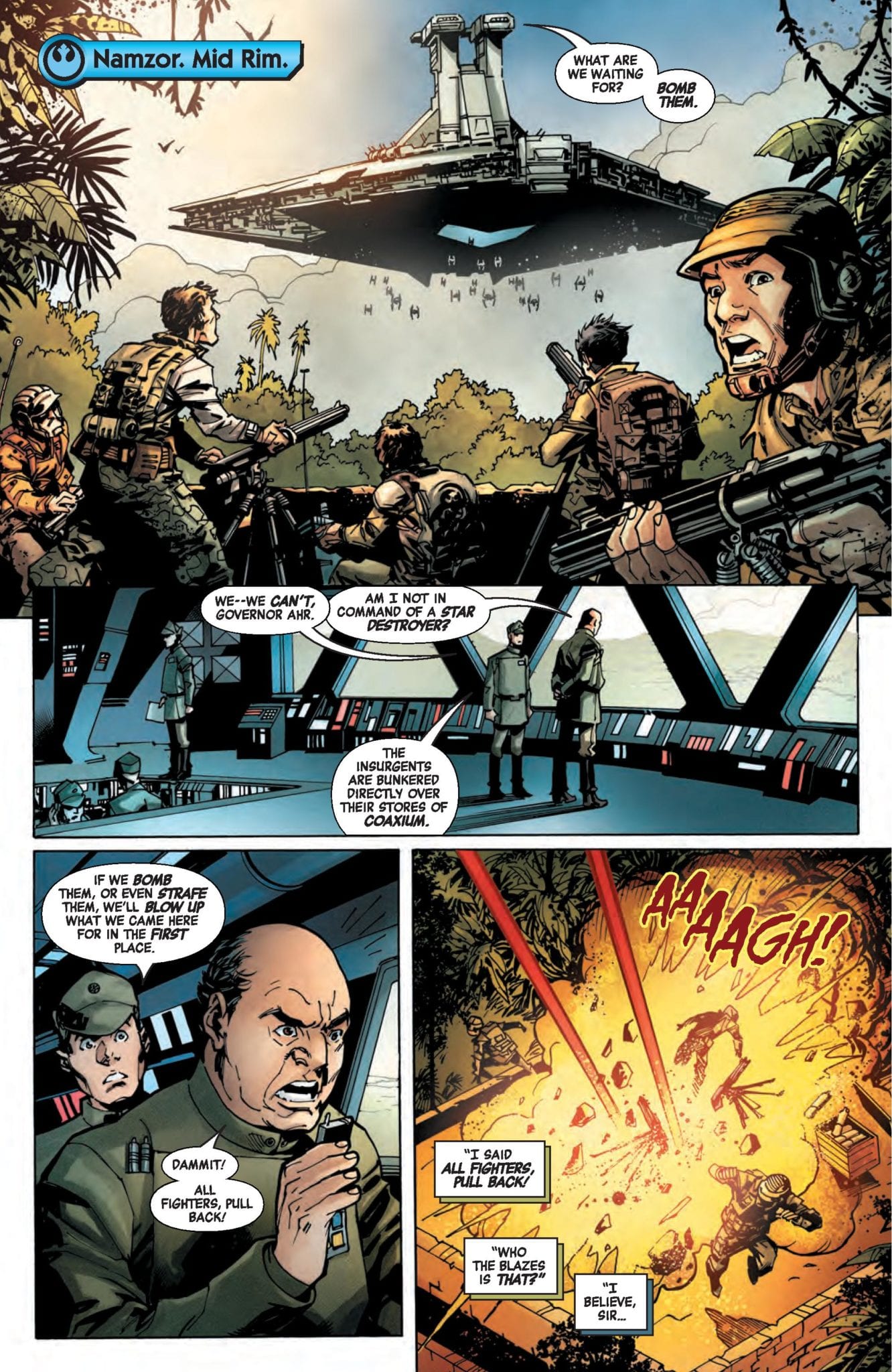
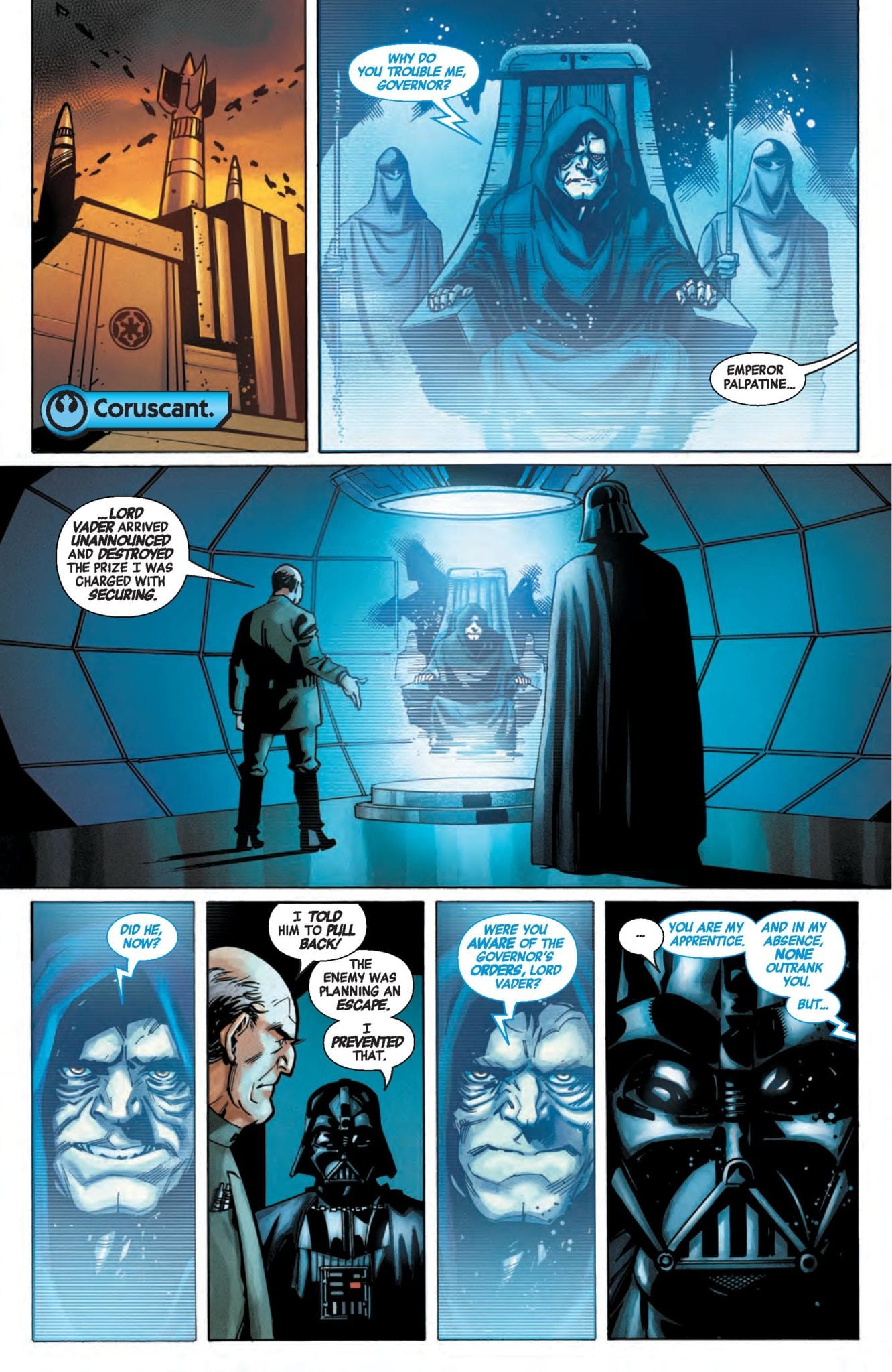
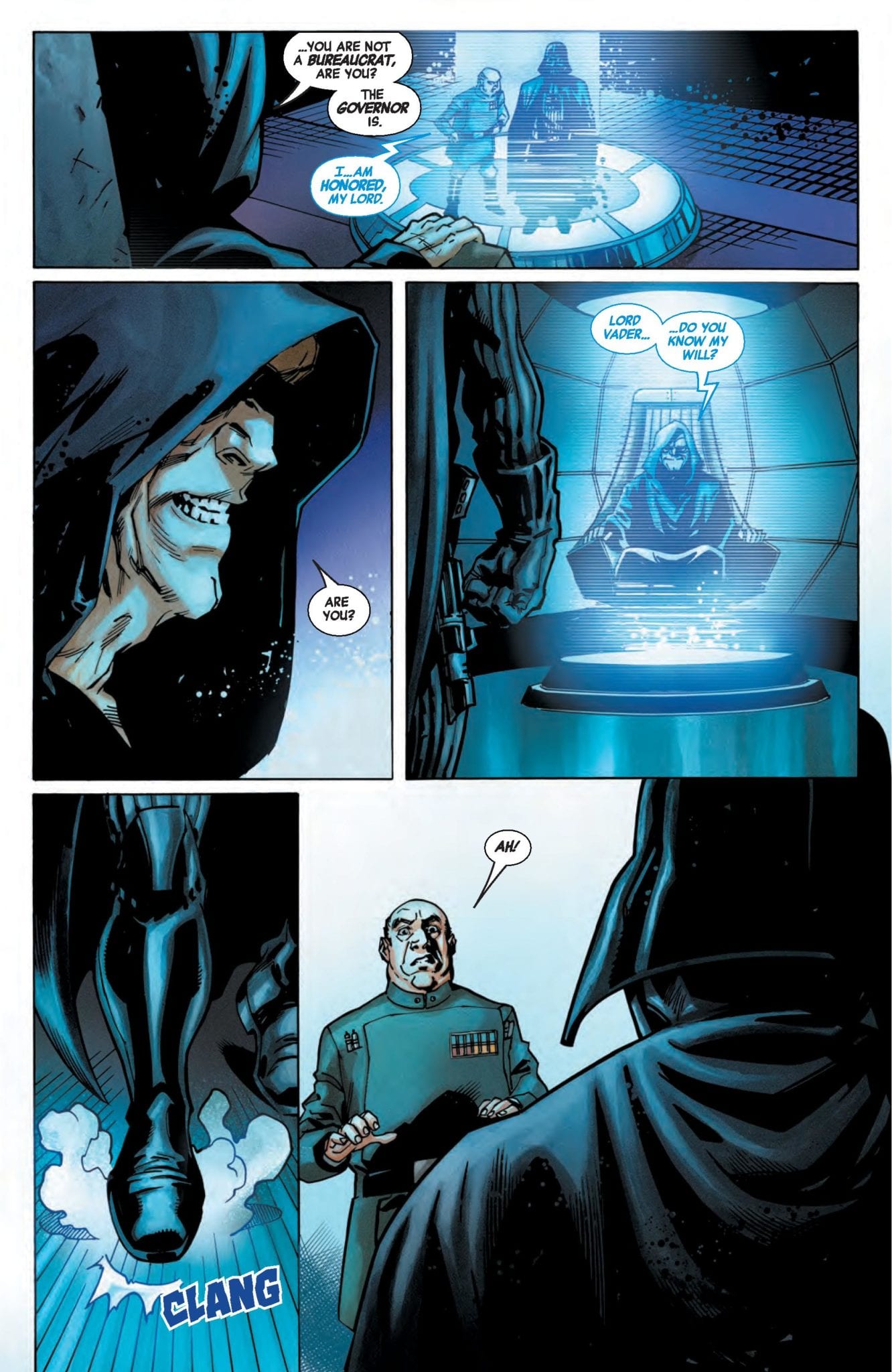
Star Wars Age Of Rebellion Darth Vader #1 hits your local comic books store on June 26, but thanks to Marvel Comics, Monkeys Fighting Robots has an exclusive five-page preview of the issue to share with you.

Star Wars Age Of Rebellion Darth Vader #1 is written by Greg Pak, with art by Ramón Bachs, colors by Stéphane Paitreau, Travis Lanham’s letters, and Terry and Rachel Dodson worked on the cover.

About the issue:
YOUR HUMBLE SERVANT VADER!
DARTH VADER may be the most feared man in the galaxy. But to the proud Grand Moffs of THE EMPIRE, he’s just the Emperor’s apprentice – below them in the hierarchy. But what fury burns in the heart of a SITH with such overwhelming rage when a mere Moff dares command him? And at what point does Darth Vader show them his true power?

Take your first look Star Wars Age Of Rebellion Darth Vader #1:

Marvel Comics Exclusive Preview: STAR WARS AGE OF REBELLION DARTH VADER #1

Marvel Comics Exclusive Preview: STAR WARS AGE OF REBELLION DARTH VADER #1

Marvel Comics Exclusive Preview: STAR WARS AGE OF REBELLION DARTH VADER #1

Marvel Comics Exclusive Preview: STAR WARS AGE OF REBELLION DARTH VADER #1

Marvel Comics Exclusive Preview: STAR WARS AGE OF REBELLION DARTH VADER #1


What do you think of Pak’s take on Darth Vader? Comment below with your thoughts.

Monkeys Fighting Robots Youtube

Marvel Comics Exclusive Preview: FANTASTIC FOUR #11

Monkeys Fighting Robots

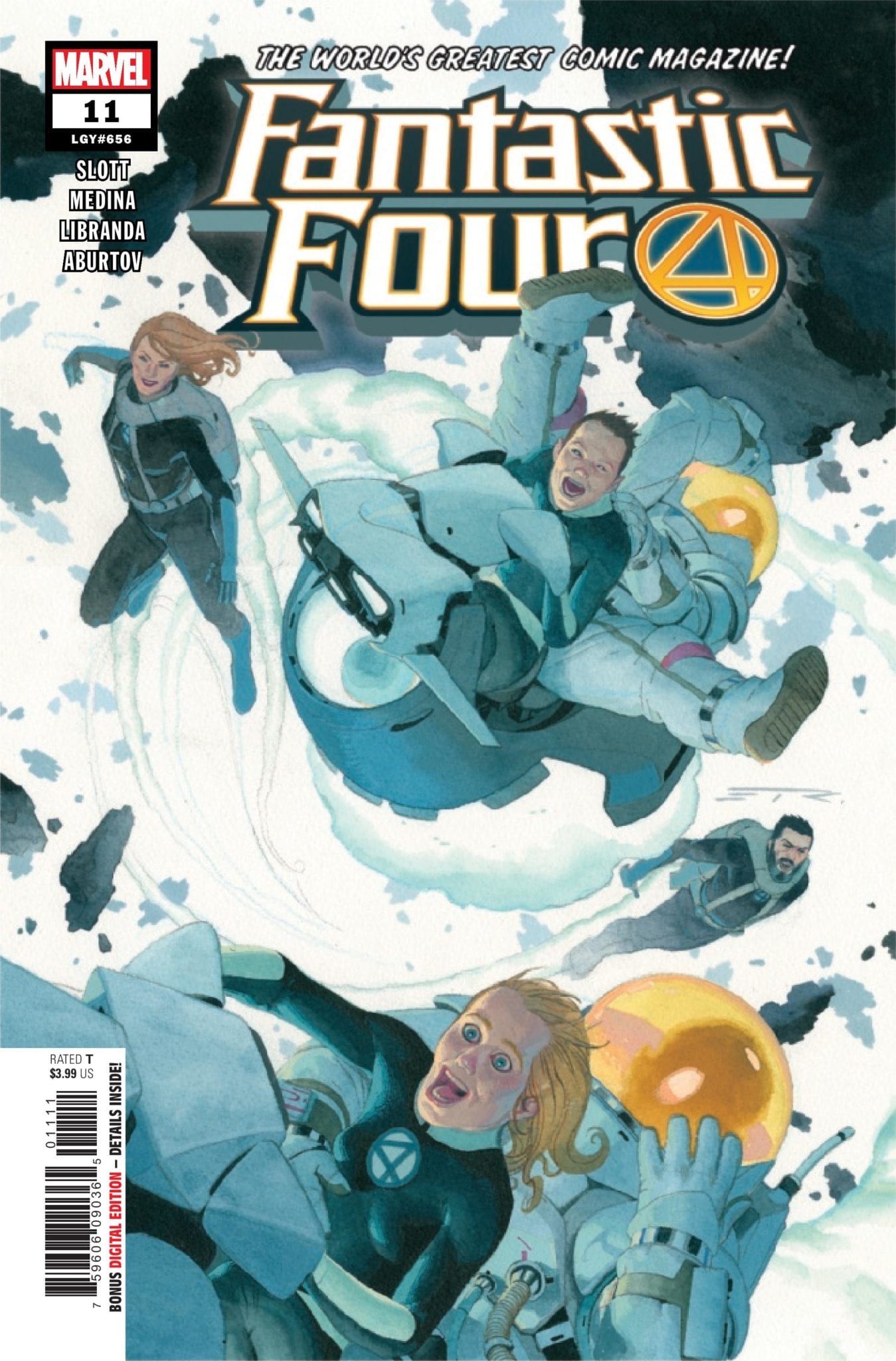
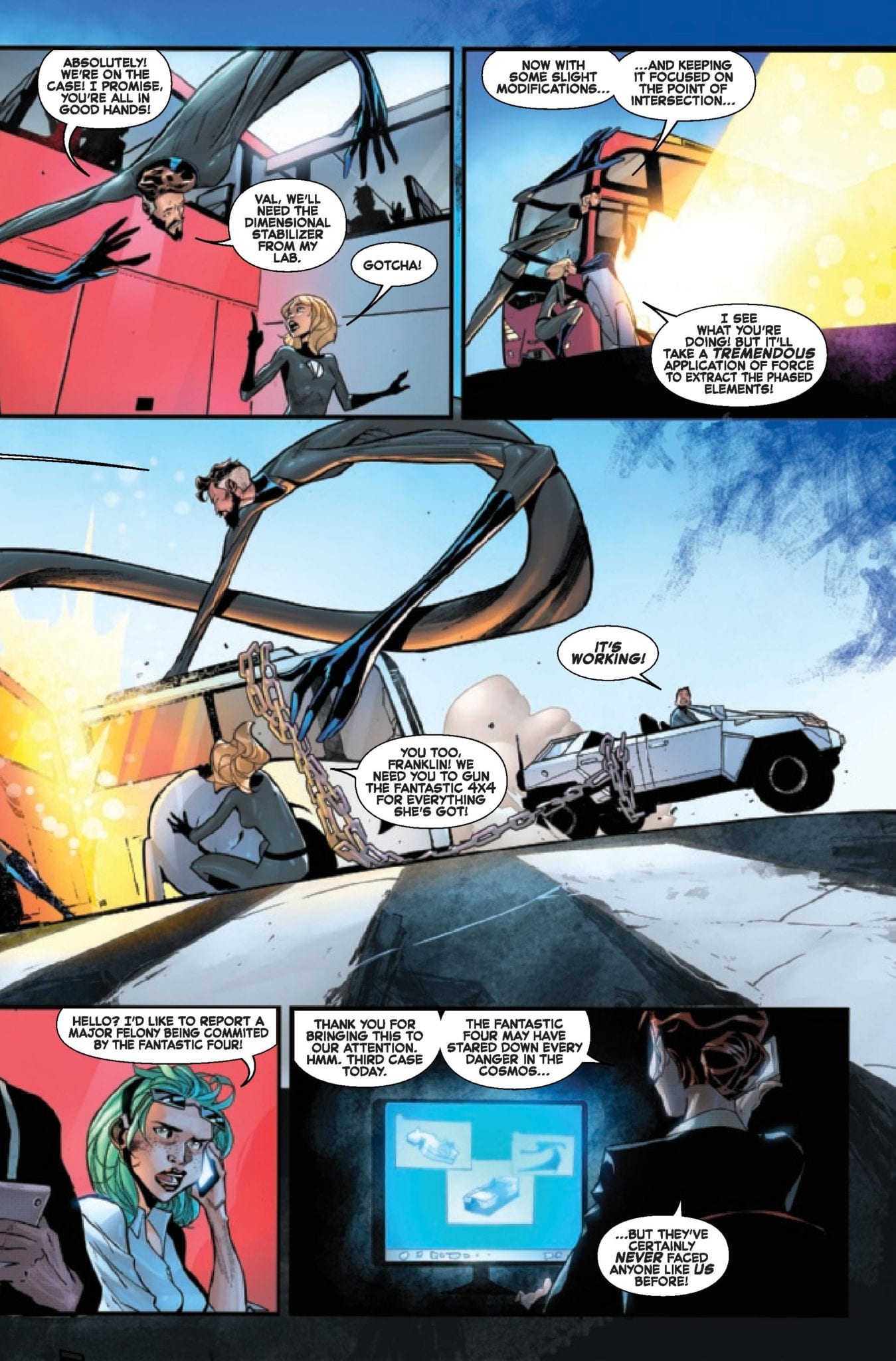
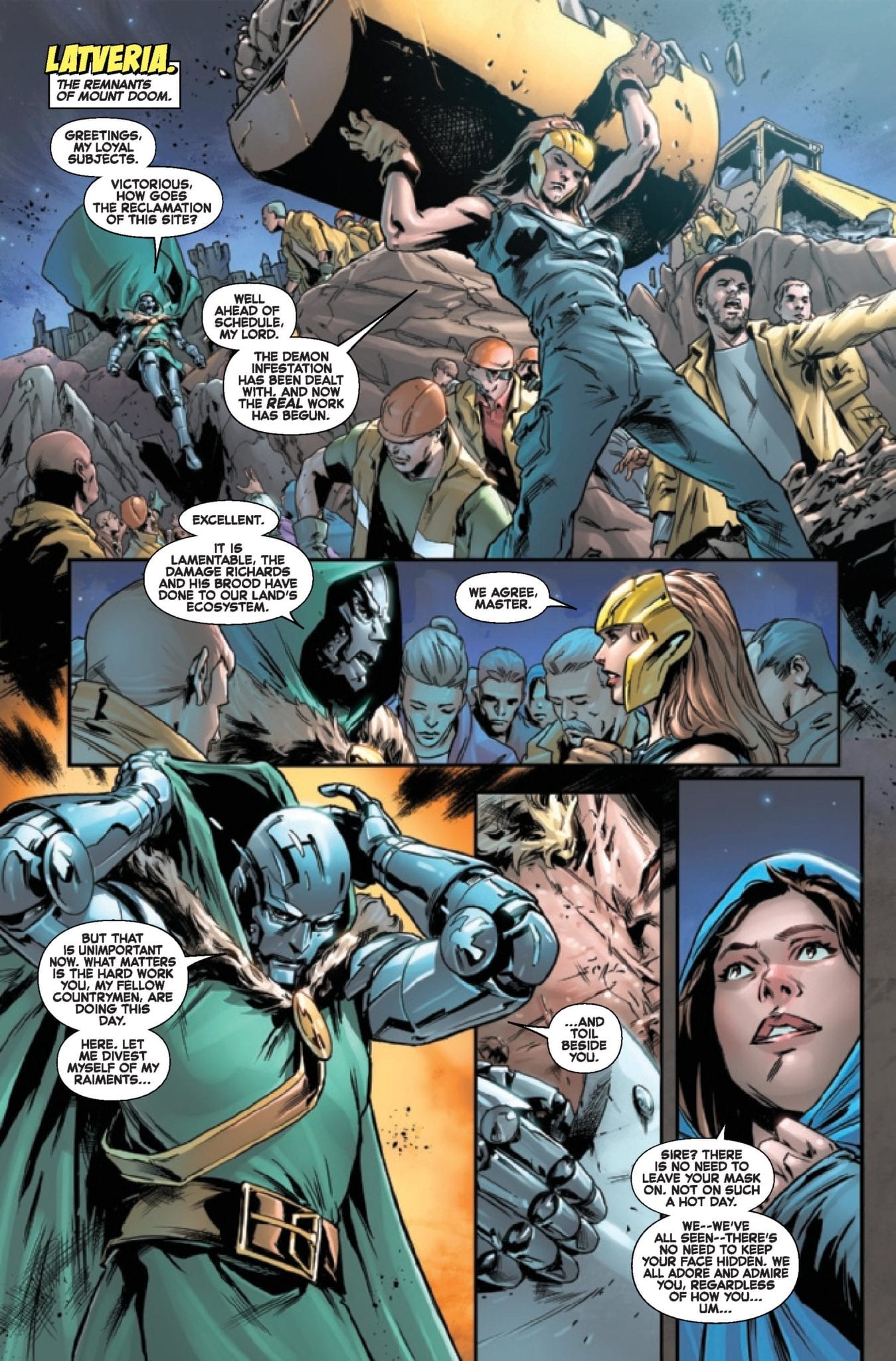
Fantastic Four #11 hits your local comic books store on June 26, but thanks to Marvel Comics, Monkeys Fighting Robots has an exclusive five-page preview of the issue to share with you.

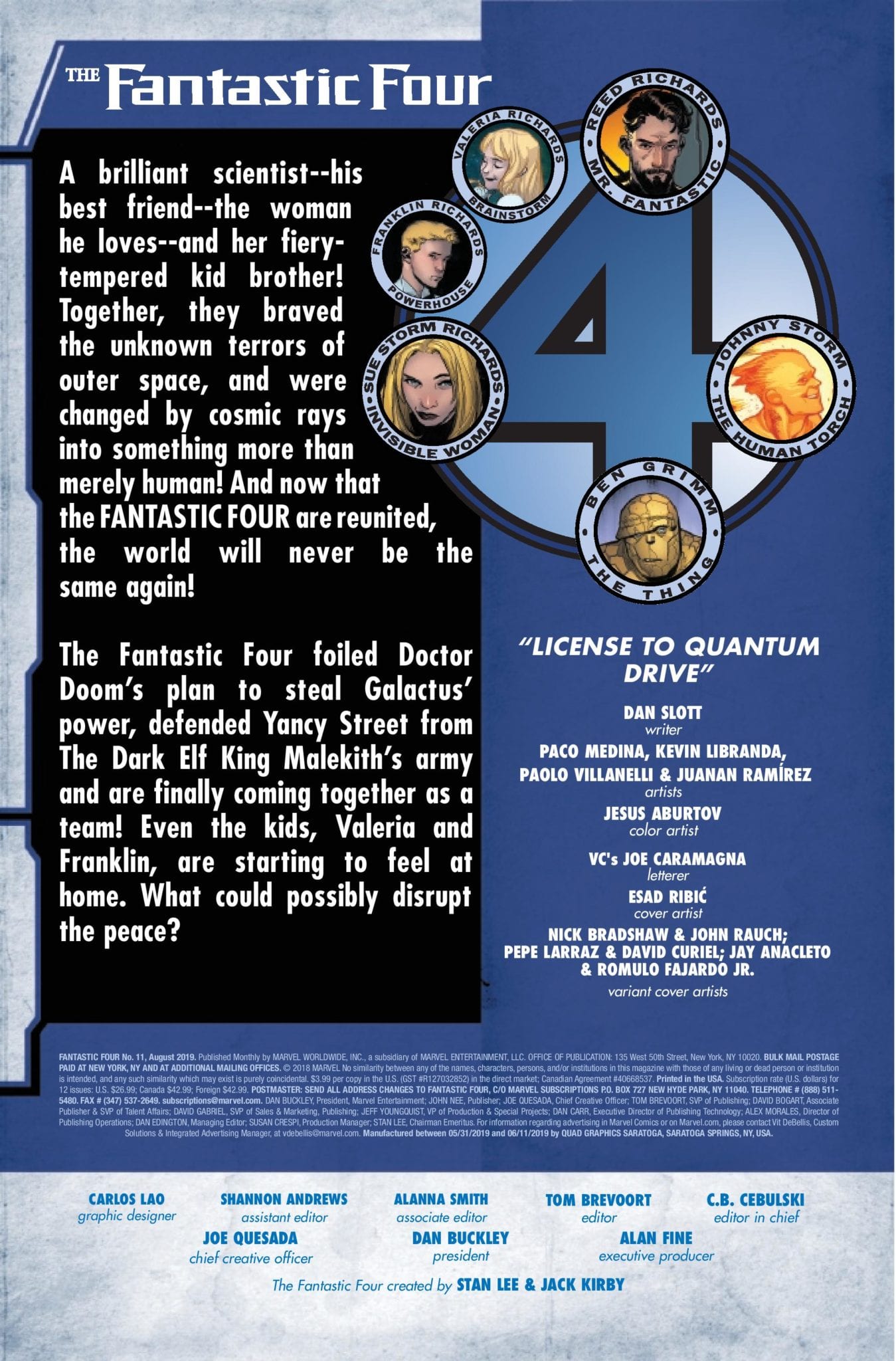
Fantastic Four #11 is written by Dan Slott, with art by Paco Medina, Kevin Libranda, Paolo Villanelli, and Juanan Ramírez. Jesus Aburtov is the cover artist on the book, with Joe Caramagna’s letters, and Esad Ribic worked on the cover.

About the issue:
LICENSE TO QUANTUM DRIVE!
Franklin and Valeria are growing up fast…but not fast enough to legally operate Fantasti-Cars in NYC! But wouldn’t you know it, the day of their big driving test is at the exact moment the entire Microverse might implode and take our reality with it! Get ready for a cosmic adventure with Marvel’s first family…and two members of New York’s Department of Motor Vehicles. Going to parallel worlds? Easy. Parallel parking? Kinda hard!

Take your first look Fantastic Four #11:

Marvel Comics Exclusive Preview: FANTASTIC FOUR #11

Marvel Comics Exclusive Preview: FANTASTIC FOUR #11

Marvel Comics Exclusive Preview: FANTASTIC FOUR #11

Marvel Comics Exclusive Preview: FANTASTIC FOUR #11

Marvel Comics Exclusive Preview: FANTASTIC FOUR #11

Marvel Comics Exclusive Preview: FANTASTIC FOUR #11


Do you have Marvel’s first family on your pull list, what do you think of Slott’s run so far? Comment below with your thoughts.

Monkeys Fighting Robots Youtube

INTERVIEW: Ashley Neumeister On The Rhythm And Sounds Of American Soul On BET

Probably the only good parts of this series

American Soul is a BET series looking into the rise of Soul Train, the long-lived American dance program that thrived off of the music of the day and making the new show sound just right is music supervisor Ashley Neumeister.

Soul Train started in Chicago in the early 70s before making a move to Los Angeles and prominent national exposure. American Soul starts there and takes us through the life of the long-time host and the show’s creator, Don Cornelius. Artists like Kelly Rowland and Wayne Brady show playing legendary singers like Gladys Knight and Little Richard, and another multi-award winning artist wrote several original songs for the show’s characters who are aspiring entertainers.

PopAxiom caught Ashley between a spotting session and preparation for an awards show to talk about being a music supervisor and American Soul.

Something In Music

Ashley grew up in “… A really small a** town …” La Crescent, Minnesota. Population: 4,830 (as of 2010).

“My parents were big music lovers, so music was always a big part of my life.”

Growing up, Ashley listened to everything, but also learned “… piano,” and, “… sang in the choir.”

As she definitively puts it, “I just loved music.”

Musical passion took Ashley to “… Columbia College in Chicago to study Music Business. I didn’t know what I wanted to do, but I wanted to do something in music.”

Ashley focused on being a record producer, but near the end of her time at Columbia, she felt “this isn’t what I really want to do.”

Ashley joined a new program at the school in Music Supervision. “I quickly realized that was what I wanted to do.”

Being A Music Supervisor

Ashely’s been busy in the business for more than a decade now. What’s changed over that time? “There’s no such thing as a production season anymore.”

We’re in a world of non-stop movies, network TV, premium cable, video games, and streaming. “We’re working all year round.”

The job of a music supervisor like many jobs in film and creative projects “… changes depending on the project.”

What does Ashley do? “In addition to finding music for scenes, it’s about getting the rights to use the songs, which is incredibly time-consuming.”

“You’d think it [getting rights] would be a lot easier, but it’s challenging.” More on that later.

Ashley adds about her role as music supervisor that she will, “Reach out to the people. Negotiate fees. Stay within budget.”

But it doesn’t end there. Or start there. It’s whatever needs to get done. “Sometimes, we help hire composers and provide support with that process. I would manage on-camera performances too. Getting the talent to make that happen.”

Ashley also needs to clear songs, a process that goes through phases, deliver audio to the stage for live performances, and getting it to the music editor. “It’s a lot of little things that you have to manage and be aware of.”

About American Soul

wayne brady-BET-American Soul-Soul Train
Wayne Brady as Little Richard in American Soul on BET

For American Soul, Ashley had to do pretty much all the above. The process included some legendary talent. “The three main characters of the show are an aspiring group. We had five original songs written by Kenny “Babyface” Edmonds.”

During the process of creating those songs, Ashley, “… had to make sure the lyrics make sense with the script.”

Soul Train featured an incredible amount of music in its 35-year history. American Soul has original songs, plus a brilliant score from Kurt Farquhar, but also, “We re-recorded 25 cover songs; early 70s R&B hits. That involves a lot of things.”

On rare occasions, Ashley notes, “… writers will write in song titles. I will see that and let them know if it’s possible or not.”

“Most of the time, editors cut in songs because editors love to edit to cut to music. I try to give them the music ahead of time. For American Soul, I gave the editors a bunch of different folders for stuff that could work bar scenes … diner scenes … that way they’re pulling from a folder of stuff that we can use.”

Challenges

The role of a music supervisor comes with many hats, which makes it challenging which, in turn, makes it fun for the people who love to do it. The first challenge Ashley mentioned before — song rights. “One of the biggest challenges really is who owns music. Who are the writers and publishers of a lot of music and finding that contact information.”

The legal rigamarole is real. “There are a lot of songs that are in conflict, and no one knows who really owns it.”

The second biggest challenge? “… Deadlines. TV moves fast.”

Wrapping Up

If you could work on a remake of a favorite film, what would it be? “Footloose.”

When it comes to what kind of music she likes, Ashley puts it simply, “I listen to everything.”

What’s she listening to lately? “I work on a lot of shows that use R&B and soul music, so I’ve been listening to a lot of that. One of my favorite artists is Jacob Banks. I’ve used a few of his songs in my shows. I also love Masego; also a soul singer who plays saxophone, and does a lot of really cool collaborations.”

Ashley’s work continues on “… Games People Play” on BET. Also coming up is “Ambitions on Own.”

Thanks to Ashley Neumeister and Rhapsody PR
for making this interview possible.

Want to read more interviews like this? Click Here.

Monkeys Fighting Robots Youtube

Review: INVISIBLE KINGDOM #4 Explodes With Character And Action

Monkeys Fighting Robots

Dark Horse Comics and Berger Books continue to impress the market with complex, compelling, and imaginative comics. Invisible Kingdom is one of the highlights of this publishing line and the fourth issue was released this week.

An outlandish world full of corruption, greed, and hypocrisy great the reader as they return to the adventures of a trainee nun and a disgraced cargo ship captain. After being chased by a floating monastery, can things possible get any worse?

Writing/Story

On the run with nowhere to turn, Vess and Grix must work together to survive in the hostile world they find themselves in. But with the militant arm of the Renunciation on their trail is there any chance of escape?

After the scene setting and character building of the previous issues, G.Willow Wilson concentrates on the action in the latest issue of Invisible Kingdom. The characters still play an important part, and it is in the subtleties of Wilson’s script where the character’s shine. The central cast each have their own distinctive voices and mannerisms which help scenes to play out in a particular way. Wilson is able to manipulate a sequence of events through the character interactions so that certain tones are brought out. The tenseness on the ship is built via the characters, just as the sense of loneliness and abandonment is later in the comic.

Even with the outstanding action taking place, Wilson manages to make Invisible Kingdom about the characters and their greater fight against the ‘State’. The Sundog spaceship is a vessel of castaways, people isolated from their own kind, and their desperate situation brings them together. The overriding theme of this comic is one of individual acceptance, a message that Wilson isn’t afraid to place front and centre in the story.

Invisible Kingdom #4 Explodes with character and action
Invisible Kingdom #4 Credit: Dark Horse Comics

Art

The personal interactions between the cast members are often portrayed in the smallest of moments. Christian Ward has proven that he can present out of this world scenery with beautiful art work and spellbinding layouts and in issue 4 of Invisible Kingdom he turns that magic towards the character. Sly looks between shipmates, and intimate moments show off the acting ability of Wards characters. There are some images that portray strength and confrontations while others are sentimental and touching.

The emotional aspects of the central cast are laid bare in these pages, hooking the reader. It is impossible not to feel for their plight or become engrossed in their relationships. Ward illustrates the action with dynamism and energy but it it is the infusion of raw emotion in the panels that really makes the storytelling so spellbinding.

Sal Cipriano’s lettering blends into this sea of beauty despite the whiteness of the speech balloons. This is achieved by having uneven boarders on the speech balloons so that the black lines are not solid or ridged. It is as if the art work is encroaching on the speech, taking it over. This becomes more noticeable when the Hammer of the Path vessel turns up and the spiked balloons force themselves into the lives of the heroes. The violence and anger of the captains voice is visually represented through the speech balloon giving it emphasis and domination over the scenes.

Conclusion

Invisible Kingdom has grown as a comic month on month which is impressive considering how good the first issue was. The art work is without question beautiful to behold; it is daring and exciting but the panel compositions are also dramatic and emotional. The script is clever and subtle and the story is compelling.

Wilson, Ward and Cipriano have created a masterpiece of science fiction. It is an adventurous tale of space exploits but also a commentary on current social acceptances. Easily the best place to get your science fiction fix.


Monkeys Fighting Robots Youtube