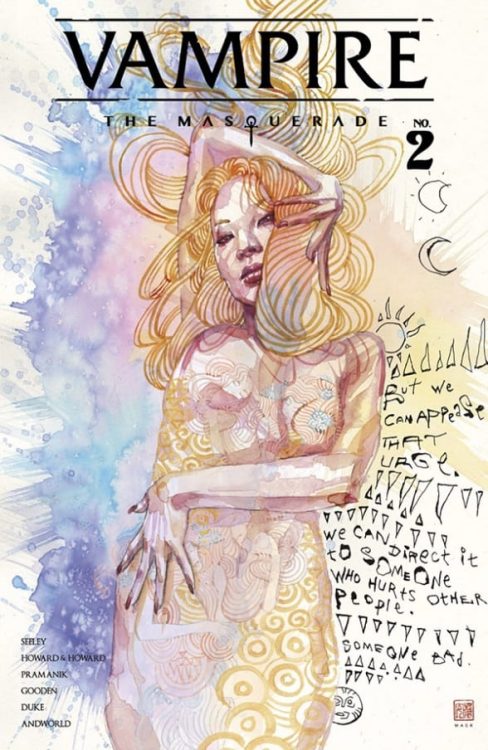
Vampire The Masquerade issue 2 from Vault Comics continues to mine the rich mythology of the role playing game while telling an intriguing set of stories. With such an abundant seam of readily available background material, part of the world building has already been completed however, turning complicated game rules into a successful narrative is no easy task. A host of movies, books, and comics have been game related tie-in’s and very little of it appeals to anyone not already familiar with the original material.
The very premise for Vampire The Masquerade has a wide reaching appeal: who doesn’t enjoy a good vampire story? And with a constant swing in and out of favour there is always an audience waiting for a new blood sucking tale to get their teeth into. Have Vault Comics managed to prepare a substantial and rewarding meal for these hungry readers?
Origins and Guidance
One of the main themes for any vampire tale in the modern age is that of mentor-ship. The idea that when one vampire sire’s another they have to accept some responsibility for them. It is a parent and child relationship and has been central to vampire stories for a number of decades with Interview With The Vampire being one of them most famous.
Tim Seeley introduced his characters to the readers in the first issue while laying out a backstory of impending war between the vampire castes. In this second issue he reminds us of this vast underworld society of vampires and their ancient tiers of leadership however this is not the main thrust of the story. Instead it quickly becomes about the growing relationship between Cecily Bain and the newly sired Alejandra Deluna.
The dynamic between the two central characters allows Seeley to examine the nature of vampires in this world. By having the old and the young, a mother and daughter, the writer is able to educate the reader as Ali herself learns of her powers and needs. This makes for some great character work, engaging and emotional, even if it does feel a touch familiar. Seeley gives his characters naturalistic voices, each with their own personalities.
Drawing Blood
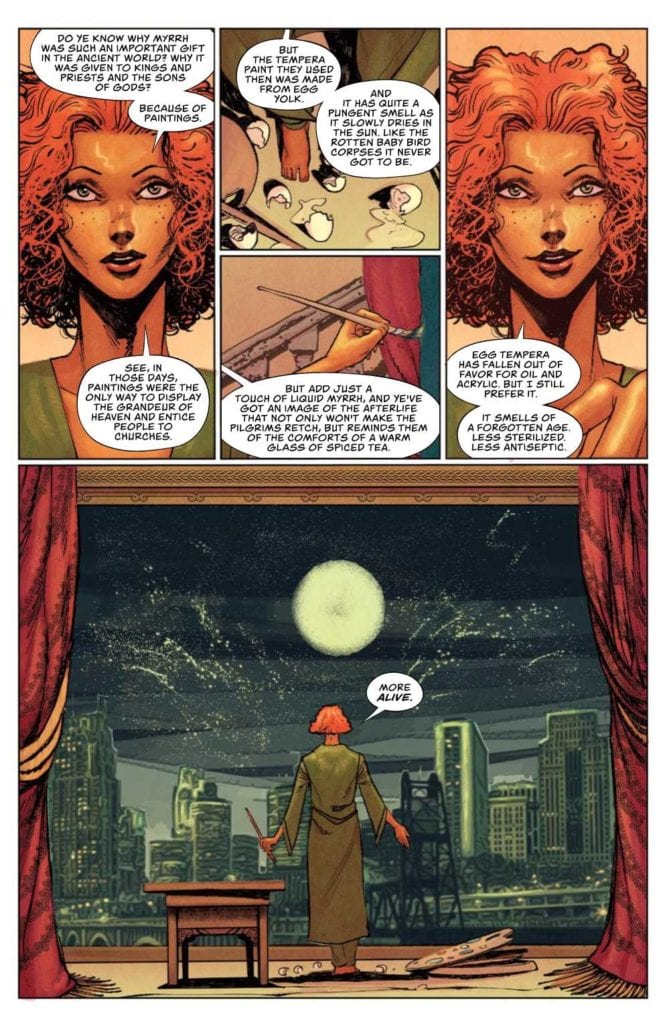
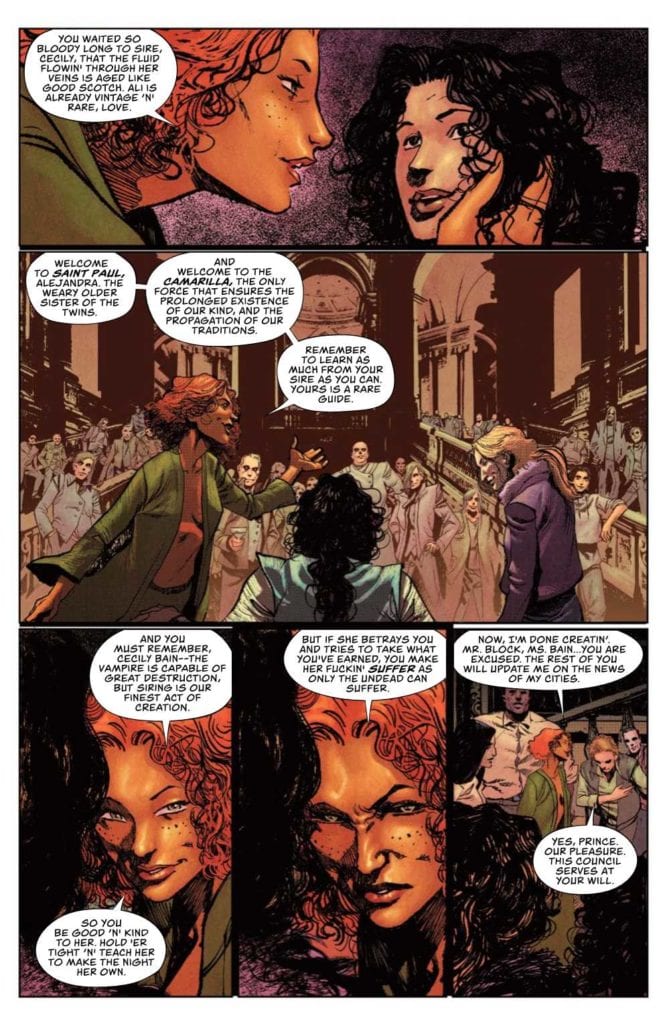
Devmalya Pramanik uses thin inked lines to bring the characters to life. With the help of colorist Addison Duke, he creates distinctive looks for each of the characters; giving one glowing orange hair, while another character’s is jet black. The simple contrast between characters makes the action easy to follow from panel to panel, especially as Pramanik employs the use of black shadows to create the murky world where the vampires dwell.
The transitions between panels and pages is surprisingly energetic considering the lack of physical action. Pramanik gives the conversational scenes a sense of drama using detailed backgrounds or environmental elements to reflect the mood. Duke’s colors also veer away from pure realistic interpretations in order to emphasise emotion or theme. The panels become saturated with a particular hue to hammer home a point.
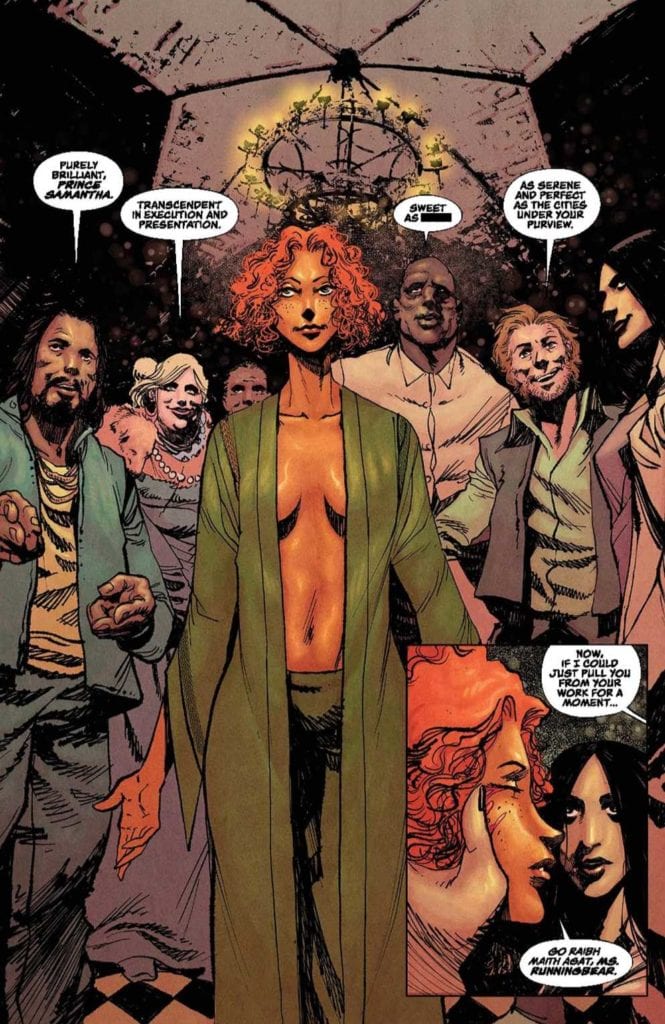
The pace of the story is kept in check by Andworld’s lettering. Large speeches are broken down into their relevant beats and spread across a panel with variable links to illustrate the changing urgency of the speech. This gives some characters a wilder, less controlled tone, and highlights the preciseness of other characters. This works especially well with Prince Samantha who comes across as a figure of authority, instilling fear and awe into her vampire subjects. She’s like Tilda Swinton in the Constantine movie.
More Anarch Tales
One of the main selling points of Vampire The Masquerade is the back up story by Tini Howard, Blake Howard, with Nathan Gooden on art duties. The Anarch Tales is a companion piece to the main event dealing with similar themes but with different characters. This second chapter features an origin story for one of the characters.
Gooden’s art style is smoother than Pramaniks, giving it it’s own look and feel. However, Addison Duke and Andworld provide the colors and letters for both, providing a consistency between stories.
The writers appear to be having more fun in this backup tale than Seeley is in the main story. They have created a cast of outcasts and are playing around with vampire cliches and genre tropes. That’s not to say it’s all roses and fangs, there’s a darkness behind the frolics with some disturbing allegorical threads weaving through the narrative.
Conclusion
Both stories featured in Vampire The Masquerade are enjoyable creature features but mask hidden depths. Like a combination of 30 Days of Night and American Vampire, this offering from Vault Comics brings classic ideas of vampirism into the modern day. It mixes politics and family relationships to tell the tales of the lost and powerful.
Engaging and entertaining, Vampire The Masquerade is a great way to spend 20 minutes and will leave you thirsty for more. It may even make you pull out the role playing rule book.
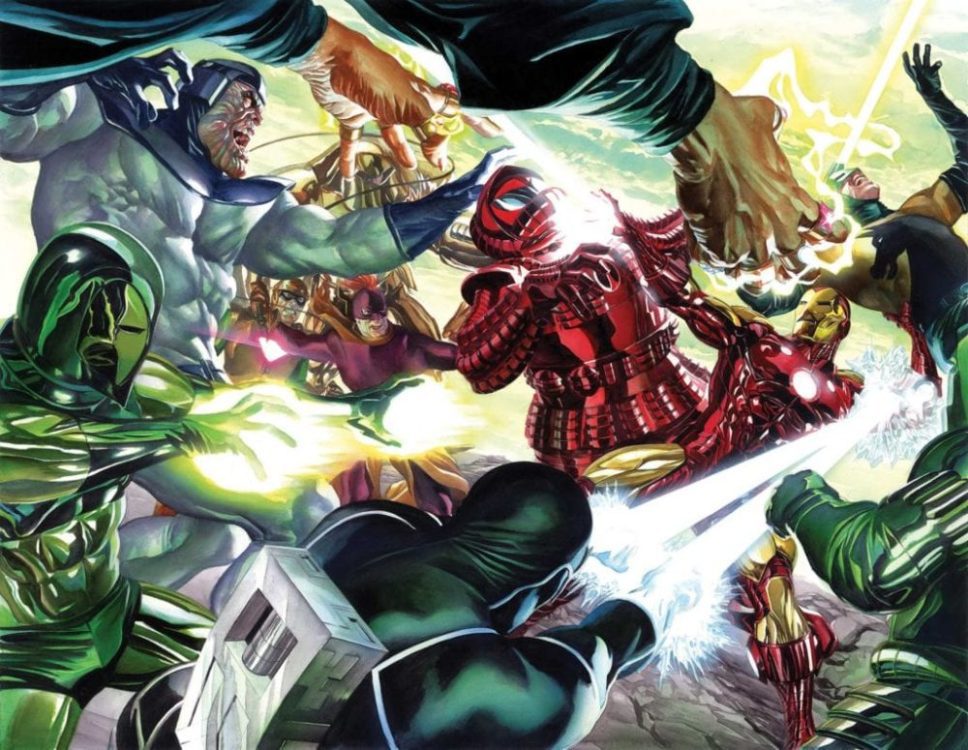
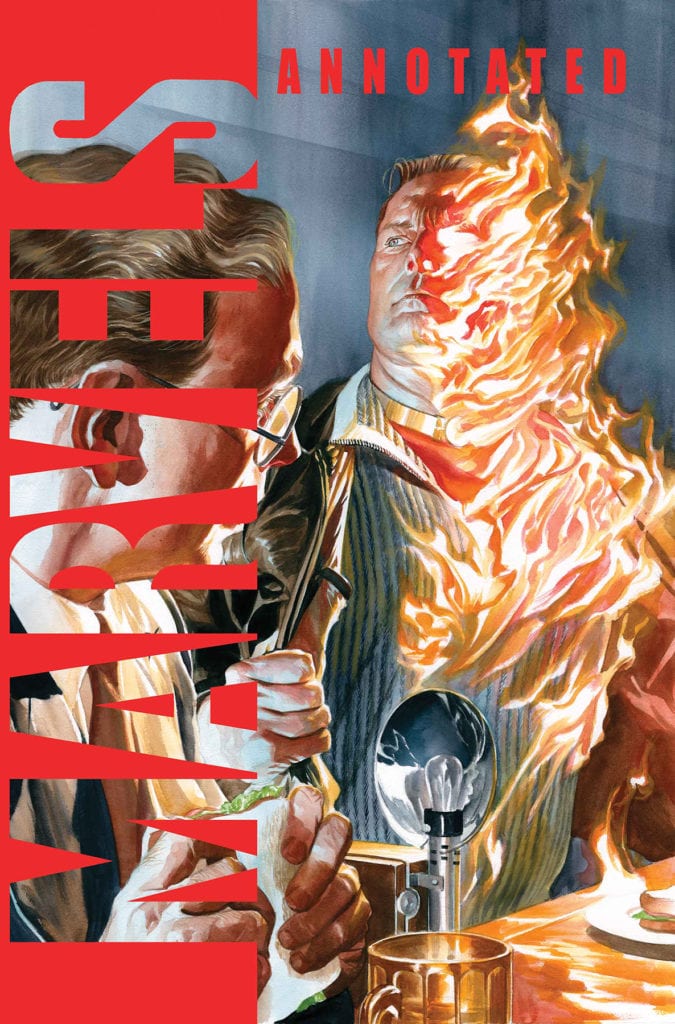 Beginning in Marvels, Ross along with writer Kurt Busiek displays how superheroes look to an onlooker. Since around World War II, superheroes capture the imagination of people. They can be as horrific as the original Human Torch and Namor and can help during times of conflict. Even after WWII, the times these larger-than-life figures appear are in reaction to events like the Civil Rights Movement. The emergence of these figures can even inspire empathy to help out others, no matter how different. The point-of-view character Phil Sheldon for example, was anti-mutant until the appearance of the X-Men has him question his view. But even people who follow these characters throughout their lifetimes can outgrow them. After witnessing the death of Gwen Stacy, Phil becomes fed up with them. Yet he doesn’t outright hate them; in fact, he encourages people to observe from a safe distance.
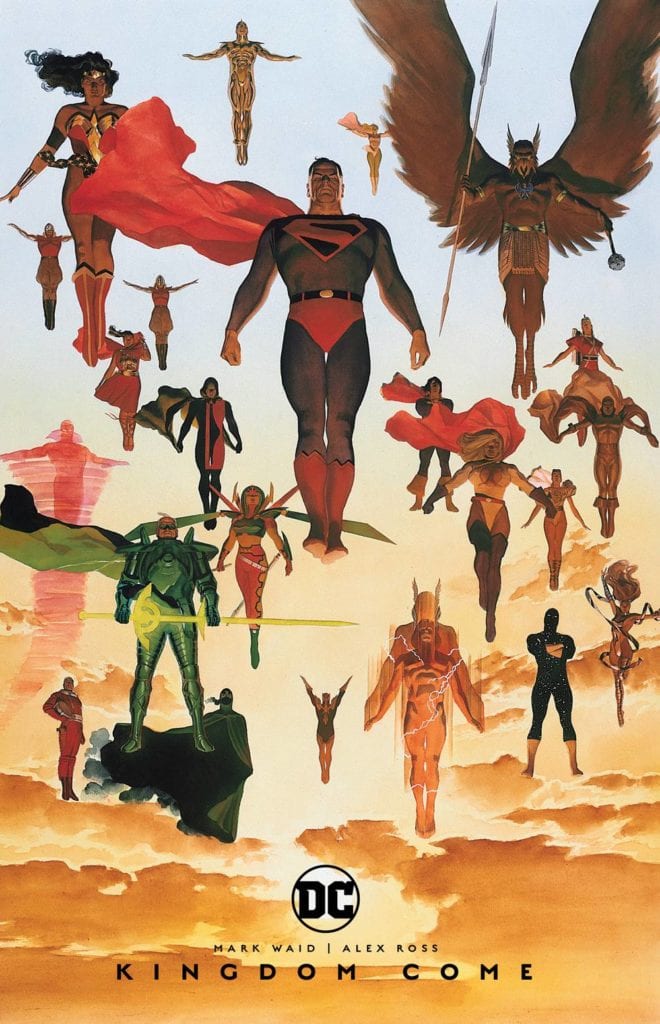 Now think of the above scenario where Phil gives up on superheroes after Gwen Stacy’s death even further. In a manner more similar to acts of police brutality, the heroes of the loud and obnoxious 90s go too far. Their actions lead to a nuclear disaster that destroys Kansas. Kingdom Come is where the superheroes of old return to confront these newer heroes. Superhero fandoms between generations will always compare how comics used to be to how they currently are.
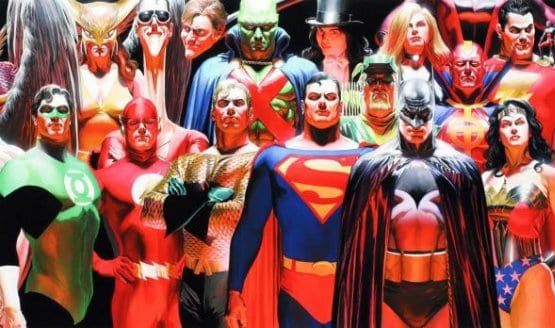
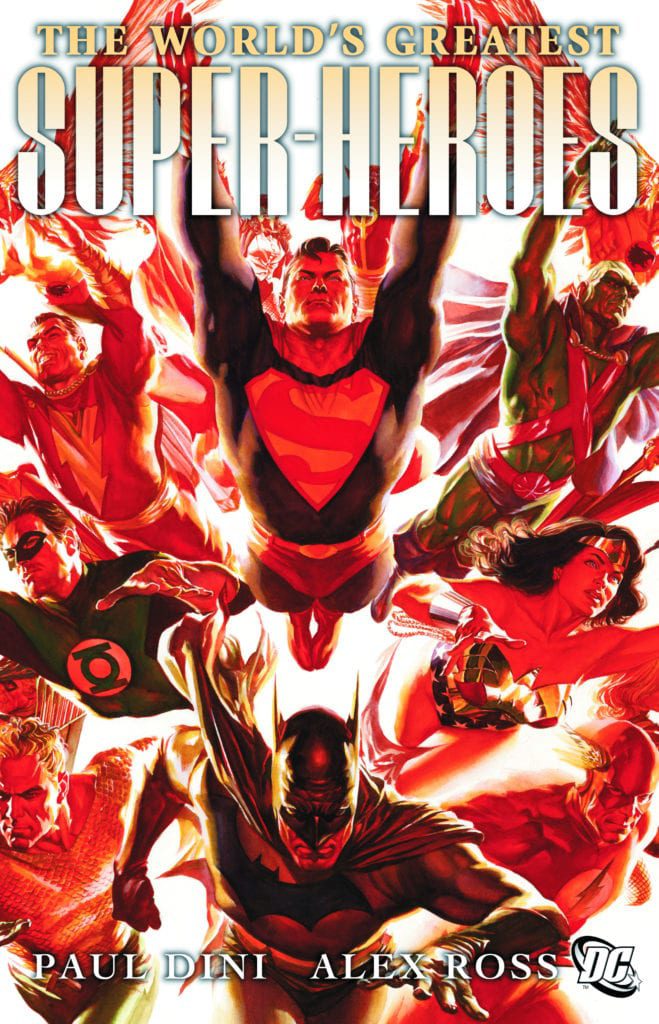 In Ross and Paul Dini’s The World’s Greatest Super-Heroes Anthology, the reader sees what the Justice League means to the world. Superman is a symbol of humanity’s potential for peace as much as Batman and Wonder Woman is for justice and truth. Unfortunately, even symbols that gather together for humanity’s benefit struggle. During a pandemic in the Liberty and Justice saga, the Justice League is pushed to their limits in trying to contain the chaos. But things become so desperate that the league has to shut down trade in some areas. A good portion of the public
 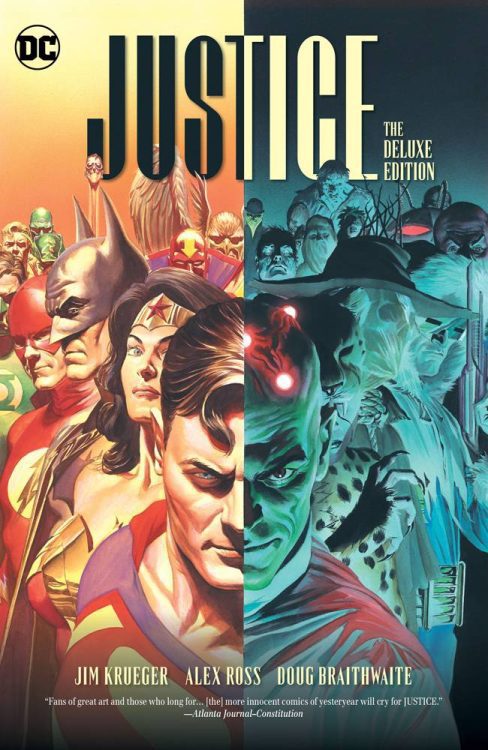 Despite this comfort, there are times when superheroes feel more like distractions than solutions to crises. Justice features the league going against the Legion of Doom after some visions of a crisis the league can’t stop. This brings up the issue of how real tragic events can’t be stopped even with the presence of superheroes. Yet superheroes are never meant to prevent or be solutions to problems. By nature, they are a reaction to events. Like when the Golden Age Superman comes about in response to street injustice in the 1930s. Superheroes might have great power, but their great responsibility comes from
 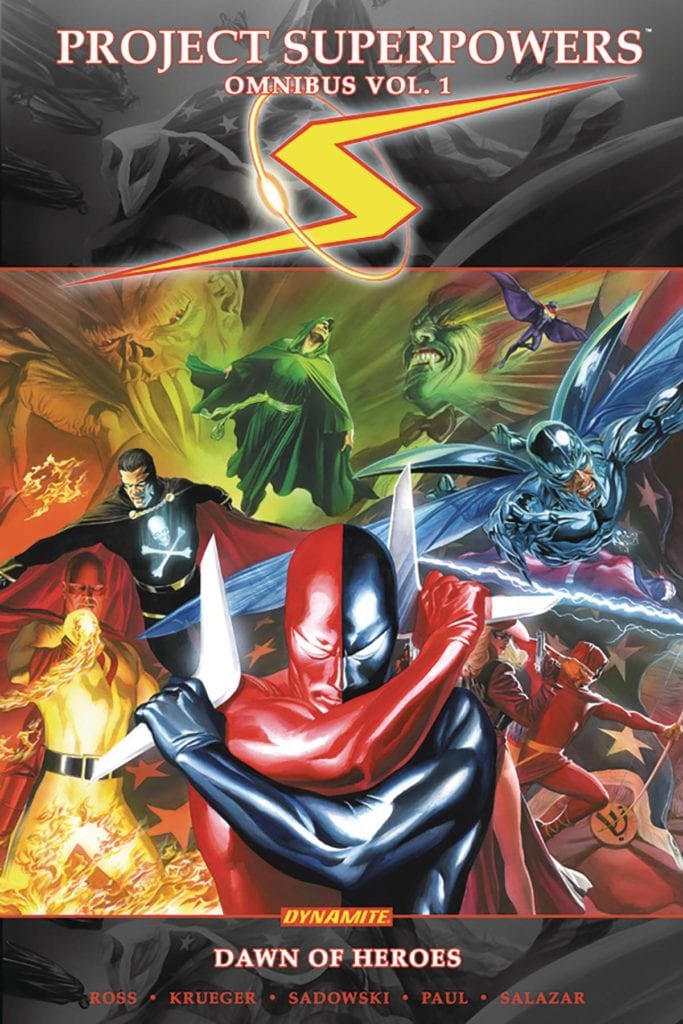 Ross and Jim Krueger’s
 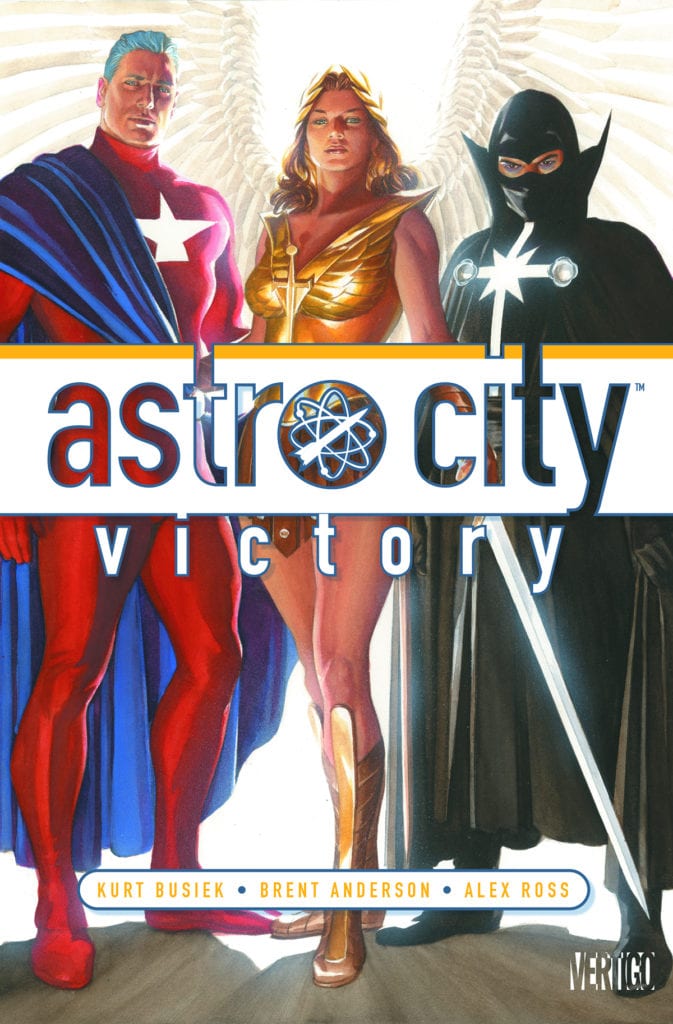 Perhaps the most incredible display of Ross’ views on superheroes is the ones he shares with Kurt Busiek. Astro City is where the tropes, characters, and settings get a good look and build themselves back up. The lives of civilians like Pete Donacek, a hotel doorman, is just as meaningful as someone like the Superman-esque Samaritan. They’re people just doing their best to help others to the best of their ability, often without reward or acknowledgment. Because superheroes are not about being the highest authority, they’re just people trying their part to make things better. Just look at the Samaritan and his annual meetings with his archenemy. It’s not a battle of powers and fists; it’s trying to find a compromise no matter what. Because despite how bleak it seems that no progress can be made for either Samaritan or Infidel, the fact they keep trying out of respect towards one another is because the potential is always there.