Shang-Chi #1 is this week’s beginning of a new series from Marvel Comics. Under fan-favorite writer, Gene Luen Yang, numerous artists like Dike Ruan, Philip Tan, and Sebastian Cheng provide several sides of the conflict. All while letterer Travis Lanham ties everything together.
Background
Shang-Chi is a character whose creation comes from a reaction to the 1970s kung-fu movie craze. Originally planned to be an adaptation of 1972’s Kung Fu TV show, Marvel instead adapts elements from the pulp villain Fu Manchu. Under Steve Englehart and Thanos creator Jim Starlin, Shang-Chi combines those previous elements with the late Bruce Lee to capture the kung-fu trend. Shang-Chi would face his father, the Fu Manchu stand-in Zheng Zu in rejection of becoming an assassin. With a movie featuring the character scheduled to appear in February 2021, now is probably a good time to acquaint with the character. But after some guest appearances, people should know Shang-Chi as a character more than the legend.
Shang-Chi #1 The Burden of Family Legacy
Shang-Chi #1 pulls the reader into the life of the title character. People who are unfamiliar with Shang-Chi probably only see surface-level details like his impressive martial arts skills. It’s something that indeed defines his life, even at his attempts to live an everyday life. At the same time, this background is also what isolates him. He is so used to people trying to kill him that just a handshake from a pretty woman with no ill intent surprises him. But nothing seems to keep Shang-Chi away from his family past. Both when his boss brings it up and when his father’s cult is out for him again. It’s hard not to feel bad for the guy after all of this.
This time, things are just a little bit different. A new head of this cult, Sister Hammer, is out for blood to claim total control of this “Five Weapons Society.” But the only way she can do that is by eliminating Shang-Chi. By the end of Shang-Chi #1, however, Shang-Chi does get a personal stake in this story through his relationship with Sister Hammer. One that could be hopeful or outright devastating. Anything specific would spoil the tale.
How Art Creates The Legend
Shang-Chi #1 features several artists to illustrate the different aspects surrounding the title character. Philip Tan creates a very detailed that make what he draws look larger than life. The moments frozen in time look like portraits with Sebastian Cheng’s colors displaying the characters in all of their glory. Something the captions from Travis Lanham enhances through slowing down the reader’s gaze so that the reader witnesses them.
Compare this to Dike Ruan’s more relaxed art style. By separating Shang-Chi from his legend, readers find a normal man. Not that it takes away his ability to handle himself in a chaotic fight. The movements through some dynamic panels showcase not just the speed at which Shang-Chi moves but how he can cover multiple enemies more than a few bullets could.
See The Legend of Shang-Chi #1
Shang-Chi #1 is off to a great start by introducing readers to a character with legendary influences. But also by trying to show that despite this origin, Shang-Chi is still just trying to live his life to the best of his ability. What can we expect when the Five Weapons Society goes at him with full force? We’ll have to wait and see.
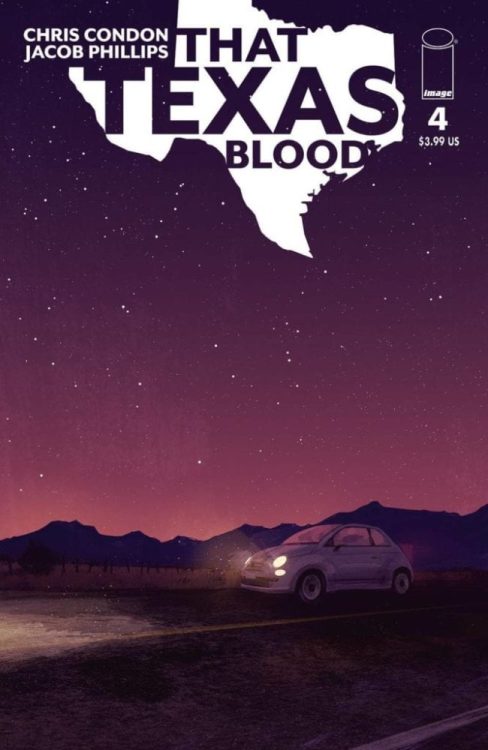
THAT TEXAS BLOOD #4, available from Image Comics on September 30th, continues the slow, simmering build toward uncovering the cause of Travis’ death and what that means for Randy. Light on action and forward progress of the main plot, this issue swells with anticipation.
Cover Art
Chris Condon loads the back pages of this series with little insights into what inspired the comic, so we know Jacob Phillips’ cover inspiration was a The Simpsons episode titled “Mother Simpson.” Having some recollection of that episode, it nails the emotional imagery nicely. It’s a quiet moment during dusk where Randy’s girlfriend is driving to (surprise) meet him, and it feels hopeful and dreadful at the same time. Phillips pulled off some tremendous emotional punch.
Writing
Condon’s story doesn’t have a lot of forward progress in the series, but what it does do is build, build, build on the tension. Randy struggles to come to terms with his brother’s death, and you can feel the conflict within him as he can’t quite figure out what to do next. The Sherriff’s questioning of the local barkeep, and his subsequent talk with his wife, echoes Randy’s stress and confusion about the next steps in expectation in whatever is about to happen.
The new subplot is the imminent arrival of Randy’s girlfriend, and her journey feels ominous in the way you feel anxious watching a mouse about to walk into a lion’s den. She’s going after Randy out of love and concern, but there’s little doubt she’s not prepared for what’s about to happen.
And what is about to happen? I’m not sure, but Condon has done a masterful job lighting a very long fuse on a powder keg about to blow.
Pencils/Inks
Phillips’ art is less detailed in this issue than previously. Where the previous issues had more defined linework, this issue missed some of that detail that made the characters feel like stylized extrusions of real people and closer to vague character placeholders. It’s all there – the town, the backdrops, the atmosphere, but some of the sharpness, especially in the faces, lowered the impact of the characters’ emotions. That lack of detail was a bit of a miss when the issue is so focused on exposition and inner turmoil.
Coloring
Linework aside, Phillips’ coloring work in this issue is top-notch. The entire issue jumps from one scene to the next, filtered through harsh lenses. The bar scene where something(?) is about to happen to Randy is saturated with red. The dusk scene with Randy’s girlfriend driving down the highway is bathed in bluish-purple to hint at the sadness she doesn’t know is about to hit her. Phillips executed an excellent demonstration of mood through color.
Lettering
Phillips’ lettering work adds to the tension of the story by using a small font in over-sized word balloons to make the dialog feel heavier. It’s an excellent technique for public speaking that works equally well in comic form. Talk softly, so the audience has to lean in and pay closer attention. By keeping the dialog lettering compressed inside larger bubbles, the reader has to lean in and focus more intently on what’s being said. The dialog feels weightier and more important. This technique is executed so well; it almost takes away from the art in a few panels. This is excellent lettering work by Phillips.
Conclusion
THAT TEXAS BLOOD #4, available from Image Comics on September 30th, turns the heat up a few ticks to a fast simmer before the entire town boils over. Short on action and plot movement but very long on tension and anticipation, I sincerely hope the climatic impact pays it off. I eagerly recommend this issue and can’t wait to see what happens next.
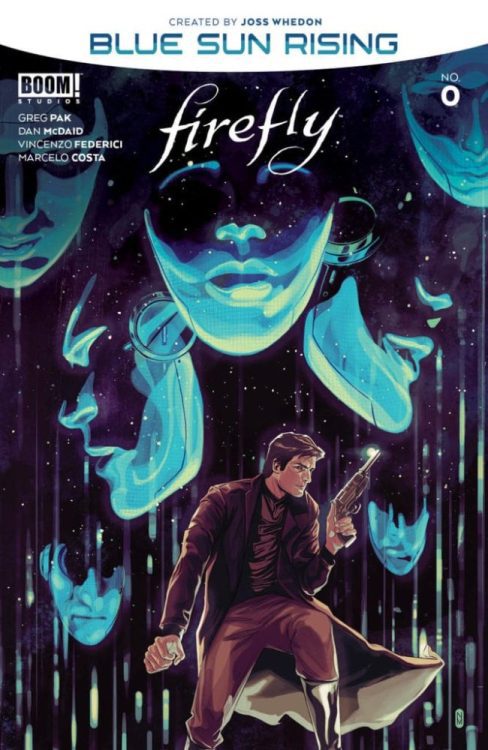
FIREFLY: BLUE SUN RISING #0, available this Wednesday from Boom! Studios, brings with it a cross-over event for the world of Firefly. This issue is the first of two, and only one of several events worth keeping an eye out for.
***SPOILER WARNING***
It’s hard to believe that the beloved show, Firefly, has grown its presence in the comic book world enough to warrant a crossover event, and yet that is exactly what is happening here. At least two issues are going to be revolving around the Blue Suns – the latest big bad to enter the universe (and cause Mal no end of problems, naturally).
Seeing a bit more of this new big and terrifying corporation will prove to be interesting, of course. They’re the replacement for the Alliance, and have proven to bring with them their own series of complications.
That isn’t the only exciting bit of news to be looking forward to this fall. The Blue Sun Rising arc’s release has been carefully timed. For what? To increase the excitement for Firefly’s latest graphic novel, Firefly: Watch How I Soar. Set to release sometime in November, fans can probably guess who this novel is going to follow (hint: it’s Wash).
The Writing
Firefly: Blue Sun Rising #0 isn’t the first deviation from the main plot for Firefly. It isn’t even the first time it’s happened in this latest run. As it turns out, Malcolm Reynolds has been pretty busy as of late, and that’s creating a whole lot more material to write about.
As with the main series, this issue was written by Greg Pak. He’s really taken the world of Firefly and turned it into something of his own making. A fact that couldn’t possibly be clearer in this issue.
It’s interesting to see how much the team has changed over time, but what’s more interesting in this case is watching how the enemies have changed. It’s a depressing thought – the idea of the Alliance merely (and quickly) being replaced with another major antagonist. Yet it’s also painfully realistic.
This new enemy, the Blue Suns, seemed easy to overlook at first. Typical bureaucrats and businessmen. But now…thanks to this crossover event, that’s no longer going to be a possibility. The infusion of hard science fiction elements makes these guys a larger threat than ever. Though at the same time, it feels to be at the cost of some of the original elements and tones that made fans love the series. Only time will tell how it all plays out.
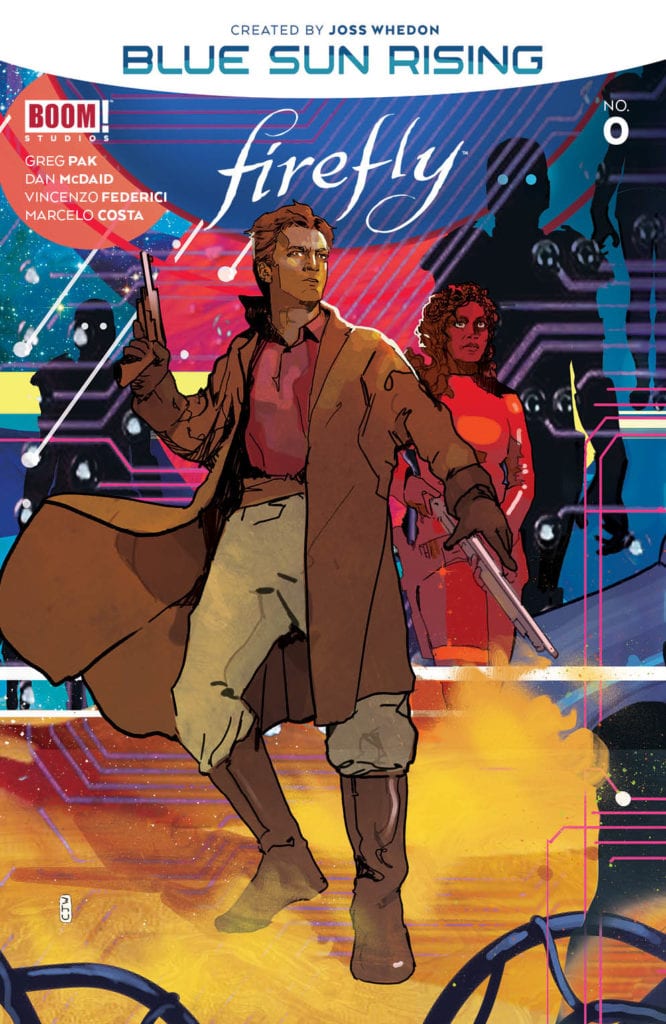
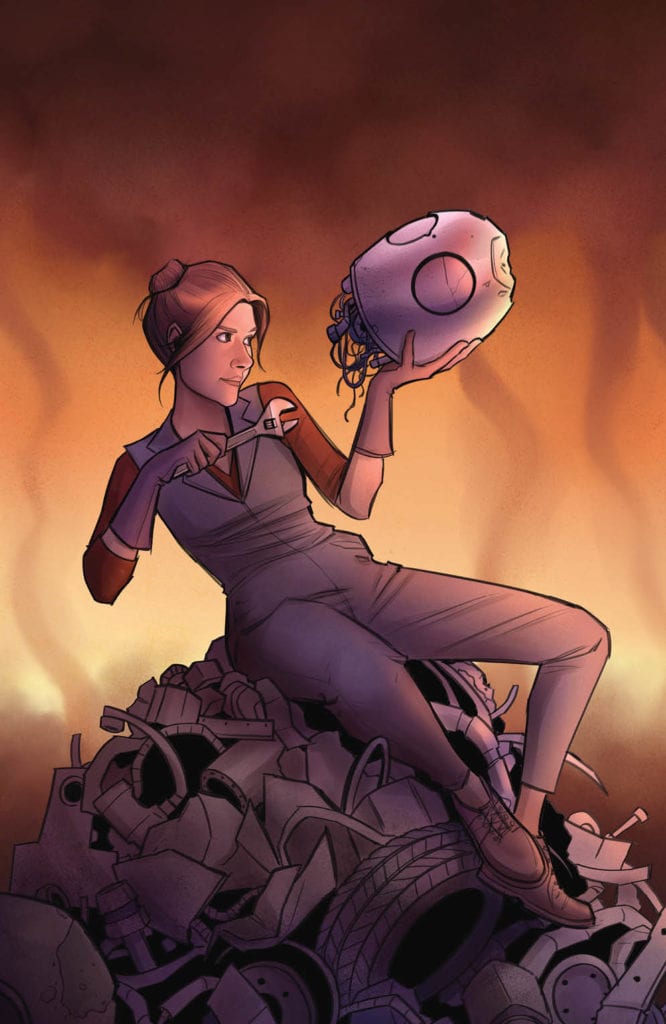
Fans of Kaylee will love this variant cover of Firefly: Blue Sun Rising #0.
The Art
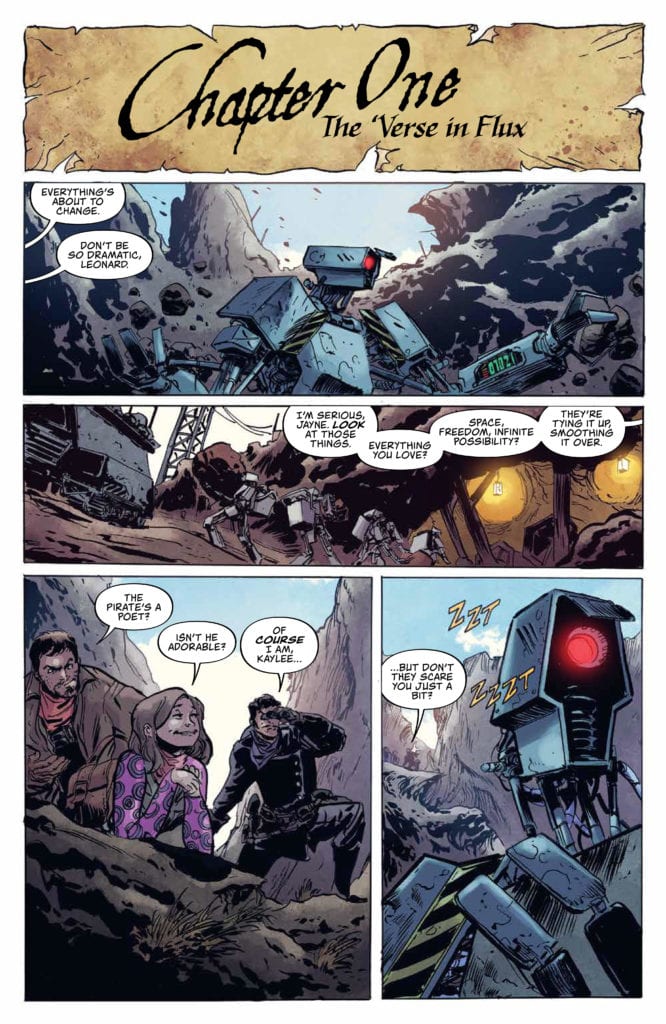
Firefly: Blue Sun Rising #0 contains artwork as bold as the changes within. It really does feel like our characters are fighting for their lives on outer worlds and moons – with nothing but dirt and danger to keep them company.
Dan McDaid took the lead for this issue, working alongside Marcelo Costa (colors) and Jim Campbell (letters). There’s plenty of action to spot, and it admittedly looks even more dramatic thanks to the lovely backdrops, making the darker figures really pop.
The sense of motion and impact is also exceptionally done – especially when there’s an explosion to portray (and this is the Firefly crew we’re talking about…). The final scene portrayed does raise some questions, and eyebrows, as it pulls in elements unfamiliar to Firefly’s series so far.
The ‘Verse is in Flux in Firefly: Blue Sun Rising #0
Conclusion
Firefly: Blue Sun Rising #0 is the start of a new crossover experience for Firefly, and from the looks of it, a whole new complication for the crew. There’s no doubt that what happens here is going to affect the main continuity, the only question is, how will they handle it?
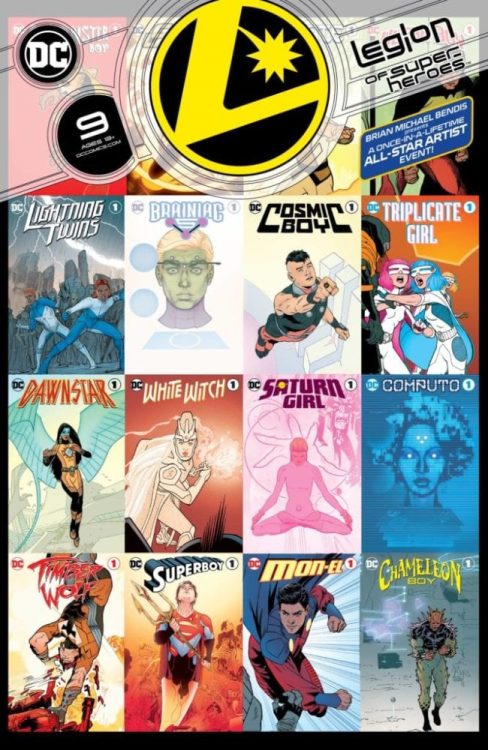
On September 29, DC Comics released Legion of Superheroes #9. Writer Brian Michael Bendis, colorist Jordie Bellaire, and letterer Dave Sharpe are joined by a plethora of artists doing different pages, including regular series artist Ryan Sook, Mike Grell, Nicola Scott, and Mitch Gerads, among many others. The trial of the Legion concludes as a new threat looms on the horizon, and a new romance blooms!
Writing
Legion of Superheroes continues to be one of the best books that Bendis is writing at DC. Perhaps it is because a rebooted version of a bunch of teenage heroes with a lot of growing up to do, along with an unexplored 31st-century world, gives Bendis a lot of leeway with his creativity and storytelling choices versus a more established and grounded character.
This issue does turn into a giant talkfest at times. It should take a bit more advantage of its futuristic and galactic scope by getting out of the United Planets’ legislative chamber and out into the universe.
One revelation from this issue may simultaneously excite and annoy longtime fans of the Legion of Superheroes, as Bendis’s future threat sounds like a rehash of a beloved and classic Legion story. However, with a rebooted timeline, a retelling of this story in this new futuristic setting could offer a chance for a fresh spin on a classic (in the style of Marvel’s Ultimate Spider-Man). Readers will have to wait and see, but Bendis does do his best work when he isn’t bogged down by modern-day continuity, and the Legion provides him with a wide open future.
Art & Colors
Many artists bring their A-game to this issue. Ryan Sook’s work is always reliable, while Mike Grell shows off a very retro-looking Saturn Girl costume on his page.
One stand out is Nicola Scott’s work on page nine. Her character work on Timber Wolf, Saturn Girl, Lightning Lad, and Cosmic Boy is solid and is well-complemented by Bellaire’s colors, who colors the setting with a nice mixture of oranges, grays, and blacks to accentuate the colors of Timber Wolf’s costume. The tears on Saturn Girl’s face are also a nice touch as Timber Wolf tells the Legion founders his sad origin story.
Tula Lotay’s page also stands out. It is a one-page panel of Dream Girl. Her character design on this page is drawn gorgeously, and Lotay and Bellaire really capture the luminosity that the character exhibits through their color and design work. This also happens to be the page where Bendis reveals the looming threat to the Legion, so it’s worth checking out!
Mitch Gerads page is also worth bringing up, not only because Gerads does beautiful work, but his page also contains a major revelation about the romantic lives of two legionnaires, a scene that plays to Gerads strengths, as his style, from the shading of the colors to the design work, lends itself to quiet character moments.
Letters (And Art…Again)
Another page that stands out for both its art and its lettering is Riley Rossmo’s page. Rossmo’s work on this page almost gives it the appearance of a Teen Titans Go! cartoon if it had a little bit more of an anime influence (I guess in this case, it’s more appropriate to talk about the comic page as having a manga influence?). Rossmo helps to bring a frenetic energy to the conversation that Triplicate Girl is having with herself.
Here, Rossmo is helped by Sharpe’s lettering, which is not only colored to match each triplicate but also moves and acts as an excellent supplement to the high-paced back and forth between this character and…well…herself. Sometimes, this issue can get a little bogged down in some back and forth word ballooning, but it works for this page.
Conclusion
Legion of Superheroes continues to be a strong book. The comic still continues to get a bit bogged down in talking that sometimes doesn’t go anywhere, but the art is to die for! It also continues to offer a unique setting for future stories. As long as it can balance all of its characters and offer moments of excitement in between their interpersonal development, this can be one of DC’s stronger titles.
What did you think of Legion of Superheroes #9? Tell us in the comments below!
With all the legacy of the comic book industry that has made its way into TV and movies over the past decade, it can easily be tempting to immerse yourself in this culture and read everything you can reach. This can be a problem as the comic industry releases dozens of new titles a week and thousands a year. In this regard, it becomes almost impossible for beginners to understand where to start reading. Only on rare occasions can you come to a comic store and buy one episode of Batman or the Avengers without having to know what happened before and have a good understanding of what is happening at the moment. Comics can also be a great topic for your university essay, as it’s original and interesting. Don’t believe me? We’ve put together a list of the best comics for you so you can choose one or two for your essay topic.
Watchmen
At first glance, this is a simple story about former “superheroes” and the events surrounding the mysterious murder of one of them. In fact, behind the ridiculous names and costumes hides an epoch-making work that has influenced not only the comic book industry but also modern cinema. Watchmen is the only comic to be included in TIME Magazine’s 100 Best Literary Works of the 20th century.
This work uses 100% of the potential of the comic as a form of presentation. The history of the Watchmen is so multi-layered and detailed that all other forms will simply kill one or another aspect or plan laid down by the authors. The comic is literally packed with metaphors, allegories, symbols, references to real events and personalities. Since the release of the film, the view that this comic cannot be filmed has become even stronger, so take the challenge and write an essay about it. If you have doubts or you are not sure that your essay will be worthy of the original, then just buy essays online.
DC: The New Frontier
This is not the first or the last comic on our list, which takes place in an alternate universe. Specifically, in this story, Darwin Cook encroaches on the laurels of Alan Moore, since here, like the Watchmen, the heroes live in a universe as close as possible to the real one. Events unfold around Green Lantern Hal Jordan, Martian Hunter John Jones, and Flash Barry Allen, who are just starting their superhero careers. Retired Justice Society, Superman, and Wonder Woman work for the government, and Batman is hiding from the authorities. In this world, superheroes are one of the most discussed topics since the whole world is closely watching them.
Drawing is the hallmark of this comic. The style of the artist Darwin Cook is somewhat reminiscent of the cult Bruce Timm and Jack Kirby. The drawing is perfect for the atmosphere of the comic; you can even believe that it has illustrations from posters from the 60s. Isn’t that what you want to write about immediately?
Maus by Art Spiegelman
Art Spiegelman’s Maus is the only comic strip to win a Pulitzer Prize. Jews are mice; Germans are cats. The artist Spiegelman used a drawn comic strip to depict the Holocaust story he heard from his own father. On a global scale, the book has not so much thematic as a breakthrough value. After being awarded the 1992 Pulitzer Prize to Maus, comics were no longer perceived as color pictures for children’s entertainment. And now such things are respectfully called graphic novels.
Spiegelman is shocking that he talks about fascism without exploiting the techniques and plots that have already become standard in the literature on the Second World War. You can use this comic strip for history or sociology essays.
Daredevil
After the end of the previous episode, Daredevil moves to live in California and starts a new life there with a new lawyer job. In case you don’t know, Daredevil is a blind superhero who sees the world around him in a completely different way from everyone else. Both Mark Wade and artist Chris Samnee use it brilliantly: their comics are full of smells and sounds that convey exactly how a person “sees” everything around without sight, but with additional abilities. Chris Samnee is also a great painter: comics are very clean, clear, and detailed, in the best traditions of the 60s, but with strange acidic pop-art inserts in suitable places. The interweaving of styles is exactly what can be discussed in an essay.
Comics have long become an independent literary genre – important and noteworthy. Serious writers and talented artists use the graphic novel format (yes, that’s what comics are now called) to tell the most incredible or, conversely, completely real stories. And you can use comics for your writing, and you won’t regret it!
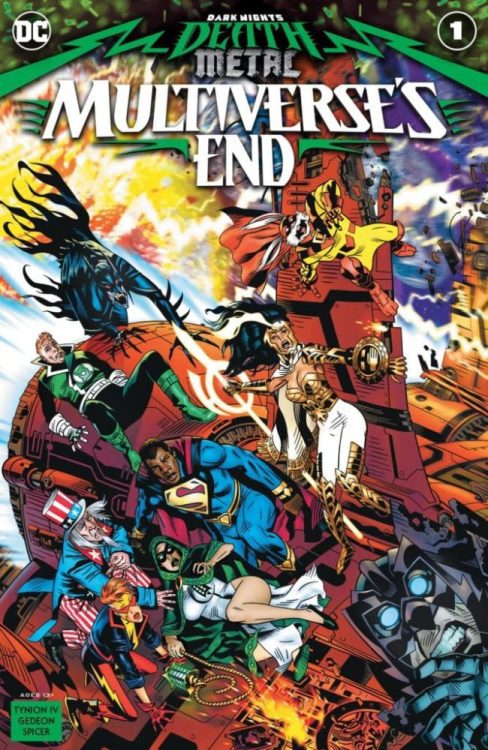
DC Comics releases Dark Nights Death Metal: Multiverse’s End #1 on September 29. Writer James Tynion IV, artist Juan Gedeon, color artist Mike Spicer, and letterer Rus Wooton take readers on a journey through the remaining Earths of the multiverse as the Green Lanterns and the Justice League Incarnate try to disrupt Perpetua’s plans to reshape all of existence, with help from an unlikely ally.
Writing
This issue was a lot of fun! The Justice League Incarnate is one of DC’s most criminally under-utilized concepts, but it’s good to see them taking part in Snyder and company’s zany, multiversal epic. Tynion does an excellent job capturing the voice of each character, with some of the best dialogue saved for the interactions between Guy Gardner and Captain Carrot. Astute readers will also recognize a smattering of easter eggs to famous and infamous moments in DC history, including a certain “refrigerator” reference (which made sense as a nod to the reader but may have been in poor taste. Of all the nods to choose…).
Still, this issue captures the right balance between being a fun, action-packed adventure that borders on the cartoony while still carrying the weight of a story where all of existence hangs in the balance.
Art and Colors
Gedeon’s art style is an excellent match for this story. With a character like Captain Carrot taking up so much time in this book, Gedeon’s style captures the more cartoonish moments of the book well. However, while he is able to capture the cartoon energy of certain scenes, there are other panels that he draws with a lot more solid detail and line work.
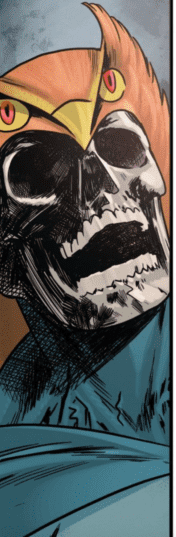
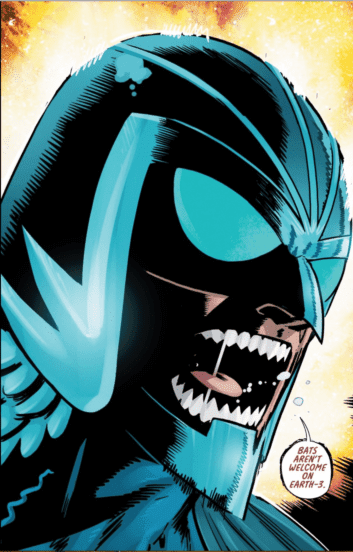
Up close, Gedeon’s character designs lose their cartoonish quality with their detail and shading.
Spicer’s colors complement Gedeon’s art exceptionally well. For up-close shots, like those above, his colors are more nuanced, with the pre-Crisis Owlman skeleton and helm almost having a paint-brushed look. For the other more cartoony looking frames and the action sequences, his colors are more substantial and pop on the page.
Letters
Wooton’s letters serve this issue well. Many of the characters are given their own unique word balloon styles. Even though there is a small amount of DC-Crisis history exposition, it doesn’t slow down or crowd out what is overall a very action-driven issue that features cameos from across the DC multiverse.
Conclusion
This issue was a fun installment to DC’s Death Metal epic. Again, seeing the Justice League Incarnate is always a delight. Owlman’s heel turn (on the villains) is an excellent exploration of his character and how the original “evil version of Batman” processes the presence of a bunch of evil Batman from the Dark Multiverse. It would’ve been great to see Calvin Ellis’s Superman get a little more panel time, but hopefully, this isn’t the last we’ll see of him.
As Guy says in this issue, all this Crisis stuff may indeed make our heads spin, but if our heads are spinning, we ought to at least have fun while it’s happening. This issue will help with that.
What did you think of Dark Nights Death Metal: Multiverse’s End #1? Tell us in the comments below!
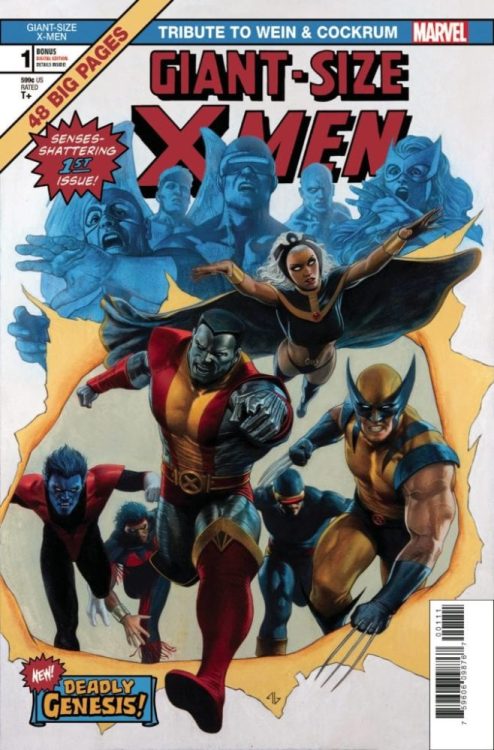
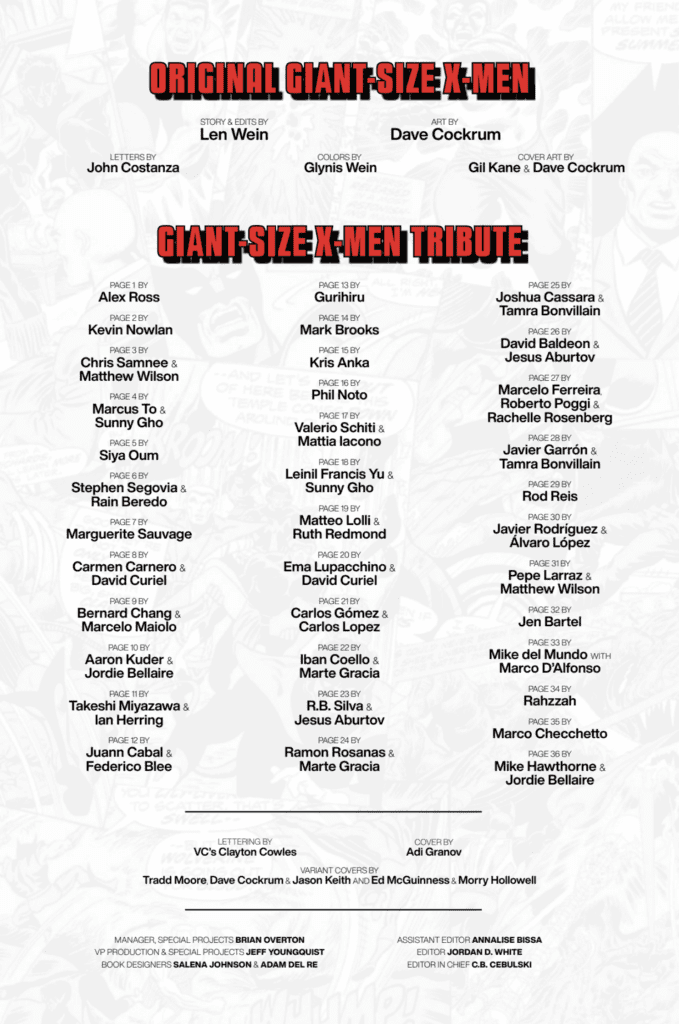
On September 30, Marvel Comics releases Giant-Size X-Men – Tribute to Wein & Cockrum #1. This issue retells the original tale from Len Wein and Dave Cockrum 1975’s Giant-Size X-Men #1, with some minor updates in outdated language and over thirty-six artists paying tribute to the story, with each artist doing a different page. VC’s Clayton Cowles letters this new edition.
In the age of Jonathan Hickman’s Dawn of X, with its emphasis on Krakoa, it only makes sense to re-release the first issue that introduced the living island. This issue is a fine tribute to Wein and Cockrum’s classic story, with unique material in the back, including interviews by Jess Harrold from the wives of Wein and Cockrum, Christine Valada, and Paty Cockrum, as well as a few words by Chris Claremont.
Two notable pages stick out, in part because the original images are included in Claremont’s tribute. The first is by Carmen Carnero and David Curiel, featuring an image of Storm taking flight in Africa to answer the prayers of her people. The second is Mark Brooks’ image of the assembled New X-Men in the Westchester mansion. Carnero and Curiel’s take on Storm de-sexualizes her a bit, gives her a more stiff character design, and more of a scowl compared to the original image. Brooks’ image is a beautiful homage to the original assembly of X-Men, with updated character designs, gorgeous colors, and a metaled-up Colossus.
Cowles does an excellent job in this issue of updating the original lettering in this new edition, making the letters a little bit more substantial and legible without changing the look of it too much from the original.
Fans of the X-Men should love this issue. It’s a gorgeous tribute to the comic that changed X-Men forever! Hardcore fans will love revisiting the story and will love the bonus material. This is also a great tribute to release at this time when X-Men stories are focused on Krakoa. Revisit the tale that started it all! Or at least, got it started again!
What did you think of Giant-Size X-Men – Tribute to Wein & Cockrum #1? Tell us in the comments below!
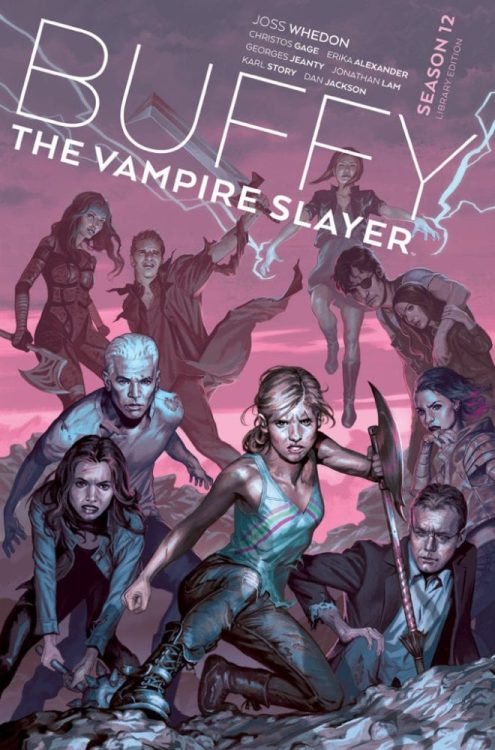
Newly published by Boom! Studios, the library edition of Buffy the Vampire Slayer: Season 12 collects BtVS: Season 12 #1-4 and Giles: Girl Blue #1-4 in hardcover. Previously published by Dark Horse, the book features the writing talent of Christos Gage, Erika Alexander, and Kel MacDonald. Illustration, pencils, and inks contributions by Jonathan Lam, Georges Geanty and Karl Story, and Yishan Lee. Further, color talent by Dan Jackson, Rod Espinosa, and Tony Galvin. And finally, lettering contributions came from Richard Starking, Comicraft’s Jimmy Betancourt, and Steve Dutro. Such diverse talent makes for a dynamic reading experience.
Included in Season 12‘s blurb, the YouTube reviewer Geeked Out Nation is quoted describing the book as “the perfect love letter to fans and this series.” You will find yourself agreeing with Geeked Out Nation’s assessment.
First and foremost of the Season 12 stories is Giles’ spin-off entitled “Girl Blue.” Written by Erika Alexander across four issues, it’s the story of Giles magically going undercover as a teenager at a Compton high school. Through many whirlwind plot twists and cinematic storytelling, we come to love a new side of Giles as he falls in love with a mysterious student at the school.
This series is the longest of the three revolving around the mystery of missing teachers and students getting progressively dumber. With the help of an unlikely ally, Roux, Giles can defeat a corporate and demonic evil.
Reckoning
Through screenplay-like use of slugline captions and extended flashbacks, what is essentially a conventional Buffyverse anti-capitalist demon-of-the-week story gets elevated to a character study of someone new. For Giles, in the body of a teenager, allying himself with Roux ended up changing him. Indeed, some have argued that Giles’ attitude in Girl Blue is out of character. But, freeing oneself of that judgment, you can appreciate the arc as another example of the themes fans love in the Buffyverse. Themes of friendship, anti-prejudice, and holding fast to convictions.
BUFFY RECRUITS UNLIKELY ALLIES.
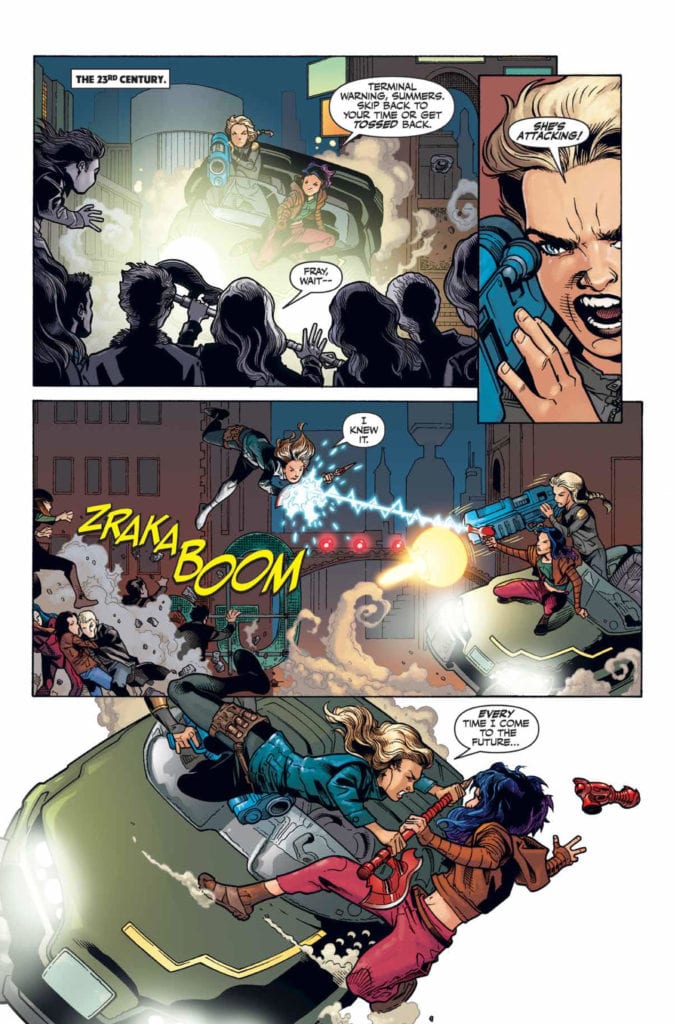
In the second series, “The Reckoning,” our favorites from Buffy and Angel team up to prevent Hell on Earth using time travel. It has all the style of Infinity War with the heart of Buffy. Sacrifices have to be made, but no hero dies. In a twist of all twists, Buffy doesn’t have to go to Hell again. It’s a story about legacy and the consequences of changing the future. Buffy and the gang are full adults now. There’s no turning back, only forging ahead.
With that in mind, the final single-issue stands as a perfect ending. Xander and Buffy visit a comic book shop. While there, Xander leaves Buffy to browse and maybe find the book that’ll turn her onto comics. Xander then discovers the cashier being strangled by a disgruntled vampire customer. Buffy saves the day, of course, but a young girl witnessed the entire thing. The girl turns to her mother while they’re checking out and says, “Mom, why didn’t you tell me superheroes were real?” Her innocent question warms the heart and sounds like a valentine to the fans because, in Buffy, we have the nearest thing to a real superhero.
A La Mode
Beyond the lovely storytelling, each series has its own artistic style and motifs. In Girl Blue, the characters are drawn in an expressive yet semi-cartoonish manner. The letterer had fun creating SFX as a method of foreshadowing, while the artist often used background elements to tell the story. These motifs make for a dynamic and layered comic.
The Reckoning’s artistic style being like DC with its clean lines, warm coloring, and crowded panels. The styling fits the grand themes of legacy and martyrdom. In other words, the art makes the book feel big.
Furthermore, the final story is drawn in an imitation of anime as befits the reference to Sailor Moon and light-hearted nature of this one-shot.
As a whole, thematic artistry and a sense of final catharsis make Buffy the Vampire Slayer: Season 12, a satisfying read for fans old and new, whether it be your transition into the Boom! Studios reboot or your ending with the Buffyverse, the library edition is worth picking up for any Buffy lover.
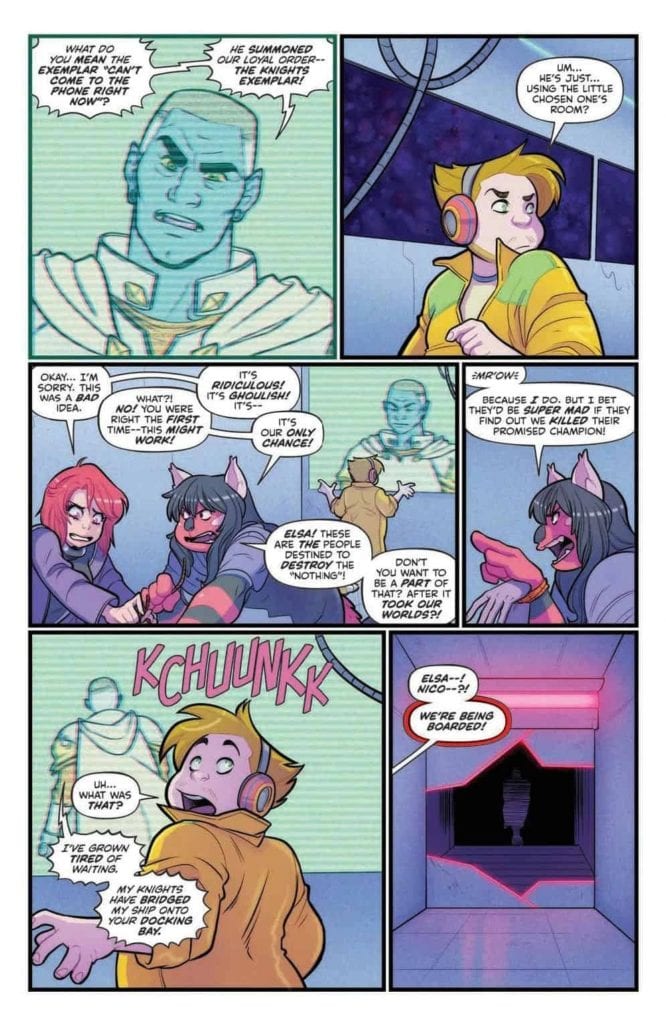
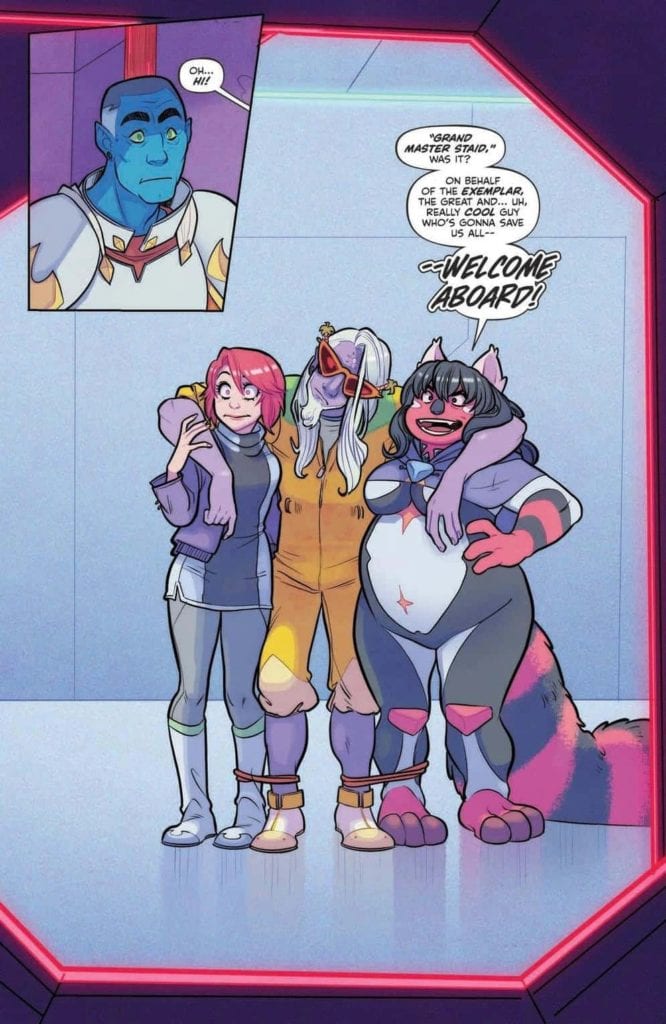
VOYAGE TO THE STARS #2 hits comic book stores on Wednesday, September 30th, detailing the fallout of last issue’s disastrous accident. Tucker faces the fallout of unintentionally caused the death of the Exemplar. But the call is made—the Knights Exemplar are en route to the team’s location. The solution? They decide to carry around the dead Exemplar in “Weekend at Bernie’s” fashion. The events are sure to be both hilarious and surprising for readers.
Story
After a brief recap of the voyagers’ team and mission, Ryan Copple and James Asmus’s narrative dives into the frantic atmosphere on the ship. The crew scramble to find a way to keep the Knights at bay in hilarious fashion despite the recent murder of their new “friend.”
The ability these writers have for turning a dark situation into something full of irony and hilarity makes this comic a classic. It’s a great visual representation of the humor listeners regularly enjoy in the podcast version.
But the story isn’t all fun and games; the Knights find the voyagers’ ruse suspicious. And the resulting chaos that ensues engages readers in outstanding fashion.
Artwork
The illustrations within this issue match perfectly with the written narrative. Connie Daidone’s penciling and ink work presents readers with protagonists drawn in awkward positions to represent the themes of uncertainty and deception within the story. Reggie Graham’s coloring complements these with smart color choices to reflect the characters’ moods—ranging from deep reds of panic to light colored hues representing their unease and guilt. In addition, Justin Birch’s lettering adds character to each person by varying the sizes in their speech to represent yelling, shrieking, or laughing.
Conclusion
VOYAGE TO THE STARS #2 way a thrill to read. Exploring this recreation of “Weekend at Bernie’s” will make any 80’s movie fan happy.
Do you think the Exemplar is gone for good? Let us know in the comments below.
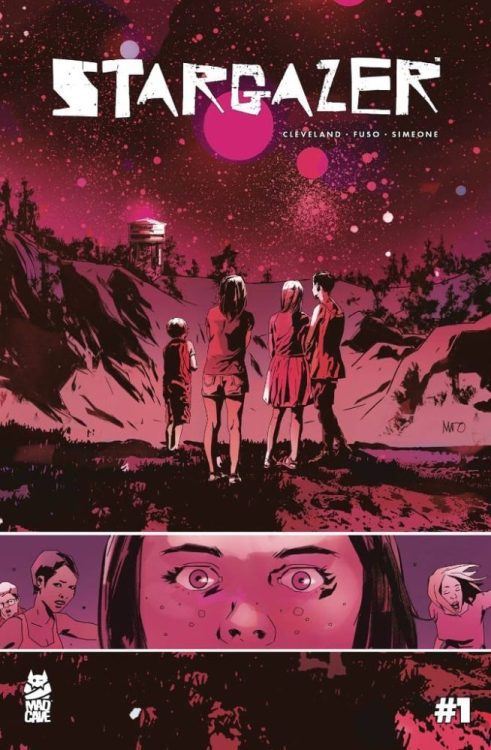
A jaw dropping opening and an unexplained event sets the scene for Mad Cave’s new science fiction series Stargazer. The relatively new independent publisher has a number of titles already under their belts but this year sees a range of new offerings covering a number of genres. Stargazer is part X-Files, part Close Encounters of the Third Kind, and part Saucer County. It hides it’s science fiction roots under great characters and a mysterious narrative, never giving too much away.
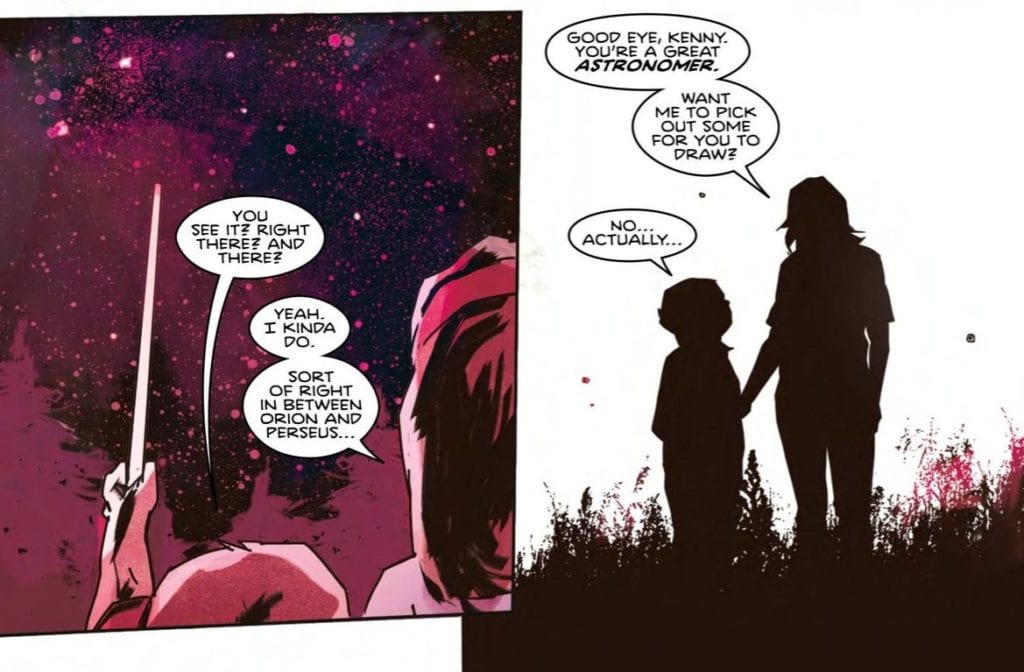
The story starts in the late 1990’s with a bunch of kids getting into trouble. Unfortunately for them the trouble escalates and the consequences come back to haunt them later in their lives. But for one of their group, Kenny, the ‘trouble’ never goes away and his life is ruled by fear and his absolute belief that he was abducted by Aliens.
Stargazer #1 Credit: Mad Cave Studios
Openings
Any story that starts with an alien abduction is instantly going to be compared to a number of movies, television shows, and comics: It is impossible to escape classics such as The X-Files. The trick is finding a new way to tell the story, to surprise the reader from the outset so that any comparisons are forgotten until the entire issue has been read. Anthony Cleveland begins Stargazer with a very short opening that does just that.
The opening includes an enigmatic doctor, a collection of Agents, and a scene of absurdity that it could almost feature in a Douglas Adams book. The setting is instantly engaging thanks to the superb color work by Stefano Simeone who gives everything a dust enshrouded haze; creating a hot and uncomfortable place. You can’t help but gag on the air that Simeone illustrates with swipes of red and orange across the panels with almost no regard for Antonio Fuso’s inks.
The two page spread that greats the reader is a double hit. First you get the shock of the Doctor, her reaction spilling from an insert panel as her speech crosses the panel border into the image below. The second is the inescapable image of death filling most of the main image. You know that what you are looking at can’t exist in the place that has been expertly described by the art and yet the image is no lie.
As an opening to a comic, Stargazer has it spot on.
Stargazer #1 Credit: Mad Cave Studios
Establishing Character
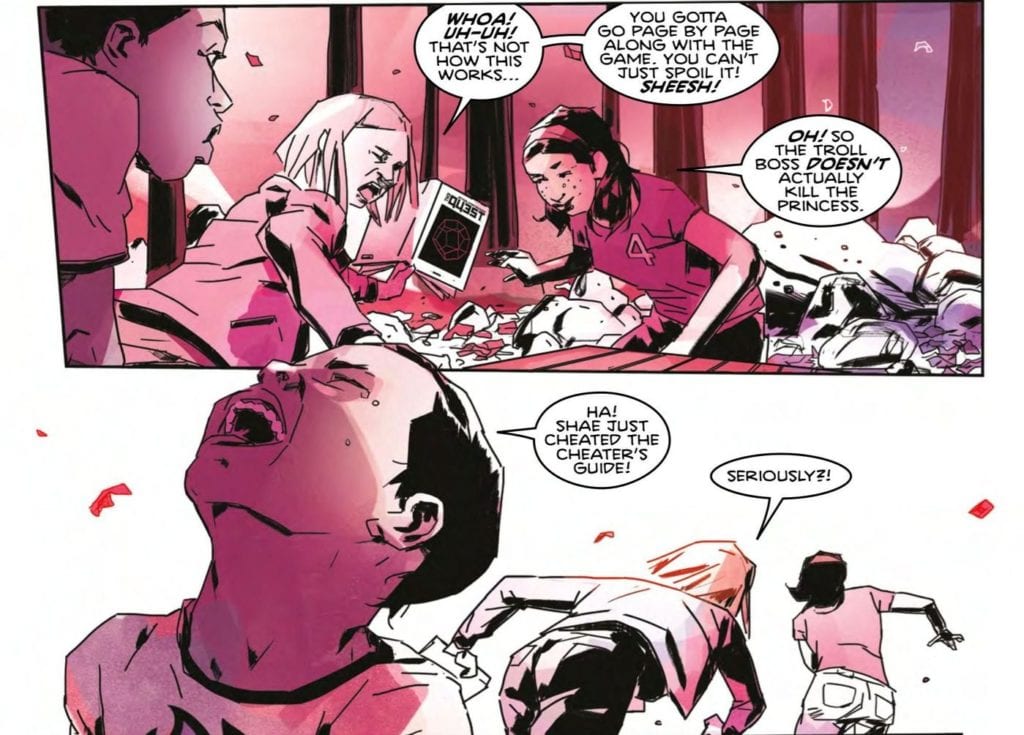
After this opening, the narrative becomes more recognisable with a group of kids out in the woods. This is comfortable territory for the reader and for the writer. Cleveland uses these pages to establish fairly quickly the dynamic of the group, making sweeping statements about the characters and their relationships with each other. It is not important to bring out the complexities of each individual but to get an overview of the cast, something that Cleveland does successfully.
Fuso uses a collection of mid range shots in the panels in order to focus on particular members of the group but never in isolation. This helps to make the audience a part of the group and not an outsider. This reinforces the closeness of the kids. Even Kenny, who feels like an outsider to his sister and her friends, is still a dominant part of the group.
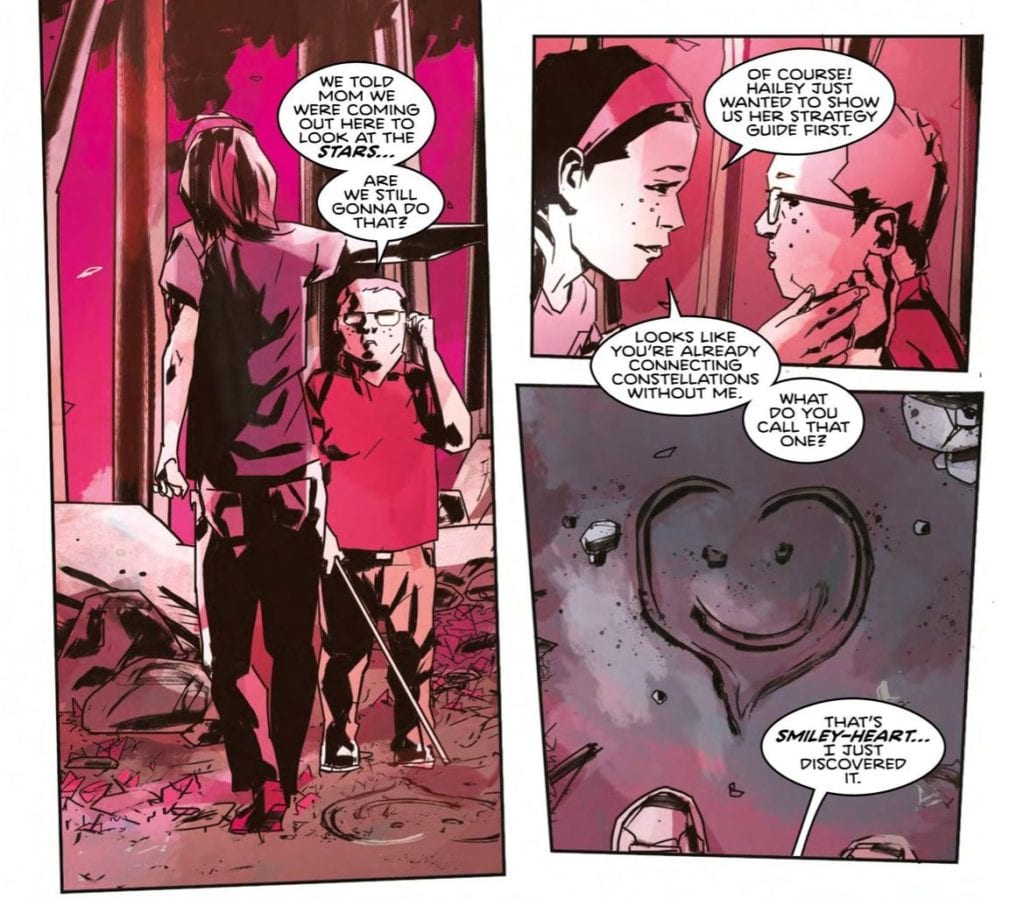
It is only when things start to go side-wards that isolation becomes part of the panels. Kenny is soon separated from the group through a number of visual signifiers, such as a metal rail distancing him from the others. Panels begin to feature Kenny and Kenny alone, making his experience more important. The reader suddenly finds themselves following a single character instead of a group.
This shift in focus draws the reader closer to the action and pulls us emotionally into the comic. When the narrative jumps forward in time, the effects of the experience are still fresh in our minds and helps us to understand the reactions of the kids when they are all grown up.
Stargazer #1 Credit: Mad Cave Studios
The Good and The Not So Good
The opening half of the comic engages the reader on an emotional level, pulling at the heartstrings. The artwork helps this by having wonderfully rendered characters and a slightly uncomfortable obsession with irregular panel shapes.
As the comic moves into the modern day the panels become more regular in shape except when the central character is under stress or talk returns to their experience as children. Fuso does a beautiful job of leading the reader through these emotional moments, signalling the emotional shifts through the use of panel layouts.
The lettering by Justin Birch also helps to lead the reader through the pages, creating a steady pace that is broken in some scenes of character tension. There are, however, moments where the speech balloons are inconsistent, especially where they butt up against the panel borders. On occasions the balloon ends flat against the frame, other times it breaks through and the balloon interior bleeds into the gutter. While off putting in places it doesn’t jar the reading experience.
The coloring can also be off putting in places. Simeone’s decision to limit the color palette throughout pays dividends during some of the scenes, especially the opening pages. The atmosphere is created quickly and effectively. Unfortunately, with later scenes, this approach generates conflicting readings of a situation. It is not always clear what the mood of the scene is. Some of the character interactions are cold and distant which are understandable. However, there are moments that move from one emotional state to another but are difficult to understand. This is because the coloring doesn’t change, or changes to subtly. If this was realistic coloring the continuity of color would be acceptable but with these sweeping emotional colors the lack of change is more noticeable.
Conclusion
When Stargazer works, it works really well. Each of the creators pull together to produce an enthralling piece of work. Despite the similarities to a number of other Alien Abduction stories, Stargazer manages to impress with enough shocking or emotional moments to make the reader forget about comparisons.
The cliches of the genre are apparent throughout but it’s as if Cleveland leans into them, embracing the imagery, instead of trying to cover them up. The outcome is something that feels like an homage instead of a rip-off. It almost makes you wonder if there is more going on behind the images. Is it all as it seems?
Stargazer #1 is an exciting first issue with a number of stand out moments. There are a number of great characters to follow and art work that impresses more often than not. This is an easy comic to recommend, especially if you feel there’s an X-Files shaped hole in your life.
Stargazer by Mad Cave Studios and is available now both physically and digitally.


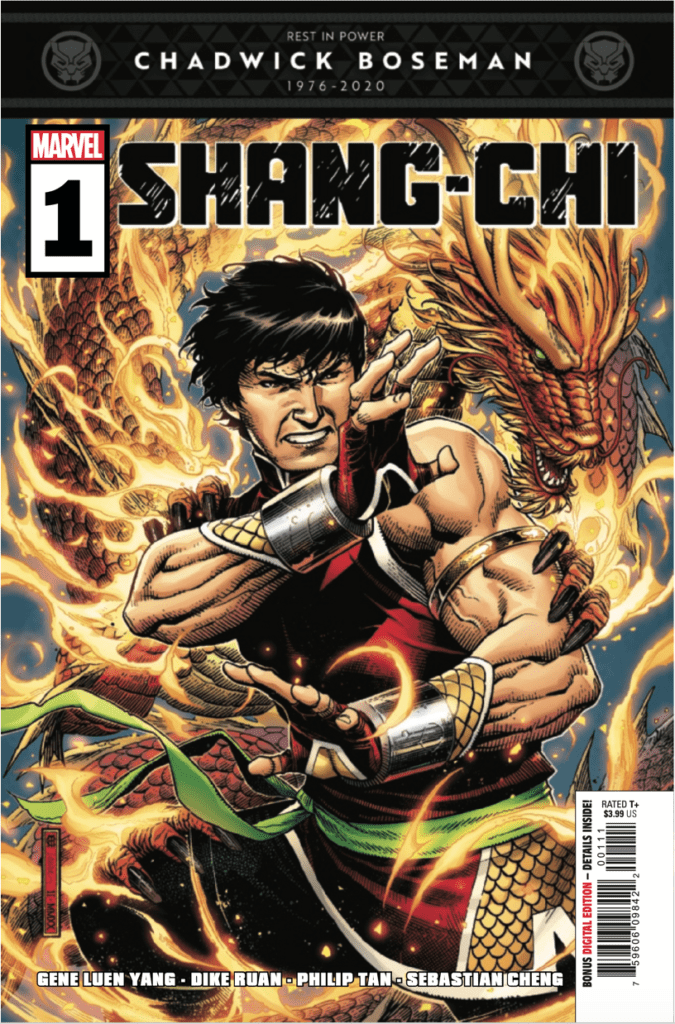
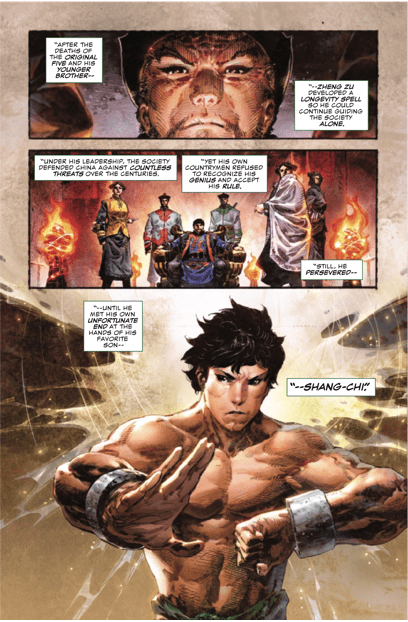 Shang-Chi #1 features several artists to illustrate the different aspects surrounding the title character. Philip Tan creates a very detailed that make what he draws look larger than life. The moments frozen in time look like portraits with Sebastian Cheng’s colors displaying the characters in all of their glory. Something the captions from Travis Lanham enhances through slowing down the reader’s gaze so that the reader witnesses them.
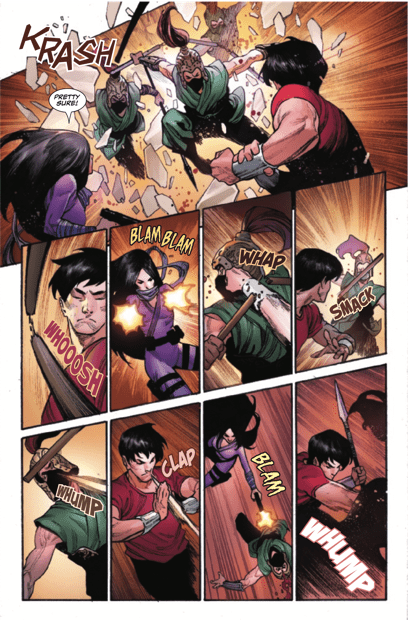 Compare this to Dike Ruan’s more relaxed art style. By separating Shang-Chi from his legend, readers find a normal man. Not that it takes away his ability to handle himself in a chaotic fight. The movements through some dynamic panels showcase not just the speed at which Shang-Chi moves but how he can cover multiple enemies more than a few bullets could.