Home Blog Page 243

Review: SCARENTHOOD #1 Is This Halloween’s Must-Read Comic

scarenthood #1 interview nick roche

SCARENTHOOD #1 is out October 28th from IDW Publishing, and it is a chilling tale about hunting ghosts and demons (and being done in time to pick your kids up from school).

By writer/artist Nick Roche, colorist Chris O’Halloran, and letterer Shawn Lee, SCARENTHOOD is an Irish folk horror about four parents whose children attend the same pre-school. After disturbing an ancient evil in their small town, the group starts spending their days battling demons and uncovering a decades-old mystery, all while juggling their normal parental responsibilities.

(CHECK OUT OUR INTERVIEW WITH NICK ROCHE ALL ABOUT SCARENTHOOD RIGHT HERE!)

Let’s not bury the lede here: this is the must-read new comic for this Halloween season.

What works so well about SCARENTHOOD is that the story is driven by real-life fears and insecurities. There is an inherent truth to the writing. Roche is a parent of a young girl himself, and he channeled all of his anxieties about being responsible for a tiny human into this book. So if you’re a parent yourself, you’ll probably find this comic extra striking and scary, but even those of us without kids will get a good fright. That’s because the character development is so strong right off the bat that you develop an immediate bond with this cast. So when the spooky stuff goes down, you feel genuine concern for these fictional parents and their fictional kids.

It’s not all allegory though, so don’t you fret horror fans: here be monsters, and they are terrifying.

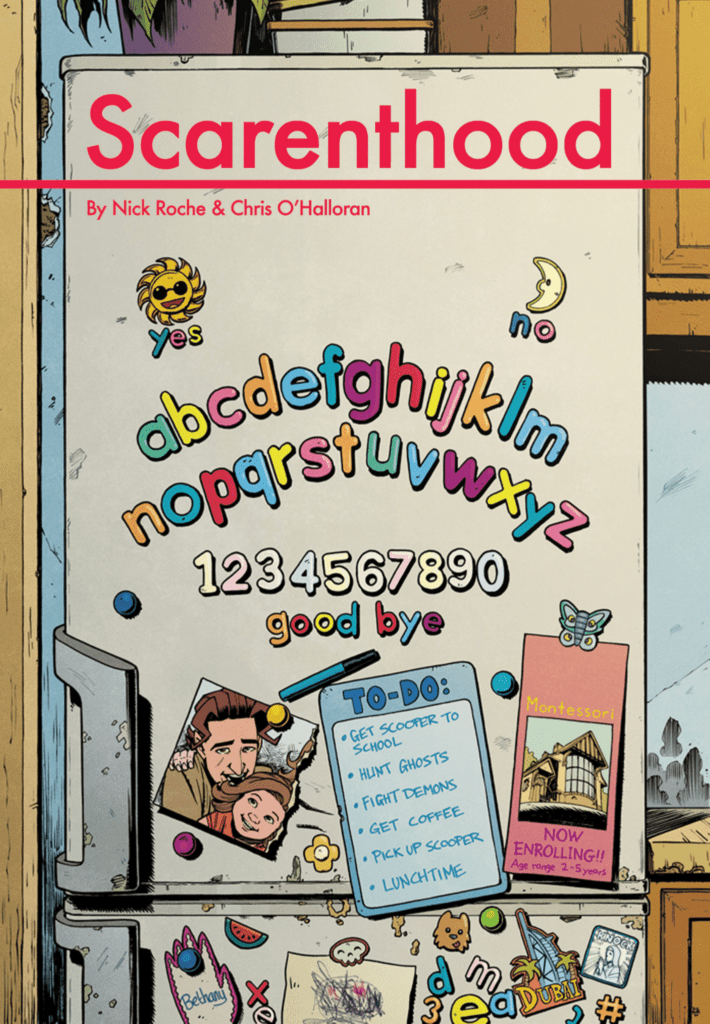
Scarenthood #1, cover

Outside of story and character, good horror largely comes down to two more subtle things: atmosphere and pacing — and the SCARENTHOOD team nails both.

Roche has stated that O’Halloran is “utterly in control of the tone of each scene,” and that’s a good call because the man is a master colorist. Ice Cream Man fans already know about how O’Halloran’s muted colors can set a scene and send chills down your spine. In SCARENTHOOD, he’ll take you from “everything’s fine” to “sh*t just got real” on a dime. The way the color palette changes from scene to scene (or moment to moment) is a brilliant subliminal way to give readers the willies and put them on edge on a subconscious level.

And then there’s Roche’s designs of the world and characters. The settings are all taken from real life, so again there is that inherent truth to the story that enhances the horror. Because the world looks and feels real (and O’Halloran’s colors are again a huge part of that), it makes you feel like this story is real. Roche’s character designs are then more cartoony, and that’s genius in itself because it tricks your brain into thinking this is just a fun slice-of-life comic, making the horrifying elements all the more horrifying when they hit.

scarenthood interview nick roche idw publishing

In terms of pacing, Roche utilizes multiple panels and close-ups to build tension and drama, which is crucial in horror storytelling. Lee’s lettering guides you through each scene at just the right speed so that tension grows naturally, and he delivers you at the pay-off point when your stress is at its zenith. There is a lot of dialogue in this issue, but it never bogs down a scene or slows you down thanks to Lee.

I have to say though, there is one splash page in this debut that is one of the most effective splash pages I’ve read this year. The way everything comes together — the build up to the splash, the “camera” angle Roche uses, O’Halloran’s colors, and Lee’s subtle lettering (there’s no actual dialogue in this moment, but Lee still plays a vital part) — it took my breath away and I felt that genuine concern I mentioned earlier.

Horror is a genre bogged down with tropes, but SCARENTHOOD feels fresh and original. Our heroes aren’t high schoolers, or babysitters, or homicide detectives — they’re parents who just want to do right by their kids. Roche, O’Halloran, and Lee are firing on all cylinders here, and they breathed new life into one of comics’ toughest genres.

Monkeys Fighting Robots Youtube

INTERVIEW: An Old Friend Torments Up On The Glass Star Chelsea Kurtz

Up On The Glass, a thriller from director Kevin Del Principe (Fashion of the Wolf), co-writer Nikki Brown (Those Little Monsters), stars Chelsea Kurtz (The Flash, Scandal) as a woman fighting back against the dark desires of an old friend.

Up On The Glass introduces viewers to Liz Shelton (Chelsea Kurtz) and husband Hunter. They’re a married couple who are doing well for themselves. The couple reunite with old college friends, including Jack (Chase Fein), who’s life is on the rocks. Jack’s fond of Liz and envious of his friend Hunter who seems to have it all. It’s a thriller full of characters with demons to face.

PopAxiom spoke with Chelsea about becoming an actor, learning on the fly, and surviving Up On The Glass.

New York Or Los Angeles

Chelsea Kurtz is from Cincinnati, Ohio, where she “got introduced to theatre early. I was in school plays when I was five or six. When I was 12, I started working with the Cincinnati Shakespeare Company, and I fell in love with Shakespeare and the classics. I was super nerdy.”

“I knew from then on,” Chelsea concludes, “that I wanted to go to school for acting and pursue it as a career.”

The road to making acting a career began at Boston University, where she studied acting. By the time those studies were at an end, Chelsea “intended to go to New York … But I asked the head of the program, a very 22-year-old question, ‘Where do you think I will work more?’ and he said, ‘You’re asking the wrong question.'”

“Forget about that,” Chelsea’s recalls the head of the program saying, “and think about where would you rather have a really bad day?”

Chelsea pondered the question. “I thought about being in N.Y. and getting on the subway back to an apartment, which I probably worked three jobs to afford. I thought about L.A. and being within 30 minutes of the ocean or desert or mountains.” Chelsea’s internal debate decided, “I would rather fail and struggle in Los Angeles.”

Chelsea was off to the City of Angels. “I hit the pavement and slowly but surely started working in T.V. and film. I’m a member of the theatre community.”

chelsea kurtz-interview-actor

Being An Actor

The effects of the global pandemic altered how many things operate, particularly the T.V. and film industry. Today, more auditions or meetings take place over video calls. “It definitely becomes a full-service production that you’re putting on entirely on your own,” Chelsea says about making your video look its best.”

She adds, “You have to be aware of the rhythm of your neighborhood. Where I live in L.A., there’s a rooster next door, so you can’t do morning takes. If it’s a nice day, everyone lets their dogs out around 5 PM, and so there’s barking.”

Chelsea’s played a lot of different roles. How does she connect with roles as varied as superhero Black Bison on The Flash and campaign videographer Jennifer Fields on Scandal? There are some roles that I have an intuitive way into, and there are some that require a lot more attention and specificity and text work or research.”

“In The Flash,” Chelsea says, “I was playing a Lakota Sioux woman. To assume all Native American culture is the same is ridiculous. With a role like that, I put a lot of attention into making sure I understood the people I’m portraying.”

However, for Scandal, she “had to do a lot of stunt training and do underwater work.”

“I was learning how to lay in the water to look dead,” Chelsea shares, “and to make it so that air bubbles don’t come out of my nose. I had to be at one point in a trunk that goes underwater. I had to learn how to roll my body in such a way that looked like the car had fallen in, but also didn’t look like I was moving my own body.”

“That’s my favorite thing,” Chelsea declares about acting, “Different roles require different things, and that’s exciting.”

Is there an acting class that prepares actors for underwater action? “The kind of technical work that you do as an actor in training has to be applied improvisationally in pretty much everything you do.”

In the end, there’s only one simple truth about working through those on-the-fly experiences as an actor. “You can’t know how to do it until you try it.”

up on the glass-interview-thriller

About Up On The Glass

Chelsea’s path to her role on Up On The Glass connected her with an old college friend. “We connected my senior year of school and stayed friends. She invited me to come in for Up On The Glass. I responded to the script and loved Kevin and Nikki. They asked if I wanted to come film in beautiful, small-town Lake Michigan, and I said: “F yeah!”

“Nikki and Kevin are ‘actors directors,'” Chelsea says, “They were diving into character work in the audition.”

The process of becoming Liz Shelton involved a lot of discussions and pondering “About Liz’s strength, and when you meet her in the film, she’s at a breaking point in her marriage. Also, the history that’s there with Chase Fein [Jack]. And how to bring to life all their history.”

Making Up On The Glass was an “on-going collaborative process … it was great. Because sometimes you do show up on set and just hear ‘stand over there. This is your framing.’ And that’s fine, but it’s great when you can build something together. I think it makes the whole greater than the sum of its parts.”

Chelsea shares a personal influence that helped bring Liz to life, “Liz is a character that reminds me of my mom. A good woman, who works hard and maybe carries some pain around and feels maybe made some choices she regrets, particularly about the men. I wanted to bring her energy. That’s something I tried to bring to Liz.”

In Chelsea’s words, she’d describe Up On The Glass as “a dark, emotional and psychological thriller. It explores the lives of people who feel trapped and end up wandering down the wrong paths.”

https://www.youtube.com/watch?v=TYuZVXKsSPI

Wrapping Up

“When I was growing up loving Shakespeare,” Chelsea recalls some inspirations early in her acting experience, “there were two actors, Jeremy Dubin and Giles Davies, who could do anything with language. They introduced me to so many technical aspects of acting that’s also the most creative and spontaneous like animal work and mask work. They showed me that it was art and not just play.”

“I’m a huge Gary Oldman fan,” Chelsea replies when asked about an actor she admires. “He’s such a chameleon, and there’s nothing he can’t do. So often, in his performances, I won’t recognize him. I have such admiration actors who can do that kind of work.”

What’s a dream project for the Up On The Glass star? “Well, this is funny because it’s already happening, and I’m pursuing it to the best of my abilities. I’m a huge Trekkie. I love Star Trek. So, if they want to put me anywhere … make me the janitor of the Enterprise, and I’ll be the happiest girl in the world. I’m a Next Generation diehard. I like Voyager, I like the Original okay, but I’m a Star Trek with Picard and the Enterprise girl.”

Up On The Glass is streaming on iTunes and Amazon. So, what’s next for Chelsea? “I was recently on an episode of Magnum P.I., which was a lot of fun. I got to film in Hawaii. I worked on Station 19. Since COVID, it’s been a lot of Zoom readings of plays.”

Is Up On The Glass on your watch list?

Thanks to Chelsea Kurtz and October Coast
for making this interview possible.

Want to read more interviews? CLICK HERE.

Monkeys Fighting Robots Youtube

Review: Vampires vs. the Bronx Is A Lighthearted Family Comedy

Vampires vs. the Bronx is a mix of better films but has a lot of heart. This film is like The Goonies, Fright Night, and Stand by Me all combined into one. It offers a message about gentrification and the importance of urban areas coming together to save their neighborhoods. An effective coming of age film that has a point to it, and tosses vampires into the mix.

Coming of age films always have a strong central message at the core, and its those messages being portrayed on-screen in unique ways that lead those films to be cult classics. Vampires vs. the Bronx is a humorous tale about a group of friends trying to save their neighborhood. This is another social commentary based film, but it doesn’t beat you over the head with its message. Directed and co-written by Osmany Rodriguez, the film stars Jaden Michael, Gerald Jones, Gregory Diaz, Sarah Gadon, Method Man, Coco Jones, and The Kid Mero. It follows a trio of friends, Miguel, Bobby, and Luis, who all live in the Bronx. A company is threatening the future of their neighborhood, so they team up to save it from gentrification and vampires.

Miguel and Luis in Vampires vs the Bronx

Following the patterns of The Boy Who Cried Wolf, none of the adults in town listen to these three kids. A real estate company is buying out the properties in this neighborhood, but these people are also vampires and no one listens till its to late, as usual. Michael, Bobby, and Luis are all likable characters since they are the nerds that don’t fit in. They have crushes on older girls and spend most of their free time at the local bodega. Rodriguez co-wrote the script with Blaise Hemingway, and it’s littered with cheesy jokes, racial subtext, bland adults, and almost exactly what you’d expect from this type of film. The decision to use vampires may be to draw a comparison to how these companies drain the former life of an area to create a new life for others.

Our main trio of friends are likable and developed enough where you can identify them starting as outcasts and becoming more accepted in their area as the film progresses. Their parents are generic and very formulaic. They offer nothing to the story outside of just being the authority over these kids. As for their performances, they are fine for what they have to work with, but I expect they’ll have better projects to shine in down the road. The chemistry between them is impeccable and highlights the friendship being portrayed. Gadon is great as Vivian, the leader of this awful vampire cult terrorizing the Bronx. Her delivery if fine, but none of these vampires are very intimidating. However, this can be because Vampires vs. the Bronx isn’t very serious anyway outside of being a message against gentrification.

Rodriguez balances horror and comedy just fine and chooses a very fast pace for most of the film. This decision gives the film a lot of energy, and it never grows tiring or overstays its welcome. Perhaps if the runtime were longer, some better decisions would have been made because the effects on these vampires are awful. During the more terrifying moments, Vivian’s crew of vampires decide to fly at times and the effects are just atrocious. Also, Vampires vs. the Bronx has a closing act that just felt forced in a way because of how each kid is given a subplot that amounts to nothing in the end. For instance, Bobby is being tempted by criminals to join a gang, and it’s never fully explored or made relevant in the end.

Vampires vs. the Bronx is effective at being a solid horror comedy but falters a bit in its narrative and poor effects. The central message is made clear, the performances are all great as well, but the poor effects will take you out of the film. Still, Vampires vs. the Bronx is a nice throwback to better films and is a lot of fun from start to finish.


Monkeys Fighting Robots Youtube

Monkeys Fighting Robots: THE MAGAZINE #2 Cover Reveal!

Monkeys Fighting Robots: THE MAGAZINE #2 Cover Reveal!

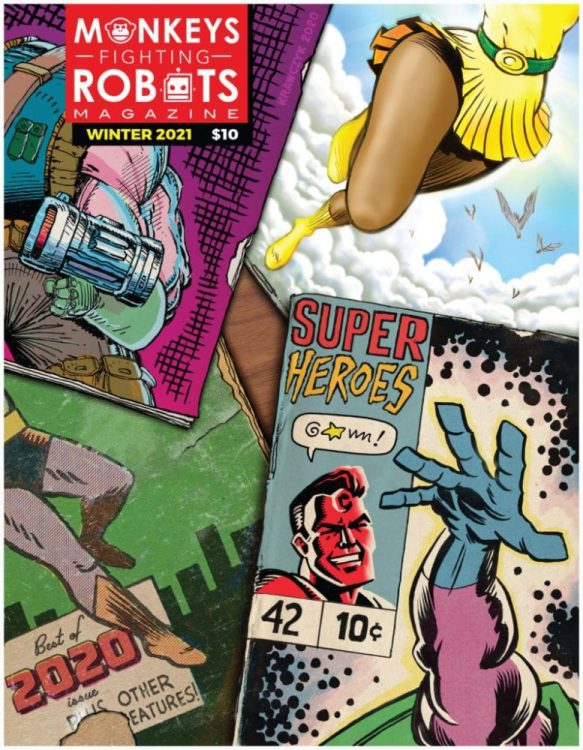
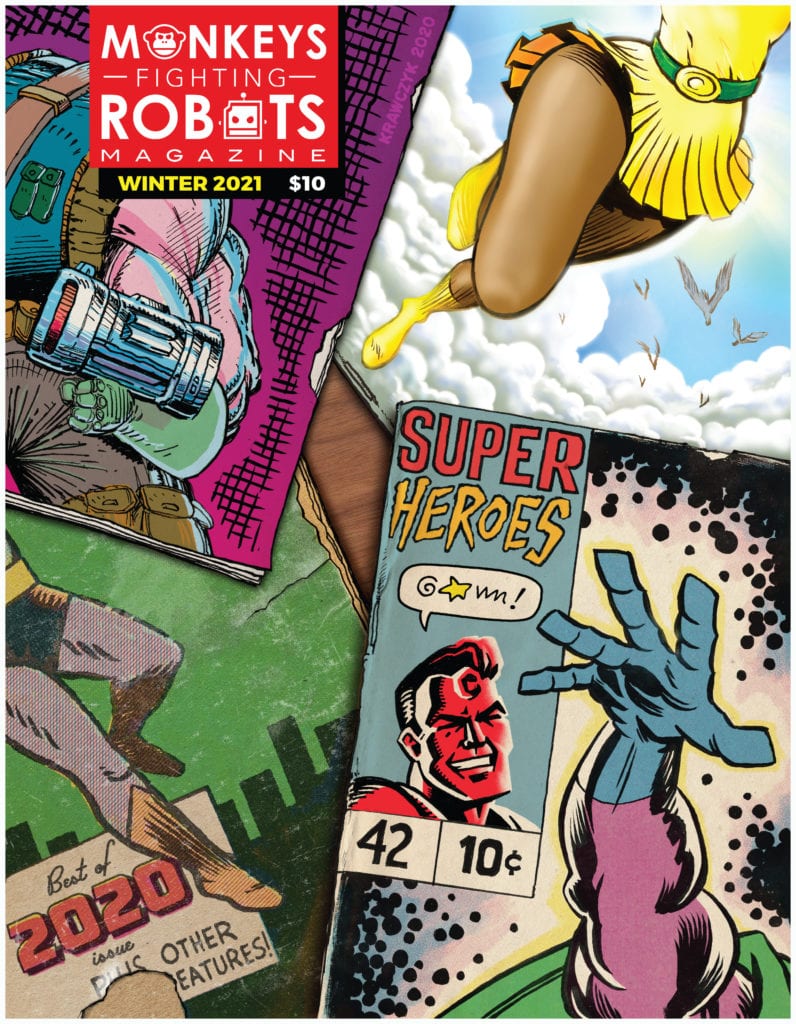
MFR: The Magazine #1 came out in July, and we are working hard on the second issue, which will be in your hands January 2021. As we prepare for the Kickstarter to publish the book (launching November 1st), Geoffrey Krawczyk sent over the cover for issue two, and I couldn’t be more excited about how it came out. Check it out below.

Monkeys Fighting Robots: THE MAGAZINE #2 Cover Reveal!

Our theme for issue two is SUPERHEROES, and Geoffrey knocked it out of the park once again (just like he did for our inaugural issue) by paying homage to some of superhero comics’ most iconic artists. (You probably should follow him on Instagram @thegeoffreyk.)

The Kickstarter launches November 1st, and we have much more to say about it in the coming weeks. (And if Kickstarter isn’t your bag, you can also secure your copy by becoming a patron over on Patreon.)


What do you think of the cover? Comment below with your thoughts.

Monkeys Fighting Robots Youtube

Review: NOMOBOTS — Taking The Sides of Humanity In Strides

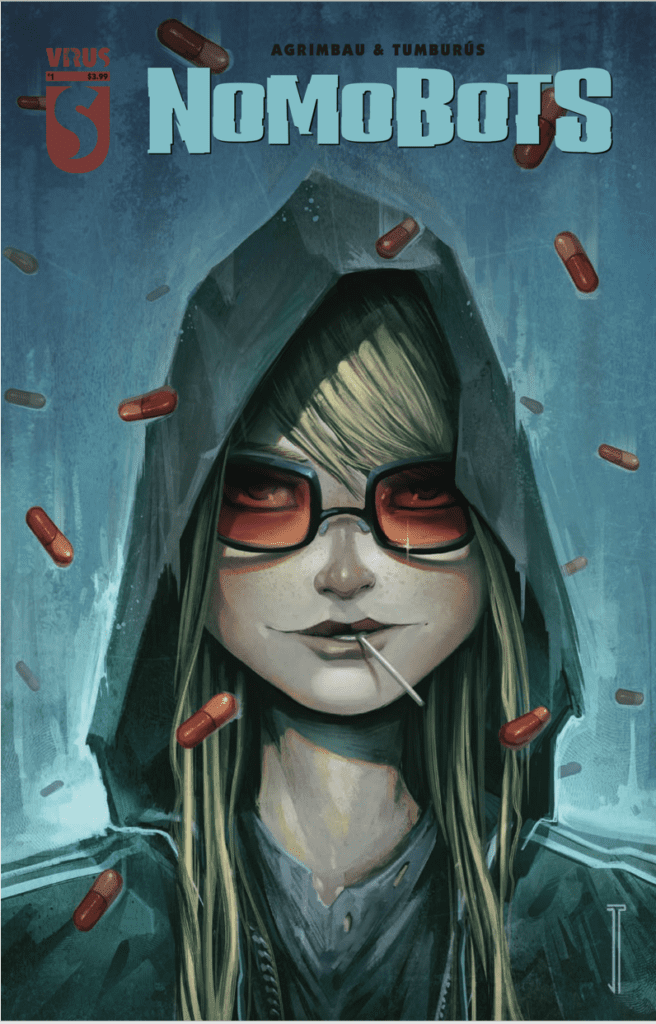
Nomobots #1 Cover

Nomobots is a series from Heavy Metal’s Virus imprint by writer Diego Agrimbau and artist Juan Manuel Tumburus. The first three issues have already been released on June 3, June 17, and August 26, respectively.

Summary

From the official Heavy Metal website:

This is the story of Nadia, one of the last humans in Sileo, a city where Nomobots (a particular kind of robot) rule and govern. She has escaped from a human farm and now she’s being persecuted by the Nomobot Police. Nomobots were created to avoid human extinction, they succeeded but there was a big cost: humans lost their freedom. Nomobots have a conscience, they love and hate, just like any human being, but their metal bodies don’t allow them to feel anything. There’s no pain or pleasure. Their complex minds need to feel. So some of them has mounted farms where human slaves, like Nadia, are submitted to every kind of stimulation, some pleasant, some degrading, some unbearable. These sensations are recorded and saved on capsules called Emopills, and later they are sold on Sileo’s street.

The Points of View of Nomobots

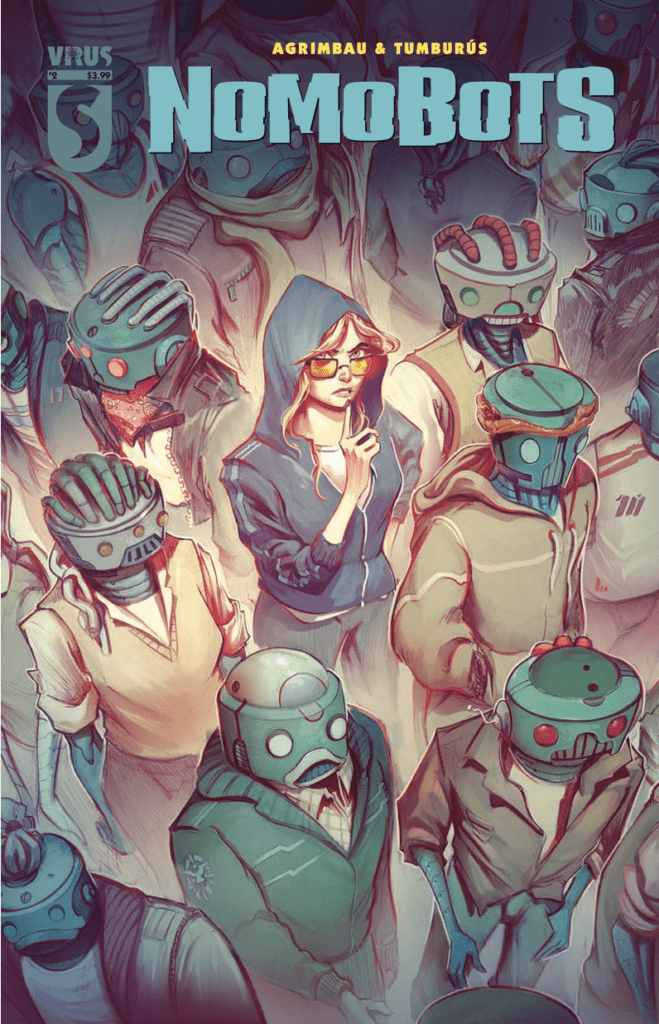
Nomobots #2 CoverAgrimbau has each of the three issues of Nomobots follow the points-of-view of a different character. This allows the reader to view world through the robot characters instead of the protagonist Nadia. Because if they see it from her perspective, it’s just a typical post-robot uprising series like D4VE. Each issue begins quite literally in the heads of the focus character. This allows the robots to be more empathetic given how they can’t make facial features. The different perspectives show how much the culture around emopills and Nomobot immortality through backups effects the greater society.
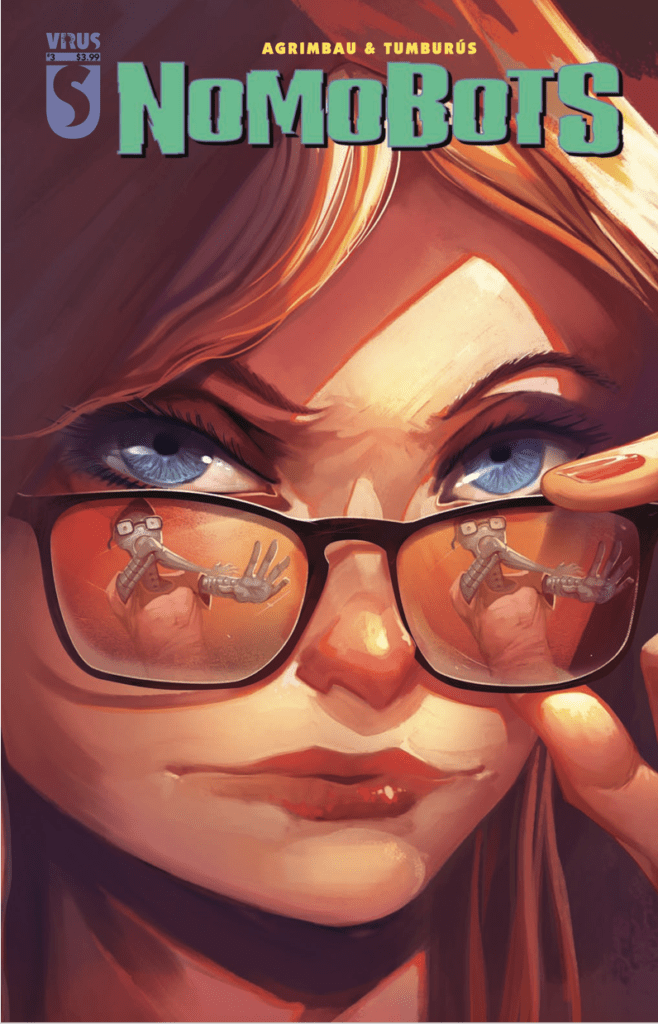
Issue one focuses on Jimmy, who, after the psychedelic trip he has in the first pages, sets up the series and setting all at once. In it, the readers meet Nadia. As Nomobots can only act human, they need special pills to feel human sensations. Humans like Nadia need to enact these sensations so that they can be recorded on these “emopills.” Jimmy, after many uses of emopills, becomes attracted to Nadia. It’s hard not to feel bad for him when she hits him and another Nomobot with a monkey wrench in issue 2.

In issue 3, another Nomobot sees Nadia the way the audience might, a force of nature that could destroy Nomobots. Yet it’s not out of fear but reverence. Looking at this world where machines are addicts to sensations, it’s hard not to want it destroyed. But how do you fight something that’s so ingrained in the people’s culture? Especially when the culture has its own form of progressives and conservatives. That’s what undercover cop Rick has to deal with, which, given his abstinence towards the drugs, sets up the next issue nicely. I mean the guy dresses up as a stereotypical pimp because of his lack of understanding of the culture.

Art

Nomobot 3 CoverTumburus’ art is nothing if not moody. The minimalistic lines, inking, and muted colors of Nomobots sets up a fitting neo-noir atmosphere. Which is odd considering this series leans more into cyberpunk territory. But really who needs neon signs and constant rain showers when contrast is king? Most of the main characters wear red clothes or accessories. Given the dark colors decorating the pages, it’s a great way to keep attention on the characters. The more red that appears, the more visible or important they feel.
The lettering meanwhile is extremely efficient in how it goes in one smooth line of reading order. Other times it works with the aforementioned red coloring to show two perspectives. One on the person in red and the other party speaking to them. Wordmarks meanwhile can get so powerful they actually become a panel at one point.

Nomobots Are Off To A Great Start

Nomobots #1-3 is only the beginning on what can be one of the most original takes on cyberpunk. By going back to its neo-noir roots with its moodiness and multiple points of view, people see a brand new world to invest in. Because everybody wants to feel something new from unlikely places. Why not see how the presence of one young woman makes this drug addicted world can be so impactful?

Monkeys Fighting Robots Youtube

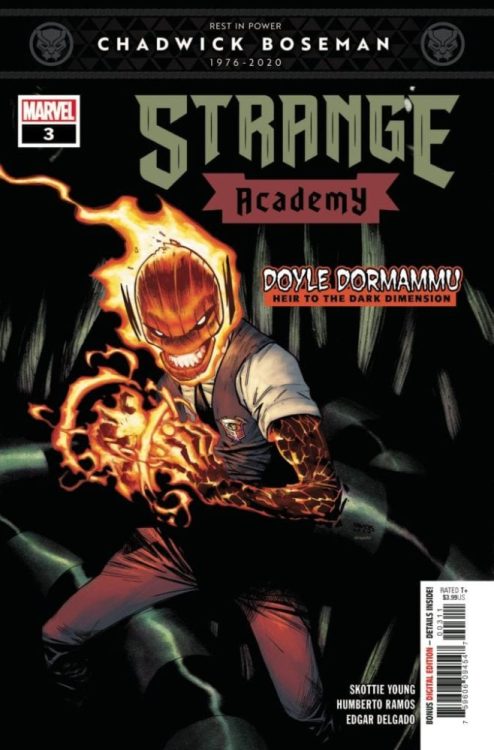
Review: STRANGE ACADEMY #3 — Getting Trippy With Magic Visions

Strange Academy #3 Cover

In this week’s Strange Academy #3 from Marvel Comics, writer Skottie Young brings a down-to-earth feel to the surreal artwork of Humberto Ramos and colorist Edgar Delgado, all while VC’s Clayton Cowles gives the characters unique voices through lettering.

Strange Academy #3 Gets Freaky

Unlike previous issues which focused on establishing the school, Strange Academy #3 focuses on character. Skottie Young is no stranger to absurdist comedy (i.e. I Hate Fairyland) and drama (i.e. Middlewest). In this issue, he has the quirky class show off their individual personalities. Granted not all of them get a moment to shine, just the ones who take plot precedence. Emily mainly serves as the audience’s viewpoint into the world of magic during the opening lesson where she witnesses the strangeness through the Eye of Agamotto. Yet it’s in the student’s R&R period in New Orleans where a concentration of characters take notice. Doyle Dormmamu is surprisingly lax in how his views magic. Considering his heritage, nothing about it really surprises him unlike Emily who has fun with it.

That is until he encounters fortune teller who shows him a future that actually terrifies him, especially since some of the people in his vision appear near the end of the issue. Fortunately before all of the doom and gloom sets in, these students go out of their way to have each other’s backs. Which, while relieving, also sets up some anticipation for some of that coming dread.

How Art Is Magic

Humberto Ramos illustrates each character with designs that are as quirky as possible while using rotoscoped backgrounds. This makes the characters’ features highly expressive to react to the world around them. When Emily uses the Eye of Agamotto, colorist Edgar Delgado demonstrates Emily’s potential by looking at the other dimensional creatures in color while everything else save for the Ancient One is in grayscale. This ability to interact with a whole other world puts Emily in unfamiliar territory. One that’s she eager to find out about, but should be more careful given her interaction with one creature.

Clayton Cowles gives the cast of Strange Academy #3 unique voices. For example, the Asgardian twins Alvi and Iric sound like two different people despite having the same word balloons. Alvi tries to sound suave and haughty, yet Iric speaks more like a loud jock which is odd considering his height compared to Alvi. Doyle meanwhile has word balloons that look like diabolical smoke, but some of his interactions imply he’s just full of hot air. This all suggests why the dynamic between Alvi and Doyle is a little rocky: if Alvi already deals with one hot head, why deal with another one?

Have A Time With Strange Academy #3

Strange Academy #3 is one of those issues that are easy to get into without background knowledge. Like some of the more casual slice-of-life comics like the Peanuts or Garfield, sometimes just the outline is enough to get a good story. Maybe not a great one, but enough story that can cover different parts of the cast. Because beneath all of the humor and school hours is something ready to happen. And while magic open to interpretation is good, it’s going to require some decent attention to the details to get through it all.

Monkeys Fighting Robots Youtube

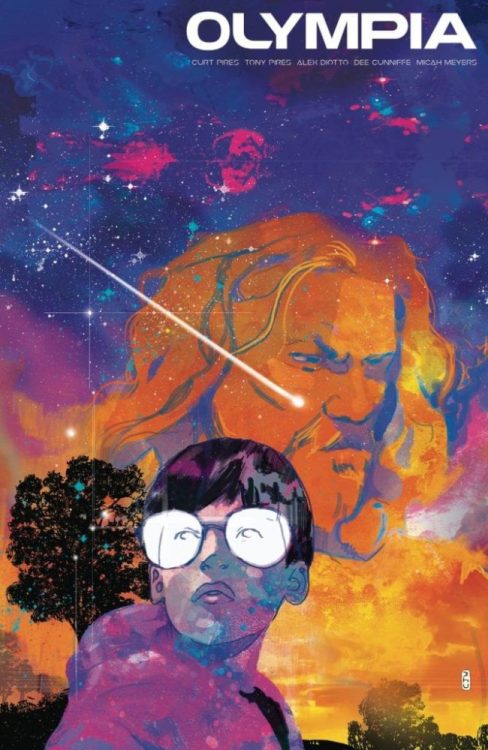
Review: OLYMPIA — Comics Are A Medium Of Intergenerational Love

Olympia Cover

The Olympia trade paperback collects all five issues of a passion project between Curt Pires and his father Tony Pires, with art from Alex Diotto and Jason Copland, and colors and lettering by Dee Cunniffe and Micah Meyers respectively.

The Epic of Olympia

Olympia at first glance looks like a knock-off of Jack Kirby tributes like Kirby: Genesis. However, it is actually an exploration on how comic books affect people, especially across generations. It all revolves around a fan, a comic creator, and a comic character, and tying each of them together is the need for a father figure. POV character Elon, for example, lost his father and finds solace in the comic series featuring Olympian. Olympian’s creator Kirby Spiegelman meanwhile feels lost and without direction, especially after the death of his own father figure. To an even lesser degree, even Olympian is trying to live up to his father’s expectations as ruler and protector of his home. This all likely comes from how Tony Pires himself was battling cancer as he and his son Curt worked on Olympia.

Yet this story is not about feeling helpless after many defeats and losses. It’s how the interaction between the three characters fills the role of a father figure and how it connects them to everyone they love. Elon in particular, despite being only 13, often acts like the most driven of the three. He takes charge of most of the situation while being fully aware of the absurdities surrounding him. Like when Elon despite being a fan still finds Olympian’s over-the-top personality a little odd. It is this mindset that gets Kirby on a path out of his depression and re-evaulate what he’s got to live for. As for Olympian himself, he’s arguably the least dynamic part of Olympia considering how passive he is about events. At most, it’s just his presence that drives everything forward.

The Dynamic Art

That presence however is where most of the passion takes place. On several pages, Alex Diotto promotes actions so simple yet energetic throughout Olympia they practically tell the story through atmosphere. Every subtle change increases the importance of the moments that take place. Most panels that practically repeat are displays of time and dramatic effects, like when Elon waits for Olympian to recover but ends up falling asleep and Olympian is off panel. Then there are the two-page spreads that highlight big dramatic moments, sometimes succeeding pages that anticipate them. The action scenes that follow after can get so wild that traditional panel layout distorts in reaction.

Jason Copland, who works on the art in issue #3, however foregoes all of that in favor of 9 and 3-panel grids for other dramatic effects. In that issue, readers see Kirby struggling to keep control of his life. When those 9-panel grids give way to a splash page, it’s a display of Kirby at his lowest as everything from before comes screeching into this moment. Following this are 3-panel grids where Kirby tries to make sense of everything in a dramatic question, only to be disappointed as he gets no expected answers. Then this sequence reverses as his prior plan takes a new turn.

Colors and Lettering In Simplicity

Dee Cunniffe’s coloring looks relatively simple, but it’s how it makes the above artists’ shorthand stand out in Olympia. Brighter colors help keep the reader’s gaze on events like Olympian’s bright costume and Elon’s clothes during a battle against monsters. The monster’s blue colors and the purple background following them make it easy to contrast against them. Yet the most effective of them all is how Cunniffe highlights the Kirby Krackle to show off the source of energies, blue for Olympian purple for the antagonists.

Micah Myers as letterer works between recycling shorthand and dedicated illustrated wordmarks. Most of those wordmarks are in the in-universe comic book, when those illustrated wordmarks do appear, it’s a sign of of the Olympian comic affecting the world around it. Otherwise it’s just the recycling use of some wordmarks that in the right place are very effective, like when Kirby has a gun to his head and banging is on display. It’s like knocking on the door stealing all of the power from the decision.

Remember Olympia

In this loving tribute to comics from the likes of Jack Kirby, Olympia reminds readers that, while some things end, the spirit behind them lasts forever. Because Tony certainly didn’t seem to want Curt to let his death deter him. If anything, this limited time is what convinced everyone to push out their best efforts — efforts so passionate, it’s difficult for readers not to feel it on the pages.

Monkeys Fighting Robots Youtube

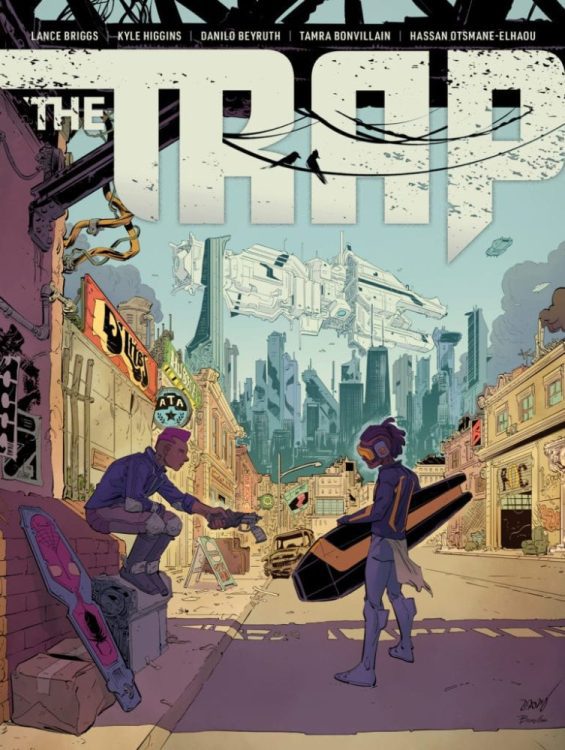
Interview: Lance Briggs and Kyle Higgins Take Us Into THE TRAP

Interview: Lance Briggs and Kyle Higgins Take Us Into THE TRAP

Monkeys Fighting Robots caught up with former Chicago Bears linebacker Lance Briggs and writer Kyle Higgins to chat about their new Kickstarter project The Trap, football compared to art, and the influence of the giant elephant in the room, the political climate of today.

Earlier this week, Briggs announced the Kickstarter for his passion project.

The creative team on the 120-page sci-fi graphic novel includes Briggs, Higgins, artist and co-creator Danilo Beyruth, colorist by Tamra Bonvillain, lettering by Hassan Otsmane-Elhaou, and book design by Sasha Head.

About the book:
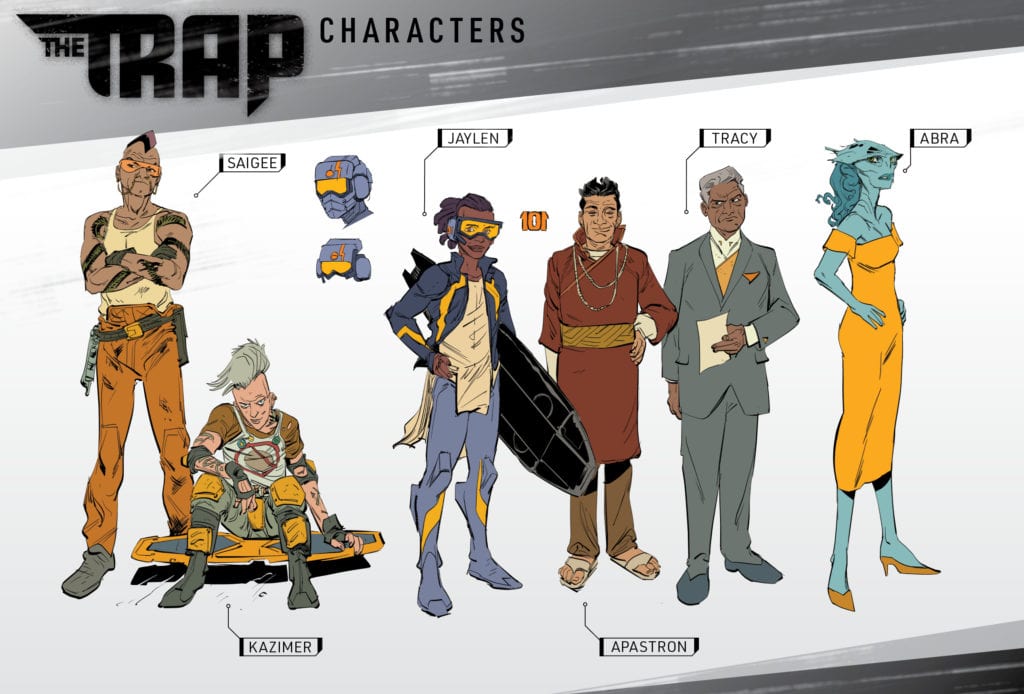
In THE TRAP, Jaylen Robinson is a rising sports star from a not-so-great part of the galaxy: Earth. He’s worked hard his whole life. Everyone’s saying that Jaylen is the Next Big Thing for the interstellar sport of the future: surfriding. The future is his. This is his chance. Until it’s not. You can support the project here: THE TRAP


Lance Briggs and Kyle Higgins Interview:

MFR: Lance, your Kickstarter statement is powerful. Did you need to make The Trap?

LANCE: One hundred percent. It’s a story that’s incredibly personal to me, both because of my background as well as the issues we’re looking to discuss and shine a light on. And creating Jaylen, for me, is also a way to talk to so many kids that are living in less-than-ideal environments. Amongst systems that have failed their own. I see you, and I want you to know — you are special. Even if it doesn’t feel like it.

This book is also an opportunity for me to start doing something that I’ve always dreamed of — sharing my imagination with others. My imagination is what kept me going as a child, as an athlete, and now as an adult. Dreaming of what is possible, even if it seems impossible, is so incredibly important. And writing has been a great way for me to tap into that more and more.

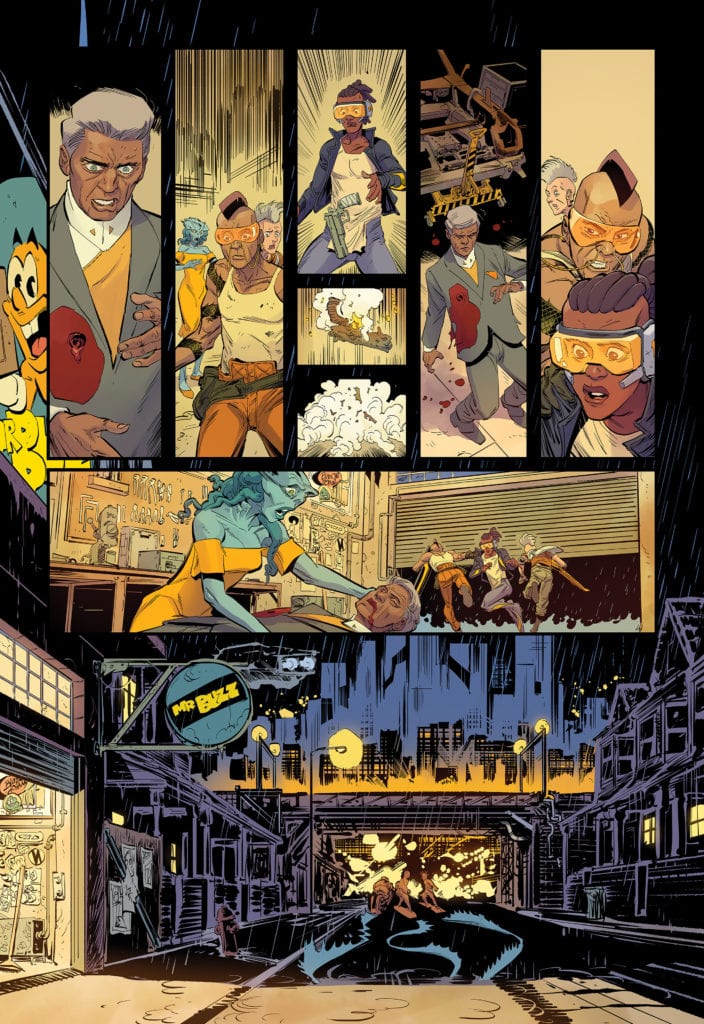
Page 8-9

MFR: What was the world-building process like? Did you push the creative envelope and then reigned it back in, or was there a specific creative vision to expand from?

KYLE: Well, for me, world-building has to come from narrative intent. Meaning, I don’t world build just to world build — I world build for the sake of the story I’m trying to tell. So, THE TRAP started with figuring out the core idea of the series — that in the future, Earth has been annexed into an interstellar coalition of planets, but due to certain events over the generations, we’ve become both the red-headed stepchild of the coalition, as well as prime real estate for the interstellar drug trade. So what that does is it creates a situation and a status for our world where the problems of marginalized communities are the problems for all of us. Because we are all in “the trap” together.

From there, we were able to start really building and refining characters, as well as different aspects of this world to really strengthen the allegory.

LANCE: Right. What do sports of the future look like? What kind of escapism, entertainment, politics, business, etc. would exist?

KYLE: Lance came up with the idea for surfriding, which I love. It was a tricky thing to figure out — the sport of the future needed to be something that multiple species and races could compete in, since it was going to be Jaylen’s best chance of getting out of The Trap and potentially bettering his life off-world. A board based racing sport totally fit the bill.

Page 10

MFR: Kyle and Lance, talk about your emotional reaction the first time you saw Danilo Beyruth’s work on The Trap.

KYLE: Oh, man. I was so excited. I think, Lance, we both looked at the designs and went—

LANCE: “That’s Jaylen!”

KYLE: Exactly, yeah. Like he’d been there the whole time. Fully formed. Just waiting to be drawn.

LANCE: What made it even cooler was when Tamra started putting down colors for him.

KYLE: Yes. Absolutely. Tamra is one of the best in the business, and being able to work with both her and Danilo… we feel incredibly lucky.

MFR: Lance, how has working on the Football Aftershow helped you become a better storyteller?

LANCE: It’s taught me patience, more than anything — having to listen to Alex Brown’s false narratives and falsified facts with a straight face! (Laughs) It’s torture, but I fight through it!

THE TRAP #1_011
Page 11

MFR: Lance, with playing football at the highest level, there are nerves, but you control your destiny with your play. With art, you put yourself out there emotionally. What are those nerves like?

LANCE: Well, I’m still figuring that part out. But I guess what I would say, is that in football… you’re talking about moments that last 8 to 12 seconds. And of course, you get nervous. Anyone who says they don’t, they’re lying. And if you actually don’t get nervous? Then I don’t think you care to be great. But, I knew that no matter how nervous I would get… I knew I was prepared. Compare that with writing and publishing stories? So far, I don’t know that they’re even comparable. Kyle and I have a process built on trust and respect, so it’s very low risk and low pressure — we talk through everything. If I were doing it solo, I’m sure it would be different.

MFR: Kyle and Lance, the past four years, have been a political dumpster fire of division. How has the current state of the world influenced The Trap?

KYLE: I think the better question is… how has it not? The issues we’re dealing with are not new. But over the last four years, I don’t know how you could argue that they’ve gotten any better.

LANCE: They haven’t. We’re looking to talk about some of them here, through science fiction and storytelling. Hopefully, to show people the issues in a new, hopeful objective — but also relatable — way.

KYLE: If anything, the last four years have really opened my eyes to just how deep the wounds in our country are. And how many of them are not anywhere close to being closed or healed.

MFR: Lance and Kyle, thank you again for your time and best of luck with The Trap!


Have you backed The Trap? What are your Kickstarter buying habits like during the pandemic? Comment below with your thoughts.

Monkeys Fighting Robots Youtube

Review: LIFE IN THE STUPIDVERSE — Laughing at a Painful Administration

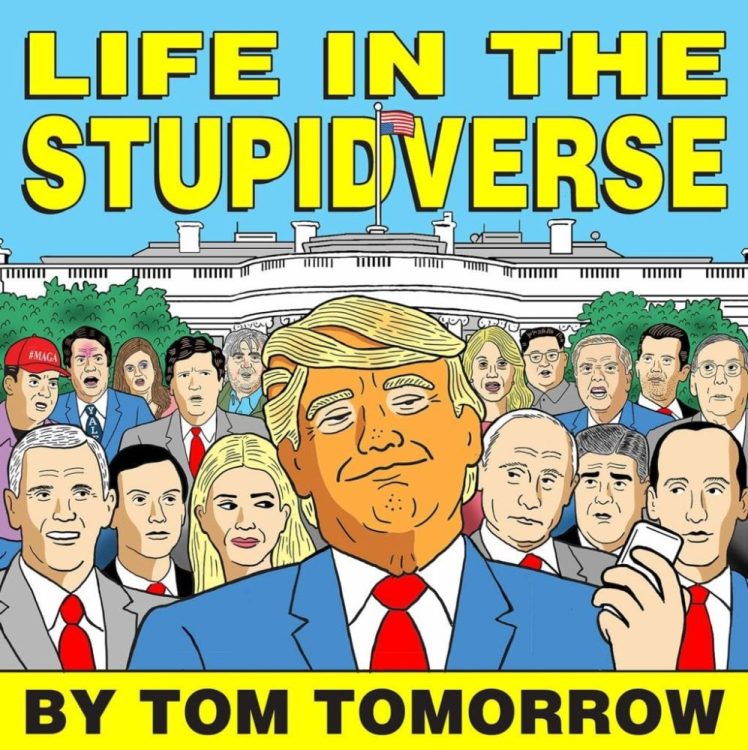
Life in the Stupidverse Cover

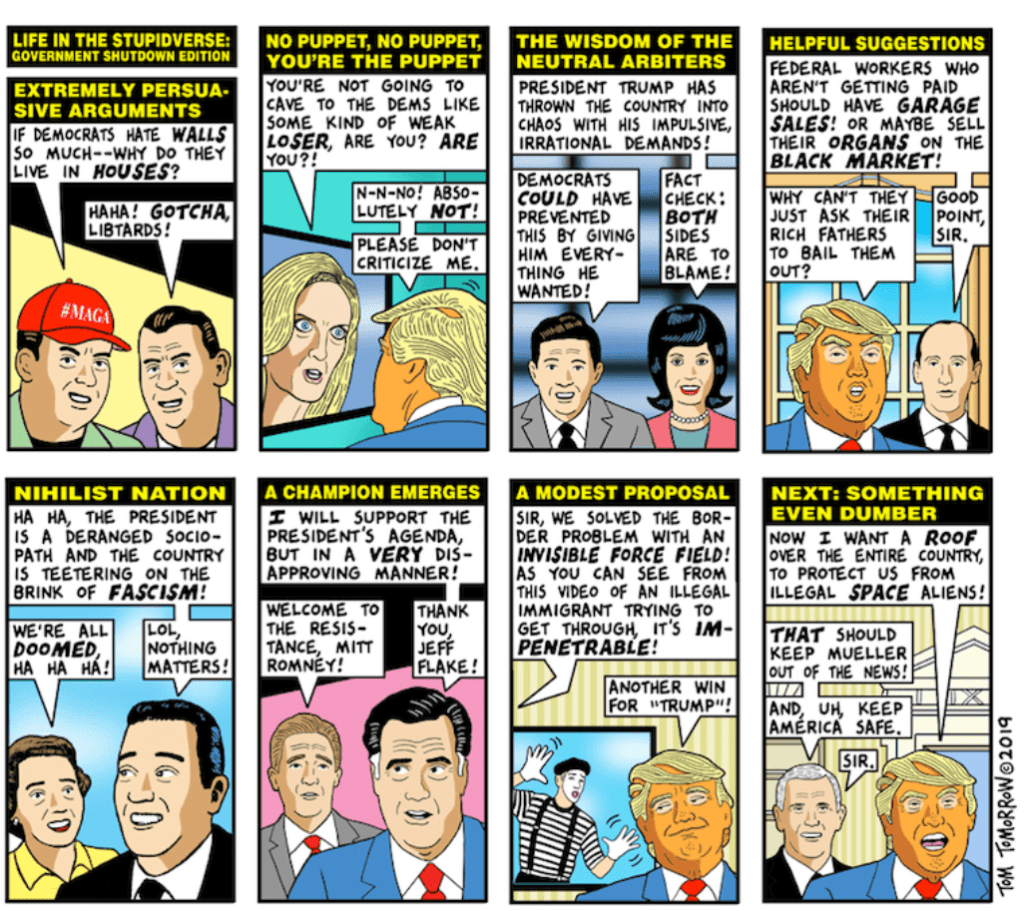
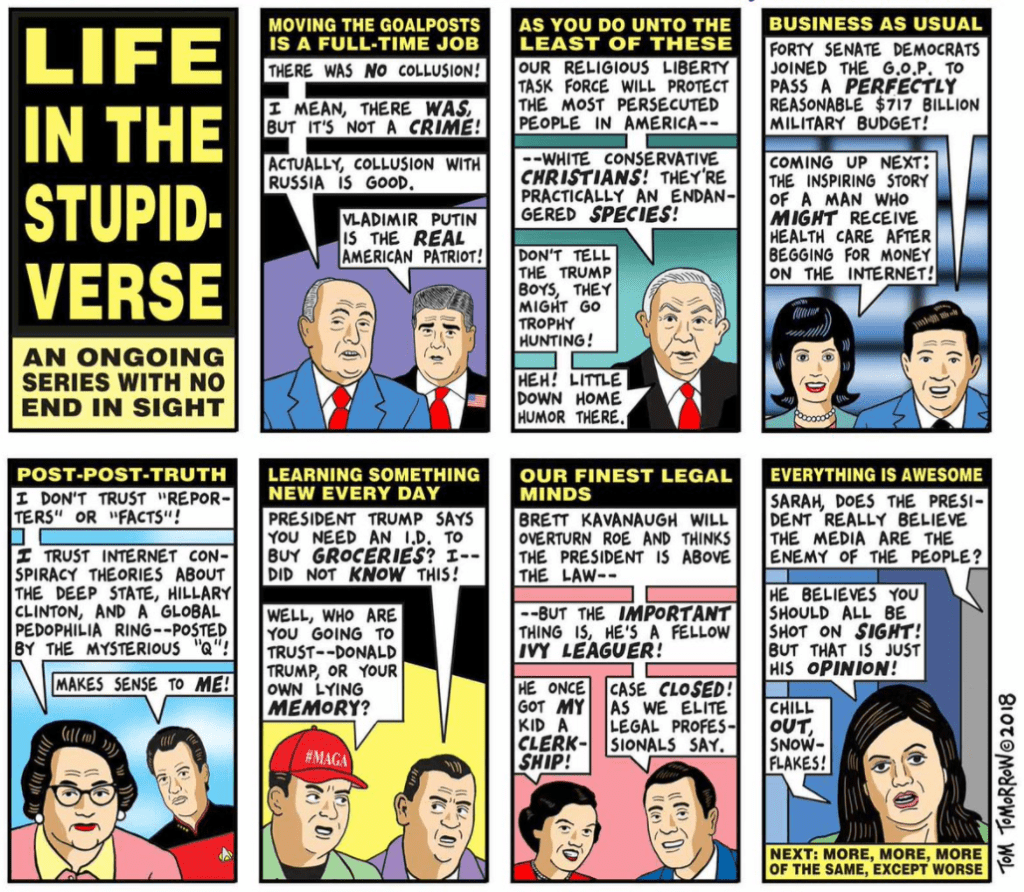
Life in the Stupidverse, out now from IDW Publishing, is a wonderful collection of satire highlighting Donald Trump’s flawed presidency that is certain to give you a chuckle.

Welcome to the Stupidverse! Although I’m not sure, I need to say “welcome.” Many of us have been living in the Stupidverse these past four years. In this collection, the Pulitzer-nominated cartoons of Tom Tomorrow poke fun at the presidency of Donald J. Trump in a diverse variety of entertaining ways. The collection is filled with so many different strips with so many references that you will have to take time to remember all the political chaos that has happened during the current administration.

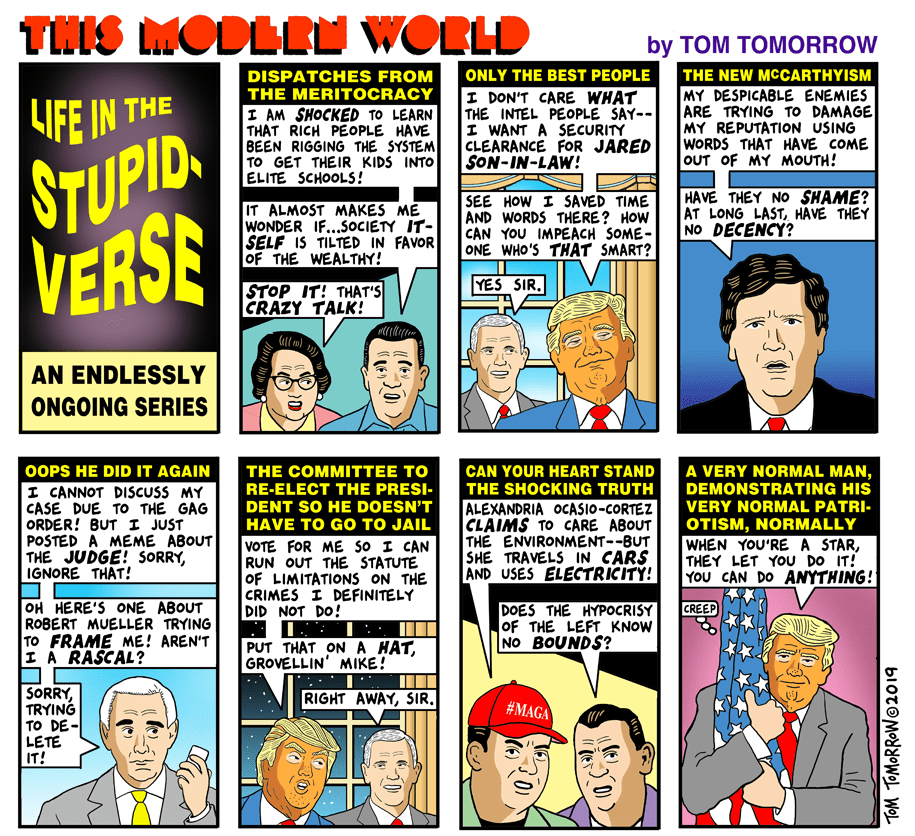
Life in the Stupidverse Example 1

The writing in the book is phenomenal. Life in the Stupidverse is filled with so many well-executed points and hilarious satire, and that all goes without mentioning just how much content is in the book. Each page has a point to be made. The points may overlap, but the way that Tomorrow makes his points through heavy satire is always entertaining.  He also creates satire through many fun ways, such as comparing Trump to a baby, saying this world must be a simulation because of how crazy it is, or by making charts that illustrate circular reasoning.

Life in the Stupidverse Example 3

The pencils and inks of Life in the Stupidverse go well to serve the purpose of his cartoons, and Tomorrow does a good job of varying what is on the page so that his cartoons are still visually interesting. Tomorrow is never afraid to go too crazy with the ideas for his jokes, so each page is its own spectacle of what Tomorrow has used to illustrate his point. There are several strips where the same faces are used repeatedly, which can create a bland feeling, but that is his point. The main focus in nearly all political cartoons is the writing, and Tomorrow certainly delivers on that.

The colors in Life in the Stupidverse are incredibly simple and make the comic strip come to life much more than if it were in black and white. There isn’t anything about the coloring that will necessarily leave you in awe, but it does nothing but add to the writing, which is the most important aspect.

Life in the Stupidverse Example 2

Life in the Stupidverse features lots of interesting uses of lettering, and it greatly adds to the satire of Tomorrow’s work. Whether it be a bold font to establish what a scene is, a calligraphic font to parody Valentine’s Day cards or a wavy font to title a strip, Tomorrow makes fantastic use of lettering to add fun to his political cartoons.

Reading Life in the Stupidverse is a fun, but also slightly painful experience. Tom Tomorrow’s work is brilliant and incredibly funny, but each strip discussing moments of Trump’s presidency feels like reliving trauma. The collection is definitely well worth the read, and well worth the money for that matter. If you are a staunch Republican that loves every word that comes out of Trump’s mouth, you probably won’t enjoy Tomorrow’s satire, but nearly everyone else is sure to enjoy this collection and get a good laugh out of this country’s most recent administration.

Monkeys Fighting Robots Youtube

Review: KILLADELPHIA #8 – Exploring the Afterlife

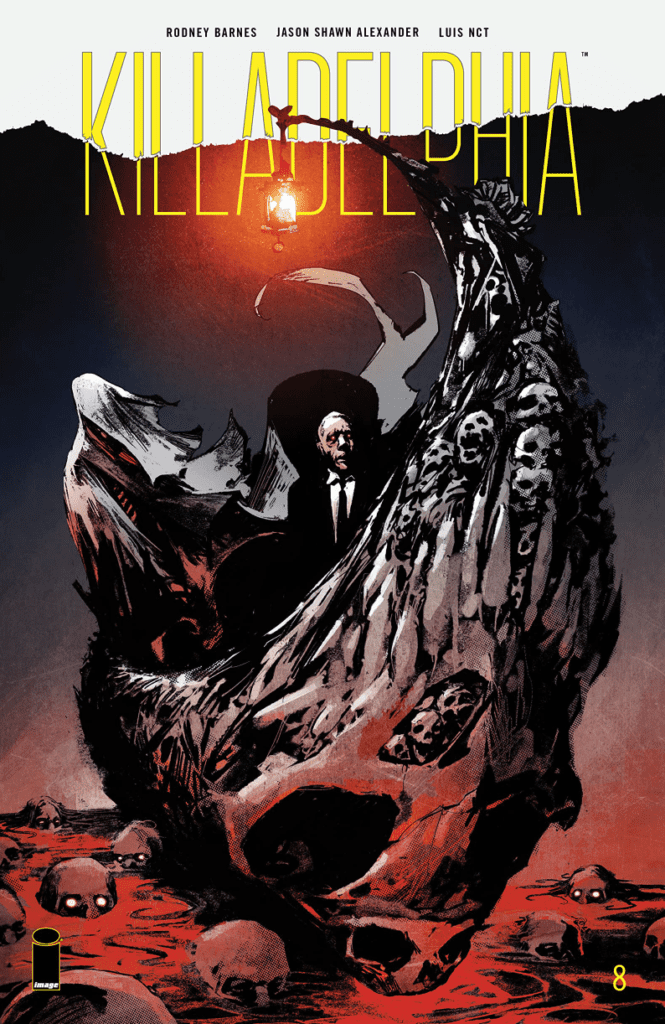
Killadelphia #8 Cover

Killadelphia #8, out this week, is another fun and gripping issue, full of fearsome vampires, entertaining violence, and a look into the world of Killadelphia‘s afterlife.

About the Book:
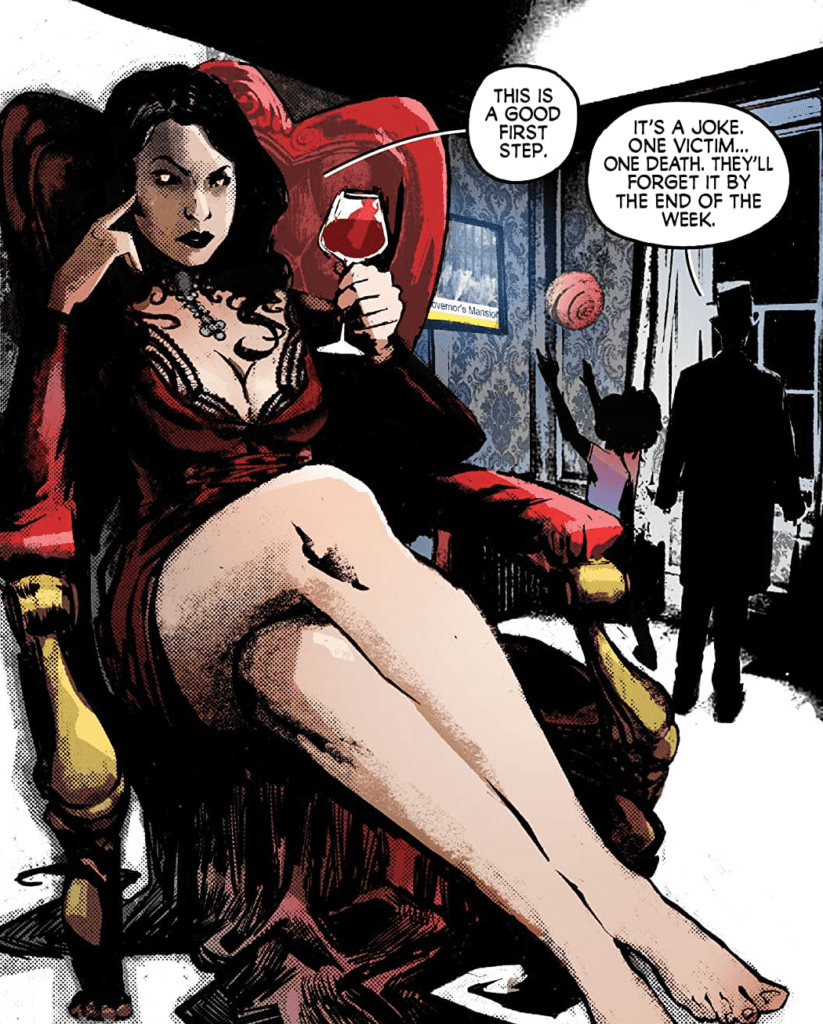
After John Adams was defeated, his wife, Abigail Adams, has taken over leading the vampires. They have already murdered the mayor to alert Philadelphia that they are still around, and now are setting their sights on a bigger target. Jimmy Sangster is dealing with the problem without the help of his undead father, who is exploring the afterlife in search of his deceased wife. All these plotlines come together to make Killadelphia #8 a captivating issue.

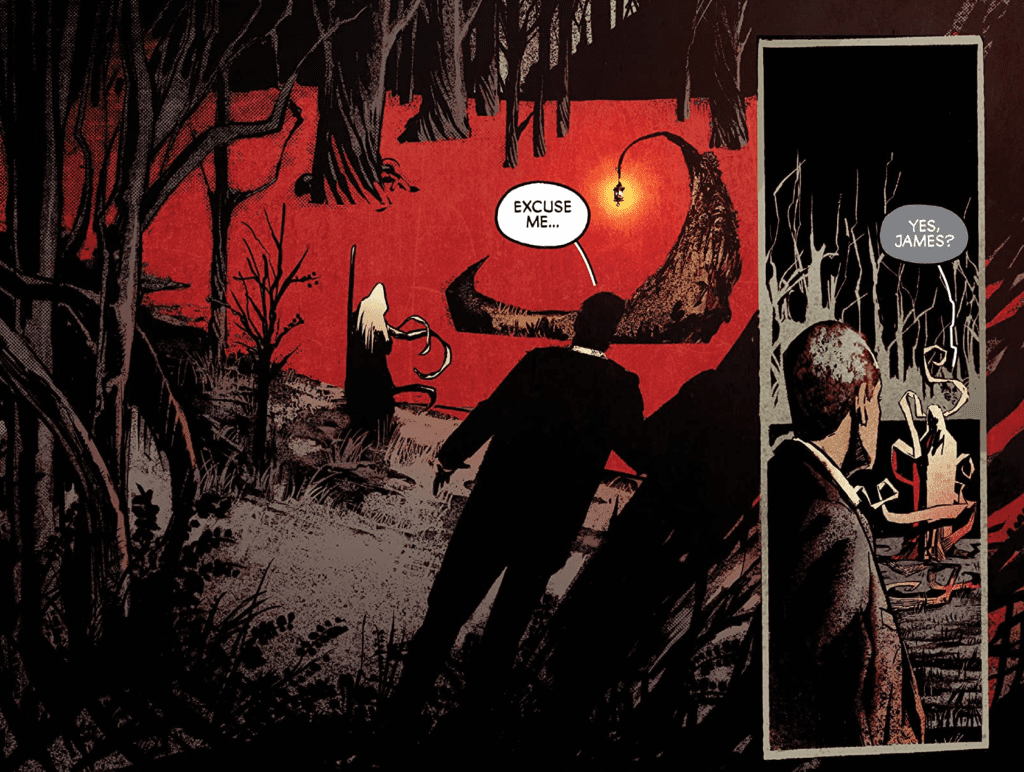
Killadelphia #8 Afterlife

Killadelphia #8 Story

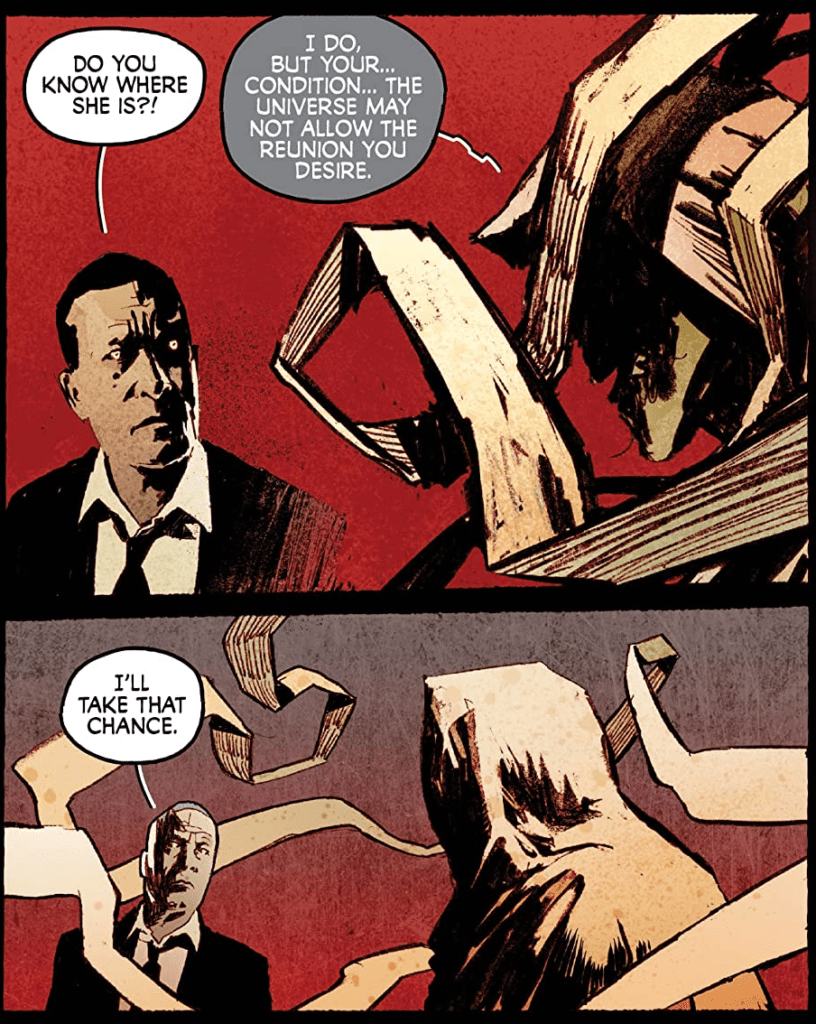
The writing of Rodney Barnes in this issue excels at making you want to keep reading. We have the characters we have grown to love facing a new threat lurking somewhere in Philadelphia. The story is always captivating, and the tone of the story being a mix between a police mystery and a horror tale, makes it such a fun read for fans of either genre. The version of the afterlife shown in this issue is another thing that stands out. It seems to take inspiration from the underworld in Greek mythology, but the way the undead fits into the picture and its aesthetics are completely new, and it is an absolute pleasure to see this new take.

A very interesting part of Killadelphia #8’s story is how Barnes can balance three narratives, all happening at once. In this issue, we have scenes of Abigail Adams as she speaks to other vampires, Jimmy Sangster dealing with a disemboweled mayor, and James Sangster Sr. as he navigates the afterlife. These scenes are very nicely interspersed, and there is never a time when it feels one scene is being focused on too much or not enough.

Killadelphia #8 Abigail Adams

Art

I have nothing but praise for Jason Shawn Alexander’s work on this issue. Every face looks nearly photographic, and his vampires always look cool and frightening. Killadelphia #8 is yet another beautiful showcase of Alexander’s talent. The art in this issue does nothing but make me want to pick up the next, and I have a strong belief that other readers will feel the same.

The colors of Luis NCT fit with Alexander’s line art incredibly well, and his little use of vibrant colors in Killadelphia #8 makes it more impactful when colors do appear. The dark scenes of the issue make it so that when blood is spilled, it pops out on the page; and effortlessly allows scenes full of bright colors to have an ethereal tone.

Killadelphia #8 Lettering Example

Marshall Dillon does a great job of having the lettering go along with the art. The color choice of pink for the backgrounds of captions pairs nicely with the red and black color scheme that comprises much of Killadelphia #8. Speech bubbles are very simple and get the point across, and the inverted color scheme of speech bubbles for characters is a good choice to demonstrate that they are otherworldly.

Conclusion

Killadelphia #8 continues the amazing story of the series. The series is so fun, dark, and violent that it’s extremely difficult to put down an issue once you have picked it up. Barnes does fantastic work as he continues to keep the story thrilling, and Alexander, NCT, and Dillon are there to back him every step of the way. Each person plays a vital role in helping Killadelphia become the stunning series it is now, and I can not wait to see where it will lead.

Monkeys Fighting Robots Youtube