Since the early days of the medium, graphic novels have proven to be well-suited to non-fiction storytelling. But among the glut of superheroes and other more popular fiction, we can find something to love in every insightful biography or educational graphic novel. Here are five books that deserve more attention.
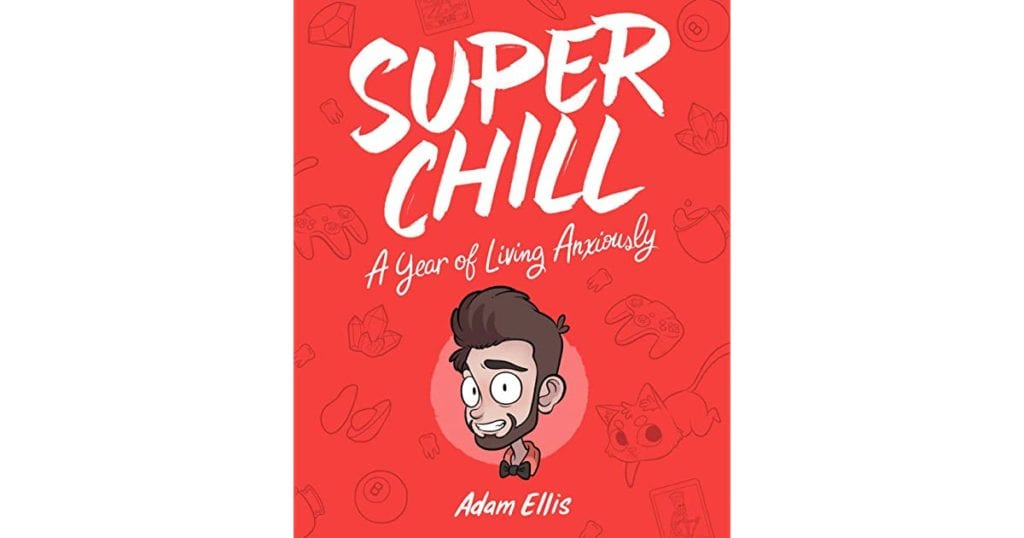
SUPER CHILL: A YEAR OF LIVING ANXIOUSLY
Adam Ellis’ 2018 solo work isn’t strictly a graphic novel, but we can stretch the rules to fit this funny and relatable book. Super Chill collects fifty-plus short comics full of absurdity and personal embarrassment. From a story of an awkward psychic reading to the scene of a wildly shaking leg causing the world to explode, expressive lettering, bright coloring, and a cartoonish style make us cringe and laugh in equal measure. So, if you’ve also imagined an Autumn leaf reminding you of your mortality or had anxiety dreams at all, then this is the book for you.
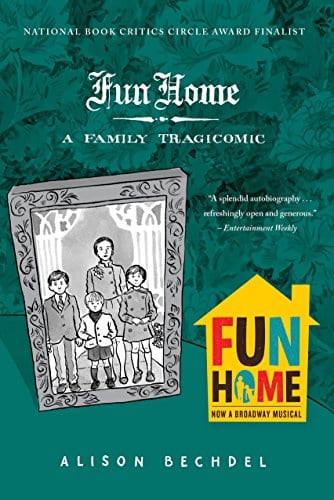
FUN HOME: A FAMILY TRAGICOMIC
Alison Bechdel made the mainstream with her eponymous feminist media “test.” But, if you want to know the art behind the name, Fun Home is an excellent place to start. As it was published fourteen years ago, it’s had plenty of time to make many top ten graphic novels lists–and rightfully so. Bechdel employs a classic comic strip style to tell her tragic family story. Divided into seven chapters, the balance of humor, drama, and the objectivity given by time make this a highly readable book.
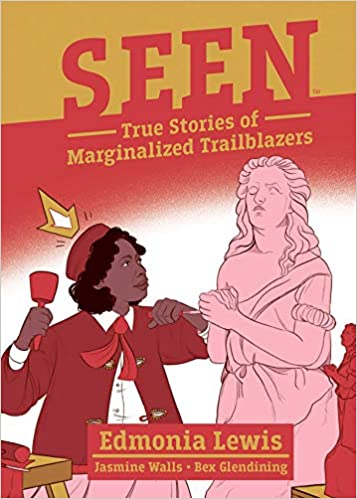
SEEN: EDMONIA LEWIS
To escape the pandemic’s steady upheaval of our lives, we’ve had plenty of new works to soothe our wounds. Some have been pure escapist entertainment, while others are more politically poignant. In the latter category, Seen: Edmonia Lewis is the first in an original series entitled “Seen: True Stories of Marginalized Trailblazers” from Boom! Studios’ Boom! Box imprint. Written by Jasmine Walls and illustrated by Bex Glendinning, Edmonia Lewis’ story is told in a straightforward manner using short captions and quotations from Lewis herself and other historical figures. To complement the writing, the artistic style is relatively unadorned except in Glendinning’s renderings of Lewis’ sculptures. However, colorist Kieran Quigley and letterer DC Hopkins have their chances to shine in adding pastel color to a time period we’ve mostly seen in black-and-white and in breaking up blocks of text into easily read bits. Another feature of the book is panels in the form of scraps of old paper, a choice that adds a touch of flair and highlights the time period. This book is a must-read of 2020. Pick it up in time for the next installment titled Seen: Rachel Carson, which will be released in March of next year.
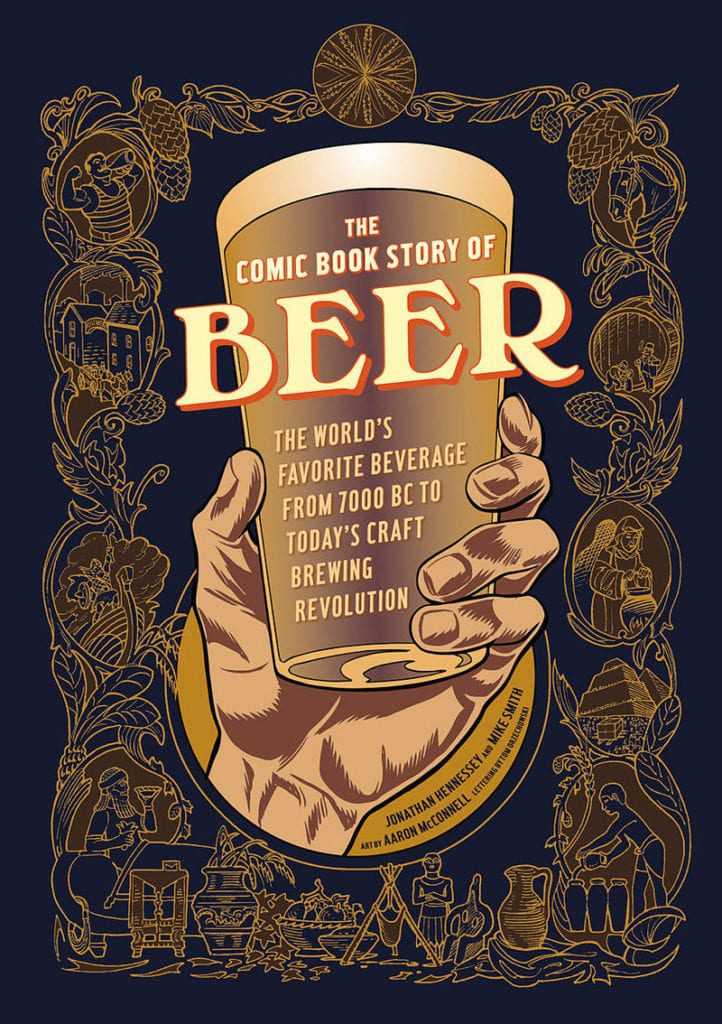
THE COMIC BOOK STORY OF BEER
Let’s face it; if all our history texts from high school were in comic book form, we’d all have loved the subject more. While beer as a subject is interesting through any media, its ancient history comes to life, and its complicated modern economic journey becomes easily digestible in graphic form. Illustrator Aaron McConnell contributes dynamic and animated art, while Mike Smith and Jonathan Hennessey provide insightful, clear, and gripping prose. Merge your love of beer and graphic novels with this book.
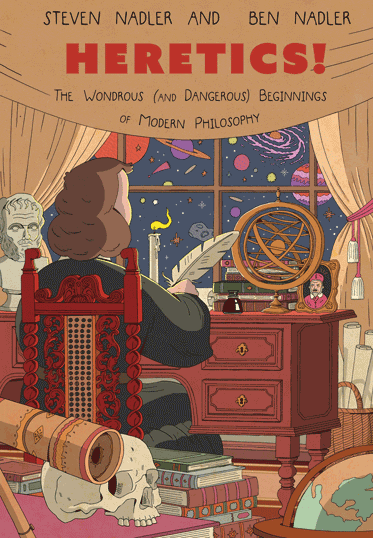
HERETICS! THE WONDEROUS (AND DANGEROUS) BEGINNINGS OF MODERN PHILOSOPHY
I don’t think I’m alone in saying that philosophy as a subject can be intimidating and overwhelming to any layman feeling ill-equipped to tackle life’s big questions. Have no fear fellow laymen, Heretics! is an extremely accessible introduction to important modern philosophers and their ideas. Written by philosophy professor Steven Nadler in collaboration with his illustrator son, Ben Nadler, their humor and whimsy make philosophy seem surprisingly cool. Ben’s fun illustrations, including a panel of the Devil working on his MacBook, hilariously contrast his father’s summaries of Spinoza and Locke’s grand concepts. Soon you’ll be talking about “pre-established harmony” and “empiricism” with the best of them. I also defy you to read this book and not want it to be reimagined as a series on Adult Swim.
End your year on a high note by picking up a graphic novel or two. Which graphic novels would make your own list?
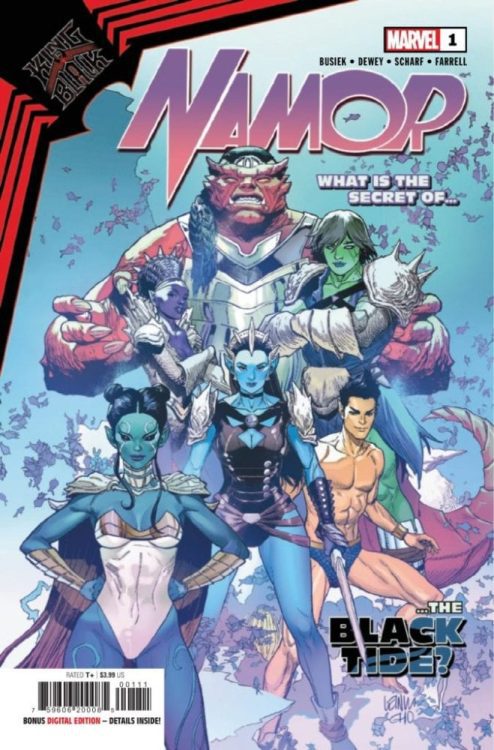
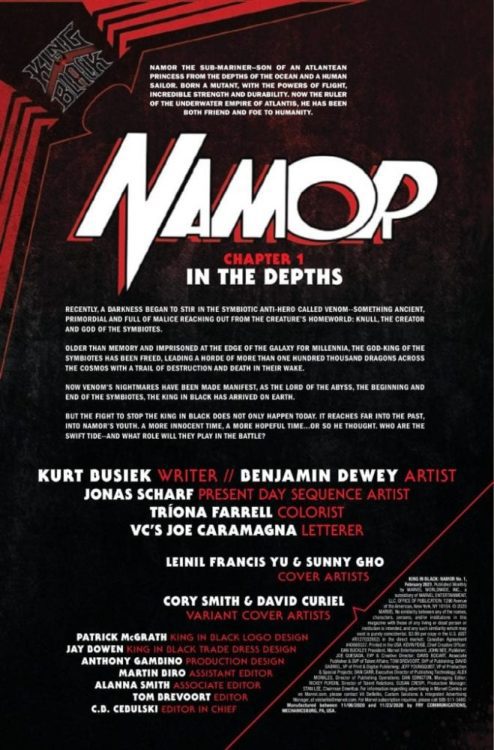
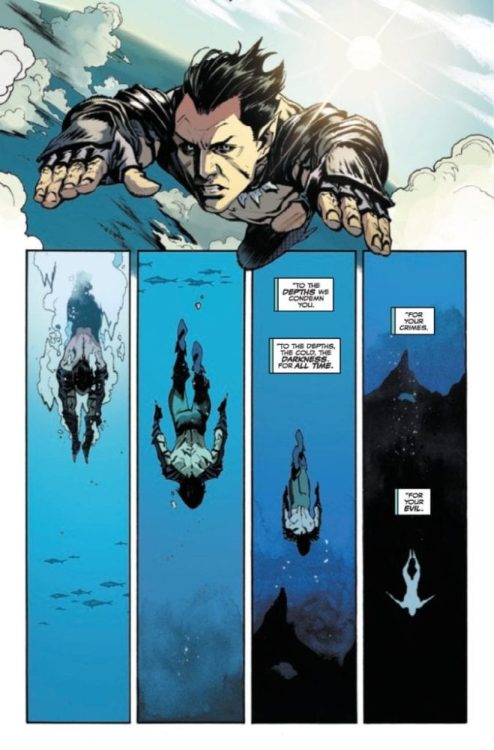
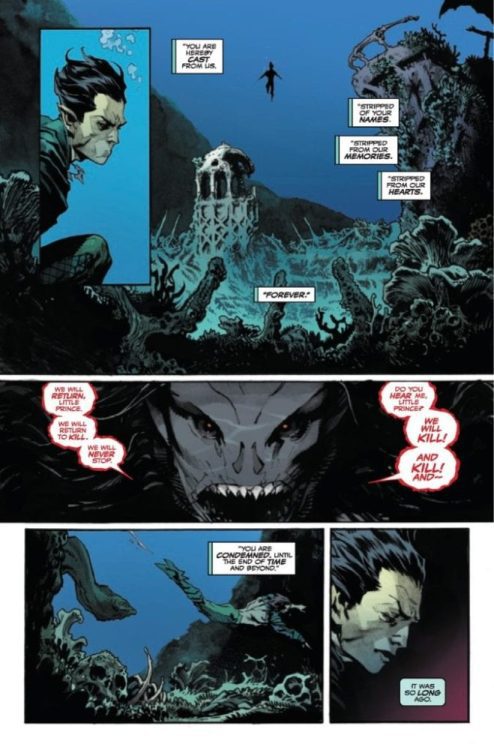
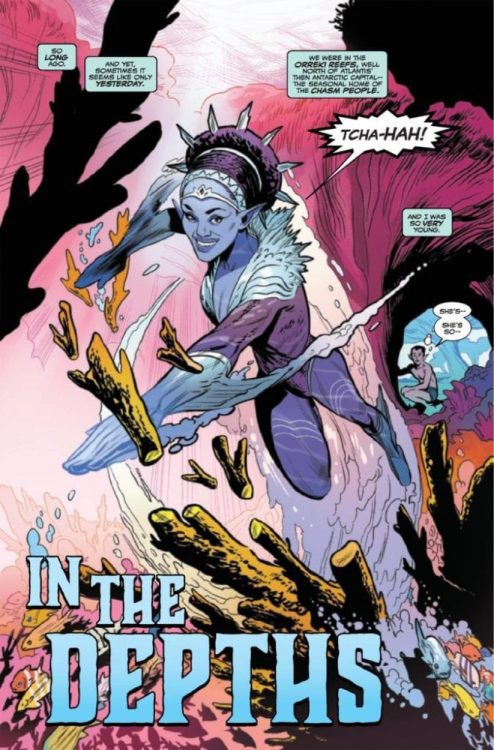
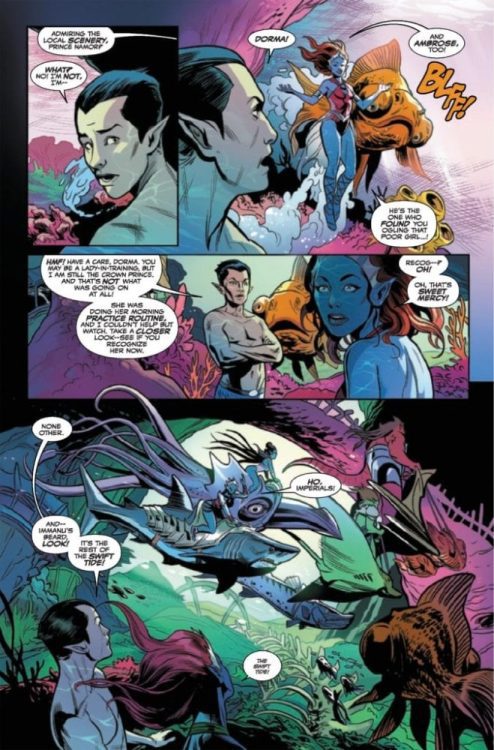
KING IN BLACK NAMOR #1 (OF 5) hits your local comic book shop next week, but thanks to Marvel Comics, Monkeys Fighting Robots has an exclusive four-page preview for our readers.
About KING IN BLACK NAMOR #1 (OF 5): Spinning out of the KING IN BLACK epic comes a dark, chilling story of the birth of Atlantis’s greatest villains. The players: Namor, Lady Dorma of Atlantis, the outsider Attuma – all still in their teen years – and The Swift Riders, the Atlantean Empire’s greatest heroes. It begins with alliances and possibility, as Attuma’s people may join the Empire…but what lies ahead is tragedy, betrayal, and the unleashing of dangerous, deadly magics. A deep dive into Marvel history…and the birth of a threat that will only grow in menace across time.
The book is written by Kurt Busiek, with art by Ben Dewey, Jonas Scharf is the “present-day sequence artist,” Tríona Farrell added the color, and you will read Joe Caramagna’s letter work. Leinil Francis Yu and Sunny Gho worked on the cover.
Are you excited for this KING IN BLACK tie-in? Comment below with your thoughts.
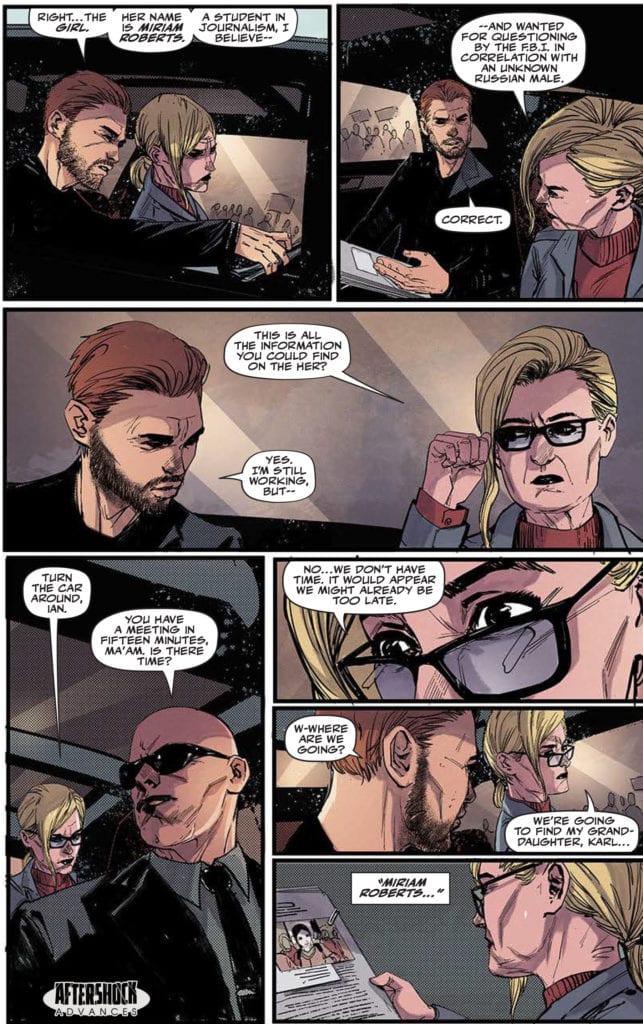
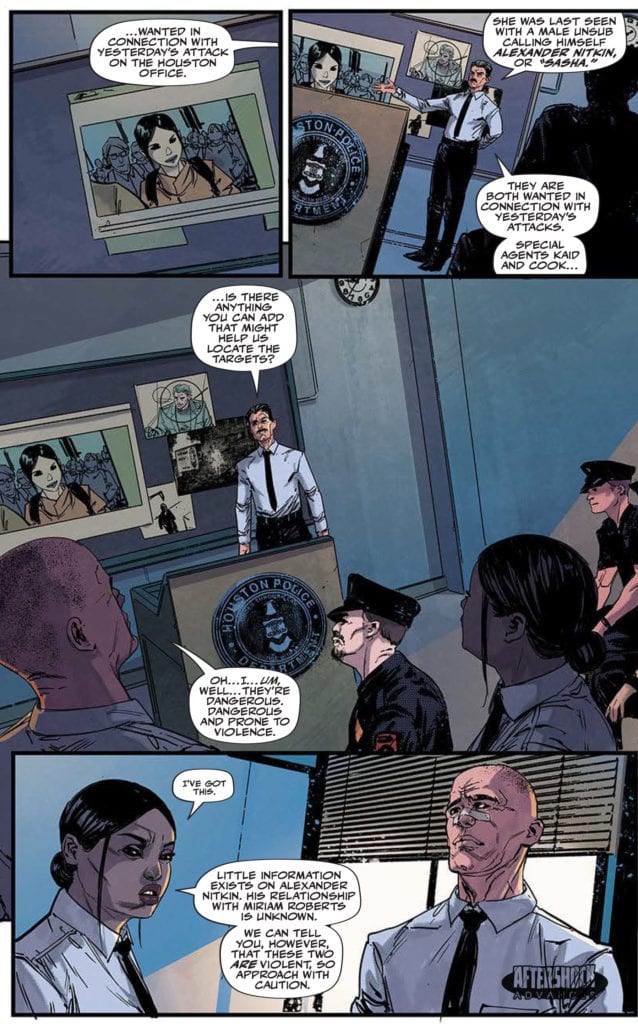
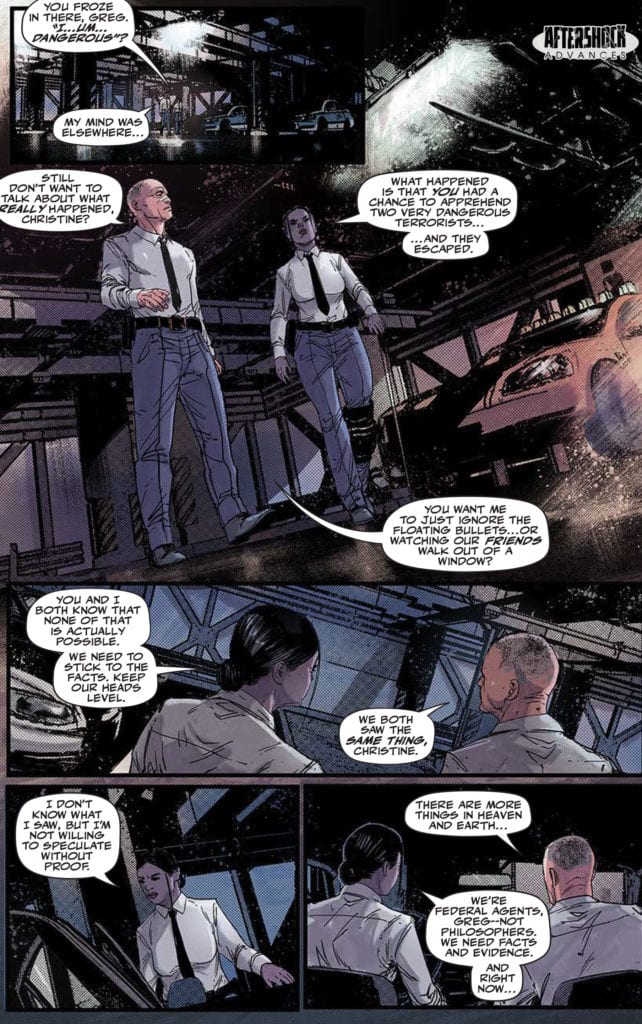
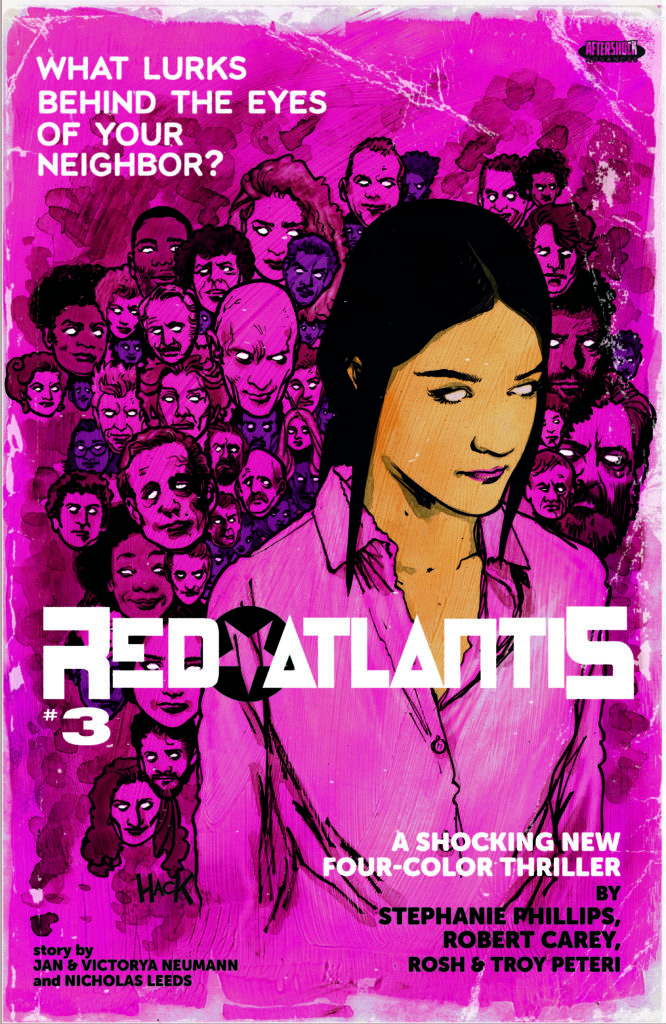
RED ATLANTIS #3 hits your local comic book store January 13th, but thanks to AfterShock Comics, Monkeys Fighting Robots has an exclusive four-page preview for you.
About the issue: Last week, Miriam Roberts was a normal college student. Now, she’s wanted by the FBI in connection with a series of terrorist attacks involving psychically powered Russian sleeper agents. Just when Miriam believes things couldn’t get worse, secrets about her long-lost parents resurface, and she realizes that she might have powers of her own.
RED ATLANTIS #3 is by writer Stephanie Phillips and artist Robert Carey, with colors by Rosh, and letters by Troy Peteri. The cover is by Robert Hack.
MFR reviewer Justin Munday called Phillips’ script for RED ATLANTIS #1 “sharp, entertaining, and expertly paced.”
Check out the RED ATLANTIS #3 preview below:
Are you reading RED ATLANTIS? Sound off in the comments!
The Princess Switch: Switched Again is a sequel to the hit holiday film on Netflix starring Vanessa Hudgens (High School Musical, Rent: Live) as both a baker from Chicago and a duchess from a fictional European city in a Parent Trap-Esque romantic comedy. To tug at your heartstrings with musical notes is composer Alan Lazar.
The Princess Switch: Switched Again finds us back in the life of Stacy DeNovo, the baker from Chicago. Stacy’s BFF, Kevin, played by Nick Sagar (Supergirl), and his precocious daughter Olivia (now played by Alex Adeosun) return as well. As would happen, the plot brings Stacy and Lady Margaret Delacourt, the duchess, and Stacy’s doppelgänger, back together. But, as sequels will do, the hijinks of the first film are taken to new, exciting heights, with Vanessa Hudgens playing yet another character.
PopAxiom spoke with Alan Lazar about his road to making music for film and television, including taking the composing reigns for The Princess Switch: Switched Again.
Speak The Language
Alan grew up in South Africa, where he studied “computer science and political studies.” So, how did making music change the course of his studies? “I’d always played music. I was classically trained as a kid, so it was always a part of my life. But I never seriously considered it as a career.”
“In college,” he continues, “I played in a band — Mango Groove — on weekends to earn some extra cash. Unexpectedly, we got a record deal, which ended up being one of the biggest selling pop albums in South Africa. We were one of the first multi-racial bands in South Africa in the early 90s. It was a real symbol of the changes happening in the country. We tapped into a lot of positive feelings back then.”
Now a hit musician in his country, Alan says, “That gave me the confidence to get on this creative path. I’d always loved movies, and I applied to a bunch of film schools in the US, thinking I could study directing and screenwriting.” Alan won a Fullbright scholarship to USC Film School in LA where he was on track for a Master’s Degree in directing and screenwriting. “What happened along the way is I started writing music for student films. I discovered that’s what I love doing more than anything. I found directing and writing quite stressful, but writing music for a film I loved from the moment I started doing it.”
Few composers studied directing and screenwriting. “In a weird way,” Alan says, “it helped. I know the language of film well, and so much of film is collaborating and communicating. I can speak the language of a director.”
Film Vs. TV
Alan’s worked on TV series like The Real Housewives of Orange County and the film Holiday in the Wild. What’s different about the two mediums, and what’s the same? “At the end of the day, it’s all about the emotions you want to put in those images. The whole process between something like Housewives and scoring a film is so fundamentally different.”
Alan shares his view on the differences. “With Housewives, they like to edit to music. So, I give them music at the beginning of a season. We have this shorthand now; we have categories for the types of tracks I create for them. So, it’ll be like ‘light tension,’ ‘medium tension’’ or ‘heavy tension.’ There will be one for ‘sweeping glamour’ or the comedy ones will have labels like ‘quirky-cool’ or ‘quirky whimsical’ and ‘quirky awesome.’”
“They’ll order things from me at the start of the season,” he says, “so it’s kind of like the score is coming before the picture. It’s generally very energetic score; very beat-oriented and groove-oriented.”
“Scoring a movie is so different,” Alan continues, “Generally, I only start writing music when there’s a cut of the movie, often a very advanced cut of the movie. I’m crafting every single piece of music directly to those pictures. So, it’s the pictures that inspire me. Also, when you score a project like a film, you have to make sure every note hits in the right spot. You’re generally writing music that doesn’t function by itself. It’s meant to support the story.”
“Another big difference,” Alan says, “is the point of contact. Generally, on TV, I’m dealing with the producers, and the director is more of a hired hand, but in movies, directors are the driving creative force.”
About The Princess Switch: Switched Again
The Princess Switch was a huge hit for Netflix, and Switched Again followed suit, becoming the number one global movie on the streaming giant in the first week of its premiere. Alan’s work on The Princess Switch: Switched Again came about due to word of mouth, and it proved to be a great counter to this stressful year. “I loved working on ThePrincess Switch: Switched Again. Given everything with COVID, I was in my studio writing music for this joyful, upbeat, Christmas romantic comedy. It was a nice tonic for reality.”
“It’s so feel-good and upbeat,” Alan says of the sequel, “It’s got great production design. Vanessa Hudgens is amazing. She plays three roles.”
Alan watched the first film to “get a sense of the tone. Director Mike Rohl gave me a lot of detail and helpful information about what sort of feeling and tone they wanted to keep from the first, but also where they wanted to go with the new movie.”
“The biggest note to me,” he says, “was that they wanted to make it bigger all around than the first. We upped a notch on the score. It’s a full orchestral score which we recorded in Budapest, all remotely.”
The Princess Switch: Switched Again adds a new layer to the underscore’s equation. “At the same time, there’s a new character that Vanessa plays who gets specific scoring in a style that’s quite different than the first one.”
“It’s a big score,” he asserts, “about 65 minutes of music. The director loved music, and he wanted to have a lot of music.”
Switching Sounds
The Princess Switch: Switched Again takes everything you love about the first but to a whole new level of excitement. “There are a couple of scenes in the movie where there’s wall-to-wall action. Those kinds of cues are a bit more difficult to write.”
“There was also a scene towards the end,” Alan reminisces, “which was a combination of an action scene, but with a strong emotional component. I worked hard on that scene; it’s a three-and-a-half-minute cue. My initial draft of that took me about nine hours. That’s a long time for me, particularly for a first draft. I wanted to fuse the emotion with what the scene needed pace-wise.”
Alan shares a story of how deep his connection to his job — and this cue — go. “As a composer, sometimes you have to go to an emotional place. You’ve got to get yourself to that place and live in it. This particular cue was like that. It’s a romantic cue, but it’s also got hope and fear. A lot is going on in it. I came out of my studio with some tears in my eyes, and my kids were making fun of me, ‘You made yourself cry, daddy!’”
Working Remotely
A lot of the score to Princess Switch: Switched Again happened through remote work. How does that affect making music? “There’s nothing like being with the musicians together. There’s a lot of communication that goes on that gets lost in these remote connections. At the same time, I have to say that I was nervous before working on the initial remote sessions. But they all went so well. I didn’t feel like I didn’t get something that I wanted.”
“Netflix allowed a couple of orchestras around the world to start doing recordings for them,” Alan shares, adding that Netflix allowed these orchestras “on the basis of having strict COVID protocols in place; string players wearing masks; woodwind and brass sections were put behind plexiglass.”
The process formed a connection between the Budapest Art Orchestra and Alan’s studio. “I could see video of them. I also had a direct text chat with the conductor. It was pretty incredible. He was quick on stuff. I could send him a note via text while he was conducting, and I could hear it straight away. We did between three to eight takes of every single cue. It was a lot to get through. We recorded over two days. Also, a separate grand piano part.”
“The nice thing about it,” Alan says, “a lot of people who wouldn’t normally come to a session were able to tune in remotely. The producers, the director, writers, some people from Netflix were all able to sit in. Weirdly, it made it all like a communal experience.”
Wrapping Up
Alan’s influences come from a familiar place to many movie fans. “I grew up on many of the typical American entertainment like Star Wars and Raiders of the Lost Ark. I loved all of them.”
“When I went to college in South Africa,” Alan continues, “I started getting more into local music like Mbaqanga, Marabi, and Kwela. It had a lot of influence on me musically. I had a classical music background and was well-acquainted with film music. But this unique South African scene fed my musical vocabulary.”
Alan shares four recent scores that blew him away. “The Chernobyl score by Hildur Guðnadóttir was interesting and groundbreaking. I love the Succession theme music and underscore by Nicholas Britell. A Spanish series on Netflix called Someone Has To Die from composer Luis Moreno. It was this dramatic, feisty, orchestral score with a bit of an old-school vibe. Nathan Barr’s score for Hollywood, I loved that.”
“One of those 60s or 70s TV shows,” Alan answers when asked about dream projects. “The Avengers, The Saint, and The Man from U.N.C.L.E., anything from that era that’s sci-fi or detective. The scores for a lot of those shows are so good. They’re using live orchestras like most TV shows did back then, and they often used instruments in such fascinating ways. Doing a modern revamp of those scores and introducing contemporary elements would be fun.”
The Princess Switch: Switched Again is available on Netflix. So, what’s coming next from Alan? “I have several things floating. Nothing I can mention right now because I don’t want to jinx anything.”
Is The Princess Switch: Switched Again on your watch list?
Thanks to Alan Lazar and Rhapsody PR
for making this interview possible.
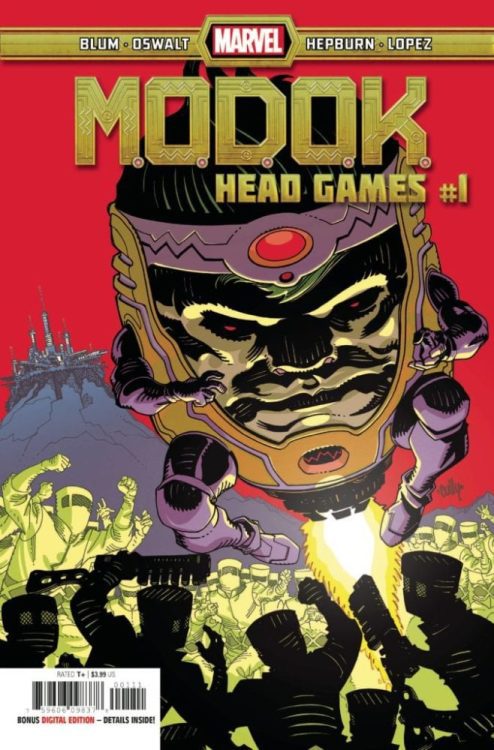
MODOK Head Games #1 by Marvel out on December 2 for a story about a character ready to appear on TV. The same show’s creators Jordan Blum and Patton Oswalt, even serve as writers. Joining this ensemble is artist Scott Hepburn, colorist Carlos Lopez, and letterer Travis Lanham.
MODOK Head Games #1 Crisis
Blum and Oswalt waste no time in bringing material from their show to the comics. In order for the adult sitcom moods to not interfere with Marvel’s more pulpy atmosphere, MODOK Head Games #1 prefers introspection. The titular MODOK, despite his vast intelligence and abilities, is facing his mid-life crisis. His capabilities and computerized brain seem to be clashing with something he keeps hidden within. This brings out an interesting dynamic to a character who was defined only by those things. The very presence of a life outside of super-villainy throws MODOK off in several ways. With AIM being full of cutthroats, it makes sense why MODOK sees this as a glitch. Despite that, MODOK’s subconscious manifests something that only his civilian identity George Tarleton knows.
Situational Irony
While the story of MODOK unfolds, the artwork by Hepburn gives a distinct slapstick style of effects. Take the scenes and splash panels where MODOK takes action with various equipment. On a splash page, he does various attacks at once, with the effects varying. He equips other various tools in a smaller scene, only for the action following to simply be a headbutt. MODOK Head Games #1 never tries to take itself too seriously in its actions. The character has little to fear in these situations, unlike the visions he experiences, which Hepburn displays with facial concerns.
The coloring by Lopez is often coded to different characters. Purple most often relates to MODOK, especially in regards to his intellect and his visions. The complementary green in the meantime describes a threat towards MODOK, especially Monica Rappaccini. What really stands out in MODOK Head Games #1 is Lantham’s lettering. The captions display three segments of MODOK’s mind: his standard yellow captions with purple words to display his default state of mind, a computerized version of the previous often accompanying a black and white input, and crooked black captions with white words screaming out in a large font. All of which look ready to clash with one another in issues to come.
MODOK Head Games #1: A Companion
MODOK Head Games #1 is certainly shaping up to be a rather interesting series. While it is advertising the upcoming Hulu show, it has its own identity. This identity just happens to revolve around an inversion of what its creators are bringing forth. It’s a rather clever way of making sure one series doesn’t overlook the other.
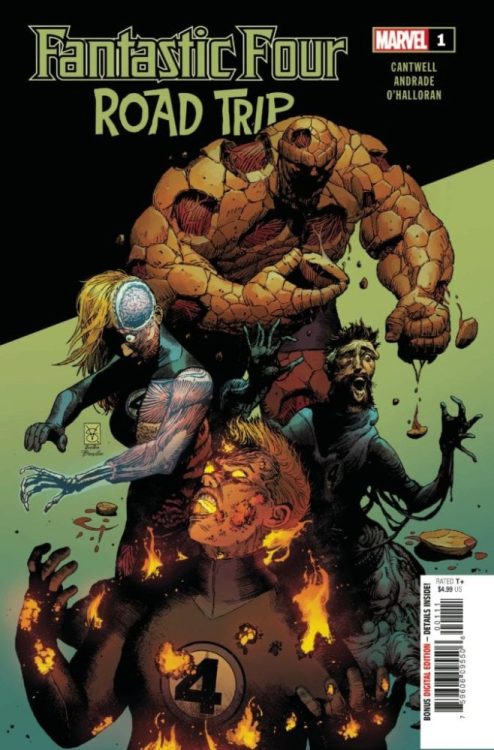
Fantastic Four Road Trip #1 is a one-shot from Marvel Comics out December 2. Doctor Doom writer Christopher Cantwell gives artist Filipe Andrade a chance to get creative with grotesque surrealism. That surrealism furthers with colorist Chris O’Halloran and letterer Joe Caramagna contributing to the weirdness.
Fantastic Four Road Trip #1: Simply Fantastic
Cantwell takes the Fantastic Four out of the drama of their mainline series for some family times. Fantastic Four Road Trip #1 follows the titular family trying to get some vacation time in them. Seeing the Fantastic Four going about their usual quirks is certainly a breath of fresh air. Like when Sue Storm and Ben Grimm make bets on whether Reed turns their trip into a small expedition. That same decision by Mister Fantastic certainly opens a chance to show both the FF’s family drama and superheroism.
Grotesque Absurdism
Where Fantastic Four Road Trip #1 really stands out is in the artwork by Andrade. His exaggerated cartoony art style gets highly creative when the Fantastic Four get caught in a death trap. Body horror and surreal effects like Franklin being in multiple places at once are a grotesque display of the FF. They explore the strange and are part of it, which can be to their detriment. It’s what makes some scenes where the Fantastic Four’s cabin turns into an abstract art piece fascinating and horrifying.
Some of the stranger aspects of Fantastic Four Road Trip #1 display themselves through color by O’Halloran. In scenes featuring Franklin/Powerhouse, his yellow and blue clothes and black hair make him stand out. It’s what makes his role in the overall plot stand out. The lettering by Joe Caramagna features both hand-drawn wordmarks that can look as absurd as the art and uniform lettering as a contrast. This juxtaposition serves as both a forewarning and a way for things to become more mundane as the plot advances.
One Little Detail
On the flip side, while it isn’t a requirement to read previous material, it helps to see where the plot fits. This is particularly important in regards to Franklin with events from the mainline comics. It’s only because Franklin’s attitude throughout the one-shot reflects these events.
Fantastic Four Road Trip #1 Is Good For The Reader
Fantastic Four Road Trip #1 is a good issue just to see Marvel’s First Family be themselves. The family dynamic between them is always a sight to behold as they drive each other crazy with their quirks. The artwork is most definitely what will attract readers for combining surrealism with the grotesque. Because by all accounts, the Fantastic Four are explorers in all things of the Marvel Universe.
Few fans are harder to keep happy than comics fans. I know because I’m one of them. When fans are displeased with a writer, they make their opinions known.
Over the past few years, as I’ve engaged with fandom on the Twitterverse and various Facebook fan pages, it’s been hard not to miss the vitriol that has been spewed at DC Comics’ writer Tom King. King has written several high-profile stories that have put him front and center of DC fan discourse. Despite celebrated runs on Grayson (with Tim Seeley), Mr. Miracle, and Sheriff of Babylon, some of King’s storytelling choices have raised the specter of fan criticism, including my own. However, I think a lot of this criticism has been misplaced, and King’s role in some of his writing choices has been misunderstood.
While King stuck out as one of the star writers of DC Rebirth back in 2016, after Batman and Catwoman failed to get married in Batman #50, King’s crown seemed to lose some of its shine.
What was initially lauded as one of Batman’s best runs soon gave way to rancor; however, not all of this was King’s fault.
Batman #50 was never going to result in a marriage. That’s a happy ending that would’ve arrived too early. However, I long suspected this would be one of those “darkest before the dawn” type of stories that would circle back to a happily ever after, which sort of happened in City of Bane, but that was because of a decision by DC to shuffle the real ending of King’s Bat/Cat story into its own maxi-series.
It’s also worth noting that one of the reasons fans were so pissed off by Batman #50 was that it was marketed (strongly!) as the wedding of the century for DC Comics. I’m not going to harp on this point too much, but others have pointed out that while the marketing for the issue was deceptive, Tom King is not in charge of the marketing and wrote the exact story he wanted to tell. What DC chose to do with that is on them. Not King.
Every writer is bound to make a few decisions that fans aren’t pleased with, but King has received some unnecessary flack for several things he shouldn’t have. Some of the comments I’ve read take the form of almost conspiratorial thinking: “Tom King hates this character which is why he did THIS,” or, “Tom King disagreed with this or that editor which is why he did THIS,” or, “Tom King just likes messing up continuity which is why he did THIS.”
I think it’s time we give King some exoneration here.
Let’s start with a biggie–the treatment of Wally West in Heroes in Crisis!
I love Wally West and was super excited about his return in DC Rebirth #1. I’m a fan of the character and everything he represents about DC history, continuity, and legacy.
But do you know who also loves Wally West? Tom King!
While King admits that he liked the story he wrote about Wally in Heroes in Crisis, the choice of characters and the roles they played in the story were editorially mandated by DC. With a few exceptions, the most vehement complaints (historically) about King’s writing have this one thing in common–an editorial mandate!
Another editorial mandate that got pushed on King was the death of Alfred Pennyworth in his Batman run. A lot of fans (like myself) who were hoping that DC’s timeline might yet “catch up” to the events of Doomsday Clock, as was originally promised, had those dreams dashed with Alfred’s death, given that the character appeared alive in that story.
That King seemed to drop the emphasis on the Rebirth narrative, despite Saturn Girl appearing in one of his first issues and “The Button” having been a major storyline during his run, was dissatisfying to me, and I’m sure, many others. Reading various Twitter threads gave me the impression that some fans thought Tom King and other writers at DC were intentionally undermining the Rebirth/Doomsday Clock storyline and giving the middle finger to fans who were concerned about continuity.
But Tom King is a fan of comics. I imagine that a lot of things that get you and I fired up as fans are probably the same things that get him fired up as a fan. King actually pitched a story to DC that would’ve connected Dr. Manhattan to the return of Superman’s father Jor-El and the Flashpoint Thomas Wayne in order to show that their returns were more than a coincidence. The Jor-El/Manhattan connection was certainly addressed a time or two, but the return of Thomas Wayne definitely seems like a missed opportunity to tie into the larger Rebirth story involving Manhattan. It’s nice to know that King and I were on the same page there (and again, it was DC editorial that kept King’s pitch from coming to fruition).
If you’re not a fan of King thematically linking his work to ideas about war and trauma, that’s fine. We all have writers and artists in comics we connect to more than others.
But it’s time we stop giving King unnecessary flack for editorial decisions that were out of his hands and appreciate his unique voice as a writer.
THE ORVILLE #4: HEROES PART 2 OF 2, available in stores on Wednesday, December 2nd, concludes the two-part story highlighting Talla Keyali and her fight to protect the Okudum people. Readers have enjoyed watching the young Lieutenant embrace a role as the legendary hero Xandia. But will this choice come back to haunt her?
Story
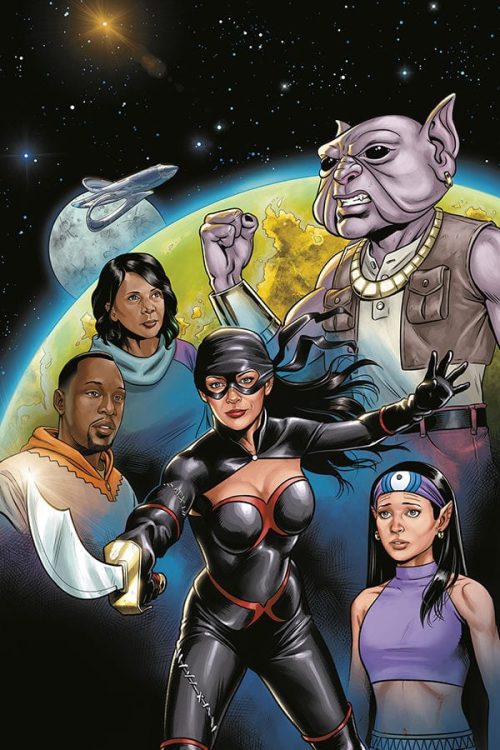
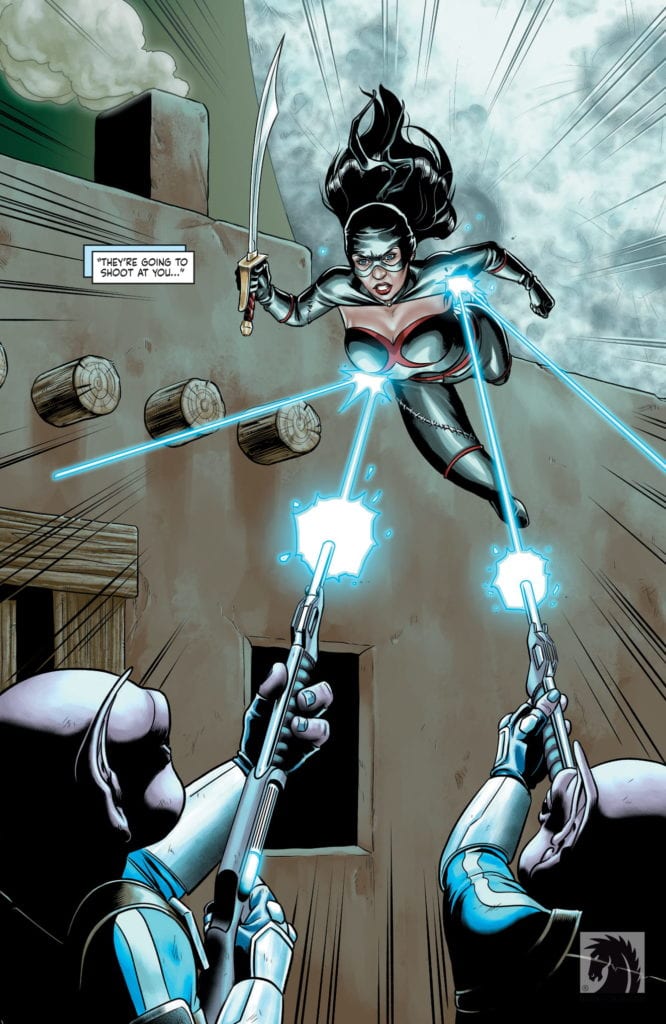
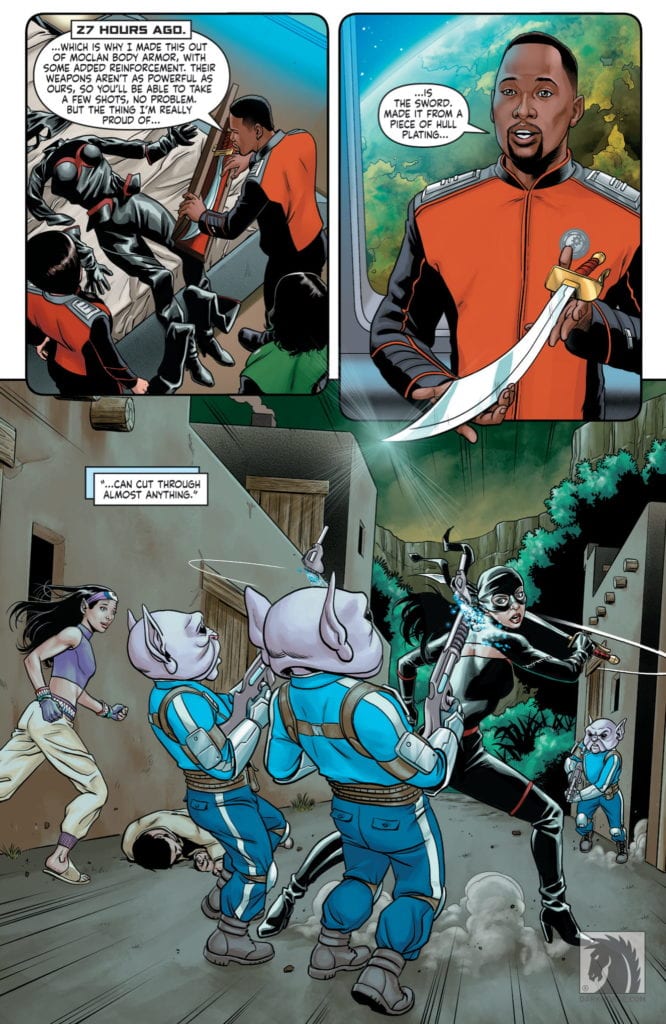
After shocking the Okudum with her appearance as the fabled last issue, Talla shows she’s back in action with a fresh costume. Thanks to ‘s engineering, our hero now sports a bulletproof outfit complete with a sword made from their ship’s strong hull.
This bit of detail helps readers see the strong bond between Talla, Dr. Claire Finn, and Lieutenant John LaMarr. The fact that her crewmates didn’t hesitate to offer assistance in her idealistic plan proves the strength of their friendship.
But despite her assortment of advanced weaponry, it seems even Talla’s prowess won’t place her in multiple places at once. And it’s that key factor that leads to a tragedy that could escalate the fighting further.
David A. Goodman’s writing helps readers feel as if they’re a part of the story. The way he guides us through each scene gives the impression we are in the panels with our favorite characters.
Artwork
David Cabeza’s penciling and ink work, Michael Atiyeh’s coloring, and Richard Starkings and Comiccraft’s Jimmy Betancourt’s lettering capture the essence of The Orville in this issue. The protagonists are drawn with a stunning realism that almost rival their real world counterparts. Each scene uses colors effectively to keep readers focused on the action scenes. And the word balloons are placed strategically so as to outline these sequences.
Conclusion
THE ORVILLE #4: HEROES PART 2 OF 2 concludes the Heroes arc in dramatic fashion. Readers will be on the edge of their seats as they follow Talla through the most heart-wrenching fight of her life.
Do you think it was right for Talla to impersonate Xandia? Let us know in the comments below!
MARVELS SNAPSHOTS: CIVIL WAR #1, available from Marvel Comics on December 2nd, presents the ethical dilemmas faced by a low-level SHIELD agent during the events of Civil War. Saladin Ahmed turns in a surprisingly thought-provoking story that forces the reader to ask one simple question – What would you do?
Cover Art
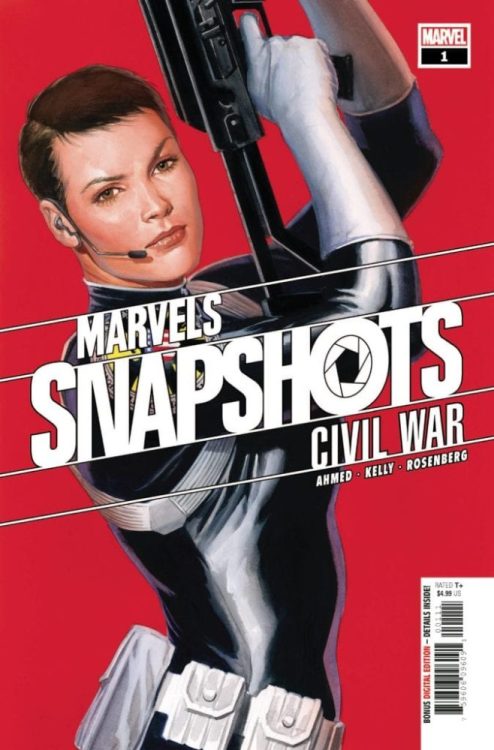
It’s an Alex Ross quality, so high-quality art is a de facto given at this point. That said, Maria Hill’s expression is notably lacking in any emotion, and nothing is really happening. It’s a beautiful cover, but it lacks punch.
Writing
This issue follows a low-level SHIELD agent (Clyde Dobronski) who’s eager to protect innocent lives after the Superhuman Registration Act is passed. He very quickly learns that “doing the right thing” is not so clear when he’s ordered to capture icons of heroism such as Captain America. Dobronski fills the role of average, every man trying to walk the line between protecting innocent, non-superpowered lives versus arresting and imprisoning superhuman citizens, minors in some cases, who represent little or no threat.
Ahmed’s story works well because of how nuanced each character was developed in such a short book. The narrative largely falls on the side of the superhumans who want to be free, but even then, the seeds of doubt are still present. The reader is forced to ask some serious questions about what we would do in Dobronski’s shoes, such as:
Would we do what felt wrong under the umbrella of following orders?
What price would we pay to keep civilians safe? What price is too high?
Are superpowered minors less jaded about the world and therefore able to better grasp the core of freedom, or are they simply too young to understand the threat they themselves pose?
The story wraps up with a mildly open-ended resolution, leaving those questions for each reader to answer on their own. I enjoyed the challenge of this issue because it was, at times, uncomfortable.
Pencils/Inks
Ryan Kelly’s art is fairly strong throughout the entire issue. The focus of this story is Dobronski, who’s depicted as a less than exceptional physical specimen. He’s older, overweight, not athletically gifted in his movements, and completely average in every way.
Kelly makes Dobronski just mediocre enough for the reader to understand why he hasn’t climbed the SHIELD but not so pathetic as to make him seem unqualified to work for SHIELD. In gaming terms, Kelly created the comics equivalent of an npc, and it works perfectly for this story.
All the remaining visual elements work for this very confined story. It’s confined in the sense that everything happens within small moments and interactions between characters. It’s the little things like posture, body language, gestures, and facial expressions that make all the difference. And Kelly nails it.
Coloring
Rachelle Rosenberg makes great use of mood-coloring, especially with the contrasting highlights to Kelly’s dramatically inked shadows. Nearly every panel uses old-school overhead lighting to mimic what you would see in government buildings and prisons. The lighting scheme throws a lot of shadow that Kelly plays up to add dramatic punch, and Rosenberg takes full advantage with gorgeous highlights and color gradients to make those shadows deeper. More ominous. This is great mood-setting from Rosenberg.
Lettering
VC’s Joe Sabino turns in a solid performance with the lettering. The dialog is clean and easy to read. Word balloon placement follows the panel flow perfectly. And the pacing is excellent throughout.
Conclusion
MARVELS SNAPSHOTS: CIVIL WAR #1, available from Marvel Comics on December 2nd, is one of the strongest issues in the Snapshots series by taking a successful event and finding an interesting story within the story. The writing is excellent from front to back, and the art team is the icing on the cake. This is a highly recommended issue.
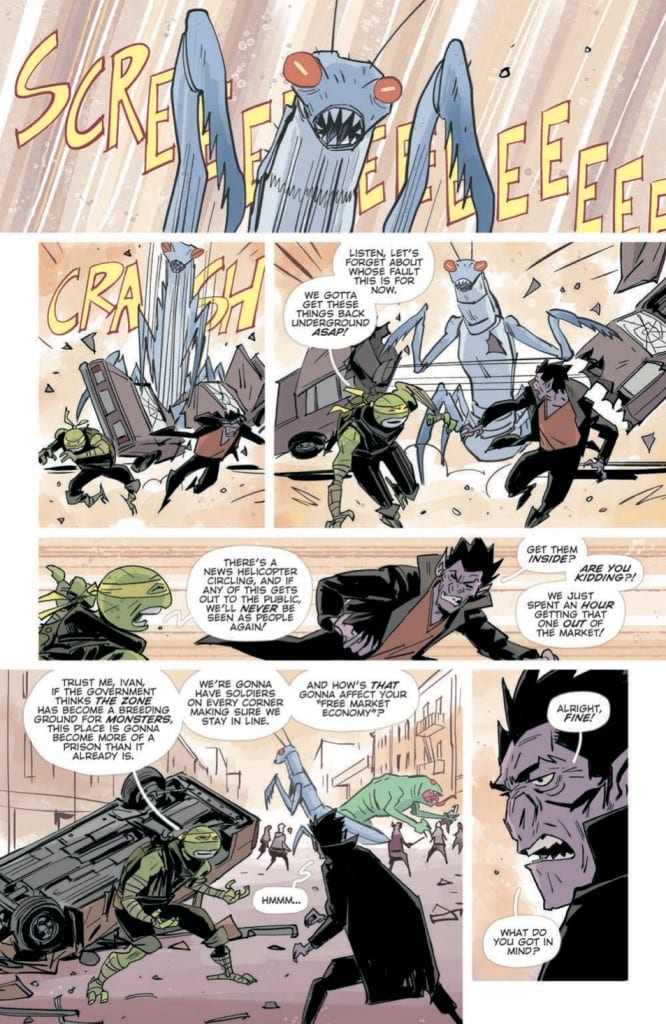
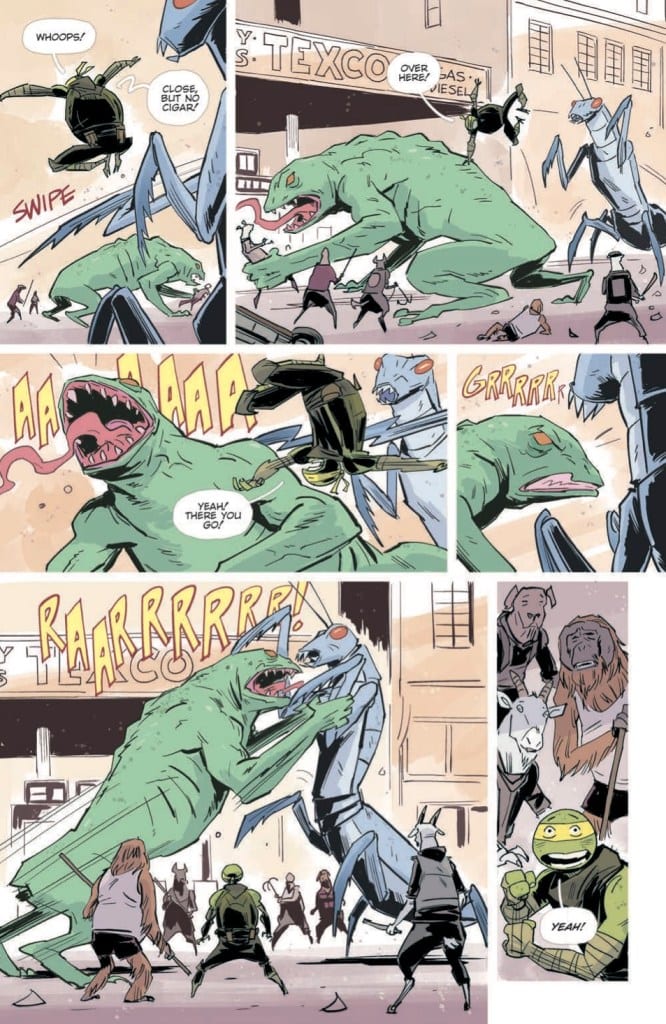
TEENAGE MUTANT NINJA TURTLES: JENNIKA II #2, available in stores on Wednesday, December 2nd, dives deeper into the mysteries of Mutant Town. Seeking to keep the community away from the media, Jennika attempts to draw attention away from a violent new mutant. But when another monstrous creature joins the fray, the solo warrior may need help from Ivan.
Story
Jennika and Ivan appear to have their hands full right in the issue’s opening pages. Readers are well aware of the struggles mutant citizens have faced in their new lives, but none of these involved vicious monsters.
Readers will follow Jennika and Ivan through the streets of New York’s Mutant Town as they look to uncover this mystery. They’ll find townspeople with rich personalities, many of whom tell tales of “shadow people” who use strange drugs underground. Could the out-of-control mutants be connected?
Brahm Revel’s writing combines elements of mystery and action stories in astounding fashion. Each panel opens up new questions, making us anxious to find out what lies in store for Jennika.
Artwork
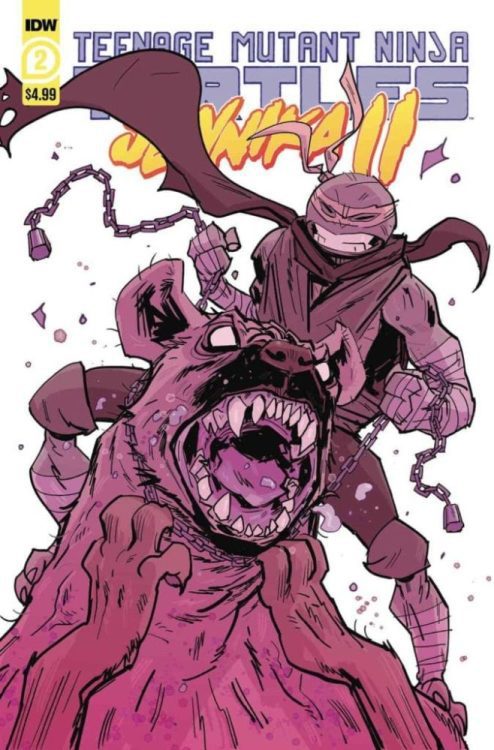
Revel’s penciling and ink work, coloring, and lettering work well together to create an engaging visual representation of this story. The sleek lines outlining Jennika are contrasted with the jagged, bulky masses of her assailants. We also loved how her yellow hues brought attention to her action sequences against darker backgrounds. In addition, the fonts add to the high-intensity scenes with onomatopoeia words.
Conclusion
TEENAGE MUTANT NINJA TURTLES: JENNIKA II #2 opens up new possibilities, and new dangers. Readers will find themselves drawn into the narrative more so than ever before.
Who do you think the “Shadow People” are? Let us know in the comments below!