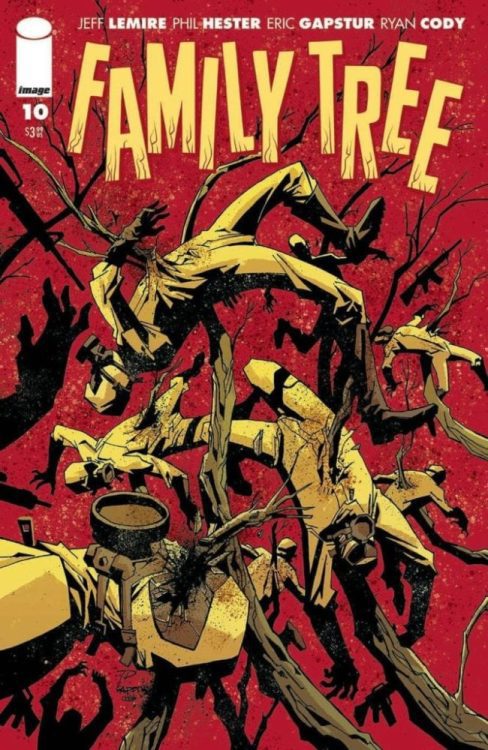
FAMILY TREE #10, available Wednesday from Image Comics, brings us ever closer to what is starting to feel like an inevitable conclusion in Family Tree. The horror and family drama elements are still going strong, just in different ways than before.
Things are looking pretty dangerous in Family Tree #10.
This is one family who has seen it all. If by all, you mean the fall of civilization as we know it. They’ve been through hell and back, and still, somehow have managed to stay together. Even when certain family members have taken on…different forms.
Created by Jeff Lemire, Phil Hester, Eric Gapstur, and Ryan Cody, Family Tree #10 brings readers ever closer to the conclusion of the series, leaving us with only two issues before the end. It’s amazing (and more than a little bit horrifying) to see how quickly this world has changed.
The Writing
As the world changes, so do the dynamics. The sense of family drama is still there, but in fewer quantities than before. In its place is a survivalist element, as Josh struggles for survival – both in the past, and in the present.
Family Tree #10 is another harrowing addition to this series. One that isn’t afraid to get more than a little bit speculative about the future. It’s hard to say if this is wishful thinking, or if it is well and truly horrifying. I imagine any doubt will be erased over the course of the next two issues.
As with the past two issues, this one divides its time between the past and the present. There’s no narrator to tell us when a switch occurs, and yet it is clear as day when it does occur. That is how dramatically the world has been changing.
It’s fascinating to see how much this one family has had to adapt in order to survive. In a way, the entire lot of them is almost unrecognizable between one point in time and the next. Done by intent, naturally. Though it does beg the question, how many more changes are in store for them?
The Art
The artwork inside Family Tree #10 is full of that stylized design we’ve come to expect at this point. Every page feels more organic than usual, which matches the theme and premise of the story with alarming accuracy.
Watching the characters age and grow has become a surprising highlight of this series. There are plenty of correlations to be made between then and their…less active family members. It’s quite clever, and credit should be given to the overall art style.
The color palette seemed to bring in lighter hues of green this time around, yet they appear to be serving a purpose. It helps to distinguish the fresh green of new growth. Versus the older trees and forests that become dominant later.
Conclusion
Family Tree #10 brings with it some dark changes, as well as some brighter moments as well. All of which will help make the reader even more curious to see how this series intends to conclude. After all, there are only a couple of issues left.
King-Size Conan is Marvel Comics celebrating the 50th anniversary of its first Conan The Barbarian comic. Releasing on December 23, this anthology brings several notable creatives who have a history with Conan. These include writers Roy Thomas, Kurt Busiek, Chris Claremont, Kevin Eastman, and Steven S. DeKnight. The artists on the book are Steven McNiven, Pete Woods, Roberto de la Torre, Jesus Saiz, as well as colorists Ive Svorcina, Carlos Lopez, and Neeraj Menon illustrate each depiction. Wrapping them all up is letterer Travis Lanham, acting almost like a chronicler to Conan’s adventures.
King-Size Conan The “X”
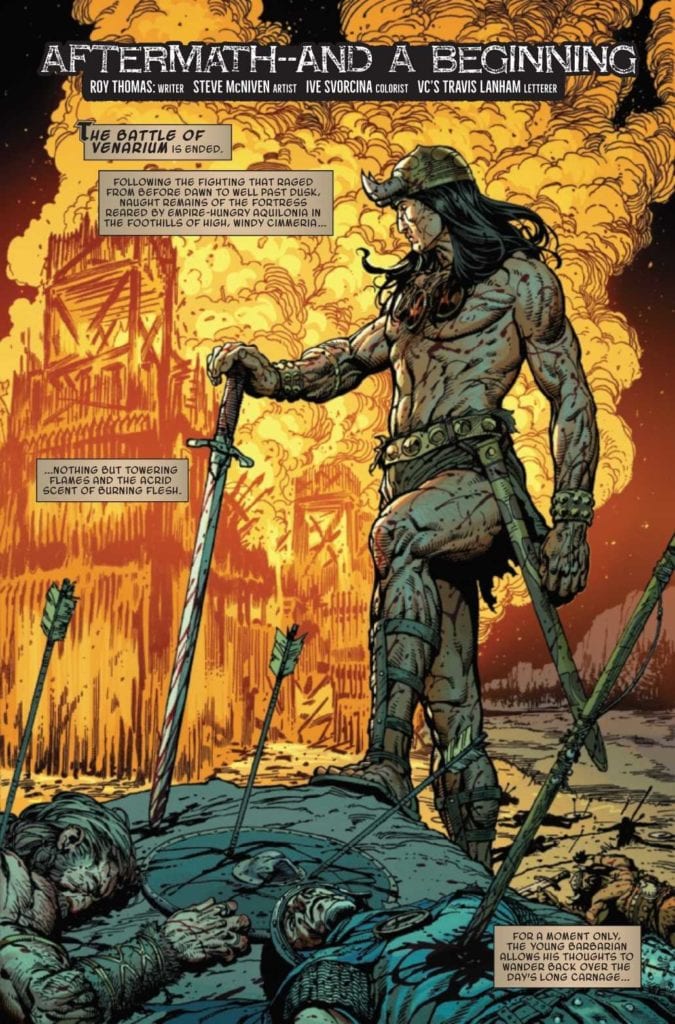
The nearly century-old character of Conan has many depictions, “Barbarian” just being one of several titles in King-Size Conan. Within Thomas’ “Aftermath–and a Beginning,” readers see the classic depiction of Conan’s struggle against civilization. One of Conan’s defining characteristics that many readers identify with is his search for an identity. Conan doesn’t feel at home with his fellow Cimmerians with many of his family and friends dead. This serves as a motivator for Conan to go out into the world. Some of these adventures and encounters make Conan less prone to suicidal risks. That being said, Busiek’s “In The City Of Thieves” displays Conan as a smarmy pickpocket who robs the careless out of hedonism.
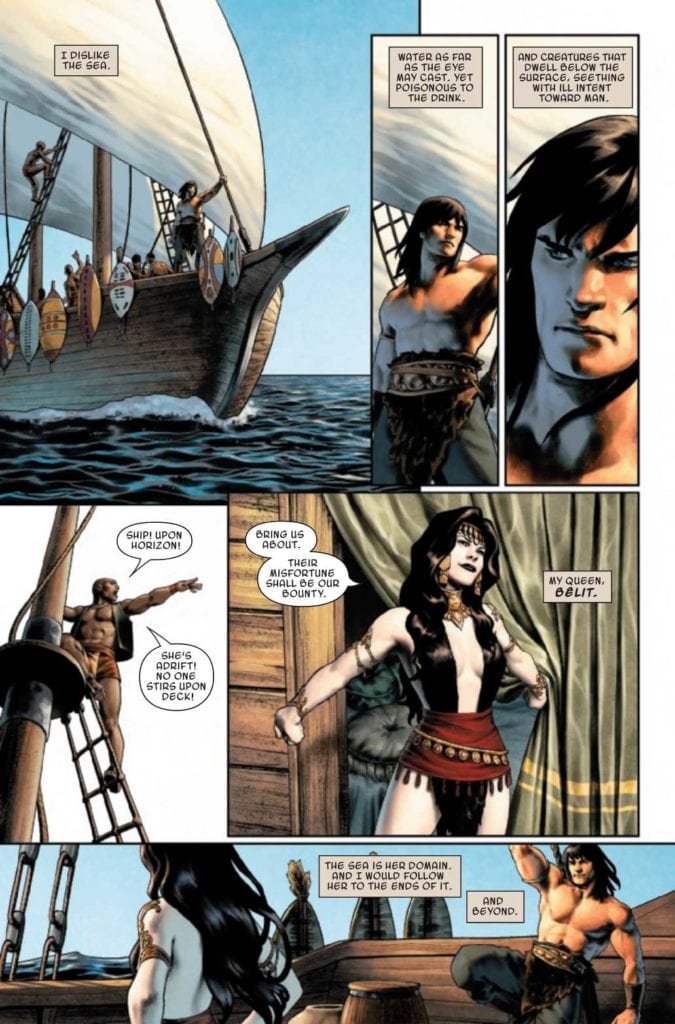
Let it be said that Conan is not without compassion; Claremont and Eastman write their segments of King-Size Conan to show the Cimmerian as less of a conqueror. “Die By The Sword” has Conan comforting the mourning daughter of a woman he slew. “Requiem” in the meantime shows the Cimmerian doing whatever is necessary to pay debts. These display warmth in a cold, cruel world where “might often makes right” and how Conan appreciates small moments of kindness. Because as DeKnight’s “Ship Of The Damned” showcases, these moments, while timeless, are fleeting like with his lost love Belit.
Epic Illustrations
Within the different segments, each artist in King-Size Conan showcases how they portray the legend of Conan. McNiven displays Conan’s pride in his Cimmerian heritage by adorning him in keepsakes of fallen loved ones. The coloring by Svorcina presents Conan and people like him standing out in fiery bright colors, unlike soldiers in armor. Woods demonstrates this further by how Conan stands out both in his simple attire within civilization and in bold line work. This is what makes de la Torre’s artwork of him practically blending into battle stand out; even Carlos Lopez’s coloring displays him in the same light as a soon to be dead character. Not only is Conan in his element, but he could very well die in such a place, something the Cimmerian admits is out of luck.
The rougher artwork by Eastman and coloring by Menon goes straight into the more action-oriented savagery. The detailing line work, actions in sequence, and color changes in reaction are an artform in symbology. Conan is a person of conflict, and it follows him wherever he goes. Finally, Saiz gives a photorealistic airbrush touch that displays the Cimmerian with someone his equal. Conan and Belit are larger-than-life characters who encounter the equally absurd. A ship made out of what looks like past victims is something that only Conan can survive.
The Chronicler Speaks!
Anybody familiar with the line “Hither came Conan” seen in the beginning of King-Size Conan may likely equate VC’s Lanham with a Chronicler who tells Conan’s adventures. The captions help the reader appreciate the artwork for large scenes as moments frozen time. Unlike the short but sweet moments in action that hit hard and fast. Something that reappears in the last segment where Conan serves as narrator where his confines are simple and in the moment. Conan can certainly speak for himself when people gloss over or add parts to his story. The biggest takeaway comes in a papyrus-like caption at the end of the first story segment. It invites the readers to read Conan’s chronicles throughout Marvel’s run, for the story of Conan the Barbarian is ever-changing and revised.
King-Size Conan Is For Everyone
After getting back Conan, Marvel really goes out of its way to showcase its love for the Cimmerian. With so many at the pen, it’s nice to see how they interpret such a cultural icon. “Ship of the Damned” stands out over the other stories by displaying Conan’s beliefs at their utmost limit: live in the moment because you never know when you could lose them and the people you love… especially when you become a little more aware of yours and others fate. It’s what helps people like myself deal with an absurd world.
BLOODSHOT #10 – Part 1 of “One Last Shot” hits your local comic book shop next month, but Monkeys Fighting Robots got a chance to talk with veteran colorist Andrew Dalhouse about his process and what he brings to Bloodshot.
Dalhouse has worked for all the big publishers and has been a busy man for the past ten-plus years, with his most notable works being Irredeemable, Faith, New 52 Teen Titans, and now Bloodshot.
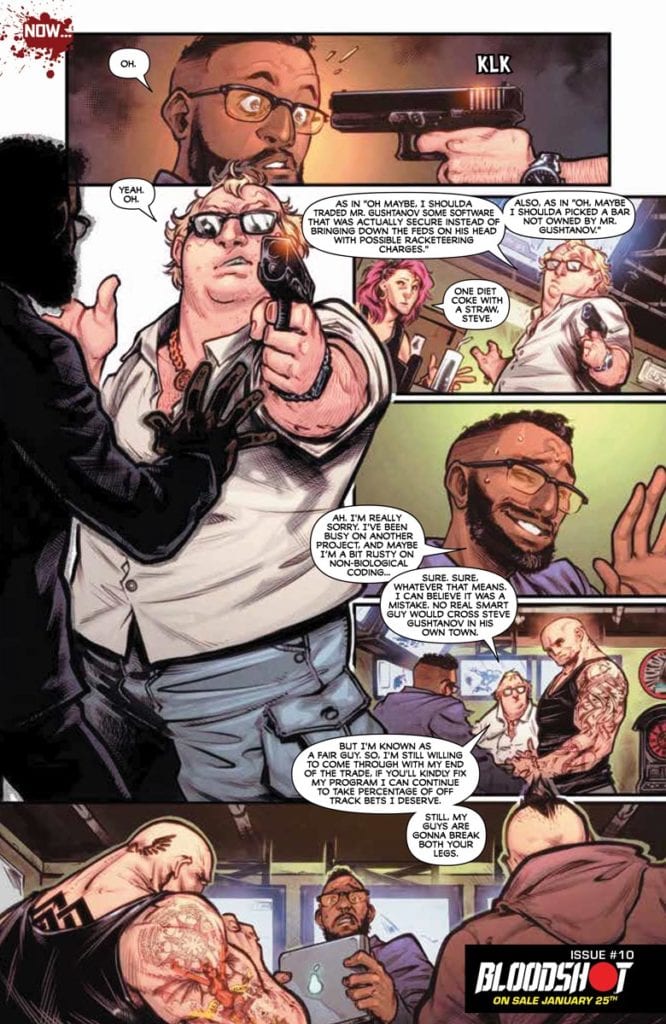
About BLOODSHOT #10: He only has “One Last Shot” as the brand-new story arc starts now! Superstar artist Brett Booth and Pedro Andreo join best-selling scribe Tim Seeley for Bloodshot’s road to retribution. Who can one a one-man army trust when everyone’s trying to kill him? On sale January 13, 2021.
Andrew Dalhouse Interview:
MFR: As a novice when it comes to the work of a colorist, what elements stand out in your work?
ANDREW DALHOUSE:Storytelling. I try my best to convey the story in color. Leading the reader by adjusting the color temperature to the emotions happening on the page.
MFR: What is your philosophy when it comes to colorwork in comics?
ANDREW:Enhance what story the artist and writer are telling.
MFR: What a colorist can do in comics has exponentially changed over time. How has your style evolved over the past 20 years?
ANDREW:Before I started coloring comics, I went to art school and used a variety of mediums before I started using computers. Computers make the job easier and faster to do certain things. I do miss using markers and watercolors. I still use them, but just for fun when I have free time.
MFR: When I see a lightning blue or a fiery yellow in a comic book, I get excited. Is there a color that gets you excited when you use it?
ANDREW:Actually I get excited to see both blue and fiery yellows. I love seeing a good purple and yellow used in a complementary way. I really loved what Justin Ponsor did on that last Defenders series. The book was so pretty.
MFR: How deep do you go into Color Psychology when laying out a book? Do you think about the emotional impact you have on the reader?
ANDREW:It goes deep. I try and convey emotions by using different color temperatures and secondary lighting. This is the main reason I love receiving a book in page order. It makes it easier to see how the story plays out. The script helps, but a lot of the time the artist adds or subtracts from what the script says. Those additions and subtractions can make a huge difference in how I color a book.
MFR: Bloodshot is a character set up for great colorwork with his blue-ish white skin and the potential for blood going everywhere. How do you put your personal spin on Bloodshot?
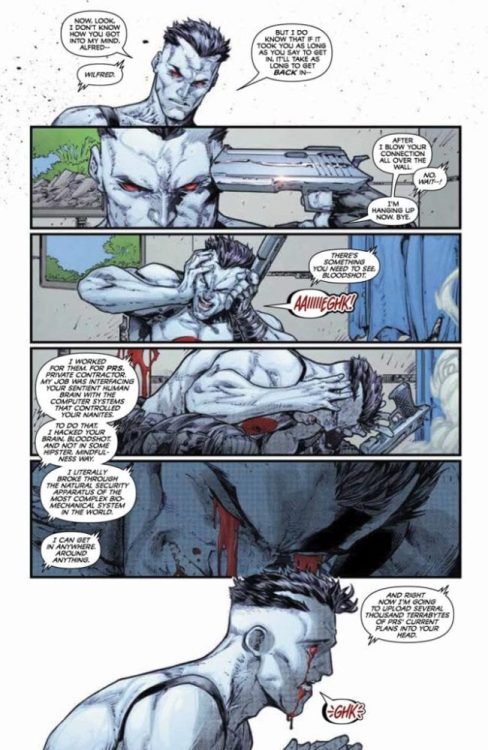
ANDREW:I always have his eyes and chest symbol a bright red. They are his biggest defining features, and I want that to show through always. I try to make them also have a boogeyman element in dark, moody scenes. Bloodshot #4, page 1, shows how it can be used dramatically.
MFR: Who are some great colorists that inspired you?
ANDREW:Justin Ponsor, Frank D’Armata, Steve Firchow, Laura Martin, J.D. Smith, Jessica Ruffner.
MFR: Bloodshot has a good amount of action; what is your role in taking the action to the next level?
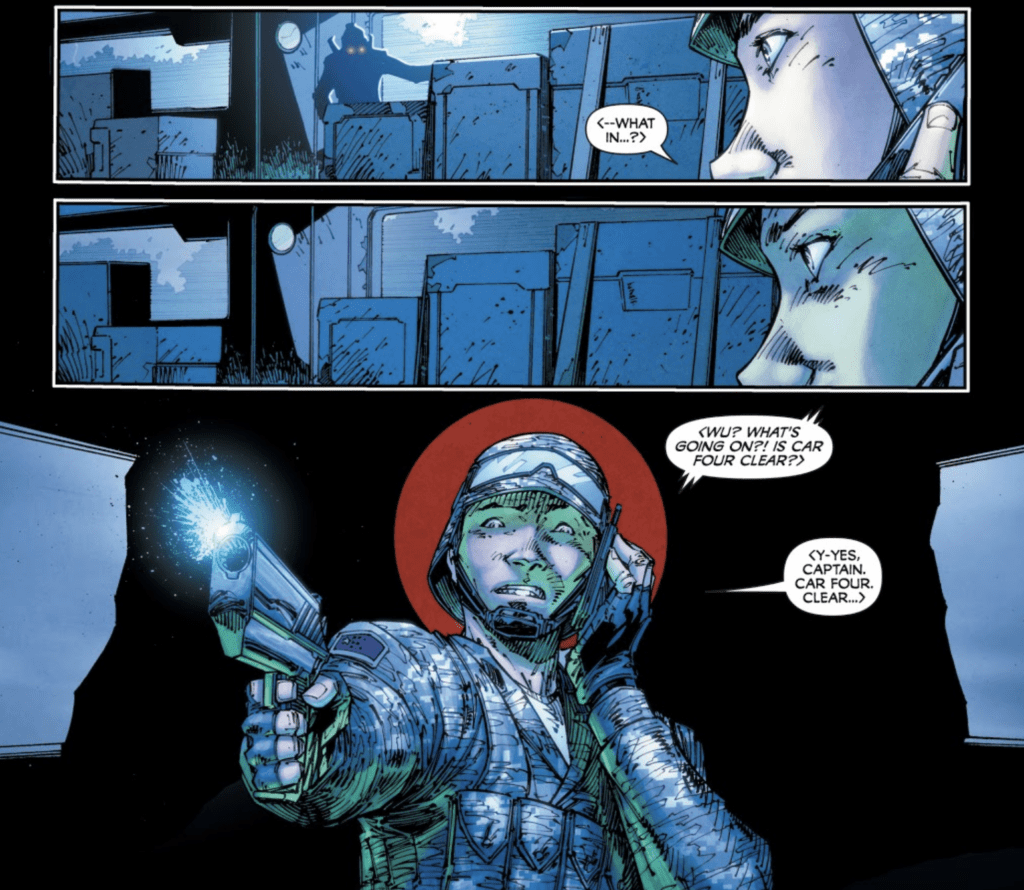
ANDREW:Help make those action beats readable and enhance them. Really make that explosion looks cool and cinematic. If it’s a big gun battle, there will be lots of fiery yellows. I will use rim lights to help separate the characters.
MFR: What is the one thing you wished more people knew about colorists?
ANDREW:We work very hard. There is a misconception that the computer does most of the work. There is no magic “Color Page” button on our keyboards. The computer is just a tool. Just like a penciler’s pencil or an inker’s brushes and nibs. It takes knowledge, training, and lots of coffee to get the job done.
MFR: Andrew, thank you again for your time, and best of luck with BLOODSHOT #10!
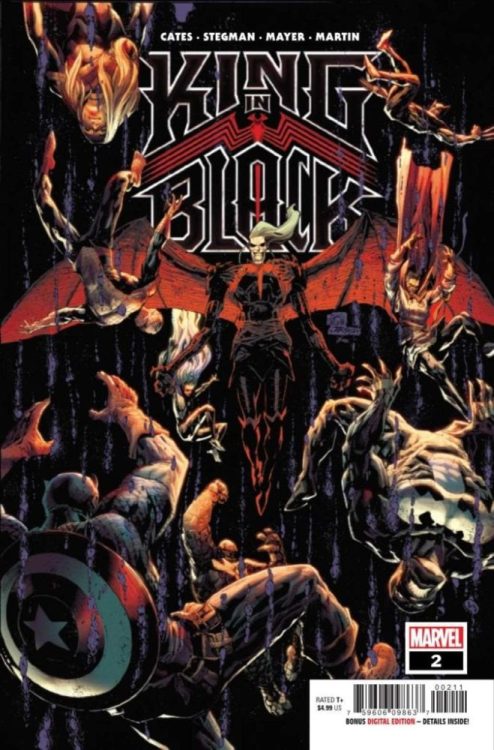
King In Black #2 hits your local comic book shop this week, just in time to spread the holiday cheer!
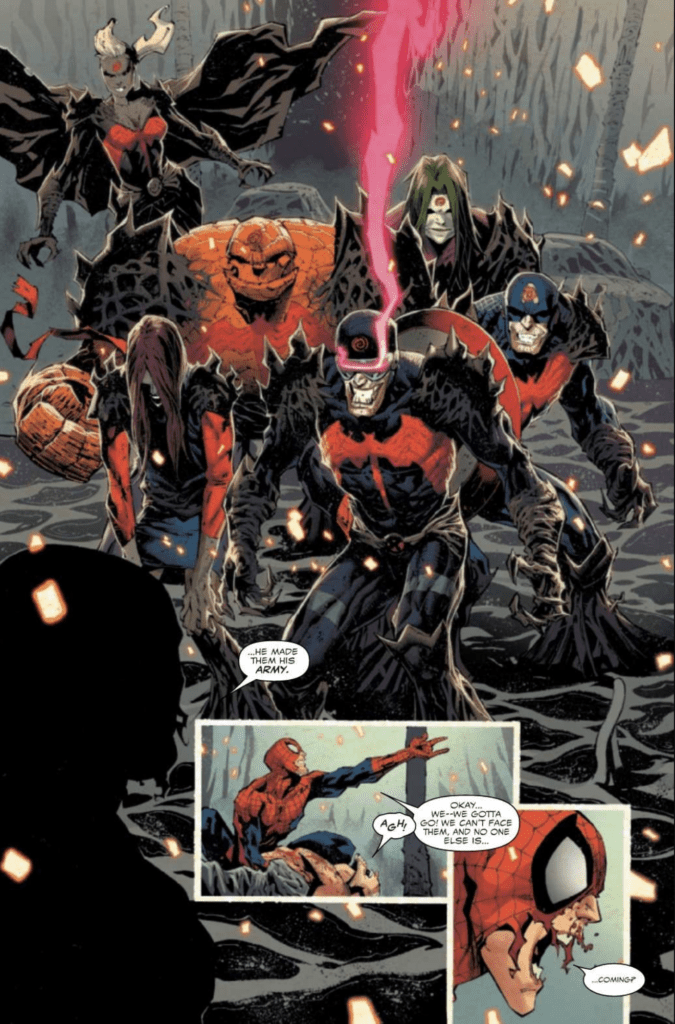
I purposely did not read any of the King In Black tie-ins before issue two because I wanted to see if the big Marvel Comics event could stand on its own. Without spoiling anything, the second issue reads as a direct continuation of the first, which is great for new readers.
We have the same creative staff for King In Black #2 – writer Donny Cates, penciler Ryan Stegman, inker JP Mayer, color artist Frank Martin, and letterer Clayton Cowles – but the book somehow feels a bit different. It felt brighter and not as grungy as the first issue. Also, with the main character sidelined, the book’s pace was brought to a standstill as the remaining Marvel heroes talk about the problem at hand (Knull).
The main issue is that King In Black #1 is amazing. I gave it a perfect score, and if you know me, that’s like pigs flying. Cates works at an insane storytelling pace in the first issue, with Stegman punching you in the face with breathtaking splash pages over and over again until you are dumbfounded by the end of the issue with a giant smile on your face. As the story turns toward, “How do we defeat Knull?” the pace slows way down, and Cates falls into a few tropes that are repetitive and possibly annoying. Cates’ tone of Namor comes off as a parody of the character, and apparently Namor, Sue Storm, and Reed Richards are still in a love triangle. There are six pages in the book where the lines coming out the heroes are very token and genric. With this generic conversation, it desensitizes you and lifts you away from the story by the time the cliff-hanger hits, and then that final page lacks weight, which is a solid bummer.
The first six pages of King In Black #2 continue the pace of the first issue, and Stegman has an epic Spider-Man full-page that I wish a double-page spread. As I mentioned earlier, Martin’s colors felt brighter and took away from our heroes’ desperation. The generic lines led to some stiff and awkward poses as well (I’m looking at you, Blade and Magneto). There is a moment in the book where Cates and company create something new, and they don’t take advantage of it, which is the biggest miss of the issue. It’s something so new and refreshing that we would all buy the Marvel Legends action figure immediately, BUT… we only get three small panels, and it’s gone. If Stegman were given a full page for this new creation, this would be the conversation of the week and the standout moment of the series. I would put this new creation up there with The Batman Who Laughs when it comes to potential. Cowles does a fine job with the lettering in this issue. He was not given much to work with to spread his artist wings, as most of the characters involved spoke genric English and the action sequences were minimal. The Michael Bay over-the-top nature of the first issue, which I loved, was missing this time around.
Overall, the story didn’t progress a lot, and the big moments didn’t feel like they had much weight. With three issues left, Cates is still building toward a climax with the possibilities of more twists and turns ahead, so I’m still on board for the ride.
Come back here after you read King In Black #2 and let me know what you think.
Don’t Look Back is a new horror film from Jeffrey Reddick, the mastermind behind Final Destination, which centers around a young woman who survives a tragedy only to face more dangers when supernatural forces run amuck. Actor Han Soto (Cobra Kai, Watchmen) faced some real-life fears while filming and taking on a new, off-camera role.
Kourtney Bell (All-American, It Follows) plays Caitlin Kramer, a young woman who watches her father die during a home invasion. Nearly a year later, Caitlin is scared of leaving the house. However, Josh, Caitlin’s boyfriend, played by Skyler Hart (For The People, Grey’s Anatomy), convinces her to rejoin the outside world. It was advice she should’ve ignored as Caitlin soon witnesses another tragic moment that begins a terrifying chain of events for the final girl.
PopAxiom spoke with Han about becoming an actor, making Don’t Look Back, and a teeny, tiny bit about Cobra Kai.
Actor & Producer
“I started as regional talent doing print ads and industrials,” Han says of his earliest gigs in showbiz. “I did extra work. I did one particular job that I came on as an extra; it was for Madden NFL. I’m a Saints fan, and this was back when they were on the cover. I helped this PA [production assistant] move some boxes, and he said, ‘When I come back in, step to the front, and I’ll select you.’”
The PA kept his promises, and Han “ended up on a bus,” and soon after, he “was bumped up to a principal role in a national commercial.”
Acting gigs were happening organically for Han, but it was still more a gig for fun than a primary career. After Madden, that changed, “When those checks started coming in, I was like, ‘wow, I can make a living at this!’”
Han is nearing 100 credits on IMDB, but he’s added the role of producer to his repertoire along with acting. “I like producing because I like making sure that things are in line and that the end products are all in your hand.”
“On the acting side,” he says, “it’s all about craft and getting into character. I study all the time. You learn about all these techniques so that you can let go and be yourself.”
“I started learning writing too. That helped me be a better actor.”
About Don’t Look Back
Han was recruited into Don’t Look Back as “an actor first,” he says, “I built my career in the South East region like the Miami market. Burn Notice was my first gig ever. Miami, Atlanta, New Orleans, I’ve developed relationships with casting directors in those regions.”
“I was in the running to read for the role of the detective,” Han says about the audition process for Don’t Look Back. “They also wanted me to read another role; I thought it was a smaller role because the sides were short. It turned out to be much bigger.”
Han recalls a moment with producer Andrew van den Houten that lead to a new role for the actor. “I was on set for about a week watching Andrew navigating the set. One day I had a small scene, he sat down by me and said, ‘You’ve been in a couple of my movies, but I don’t know you. Tell me about Han Soto.’”
“I was fresh out of a premiere at SXSW,” Han says, and “I started talking about acting and producing. I said that I put together a film fund, and I want to go in and help finish smaller films. He offered me an opportunity to secure the remaining points for Don’t Look Back.”
After that, Han started “watching dailies and giving feedback. Andrew and I hit it off, and we started our own distribution company.”
Don’t Look Back writer and director Jeffery Reddick is a legend in the horror space, creating the Final Destination franchise. “When you have someone working in that horror space, you expect their personality to have some sort of darkness, but Jeffrey is just a sweet guy. When asks you to do something; you want to appease him.”
“So, I remember I was hanging out with some friends on a day off,” Han shares a story about Jeffery, “and I get a call from Jeffrey at around 10:30 at night. It was direct but soft, and he was writing some new scenes that involved my character. He asked me to do something terrifying.”
I asked, “Will it make the movie better?” He said, “’ Yeah, absolutely.’”
Han shot the scene, which you’ll know immediately when you watch the film. PopAxiom won’t spoil it, but we’ll leave it at this: “I could hear them eating in my ear.”
To get through the horrifying moment, Han used a breathing technique known as Wim Hof. “You can pretty much settle your body down … you can control how you feel. I implemented that, and it worked.”
“Jeffrey would ask ‘You got another one in you?’” Han says with a laugh, “And I was just like, yeah, but this may be the last one before I go to the bathroom on myself.”
The sequence took place on “the last day of shooting, and I think they did that on purpose, probably thinking ‘If we do it at the beginning he’ll never come back.’”
Cobra Kai
Han is in Cobra Kai season three, which releases on Netflix in January. “I wish I could talk about it. I have so much I want to say.”
Talking about Cobra Kai is off-limits, but Han shares how being on the show was another learning experience. “From the producing side, I was able to watch three childhood friends manifest their dreams. That’s what I love about producing, you figure out who your team is, and you go forward together.”
Wrapping Up
Who are some other creatives who inspire Han? “Oh, man, Robert DeNiro and Mark Ruffalo. In the horror space, Wes Craven, Tobe Hooper, Bernard Rose. These are the people that scared the sh*t out of me since I was a kid. I love Spielberg and Stanley Kubrick.”
“I find a lot of nuggets in the people I work with,” he continues, “I’ve seen Jack Black step away from a scene to talk to his kids. I thought that was amazing.”
Hollywood is entirely in the throes of remake fever. So, what would be a dream remake project for Han? “I wouldn’t mind doing a Jaws, maybe mixed with a water-borne virus. I want something real, a shark affected by pollution or something human-made. It’s a couple beats away from reality.”
“We’re excited for Don’t Look Back,” Han says. The film is available on digital services across the web. “The message is so timely.”
What’s next for Han? “I finished Outer Banks for Netflix. We have some films through the label, Kamikaze Dogfight, that will be released through the coming year. There’s a game that I’m the lead in, I can’t talk about it, but I’m so excited!”
Is Don’t Look Back on your watch list?
Thanks to Han Soto and October Coast
for making this interview possible.
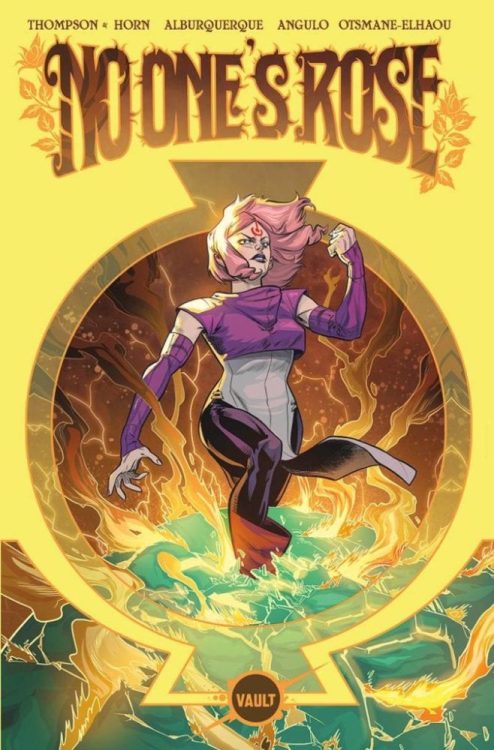
No One’s Rose Vol. 1 out now from Vault Comics is the perfect reading at an appropriate time. Writers Zac Thompson (Relay) and Emily Horn craft a story about different points-of-view in a future close to home. Guiding the readers is the expressive artwork of Alberto Alburquerque, lively colors of Raul Angulo, and diverse lettering of Hassan Otsmane-Elhaou.
No One’s Rose: Empathic Pushes
No One’s Rose is about trying to convey a person’s desire to make a difference and how that drive can put strains on peoples’ relationships. Thompson and wholesomeness speaker Horn emphasizes this with two of the lead characters. Tenn and Severo Gavrillo vehemently stick to their sides, unable to be bipartisan and only see the other sides for their flaws. To anybody familiar with how the 2020 election divided families, this is an uncomfortable feeling, making it all the worse considering that some readers will likely identify with one of them over the other.
Like The Pull, empathy towards these characters drives the story of No One’s Rose. It’s a feeling that expresses throughout the series where the reader empathizes with the Gavrillos and how they deal with their family legacy. Tenn wants the love and acceptance to get out of her lower-level habitat as per her late father’s punishment. Meanwhile, Severo wants to see his father’s wish not to live in the domed city’s confines where people of the lower levels slave away. Each point the Gavrillos and their factions make are valid reasons for taking action, and the reader wants everyone to succeed for this.
What An Evocative World
Alburquerque brings a wide range of designs and expressive facial and body language to express the culture in No One’s Rose. The clothing, hair color, and facial decorations on the many characters suggest diverse lifestyles. Some like Seren seem to like some retro technology like headphones, unlike Tenn, who seems to follow the trends of the top-siding people she wants to mingle with. The plants, technology, and animals all pop out for big moments, something that Angulo’s coloring makes even more apparent by giving each subject of importance brighter color contrasting backgrounds with muted colors.
Fan-favorite letterer “Hass” Ostmane-Elhaou of “Strip Panel Naked” gives every word in No One’s Rose distinct identities. The word balloons look like they’ve been painted on with a brush with care. The captions are all in different colors distinct from the inner monologues of different characters: white with blue outlines for Tenn, orange with black fonts for Seren. But it’s the stylized wordmarks that really stand out; every new area has large letter words with description captions, capturing the readers’ attention about this world.
Crucial Flaw of No One’s Rose
Unfortunately, once the reader nears the end of No One’s Rose, they find that the plot is rushed. That same investment towards the main characters’ arcs can’t cover the plot holes involving the greater world. Several of the characters connected to the political sides of the domed city get pushed to the side so that the series can end. Whether it was the bureaucratic city council or the ecoterrorists’ leaders, the world was just too big for six issues.
Does It Have Your Attention
No One’s Rose is a fascinating piece at the time of its release. As political debates run rampant, this series serves as a good example of why. When characters readers can identify/sympathize with act out in ways you want to root for, it’s easy to get caught up in the excitement. It can be a good pass time, especially with a world that readers want to explore. Give No One’s Rose a try.
We all know what a comic is, ”Juxtaposed pictorial and other images in deliberate sequence, intended to convey information and/or to produce an aesthetic response in the viewer” (McCloud Scott, Understanding Comics).
We know them when we see them and when someone tells us they’ve read a comic, we know exactly what they mean. But how clear is our understanding of what they mean? Would we think of fumetti, those Photo Comics where each panel is a photograph, and all of the drawn elements have been removed? These were popular in the National Lampoon Magazine and several UK newspapers and a massive part of the Comics industry in Italy.
Or Motion Comics? A combination of illustration and animation where extended scenes might include sound effects and verbal elements to produce an audio/visual sensation on a screen. The frames, or panels, are often kept in place, but the sequences they depict are often highly stylized. In 2008 the seminal work Watchmen was turned into a motion comic and released to coincide with the blockbuster movie. The comic includes captions and animated versions of the pages from the original comic book release. The caption boxes and word balloons are read aloud. The characters are given voices by a single voice actor, Tom Stechschulte. This gives the entire project the feel of an animated audiobook, mixing up media like the multimodal narrative woven throughout Moore and Gibbons’ masterpiece.
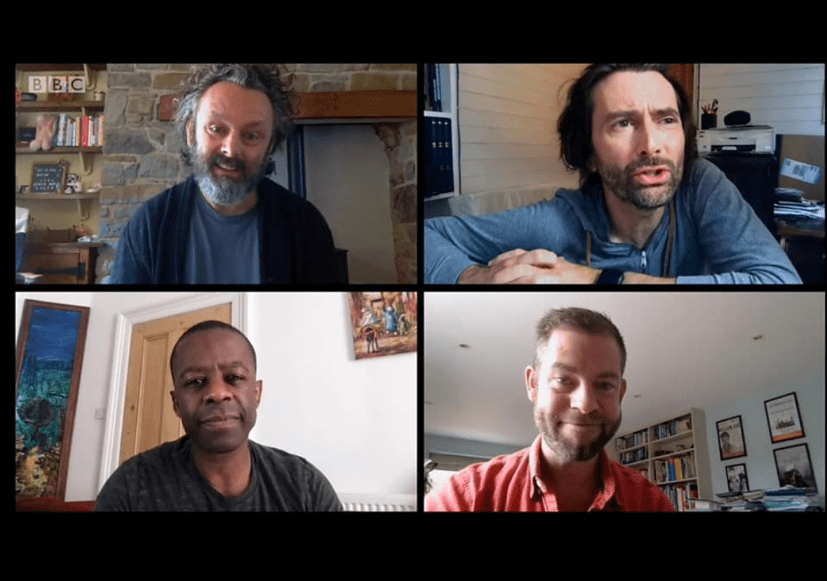
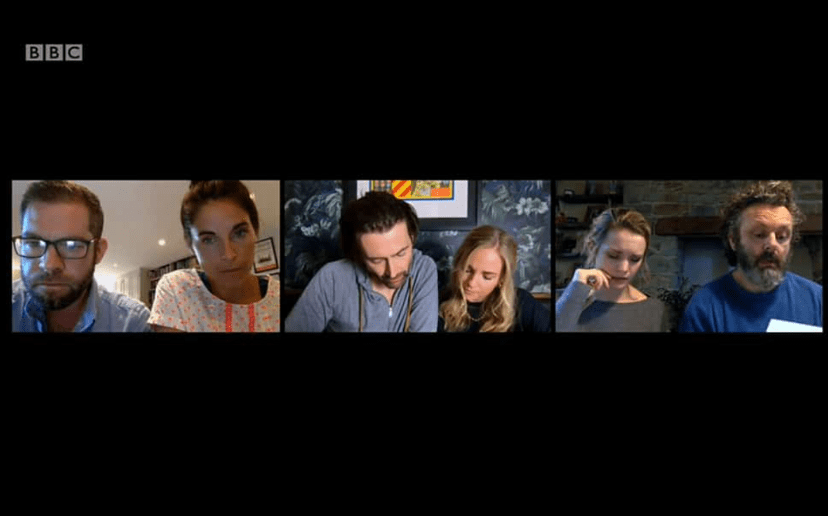
Staged Multiple Panels: Credit BBC Television
Staged, A Comic
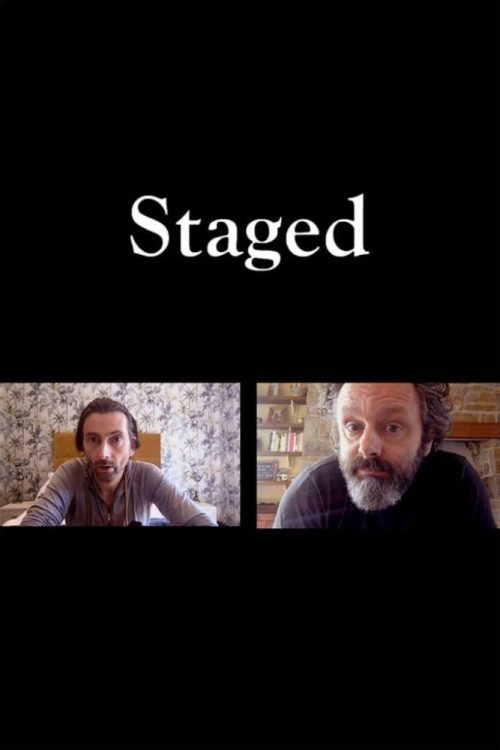
Currently available on Netflix is the BBC comedy seriesStaged. Made and set during the pandemic, the series features a group of actors who attempt to rehearse a play using video calls. One of the most striking elements of the series is not the acting, which is magnificent throughout, or the surprisingly touching plot, but the commonalities that the series shares with a Comics form. It may be a television show, but the structure and design have numerous crossovers with comics and how we read them.
On the surface, this may seem like a bold statement and one that is instantly open to ridicule; however, a quick look at the presentation of Staged on a screen should make it immediately clear where my thinking is coming from (see image above).
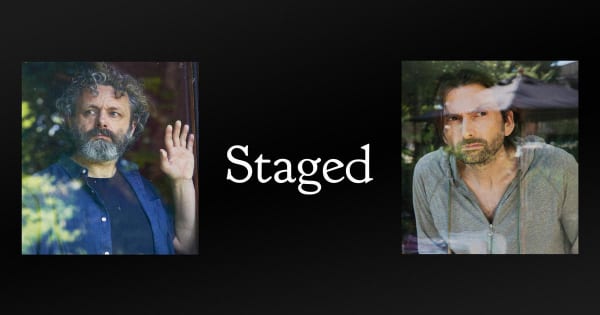
The characters exist within their own computer screens, which act like frames, encapsulating the character and the characters’ family. For most of the series, the central protagonists are seen through this unique lens, and their interactions are displayed on the screen next to each other, producing a ‘strip’ like image. Each screen is displayed like a panel, interacting directly with the panel by its side. As one character speaks, the other is silent, and then the focus shifts. We ‘read’ the image on the screen as simultaneous, that both screens occupy the same time, if not space, but we only do this because of the interaction between the characters. Comics are read in the same way, with the progression from one panel to the next, allowing the reader to create a full picture, placing each panel in relation to the others. Our understanding of one panel only exists because of the sequence, just as our understanding of the conversation between David Tennant and Michael Sheen only exists because of the interaction between them, one panel at a time.
Staged contains groups in ‘panels’ Image Credit: BBC Television
On-Screen Panel Layout
In some scenes, there are multiple screens with several characters but these behave in exactly the same way. As a viewer, we move from one screen to the next as the characters act or speak. However, we are constantly aware of the other screens, and we piece the entirety together from the fragments, which is a significant aspect of comic reading.
On occasion, several characters inhabit the same panel, each speaking before the focus shifts, but again, this also happens on a comics page. An exchange or even full conversation can occur in a single panel without confusing the reader. Simple placement techniques will lead a reader through a panel, just as the vocal back and forth leads a viewer through a scene in television.
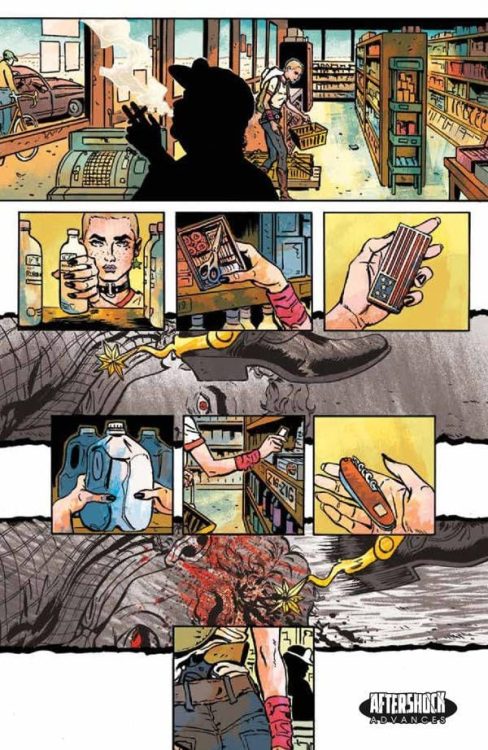
Even the establishing shot, often important in comic book storytelling, is present in Stages. Long shots or panning shots illustrate each scene’s location and tone so that when the screens return, the audience is not distracted by trying to ‘place’ the action. Establishing shots work in exactly the same way in comics as the following example from Undone By Blood demonstrates. We are shown the grocery store that the protagonist walks into, from that point on the artist only shows us exactly what we need to see for the narrative. We understand she is in a shop and therefore do not need to see the shop setting in every panel.
Establishing a scene in Undone By Blood Credit: AfterShock Comics
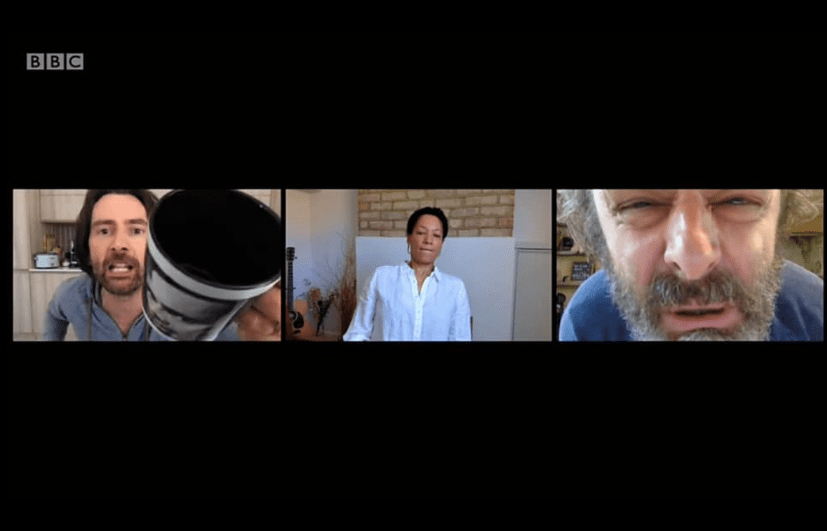
One of the most important features of comics, and one that is usually absent from film and television, is of course the gutter. The gutter is instrumental to comics reading because this is where the ‘closure’ happens. Readers complete scenes and sequences within the breaks between panels, whether this is the frame or the more obvious gutter. This rarely occurs in film, even with examples of split screens where the separating elements tend to serve a different function. However, in Staged, there is a deliberate use of ‘gutters’ separating the computer screens that serve a narrative function similar to the gutter in a comic. There are even moments where ‘blank’ panels inform the reading of the scene. Large black spaces sit to the left or right of a panel, illustrating the loneliness or the impatience of a character.
Staged: Image Credit BBC Television
Text/Speech
The one element missing from the television series is the Speech Balloon, although there are textual elements that inform and react to the narrative. Each episode’s title sequences relate directly to previous episodes, with the text referencing conversations between the characters.
In Comics, the introduction of Word Balloons ‘shifted the understanding of text within comics: it was no longer read as internal dialogue but rather as a theatrical projection of sound.” (Ian Gordon in Comics Studies: A Guidebook). It is a small step from the internal reading to the verbalization of text. Are Audiobooks still classified as books? And in the same sense, would a spoken word comic still remain a comic? For this, we would have to refer back to the Motion Comic mentioned earlier. A simple addition of animation and sound can transform a comic but still be accepted as one. There’s not much of a leap from there to the presentation of Staged.
Staged uses panel sequences for action scenes Image Credit: BBC Television.
Conclusion
I am not suggesting that Staged is a comic and should be analyzed as such, but the functions of Comics, elements of the language that scholars like McCloud and Groensteen discuss, are present in this television series. The shaping of the narrative, the discourse between specifically framed images, and the canvas of the screen are all specifically Comics forms discussed regularly. I mentioned Photo Comics and Motion Comics at the start of this article because they employ techniques not usually associated with comics but still manage to fall under the Comics umbrella. Similarly, Staged is a television show that borrows heavily from the Comics lexicon to create a challenging narrative form. The show demonstrates how the borders between media can be broken down, and a merging of idea’s outside usual thinking can create a new experience.
In an article for The Comics Journal, Kim Jooha introduces Extended Comics, which he describes as ‘artistic/cultural works in any medium that can be viewed as comic or comics-like objects regardless of the intention of the creator.’ In Staged, we find a perfect example of Jooha’s Extended Comic in a television format.
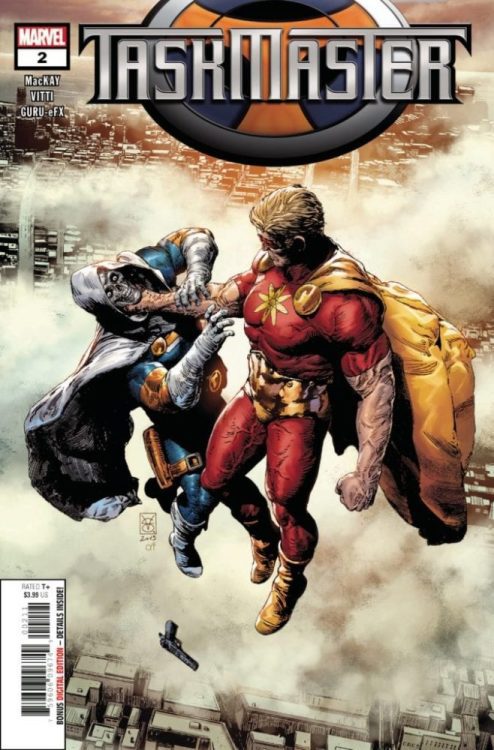
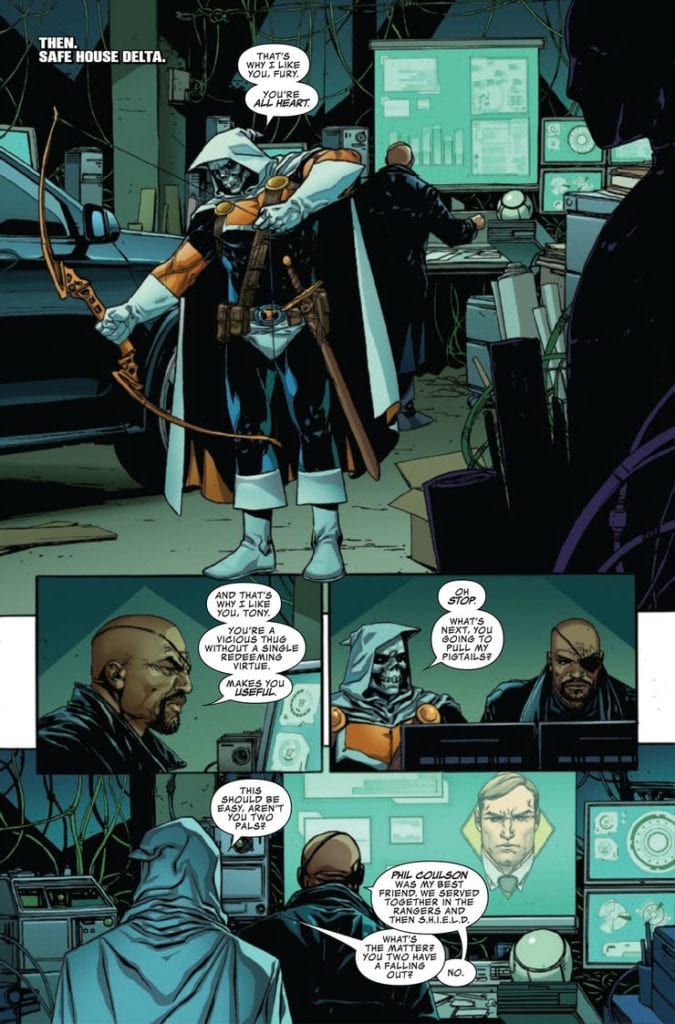
TASKMASTER #2, out now from Marvel Comics, is the second issue of the superhero miniseries by writer Jed MacKay, artist Alessandro Vitti, colorist Guru-eFX, and letterer Joe Sabino. This issue gets too serious for its own good but still reveals more about Taskmaster’s personality, ultimately making the reader care about the main character’s goals.
Writing
As mentioned above, Taskmaster #2, in comparison to the first issue, feels a little out of place. In the first issue, the tone was more fun and entertaining, making a comic about a mercenary anti-hero be all the more inviting. But in this issue, Mackay decided to go with a more serious approach. To be fair, the reader does get more of Taskmaster’s narration, which puts them in the character’s shoes and makes the reader relate more to the anti-hero. But after reading the first issue, the reader could get a bit let down when going into this issue, expecting the tastefully weird comic they read before. Other than that, the fight sequence manages to engage the reader throughout its entirety, and the issue definitely ends on a fascinating note.
Art
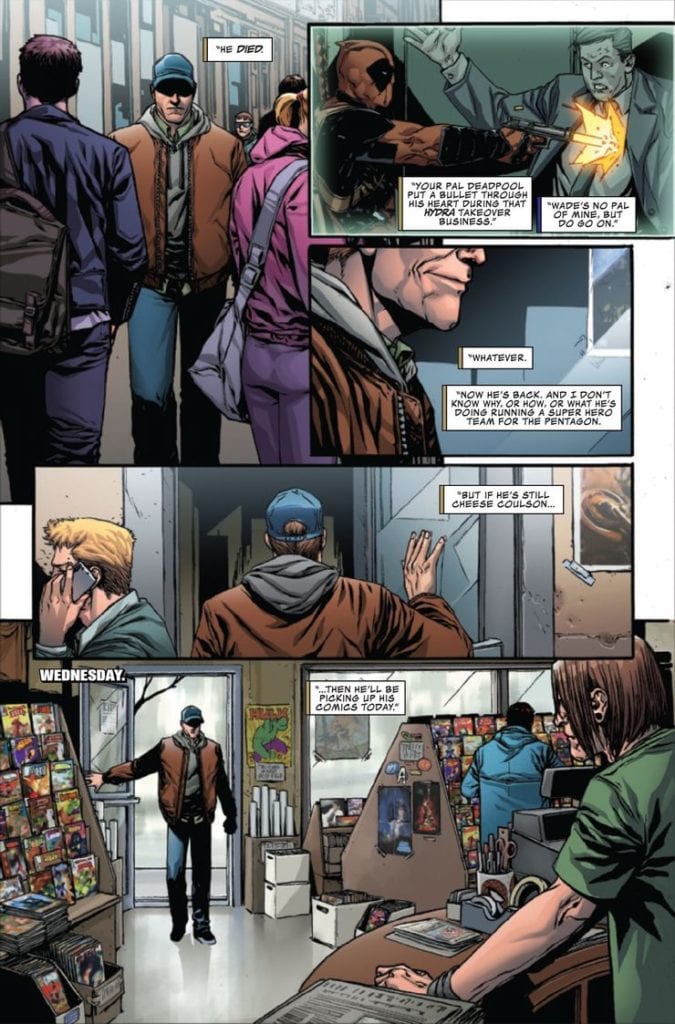
Vitti’s art looks more down to earth and realistic here to help elevate the story’s grim tone. This does a few things. It makes the few jokes in this story not quite land, like when Phil Coulson walks into a comic book shop out of all places. It also makes the character’s facial expression look and feels less alive and expressive. But, what Vitti does achieve here is he makes the fighting sequence feel all the more real and dangerous. In this sequence, Vitti conveys to the readers through Taskmaster’s body language how hard and frustrating it feels to fight a “god” like Hyperion. Each punch or blow Taskmaster takes; it truly looks like it hurts him.
Coloring & Lettering
Guru-eFX captures the sense of danger in this fight sequence through how he colors the blood. Throughout the sequence, with each new blow, Guru-eFX makes the blood further stain and cover Taskmaster’s costume. The blood looks so realistic and weirdly visceral, the reader can’t help but feel the pain Taskmaster is going through. Taskmaster #2‘s grim mood definitely helped compliment Guru-eFx’ realistic color choices.
Sabino’s lettering is arguably the only fun aspect of this comic. The vibrant, colorful sound effects pop wonderfully. The shape of the dialogue balloons when the Taskmaster is suffering elevates his despair. The lettering feels like it doesn’t belong paired with all the other elements of this issue.
Conclusion
Taskmaster #2 is certainly not a complete let-down. The story manages to come off as quite entertaining; The realistic, grim art never fails to impress, but I personally would have liked to see more of the first issue’s silliness that made me love the miniseries in the first place.
When Marvel Comics launched Jonathan Hickman’s X-run, House of X/Powers of X was strong out of the gate.
A lot of titles, particularly X-Men, seemed to be establishing plot threads that would play out in X of Swords and even later in Hickman’s run.
X of Swords was a stab at a fantasy adventure. In contrast, Hickman’s first big Avengers event was a spacefaring sci-fi adventure in Infinity, so he and the various creative teams get points for attempting to branch out and tackle the fantasy genre for his first big X-event. It was a bit slow, dragged out a bit, and didn’t necessarily meet expectations for a big dangerous sword fight. Fantasy aficionados may note that the non-sword fight challenges may reflect the more cerebral appreciation for magic and divine trickery in fantasy, but still.
To its credit, X of Swords ends strongly, with a massive battle and the arrival of the calvary consisting of every X-Man EVER!
X of Swords does do a lot. It reestablishes the Captain Britain Corps, with Betsy Braddock as the new template for the Captain Britains of the multiverse. It potentially sets up Mr. Sinister’s chimera mutants; a plot point touched on in House of X/Powers of X. This event also laid the groundwork for the new status quo moving forward with Arakko being rejoined to Krakoa (a plot point that at the time of this writing has yet to be addressed in the X-titles). However, given the hardness of Arakko’s conditions, a clash of mutant culture seems unavoidable.
Overall though, X of Swords gets weighed down by the plot-heavy purpose it serves (think of Iron Man 2 or Avengers: Age of Ultron in terms of how much they got weighed down in terms of setting up future developments in the shared universe). This was a smart, if uneven, event, but it doesn’t flow as smoothly as some of Hickman’s work in other franchises, particularly the Avengers. He juggled multiple books that led to nothing less than a destruction and reboot of the Marvel multiverse. I also don’t understand how the X-titles could show that there is a Sword of Cerebro leading up to X of Swords and have it not feature in this event.
In fairness to Hickman, his role as “Head of X” finds him coordinating multiple creative teams and an ever-increasing number of X-titles. One could forgive him for getting bogged down in plot details. The X-team has cast a big net, and with the conflict between Krakoa and Arakko behind them (for now), the X-titles have only touched on one small part of the events foreshadowed in HOX/POX.
I hope that the plot’s heavy establishment of the status quo gives way in future titles and events to a smoother flow of action. But while X of Swords was not a perfect event, I’m excited about the storytelling potential it establishes moving forward!
There have been films that deviate from the usual superhero formula, and Archenemy is the latest. Similar to Hancock, Archenemy follows the fallen superhero trying to navigate through our reality path, and it works at times, but other times it’s frustrating. It presents a unique message regarding perspective, but the story isn’t that fleshed out to leave an impact.
This approach has worked in the past for films like Unbreakable, the deconstruction of superheroes, presenting a flawed hero, or someone who isn’t aware of the power they possess. Archenemy offers a hero who has been dumped into our dimension, and along the way his narrative of being the good guy becomes unclear. Directed and written by Adam Egypt Mortimer, the film stars Joe Manganiello, Skylan Brooks, Zolee Griggs, Paul Scheer, Amy Seimentz, and Glenn Howerton. Archenemy follows Hamster (Brooks), a teen with a dream of being an influencer, as he meets Max Fist (Manganiello), a homeless man who claims he is from another dimension and also a superhero.
Joe Manganiello as Max Fist in Archenemy
Eventually, the two team up to take out a local drug ring in the city and its boss. Mortimer has proven himself in the past with his work on Daniel Isn’t Real, but here the writing feels a bit hollow. Max is given a fascinating backstory and we learn that he is from a city called Chromion, but his archenemy Cleo Vetrik (Seimentz) attempted to ruin the city, and in the process of stopping her ended up being shifted into our reality. This causes him to age, his powers are gone, the blood in his body is altered, and he is a crazy homeless man to most. Elsewhere, Hamster is a teen who lives with his sister Indigo (Griggs) and they both struggle to maintain the life they live. Hamster is a dropout with dreams of being a social media influencer, and Indigo makes ends meet by working for The Manager (Howerton), an individual involved with the drug ring.
Mortimer delivers on character development, and he will make audiences doubt the hero angle Max wants us to believe, but Max’s arc could have been better if more of the story was about him and his past. Still, this is a solid script that offers a familiar approach while being slightly different. Indigo and Hamster are likable characters as well, and anytime hardships are introduced in a character’s life it becomes easy to side with them. Archenemy introduces Cleo towards the end, and this proves Max isn’t all that crazy. However, her introduction allows her to offer her side of the story and it paints Max as a hero who becomes unhinged at times. Mortimer creates a situation where you will be forced to pick who you believe, which makes this narrative unique.
Skylan Brooks as Hamster in Archenemy
The performances are good overall, and Manganiello shines in this role as Max Fist, the fallen hero from Chromion. It’s made clear that this alternate reality does exist, but Manganiello’s performance will make you doubt his sanity at times. He walks a fine line between an intimidating tough guy and an insane drunk who enjoys telling stories to make himself feel better. Mortimer directs Archenemy very well, certain moments are gripping and suspenseful. He keeps it engaging from start to finish, and the vibrant cinematography showcased is a great addition. This is his third feature film, and while not his best, he delivers a solid superhero film.
Archenemy might feel like a retread for those who are familiar with this story angle, but it’s still an engaging film overall. Certain aspects aren’t that fleshed out as I’d hope they were but it’s not enough to write off the entire film. It will be interesting to see if this film garners a cult following down the road similar to other one-off superhero films that have come and gone.



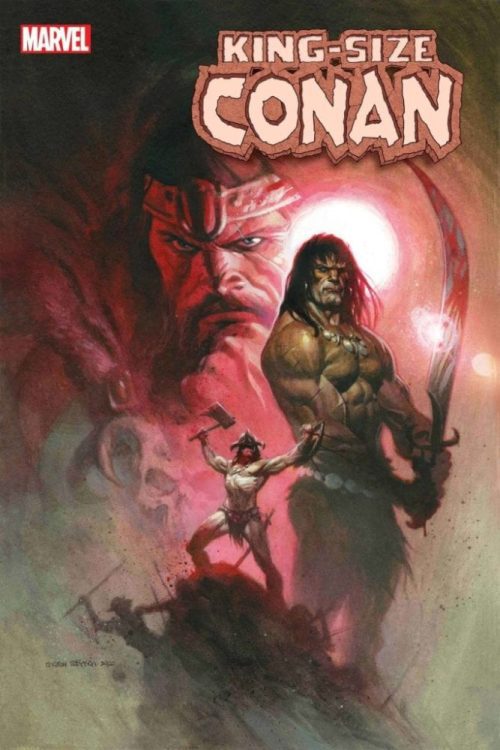
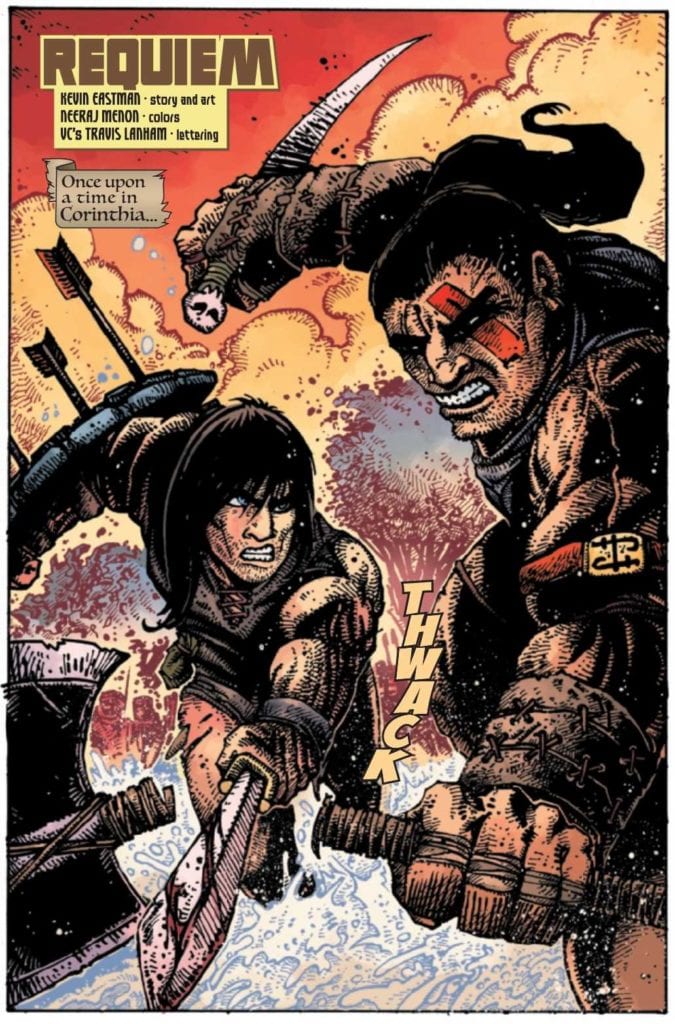 The nearly century-old character of Conan has many depictions, “Barbarian” just being one of several titles in King-Size Conan. Within Thomas’ “Aftermath–and a Beginning,” readers see the classic depiction of Conan’s struggle against civilization. One of Conan’s defining characteristics that many readers identify with is his search for an identity. Conan doesn’t feel at home with his fellow Cimmerians with many of his family and friends dead. This serves as a motivator for Conan to go out into the world. Some of these adventures and encounters make Conan less prone to suicidal risks. That being said, Busiek’s “In The City Of Thieves” displays Conan as a smarmy pickpocket who robs the careless out of hedonism.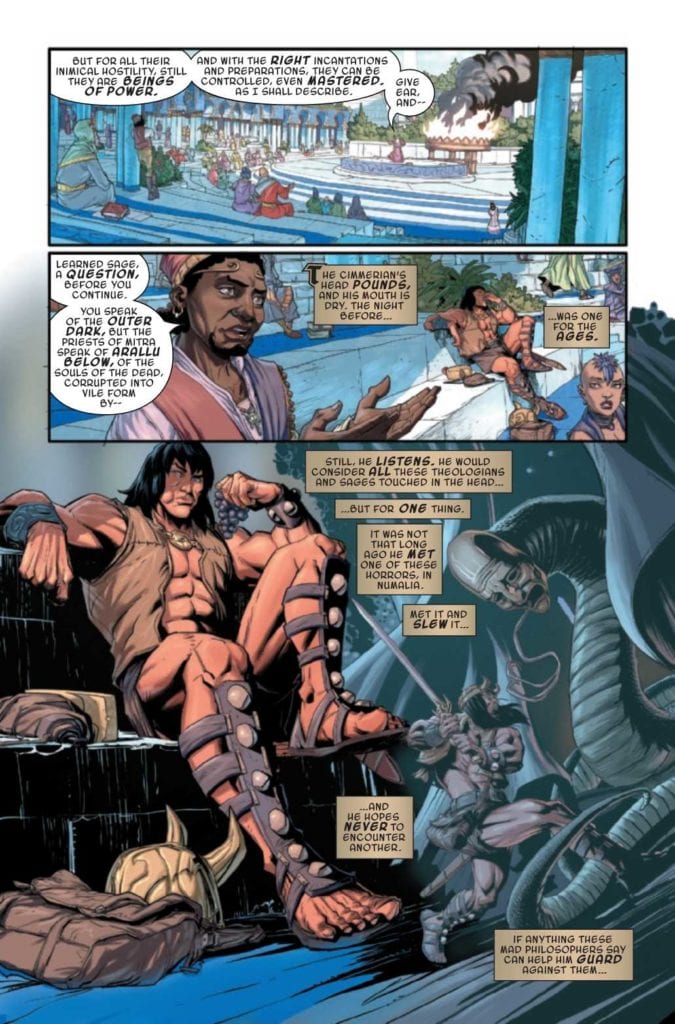
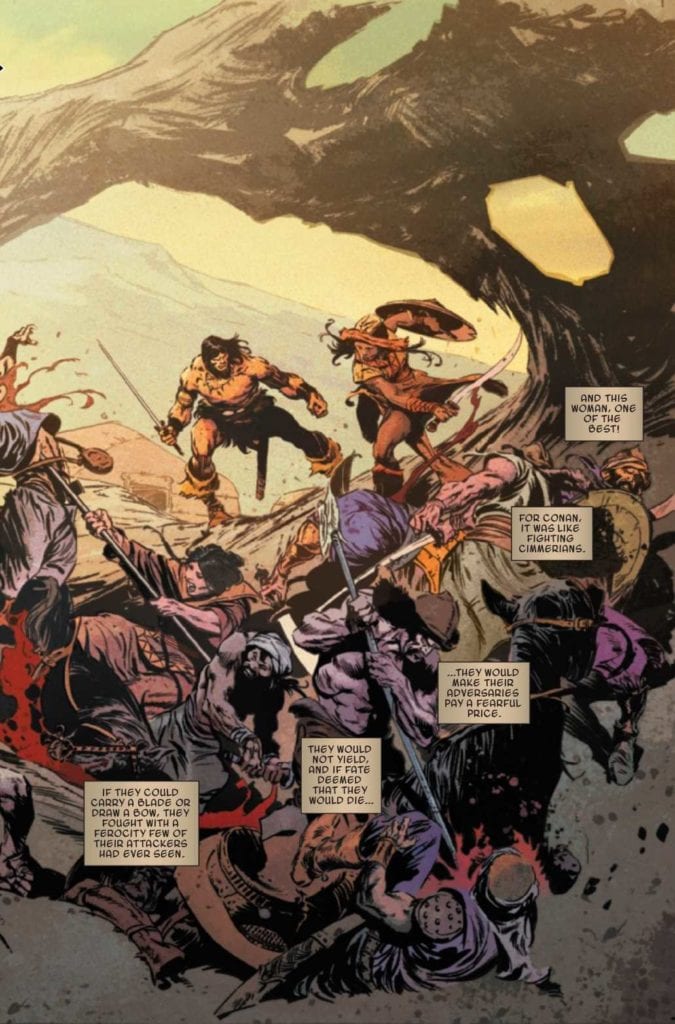
 Anybody familiar with the line “Hither came Conan” seen in the beginning of King-Size Conan may likely equate VC’s Lanham with a Chronicler who tells Conan’s adventures. The captions help the reader appreciate the artwork for large scenes as moments frozen time. Unlike the short but sweet moments in action that hit hard and fast. Something that reappears in the last segment where Conan serves as narrator where his confines are simple and in the moment. Conan can certainly speak for himself when people gloss over or add parts to his story. The biggest takeaway comes in a papyrus-like caption at the end of the first story segment. It invites the readers to read Conan’s chronicles throughout Marvel’s run, for the story of Conan the Barbarian is ever-changing and revised.