Home Blog Page 194

Review: THE LITTLE THINGS Shows Little Effort To Impress

The Little Things coast on star power, struggles to leave an impact and takes pleasure in being dull. It’s hard to watch this film without getting thrown off by its odd editing choices and its ability to waste three talented actors. Still, The Little Things is an intriguing film thanks to its three lead stars. Sadly, strong performances from this trio don’t excuse this messy film. A fairly forgettable throwback to the neo-noir genre that is destined to divide audiences. 

These types of films have been around for decades and this genre has offered some classics, but The Little Things will not be joining that discussion at the moment. The most frustrating aspect is that a good film is mixed in crying out for attention. Loads of missed opportunities, but it’s a fairly decent character study at times. Directed and written by John Lee Hancock, the film stars Denzel Washington, Rami Malek, Jared Leto, Isabel Arraiza, and Sofia Vassilieva. The Little Things follows Deke (Washington), a deputy sheriff who teams with Jim (Malek), a young detective working to find a serial killer. Deke struggles to come to terms with an event from his past, as the murders seem familiar to an old case.

Rami Malek as Jim in The Little Things

Deke is a fun character to follow he has returned to town after some time away and has these odd interactions throughout that are explained as the film progresses. Hancock doesn’t struggle to write interesting characters, but none of them are worth getting invested in despite the film being over two hours. A rather long journey to take with stale characters. Hancock does deliver some development for Deke and Jim throughout, which adds to their progressions, but then it just comes to a halt. The Little Things goes above and beyond to frustrate as you wait for this serial killer mystery to be solved. A cat and mouse angle is introduced halfway through, with the introduction of Albert (Leto), who becomes the prime suspect for Deke and Jim. Again, all three are interesting characters, but none worth caring for in the end or throughout the film.

Washington, Leto, and Malek are doing what you’d expect from academy award winners, but Malek’s performance was by far the weakest. Leto manages to outshine as Albert, the prime suspect who is very reserved, suspicious, and makes you question his innocence. He easily convinces you, Albert, is hiding something, but anyone who has seen these type of films will probably not be too impressed. Washing is terrific as well, but Deke’s character is handled in a very lackluster manner and he is the star of the film. Washington just makes magic out of a rough spot here, and it’s enough to keep you invested. Hancock certainly dropped the ball with the pacing for this outing. The Little Things picks up briefly, then slows, and it never seems to pick back up again.

Denzel Washington as Deke in The Little Things

A very lifeless tale unfolds here, but the actors keep you intrigued as mentioned above. In all fairness, once Leto’s character arrives on the scene the film shows a glimpse of hope at it picking up the pace at times. The first act is by far the most compelling due to the character introductions, teases regarding Deke’s history, and the stage is set for what’s to come in the end between Deke and Jim. The score in this film by Thomas Newman is quite satisfying, particularly at its strongest when Deke is shown reflecting on the crime scenes and past cases he has worked on. A spine-tingling reinforcement to the audience that Deke isn’t at peace with something in his past that slowly unravels.

The Little Things isn’t going to get Washington or any of these academy award winners extra points. The film is a decent, but highly flawed return to the neo-noir genre of crime thrillers. All the star power in the world can’t get you to care about half baked characters and a mystery that some will probably never try to solve again after this first outing. It’s one thing to waste talent, but this was just frustrating to watch far too much at times. The Little Things will keep your attention if your into watching mysteries unravel, but don’t expect a satisfying result overall. 
 

Monkeys Fighting Robots Youtube

Graphic Novel Review: The Night Breathes Life In BEATNIK BUENOS AIRES

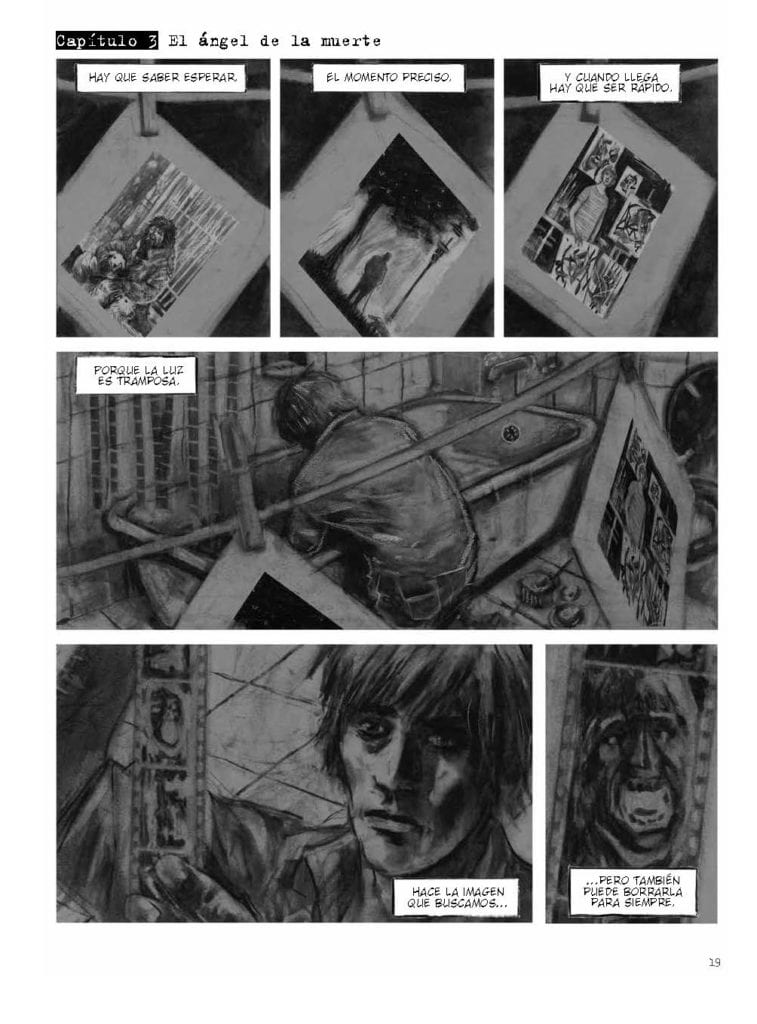
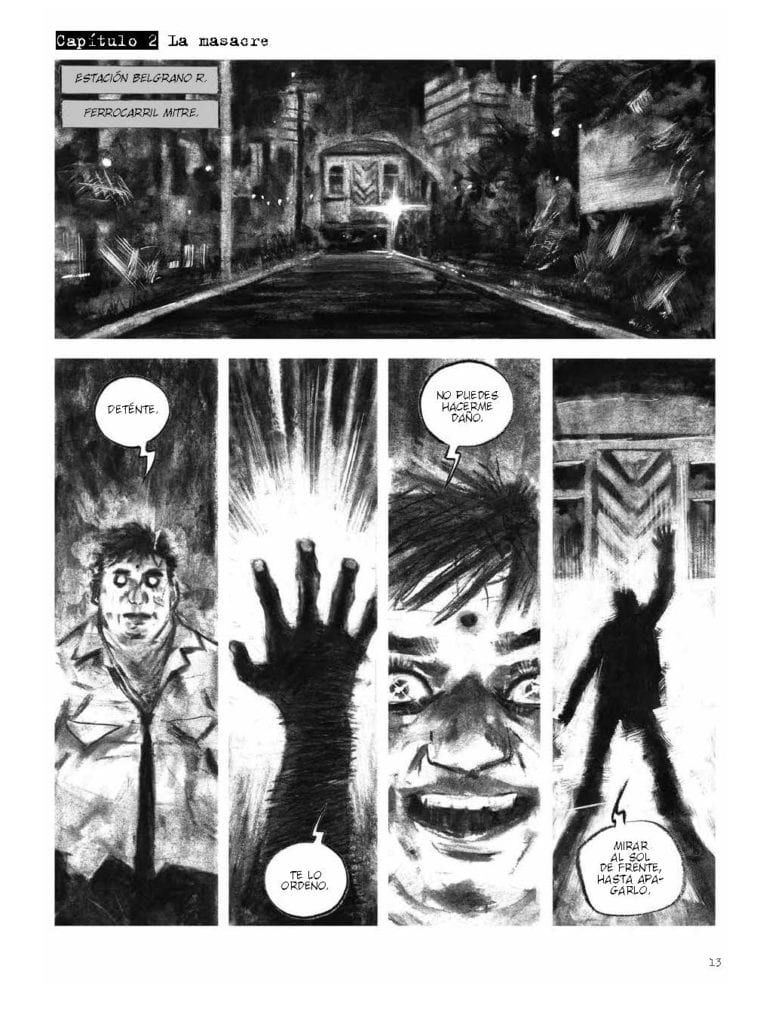
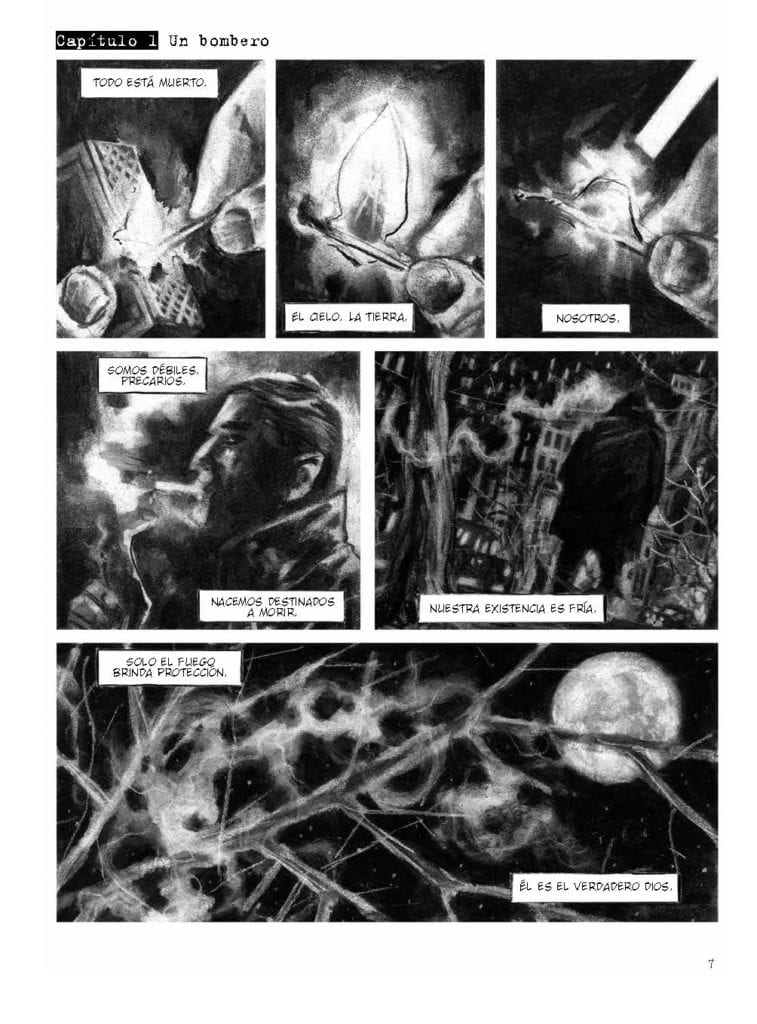
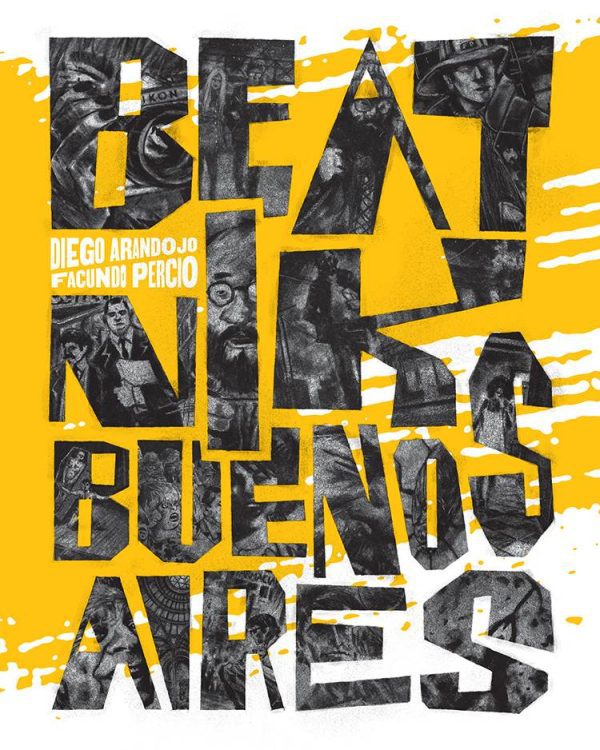
The creation of art and poetry is a chemical reaction of things that aren’t quantifiable. It can’t be observed in any sort of logical sense. It is a spark that comes alive in cafes and bars, and in cramped bedrooms or in front of the family piano. Writer Diego Arandojo and artist Facundo Percio do their best to describe a storm of nocturnal creativity in Beatnik Buenos Aires, a fictionalized account of the artistic thunderstorm that was this South American city during the 1960’s. Written in a combination of poetic verses and sparse dialogue, and visualized in smoky charcoal drawings, this graphic novel from Fantagraphics is an evocative love letter to the creation of art and the mad geniuses who live for its birth.

“When night falls in Buenos Aires, the city comes alive. Artists flock to cafes and dives to exchange ideas, listen to music, watch outré performance art, pen poetry, fall in love. In these raucous, smoke-filled rooms, the bohemian heart and soul of this vibrant city, a conflagration of creative energy burns. With the improvisational pacing of a jazz performance, Beatnik Buenos Aires follows the lives of writers, painters, musicians, sculptors, and performers as they wend their way through these hubs of creative life, seeking out inspiration and grappling with their craft. Set in 1963, this graphic novel celebrates a time in Argentine history when its art scene blossomed.”

Writing & Plot

In Beatnik Buenos Aires, Diego Arandojo sets out to portray the experience of living in the 1960 Buenos Aires nightlife art scene though a combination of believable reality and the very poeticism this movement created. He accomplishes this not via a standard A-to-B plot, but rather a staccato of short chapters from the perspective of different artists, writers, and musicians. This sort of bouncing around from person to person is held together by the setting of Buenos Aires and its signature bars, cafes, and coffee shops (the birthplaces and natural environments for creative types. There’s an improvisational feel to the book as a whole that is completely unique and addicting, though admittedly its lack of cohesion may alienate some readers looking for a more traditional story. While there is certainly a lot of love for this era displayed within the main pages of the book, there are also notes at the end which provide context for each chapter, including background information as to each character and who they represent – or directly are meant to be – in real life. Arandojo notes that there is some fictionalized embellishment in these stories for the sake of entertainment, but the heart of the stories are still largely true. It’s easy to feel the care that Diego puts into each use of words and poems, instilling a grander (if sometimes inexplicable) meaning to this work. This graphic novel not only set me down in the room with these men and women, but made me nostalgic for my own experiences among creative peers. As an English major who made a lot of friends with writers and poets, the barroom and coffee shop scenes of artistic discussion reminded me of similar moments in my own life. The moments in the book are way cooler and more intriguing, obviously.

Art Direction

While it’s Arandojo’s love for this microcosm of creativity that ultimately conceived this book, the art of Facundo Percio is what brings Beatnik Buenos Aires to life. Percio’s charcoal black-and-white visuals instill a sense of historic gravity and unmistakable character to the entire book. You would think that rendering an entire graphic novel in this style, especially with a huge cast of characters, would make the stor(ies) seem monotonous. However, Facundo manages to bring the liveliness and expressiveness of these people and their city into the story through this style in a manner completely unique to this book. The smoky charcoal grays and blacks work almost symbolically, living in tandem with the cigarette smoke, black coffee, and ink-written words found in every tale. Every character very much has their own look and sense of expression also, which is doubly amazing due to Percio’s technique. The panels flow from situation to situation and time to time with ease, like the passages and poems they are meant to dissect. The visuals here are so singularly significant that it’s actually a bit difficult to offer a critical view; the gray and black renderings of 1960’s Buenos Aires and the Avant Garde artists who gathered in its PM hours are burned into my brain and it makes me want to write. The highest compliment I can give.

When a comic really gets me (or a story of any medium really, just most often it comics), really reached into my mind and hits my taste in just the right spot, it for some reason makes me desperately need a cup of coffee and a cigarette (and I don’t even smoke). This book incited this reaction, but also explained that this was perfectly normal behavior according to South American artists in the 60’s. Beatnik Buenos Aires is a love letter to a time that was a hurricane of artistic creation. It is a tale of two cities, one of the vanilla 9-5 side of Buenos Aires, and more importantly the nocturnal side when all the artists come out to drink coffee, trade ideas over cigarettes and alcohol, and seek to experience all the uniqueness and originality that can be had in other artists. Diego Arandojo pays tribute to real artists and poets through a series of unique short stories that roll out like an improvised jam session. The smoky charcoal grays and blacks of Facundo Percio craft the perfect tone and aesthetic for this graphic novel with images and scenery that will from now on be seared into my brain. While this is surely not a book for everyone, if this does sound up your alley, be sure to grab a copy when it hits shelves on 4-27.

Monkeys Fighting Robots Youtube

The Fallout in FIREFLY #25

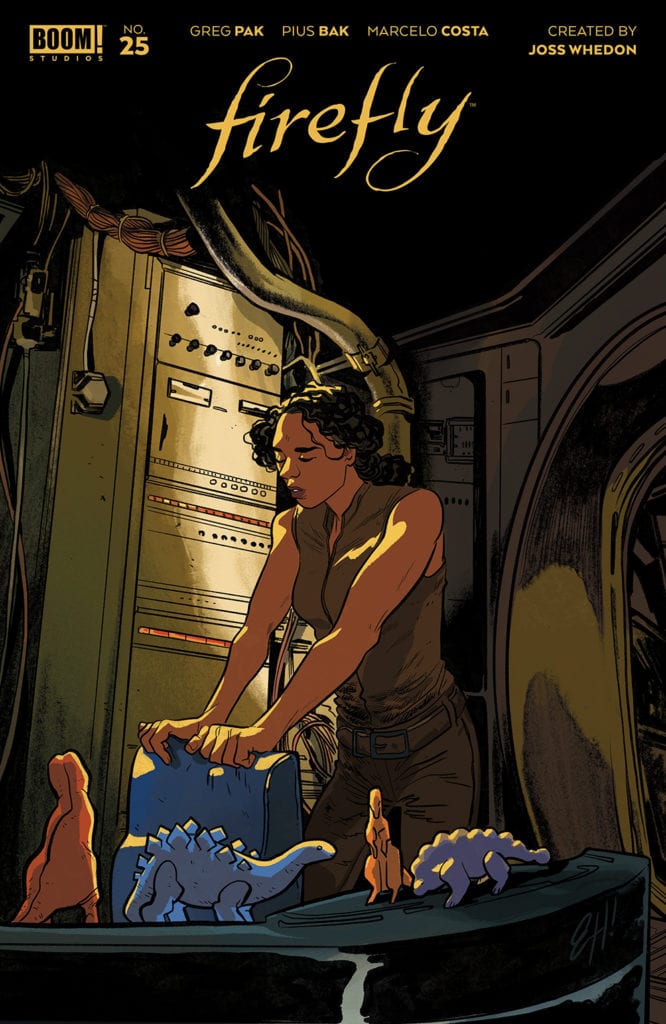
FIREFLY #25, available Wednesday from BOOM! Studios, is about to answer many of the questions fans have been holding onto all these years. Namely, what happened to the crew, after the battle in Serenity?

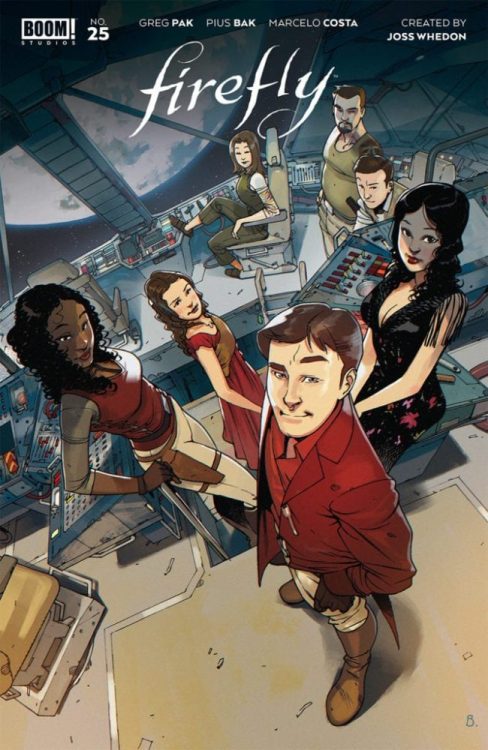
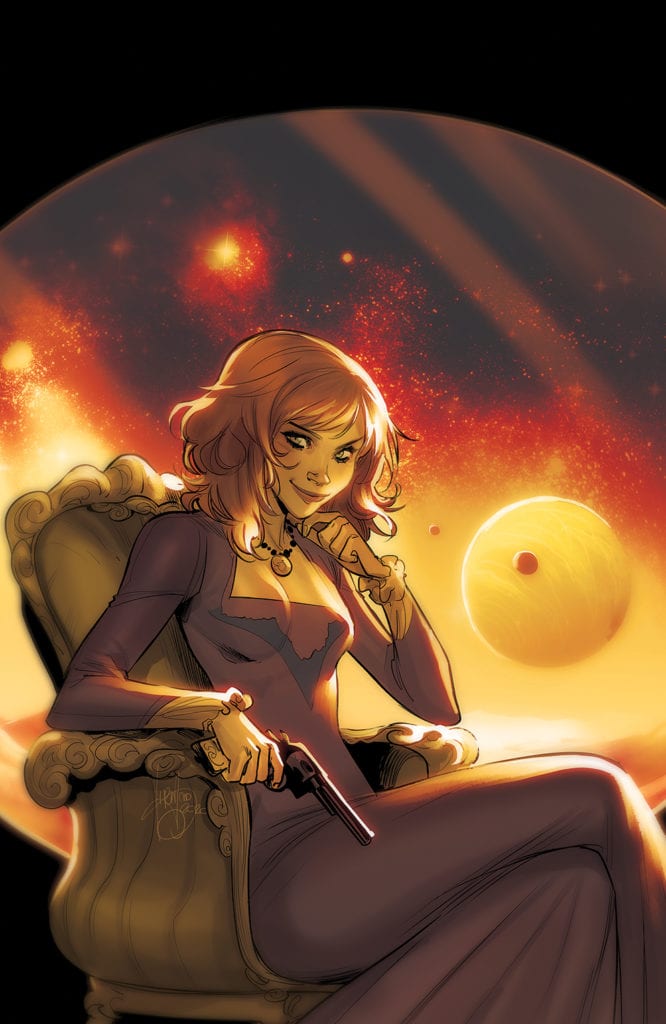
Such a bittersweet scene for this alternate cover of Firefly #25.

Serenity released back in 2005, and one of the questions fans always wondered about is what would happen next. Well, their first question was one full of hope for a sequel, if we’re being completely honest here.

Firefly #25 is an issue that jumps forward in time, to a point after the events of Serenity. The goal, naturally, is to answer many questions that the fans have had about what would have happened to the surviving characters following the fall of the Alliance.

Please tell us that Saffron is about to show up and start making trouble!

The Writing

I went into Firefly #25 more or less expecting the series to pick up right where the movie left off (give or take a few years). What I got instead was a bit more of a surprise. This first issue doesn’t drop the past events of the comics, but instead merges both worlds together.

It’s going to be interesting to see how Greg Pak continues to integrate these two plots, as in many ways it feels like we’re dealing with many changes. There’s the obvious of course, but it goes beyond that as well.

This is an issue that is both surprising – in the twists that it brings with it, and just a little bit disconsolate. There’s a real feeling of loss mixed throughout the pages. As there should be. It’s a sentiment that many fans can relate to, both following the end of the movie, and the cancellation of the series.

It makes for a melancholy start to this new plot arc, but it’s balanced nicely by the intrigue that has created. As I already hinted at, there are many changes happening, some of which will make sense to long time readers. Others that are clearly meant to be explained at a later point.

You can’t take the sky from me.

The Art

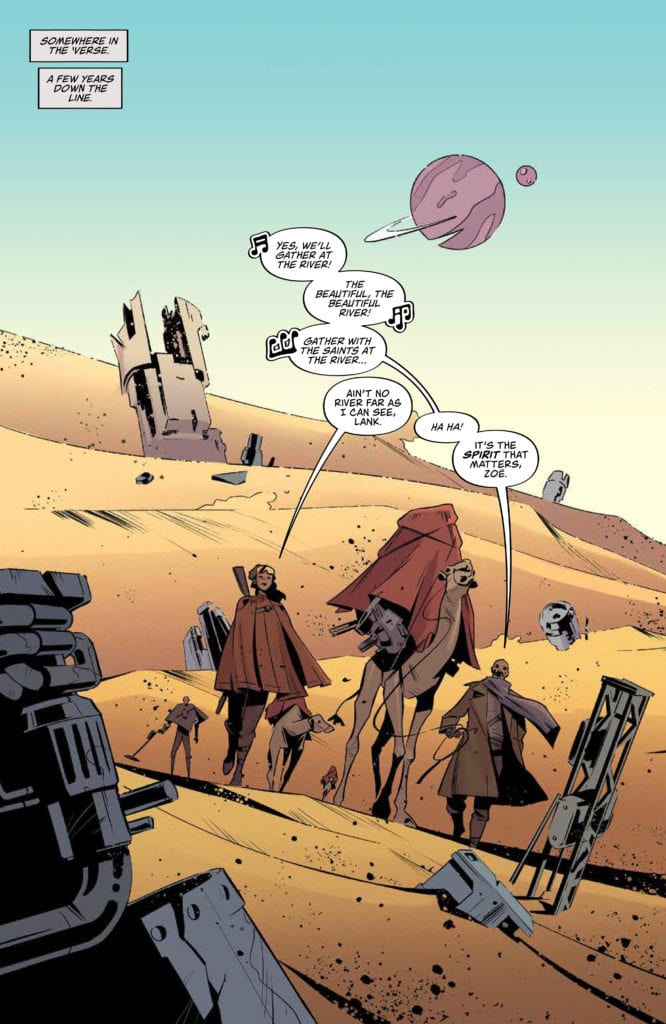
Where Firefly #25 has to merge two major plot points together, the artwork has, even more, to contend with. Yet it rises to the occasion, portraying a variety of scenes, characters, and changing dynamics in flawless transitions.

Pius Bak was the lead artist for this issue, toeing a careful line for the characters. Many are immediately recognizable, while still clearly showing signs of time passing (painfully so, in some cases). It’s not just in the way they dress, but in the way, they’re portrayed to carry themselves.

Marcelo Costa’s colors brighten up the scenes, even those of a more sober variety. The backdrops are understated, yet compliment the tone of the series as a whole. It’s when something shocking occurs, or power is running free, where the colors really seem to steal the show.

The lettering, provided by Jim Campbell, is the final touch necessary for this series. The highlight, in this case, would have to be the sense of action and feel of combat that the lettering carries. All while leaving room for a narrative twist on things.

This is quite the change.

Conclusion

Firefly #25 is not exactly the issue that I was expecting. But it has already done a solid job of holding my interest. It’s hard to say how new fans would feel, jumping in at this point, but those that have been following the series will almost certainly pick up on those somber tones.

Ultimately, this first issue in this new plot arc will leave fans hoping that things get better for those characters involved. All while being very curious about what is actually happening behind the scenes.

Monkeys Fighting Robots Youtube

Dark Tides in NOMEN OMEN #11

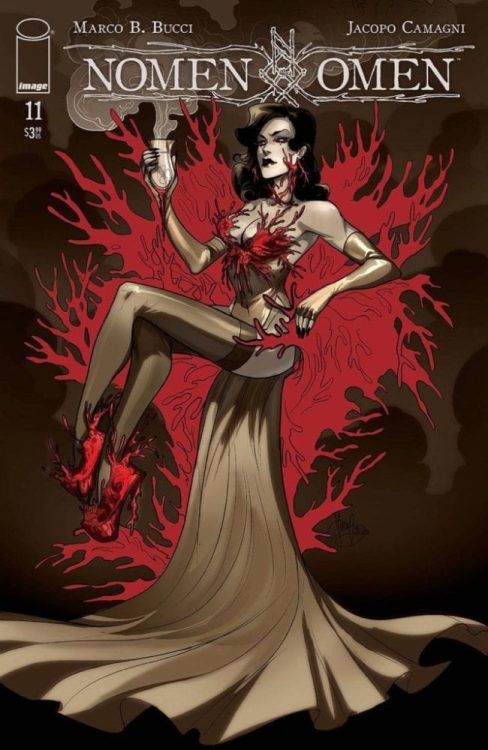
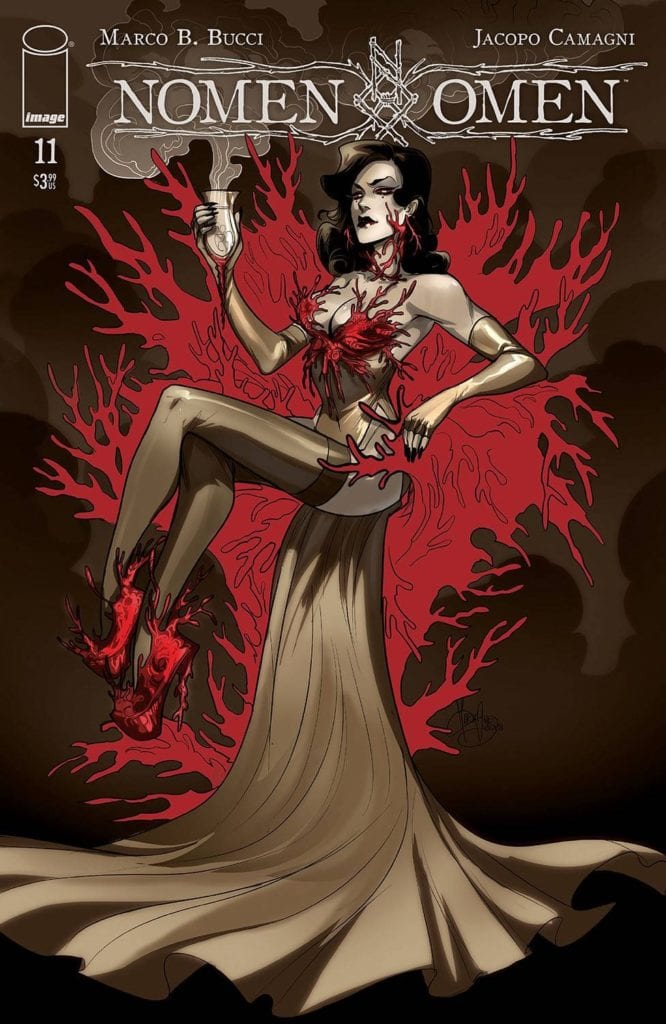
A sinister plan awaits in Nomen Omen #11.

NOMEN OMEN #11, available Wednesday from Image Comics, dives back into a world of dark secrets and hidden magic. Dark forces have become commonplace as Becky’s battle for revenge (and for her heart – literally) continues.

A sinister plan awaits in Nomen Omen #11.

We can all agree that as a whole, the series of Nomen Omen has never been afraid to get dark*. Both in the literal, and figurative sense. After all, the protagonist is literally fighting to get her heart back. A heart that was stolen by an ancient entity will ill intentions.

Still, the series has surprised readers (myself included) on more than one occasion. Nomen Omen #11 continues that trend, throwing characters and readers alike into a dark and twisting series of events that feel next to impossible to predict.

Even with all those odds, it still feels impossible to do anything other than root for Becky and her most unlikely group of allies. No matter how hard we root, it won’t change the fact that there are now only four issues with which her battle may be wrapped up.

The Writing

Nomen Omen #11 is a conundrum. On the one hand, it feels like a bright spot of hope. On the other hand, it is also the most depressing issue of the series (so far – no promises about what is to come).

Don’t get me wrong, it is brilliantly written, and all credit goes to Marco B. Bucci for that. In many ways, it feels like we’re hitting the climax of the series, and that means there are some twists in store for those that are invested in it.

And as we all know, when magic is involved, not all twists leave one feeling all happy and bubbly on the inside. The surprises in store stick true to the core of this series while leaving us wondering where things will go from here.

What is fascinating is the inclusion of other perspectives in this issue. That’s where the real sense of humanity comes from (ironic, given a few of the people we’re talking about). It grounds this new plot arc, while simultaneously reminding us of the stakes.

The Art

The artwork for Nomen Omen #11 is every bit as captivating as the writing itself. If not more so, in a couple of places. This is arguably the brightest issue of the series, visually speaking. Again there’s a sense of irony there, given what is going down.

Jacopo Camagni’s artwork is simply divine. The whole series has had a creative way of portraying magic – having a lack of color depict the absence of it, and vibrant scenes showcasing a world full of magic.

Well, that whole concept is taken to the farthest extension here, all while creating some truly breathtaking images. Honestly, they’re striking even without the context of what is happening. Throw that vital context in, and suddenly you have something otherworldly and frighteningly beautiful on your hands.

Fabio Amelia’s (from Arancia Studio) lettering is just as impressive. There are understated pages, and then there are times where the lettering becomes part of the background and artwork itself. Only to flawlessly transition right back. It’s breathtaking and brings with it a certain sense of weight.

Conclusion

Nomen Omen #11 may be the darkest issue of the series, but there’s still that lingering sense of hope. Not to mention, a very strong feeling of curiosity. We all know that the end may be near, but it isn’t here yet. So there is still time to battle, and thus still time to see things through.

*Nomen Omen #11 does indeed get fairly dark at points, though not quite as graphic as some of the previous issues. It does however provide a harsh reminder to past events, in the portrayal of a character and the setting they are trapped within.

Monkeys Fighting Robots Youtube

Review: SPAWN #314 Shows Why Consequences Always Catch Up

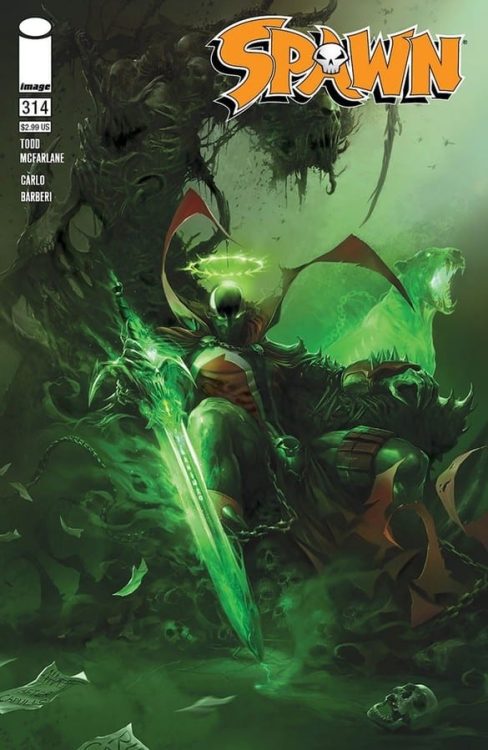
SPAWN #314 hits comic book stores on Wednesday, January 27th, following the aftermath of Al Simmons and Overt-Kill’s one-sided fight with Monolith. The enormous Hellspawn appears to care nothing for kinship, vowing to subdue Simmons and force him to meet the mysterious “master.” What readers will find is the enormous consequences of their hero catching up to him in full force.

Story

Simmons, witnessing the sudden destruction of his friend Overt-Kill at the hands of Monolith, is forced to experience much of the same pain. His Spawn abilities are severely weakened after breaking time a few issues back, leaving him virtually defenseless.

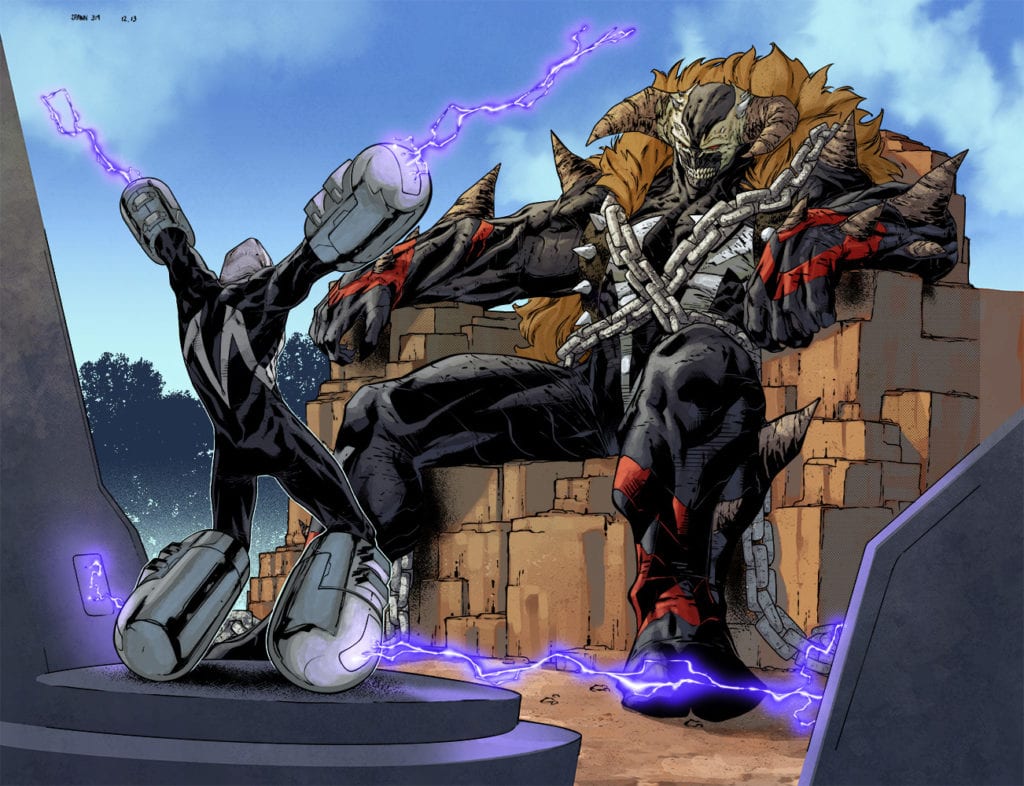
After his pounding, Monolith proceeds to drag Simmons to a make-shift. And what readers behold is an even more menacing Hellspawn than the former.

This “Omega-Spawn” expresses his grievances over Simmons decision to detonate his symbiote and fracture reality. Simmons says he felt there was no other choice and that the consequences would be minimal. Unfortunately, Omega-Spawn claims the actions trapped hundreds of celestial beings on Earth, and Cogliostro is seeking to take advantage of the Hellpspawn once again.

Writer Todd McFarlane brings readers along this increasingly hopeless journey as if they were in the story themselves. We watch as the protagonist faces the consequences of his past actions, enduring physical and emotional pain. And with the odds so drastically in his enemies’ favor, Simmons may give up any hope of rectifying his mistakes.

Artwork

Carlo Barberi’s penciling and ink work, Jay David Ramos’s coloring, and Tom Orzechowski’s lettering harmonize brilliantly in SPAWN #314. The bulky designs of Monolith and Omega-Spawn assert their dominance across each panel. Their forms are brought to life with solid shades of black, red, and orange. In addition, the lettering does a brilliant job of helping the reader distinguish who’s speaking—whether it be the narrator or one of the Hellspawns—using varied fonts and word balloon borders.

Conclusion

SPAWN #314 provides hardcore fans with all the blood, guts, and fighting that made them fall in the love with the series. We are anxious to see if Simmons has a chance in hell of turning the tides in he next issue.

Do you think Simmons has a chance at defeating Omega-Spawn at any point in the future? Let us know in the comments below!

Monkeys Fighting Robots Youtube

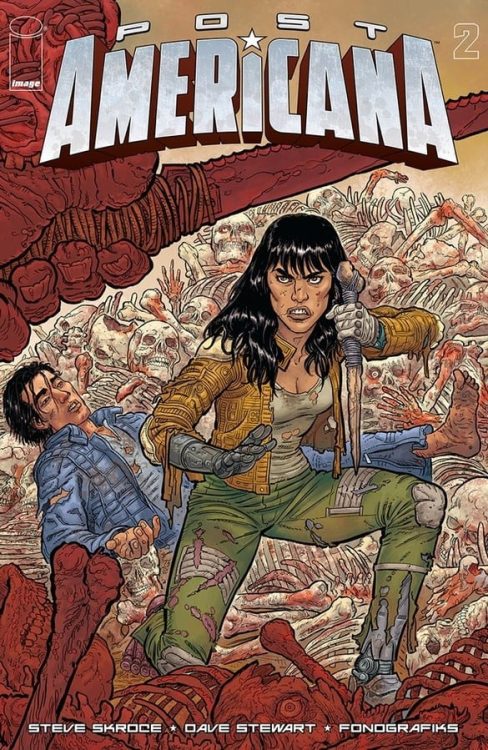
Review: POST AMERICANA #2 – Why Sticking Together Is The Key To Survival

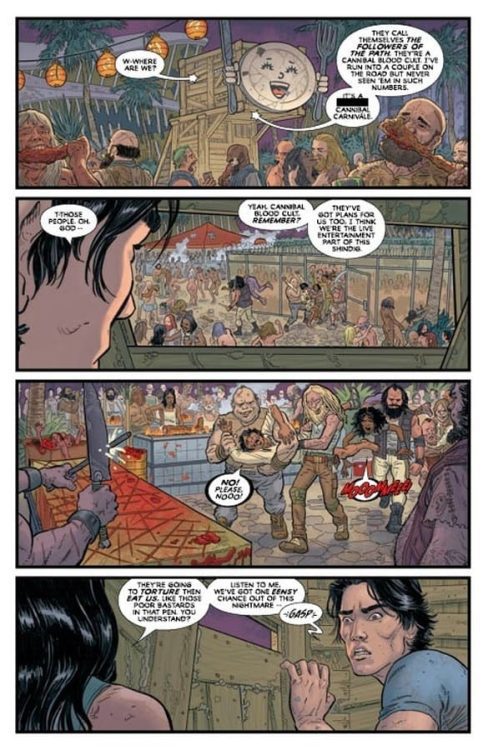
POST AMERICANA #2, available in comic book stores on Wednesday, January 27th, explores more of the post-apocalyptic land formerly known as the United States of America. The renegade Mike met the badass Carolyn last issue while attempting to navigate the American wasteland. Now the duo find themselves prisoners of an interesting group: wasteland cannibals.

Story

After the long diatribe by the dome’s leaders, we find a disoriented Mike attempting to make sense of his surroundings. The escapee asks Carolyn, who’s currently out of view from the reader, explains the dire predicament they now find themselves in.

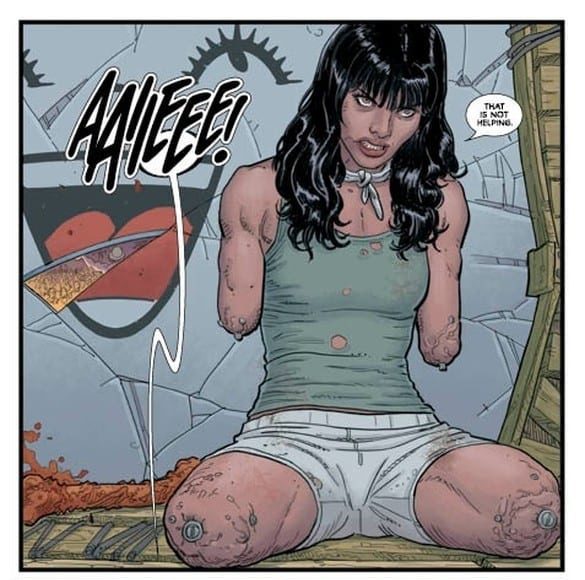
But before he can take action Mike finally looks in Carolyn’s direction. And to his utter shock, she’s missing all of her limbs. But what actually lead to her predicament?

Steve Skroce’s writing is unsettling in both its shock value and dystopian vision of the United States’s future. Yet this makes this form of storytelling all the more engaging. The fast-paced, action-packed narrative offers ample opportunity for effective characterization. Despite the prevalence of a “rugged individualistic” mindset, our protagonists will learn than working together is the only path forward.

Artwork

The illustrations in this issue contain the quirky, surreal flair that many lines out of Image Comics have come to be known for. Skroce’s penciling and ink work depicts sprawling landscapes of ruined buildings and former landmarks that show the poor conditions the communities now find themselves in. Among this number are Carolyn and Mike, whose bloodied bruises and cuts stand out vibrantly with colorist Dave Stewart’s bright reds. In addition, Fonografiks’s lettering does an effective job of conveying the sounds of each scene using eye catching oversized fonts.

Conclusion

POST AMERICANA #2 takes this Mad Max inspired story to an entirely new, exciting level. We can’t wait to see what other challenges Carolyn and Mike face as they venture deeper into the former American heartland.

Do you think Carolyn and Mike will finally ditch the cannibals and take on the new U.S. government? Let us know in the comments below!

Monkeys Fighting Robots Youtube

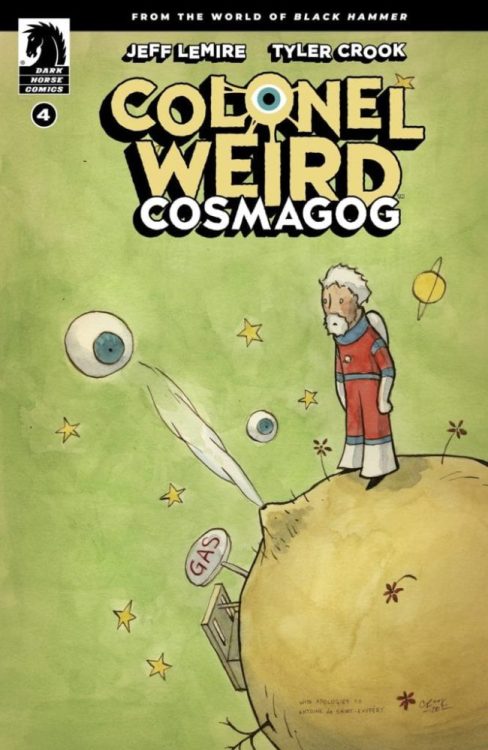
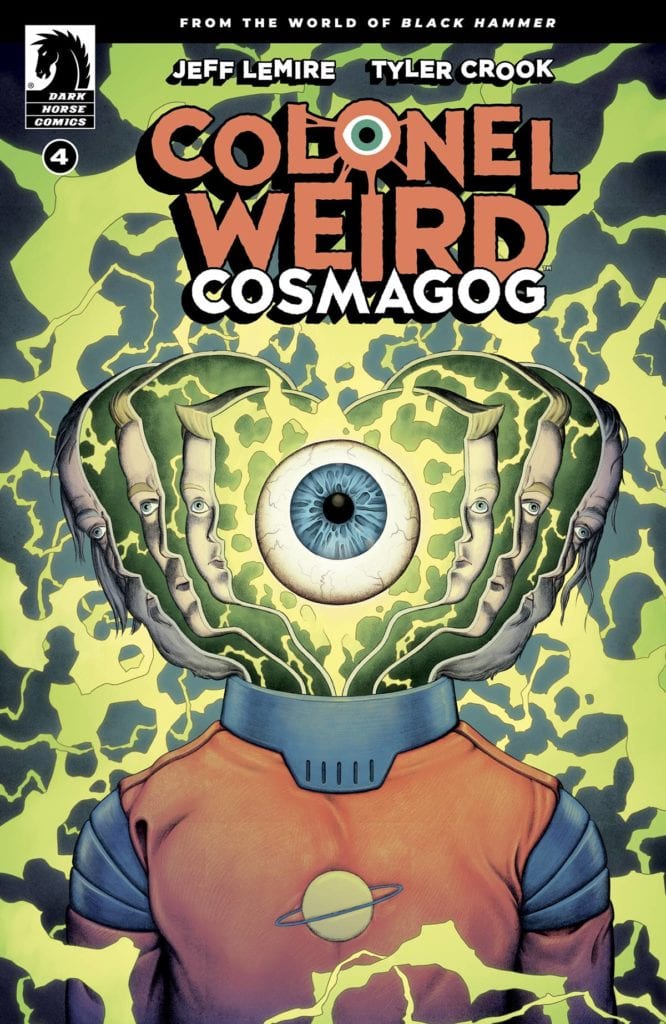
Review: COLONEL WEIRD: COSMAGOG #4 is a Warm Welcome Home

Colonel Weird Crook Dark Horse

Not with a bang but instead with a rocket blast, Colonel Weird: Cosmagog comes to an end. Despite its ending, it’s the quiet and unassuming story of a space ranger with the world on his shoulders. But just like in past issues, writer Jeff Lemire and artist, colorist and letterer Tyler Crook, aren’t here for the alien battles or holes in the space-time continuum. No, Dark Horse’s Colonel Weird: Cosmagog #4 continues to be about Weird’s heavy heart and his confused brain.

Writing

Since issue one, Weird has been trying to remember something. We’ve followed him, through time and space, to see that he’s a man who is cursed. He’s reliving and repeating each moment of his life. We see him in his most vulnerable times. We see him at home, crying about being bullied as a kid, or offering his hand to his wife Eve to show her the Parazone, which is destined to rip her to shreds. And, interestingly enough, Lemire doesn’t trod much new ground in this final script. Instead, we inch closer to the conclusion of each of these scenes. We not only see Weird as a little kid, crying to his mother, but we finally see how she consoles him. It’s the twists and turns of real life that have us on the edge of our seats. And when Weird says “I am tired of always trying to go the right way,” he speaks for all of us. Lemire captures the exhaustion of trying to live life well. It’s a universal feeling. Lemire underscores it with every hard decision a guilt-ridden Weird has to make, over and over again.

Art

Again, Crook traces a through line in the script. He shows us the scared face of a little boy, and how it’s not that different from a face that is decades older. Weird still feels scared. He’s been feeling scared his whole life. But as we close in on the conclusion of one scene, Crook shows us who Weird is different from. As Abraham Slam, Barbalien, Black Hammer and Golden Gail fight the Anti-God, they’re not scared. This world-eating adversary is the kind of big baddie we’ve seen in comics. These heroes are familiar with such threats. And so, they’re angry, not frightened. But Weird knows the only way to stop this menace. When Madame Dragonfly approaches him, Crook underlines her humanity too. She looks petrified. And finally, as they join hands, Crook shows how this moment felt to Weird. The page erupts, panels scatter. Weird’s world falls apart. It’s a beautiful representation of this act that has followed him throughout time and how doing it over and over again is tearing him to pieces.

Colonel Weird Crook Dark Horse
Malachi Ward variant cover

Coloring

Crook washes nearly every scene Weird’s in, in one overpowering color. Whether he’s in the green of the Parazone or fighting the angry red Anti-God, Crook obscures Weird’s true colors with the light of a threat from without. In some ways, this reads like the pull of time. We don’t see what makes Weird who he is. We don’t see what he would choose. Instead, we see what he’s already chosen. Because Time is his master and just as his colors make way for the light of the page, Weird’s will bends to the will of Time. But, in one brief moment, Crook uses another color. A color that originates from Weird’s actions, the bright spark of him trying to fix something. And in that moment, Crook obscures some of Weird’s face. The white light makes it so we can only see his eyes and his knitted brow. But, in doing this, Crook makes us wonder if this is a moment where Weird lets himself hope. Without the frown and the gaunt cheeks on display, his eyes could just as easily be carefully hopeful, as they could be worried and scared.

Colonel Weird Crook Dark Horse
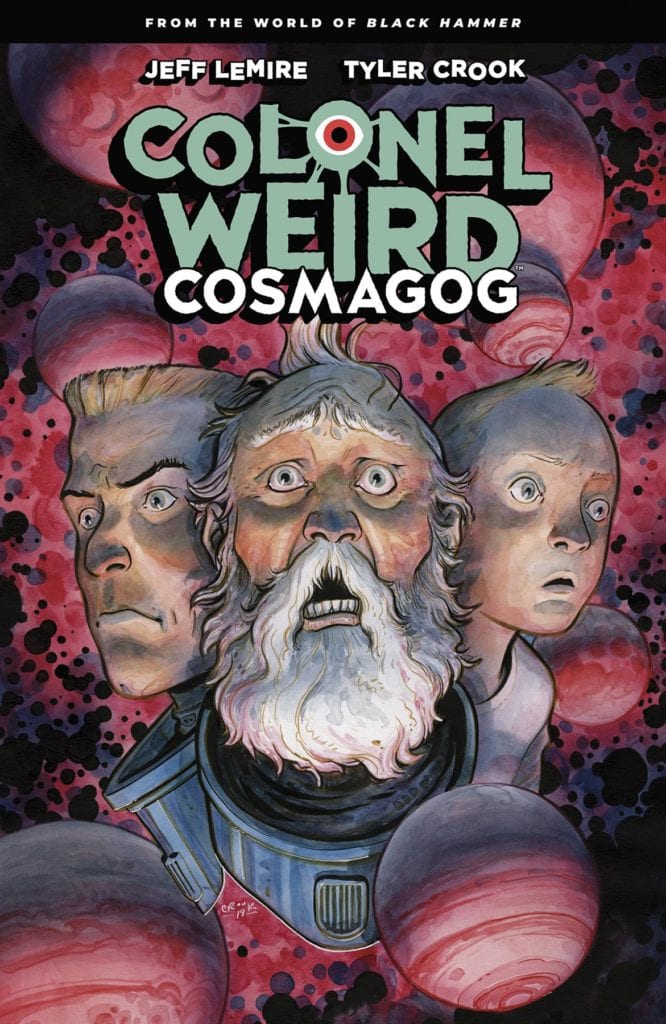
Cover to the TPB collection of COLONEL WEIRD: COSMAGOG

Lettering

Crook, in his lettering, uses small, subtle moments to show a connection between Weird through the years. Child Weird looks up at his mother. “I– I’d forgotten about this…” In the next panel, present day Weird reacts. “Oh!” The lettering is small, like a realization that comes from deep within. “I’d– I’d forgotten…” he says, echoing his younger self, even in the syntax. And as Weird remembers what he’s forgotten, with the “KZZZZT” noise of a burst of hope, he begins to seem more sure of himself. His lines are no longer divided up into small whimpers, word balloons containing three to four words at a time. He speaks as confidently as Weird can, ellipses and all. Finally, Crook marks the end of this book with the “CHOOOM” of a rocket engine. He connects us back to our original expectations. The space battles and rocket launches of a sci-fi adventurer. Perhaps Crook is suggesting that Weird, unburdened, has some loud, swashbuckling adventures to look forward to.


Dark Horse’s Colonel Weird: Cosmagog is a delight. It’s good to know that some things are just damn near perfect. Pick up Colonel Weird: Cosmagog #4 or the trade paperback, out from Dark Horse Comics January 27th, at a comic shop near you!

Monkeys Fighting Robots Youtube

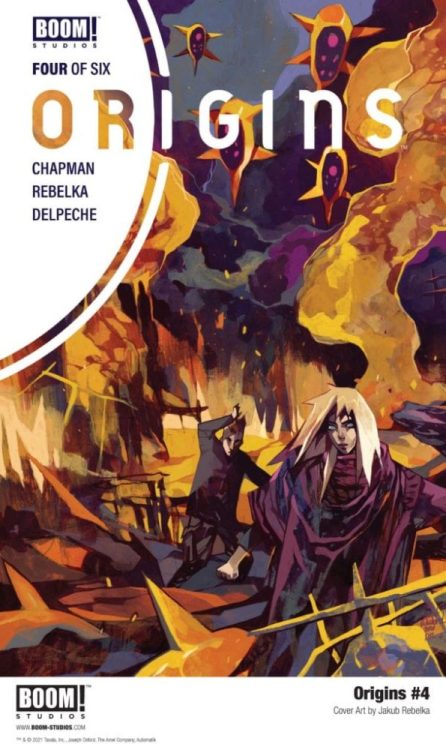
Exclusive First Look At ORIGINS #4 From Boom! Studios

Exclusive First Look At ORIGINS #4 From Boom! Studios

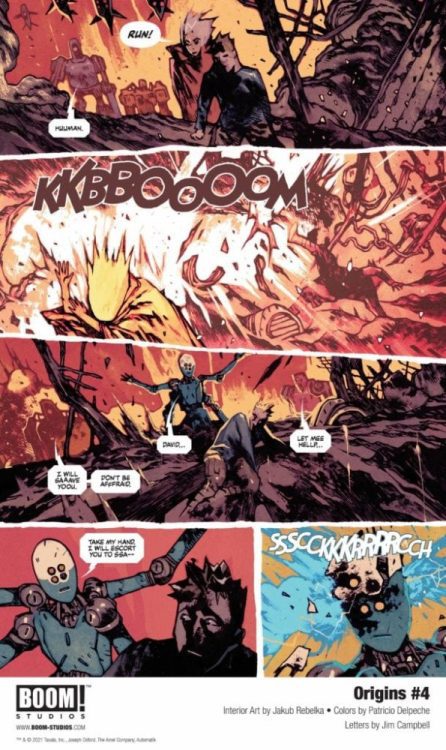
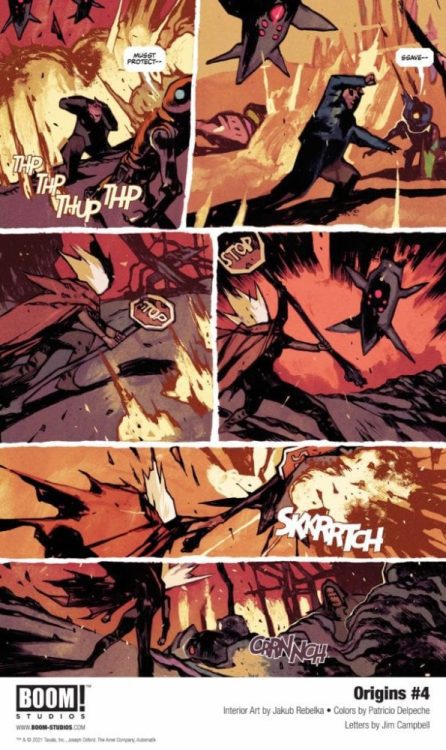
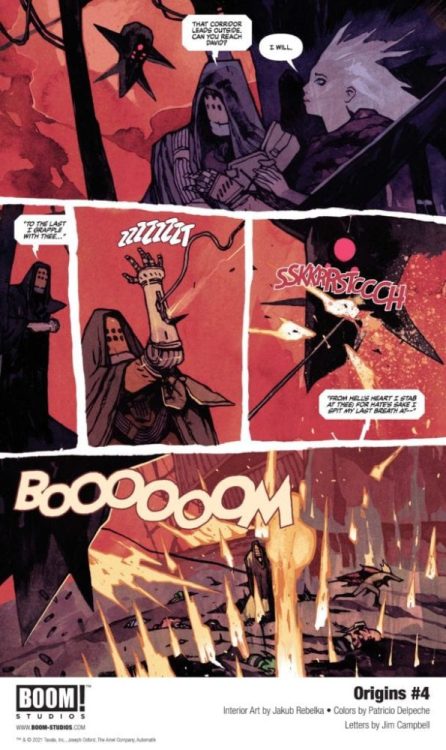
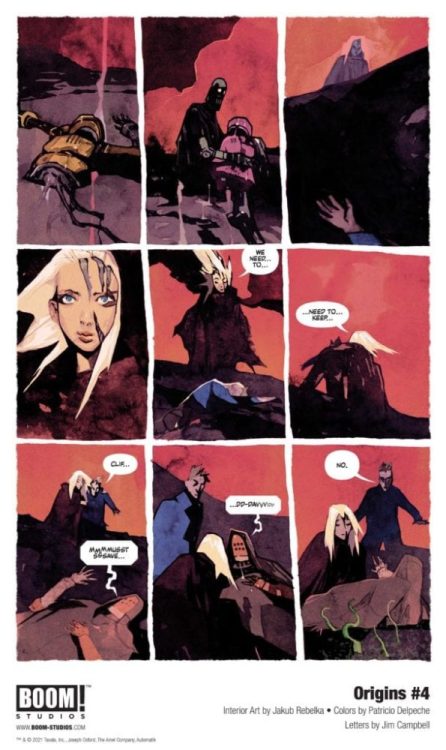
ORIGINS #4 hits your local comic book shop on February 10, but thanks to Boom! Studios, Monkeys Fighting Robots has an exclusive five-page first look for our readers.

The book is written by Clay McLeod Chapman, with art by Jakub Rebelka, Patricio Delpeche drops the color, and you will read Jim Campbell’s letter work. Rebelka’s panel design adds to the story’s desperation; it is like the comic is getting ripped apart.


About ORIGINS #4:
When the Network discovers David and Chloe’s refuge, they’re forced to make a devastating sacrifice to escape. To continue into the desolate frozen wastelands towards David’s lab, they’ll need the help of their new-found allies if they want to survive.


Enjoy The Preview Below:

Digital copies can be purchased from content providers, including ComiXology, iBooks, Google Play, and Madefire.

Monkeys Fighting Robots Youtube

DRY FOOT: The 80s In Cuban Miami Are Not That Nostalgic

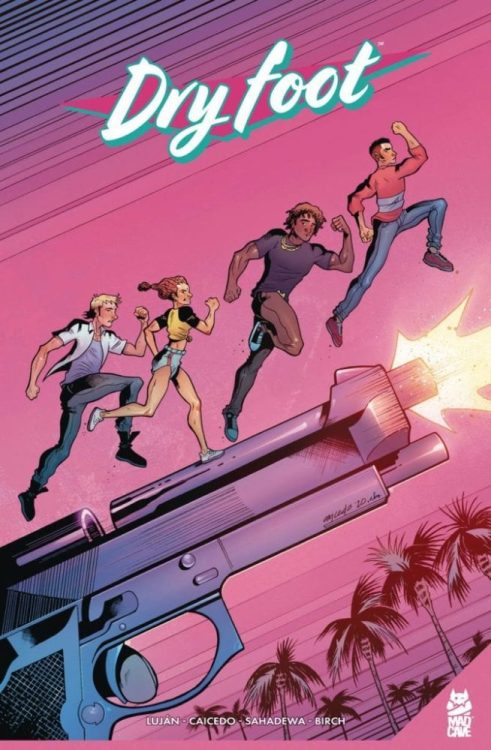
Dry Foot Cover

The trade for Dry Foot out from Mad Cave Studios on February 24 collects the four-issue mini-series. Standing in contrast to the nostalgic decade of the 1980s, writer Jarred Luján depicts the struggles of Miami’s Latinx community. Joining him is artist Orlando Caicedo coming out of the Webtoon format to display his dynamic action sequences. Backing them up are colorist Warnia Sahadewa and letterer Justin Birch.

The Kids Get A Dry Foot

Luján gives each cast member reasons and motivations for their actions in Dry Foot. They are all in some way affected by Cuban Miami of the 80s, even if it’s not explicitly stated. The Pretty Boy of the group Fabian might be a flirt, but it’s a defense mechanism against his bleak home life. His mom is a drug addict and has a history of abusive boyfriends. From an early age, becoming a pickpocket was his way of surviving.

Then there’s the driving character of Dry Foot, Diego. Diego, among all of his friends, fears the possibility of falling into organized crime. How would the reader react to seeing their community members getting into gang wars and police shootouts? Diego’s only escape is his friends and the movies he enjoys, like Indiana Jones. Dry Foot brings a new perspective on the setting of the 80s; pop culture can be genuinely entertaining like in Hexagon, but for some people, it’s only an escape from reality. When Diego and his friends try out their heist in the style of Indiana Jones, things turn out badly.

The above is not even because of reality setting in for its own sake. It’s a natural character-driven reaction from another cast member, Angel considering his own home life. The setting of Cuban Miami showcases yet again by showing how family members can drive people towards ruin. Angel’s brother is a gang member and provides for his family’s survival. It’s all a genuine tragedy considering how much effort Luján takes to have the reader fall in love with all of these characters in such a short time.

Art of Dry Foot

Caicedo provides his distinctive style of dynamic action to Dry Foot. The panels and character movements have a strong sense of weight and urgency. Take a flashback when Fabian has to pull Diego back from when a police car almost hits him. It’s a big moment that the reader and Diego remember when it comes to who to trust.

Sahadewa provides the series with a number of lighting effects. This includes but not limited to colored lights evoking the neon signs of the 80s. Whenever there are lights on display, it’s an indicator of a big climactic moment. Like when a car suddenly bursts into a room.

Finally, lettering by Birch guides readers across every point of interest in Dry Foot. Every word balloon or SFX is practically an extension of actions on the page. This provides just the right amount of pacing for the reader to get through.

A Short But Sweet Ride

Dry Foot might require a little background knowledge to fully appreciate since it goes so fast. That doesn’t mean that the decisions made by the characters don’t have weight to them. Luján along with his creative team crafts a gripping narrative that takes a familiar 80s and puts them under a new lens. After all of the series that come in reaction to Stranger Things, it’s nice to see something urgent and down-to-earth. That’s what makes rereading this series such a splendor, looking at something familiar with a new context.

Monkeys Fighting Robots Youtube

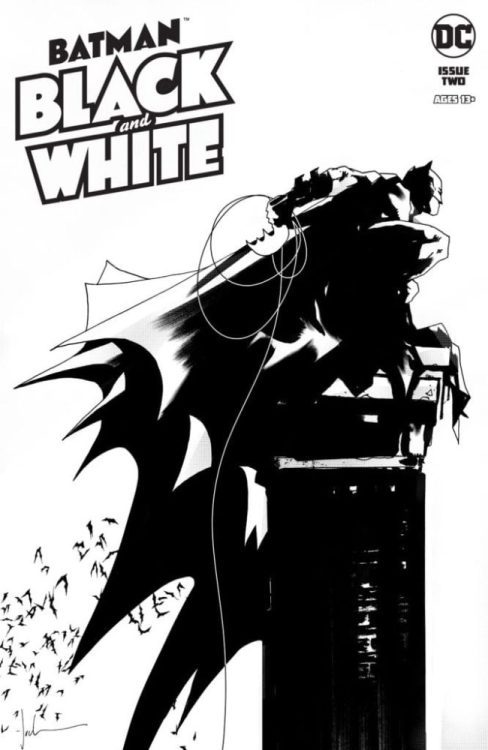
Review: BATMAN: BLACK AND WHITE #2 is Brilliant Through Simplicity

Batman Aja DC Comics

DC Comics’ Batman: Black and White #2 is absolutely fantastic. That’s because this anthology issue carefully bites off only what it can chew. Each story, by these brilliant creative teams, is incredibly simple. No need for exposition dumps, very few splashy fight scenes and even fewer twists. These are Batman stories at their best: quiet, methodical and mysterious. Just like the Dark Detective himself.

“The Unjust Judge”

  • Writing: 4/5
  • Art: 4.5/5
  • Lettering: 4/5

Written by Tom King, with art by Mitch Gerads and letters by Clayton Cowles, “The Unjust Judge” deals with faith and hard work. King brings Batman’s insecurities to the surface. He’s a man who wants to save everyone, and every failure rips him to pieces. Gerads will break your heart in this story. Batman’s face as he rails against his own failure, which gives way to overflowing grief, is devastating. And Cowles shows the relationship between Bruce and this man he’s trying to save. At first Bruce’s words come down towards the man, as though he’s more in control. But later, Cowles shows how they’re now on the same level, their words reaching upwards together. And with a brief panel, the man’s words stretch downwards, showing a shift in the dynamic and an acceptance of the situation.

“All Cats are Grey”

  • Writing: 4/5
  • Art: 4.5/5

Written and drawn by Sophia Campbell, “All Cats are Grey” is the epitome of simple storytelling. Campbell uses no dialogue, no captions. Instead, we take everything from pictorial cues. It’s experimental but incredibly down to earth. Campbell shows in black and white, and ironically very little grey, a chase scene between Batman and Catwoman. It’s fun and fresh.

“The Spill”

  • Writing: 3.5/5
  • Art: 5/5
  • Lettering: 3.5/5

Written by Corrina Bechko and Gabriel Hardman, with Hardman on art and Troy Peteri on letters, “The Spill” is a story about Gotham in the rain. We see Batman as we rarely see him: helpless. Bechko and Hardman show us Batman’s panic through his inner monologue, and perhaps they tell us just a tad bit more than we need to know. But as Joker comes on the scene, Batman’s mind quiets. It’s as though he’s suddenly in a position he’s familiar with. Hardman echoes the chaos of each moment on the page. Panels within panels quicken the script to emulate Batman’s panic. Peteri amps up the drama with big sound effects. But Peteri doesn’t let the sound effect get in the way of the action, hollowing out the sound of waves so we can see the water engulfing everyone. It’s a Joker/Batman story that feels familiar and new at the same time.

“Batman: Dual”

  • Writing: 3.5/5
  • Art: 4/5
  • Lettering: 4/5

“Batman: Dual,” written by Dustin Weaver, with art also by Weaver and letters by Todd Klein, is a high stakes supernatural mystery. Weaver creates a tense, intriguing plot. Batman follows an impostor, dressed in him but in white. Weaver’s use of poetic language to describe the chase gives this story the epic and dreamlike feeling it needs. Weaver occasionally wanders into the territory of overexplaining, but it makes sense. Batman is deeply confused and it’s almost as though he’s explaining events to himself, to figure it out. His art is detailed and often terrifying. Klein’s lettering is constantly changing. The cursive of Batman’s thoughts gives this story a mythic element. And Klein’s breaking up of dialogue and captions navigates the reader through what could otherwise be confusing pages.

Batman Aja DC Comics

“The Batman: The Devil is in the Detail”

  • Writing: 5/5
  • Art: 5/5
  • Lettering: 5/5

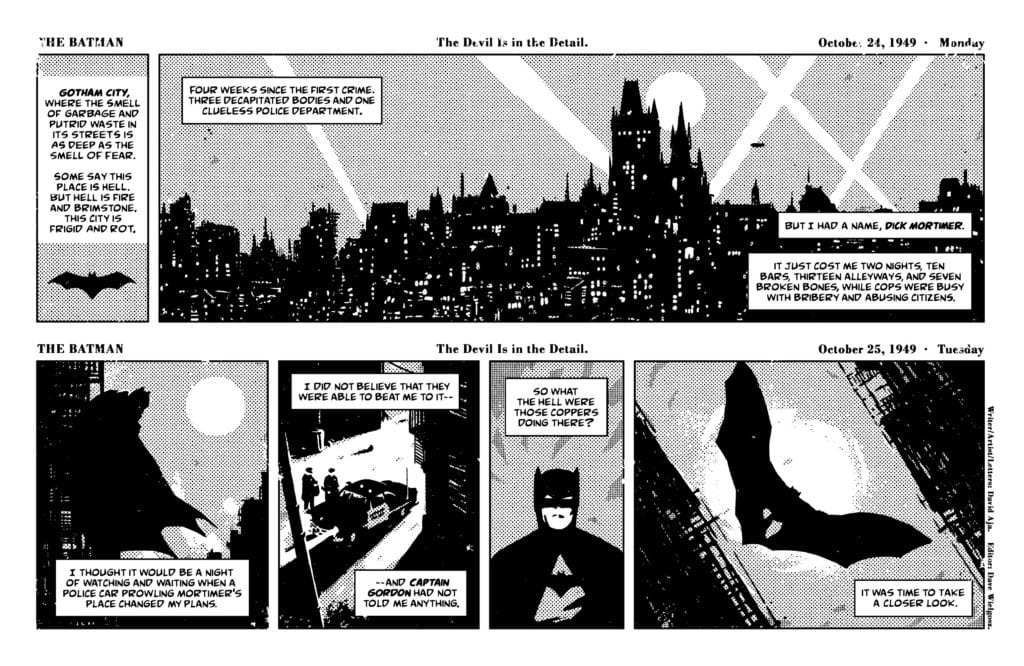
It seems each issue of Batman: Black and White has a perfect story. Last issue’s was a story by G. Willow Wilson, Greg Smallwood and Clem Robins. This issue’s is “The Devil is in the Details” with David Aja on writing, art and letters. Aja writes this short story like an old newspaper strip. He even dates each row and writes “Back on Monday!” at the end of those that “came out” on Saturday. He writes in a 1940’s tone, with Batman explaining each step of the plot for the reader. But he rises above the era, setting the story apart from mere plagiarism. For two days in a row, Aja writes nothing more than a Latin prayer.

His art uses Ben-Day dots to create the texture of an old newspaper. Some corners have streaks of white, mimicking a fault in the printing. And the art is so simple. Aja zooms us in on a hand with a gun or the side of a hooded face. His lettering shines with captions that take up a whole panel on their own. It’s a fantastic recreation of the old style. Everything about it screams a love of comics. Aja’s subtle writing, somehow not sacrificed by intense use of exposition, his minimalist art and his passion for the medium all make this a perfect Batman story. One for the history books, especially since it has the look that it’s from one in the first place.


DC Comics’ Batman: Black and White #2 is even more fun than the last issue. Every story is beautifully simple. Pick it up, out from DC Comics January 26th, at a comic shop near you!

Monkeys Fighting Robots Youtube