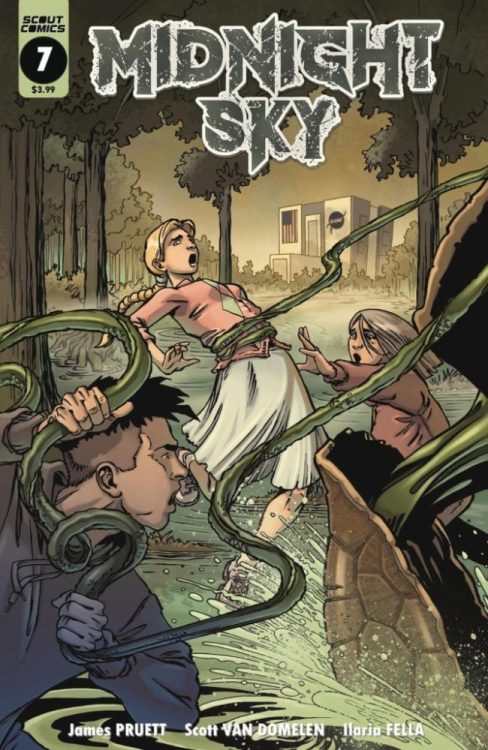
Midnight Sky #7 is a new arc from Scout Comics’ series, publishing February 3. Writer James Pruett dives right into the conflict of the effects war has on people, especially families. Artist Scott Van Domelen showcases these effects by going into expressive detail on characters. It’s something that colorist Ilaria Fella by showcasing a spectrum of colors depending on the situation.
Background
Midnight Sky follows Jennifer and her children Elita and Alejandro, dealing with an invasion of changelings. These shape-shifting fairies long replaced many people, including Jennifer’s husband, and have taken over some government powers. More or less, the purpose is to weaponize hybrids like Elita, who can use magic to make their blood lethal.
Midnight Sky #7: Writing Family War Dramas
Midnight Sky #7 does not hold hands when it comes to how it presents its conflicts, and that’s a good thing. Like any war story, going into a conflict with only a general idea doesn’t actually prepare readers for it. The intense emotions that the characters speak displays how much everyone has been through. While the reader will question where Alejandro is away from Jennifer and Elita, they already have a good idea of how much this war affects them. Everybody is scared, for themselves and the people they love. When the reader finds how all sides are getting desperate, they find an empathetic link from Pruett that hooks them in.
Expressing Conflict
Van Domelen enhances this conflict even further by showing how emotional these characters get. By showing how Elita gets angry at how scientists are drugging kids on tables in a sequence of facial differences, it leads to a splash page where Elita unleashes her power. This very power that the scientists were trying to gather is destructive, highlighted by a bright red light from Fella. Because once that act is over, she feels the fatigue and shock of her actions accented by muted greens. Just these pages of Midnight Sky #7 are a display of the overall conflict of the series. If the story wasn’t enough to get readers invested, they will be after this.
The lettering by Van Domelen(?) in the meantime act as even further extensions of the issue. The word balloons do more than guide the reader through panels; they showcase different conflicts happening at once. As one wide panel show two sides of a setting’s conflict, the reader can look at adjacent panels that split apart rather than focus on one conflict by following the word balloons. That is until the panel gets wide again when the conflict intersects.
Get Into Midnight Sky #7
Midnight Sky #7 is a fine way of getting into a conflict that goes beyond the core cast. It captures the essence of war that inspires the reader to have empathy among the characters. Because in a war where conflicts are never so simple, looking at how it affects people is what keeps the reader’s attention.
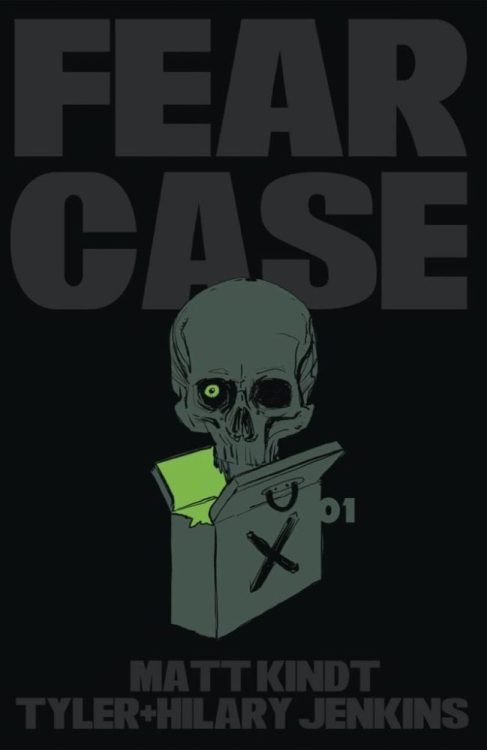
Fear Case #1 begins a new thriller from Dark Horse on February 3 by best-selling writer Matt Kindt. Kindt fans like myself will genuinely enjoy another mind-bending romp, especially considering this is a continuation of Bang!. Only instead of spy fiction, this series dives into Lovecraftian horror. Considering the effort, the creative team puts into the characters; there’s a genuine fear for them.
What’s The Fear Case?
Fear Case is about two Secret Service agents tasked with finding the titular item. The Fear Case in question has appeared throughout history, leaving disaster and tragedy in its wake. So dangerous, the agents have to find it in one week before passing the case to a newbie.
Fear Case #1 Weaponizing Ideas
Kindt’s main focus in Fear Case #1 is setting up and building characters enough to be likable. He does this by making the two main characters familiar with their genre settings.
Mitchum is very much the no-nonsense character common in buddy scenarios. If he were anywhere else, he’d be a hardboiled detective with a heart of gold. He values hard work and a good cup of coffee that helps him get through the day.
Then there’s Winters, a fan of pulpy novels by the writer Philip Verge from Bang!. He feels like a viewpoint to the reader, especially Kindt fans, since they would relate to him the most. Like the reader, Winters is driven to see the plot through and keeps an open mind about its absurdities.
Given the subject matter of the plot surrounding the titular MacGuffin, it might pay to be genre-savvy. Of course, with how Fear Case #1 presents the item in question, it might not be of any help. There is already a replacement ready and a culture of a time limit on the case.
Much like serializations that are planned ahead, there is already a replacement ready for Mitchum and Winters. This feels like the agents are in danger of being killed off. Which given how much time these partners show their quirks and how they appreciate one another’s company, this sense of danger feels outright tragic.
Atmosphere Thy Name Is Jenkins
Husband and wife team Tyler and Hilary Jenkins give Fear Case #1 an atmosphere of anticipation and reality distorting. Tyler on pencils gives most of the issue a sense of scale. On one page, when Mitchum and Winters confront a suspect, Tyler displays what’s at risk and how the agents work together. Mitchum gets the person’s attention while everyone stays focused on the knife she has. It’s what allows Winters to disarm her by getting out of everyone’s sight.
Hilary’s strengths lie within the surreal nature of the case. One page displays the carnage of past cases in bright but semi-muted color, presenting itself more like an absurdist painting than a record. In juxtaposition with Mitchum and Winters explaining the case to their replacement, it’s a warning that he’ll have to deal with the case if they fail. Considering the overly darkroom this newer agent is in after they leave, it already weighs heavy on him.
The lettering in the meantime by Tyler(?) displays the nature of conversations. The standard word balloons are extensions of in-the-moment talks of character, going from one panel seamlessly. Meanwhile, the text and word balloons in flashbacks are without outlines, acting like these words are detached from reality. It brings a real sense of discontent as we advance with the plot.
Get Your Printings of Fear Case #1
Fear Case #1 is a title that rightly deserves its reputation that sells out before appearing on shelves. Kindt and the Jenkins make this series out to be a blink-and-you’ll-miss event where the plot beckons the reader to follow along. Not only because of an intriguing plot but compelling characters the reader relates with. I know I’m hooked and paying attention to this series going forward. What about the rest of you?
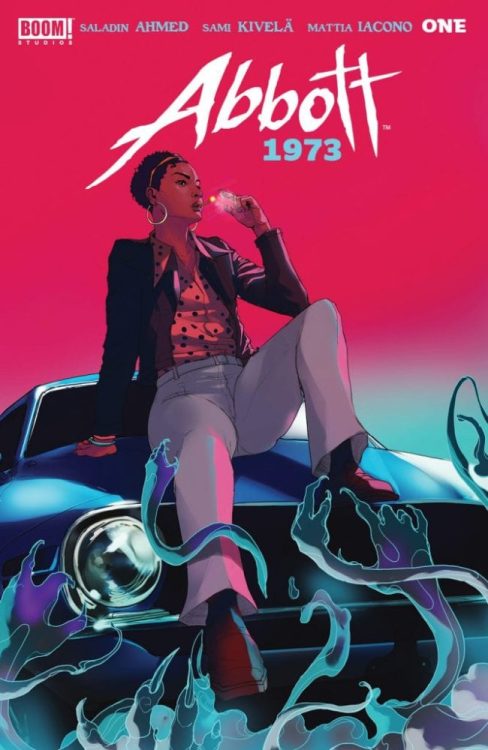
Available now from Boom! Studios, the titular Abbott returns in a new volume of supernatural crime-fighting. Writer Saladin Ahmed returns with illustrator Sami Kivela for Abbott: 1973 #1. Mattia Iacono provides colors, while Jim Campbell provides lettering.
In the previous volume, which was set in 1972, Elena Abbott discovered she was endowed with the powers of the Lightbringer. These powers make her a “chosen one’ if you will—the only one able to fight the forces of darkness called “the Umbra.” While working as a journalist for the Detroit Daily, she fought these forces and one Professor Bellcamp, who allied himself with the Umbra.
Believing she defeated the city’s evil, Abbott now works for a prominent Black newspaper, the Detroit Chronicle. She also lives in a house with her girlfriend, Amelia, and their dog, Princess. Elena Abbott clearly wants nothing more than to live a normal life, but the Umbra are determined to eliminate her.
Forgettable
Supernatural crime media are a dime a dozen these days. Once in a blue moon, something like Angel or Hellboy comes along to revive the genre with memorable characters and grounded storylines. Unfortunately, Abbott: 1973 falls into the forgettable category of supernatural crime.
Ahmed’s writing choices strongly contribute to the book’s forgettability. For example, inconsistent captioned excerpts from Elena’s articles, along with stilted dialogue, falls short of what is represented artistically. If there were more captions and more than just facts, they might have had a deeper emotional or story impact.
From my point of view, captions function similarly to voice over in movies. Voice over in movies contrast with the imagery and may provide character insight. However, as it stands, the captions get lost in the sauce, if you will, without augmenting the tone of the book or revealing character.
An Homage
Artistically, on the other hand, Kivela’s jagged, expressive line work alongside Iacono’s deep oranges, blues, and purples fill in the neo-noir flavor where Ahmed’s writing cannot. Abbott feels very much like an homage to the Silver Age of Comics while remaining quite contemporary. Furthermore, Campbell’s understated lettering and use of typewriter font help approximate the seventies.
Ultimately, this issue doesn’t make Detroit an enticing world, nor is Elena Abbott an enticing protagonist. She’s simply a Black, bisexual version of the same Chosen One hero trope we’ve seen in properties like Buffy and Superman. Besides, we see her doing mundane things and mostly reacting to events with few words or actions in this issue. With that said, I must acknowledge that representation does matter. Despite what I see as the story’s shortcomings, we need more characters like Elena Abbott.
Nonetheless, what is remotely interesting about Abbott: 1973 #1 is the Umbra’s plot to undermine the election of Detroit’s first Black mayor. It remains to be seen whether such a plot will be enough to keep readers’ attention for another four issues.
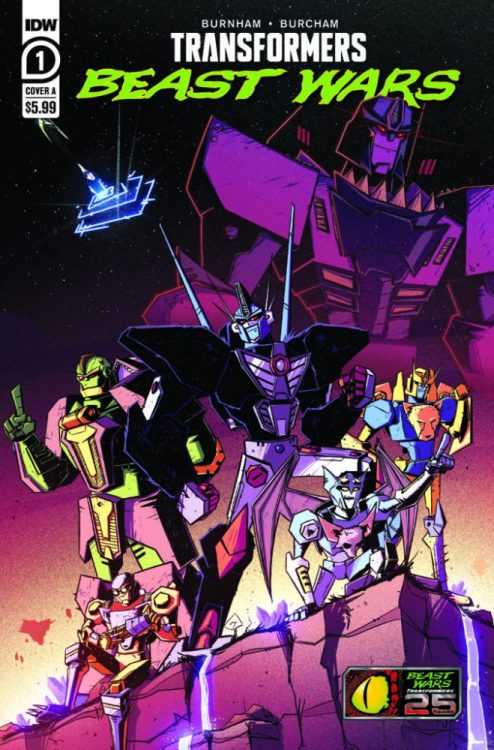
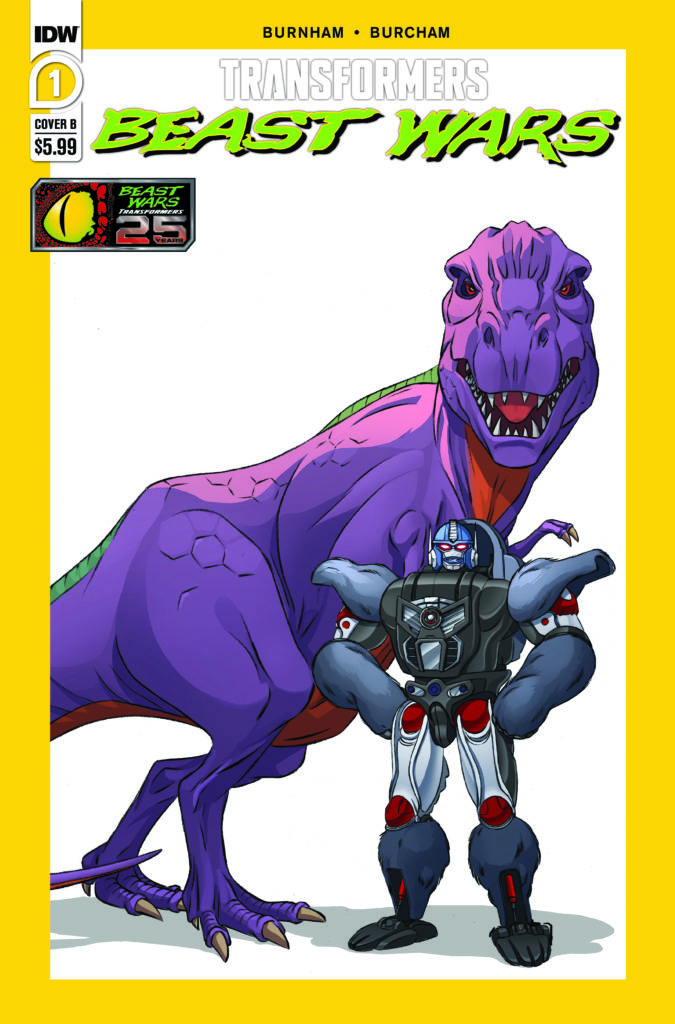
Transformers: Beast Wars #1 out this week from IDW Publishing reunites fans with some of their favorite characters from the original TV series. Thanks to new plot elements and characters it becomes apparent this will not be a simple retelling of the original show. This reimagining is made possible by Erik Burnham (writing), Josh Burcham (art), and Jake M. Wood (lettering).
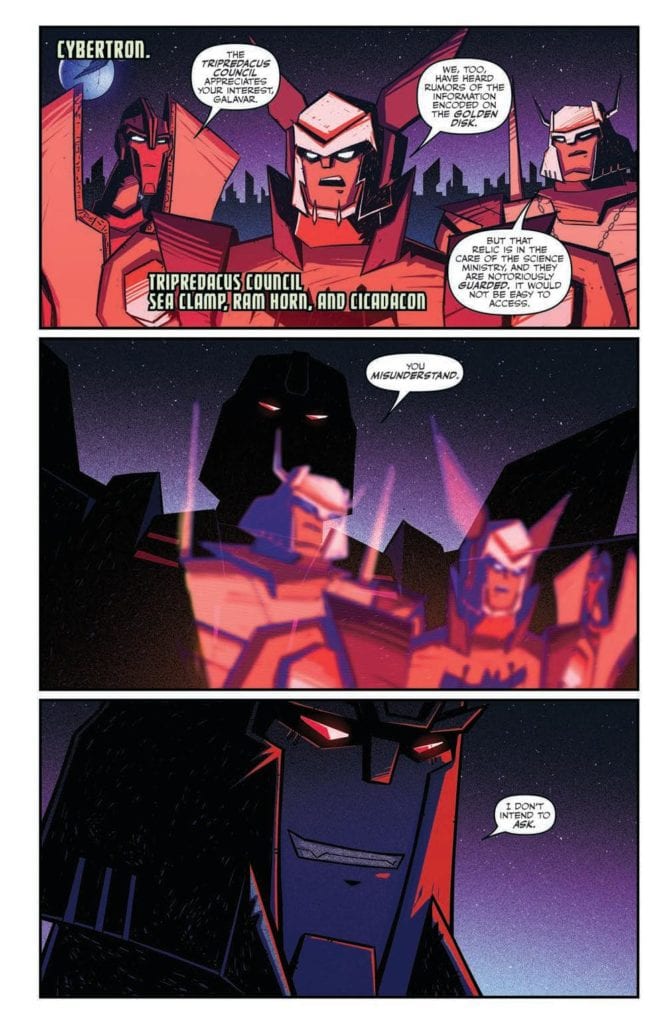
When a crew of Predacons, led by the successor to the Megatron name, steal a golden disk and a ship capable of traveling through time, it’s up to Optimus Primal and his Maximal crew—Rattrap, Rhinox, Cheetor, and new character Nyx—to catch them!
Writing
Beast Wars: Transformers is hailed as one of the best Transformers series ever created. It’s more surprising than anything it took this long to get a full comic series based on the TV show. Writer Erik Burnham seems to be nailing the characters so far including showcasing Rattrap’s sarcastic personality and Dinobot’s honor-bound style of fighting.
The issue does offer new elements to the original story including new character Nyx who serves as the pilot of the Axalon. Though the issue has a good feel for the characters, it’s a bit slow with the need to reintroduce them. This is a small complaint but overall the issue sets up all the elements for an entertaining series moving forward.
Artwork
The art by Josh Burcham introduces designs of what the characters looked like in their original cybertronian forms. In the TV series characters were shrouded in shadows until they scanned DNA and got their alt forms. It shows the amount of planning and effort put into the creation of this series.
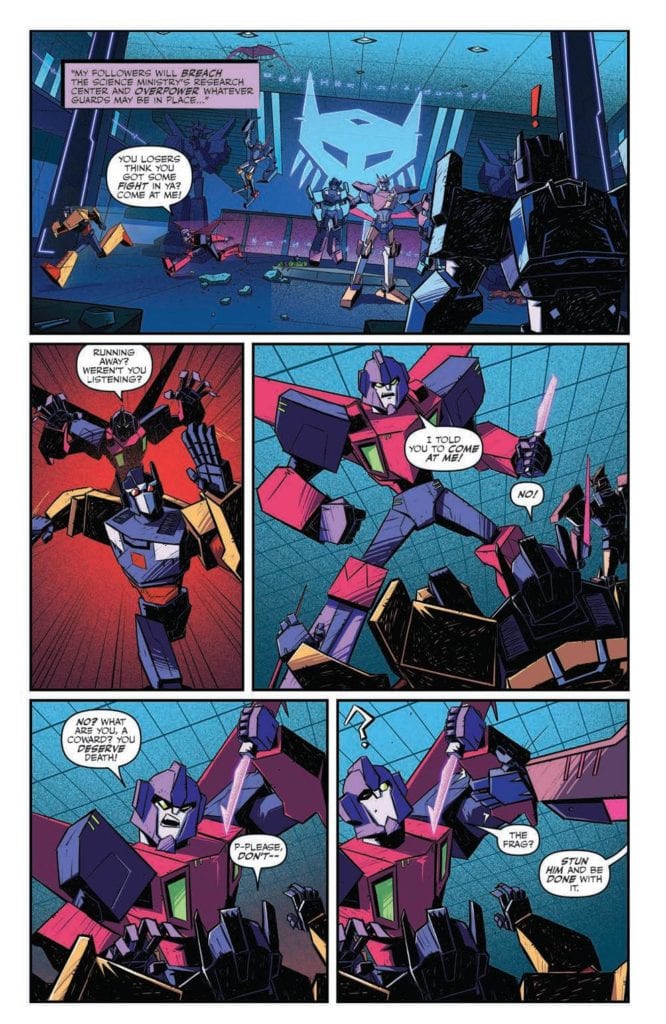
Burcham’s color work helps to add to the different action scenes. From the two ships traveling with the transwarp technology and their inevitable crash onto the planet, the use of colors makes these scenes striking.
The lettering by Jake M. Wood offers an auditory aspect to the comic. The different fonts and specific sound effects aid in helping the action scenes play out. Also, it’s interesting to learn the sound a ship makes as it enters transwarp is “FWASHHH.”
Conclusion
Transformers: Beast Wars #1 hits on a lot of elements found in the original TV series. It’s slow but the issue does deliver new aspects which will be interesting to see play out in the future installments. Fans of Beast Wars rejoice or at least don’t immediately dismiss this new series.
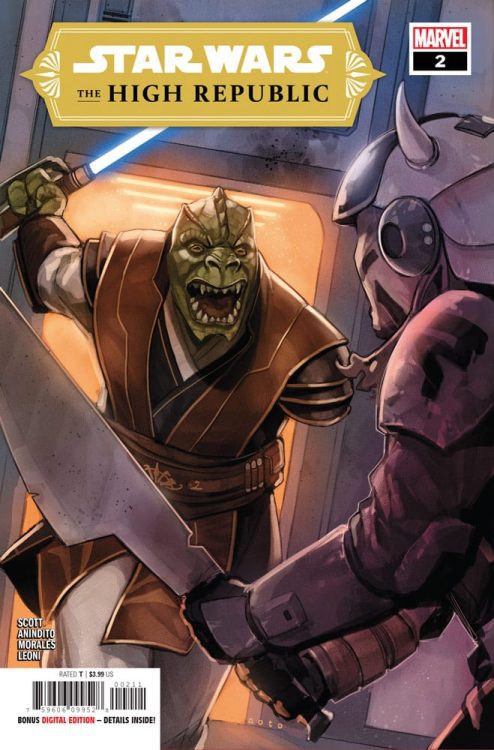
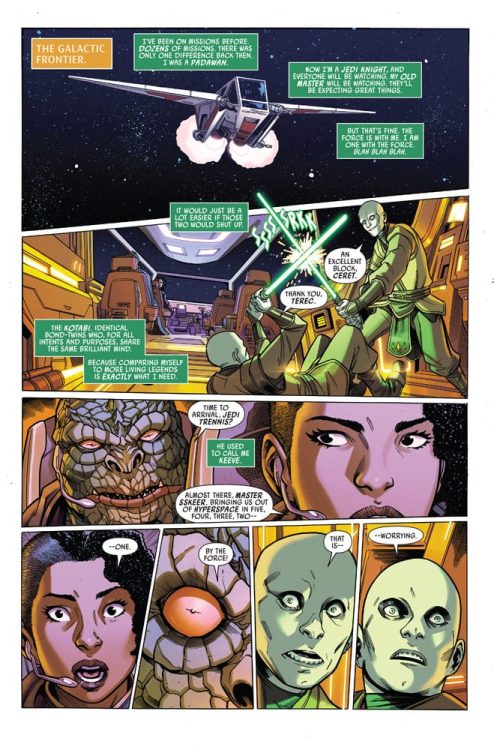
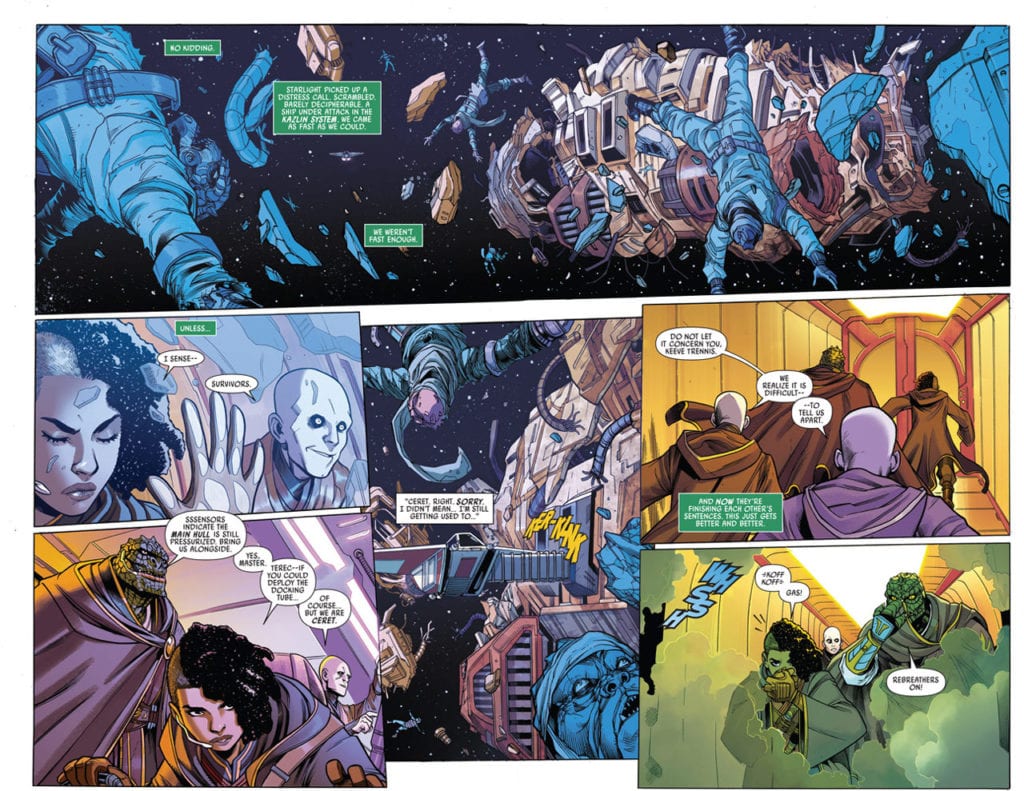
Writer Cavan Scott and artists Ario Anindito and Mark Morales, along with colorist Annalisa Leoni and letterer Ariana Maher bring us an intense follow-up issue in “Star Wars: The High Republic” #2. Having set the mood in the first issue, this chapter focuses on building some mystery in a suspenseful and atmospheric comic that takes Star Wars into a place it seldom travels: horror. With a tightly paced script with excellent plot development and more outstanding visual work, this is becoming more and more an absolute treat for comic and Star Wars fans alike.
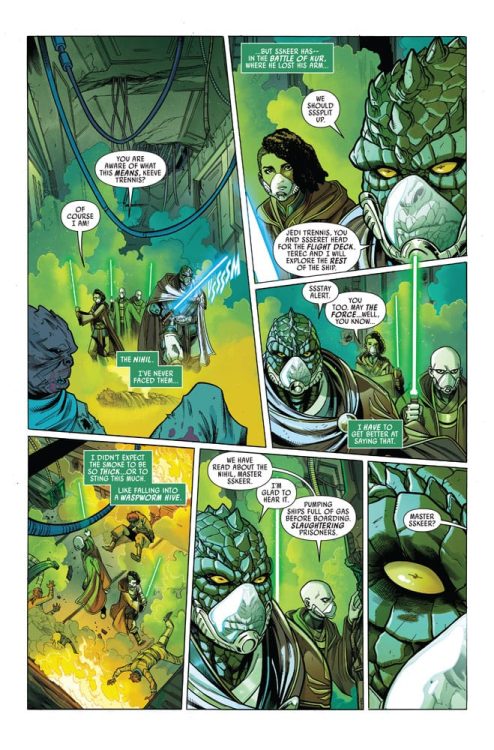
“The Nihil strike! A ship found adrift in space, the crew brutally slaughtered and cargo stolen. What terror awaits the The Jedi of Starlight Beacon as they explore the wreck. Newly knighted Keeve Trennis must overcome her insecurity in the face of new teammates, but can she trust her closest ally?”
Writing & Plot
With the first issue, Cavan Scott effectively set up the inner working and dynamics of protagonist Keeve Trennis, her master Sskeer, as well as sampled the tone of the Star Wars universe in the time period. For “The High Republic” #2, Scott takes advantage of the new mystery of this uncharted time by placing these characters in an unnerving and tense situation. We don’t often get horror in canon Star Wars tales, so getting a nice derelict-ship chapter a la System Shock/Alien was a serious treat. The fact that Scott was able to write the hell out of the pacing and intensity makes me want to see him write a full horror series in the galaxy far far away. Even more engaging is how Scott exploits his characters’ weaknesses and insecurities to amp up the tension. Newly knighted Keeve Trennis’s confidence and cool-headedness are usurped by her uncertainty in new situations. Without getting into spoilers, Jedi master Sskeer’s noticable lack of emotional control makes him unpredictable and sometimes short sighted. This comic is elevated by the perfect combination of written elements that make for a highly engaging and riveting reading experience. Scott’s sense of dialogue and narrative are naturalistic but universe appropriate, and deviate wildly from character to character. There are moments of characters reciting technobabble and explaining the geopolitical landscape of outer rim colonies, and honestly it feels right. It’s modern Star Wars doing what it does. This issue once again reminds me of some of Filoni’s best work on The Clone Wars, as well as some of Dark Horse’s best Star Wars material – with a splash of Knights of the Old Republic. This is some of the best Star Wars material I’ve experienced in the past couple years, and it’s got me immensely excited to see where this story goes.
Art Direction
Star Wars comics have a long lineage of fantastic visual work, so it’s fortunate that “The High Republic” #2 has artists Ario Anindito and Mark Morales on hand to bring this universe to life. Anindito’s pencils are both stylistically inventive and faithful to the Star Wars aesthetic, providing designs that are largely familiar while differentiating themselves from the universe we know so well. From the dank hallways of a derelict ship, to the uniforms and lightsabers of our Jedi protagonists, everything has that definite “Yep, it’s Star Wars…” look while also saying “…but I’ve never seen it look quite like that.” The dimension and detail provided by Mark Morales’s inks furthers these positives, especially in the context of character expressions and lighting. The colors from Annalisa Leoni bring home the book’s aesthetic, as every panel is alive (or dead) with a huge array of varying tones. The lighting’s effect on each surface is probably the most impressive single feature, as no feature look the exact same in every scene, no matter how many times they appear. Of course the appropriate colors for this universe are all used to great length, but it’s the attention paid and the production value brought to this story that is so impressive. The pacing brought in by the panel direction and the choices of shots and what they decide to withhold and present at a given time make this comic a really special read. The opening sequence on the derelict craft is presented in a semi-traditional horror style, full of suspenseful reaction shots, plodding moments of tense exploration, and good ol’ “it’s right behind you!” ambush scenes. The letters from Ariana Maher are a bold and modern font that reads very easily and stays out of the way. On the other hand, the SFX lettering is perfectly set amongst the pages and brings the sound right to your ears in that synesthesia sensation only comics can bring. This is a brilliant looking comic, and among some of the most well drawn Star Wars comics ever put to page.
“Star Wars: The High Republic” #2 is an intense use of genre mixing and exploiting the strengths and weaknesses of a new cast to really let the audience see how they tick. Cavan Scott puts together a script that digs at the mental and emotional cores of its lead character, and through a cramped horror-esque setting explores character dynamics that will shape the plot for the rest of this story in unpredictable ways. The visual work of Ario Anindito, Mark Morales, and Annalisa Leoni makes for a gorgeous and high-production affair that does the job of setting the story’s pace and bringing this uncharted era of the Star Wars universe to life in spectacular fashion. Be sure to grab this newest chapter of Star Wars storytelling when it hits shelves on 2-3!
Judas and the Black Messiah is a compelling film held together by its phenomenal lead performances and electrifying story. Award recognition is a must for this film because it features career-changing acting, great direction, and is a phenomenal historical outing. A film many could consider appropriate for the current climate in America, Judas and the Black Messiah is revolutionary.
Judas and the Black Messiah had its world premiere this past Monday at the 2021 Sundance Film Festival. A film of this magnitude has been in the works for years, and finally, it has come to fruition. Fred Hampton, chairman of the Illinois Black Panther Party in the 1960s, now has his story told triumphantly. Directed and co-written by Shaka King, the film stars Lakeith Stanfield, Daniel Kaluuya, Jesse Plemons, Dominique Fishback, Ashton Sanders, and Lil Rel Howery. Judas and the Black Messiah takes place in the 1960s and follows William O’Neal (Stanfield), a criminal who infiltrates the Illinois Black Panthers to assist the FBI in taking out Fred Hampton (Kaluuya).
Daniel Kaluuya as Fred Hampton in Judas and the Black Messiah
Films that focus on betrayal, racial injustice, and other social concerns are always interesting to watch play out. King and co-writer Berson deliver a story that lays out both sides of the situation in the best way possible. O’Neal is a criminal looking at doing time until he begins working with Roy Mitchell (Plemons), the FBI agent that recruited him to infiltrate the Panthers to get closer to Hampton. Hampton is an activist, a self-proclaimed revolutionary who wants social change. Judas and the Black Messiah is mostly told from O’Neal’s point of view, so opportunities are missed due to that decision. For instance, the impact of his betrayal on the Panthers isn’t felt from the film’s ending. The law enforcement’s feelings on Hampton’s pending assassination are evident, but with the film having moments of the Panther’s contemplating double agents amongst them, it was odd to not see the impact O’Neal had on them afterward.
The script terrifically demonstrates that O’Neal was skeptical about his actions throughout and even regretful about the impact he had. The guilt he wrestles with is powerfully brought to life by Stanfield’s performance. Kaluuya shines in his role as Hampton, he’s demanding, empowering, and gives a near-perfect portrayal of the real-life activist. This is arguably Kaluuya and Stanfield’s best performances to date, and the two previously collaborated for Jordan Peele’s debut feature, Get Out. Kaluuya’s acting in this film could earn him an award in the future. King keeps the film engaging with its pacing, building on the angst of the audience as O’Neal’s frustrations gradually increase. The score utilized is equally striking, and assists with the urgency King is aiming for here.
LaKeith Stanfield as William O’Neil in Judas and the Black Messiah
Judas and the Black Messiah is arriving at an appropriate time, and thanks to the wonderful ensemble it certainly won’t go unnoticed. As mentioned above, there are only some minor narrative hiccups, but it’s still a thought-provoking watch. While Kaluuya’s performance might get the most attention, it’s important to note that Stanfield is faking it from a variety of different angles in this film, which is very impressive. Ultimately, O’Neal spends so much time putting on a show for the Panther’s and Roy, that we rarely spend time with his true self. Kaluuya and Stanfield both deserve every bit of attention this film brings to them.
Judas and the Black Messiah is a superb change of scenery from Shaka King. It is the best film to be showcased at this year’s Sundance Film Festival. A powerful retelling of betrayal that’s spearheaded by top tier acting that demands your attention. This is a well-told story that could have dug a little deeper but still delivers from every angle overall.
If you were alive in 2001, you have your “9/11” story. Mine is pretty unexceptional. I was asleep until 11:00am that day, when I got a phone call from my mom saying, “We’re being attacked by Paris!” Having misheard “terrorist” as “Paris,” I was confused about the state of world affairs for the next 10 minutes or so until I turned on the TV and witnessed my generation’s defining world event.
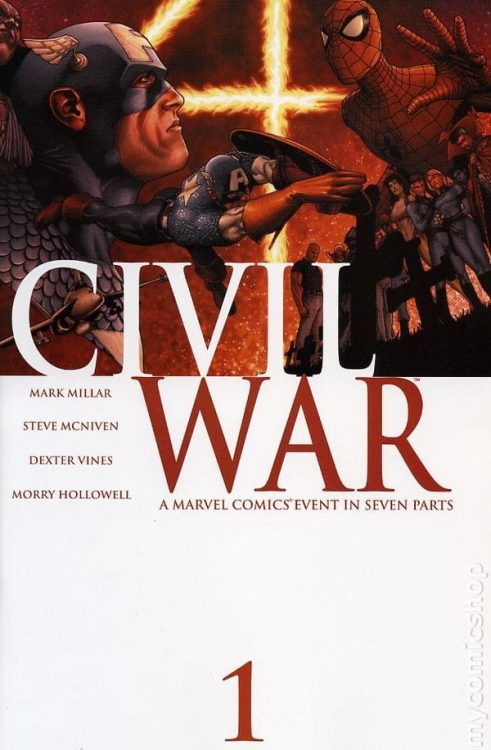
Marvel Comics’ Civil War was written in the context of a post 9/11 world. This world was notable for its concerns about freedom and security, FISA and surveillance overreach, indefinite detention at Gitmo, and the Patriot Act. A lot of political discourse during this time reflected the tension between concerns for both freedom and security. Choruses of people quoted Benjamin Franklin’s famous “those who sacrifice freedom for security deserve neither” line.
Civil War gives us a moment to reflect on how context specific the framing of certain stories can be. The politicians on the Left and the Right in the U.S. were having a very different conversation about freedom and security during George W. Bush’s presidency. Republicans tended to side with the Bush administration’s at times heavy-handed (and arguably illegal) approach to maintaining security, while largely compliant Democrats brought up concerns about violations of civil liberties (but put up little effectual resistance to Bush administration security policies).
Civil War in a Post-9/11 World
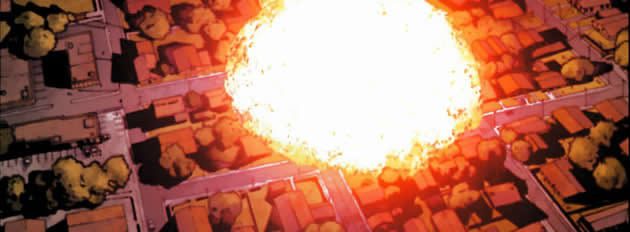
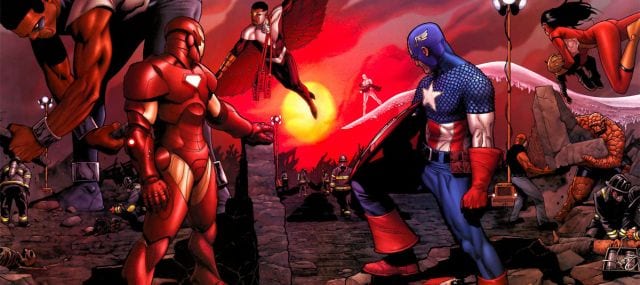
Marvel’s Civil War pitted Captain America against Iron Man. After a group of young, naïve superheroes instigate a fight with a group of supervillains that ends with the death of over 600 elementary schoolchildren in Stamford, Connecticut, the U.S. begins to push to pass a Superhero Registration Act to ensure greater accountability for superheroes and better training.
The explosion of the supervillain Nitro and its aftermath.
In Civil War #1, Cap maintained, “Masked heroes have been a part of this country for as long as anyone can remember,” and that the government was overstepping its boundaries when “Washington starts telling us who the super-villains are.” This could set a dangerous precedent.
Meanwhile, Iron Man maintained that the world we lived in required pragmatic compromise in the face of unprecedented threats that the founders of the U.S. Constitution couldn’t have foreseen. Sometimes difficult decisions in the name of security need to be maintained.
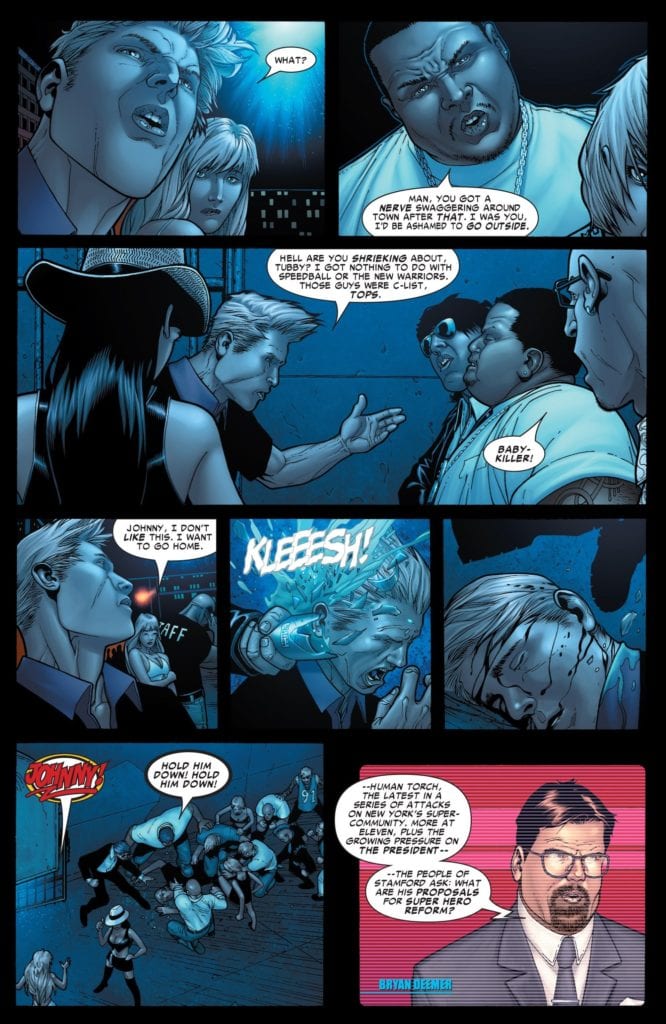
In the decade following 9/11, debates raged about freedom and security and how the country could strike a balance between these concerns. This was the milieu in which the story for Civil War emerged. The series could even be read as lightly touching on the ensuing Islamophobia after 9/11 when Johnny Storm is attacked by a superhuman-hating angry mob or even when Cap warns Tony in Iron Man/Captain America: Casualties of War about giving too much power to the government because “you don’t know who could get elected, how public sentiment might change. I’m old enough to remember Japanese-Americans being put in camps because they were judged potential threats to national security.” In the age of indefinite detentions for innocent Muslims in Gitmo (as well as a fair share of racial profiling), this comment was particularly resonant.
Johnny Storm (“The Human Torch”) attacked by an angry mob.
While the main series painted Cap in a pretty good light, the tie-ins were a bit more sympathetic to Iron Man (but given the events that followed, including the rise of Spider-Man villain Norman Osborn to power in the Dark Reign event, one could argue that Cap was vindicated in his concerns about trusting the government too much).
Civil War in a Post-Trump Era
Fast forward 15 years and concerns about freedom, security, and pragmatic compromise mean something different in the Age of Trump. In terms of how the story has aged, I wouldn’t say it has aged poorly, but it is a different reading experience in 2021 than it was in 2006.
We now face a pandemic that is coming close to claiming just as many lives in the U.S. as the Spanish Flu of 1918 (675,000). At least during that pandemic, people understood the need to wear masks (although even then, resolve faded). From the beginning, people have found a way to resist wearing masks for the public good under the auspices of personal choice (but wearing masks isn’t effective unless its done en masse since its about protecting others from you, not vice versa). Cap’s resistance to doing what is necessary during a national crisis isn’t a good look in 2021.
And then, of course, we have our political debates about gun control in the U.S. The private ownership of guns has indeed been a part of the traditions of the country (questions about the 2nd Amendment’s relationship to “a well-regulated militia” notwithstanding). People have been permitted to hunt and defend themselves in this country’s past, and in the age prior to the existence of assault weapons, there really was no stipulation on the types of guns one could own.
However, one might be forgiven for reading Civil War in the age of Parkland and Sandy Hook and thinking, “Y’know what? Iron Man is right. 600 kids dying is a sign that some sort of regulation needs to be put in place.” It’s hard not to side with Maria Hill in thinking that Cap is an old fool for not being willing to compromise on the Superhero Registration Act. Even more so, the idea that Iron Man is a communist who hates the U.S. and wants to leave people defenseless is also laughable. If anything, it almost seems callous to NOT compromise (particularly in light of Australia’s success).
While one might have been forgiven for being torn between Cap and Iron Man in 2006, it’s really hard to read Civil War in 2021 when the arguments about personal freedoms and pragmatic regulation are bogged down in the complaints of anti-vaxxers, climate change deniers, and conspiracies about child actors in school shootings. All of which have real world consequences that are paid for by the lives of real people.
Politics has always been a part of the comics reading experience. With Marvel’s first Civil War event, we can see how the same story communicates a different message during a different time.
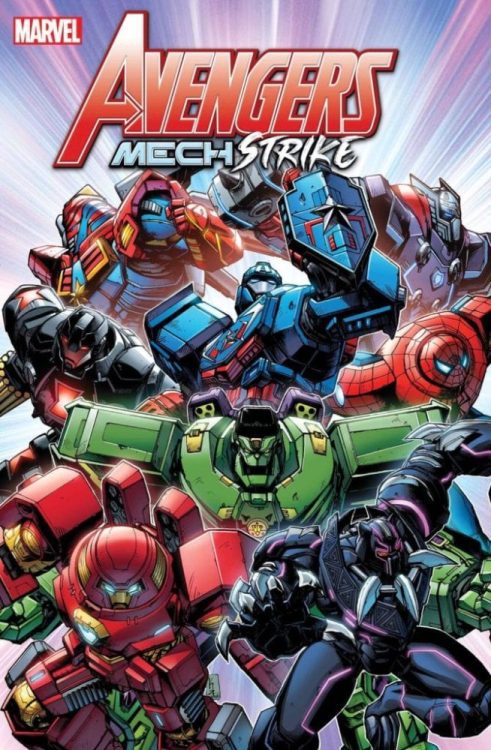
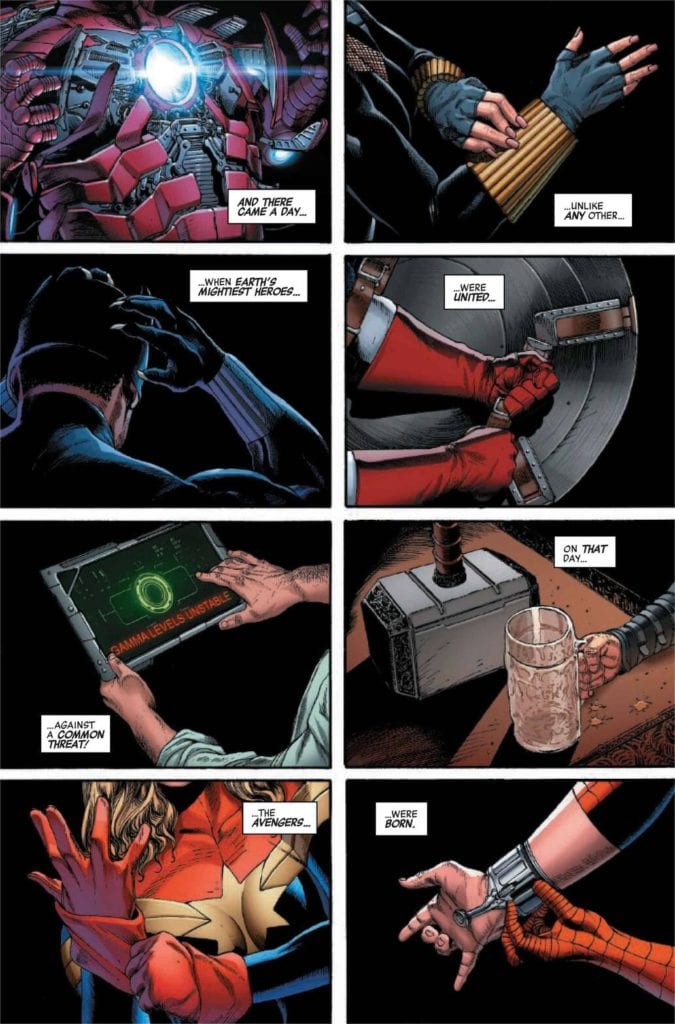
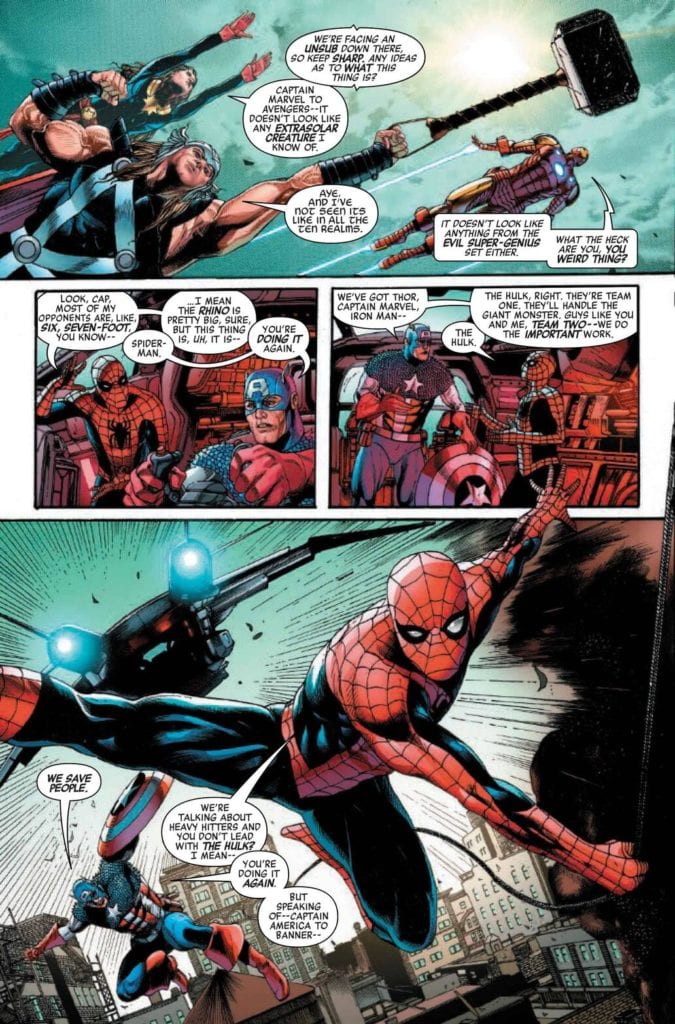
Avengers Mech Strike #1 out this week from Marvel Comics introduces a new threat to the team. One they are unable to defeat through teamwork and instead have to break out some new tools to handle effectively. This titanic battle arrives thanks to Jed Mackay (writer), Carlos Magnos (artist), Guru-eFX (color), and VC’s Cory Petit (lettering).
The Avengers are confronted with an unstoppable new menace, one that is seemingly impervious to their every strength! But the Avengers aren’t so easily beaten, and when new threats arise, powerful new tools must be brought to bear!
Writing
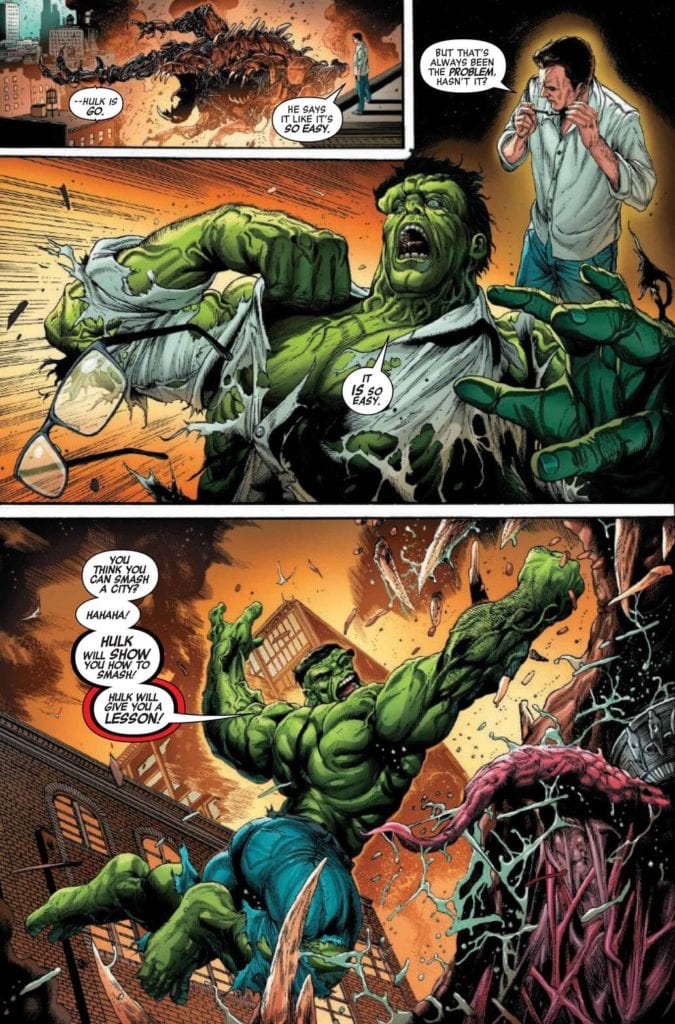
Question of the day: Why do the Avengers need Giant Robots? This first issue set out to answer this exact question. The issue mainly focuses on the battle against the Biomechanoid (the new giant threat) and the destruction it causes. The latest threat to the safety of the Marvel Universe gets bigger with everything it eats and is able to siphon energy as well to become any more powerful. The origin of where it came from and who is pulling the strings for this new threat is not even hinting at, helping to pull in the reader to the mystery surrounding this new storyline.
By showing how the entire team struggles to defeat their opponent Jed Mackay does an impressive job laying out the need for the Avengers to get an upgrade. All while Spider-Man makes sure to throw out some very grin-inducing oneliners. Now if there only could be some kind of meta-joke where Spider-Man references the robot he had in the Japanese Live Action series.
Artwork
The artwork by Carlos Magnos allows for incredible scale at the same time not skipping on the details. The Biomechanoid is shown to not merely be a slick, smooth forgettable robot but more like if someone turned a monster from Lovecraftian horror into a cyborg. The fine attention to detail of the monster helps to make it more memorable and terrifying all at the same time.
With the coloring by Guru-eFX, there is an engaging juxtaposition from frame to frame. Everything around the Biomechanoid is bathed in reds, oranges, and blacks emphasizing the destruction taking place. Meanwhile, special attention is paid to the Avengers as they enter the battle, bring a sense of hope and inspiration.
The lettering by VC’s Cory Petit is a bit of a mixed bag. The letter is used in several frames to direct a sense of flow to how the action is supposed to play out. At the same time, a few roars and loud noises fonts can be distracting and not blend as well with the rest of the issue.
Conclusion
Avengers Mech Strike #1 helps to introduce a new creature with an unknown origin which proves to be a threat the Avengers may not survive. Above all, though the issue is just a lot of fun. Even if this series doesn’t turn out to be the new status quo for the team and is just a story where the Avengers get giant robots is it such a crime? Sometimes you have to just have to be entertained with the comics you read and nothing more.
Star Trek is a franchise that has been around for 50 years and shows a great deal of variety. The franchise now entered the funniest frontier: adult animation.
Star Trek: Lower Decks follows the crew of the U.S.S. Cerritos, particularly four members of the lower decks. They are Beckett Mariner (Tawny Newsome), the rule-breaking maverick and daughter of the captain; Brad Boimler (Jack Quaid), a by-the-books ensign who wants to become an officer; Sam Rutherford (Eugene Cordero), a skilled engineer; and D’Vana Tendi (Noël Wells), a new and enthusiastic member of the medical crew. They face wacky scenarios as well as serious space adventures over the course of ten episodes.
Viacom has all full in with its Star Trek franchise. Star Trek: Lower Decks is the third series to come out on CBS All Access and there are more TV shows to come. Star Trek: Lower Decks marks a departure for the franchise because the franchise has generally appealed to all ages and the tone has generally been serious. Star Trek: Lower Decks was a full-on comedy and aimed at adults. There was swearing, violence, and nudity. Star Trek: Lower Decks was a risk because a vocal section of Trekkies have let their thoughts be known about how much dislike the direction that the franchise has gone in. Some have genuine concerns, others like the Youtube channels Midnight’s Edge and Nerdrotic just have a political ax to grind. Star Trek: Lower Decks was an even bigger change for the franchise.
Star Trek: Lower Decks was created by Mike McMahan, a writer on Rick and Morty, and co-created Solar Opposites. This was evident due to Star Trek: Lower Decks’ art-style matched those shows and the opening episode with a zombie outbreak – a plot device used by Rick and Morty and Solar Opposites. Mariner was like protagonists in other adult animated shows – she was an alcoholic, rebellious badass. Mariner also had parental issues like Archer and Bean from Archer and Disenchantment.
The series does suffer from a sluggish start. The first episode seemed like the people were trying to shock the audience with the zombie carnage, Boimler getting attacked by a giant spider, and Tendi having to pump someone’s heart with her own hands. It was the fourth episode when the show hit its stride. That episode’s plot saw Mariner gets promoted to lieutenant because her mother wanted to bore her into requesting a transfer. However, Mariner showed that when she applied herself, she could be a capable officer and she could work well with her mother.
My favorite episode of the season was the ninth. In that episode the main characters turn the Holodeck into a movie set and Mariner got to act out her violent fantasies. It was an entertaining episode that played homage and spoofed the movies like Star Trek: The Motion Picture and the J.J. Abrams reboot. It was also a character-driven episode because Mariner was acting out her rage against her mother but was forced to come to a realization.
The episodes beyond episode four felt much more like Star Trek. They had plots like the crew finding an abandoned ship that had terraforming technology, the Cerritos helping with the demolition of a moon, and the popular stable of Star Trek: a trial episode. These were concepts that could have worked in more serious episodes. The Pakleds were a major threat in the season finale because they created a powerful spaceship made from scavenging parts from other spaceships.
Out of the main characters I liked Rutherford and Tendi the most. They were decent people who loved their jobs. Mariner was the most interesting character – she started off as a stereotypical rebel but grew due to her parental issues and as she states in the sixth episode that she may bend and break the rules, but she would never do anything that would put the Cerritos in danger. Boimler was a bit whinny and lacked the enduring qualities of characters like Morty and Elfo. Yet it was still fun to see him in his element in the third episode and when he did do a traitorous action in one episode there was a good reason for it.
The senior officers were fun characters. Captain Freeman (Dawnn Lewis) improved as a character as the series progressed – she showed herself to be a decent captain and whilst she had an aggressive demeanor she showed could come up with reasonable diplomatic, solutions. Jerry O’Connell’s Jack Ransom was an old-fashioned action hero who jumped into situations and T’Ana was great as a cranky doctor and cat-person. Shaxs, the security officer, was arguably a one-note character but it was entertaining to see him want to use force and go headfirst into battle.
Star Trek: Lower Decks was also a love letter to all things Star Trek. There were references to many past stories and events, like a return to Beta III, visual references to Star Trek: The Motion Picture and Star Trek: The Undiscovered Country, and many others. I am only a casual viewer of Star Trek so there were plenty I probably missed. It was enjoyable to see all the crew members who suffered from scientific mishaps. The ending of the episode “Terminal Provocations” was incredibly similar to what happened to Zapp Branigan in the Futurama episode “Brannigan, Begin Again” and a reminder of Futurama is always good.
The adult animation field is an extremely crowded field right now, and Star Trek: Lower Decks doesn’t match the levels of Bojack Horseman or Rick and Morty. Yet it was a breezy watch with a solid mix of action, comedy, and sci-fi concepts.
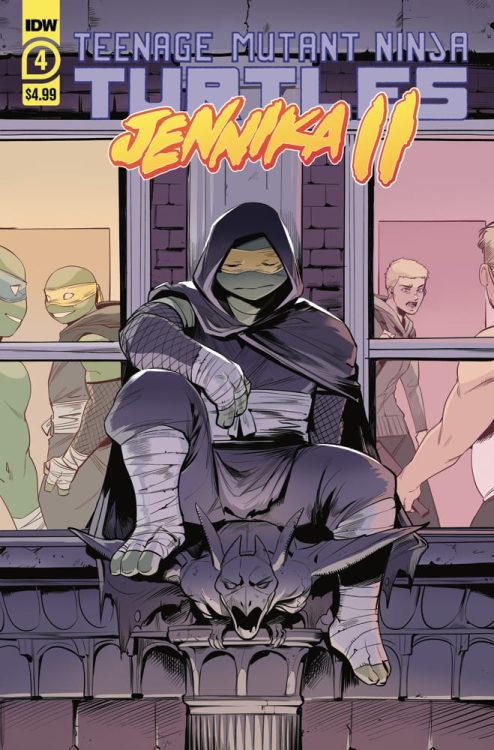
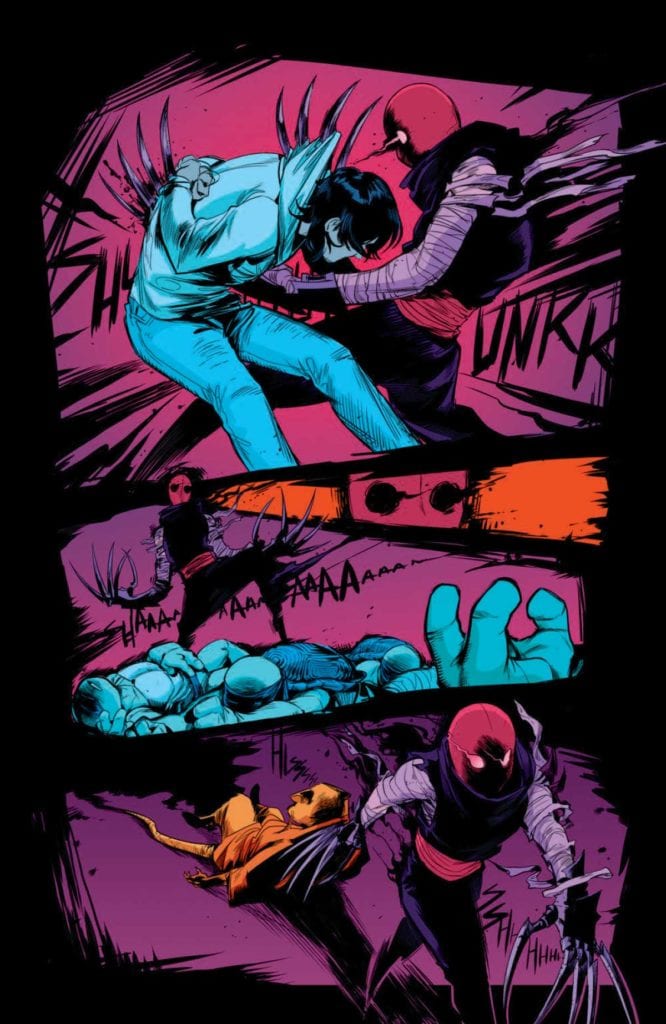
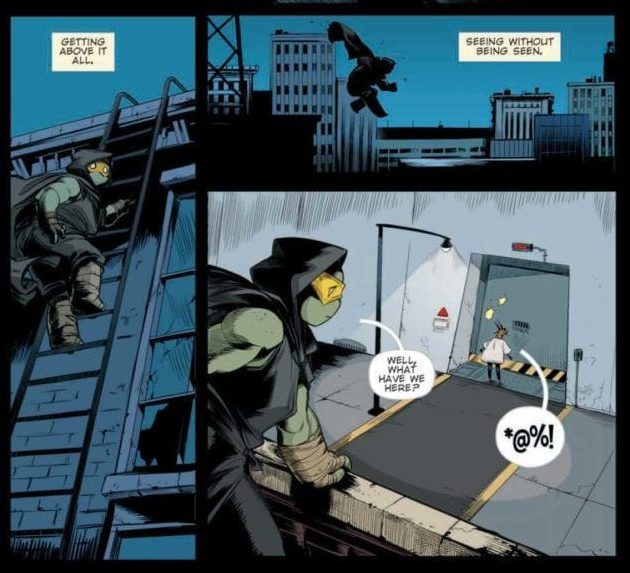
TEENAGE MUTANT NINJA TURTLES: JENNIKA II #4 hits stores on Wednesday, February 3rd, opening up a new chapter in the life of Jennika. While continuing to find her place within the new landscape of Mutant Town, the young ninja meets a wealthy mutant businesswoman. And the chance encounter resurrects a past Jennika is unwilling to face.
Story
This issue is framed around Jennika’s self-perception, beginning with a horrible nightmare. In it the ninja finds herself in her old assassin role, but this time the targets are her comrades in Mutant Town.
Waking from this horrific nightmare, Jennika leaves homes to clear her head and remind herself of who she is as a person. What’s unclear, though, is whether this dream is a future event, a warped view of her past, or something entirely different. This ambiguity draws readers in.
While on patrol Jennika runs into the aforementioned woman demanding she be let out of Mutant Town. Wanting to distance herself from the nightmarish thoughts, the ninja speaks with the woman and learns she’s trying to find her son. But soon Jennika finds that this woman is connected to a piece of her past—a piece she’s tried to forget.
Ronda Pattison’s writing is well-paced and strategic. Rather than adhering to straight forward storytelling, she gradually reveals pieces of Jennika’s past that inform the reader’s understanding of the present events. In this way, readers learn that one’s past regrets can fuel one’s present choices.
Artwork
Jodi Nishijima’s penciling and ink work, Pattison’s coloring, and Shawn Lee’s lettering function very well with the written narrative. The panels featuring past Jennika offer a stark contrast with his present self through varied borders and colors. Yet the continuity is there to show how much things have changed. The lettering helps connect these past elements with separate word boxes featuring Jennika’s self-narrated trip down memory lane.
Conclusion
TEENAGE MUTANT NINJA TURTLES: JENNIKA II #4 is a story detailing the nature of regret and atonement. We’re excited to see where this issue leads us.
Do you think readers will learn of Jennika’s secret past? Let us know in the comments below!