Home Blog Page 190

INTERVIEW: Actor And Producer Joe Hallett Gets Messy In Paintball Massacre

Comedy and horror go well together, and Paintball Massacre starring Cheryl Burniston (Child), Katy Brand (Matchmakers), and Lee Latchford-Evans (The Rizen) as part of a high school reunion to play a messy game that turns into a bloody mess.

Paintball Massacre centers around a group of former classmates who get together for a reunion. The trip down memory lane is coupled with a weekend getaway that includes paintball. However, someone has a different plan that doesn’t involve celebrating stories from the past and instead aims to end everyone’s life. It’s a fun ride through messy chaos.

PopAxiom spoke with Joe about becoming a filmmaker and being a part of the Paintball Massacre team.

World Champion

“My background is as a martial artist,” Joe begins, “I’ve done martial arts since the age of seven. I competed all around the world as part of team England. I became a world champion five times. I did musical forms, which was a collaboration of martial arts and gymnastics with weapons set to music.”

Joe’s love for making movies came due to “all the skills I learned,” he says of his martial arts training. “I fell quite easily into the stunt and screen fighting world. When I was 15, I was offered a really small role in a low-budget film. It was really bad and never went anywhere. But the day I went on set, I was hooked. I had one line. I loved the experience.”

As a martial artist, what’s Joe’s favorite weapon? “�� the nunchaku. I do nunchaku from watching Bruce Lee. I went to compete in a tournament called the Bruce Lee Challenge in 2012. You compete against three others with nunchaku, and I was the first person from England to win it. I was quite proud. It was in front of a crowd of 20,000 live on Paris TV.”

Joe gives some love to a few other martial weapons, “Following that, I would say the katana, bo staff, and kama.”

joe hallett-producer-actor-paintball massacre

Prove Yourself

“At that age, it was quite hard to get into the film industry,” he says. “I started to speak to people in the martial arts world who had done it. I got a few more roles in independent movies, mainly as a ninja with my face always covered by the mask.”

Minor roles and stunt work kept coming. “I was able to do some films with Scott Adkins. I worked on a critically acclaimed web series based on the Street Fighter franchise called Street Fighter: Assassin’s Fist.”

“The more I did film work, the more I wanted to perform,” Joe admits. But starting in showbiz is often a complicated path. “So, you have to have credible roles to get an agent but to get an agent; you have to have credible roles. I was always doing stunts and rarely on camera and instead making people look good. So you have to get those roles on your own and prove yourself.”

paintball massacre-interview-producer

About Paintball Massacre

Joe produced and played a role in the film Paintball Massacre. Is he a fan of the global pastime? “People think I’m a paintball fanatic, but I’m not. I’ve probably gone paintballing maybe four times in my life. But it’s so worldwide; there are tournaments in America and the United Kingdom. It’s such a social affair too. Everyone knows someone who plays paintball.”

“I’m a fan of 80s slashers,” he says. “I love that they don’t take themselves totally seriously. There’s a bit of humour in them.”

Paintball Massacre falls in line with those not-too-serious horror films that Joe loves. How did the film come together? “I was working on a film for a year. It was an action-comedy film. Then it fell through. I was kind of stuck, a loose wheel, and I had all this resources lined up that I’m not using. So, a producer partner gave me this idea for this paintball film.”

The initial idea was simple enough. “… people go paintballing, and they killed in the way they work. I said, okay, that’s cool, now we need the glue between those storylines.”

“I came up with the idea of a school reunion,” he continues, “We added ideas, decided who the killer was and why they were doing what they were doing.”

Joe’s initial role was as a producer, but he “always had the idea that I would take on a smaller role. One that doesn’t survive the film, spoiler alert.”

“We switched my role with another actor,” he reveals, “which turned out to be a great idea. It cut my acting time in half and gave me more time to focus on producing. It was a godsend. Being a low-budget film, so much more falls on the producer, and there was a lot of work.”

What’s a lesson Joe will take away from Paintball Massacre that he can share with other filmmakers? “One thing I learned is to give yourself time to prepare. Don’t rush pre-production. Preparation is key. You can’t over-prepare. Take a longer time getting everything ready.”

Wrapping Up

“First of all, I have to mention Martin Scorcese,” he answers when asked about influences. “Goodfellas, that film alone, you can watch that film and learn so much about cinematography and lighting. Anything Tarantino does is amazing. There’s Spielberg; for me, it’s Indiana Jones and E.T.

How about acting influences? “I’d say Robert Downey, Jr., Christoph Waltz, the late Alan Rickman, and Gary Oldman. They’re all just phenomenal. If I could work with any one of them, I’d be happy.”

There’s one influence that may be obvious considering Joe’s background, but it must be mentioned. “I love Jackie Chan. I have friends who’ve worked with him and tell me amazing stories.”

If Hollywood came knocking for Joe to do a remake, what would he choose? “Oh my God, what a question. I’ve never been a fan of remakes. What ends up happening is people watch the remake with the original in their head. They can’t separate the two. Jumanji is so different from the original, and I think it was so that people wouldn’t compare it to the Robin Williams film.”

“I would love, and I know it’s dangerous to say,” he begins his final answer, “but I would love to remake The Warriors.”

Paintball Massacre is out on DVD and digital, including iTunes and Amazon. With loads of bonus features on the DVD too. So, what’s next? “I’ve been fortunate to work on some short films. I did a script read for a new comedy series. I’ve decided on my next feature film; it’s sort of a crime-thriller-action film, which I am developing now”

Is Paintball Massacre on your watch list?

Thanks to Joe Hallett and October Coast
for making this interview possible.

Read more interviews from Ruben R. Diaz!

Monkeys Fighting Robots Youtube

WANDAVISION – On a Very Special Episode | TV Review

After five episodes WandaVision has finally come together and “On a Very Special Episode” is the best episode so far.

In Westview, the time period has moved forward to the 1980s with Wanda and Vision struggling with raising their quickly aging twins and acquire a dog. However, Vision begins to question the reality he’s living in.

S.W.O.R.D. realizes that Wanda is in control of Westview and all its residences. They also realize that Wanda is even more powerful than first thought.

As WandaVision has progressed it has gradually revealed more and more of its mystery. This episode finally reveals what S.W.O.R.D. knew – Wanda took Vision’s body and turned Westview into a sitcom world. Monica said that Wanda controls all the people in the town and they experienced incredible pain. Monica also discovered that Wanda has the ability to change matter, hence why items that enter Westview change appearance.

The episode also showed the different approaches within S.W.O.R.D. Monica wants to try and reason with Wanda, feeling that there was still some good left in her, whilst others wanted to go for a more aggressive approach. It was a typical dynamic because the higher-ups only want quick results. It led to one of the best scenes in the episode where Wanda leaves Westview to warn S.W.O.R.D. to back-off. Monica did come up with a clever way for getting into a device into Westview so she could try and communicate with Wanda.

Members of S.W.O.R.D. theorize why Wanda has turned Westview into a suburban paradise. Wanda wasn’t just suffering from grief for her husband, she had lost her father when she was a child, experimented on by HYDRA, lost her brother during Avengers: Age of Ultron and accidentally caused civilian deaths in Lagos. It’s no wonder she created a perfect world for herself. All the commercials in the episodes have referenced these events in some way.

A small mystery that was answered in this episode was why the static field used hexagons. It was simply to justify calling Wanda’s powers a hex.

In the previous episodes, it was established that Vision was having suspicions about the reality. In “Filmed Before a Live Studio Audience” Vision asked what the company he worked for did and in “Now in Color” the neighbors told the android that Geraldine wasn’t from Westview. The walls of the Westview reality break even more when Agnes (Kathryn Hahn) fluffs her lines and Vision uses his powers to give Norm (Asif Ali) a brief moment of lucidity. This culminates in Vision having an existential crisis and confronts Wanda before she can reverse time.

The big question that lingers is the role of Agnes. In the previous episode S.W.O.R.D. found out the real identity of the residents of Westview, except Agnes. She appears anytime Wanda and Vision need help and usually has the item they need. In the first episode, Agnes brought food for the dinner party and in this episode, she acted as a babysitter and had a doghouse ready. As stated, Agnes fluffed her lines which no other character has suffered, and she was unfazed by the twins’ sudden aging. Agnes found the body of the dog and tries to convince Wanda to bring the dog back to life. Agnes clearly knows a lot more than she lets on and this leads to two questions: what’s her game plan and who does she want to resurrect?

“On a Very Special Episode” ends with a big twist that raises even more questions. It’s a twist that could have implications involving the multiverse that will appear in future MCU projects. Or it could just be an illusion for Wanda to cope with her grief. We will have to wait to find out.

“On a Very Special Episode” did an excellent job at combining events within Westview and S.W.O.R.D.’s response, answering some questions and raising some new ones, and being both a traditional MCU story and a major mystery.

Monkeys Fighting Robots Youtube

Review: FUTURE STATE: WONDER WOMAN #2 – A Bittersweet Ending

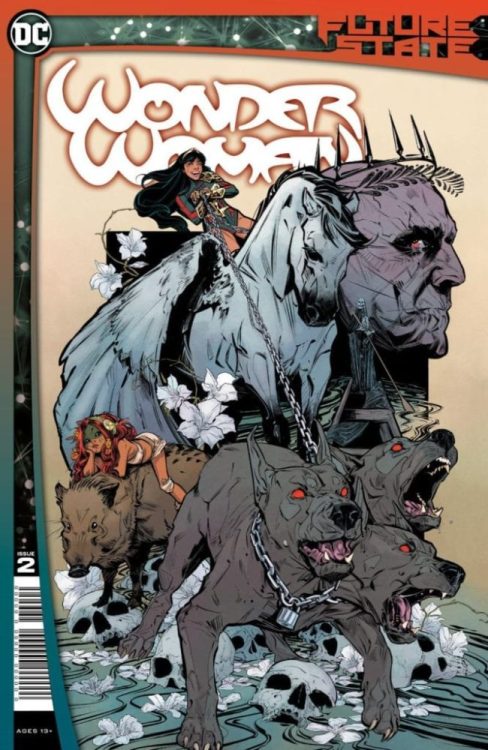
FUTURE STATE: WONDER WOMAN #2, out now from DC Comics, is the last issue of a miniseries by writer/artist Jöelle Jones, colorist Jordie Bellaire, and letterer Clayton Cowles. This final issue leaves a bittersweet taste in the reader’s mouth. Its story is underwhelming but it still explores the medium beautifully through the art.

Writing

Writing a 2-issue miniseries is hard. It’s harder when it features a character no one knows yet. This is not to say there aren’t any redeeming qualities about Future State: Wonder Woman #2’s story. The reader does get a better sense of Yara Flor’s character. Jones explores the history of storytelling and what it means to be a hero wonderfully, and some of the jokes land great. But the entire issue feels a bit unfocused. The ending, especially. The way in which the story progresses, it seems like Jones expects us to feel for Yara and her soldier’s relationship. We are expected to care when not enough was given for us to do so.

But even after saying all of this, what the reader still truly cares about is Yara and how different she feels from any other DC Comics’ superhero we’ve seen before. I, for one, am still excited to see on which adventures Jones is going to take this character on next.

Art

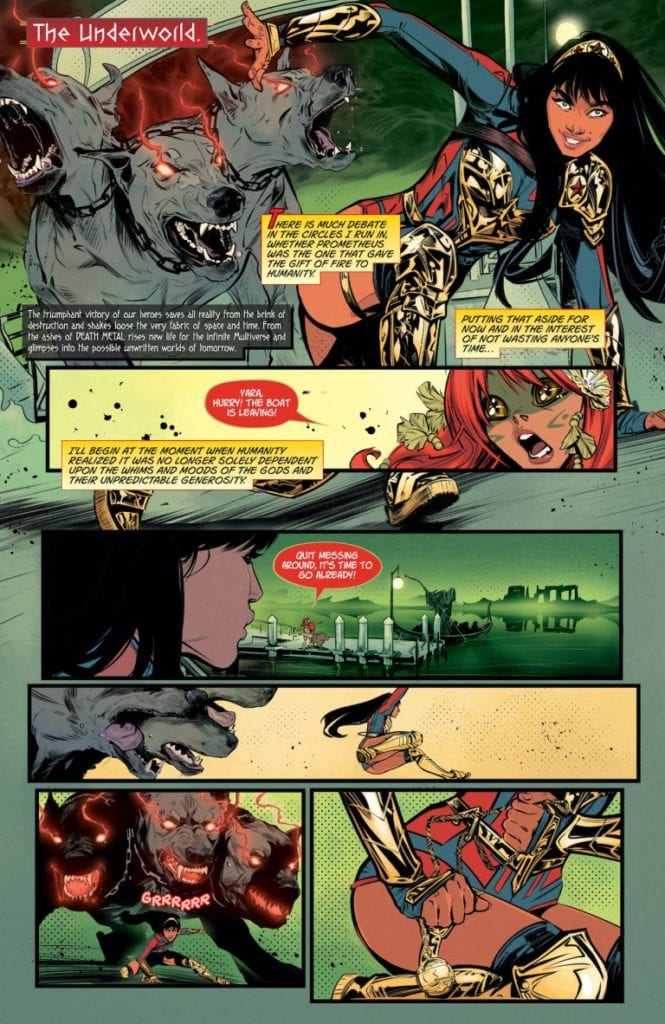
In this issue, Jones experiments boldly with the artform. In a flashback sequence, she changes styles completely and draws entire panels with red, harsh pencils. The flashback sequence and the scenes taking place in the present interact flawlessly with each other. In addition, the usual positives about Jones’ art style continue to appear in their full glory. They make the reader get lost in Future State: Wonder Woman #2’s enchanting world. The facial expressions are highly expressive, but never to the point of unnecessary exaggeration. Whenever Jones draws backgrounds, they’re well-detailed and gorgeous, and whenever there’s action, those pages get filled with liveliness.

Coloring

Bellaire continues to knock it out of the park with her incredible coloring skills. Each page conveys true emotion through the colors. There are specifically a few pages where Yara Flor needs to find her lost soldier in a sea of lost souls, and the way Bellaire decides to color those pages is truly unique. Bellaire colors the souls in pretty much the same gray color and Yara in her usually bold, energetic colors. This obviously makes Yara pop a lot more on the page and distinguishes her. Great work from Bellaire.

Lettering

Cowles goes all out with his sound effects in Future State: Wonder Woman #2. The sound effects are big, stylistic, and experimental, using a lot of unique techniques to convey the feeling or sound Cowles is going for. This manages to elevate the artwork’s energetic look and compliment it. The way Cowles draws his balloons never feels out of place. Even the dialogue balloons are not perfect circles and it all feels very hand-lettered. Without any actual words, each reader can see this as clear as day. Cowles was having incredible fun lettering this issue, and we’re all thankful for it.

Conclusion

Future State: Wonder Woman #2 is visually stunning. Its artwork is bold, energetic, and mesmerizing. I just wish the story was more up to par with the rest of this comic’s ingenious elements. With that being said, it’s still very much worth picking up at your local comic book shop!

Monkeys Fighting Robots Youtube

Comics Studies: Questions of ADAPTATION

Adaptations

Whenever a movie is adapted from another medium, such as a novel or comic, one critique that you will find hard to escape from is the statement ‘it’s not as good as the original’. Whether you’re talking about straight adaptations, remakes, or re-imaginings, there will always be an underlying belief that the new form cannot improve on the original.

Critic Pauline Kael wrote;

‘Movies are good at action, they’re not good at reflective thought or conceptual thinking. They’re good at immediate stimulus, but they’re not a good means of involving people in the other arts or learning about a subject.’ (from Deeper into Movies, published 1973)

This is an elitist view, one which will always favour the novel over the movie, and comes from a position of intellectual superiority. This is a view that follows adaptations into the 21st century, especially with the rise of the Superhero movie and Marvel’s dominance of the box office.

It is also a problematic viewpoint when discussing comic book adaptations, especially the Superhero movie, for two reasons which I will explain below.

Adaptation
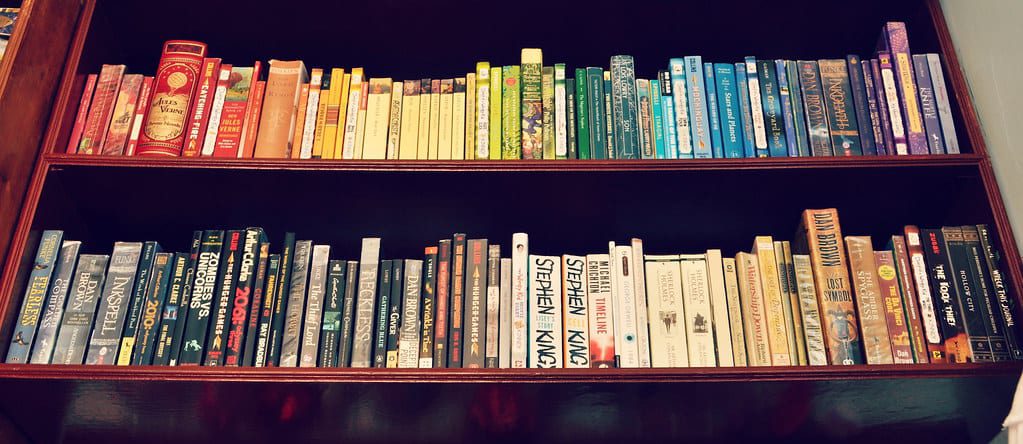
“Bookshelf of Colors” by bonheureux is licensed under CC BY 2.0

High versus Low

Kael’s argument stems from adaptations of novels, which were seen as a higher art form than cinema. This comparison, however, is not as easily transferred to discussions about comic book adaptations, especially relating to those from the Superhero genre. This is because the original source material, i.e. the comic book, is not part of that ‘higher art form’ in the first place. In fact, throughout most of comic history, the form has been maligned for being a cheap form of throwaway entertainment. The early popular comic books were soon bastardized for monetary gain. Publishers sold characters for advertising rights, radio shows, and cinema serials, with no thought for the original. A character like Superman took on many forms across multiple media platforms with no care to create any continuity between them. It’s even arguable that continuity in the comics themselves took a few years to arrive. The integrity of the ‘original’ was so low to start with that when the movies appeared it would be impossible to place the comic on a pedestal for comparison.

As we move into the modern age of cinema/comic adaptations the ‘high art’ argument is still invalid. Although comics have started to gain a form of respectability, most notably through the creation of Graphic Novels in the book market, they are not comparable to the likes of War and Peace or Great Expectations. A collectors market puts a price value on specific comics, creating notoriety, but they are not valued for their artistic or literary content. For Kael’s argument to be relevant we would first need to accept that comics  engage readers in an intellectual way and promote the involvement in the larger Art World. Unfortunately, comics are still primarily seen as just entertainment with little pretension for the high arts.

Adaptation
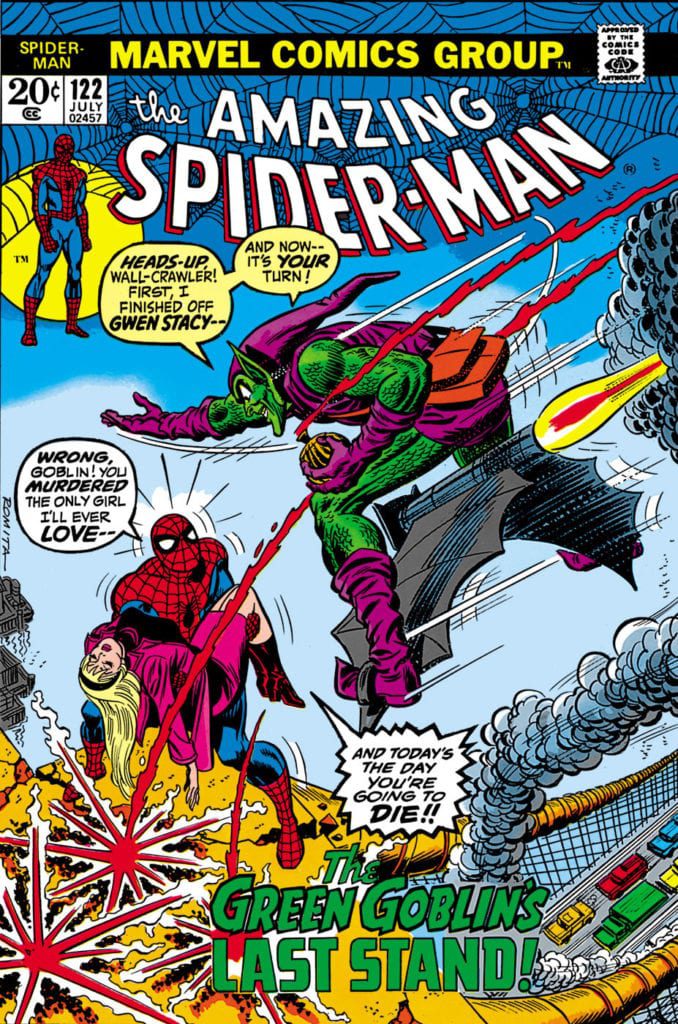
The Amazing Spider-Man #122 Credit: Marvel Comics

The Long Running Continuity Angle

The other main difference between the adaptation of a novel and a superhero comic book is that, for the most part, comic book adaptations are not directly linked to a specific story or comic issue. Segments from certain chapters of a characters story may be incorporated into the whole, but generally the movie versions take the themes from a selection of the comic stories. Sam Raimi, for example, was inspired by the first 122 issues of The Amazing Spider-Man for his first Spider-Man movie. He sourced narrative elements from the first iconic issue, but also from numerous other issues in that run, leading up to the confrontation between Spider-Man and the Green Goblin published in #122. But there were also influences from later chapters of the superhero’s story. Raimi’s intention was to capture the elements that made a Spider-Man story and create his own version of them. By employing this concept, how is it possible to then say the original is better? The movie is an amalgamation and the comic series stretches over many years and titles. Are we to believe that no part of the movie is better than any issues of the comic? Can we even compare like for like?

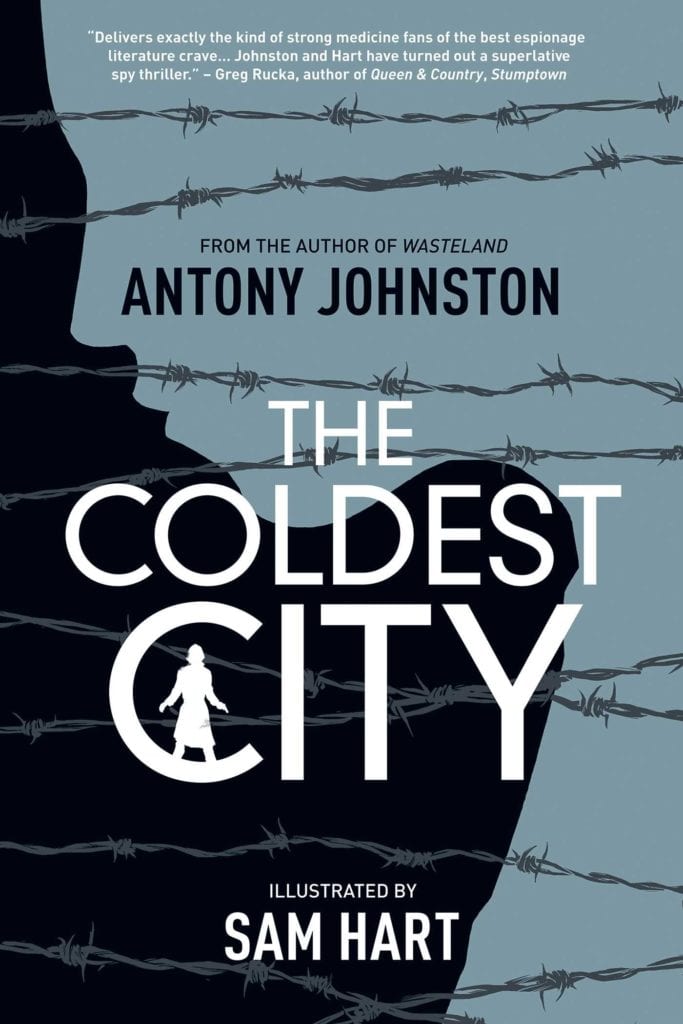
When you move beyond the confines of the origin story, modern superhero movies have plots that are drawn from a number of sources. These are mostly from the comics but sometimes from other media, as I pointed out in my last entry regarding the Superman multimodal narrative. Unlike a Pride and Prejudice adaptation, most comic book films are not translating a single text into a movie version. Even when the original source text is a single book, such as in the case of The Coldest City by Antony Johnston and Sam Hart which became the movie Atomic Blonde, the adaptation is not necessarily based on the final printed product. The producers of Atomic Blonde were provided with a completed script for the graphic novel but the art work had not been finalised. Atomic Blonde was produced explicitly with a cinema aesthetic in mind and it was the theme of the comic that was used to make the movie. The intentions of each were different; one is an oppressive spy thriller told through stark black and white static images, and the other is a fast paced,  action/mystery spy movie. The majority of each were created separately despite the graphic novel’s release date being 5 years earlier. In such circumstances, how is it possible to say that the ‘original’ is better when all that denotes the original is the release date?

When it comes to superhero movies there is no original, in the specific sense, to compare against. The best that you can do is compare and contrast the movie version against the history of the character in printed form. But even then, the task is complicated by the many interpretations of the characters across the years. You can say that Zack Snyder’s Man of Steel is not as good as the original but what are you referring to? The original Action Comics #1? Or some other version of the character in a different comic?

Adaptation
The Coldest City Credit: Oni Press

Conclusion

Robert Stam discusses the concept of the original text being superior in his essay The Dialogics of Adaptation. He posits that the ‘first is best’ argument is based on the original having seniority and has iconography that is culturally rooted. However, neither of these two aspects have dominance over comic book adaptations or superhero movies specifically.

Stam explains that ‘poststructuralist’ theoretical developments [..] indirectly undermine some of these prejudices’, which partially dismantles Kael’s ‘high art’ standpoint when it comes to novels. But taking the comic form into consideration we can dismiss the ‘high art’ argument anyway. By transferring one low art form into another there is no superiority argument. The ever changing serial nature of comics also makes the seniority aspect difficult to argue, especially for the long running titles such as Batman, Wonder Woman, or the Avengers. If the comic itself has changed multiple times since inception, how can a movie be judged for doing the same thing?

As audiences and readers, we each have our favourite versions of a particular character or story but to imply that one version is better than another is to compare two dissimilar things. We cannot expect a film to contain the same visual or narrative beats as a comic, or vice versa. They are two separate mediums which operate in completely different ways. We can compare one superhero film to another, marking which is more successful, or choose which is our favourite form. But is one really better than the other? Or are we just drawn to specific interpretations and are we dismissive of variations?

Editor Note: This article has been updated as the original stated that The Coldest City script had not been competed when it was optioned as a movie. This was incorrect and the article has been amended accordingly.

Monkeys Fighting Robots Youtube

INTERVIEW: Twitch Streamer The Hunter Wild Discusses The Communal Power Of Streaming

Playing games and entertaining an audience simultaneously is a skill set that’s new to the 21st century as Twitch streamers reach into the tens of thousands of views daily, and TheHunterWild aims to make the most of his connection with his viewers.

PopAxiom spoke with TheHunterWild about falling in love with video games, becoming a streamer, and creating a streaming future that’s fun and safe for everyone involved.

Game On

According to Hunter, he started playing games when “I was single digits years old. My parents got me an NES. I remember hating most of the games because they would kick my butt left, right, up, and down.”

Indeed, old-school gaming of that era created replayability through being wildly difficult. “The games were so brutal,” Hunter affirms, “but that’s carried over to the way I play games now, where I tend to play on the hardest difficulty.”

“If they’re not challenging enough, I create challenges for myself,” Hunter says of playing modern games. If it’s too easy, you make rules for yourself to me it harder.

That idea brings up one of the fantastic things about modern video games. “That’s one of the things I love about gaming in the 21st century; there’s so much diversity. Within each game, there are often modes that allow you to focus on the environment and the narrative or increase the challenge.”

“We can craft the game to suit our desires and have fun,” Hunter says, “That’s what gaming is all about, having fun.”

cyberpunk-hunter wild-twitch

Dev To Stream

The Hunter Wild’s been on Twitch since 2014 and, at the time of this writing, is passing 63,000 followers on Twitch. But what was he doing before then? “The first career I had as an adult was as a game designer. I started a company when I was 19 to make games, and I left to pursue a degree in philosophy.”

“There was also the nature of games,” Hunter explains about his departure from development, “that to be successful at that time, they needed to be violent. I consumed games like that, but I didn’t want to craft a game like that.”

Becoming a Twitch streamer wasn’t a life goal at this point. “The game that allowed me to discover Twitch was Hearthstone. I started playing the game when it was in beta. I found someone on YouTube who said they also do Twitch streaming.”

“I came over to Twitch and found my biggest inspiration for streaming, Ducksauce,” he says. “I would watch him every morning and would start my day with a smile. That connection was like a calling; I could do this for other people. Live a career in service to this broader idea of co-creative experiences and community connections.”

Hunter wasted no time and “jumped right into it. It’s formulaic but really fun. You have to listen to your inner voice and do your own thing.”

The basics of streaming on Twitch aren’t very different, but those who are good at it, like Hunter, balance playing a game while being decent at it and communicating with a live audience that’s chatting away in Twitch’s chat window. “It is all-consuming for the mind.”

Take A Slice

“A lot of this is an alignment of values I hold in my life with my career,” Hunter says about his life as a pro Twitch streamer. “There’s a big struggle with the reality that in this career, your job is always personal. You don’t have this detachment from your identity and your vision for what you want to do as a content creator.”

Managing the personal with the public persona is a big focus for Hunter. “The community leadership part is a huge quality for me that ties into my underlying philosophy for how life should be best lived, which is in conjunction with others. It’s coming together. It’s co-creative experiences. And in the 21st century, an age defined by the infinite potential of connectivity, we also find ourselves in loneliness.”

“I want to connect the disconnected,” he says without reservation. “In streaming, the core content is video games, but the real stuff I want to focus on is that connection with the tribe; community building.”

Hunter explains it in delicious terms I think most everyone can understand. “I envision this as a pizza. The things I want out of the pizza are the toppings. The dough is great, but it’s mostly just an edible plate. It’s gotta be there, but the real meat of it is all the conversation, the vulnerability, the authenticity, and sharing stories.”

“I can do this too,” he realized early on. “I have this same kind of drive. I need to find the people that will resonate with me.”

immortals-video game-hunter wild

StreamerSquare

Hunter’s community focus takes center stage internally as a matter of personal philosophy, but externally too. Being a streamer comes with perils that are easy to miss. “It is very challenging, and it’s a topic that comes up a lot in the industry. At StreamerSquare, it’s something that we focus on a lot, which is the ‘always on’ mentality of always having to present yourself to your audience.”

StreamerSquare started in 2014 and helps current and future content creators learn everything they need to know to make their streams the best they can be, including everything from lighting to self-care. “I think one of the big issues at hand is authenticity, not always trying to show your best self but your most genuine self for and with your community.”

“Sometimes that means having to take a day off to safeguard your mental health,” he explains, “a part of that communication is being forthright and saying ‘I’m taking a mental health day.’ Everyone needs them.”

The importance of that statement “I’m taking a mental health day” serves several purposes. “In part, it’s to tell them, when you have these days, you’re not alone.”

“All these big personalities that you see, the highlight reels of life, also come with the downsides of being human and having difficult days or even difficult years,” Hunter declares a certainty for all people. “Navigating that is important, and so is actively taking days off, so you don’t burn out. There’s a positive way to navigate that and a toxic way.”

last dragoon-video game-hunter wild

Wrapping Up

Hunter’s gaming roots stretch back to the early days of Nintendo. “Formative games for me are SimCity and a bunch of the Sim titles. Legend of Dragoon, a Playstation 2 title. I would love to see a remaster of that game.”

“The game that I played the most that got me into game development,” he shares, “was Dark Age of Camelot, which was an MMO that had a three-realm system for PvP. You’d go out into these big, open areas and have epic battles. The developer used a Kickstarter to work on Camelot Unchained.”

Hunter’s a big fan of Kickstarter, which has helped bring great games to life. “It’s a great setup because it allows the ideas to connect with individuals instead of pitching an idea to one or two people at a studio.”

Hunter streams daily. So, what’s coming next? “We have several irons in the fire with StreamerSquare that I cannot talk about, but I wish I could because it’s so exciting. For TheHunterWild, we have a big year ahead of us with game launches. So, launch titles are one of the focuses of my channel. We do three days of back-to-back 12-hour marathons for the new games that come out. It’s a big year for new launches that it’s difficult to fit into the schedule.”

Fans of Hunter have a lot coming their way. “We are expanding and growing the Patreon massively. I’m adding my fine art back into my life. I put fine art to the side when I started streaming, but now I can incorporate that back in and bring my creativity to people who want it. I get to add my creations to lives directly. I’m working non-stop on art with a public feed on Facebook that’s cataloging the process from the failures to the triumphs.”

Are you watching TheHunterWild on Twitch?

Thanks to Hunter Wild and Impact24
for making this interview possible.

Read more interviews from Ruben R. Diaz!

Monkeys Fighting Robots Youtube

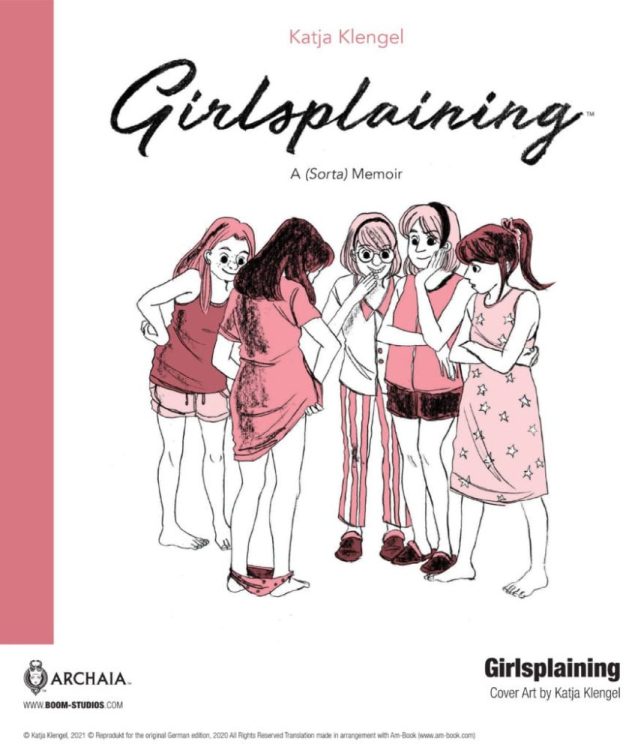
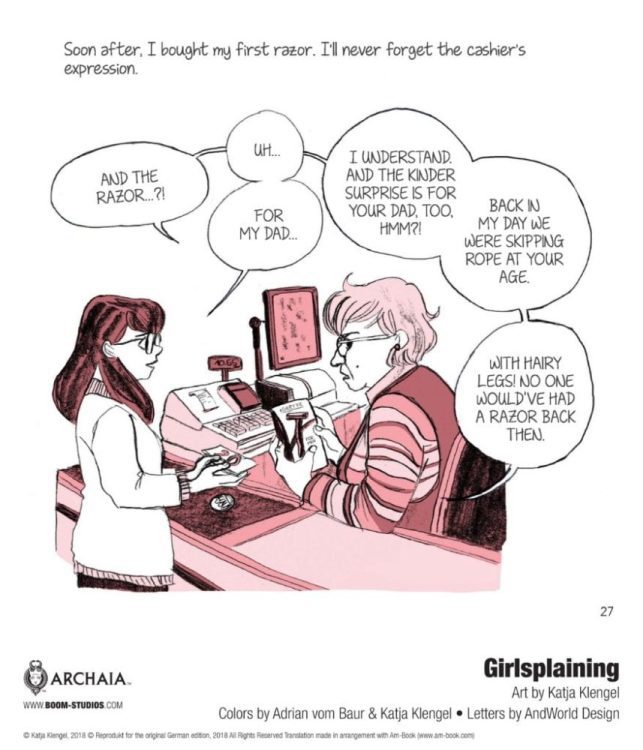
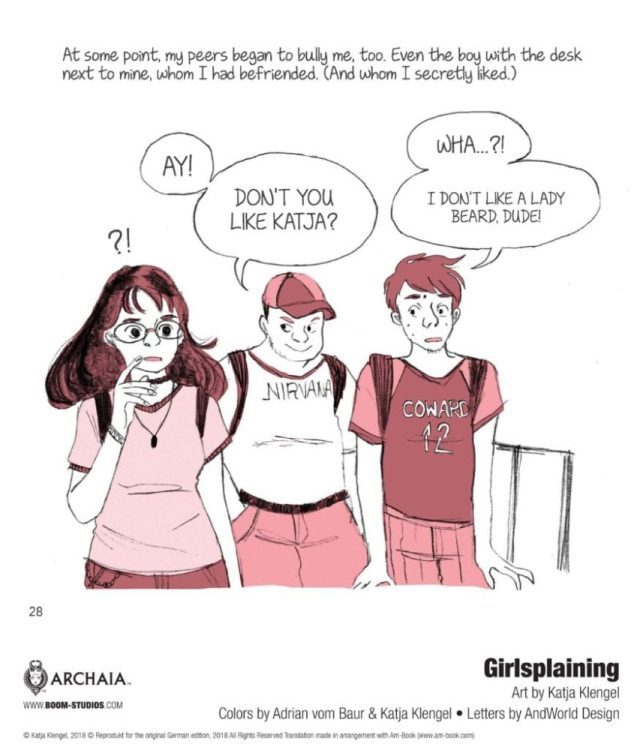
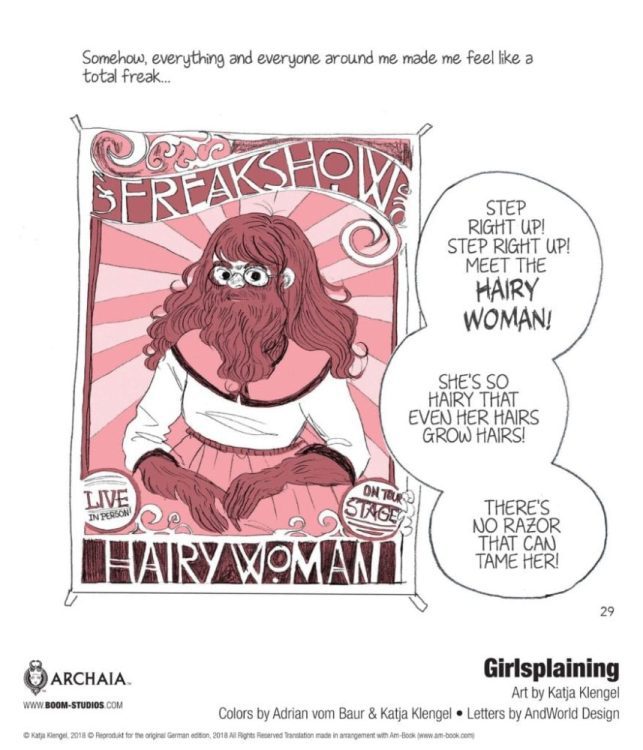
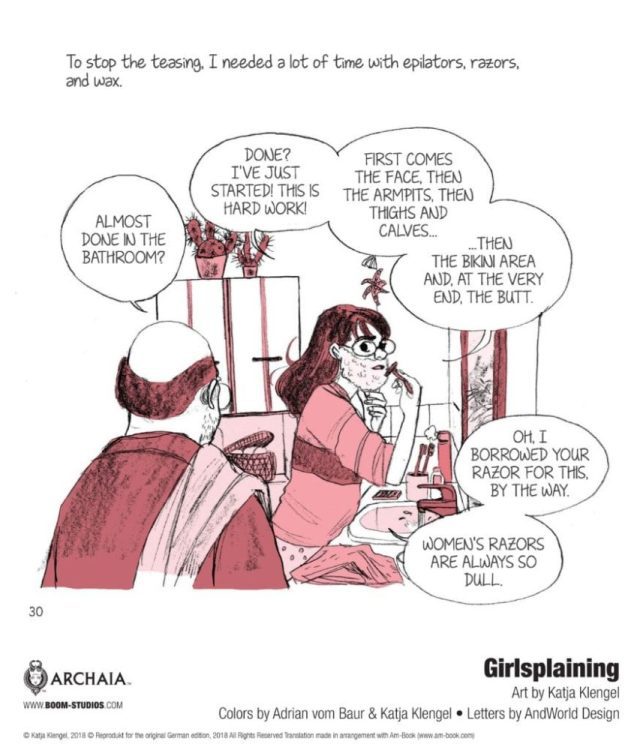
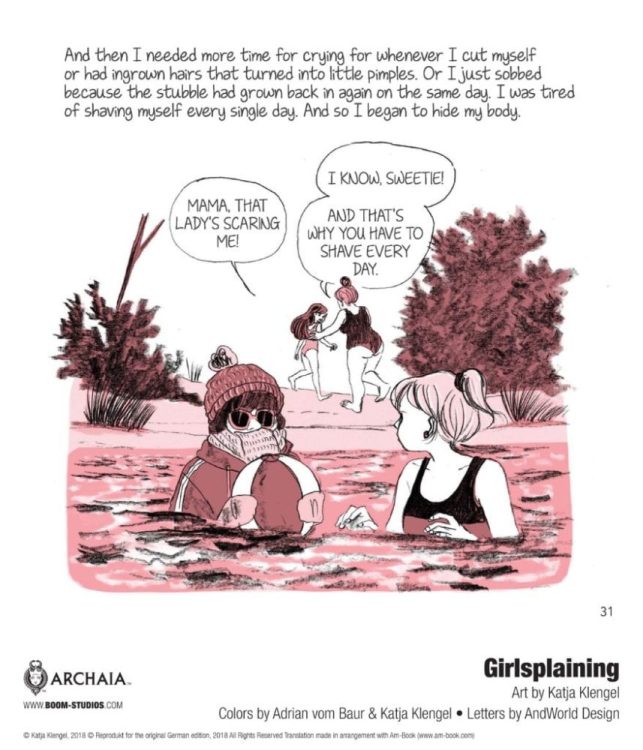
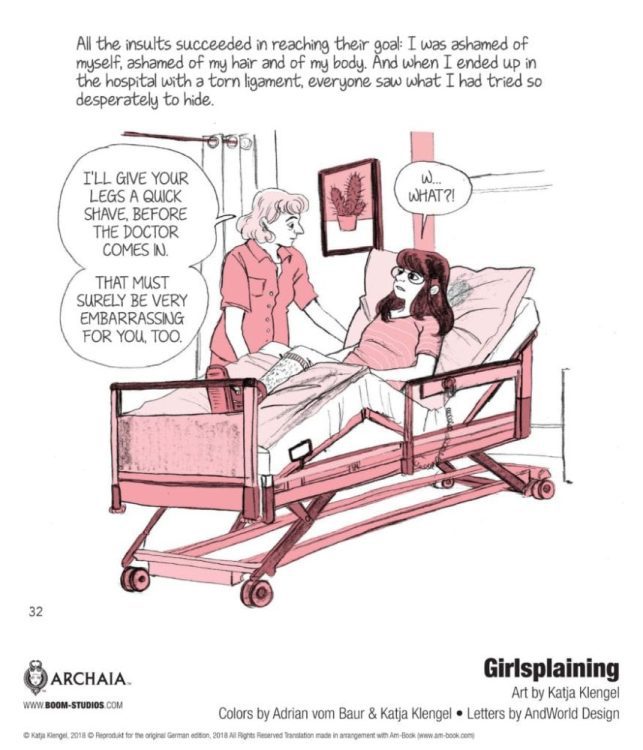
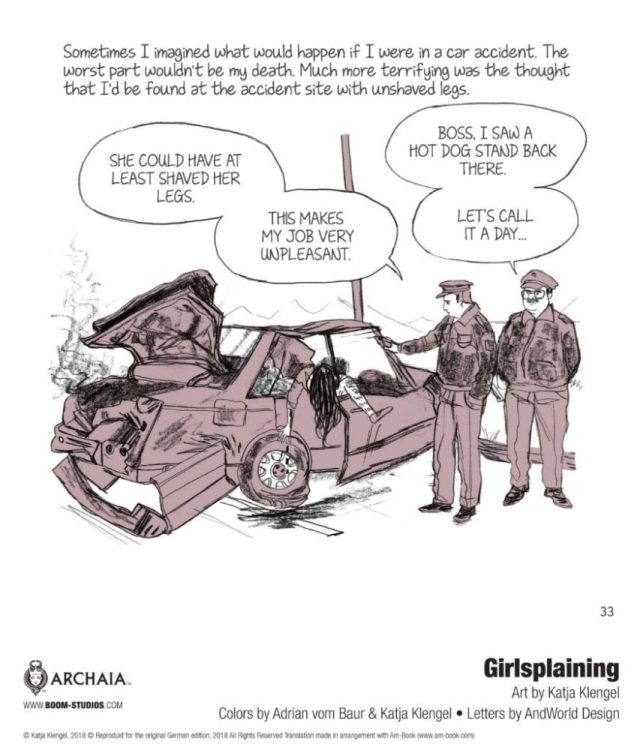
8-Page Preview – GIRLSPLAINING: A (Sorta) MEMOIR by Cartoonist Katja Klengel

GIRLSPLAINING: A (Sorta) MEMOIR

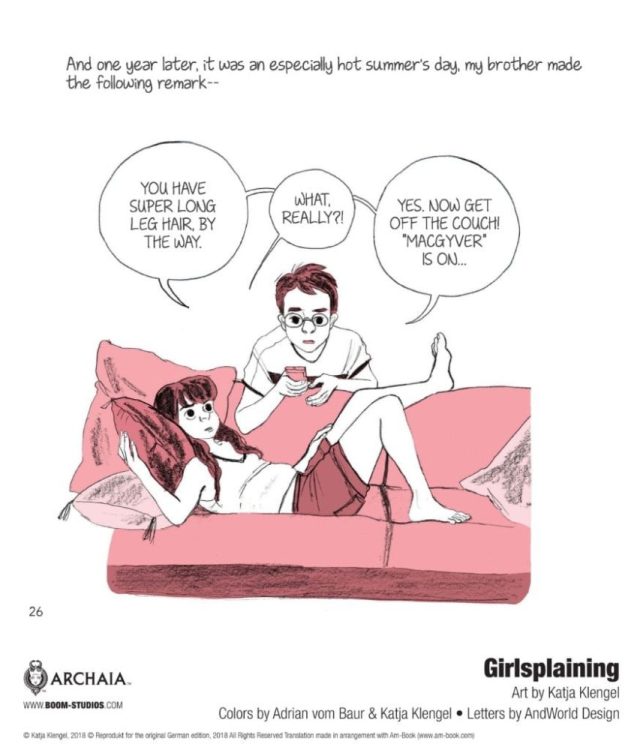
GIRLSPLAINING: A (Sorta) MEMOIR by German cartoonist Katja Klengel hits your local comic book store on March 3 and book stores on March 9, but thanks to BOOM! Studios, Monkeys Fighting Robots has an eight-page preview for our readers.

About the graphic novel:
Why do we fear the word “vulva” so much? Do we really have to be ashamed of our body hair? Why do gender roles in children’s toys seem to be stuck in the ‘50s? With a healthy sense of humor, an open heart, and unsparing candor, Klengel looks back on her childhood through the lens of the popular culture that shaped her identity and examines what being a woman today means to her (and really, a whole lot of us!).

GIRLSPLAINING: A (Sorta) MEMOIR is drawn by Klengel, Adrain vom Bauer assists Klengel on colors, and AndWorld Design handled letter work.

Enjoy The Preview Below:

Monkeys Fighting Robots Youtube

AfterShock Comics Exclusive Preview: SHADOW DOCTOR #1

aftershock comics exclusive preview shadow doctor #1

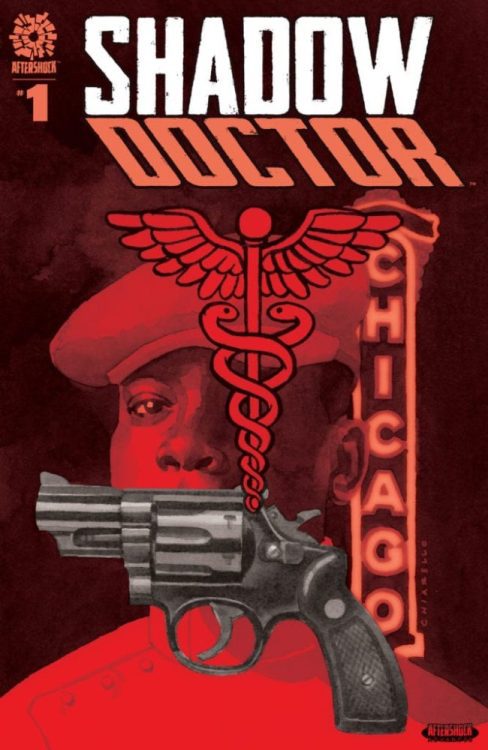
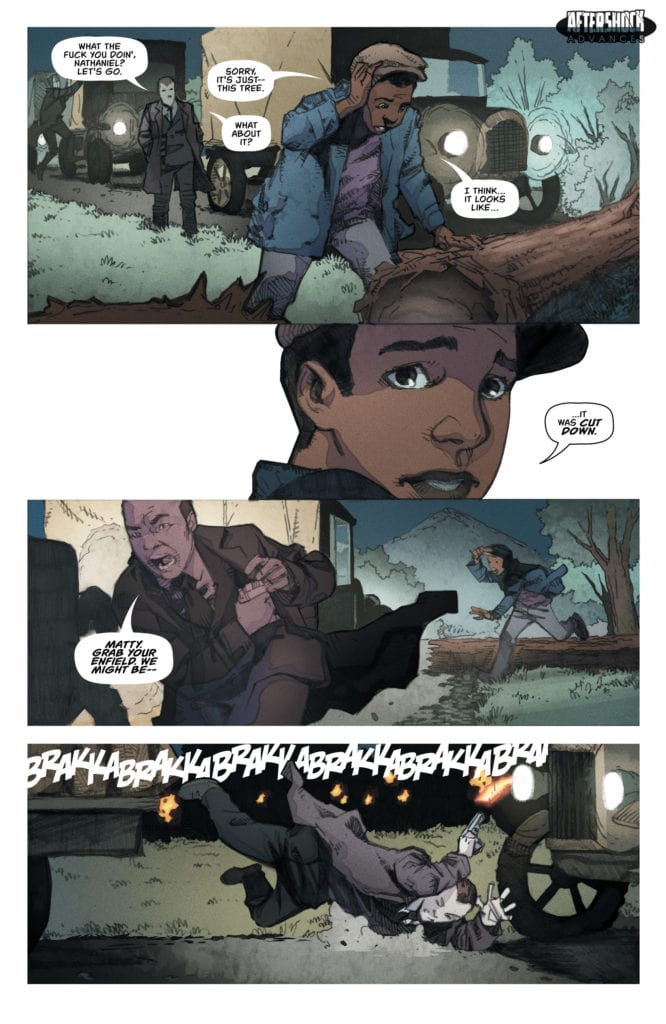
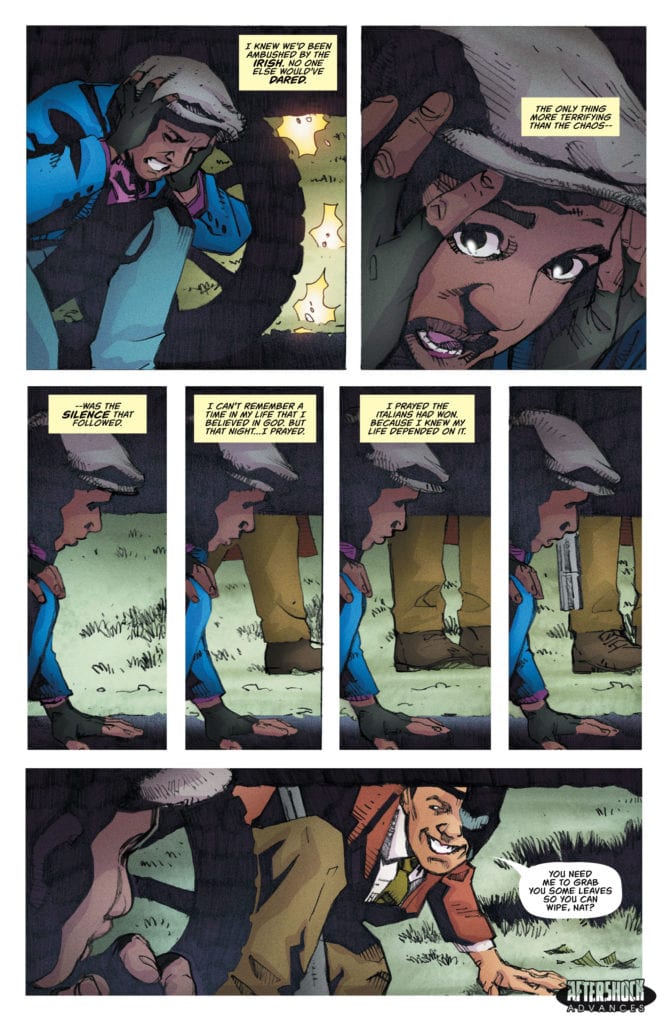
SHADOW DOCTOR #1 hits your local comic book store February 17th, but thanks to AfterShock Comics, Monkeys Fighting Robots has an exclusive four-page preview for you.

About the issue:
Years in the making, this is the true story of writer Peter Calloway’s grandfather, Nathaniel Calloway, a Black man who graduated from medical school in the early 1930’s. Unable to get work at any Chicago hospitals because he was Black, and unable to secure a loan from a bank to start his own practice because he was Black, he turned to another source of money in Prohibition-era Chicago: the Mafia, run by none other than Al Capone.

SHADOW DOCTOR #1 is by writer Peter Calloway and artist Georges Jeanty, with colors by Juancho! and letters by Charles Pritchett. The main cover is by Mark Chiarello.

As Calloway himself says:

“On the one hand, his story represents the promise of America. On the other hand, it shows the worst of it.”

Check out the SHADOW DOCTOR #1 preview below:

aftershock comics exclusive preview shadow doctor #1

aftershock comics exclusive preview shadow doctor #1

aftershock comics exclusive preview shadow doctor #1

aftershock comics exclusive preview shadow doctor #1

aftershock comics exclusive preview shadow doctor #1


Are you looking forward to SHADOW DOCTOR? Sound off in the comments!

Monkeys Fighting Robots Youtube

Marvel Comics Exclusive Preview: KING IN BLACK: BLACK PANTHER #1

king in black black panther marvel comics exclusive preview

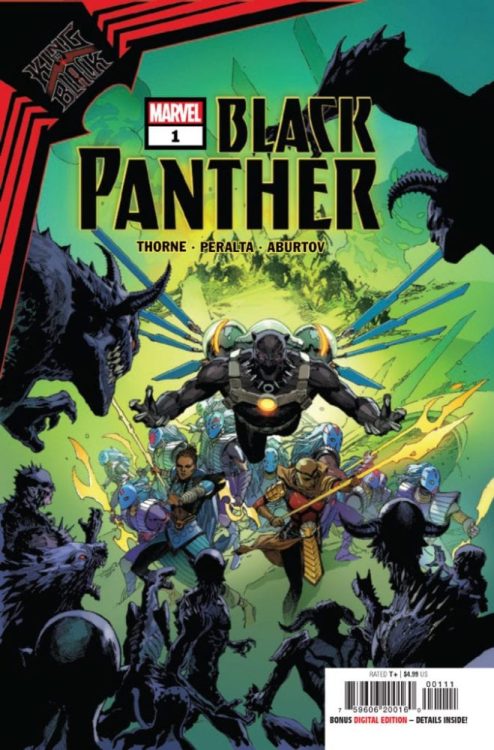
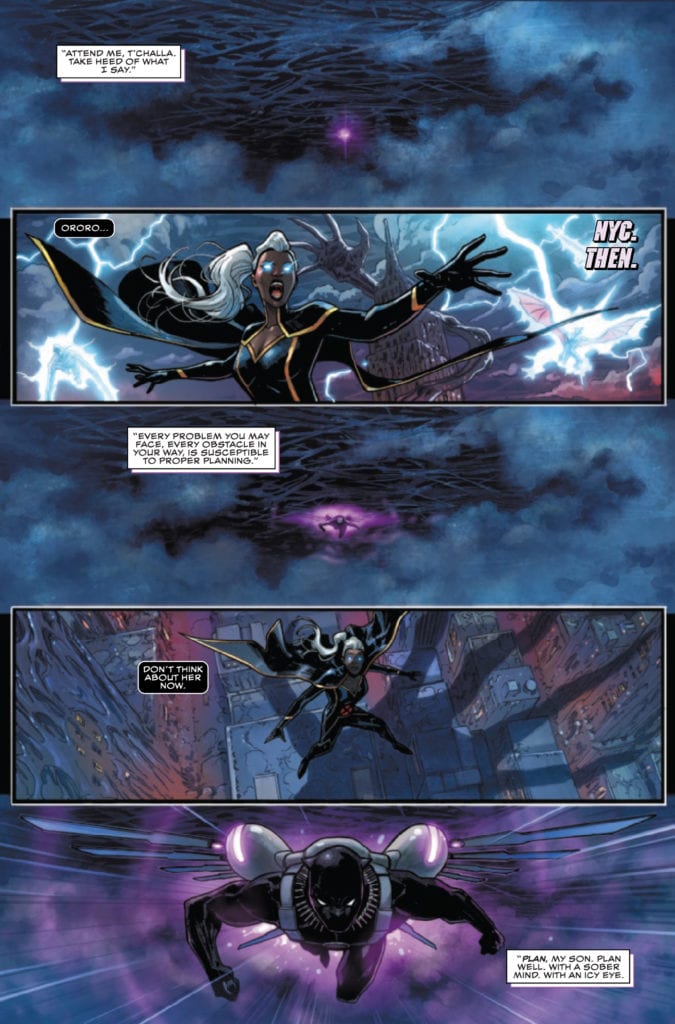
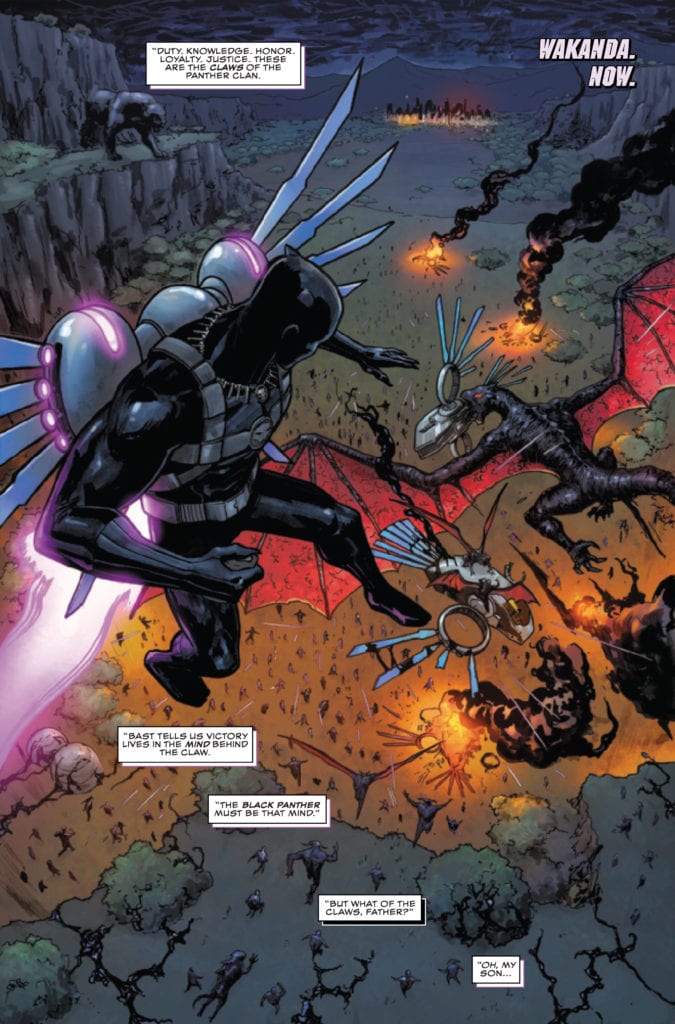
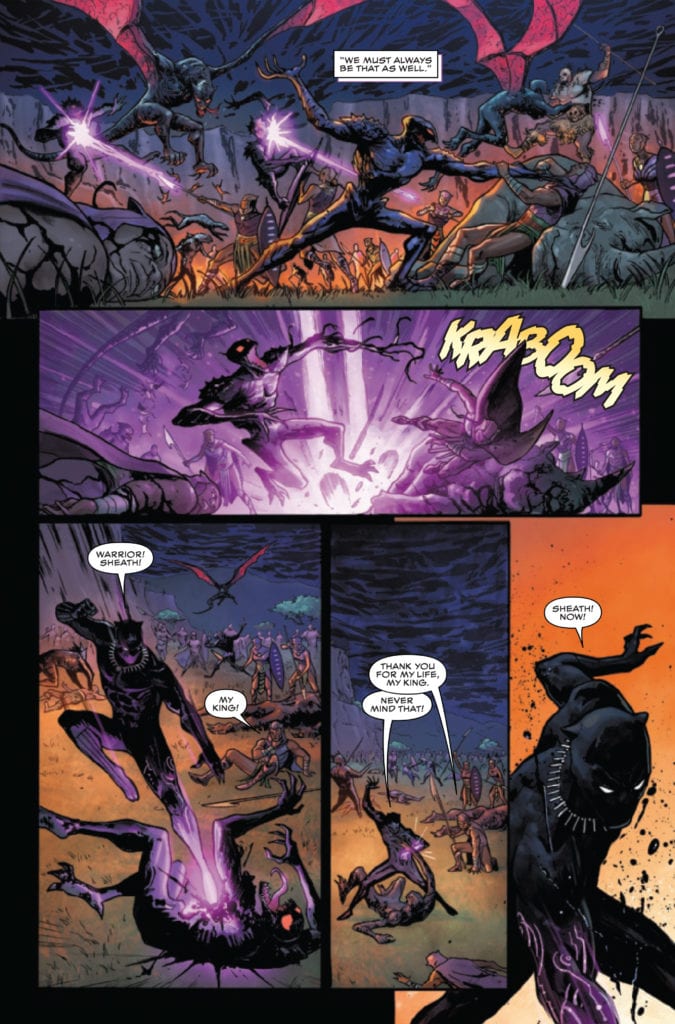
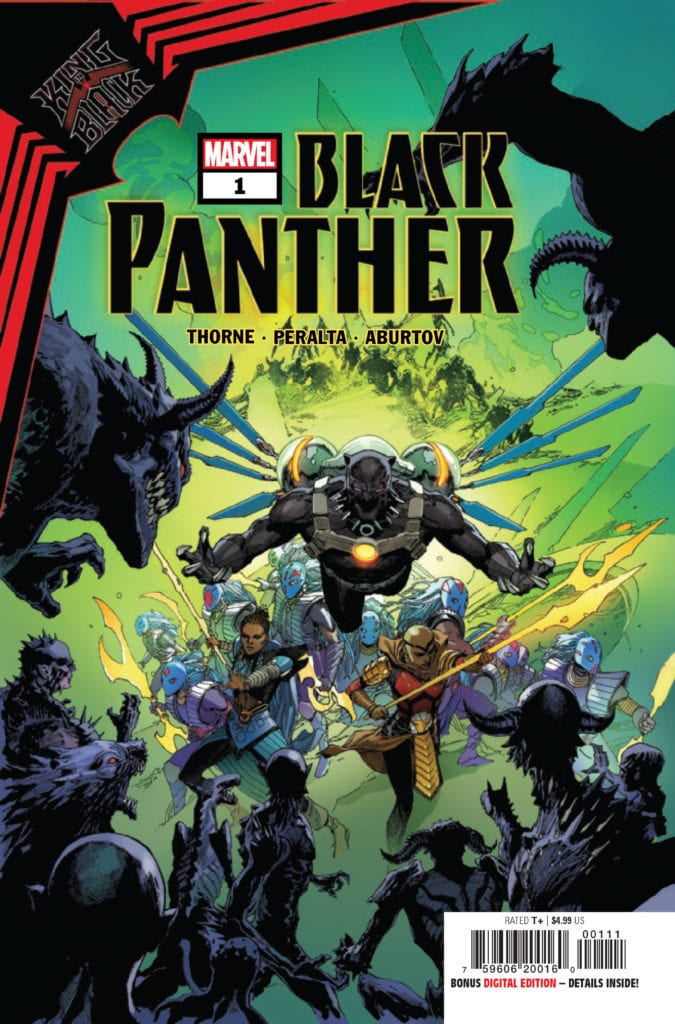
KING IN BLACK BLACK PANTHER #1 hits your local comic book store February 10th, but thanks to Marvel Comics, Monkeys Fighting Robots has an exclusive four-page preview for you.

About the issue:
SYMBIOTES INVADE THE UNCONQUERABLE COUNTRY OF WAKANDA!
T’Challa’s most treasured allies are lost in a storm of Knull’s making in this wild one-shot! Critically acclaimed writer, actor and producer Geoffrey Thorne explores a Wakanda gone dark – invaded by Knull’s massive symbiote army. Wakanda needs its king. It needs the Black Panther. But once again, the hero must choose between his role as an Avenger, his role as a king… and the yearnings of his heart.

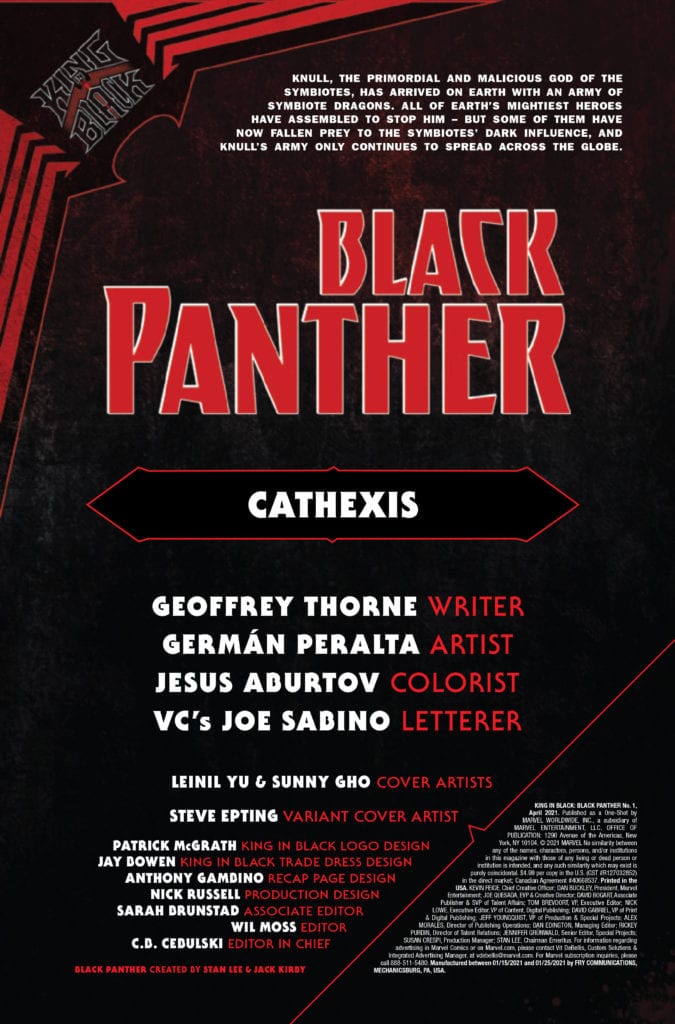
KING IN BLACK BLACK PANTHER #11 is by writer Geoffrey Thorne and artist German Peralta, with colors by Jesus Aburtov, and letters by Joe Sabino.

Check out the KING IN BLACK BLACK PANTHER #1 preview below:

king in black black panther marvel comics exclusive preview

king in black black panther marvel comics exclusive preview

king in black black panther marvel comics exclusive preview

king in black black panther marvel comics exclusive preview

king in black black panther marvel comics exclusive preview

king in black black panther marvel comics exclusive preview


What has been your favorite KING IN BLACK tie-in so far? Sound off in the comments!

Monkeys Fighting Robots Youtube

INTERVIEW: Composer Giosuè Greco Scored Award-Winning Short Film Period. End of Sentence.

Period. End Of Sentence is a 2019 Oscar-winning documentary short film about a quiet sexual revolution happening within India, and composer Giosuè Greco crafted a compelling score.

In 2019, Period. End Of Sentence beat out a field of strong contenders in the short film documentary category. The film draws inspiration from the life of Arunachalam Muruganantham, a social activist who is one of the women featured in the movie. Activists Shabana Khan, Gouri Choudary, Ajeya, and Anita make up the rest of the activist super-team covered in a dense and captivating 25-minute runtime.

PopAxiom and Giosuè spoke about becoming a musician and creating music for an Oscar-winning film.

Keep Writing

Giosuè’s grandfather was a saxophone player, “so we always had a saxophone lying around the house. I grew up in a family where music was very supported and started cultivating that passion.”

At “about 12 or 13,” he says, “I realized music is what I wanted to do. I started picking up different instruments, flute, guitar, piano.”

Giosuè went to a “music-centric high school where I could play in different bands and orchestras.”

Becoming a composer was still nowhere on Giosuè’s radar. “I didn’t study composing in school per se, but I studied classical music and had the fundamentals. I studied classical saxophone.”

“Playing saxophone,” he explains, “the only thing you can do other than playing classical is jazz. When I started Berklee, my idea was that I was going to play jazz forever, and I was going to be the greatest jazz saxophonist ever.”

Giosuè attended Berklee and completed the “music production engineering program.” After Berklee, he flew out to LA. “I wanted to try and be a music person. I wanted to do everything. I started interning at studios, but it’s not quite hands on. I started producing pop music and experimenting with sounds.”

“Film composition is something that I ended up doing in LA,” he admits. “I was lucky enough to cross paths with Dan Romer (Beast Of No Nation). At the time, he was looking for a tech person. We clicked immediately, and shortly after, he asked me if I wanted to do some additional writing for a score. From that moment on, I just kept writing.”

Giosuè Greco-composer-period. end of sentence

About Period. End Of Sentence

Giosuè became part of the Period. End Of Sentence team through Dan Romer. “They had some music temped in the cut that was a lot of dance music. They wanted to do an original score, and they contacted me because they knew I was working for Dan.”

“It was a very short period,” he says of the time spent creating the score for the short film. “ I think it took two weeks to record the project. It was one of those things I did and moved on, and kind of forgot about it.”

Giosuè thought the project “was great, but I was not expecting a nomination and then a win!”

“We didn’t have any formal spotting sessions for this film,” he reveals. Instead, the process was more organic. “I went with what I thought was appropriate for the scene. There’s a lot of wide shots and silent moments. So, I thought I’d take the most acoustic approach possible.”

Giosuè, like any modern-day composer, uses a lot of digital tools to make a score. But he says, “I always try to keep things as organic as I can, even if it’s a synthesizer.”

Wrapping Up

Talk of influence starts with one of the legends. “My dad was, I don’t want to say obsessed, but he loved Ennio Morricone. I’m convinced he’s the basis of anything I ever do musically. It’s so ingrained in my mind at this point.”

Giosuè is a massive fan of filmmaking icon Federico Fellini and mentions one of his films as a dream project. “Amarcord. I would love to work on a modern version of that film.”

Period. End Of Sentence is two years removed from an Oscar award, and Giosuè’s worked on a lot of projects since then. So, what’s next? “Not Going Quietly. It’s about Ady Barkan, a political American healthcare activist. The story takes place during 2015 as Ady continues his fight and ALS takes over his body.”

Is Period. End Of Sentence on your watch list?

Thanks to Giosuè Greco and Impact24 PR
for making this interview possible.

Read more interviews from Ruben R. Diaz!

Monkeys Fighting Robots Youtube

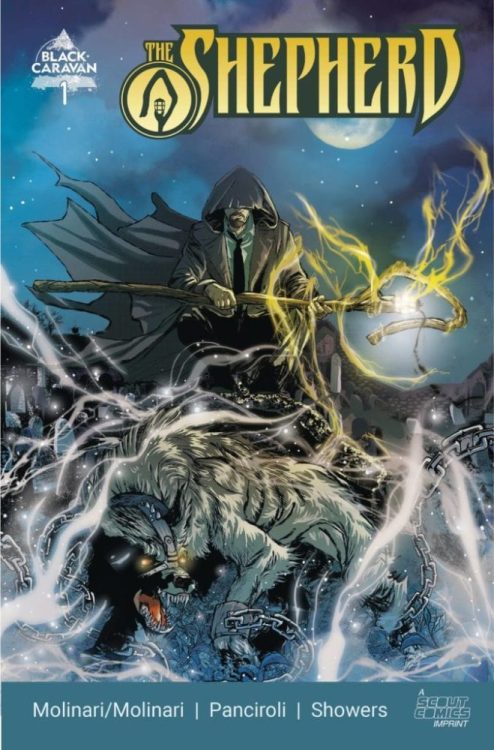
SHEPHERD #1: An Epic Preview Before An Empathetic Beginning

Shepherd #1 Cover

Shepherd #1 begins a new series from Scout Comic imprint Black Caravan on February 3. From the Molinari writing team comes a two-for-one story about the title character in his role and his origin. One art team focuses on the series’s mythic scales; the other shows the protagonist’s down-to-earth motivations.

Writing The Shepherd #1 Are…

Father-son writing team Andrea Lorenzo Molinari and Roberto Xavier Molinari show the ins and outs of the title character. The Shepherd #1 makes a grand first impression by introducing his role of guiding the recently deceased. What makes him stand out is his intelligence and empathy; he’s smart enough to identify fraudulent gods taking advantage of wayward souls and caring enough to see what weighs these ghosts down. The complementary story suggests this sense of empathy comes from a very personal place. So if the grand scale doesn’t get the reader hooked, the origin might.

Before the Shepherd comes a man, one who sees the good and bad of empathy. Lawrence Miller lives a mundane if fulfilling life with a family and job he loves. Has the reader ever had a family they love but get annoyed to a degree with? It’s perfectly normal to expect this as people can cruise through life without too much worry. Because if everybody follows some rules, that routine can make the most sense. When Lawrence ignores the rules he sets for himself because he connects (empathizes) with people, the reader empathizes with Lawrence when everything falls apart. Who doesn’t feel like they get punished by ignoring routine?

Two Sides Of Art

Shepherd #1 features two art teams for these sides of its lead.

The initial story “Do You Like Ghost Stories?” features art from Luca Panciroli, where the mythic scale is on display. The story setting’s architecture is not only mythic in Egyptian imagery, but the large size dwarfs the Shepherd. This makes him look vulnerable to threats inside; had it not be for colorist Pamela Poggiali providing the Shepherd with impressive-looking magic. This, when combined with SFX and a logo from letterer Joel Rodiguez makes the Shepherd as mighty a presence as the setting.

So what happens when “Origins” presents Shepherd #1 in a mundane light? Ryan Showers presents the Shepherd’s life as Lawrence as simple and orderly. The architecture, furniture, and plainer backgrounds are drawn in ways that don’t look important. The brown coloring that Heather Breckel provides in most scenes assist in this mundane atmosphere. A cold looking blue color, meanwhile, signifies a coming radical change. The captions from letterer Jacob Bascle give these empty feeling spaces weight with Lawrence’s thoughts. It all provides a real sense of being helpless as thoughts and emotions pile on top of one another.

Check Out Shepherd #1 For A Pre-Order!

Shepherd #1 has the makings of a surprise hit series. By displaying a character in action first and then showcasing his motivations, it provides a nice juxtaposition. A character so powerful and compassionate who comes from a place like anyone a chance to connect with. With a trade already scheduled for April and reading this, I am compelled to preorder to see where this all goes.

Monkeys Fighting Robots Youtube