Home Blog Page 158

Comics Studies: The Severed Head Affair

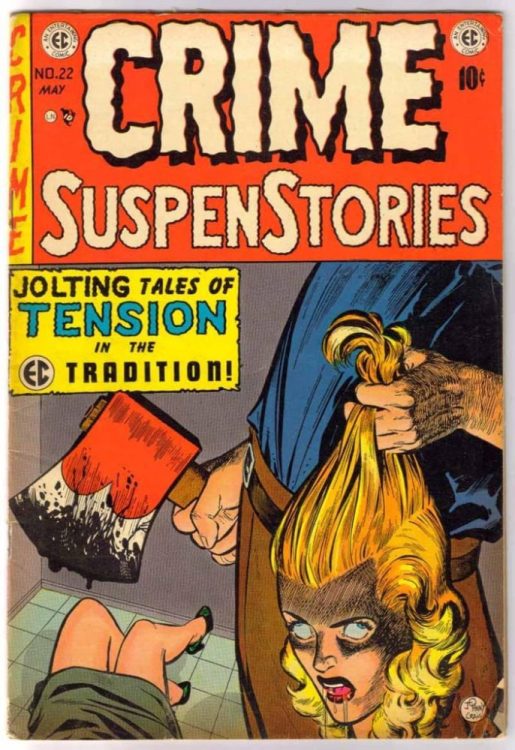
Crime SuspenStories
Crime SuspenStories #22 Credit: EC Comics

Or The Comic that Killed EC

Even without being an avid comic book reader, many people can still recognize some ‘important’ comics. These will, more often than not, fall into the ‘First Appearance’ category, whether that relates to a character or a creator. Detective Comics #27, for example, with its iconic image of Batman swinging across the city, a criminal in his arms; or The Amazing Spider-Man #298 which contains the first appearance of Eddie Brock and Todd McFarlane’s first issue on art duties.

These types of comics are fan favorites and often become highly collectable because of the desire to own a part of history. However, some comics have historical significance for other reasons, due to their links with social or controversial events. These comics might not have as far reaching recognition as others, but their significance is just as important in the foundation of the industry.

Take for example, Impact #1, published by EC Comics in April 1955. It might not be a comic most people are familiar with but the anthology contains a story by Bernie Krigstein, called Master Race. The strip is one of the most visually stunning and thematically important comics ever published. It is one of the first American comics to directly reference the holocaust.

Another EC comic, Crime SuspenStories #22, holds a place in comic book history for a slightly different reason. Unlike Impact #1, the contents and creators of this comic are not of particular interest but what the comic was used for has cemented it as a significant and collectable publication.
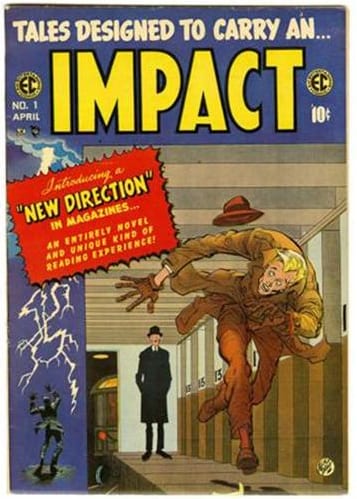
Impact #1 Credit: EC Comics

Juvenile Delinquency

The early 1950’s was a prosperous time for the comic industry in America. There were a number of publishers putting out hundreds of titles, selling upwards of 26 million comics per month.

These were often widely available, sold on newsstands and in grocery stores all across America. Relatively cheap, with cover prices of 10 cents per comic, it was easy for young readers to get their favorite titles every month. Publishers like EC Comics were thriving, in part because of the range of comics that they released but also because of the content. Crime and horror comics were big business and EC Comics were dedicated to releasing the best titles they could.

Comics such as Tales From The Crypt and Weird Fantasy are infamous and have as much of a following today as they had back in the 1950’s. The creators who worked on the titles were often at the top of their game and no-one, from writer and artist to editor and publisher, were afraid to push the boundaries of the stories they told.

However, there was a storm brewing, one that would decimate the comic industry. Towards the end of the 1940’s not everyone was happy about the comics that were circulating around the country. There was a growing concern about the contents of some horror and crime comics and the detrimental effect that they were having on children. Organizations were beginning to question if the rise in juvenile delinquency could be tied with the spread of the cheap comics that were popular amongst the younger generation.

Two articles published in 1948 kicked off the organized backlash against comics. Both articles were written by Fredric Wertham who became famous for writing The Seduction of the Innocent, a publication that arguably did more damage to the image of comics than any other published work. The two articles led initially to the formation of the Association of Comics Magazine Publishers, which failed to regulate content and had almost no effect at the time.

This initial failure fueled Wertham’s mission to fight inappropriate content and led to the book mentioned above and a US Congressional hearing into the effect of comics on Juvenile Delinquency. The hearing did not go well for the industry, leading to the formation of the Comics Code Authority and ultimately the downfall of EC Comics.
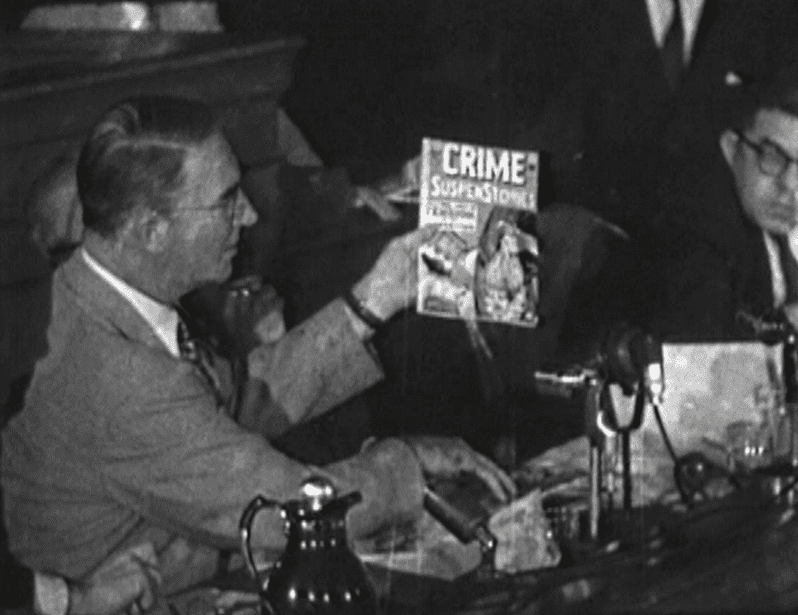
Subcommittee Hearings held in New York, 1954

Suspenseful Stories

So, what role did Crime SuspenStories #22 play in all of this?

When the 1954 Senate Subcommittee Hearings began in New York, it was clear from the outset that an element of scapegoating was taking place. Testimony was presented and the Committee asked questions of each witness, however the committee member’s were more inclined to ‘grill’ those arguing against the motion that comics were an unhealthy influence on the readers.

The first speaker on April 21 was Richard Clendenen, the executive director of the Senate Subcommittee To Investigate Juvenile Delinquency. He opened with a brief description of the comic publishing industry with some figures based on distribution and sales. He then went on to give some examples of the types of comics that the Subcommittee were concerned about. These comics included Black Magic Magazine, Mysterious Adventures, The Haunt of Fear, and Shock SuspenStories.

It was stated categorically in the opening statements that no-one wanted to infringe upon freedom of speech but content deemed unsuitable needed to be regulated. In the case of Crime SuspenStories #22, the committee barely got past the cover.

During the hearings William Gaines, EC Publisher and Co-Editor, voluntarily took a stand against the committee, despite recommendations to the contrary. His opening was defiant and bold. He was full of bravado, despite a lack of sleep and suffering from amphetamine withdrawal. Unfortunately for Gaines, the Committee had already heard Dr Wertham’s damnation of comics and their evil effects on the youth of America. As the publisher’s testimony continued he was drawn into lines of reasoning that would ultimately bring down the industry.

Chief Council Herbert Beaser asked the question, “Is there any limit you can think of that you would not put in a magazine because you thought a child should not see or read about it?”

Gaines replied by saying his limits were ‘the bounds of good taste’. It was at this point that Senator Estes Kefauver brought out a copy of Crime SuspenStories #22.

The cover of the comic shows the torso of a man, in one hand holding a bloody axe and the other a disembodied head of a woman. In the background a woman’s body lays on the floor, only her legs are visible. Senator Kefauver appears shocked by the comic he holds and asks Gaines if he considers it in good taste. Gaines’ reply is magnificent, in one respect, but completely damning in another. It is as if he is mocking the Committee and the Senator in an attempt to defend his art. Do you think the comic is in good taste?

Gaines: “Yes sir, I do, for the cover of a horror comic. A cover in bad taste, for example, might be defined as holding the head a little higher so that the neck could be seen dripping blood from it, and moving the body over a little further so that the neck of the body could be seen to be bloody.”
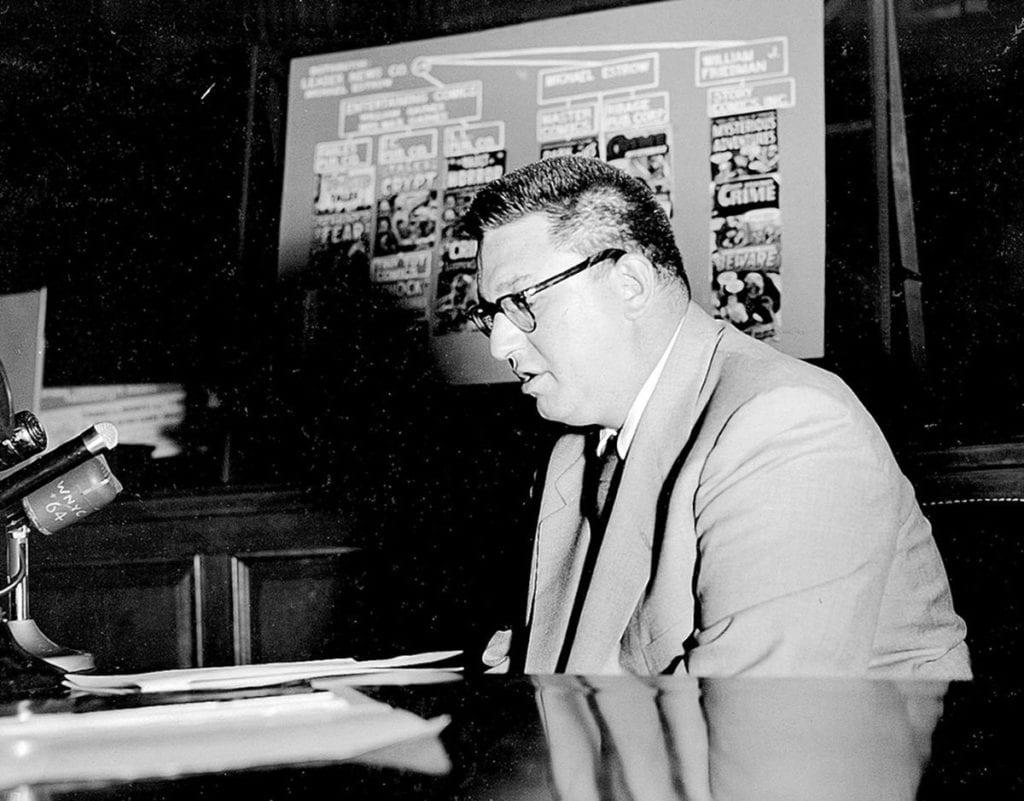
William Gaines
William Gaines giving evidence in 1954

Justifiable Self-Destruction

Gaines makes, in his eyes, valid points. In fact, these suggestions had been made to the artist, Johnny Craig, before the final artwork had been submitted. However, the exchange and the ‘horrific’ cover made national headlines and it was deemed that publishers were defending disturbing content that would warp a child’s mind. A single cover for a single comic spelled the end of crime and horror comics for an entire generation, toppling a hefty chunk of the industry with it. Fearing Government regulation, the comics industry backed down, created the Comics Code Authority, and set the bar for appropriateness too high for a large number of comics to reach.

One man’s belief in the work he published, and a single horror comic cover, changed the course of comic book history with ripples still being felt today. The next time someone asks you about an important comic book, remember Crime SuspenStories #22 and the massive change it brought to a multi-million dollar industry.

For further reading on the Senate Subcommittee Hearings please see the History of Comics Censorship on the cbldf.org website, Transcripts from the hearings at https://www.thecomicbooks.com/1954senatetranscripts.html and actual recordings at https://www.wnyc.org/story/215964-senate-subcommittee-juvenile-delinquency/
Monkeys Fighting Robots Youtube

S03E03 – Nightwing, North Hollywood, and Disc Golf

Monkeys Fighting Robots Podcast Logo

It is May 23, 2021, and if you are reading this, it means you have survived the apocalypse! I’m your host Matt Sardo, and boy did I have a week. Let’s talk about it.

  • Tom Taylor’s Nightwing run (79-80)
  • Zack Snyder’s Army of the Dead
  • North Hollywood is a fine French film about skateboarding. Disc Golf tournament recap Preparing for
  • Mare of Easttown
  • Kickstarter hump

Thanks for checking out the podcast, have a great week and let me know how you survived the past year.

Create more shit!

Monkeys Fighting Robots Youtube

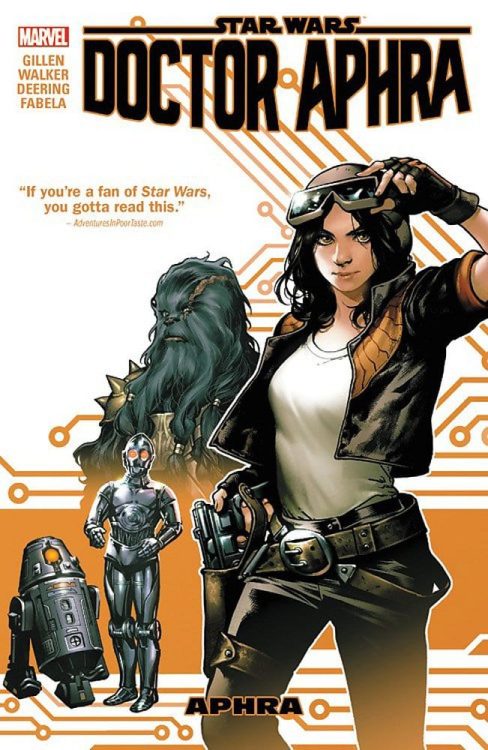
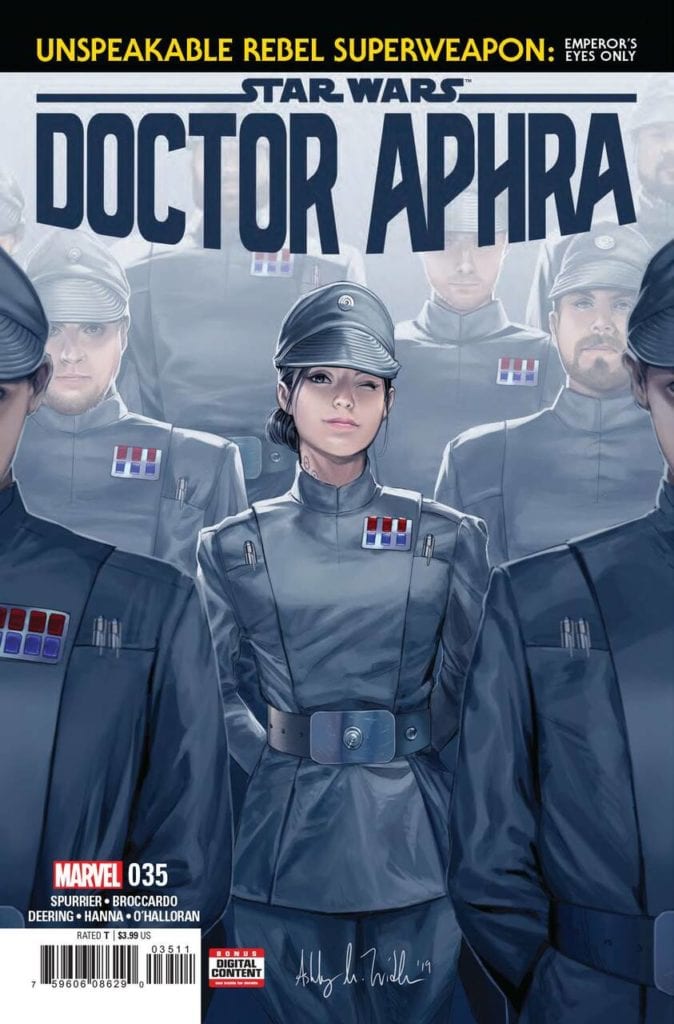
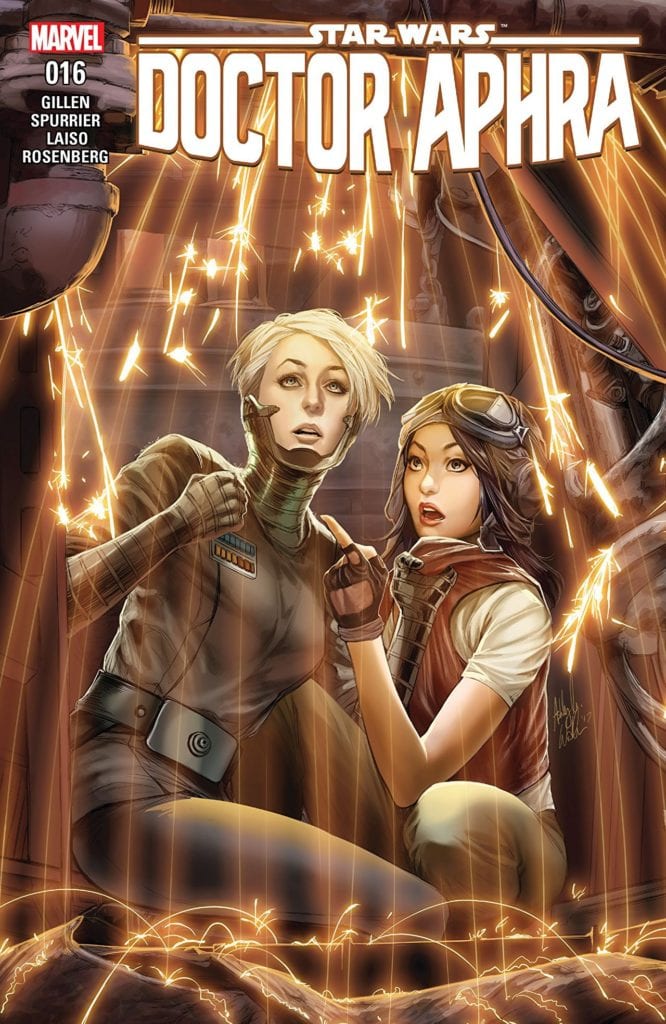
STAR WARS: DOCTOR APHRA – How To Love Awful People

*Spoilers Ahead For Kieron Gillen’s and Si Spurrier’s Respective Doctor Aphra runs, as well as Gillen’s Darth Vader*


Greek philosopher Aristotle coined the idea of the “tragic hero” as a protagonist who “inspires both pity and fear” in the audience. This is a being whose tale we follow afraid of the repercussions their often reckless actions will have for their own livelihood – as well as the people around them. However, we end up feeling sad for them as (if the story is written well) we can’t help but empathize with the flaws this character has ingrained into them due to life experience. This character concept evolved and relaxed over the years, transforming into numerous permutations of the deeply flawed but still relatable lead of a story. The most well-known modern-day equivalent of Aristotle’s “tragic hero” is the now iconic “Antihero.” This is a character who may sometimes do good, but then swing wildly into the direction of villainy or immorality based on their own personal needs at the time. Every medium of storytelling has dozens of antihero stories, but the comics medium has become a nesting ground for the concept over the last thirty years. From the gun-toting muscle bros of the extreme 90’s to the post-apocalyptic survivors in many-an indie comic, the antihero may quite possibly be the most popular character archetype in the comics medium right now. It’s only fitting then that the first true antihero to be introduced into one of – if not the – most popular fictional universes of all time would be done so via comic books.

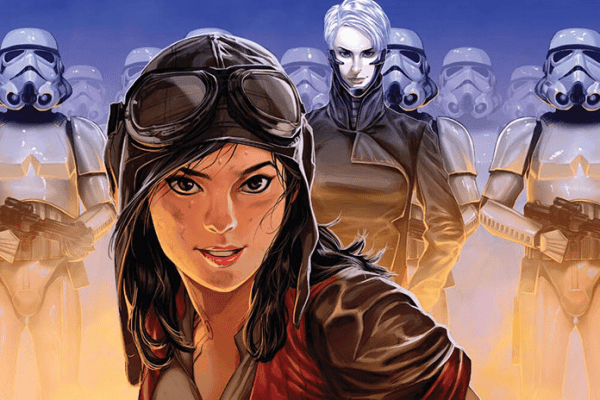
Chelli Lorna Aphra – aka Doctor Aphra – was introduced in by writer Kieron Gillen and artist Salvador Larrocca in issue #3 of Marvel’s Darth Vader in 2015. She is played as a character who is clearly too smart for her own good and never takes a side – unless that side is a 7 foot tall cyborg that threatens her with a lightsaber. She will gladly work for anyone who has an edge over her, but as we quickly find out, she is always scheming to retake the advantage. As her story in Vader continues, we get to see just how intelligent, resilient, and genuinely funny she is, as well as how unexpectedly vulnerable she can be. She makes a name for herself by constantly taking advantage of the people she gets even remotely close to, and this obviously wears on her. However, we don’t really get to see her at her dastardly peak until she is rid of Vader – sort of – and Gillen gives her her own book. It is in that solo book that the roller coaster of endearment and loathing also comes to fruition, and solidifies Doctor Aphra as a loveably awful human being.

Every person that Aphra comes into contact with, and this can be from she bumped into them on the street or they have a fully fledged romantic relationship, becomes fuel for the Doctor’s self-preservation instinct. No matter what situation she’s in, there’s always a plan in the back of her head take advantage of someone in order to stay alive. She has left – sometimes unwittingly – corpses in her wake in her quest to stay ahead of the game in this turbulent galaxy. As her travels take her to more dangerous places with people of better moral fiber, her regrets involving her actions begin to grow heavier. The Star Wars universe has rarely ever dealt in grey areas of morality; hell, the entire franchise is centered around the concepts of “dark” and “light.” Watching Aphra dart from Rebellion to Empire and back again in her attempts to stay on her own side, and the growing struggle within her to *maybe* not get everyone she knows killed in the process is a powerful and often infuriating experience. Her internal struggle is probably why Vader seems to take a small bit of liking to her…you know, before he decides to try and kill her multiple times. Doctor Aphra very much feels like the John Constantine of the Star Wars universe, only she raids ancient tombs and sells the spoils on the black market instead of irritating the denizens of Hell and contracting lung cancer. Much like the Hellblazer, most of the people who care for her end up scarred and heartbroken, if not as a smoldering corpse. Also like Constantine, despite her many actions pointing towards the contrary, she does actually at the end of the day end up on the side of good – or at least not as bad as she could have been. Through the many betrayals and abandonments and incidents of manslaughter perpetrated by Aphra, the end of her story here (at least at the end of Spurrier’s run) actually has her doing right by some of the people she cares about most, and for the galaxy at large. See, Chelli Aphra does sometimes try to be good – she’s just so damn bad at it.

With the creation of Doctor Aphra, Kieron Gillen and Salvador Larocca struck a chord of genius that the Star Wars universe nor its fans knew they needed. The crooked archeologist’s schemes and forced neutrality offer a perfect counterpoint to the often black and white morality of this franchise at large, making her a fascinating, frustrating, and fun as hell addition to this galaxy full of stories. From her failed relationships to her constant backstabbing in order to stay alive, she manages to make you unimaginably pissed while endearing herself to you more and more with every issue she’s in. Doctor Chelli Aphra is one of my favorite new characters of the past decade, and one of the best additions to the Star Wars story in the franchise’s history.


Monkeys Fighting Robots Youtube

Review: RADIANT BLACK #4 – A Pivotal Moment in the Series

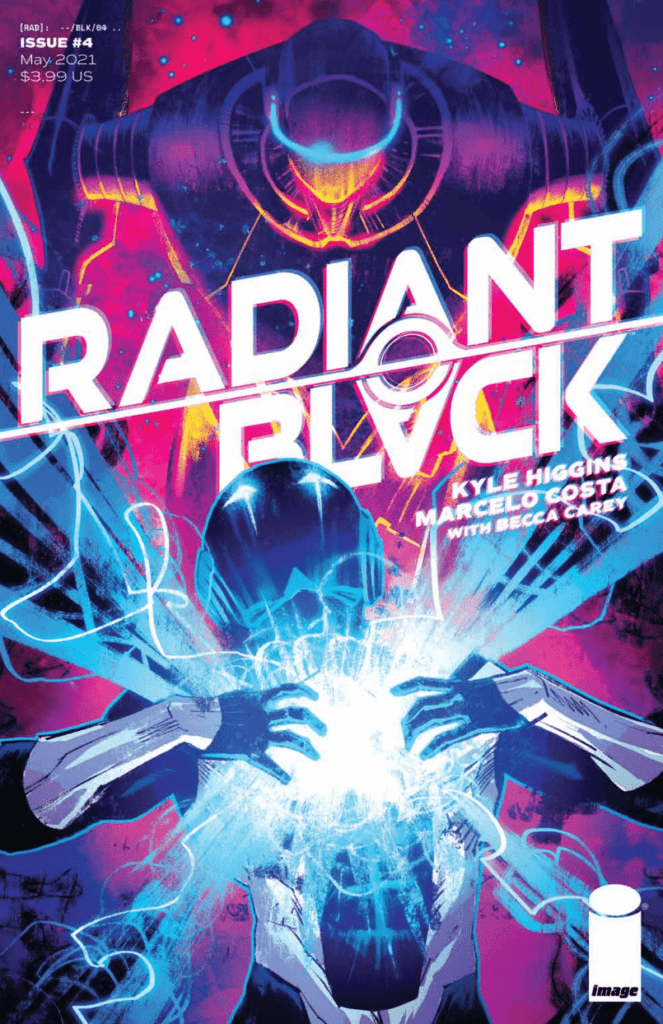
Radiant Black #4 Cover

Radiant Black #4, out now from Image Comics, drastically changes the course of the series’ story, and nothing will be the same again.

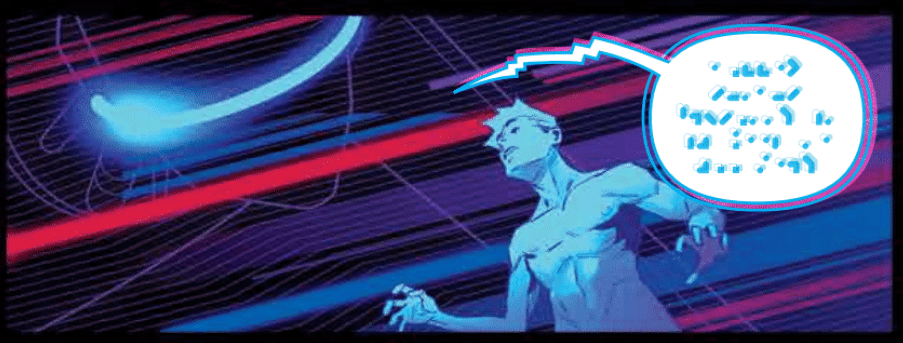
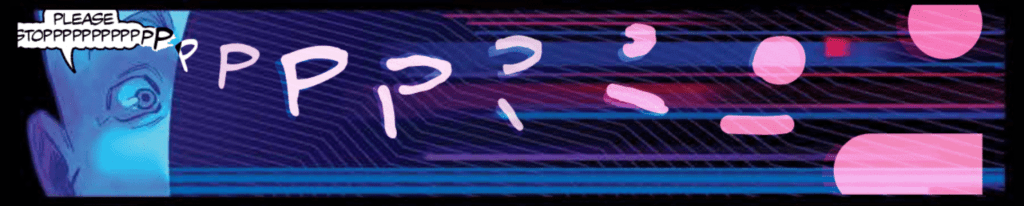
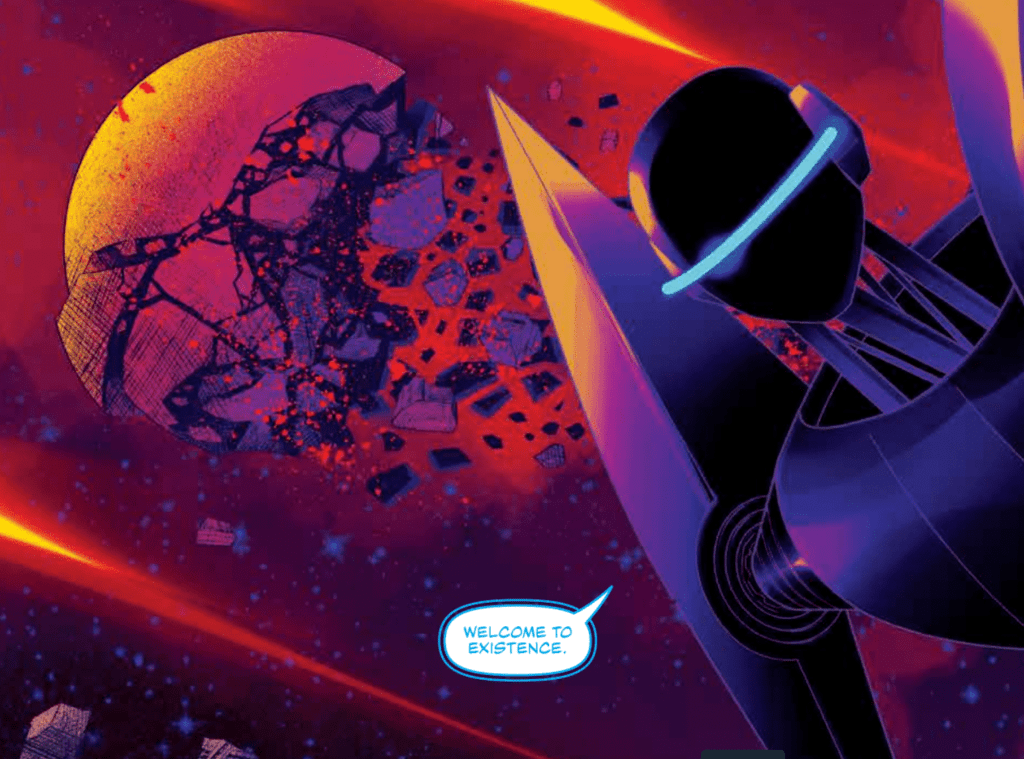
Radiant Black #4 Lettering Example

There is so much to say about Kyle Higgins’ writing in Radiant Black #4, although the best parts of the issue would be difficult to describe without spoiling it. Do yourself a favor and pick up this issue at your local comic book store today. The issue begins with a dream-like sequence that raises questions and instantly hooks the reader. We also get more character development for both Nathan and his friend, Marshall, as well as an intense action scene that makes Radiant Black #4 an incredibly well-rounded issue. One of the best parts of Higgins’ writing was how he hinted at past events in a single line of dialogue. It was clear the name-dropped was a painful memory for Nathan, and it is not elaborated on, leaving the reader desperately questioning what happened.

Radiant Black Writing Example

Marcelo Costa’s art in Radiant Black #4 makes the book feel like a seamless experience. While the writing also assists in making the issue feel more immersive, the gorgeous double-splash page early on wows the reader and instantly draws them in. Characters’ faces are so expressive that empathizing with them becomes easy, and the action scenes are so dynamic it’s near impossible to tear your eyes away from the page. Costa also employs techniques such as characters overlapping the borders of a panel, action lines, and a trail of dust to show a character’s motion.

Costa’s colors, along with the color assistance of Rod Fernandes, turn Radiant Black #4 into a gorgeous issue. The dreamscape scenes are especially stunning, and starting with one so early on is a great way to capture the reader’s attention. The snowy scenery of the town was a great way to desaturate the palette, so when it changes during the intense fight scene, there is a stark contrast. Costa and Fernandes do a brilliant job complementing the art of this issue.

Radiant Black #4 Art Example

Radiant Black #4‘s lettering fits perfectly with the issue’s art. Becca Carey uses standard techniques such as making specific sound effects small and giving them a color that matches their surroundings to indicate their low volume and employs tactics that make her lettering stand out from the rest. This can be seen when an otherworldly being is talking to Nathan, and Carey gives them a blue ring around their speech bubbles, which helps cement their alien nature to the reader.

Radiant Black #4 is an issue that changes everything. It’s been a long time since I’ve seen a series that has made such a drastic shift so early on, and any fan who has enjoyed any of these issues will not want to miss this epic moment. Higgins, Costa, Fernandes, and Carey all put forth fantastic work that makes the issue worth much more than its selling price.

Monkeys Fighting Robots Youtube

Review: JUSTICE LEAGUE: LAST RIDE #1 – Much Left to Uncover

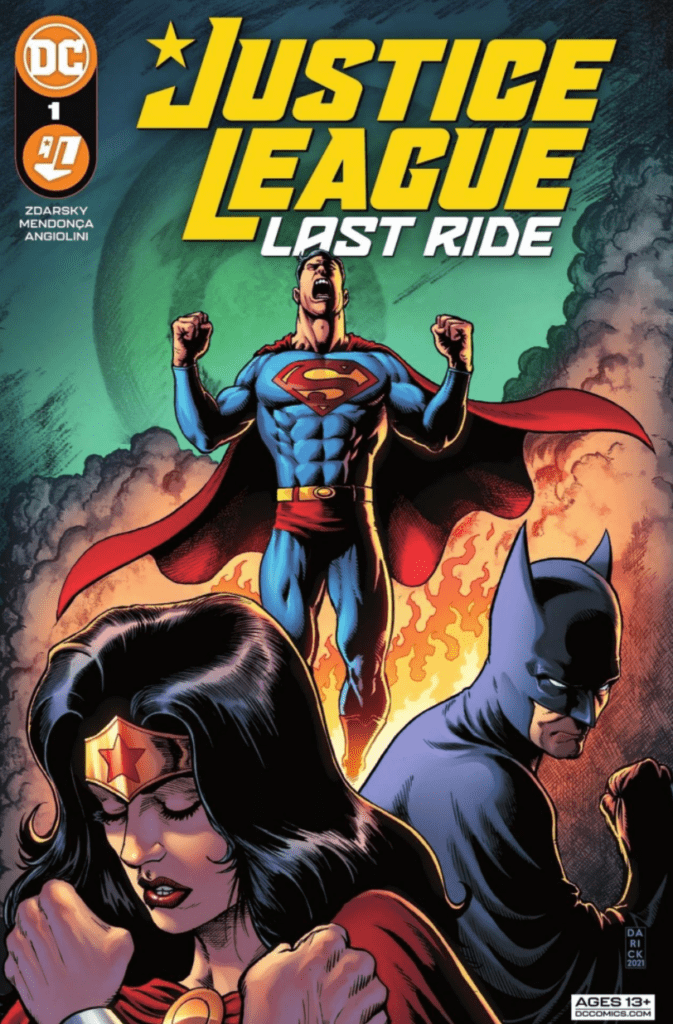
Justice League: Last Ride #1 Cover

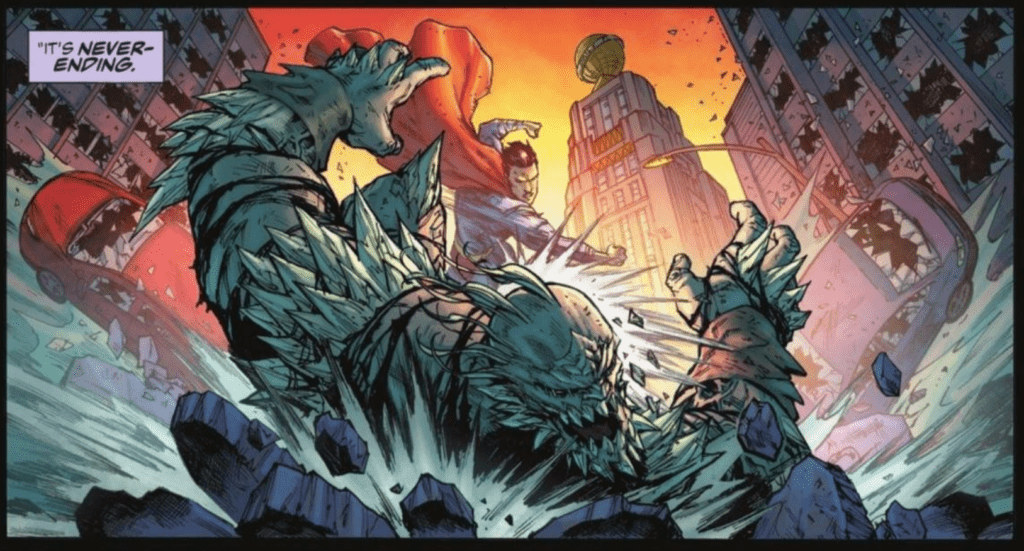
Justice League: Last Ride #1, out now from DC Comics, shows us a possible future where the Justice League has disbanded, and many things are in disarray as a result.

Chip Zdarsky takes an interesting approach to introduce us to this new world in Justice League: Last Ride #1. A reader could get through more than a quarter of the issue before realizing that the story they are reading isn’t in current continuity. What’s so interesting about the story that Zdarsky presents us with is that the characters have not gone through a radical event that has changed them significantly from the characters we know. The world isn’t an entirely dystopian regime that has hardened our heroes or changed their ideologies; our heroes are the same as they ever were. Maybe a little sad and scared, but overall mostly the same. Justice League: Last Ride feels like a story DC would tell if they wanted to take a drastic turn in their continuity. The story is not too far along this deviated path in the timeline, so it does a fantastic job of making readers wonder where the story will lead and how much will change from what we know.

Justice League: Last Ride #1 Story Example

The art of Miguel Mendoça in Justice League: Last Ride #1 is gorgeous. There is tons of depth in panels that give the issue a cinematic feel, and Mendoça continually has characters and objects overlap the borders of a panel. This not only makes it so that these characters or items pop out more on the page and draw the attention of the readers, but it also has the effect of making the entire issue feel more immersive. Mendoça uses heavy shadows, which compliments the more somber tones of the issue, and overall
his work in the issue is what gives the somber moments weight.

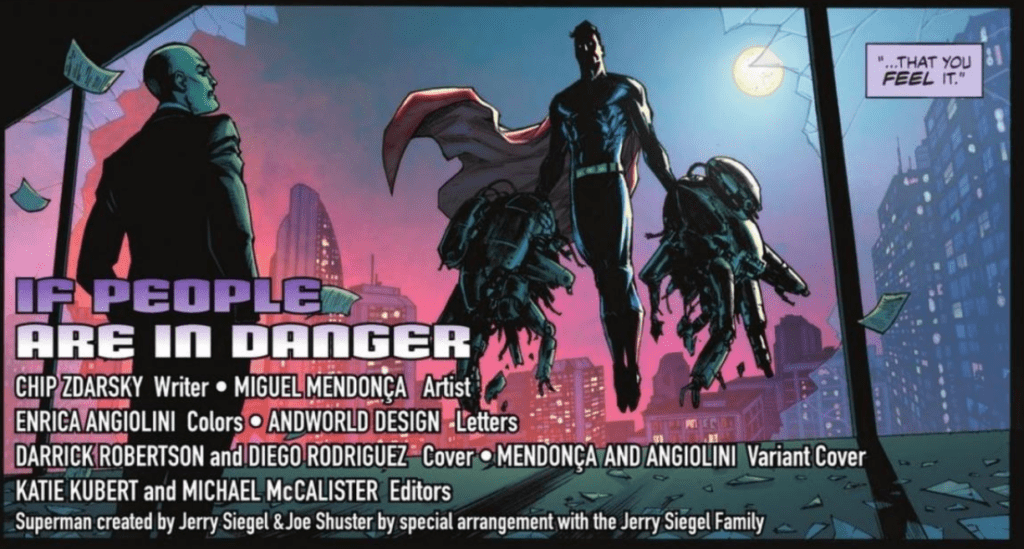
One of Justice League: Last Ride #1‘s best aspects is its coloring. Done by Enrica Angiolini, the colors of the issue are not afraid to be bold, which helps place emphasis on specific moments and make the issue itself stand out. For example, when Superman is shown performing various heroic acts around the city, Angiolini decides to backlight him with a gorgeous sunset, which provides the moment with a certain amount of reverence. Angiolini also uses brightly colored backgrounds that don’t match the setting for certain panels as a way of helping the character express emotion and add energy to the scene.

Justice League: Last Ride #1 Coloring Example

AndWorld Design goes all-out in Justice League: Last Ride #1 and uses various methods to better express the characters’ manners of speaking. Examples of this include: expanding words past the borders of their speech bubble or making the border of a speech bubble bold to show that a character is screaming, making the letters of a sentence slightly misaligned to signify that a character is disoriented, and giving a particular word it’s own speech bubble to emphasize its importance.

Justice League: Last Ride #1 is an intriguing introduction to a world that only gives us as much information as we need and leaves us dying for more. The art, coloring, and lettering all come together to create some stunning visuals and an issue that quickly draws a reader into the series.

Monkeys Fighting Robots Youtube

Review: RED ROOM #1 Goes For The Jugular

Red Room

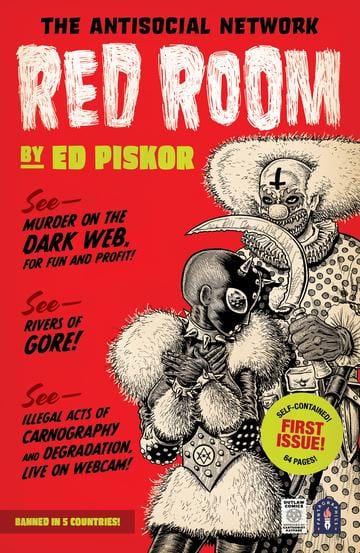
RED ROOM, Ed Piskor’s much-hyped new series from Fantagraphics, has finally arrived. And it’s the gore-splattering, blood-dripping horror comic masterpiece you have been waiting for. But we warned…entering the RED ROOM is not for the faint of heart.

Red Room: The Anit-Social Network #1
Written, penciled, inked, and lettered by: Ed Piskor
Published by: Fantagraphics Books

Aided by the anonymous dark web and nearly untraceable crypto-currency, there has emerged a subculture of criminals who live-stream and patronize webcam murders for entertainment. Who are the murderers? Who are the victims? How do we stop it?

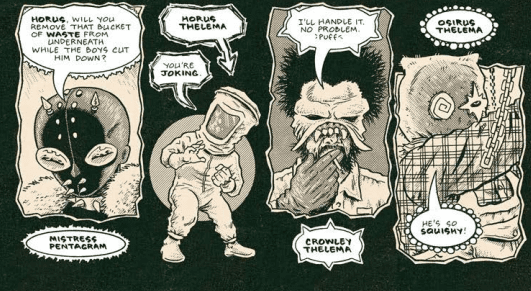
Red Room is being billed as a series of stand-alone issues in a shared universe, and this debut certainly sets that up. Issue# 1 introduces us to Davis Fairfield, a seemingly schlubby and mild-mannered court clerk beset by a car accident that kills his wife and one of his daughters, with his oldest daughter, Bree, surviving. But in the tradition of Tales From The Crypt (and other pre-code horror comics) things take a dark, dark twist with Davis (SPOILERS AHEAD!).

See Davis is much more than a court clerk, he’s a snuff stream watcher and creator and because of that he is recruited by the Thelema family and becomes our eyes and ears into this new world (this a great bit of storytelling by Piskor.) The Thelema family is a group of murders who run one of the biggest red rooms in this world and they are the stars of Red Room. Costumed and themed, the Thelma clan is as if the Texas Chainsaw Sawyer family adopted wrestling gimmicks. It’s an idea that allows Piskor to create some crazy killers and concepts, and if this first issue is only a glimpse, then we are in for a brutal gallery of sickos. I can’t fucking wait.Red Room

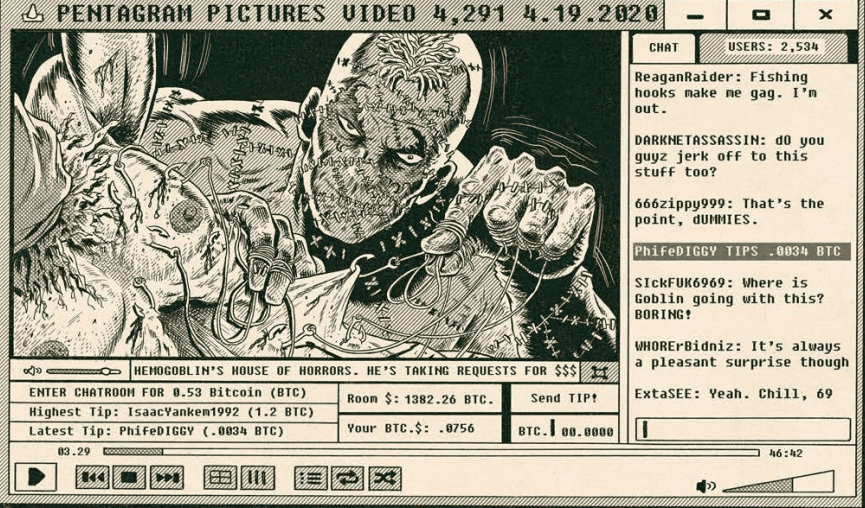
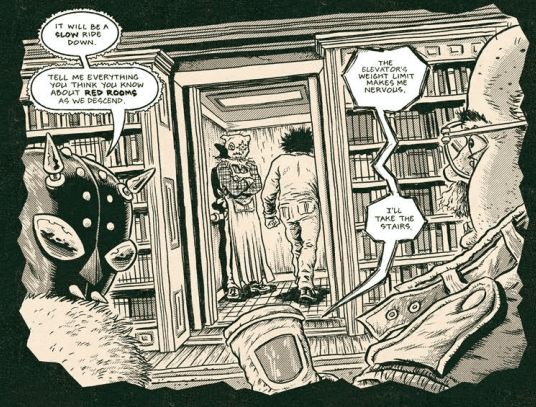
The art in Red Room is comics and cartooning of the highest caliber. Anyone who has followed Piskor knows the man is extremely detailed. He fills pages and panels to the brim. Red Room is no different and in fact, seems even hyper-detailed. A lot of this is due to the various cartooning tools and techniques Piskor is using. Duotone, heavy-shading, cross-hatching and much more are prevalent on just about every page. And the level of detail is of course outstanding. The layouts and lettering are also fantastic, with pages using inventive things like ‘webcam’ POV panels and chatroom conversations.

The character designs are to die for. As said before, each killer has a ‘gimmick that allows Piskor to draw some great costumes and sets. It’s a great visual hook that opens up a lot of possibilities and that ‘rogues gallery’ is one of the main draws of the book (personally I’m hoping for a ‘killers’ trading card set or some kind of Who’s Who book!).Red Room

Red Room is definitely going to be one of the best comics of the year and frankly, a MONTHLY title like this a rare and should be supported. So make sure you add it to your pull list and enter the Red Room!Red Room


Red Room is available at your local comic shop and directly from Fantagraphics. 

Monkeys Fighting Robots Youtube

Review: TEENAGE MUTANT NINJA TURTLES: BEST OF SPLINTER Explores The Sensei’s History

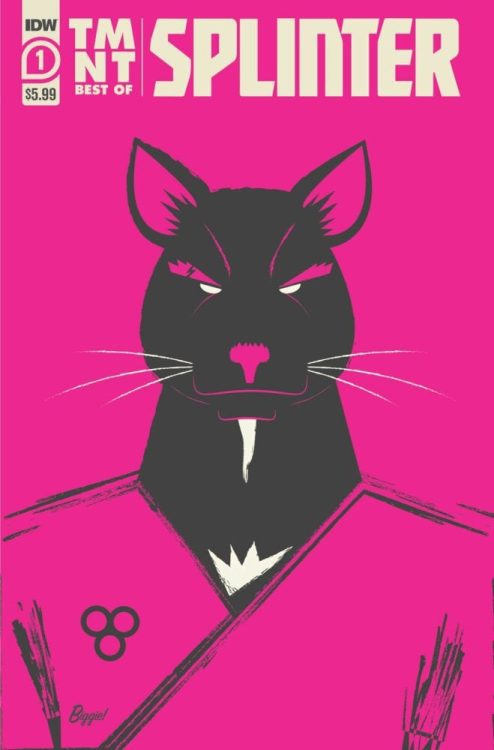
TEENAGE MUTANT NINJA TURTLES: BEST OF SPLINTER is available in comic book stores on Wednesday, May 19th, bringing together the most popular Splinter stories in TMNT history. The collection contains four stories, ranging from pre-IDW continuity to the series’ current iteration. Readers will be thrilled to explore the talented works within each issue.

Story and Artwork

TMNT ADVENTURES #45

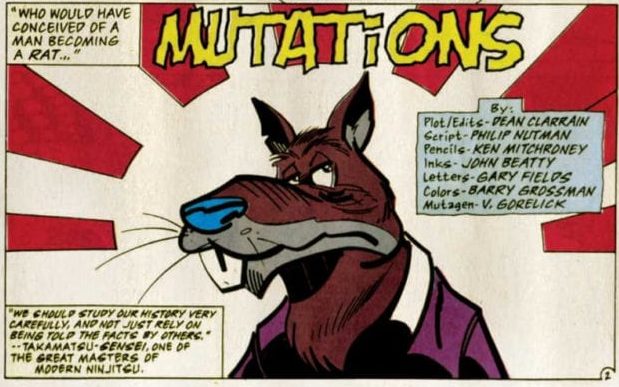
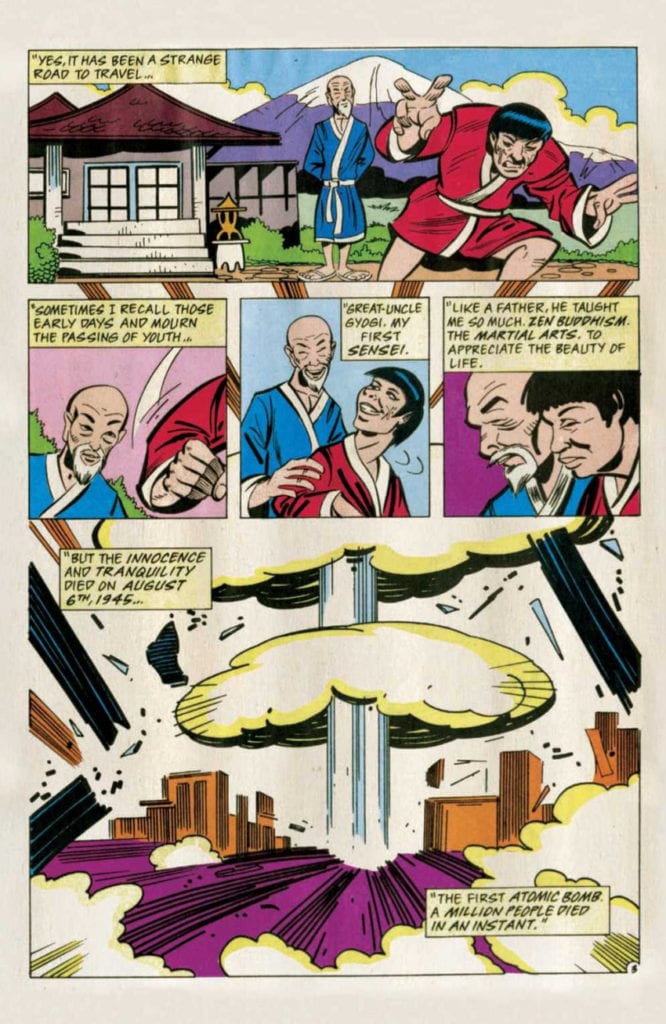
Steve Murphy’s narrative retells the origin of the martial arts master from his own perspective. This origin details Splinter’s life as Hamato Yoshi, a ninjutsu student in training. Murphy places our protagonist in mid-century Japan, detailing his experiences of hope and despair in the midst of World War 11.

Ken Mitchroney and John Beatty’s penciling and ink work is reminiscent of classic animated cartoons. With Barry Grossman’s coloring and Gary Fields’s old-school lettering, readers will experience strong feelings of nostalgia.

TALES OF TMNT #2 (VOL. 2)

Murphy offers readers an intriguing look at Splinter’s mystical abilities in TMNT #5. The old master finds himself in a challenge of willpower when a nefarious spirit enters the Turtles’ domain.

Jim Lawson and Eric Talbot’s penciling and ink work, combined with Digikore Studios’s coloring, craft images that look like they’re straight out of an anime production. The bright colors and bold outlines help highlight the action sequences. And Peter Laird’s lettering makes effective use of onomatopoeia, adding a sense of sound to these effects.

TMNT #5 (IDW)

Writer Tom Waltz crafts yet another Splinter backstory for IDW continuity. But instead of rehashing each and every detail from the original, Waltz adds a dynamic historical and mystical flair. Casting Splinter and the Turtles as reincarnated humans from Japan’s past answers long held fan questions.

Dan Duncan and Mateus Santolouco’s penciling and ink work, alongside Ronda Pattison’s coloring, created realistic tones and figures for the characters’ past selves. And Shawn Lee’s lettering placements are spaced out well to draw attention to the somber scenes.

TMNT: SPLINTER MICRO-SERIES

The final story featured in this collection is Erik Burnham’s Splinter micro-series, which serves as an alternate version of Splinter’s backstory based on IDW continuity.

Charles Paul Wilson III’s penciling and ink work, Jay Fotos’s coloring, and Lee’s lettering provided fantastic panels for this issue. The pastel colors help generate a dreamlike quality as Splinter remembers his past. We also enjoyed the unique character designs and effective use of font sizing.

Conclusion

TEENAGE MUTANT NINJA TURTLES: BEST OF SPLINTER is the perfect collection for fans wanting to learn more about the Turtles’ beloved sensei. We hope to see more of these special books published in the future.

Monkeys Fighting Robots Youtube

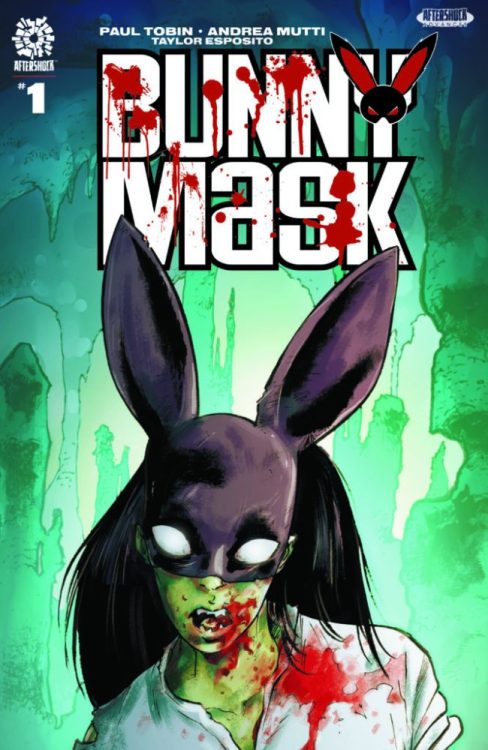
AfterShock Comics Exclusive Preview: BUNNY MASK #1

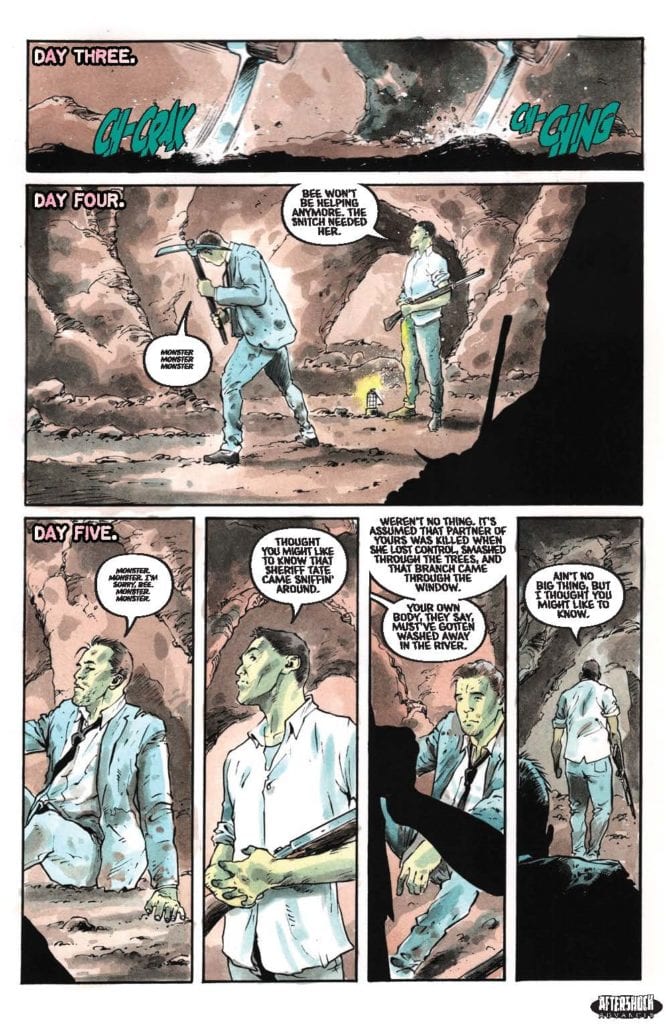
bunny mask aftershock comics exclusive preview

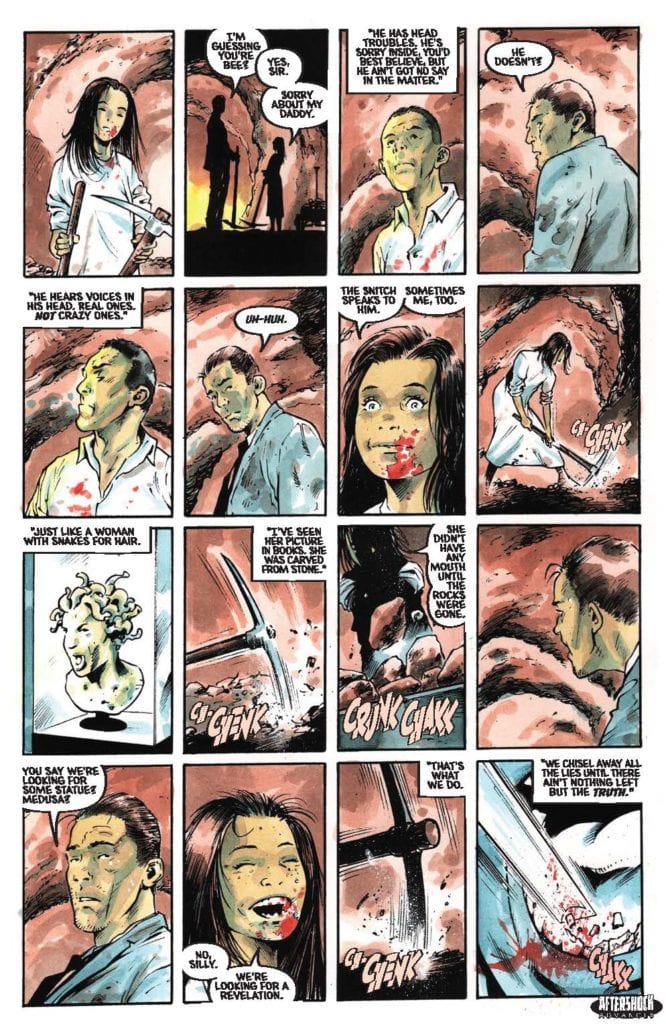
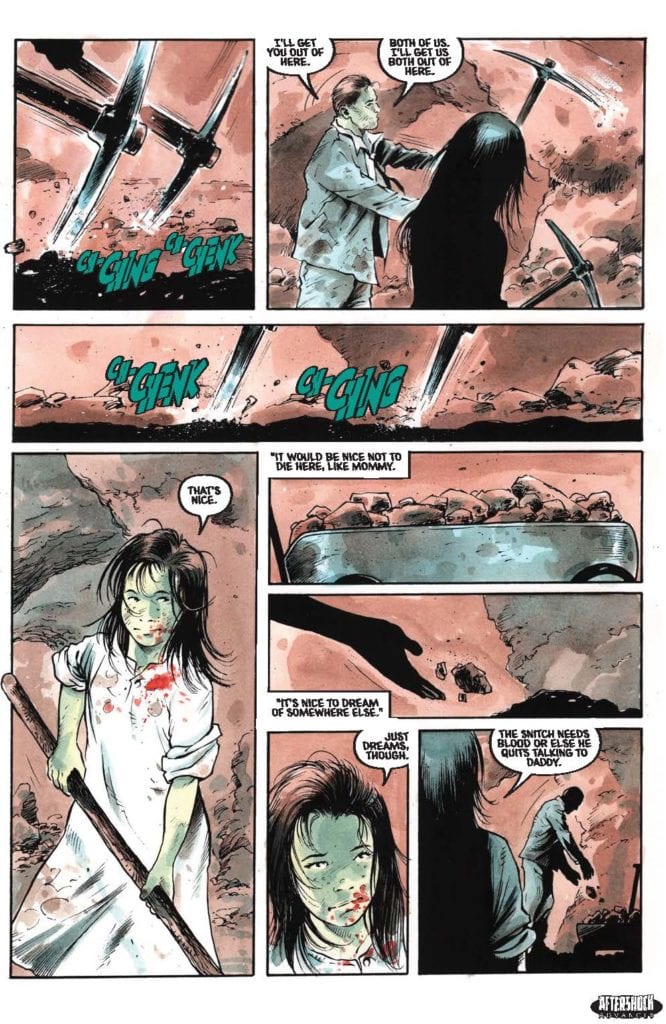
BUNNY MASK #1 hits your local comic book store June 9th, but thanks to AfterShock Comics, Monkeys Fighting Robots has an exclusive four-page preview for you.

About the issue:
A new horror series from the creator of the Eisner-nominated Colder!  

Sealed in a cave before the dawn of man, released by a crazed madman, Bunny Mask walks our world once more. But for what dark purpose does she use her unnatural powers? And what’s her connection to Bee Foster, a young girl murdered by her father fourteen years ago? In order to save his life – and his sanity – one man will have to discover the truth of what waits behind the mask.

BUNNY MASK #1 is by writer Paul Tobin and artist Andrea Mutti, with letters by Taylor Esposito. The main cover and “mask variant” are by Mutti, with an incentive cover by Charlie Adlard.

Tobin is the co-creator of the Eisner-nominated horror series Colder, while Mutti has most recently worked on the AfterShock slasher series Maniac of New York.

Check out the BUNNY MASK #1 preview below:

bunny mask aftershock comics exclusive preview

bunny mask aftershock comics exclusive preview

bunny mask aftershock comics exclusive preview

bunny mask aftershock comics exclusive preview


bunny mask aftershock comics exclusive preview


Are you excited for BUNNY MASK? Sound off in the comments!

Monkeys Fighting Robots Youtube

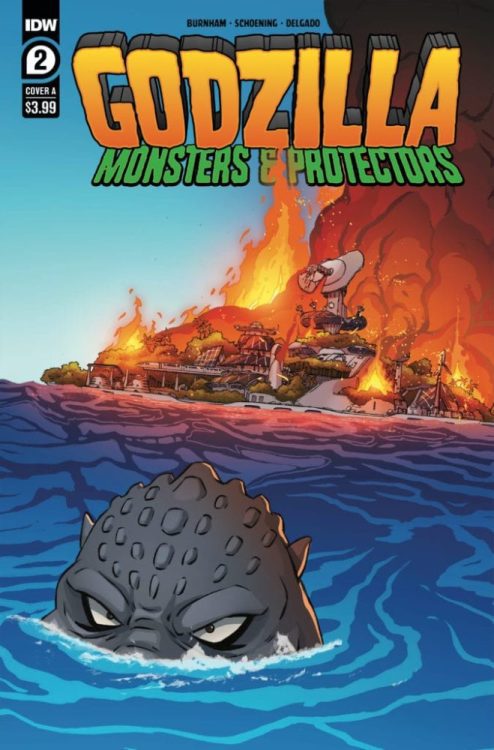
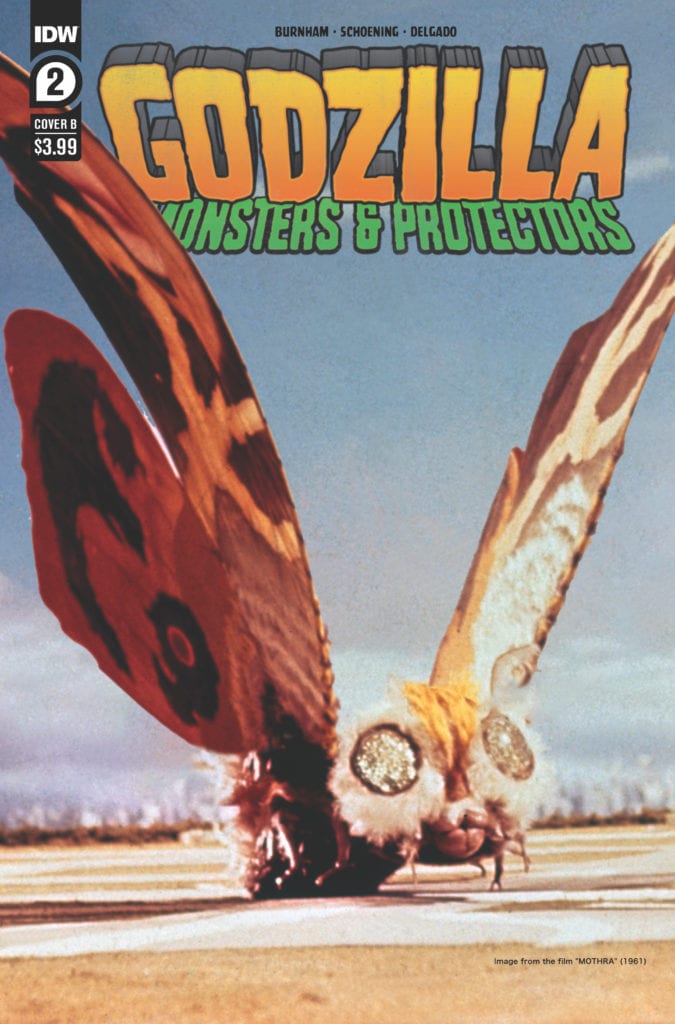
Review: The Shobijin Steal The Show In GODZILLA: MONSTERS AND PROTECTORS #2

Godzilla

Godzilla: Monsters and Protectors #2 out this week from IDW Comics gives special attention to the Shobijin. The twin tiny priestesses of Mothra receive a dangerous prophecy of destruction and decide they have to take action. This new installment in the new Godzilla series arrives thanks to Erik Burnham (writer), Dan Schoening (pencils and ink), Luis Antonio Delgado (color), and Nathan Widick (lettering).

Summary

Godzilla is sitting in judgment on humanity, and the verdict could spell doom for life on Earth! The Shobijin become aware of this and know they could ask Mothra to intervene… but does humanity deserve Mothra’s help?

Godzilla

Writing

The Shobijin are the main draw of this issue. Especially as Godzilla doesn’t appear except in a vision. Unlike their depiction in the Showa Era (1954-1975 films) these twins don’t talk in unison (well they do for like a panel but not constantly like in the films). Instead, they act more like the version from the Rebirth of Mothra Trilogy, possessioning individual personalities. They have yet to be individually named but one seems to be more cautious, while the other seems more adventurous.

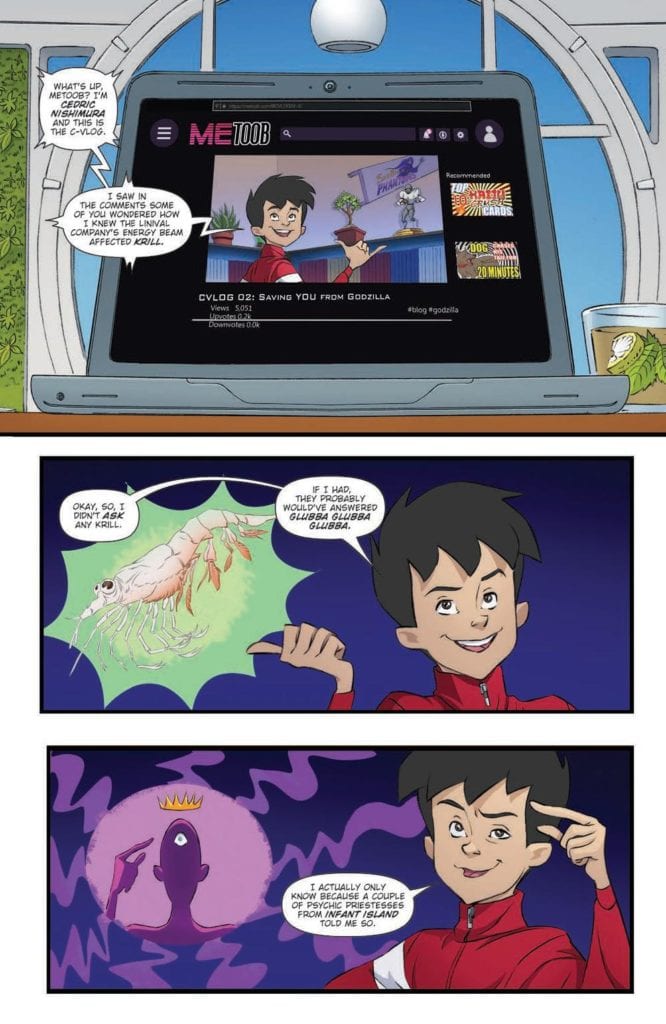
This issue isn’t without its faults though. Cedric is showing his young age and some of his lines of dialogue have a cringe factor to them (see the page below for a perfect example of this). At the same time, Linival Company the corporation seems to be evil for evil’s sake. The main reason the company president wants to destroy Godzilla because it made the company look bad. Not exactly a deep character motivation but this series is supposed to be for a younger audience so some leeway is allowed.

Godzilla

Artwork

The art by Dan Schoening offers an intriguing mix of appealing and striking moments. The appealing comes with the adorable way the Mothra larva is drawn showing it resembling a giant stuffed animal. The striking comes as the twins have a prophetic dream showing Godzilla’s rage and what such a future would entail.

The color by Luis Antonio Delgado adds great emotional effect at just the right moments. One of the best examples of this comes in the final two pages of the issue. These two pages are presented as a splash page with the color offering a perfect lighting effect to showcase something ominous is on the horizon.

Godzilla

The letter work by Nathan Widick offers a great auditory feel throughout the issue. Special attention is paid to make sure specific message boxes distinguish between Cedric’s voiceover and those who are talking. Also, the accurate depiction of the monster roars continues to impress.

Conclusion

Godzilla: Monsters and Protectors #2 moves the story slowly but it still has an entertaining element to it. There are some great visuals in this issue which the Mothra fans will truly enjoy. Hopefully, Kaiju fans are giving this series the chance it deserves because it still has a lot to offer.

Monkeys Fighting Robots Youtube

Review: THOSE WHO WISH ME DEAD Is A Thrilling Adventure

Those Who Wish Me Dead delivers a heartfelt story packed with tons of great action. It’s an effective throwback to older action films but does feel slightly unfocused at times with its narrative. The film is saved by its stellar cast, gripping story, and score that feels like a character itself. Those Who Wish Me Dead may not live up to the backwoods adventure it’s based on, but it’s still a fun thriller that can pull at your heartstrings thanks to the creative minds that came together for this film.

This film, while not offering many surprises along the way, stays strong by delivering a great bond between two people looking for peace. A film such as this is right up the director’s alley too, given he has worked on similar projects in the past and directed them to perfection. Those Who Wish Me Dead is directed by Taylor Sheridan and written by Michael Koryta, Charles Leavitt, and co-written by Sheridan. The film stars Finn Little, Jake Weber, Tyler Perry, Nicholas Hoult, Aidan Gillen, Medina Senghore, Jon Bernthal, and Angelina Jolie. It centers on Connor Casserly (Little), a young boy who is being hunted by assassins after his father (Weber) is killed. Connor finds an ally in Hannah Faber (Jolie), a smoke jumper struggling to forgive herself for a forest fire accident that resulted in the death of three boys.

(L-r) FINN LITTLE as Connor and ANGELINA JOLIE as Hannah in New Line Cinema’s thriller “THOSE WHO WISH ME DEAD,” a Warner Bros. Pictures release.

Based on Koryta’s novel, Those Who Wish Me Dead delivers a visceral 90’s style action treat. The writing for this film succeeds for the most part, and minor details for both Connor and Hannah make them a likable pair to follow throughout the film’s short runtime. Hannah’s struggles have caused her to flirt with death, she performs risky maneuvers, has a drinking problem, and suicidal tendencies. Connor has been tossed into the lion’s den after his father’s death, while he tries to avoid the assassins, he ponders his future because without his father his next steps are uncertain. The trust that grows between these two is the heart of this film, and it’s wonderful to witness the look of uncertainty they both have after initially meeting turn to full-fledged trust over time. Hannah is being given a chance to redeem herself, as she does everything in her power to keep Connor safe from the two assassins.

Those Who Wish Me Dead stumbles a bit with its narrative at times when it juggles trying to develop both Connor and Hannah. The film starts being about Hannah, but then it shifts to Connor, so when they come together the focus becomes jumbled. While the events on-screen lend to both character’s growth, it would have been great to get more focus on one particular person. The ambiguous nature of the two assassins and what they are trying to prevent is a nice touch. Though it does seem overly vague sometimes, and the emotional subplots amongst the two leads and the side characters keep this film from growing dull. Jolie’s return to action is great overall, her motherly nature towards this scared boy is felt through the screen during all of their interactions.

(L-r) ANGELINA JOLIE as Hannah in New Line Cinema’s thriller “THOSE WHO WISH ME DEAD,” a Warner Bros. Pictures release.

Little’s performance as Connor is terrific as well and his expressions throughout the film assist in the viewer wanting to see him make it out alive. Sheridan’s direction here makes up for the film’s shortcomings in its character development, as he takes you on this emotionally exhausting ride that starts at a slow pace before maintaining its edge of your seat adventure feeling. The film is shot wonderfully and accompanied by Brian Tyler’s magical score. Tyler’s score swallows the scenery, raises the stakes, and builds on the emotional tale being told on screen.

Those Who Wish Me Dead stays afloat despite its narrative hiccups and delivers a solid action film. The performances from Little and Jolie will be more than enough reason to endure its initial slow start. Sheridan’s previous works certainly opted for more character development, but his direction here filled in those gaps and allowed the film to end up on the positive side. Those Who Wish Me Dead probably won’t impress those who have seen countless films like it, but it’s still an effective thriller that is carried by two fantastic lead performances.

Monkeys Fighting Robots Youtube