Home Blog Page 153

Self-Published Spotlight: A GAME OF DOUBLES with Writer Jonathan Thompson

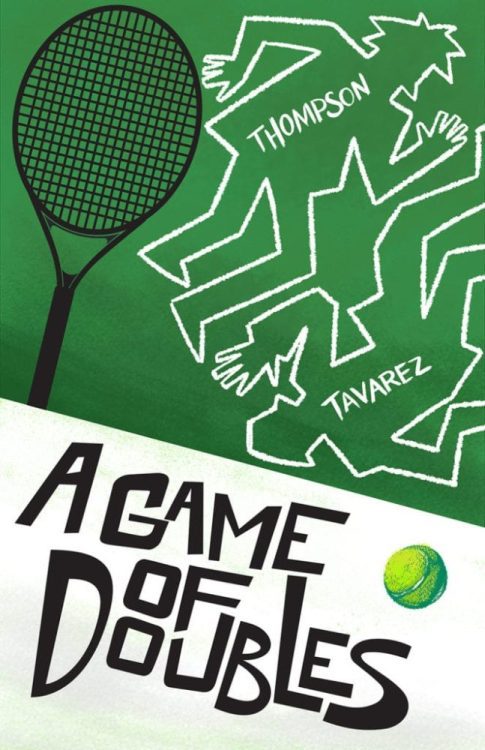
A Game of Doubles

Welcome to Self-Published Spotlight, a regular interview column where I will be highlighting self-published comics and the cretors and small print publishers who make them.


Last week I had the pleasure to talk to the artist on A Game of Doubles, Ryan Tavarez (you can check out that interview here). This week, I’m talking to Jonathan Thompson, the writer of the series. Check out what he has to say about A Game of Doubles and then make sure to support the Kickstarter and get in the game with this book!

Monkeys Fighting Robots: Jonathan, as always thanks for the time to talk to us. So let’ get right to it. A Game of Doubles is your latest Kickstarter project. Can you serve us some details? Both on the book and your Kickstarter campaign?
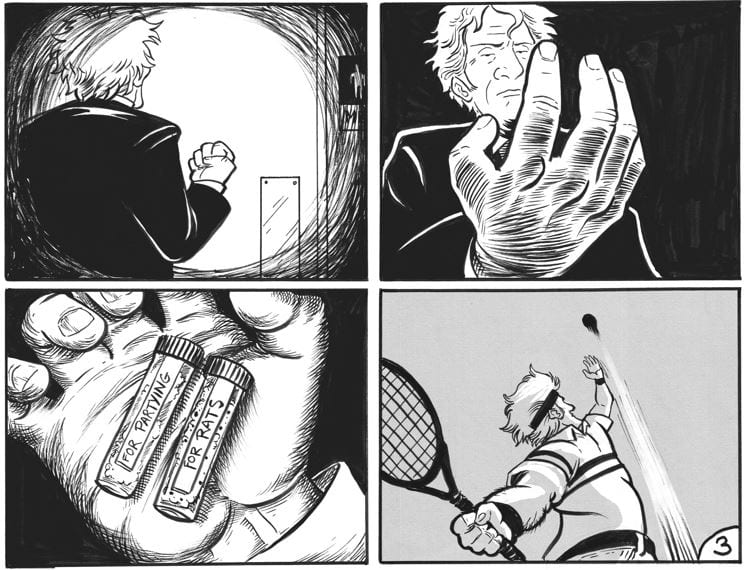
Jonathathan Thompson: A GAMES OF DOUBLES is about Jackson and Franklin Teach, identical twin brothers celebrating their 50th birthday with friends and family at a nice country club. Jackson used to be number one in the world as a tennis pro but one game 18 years ago brought that to an end. Now, staring at his brother across the party hall he grips two vials in his pocket. One with cocaine, the other rat poison.

You can back the campaign really in 3 different ways…First is you pick a random ending. Being doubles there are two ways this story can play out. You can then get (my preferred artistic way) the 48-page flipbook version. This way you get both endings and you just flip the book around to read it. Finally, there is the Director’s Cut TPB which I plan on making really special…adding process and development of the book, so a ton of back-matter.A Game of Doubles
MFR: Was A Game of Doubles seen as a Kickstarter project from the get-go, or did you have any other publishing plans for it as well?
JT: Kickstarter was the go-to place for this project. It’s an odd little book for a publisher, especially in its 48-page flipbook form. Honestly, there is just more power doing it yourself through KS. I don’t take a paycheck. Everything in the KS budget goes right to paying Ryan and paying for the printing/shipping. You know, it’s amazing how people from everywhere can see your project and bet on you as a creator. I really love it.

MFR: And how has the response to the campaign been so far?
JT: The campaign has been great so far. People really seem to be enjoying the concept of the alternate endings and Ryan’s magnificent art. I mean when you look at those pages how could you not love it?

MFR: The first two books I read from you were deeply rooted in genre, Tales of The Dead Astronaut was sci-fi, and the currently running Burn Residue is gritty crime/noir.  A Game of Doubles more ambiguous. Where did the concept for it emerge from? Did you approach this book any differently than your others?
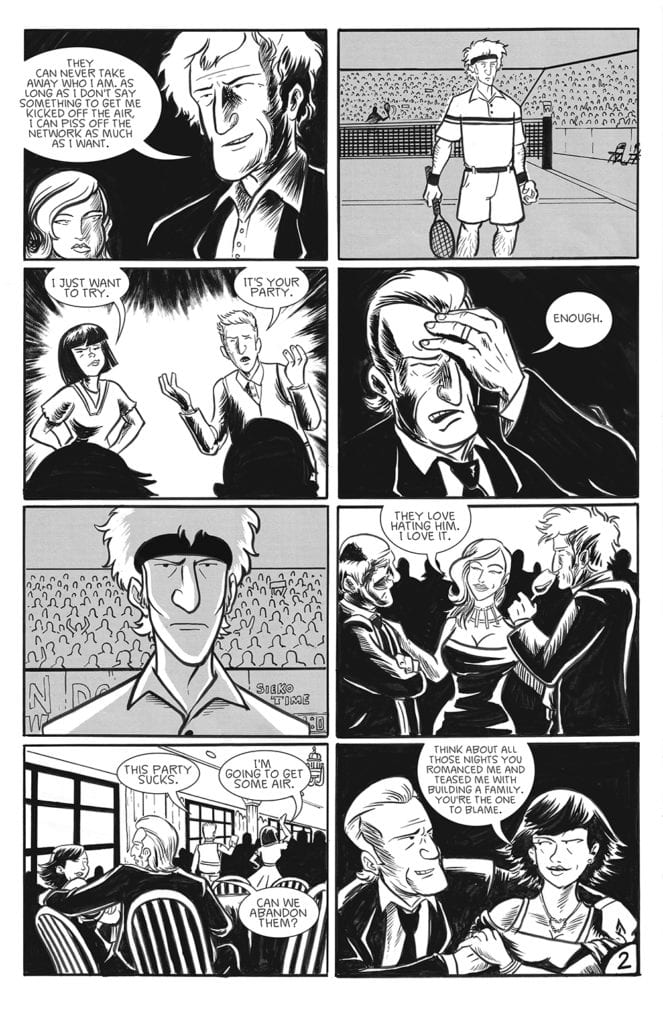
JT: That’s a good question. I kind of think of this as a crime story as well…there’s definitely a dead person at the end whichever ending you pick. But, this whole story has been spinning in my mind for years now. It started just being in a country club bathroom for some event and thinking about a story that could take place there. Then I came up with the brothers. I started thinking of a little Hitchcock-style story of two brothers doing cocaine and knowing that there was poison mixed in. I wanted to play with the idea of the double or doppelganger and this all kind of came together for me perfectly. And in terms of my approach. When I was scripting I knew that I wanted to use that 8-panel grid but I knew that I wanted to use it to play with pacing and the doubling between the brothers.

MFR: Would you cite any specific artist or work as having an influence on A Game of Doubles?
JT: The first would be STRAY BULLETS by David Lapham. For the past year, I’ve been going through that gigantic UBER ALLIS edition taking my time and really letting the stories sit with me. Midway through the series, there are these wonderful one-off stories of these oddball characters going through life. Telling a perfect story in about 24 pages became my goal. Then I turned to this story that was sitting at the back of my mind for years and applied it to that STRAY BULLETS style. I think we nailed it.A Game of Doubles
MFR: How did you find artist Ryan Tavarez?
JT: I found Ryan on Instagram through his work with NOMADS. I was a huge fan, to say the least. For the past year, I’ve been trying to find a project that would fit us both (and see if he was interested). After he read Burn Residue I think he was pretty game to see what I could come up with. So of course I sent him a tennis comic about twins doing cocaine in a bathroom to follow up his CONAN-like fantasy book…he turned out to be the perfect fit.

MFR: How do you two work together? What’s the creative process between the two of you? What are the logistics?
JT: We’ve been working insanely well together. I learned a long time ago to just let myself go to the creative journey that is making comics. All I knew was that it needed to have the 8-panel pages for rhythm and that I wanted Ryan to stick with just ink. No digital tricks. Just raw black ink. Once I got the thumbnails from him we were ready to run because he just nailed it. Now, I just have to sit back and wait for it to be done.

MFR: Tennis and the tennis world seem to be a big part of A Game of Doubles. Is the sport something you have always been interested in? Was the sport always part of the story?
JT: Tennis came from the Hitchcock influence. In the late British and early American films of Hitchcock, he used sports players a lot. I think of THE MAN WHO KNEW TOO MUCH and STRANGERS ON A TRAIN. I liked that element. It gave me something to bounce off of. It provided dramatic action as well while the brothers talked and partied. Then I watched IN THE REALM OF PERFECTION, a documentary on John McEnroe and really that was it. The book kind of emptied itself out onto the page after that.

MFR: So when does the Kickstarter end? And do you have any stretch goals or surprises in mind?
JT: Let’s focus on funding first, Manny! If we get lucky to pass our goal…I’ll definitely set a stretch goal for the sequel… and I have one more pin-up that might be coming in that is very on-brand for the STRAY BULLETS influence.

MFR: Anything final you would like to add?
JT: Check out the campaign and see if you dig it. My whole back catalog of work from TALES FROM THE DEAD ASTRONAUT to BURN RESIDUE along with Ryan’s NOMADS are on the add-ons section. You can get the full package for what I’ve been up to for the past year. I’m all about good comics…I hope you all enjoy them. And I have a newsletter

https://spacestationzed.substack.com/

www.spacestationzed.com

Monkeys Fighting Robots Youtube

Review: JIM LIVES And We Couldn’t Get Much Higher

Jim Lives
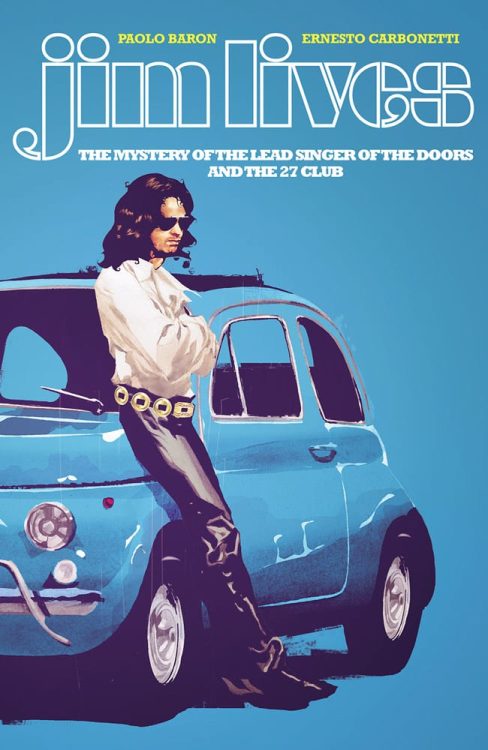
Jim Lives Cover Art Credit: Image Comics

The title of Image Comics new original graphic novel Jim Lives: The Mystery of the Lead Singer of The Doors and The 27 Club is a statement of fact (Jim Lives) and the introduction of an urban legend (the 27 Club). Where Marvel have What if..? and DC have their Elseworlds, Image Comics have the conspiracies of Paolo Baron and Ernesto Carbonetti. They are fascinating and engaging stories of urban myths and hopeful pipedreams.

The second volume in The Conspiracy Trilogy asks what would have happened to Jim Morrison, lead singer of The Doors, if his death had been faked. Who would have been responsible, how could it have been done, and more importantly, where would the Lizard King end up?

Jim Lives Credit: Image Comics

Ride the Snake

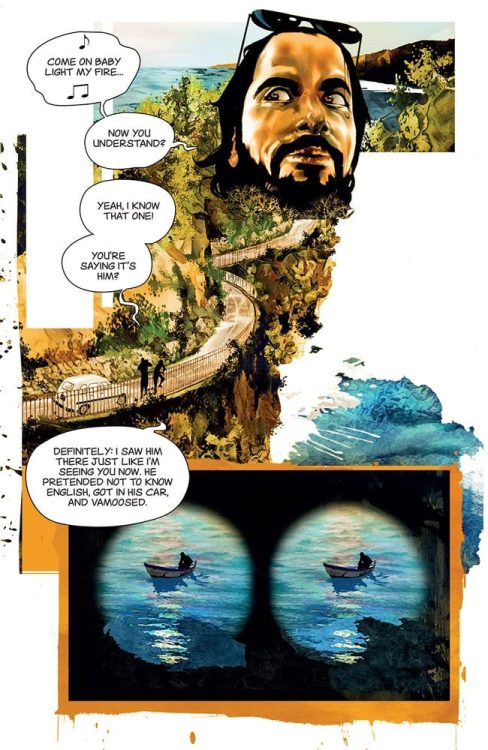
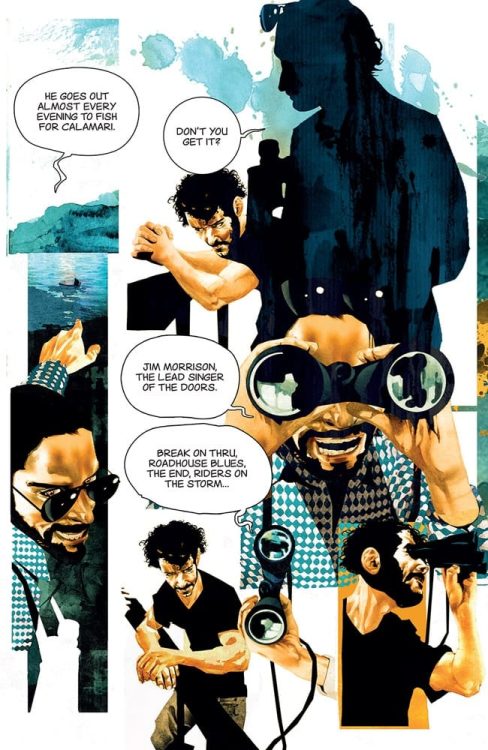
Jim Lives opens with a journalist, hot on the trail of the long dead singer. His stalking of an elderly fisherman in a coastal Italian town is intrusive and obsessive. Jax, the journalist, is convinced that the distant shape fishing for squid is the legendary singer, but his companion is not yet on board.

As a reader you assume Jax is speaking the truth. You have, after all, picked up a book exclaiming the very thing the young journalist is excited about: Jim Lives. This is going to be about Jim Morrison and the life he would have led.
Well, yes and no.
Like numerous other texts involving Morrison, such as the biography No One Here Gets Out Alive by Jerry Hopkins and Danny Sugerman and the Oliver Stone movie, Jim Lives is as much about the lives affected by the lead singer’s presence than it is about the man himself. Baron and Carbonetti take the reader on a journey of obsession and love. In this case, they show a relationship between father and son. Both of these are themes that epitomize Morrison’s life experience. Jax and his companion, and eventually his father, are all riders on the storm, swept along by an idea that becomes impossible to let go. It is an addiction that mirrors Morrison’s drink and drug dependence. As the story unfolds, the consequences of this addiction are played out in various forms. Each sequence becomes a metaphor for the inevitable effects of this unhealthy addiction: the highs and lows, the good and bad.

The script cleverly weaves elements of The Doors music and lyrics into a thematic exploration of Jim Morrison’s life and the wider concerns of celebrity. The destructive highs of fame and fortune are sorted through and illustrated by references to other bright flames who burned bright but fast. Cameos by the likes of Kurt Cobain and Amy Winehouse highlight the discussion of the 27 Club and act as reminders for the tragic lives these stars led. While the book celebrates life it is also a constant reminder of the losses. There are moments that will make you laugh and fill you with glee at the references being made but there is also a somberness to much of the narrative.

Jim Lives Credit: Image Comics

The Show Is About To Begin

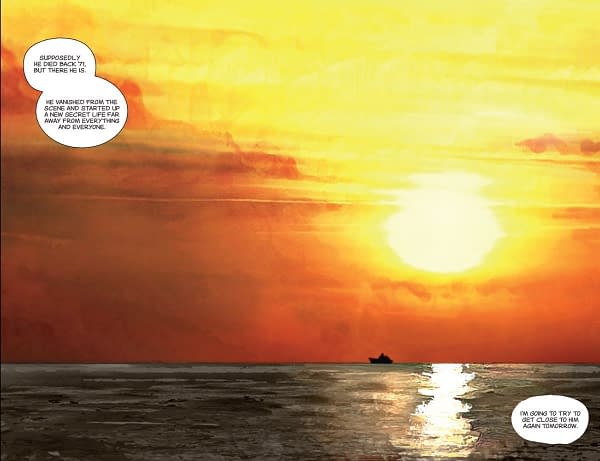
Carbonetti captures a beautiful, sublime world soaked in the Mediterranean sun. The bright Italian landscapes and clear ocean scenes are wondrous to behold: works of art in their own right. A high number of double page spreads allows Carbonetti to capture spectacular vistas. This is a dream world, suited to someone like Jim Morrison and therefore believable that this is where he would end up. It is the singers utopia, influenced by real landscapes and the visual style of Oliver Stone’s biopic The Doors. Golden lights flood the scenery and glisten on the sea. The landscapes merge with the characters and fade out before the borders of the panels. This creates an ethereal sense to the location. It is the very essence of idyllic.

However, the strong use of silhouettes and negative space gives Jim Lives a darker undertone, often reflected in the script. Not everything is as it seems and you are led through this labyrinth of possibilities with Jax. The desire to meet Jim Morrison pushes the narrative but this longing is also expressed through the artwork. A series of quick glimpses, distant figures, and recognizable faces help to grow a lyrical tension befitting of a Doors song. It is time to break out Waiting for the Sun and Morrison Hotel and play them as you read. The music fits beautifully with the book: a perfect unison between music and art.

Somewhere the Lizard King stirs as his spirit is called.

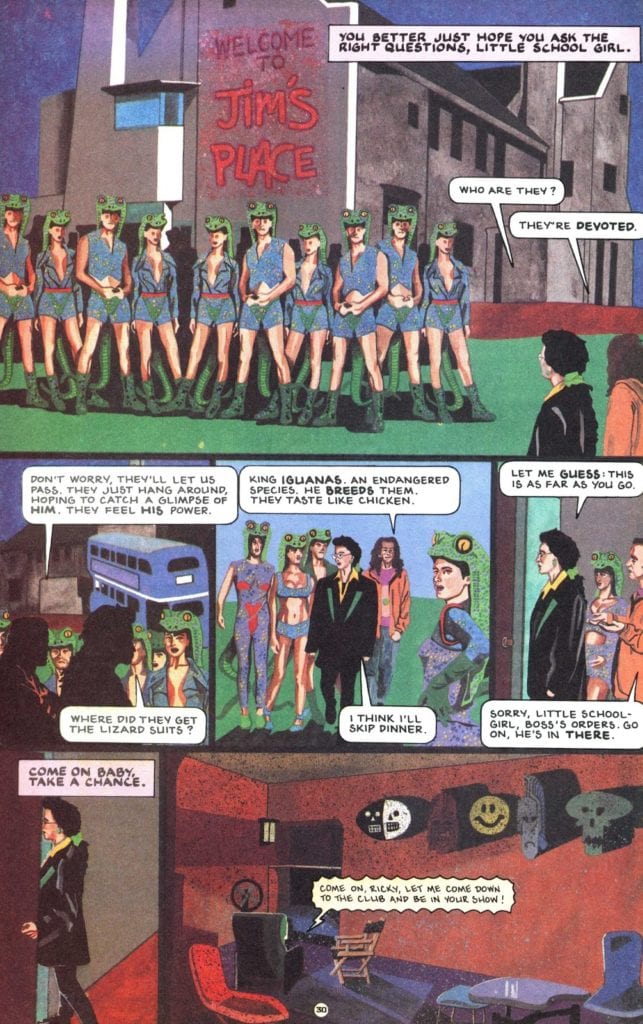
Lord Jim Credit: Fleetway Publications

Other Voices

In 1991, to celebrate 20 years since Jim Morrison’s death, the British Comic Crisis published a story entitled Lord Jim. Written by Igor Goldkind and illustrated by Steve Sampson, the short comic followed a desperate journalist on an obsessive quest to find the lead singer who potentially had faked his own death. Although similar in plot, the 1991 take focused on the cult status of the singer and the destructive quality of his life. He was an unstoppable force that led many to their destruction. Coming out of the 1980’s, especially with UK politics and the thematic comics emerging at the time, Lord Jim was a product of its time. Self reflective, desperate, and destructive. Jim Lives is of a different ilk. Even with the darker undertones and the sad reflection of lost talent, Baron and Carbonetti’s tale is optimistic and about self discovery.

Obsession was a large part of Jim Morrison’s life: obsession with Pamela Courson, obsession with pushing life to its extremes, obsession with experience. Jim Lives captures that essence with the interplay of self destructive obsession and the celebration of life. There is a duality to the narrative that comes from the characters’ interactions. The links to real people gives the book a solid foundation for its premise and you can almost believe in the conspiracy that it flaunts. There is a truth beneath the surface that you can’t help but pick at. Not the one surrounding the famous singer but something more universal about relaxation and living a secluded, balanced life. The hustle and bustle of the modern world blinds us to the simplicity of existence and contemplation. Jim Lives reminds us that it is worth taking time out. Be reflective and take a breath.

Ultimately Jim Lives is a story about a man who wanted to be left alone and a world that wouldn’t allow such selfishness.

Jim Lives
Jim Lives Credit: Image Comics

The End

Jim Lives is a triumphant book packed with outstanding art work and reflective storytelling. There are layers to the narrative that are mirrored throughout the layouts and sublime panels. The painted quality of the art creates a dreamlike world populated by dreamers, some who are trying to find their way and others who are already there. You will become enraptured with the conspiracy aspect of the story, especially with the surprising amount of humor that Baron puts into the script, but there is so much more to discover and learn from this humble 140 page book.

Before he died Morrison expressed some regrets with the way his life unfolded. This is evident in the writings that he left behind. He was a creative thinker trapped in a corporate world and in need of an escape:

The horror of business

The Problem of Money
guilt
do I deserve it?

The Meeting
Rid of Managers & agents

After 4 yrs. I’m left w/a
mind like a fuzzy hammer

regret for wasted nights
& wasted years
I pissed it all away

(From Wilderness: The Lost Writings of Jim Morrison published by Penguin Books 1988)

Jim Morrison was a poet and a self destructive force of nature. But thanks to Image comics, Paolo Baron, and Ernesto Carbonetti, 50 years after his body was found in his apartment in Paris, the life of The Doors frontman is celebrated and Jim Lives again.

Monkeys Fighting Robots Youtube

LOKI – Glorious Purpose | TV Review

Loki is the latest Marvel show to hit Disney+, this one focusing on the MCU’s popular anti-hero. “Glorious Purpose” is the best opening episode so far for a Marvel show.

During the Avengers’ Time Heist a past version of Loki was able to escape with the Tesseract. However, Loki gets apprehended immediately by the Time Variance Authority (TVA) and taken to be put on trial. Mobius M. Mobius (Owen Wilson) one of the TVA’s best agents believes Loki could be of use to the organization and tries to convince the Asgardian to join them.

The opening episodes for WandaVision and The Falcon and The Winter Soldier had to set up their respective worlds and stories and Loki had to do the same. “Glorious Purpose” had to set up who the TVA were, their backstory, and why Mobius wanted to recruit Loki. It was a backstory that featured timeline/multiverse wars, Gods that maintain the sacred timeline and showing that there is a great threat that could destroy all reality. These ideas were so barmy that they made Guardians of the Galaxy look restrained.

This explanation of what the TVA were and why they came to be does raise some big questions. The TVA’s job is to keep the timeline running its natural course. This leads to the question ‘if everything predetermined does it mean free will doesn’t exist?’ Loki’s defense was that it was The Avengers who traveled back in time and altered the timeline but the judge, Ravonna Renslayer (Gugu Mbatha-Raw) stated The Avengers’ actions were meant to happen. The idea felt like it came from the Wheel of Time books because that’s a fantasy series set in a multiverse and fate is meant to go a certain way.

“Glorious Purpose” does set up an intriguing world and premise, what elevated Loki was the character drama. The key scene was when Mobius questioned Loki about what the villain wanted and psychoanalyses him. This Loki is a different one to the character in the MCU films. This Loki didn’t experience the character development of films where he turned from a power-hungry villain to an anti-hero, so the episode had to fast-track this. There was a wonderful montage where Loki watches all the tragedies from the MCU movies, and it breaks him. It was like the scene in Interstellar where Matthew McConaughy’s character watched his children grow up on a TV screen. Tom Hiddleston showed his ability as an actor because we got to see his world get shattered in this episode.

Owen Wilson also did well in the episode. I know Wilson mostly as a comedic actor, so it makes a change to see him in a more serious role, or at least playing a character straight. He is a bit older and grayer and he convinced as an experienced yet compassionate agent.

Loki had a great look. The production design had a retro-futurist look to it. There were big computer monitors, there was a use of old-fashioned film reels, and the decorations were garish. The TVA looked like they hired their designer from the ‘70s or ‘80s. The mix of retro-futurism and the bureaucracy within the TVA made it seem like the world from Terry Gilliam’s Brazil. The retro-futurism and the use of colors were also similar to the FX superhero show Legion. The score by Natalie Holt deserves a note because it sounded a lot like A Clockwork Orange.

“Glorious Purpose” was a great opening episode because it was able to balance out the world-building and character drama. It’s what an opening episode should be.

Monkeys Fighting Robots Youtube

Review: THE HITMAN’S WIFE’S BODYGUARD Thrives In Ridiculous Action

The Hitman’s Wife’s Bodyguard is just as ridiculous as its predecessor and more convoluted. The star power is enough to warrant laughter thanks to the chemistry between the film’s leads, but it doesn’t excuse its underwhelming story. The Hitman’s Wife’s Bodyguard could be considered more fun than the original and that’s mostly due to the comedic banter between Ryan Reynolds, Salma Hayek, and Samuel L. Jackson. Hayek joins Jackson and Reynolds full-time for this outing and her addition makes the film better. If not for these three and the hilarious adventure they tackle, the film would be a complete misfire.

One improvement from the original film is the attempt to flesh out the characters beyond their professional titles (hitman, con-woman, bodyguard). While Jackson and Reynolds played off each other’s personalities very well, The Hitman’s Bodyguard never made either of the two the most interesting characters, which left the film forgettable. The Hitman’s Wife’s Bodyguard isn’t that much better as a whole, but the added backstories are appreciated. Directed by Patrick Hughes and written by Tom O’Connor, Brandon Murphy, and Phillip Murphy. The film stars Ryan Reynolds, Samuel L. Jackson, Salma Hayek, Antonio Banderas, Frank Grillo, and Morgan Freeman. The Hitman’s Wife’s Bodyguard reunites Michael Bryce (Reynolds) with Darius Kincaid (Jackson) and his wife Sonia (Hayek). Michael is supposed to be on a break from bodyguarding but is recruited by Sonia to help save Darius, his favorite hitman. This obnoxious adventure leads them to mafia kingpin, Aristotle Papadopolous (Banderas), who shares a history with Sonia.

Ryan Reynolds as ‘Michael Bryce’ and Samuel L. Jackson as ‘Darius Kincaid’ in The Hitman’s Wife’s Bodyguard

Adding in Sonia from the bleacher’s assists in making this film more enjoyable than it should be. Hayek’s over-the-top behavior makes up for the atrocious dialogue unleashed by Sonia. Michael and Darius, arguably the most uninteresting frenemies to date have their relationship enhanced by Sonia’s presence. Darius is once again displayed as nothing more than Jackson portraying himself. The dialogue in this film grows tiring, specifically Jackson’s overuse of his favorite word that audiences know and love. Michael’s sabbatical from work is short-lived after Sonia reels him into Darius’ latest troublemaking. Details about Michael’s past are uncovered once the dysfunctional trio meets Michael’s father, Senior (Freeman). A moment that is sure to spark laughter with audiences, after meeting Michael’s father it is revealed that his mother died in a bizarre freak accident. This adds motivation behind his bodyguard career since he blames himself for his mother’s demise.

Sonia and Darius’ reckless love for each other is put to the test by Aristotle, who promises Sonia the family she desperately wants, which Darius can’t provide due to his unfortunate medical condition brought on by Michael’s impeccable marksmanship. The Hitman’s Wife’s Bodyguard embraces the goofiness of its story, but it fizzles out into being a mess for the most part. There is far too much being juggled, with little room to digest the important plot elements. Europe has a virus on the way, Michael’s father is ashamed of him, and Aristotle’s role as the primary antagonist is forgettable due to the poor time management of this narrative. Jackson, Reynolds, and Hayek deliver exhilarating performances as this unusual trio of characters. Their chemistry is the film’s greatest asset and makes up for the narrative shortcomings. Hughes keeps the film exciting with its fast pacing and eye-catching action sequences. However, tonally the feel can be uneven at times due to its constant desire to crack a joke, some that aren’t very funny.

Salma Hayek as ‘Sonia Kincaid’ and Ryan Reynolds as ‘Michael Bryce’ in The Hitman’s Wife’s Bodyguard

The Hitman’s Wife’s Bodyguard coast on star power to hide its unoriginality and shoestring plot. It may be nostalgic for those who grew up with films like this from the 1980s, but it’s ultimately just a dumb, fun, action-comedy. It builds on the goofiness of its predecessor and doesn’t overstay its welcome like the original film. The Hitman’s Wife’s Bodyguard requires very little brain activity and delivers an action-packed time at the theater.


Monkeys Fighting Robots Youtube

Review: THE HITMAN’S WIFE’S BODYGUARD Thrives In Ridiculous Action

The Hitman’s Wife’s Bodyguard is just as ridiculous as its predecessor and more convoluted. The star power is enough to warrant laughter thanks to the chemistry between the film’s leads, but it doesn’t excuse its underwhelming story. The Hitman’s Wife’s Bodyguard could be considered more fun than the original and that’s mostly due to the comedic banter between Ryan Reynolds, Salma Hayek, and Samuel L. Jackson. Hayek joins Jackson and Reynolds full-time for this outing and her addition makes the film better. If not for these three and the hilarious adventure they tackle, the film would be a complete misfire.

One improvement from the original film is the attempt to flesh out the characters beyond their professional titles (hitman, con-woman, bodyguard). While Jackson and Reynolds played off each other’s personalities very well, The Hitman’s Bodyguard never made either of the two the most interesting characters, which left the film forgettable. The Hitman’s Wife’s Bodyguard isn’t that much better as a whole, but the added backstories are appreciated. Directed by Patrick Hughes and written by Tom O’Connor, Brandon Murphy, and Phillip Murphy. The film stars Ryan Reynolds, Samuel L. Jackson, Salma Hayek, Antonio Banderas, Frank Grillo, and Morgan Freeman. The Hitman’s Wife’s Bodyguard reunites Michael Bryce (Reynolds) with Darius Kincaid (Jackson) and his wife Sonia (Hayek). Michael is supposed to be on a break from bodyguarding but is recruited by Sonia to help save Darius, his favorite hitman. This obnoxious adventure leads them to mafia kingpin, Aristotle Papadopolous (Banderas), who shares a history with Sonia.

Ryan Reynolds as ‘Michael Bryce’ and Samuel L. Jackson as ‘Darius Kincaid’ in The Hitman’s Wife’s Bodyguard

Adding in Sonia from the bleacher’s assists in making this film more enjoyable than it should be. Hayek’s over-the-top behavior makes up for the atrocious dialogue unleashed by Sonia. Michael and Darius, arguably the most uninteresting frenemies to date have their relationship enhanced by Sonia’s presence. Darius is once again displayed as nothing more than Jackson portraying himself. The dialogue in this film grows tiring, specifically Jackson’s overuse of his favorite word that audiences know and love. Michael’s sabbatical from work is short-lived after Sonia reels him into Darius’ latest troublemaking. Details about Michael’s past are uncovered once the dysfunctional trio meets Michael’s father, Senior (Freeman). A moment that is sure to spark laughter with audiences, after meeting Michael’s father it is revealed that his mother died in a bizarre freak accident. This adds motivation behind his bodyguard career since he blames himself for his mother’s demise.

Sonia and Darius’ reckless love for each other is put to the test by Aristotle, who promises Sonia the family she desperately wants, which Darius can’t provide due to his unfortunate medical condition brought on by Michael’s impeccable marksmanship. The Hitman’s Wife’s Bodyguard embraces the goofiness of its story, but it fizzles out into being a mess for the most part. There is far too much being juggled, with little room to digest the important plot elements. Europe has a virus on the way, Michael’s father is ashamed of him, and Aristotle’s role as the primary antagonist is forgettable due to the poor time management of this narrative. Jackson, Reynolds, and Hayek deliver exhilarating performances as this unusual trio of characters. Their chemistry is the film’s greatest asset and makes up for the narrative shortcomings. Hughes keeps the film exciting with its fast pacing and eye-catching action sequences. However, tonally the feel can be uneven at times due to its constant desire to crack a joke, some that aren’t very funny.

Salma Hayek as ‘Sonia Kincaid’ and Ryan Reynolds as ‘Michael Bryce’ in The Hitman’s Wife’s Bodyguard

The Hitman’s Wife’s Bodyguard coast on star power to hide its unoriginality and shoestring plot. It may be nostalgic for those who grew up with films like this from the 1980s, but it’s ultimately just a dumb, fun, action-comedy. It builds on the goofiness of its predecessor and doesn’t overstay its welcome like the original film. The Hitman’s Wife’s Bodyguard requires very little brain activity and delivers an action-packed time at the theater.


Monkeys Fighting Robots Youtube

Review: THE SECRET LAND #1 – Nazis, Long Distance Love, And Cosmic Horror

Writer Cristofer Emgard and artist Tomas Aria blend genres in the opening chapter of their 4our issue mini-series in “The Secret Land” #1. Lettered by Mauro Mantella, this WWII romance and espionage story collides with hints of cosmic horror to make for one of the most intriguing debut issues I’ve read in 2021. With an intelligent and perfectly-paced script and outstanding artwork, this is a series I can’t wait to watch unfold.

“Hitler’s dead. Ben and Katherine are supposed to be together, happy. Instead, Ben fights the war in the Pacific with the reckless heroism of one who believes his fiance killed in action. Yet, Katharine lives, undercover and about to arrive at the Third Reich’s last bastion. Something is waiting for her there, for all of them, and it is hungry.”

Writing & Plot

It’s a pretty incredible feat just how much Cristofer Emgard manages to pack into the script of “The Secret Land” #1 without the story ever feeling like it’s too bloated. He immediately sets about crafting the longing tone of the comic by introducing the challenging and unfair love of our two protagonists separated by a war on two fronts; Ben is the head of a special operative task force fighting in the Pacific during WWII (a la The Losers), and Kat is a top tier spy keeping track of what the Nazis are up to after their defeat at the hands of the Allies. While Ben’s story is cool enough, the real focus of the book is Kat’s espionage in the Nazi stronghold. This is where the book’s larger struggle comes into play while also revealing the strange cosmic horror element in the plot. Emgard focuses on the continuing evil of the Nazis especially in defeat, and also hints at this side of reality that they are fumbling at but cannot even begin to understand. The way the plot is handled is excellently intriguing, as the script never gives away too much of the larger plot and there is very little exposition. The human characters and their personal efforts in this conflict, and their own human struggles, never get lost in the shuffle of war and impending supernatural threats. This is an airtight script for one of the most promising debut issues I’ve read in 2021.

Art Direction

Of course none of the solid writing would matter much if the visual end couldn’t hold up its end of the bargain. Luckily, “The Secret Land” #1 has Tomas Aria on hand for the artwork. Aria’s visuals are crisp and clean in a highly professional looking manner, reminiscent of a modern era Marvel comic. However, the art still surprises beyond its normal character and environmental beauty with some grotesque shock popping up in the big “oh this is a horror comic” scene. Facial animations and designs are all stellar, with every person looking and being presented completely uniquely from one another. The environments are cleanly drawn and well-detailed as well, from the Naval ships on the open ocean to the secret labs of the Nazi’s hidden base. His coloring is also bright and intensely vivid, breathing more life into the panels with an adaptive palette.  My one issue here is that the art sometimes comes out as a bit *too* clean. I don’t think I’ve ever seen a comic hit the area of the uncanny valley before, but this one comes close at a couple of points. The letters from Mauro Mantella are classic and professional looking, which makes the reading experience easily enjoyable. This is, for the most part, a stellar looking comic that brings together the action, thriller intensity, romantic intimacy, and shocking horror in a way that gels together under the same dynamic aesthetic.

“The Secret Land” #1 is a rich, fascinating, and engaging opening chapter to this WWII story/cosmic horror mini-series. Cristofer Emgard’s script is stacked with intimate character moments, espionage thriller tension, and surprise flashes of grotesque terror that all come out well-paced and not overstuffed. The visuals from Tomas Aria are well-directed, sharp, and (mostly) gorgeous to look at, crafting this comic’s sense of pace and tension wonderfully. If this sort of comic strikes your fancy, be sure to grab it when it hits shelves on 6/9!

Monkeys Fighting Robots Youtube

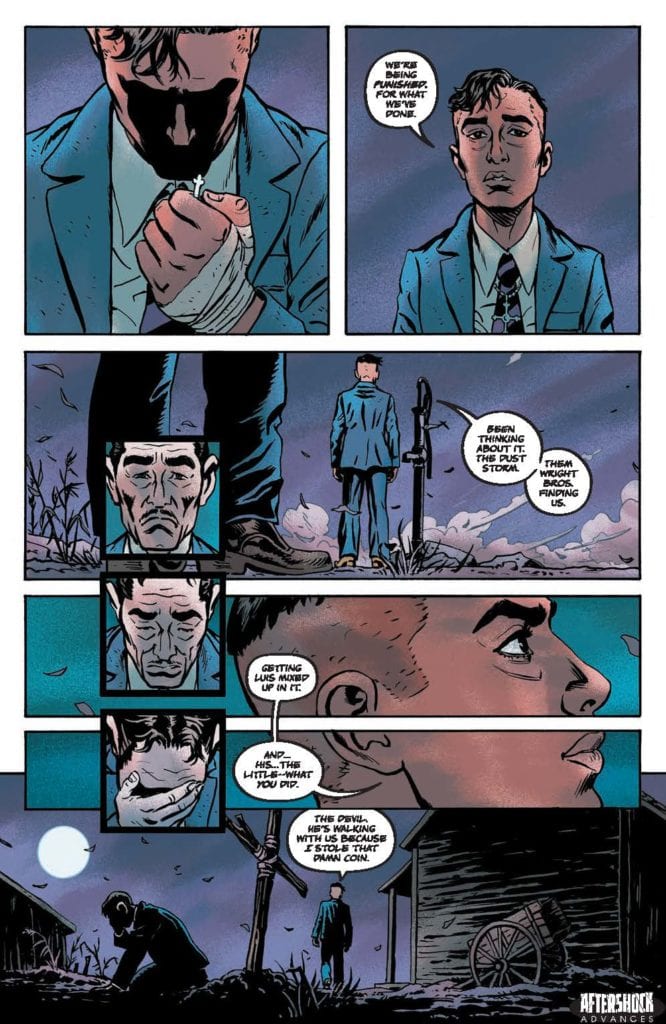
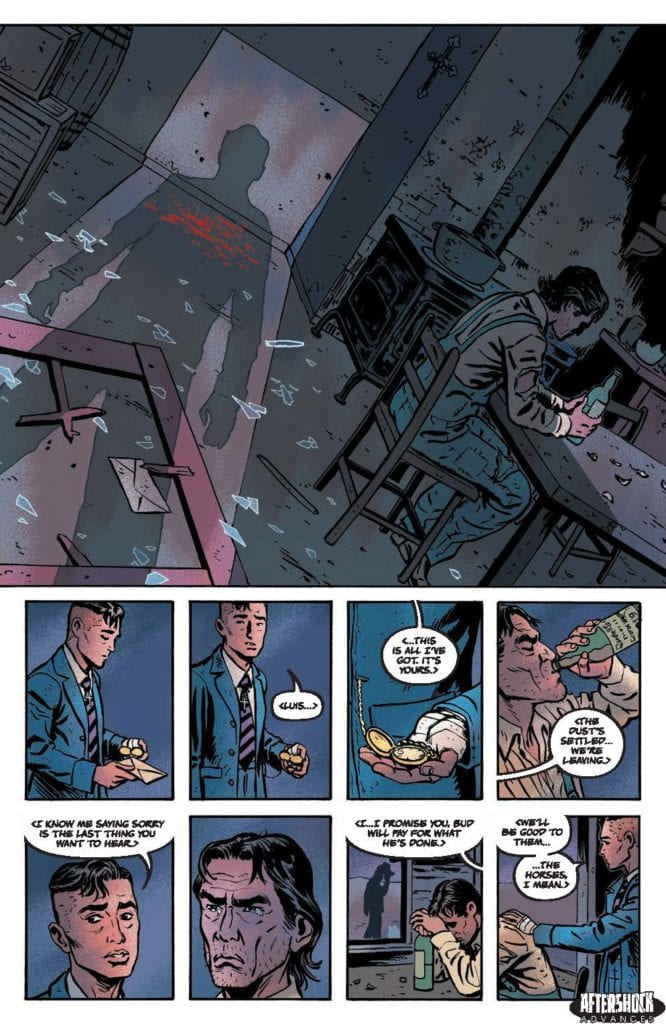
AfterShock Comics Exclusive Preview: UNDONE BY BLOOD OR THE OTHER SIDE OF EDEN #4

undone by blood other side of eden #4 aftershock comics exclusive preview

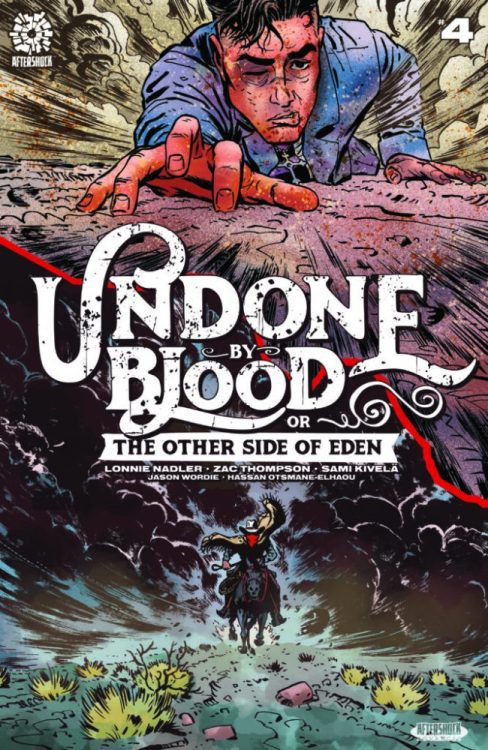
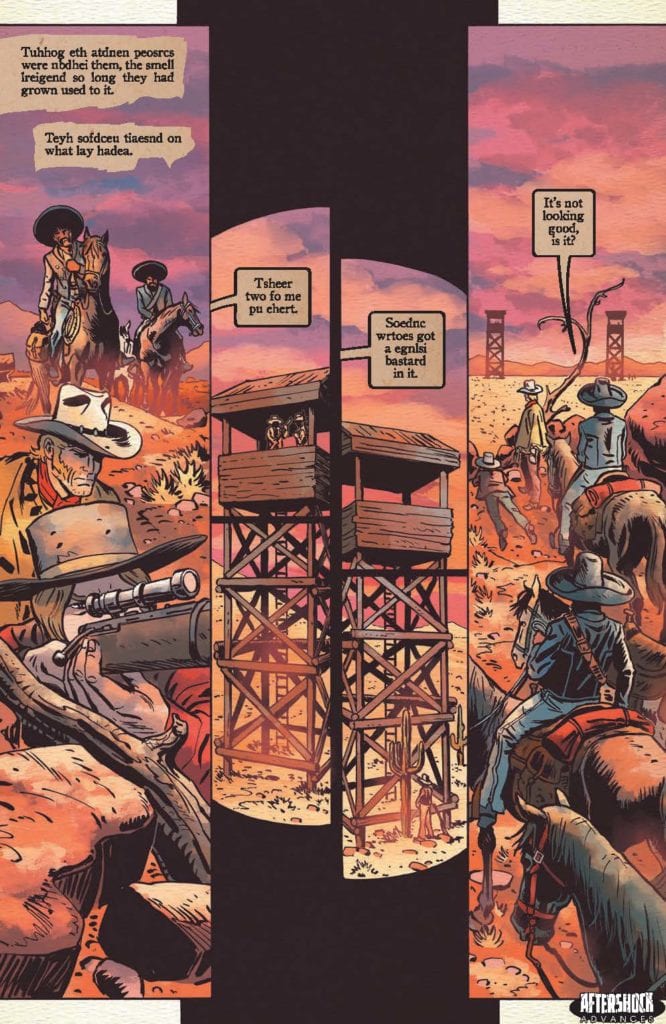
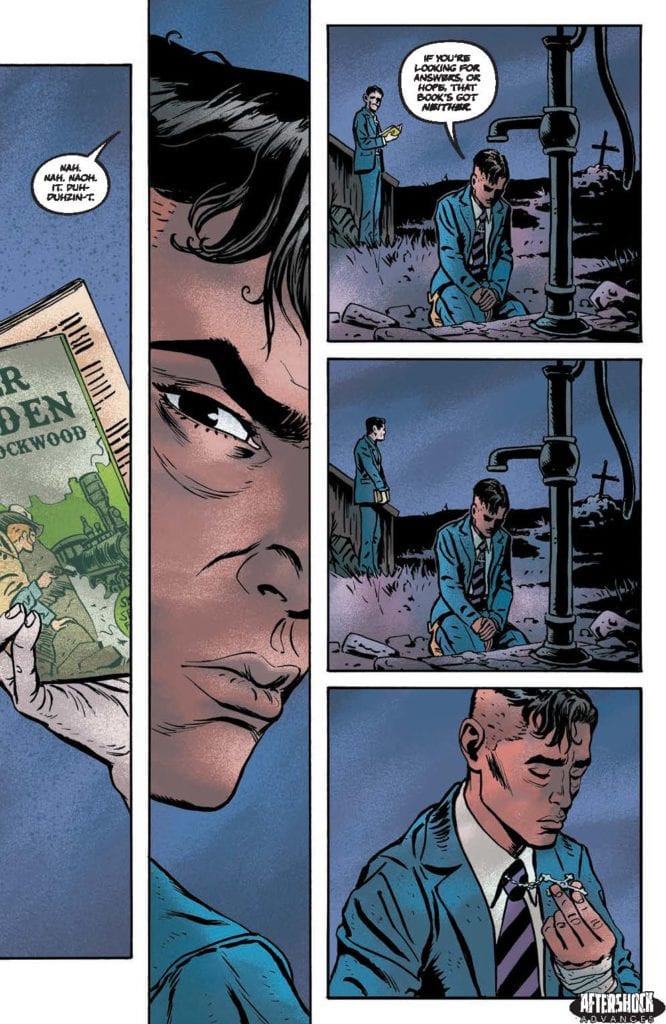
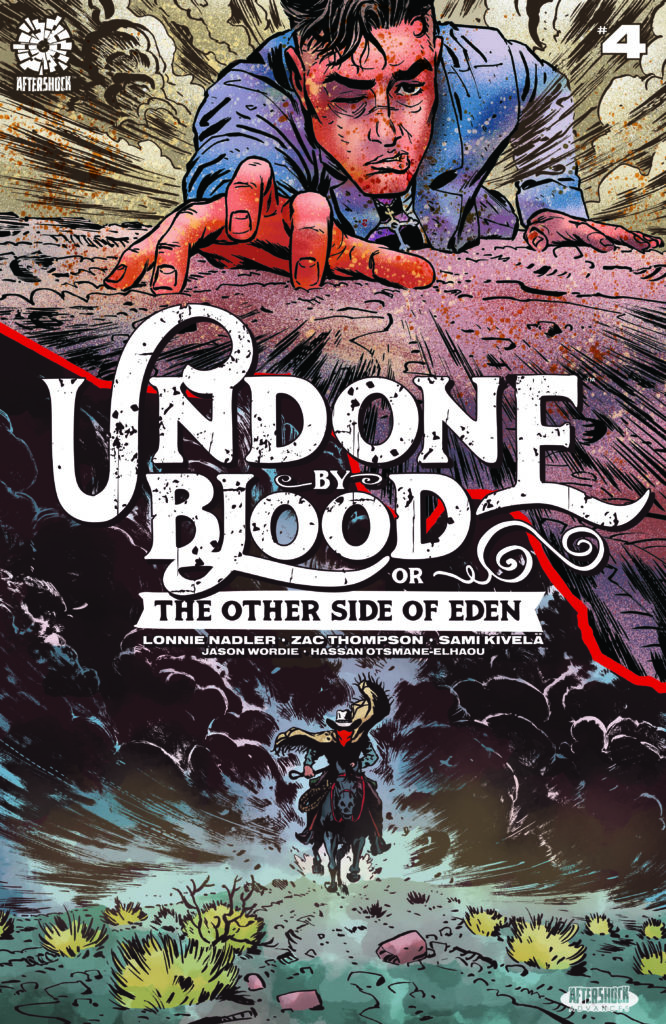
UNDONE BY BLOOD or THE OTHER SIDE OF EDEN #4 hits your local comic book store June 30th, but thanks to AfterShock Comics, Monkeys Fighting Robots has an exclusive four-page preview for you.

About the issue:
In the wake of tragedy, Silvano makes his way across the border only to discover that nothing ever works out quite the way we expect. Meanwhile, Solomon Eaton makes a border crossing of his own, forgetting his moral compass on the other side.

UNDONE BY BLOOD or THE OTHER SIDE OF EDEN #4 is by writers Lonnie Nadler & Zac Thompson and artist Sami Kivelä, with colors by Jason Wordie, and letters by Hassan Otsmane-Elhaou. The cover is by Kivelä with Wordie.

Check out the UNDONE BY BLOOD or THE OTHER SIDE OF EDEN #4 preview below:

undone by blood other side of eden #4 aftershock comics exclusive preview

undone by blood other side of eden #4 aftershock comics exclusive preview

undone by blood other side of eden #4 aftershock comics exclusive preview

undone by blood other side of eden #4 aftershock comics exclusive preview

undone by blood other side of eden #4 aftershock comics exclusive preview


Have you been reading UNDONE BY BLOOD from the start? Sound off in the comments!

Monkeys Fighting Robots Youtube

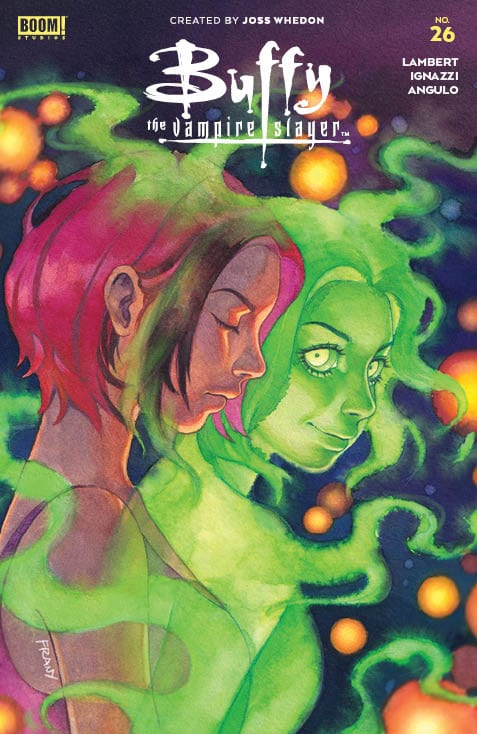
Review: BUFFY THE VAMPIRE SLAYER #26—New Frenemies

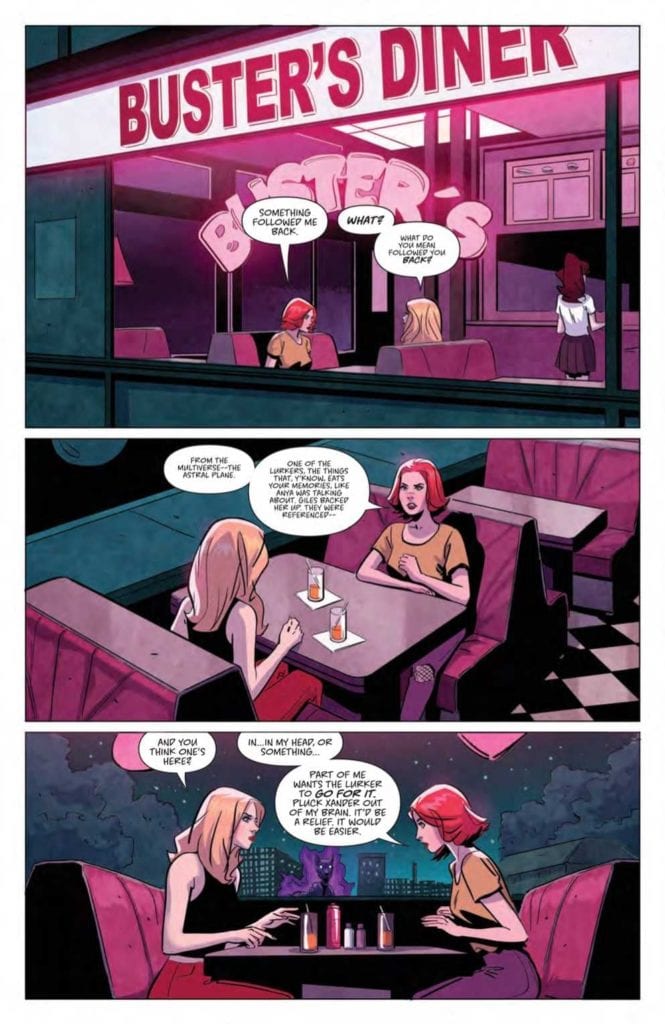
If we learned anything from Ghostbusters, it’s that you should always look out for demonic dogs. That demon dog might actually be your best friend. Available now from Boom! Studios, Buffy the Vampire Slayer #26 deals with the immediate aftermath of last issue’s ’90s multiverse weirdness. Returning writer Jeremy Lambert teams up with new illustrator Marianna Ignazzi of An Unkindness of Ravens fame. Also returning are colorist Raul Angulo and letterer Ed Dukeshire.

The previous issue gave us only a sampler for what messing with the multiverse can do. Now Willow’s got a ghost demon dog stalker, Anya’s true motives are up in the air again, and the art style has reverted us to the ’60s. It’s a whirlwind for sure, but the basic plot keeps us trucking along with the Scooby Gang.

Lambert’s pace speeds up and slows down, seemingly as dictated by page count. Twenty-four pages may sound like a lot in comic book terms, but it hardly gives readers time to breathe, let alone the characters. Is this entirely a bad thing? No, the fast pace keeps things exciting. However, for the long-time reader, it’s like speeding down a scenic route. How are we supposed to immerse ourselves in the world and characters when we spend the movie equivalent of half a second on getting real?

Artistic Differences

Despite my frustrations over the fast pace and plot focus, I believe Lambert does his best in striking the right balance within the constraints. We still care about these characters, and the plot is strong enough to sustain readers long-term.

On the illustration side, Pinti’s ’90s style character design is out and replaced by an older, late-1960s look by Ignazzi. What this means is everybody looks vaguely like a Hanna-Barbera cartoon character. This is a fun change, but the style falls short in recognizing Ethan and Wesley. I had to do a double-take because the face shape or hair wasn’t quite what I was used to. Nonetheless, the new style adds to the sense of warped time and space in the multiverse.

Lurker
WILLOW’S GOT A NEW DOG (AND STALKER)

Colors and lettering follow Ignazzi’s ’60s style in their own way. Angulo uses less purple, red, and blue than usual in favor of dull brown, gray, and black, which signal the issue’s sinister tone. The darker colors are also practical as this issue involves less action and more sit-downs in offices and the like. Moreover, these less saturated colors contribute to the dusty, ’60s color TV look.

Looking Sharp

Letter Dukeshire uses small tweaks to great effect. He uses SFX sparingly but with sharp edges while the dialogue bubbles are mostly centralized to let the eye flow down and naturally leave ample room for action to speak louder than words. Overall, Dukeshire’s lettering is smooth and symmetrical. If I can say one thing on behalf of long-term Buffy readers, I’ll say Dukeshire’s been a reliable constant that makes up for any writing or aesthetic-related inconsistencies.

We may not have seen much of the multiverse, yet we know its effects are here to stay. But multiverse hiccups are only one of many obstacles on the way to facing the “big bad” that Anya’s been teasing. Is it the mayor, perhaps? Or someone else that the council is puppeting? Whatever it is, the Scooby Gang has to overcome their squabbles to fight it. Buffy the Vampire Slayer #26 keeps us on our toes as we look forward to the next reveal.

Monkeys Fighting Robots Youtube

DELICACY: How Passions And Love Can Turn Into Spite

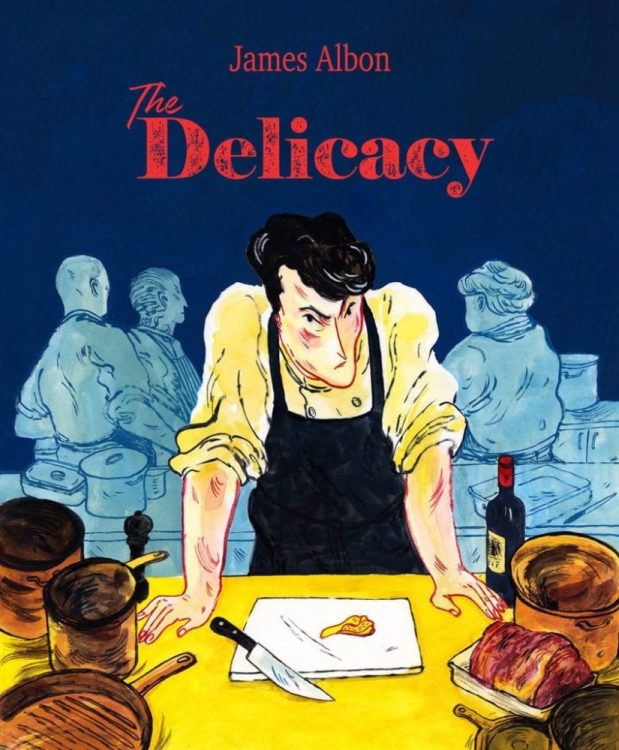
Delicacy Cover

Delicacy comes to comic stores on June 9 from IDW’s Top Shelf imprint. The creator, James Albon, thanks to some food industry insights, crafts a unique tragedy.

Delicacy With A Passion

Albon pulls a lot of influence from some friends in the restaurant and gardening markets to make a believable falling out story. Delicacy is ultimately about peoples’ struggles with hustle culture and how it can ruin relationships. From just the first pages, readers feel a struggle that brothers Rowan and Tulip inherent from their mother and aunt. The reader can’t help but empathize with the brothers as they seem to find a way to live their dreams. Tulip feels torn about his passions as a cook with his dishes’ detail and a restaurant owner’s financial worries. In juxtaposition is how Rowan’s rural lifestyle isolates him. The need for stability genuinely feels out of reach between them.

Innocence Turns Dreadful

Albon illustrates Delicacy like a children’s book that brings about a sense of innocence. The bright colors of some decor match the dishes that Tulip prepares as if trying to match qualities. In this way, Tulip presents to his patrons a sense of joy that he hopes to convey through more than one sense. As the bright colors become more frequent, it begins to evoke a sense of intoxicating euphoria. As if all of the efforts to keep such a feeling going leads to mental degradation. Meanwhile, Rowan’s rural surroundings have tranquil aesthetics that feel comforting. Only to show bitterness with how the brothers’ mother hides anything man-made. Despite both settings trying to push each other away, they hide a mutual ugliness.

Taste The Delicacy And You Won’t Get Enough

Delicacy is one of the best releases to come out this year. The efforts to evoke the main tragedy come off as genuinely authentic. From the attention to detail to character dynamics, this story is one to remember.

Monkeys Fighting Robots Youtube

Review: Fun and Death in BLACK HAMMER: VISIONS #5

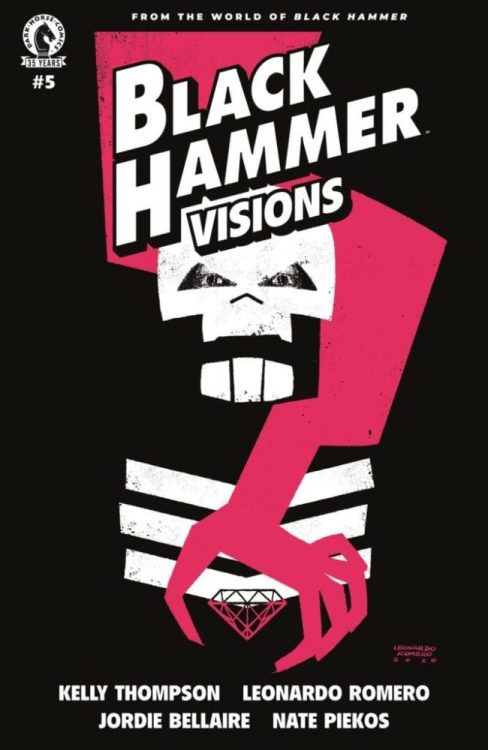
Black Hammer Thompson Dark Horse

Dark Horse Comics’ Black Hammer Universe has given its take on classic characters like Captain America and Martian Manhunter. Skulldigger and Skeleton Boy showed us the Black Hammer version of Batman and Robin. And with Dark Horse’s Black Hammer: Visions #5, we revisit that little corner of this universe to see what a Batman and Catwoman dynamic would look like in Spiral City. Writer Kelly Thompson, artist Leonardo Romero, colorist Jordie Bellaire, and letterer Nate Piekos tell a tale of fun and death.

Writing

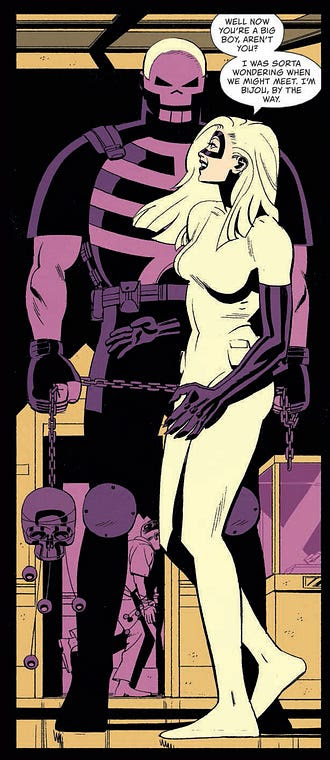
Thompson gleefully shakes up the status quo. In fact, “glee” might be the perfect word for it. We see Skulldigger, living his life as he always has. He’s silent, violent, and filled with rage. But then Bijou comes on the scene. She’s the Catwoman of Spiral City, forever breaking the law and having fun doing it. And so much changes in Skulldigger’s life when he meets her. The writing goes from feeling demure to vibrant. This violent vigilante is having fun, despite himself. But, of course, this is Spiral City. Thompson reminds us that doom is around every corner here. She brings us to joyful heights, just so that the fall back down hurts all the more. It’s beautiful, tragic, and fantastically written.

Art

Romero immediately shows us the life that Bijou brings into Skulldigger’s world. Our first glimpse of Skulldigger is a 9 panel grid where he’s washing his face. While the page is subtle and beautiful, it also feels ordered and lifeless. The very next page, we see a spread of Bijou jumping over rooftops. And from then on, the pages are playful and versatile. Some images work as a backdrop to other panels, some panels are dedicated to a single sound effect. All of it is fun. But as we end the issue, Romero brings us back to the original image. We see Skulldigger looking into the mirror, but it has new meaning to it now. As he opens the door to walk down the stairs, the light behind him casts a crooked silhouette on the wall next to him. It makes it feel as though his life was once ordered, now it’s all out of whack.

Black Hammer Thompson Dark Horse

Coloring

Bellaire uses an extremely minimalistic palette for each scene. When we first see Skulldigger, the whole page is blue. And when he chases Bijou into a museum, the page is colored in different shades of purple and yellow, and that’s it. It’s an interesting approach, because it both sets a mood for each scene and also makes the issue feel very colorful. Sure, individual moments are monochromatic: Bellaire shows entire scenes in green or pink or red. But together, like ribbons on the page, the issue feels vibrant and beautiful. It’s only when Bijou and Skulldigger briefly meet each other out of costume that the page feels colorless. Bellaire shows us that their late night escapades are like a drug to them. It brings color to their life, a color that changes how they see everything.

Lettering

Piekos uses a uniform style in the lettering of this issue. The smash of a window is shown just like the boom of an explosion. The font looks tidy and retro. It makes us feel like these characters are living in some other world. Even the sounds of violence are neat and easy to digest. It’s only right at the end that Piekos adds the slightest variation. With one devastating sound, he adds an exclamation point and capitalizes the first letter. It stands apart from the other sounds of the scene, yet nearly blends together with the other noises of this world. Piekos seems to be showing how those innocuous sounds lead to big, devastating ones like this. And even when devastation happens, it’s hard to tell the difference from the status quo of their lives.


The Black Hammer Universe has always had plenty of fun. But, as a whole, it leans towards dark, philosophical storytelling. This creative team took the grittiest of Black Hammer‘s characters, Skulldigger, and filled his life with fun. It not only works well, this issue really is a lot of fun, but it sets us up for some devastating heartbreaks. Pick up Black Hammer: Visions #5, out from Dark Horse Comics June 9th, at a comic shop near you!

Monkeys Fighting Robots Youtube