
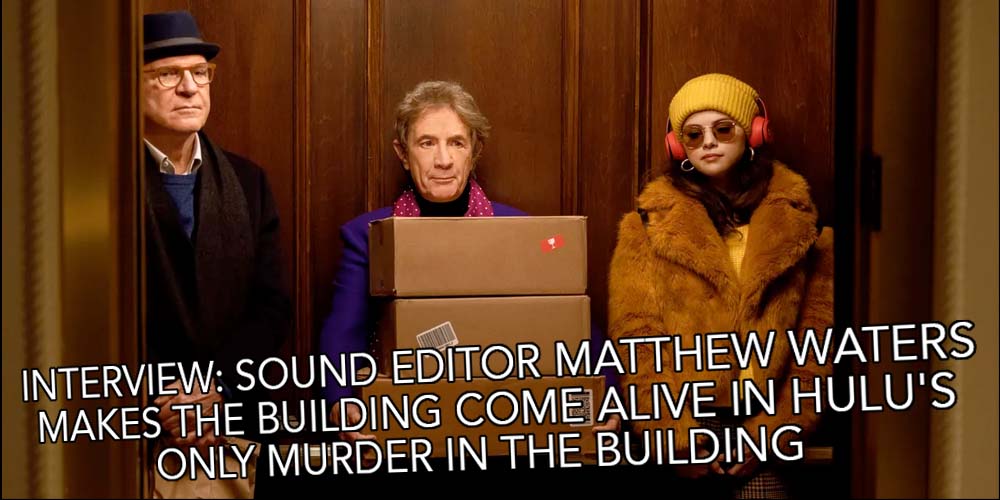
Steven Martin and Martin Short, two legendary actors, writers, producers, and more, have joined forces with musician, actress, and producer Selena Gomez for a new comedy whodunit on Hulu called Only Murder in the Building. Emmy-winning sound editor Matthew Waters made the story sound its best which meant bringing the building to life.
Only Murder in this Building takes place in an upper west side apartment building called Arconia. The ten-episode Hulu series stars Steve Martin as Charles-Haden Savage, an actor fading into obscurity. Living in Arconia is Martin Short’s Oliver Putman, a theatre director whose last hit is in the distant past. A third neighbor, the grounded Mabel Mora, played by Selena Gomez, lives in an unfinished apartment and maybe more than she lets on. The trio are fans of a true-crime podcast, so they start their investigation of sorts when a murder happens in Arconia.
PopAxiom spoke with Matthew Waters about becoming a sound supervisor and editor, his long career working on hits from Game of Thrones to Old Guard, and how he made a character out of a structure in Only Murder in the Building.
Getting Started
“All of us have a story,” Matt says when I ask for his origin story. “My story is this … I was a radio-television major in college with a music minor and I thought I was going to go into radio. I was a senior in college. It was late February, and I was going to graduate in May. I didn’t know anything about this job. I did not know about putting sound to film and television.”
Fate intervened. “A sound supervisor by the name of Stephen Flick who’d just won the Oscar on Robocop, he came and talked to one of my radio and television classes. He explained what he did for a living, and I can tell you … it blew my mind.”
“From that moment on, I changed careers,” Matt continues. “I learned how I could do that and found an internship out in LA. I did not know how to do anything, but I felt like I had the Willy Wonka golden ticket because I was in a studio. So I would observe and hang out with people. I’d buy them a beer and ask them how they did stuff. That’s how I got started.”
Working With This Guy
Matt’s start is a big reason he loves “talking to college students. I’ll do seminars. I always feel like people don’t know about this job and career. Everyone wants to be a music producer, and they don’t understand there are other avenues for creativity that are super-fun and fulfilling.”
About his talks to students, he says, “If it just affects one person, then it’s worth it. It happened to me.”
Matt’s first credit on IMDB goes back 30 years to 1991 as a sound editor for a video called Lower Level. Where did it go from there? “I started in the transfer room in ’89, so, yeah, I got my first credit in 1991. Back in those days, you only had three networks. They’d do these TV movies while their actors were on breaks. Some of them were good. That’s how I started off working on Hercules and later Xena. Hercules started as one movie as part of TNT’ action packed’ or something like that. Then they did a few more movies before it became a series.”
Matt reflects, “I’ve worked with incredible people. On Hercules, I was working with Sam Raimi, and I remember going to a drive-in to see Evil Dead, and now I’m working with this guy!”
About Only Murder in the Building
Sound guys like Matt don’t typically have agents. Instead, they might work for a group or, as in many cases, live as a freelance. So, how did Matt become part of the Only Murders team? “I saw that Steve Martin and Martin Short were making a show together. So I reached out to see who could help me land that gig.”
“It’s a great story and production,” he says about the show. Did he get to work with the legends? “I did a lot of stuff with Martin and Steve over Zoom or FaceTime. We never got down to the studio because of COVID. I worked with them directly via those methods. These are icons, legends, and they know what my home studio looks like. Not that they remember, but I came out of my office once, and my wife asked ‘Who were you talking to?’ and I said, ‘Oh, just Steve Martin.'”
Matt shares the praise for the third star of the series. “Selena Gomez was here in town, and I did get to work with her in the studio. She’s so professional and unbelievably cool. Fantastic at what she does.”
Own the Episode
As with any project, it begins with becoming familiar with the script. “The script gives me nuggets about what they’re trying to say and where the show is going. By the time I get a picture to work with, I have worked on some sounds.”
The process includes “always talking with the showrunners and getting in touch with the picture editing department. You’re a team. Everyone’s working together to get this story told as cool as possible.”
“I had a working relationship with one of the editors,” Matt explains. “So, I would start to build sounds. The show takes place in this one apartment building, so we worked to give each floor its sounds and build a character around the place.”
Matt discusses his favorite episode. “On a particular episode that I think is fantastic sound-wise is episode seven. It’s told from a deaf person’s perspective. There’s only one line of dialogue that you can hear.”
“We started building a soundscape,” he says about putting this episode together with the editor. “You couldn’t have no sound, so I put some stuff together and sent it to her. While she showed edits to people, they could hear some of the sounds and determine what they liked. They decided to keep going with it even more than I wanted to.”
Matt loves the way “the team owned the episode. There are a couple of times where we go into the world, and it’s this feeling of being underwater and then coming up and getting your hearing back. It’s so effective.”

Being in the Biz
Is Matt’s everyday life a potential future sound for a show or movie as a sound professional? “Constantly. Anyone in the sound business should be listening all the time to what the world sounds like. I firmly believe that. I keep a recorder with me. I’m always recording sounds. My kids when they were younger, they knew it, and they’d say ‘Dad, dad, listen to this creaky gate!'”
“I’m always recording stuff,” he continues, “always listening. When I’m working on sounds, I’ll manipulate them, but it won’t work for what I’ll do. So I put them in a folder for something I might need later.”
The fundamental focus of the work never changes for Matt. “The main thing is, regardless of what you’re working on, you’re trying to help the visionary tell the story they want to tell through sound. I always say,” he adds, “everyone who works in the film business is a storyteller. Whether you’re in sound or a set designer or whatever, you’re here to propel this vision forward. So what’s the story, and how can we best achieve it?”
Matt says that to achieve the right sound, “you get there in many ways and different ways in different stories. That’s the great thing about the job. When I got done with Only Murders, I went on to work on a film called Unbreakable Boy, and it’s a different fun vibe. Your creative juices are always flowing. But the ultimate goal still is always helping the vision.”
“As a sound person,” he shares some of his experience, “I think you go through stages when you start. First, you want to make the coolest, biggest sounds ever, and then you realize that doesn’t work for a real-world type film. It just needs to be a door closed that matches what you see. It doesn’t need to be King Kong closing a door.”
“I think in the end, we’re storytellers, and we use sound like a tool. That’s our language.”
Wrapping Up
“I love the challenge,” he says. “I love working on things like the Old Guard with things spinning and crazy stuff happening. But the same with a real-world thing like Gilmore Girls. Season two was my first on Game of Thrones, and when I was done with that, I worked on a show called Bunheads. Completely different but still so much fun.”
Matt’s worked in just about every genre you can think of. He’s won Emmys. What’s something he hasn’t done or would want to do again? “I’ve always wanted to do a Western. I did one a long, long time ago, but I was too new to use all my talents and experience. It sounded good. But knowing what I know now, I would love to do a Western.”
Only Murder in the Building is available on Hulu. So, what’s next for Matt? “Right now, I’m working on a film that comes out on Christmas Day; it’s called American Underdog. It’s the story of Kurt Warner.”
Are you watching Only Murder In The Building?
Thanks to Matthew Waters and Kingmaker Communications
for making this interview possible.
Read more interviews from Ruben R. Diaz!




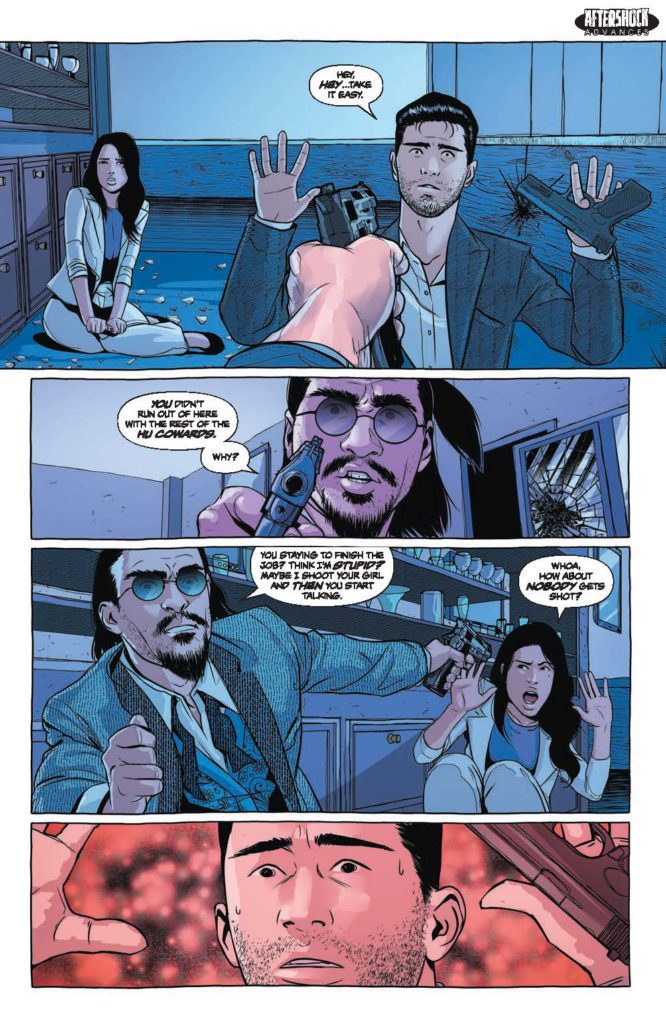
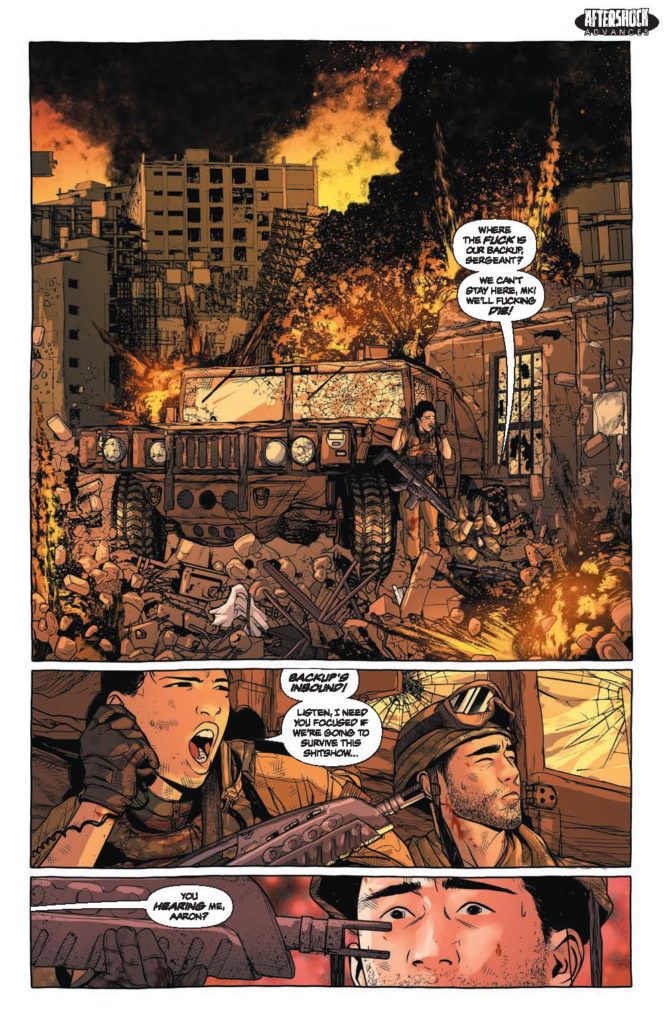

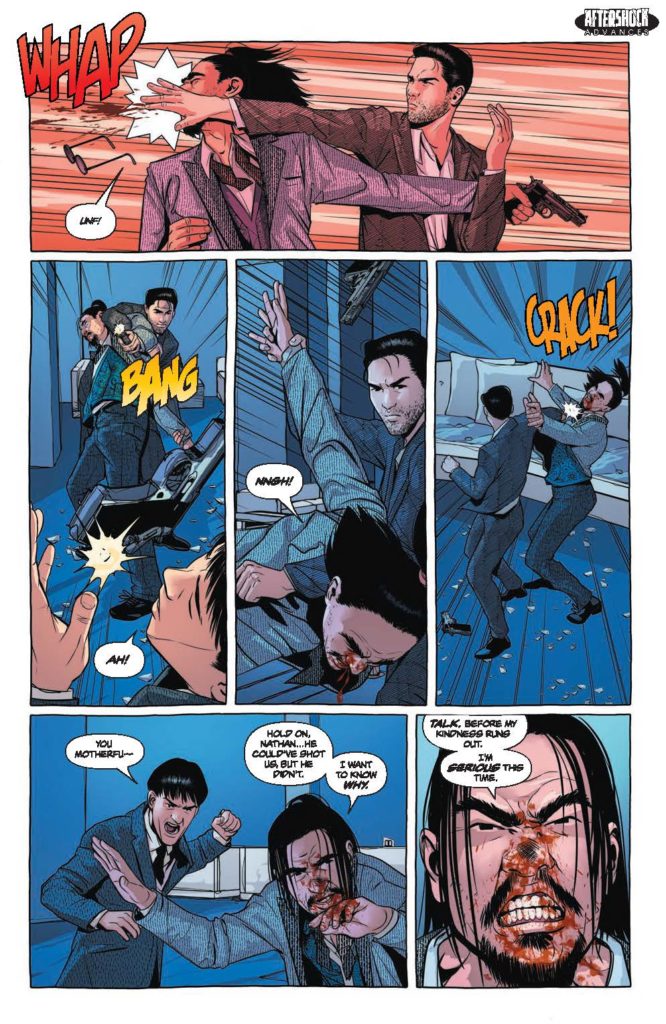







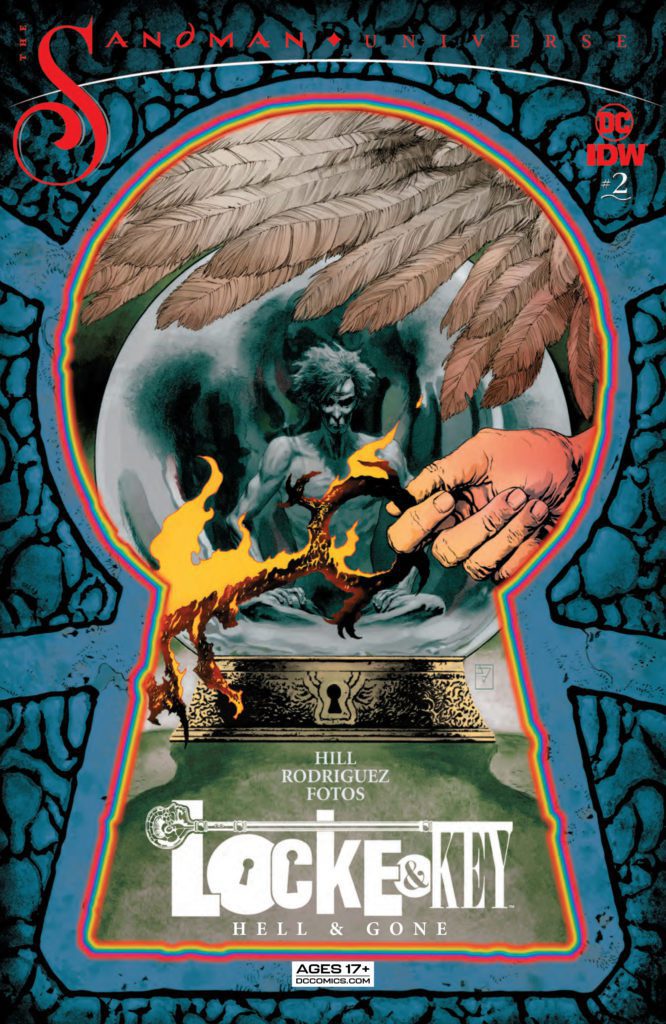
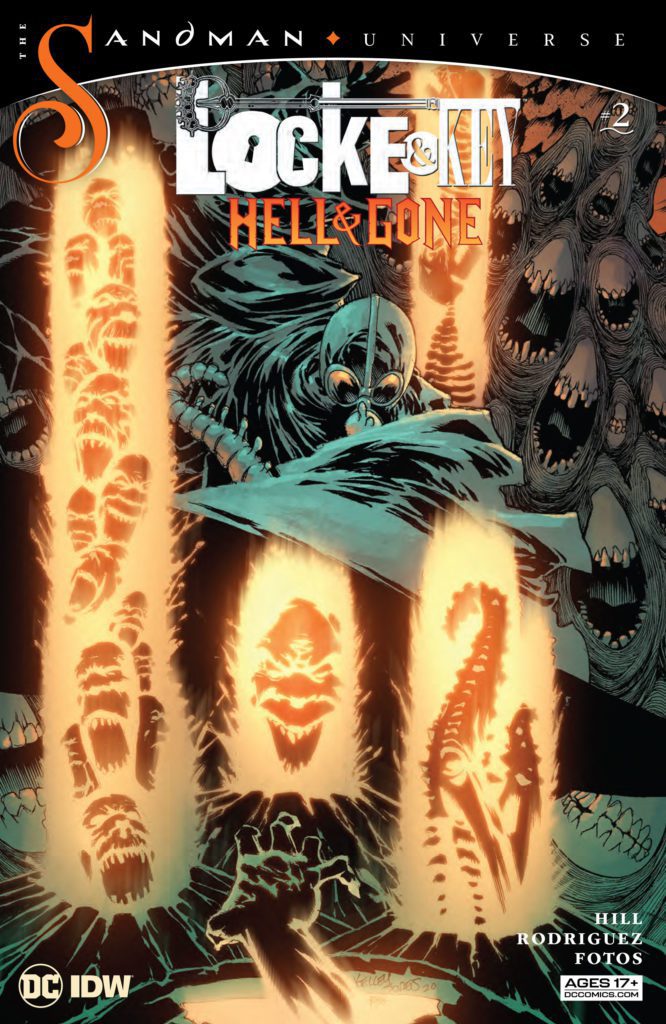

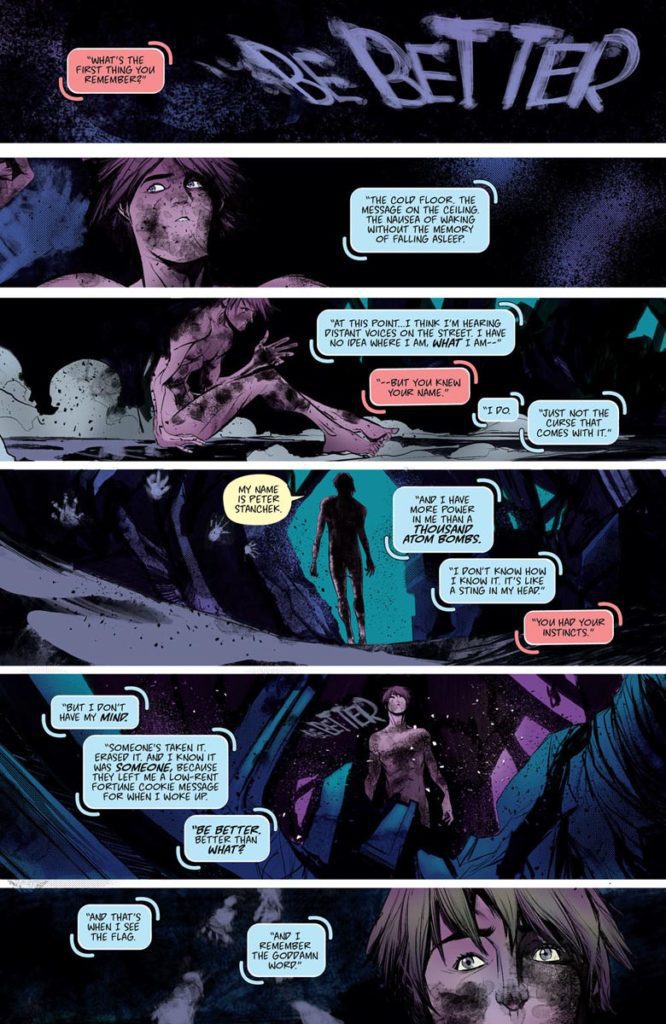 Reinvention is at the heart of The Harbinger #1. Colin Kelly and Jackson Lanzing literally open the issue with the phrase “be better”. For readers returning from older Stanchek adventures, this is an acknowledgment of the Harbingers’ problematic legacy. As the issue’s setting displays, the Renegades’ reactionary stances haven’t made improvements. Without a positive role model or a way to show the public that psiot’s aren’t all threats; the foundation’s scraps have been relegated to a Chicago district where they are oppressed. It gives Peter something to strive for.
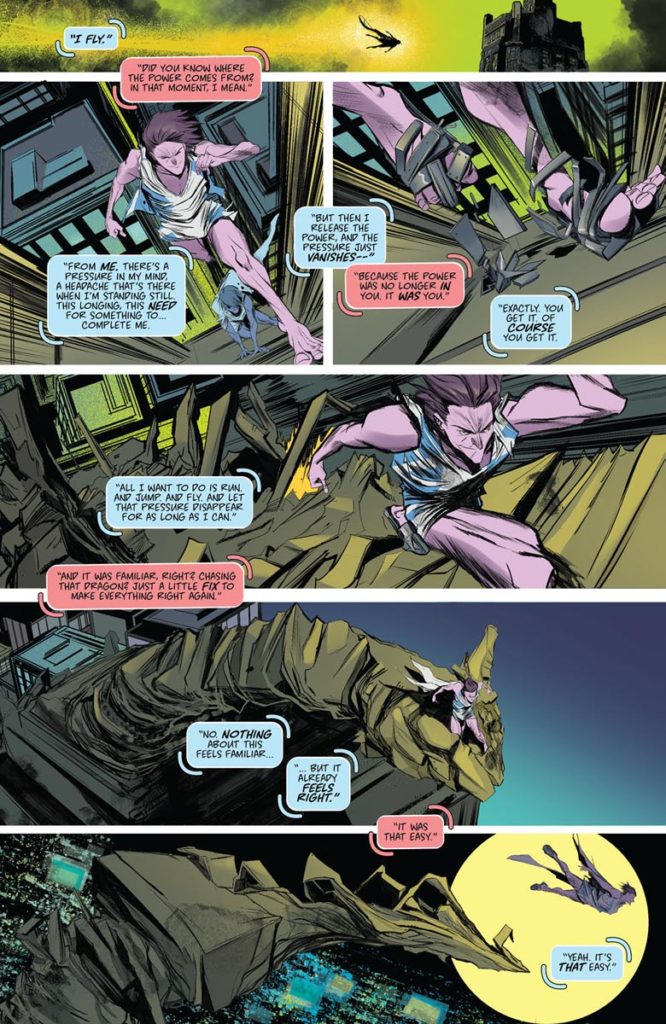
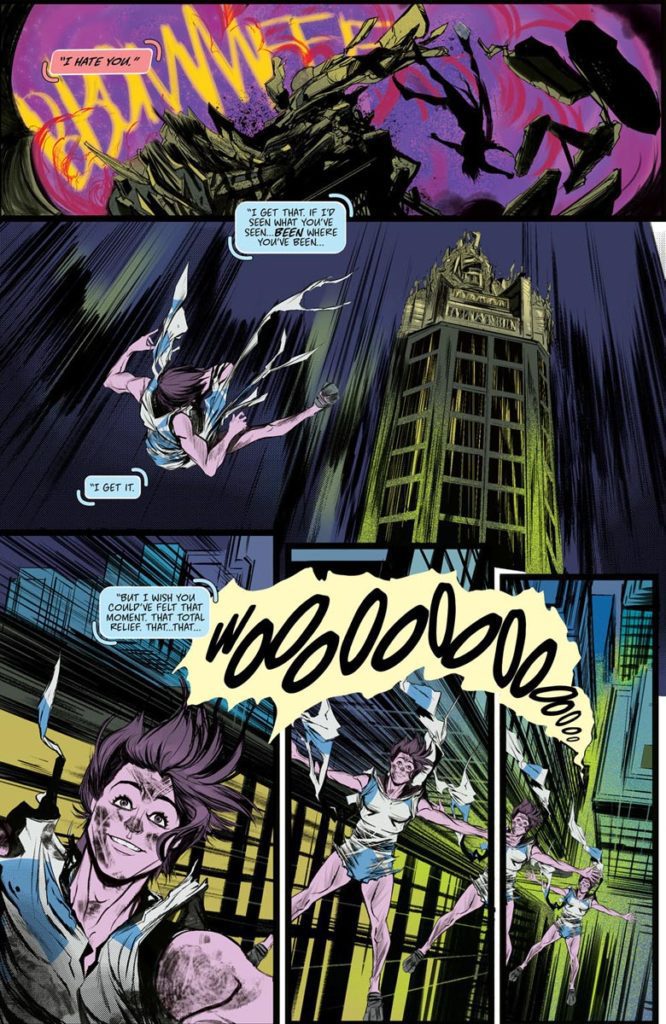 New readers can empathize with the amnesiac Peter. Much like the Generation Y and Z audiences this series aims at, Peter comes into a world he didn’t ask for. But he’s still ecstatic at experiencing his powers for the first time in The Harbinger #1. The readers experience these sublime moments with Peter, ready to embrace the world even if it is bleak.
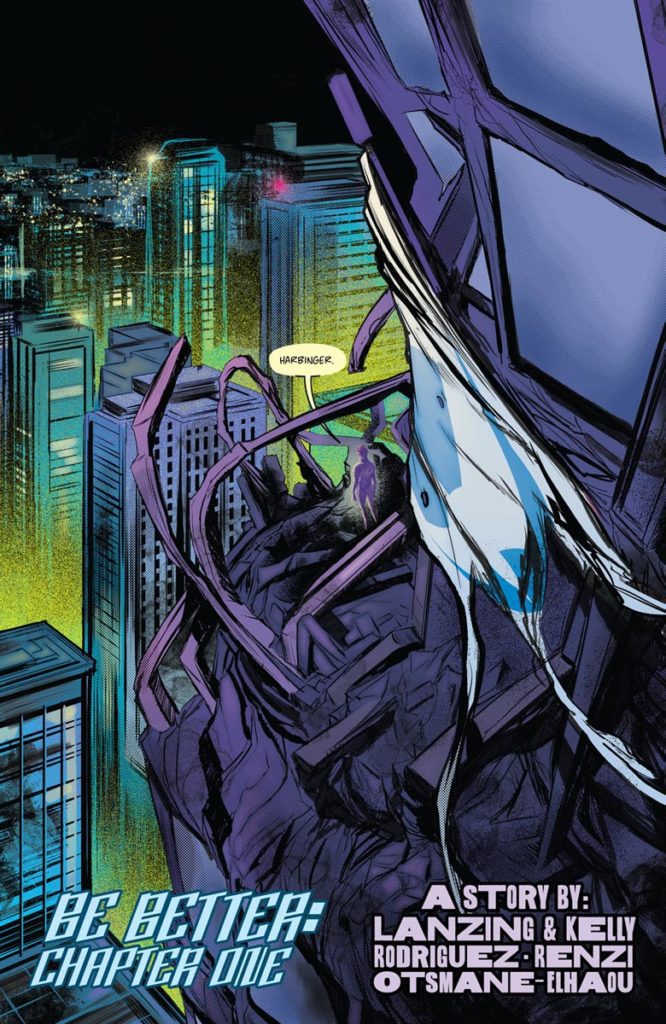 Robbi Rodriguez illustrates The Harbinger #1 with a larger-than-life atmosphere. Peter looks small and vulnerable in a few panels. The world around him is vast, bright, but also covered in shadows. The city of Chicago doesn’t feel too welcoming towards Peter as he stands on a building. But the way Peter’s telekinesis is able to bend buildings to his whim shows how much he can change this gloomy city.
 Rico Renzi’s coloring adds to the atmosphere through the moods they convey. Alongside the brightly lit Chicago is the district of Psiot City that’s shrouded in black. In this dark canvas, the psychic powers of the psiots give this obscure area personality. To that effect, it reflects the psychedelic images Peter sees in his mind when he uses his powers. There’s potential for the psiots to be something more, but Peter and the rest of the psiots have a long way to go before they can integrate back into society.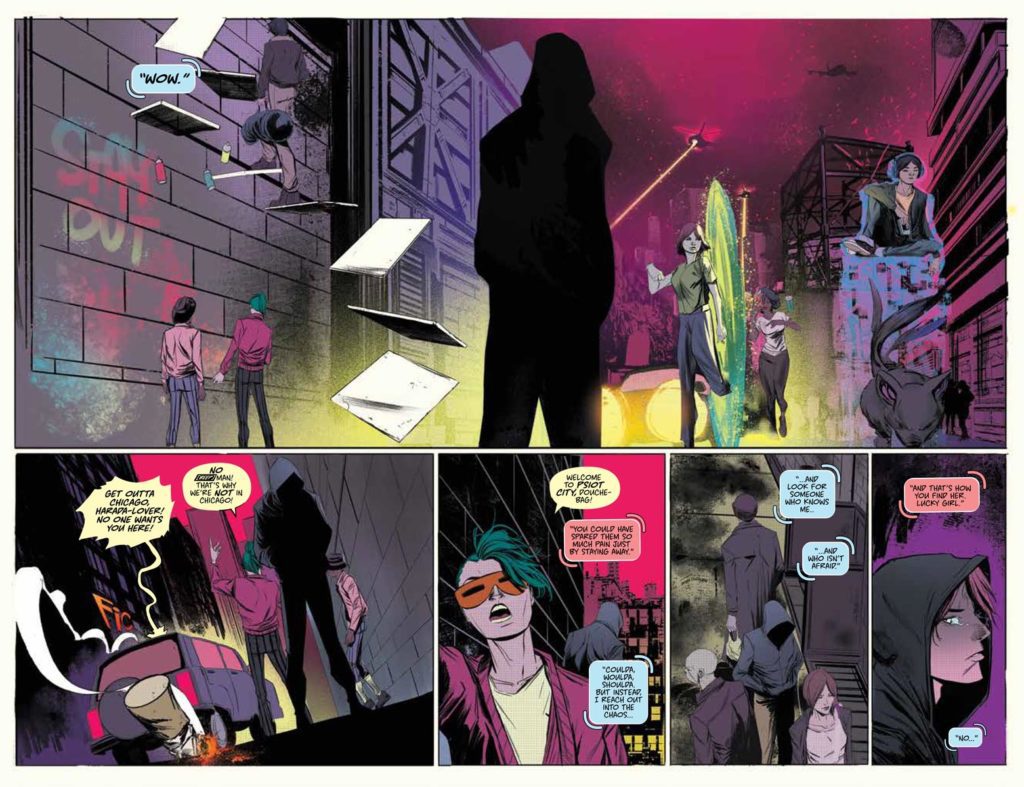
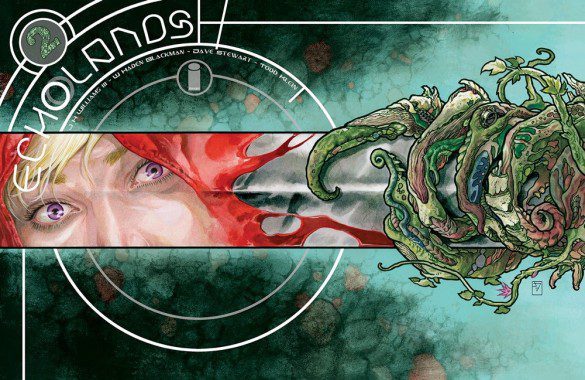

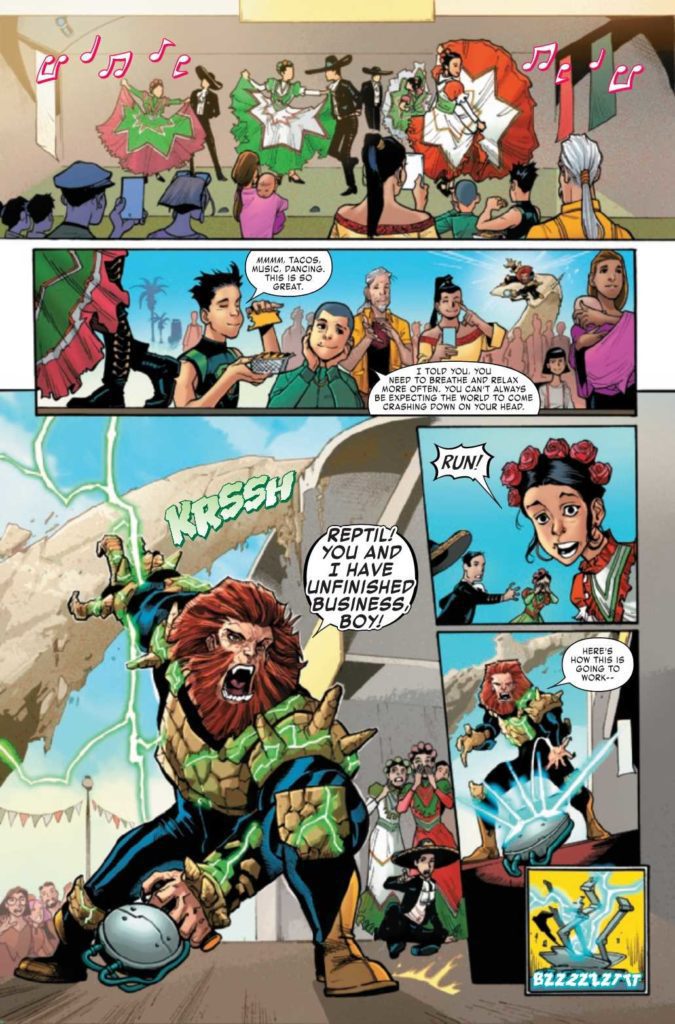 Writer Terry Blas keeps Reptil #4 dedicated to the idea of a greater family as a form of empowerment. Seeing Berto with his family and community feels absolutely serene. So when Megalith arrives for Berto, there’s a genuine sense of intrusion. Having the entire Latin community stand with Reptil feels like authentic support.
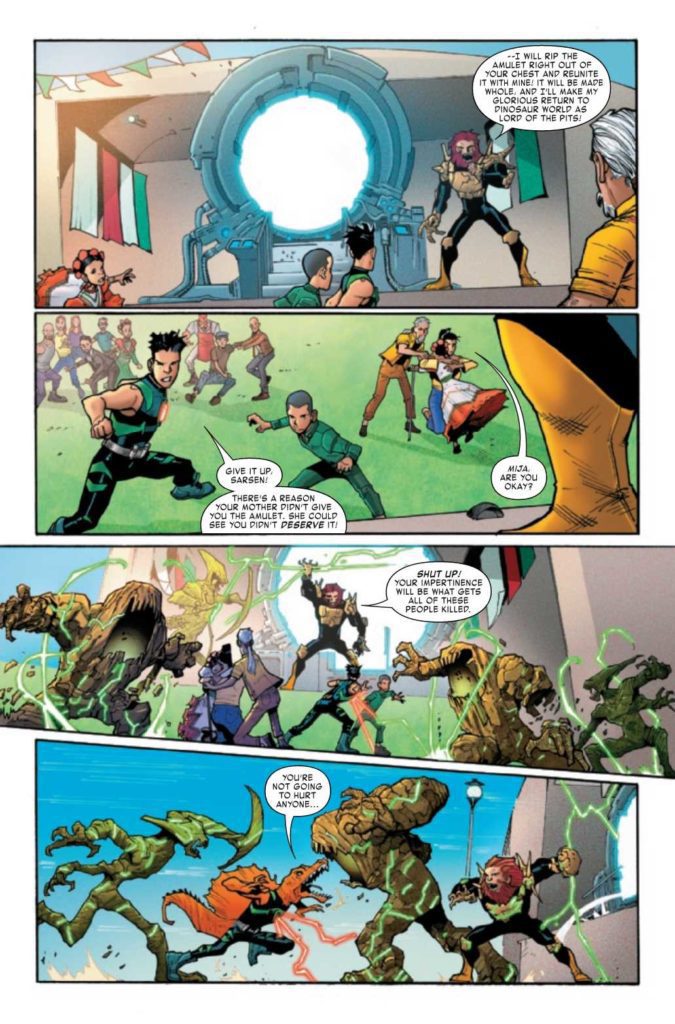 All of the artists of Reptil #4 play their parts in bringing out the very best in this series. Enid Balam’s pencils make the costumes, dinosaurs, and monster forms notable enough to remember. It certainly helps that every major character in this issue stands out further with bolder lines from Victor Olazaba’s inking. Not to mention the eye-catching colors of Reptil’s dinosaur forms and Megalith’s golems from Carlos Lopez.