Home Blog Page 133

Review: MARIE CURIE: A QUEST FOR LIGHT and a Journey of Excitement

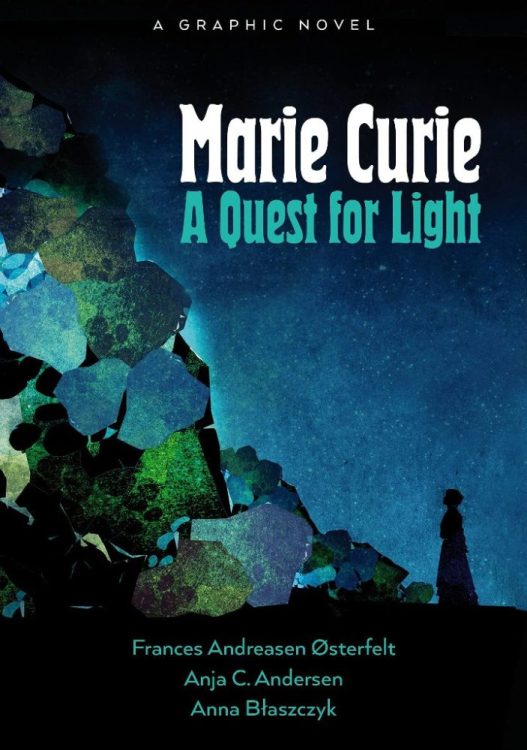
Marie Curie: A Quest for Light Credit: IDW Publishing

Most people will have heard of Marie Curie, winner of two Nobel Prizes and the only person to have won it for different disciplines. But not may will be aware of the extraordinary life that she led. Marie Curie: A Quest for Light, published by IDW, is an accessible, biographical examination of an extraordinary woman’s life and it charts numerous scientific discoveries of the late 19th and early 20th century. It is a collaboration between the author Frances Andreasen Østerfelt, the acclaimed Danish astrophysicist Anja Cetti Andersen, and the magnificent artist Anna Blasczcwyk. Aimed as an educational book to teach young readers about the famous scientist, A Quest for Light is also a captivating, moving, and all round engrossing book for readers of any age.

A Quest For Light
Marie Curie: A Quest for Light Credit: IDW Publishing

From the Beginning

A Quest for Light reads like a well constructed lecture on the life of Marie Curie, interspersed with excerpts from her diaries and letters that give the book an intimate feel. The captions are clearly written for an ease of understanding, signifying the educational aspects of the book; however, there is still a lyricism to the words. On occasion, the simplicity of the text creates a deeper emotional connection. For example, when the writers say that ‘Mother is now too weak to leave the house’, it conjures up images of sickness within the family but it is also a very personal comment. The way that the distant narrator uses familiarity, such as the word “mother” when speaking about someone else’s family, produces an emotional attachment not often associated with educational texts. The familiar turn of phrase alters the narration from textbook to life story. It isn’t a monologue about a figure from history but the story of someone’s life, up close and personal.

From the very beginning, Østerfelt and Anderson make the reader welcome and comfortable in the life of Marie Curie which in turn makes it easier to relay the scientific information. The educational element feels secondary to the story of the characters and this allows for the information to seep into the reader’s mind, almost unnoticed. The scientific discoveries and pivotal moments in Marie Curie’s life become explicitly linked to emotional moments and turning points in her life, acting like exclamation marks for the educational aspect of the book.

Each chapter of the book touches several aspects of Marie Curie’s life but also highlights wider sociological concerns. The sexism inherent in the science world and the political turmoil within Europe are two of the more obvious themes that the writers bring out, but there is a wealth of knowledge embedded in the text and the corresponding illustrations. A Quest for Light is optimistic in tone, even through some of the more heartbreaking times of the scientist’s life. Any reader will be uplifted by the determination of Marie Curie but also the admiration on display by the creators of the book.
A Quest for Life
Marie Curie: A Quest for Light Credit: IDW Publishing

Collage and Representation

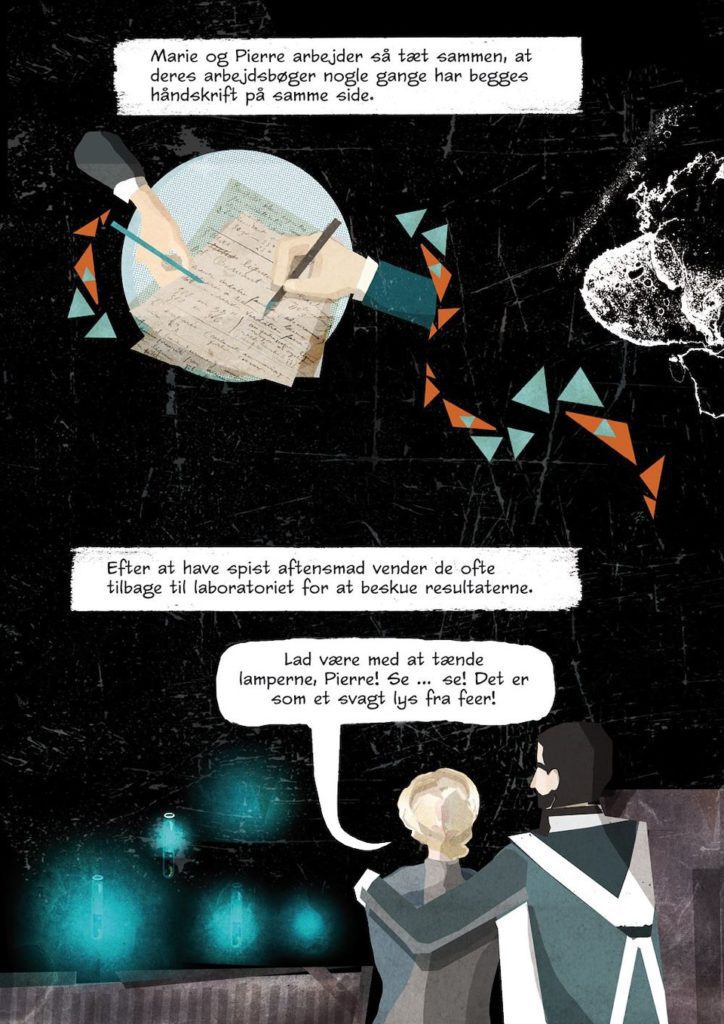
You could sum up the narrative in A Quest for Light as compelling and to do the same for the artwork you’d need to use the word outstanding. Anna Blasczcwyk’s work is an absolute pleasure to read and is visually all-consuming. From the moment you open this book you are pulled into the cut-out style and mix of abstraction and photographic representation. This merging of styles leads to the creation of something greater than the sum of its parts. The layered printed style reflects the complexities within the narrative, reminding the reader that there is always something else going on. This accentuates the emotional punches of the story in the same way that the familiarity of the narrator changes the way that readers interact with the text. Moments of despair and mourning engulf full pages while emerging loves and close families busy themselves on the page with panels running up against and even over each other.

The page design throughout A Quest for Light is provocative while still being simple to follow for the intended audience. A scene with a disturbing hanging has panels that tick tock across the page like the chiming of a doomsday clock, represented visually by bold red text, which culminates in a shockingly bright panel at the bottom of the page. The contrast between the panels and the coloring behind the panels marks the final image out from the page, emphasizing it and its importance. This technique of using the design to emphasize elements of the story is at the heart of Blasczcwyk’s work. Each page is a work of art to be discovered, admired and dissected.

The lettering and coloring is an integral part of the book’s design. The constant narration sits in unusual shaped caption boxes that have broken edges as if they have been torn from a book or are emerging directly from the artwork. This emphasizes the connection between dispossessed narrator and emotional story and bridges the gap between the reader and the characters. The more standard speech balloons still lack thick borders making them less intrusive, and the diary/letter excerpts blend beautifully with the artwork. There is a cohesion between each aspect of the comic artwork that makes it easy and pleasurable to read.

Marie Curie: A Quest for Life Credit: IDW Publishing

Conclusion

It has to be said that this book is not for everyone and some older readers may struggle with some of the chapters that feel more educational than others. But for the most part, if the subject matter is appealing, I would recommend this to anyone of any age. It magnificently tells the story of one of the most important scientists who ever lived and whose life influenced women for generations. Marie Curie led a fascinating and important life and the detail that is represented in this book is a fitting memorial. There is a growing movement in education to include more graphic narratives and biographies like this are definitely great additions to the educational system. There should be more books like A Quest for Light in the world. It is exciting, moving, educational, and visually magnificent.

Marie Curie: A Quest for Light is published by IDW Publishing and available at your local comic and book shops now.

Monkeys Fighting Robots Youtube

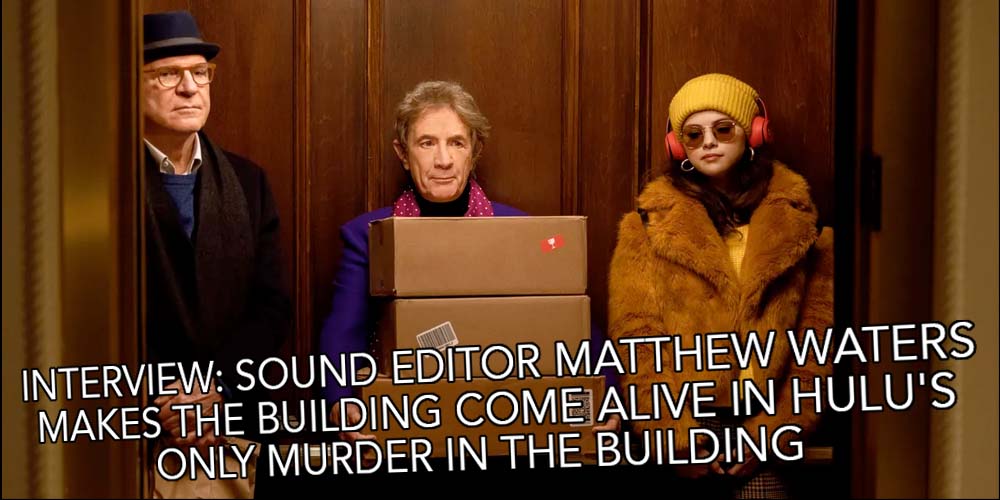
INTERVIEW: Sound Editor Matthew Waters Makes The Building Come Alive In Hulu’s ONLY MURDER IN THE BUILDING

only murder-hulu-series-steve martin-martin short

Steven Martin and Martin Short, two legendary actors, writers, producers, and more, have joined forces with musician, actress, and producer Selena Gomez for a new comedy whodunit on Hulu called Only Murder in the Building. Emmy-winning sound editor Matthew Waters made the story sound its best which meant bringing the building to life.

Only Murder in this Building takes place in an upper west side apartment building called Arconia. The ten-episode Hulu series stars Steve Martin as Charles-Haden Savage, an actor fading into obscurity. Living in Arconia is Martin Short’s Oliver Putman, a theatre director whose last hit is in the distant past. A third neighbor, the grounded Mabel Mora, played by Selena Gomez, lives in an unfinished apartment and maybe more than she lets on. The trio are fans of a true-crime podcast, so they start their investigation of sorts when a murder happens in Arconia.

PopAxiom spoke with Matthew Waters about becoming a sound supervisor and editor, his long career working on hits from Game of Thrones to Old Guard, and how he made a character out of a structure in Only Murder in the Building.

Getting Started

“All of us have a story,” Matt says when I ask for his origin story. “My story is this … I was a radio-television major in college with a music minor and I thought I was going to go into radio. I was a senior in college. It was late February, and I was going to graduate in May. I didn’t know anything about this job. I did not know about putting sound to film and television.”

Fate intervened. “A sound supervisor by the name of Stephen Flick who’d just won the Oscar on Robocop, he came and talked to one of my radio and television classes. He explained what he did for a living, and I can tell you … it blew my mind.”

“From that moment on, I changed careers,” Matt continues. “I learned how I could do that and found an internship out in LA. I did not know how to do anything, but I felt like I had the Willy Wonka golden ticket because I was in a studio. So I would observe and hang out with people. I’d buy them a beer and ask them how they did stuff. That’s how I got started.”

Working With This Guy

Matt’s start is a big reason he loves “talking to college students. I’ll do seminars. I always feel like people don’t know about this job and career. Everyone wants to be a music producer, and they don’t understand there are other avenues for creativity that are super-fun and fulfilling.”

About his talks to students, he says, “If it just affects one person, then it’s worth it. It happened to me.”

Matt’s first credit on IMDB goes back 30 years to 1991 as a sound editor for a video called Lower Level. Where did it go from there? “I started in the transfer room in ’89, so, yeah, I got my first credit in 1991. Back in those days, you only had three networks. They’d do these TV movies while their actors were on breaks. Some of them were good. That’s how I started off working on Hercules and later Xena. Hercules started as one movie as part of TNT’ action packed’ or something like that. Then they did a few more movies before it became a series.”

Matt reflects, “I’ve worked with incredible people. On Hercules, I was working with Sam Raimi, and I remember going to a drive-in to see Evil Dead, and now I’m working with this guy!”

About Only Murder in the Building

Sound guys like Matt don’t typically have agents. Instead, they might work for a group or, as in many cases, live as a freelance. So, how did Matt become part of the Only Murders team? “I saw that Steve Martin and Martin Short were making a show together. So I reached out to see who could help me land that gig.”

“It’s a great story and production,” he says about the show. Did he get to work with the legends? “I did a lot of stuff with Martin and Steve over Zoom or FaceTime. We never got down to the studio because of COVID. I worked with them directly via those methods. These are icons, legends, and they know what my home studio looks like. Not that they remember, but I came out of my office once, and my wife asked ‘Who were you talking to?’ and I said, ‘Oh, just Steve Martin.'”

Matt shares the praise for the third star of the series. “Selena Gomez was here in town, and I did get to work with her in the studio. She’s so professional and unbelievably cool. Fantastic at what she does.”

Own the Episode

As with any project, it begins with becoming familiar with the script. “The script gives me nuggets about what they’re trying to say and where the show is going. By the time I get a picture to work with, I have worked on some sounds.”

The process includes “always talking with the showrunners and getting in touch with the picture editing department. You’re a team. Everyone’s working together to get this story told as cool as possible.”

“I had a working relationship with one of the editors,” Matt explains. “So, I would start to build sounds. The show takes place in this one apartment building, so we worked to give each floor its sounds and build a character around the place.”

Matt discusses his favorite episode. “On a particular episode that I think is fantastic sound-wise is episode seven. It’s told from a deaf person’s perspective. There’s only one line of dialogue that you can hear.”

“We started building a soundscape,” he says about putting this episode together with the editor. “You couldn’t have no sound, so I put some stuff together and sent it to her. While she showed edits to people, they could hear some of the sounds and determine what they liked. They decided to keep going with it even more than I wanted to.”

Matt loves the way “the team owned the episode. There are a couple of times where we go into the world, and it’s this feeling of being underwater and then coming up and getting your hearing back. It’s so effective.”

matthew waters-sound-hulu-series

Being in the Biz

Is Matt’s everyday life a potential future sound for a show or movie as a sound professional? “Constantly. Anyone in the sound business should be listening all the time to what the world sounds like. I firmly believe that. I keep a recorder with me. I’m always recording sounds. My kids when they were younger, they knew it, and they’d say ‘Dad, dad, listen to this creaky gate!'”

“I’m always recording stuff,” he continues, “always listening. When I’m working on sounds, I’ll manipulate them, but it won’t work for what I’ll do. So I put them in a folder for something I might need later.”

The fundamental focus of the work never changes for Matt. “The main thing is, regardless of what you’re working on, you’re trying to help the visionary tell the story they want to tell through sound. I always say,” he adds, “everyone who works in the film business is a storyteller. Whether you’re in sound or a set designer or whatever, you’re here to propel this vision forward. So what’s the story, and how can we best achieve it?”

Matt says that to achieve the right sound, “you get there in many ways and different ways in different stories. That’s the great thing about the job. When I got done with Only Murders, I went on to work on a film called Unbreakable Boy, and it’s a different fun vibe. Your creative juices are always flowing. But the ultimate goal still is always helping the vision.”

“As a sound person,” he shares some of his experience, “I think you go through stages when you start. First, you want to make the coolest, biggest sounds ever, and then you realize that doesn’t work for a real-world type film. It just needs to be a door closed that matches what you see. It doesn’t need to be King Kong closing a door.”

“I think in the end, we’re storytellers, and we use sound like a tool. That’s our language.”

Wrapping Up

“I love the challenge,” he says. “I love working on things like the Old Guard with things spinning and crazy stuff happening. But the same with a real-world thing like Gilmore Girls. Season two was my first on Game of Thrones, and when I was done with that, I worked on a show called Bunheads. Completely different but still so much fun.”

Matt’s worked in just about every genre you can think of. He’s won Emmys. What’s something he hasn’t done or would want to do again? “I’ve always wanted to do a Western. I did one a long, long time ago, but I was too new to use all my talents and experience. It sounded good. But knowing what I know now, I would love to do a Western.”

Only Murder in the Building is available on Hulu. So, what’s next for Matt? “Right now, I’m working on a film that comes out on Christmas Day; it’s called American Underdog. It’s the story of Kurt Warner.”

Are you watching Only Murder In The Building?

Thanks to Matthew Waters and Kingmaker Communications
for making this interview possible.

Read more interviews from Ruben R. Diaz!

Monkeys Fighting Robots Youtube

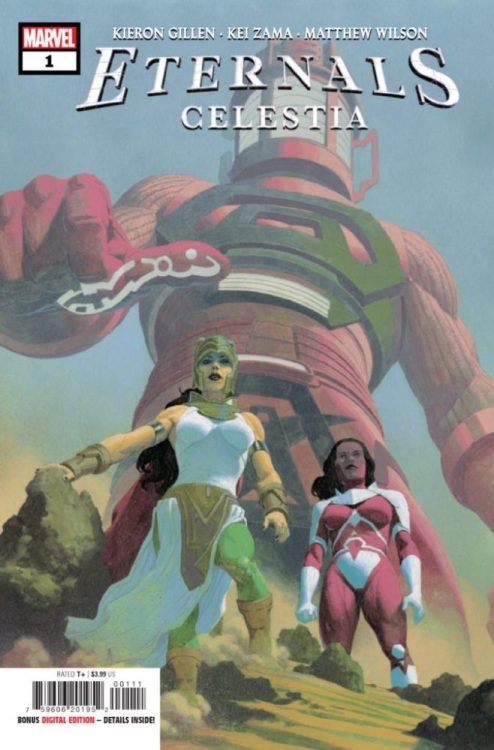
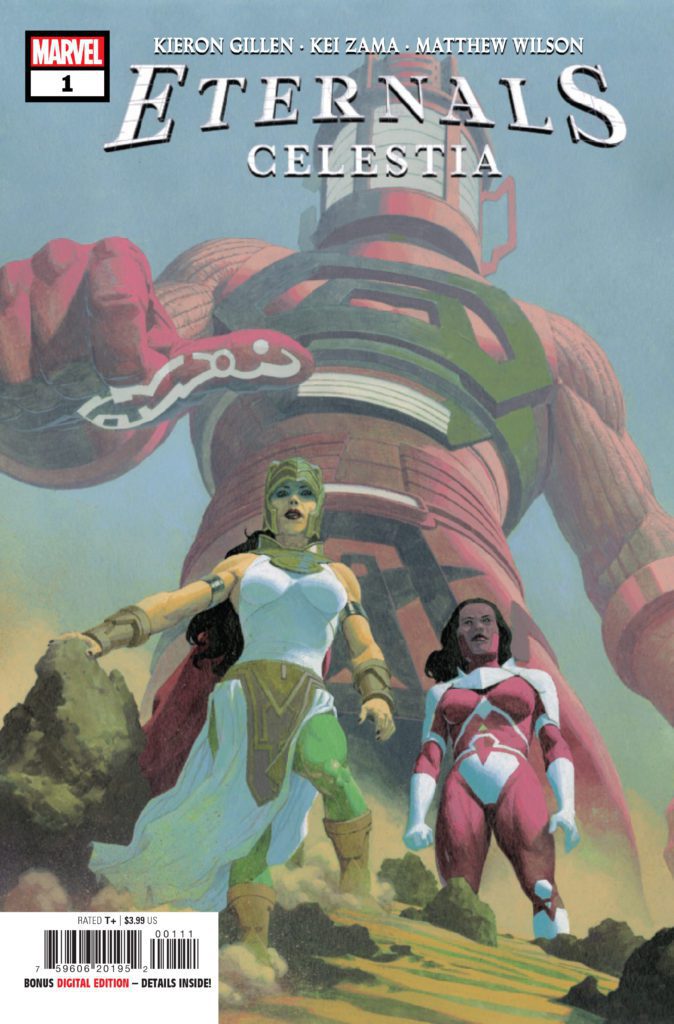
Marvel Comics Exclusive Preview: ETERNALS: CELESTIA #1

marvel comics exclusive preview eternals celestia #1

ETERNALS: CELESTIA #1 hits your local comic book store October 6th, but thanks to Marvel Comics, Monkeys Fighting Robots has an exclusive four-page preview for you.

About the issue:
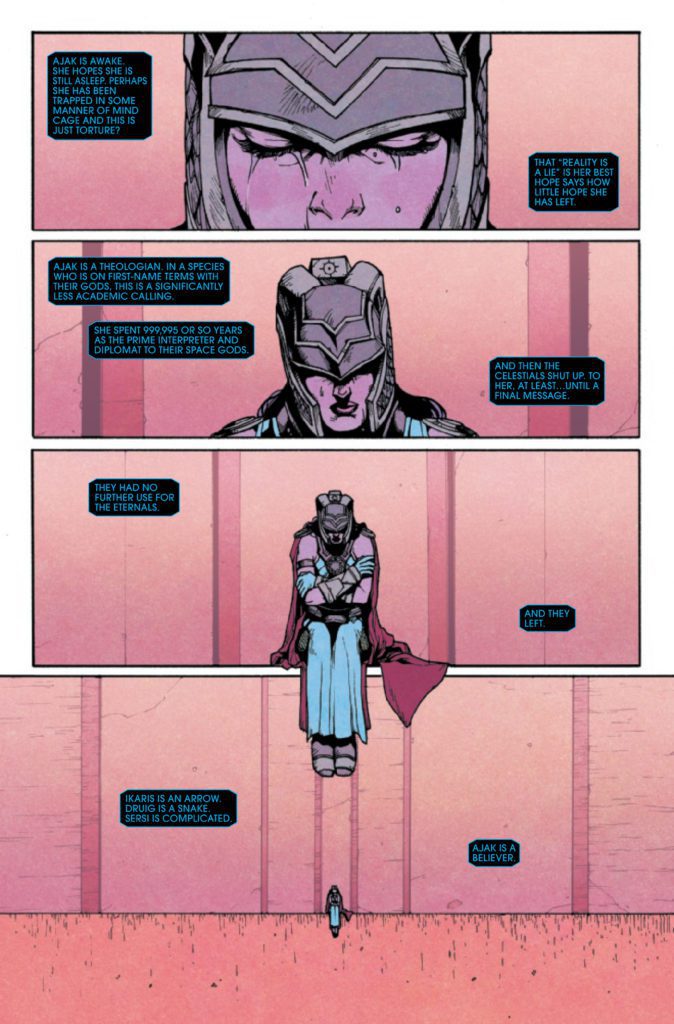
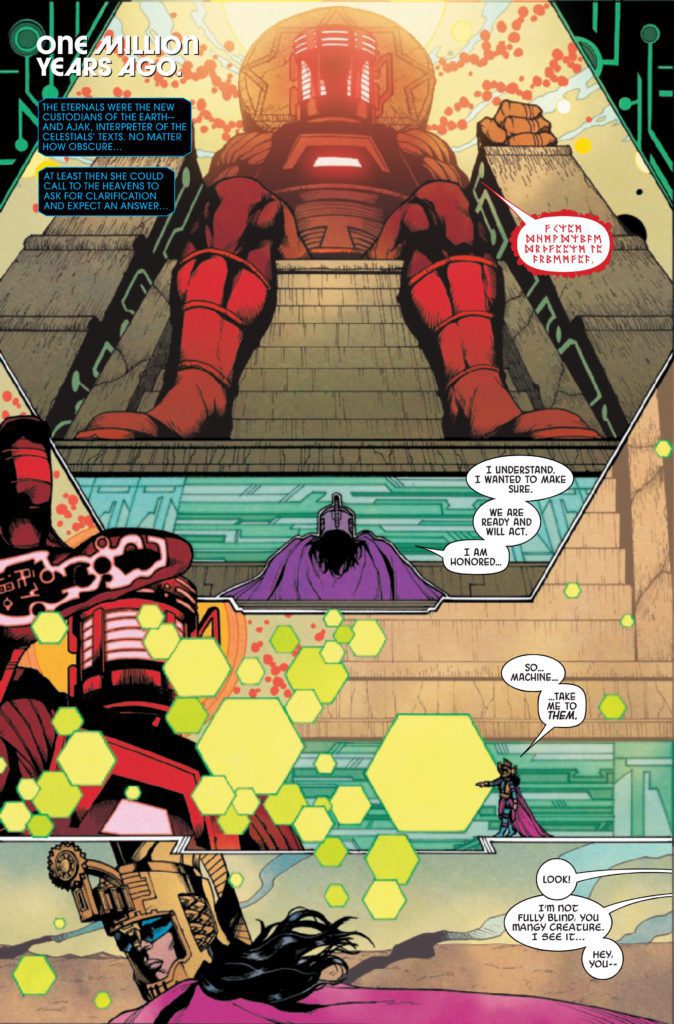
THERE IS NO GOD FOR THE ETERNALS! Now that the truth of their existence is revealed, Ajak and Makkari must pick up the pieces and try to find a road forward… no matter how terrifying it will be, or how their choices will irrevocably shock the rest of the Eternals? Also: How do the Avengers of 1,000,000 BCE figure into it?

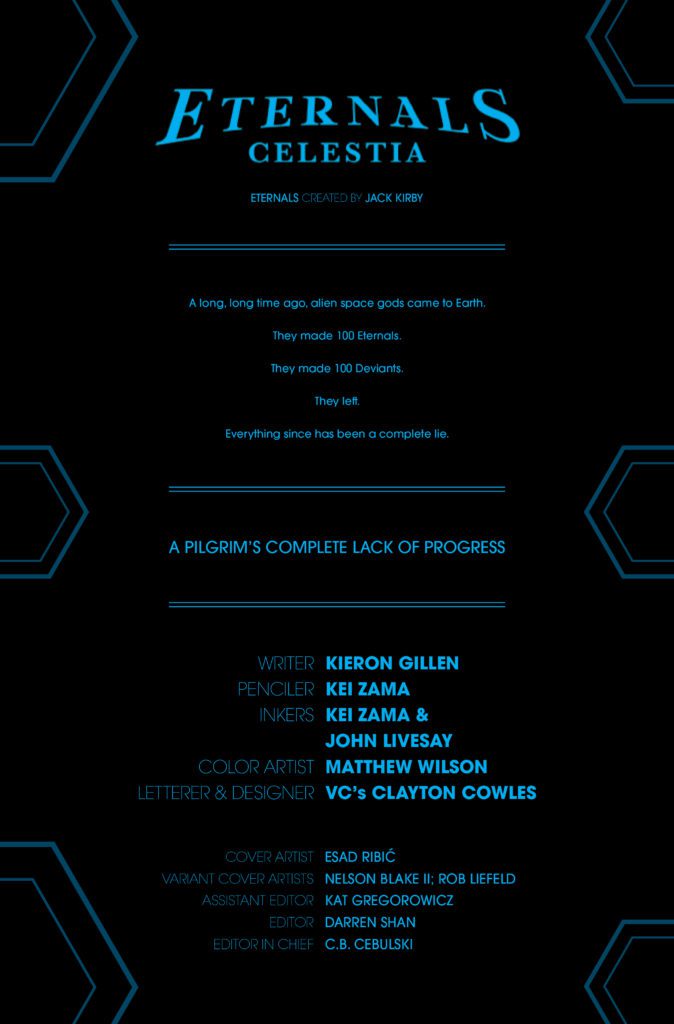
The issue is by writer Kierin Gillen and artist Kei Zama, with inks by Zama and John Livesay, colors by Matthew Wilson, and letters by Clayton Cowles. The cover is by Esad Ribić, who launched Marvel’s current Eternals series with Gillen.

Check out the ETERNALS: CELESTIA #1 preview below:

marvel comics exclusive preview eternals celestia #1

marvel comics exclusive preview eternals celestia #1

marvel comics exclusive preview eternals celestia #1

marvel comics exclusive preview eternals celestia #1

marvel comics exclusive preview eternals celestia #1

marvel comics exclusive preview eternals celestia #1


Have you been enjoying Marvel’s current ETERNALS run? Sound off in the comments!

Monkeys Fighting Robots Youtube

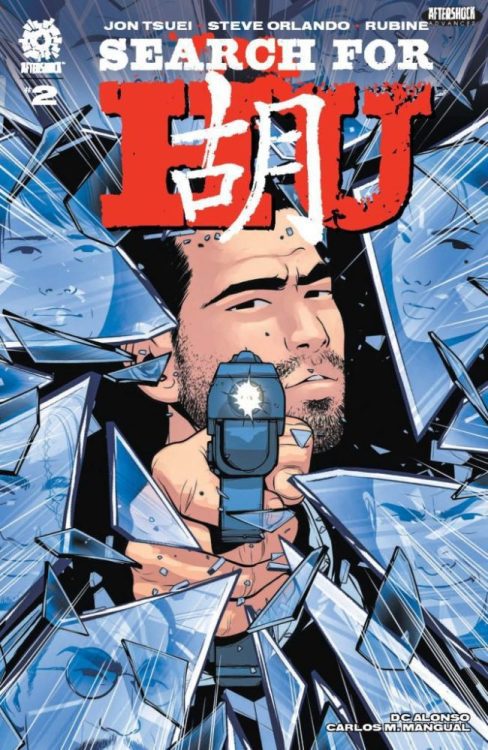
AfterShock Comics Exclusive Preview: SEARCH FOR HU #2

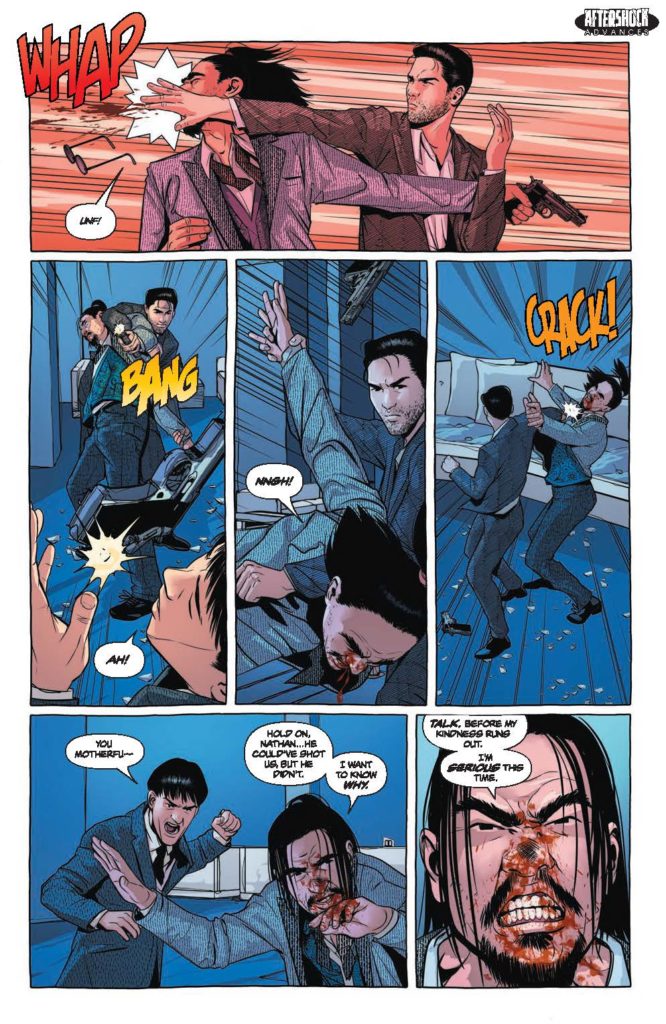
aftershock comics exclusive preview search for hu

SEARCH FOR HU #2 hits your local comic book store October 27th, but thanks to AfterShock Comics, Monkeys Fighting Robots has an exclusive four-page preview for you.

About the issue:
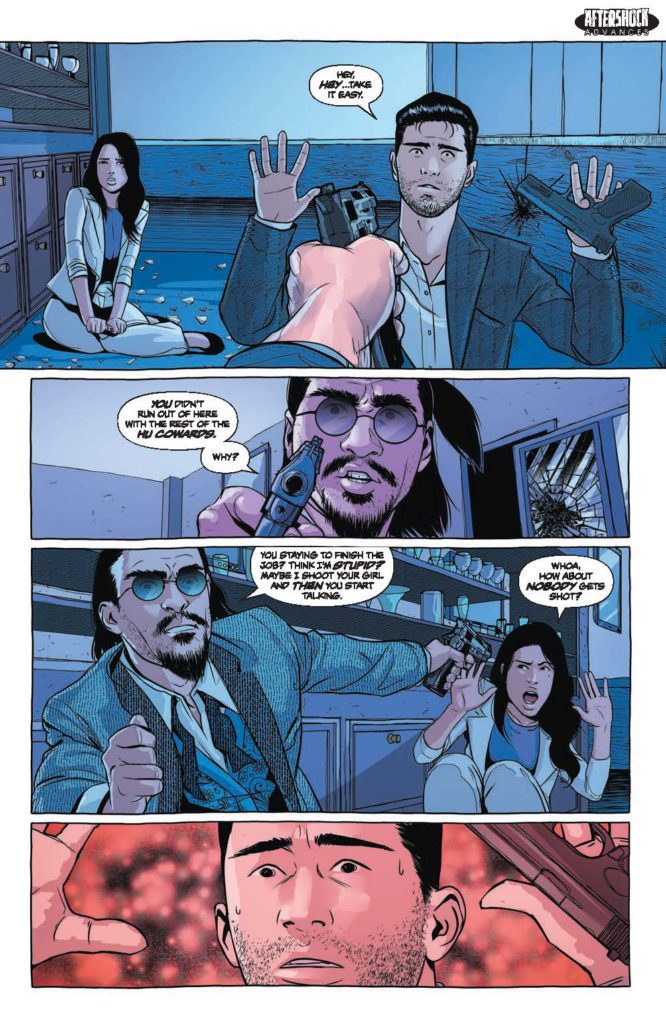
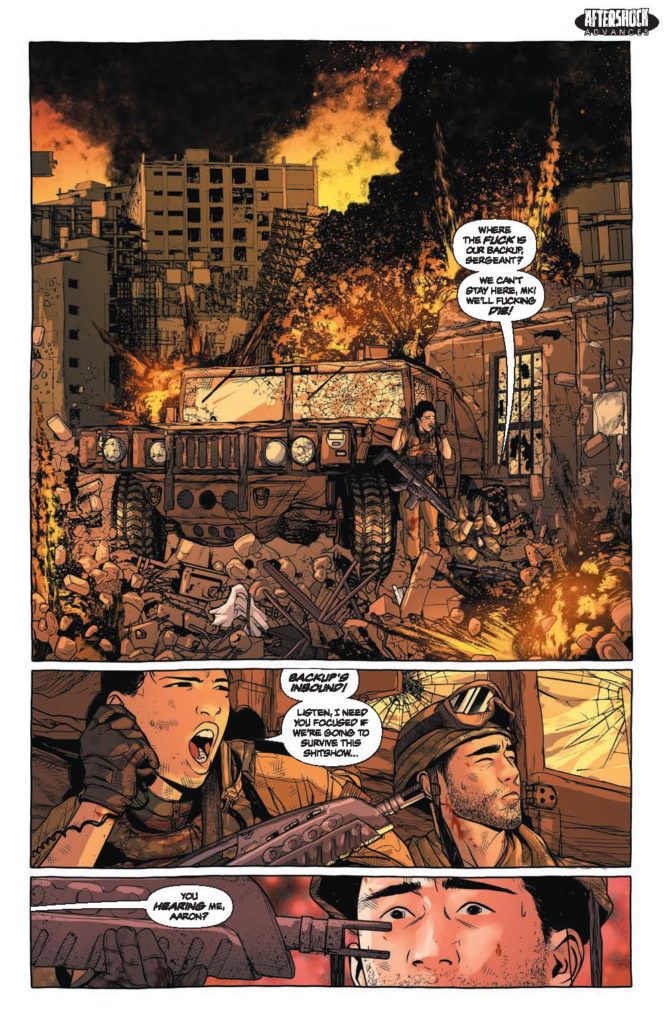
Aaron’s quest for revenge lands him in the middle of a shootout between the Hu and Margolis families. With guns drawn and no way out, Aaron must not only prove his lineage to the Margolis family – he must also prove his worth. Aaron’s quick thinking saves his newfound family from a failed attack on the Hu, but not without a great loss.

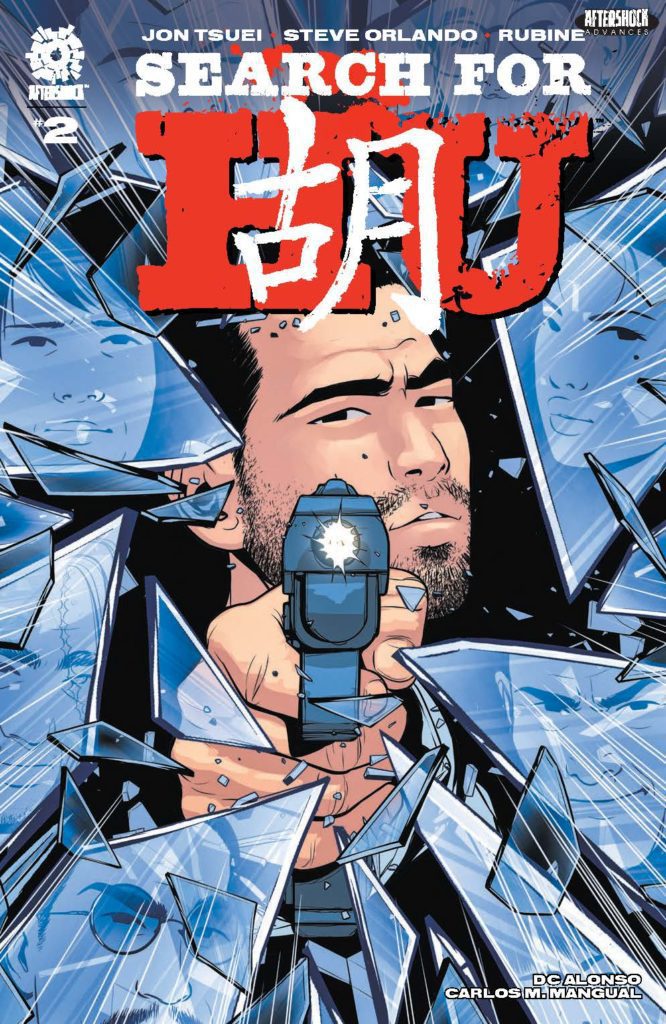
The series is by writers Steve Orlando & Jon Tsuei and artist Rubine, with colors by DC Alonso, and letters by Carlos M. Mangual. The cover is by Rubine and Alonso.

Check out the SEARCH FOR HU #2 preview below:

aftershock comics exclusive preview search for hu

aftershock comics exclusive preview search for hu

aftershock comics exclusive preview search for hu

aftershock comics exclusive preview search for hu

aftershock comics exclusive preview search for hu

aftershock comics exclusive preview search for hu


What did you think of the first issue of SEARCH FOR HU? Sound off in the comments!

Monkeys Fighting Robots Youtube

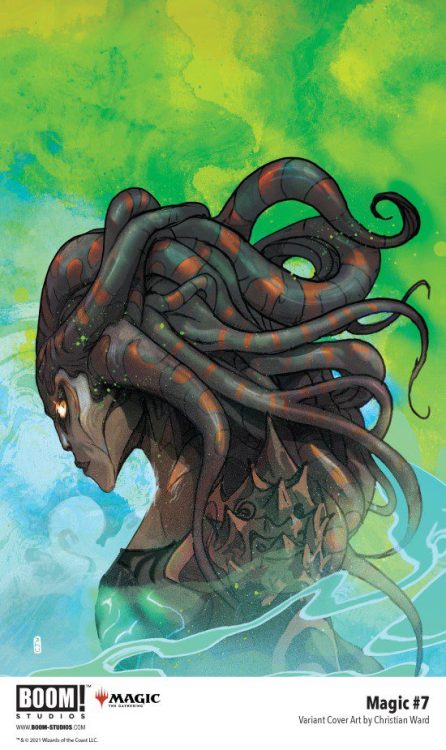
BOOM! Studios Exclusive First Look: MAGIC #7

magic #7 comics boom! studios exclusive preview

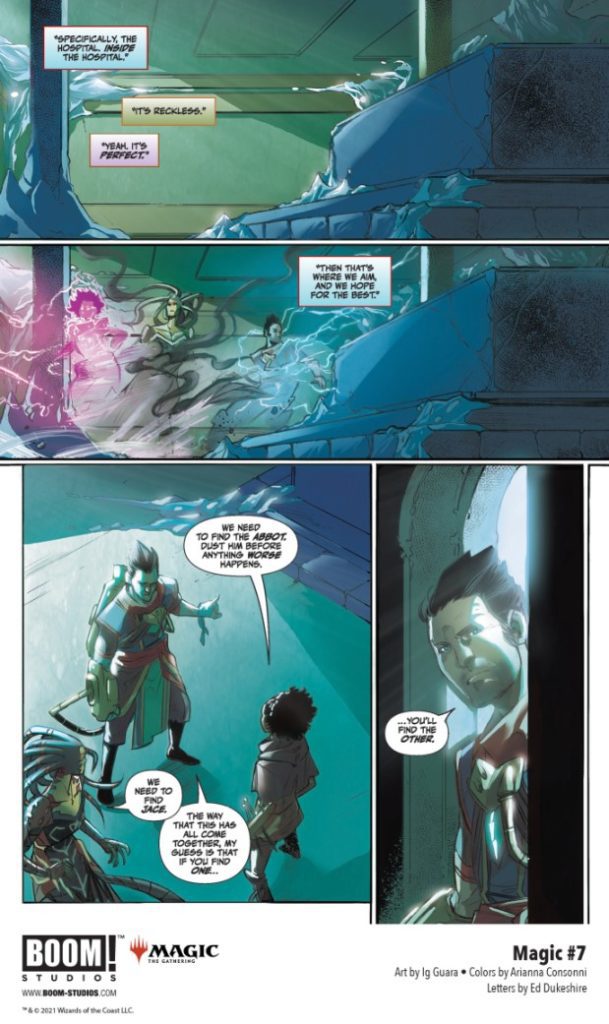
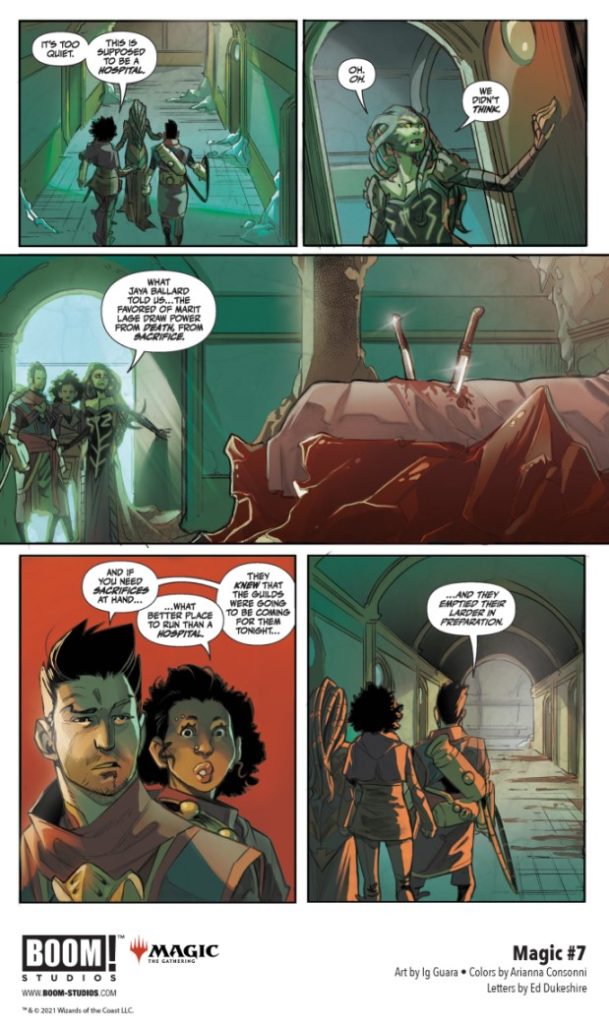
MAGIC #7 hits your local comic book store October 6th, but thanks to BOOM! Studios, Monkeys Fighting Robots has an exclusive five-page preview for you.

About the issue:
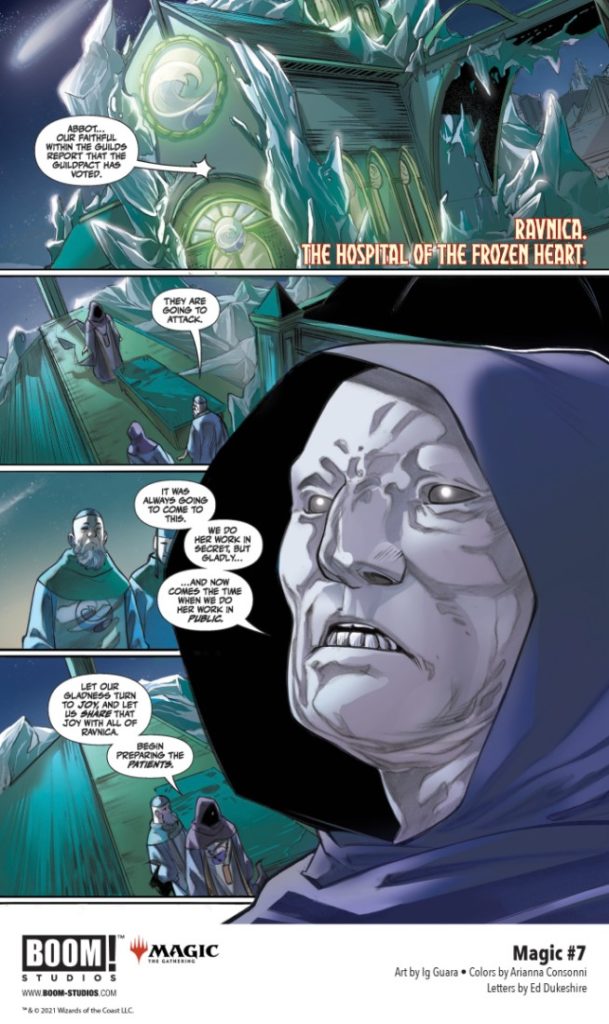
Ravnica united! The Guilds have aligned just in time to find their sprawling city
transformed into a battlefield! Their enemies are mutant horrors: citizens changed by
their cultish devotion to an entity that threatens all life across the multiverse. Though our
planeswalkers are now aided by guild warriors from Boros angels to Simic super
soldiers, can Kaya, Vraska, and Ral Zarek reach Jace Beleren before the herald of
[REDACTED] does?

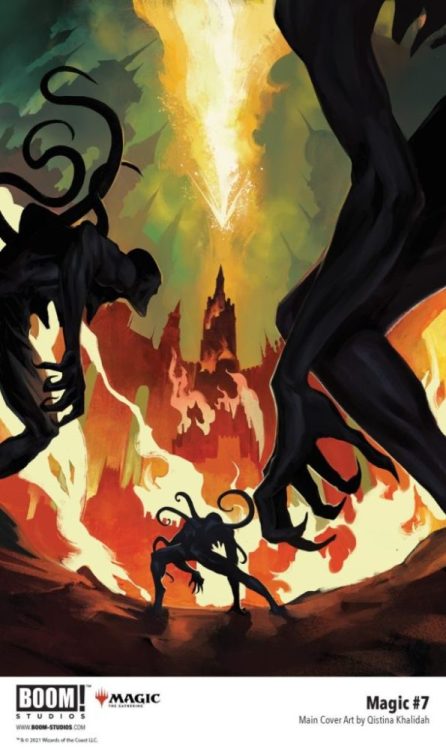
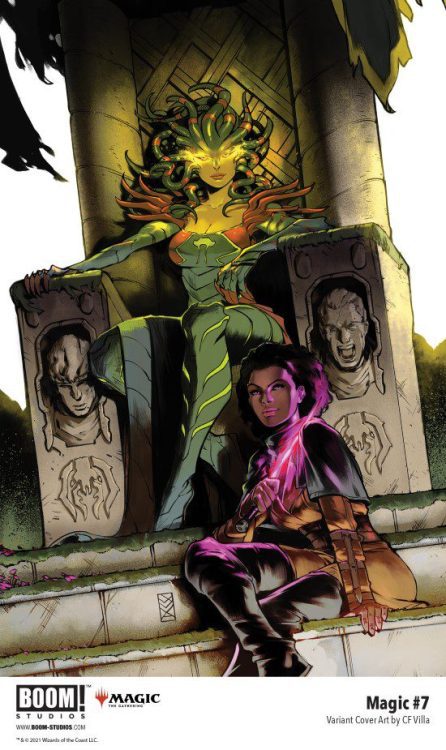
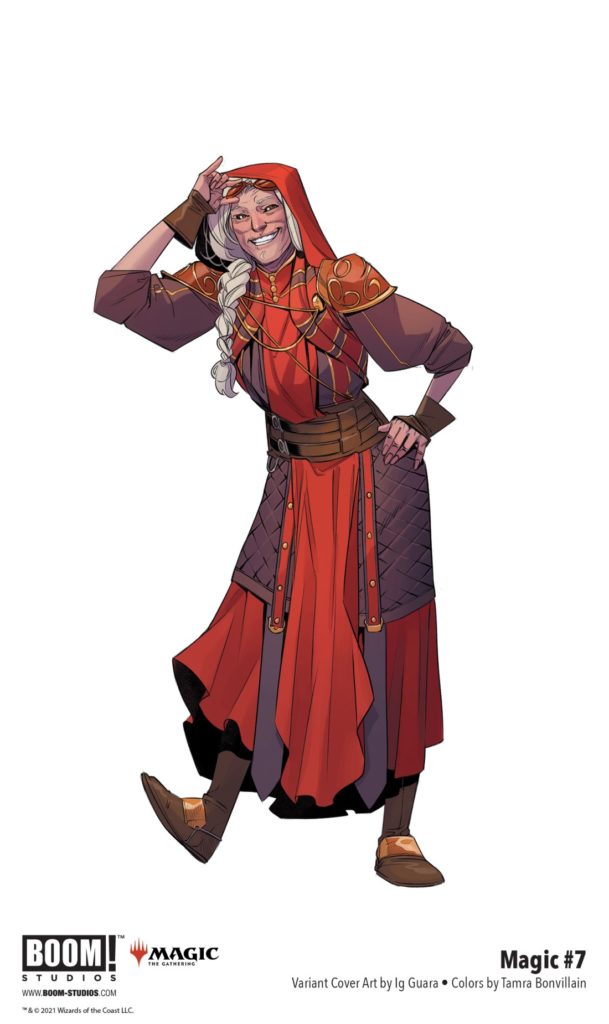
The series is by writer Jed MacKay and artist Ig Guara, with colors by Arianna Consonni, and letters by Ed Dukeshire. The main cover is by Qistina Khalidah, with variants by Guara, CF Villa, Jakub Rebelka, and Christian Ward.

MAGIC is based on the pop culture sensation Magic: The Gathering, one of the most popular trading card games of all time, boasting millions of players around the world.

Check out the MAGIC #7 preview below:

magic #7 comics boom! studios exclusive preview

magic #7 comics boom! studios exclusive preview

magic #7 comics boom! studios exclusive preview

magic #7 comics boom! studios exclusive preview

magic #7 comics boom! studios exclusive preview

magic #7 comics boom! studios exclusive preview

magic #7 comics boom! studios exclusive preview

magic #7 comics boom! studios exclusive preview

magic #7 comics boom! studios exclusive preview


Are you reading MAGIC? Do you play Magic: The Gathering? Sound off in the comments!

Monkeys Fighting Robots Youtube

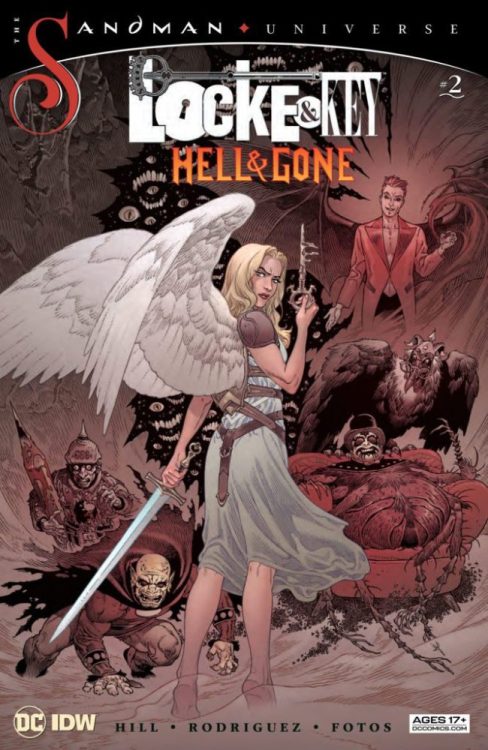
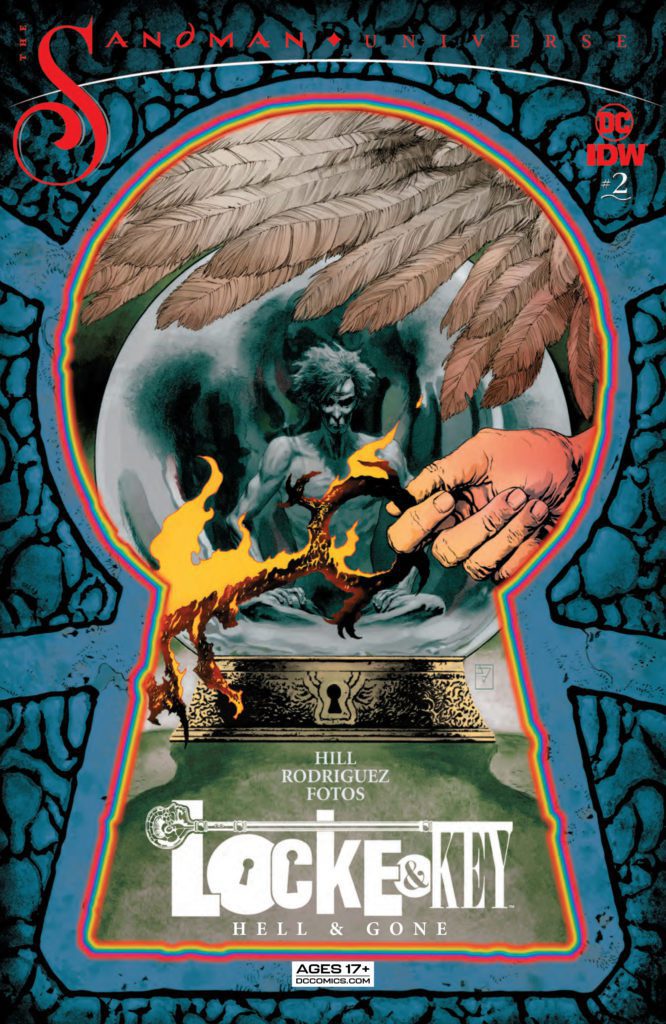
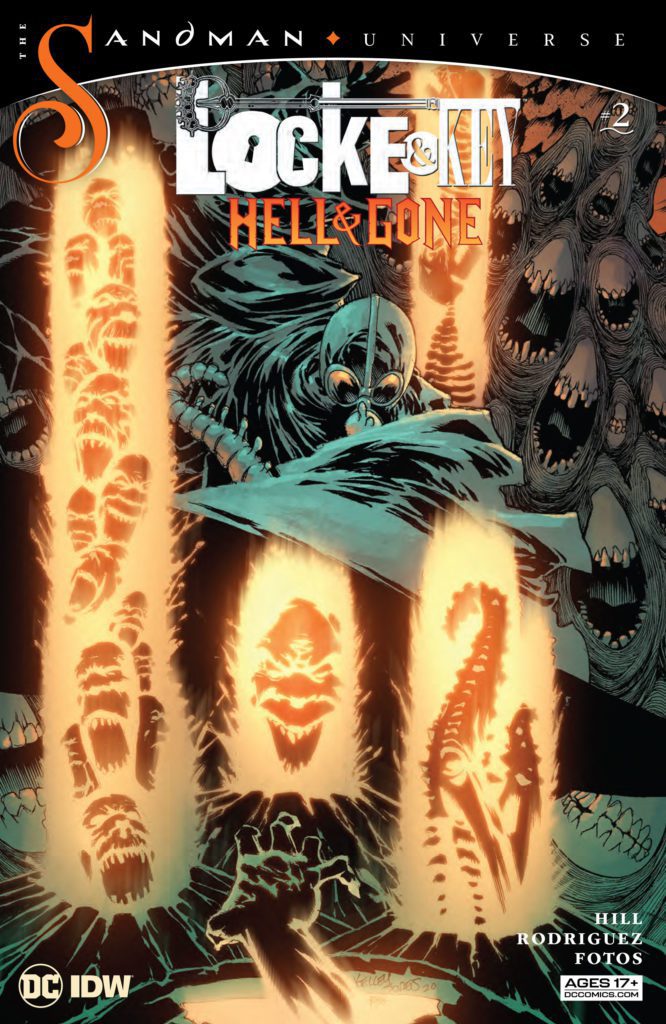
Review: LOCKE & KEY/SANDMAN: HELL & GONE #2 is Devilishly Good

Locke & Key

Anyone who has read Sandman and Locke & Key would know that a crossover of the two is a match made in Heaven… well, maybe not “Heaven.” But the two series have many of the same themes and stylings. So, when IDW Publishing and DC Comics’ Locke & Key/Sandman: Hell & Gone #1 came out in April, some fans were a little underwhelmed. But writer Joe Hill, artist Gabriel Rodriguez, colorist Jay Fotos, and letterer Shawn Lee show us in Locke & Key/Sandman: Hell & Gone #2 that that was because they were merely setting the stage for their epic. This issue brings this crossover to its full, bombastic potential!

Writing

Hill channels Gaiman flawlessly in this chapter. His writing for Fiddler Green, the Corinthian, and Lucien all feel really true to their characters. But they also feel like characters that could have shown up in one of Hill’s stories. Hill seems to love to explore the ways that his and Gaiman’s voice can sometimes sound so similar. And all of the dialogue just feels so damn smooth. Every line has subtext. Our protagonist, Mary Locke, says “I get it. I’m not really much of a morning person myself. But sooner or later we all got to wake up.” Hill highlights with lines like these that his script is about more than just what is happening on the surface. Dreams, to Mary, are childish and silly. Though the citizens of the Dreaming may change her mind about that.

While this issue is incredibly dark at times, it can turn on a dime. Hill can move from disturbing images of hellish torture to moments of hilarity without skipping a beat. It’s shocking and hysterical. These 50 pages really do feel like they contain a rollercoaster of emotions. Yet each moment feels earned, each transition feels smooth. And the finale will leave you wishing you had 50 pages more!

Locke & Key

Art

To say that Rodriguez delivers on this issue is selling these beautiful pages short. Rodriguez has a stunning quietness to his art, in the midst of all of the chaos. This quietness makes the preposterous feel human and balances the impossible scenes with gentle glimpses of reality. We see anguish, fear, and fury on characters’ faces. But these looks are subdued, buried beneath a tough exterior, rarely breaking out. Every truly emotional moment feels completely earned, as Rodriguez uses intense expressions sparingly. In the heat of the battle, it’s not Lucifer’s pitchfork or fiery power that we hone in on. It’s the look on his face. He looks furious and hurt, betrayed and vengeful. Rodriguez makes us empathize with characters that ought to seem totally unrelatable.

Coloring

If you were to flip through this comic and stop at random page, you’d probably be able to tell where the scene is taking place. That’s because Fotos gives each setting – The Dreaming, Earth, and Hell – its own color palette. The Dreaming has deep colors in it. We see the green of Fiddler Green’s plant life, the purple of Lucien’s suit. Earth is much more muted. Hell is almost monochromatic. It’s dark reds and oranges, except for the bright red of Lucifer and Etrigan’s outfits, and the occasional bright yellow of hellfire. But Fotos gives each of these settings their own voice. Fotos almost makes them feel like they’re characters in the story as well.

Locke & Key

Lettering

Lee doesn’t change the lettering up a whole lot. The dialogue remains mostly the same, with the letters rarely changing size or shape. But this means that when there are differentiations, they really change the reading of the page. Lee even uses bold sparingly. On one particular page, though, Lee uses bold a lot. “Do you really think you can open the Gates of Hell?” Fiddler Green asks. “I’m not worried you can’t do it,” he continues. “I’m worried you can.” This whole page is given such a sense of rhythm because we haven’t seen many words bolded up until this point.

And as the issue progresses Lee does change things up a little. We see some characters that talk with different fonts. This becomes more common once we get into Hell. And the sound effects also come out to play. At one point, Lee does one of the best things I’ve seen done in lettering. It’s fun, hilarious, and badass. It’s the kind of thing that you’ll know the moment you see it and to talk about it anymore would spoil some of the joy of seeing it for yourself.


Locke & Key/Sandman: Hell & Gone #2 is a ton of fun. This creative team absolutely sticks the landing and they give us everything we could want in a Locke & Key/Sandman crossover. You’ll laugh, you’ll cheer, you’ll cry. But most of all, when the last page comes, you’ll beg for it not to be over. Pick up Locke & Key/Sandman: Hell & Gone #2, out from DC Comics/IDW Publishing, at a comic shop near you!

Monkeys Fighting Robots Youtube

Review: THE HARBINGER #1 – A Fresh Start

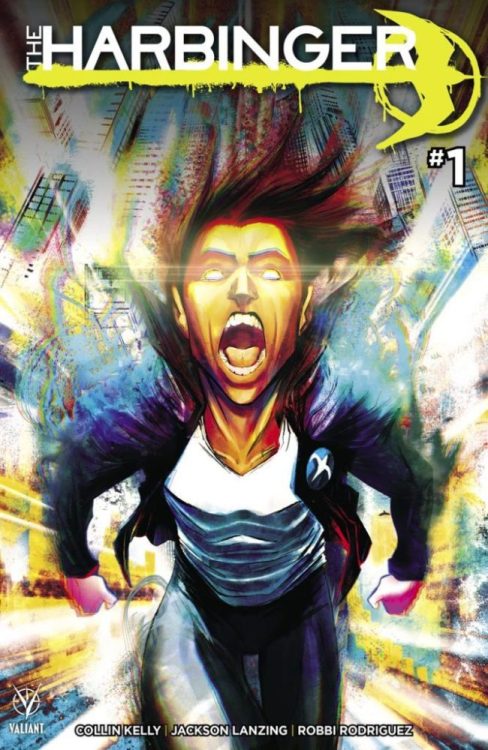
The Harbinger #1 cover

The Harbinger #1 from Valiant Entertainment comes to comic stores on October 27. This soft reboot begins a new status quo for its main character, Peter Stanchek. In this new reader-friendly story, audiences experience a sense of liberation through Peter rediscovering himself. But just like Peter, new readers have no clue what has happened before this issue.

Background

Peter Stanchek is one of the most powerful psiots (espers) in the Valiant Universe. He along with other young psiots, the Harbinger Renegades, stood against the likes of the Harbinger Foundation and nefarious government organizations. But in the crossover event Harbinger Wars 2, Peter and the rest of the Harbingers (save Faith Herbert a.k.a. Zephyr) apparently fell in battle.

The Harbinger #1: The All-Different Peter Stanchek

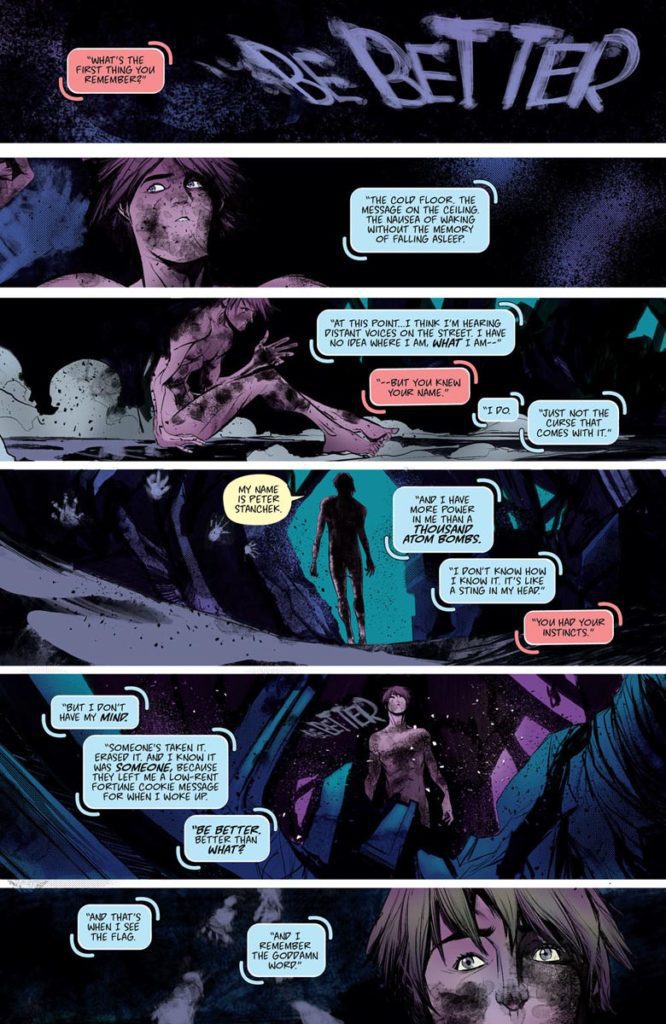
The Harbinger #1 series callbackReinvention is at the heart of The Harbinger #1. Colin Kelly and Jackson Lanzing literally open the issue with the phrase “be better”. For readers returning from older Stanchek adventures, this is an acknowledgment of the Harbingers’ problematic legacy. As the issue’s setting displays, the Renegades’ reactionary stances haven’t made improvements. Without a positive role model or a way to show the public that psiot’s aren’t all threats; the foundation’s scraps have been relegated to a Chicago district where they are oppressed. It gives Peter something to strive for.
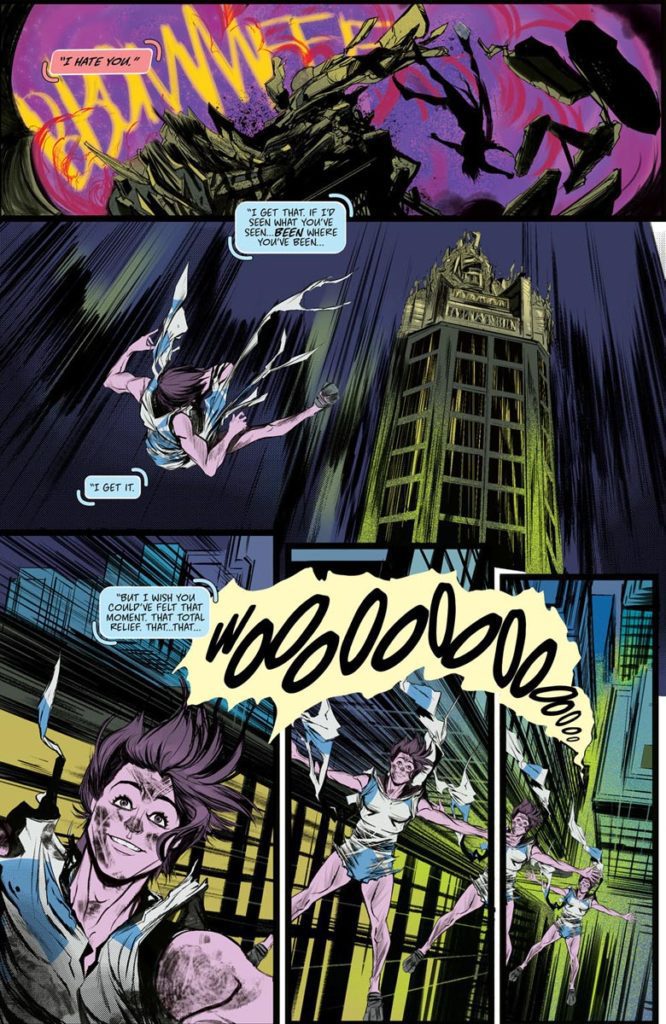
How new readers feel about eventsNew readers can empathize with the amnesiac Peter. Much like the Generation Y and Z audiences this series aims at, Peter comes into a world he didn’t ask for. But he’s still ecstatic at experiencing his powers for the first time in The Harbinger #1. The readers experience these sublime moments with Peter, ready to embrace the world even if it is bleak.
Sublime Art

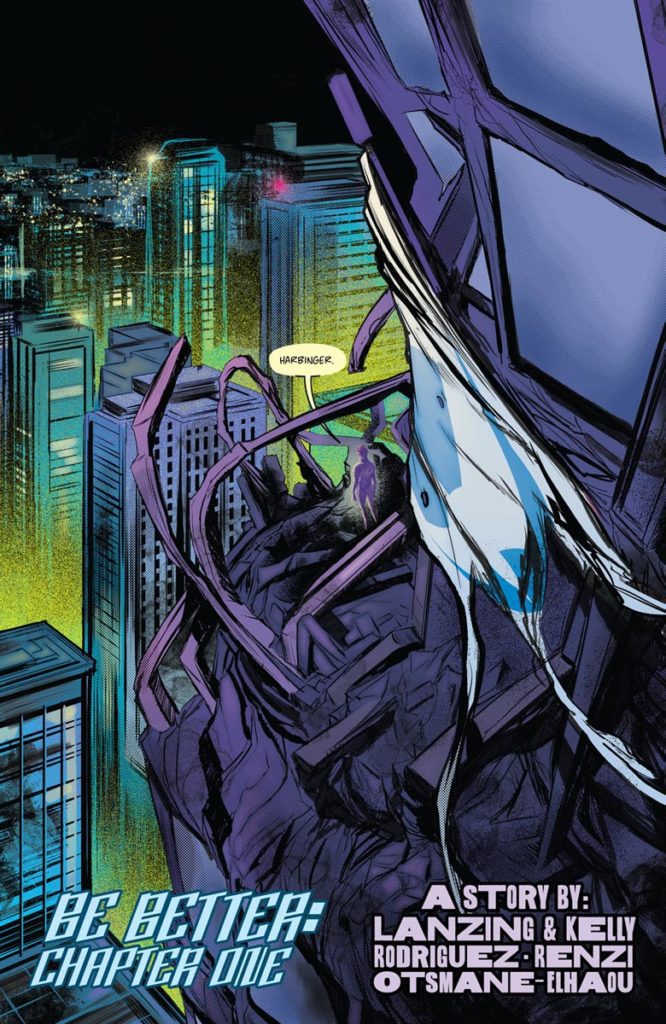
Over the horizonRobbi Rodriguez illustrates The Harbinger #1 with a larger-than-life atmosphere. Peter looks small and vulnerable in a few panels. The world around him is vast, bright, but also covered in shadows. The city of Chicago doesn’t feel too welcoming towards Peter as he stands on a building. But the way Peter’s telekinesis is able to bend buildings to his whim shows how much he can change this gloomy city.
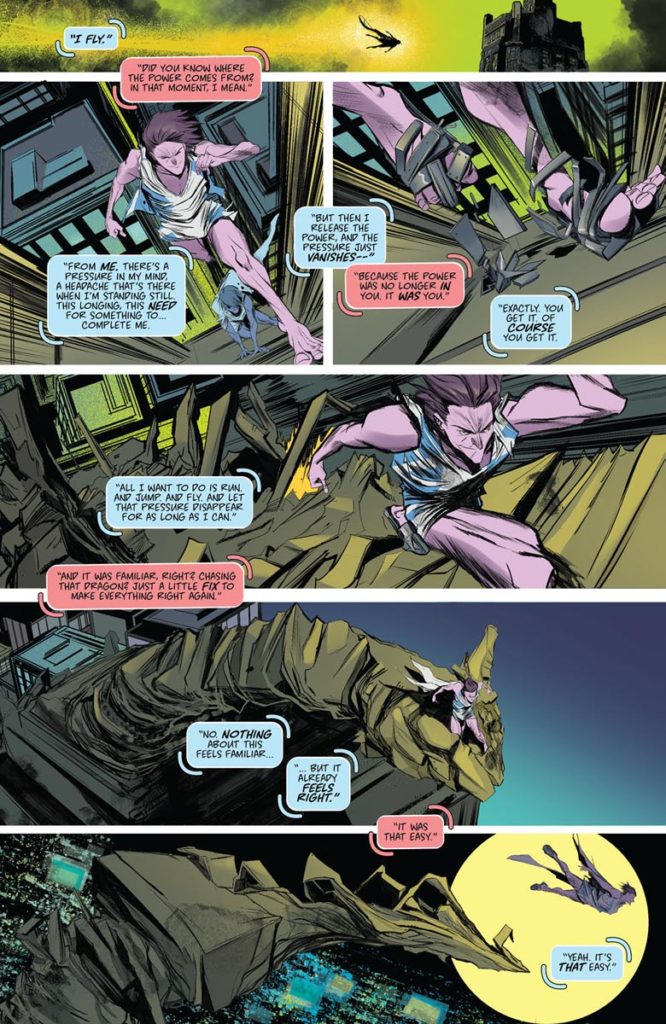
The Harbinger #1 power displayRico Renzi’s coloring adds to the atmosphere through the moods they convey. Alongside the brightly lit Chicago is the district of Psiot City that’s shrouded in black. In this dark canvas, the psychic powers of the psiots give this obscure area personality. To that effect, it reflects the psychedelic images Peter sees in his mind when he uses his powers. There’s potential for the psiots to be something more, but Peter and the rest of the psiots have a long way to go before they can integrate back into society.Exclusive preview image
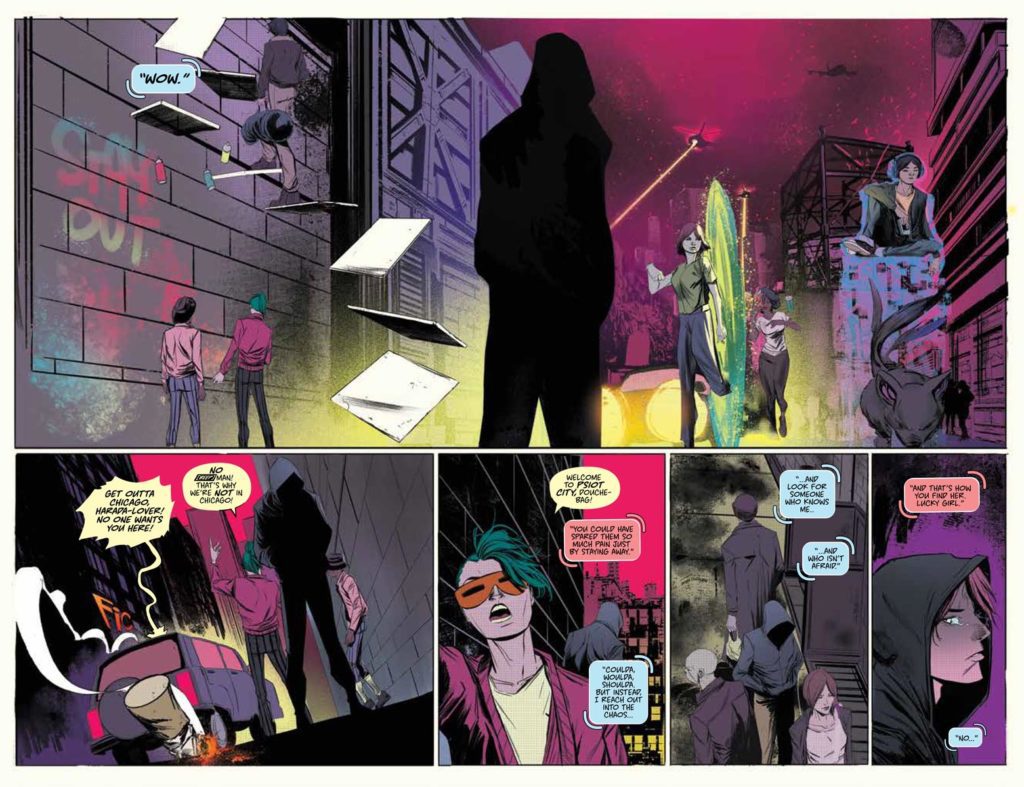
Hassan Otsmane-Elhaou uses his lettering as a powerful way of characters’ expressing their voices. Just about every powerful character has an outline around their caption or word balloon that make them sound louder. Then there are Peter’s internal thoughts that are highlighted by light blue captions that showcase his easygoing personality. But alongside this are echoes Peter hears in the form of thought balloons that aren’t connected to their outlines; it says a lot about Peter’s internal struggle to reinvent himself. That’s what the aggressive red captions Peter converses with suggest anyway.

The Coming of The Harbinger #1

The Harbinger #1 marks the reintroduction of a character ready to start a new chapter of his life. In a world that is ready to fear him, Peter Stanchek is in the process of rediscovering himself in the sublime psychedelic sensibility this series offers. Best of all, new readers don’t need to read previous Harbinger series to enjoy it.

Monkeys Fighting Robots Youtube

Review: Breaking The Molds Of Sci-Fi and Fantasy In ECHOLANDS #2

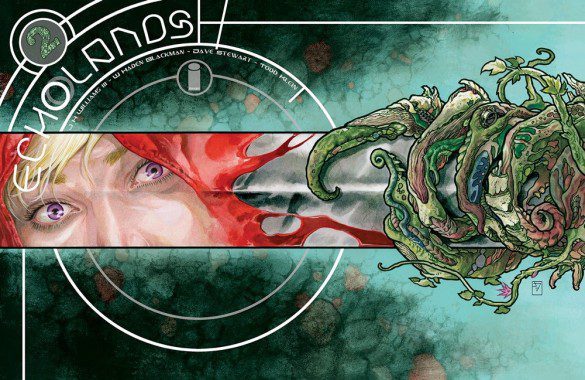
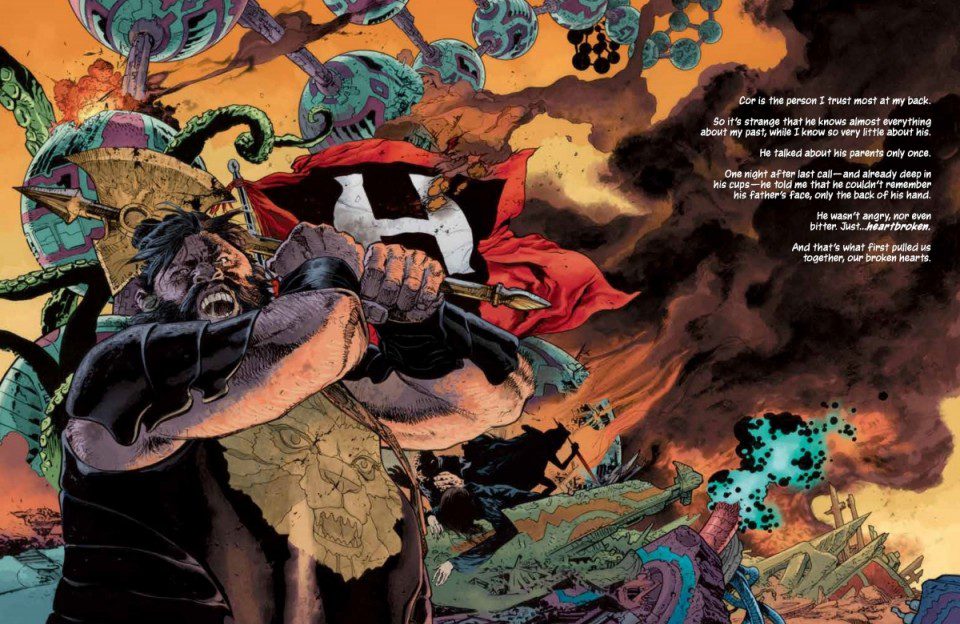
Creators J.H. Williams III (Promethea, Sandman: Overture) and W. Haden Blackman return to their awe-inspiring world in Echolands #2. With Dave Stewart on colors and Todd Klein on letters, this issue continues this genre-blending epic’s forward bold march. With an intriguing plot that leaves much to mystery and medium-breaking visuals, this chapter proves the first issue was no fluke – this is a potential masterpiece in the making.

“Hope Redhood and her companions, Cor, Caniff, Castrum, Dena, Rabbit, and Rosa, are on the run from the Wizard, Teros Demond, and his terrifying daughter. Why is the Wizard willing to kill to regain his stolen gem? Can Hope and her crew escape the strange robots lurking in the tunnels beneath San Francisco? And will they survive a betrayal by the pirate captain, Bloody Gums?”

Writing & Plot

What W. Haden Blackman and J.H. Williams III have done with this series is craft a seamless blend of science-fiction and fantasy genres. Echolands #2 further showcases this with how its characters and lore details string together. A crew including not just our magic-wielding protagonist and her burly companion but also a vampire and a non-binary elf (and numerous other beings) are at the front of the story. Our main antagonists include a masked woman made of flesh and foliage and her arch-wizard father. Meanwhile, robots lurk under city streets and the villains use surveillance drones to track people down. All of this is tucked into a story that feels natural because of how Blackman and Williams present the world.

There is no real exposition, instead the writers just decide to throw us in without a life preserver. This is in my mind the best way to experience this kind of story. The newness of everything makes us readers passengers and discoverers in a new world. We are strangers in a strange land, newcomers to a world we will gain an understanding of only if we stick to this cast of characters. The final pages of this book are made up of a prose interview with the comic’s shadowy antagonist. This may be my favorite part of the comic even though it stops being a comic book here. The amount of atmosphere, lore, and foreboding this segment gives makes me voracious for the next chapter.

Art Direction

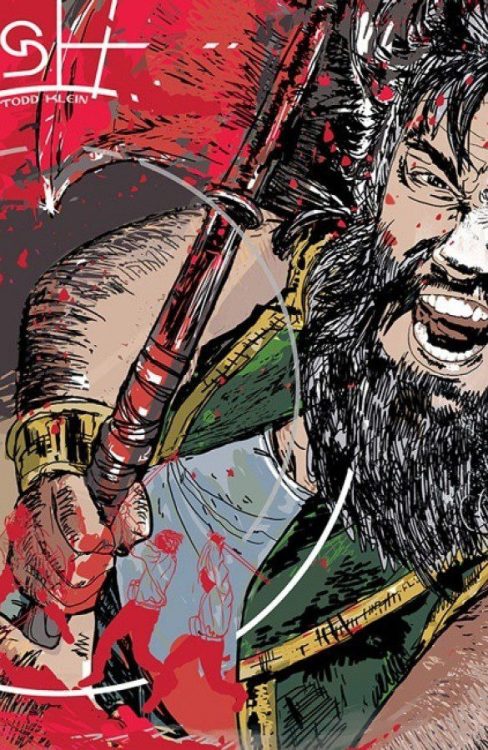
J.H. Williams III also draws Echolands #2. This should tell you everything you need to know about the art. His style-blending on every page never ceases to be astounding. Every character appears to be drawn with a different approach and technique. One character could be heavily shaded and cross-hatched while the character standing next to them is drawn with open linework, akin almost to Frank Quietly’s approach. This style, which is common in Williams’s work, adds to the idea of this comic’s mythological melting pot. His intricate detailing of every surface of character and environment is impossible to to see. It’s the sort of work that will have you staring at the page for moments on end before moving on.

All of his creative designs in terms of both the world and characters are memorable and distinct – especially our masked villain. The panel direction is just as artistically charged as you could imagine a Williams would be. One page will have a relatively standard top-to-bottom panel progression. Then the following page will have no panels whatsoever and be broken up by the art itself. Williams has always favored the progression of his comic stories in this manner, and it’s always an absolute thrill to see.

Colors & Lettering

Dave Stewart is on hand to fill in Williams’ work with. It should go without saying that he does incredible work here as well. The veteran colorist utilizes a style that is just as shifting and varied as Williams’ own, with every character and surface seeming to have a different approach taken to it. The density to Stewart’s work pulls off an artistically rich and high-fidelity look to the visuals. Much like the penciller, the color palette can shift into oddity and almost psychedelia on a dime and look completely natural in this aesthetic. Coming from the same colorist that filled in Williams’ work on Sandman: Overture, I expect nothing less.

The lettering comes from another comics heavyweight in Todd Klein, and it’s just as brilliant as you might imagine. His fonts range wildly from character to character, with an extensive variety of dynamic changes. A real highlight is the masked protagonist’s dialogue lettering, which appears in a sort of Greek alphabet-esque font. Every aspect of the visuals in this comic are absolutely stunning and a high point in the entire medium.

Verdict

Echolands #2 is a fast-paced and wholly imaginative second chapter to this genre-blending storm of creativity. W. Haden Blackman and J.H. Williams craft a script that fleshes out the world solely through character interaction and makes all of this story’s many gears mesh together perfectly. Williams’ pencils together with Dave Stewart’s colors are reminiscent of a Baroness album cover in motion, but with infinitely more variety. Be sure to grab this newest issue and keep up with this series when it hits shelves on 9/29!

Monkeys Fighting Robots Youtube

Review: REPTIL #4 — The Power Of A Greater Family

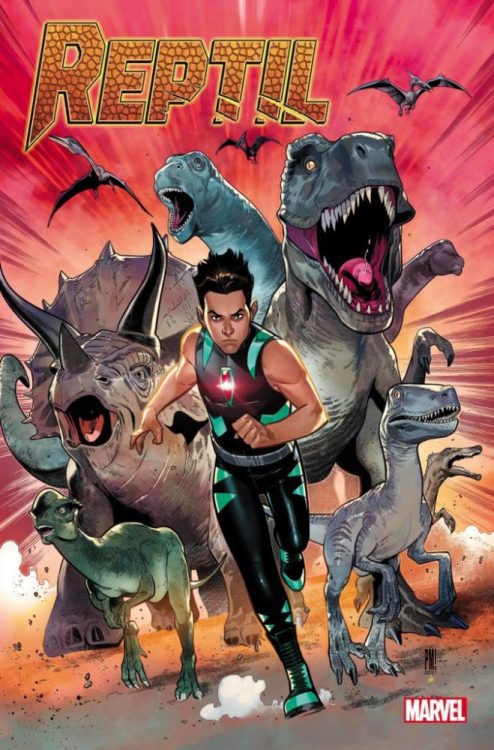
Reptil #4 Cover

Marvel Comics’ Reptil #4 closes out the miniseries on a high note. Between a climatic battle against the series’ main villain and the title character’s concerns about his self control, there’s a strong sense of familial comfort in Mexican pride.

Background

Humberto Lopez (a.k.a. Reptil) just wanted to keep his head down after events like King In Black. Only for a new villain, Megalith, to hold what’s left of Reptil’s parents hostage for the source of his dinosaur shapeshifting power.

Reptil #4: Viva La Familia

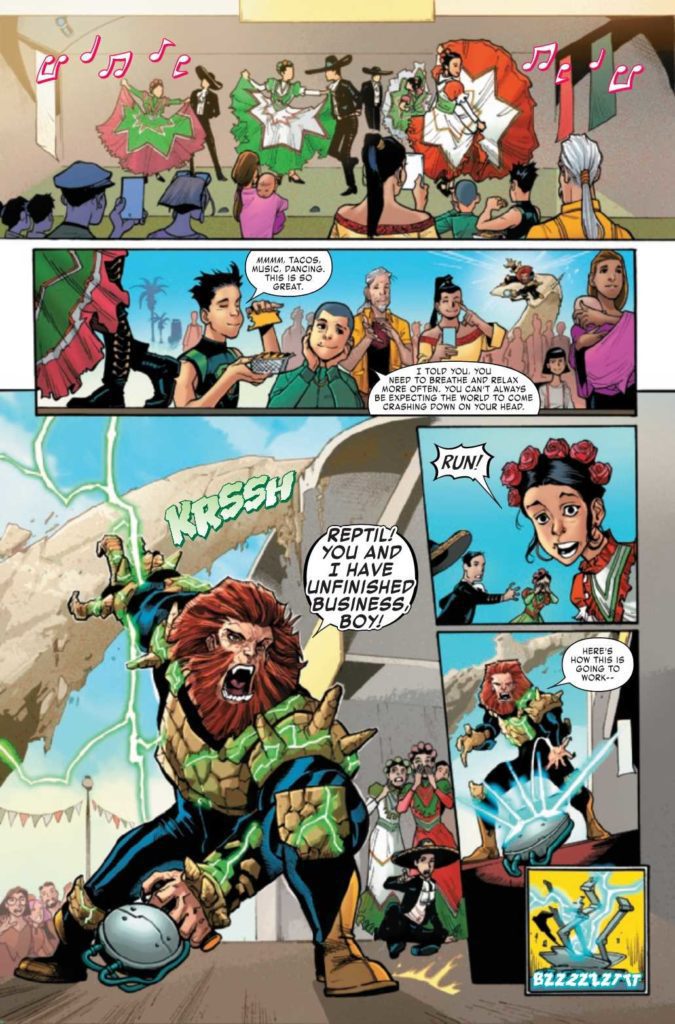
Reptil #4 plot in actionWriter Terry Blas keeps Reptil #4 dedicated to the idea of a greater family as a form of empowerment. Seeing Berto with his family and community feels absolutely serene. So when Megalith arrives for Berto, there’s a genuine sense of intrusion. Having the entire Latin community stand with Reptil feels like authentic support.
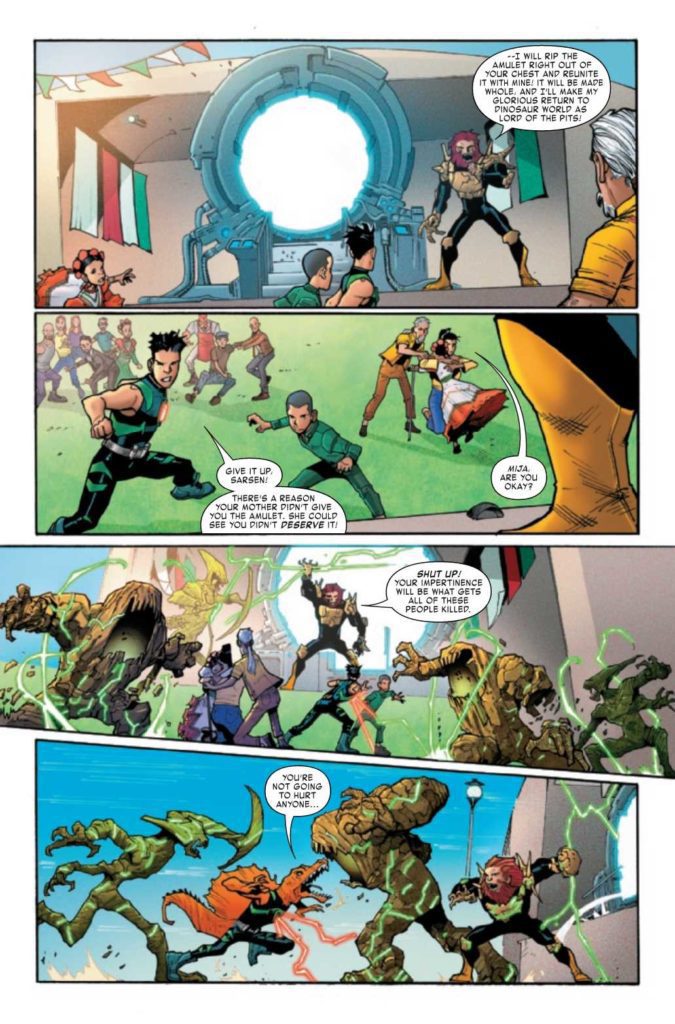
This issue builds on everything in the previous three issues for a grand finale. Seeing Reptil assume the form of a Quetzalcoatlus isn’t just a resolution on his arc for self control, it’s a callback to earlier in the series with Berto’s parents. It feels like the end of one journey so a new one can begin.

Strike With Art

Showtime!All of the artists of Reptil #4 play their parts in bringing out the very best in this series. Enid Balam’s pencils make the costumes, dinosaurs, and monster forms notable enough to remember. It certainly helps that every major character in this issue stands out further with bolder lines from Victor Olazaba’s inking. Not to mention the eye-catching colors of Reptil’s dinosaur forms and Megalith’s golems from Carlos Lopez.
Joe Sabino gives each line of dialogue a great bit of importance in Reptil #4 through fonts. Like when Berto speaks Spanish, the italics and lack of translation caption gives the impression of the community coming together against Megalith’s assault. That’s not even including how a stylized sound effect from Reptil’s Parasaurolophus form communicates with dinosaurs.

Take A Gander At Reptil #4

Reptil #4 completes a heartwarming empowerment story via a greater family. The way the title character communicates with others speaks volumes on aspirational identity. Through the efforts of the creatives, there’s a strong sense of artistic expression. Building upon everything that comes before in this series also leads to a grand finale.

Monkeys Fighting Robots Youtube

Review: X-O MANOWAR #6 — An Intruder In Plain Sight

X-O Manowar #6 Cover

X-O Manowar #6 from Valiant Entertainment is out in comic stores now. Since issue 3, a plot has been developing that threatens the mundane life of Aric via his suit Shanhara. The revelation that something’s wrong boils to the surface with carefully paced reactions the reader catches onto.

Background

Aric of Dacia (a.k.a. X-O Manowar) works with billionaire Troy Whitaker to combat a nanite swarm. But after a near-death scenario, Aric’s suit Shanhara is in need of rest.

X-O Manowar #6: An Uneasy Recovery

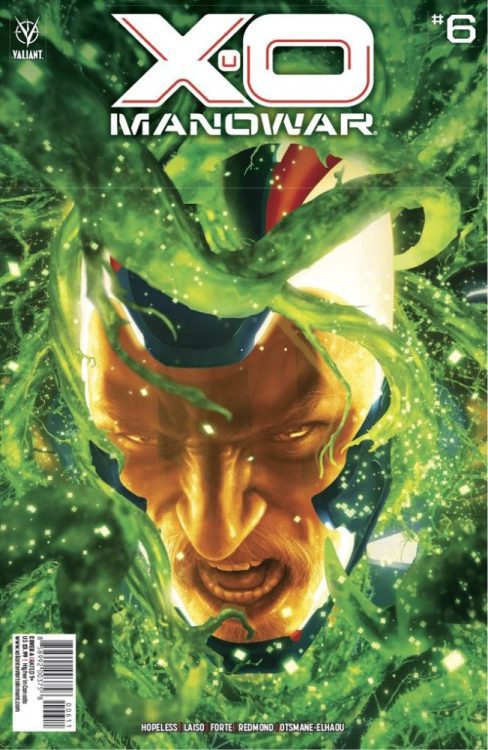
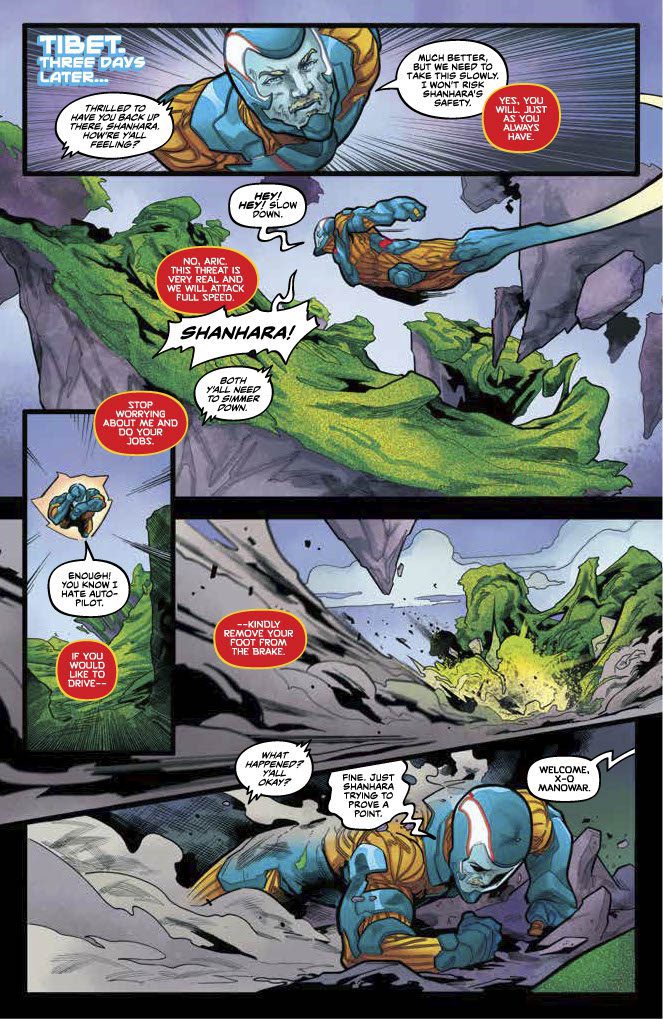
Dennis Hopeless continues the quietness of last issue into X-O Manowar #6 before moving into a major twist. At first, things seem still with Shanhara’s recovery, even dedicating a few pages to her and Aric taking downtime by rebuilding damage from issues back. Seeing the alien armor back in action feels genuinely rewarding. That is until the reader notices how Shanhara’s personality change since issue 4 affects the people around her. Seeing how dominating she gets with Aric to confront the nanite swarm feels disarming.X-O Manowar #6 premise

Check Out The Details

The art of X-O Manowar #6 tells most of the issue’s story. Emilio Laiso seems to having fun with the illustrations, like when Shanhara covers Aric’s head with a large ball. The way characters react to this funny moment is fitting after a moment of fear. Raffaele Forte’s inking emboldens theses reactions to add depth and impact to these moments and drive them home.

As for the issue’s direction, Ruth Redmond’s coloring and Hassan Otsmane-Elhaou’s lettering does most of the work. The background coloring sets up most of the atmosphere with floating mountains covered in moss-like nanites catching the readers attention. The lettering then smoothly guides the reader as characters exchange dialogue. Perhaps the most notable contribution however is how Shanhara’s voice is presented. Her red word balloons make her sound assertive and vindictive, unlike the return of her blue word balloon that’s full of concern.

Prepare Yourself With X-O Manowar #6

X-O Manowar #6 is getting into the real crux of the series’ run. There’s a well balanced plot in terms of pacing, with an even more impressive payoff. Through juxtaposition and eye-catchingly evocative artwork it sucks the readers in with a great plot. It all but doubles the anticipation for next issue.

Monkeys Fighting Robots Youtube