Home Blog Page 108

Review: LOVE EVERLASTING #2 Can’t be Put in a Box

Love Everlasting

The premise of writer Tom King and artist Elsa Charretier’s Love Everlasting might not be simple, per se, but in the space of one chapter they had already established a rhythm and pattern to the story. Yet, in Love Everlasting #2, only a chapter later, they are already throwing out the playbook. It’s clear that this is not a series you’ll be able to predict. King, Charretier, colorist Matt Hollingsworth, and letterer Clayton Cowles are trying new things at every opportunity.

About Love Everlasting #2 (from Everlasting Productions):

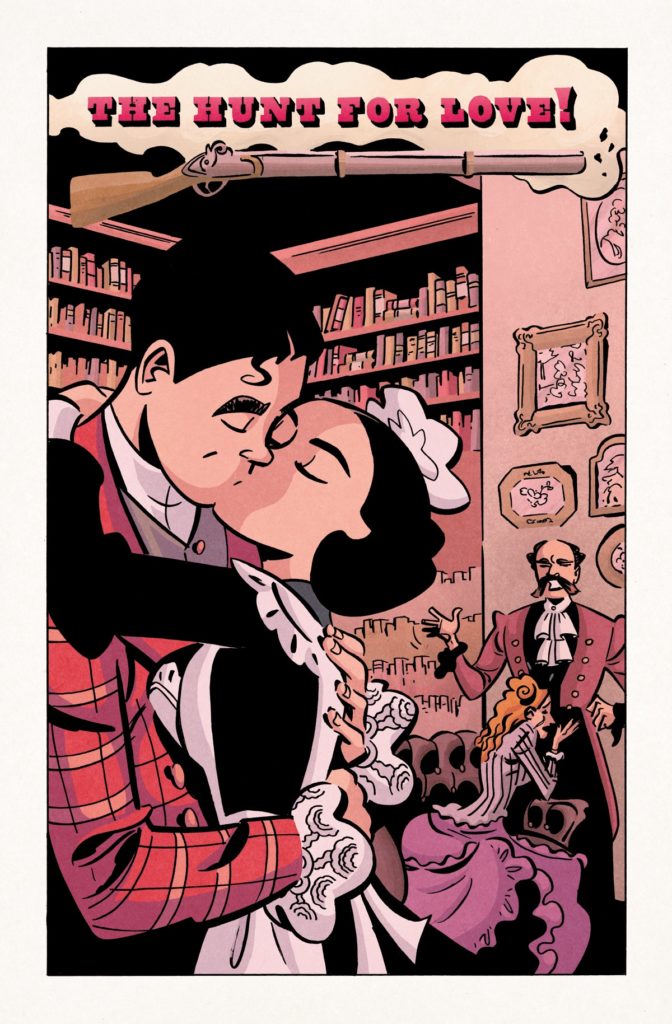
Joan wakes into another nightmare of love. It is 1920. She is the maid and Roger is the heir to the great manor, and though it is forbidden, they are inevitably drawn together. But soon clichés begin to crumble and blood begins to spill as Joan finds her own power in “The Hunt for Love”!
Love Everlasting King Charretier

Writing

Love Everlasting #2 does not pick up where the last chapter left off. It’s immediately confusing. What are we missing? How did Joan get here? And why do we seem to have gone back to square one? You can almost feel King smile as you scratch your head. He has you right where he wants you. But then, something even stranger happens. Love Everlasting #1 seemed to establish two things: a pattern of short love story vignettes that wrap up every few pages, and an exploration of the horror behind the idea of love being everlasting. Yet, ten pages in, we arrive at the second chapter of the same love story. It’s cheesy, it’s melodramatic, it’s full of all kinds of clichés, but damn it if it isn’t kind of lovely too. The story draws you in to the point that you almost forget the seeds of horror and meta commentary King has been sowing. And right when you’ve given up on figuring out what’s going on, King brings back every thread in a quiet, measured, and explosive way. If you think you have a handle on Love Everlasting and its themes, this issue is a surefire way of learning that you ain’t seen nothing yet!

Art

Charretier’s art continues to be delightful. It’s hard to go into many of the themes and storytelling Charretier has at work here without spoiling some of this issue, so let it be said that the subtleties of her art are incredibly rewarding upon a second read. The first major thing we see in Love Everlasting #2 is the difference between Joan, our main character, and her lover Roger. Roger is so unaware of his own privilege. He feels subdued and persecuted by his own rank, completely oblivious to how Joan must feel as his maid. Charretier places panels of each of them side by side. Joan’s face is concentrated as she bends over a bucket full of laundry that she’s washing by hand. Roger, placed in a similar position in the frame, looks downcast and sad as he listens to his wealthy father’s list of demands. As we continue through the story, Roger is always seen above Joan in any panel that they share. He’s quite literally her superior, yet she smiles up at him with doting eyes. With this, the twists and turns that shake Joan and Roger’s dynamic, and each of the playful page layouts, Charretier tells us volumes about these characters in the space of just a few pages.
Love Everlasting

Coloring

Joan and Roger may occupy the same house, but Hollingsworth makes it clear that they live in two different worlds. Roger’s world is in a perpetual sunset. The golden hues of the landscape are picturesque and beautiful. Joan’s world is dim and dank. You can practically smell the mildew in the gray broom closets and kitchens where Joan does her work. Throughout, we see Joan getting invited into Roger’s world. The grays give way to the yellows and oranges of Roger’s evening escapades. But Roger can never fully enter Joan’s world. Only once do we see him go into Joan’s dimly lit bedroom. Even then, the golden rays of the sun outside the window stream in and cast a faint light over Roger’s face. Hollingsworth gives us a clear picture of what makes the gap between these two so large. Roger has never known poverty. He can’t even fathom what it would be like. Joan is all too aware of the riches she’s only every allowed to partake in as a guest of others.

Lettering

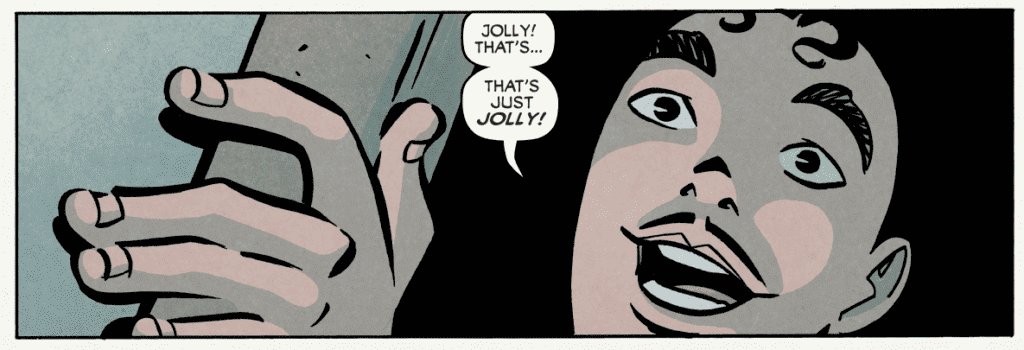
Cowles lettering has a very playful feel to it in this issue. Often, we see word balloons with bumpy edges. The balloon itself seems to hug the words, so that these lines of dialogue have their own unique rhythm and character to them. The same can be said of Cowles’ sound effects. While Joan and Roger hunt, we see two dogs barking. The “AROOOF” letters on the page grow and dwindle to put emphasis on the middle of the noise. Each sound has a specific lettering to it, not only to give it its own noise, but to match the mood of each scene.

Verdict

Love Everlasting is charming and terrifying. Better yet, it’s a story you won’t be able to predict or get a handle on – at least, not until it already has its hooks in you. In the space of two issues, this creative team has already shown that they plan to swerve and adapt at every turn, keeping us on our toes for what’s next. Love Everlasting #2 is available to paid subscribers on Everlasting Productions and will be available for free in two weeks time.
Monkeys Fighting Robots Youtube

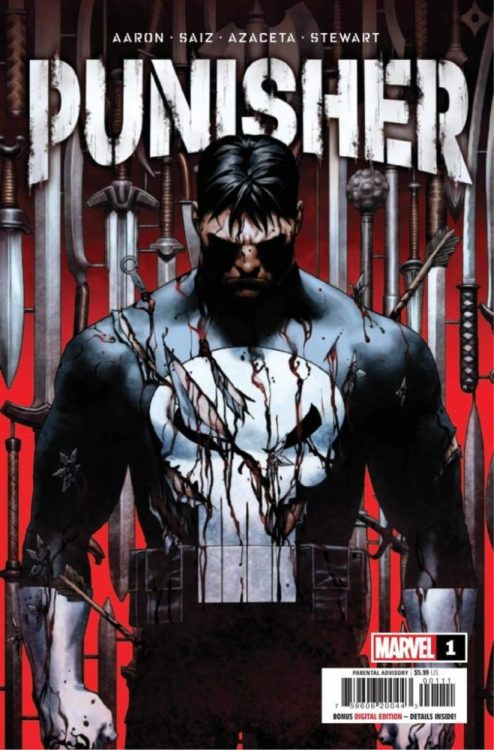
Review: PUNISHER #1 – The King Of Killers Moves East

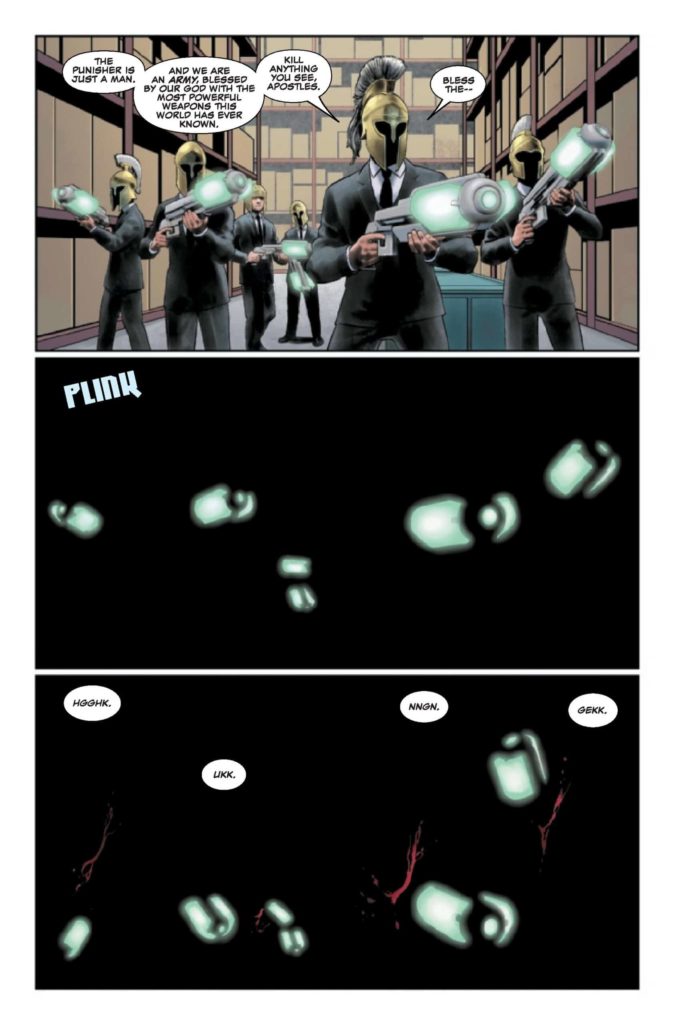
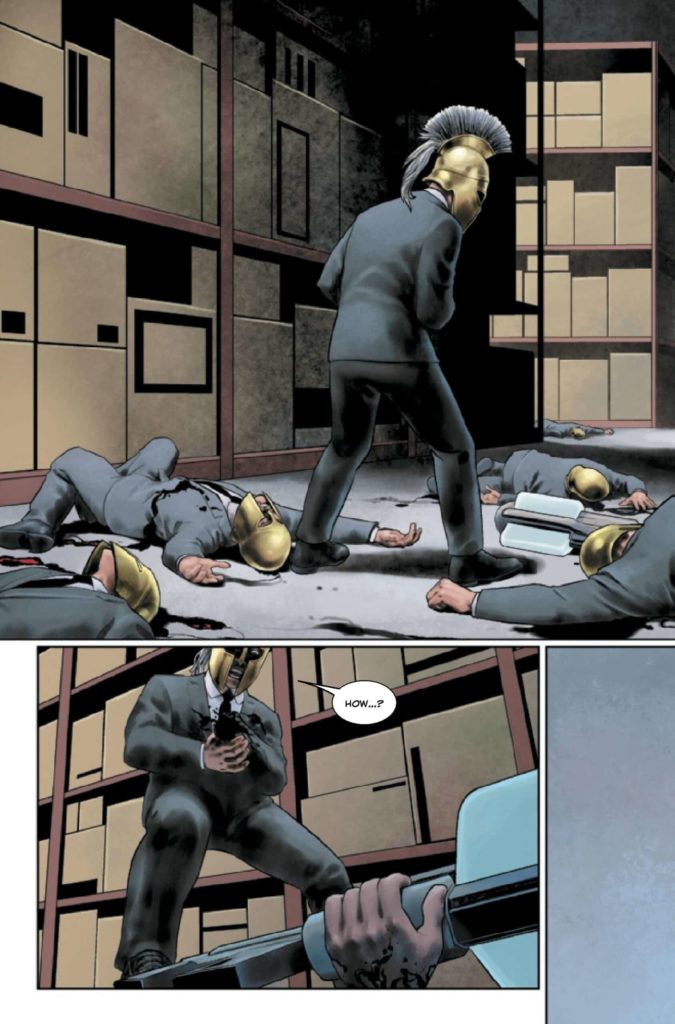
Writer Jason Aaron (Scalped, Thor) and artists Jesus Saiz and Paul Azaceta bring Frank Castle to a new land and a brand new start with Punisher #1. Featuring colors by Dave Stewart and lettering from Cory Petit, this opening chapter offers an intriguing premise that is sure to be divisive among the character’s fanbase. With an engaging first-chapter script and solid, engrossing visuals, this fresh start for Marvel’s iconic sociopath is too compelling to keep away from.

“WILL THE PUNISHER’S WAR END? Born of tragedy. Devoted to war. Unstoppable in his rage. As the Punisher, Frank Castle has become the most accomplished killer the world has ever seen. Now it’s time for him to face his true destiny. What shocking secret from Frank’s past will convince him to take the reins of the Marvel Universe’s most notorious clan of assassins? And once Frank becomes the warlord of the deadly ninjas of the Hand, will it also mean an end for the Punisher? Or a whole new bloody beginning?”

Writing & Plot

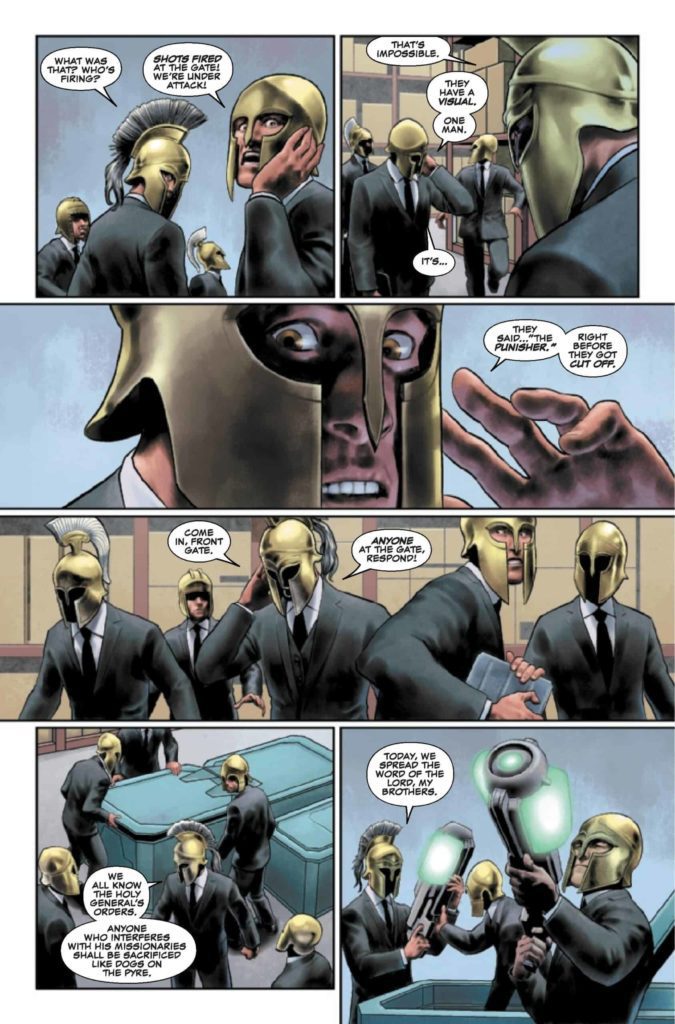
Okay look, I have a lot of respect for Jason Aaron as a writer. His runs on Thor and Star Wars are some of the best stories Marvel has published in the last 20 years. However, as recent events have uncovered, the guy just needs to know when and how to stay in his lane. Punisher #1 is exactly that. Aaron has handled the gun-toting vigilante before in his run on Marvel’s old MAX label; a run that followed up the seminal work of Garth Ennis. Aaron’s first issue here, being a part of the main Marvel timeline, isn’t the brutal introspection that Ennis or even his own MAX run are. I have to admit, my impressions of Frank Castle are based entirely on his appearances out of continuity. I’ve always found the character an ill-fit for the mainstream Marvel universe. Aaron could very well change my mind.

Here, we get a Punisher working with legendary Daredevil antagonists The Hand. Together, they’re hunting down and slaughtering an international group of well-armed killers…among other people. Frank’s motivations for joining the ninja-assassin group appears purely work-related at first; after all, the Punisher will go anywhere to kill bad guys. The final page twist reveals the real reason he’s joined up, and friends it’s a game-changer. For the most part though, this issue just introduces us to Castle’s new life situation and setting. There’s a lot of narrative explaining The Hand’s motivations for bringing Punisher into the fold. It’s entertaining, especially getting to witness their uh…explosive first meeting. Outside of the ending though, there isn’t anything here that’s truly surprising. Castle is written from an outsiders perspective, with no narration from his POV. This sells the classic, frightening stone-cold characterization of The Punisher and, despite the mainstream Marvel trappings, really nails the feeling for a Punisher comic.

Art Direction

Admittedly, the polished visual work of Jesus Saiz and Paul Azaceta in Punisher #1 isn’t the sort of art style I imagine for the character. The clean, digital design is a far cry from the likes of Goran Parlov or Leandro Fernandez. However, their work is still very impressive and sharp by any comic’s standards. Saiz and Azacea craft vivid animations and kick-ass action in every panel. Their blocking and direction match the pacing of Aaron’s script and bring it to life with explosive clarity. I have to mention though, there is at times a sort of uncanny valley effect. The digital, semi-cgi style used by Saiz and Azaceta doesn’t have the subtle stylings of comic artists who use a similar style (Mikel Janin and Jamal Campbell, for example). In fact, despite the polish and direction, the visual style as a whole is a bit bland. In terms of fidelity it’s great, but it just seems so plain, especially for a Marvel comic.

Even the colors of veteran and legend Dave Stewart can’t quite save this comic’s visual experience from feeling oddly detached. Stewart’s rich, saturated tones do admittedly work very well for the styling of this comic. However, despite how impressively high-fidelity every panel looks, it still can’t quite shake this strange clay-like look. Cory Petit does a solid job of keeping the lettering manageable and flexible through the many full word balloons laden with expository dialogue. His SFX work comes in handy as well for really selling the actions sequences. All in all this is a well-crafted but oddly bland Punisher comic.

Verdict

Punisher #1 is an impressive mixed bag. Jason Aaron’s script takes some commendable risks and has a hell of a final page twist to lead to an entertaining (if mostly unsurprising) opening chapter. The visuals from Jesus Saiz, Paul Azaceta, and Dave Stewart are sharp and well-directed, but often just bland in their execution. Still this is mostly a solid start to this controversial new chapter for Frank Castle. Be sure to grab this issue when it hits shelves on March 9th!


Monkeys Fighting Robots Youtube

REVIEW: ALIEN #10 is a Terrifying Book That Continues to Scare

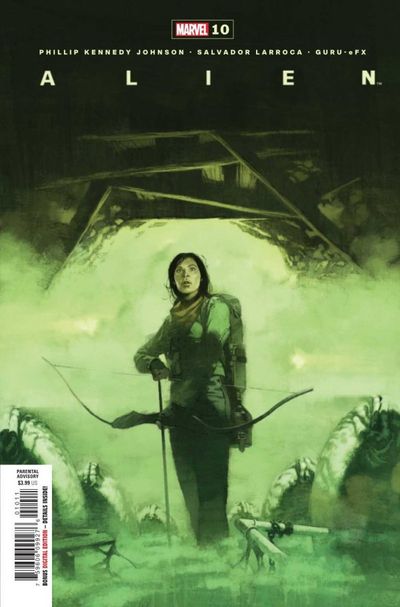
Of all the comic book genres to write, horror may be the most difficult. To show images or words on a printed page that are enough to creep readers out is not an easy task. For writer Phillip Kennedy Johnson and artist Salvador Larroca, it seems to come naturally. Alien #10 is out from Marvel Comics, and it’s another terrifying chapter in the series. Joining Johnson and Larroca is GURU-eFX on colors and Clayton Cowles on letters.

WRITING

With books and movies like the Alien franchise, sometimes the characters can be a little thin on development. Johnson, however, has done a good job of introducing us to the new survivors in this series. Jane is clearly the most important of the new characters. Johnson shows us she is a character that is willing to do what it takes to survive. Jane has kept the head of Ambrose, their traitorous android, to help her navigate the new world they’ve just landed on. This is a problem for members of the current crew since Ambrose was responsible for some deaths last issue. Johnson knows that while the survivors are important, on a book like this, it’s all about the monsters. About halfway through the book things start to take a creepy turn. Johnson starts giving us clusters of Xenomorphs hidden in pages. There are busted alien eggs all over the place and civilians in alien goo. All of these images are unsettling and straight from the movies. Johnson delivers a good script that will win fans of the franchise over.

ART

The pencils by Larroca are crucial to an issue like this. Larroca had to create a new settlement station with his work. Larroca does an amazing job of giving us establishing pages that show what this new settlement looks like. There are jungles and run down buildings where our survivors explore. Larroca draws everything flawlessly in this beat up space station. Piles of junk, beat up houses and splattered blood are scattered everywhere. This sets the tone for the type of atmosphere our survivors are walking into. The Xenomorphs look menacing as they attack our survivors. Some of the kills Larroca draws are ruthless and downright creepy. His pencils are a master class in comic book art.

The colors by GURU-eFX compliment Larroca’s pencils perfectly. GURU-eFX captures how dark and dreary this space station really is. Smokey grays and dark blues are used throughout the issue that add depth and effect to the mood. The background colors of the jungle earlier in the issue grab your attention. For such a depressing issue, the greens of the leaves provide a vibrant escape from the darkness ahead. GURU-eFX completely crushes his colors this week. His work is gorgeous and a great addition to the Alien mythos.

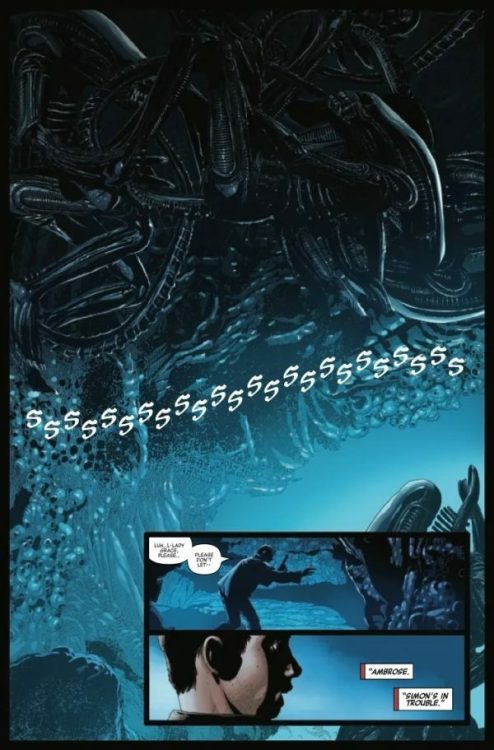
Clayton Cowles has the most fun job in this book. He gets to letter Xenomorphs hissing. Needless to say, that’s an iconic sci-fi movie sound. As one survivor goes off to look for a friend, we see the “ssssssss” scrolling across the page. This is probably one of the most terrifying sounds any character can hear in this series. The sound effects of guns being shot or a survivor being ripped down from goo are all spot on as well.

CONCLUSION

Alien #10 is a chilling entry into the new Marvel series. No character is safe and all of them are in a state of constant danger. Phillip Kennedy Johnson has solidified himself as not only a great storyteller, but a brilliant horror writer. Phenomenal pencils and colors make this book a must read. Alien #10 is out at a comic shop near you!

Monkeys Fighting Robots Youtube

Review: THE BATMAN Revives The Dark Knight With Cinematic Gold

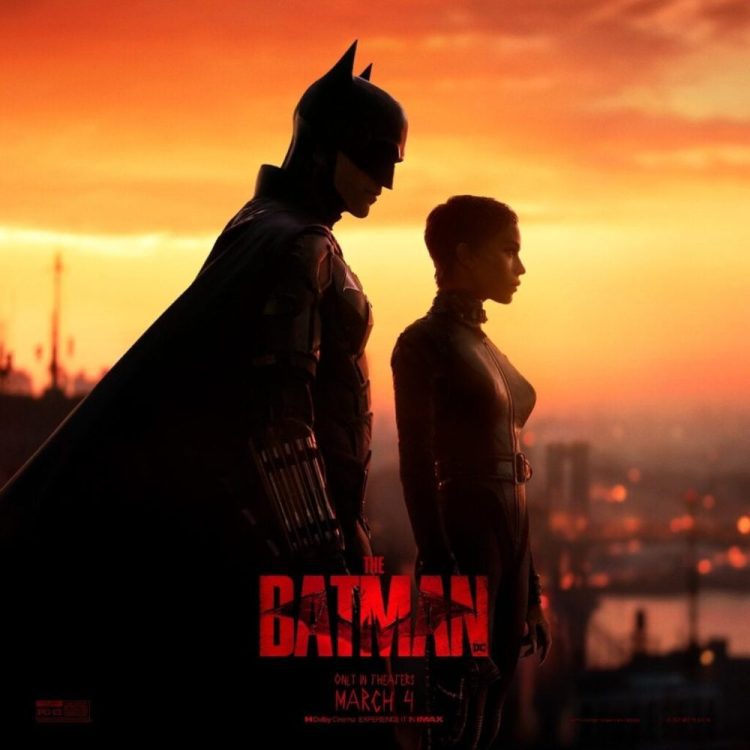
Matt Reeves’ The Batman will go down as one of the best comic book movies ever. Nearly 10 years after Christopher Nolan’s trilogy, Batman returns in this dark and spectacular iteration of the caped crusader. The Batman will keep audiences enthralled with its cinematography, terrifying villain, and unique portrayal of Bruce Wayne. I can’t decide where it ranks, but The Batman left me excited to see what could come next.

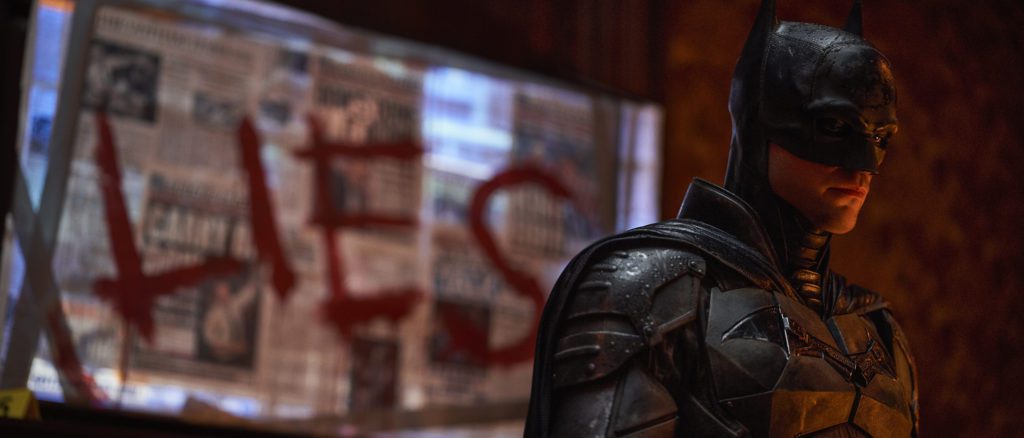
Initially, Robert Pattinson’s involvement was a concern, but he silenced my doubts here with a gripping performance as Batman. The film’s production struggles also were a source of concern, and thankfully, these hurdles didn’t stop it from being the near-perfect film that it is. The Batman managed to tell an engaging noir-style story with a grim backdrop, Gotham City. Reeves directs and co-writes alongside Peter Craig, and for horror fans, you may get the feeling you are watching Seven.

Pattinson is joined by some great talent, including Zoe Kravitz, Paul Dano, Jeffrey Wright, Colin Farrell, Andy Serkis, and John Turturro. The Batman Follows Bruce Wayne, as he navigates the streets of Gotham while pursuing the Riddler (Dano). Kravitz stars as Selina, better known as Catwoman, a wrench in Batman’s good vs evil thought process. The similarities between the two allow them to form a complex romance. Selina’s emotional turmoil is captured tremendously by Kravitz, who does a great job in the role.

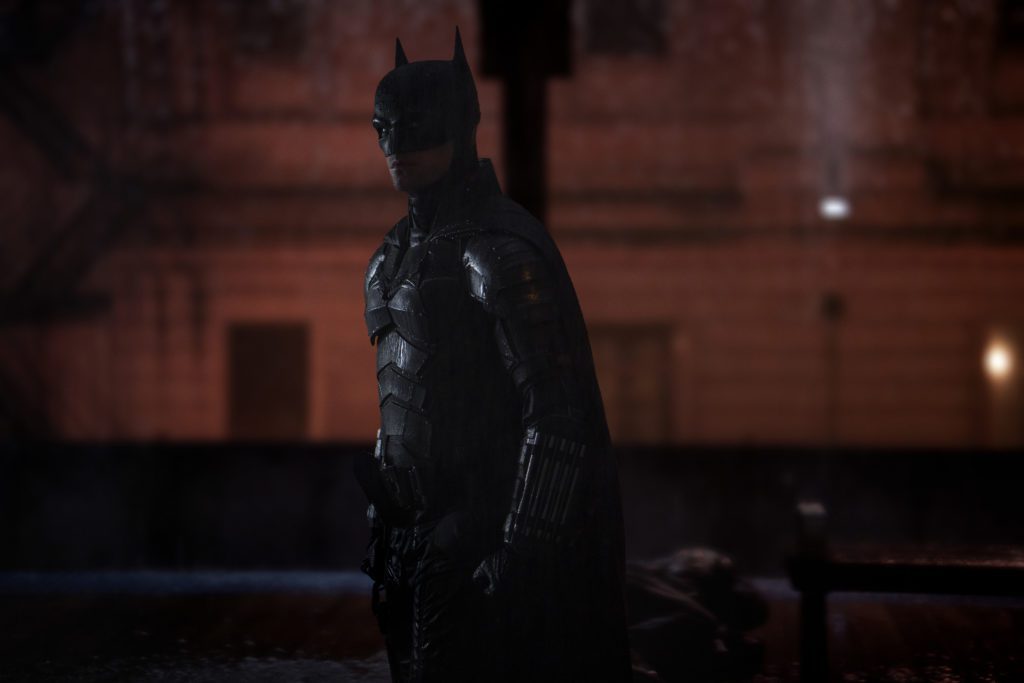
This approach to Batman plays with the murder mystery, which keeps the narrative so intense. In fact, Batman’s character comes off as very menacing due to the way the story is handled. He’s the hero, that is expected, but certain shots speak to the internal trauma within Bruce Wayne. His silhouette arrives on the scene, slowly appearing out of the shadows, as his foes look on with terror and intrigue. These shots effectively build interest regarding Bruce and his struggles. You get the traditional comic book lore, orphaned at a young age, but the film handles the death of Wayne’s parents in a refreshing manner.

Riddler is hyped up throughout the film, so much that his inevitable meet-up with Batman feels like an earned payoff. He’s threatening and unnerving, and this is only amplified by Dano’s powerful performance. Commanding your attention every moment Riddler is on screen, delivering his lines in a calm, yet sinister fashion. The Batman is one of the most aesthetically pleasing films in recent memory, Greig Fraser’s cinematography captures the hopeless, depressed, and grim nature of Gotham. The lighting assists in setting the bleak tone that is maintained throughout the film.

Batman’s symbol of hope only grows stronger as his silhouette stands out among the miserable city. Certain frames capture that theme gloriously, and one, in particular, happens right after a thrilling chase sequence. A fire rages on behind him, but Batman slowly walks ahead towards his target. It’s a shot that compliments the mystery of the character so well, while also creating fear from the villain’s perspective and maybe some audience members too. Michael Giacchino’s brilliant score heightens the drama that unfolds and effectively builds on the suspense that constantly swells up.

Reeve’s direction here has earned him the honor of being responsible for one of the best depictions of Batman. The Batman has breathtaking shots and is possibly the most grounded iteration. I would say the pacing could have been better in the third act, and there were a few instances that felt unnecessary. Still, Reeves delivers a tense, gritty, and highly suspenseful detective story that keeps you engaged.

The Batman will be regarded as one of Pattinson’s best achievements, as the film is truly near-perfect. He is incredible in the role, and I look forward to seeing him return as Batman. Gotham is depicted as a crumbling waste land, so that was an aspect millions will instantly talk about for many months. The film doesn’t rank above The Dark Knight for me, but this is another brilliant Batman movie.


Monkeys Fighting Robots Youtube

AfterShock Comics Exclusive Preview: THE OCEAN WILL TAKE US #1

aftershock comics exclusive preview ocean will take us

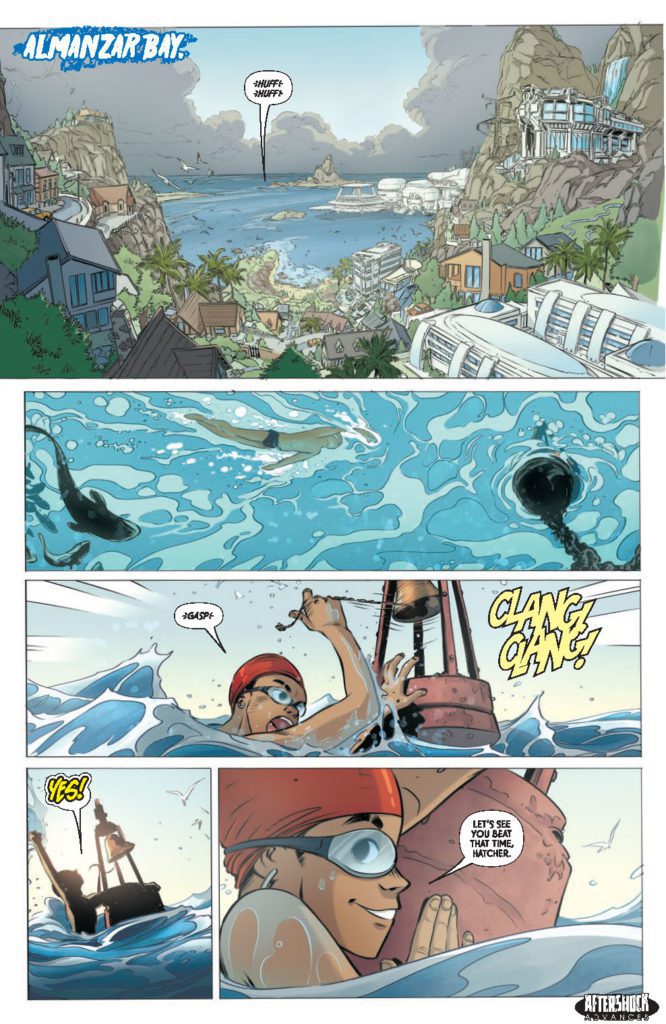
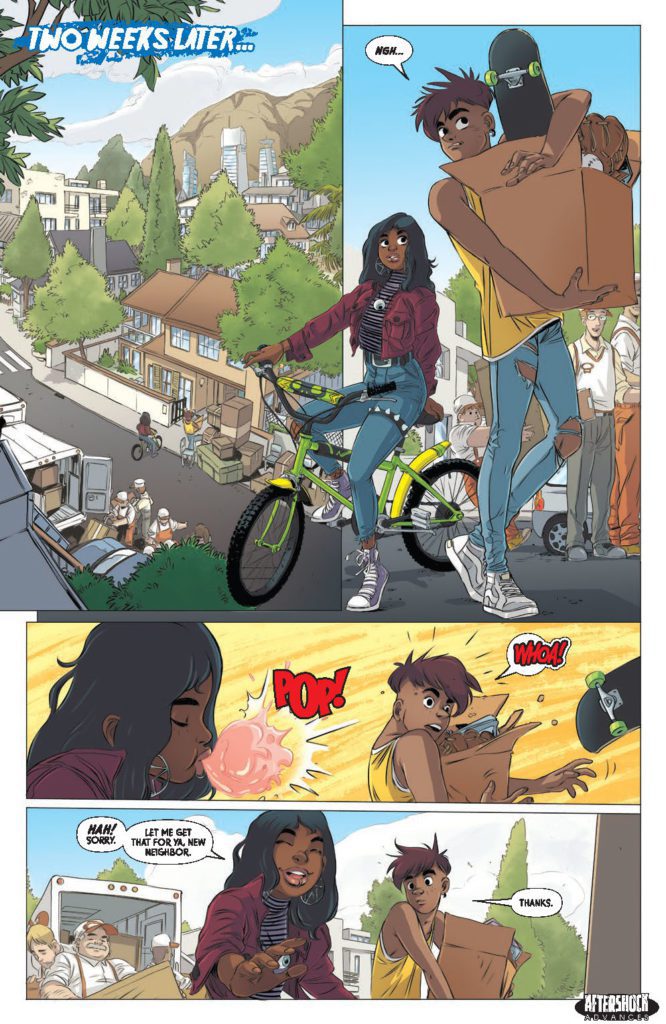
THE OCEAN WILL TAKE US #1 hits your local comic book store April 6th, but thanks to AfterShock Comics, Monkeys Fighting Robots has an exclusive four-page preview for you.

About the issue:
Something’s lurking in the waters of Almanzar Bay – and when Casey March tries out for the swim team, he learns firsthand that messing with the social order of his new high school can have dangerous – even deadly – consequences!

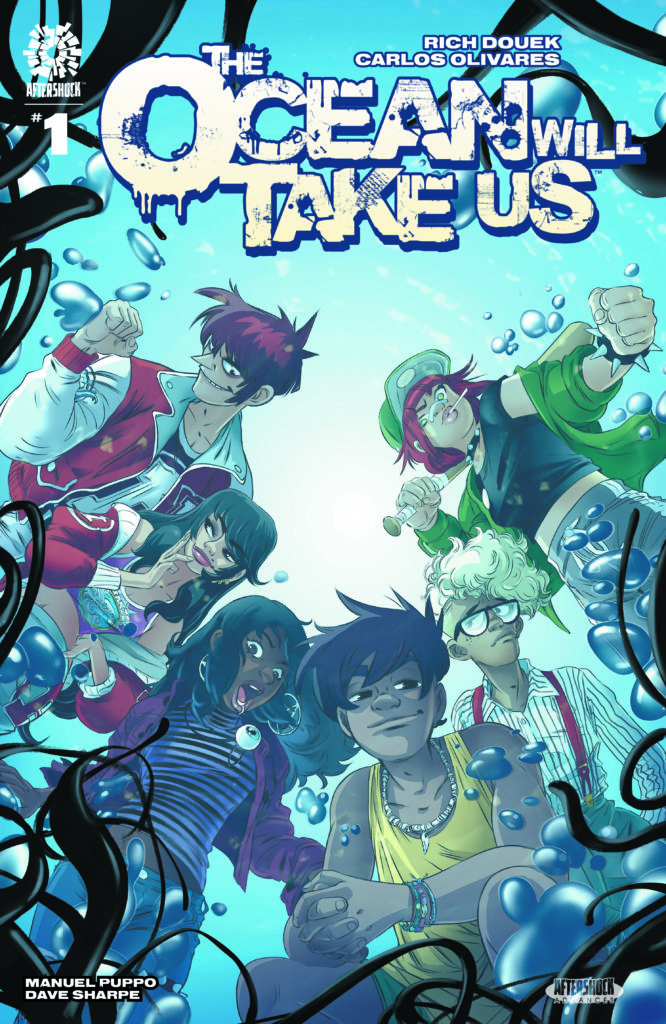
The series is by writer Rich Douek and artist Carlos Olivares, with colors by Manuel Puppo, and letters by Dave Sharpe. The main cover is by Olivares, and the incentive variant is by Hayden Sherman.

“A new tale of horror and intrigue – where a group of high school outcasts band together to fight a growing evil in their school and town.”

Check out the THE OCEAN WILL TAKE US #1 preview below:

aftershock comics exclusive preview ocean will take us

aftershock comics exclusive preview ocean will take us

aftershock comics exclusive preview ocean will take us

aftershock comics exclusive preview ocean will take us

aftershock comics exclusive preview ocean will take us


Are you looking forward to THE OCEAN WILL TAKE US? Sound off in the comments!

Monkeys Fighting Robots Youtube

Review: COWBOY BEBOP #2 – Far Better Than It Has Any Right To Be

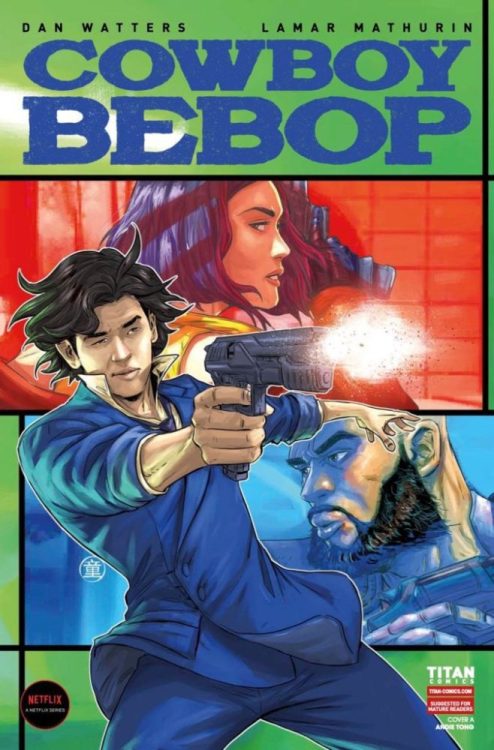
Writer Dan Watters and artist Lamar Mathurin return to hunting bounties across the solar system with Cowboy Bebop #2. Along with Roman Titov on colors and lettering from Richard Starkings and Jimmy Betancourt, this 2nd chapter continues their stellar adaptation of Shinichiro Watanabe’s iconic anime. With a script that flows like jazz and stand-out stylized visuals, this issue solidifies this series as a must-read for Bebop fans everywhere.

“An original story set in the year 2171. The bounty hunter crew of the spaceship Bebop chase an ex-gang member who holds a vest which gives the wearer unlimited luck.”

Writing & Plot

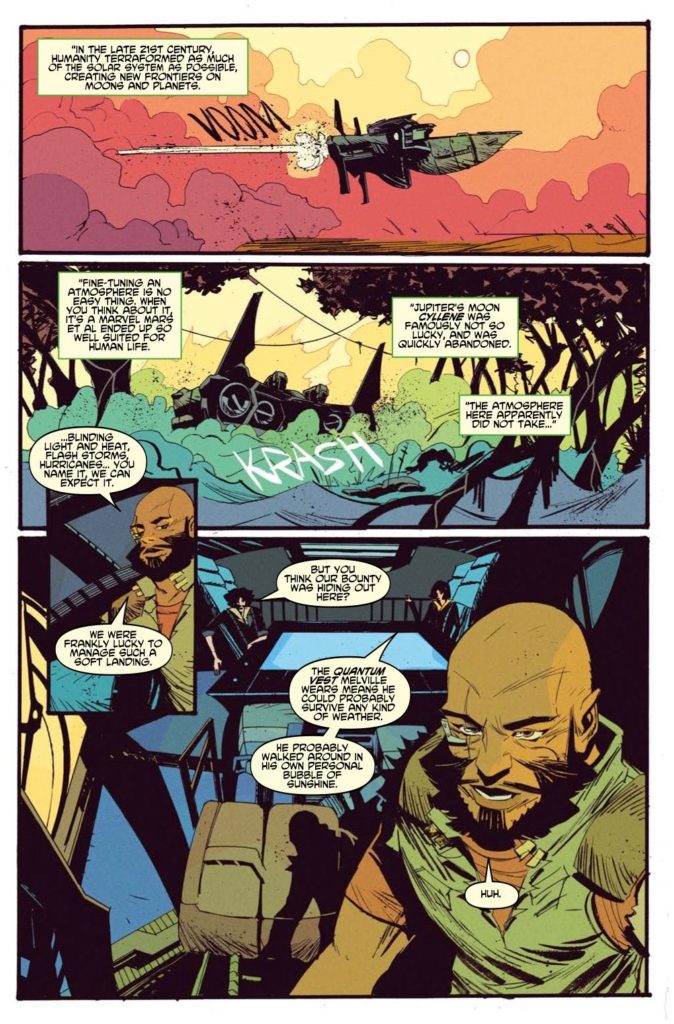
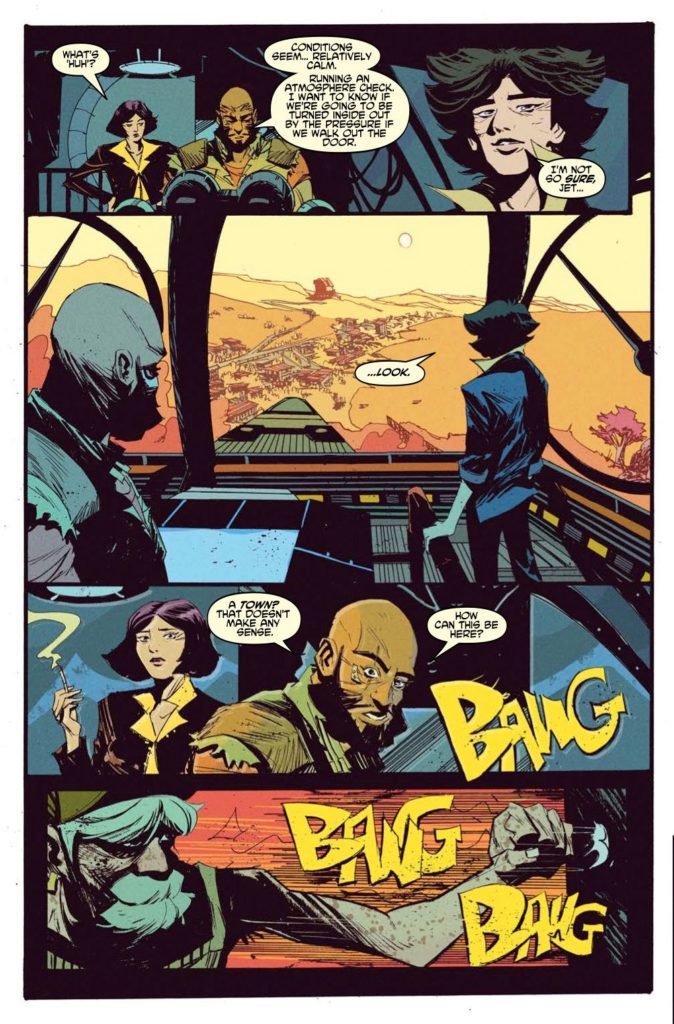
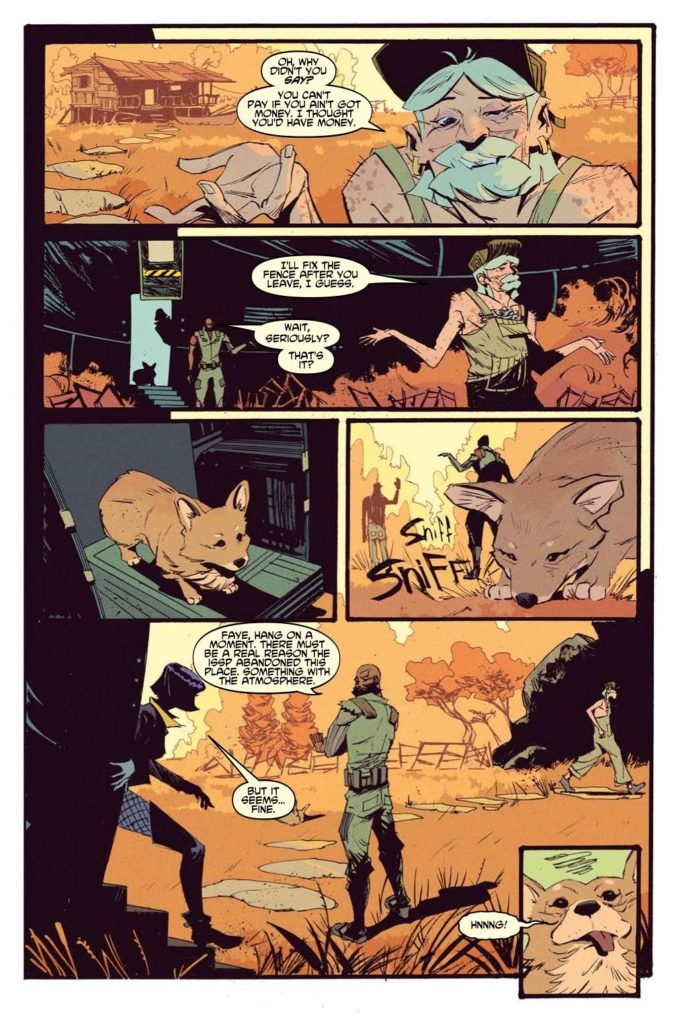
Reading Cowboy Bebop #2, it becomes abundantly clear the love and understanding of the source material that Dan Watters has. I’m not embellishing at all when I say that both issues of this comic thus far have genuinely felt like Bebop episodes. From the ludicrous issue-specific plot point to the quiet interactions these characters all have, this feels like a lost chapter of the anime brought to life in a new medium. Here, the crew of the Bebop lands on Cyllene, a moon orbiting Jupiter that is also home to an abandoned colony effort. I won’t spoil why this planet was left alone, but the twist is just so classically Bebop. The planet also, in true Bebop form, presents our Jet, Faye, and Spike with specific dilemmas regarding their morality, their pasts, etc. Watters’ dialogue has that loose, stylistic feeling that reads just like scripts of the anime. Every character sounds and acts just like their anime counterparts, with little to no influence from the recent (deservedly cancelled) Netflix adaptation that this comic is technically based on. Everything from the deep, philosophical conversations presented by strangers, subtext-filled exchanges, and glances into the troubled visages of our main cast is spot-on with the original series and damn entertaining even without context.

Art Direction

What ultimately sets Cowboy Bebop #2 and the prior issue apart from the original work is the art of Lamar Mathurin. His uniquely stylized pencils and heavy inks craft a Bebop vison that will is familiar, but actively plays to its own tune. Characterizations are detailed and exaggerated, carrying the identity and swagger of the source material to new levels. The weight that each cast member carries (heh) can be seen in the expression Mathurin crafts in his scenes. The emotional gravity of the source material is alive and well in this comic. Mathurin’s work here carries huge amounts of tone and atmosphere, and creates a whole new way to experience this iconic post-Earth reality.

Roman Titov’s colors really bring this new yet familiar vision to life in a tonally rich way. His hazy, darkened use of a very used-future Cyberpunk-Western style echoes the original series while absolutely maintaining its own style. The lettering from Richard Starkings and Jimmy Betancourt plays it pretty safe in dialogue and narration balloons with a clean, modern font. Then it really surprises with creatively stylistic SFX letters, both blending into and sticking out just the right amount for this comic’s visual experience. Artistically, every aspect of this comic is absolute gold.

Verdict

Cowboy Bebop #2 is a stellar continuation of this comic adaptation of Shinichiro Watanabe’s legendary anime. Dan Watters’ script is fun, goofy, and almost musical in its composition, while also carrying the thematic and philosophical weight of the source material. The visuals from Lamar Mathurin and Roman Titov are brilliantly unique and convey the personality, atmosphere, and overall direction of this story in a stunning manner. This is a must-read for Bebop fans and newcomers alike. Be sure to grab this issue when it hits shelves on March 2nd!

Monkeys Fighting Robots Youtube

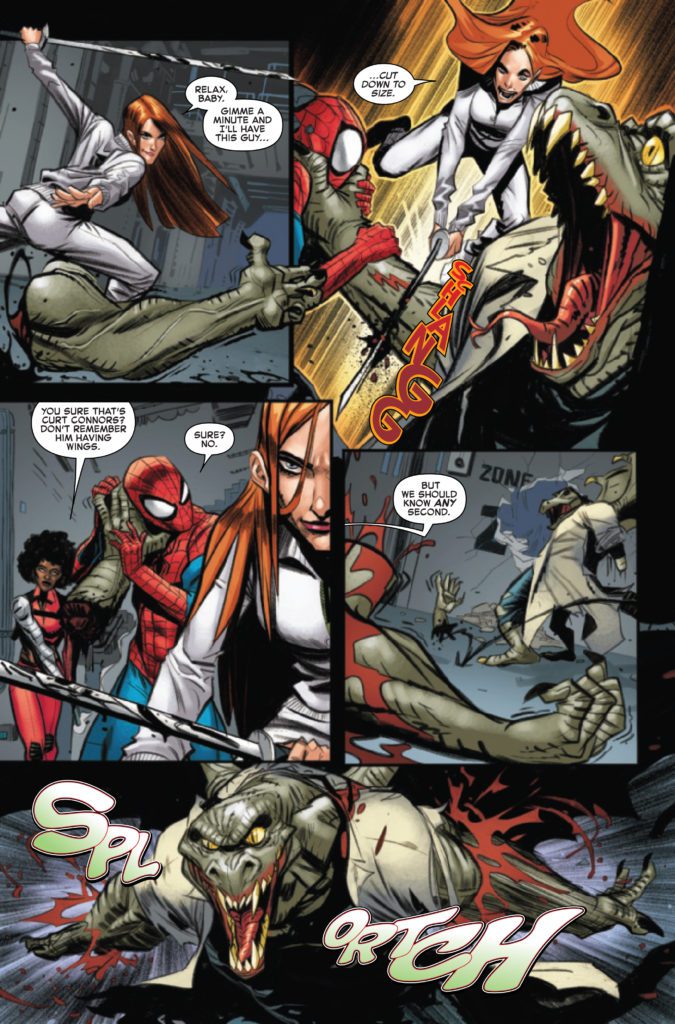
Marvel Comics Exclusive Preview: AMAZING SPIDER-MAN #92

marvel comics exclusive preview amazing spider-man

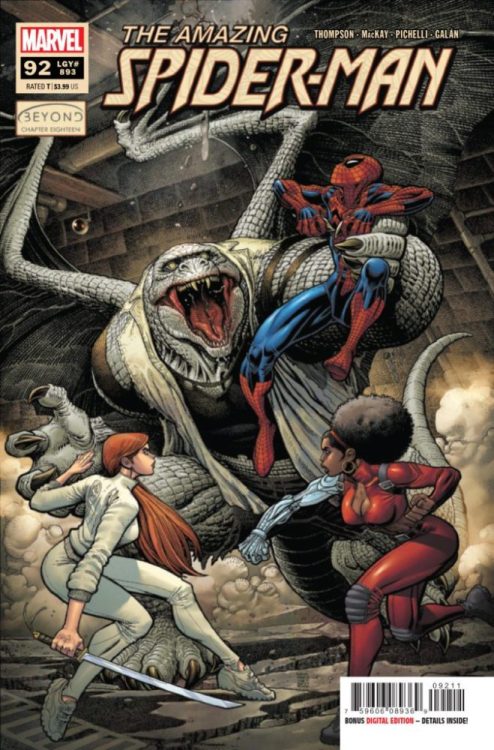
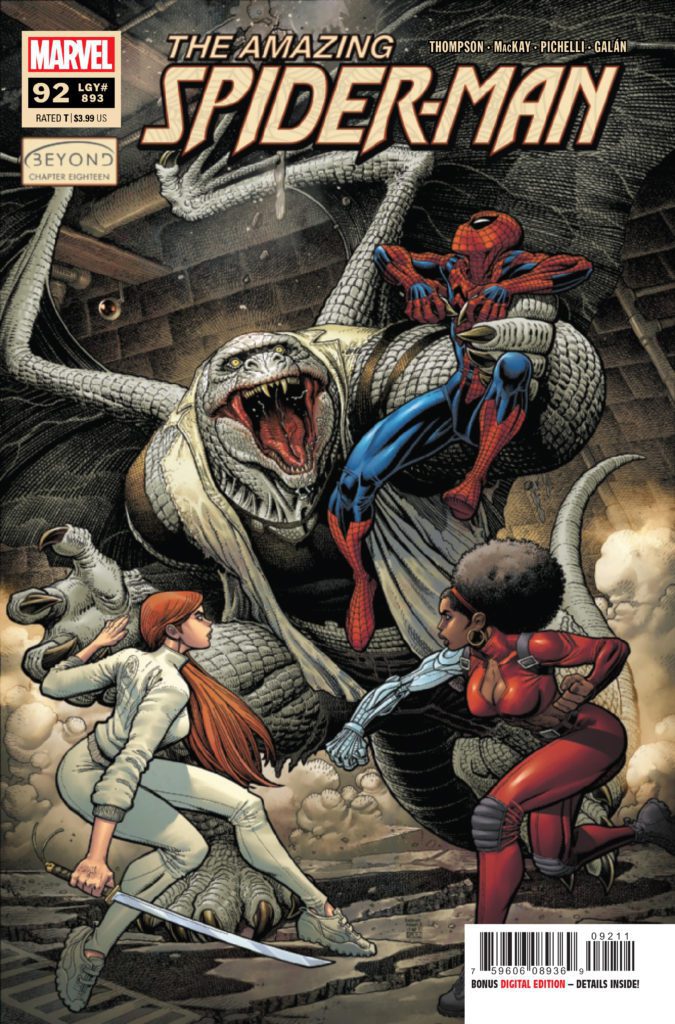
AMAZING SPIDER-MAN #92 hits your local comic book store March 9th, but thanks to Marvel Comics, Monkeys Fighting Robots has an exclusive four-page preview for you.

About the issue:
“BEYOND” NEARS ITS END!

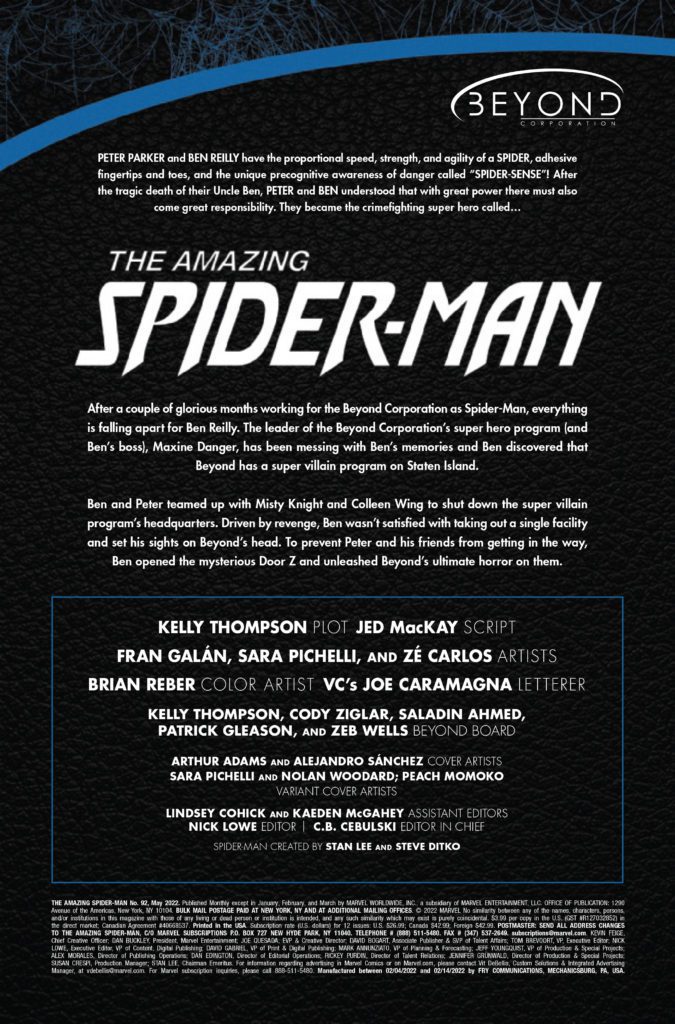
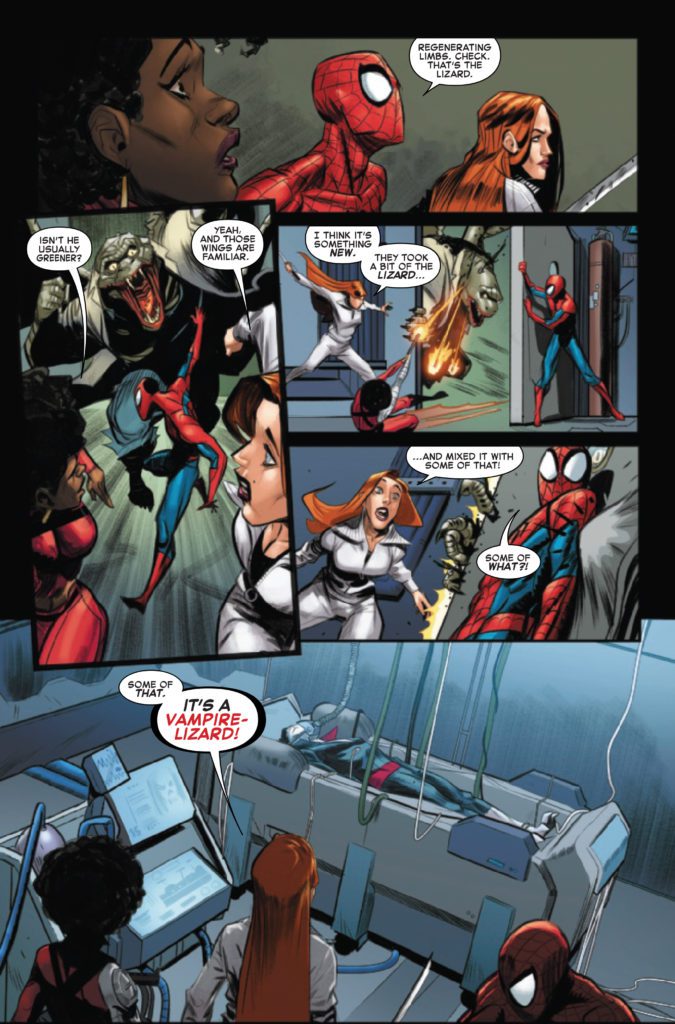
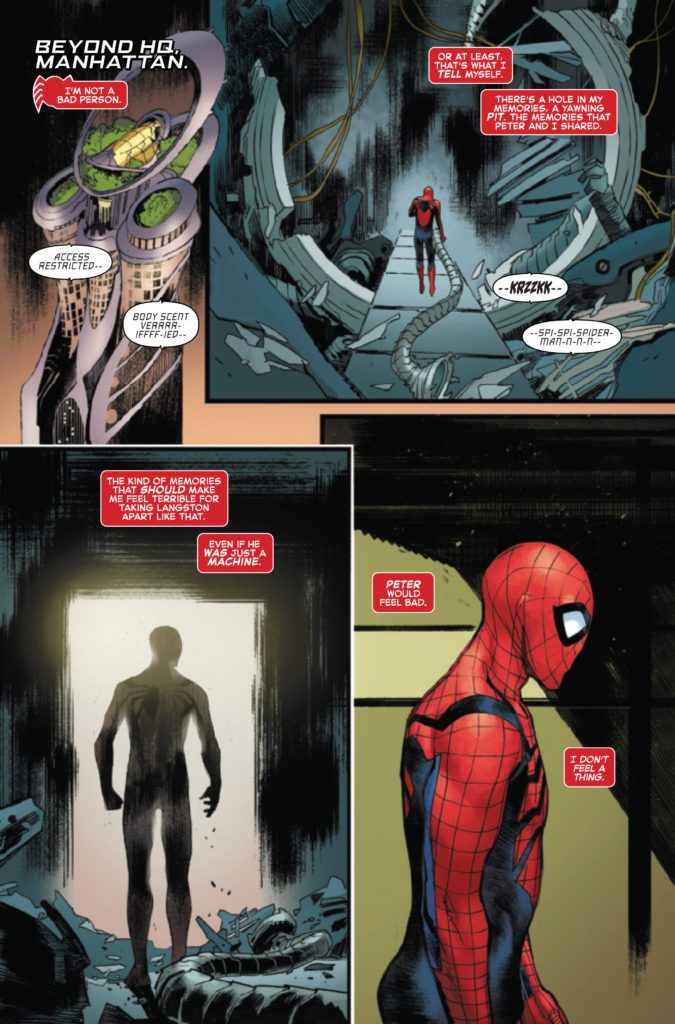
WHAT IS BEHIND DOOR Z?! Ben makes his way to the same place Miles Morales was last at, and he is nowhere to be found. Just door after door of true horrors. Any door’s resident could kill Spider-Man, but Door Z’s might just destroy the whole city!

The issue is by writers Kelly Thompson & Jed MacKay and arists Fran Galán, Sara Pichelli, & Zé Carlos, with colors by Brian Reber, and letters by Joe Caramagna. The main cover is by Arthur Adams and Alejandro Sánchez.

The Amazing Spider-Man “Beyond Board” consists of Thompson, Cody Ziglar, Saladin Ahmed, Patrick Gleason, and Zeb Wells.

Check out the AMAZING SPIDER-MAN #92 preview below:

marvel comics exclusive preview amazing spider-man

marvel comics exclusive preview amazing spider-man

marvel comics exclusive preview amazing spider-man

marvel comics exclusive preview amazing spider-man

marvel comics exclusive preview amazing spider-man

marvel comics exclusive preview amazing spider-man


Is AMAZING SPIDER-MAN on your pull list? Sound off in the comments!

Monkeys Fighting Robots Youtube

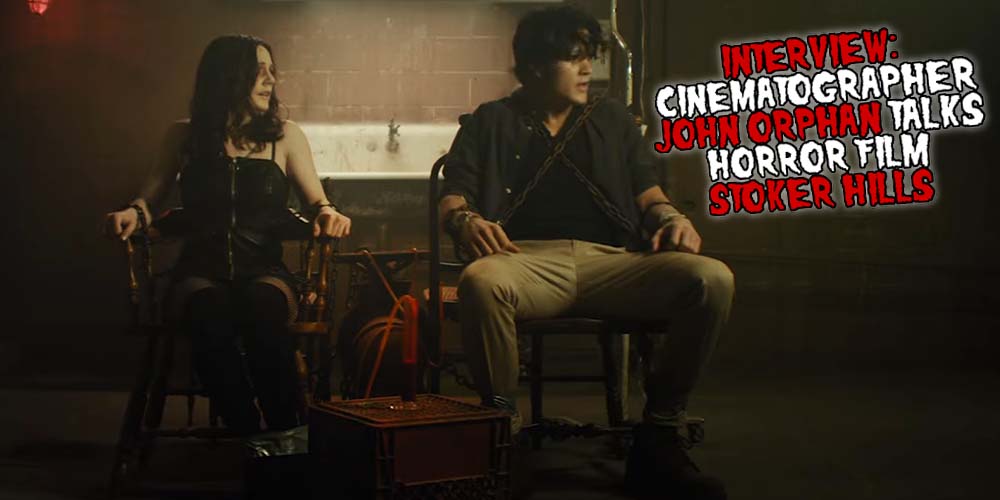
INTERVIEW: Cinematographer John Orphan Talks Horror Film STOKER HILLS

stoker hills-interview-cinematographer

There’s something sinister happening in Stoker Hills, the new horror film from director Benjamin Louis (State’s Evidence) that’s one part found footage frights and equal part noir detective procedural.

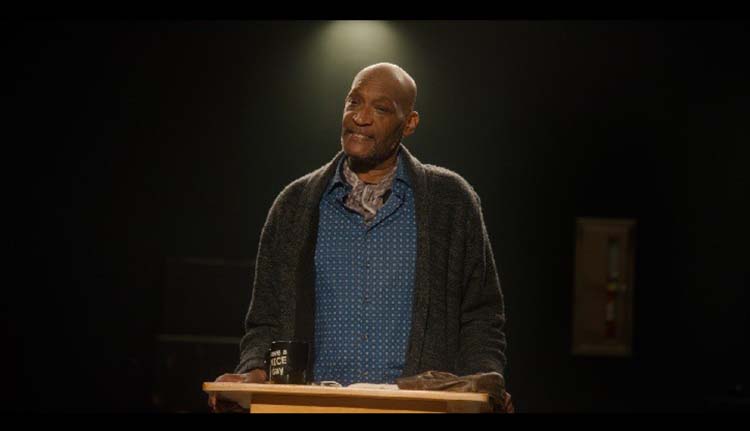
Stoker Hills begins with several film students who are making their thesis project. Horror fans will recognize Professor Smith as acting legend Tony Todd. As the burgeoning film crew is at work at night on the street, Erica (Steffani Brass) is taken by a hooded figure. The remaining students, Ryan (David Gridley) and Jake (Vince Hill-Bedford), try to survive the ensuring chaos as the hooded figure torments them too. Their experience is captured by their video equipment and investigated by Detectives Adams (Eric Etebari) and Stafford (William Lee Scott).

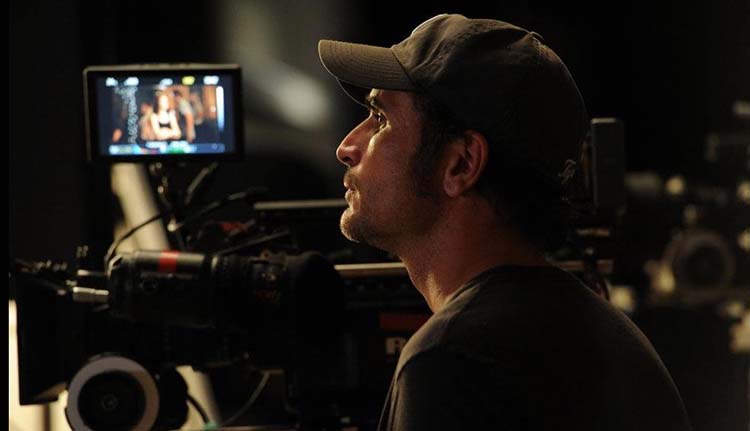
PopAxiom spoke with cinematographer John Orphan about becoming a director of photography, his artistic instincts, and making Stoker Hills.

john orphan-cinematographer-interview

What If

John begins in a place where a lot of creative minds start. “I loved movies my whole life, but I didn’t think it was possible …” Growing up in Grand Rapids, Michigan, John lived in a mindset “where you grow up and get a job, and you don’t pursue the arts.”

“I was interested in photography as a hobby. I’d do it on the side for fun,” John shares that the passion for cinematography was alive inside. However, everything changed when he “worked as a PA. That’s when I saw what the cinematographer was doing and thought, ‘that’s what I want to do.’

Despite the upbringing nudging him toward something more practical, John’s PA experience provided a realization. “I had to do this because I didn’t want to get old and think ‘what if.'”

About Stoker Hills

John doesn’t recall how he came into Ben’s radar. But remembers, “We talked about influences.” Up until that point, John says, “I’d been doing a lot of commercial work which doesn’t lend itself to making the kind of stuff I want to make. So, when they called about making a dark, moody horror movie, I said’ absolutely.'”

“We talked about the two things going on,” he says about pre-production. “There are the detectives, and we’d shoot in a more traditional cinematic style. Then there’s the kid’s point of view that uses their equipment as found footage.”

The two perspectives mean the film draws from different influences. “From the detective’s point of view, we were probably leaning real hard on the Fincher’s Seven.” But for the found footage stuff, he says, “Ben loved the look of a movie called Honey, so that’s the color and saturation look we went for with the kids’ footage.”

tony todd-stoker hills-interview

Dark

Though the film has two distinct looks, John explains, “We shot it all on the RED Weapon 6k. It’s a big camera with big lenses.” To achieve the different looks, “we messed around with it more in post to make it look dirtier.” However, a handful of moments when another camera is at work, “There’s some running footage where we’d grab a DSLR.”

Balancing the look of the film required careful planning. “We did a bunch of test shots in advance. Then, we got in a studio for a day and tried different lighting schemes that we knew would happen. From there, we decided which one works best and based the colors on that.” Planning requires good execution from the team. “Our colorist Dan Edwards at Changing Frames did an amazing job.”

“The first pass of the movie was probably twice as dark and scary as it is now,” he says of a cut that was considered too intense. However, the film didn’t shed too much of its darkness. In one scene, “There’s a surplus of bodies in a room. So we used actual people; covered them in blood and mixed them in with prop body parts.”

Those near-naked actors spent a lot of time on concrete floors in a cold room. For John, “It was arresting to walk into that room to shoot because it looks so real to the eye. That was my favorite stuff to shoot.”

Wrapping Up

“Coming up, I was into Roger Deakins (Blade Runner 2049), which I’m sure a lot of people say the same or Emanuel Lubeszki (Saving Private Ryan),” he answers about influences. “Another guy I think is a master is Robert Richardson (A Few Good Men, Once Upon A Time In Hollywood). I’ve learned a lot from studying his work. My favorites of the newer guys are Bradford Young (Arrival) and Greg Fraser (Dune).”

John’s a big fan of horror and “dark thriller kind of stuff. The things we did with the detectives [in Stoker Hills) if I could make a career out of doing that, I would be happy.”

“I think it’s what naturally comes out of me,” he says about this ‘dark side.’ “It’s strange. I’m a happy person, I love to laugh, most of my friends are standup comedians. But artistically, what comes out of me is this darkness. It’s the kind of visual art that excites me. That’s the kind of world I love.”

Stoker Hills is available on Amazon and other on-demand services. So what’s next for John? “I just finished another horror movie filmed in Montana called For the Night. After that, I’ll be doing another dark thriller called Reap/Sow in my hometown.”

Is Stoker Hill on your watch list?

Thanks to John Orphan and Projection PR
for making this interview possible.

Find more interviews from Ruben R. Diaz!

Monkeys Fighting Robots Youtube

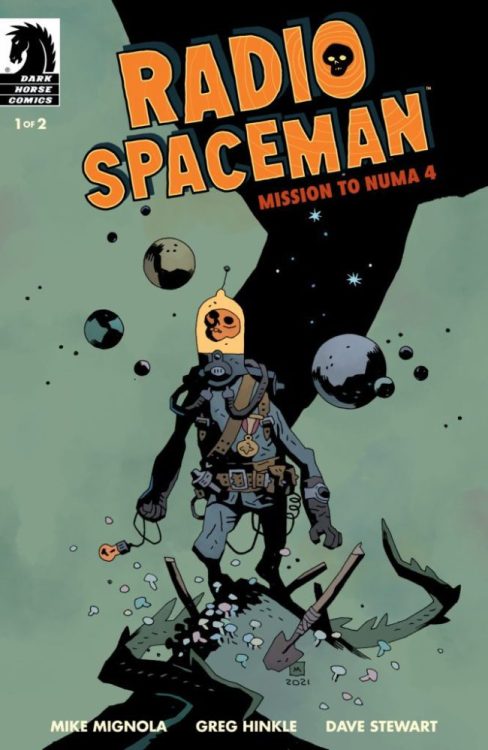
Review: Laidback Worldbuilding in RADIO SPACEMAN #1

Radio Spaceman

The first thing you’ll notice about Radio Spaceman is how confident it is. Writer Mike Mignola, artist Greg Hinkle, colorist Dave Stewart, and letterer Clem Robins have a fully fleshed-out world they’re inviting us into. Every character has a reputation. Every planet has a history. But instead of painstakingly walking us through their worldbuilding, this creative team dives right into the story. It’s a fantastic and fun approach.

About Radio Spaceman #1 (from Dark Horse Comics):

When a ship crashes and lands on a mysterious planet and some of the surviving crew go missing, the mysterious mechanical hero Radio Spaceman is called to investigate. But the planet hides much more than the missing crew, and Radio Spaceman may be stumbling into more than even he can handle.

Writing

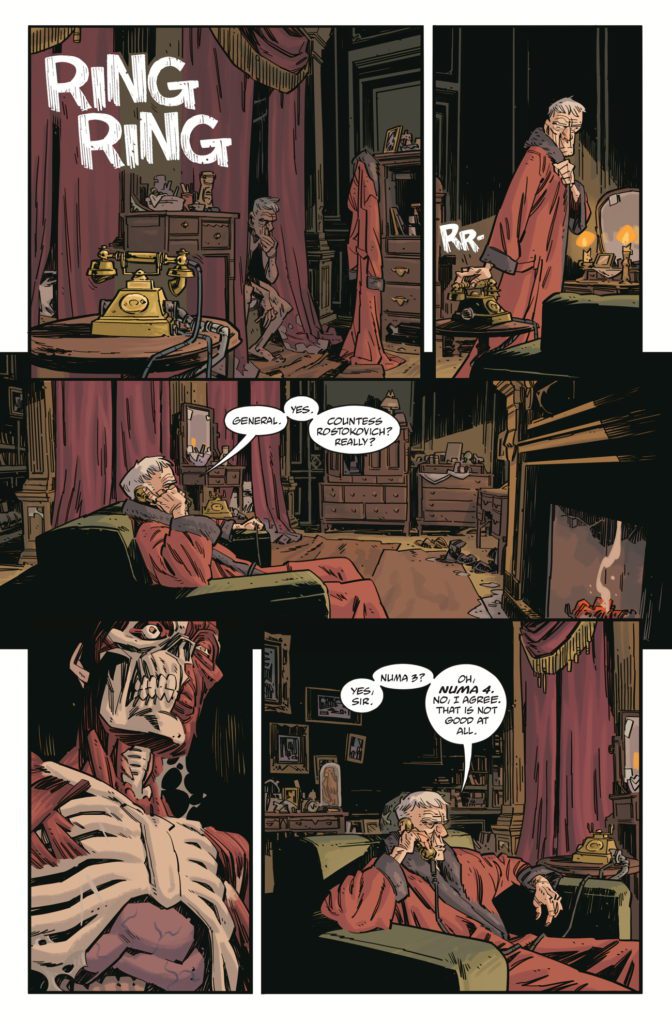
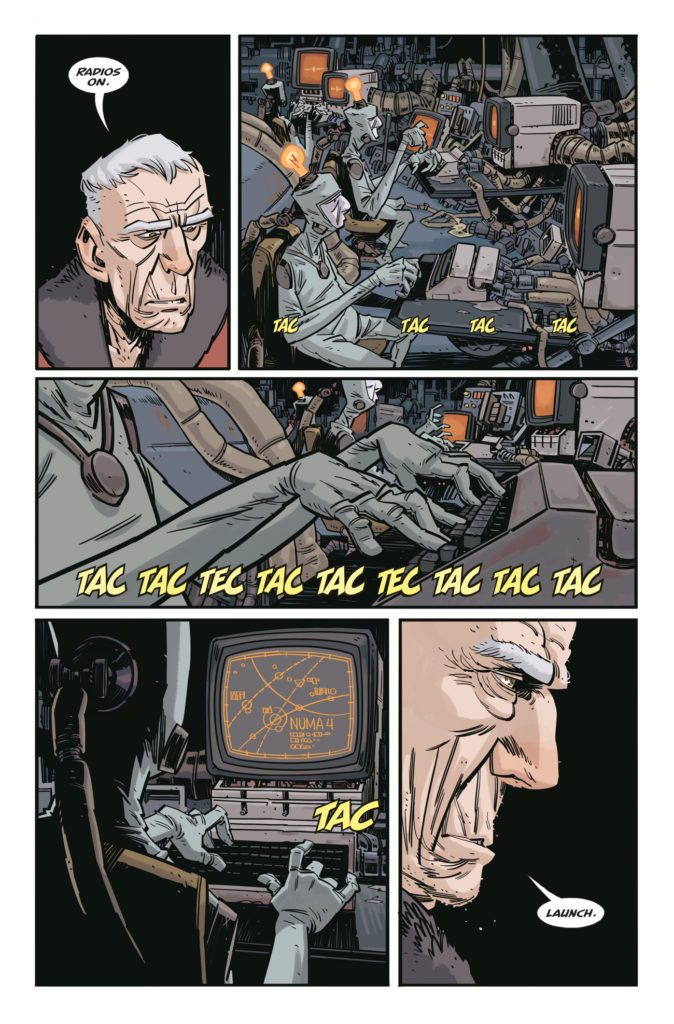
In the opening pages, we see an old man get out of bed and answer his phone. We only hear half of the phone call, but we’re led to believe there’s someone very important on the other end of the line. A planet is in danger and they need his help. We’re immediately wondering, “What’s so impressive about this guy that he’s called on to protect planets?” He’s not exactly formidable. But then he shuffles into another room. With a few key words, the room comes to life. He plugs himself into a control console and begins his latest mission. Nuna 4, the planet in question, may be on the brink of destruction. Yet everything about this scene tells us that to our main character, who isn’t even named, this is just another day of the week.

Mignola’s script is brilliantly understated. He speaks more in silences than he does in actual dialogue. In fact, there are a good half dozen pages with no dialogue at all. Many more have no more than a couple word balloons, total. That’s because Mignola knows he’s communicating plenty as it is. He tells us everything we need to know with his character designs and the action of each scene. And in holding back on his script, Mignola gives his main character a casual charm. The man’s not a talker, he’s there to get shit done. Radio Spaceman #1 is all about getting right to the action.

Radio Spaceman

Art

This creative team, other than Hinkle, has worked together plenty of times before. Mignola, Stewart, and Robins have done scores of issues on Baltimore and Hellboy. They’re a team that just gels. And Hinkle fits right in. He might be the newcomer to their group, but it feels like he’s always been there. His characters are so full of personality. The main character, the mind behind the Radio Spaceman, is the very picture of boredom. He’s constantly looking a little upset that he got out of bed for this. The same can be said of a character, near the end of this issue, who is supposed to be in mortal danger. She’s not scared or worried, she knows she’s getting out of this. She’s just impatient for the cavalry to arrive. Hinkle compounds the feeling that these characters have a long history of doing this kind of thing. They’ve faced bigger baddies, more impossible odds, and now every danger is just another reason they’ll be getting back home later than expected.

Coloring

Stewart, as always, gives every scene a tangible ambiance. You can see the faded glory of our main character’s bedroom in the light browns and the discolored reds. You can almost smell the dust on the grey counters of the dilapidated control room. But then, once we’re seeing the landscape of Numa 4, the pages begin to buzz with a warmth and light. The pinks and purples of the alien flora are subtle but beautiful. The bright green sparks of extraterrestrial guns and the vivid red of blood give the action sequences an extra kick. Stewart will have you fully immersed in the world he’s given color to. You’ll taste, hear, and smell it – not just see it.

Radio Spaceman

Lettering

Robins seems to be having a ton of fun with this issue. You can see his sound effects in bright pinks, oranges, and reds sprinkled across every page. And while many of his sound effects remain effectively the same, with subtle differences, he has a few that stand out in the crowd. The ringing of the phone at the start of this issue is written in large, white font that has cracks like streaks running through each letter. You can hear the hollowness of the sound compared to the full-bodied noises of machinery and sci-fi weapons. When a group of aliens runs out of their hiding place, the “WUAAAAAAA” noise they make as they charge is placed behind their figures. Their heads and arms get in the way of the yellow letters, making the sound feel like it’s coming from deep within their cave. These, and many other little variations to Robins lettering, bring a ton of life to Radio Spaceman #1.


If you want to sit back and enjoy a sprawling, action-packed alien world, Radio Spaceman is the comic for you. It’s somehow both subtle and bombastic at the same time. This creative team has earned the right to be confident in their storytelling. Radio Spaceman is a wonderful result of that confidence. Pick up Radio Spaceman #1, out from Dark Horse Comics March 2nd, at a comic shop near you!
Monkeys Fighting Robots Youtube

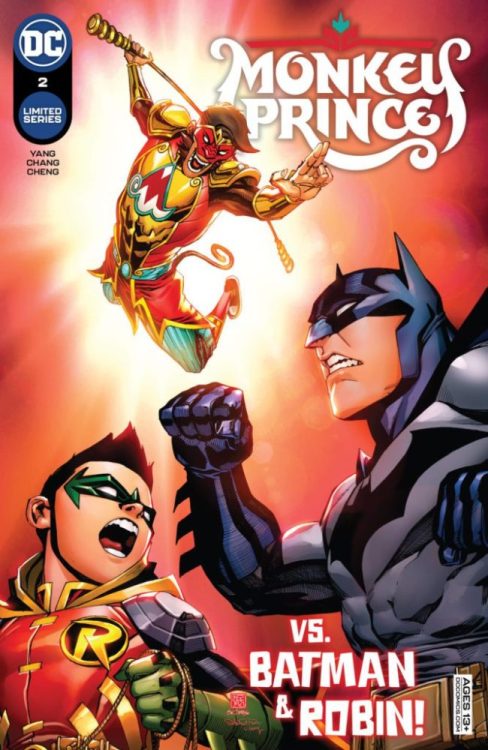
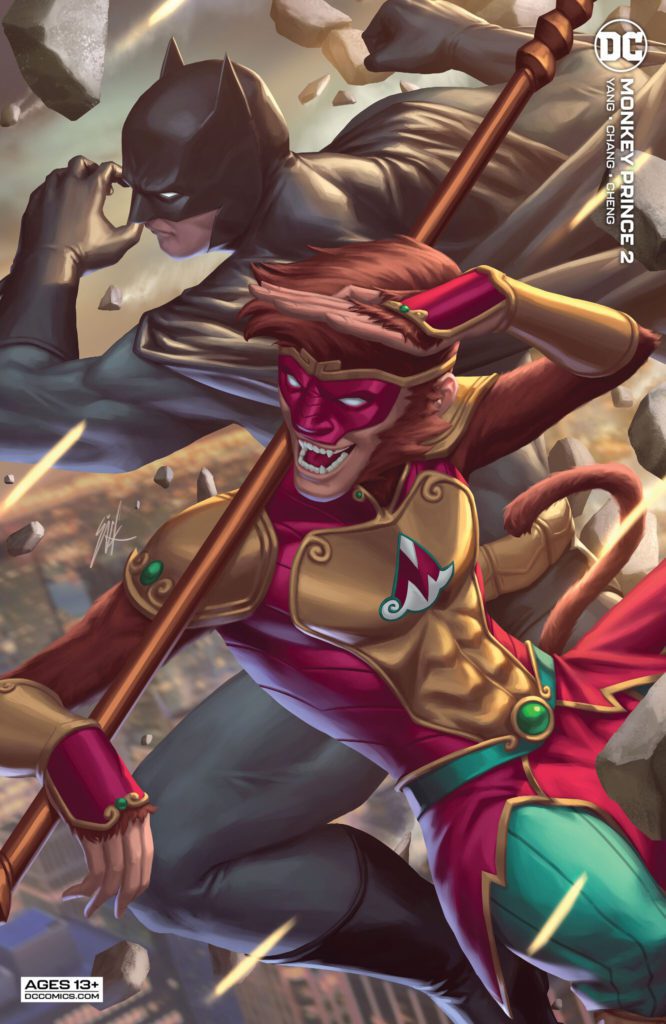
Review: MONKEY PRINCE #2 – Coming To Grips With Monkeys & Myths

Writer Gene Luen Yang and artist Bernard Chang return with a fantastic new chapter of their mythology/superhero hybrid in Monkey Prince #2. With colors from Sebastian Cheng and letters by Janice Chiang, this follow-up to the stellar first issue continues the momentum with a goofy and immensely fun comic. With a silly yet engaging script and outstandingly animated visuals, this issue proves that Monkey Prince is a must-read in the DC stable.

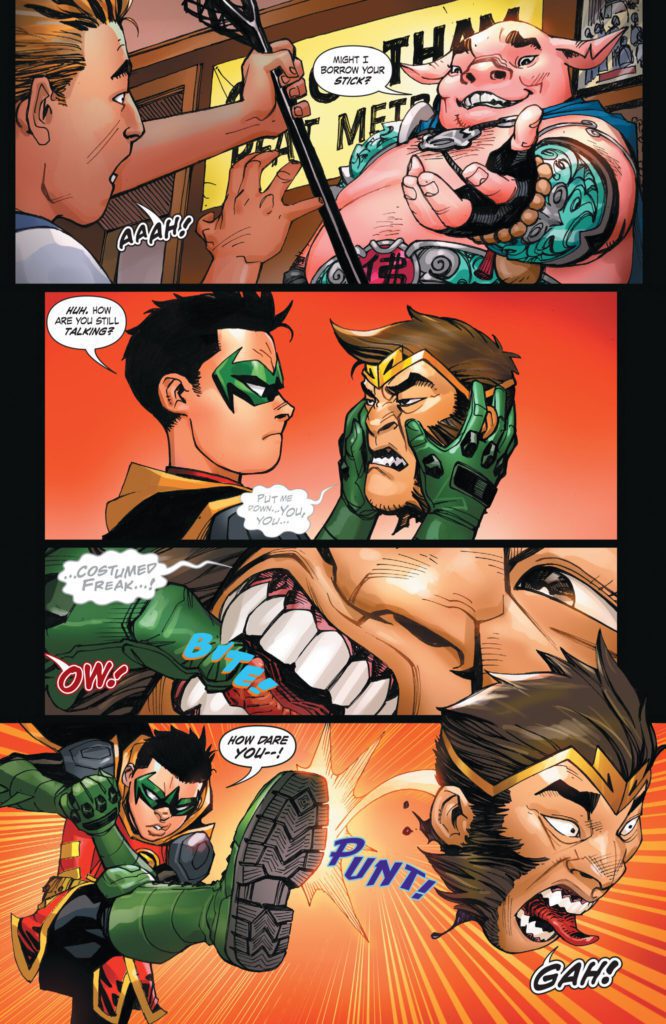
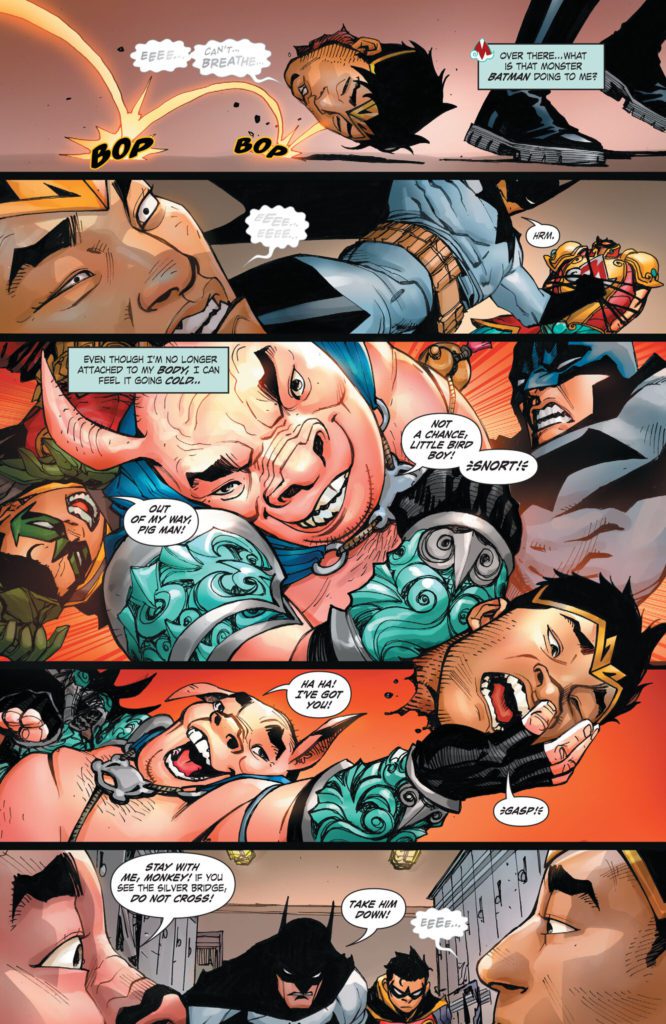
“Batman and Robin fight with Pigsy over…a part of Monkey Prince’s body that fell off and is rolling around moving on its own? And Pigsy better grab it quickly, before Monkey Prince transforms back into Marcus Sun, because there’s no way a regular teenager could survive that!”

Writing & Plot

Gene Luen Yang has struck the proper balance of relatable, inspiring, and absurd with his script for Monkey Prince #2. Marcus, understandably comparable to a young Peter Parker, functions with all the confused naivete of a teenager going through puberty – and a new set of magical superpowers. Naturally, after getting his head cut off in his monkey form and having it kicked around and caught in a lacrosse net by a determined Robin, he’s more than a little apprehensive about his new abilities. This apprehension results in some great exchanges with Sifu Pigsy (aka the best character in this book), as well as some serious irony involving his time with his family. The humor in this issue never lets up and it always lands with its signature over-the top physical comedy and witty dialogue. I can admit I was apprehensive about the inclusion of Batman and Robin in this comic. I mean, seriously, does Bats really need more page-time right now? However, Yang utilizes him in a uniquely comedic manner. He’s written in a way that I would imagine the Adam West Batman series would have been done if it were created today. The way Batman’s seriousness keeps getting tripped up on the strange magical hijinks of the Monkey Prince and Pigsy is a genuine source of good comedy here. This comic is a delightful read, and Yang’s work will keep me coming back here month after month.

Art Direction

This comic’s infectious energy is due to the fantastic and animated pencils of Bernard Chang. The former Wonder Woman artist’s unique yet familiar designs for both our mythical cast and the DC classics continue to be delightfully impressive. If we could get a Sifu Pigsy spinoff drawn by him, I’d be a happy man. Chang’s character animations are fluid and tie in with his panel direction to keep this book’s momentum moving swiftly. What I’m most impressed by is how Chang designs and utilizes the characters from the Chinese myth and places them into the DC universe. The Monkey Prince, Pigsy, and numerous new villains that show up in this chapter all look completely unique and stick out among the DC cast. However, they still retain a comic book-ish iconic hero/villain style.

So much of what makes the visual experience so vibrant is Sebastian Cheng’s coloring. Each panel explodes with life and action thanks to his work filling in Chang’s pencils and inks. There’s an almost youthful flair to this comic’s hi-fidelity style that, to be frank, reminds me of a Marvel book. The lettering from Janice Chiang is modern and has tons of flexibility within the dialogue bubbles. Every aspect of this comic visually is genuinely outstanding.

Verdict

Monkey Prince #2 is a ridiculously fun follow-up chapter to the already stunning debut. Gene Luen Yang’s writing is stylistically unique among Western comics, and consistently nails his humor while moving the plot forward in an engaging direction. The visuals from Bernard Chang and Sebastian Cheng are energetic, vivid, and brilliantly animated, making this one of the best looking ‘Big 2’ comics on stands today. Be sure to grab this issue when it hits shelves on March 1st!

Monkeys Fighting Robots Youtube