Longtime Marvel fans no doubt remember the original Marvel Team-Up, which ran from 1972-85 and saw Spider-Man paired with just about every hero in the Marvel Universe. Now comes news that the series is returning this April.
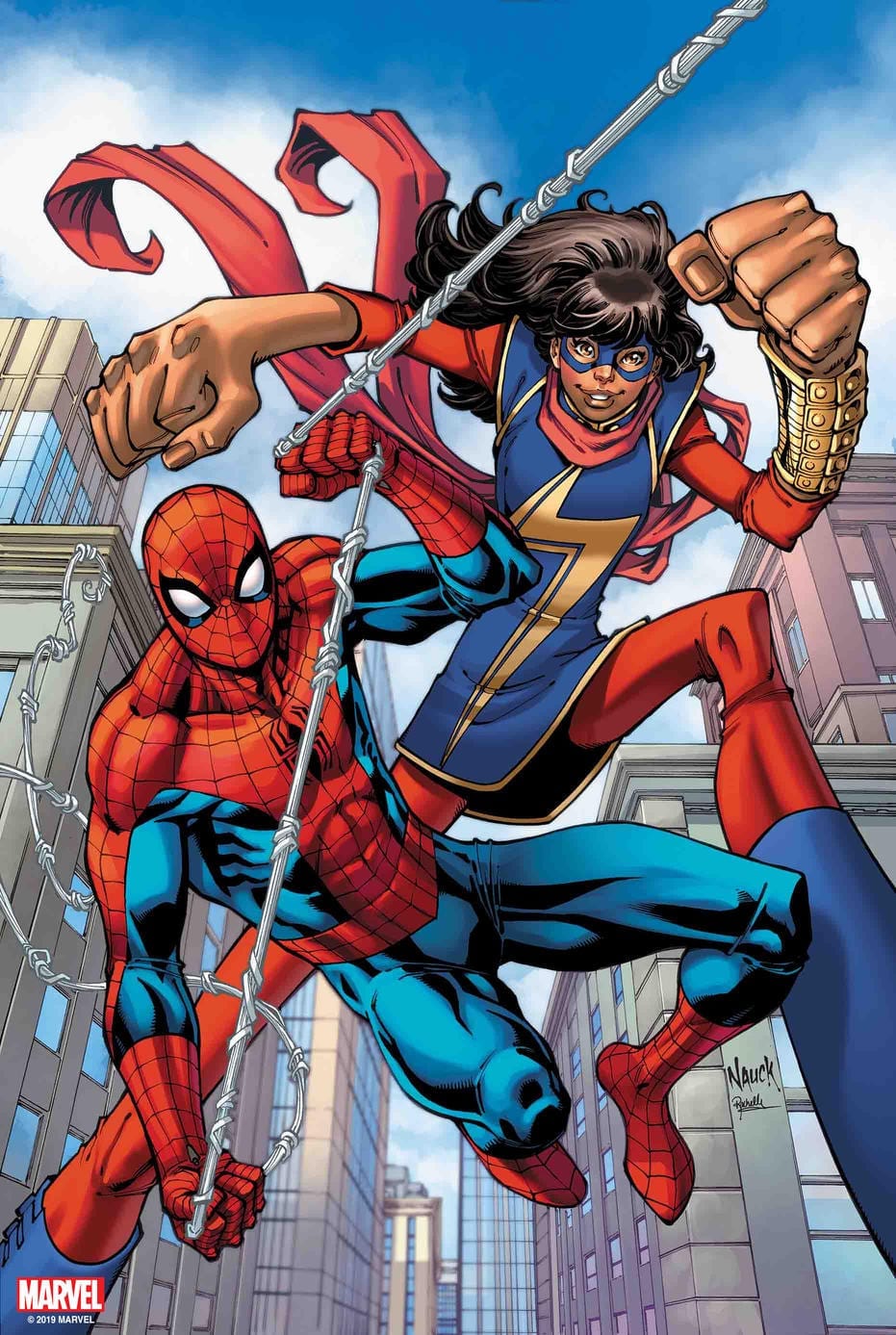
The first arc of the new Team-Up will see Spider-Man joining forces with Ms. Marvel (Kamala Khan), written by Ironheart scribe Eve Ewing and illustrated by Joey Vazquez.
Speaking to the Chicago Tribune, Marvel editor in chief CB Cebulski said,
“With [Ewing’s] ability to not only capture the feel of the Marvel universe, but to make her characters move so naturally through it with their actions and dialogue, we knew it was only a matter of time before she was writing more for us. With Marvel Team-Up, Eve will be able to play with different characters and lend her voice to our heroes’ relationships, both old and new.”
Ewing spoke with Marvel.com about a variety of topics related to the Marvel Team-Up relaunch.
On matching these unlikely teammates:
“They’re just two characters that I adore and think are so fun. I’m enjoying getting into each of their heads and working through their strengths, weaknesses, anxieties, and challenges.”
On similarities and differences between Spider-Man and Ms. Marvel:
“I love that they’re both hometown heroes—people who are deeply rooted in where they’re from. For this story, their age difference and cultural differences are going to matter a bit. Pete was definitely very similar to Kamala once upon a time, but now he’s, you know, a grown dude. His situation with Kamala is going to force him to put himself in the mind of a teen again in some unexpected ways, and Kamala is going to have to get into the head of an adult who has been in the game a lot longer than she has.”
On the Ms. Marvel character overall:
“With Kamala, it’s always crystal clear who the person beneath the mask is, and that person is so strong and also tender and endearing that she just wins you over. I think she brings a different sensibility to what it means to be a Super Hero, because one of her greatest powers is actually her kindness and care.”
Marvel Team-Up #1 will be in comic stores in April.
Are you excited by the return of a regular team-up series with different characters in each story arc? Comment below!
There’s no shortage of stories out there taking a well-known tale and giving it a modern veneer. Actually, we have a number of books and films resetting classic stories in dystopian or post-apocalyptic settings, so the bar is high if you want to stand out for this brand of retelling. Creators Gary Whitta and Darick Robertson don’t disappoint with Oliver #1, though, transforming a classic into something entirely fresh and engaging.
The book retells the Dickens novel Oliver Twist, transplanting the characters from the Victorian era to a post-apocalyptic vision of the future. A colony of men living in the wreckage of a bombed out London find themselves caretakers of a newborn. Naming the child Oliver, they watch as he grows at an accelerated rate. However, the child’s development isn’t the only thing unusual about this gang of survivors.
The Writing
Whitta recently sat down for an interview with Monkeys Fighting Robots and offered some insights on the series. “Figuring out how to keep the reader turning the pages is one of the age-old challenges for any writer, and I’m proud to say that I think Oliver does it better than anything else I’ve written,” he says. “The whole story is structured to be littered with little mysteries and clues throughout like a trail of breadcrumbs for the reader to follow.”
Whitta definitely succeeds in that goal. Oliver #1 does a great job of both establishing the world and the characters that occupy it.
In many comics, the desire to create mystery and intrigue ultimately comes across as vagueness or abstraction. Oliver #1 does an amazing job of pacing, though. Whitta seeds mysteries, but gives us enough information to stay firmly grounded in the story.
We don’t learn in this first issue exactly how the war panned out or what the outside world looks like. We do, though, uncover the sad circumstances that created Oliver’s surrogate family. The hints provided are enough to not only maintain interest, but heighten it. The story sinks its hooks in and makes you desperate to discover more about this world.
The Artwork
Robertson provides wonderfully-detailed artwork in Oliver #1. Every pile of rubble, broken storefront or collapsed column is intricately designed and inked. Thus, despite the grim and dark setting, the level of care applied to the images gives it a beautiful characteristic.
The character designs are reminiscent of Robertson’s work on Transmetropolitan. But, while characters in that series had a light sense of vibrancy that concealed a darker tone beneath, these characters provide the opposite. Through expressions and poses, you feel the weight of the situation and just how beaten-down these characters feel.
Colorist Diego Rodriguez applies a dark, grimy palette to Oliver #1. This fits the tone of the story, as well as Robertson’s line work. Everything is appropriately gloomy, helping sell the bleak, post-apocalyptic setting.
Final Thoughts
Oliver #1 delivers a great beginning to this inventive retelling of the Dickens classic. The writer provides enough unique story elements to make it feel completely new, backed by outstanding artwork. Please, Mr. Whitta, I want some more.
The Green Book is a film starring Viggo Mortensen and Mahershala Ali that’s getting a lot of Oscar buzz, and veteran film editor Patrick J. Don Vito made the magic come together in the editing room.
Patrick J. Don Vito started his career in the early 90s, and today he’s on the verge of being part of an Oscar-nominated film. PopAxiom cut together this conversation with longtime editor Patrick J. Don Vito about making the different roles of an editor, Movie 43, and Green Book.
Let’s Ride
Long before the Green Book, Patrick’s first steps into a life as an editor began “… in high school. My brother is five years older than me. He ended up at Chapman University where he studied film. So I’d help him out with his projects.”
Helping his brother sparked a thought “I can have a career doing this? This is fun!”
Soon after “… I went to Chapman and studied film. And back then you could do whatever you want. Check out the equipment and go out and shoot your film. I really gravitated to editing.”
During school, the young editor “… got an internship at a show called Trials of Rosie O’Neil as a runner in post-production. “So I worked for this show taking whatever they needed to wherever it had to go.”
The experience provided a lot of opportunities for Patrick to learn more “In my spare time, I would talk to the editors and assistant editors to learn from them.”
Office In A Morgue
Rosie O’Neil eventually ended “When the job was over, one of the editors went on to do Jason Goes To Hell, and I became his apprentice.”
Making movies is hard work, but it can be fun in some unique ways “Every morning I would walk through the morgue set and go through a door, and that was my office.”
As a horror fan, Patrick was lucky to watch one of the legends to play Jason at work “One day I came out, and Kane Hodder is standing there in full Jason outfit. And he was awesome. He used to put on headphones and listen to Metallica and other stuff like that and stomp around get into character.”
Patrick shares a moment with Hodder “So one day I see Kane there, and I ask if I can take a picture. A second before the photo he grabbed me by the throat and choked me out. So I have this photo of Jason choking me.”
From high school to intern to opportunities “But my first few jobs all started from that one show.”
About Green Book
The Green Book is a drama with comedy or a comedy with drama. Either way, it’s funny, and it’s sentimental and serious. But there was no formula to how much comedy or drama the film should have “It’s very much about feel.”
There was a critical aspect of the comedy that the crew kept in mind “Let’s make sure the comedy comes out of the scene. If it sounds like a joke, it’s out of tone with the film.”
Balancing the humor and drama was “… really about the balance of the tone.”
For editing, Patrick “What do I absolutely need to tell in this scene? Do I even need this scene? But I like to strip it down and then add back stuff if necessary.”
The Fixer
Some say there are always three movies: One that’s written, one that’s shot, and one that’s edited but is anything in Hollywood even that simple? “Ultimately, a good script you hope will get you 90% there but some jobs are sort of ‘fix it’ jobs where they bring you in to fix story problems. Those can be tough jobs.”
What does Patrick think about those ‘fix it’ jobs? “They’re fun. They’re fun because you’re coming in fresh. Everyone else has been living this movie for however long. You can come in and suggest all sort of things that they may not have thought of. You get to give people a fresh look.”
Movies are massive beasts of production “Most of the time when you’re brought in on a ‘fix’ it’s just to help because movies are such a big thing. Sometimes it’s about the studio wanting a new editor to come in and try something new. It gives the studio a chance to see the film in a new light.”
However, there are harsh realities as in any industry “In extreme versions directors are fired, and people are brought in to salvage a movie.”
Hugh Jackman’s Chin-Balls
In 2013, a movie called Movie 43 came out which featured dozens of short films. It was condemned by critics (currently holding four percent on Rotten Tomatoes) but has since become a cult film. And that was the plan “The idea was to make another Amazon Women on the Moon or Kentucky Fried Movie.”
However, selling the movie required some convincing “… the producers went out and shot that skit with Hugh Jackman and the balls on his chin. That got everyone on board.”
Movie 43 came together when “Charles B. Wessler put out a call for crazy short films and whittled it down to the best ones. In fact, one of the shorts was even a student film.” In case you’re wondering it’s the short titled “Machine Kids.”
For Movie 43, Patrick came and “… did the sequence shot by Steven Brill and then they had me stick around, and I got to recut all the shorts with the directors. So I got to work with Brett Ratner, Griffin Dunne, James Gunn, Steve Carr …”
Movie 43 isn’t a work of genius, Patrick defines precisely what it is which makes the critical response irrelevant “It’s supposed to be this filthy comedy … it’s not supposed to be high art.”
Wrapping Up
Patrick’s career has been going strong for nearly 30 years, so who’s influenced him along the way? “I think Jay Roach was a big influence early on when I was working on the Austin Powers movies. I love working with Donald Petrie he’s so much fun and a great storyteller.”
Green Book is likely to get plenty of Oscar nominations but for Patrick, the job is done. So, what’s next? “A movie I worked on hasn’t been released yet which is Three Christs, John Avnet’s film. It’s a true story with Richard Gere, Peter Dinklage, Walter Goggins, Bradley Whitford. Gere is a psychiatrist who has three patients that all think they’re Christ. So he puts them in a room together to see what happens. It’s really funny, but dark, and sad. It has everything.”
Thanks to Patrick J. Don Vito and Impact24 PR for making this interview possible.
Black Panther: The Intergalactic Empire of Wakanda Part One is out this week, and it’s an epic cosmic adventure worthy of a king.
The series is by National Book Award-winning writer Ta-Nehisi Coates and artist David Acuña (with special thanks to David Navarro). Artist Jen Bartel worked on issue #6, with layouts by Paul Reinwand and colors by Triona Farrell. Joe Sabino letters the series.
“Two thousand years ago, a detachment of Wakandans established a small, desolate colony on the outer edges of the cosmos.
Separated from their homeland and besieged by the whims of deep space, these Wakandans pushed their country’s traditional notion of self-defense to radical ends — true self-defense meant the conquest of all potential foes.
On this bellicose ethic, a small, starving colony was transformed into an empire spanning five galaxies. Now these space-faring Wakandans have set their acquisitive eyes on a new galaxy — our own.
This is the story of the only man who could stop them — a king who sought to be a hero, a hero who was reduced to a slave, a slave who advanced into legend.”
The comic gets its hooks in you on page one with these words. You know immediately that this is going to be a Black Panther story unlike any you’ve read before.
If you’ll allow me a moment of subjective thought, I’ll give you my personal experience with this story. I stopped reading Coates’ initial Panther run around issue 10. It supposedly found its footing after that and people were really enjoying it, but I never followed up on it. Wanting to get back into the series, I decided to give “The Intergalactic Empire of Wakanda” a shot because I heard it was a good jumping-on point. I went into the story ice-cold, not bothering to catch up on the previous series.
To quote one of television’s best shows: holy mother forking shirt balls, you guys. This series blows you away. It’s got grand, cosmic action, the story is intriguing and mysterious, the characters feel familiar, and Daniel Acuña’s art is phenomenal. His colors are surreal, and his linework is sophisticated. The art is full of energy and motion to keep your eye moving. The colors have distinct Kirby-vibes to them, which is about as high praise as you can give comic art. In one character in particular, the cosmic Kirby influence is especially apparent.
This is a hard series to talk about, because the mysterious element is largely why it’s so great. You should really go into it cold, as I did, to get the full effect. However, if you want some very light, non-spoiler discussion about the story, read on.
We meet T’Challa as a prisoner in space, a slave to the empire founded in his name, with no memories of his past. He’s broken out by rebels, after which he joins their cause to take down the Intergalactic Wakandan Empire. The rebels have familiar names, but are they the same characters fans have come to know? It’s unclear. And how did T’Challa get here? Also unclear. What is going on? Who the hell knows.
Coates and Acuña don’t hold the audience’s hand with this comic. They throw you into the deep end and trust in your ability as a reader to follow along. That trust creates an urge to keep reading, and a need to know what’s happening. You won’t be able to put this comic down. And because of Acuña’s fluid art and Joe Sabino’s lettering, you’ll be through it in no time.
And speaking of Sabino’s work, his sound effects on Black Panther are really something to study. The way he letters them, they’re fun and playful, and they match the Kirby-esque vibrance of the art. They don’t feel like traditional comic book sound effects; they look unique, which just adds to the book’s special quality.
“The Intergalactic Empire of Wakanda” is Star Wars by way of Black Panther. The influence is obvious: you have a band of rebels trying to take down an evil galactic Empire, the members of which are repeatedly referred to as “imperials.” The space battles all look and feel like something out of the Original Trilogy. And, to be clear, none of this is detrimental to the series. It doesn’t feel derivative or lazy; it feels awesome. This is a mashup that we didn’t know we needed, but now that we have it, it’s so fulfilling. Can you imagine getting this up on the big screen in the MCU?
Suffice it to say, you should definitely pick up Black Panther: The Intergalactic Empire of Wakanda Part One. It’s something totally unfamiliar to the world of T’Challa as we know it, and yet it speaks perfectly to the heart of the character. It’ll have you craving the next volume as soon as you finish it.
Extermination is out January 23rd from Marvel Comics, concluding the six-year story of the time-displaced Original X-Men.
The story is written by Ed Brisson, with art and colors by Pepe Larraz and Marte Gracia, respectively. Ario Anindito did the pencils for issue #4 (following Larraz’s layouts), with Dexter Vines’ inks and Erick Arciniega’s colors. Joe Sabino lettered the series, and Mark Brooks did the covers.
Summary: Cyclops. Iceman. Angel. Beast. Marvel Girl. The original X-Men assembled by Professor X years ago were brought to the present to find a world they barely recognized but were determined to help. Now mutantkind’s future lies squarely in the hands of its past! With Ahab hunting the young mutants, and an unexpected yet familiar face targeting them for his own mysterious agenda, the present-day X-Men are called to arms to protect the original five. If even one of them perishes, the future is lost. But how many — and who — will die protecting them? To safeguard the timeline, the X-Men must risk everything to answer the biggest question of all: Can the original five’s fate be changed?
This is a very grand, traditional X-Men event. You get all of your favorite mutants from all the various X-teams thrown together and fighting for their lives. There’s lots of bright, vibrant, explosive action, thanks to Larraz, Anindito, Gracia, and Arciniega. As stated, this is a very traditional event in this way. It’s a fun, accessible read even if you haven’t been following the story of the Original Five, but it especially rewards readers who have been here for the ride the whole time.
X-Men comics’ greatest strength has always been their character dynamics. The best stories and events are the ones that highlight the team as a family and have the characters play off one another. Brisson pulls this off in Extermination, which is huge, because this very much needed to be a personal story more than an action-driven one.
Beast brought the Original Five X-Men to the present day because the current team(s) had fallen way off-track and needed a reminder of who they were supposed to be. So, six years later, how strong is the payoff?
Warning: Spoilers Ahead
Pretty strong, to be honest. The Original Five make it back home in the end, and even though the plot and the action is a lot of what we’ve seen before in X-Men events, it’s heartwarming to see the effect that the young team had on the present day members. The two Icemans (Icemen?) in particular have a nice moment where adult Bobby Drake thanks his younger self for helping him accept himself for who he is.
Young Jean Grey ultimately saves the day by implanting memories in her own mind that allow her older self to defeat Ahab. It’s a good reminder about how we can learn from our younger selves in times of crisis. Young people are typically more idealistic and view the world with more hope and optimism. A lot of people lose that feeling as they grow older and experience loss and hardship, and arguably no one’s experienced more loss and hardship than the X-Men. It’s nice to see a story where a character has to literally reflect on a old memory to overcome an obstacle.
There’s an excellent shot at the end of the story, when the X-Men are attended a funeral for the three teammates they lost over the course of Extermination. We see all the mutants together, and we get a separate panel where we see Jean, Bobby, Hank, and Warren – the adult Original Five – walking away together. The four go get milkshakes, reflecting on the recent events, recapturing the feeling of their youth, and toasting the absent Scott Summers. It’s clear that their younger selves did their jobs, and that the modern day X-Men definitely learned something about getting themselves back on track.
If you’re a regular X-Men fan, Extermination is a must-read. It’s a fitting conclusion to the saga of the Original Five, and a heartwarming reminder to take some time and reflect on who we are compared to who we once were.
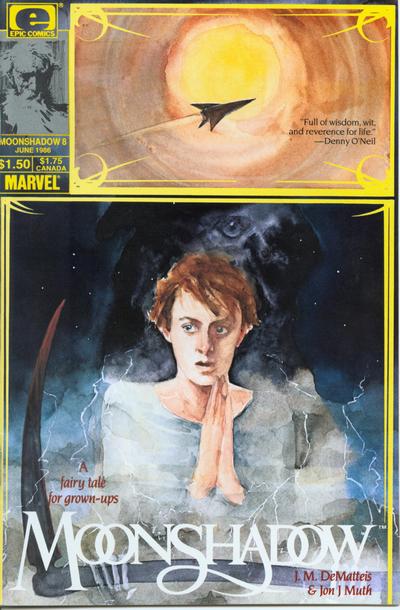
The long journey of Moonshadow has taken the title to a new destination: Dark Horse Comics. This cult favorite comic, written by J.M. DeMatteis and painted by Jon J. Muth, Kent Williams, and George Pratt, was first launched as a 12 issue series as part of Marvel’s Epic line back in the mid-1980s. Taking its title from a 1970 Cat Stevens song, Moonshadow combines elements of science fiction, fairy tale, fantasy, and coming of age stories. Famous names such as Ray Bradbury and Frank Miller are among the series’ fans.
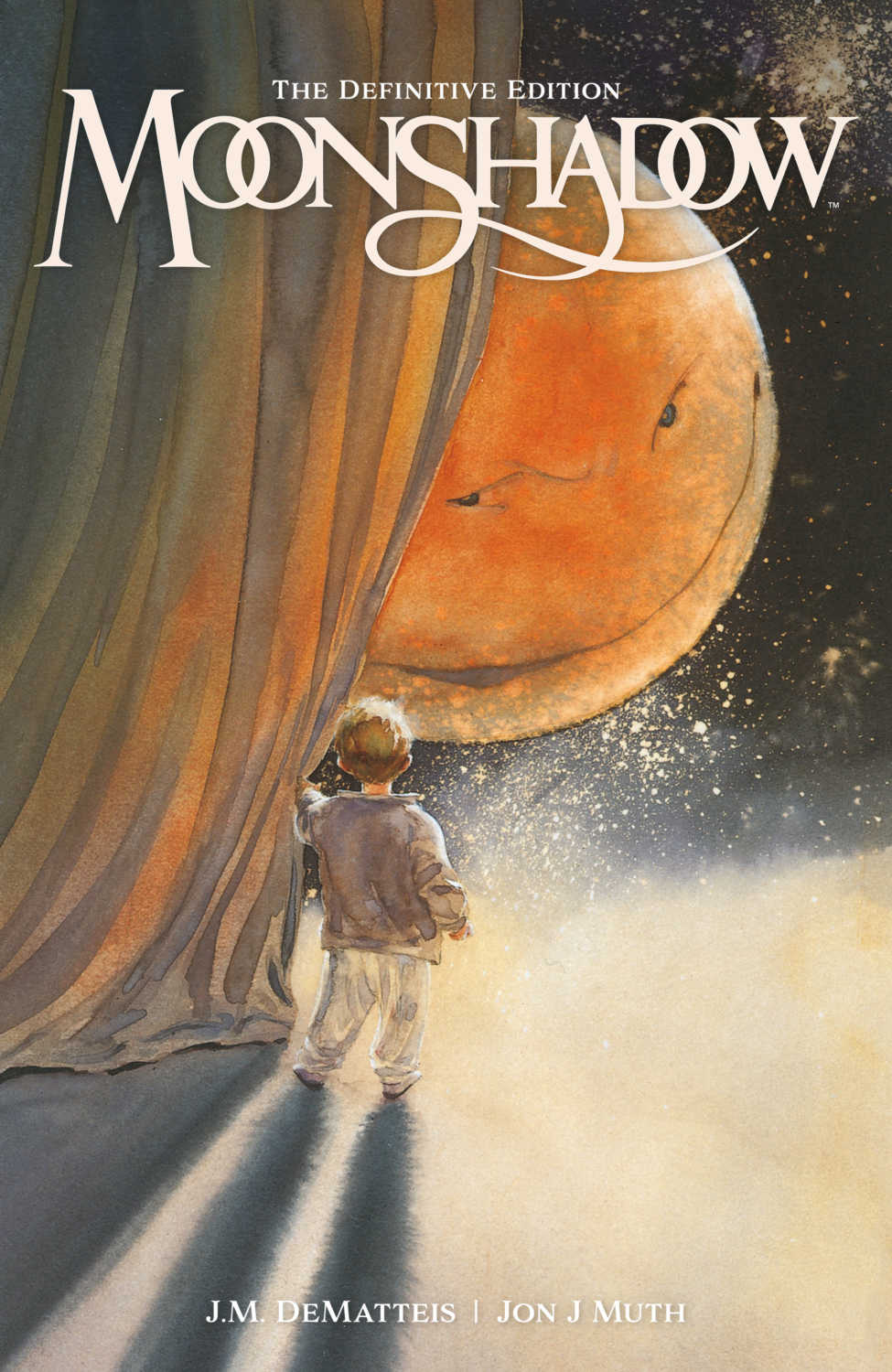
It was republished in 1994 via DC/Vertigo — including the single issue sequel titled Farewell, Moonshadow — and collected in 1998 as The Compleat Moonshadow. Now Dark Horse is delivering what looks to be the most comprehensive edition yet, a deluxe hardcover “with over 500 pages includes a new introduction by creator J.M. DeMatteis, as well as a bonus section featuring early concept work.”
From the publisher’s announcement:
Moonshadow tells the story of a romantic, unreliable narrator who leads us through his interplanetary coming-of-age story, as an older Moonshadow recounts his strange birth in outer space, his escape from a deep-space zoo, and his struggles to survive in a war-torn universe.
Featuring gorgeous watercolor artwork by Eisner Award Winner and Caldecott Honoree Jon J Muth (Neil Gaiman’s The Sandman: The Wake), this influential “fairy tale for adults” includes the Farewell Moonshadow illustrated novella that gives fans a look at Moon’s life after his tumultuous, space-faring teens and misadventures with the miscreant Ira. Digitally restored and including all original cover work, this volume also includes illustrations by Kent Williams (Epic Illustrated, Havok, Wolverine: Meltdown) and Eisner Award Winner George Pratt (Wolverine: Netsuke, Epic Illustrated, Enemy Ace: War Idyll) and lettering by Kevin Nowlan (Lobster Johnson, The Goon: Noir, Doctor Strange). A sci-fi fantasy that Ray Bradbury called, “Beautiful, original, haunting,” and DeMatteis himself calls “Dickens’ David Copperfield meets Siddhartha in space.”
In addition to this new hardcover treatment of Moonshadow, J.M. DeMatteis will also publish The Girl in the Bay, a new comic series with artist Corin Howell, on February 6, 2019. The Girl in the Bay is the next installment in Karen Berger’s critically acclaimed Berger Books imprint at Dark Horse.
The new edition will be in comic stores June 12, and in bookstores June 25. It’s currently up for pre-order on Amazon and Barnes & Noble.
For Moonshadow fans, or readers who have never experienced it before, does this new edition sound like something you’ll pick up? Comment below!
Legendary artist George Pérez — who has drawn almost every DC and Marvel character over his 40+ year career — announced his retirement from new comics work via Facebook. While he will be attending a few conventions in 2019, his announcement also indicates those will stop as well. Pérez has struggled with various health issues over the years, including problems with his vision, which have led to delays in his past work.
Pérez’s long, distinguished career began at Marvel Comics back in 1974. He penciled characters as diverse as Deathlok, Man-Wolf, the Fantastic Four, the Inhumans, and had his first stint on The Avengers. Along with writer Bill Mantlo, Pérez co-created the Puerto Rican hero White Tiger.
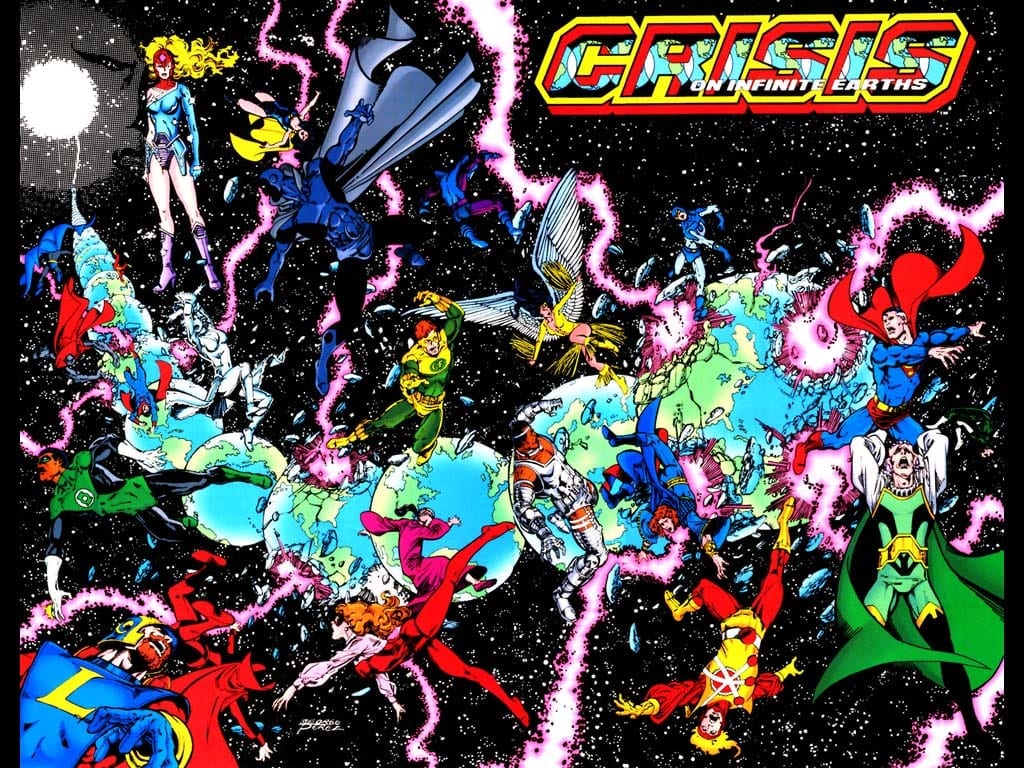
Many would cite Pérez’s move to DC in the 1980s as the beginning of his superstardom. He not only penciled Justice League of America, but co-created The New Teen Titans with Marv Wolfman. In 1985, he and Wolfman re-teamed for Crisis on Infinite Earths and its followup History of the DC Universe. Pérez also both wrote and penciled the post-Crisis relaunch of Wonder Woman, and did some late 1980s work on Action Comics.
His return to Marvel in the 1990s saw him illustrate the beginning of the Infinity Gauntlet miniseries (before health problems caused him to step aside), and team with Kurt Busiek for another run on The Avengers as well as the Avengers-JLA crossover miniseries.
Pérez came back to DC in 2006 for a run on The Brave and the Bold with Mark Waid, and the Legion of Three Worlds miniseries with Geoff Johns. He’s also done work for CrossGen and BOOM! Studios over the years.
These are, of course, only highlights of a genuinely epic comics career.
Here is the full retirement announcement:
DATE : JANUARY 19, 2019 FROM : George Pérez
To all my loyal and kind fans who have supported me throughout the decades,
In recent months, there has been a great deal of speculation as to the future of my career, my health, my ability to draw and my future convention appearances. As a result, I would like to clear up everything first hand so that, hopefully, any rumors, speculation, and misinformation can be laid to rest.
With respect to future published work in comics and such … while I know it’s been no secret that I’ve been dealing with a myriad number of health issues (diabetes, heart ailments, vision issues, etc.), they have indeed have forced me to, for all intents and purposes, formally retire from the business of creating new comic stories.
As for home commission requests, I’m afraid that my retirement must now extend to privately commissioned drawings as well. While I am gratified that all of the customers who have received their pieces were more than pleased with the results, some even consequently commissioning more of them, it’s just becoming too much of a strain on my eyes to produce the fully rendered ink and pencil-tone pieces on a quality level that justifies the price I’m being paid for them.
In regards to convention sketches, I will need to cut back on those as well. While I will no longer sketch at the conventions themselves, I will, through my art agent Spencer Beck of The Artists Choice, be taking orders for 5 ( FIVE ) con-style head sketches, per convention day that I am in attendance which will be done at home to be collected at the conventions. Fans placing orders must be personally present to pick up the piece, NO PROXIES. The price for these will be a good deal pricier than in the past, going for $100 each, but please take some solace that all the monies I earn for these sketches, as well as my appearance fees, will be donated to various charities. To place an order, or for initial details, please contact Spencer / The Artist’s Choice directly at Spencerbck@aol.com. Any changes or further announcements will be made by Spencer and myself on his website theartistschoice.com/perez.htm and on my fan website george-perez.net
Furthermore, for those that are interested … although I will only be attending about six conventions this year and one make up convention in 2020 ( *** see below for complete schedule ) 2019 will more than likely be my last year touring this great land meeting so many great fans. As the next decade begins, I have two shows, Dragon Con and Fetish Con that have personal meaning to me which I intend to attend yearly unless circumstances prevent it … but, for all intents, 2019 will wind down that part of my career as well. The good news is, even though I will not be sketching at the shows, I will still be autographing and be available for photo ops, and, as has been my policy throughout my career, I will not be charging for either.
In closing, please don’t feel sorry for me about all these life and career changes. Thankfully I earn more than enough income through royalties to have a comfortable life wherein I may never need to work again. Unless, of course, something really tempting comes along and I’m given sufficient lead time. Hey, you never know.
Long story short, I will be just fine. I’ve had a wonderfully good run doing exactly what I have wanted to do since I was a child. Now I can sit back and watch the stuff I helped create entertain whole new generations. That’s a pretty nice legacy to look back on.
And so much of that is thanks to all of you, the GREATEST fans in the world. I am humbled and forever grateful.
Wishing you all a safe, happy and healthy 2019 and beyond,
Wishing you all a safe, happy and healthy 2019 and beyond,
UPDATE: Mr. Perez will not be accepting requests until approximately 30 days before each specific show. Sketches will be approved at one per person, family or address. First come, First serve. So, please check back 30 days before the show. He will only be doing 9 x 12 headshots, and they must be paid for in full at the time the order is accepted.
2019 CONVENTION SCHEDULE
AMAZING COMIC CON ALOHA – FEBRUARY 22 to 24, 2019
C2E2 – MARCH 22 to 24, 2019
EAST COAST COMIC CON – MAY 17 to 19, 2019
NIAGARA FALLS COMICS CON – JUNE 7 to 9, 2019
TERRIFICON – AUGUST 9 to 11, 2019 ( FRIDAY ONLY )
FETISH CON – AUGUST 9 to 11, 2019 ( SATURDAY & SUNDAY ONLY )
DRAGON CON – AUGUST 29 to SEPTEMBER 2, 2019
What is your favorite of George Pérez’s work? Comment below!
Michael Bay is one of the most divisive directors working in Hollywood. Critics hate many of his films but audiences generally like them. Two of his films have made over a billion dollars and for good and ill most of his films are memorable.
Bay’s films are marked by his kinetic camera movements, bright cinematography, and quick cut editing. His visual style makes Bay’s work some of the recognizable in mainstream cinema and whether you like it or not he has had a huge impact on modern action cinema.
Bay has so far directed 13 films so let’s look at them from worst to best.
13. Pain & Gain (2013) Pain & Gain was Michael Bay’s passion project, a film he finally got to make after agreeing to direct a fourth Transformers film. It was a film that was meant to be a window into Bay’s soul and what we saw was a toxic whirlpool of hatred. Pain & Gain was a dark comedy about the Sun Gym Gang in Miami, a group of bodybuilders who kidnapped, tortured, and murdered their way to wealth. Pain & Gain is a standard criminal rise and fall narrative but what separates it is the cruel, sadistic edge.
Pain and Gain was a violent, mean-spirited film starring characters with no redeeming features and relished on the violence. This type of film could have worked if made by The Coen Brothers or Quentin Tarantino who can make reprehensible characters endearing but Bay does not have that skill set. Family members of the Sun Gym Gang victims were particularly hostile to the film because it portrayed the victims as people who got what they deserved.
Pain &Gain was not without virtue. It was made on a budget ranging between $25 million to $35 million and Bay made it look like it cost more. Plus it featured the talents of Mark Wahlberg and The Rock. But this surface level flash can’t hide the film’s bitter nature. All pain, no gain.
12. Pearl Harbor (2001)
Another film in Bay’s filmography based on historical events was Pearl Harbor. This 2001 movie is considered one of the worst war films ever made, having a 25% rating on Rotten Tomatoes. It is hated by people who have any sort of interest in history. Reviews at the time declared Pearl Harbor as “trying a squeeze a two-hour film into three” and “the Japanese bombing interfering with an American love triangle.”
Pearl Harbor follows two friends who become pilots in the US Air Force just before the United States enter the Second World War. They also fall for the same woman just as they all get stationed in Hawaii at that fateful date in 1941.
Pearl Harbor was an attempt by Michael Bay and his long-time producer Jerry Bruckheimer to make a prestige picture after having success with action blockbusters. They won an Oscar for sound mixing.
Pearl Harbor was written by Randall Wallace who shows the same respect to history as he did with Braveheart. Moments that ticked off historians are those showing the Japanese bombing the hospital despite the Japanese pilots being under orders not to attack civilians, two fictional characters replaced the real pilots who fought the Japanese during the bombing. It also showed a US Air Force pilot being sent to fight with the RAF during the Battle of Britain and showing the main characters being a part of the Doolittle Raid despite them being fighter pilots, not bomber pilots. As an Englishman, a particularly irksome moment was when Ben Affleck’s commanding officer in the RAF said he wished he had more pilots like him, ignoring that lots of pilots were fighting and dying.
Pearl Harbor does have one saving grace – the bombing sequence. It was a well-crafted piece of action cinema as it showed the destruction and chaos of that fateful day.
11. Transformers: Revenge of the Fallen (2009)
After the success of the first Transformers film a sequel was quickly greenlit. All the problems of the first film were amplified. The film was written during the 2008 Writers’ Strike which meant Bay had to finish the script himself. It meant that all the issues with the film can all be laid at Bay’s feet.
Bay had no restraint when making Transformers: Revenge of the Fallen and it showed. He gave into his worst instinct which meant that a film that was aimed at kids had scenes like two dogs humping, an upskirt shot involving Isabel Lucas, a farting Transformers, Sam’s mum eating a pot brownie, John Turturro teabagging the audience and college girls fawning over Rainn Wilson. The film introduced two of the worst characters in blockbuster history: Skids and Mudflap. They were bickering twin robots that were racist stereotypes and the audience had to spend most of the film with them instead of Transformers that they actually liked. I wanted to cheer when I though Mudflap was killed and cry in despair when he lived.
The film ran for 150 minutes despite telling a simple story – a big bad robot wants to harvest the sun. It was filled with plot inconsistencies, the worst being the US government was able to cover up the battle between the Autobots and Decepticons despite there being civilian deaths, millions of dollars of properties damage and thousands of eyewitnesses. The film was so bad that Bay and star Shia LaBeouf apologized for it.
Transformers: Revenge of the Fallen does have one awesome moment: the forest fight. Optimus Prime had to fight off three Decepticons whilst protecting Sam and gets to utter the line ‘you will never stop at one, I’ll take you all on.’
10. Transformers: The Last Knight (2017) Transformers: The Last Knight was the most recent Transformers film directed by Bay. It is considered to be the film in the franchise to underperform, making $605 million at the box-office. Out of all the films in the Bay filmography this is the film that seemed like he made out of obligation – the action was pedestrian by Bay standards. The Last Knight repeats the structure and storyline of Revenge of the Fallen. Both films were treasure hunt stories where the characters have to find ancient artefacts to stop the destruction of Earth. The Last Knight also makes the same mistakes that Revenge of the Fallen made. Both films got sidetracked by pointless subplots that went nowhere and introduced characters who had no bearing on the plot. Like Revenge of the FallenThe Last Knight featured few Transformers and fan favorite Optimus Prime sidelined for most of the films.
9. Bad Boys II (2003) Bad Boys II was the latest film Bay made with producer Jerry Bruckheimer, turning his fairly low budget debut into a $130 million spectacle. This was a film where Bay was unrestrained – he made a buddy cop film that was over two hours, twenty minutes long, had huge action sequences like a car chase where cars were thrown from the back of a truck, hummers smashing through a shanty town and a finale on a minefield. It was excessive and some see it as Bay’s nihilistic masterpiece.
The action was excellent, at times it played like it was Michael Mann’s Heat on cocaine. The sequel had a better villain in the form of Hector Tapia because he actually had a personality. As always Will Smith was a welcome presence. Where the film fails was its humor: it was filled with unfunny segments like people in an electronic store thing the main characters were gay, Martin Lawrence acting like he took ecstasy, and Martin Lawrence and Joe Pantoliano having to do breathing exercises. Like Pain & Gain there was a nasty streak in Bad Boys II. Martin Lawrence had to suffer constant humiliation, Will Smith ogling a dead lady’s breasts and a body getting decapitated during the middle of a car chase.
A great side-effect of Bad Boys II was it was referenced a lot in Hot Fuzz.
8. Bad Boys (1995) Bad Boys was Michael Bay’s first feature film. It was made on a $19 million budget and was considered a risk because it starred two TV stars. It was the film that started Will Smith’s career as a movie star.
Bad Boys was a standard buddy cop movie, not much different to Lethal Weapon and 48 Hours and had a solid enough premise – a corrupt ex-cop being able to steal millions of dollars worth of drugs from the Miami Police Department. What made it work was the chemistry between Will Smith and Martin Lawrence and Bay making the film looked a lot more expensive than it really was. Bay was so committed to the film that he invested $25,000 of his own money to film the final action scene.
7. 13 Hours: The Secret Soldiers of Benghazi (2016)
13 Hours: The Secret Soldiers of Benghazi was the most recent historical film in Bay’s filmography and the most respectful portrayal of history. This film was about the siege of American diplomatic outpost in Benghazi and it piggybacking on a recent trend of military films (i.e. Lone Survivor and American Sniper) that appealed to middle-America audiences.
The fear of 13 Hours: The Secret Soldiers of Benghazi would be Bay going completely right-wing and a vocal minority believed it would be a critique on Hilary Clinton. Instead Bay treated the story with respect and a fairly neutral viewpoint. It focused on the people on the ground as they tried to defend themselves. Because of this the film had none of Bay’s humor was present and there was only one stylized action shot. It was Bay’s Black Hawk Down.
On a side note, 13 Hours starred John Krasinski who directed the critically acclaimed horror film A Quiet Place. Bay’s production company made the film and Bay was one of the producers.
6. Transformers: Age of Extinction (2014)
Following Transformers: Dark of the Moon it seemed like Bay was done with the series. But Paramount was able to bring Bay back by letting him make Pain & Gain. Transformers: Age of Extinction was a soft reboot to the series, seeing a new cast of human characters and a redesign of the Transformers.
Transformers: Age of Extinction made $1.10 billion worldwide but it was one of the most critically reviled films in the franchise. Transformers: Age of Extinction does have its issues, it is too long, needlessly complicated and has Bay’s obsession with sex – in this film a character carries around a laminated copy of a fictional Texan Romeo and Juliet law. But there are also improvements – Bay and writer Ethan Kruger cull the cast of Autobots down to five and gave them distinctive looks and personalities. This film has some of the best villains in the franchise in the form of Lockdown and Kelsey Grammer’s Harold Attinger. There was plenty of action that appealed to my inner 10-year-old, including the fight between Optimus Prime and Grimlock.
5. Transformers: Dark of the Moon (2011) Transformers: Dark of the Moon was the third film in the Transformers series and some people have argued it was the best in the series. After Transformers: Revenge of the Fallen was panned by fans and critics – Michael Bay and star Shia LaBeouf apologized for it and promised to learn from their mistake. Bay used this marketing technique for subsequent Transformers films.
Like Transformers: Age of Extinction the third Transformers film does some important things – it makes more Autobots recognizable and toned down Bay’s style of humor. The departure of Leo and the Twins was just a relief. Bay shot the film during the middle of the 3D boom of the early 2010s and Transformers: Dark of the Moon had some of the best 3D effects after Avatar. It also meant Bay had to restrict his rabid camera movements and quick editing because of the 3D cameras he had to use.
Transformers: Dark of the Moon had one of the best climaxes in the series, the Battle of Chicago and Leonard Nimoy played the main villain, being one of the best voice performers in the series. Bay cast Francis McDormand and John Malkovich to do some of the acting heavy lifting.
4. The Island (2005) The Island was the first film Bay with DreamWorks Pictures, breaking his long-standing relationship with Jerry Bruckheimer. It is also the only blockbuster in Bay’s filmography which was a box-office flop, which is a shame because it was a solid sci-fi film.
Set in the year 2019 The Island focuses on Lincoln Six Echo (Ewan McGregor) and Jordan Two Delta (Scarlett Johansson), two people who live in a base where the inhabitants believed they survived the near extinction of the human race. A few people get selected to move to the fabled Island, a disease-free paradise. However, this was a lie to keep the people under control. The reality is they are clones of the rich and the elite and when they are selected their organs are harvested. Lincoln and Jordan escape the base and find the original people and discover that the world hasn’t gone to hell.
Bay toned down his worst instinct, there wasn’t much humor in the film and the camera shots were held for longer. The story was similar to films like THX-1138 and Run Logan, films that focused on characters living in underground societies and discover a deep dark society. The Island was met with controversy because it infringed on the copyright of the 1979 B-movie Parts: The Clonus Horror. The premise was also used in Kazuo Ishiguro’s award-winning novel Never Let Me Go which published in the same year.
3. Transformers (2007)
The 2007 version of Transformers was the first film in the live action franchise and the film with the highest Rotten Tomatoes and IMDB scores until the release of Bumblebee. This was second film Bay made with Steven Spielberg producing and his presence was felt. Spielberg recommended that the focus of Transformers should be a boy and his car and many of Bay’s of sexual and racial humor was tempered by some memorable action sequences and special effects that still hold up today.
Bay does handle the appearance of the Transformers with reverence, giving the film a sense of awe. This was clearly the case when Blackout attacked the US military and when the Autobots arrive on Earth. Steve Jablonsky’s score makes for great easy listening.
2. Armageddon (1998) Armageddon is a film I have a lot of nostalgic feeling towards – it was the first Bay film I saw and was the first DVD I ever brought. Armageddon was one of two films released in 1998 that looked at asteroids heading towards Earth. Armageddon was the more action-orientated film that was filled with city destruction, spacecraft getting destroyed and the space station Mir blew up. It pleased my tiny 13-year-old mind.
The film has some groundbreaking special effects, especially the destruction of New York and a lot of talented people working in front of and behind the camera. It was a film that gave Liv Tyler and Michael Clarke Duncan early roles, gave indie actors Ben Affleck, Billy Bob Thornton and Steve Buscemi blockbuster roles and was an early screenwriting credit for J.J. Abrams.
Armageddon saw more famous Bay tropes appear. This was a film that honored blue-collar American workers, making them the heroes, filled with American patriotism and unfortunately, his style of humor. When Ben Affleck pointed out that it would be easier to train astronauts to use the drilling equipment instead of training oil drillers to be astronauts Bay had a simple response: ‘shut up.’
Armageddon is a big block of American cheese and that’s why a lot of people love it.
1. The Rock (1996) The Rock is often considered Bay’s best film and there is a good reason why – it is the only film that has a positive Rotten Tomatoes score and a big fan base. It’s both a quintessential ’90s action film and Jerry Bruckheimer production.
The premise of The Rock was simple, a group of rogue special forces soldiers still VX gas from the American government and threatens to fire the weapons on San Francisco if they are not paid $100 million. To infiltrate their base of operation on Alcatraz the US government turn to the only man to escape the prison, British MI6 agent John Mason (Sean Connery).
As expected from a Bay film The Rock had impressive action sequences and because of the use of Special Forces allowed Bay to showcase military combat. There was a fair amount of tension, especially during the scene when the Navy Seals faced off against the rogue Special Forces and the green smoke scene is so iconic that Call of Duty: Modern Warfare 2 copied the scene.
The Rock also showcased some of Bay’s favorite tropes – his adulation for the military, his disdain for bureaucrats and a love for conspiracy theories.
The Rock had an excellent cast. It gave Nicolas Cage his first blockbuster role, featured the talents of John Spencer (The West Wing), Michael Biehn and the aforementioned former Bond actor. Best of all was Ed Harris as Frank Hummel whose character was portrayed in a sympathetic light despite threatening to gas a major American city.
The Rock is the only Bay film to be a part of the Criterion Collection.
Friday afternoon, Monkeys Fighting Robots announced its first digital comic strip, Tales of Monkeys Fighting Robots with art by Jamie Jones and the occasional words by Matt Sardo, will debut Super Bowl Sunday, February 3.
The best way to describe the series is if Robert Rodriguez directed Band of Brothers, with monkeys. The war between monkeys and robots has raged on for eons; these are the stories that have survived.Tales of Monkeys Fighting Robots will hit the web every Sunday.
“I once attended a panel where Gail Simone said, ‘a comic should never be boring,’ and that stuck with me. With Tales of Monkeys Fighting Robots, my goal is to put a giant smile on Gail’s face,” said Sardo. “Jamie and I are brainstorming the craziest of ideas. We get to be kids and detail out the biggest robots versus monkeys battle every week.”
The artist of the series, Jones, is big into Dungeons & Dragons, and you’ve seen his work on The Whisper, Paper Boy, Dodger, LUCHA UNDERGROUND, FIVE GHOSTS, and Joey Ryan: Big in Japan! Sardo, on the other hand, is training for his next job as an astronaut cowboy. A reformed hockey goon, Sardo has worked in and around the comic book industry since 2006.
Leslie Thompkins. Alfred Pennyworth. And now, Henri Ducard. In Detective Comics #996, we discover all of them and more are being targeted for one specific reason: they all played a key role in creating The Bat.
Batman fails to extract any useful intelligence from the inmates at Arkham. However, it doesn’t take long before Bruce and Damian deduce that Henri Ducard is involved. Tracking him to Paris, Bruce confronts his former mentor. Things aren’t as Bruce expected, though, as the master hunter is now the hunted.
The Writing
Tomasi develops an interesting an engaging larger narrative in Detective Comics #996. The golem-like creature from issue #994 is back. We still have no answers to what it is, or who’s controlling it and why, but the mounting tension keeps the reader engaged in the mystery.
The book leans in heavily to the globetrotting exploits. For example, we have a great sequence of Bruce tracking Ducard through the criminal underworld, involving disguises pulled right from the pages of campy spy books, leading to a showdown in the Parisian catacombs. By the book’s end, we travel to the other side of the world to learn what becomes of another Bat-mentor. The final page sets up a new development that should be interesting to see unfold in our next issue.
Detective Comics #996 does have a few issues in story pacing and motivation, though. For example, Batman leaps into a fight with Ducard, only for the showdown to suddenly transition to a tense conversation. The adrenaline level kicks up again just two pages later. The effect is jaunty and somewhat uneven tonally. Even still, the book has a much more good than bad going on.
The Artwork
Doug Mahnke’s line work, with inks from Jaime Mendoza and Mark Irwin, is a strong point in the book’s favor. The character designs are detailed and expressive, with just a little bit of sketchiness to add some grit.
The team’s talents really shine in bringing to life the full-on body horror monstrosity attacking Bruce and Henri. Flesh boils and splashes around as members of the Batman rogues’ gallery gurgle up out of the mass to attack. It’s gruesome, yet gorgeously illustrated.
The colors by David Baron are on-point in Detective Comics #996 as well. The first two-thirds, taking place mostly underground, are dominated by earthy brown tones and heavy shadows. The style works well alongside the slightly-sketchy pencils and ink.
Final Verdict
Detective Comics #996 is another great installment in Tomasi’s run on the series. Get caught up now, because this probably isn’t a story you want to sleep on.