Home Blog Page 318

Review: WESTERNOIR Talks The Talk And Shoots From The Hip

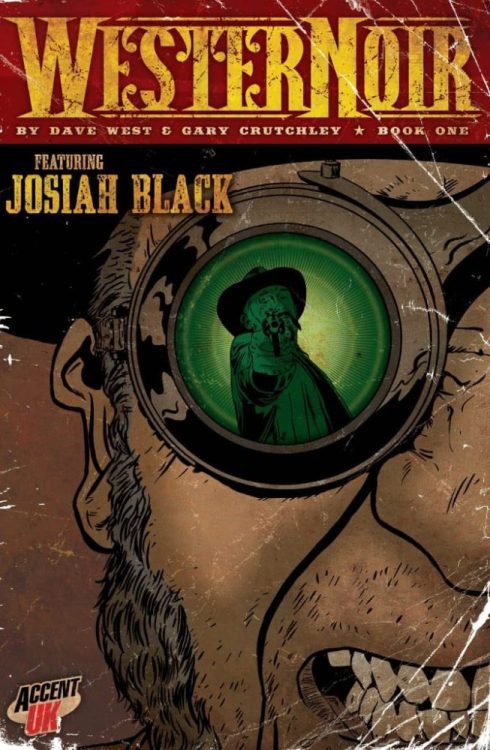
WesterNoir #1 cover
WesterNoir #1 Cover Credit:Accent UK

With WesterNoir, a small press comic, you get hard boiled characters facing mythical beasts in a wild west setting. A tough voice over leads the reader through a black and white world of violence and regret. It has been described as Deadwood meets They Live, and that gives you a good indication of what to expect.

When you sort through your comic collection a number of gems can pop up that you’d forgotten about and haven’t read in a long time. Now is the time to revisit those and remind yourself why you bought them. I picked up 7 issues of WesterNoir over the course of about 4 years from the UK convention Thought Bubble.

In the forgotten towns of the west, the dangerous swamps of Louisiana, and on the banks of the Mississippi, one man strives for redemption, fighting evil that only he can see. Josiah Black narrates his own story of horror and awe as he travels America’s wild side.
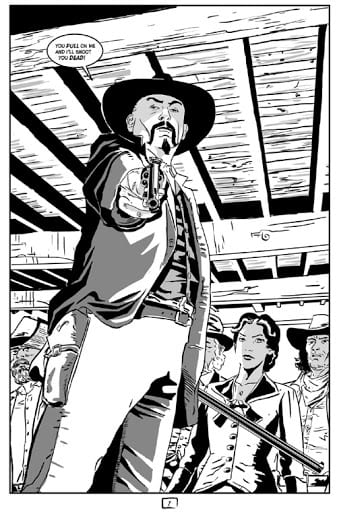
WesterNoir #3 art
WesterNoir #3 Interior Art Credit:Accent UK

The Concept

WesterNoir is written by Dave West with Gary Crutchley on art duties. It was published by small press outfit Accent UK from 2012 and sold mostly at Conventions with a few Local Comic Shops stocking it. The concept behind the comic is very clear from the beginning, even the title tells you what to expect.

If you pick the first issue up with no prior knowledge you still go into it with a strong idea what you will get and, on that point, the comic does not disappoint. A gruff voice over leads you through the central character’s story as he becomes guilty bound to a man named Mr Caligary and begins a journey of self discovery and monster hunting. Josiah Black, the narrator, is as shocked as the reader to discover that not only is the west filled with greedy, murderous people but is also populated with hidden beasts, feeding on a desperate populace.

The ending of the first issue takes a turn similar to the first episode of the TV series Grimm. Black becomes an unwilling servant of powers fighting against darkness. Each issue Black is faced with a blend of western narrative tropes and mythical creatures. In turn this forces him to face his past and the memories he has been trying to forget.
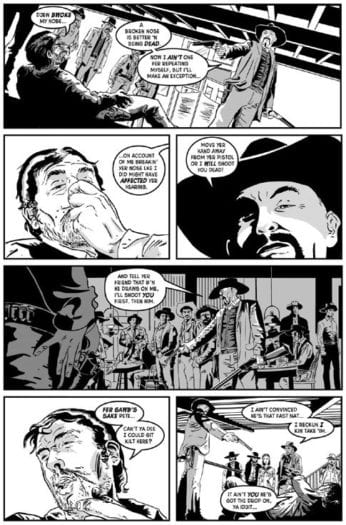
WesterNoir #3 artwork
WesterNoir #3 Interior Art Credit:Accent UK

Scripting

Dave West revels in the gritty pulp fiction style narrative, mixing his metaphors and leaning more towards hardboiled fiction then Noir. The stories revolve around Black but their focus is on the harsh realities of living in the undisciplined ‘west’. The creatures become extended metaphors for western tropes and frontiersman stereotypes. West makes Black’s fight ultimately about the people and providing protection for those who can’t protect themselves. In WesterNoir’s world, corruption is everywhere and only certain people can see the cancer at the heart of society.

The characters take a page out of the Spaghetti Western rulebook. Most of them are instantly dislikable with the exception of the ones who turn out to be villains. West fills the mouths of his cast with short, harsh words and most pages are filled with verbal confrontations. The source of bitterness of the central character is slowly revealed throughout the issues and there is a constant reminder about the cruelties faced by the populace day after day.
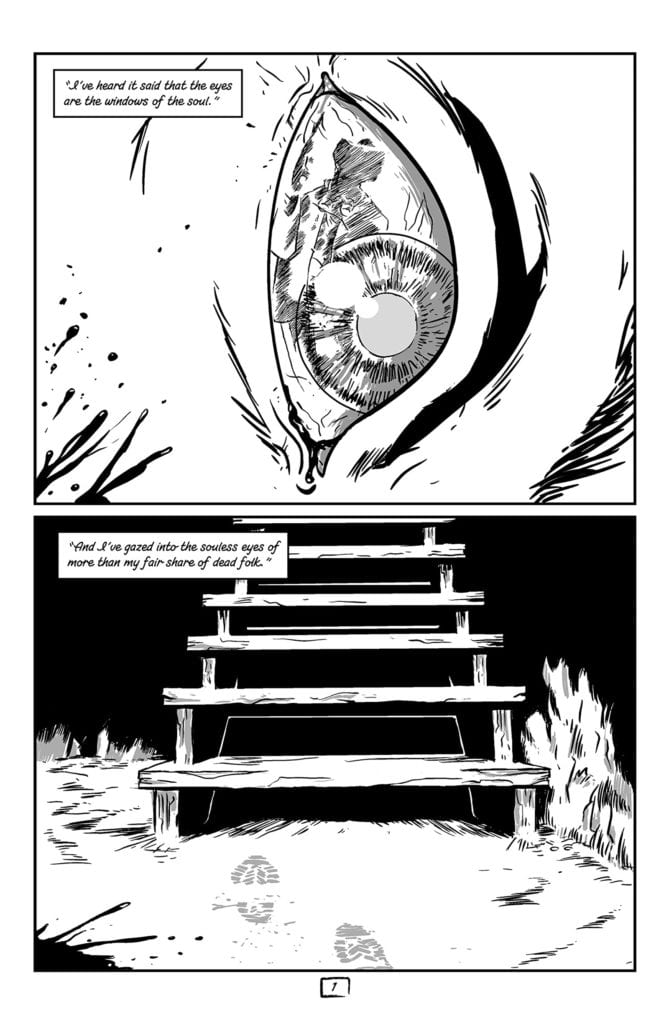
WesterNoir #1 art work
WesterNoir #1 Page Art Credit:Accent UK

Black and White

Gary Crutchley’s artwork suits the tone of the narrative wonderfully. His line work is very precise with detailed character work. He creates strong personalities and draws their lives directly on to their faces. Worry lines, scars, stress, and hatred define the cast of WesterNoir and the central character is no different. Crutchley shows the reader the hardships endured by Black without the need for the voice over, which acts as a leader for each issues narrative.

Black’s history is reflected in his design, in the way that Crutchley draws him standing, walking, fighting. The artist makes the character act like Clint Eastwood in Unforgiven: he’s a broken man with a new found mission.

The backgrounds are as detailed as they need to be. In some panels there is a clear sense of location, take the Louisiana Swamps from issue two as a prime example. Crutchley loves to create a scene and then filter it out to let the characters’ interactions shine. That memory of location stays with you as you read through the action sequences as a foundation for the story.

With each additional issue of the series the artwork improves with a much wider use of grayscale to produce depth. The lettering also becomes richer, finding a more natural fit with the rest of the page. And the plot itself becomes more complex and engaging. The first issues are a great hook but it’s issue 4 that really drags you into Blacks complicated world.
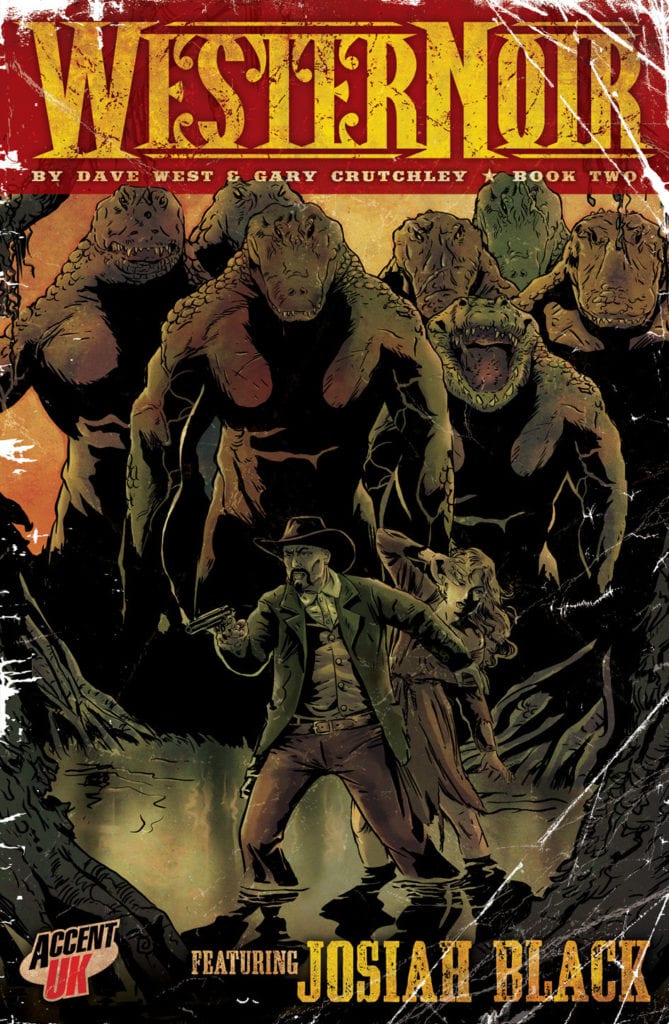
WesterNoir #2 cover
WesterNoir #2 Cover Credit:Accent UK

Conclusions

It’s always a joy to rediscover a comic series, especially a true independant like WesterNoir. The love and attention that both writer and artist give to each issue is evident on the page. Even the design of the comics by Andy Bloor has a noticeable affection towards it. The single issues were all deluxe, card covers with full color images made to look like the pulpy westerns of the 1960s.

The story created by West and Crutchley is a wonderful blend of genre cliches and real surprises. The characters, especially Black, are strong and have presence on the page. Some of the creatures have a ‘mis-understood monster’ feel to them that only works because of the quality of the characterisation. The series is engaging and pulls you uncontrollably from one issue to the next.

The only problem with re-discovering these older comics is getting new issues. Trying to find WesterNoir is difficult but there are copies out there and 2 collected volumes were released. The writer continues to keep a blog (which can be found here) but the publisher’s webpage, Accent UK, appears to be out of date. If you can find copies of WesterNoir I would highly recommend picking them up. If not, maybe drop the writer or artist a message, asking if they have copies left. Or check out the online serialisation of the first issue, which has been colored for the digital re-release
Monkeys Fighting Robots Youtube

ACTION JOURNALISM: Fun Filled Quirky Adventure

Sometimes you randomly stumble upon a comic that fills you with so much joy that you love every aspect of it while it reminds you of lighthearted stories you’ve read in the past; Eric Skillman and Miklós Felvidéki’s fantastic Action Journalism will give you all the feels.

The duo explains the story as thus—”Written by Eric Skillman—award-winning Criterion Collection art director and writer of Liar’s Kiss (Top Shelf)—and drawn by exciting new artist Miklós Felvidéki (Spera), ACTION JOURNALISM is an exciting, genre-hopping series about the adventures of crusading journalist Kate Kelly. The series is a lighthearted riff on the “intrepid reporter” archetype—Lois Lane, Tintin, etc. And like those characters, our series has about as much to do with actual journalism as Indiana Jones has to do with archeology. Aliens, mad scientists, sinister military organizations, whimsical fantasy kingdoms, and more—and that’s just the first five issues! Fast-paced, self-contained stories, appropriate for all ages, the series is being published weekly on Comixology for the next three weeks—and with luck, more to come!”

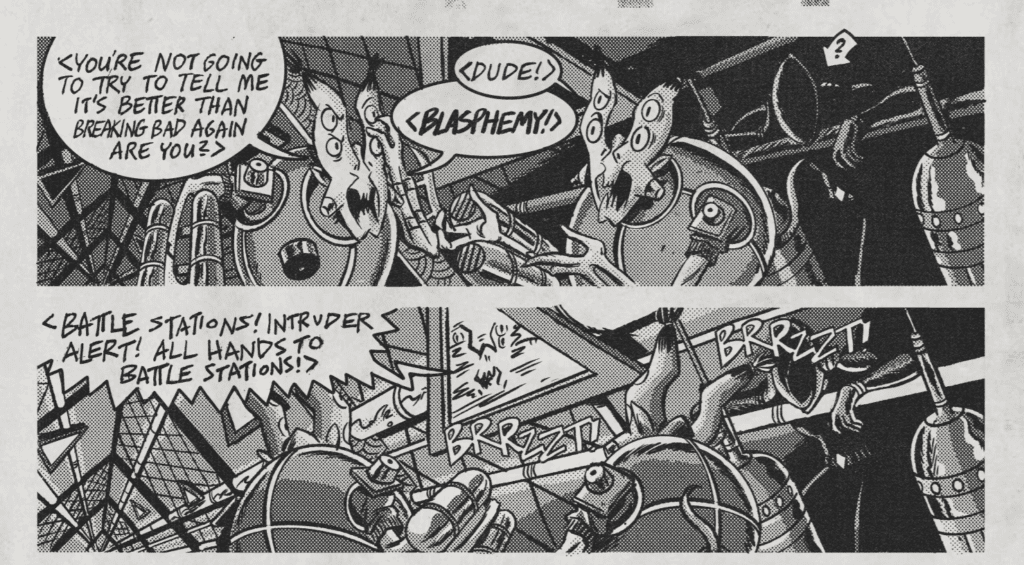
Blasphemy! Eric Skillman and Miklós Felvidéki

That alone should get you excited. But, let’s talk about what initially drew me in.

EXTRA! EXTRA! READ ALL ABOUT IT!

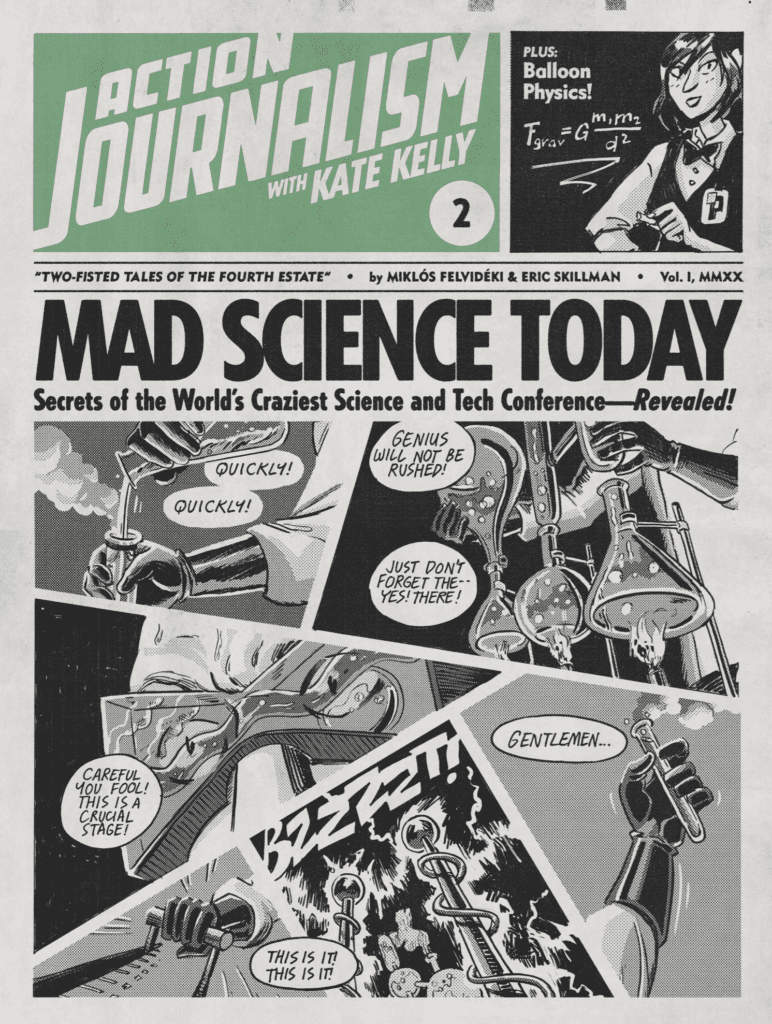
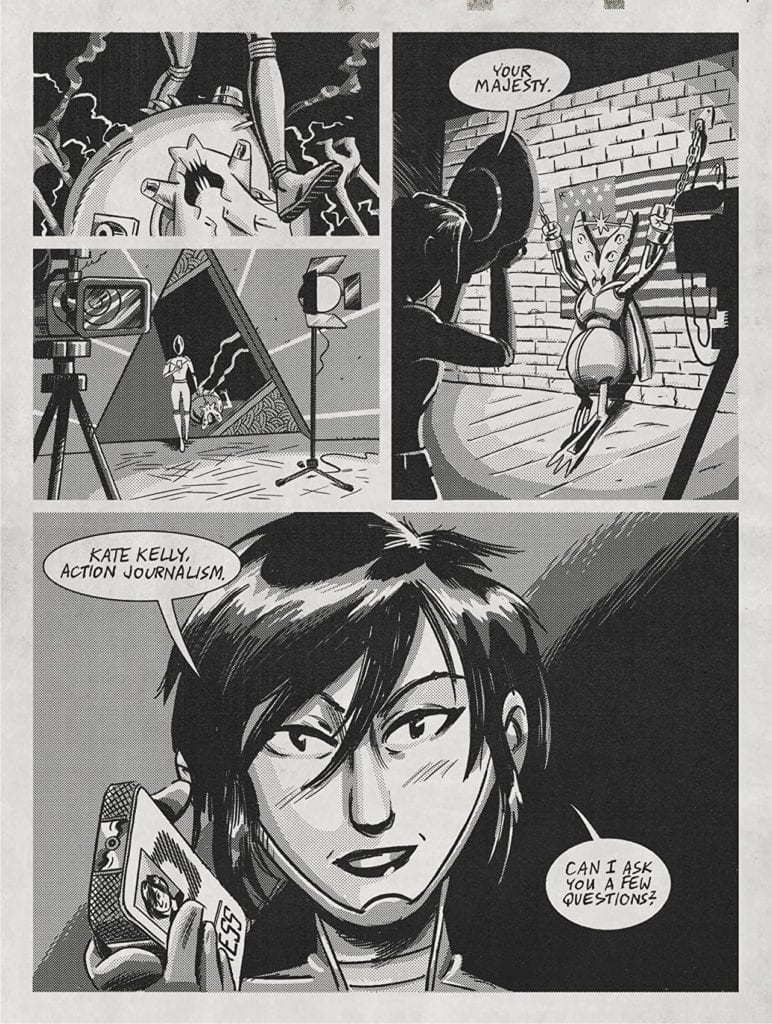
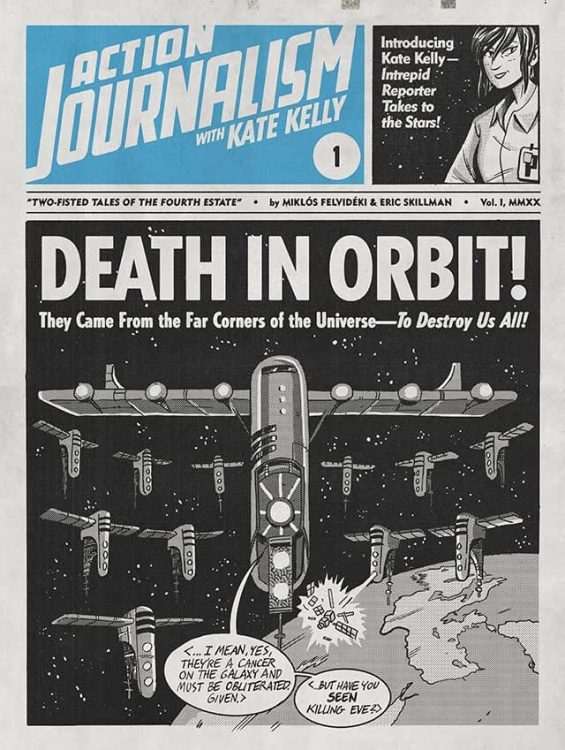
It’s nothing new that comics drop daily on ComiXology, making it easy for your title to get lost. That means you usually need something that’ll catch a readers attention; Action Journalism has just that. One that made it stand out from the others was its format. Instead of being akin to other comics, it sets itself apart by acting as a newspaper. Although it may be digital, Felvidéki makes it look like it’s printed in a newspaper, fitting the story’s themes. This looks amazing and unique, making you wish for a physical release later on. Not only does the newspaper quilty draw you in, but the team’s quirky use of the cover.

Skillman and Felvidéki keep the newspaper theme by having a huge headline explaining the plot. But, they also use the cover as a first page. Having a great cover is a smart way to draw in readers, which each Action Journalism issue does magnificently. As a fan of covers that catch your attention, I’ve never seen a comic use the cover as a page. Nonetheless, Action Journalism continues to impress.

Now that's a headline - Eric Skillman and Miklós Felvidéki
Now that’s a headline – Eric Skillman and Miklós Felvidéki

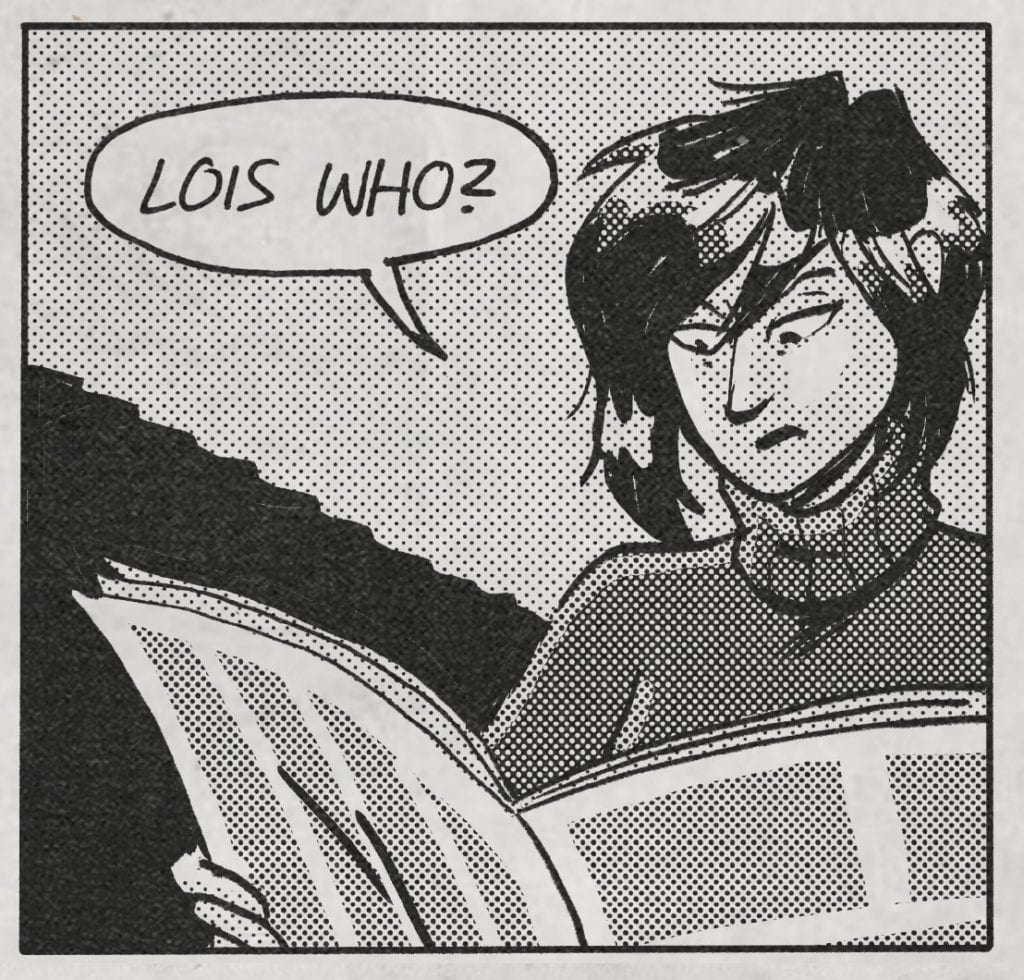
The story doesn’t outright say it, but there certainly is a retrofuturism vibe going on. Not only that, but there are Buck Rogers and other serial moods, combined with a main character reminiscent of Lois Lane. This resemblance is mentioned in the extra’s section as well. Only one issue in and our main character, Kate Kelly, has already won me over.

Lois? Eric Skillman and Miklós Felvidéki

REPORTER EXTRAORDINAIRE

As this review covers a few issues not yet released, spoilers will be kept at a minimum.

Action Journalism follows Reporter Kate Kelly as she finds herself in unique reporting situations. This ranges from sneaking on an alien spacecraft to interview and rescue an alien queen, bartending at a Science Expo, and a fantasy land field trip. Throughout the series, she doesn’t outright kill anyone, it’s actually quite nonviolent. This could be due to the nine and up age rating, but it’s nice to see someone win by their smarts. Nonetheless, each adventure is fun to the highest degree. Each issue feels like a story ripped from the Golden/Silver Ages with wacky, fun situations.

Kelly’s use of intelligence instead of fists is a fun alternative to the endless superhero fighting. Even her fun demeanor, and take no shit attitude is fantastic. The first issue will make you want to know more of her, but as the series goes on you’ll find yourself wanting more time with her. Granted she is the main character (and a great one) her work acquaintances are given fair amounts of page time and are all fun in their own rights.

Seems fishy – Eric Skillman and Miklós Felvidéki

One character that deserves mention is the superhero, The Valiant Volunteer. Although he is given only a few panels in the first issue, you crave more information on him. Luckily, Action Journalism #4 and #5 focus on him. Sadly, we cannot delve deeper into it, but The Valiant Volunteer may be one of the best superhero ideas in recent years. I had to back away from the computer as I was so amazed at the concept the team came up with.

ACTION JOURNALISM HIJINKS

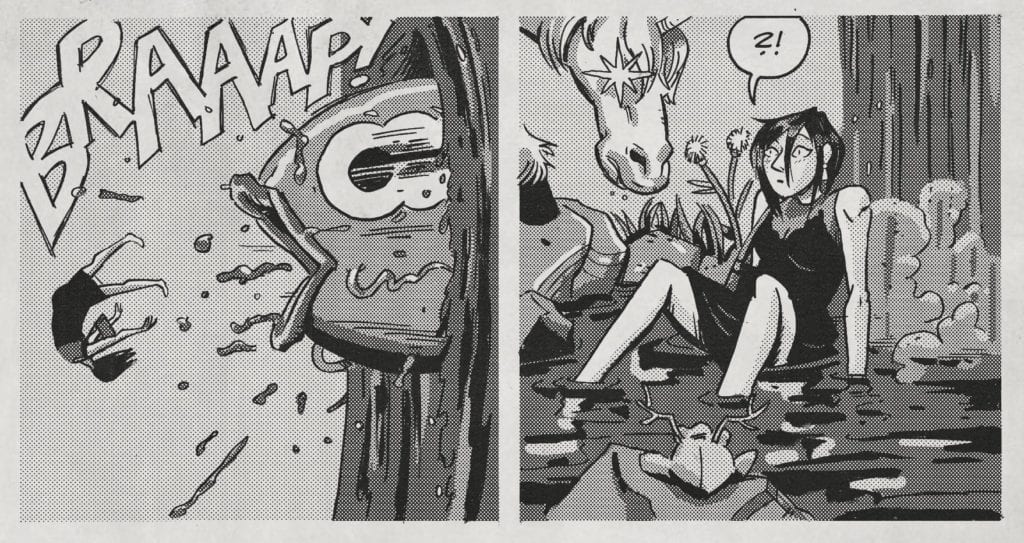
As memorable as Action Journalism characters are, the plot of each issue is just as, while being outlandish. Each adventure Kelly goes on feels fun, crazy, and something straight from the comics or years past. One minute she is sitting at a fountain and a colossal goldfish pops out and takes her to a fantasy realm. Yeah, Action Journalism goes there. Yet, at no time does this seem out of place in the series, hell even Kelly is used to it. These fun adventures are just that, fun. If you need a comic to sit down with and make your day better, Action Journalism is where it’s at. Even your kids will enjoy it greatly.

ADVENTUROUS REPORTING

Felvidéki’s style feels very much like the pulp fiction the team was going for. By combining a little bit of realism and cartoon visuals, Felvidéki’s art complements Action Journalism exceptionally well. That and the use of halftone for the newspaper theme is beautiful in its execution. The newspaper pages cannot be stressed enough, because Felvidéki makes it work perfectly. Even though you’ll read this digital Felvidéki does so well that you’ll feel like you are reading a newspaper. Hell, I swear I could even smell it at one point. Nonetheless, a printed edition of these issues would see me first in line.

Helping find a contact.
Helping find a contact – Miklós Felvidéki

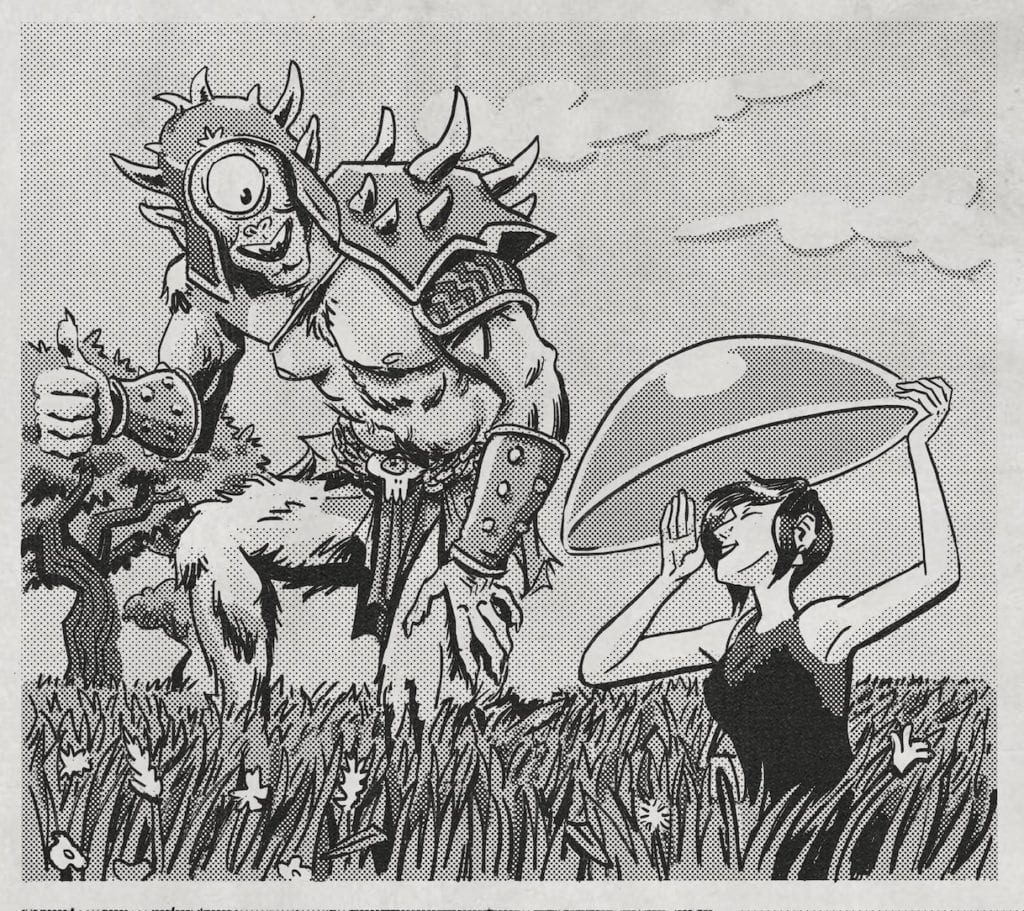
Felvidéki’s designs are a delight. No matter where Kelly is taken in the story, his heart and soul are poured into the panels. Each design is larger than life, all while having a certain charm to them. As fun and quirky as Skillman’s plot/writing is, Felvidéki’s designs and art breathes even more life into them. Not only is Felvidéki’s art enjoyable to the ninth degree, but damn does he back in absurd amounts of details. When thinking about a comic with newspaper esque art, you’d feel like some details would be lost. But, at no point does this happen in Action Journalism. There are even moments with little plot details tucked nicely away in the background.

Another fantastic aspect is the team trying out different things. Namely, flipping the pages 90 degrees in the second issue. Not only was this fun for story reason (and visual), but it shows that the team is willing to be unique with art in the medium.

ON THE COLOR AND LETTERING BEAT

Action Journalism contains halftone, a newspaper printing style used for years. Not only that, but Felvidéki uses minimum colors. The only time you’ll see bright colors are on the cover pages for the headlines. Nevertheless, his use of white, off-color white you’d see in a newspaper, grey, and black are magnificent. At no point will you think the series needs colors. Felvidéki’s use of halftone and a few shades of two colors work so damn well while helping amplify the general vibe of the series.

During the second issue, when the pages are turned 90 degrees, Felvidéki has the dialogue bubbles follow the flip. Not only that, but when Kelly goes to fix the problem, the art begins to spin in a circle. Felvidéki has the word bubbles follow this spiral, making you rotate the page along with the art. These moments are spectacular while showing Felvidéki’s eye for composition. Even the lettering font looks like something you see in a newspaper. Nonetheless, he isn’t afraid to make the word bubbles and fonts change for the mood they are portraying.

Hello there – Eric Skillman and Miklós Felvidéki

JOURNALISM AT ITS FINEST

A comic that you can just relax and have fun with that puts a constant smile on your face is one of the best things in the medium. Action Journalism’s first five issues are just that. It’s a damn blast to read, and will remind you of the books that put a smile on your face when you were younger. If you’re in the mood for a new addiction, check out the first issue on ComiXology. Not only will you love Action Journalism, but you’ll be happier to boot.

Monkeys Fighting Robots Youtube

FAMILY TREE VOL. 1 Is Quietly Horrific and Deeply Rooted in Family

Jeff Lemire Image Comics Family Tree

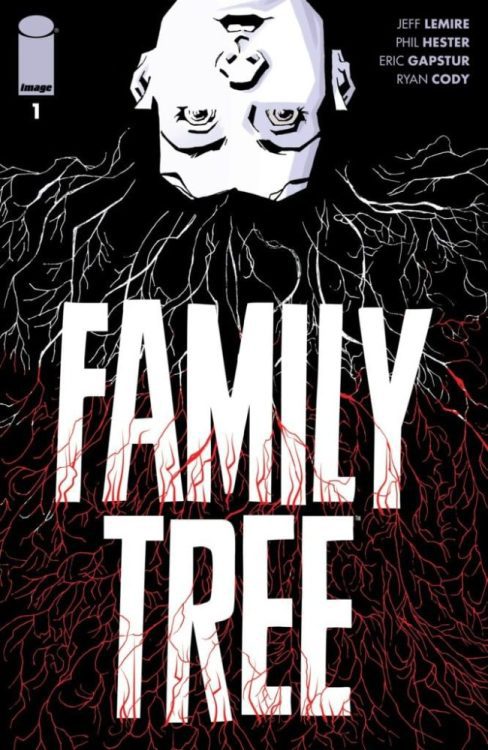
Written by Jeff Lemire, with art by Phil Hester, Eric Gapstur and Ryan Cody, and lettering by Steve Wands, Image Comics’ Family Tree: The Sapling does horror right. From the quiet beginnings, we are introduced to a family that stands out. A family that we want to see succeed and survive. So when Lemire tells us Apocalypse is on the horizon, we’re immediately hoping he’s lying.

Writing

From page one, Lemire is telling us that we are watching how the world ends. So Lemire, in the rest of the series, has to make us give a damn. And his characters, who leap off the page straight away, do exactly that. Whether it’s Loretta, who can give as good as she gets, or Judd, who is THE person you want next to you during the end of the world, there’s always more to them than meets the eye. Loretta seems like a typical, tired mom character for all of two seconds before we see she doesn’t take anyone’s crap. Maggie is the whining little sister for only an issue before we’re aware of a deeper transformation going on within her. Lemire is constantly making us second guess what we think we know about these characters. He keeps the plot fresh and moving at full speed towards Armageddon.

Art/Coloring

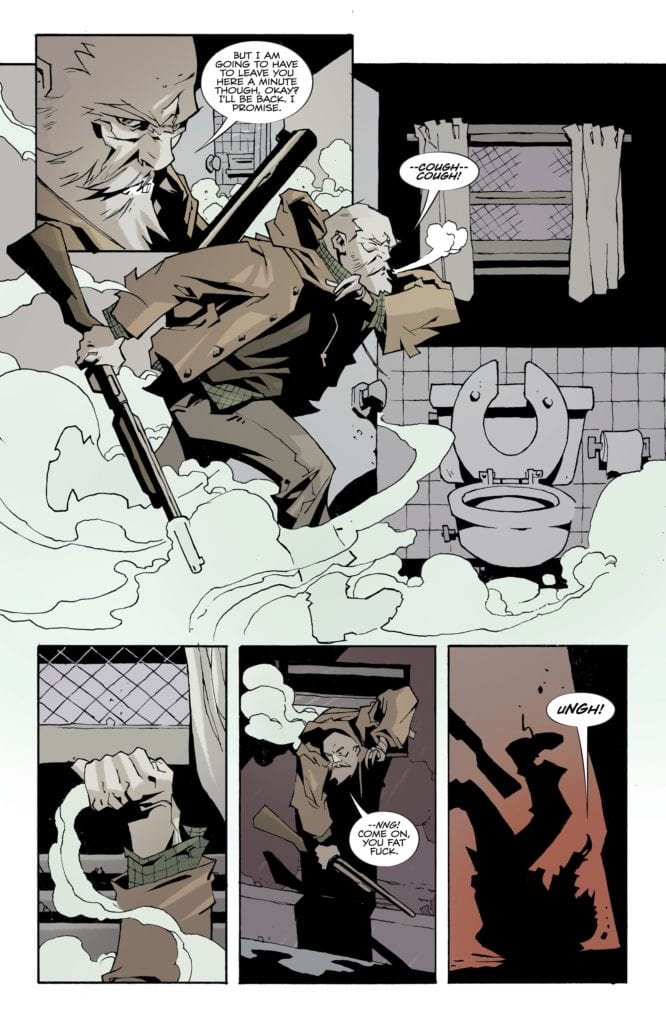
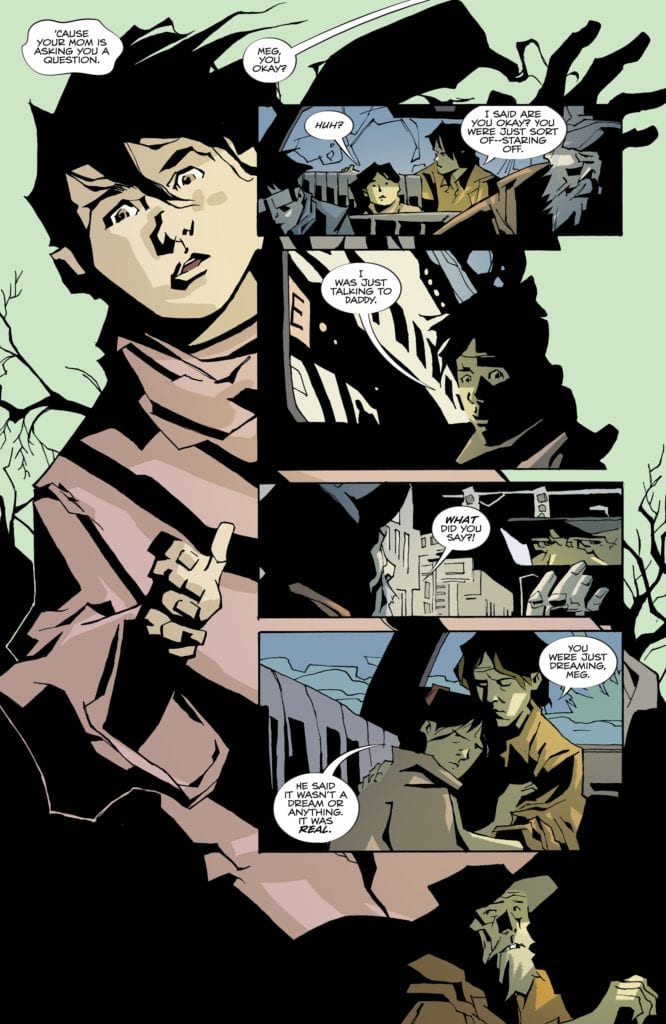
Hester, Gapstur, and Cody choose a brilliant minimalistic style for their art. It is their art that makes this world feel both familiar and mysterious at once. For one thing, we’re confident they’re giving us all of the details we need. Yet the stage they set is obscured enough by shadows and minimalism that they create a sense of mystery. The style also gives us a feeling of what characters in this world are like. Their jagged outlines feel like an extension of their personalities. Or at the very least, an exterior they have chosen to distract from what is going on beneath. The minimalist pieces and rough-hewn exteriors are carefully put together to create a beautiful whole.

The coloring used on each page tells us from panel one whether these characters are in danger or not. Much like color drains from someone’s face when they’re afraid, these artists use a paler palette for danger-filled scenes. It creates a sense of dread for every fight and each new horrifying discovery. But it also allows for the more colorful scenes to feel like a rest stop. When the characters’ faces are flushed, and their clothes are bright, we feel as though we can slow down our heart rate. We connect to these characters without fear of them being ripped away suddenly. At least not for a page or two.

Lettering

Wands’ lettering is quite straightforward. He divides a character’s lines up into several word balloons very rarely. It creates a sense of urgency for the series. Characters don’t dilly-dally. They say what they need to say before anything can interrupt them. What Wands does brilliantly, is he pulls back on the lines for the character Darcy. While Darcy has the potential to be a very frightening presence in the series, his lines are in small lettering. He’s also the only one whose lines aren’t in all-caps. Darcy feels less threatening and more calming. We set our fears aside for a second. The otherworldly becomes less terrifying.


Family Tree is a horror comic that is full of dread. But not dread born of gory violence or slobbering fangs, a dread that comes from loving these characters. The creative team behind Image Comics’ series Family Tree has given a human bridge into this disturbing world they’ve created. And with this writer and these artists, it’s anyone’s guess where it goes from here. The one thing we do know, it’s going to be great. This series from Image Comics is a must-read. See some more in-depth looks at each individual issue with Cat Wyatt’s brilliant articles, starting here.

Monkeys Fighting Robots Youtube

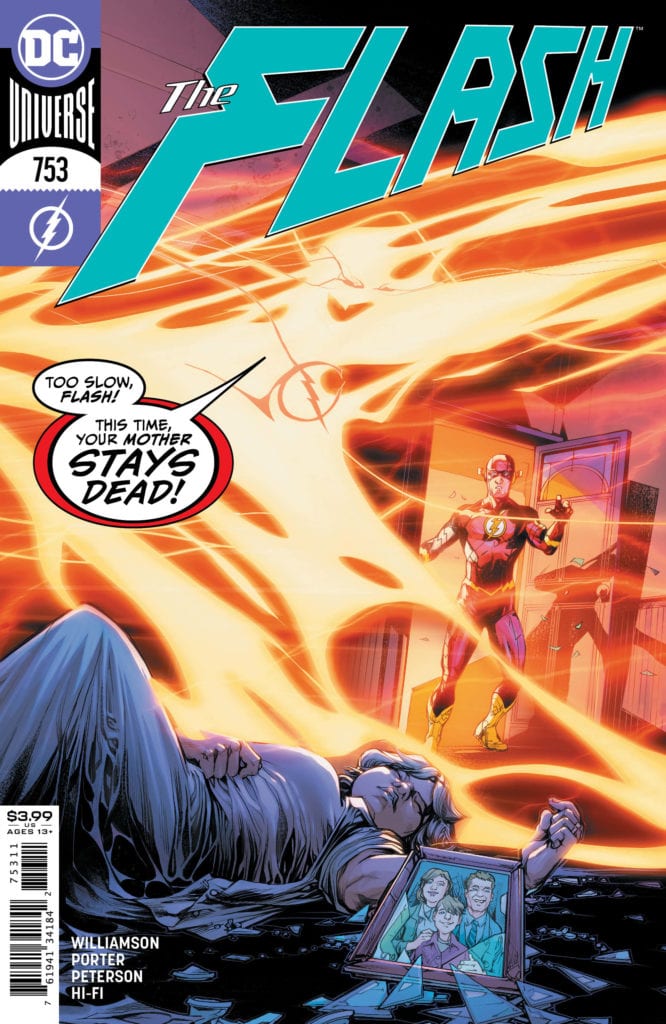
Review: THE FLASH #753 Sees Barry Searching For An Ally

Flash 753 cover

The Flash Finds Hope in an Enemy

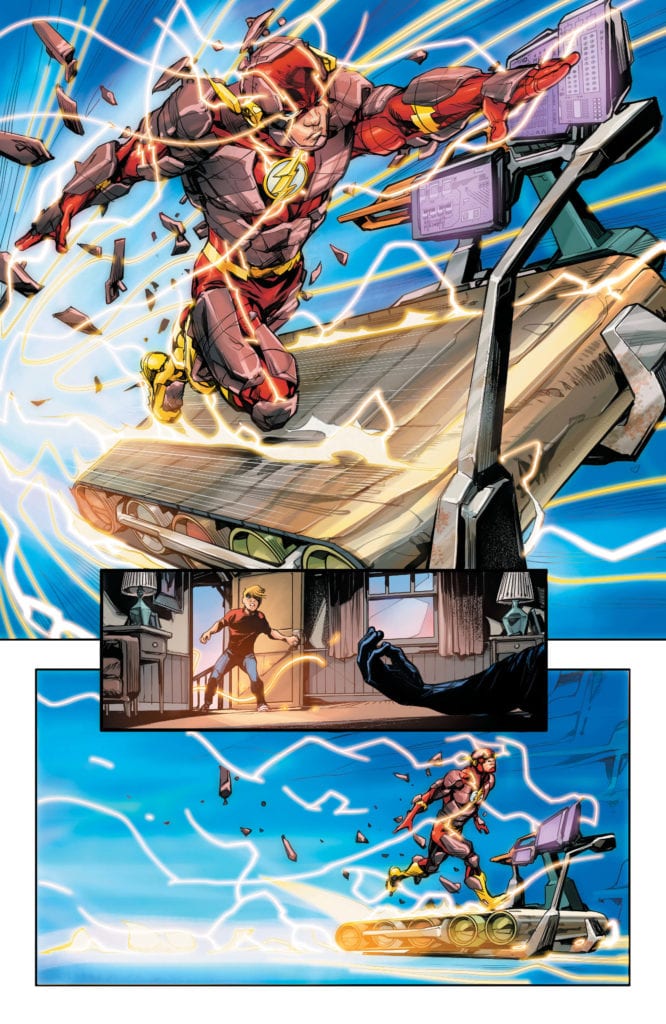
Paradox has killed the Flash. That’s what it appears to be to Iris and Godspeed. After arriving in the present day, a new villain known as Paradox beats down Godspeed before blasting Barry with his energy. In actuality, the god-like villain has sent him into another dimension, disguised as the afterlife. Barry is able to piece this together quickly and proceeds to dismantle the charade. When he sees the actual dimension, he learns of how dangerous Paradox actually is. Realizing he can’t do this alone, he reconstructs the cosmic treadmill.

His mission is to find Eobard Thawne, the Reverse Flash. Will he succeed?

Flash 753 cover

**Some Spoilers Below**

Story:

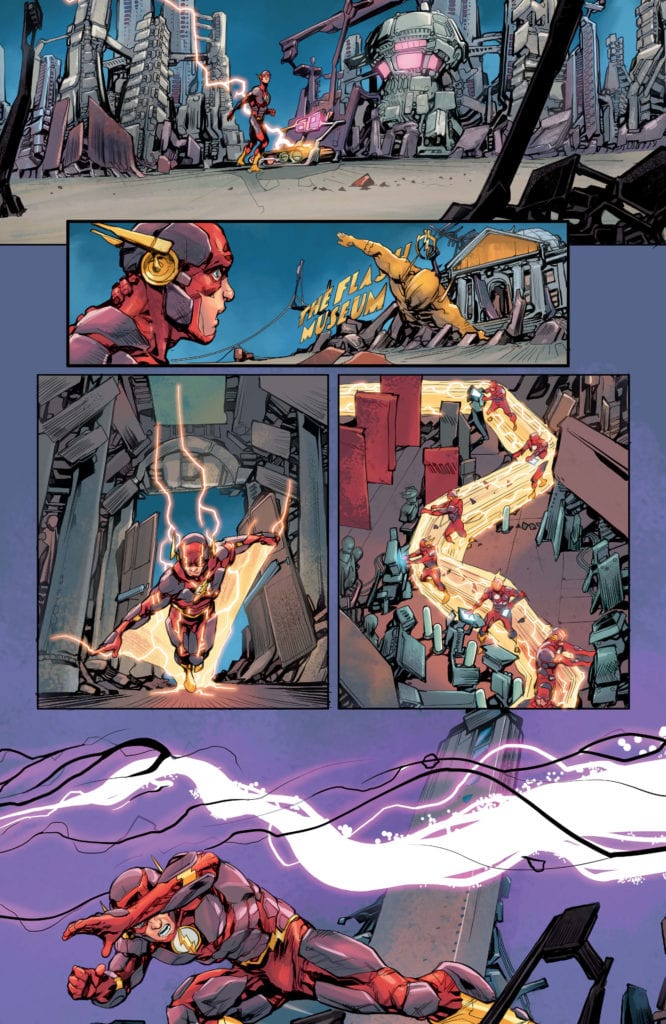
After realizing Thawne is the best hope in facing Paradox, Flash uses the cosmic treadmill to head to the 25th century. When he arrives, Barry sees that with Paradox’s release, the world he had visited was now in shambles. Before he can fully assess the damage, Black Hole appears to capture him. They reveal that Paradox’s release, and the side effects to the time stream, are all Flash’s fault. As they prepare to imprison him, a temporal shift appears and allows the scarlet speedster to escape. While this is going on, Paradox forces Godspeed to take him back in time to kill versions of Barry Allen.

Flash 753 p1

This chapter of The Flash Age arc is definitely a slower one. There isn’t much in terms of action as Barry is trying to find help, and Paradox begins his plot. That said, Flash heading to the future to see it in shambles is a fantastic way to show off the threat of Paradox. With each passing issue, we learn more about the devastation of Paradox and wonder if he even can be stopped. This is only cemented when it’s revealed that he can absorb energies made from time paradoxes to power himself. Considering how many the Flash Family makes every year, this makes him a villain that builds on their mistakes.

The thing that really has me aching for the next issue, however, is a team-up nobody saw coming. By the end of the issue, it’s clear the only way to defeat Paradox is by teaming up with Eobard Thawne. Thawne is one of those villains you can’t trust, but unlike a villain like Joker, he is quiet about his schemes. We know he’ll betray him, but until then, let’s hope this team-up will be one hell of a show.

Flash 753 p2

Art:

While the story might have been slower than usual, the art keeps up its excellent quality. Howard Porter’s style continues to go above and beyond for the series. The most powerful page of the issue is near the end, where Barry stands outside his house. Readers will be able to feel the emotion in Barry as he listens to his mother’s death. He knows he can run in and stop it, but knows that it needs to happen.

We also get Brandon Peterson to tag in during Paradox’s attack on past Barry. It’s very well drawn, and I hope to see him again, illustrating future arcs.

Conclusion:

Overall, this chapter of The Flash Age is slower but still has some powerful scenes. While we don’t get a ton of action, we get to see what damage Paradox can do. It just helps cement his status as the Flash’s toughest challenge yet. Barry listening to his mother’s death, is heartbreaking and shows he has come a long way from Flashpoint. The art team continues to provide beautifully done pages, with menacing designs for the villain. It’ll be a while since we get the next issue, but I’m sure it’ll be worth the wait. 

Monkeys Fighting Robots Youtube

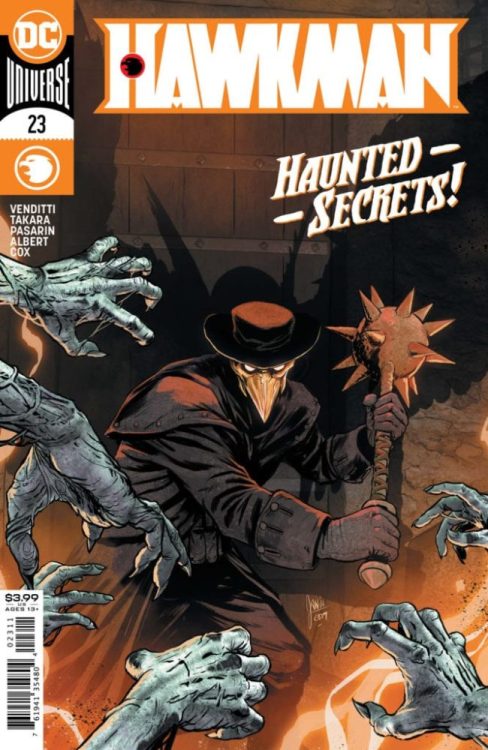
REVIEW: HAWKMAN #23 Reminds Us Of What We Can Control

Hawkman Venditti DC Comics

Written by Robert Venditti, with art by Marcio Takara, Fernando Pasarin and Oclair Albert, colors by Jeromy Cox and lettering by Rob Leigh, DC Comics’ Hawkman #23 takes a break from the main plot to remind us of what we are in control of in trying times. Whether the creative team at DC Comics added this story break recently, or whether it’s just coincidence, the story couldn’t come at a better time. We can’t control everything, this story tells us, but how we act with what we can handle matters most.

Hawkman DC Comics Venditti

Writing

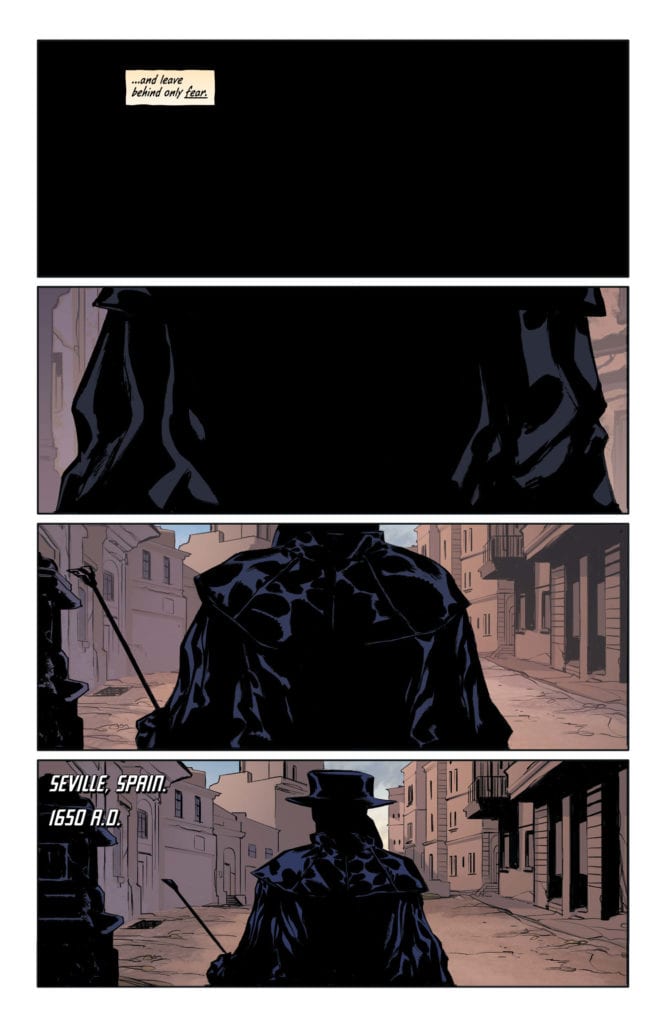
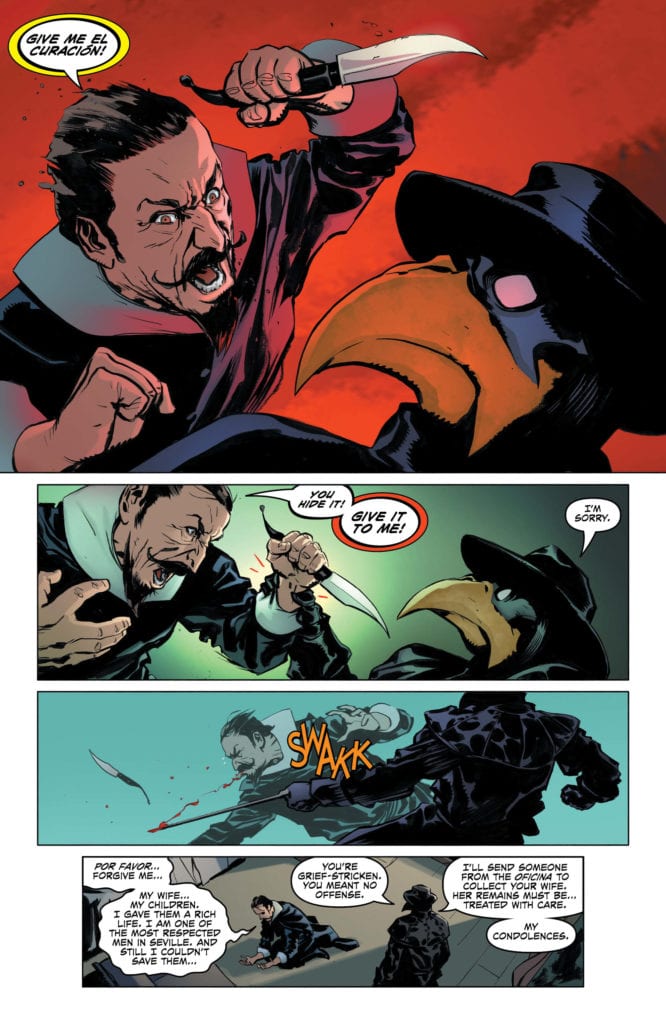
Venditti introduces us to Carlo Salon, Hawkman’s lifetime during the Black Death. As a plague doctor, Hawkman goes from house to house, taking note of the deaths at each place. It’s a quiet issue. There isn’t a ton of dialogue, and Venditti’s writing actually kind of mimics the feel of a town on lockdown. In fact, the whole issue feels like a twisted reflection of our current state of affairs. But it also reminds us of a couple of things. First, things could be worse. And second, fear can make us do things that are far worse than what a plague can do. Venditti doesn’t pull his punches in making his point. He drives the point home overtly, with characters saying exactly what he’s getting at. It gives this issue a kind of “call to action.” Even if that action is just staying at home and looking out for your fellow man.

Art

Takara, Pasarin, and Albert switch art styles when we begin following Carlo Salon. These scenes in 1650’s Spain aren’t quite as anatomical as other chapters in the series. It lends warmth to each moment. The slightly more stylized outlines and details of the characters allow it all to feel more like a memory being sketched back out again. Yet the shadowy ambiance, which adds to the less detailed approach, give each moment a feeling of closeness and intimacy. It’s as though we see a profoundly personal dream from Hawkman’s mind. Our return to the present day, with the return of the old style of art, feels just like waking from a dream as well. The stylized gives way to realism.

Venditti Hawkman DC Comics

Coloring

Cox’s colors in this issue never let us forget what is going on for these characters. Nearly every page, once our setting has been established, is haunted by a tinge of red. Whether it’s the overt redness of a rose picked by Hawkman or the red glow of a sunset. Cox is reminding us that death is ever-present in these panels. It is always on the mind of these people, and so it’s continuously presented before our eyes. Yet the red evolves too. The red comes to signify the anger, born of fear, in the populace. Their red rage takes over. Only once the mobs have dissipated do the red torches and sunsets give way to a bright yellow sunrise. Cox ends Carlo Salon’s story by giving us something to hope for.

Lettering

Leigh imbues Hawkman with empathy in his lettering. While many of the townsfolk are scapegoating Carlo Salon in hurried speeches, Salon responds in measured dialogue. Not only are his responses parsed out into different speech bubbles, but a lot of air is allowed in between them. The mob brings their accusations against him in large chunks of text. But Salon’s response is often brief. When it isn’t, it’s followed by a space between each bubble. He is not reacting in fear but trying to have empathy for a clearly fearful group of people. We get the sense Salon is choosing his words carefully, not letting panic get ahold of him.


This creative team has empathetically tackled the idea of pandemics. Venditti asks us to take a look at ourselves and say, “What can I control in this time?” If the answer is just you, that’s good enough. This issue takes time out of the plot to tell us this side story. While a nice break from the main plot in most series is often welcome, this break in the plot feels particularly right. Hawkman #23 is out from DC Comics this week.

Monkeys Fighting Robots Youtube

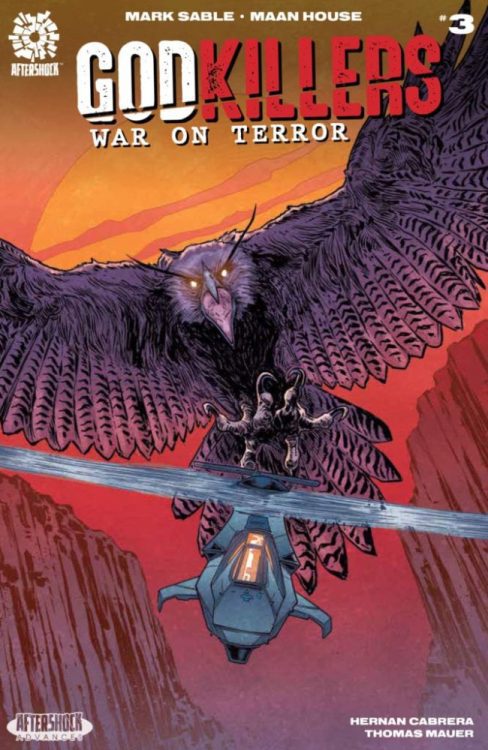
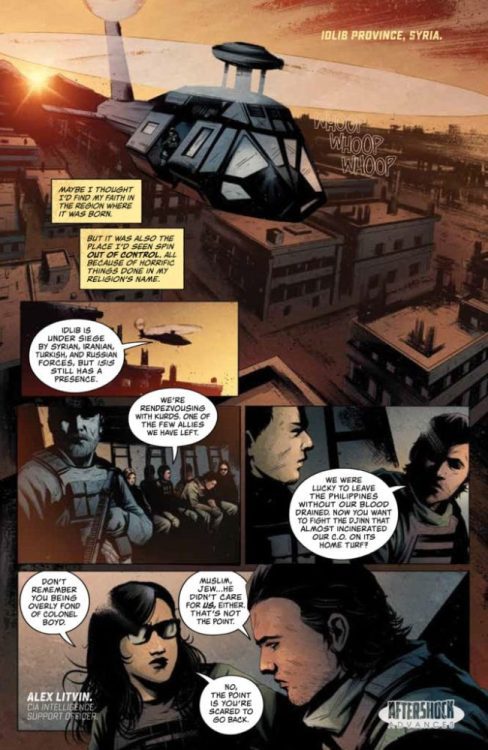
AfterShock Exclusive Preview – GODKILLERS: WAR ON TERROR #3

AfterShock Exclusive Preview - GODKILLERS: WAR ON TERROR #3

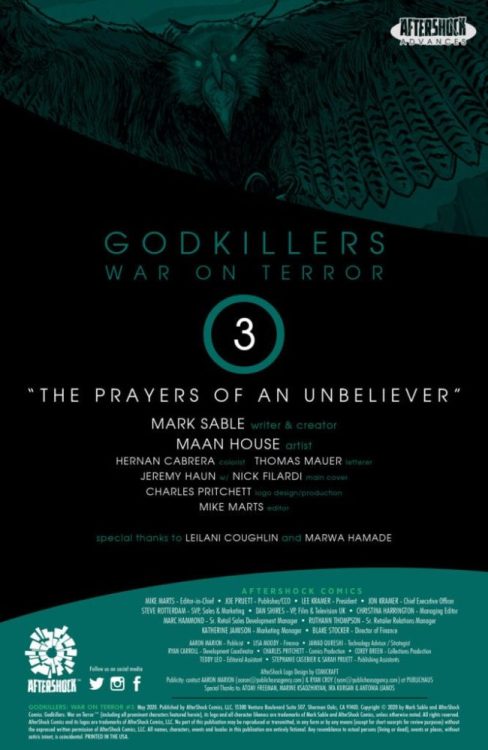
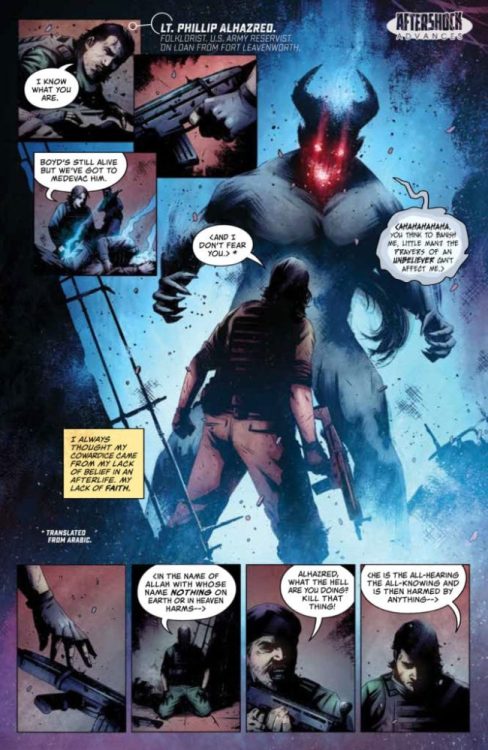
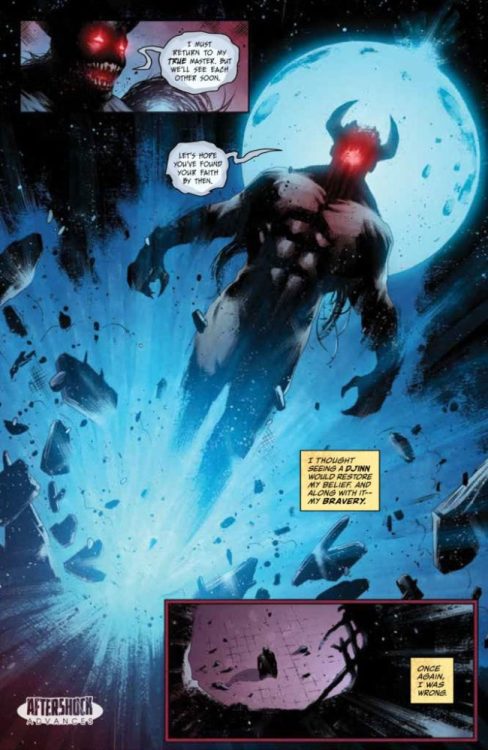
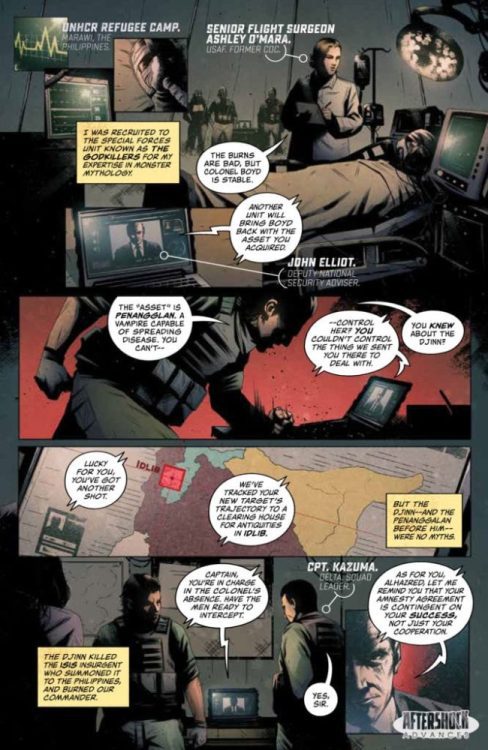
Godkillers: War on Terror #3 comes out on June 24, but thanks to AfterShock Comics, Monkeys Fighting Robots has an exclusive four-page preview for you to enjoy.

About the issue:
Insurgents in Syria are using a djinn as a weapon of mass destruction.  Can the elite special forces unit known as the Godkillers help their Kurdish allies defeat this supernatural menace?  Or, like other foreign interventions, will they only make things worse?

Godkillers: War on Terror #3 is written by Mark Sable (Grounded, Fearless, Supergirl), with art by Maan House, Hernan Cabrera dropped some color, and you will read Thomas Mauer’s letters. Jeremy Haun, with Nick Filardi, created the main cover, and Charles Pritchett designed the logo and handled production.

Check out the Godkillers: War on Terror #3 preview below:


What comics are you reading while you’re stuck at home? Sound off in the comments!

Monkeys Fighting Robots Youtube

KILLING EVE – Slowly Slowly Catchy Monkey | TV Review

Everyone’s favorite Russian psychopathic assassin is back with the third season of Killing Eve. The first episode of the new season picks up after the events in Rome.

Following the botched mission in Rome, Villanelle (Jodie Comer) has gotten married. However, her wedding day gets interrupted when her former trainer, Dasha (Harriet Walter), arrives and recruits Villanelle back into The Twelve. Since being shot, Eve (Sandra Oh) has gone into hiding and works in a Korean restaurant in New Malden, London.

Within MI6, Carolyn Marten (Fiona Shaw) has been placed under investigation because of her unauthorized missions, whilst her son, Kenny (Sean Delaney), has left the service to work as a journalist. When Eve accidentally contacts Kenny, he reveals he has been investigating The Twelve despite the risk to his life.

“Slowly Slowly Catchy Monkey” essentially acts as a pilot episode. Its job was to re-establish the character and show what has changed between the seasons. Season Two picked up where Season One left, so it went straight into the action. The gap between Season Two and Three was much bigger, so there were a lot of changes for the characters.

Since the events of the Season Two finale, Villanelle’s life was on the up, and Eve went downwards. Villanelle had a luxurious wedding in Spain, and she makes a thinly-veiled speech about her past relationship and intentions, which the guests dismissed as humor. Eve has had to go off the grid, hiding with the immigrant community and lives in squalid conditions. It’s a pretty sad existence.

Eve’s husband, Niko (Owen McDonnell) has suffered a lot because of the events in Season Two. He has been institutionalized, and the intelligence services have covered up Gemma’s death as a suicide: an action that Niko objects for the sake of Gemma’s family.

Kenny was the driving force for this episode. He was the one who tries to get Eve out of lonely existence and get her involved in his investigation. Kenny’s fate at the end of the episode is going to be emotionally important for the rest of the season.
Killing Eve‘s big selling points were the violence and humor, and Season Three continues this. The episode opens with a flashback to 1970s Moscow, where the Young Dasha (Catalina Cazacu) beat-up a male gymnast. Villanelle gets to do a skull blasting when she returns to the assassination game. The wit was present with characters having some witty lines. My favorite moment was when Villanelle sees Dasha at her wedding.

“Slowly Slowly Catchy Monkey” does what it set out to do, reintroduce the characters, and set up the main plotline for the season ahead.

Monkeys Fighting Robots Youtube

I’d Buy That For A Dollar: THE SPECTACULAR SPIDER-MAN #156 (November 1989)

Spider-Man

Welcome to ‘I’d Buy That For A Dollar’ a column where I will be exploring the weird and wonderful world of dollar bin diving. The only rule is each and every comic is purchased for one dollar (or less!).

This week’s comic is The Spectacular Spider-Man #156.

Gerry Conway’s run with Sal Buscema on The Spectacular Spider-Man is one of my favorites ever. I discovered it at a young age and it’s darker tone, psychological themes and at times almost weirdo art really stuck with me. I’ve been grabbing any I see since then.

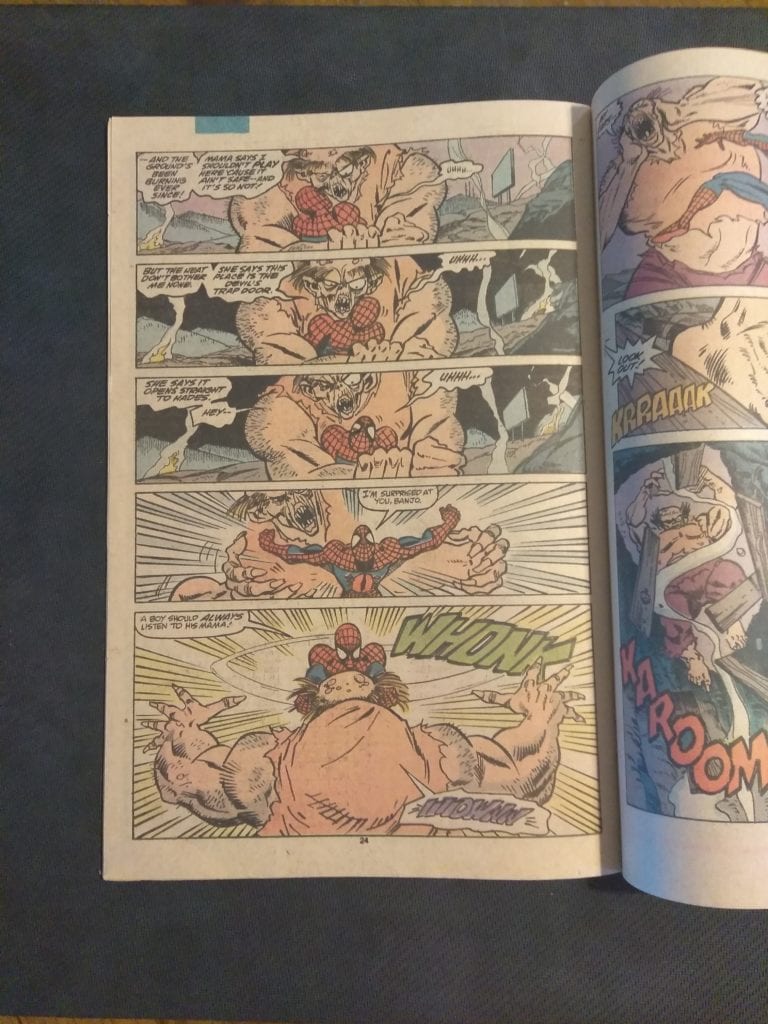
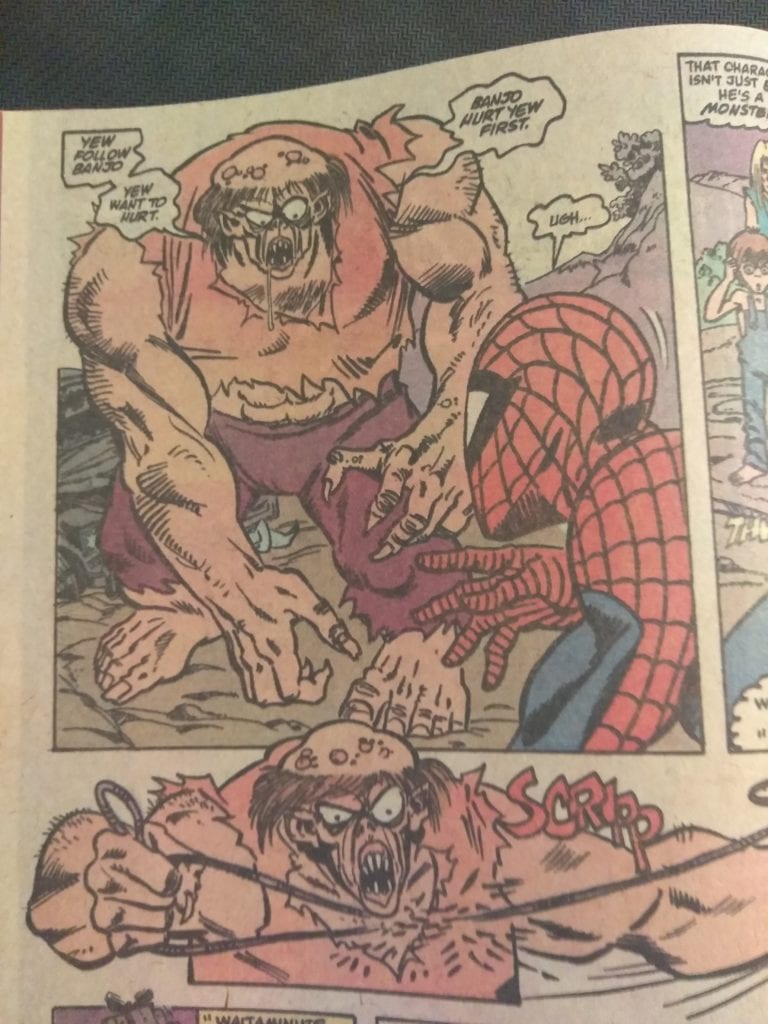
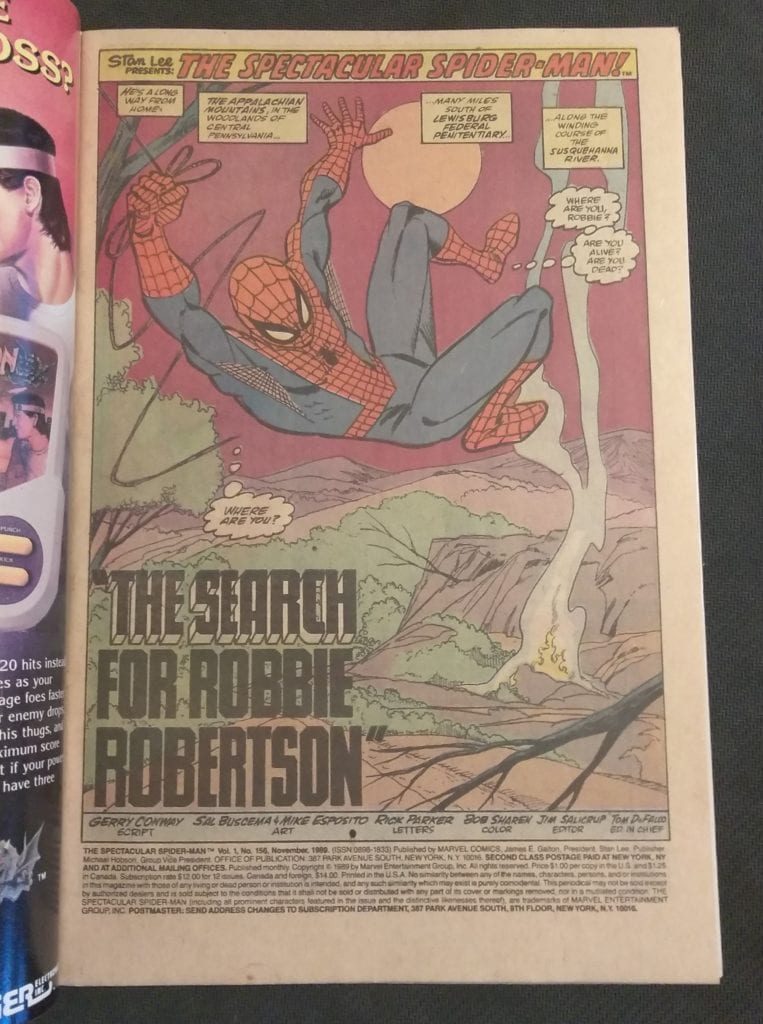
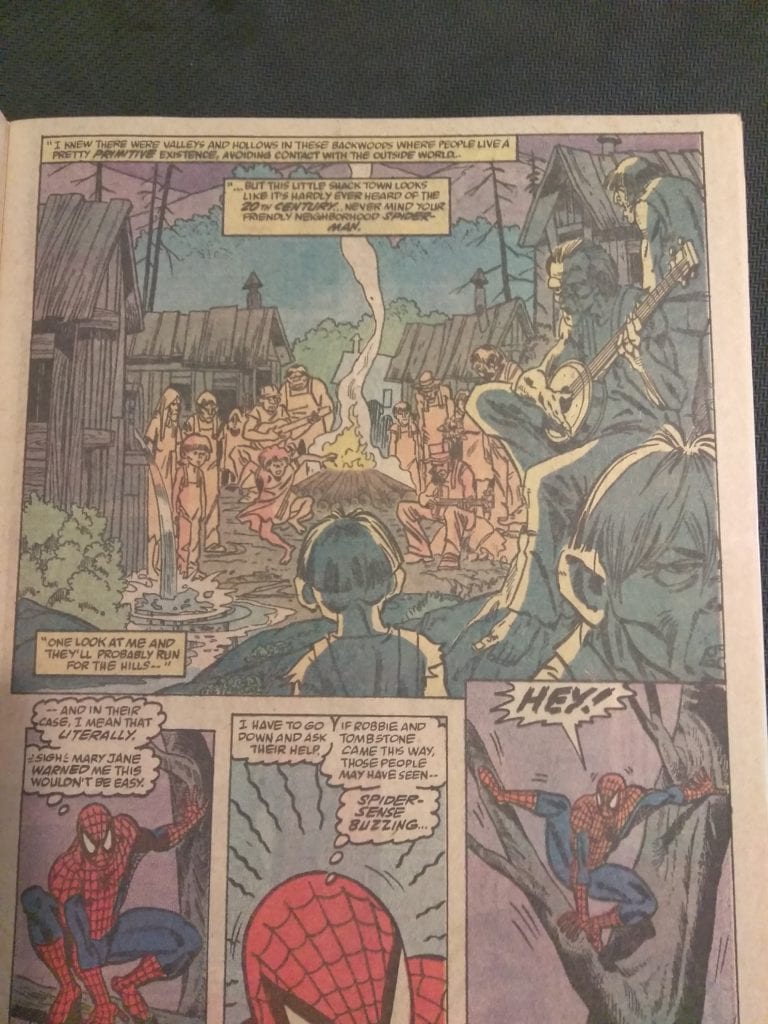
There are a ton of great issues, but #156 is a highlight for sure. Buscema, who can be as slick as can be, has created a very raw and rough-looking cover; the interior pencils carry the same feel. The whole issue has a strong EC Comics horror vibe, especially with the very muted color palette and character design. And it has heavy Texas Chainsaw and The Hills Have Eyes echoes; the story finds Spidey lost in Appalachian mountains and running into some scary, mutated locals.  It’s truly a great comic to read and flip through. Let’s look at some pages.


Spider-Man
Love the angular way Spidey looks here. This opening page just sets the tone!

The following image has a total EC Comics horror vibe.

Spider-Man
Buscema’s pencils are way loose here and it’s a great way to give this an odd vibe.
Spider-Man
Love the panel progression here! Buscema loves ending with those punches/slaps.
Spider-Man
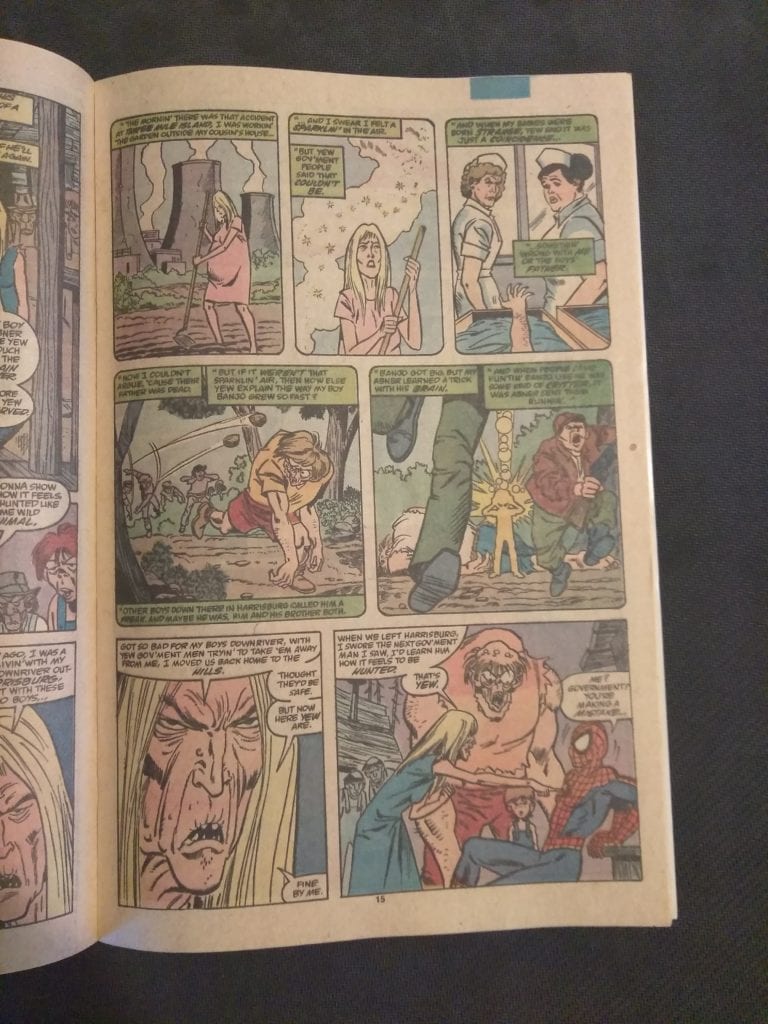
Banjo is the “villain'” and he has a total backwoods horror vibe. He also ends up being somewhat sympathetic.
Spider-Man
The rounded edges on the flashback panels is a nice touch and a reminder that Buscema is a master!

See, that’s some great and very strange stuff for a mainstream Spidey comic. Again, the whole Conway/Buscema run is a real treat and well worth grabbing.

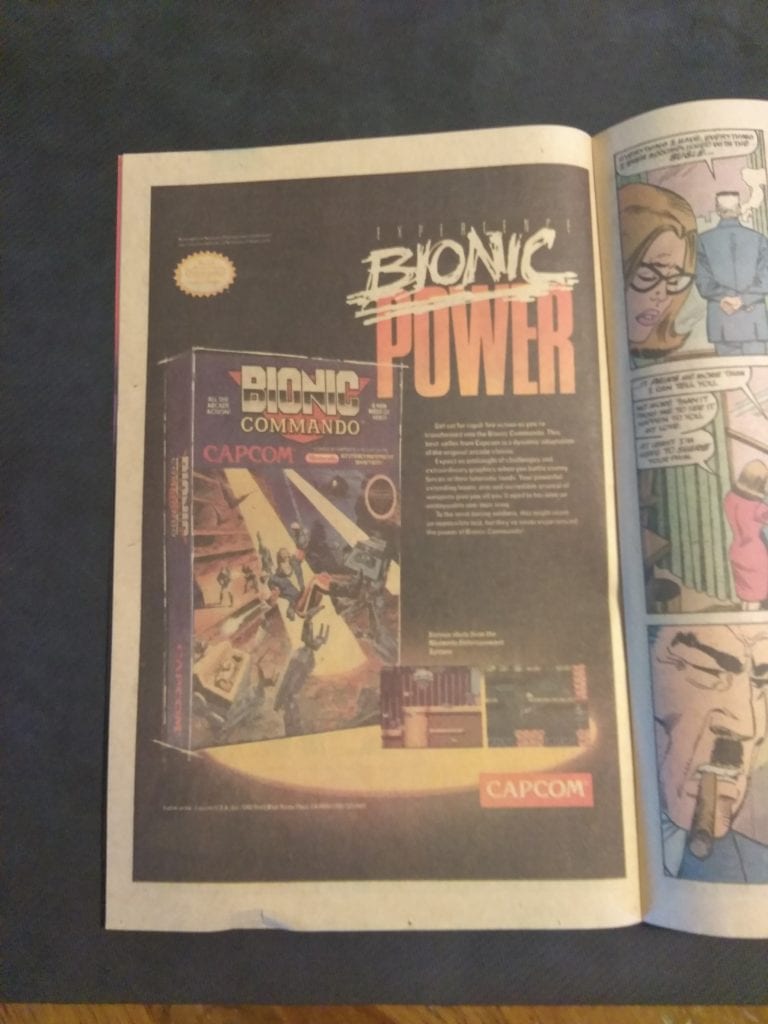
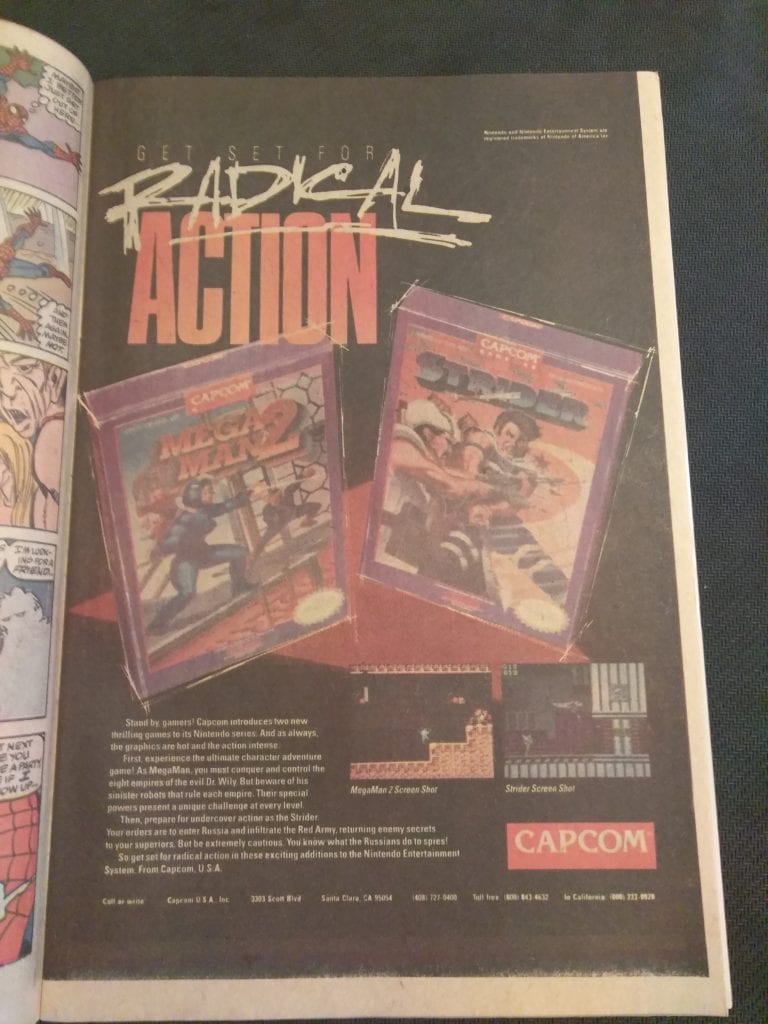
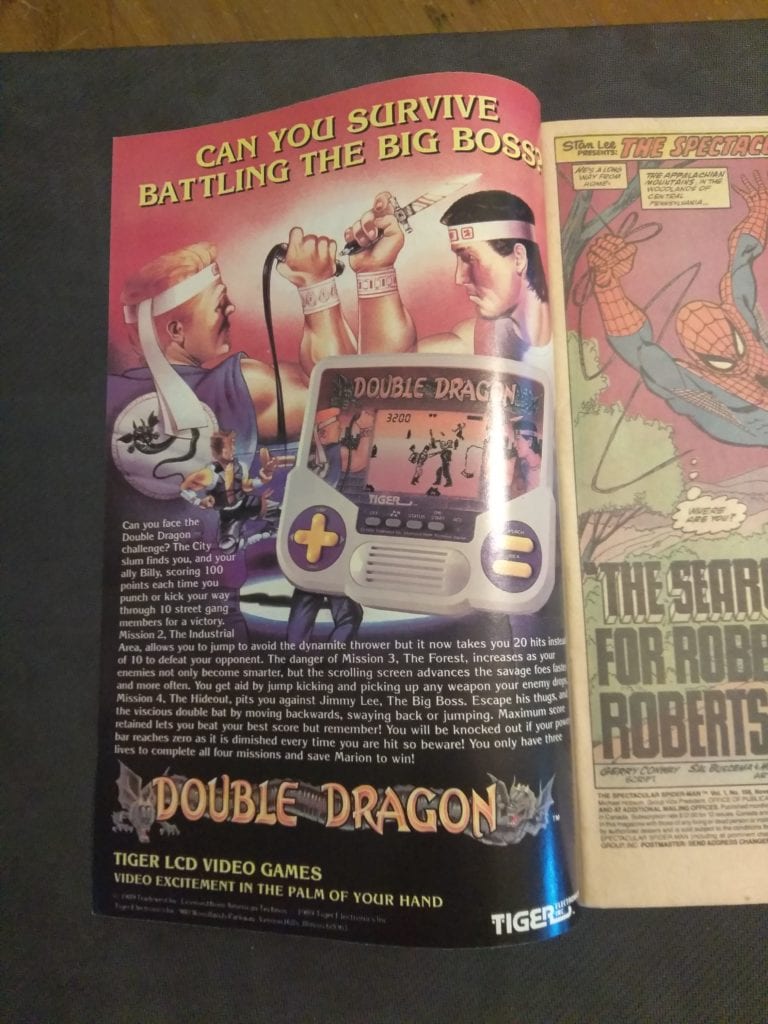
This issue also had a bunch of great videogame ads. Check them out:

Man, this game was hard!
Both these games were must-haves.
Remember these?!

You can find great dollar bins at almost every local comic shop. So find a shop, ask a comic clerk what they can do for you during this time and get some dollar comics! Pick them up curbside and have them delivered if you must!

Got your own awesome dollar bin finds? Toss them at me! 
Send emails to manny@monkeysfightingrobots.com
Follow me on Instagram: _idbuythatforadollar_
Tweet at me: @MannyG1138

Monkeys Fighting Robots Youtube

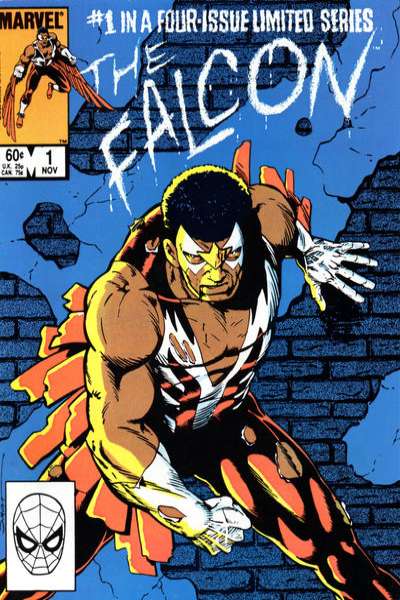
Longbox Legends: Why FALCON #1 (1983) Was A Step Forward In Social Commentary

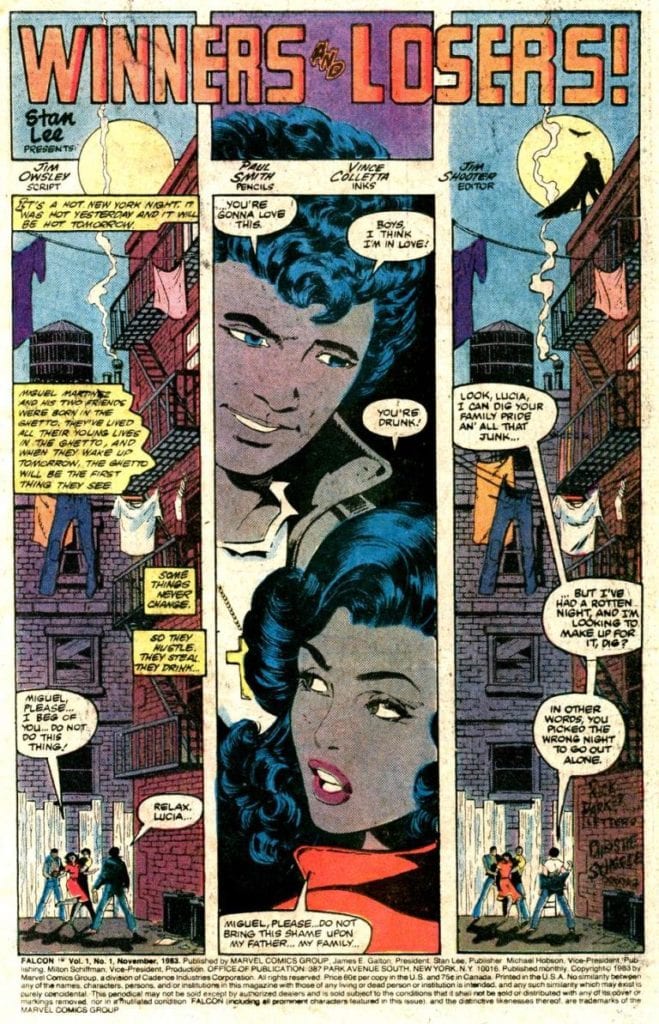
FALCON #1, released in November 1983, was the first comic dedicated to Captain America’s high flying superhero partner. Readers in the past only saw the hero’s exploits in relation to his side-kick status with Cap. But this issue gave Sam Wilson his long-deserved due. What’s more, readers get a look at the hero tackling one of life’s all-pervasive problems: poverty.

Story

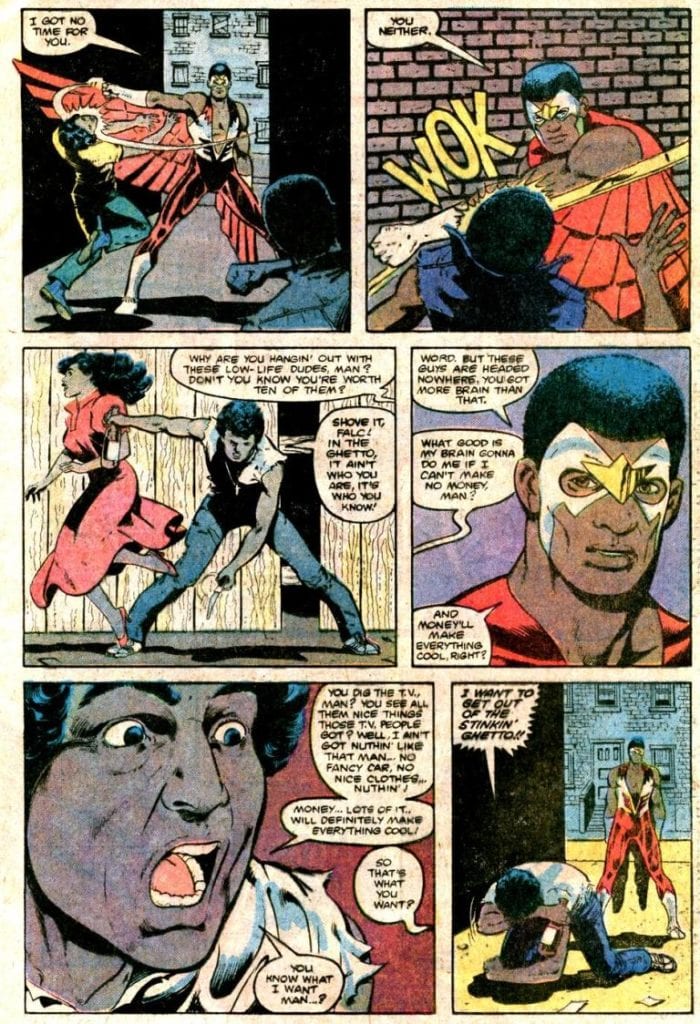
FALCON #1 places its focus on the two aspects of Sam that make him a hero: his superheroics and his commitment to social justice. The first scene places our hero in the middle of gang violence when a wayward teen, Miguel, drunkenly assaults a young woman named Lucia.

Sam uses a minimal amount of violence to contain the situation, but the hero, in awe-inspiring fashion, knows there’s much more to heroics than stopping crime. After hearing Miguel express his anguish at living in his poor area of the city, Falcon realizes more needs to be done.

Jim Owsley’s script is believable and engaging in its ability to portray a real world problem with grace and tact. Readers will find themselves in awe of Falcon’s care for these distressed teens. In fact, after saving Lucia and returning her to her father, he requests that he not go too hard on Miguel so as to give him hope for a future after getting his life straight.

Artwork

Paul Smith’s penciling, combined with Vince Colletta’s ink work, helps bring this story to life. We see realistic depictions of Miguel and the other characters, meshed with the fantastic outfit of Falcon. Christie Scheele’s coloring complements this with natural colors for the city streets and bright hues for Falcon’s classic costume.

Conclusion

FALCON #1 took a big step forward for its time, both in terms of Falcon’s status as a solo hero and, more importantly, as an examination of social status.

Did you think this was a worthy first  solo issue for Sam? Let us know in the comments below!

Monkeys Fighting Robots Youtube

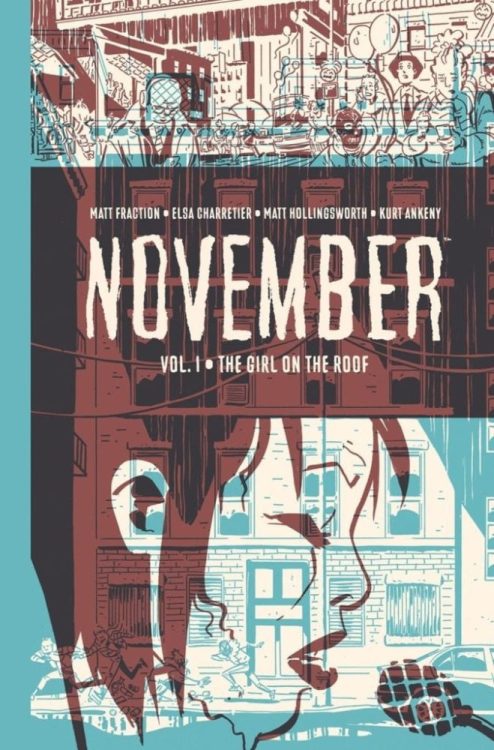
Review: The Start of a Grimy Yarn in NOVEMBER Vol. 1

Writer Matt Fraction and artist Elsa Charretier have constructed a series of mysterious and shady tales with the first volume of “November.” Along with colorist Matt Hollingsworth and letters from Kurt Ankeny, this first chapter brings along a group of intertwined stories all caused or affected by one another. The grimy urban atmosphere and non-linear progression of the story make this conspiratorial plot a convoluted but riveting page-turner.

“The lives of three women intersect in a dark criminal underground. As fire and violence tears through their city over the course of a single day and night, they find that their lives are bound together by one man—who seems to be the cause of it all.”

Writing & Plot

Matt Fraction starts off “November Vol.1,” the first in a three-part series, by giving the reader both as much and as little information as possible to progress the story. The use of drug addiction, criminal manipulation, and police corruption dance about the plot in obscure shades that force the reader to put the pieces together themselves. This non-linear and purposefully obscure manner of crime noir delivery is sure to frustrate some, but it’s a riveting puzzle for those that wish to partake in it. The dialogue is varied greatly among the cast of characters, from the three protagonists and beyond. There is a sense of scale created by utilizing three people in different walks of life that makes the conspiracy feel giant despite the limited information given. The majority of the characterization is given via internal narration, which again is both obscure and tantalizing. There’s a deeply human tragedy running through at least two of the characters (especially the first woman) that makes the story feel all the more intimate. The ending is where much of what’s happening is put together more clearly and makes the desire to read the next entry all the more strong.

Art Direction

“November” Vol. 1 benefits greatly from having the unique artistic touch of Elsa Charretier. There’s a mixture of human detail and cartoonishness that brings to mind the work of Michael Avon Oeming in  Powers. The people and environments feel tangible and realistic despite their unique designs. A large part of the is attributed to the colorwork from industry veteran Matt Hollingsworth, who bathes whole sequences in matching dreary colors. Pale blues, dark oranges, and most commonly pale greys and blacks create a foreboding and dreary atmosphere for this tale of conspiracy and woe to take place in. Moments of existential dread, sorrow and panic are realized in broken up in sometimes seemingly inconsequential mages that still tug the story along with a methodical pace. This is a book that is as striking visually as it is in terms of the script.

An easy to overlook creative element to “November” that deserves mountains of praise is Kurt Ankeny’s lettering. All of the lettering is presented in a hand-written style that looks more like a stack of notes than comic lettering. Like reminders left on the refrigerator door, Ankeny’s letters deliver the scattered clues, thoughts and words to the audience in a fashion that brings more intimacy and atmosphere to the story.

“November Vol. 1: The Girl on the Roof” is an intriguing puzzle to begin a story with. Fraction’s script offers excellent characterization and dialogue while divulging just enough plot to keep the reader invested. The visual work from Charretier, Hollingsworth, and Ankeny offers a distinctly intimate and grim atmosphere that is perfect for the grimy urban conspiracy at play within these pages. If this sounds like the kind of comic experience you’re up for, this first of three parts is currently available for order from your local comic shop.


Monkeys Fighting Robots Youtube