Home Blog Page 267

Review: DEVIL’S HIGHWAY Is A Murder Mystery With A Visual Punch

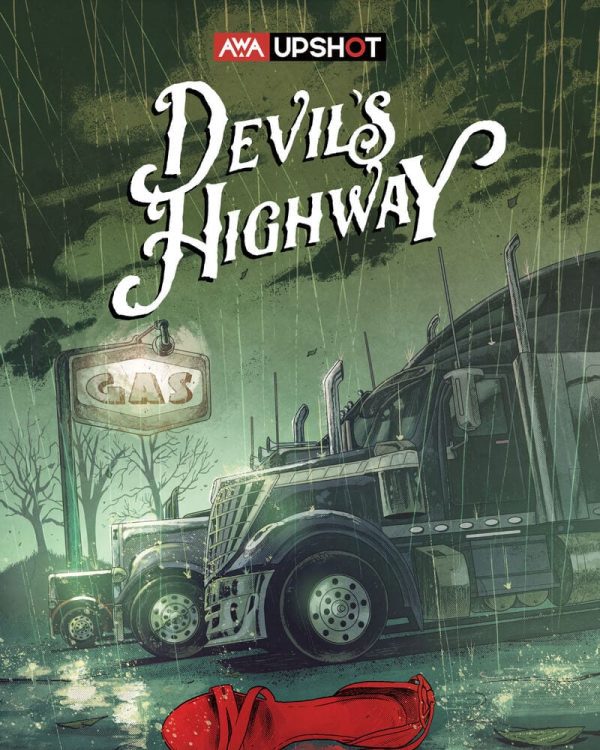
Devil's Highway #1
Devil's Highway #1 Credit: AWA Studios

There is a killer on the road in AWA Studio’s latest crime thriller Devil’s Highway; a violent hunter who is about to become the hunted. When he is forced by circumstance to kill the owner of a small town diner he unleashes a determined, vengeful daughter onto his trail.

In this bittersweet homecoming story writer Benjamin Percy and artist Brent Schoonover mix police procedural with a Death Wish movie to create a murder mystery with a sharp bite.
Devil's Highway #1 Art
Devil’s Highway #1 Credit: AWA Studios

Creating Mood

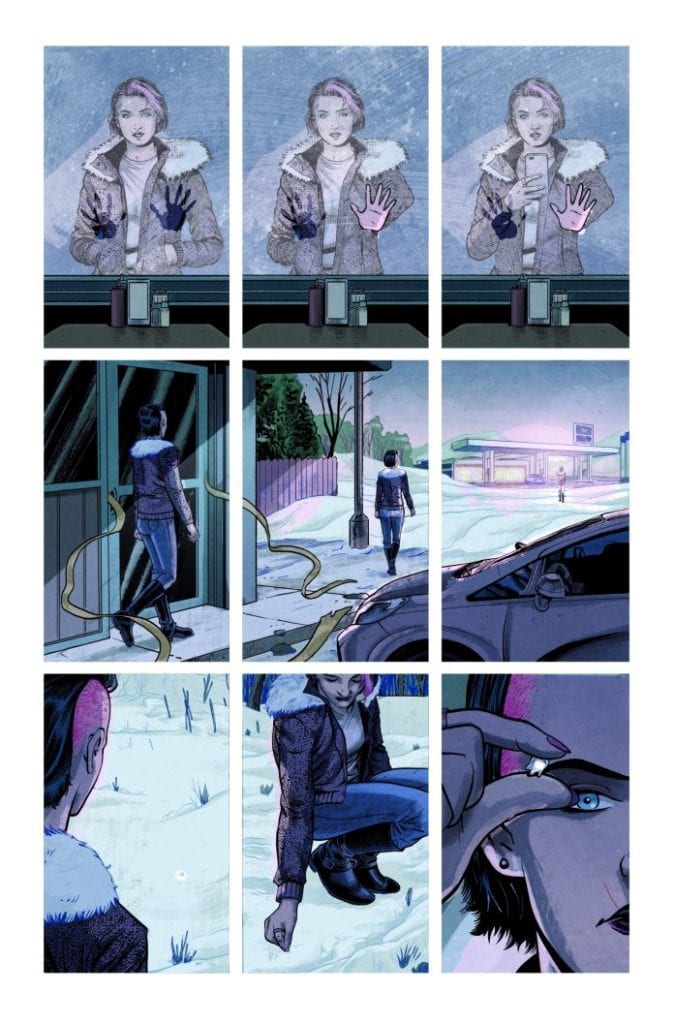
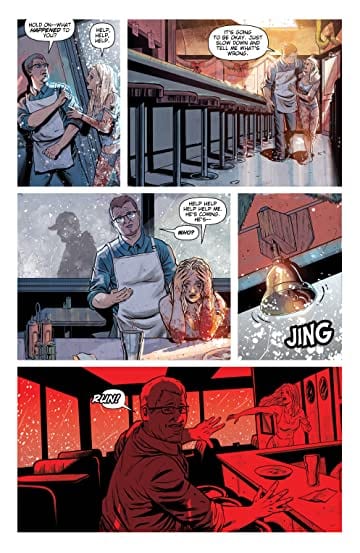
There is a distinctive feel to Devil’s Highway that is created in large part by the setting. The decision to unfurl events during the Christmas Season allows Percy and Schoonover to juxtapose ideas and emotions beautifully. The coldness of winter, with the constant snowfall, mirrors the bleak story line and the heartbreak that a number of the characters encounter. This is contrasted with the trimmings of the season, the baubles and bells, enhancing the sense of loss. From the opening diner scene onward, the violence of the story contradicts the inferred emotional highs of the season.

As the story progresses the cold winter scenes allow the creators to produce a brooding atmosphere. Tension is built around the bleakness and the murky white of the landscape. There is diminished lighting for most of the scenes with the colorist, Nick Filardi, picking out details from Schoonover’s inks using gradients of grey. The truck stop scenes especially have a run down, off the beaten track feel to them.

The atmosphere is accentuated by the noir-esq voice-over, spoken by the central character, Sharon. Her meticulous investigation of her own father’s murder gives the comic that classic P.I. vibe. Sharon has all the hallmarks of a Raymond Chandler protagonist and she is instantly likeable. There are layers, buried beneath the hard exterior, that are sure to be excavated over the course of the series, but in the first two issues her personality has enough sides to keep readers interested.
Devil's Highway #1
Devil’s Highway #1 Credit: AWA Studios

Visualising Character

The focus of Devil’s Highway is on the search for a mysterious serial killer, who leaves a specialist mart on his victims, and as such touches a number of the cliches from the crime genre. The inept police department; the vengeful family member, the sinful victims; they all have a part to play in the narrative. This does make an element of the plot seem unoriginal and the comic occasionally struggles to make itself significantly different or new.

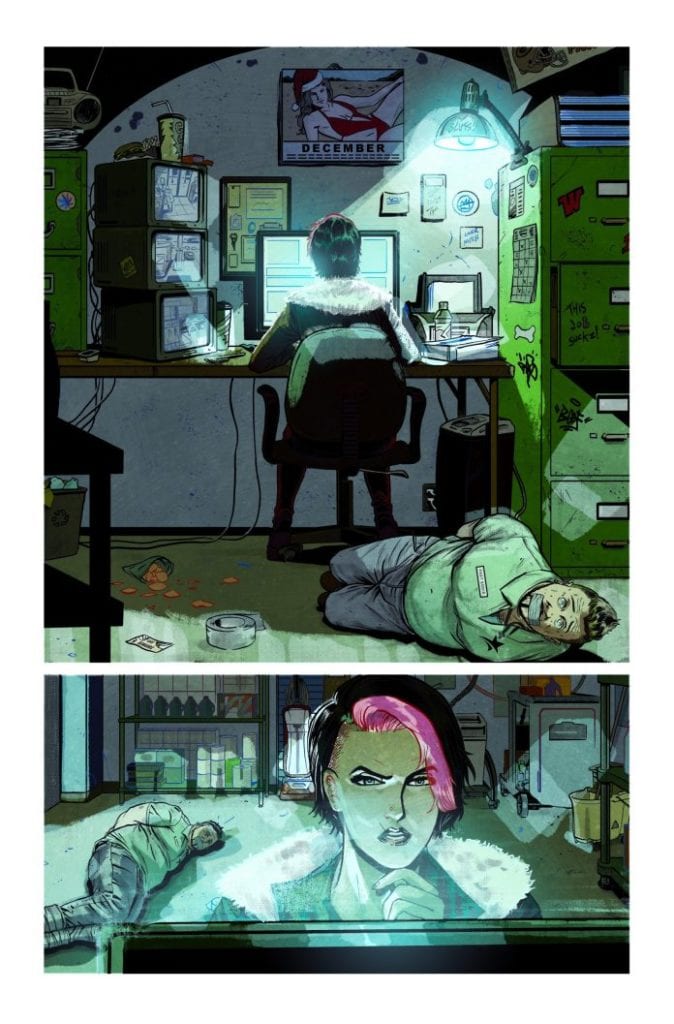
However, the majesty of the artwork helps to pave over the occasional crack in the narrative. Schoonover draws some visually impressive characters and brings their personalities, or lack thereof, to the page. Each panel allows the reader an insight into the cast member or get a step closer to the locations. He captures the knowing and subtle looks that the characters give each other, adding depth to the story. The casts interactions scream of fear, desperation, or any number of other emotions. There is a scene in issue one where Sharon confronts the police officers and through minimal, but specific, gestures, Schoonover is able to bring out the animosity and fear that the characters have for each other. Sharon makes her presence known in the police station and on the page.
Devil’s Highway #1 Credit: AWA Studios

Marks on Bodies

One of the most fascinating aspects of the comic is the running motif of marked bodies. The most obvious is the mark left by the serial killer on each of his victims. This represents the mystery inherent in the comic and the dominance that the killer has over the local town. Marks on bodies extend as a motif beyond this however, to take in various tattoos and even injuries. Sharon has a prominent tattoo on her chest, one that is shown too often not to be specific in some way. Part of the growing mystery inherent in the comic, perhaps?

Sal Cipriano’s letters fit the theme of the comic. The majority of the speech is straightforward with balloons placed in an orderly manner, befitting of the straight talking, down to Earth characters. Where his work really shines in this series is in the background lettering or the design work for the computers. The style of font that he uses to pick out the different levels of technology gives the scenes a realistic feel while reinforcing the mundane lives of the townspeople. Very little depicted in Devil’s Highway is high tech, and this comes across in design work.

The visuals are highly detailed in every respect, from the pencils and backgrounds to the color choices and the lettering design. All of the Art works together to provide a full picture of Drift County where this is set. The reader gets a feel for the people and the place from the images in the panels. This sense of location is then used to intensify the action within the narrative, drawing the reader deeper into Sharon’s life.
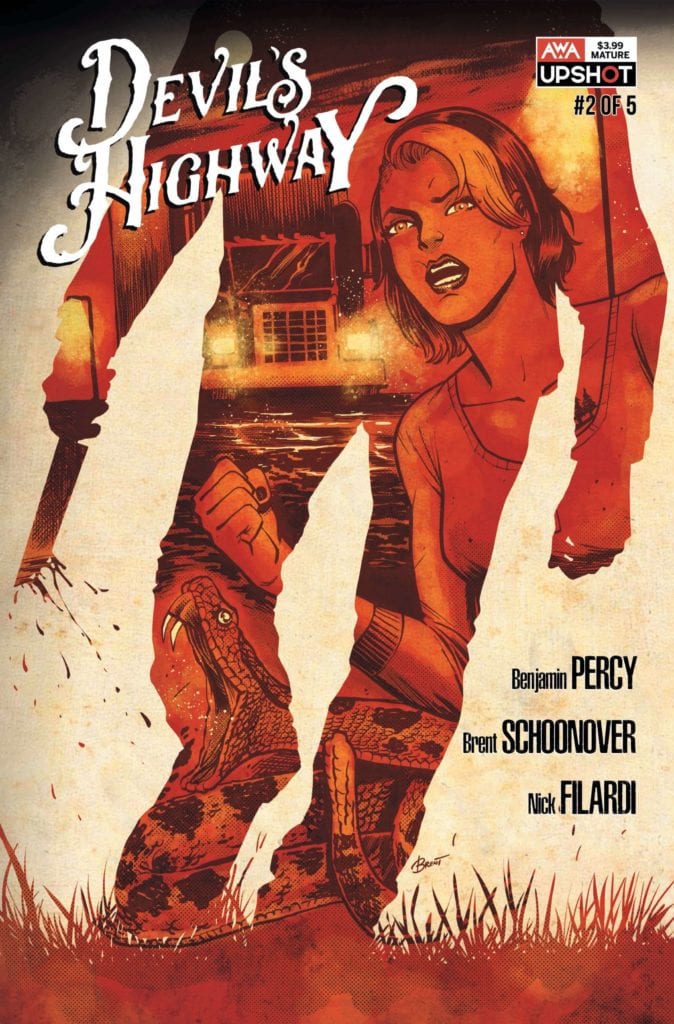
Devil's Highway #2
Devil’s Highway #2 Credit: AWA Studios

Conclusion

The opening gambit in Devil’s Highway is gripping, if not too original. From the beginning the creators pull you into the narrative and make you care for the central character. When the plot begins to dip, the visuals lead you through by creating a tense atmosphere that it is difficult to escape. Ultimately, the mystery is intriguing and the central character is empathetic enough to keep you hooked. There is a warming humanity underneath Sharon’s hard exterior which is illustrated through a number of her actions. This is a refreshing aspect to the comic because too often ‘tough’ characters don’t have any real redeeming features.

Devil’s Highway has a solid concept and a visually engaging world. If you are a fan of crime thrillers and enjoyed titles such as Killer Groove from AfterShock Comics or Criminal from Image then this is worth investing in. It has a bit more heart than AWAs Archangel 8 but just as much gripping action.

Issues 1 and 2 of Devil’s Highway are available now with the third issue in the series due for release on 16th September.
Monkeys Fighting Robots Youtube

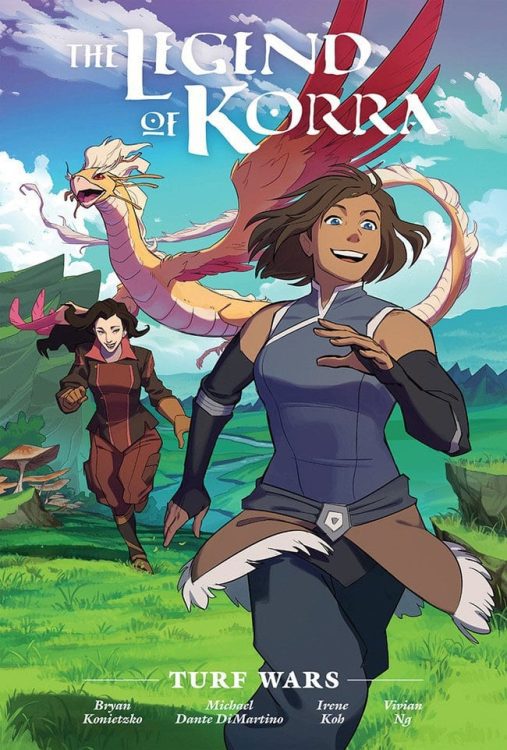
Review: THE LEGEND OF KORRA: TURF WARS Library Edition – A Delightful Return to a Beloved World

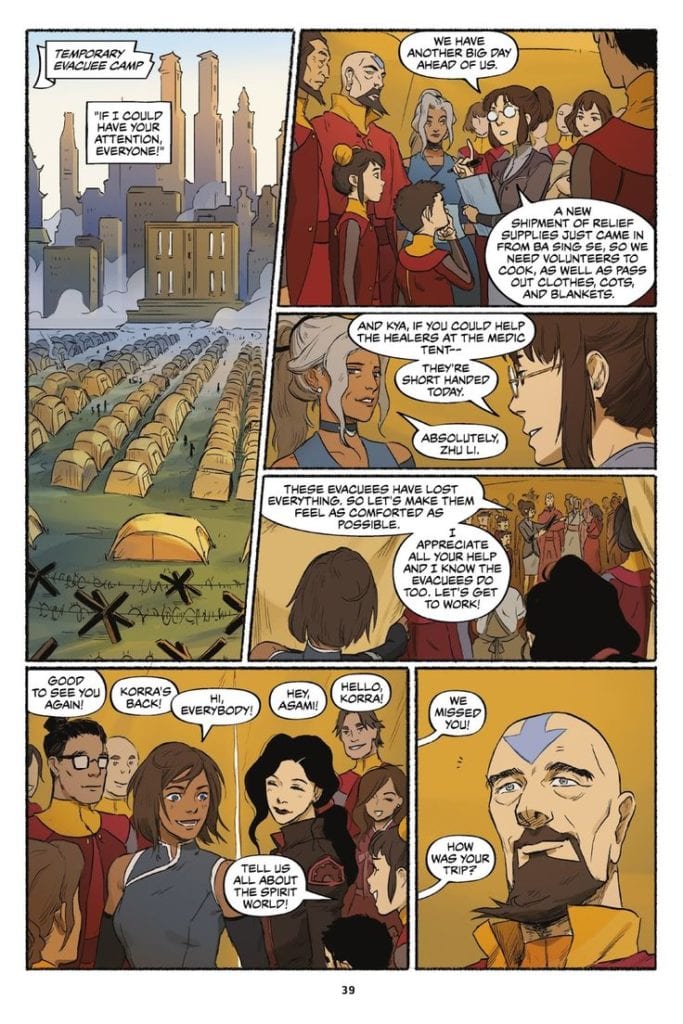
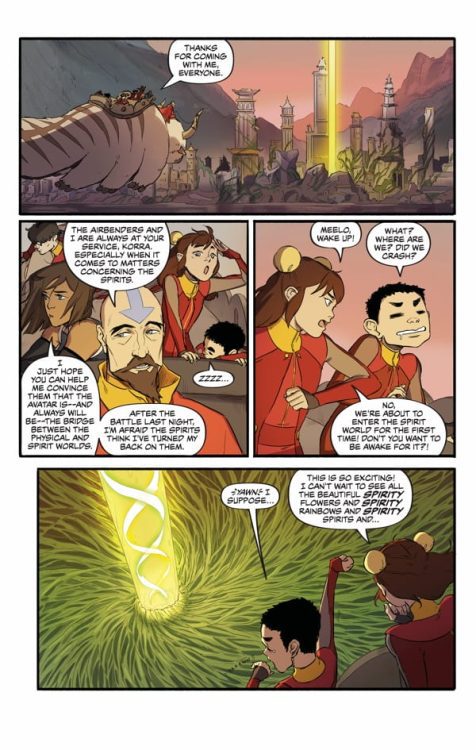
There is no doubt that the world of Avatar: The Last Airbender is one of the most acclaimed and brilliant pieces of fiction crafted in the last 20 years. Both it and its follow up  The Legend of Korra are both rife with incredible character writing, resonant themes, heavy emotional stakes, and stacks upon stacks of lore. As such, continuing the story and legacy of one of the most beloved fictions in recent years via comics is a daunting task. However, it also makes perfect sense. What other medium would allow the freedom of storytelling and visual artistry that the comics medium does? The proof is in the end results, as  The Legend of Korra: Turf Wars, written by original series co-creator Michael Dante DiMartino and drawn by Irene Koh, is a wonderfully executed direct sequel to  Korra’s fourth and final book (season, for you newcomers). With plenty of well-orchestrated returns from fan-favorite characters, an intense plot full of mystery and tension, an emotionally satisfying love story, and breathtaking visuals, this complete Library Edition is the best way to experience the return to the world of the four bending nations and the one woman who can unite them all.

“After a refreshing sojourn in the Spirit World, Korra and Asami return to Republic City but find nothing but political hijinks and human vs. spirit conflict! Pompous developer Wonyong Keum plans to turn the new spirit portal into an amusement park, potentially severing an already tumultuous connection with the spirits. At the city’s edge, Zhu Li enlists everyone she can to aid the thousands of hungry and homeless evacuees who have relocated there. Meanwhile, the Triple Threats ruthless new leader, Tokuga, is determined to unite the other triads under his rule, no matter the cost.”

Writing & Plot

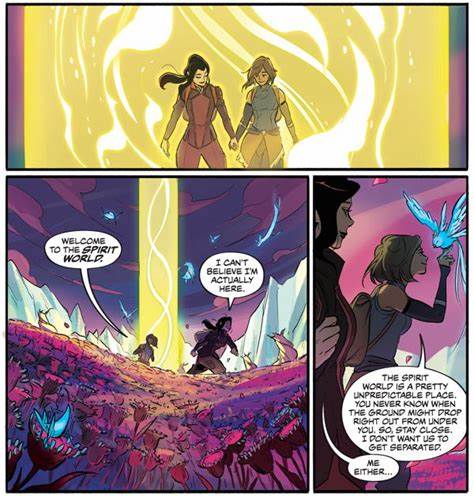
It would be difficult to imagine any Avatar story without the touch of the show’s original creative team (we saw the Shamalan film, right?), so it’s fortunate that Dark Horse reached out to Legend of Korra and The Last Airbender co-creator Micheal Dante DiMartino to craft a follow up to Korra’s animated adventures. With input from the show’s other lead creator Bryan Konietzko, DiMartino has written a highly entertaining and engaging sequel to the events of The Legend of Korra here in Turf Wars. This series starts right where Korra book 4 ended, with the newly coupled Korra and Asami taking a vacation in the spirit world following Team Avatar’s victory over Kuvira and the Earth Empire. One of the major criticisms of Korra’s finale was that the romantic pairing of Korra and Asami was a bit out of left field. Outside of (maybe) minor hints scattered throughout the later seasons, there wasn’t much build-up to them being romantically involved. DiMartino does a good job of advancing their relationship through a more believable lens, as the new couple goes through the opening growing pains of any new relationship topped with the intense situations of the world they live in. Korra and Asami’s relationship is legitimately the element I enjoyed most out of this comic, which is a credit to how much work DiMartino puts into fleshing out this new romance. The socio-political touches in Turf Wars are allowed to come away more cleanly than they did in the original series as well, since the comics medium has less of a censor stranglehold on it than major animation does. This being said, everything outside of the same-sex relationship material is handled in a simple and round-about manner, so don’t expect a gripping thesis on class issues and public vs. private property here.

The characterization of the show’s main cast is still absolutely on par with how they appeared in the animated series. Korra is still brash and hot-headed, Asami is still the smartest person in the room, Bolin is lovable, Mako is edgy and boring, and Zhu Li still does the things but now she’s in charge. Much like with the original series, I wish we got more time with Tenzin and his family, but overall the time we received with the cast was satisfying and felt like a natural continuation of the events in the show. Turf Wars really does feel like a small arc in a season of Legend of Korra, and most readers will feel right at home opening these pages. If there was one complaint I had to lodge against this arc, it would be that the main villain didn’t get quite enough time on the page. Tokuga’s kickass introduction is not only highly entertaining but also wildly intriguing for long time Avatar fans (no spoilers). Unfortunately, after this, he just becomes a cut and paste bad guy. Even with an early story life-altering event for him, he never goes past just being a power-hungry criminal. In all other regards, Dimartino and Konietzko have crafted a tautly paced sequel-series that has enough character focus, spiritual and political obstacles, and rad bending action to please the majority of Legend of Korra fans.

Art Direction

The now-iconic visual style of The Last Airbender and The Legend of Korra, with its anime and eastern-influenced animation and color, requires a team of significant talent to replicate onto the pages of a comic. Fortunately for Turf Wars, Irene Koh’s pencils and Vivian Ng’s colors bring the striking visuals of this universe to life in a splendid manner. Ko’s pencils replicate the characters and environments of Legend of Korra with an instantly recognizable authenticity, all the while maintaining her own visual style. Koh does the show’s creative team great service by adhering to the aesthetics of Korra’s world, with everything from the streets of Republic City to the garb of members of the bending nations being drawn with spot-on detail. The designs of some of the spirits that make appearances are stunning as well, fitting in with the Avatar world but bringing something new to the table at the same time (some reminded me of a Miyazaki creation). The fight scenes bring the proper amounts of visceral intensity, with the bending martial arts and destruction looking like something right out of the show. Her talent shows through in the small moments as well. Much of what makes Korra and Asami’s relationship so engaging to read is how the couple is presented on the page. Hints of trepidation are interlaced with the apparent care and love the two have for each other, and this creative touch makes the pair feel all the more believable. The colors, shadows, and lighting effects provided by Vivian Ng bring this series to life in the Avatar ever bit as much as the pencils do. The hazy light of the spirit world, gas-lantern lit streets, and the array of elemental shades match the gorgeous views in both animated series. The lettering from Nate Piekos is simple yet dynamic, altering fonts based on characters and of course changing drastically for exclamations and screams/cries. The visual work on Turf Wars is not only a love letter to the creative team of the original animation but a triumph that stands on its own.

The Legend of Korra: Turf Wars is fast-paced, exciting romp through Republic City and a fun return to this universe. Dimartino’s script feels like a natural progression of the events of the final season, while he delicately fleshes out the new romance between Korra and Asami. The political fallout from the show’s final season is handled in a simple but effective in-universe manner. I would have liked to have spent more time with some of the other members of Team Avatar and the main villain, but this is still an engrossing read. The visual work of Irene Koh and Vivian Ng is a gorgeous effort that perfectly encapsulates the look and feel of the Avatar animated universe, while still having the unique style of both artists. For those unfamiliar with Dark Horse’s library edition format, it is without a doubt one of the finest oversized collected edition formats in comics. An over 9×12 book with stop-a-bullet thick paper stock, and tons of extras including scripts and looks at the artistic process. Will this story convert any non-Korra fans? Not likely, as this is very much a story crafted to maintain and continue the legacy of these characters rather than improve on some of the show’s flaws. However, if you’re a huge fan of this world and the characters in The Legend of Korra, then this first Library Edition will be a must-own. Be sure to order it from your local comic shop or online now!


Monkeys Fighting Robots Youtube

Review: DOSE! #1 Is A Disturbing Turn On The Superhero Genre

dose! #1 comic book review

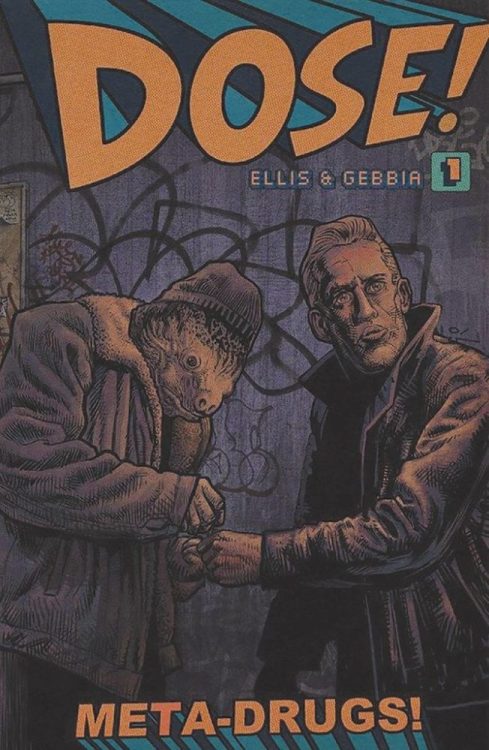
DOSE! is a new indie comic by writer Sean Ellis and artist John Gebbia that shows a dark underbelly to the world of superheroes.

The series centers on Screw Worm, an ex-teenage sidekick with a drug problem. In the world he lives in, the extraordinary is just ordinary. Kaiju walk the streets, and everybody seems to have a superpower. In DOSE! #1, we follow Worm as he stumbles his way through his daily life, trying to find his next fix.

This comic is a labor of love for Ellis and Gebbia — a self-funded endeavor that you can actually read online for free, and which the creators hope to be able to keep free and online forever.

The first thing you notice reading DOSE! is the crowded scenery. Gebbia packs each setting with an insane amount of detail. Screw Worm’s humble abode is filled to the brim with junk. The streets are overflowing with people. It’s a claustrophobic reading experience where you genuinely feel like you don’t have enough room to breathe.

And that uncomfortable motif is carried out throughout the issue. There’s a scene in the latter half of the book in which Worm visits a club where the headlining “act” secretes some sort of liquid through her skin that can get people high. The woman then voluntarily crowd surfs around the room and is licked by her adoring “fans.” It’s disturbing. Very disturbing. But again, this comic doesn’t seem to want you to get comfortable.

DOSE! is a sensory overload that makes your skin crawl, so Ellis and Gebbia are actually putting you — the reader — in the same mindset as their protagonist. As Screw Worm struggles his way through his day trying to get a fix, you too will feel a constant sense of unrest and stress.

The solicit text pitches DOSE! as more of a neo-noir, stating that Screw Worm “unwittingly stumbles onto a conspiracy that threatens to hasten the destruction of a world already teetering on the edge of collapse.” You don’t get much of the conspiracy element in this first issue, but what you do get is an established sense of the world on the edge of collapse. It’ll be interesting to see how this story evolves in future issues as Ellis and Gebbia dig deeper into this strange and disturbing world.


DOSE! is available to read right now on dosecomic.com, or it will be available through your local comic shop on October 21.

Monkeys Fighting Robots Youtube

DOCTOR TOMORROW #5: The End Of The Hero’s Journey Cycle

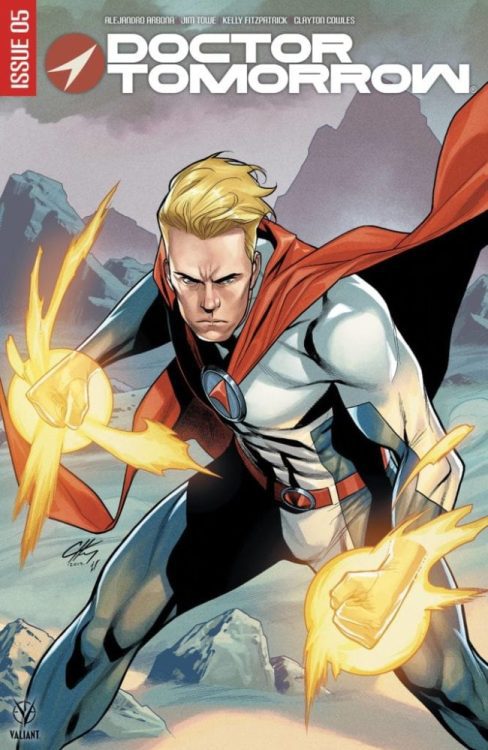
Doctor Tomorrow #5 Cover

Doctor Tomorrow #5 is this week’s finale to Valiant Entertainment’s short but sweet series by writer Alejandro Arbona, artist Jim Towe, colorist Kelly Fitzpatrick, and letterer Clayton Cowles.

Recap

Doctor Tomorrow follows Bart Simms, a teenager who encounters his alternate superhero self who recruits him to fight a supervillain. After some breakneck battles and revelations, Doctor Tomorrow comes full circle in Bart’s journey.

Doctor Tomorrow #5: The End of The Circle

Doctor Tomorrow #5 completes the series by reflecting situations from previous issues. From confronting the antagonist to making amends with past friends, Arbona uses subtlety for new audiences. This series’ main flaw comes from an MFR interview with Arbona, how some slightly important details rush for the story’s sake. Continuing on the Hero’s Journey formula, this return phase is an accomplishment for the entire series. Especially since Bart makes important interactions that resolve some internal and external conflicts he has. Although on its own, this issue feels like it’s completing a checklist.

Art

Towe’s artwork benefits from subtleties, similar to the story. The facial differences between the adult Bart and Doctor Tomorrow display their characters. Doctor Tomorrow has scars he couldn’t prevent while Bart, despite being the same age, has a cleaner maturity. Which is more than the fight between them can attest to. The fight is bland with the superpower blows barely appearing to make an impact, even with Doctor Tomorrow’s defeat. Their last conversation with the small changes in facial features holds more weight between them. In fact the baseball sessions between Bart and his friend Gretchen are a better display of Bart’s powers. It’s also what gives Doctor Tomorrow #5 more power to it as a sign of growth in comparison to the first issue.

Fitzpatrick’s coloring at least gives the powers on display their desired effect of impact. A glowing fist from Doctor Tomorrow can serve as a warning for Bart about a powerful blow. Even interactions between them with the sun shining in the background give weight to their conversations. It’s practically highlighting crucial moments in their interactions.

Cowles continues to provide generally good coordination with both word balloons and wordmarks. Even when word balloons don’t leave their panels, they follow a pattern concurrent with neighboring panels. It keeps the actions in a distinct rhythm that doesn’t overlap. The wordmarks follow this like when a fall occurs in one panel, and the neighboring one with a wordmark drives home the impact.

Finish With Doctor Tomorrow #5

Doctor Tomorrow #5 is the weakest issue in an overall decent story. Although reading the prior four issues is required to fully appreciate this one, it’s only because that’s what allows readers to see Bart’s growth into a hero. One that opens up potential new developments in the Valiant Universe. So it’s best to catch this character where he begins before all that happens.

Monkeys Fighting Robots Youtube

Review: WOLVERINE #4 – Don’t Let Down Your Guard!

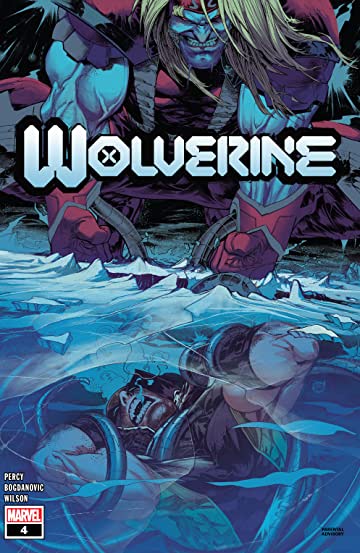
On August 19, Marvel Comics released Wolverine #4. Writer Benjamin Percy, artist Viktor Bogdanovic, colorist Matthew Wilson, and letterer VC’s Cory Petit take Wolverine to the cold north for a cold drink, but he finds more than he bargained for when Percy throughs the kitchen sink at him.

Writing

If you read X-Force #11, you may have noticed two things: 1) the absence of Wolverine, and 2) Omega Red’s presence on the cover but not in the book. Considering that Percy is writing both books, it’s not hard to imagine that he’s probably interweaving his tale between both books (although Omega Red’s presence on the X-Force cover is still a mystery).

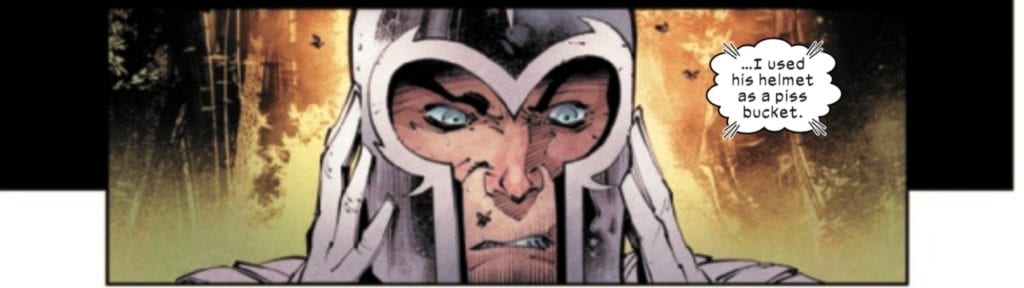
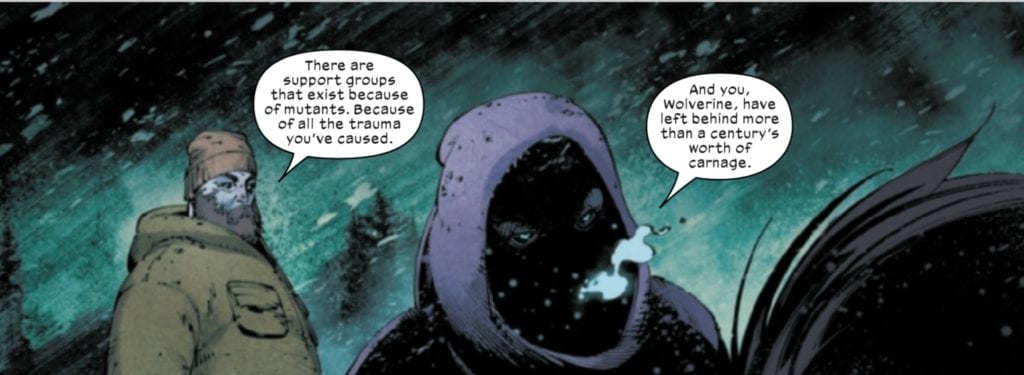
After readers discover that Wolverine peed in Magneto’s helmet, Logan goes through a private gate to a bar in the frozen north, where he comes into conflict with a group of humans who are part of an anti-mutant trauma group, when they throw Wolverine into a frozen lake, Omega Red attacks, with an army of vampires behind him.

Readers have known that Omega Red was a Krakoan traitor, and while his overt betrayal may not have been expected this quickly, it will be interesting to see what the Krakoan response will be.

There is a slight “hat on a hat” element happening here in the writing. To have Wolverine be ambushed by Omega Red is one thing. To have him captured by an anti-mutant group is another. To put them both together and have one baddie taken out by another makes Wolverine’s world feel a bit small. It does show that mutants are surrounded by threats everywhere, both from within and without, and talking with the anti-mutant group does serve as a moment of reflection for Wolverine. It does seem like some of the X-books are forsaking earned conflicts and stakes and just escalating the threats in each issue with a sort of “and then this bad thing happens, and then this bad thing happens” logic.

It’s still a decent issue, and Percy’s X-books are still some of the best, but there is a sense that the X-books are stalling a bit, possibly waiting for the other shoe to drop in Hickman and company’s mega X-saga.

Art & Colors

Bogdanovic’s art is solid in this issue. His style is somewhat reminiscent of Patrick Gleason (who does a variant cover for this issue) and Greg Capullo.

Bogdanovic gives his figures a bit more shading and coarseness, but those eyes are definitely Gleason-like! The whole issue has the look of an artist born if Greg Capullo and Patrick Gleason had a baby together (which isn’t a bad thing).

See? Don’t you almost expect the Batman Who Laughs to be under that hood?

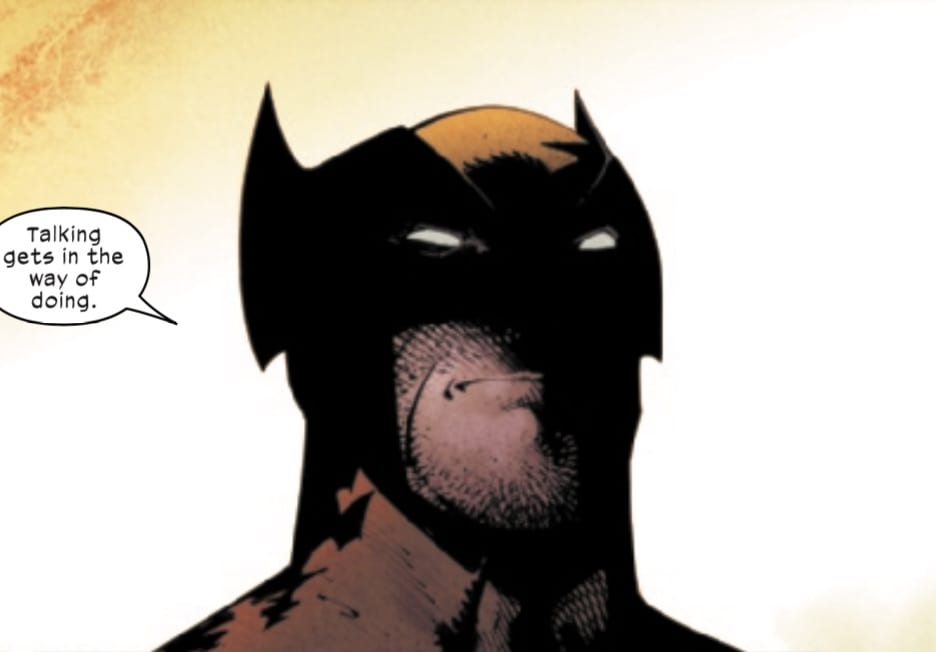
Even in the picture below, doesn’t this look like Wolverine if Capullo designed him?

Meanwhile, Bogdanovic’s art is perfectly complemented by Wilson’s colors. There is some cartoony whimsy in some of the writing and tone of this issue, but that is undercut by the shading of the colors and the coarse texture that they’re given. One almost thinks about the whimsy yet sinister underbelly and darkness of a Tim Burton cartoon, and given the horror that this issue ends with, that description may be fitting.

Lettering

Petit’s lettering is always fantastic and complements the story well. The goal for any letterer should be to complement the visuals in the story without distracting and overcrowding. This should especially be the case in a Wolverine comic where readers want to see, among other things, a fair share of visceral action and violence, which this issue does have. The sound effects blend into the visuals they are placed within, and the dialogue and narration keep the story moving forward.

There are two prose sections that are worth mentioning. These prose sections in the Hickman era have pros and cons. They can serve to fill in background information that keeps the story moving without having to devote entire issues to setting up certain plot elements. Still, in 20+ page comics, every page counts, and sometimes the prose has been excessive. That’s not necessarily the case in this book, although the prose page talking about Wolverine’s private gate probably could’ve been illustrated, while the page about the anti-mutant trauma group serves its purpose in filling in the background motivations of the humans who attack Logan.

Conclusion 

Wolverine continues to be an interesting series, and it’s great getting into the head of Marvel’s favorite-although-sometimes-over-exposed mutant. It is interesting seeing how Wolverine has changed since the Dawn of X, where he could be seen laughing and playing with children on Krakoa. Now, he is a bit more reticent.

Readers may still be getting used to the rhythm of this book. After his first arc, Wolverine seeks some catharsis in a bar, only to find plenty of other threats waiting for him to kickstart his next arc. This series is still young, so despite some criticisms, I think it is one of the more visceral X-books published right now.

What did you think of Wolverine #4? Tell us in the comments below!

Monkeys Fighting Robots Youtube

DC News: John Ridley Penning Alternate BATMAN Series, Confirmed For January 2021

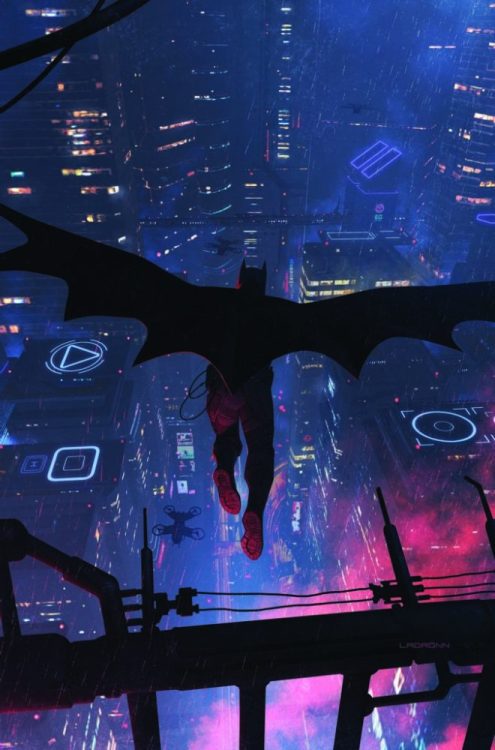
Batman by Ridley (Ladronn art)

There’s been some speculation about DC Comics’ plans with famed screenwriter John Ridley on Batman. In an official press release, DC has confirmed John Ridley will be penning a four-issue miniseries scheduled for January 2021 featuring art by Nick Derington.

Ridley confirmed in a recent conversation with Jim Lee that this Batman definitely
will not be Bruce Wayne: “I think it’s a pretty safe bet that if I’m writing Batman, it’s probably a little better than a 47% chance he’s going to be a person of color.”

You can check out the first piece of art from the miniseries and read the official DC press release below.

Are you ready for a new take on the classic hero? Let us know what you think in the Comments section, and please share this post on social media using the links below.

DC CONFIRMS BATMAN LIMITED SERIES WRITTEN BY AWARD-WINNING SCREENWRITER JOHN RIDLEY

Four-Issue Miniseries Scheduled for January 2021 Featuring Art by Nick Derington

“Better Than A 47% Chance This Batman is a Person of Color,” Says Ridley

Today’s Legacy of the Bat panel in DC FanDome’s Hall of Heroes contained great topics and panelists in a celebration of the Dark Knight’s heritage and the impact he’s had on his allies as they continue to do their part to protect Gotham City.

In addition to lively discussions spotlighting Talent and creators from popular DC shows such as Batwoman and Titans, as well as from Warner Bros. Games Montréal, DC also ended months of speculation regarding Batman’s upcoming comic book adventures, confirming that award-winning screenwriter John Ridley (12

Years a Slave, Guerrilla, American Crime) and artist Nick Derington (Doom Patrol, Batman Universe, Mister Miracle) will team up for a four-issue miniseries scheduled for January 2021, featuring a version of the Caped Crusader different from what many fans know and existing alongside the current Batman run by James Tynion IV and Jorge Jimenez.

During his conversation with DC Publisher and Chief Creative Officer Jim Lee, Ridley revealed a breathtaking piece of key art for his version of Batman by artist LADRÖNN. The writer also provided further credence to fan speculation that this Batman definitely will not be Bruce Wayne: “I think it’s a pretty safe bet that if I’m writing Batman, it’s probably a little better than a 47% chance he’s going to be a person of color,” said Ridley.

In addition, Ridley raised additional curiosity when he revealed his series will focus on the family of Lucius Fox, head of Wayne Enterprises. “But he [Fox] has a family and this is a family that has secrets, has kept secrets from one another,” said Ridley. “It’s a little bit different dynamic than the Batman that we’ve always seen.”

While this will be the first time Ridley has written a series featuring Batman, he’s no stranger to comic book writing, nor to DC. In 2004, he wrote The Authority: Human on the Inside (with artist Ben Oliver) and contributed an arc to the 2005 series,The Razor’s Edge: Warblade (with legendary artist Simon Bisley). Most recently, Ridley also collaborated with artist Georges Jeanty on the groundbreaking limited series The American Way (2006) and its sequel, The American Way: Those Above and Those Below (2017).

Fans interested in learning more about Ridley’s plans for this series should check out the Batman: The Joker War panel at DC FanDome: Explore the Multiverse, Saturday, September 12 at 10amPT/1pmET. Ridley is writing a short story (with art by Olivier Coipel) for the Batman: Joker War Zone one-shot anthology that may provide drop additional hints at his plans for the January miniseries.

For the latest news on DC FanDome, make sure to check out The Daily Star, the official blog of DC Fandome, at www.dccomics.com/dcfandome.

Batman by Ridley (Ladronn art)

Monkeys Fighting Robots Youtube

Review: CABLE #3 – Visiting the King…of Staten Island.

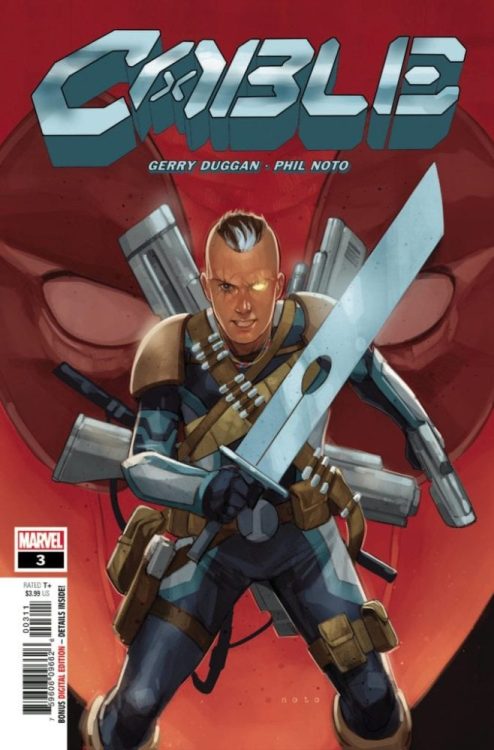
Marvel Comics released Cable #3 on August 19. Writer Gerry Duggan, artist Phil Noto, and letterer VC’s Joe Sabino continue the tale of Cable’s conflict with the Space Knights, the exploits of future Cable, and the missing mutant child, all while bringing young Cable face to face with an old friend.

Writing

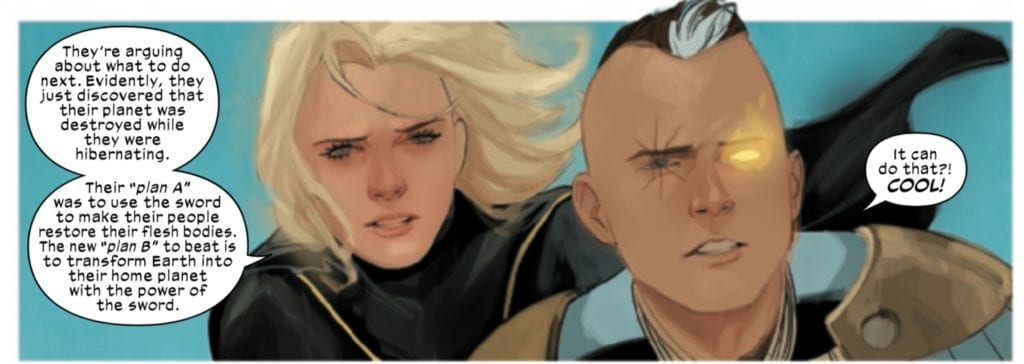
What started as a story about a search for a missing mutant child continues to evolve into something crazy and whacky. When Cable bargains with the Space Knights to keep the Sword of Galador in exchange for a time machine that can send them back to save their planet, Cable, Esme, and the Knights go on a search for “old Cable’s” body, which has been confiscated by everyone’s favorite Merc’ with a Mouth and King of Staten Island.

Duggan writes with a lot of wit and charm. While there are a lot of random elements in this issue (Space Knights, time travel, a missing child…Deadpool), it comes together well, while continuing to tease a possible reunion between young Cable and old Cable.

Art

Noto’s art is gorgeous in this issue. The character design and the colors are beautifully done, and this may be one of the best looking X-books currently in print.

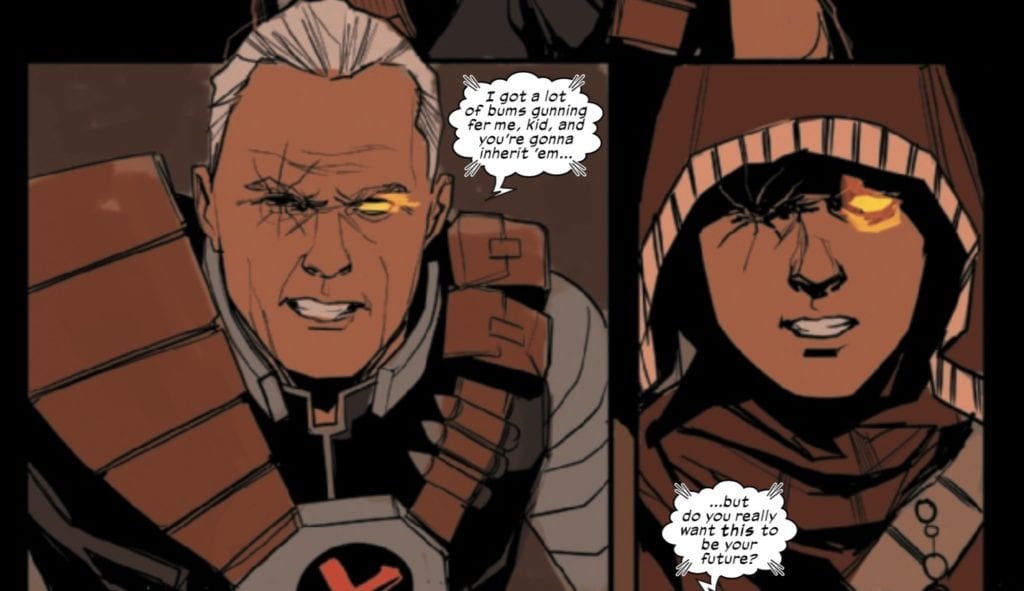
One particularly effective element of the art continues to be the way that Noto distinguishes between scenes with old and young Cable through coloring, shading, and styles.

Scene with “old” Cable.
Scene with young Cable.

There isn’t so much a change in art style as there is a type of coloring, with “young” Cable’s scenes given more of a watercolor look while “old” Cable’s scenes have an almost colored pencil look to them. This is effective for providing each Cable’s story a unique look that keeps the dual narratives straight since they appear to be coming to an eventual head if old Cable’s letter at the end of the issue is any indication.

Lettering

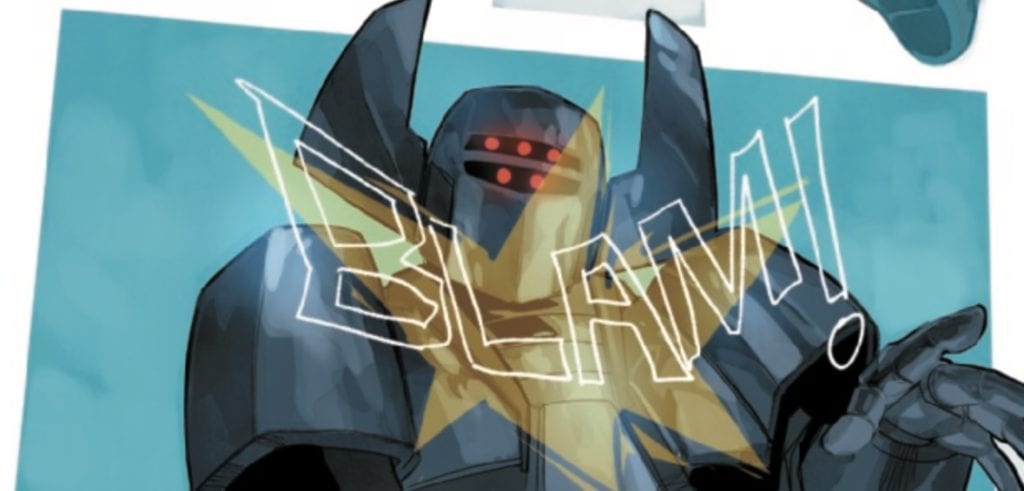
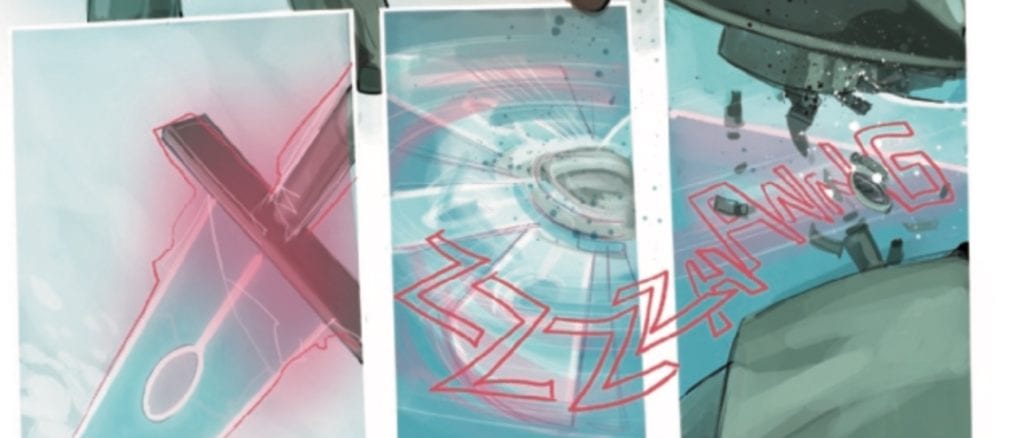
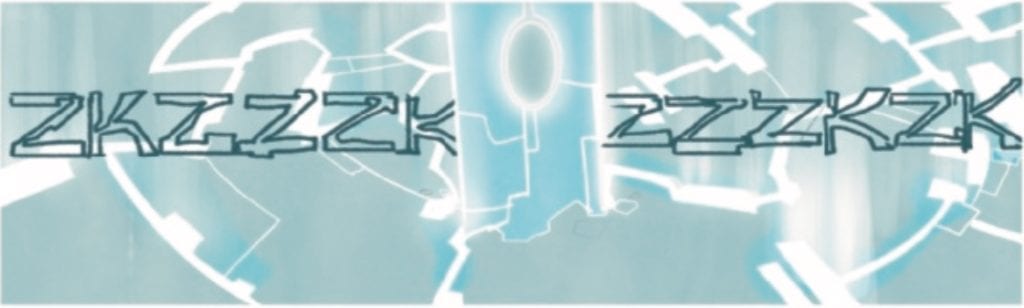
Sabino’s lettering is a beautiful complement to this issue. His sound effects, in particular, look great, and the wording, through its color and style, is “wrapped into” the action it describes.

Above is an excellent example of the lettering serving the story and its visual sequences well.

Also, worthy of note is the prose letters between old Cable and Deadpool at the end of the issue. Prose sections in a comic can be tricky. Still, they work with both of these letters, as Cable’s style and words capture his pragmatic and sometimes rough exterior, with Wade’s written in a whimsical, faux-Romantic fashion, whose look adds to the humor of the issue.

Conclusion

Cable #3 is an excellent continuation of the series, which seems to wrap of the Space Knights conflict with a minimum of action, all while setting up a possible future conflict between two Cables. Meanwhile, we’ll have to wait and see until next issue how the investigation of the missing mutant children progresses.

What did you think of Cable #3? Tell us in the comments below!

Monkeys Fighting Robots Youtube

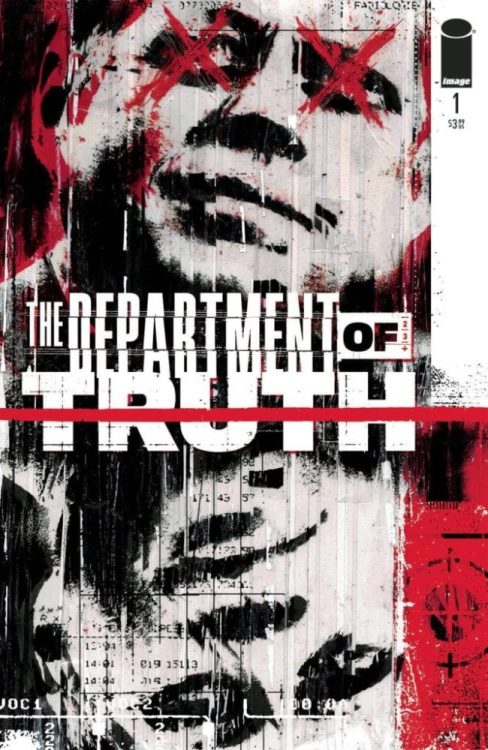
Advance Review: THE DEPARTMENT OF TRUTH #1 — Uncomfortably Good

The Department of Truth #1 Cover

The Department Of Truth #1 hits your local comic book shop on September 30, but thanks to Image Comics, Monkeys Fighting Robots has an advance review for our readers.

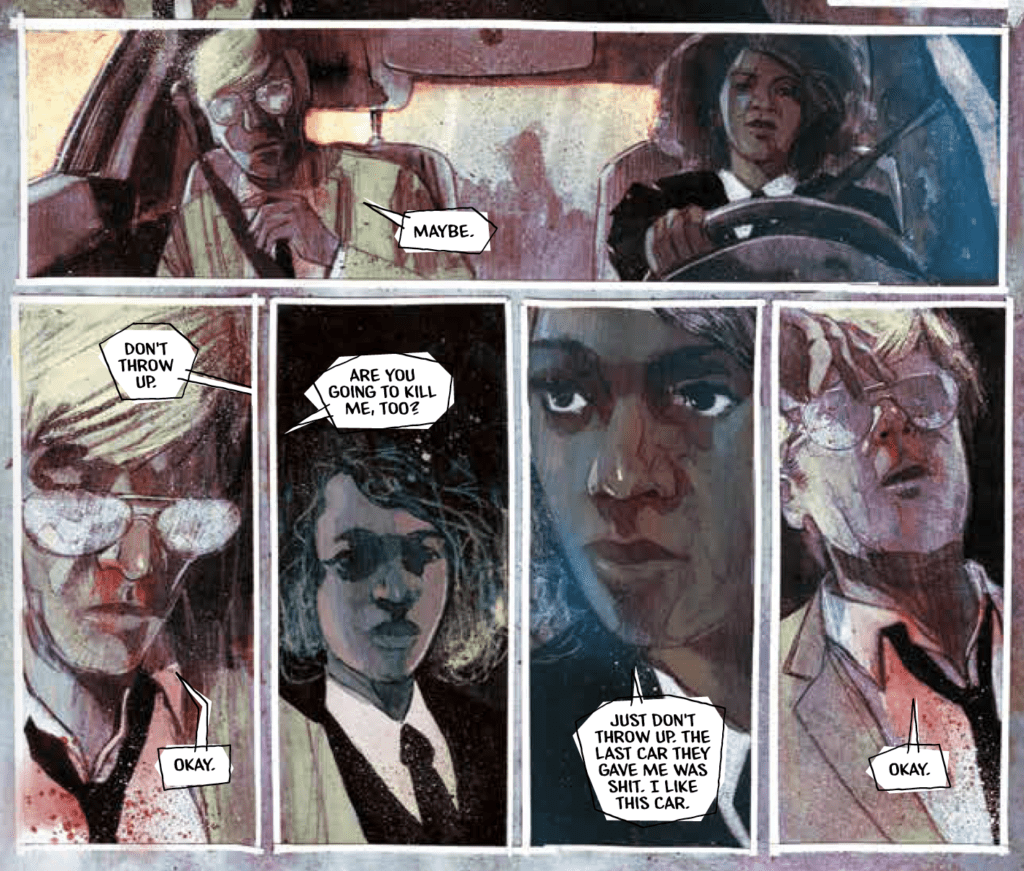
Wow, it must be the pandemic or 2020 in general, but The Department Of Truth was so intense it felt like someone was going to drive a nail through my hand as I read the book. Martin Simmonds art is so gorgeously disturbing that, if it were a film, it would be the scariest movie ever. The jitteriness of Aditya Bidikar’s letter work is going to have me questioning reality for the next week. When you add this to James Tynion IV’s slow burn of a story, it makes for a blockbuster of a comic book.

Tynion IV takes all the best parts of Fight Club, X-Files, Dark City, The Thirteenth Floor, Netflix’s Mindhunter, and The Matrix and delivers a disturbing tale with such detail that, when combined with Simmonds’ art, you can smell the world from within the comic book. Tynion IV worldbuilds at a tremendous pace and also creates a vast mystery at the same time. The Department Of Truth #1 is like a great magic trick with illusion and sleight of hand, and the last page will compel you to read the next issue.

Advance Review: THE DEPARTMENT OF TRUTH #1 - Uncomfortably Good

When filmmaker David Fincher dreams at night, he sees the world as a Simmonds-drawn comic book. The splatters, scratchiness, and double exposures get under your skin, but there is also something about Simmonds’ art that is organic and familiar that draws you and creates added tension. The angles Simmonds uses in the above set of panels is a prime example of intensity and movement. If you’ve ever been car sick before, you understand the main character Cole Turner’s pain. You can feel Cole’s sway across the page, and everything is directed at the one clear shot of eyes in those five panels creating an intense confrontation between characters. The angles on the four bottom panels also take you up and down and you start to feel car sick yourself the more you look at it.

Bidikar’s letter work in the first issue is so amazing that he deserves an Eisner. The design of the word balloons and narration boxes adds so much to the story. The tension that he creates is like bamboo shoots under the fingernails! The style shouldn’t work, it’s stylistically unfinished, but it works so well. Bidikar’s letter work enforces the tension and lack of trust. As an added bonus, I became uncomfortable with myself because I was comfortable with Bidikar’s style by the end of the issue.

The Department Of Truth #1 is everything great about comic books right now. It has a big-budget film quality with independent ideas. Tynion IV, Simmonds, and Bidikar take risks, and it pays off with a fantastic first issue, and it will be something Monkeys Fighting Robots will talk about when “Best of 2020” comes around.


Do you have The Department Of Truth on your pull list? Comment below with your thoughts.

Monkeys Fighting Robots Youtube

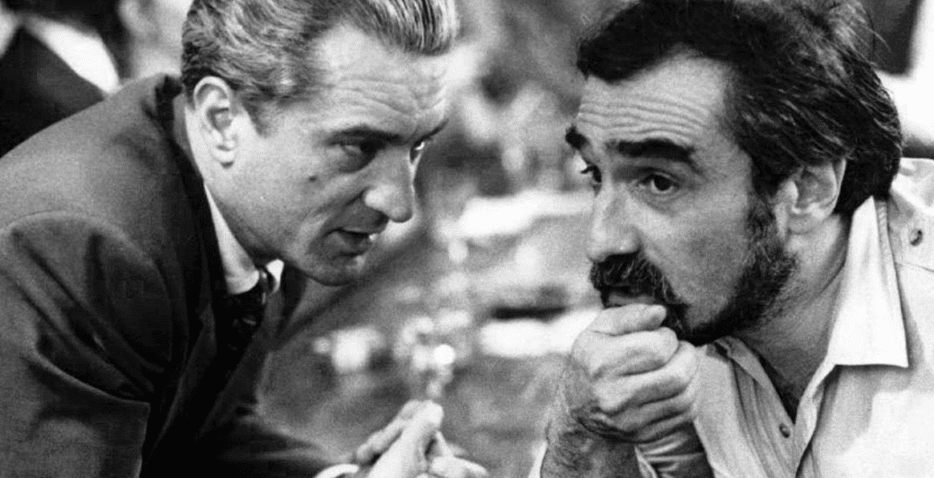
10 Reasons Why Martin Scorsese’s CASINO is a Classic

10 Reasons Why Martin Scorsese's CASINO is a Classic

When it comes to making movies about people involved in violent or shady business, Martin Scorsese has no equal. The corrupt Wall Street financiers, Chicago mobsters, a deranged would-be assassin – the subjects explored by Scorsese through his movies are quite diverse.

Thanks to its long association with organized crime, the Vegas gambling business makes the perfect backdrop for a Scorsese movie. When it was released in 1995, Casino was both a critical and commercial success. It continues to enthrall us today as one of the finest movies set in Sin City. Here are a few reasons why Casino is such a beloved classic:

1. It is based on real people

All the main characters are based on individuals who lived and worked in the Vegas casino industry in the 1970s and 80s. Frank Rosenthal, a manager at three different Vegas casinos, is the inspiration for De Niro’s Sam Rothstein. The notorious Nicky Santoro (Joe Pesci) is based on real-life mobster Anthony Spilotro, and Ginger McKenna (Sharon Stone) was Geri McGee, a Vegas socialite.

2. It captures the essence of Vegas 

No other movie has done such an excellent job of portraying what Las Vegas is all about. They barely scratch the surface, only showing the “good” side of partying and weekend getaways. But Casino digs deep, laying bare the origins of the city and its past ties with organized crime while at the same time showing the opulence, neon signs, and gamblers having fun at cards and slots.

3. It was one of De Niro’s finest performances 

There is a reason why De Niro and Scorsese have done nine epic movies together. They are both icons in their respective fields. De Niro’s portrayal of Sam Rothstein is perhaps the last role in his career where he was allowed to flex his considerable acting chops to the fullest. A Jewish gambling expert working for the Italian mob makes for a fascinating character study indeed.

4. It had a stellar cast with Pesci and Stone

De Niro is not the only great thing about the Casino cast. In fact, Sharon Stone probably eclipsed all others with her stunning portrayal of the blonde hustler Ginger McKenna. The ever-reliable Joe Pesci adds tension to every scene, portraying a man whose menace far exceeds his short and stocky frame. His Santoro’s dynamic with the more refined Sam Rothstein makes the three-hour-long movie a compelling watch throughout.

5. It was shot in a real casino

The movie was not shot in a Hollywood replica of a casino. All the indoor shots were filmed inside the Riviera in Vegas. The grand old casino had a history dating back to 1955, making it the ideal backdrop for this movie. The crew shot the scenes after midnight, to avoid causing too much disruption to clients. The extras in these scenes are all real casino dealers, pit bosses, and players, all adding to the realism and authenticity of the movie.

If you are missing visiting a real casino in these days of partial lockdown, you should try at least play at a live casino, like the recommended ones found here – http://www.nodepositworld.com/.

6. The violence depicted actually happened 

In many ways, Casino is Scorsese’s most violent movie. Scenes involving the torture of a man using a vice, the attempted murder of De Niro using a car bomb, the death by overdose of Stone’s character, and the murder of Joe Pesci’s character (buried alive in a cornfield) are all over the top in many ways. But the shocking thing is – they all happened to these character’s real-life counterparts. Scorsese did not use violence purely for shock value or style. He was just faithfully portraying the reality.

7. It is based on excellent investigative reporting

Unlike other epic crime dramas, Casino is more like a documentary in many ways. It lays bare the intricate web of corruption that was centered in Las Vegas, with tendrils reaching out to politicians, Teamsters unions, Chicago mob, and the Midwest mafia based out of Kansas City. The movie is based on the investigative non-fiction work Casino: Love and Honor in Las Vegas. Its author, Nicholas Pileggi, co-wrote the screenplay for the Casino movie with the director.

8. The movie holds your attention from beginning to the end

At almost three hours, Casino is one of the longest movies from Martin Scorsese. Yet it never lags in the middle or runs out of steam by the end. From its shocking opening scene with the car bomb, Casino is riveting till the end. With masterful editing and taut narration, Casino manages to stay a lean, mean thriller throughout. For a movie depicting the excesses and lavishness of Vegas, the director remains in control till the end.

9. It makes you feel and care for the characters

There are no good guys in a movie like Casino. With greed and corruption as the central theme, there is no space for heroes and heroines. Every key character is mired in violence, treachery, and avarice. Yet when these characters get their comeuppance in the end, we do feel sorry for them in some ways. This is especially true in the case of Sharon Stone’s Ginger. Casino is a very convincing and touching depiction of human tragedy.

10. It is truly an epic movie with a massive scope

While Scorsese does focus on three key characters, the story of Casino unfolding in the background has massive implications. It explains how the mafia lost control of a city that was basically minting money in the billions. We see how huge gambling corporations took over the desert city. It shows how Vegas continues to reinvent itself. In many ways, Casino is an epic history lesson about Vegas.

Monkeys Fighting Robots Youtube

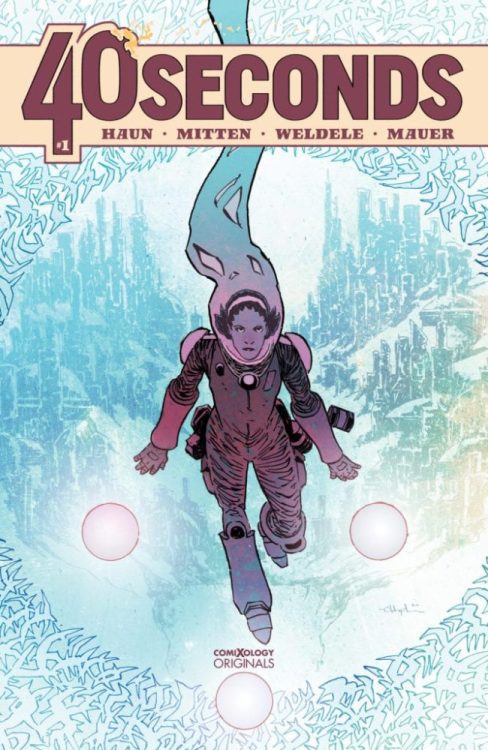
ComiXology Originals Preview: 40 SECONDS To The End Of The Universe

40 Seconds #1, Mitten cover

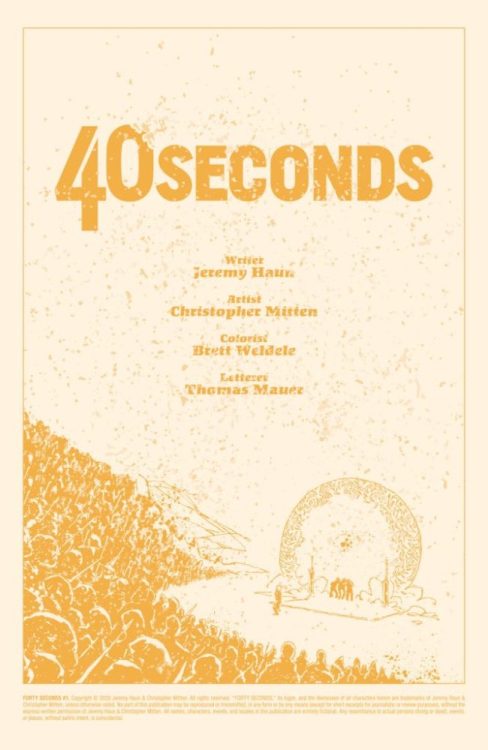
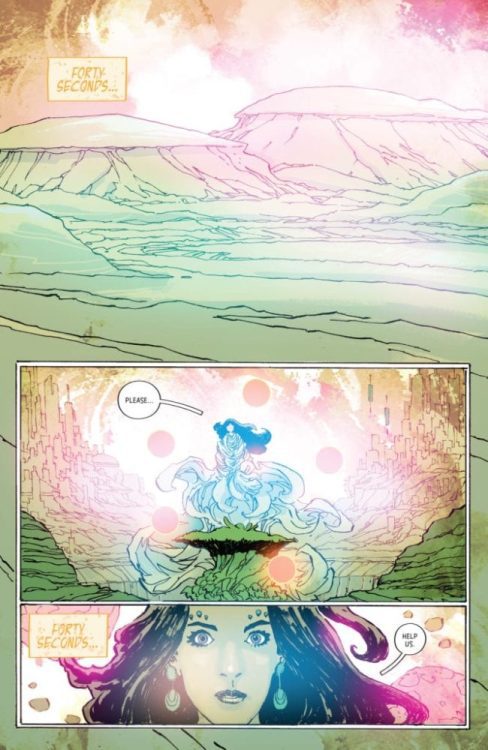
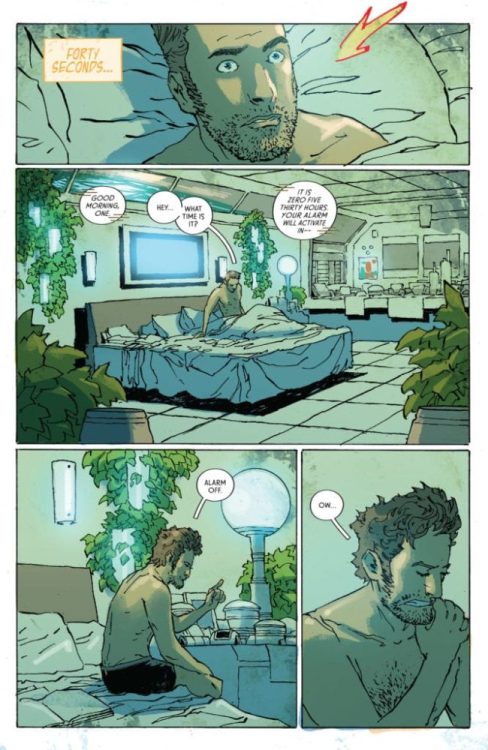
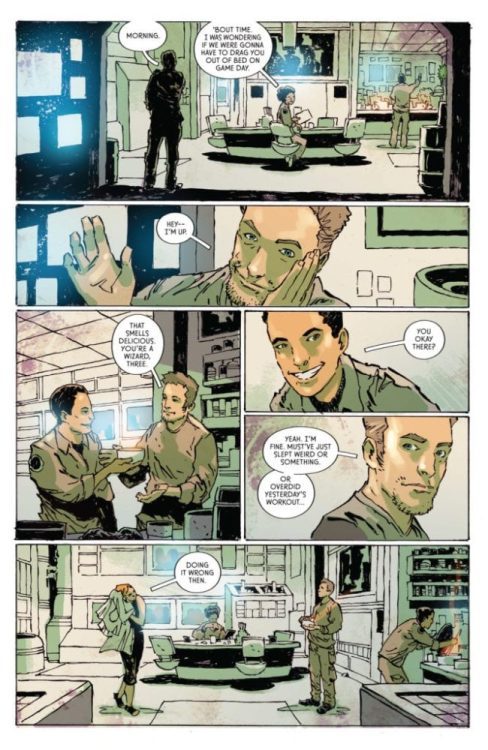
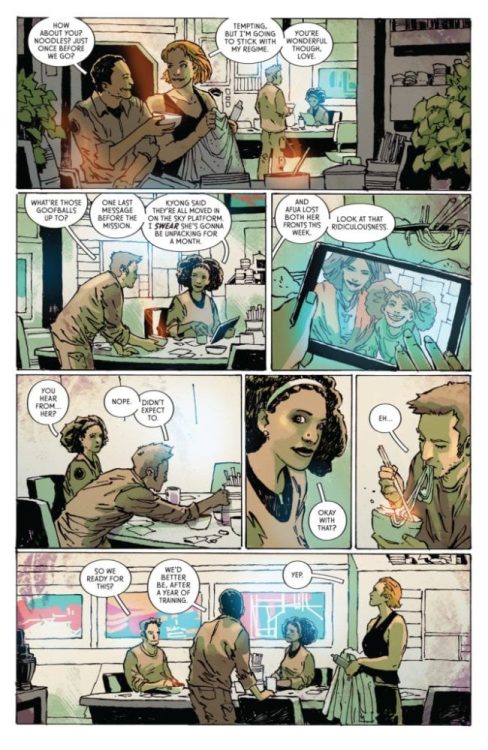
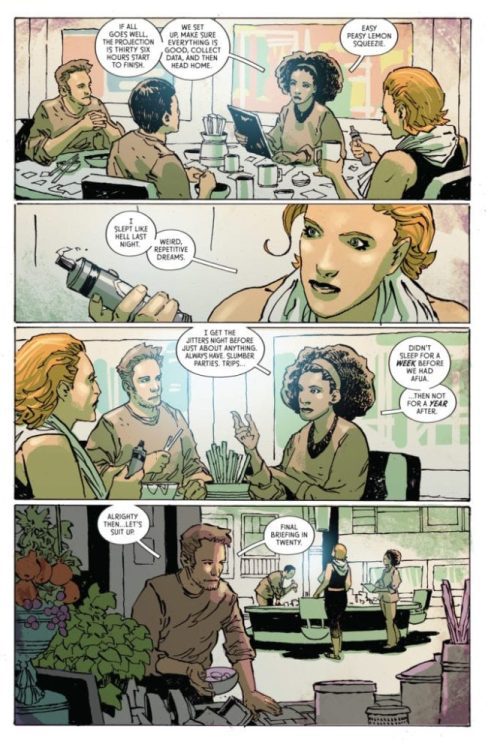
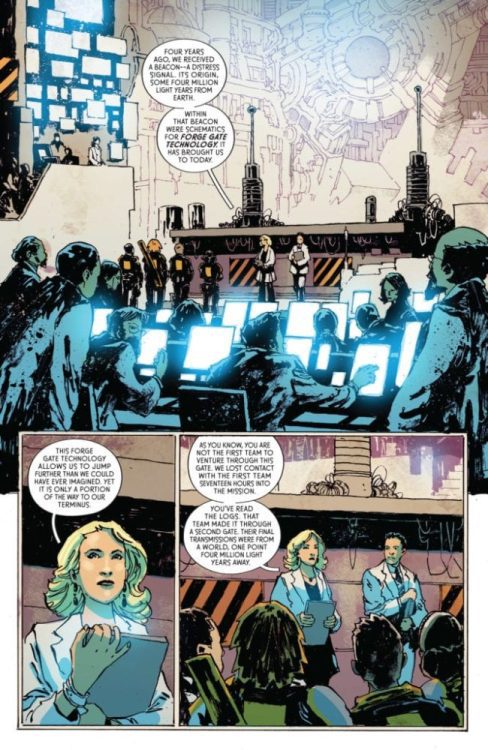
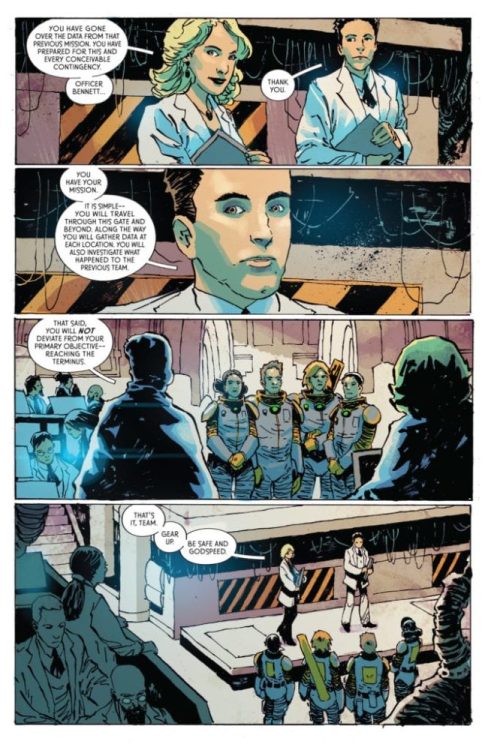
ComiXology Originals has released preview images for their upcoming title, 40 SECONDS, available on ComiXology on August 25th. 40 SECONDS #1 follows a ship of space explorers racing to answer a distress call on the other side of the universe. What they encounter along the way promises to surprise you.

Written by Jeremy Haun and drawn by Chris Mitten, ComiXology describes 40 SECONDS as “an epic, 5-issue mini-series that spans the universe, featuring amazing creatures, epic vistas, character drama, and just a bit of horror.”

You can check out a selection of preview pages, and read the full ComiXology press release below.

Are you looking forward to a colorful sci-fi comic? Let us know what you think onf the preview in the Comments section, and please share this post on social media using the links below.

ComiXology Originals Presents 40 Seconds, a Widescreen Sci-Fi Adventure Comic Book Series Written by Jeremy Haun with Art by Chris Mitten

August 20, 2020 – New York, NY— Grab some popcorn and a soda and prepare to be transported across the galaxy with 40Seconds, a widescreen, sci-fi adventure available from comiXology Originals. Writer Jeremy Haun (Red Mother), acclaimed artist Chris Mitten (Witchfinder: The Reign of Darkness), colorist Brett Weldele, and letterer and designer Thomas Mauer have created an epic, 5-issue mini-series that spans the universe, featuring amazing creatures, epic vistas, character drama, and just a bit of horror. Part of the comiXology Originals line of exclusive, creator-owned content, 40 Seconds debuts August 25th with issue #1.

When a team of science explorers set out to answer a distress call a galaxy away, they have no idea what they’re in for. Their mission: make it to Terminus. Tasked with investigating what happened to the previous team and gathering data, they find themselves traveling through a series of alien gateways, jumping across the universe through strange and beautiful landscapes only to be hunted by a vast inexplicably unstoppable horde. Truths lie at the final gate. If only they can make it in time.

“Chris Mitten and I had been planning on doing a project together for…ever,” says Haun. “When the stars aligned and we were both available to do something, I asked what he wanted to draw and he said ‘big sci-fi fantasy’. I had just the thing. And 40 Seconds was born. Chris Mitten is brilliant at everything he does, but when he draws science fiction fantasy it’s just… perfect.”

Perhaps best known for illustrating Hellboy stories, 40 Seconds marks Mitten’s return to sci-fi.  “Summer is about big, blockbuster storytelling and, with 40 Seconds, the chance to zip around the universe is just a click away,” said Mitten.

“I love the big weird sci-fi comics from the 1950’s, the wild science fiction of the ‘70’s and the blockbusters of the ‘80s,” said Haun. “More than ever we need big fun escapist stories. We can’t really get that in the theater right now. We can’t quite go on grand adventures. With a comic story like 40 Seconds, we can bring an epic, world-hopping adventure straight to readers.”

Part of the comiXology Originals line of exclusive content, 40 Seconds #1 will be available upon release August 25, 2020 at no additional cost, for members of Amazon Prime, Kindle Unlimited, and comiXology Unlimited, and for purchase on Kindle and comiXology. Prime Reading offers all Amazon Prime members a rotating selection of thousands of top Kindle books, magazines, short works, comic books, children’s books, and more – all at no additional cost. Kindle Unlimited offers over 1 million titles, thousands of audiobooks, and select current issues of popular magazines for just $9.99 a month with a 30-day free trial at amazon.com/kindleunlimited. ComiXology Unlimited now offers over 25,000 comics, graphic novels and manga for just $5.99 a month with a 30-day free trial at comixology.com/unlimited.

For more updates on comiXology Originals, check out http://comixologyoriginals.com.

About the Creators

Jeremy Haun is currently writing 40 Seconds from comiXology as well as Red Mother from BOOM! Studios. He is the artist on Final Witness from Valiant. Jeremy is also the artist and creator on The Realm and The Beauty, from Image Comics. Other projects include Batwoman, Constantine, and Wolf Moon. Jeremy has worked for nearly every publisher in the industry as well as doing self-publishing via Kickstarter. Jeremy resides in a crumbling mansion in Joplin, Missouri with his wife and two superheroes-in-training.

Christopher Mitten is originally from the cow-dappled expanse of southern Wisconsin, he now spends his time roaming the misty wilds of suburban Chicago, drawing little people in little boxes. Christopher is best known for his work on Hellboy: The Return of Saturn, Witchfinder: The Reign Of Darkness, Rise of the Black Flame, Rasputin: The Voice of the Dragon, Wasteland, and Criminal Macabre. He can be found online at www.ChristopherMitten.com and on Instagram  @Chris_Mitten.

Monkeys Fighting Robots Youtube