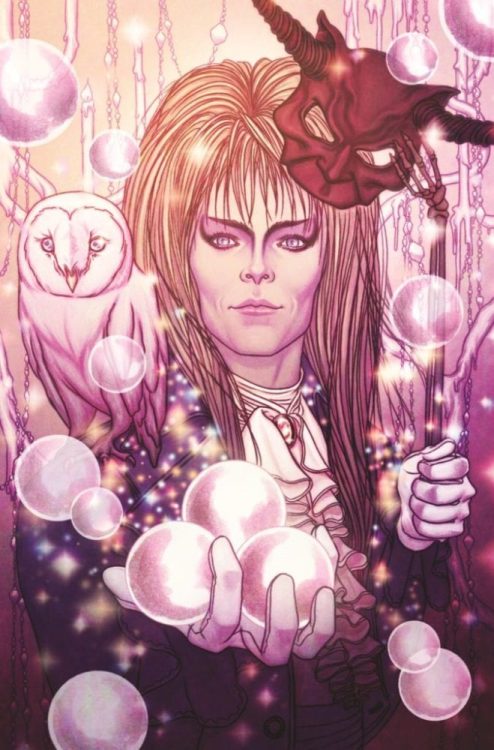
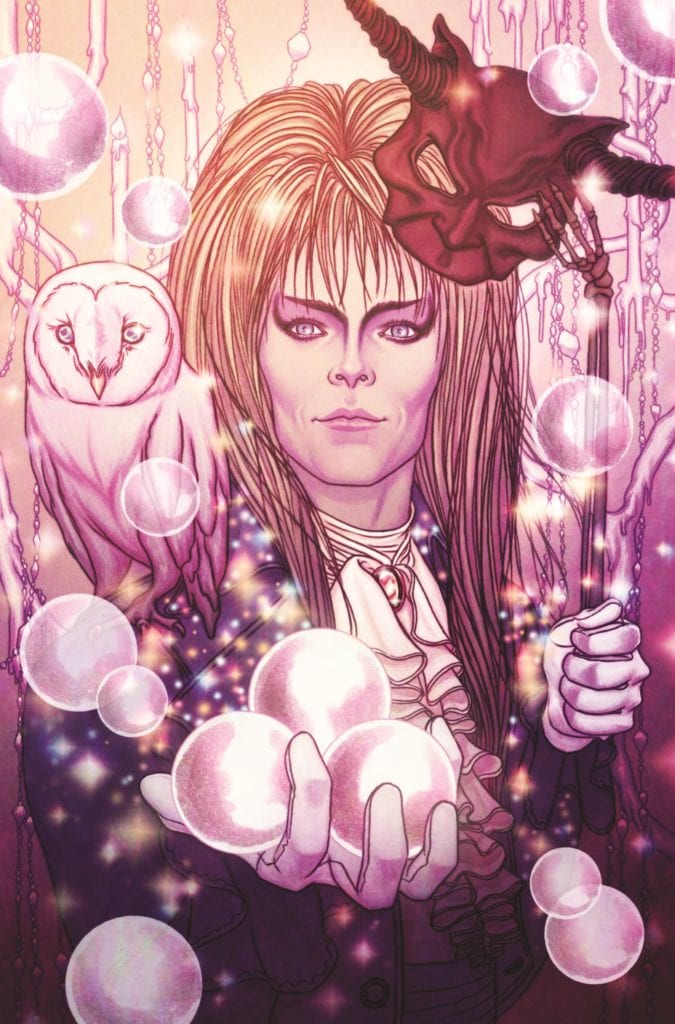
JIM HENSON’S LABYRINTH: MASQUERADE #1 features main cover art by artist Jenny Frison.
BOOM! Studios dropped some Labyrinth news today with JIM HENSON’S LABYRINTH: MASQUERADE #1 one-shot coming out in December.
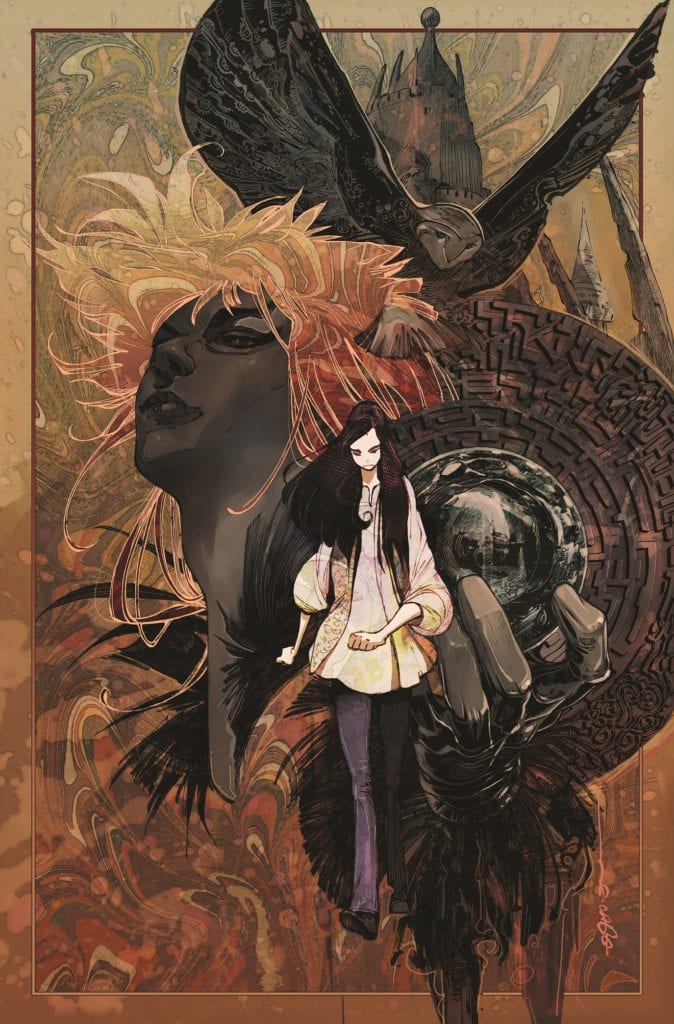
The book is written by Lara Elena Donnelly, with art from French Carlomagno, Samantha Dodge, and Pius Bak. Jenny Frison worked on the main cover (below), and Evan Cagle created the variant cover (below the article).
JIM HENSON’S LABYRINTH: MASQUERADE #1 features main cover art by artist Jenny Frison.
According to BOOM! Studios, the special issue, part of the Archaia imprint, centers around the famous mirror ball scene from the 1986 film starring Jennifer Connelly and David Bowie.
You’re invited to the ball of the season! But all is not as it seems with the guests of Jareth’s famous Masquerade, as one of the partygoers slowly awakens to the reality of her topsy-turvy existence in the Goblin Kingdom after Sarah’s escape from the ball. As this mysterious participant puts together the pieces of who she is and where she is, her discoveries could unravel the very fabric of this fantasy world!
Variant cover art by Evan Cagle.
Do you plan to add JIM HENSON’S LABYRINTH: MASQUERADE #1 to your pull list? Comment below with your thoughts.
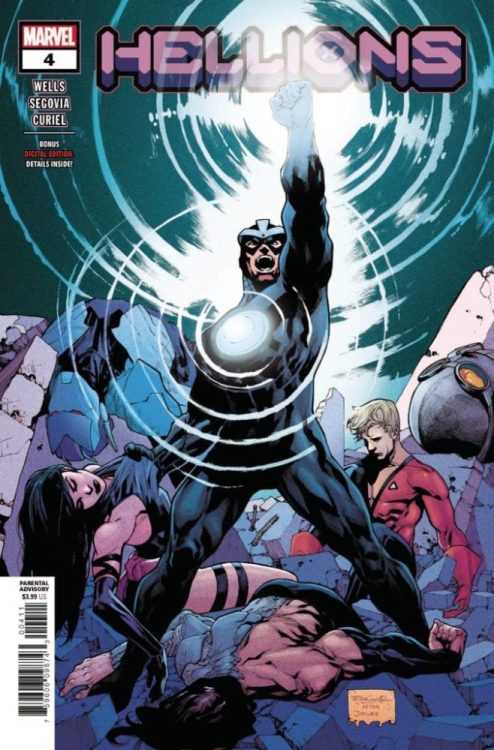
Marvel Comics releases Hellions #4 on September 16. Writer Zeb Wells, artist Stephen Segovia, colorist David Curiel, and letterer VC’s Ariana Maher bring the mission in Sinister’s old cloning lab to a close and demonstrates that some wounds may be too deep to heal.
Congratulations to the creative team for this issue! They took Madelyne Pryor, a terrifying villain with a horrifying plan for Krakoa, and by the end of the issue, made me feel sorry for her. Madelyne’s character history has been one of tragedy, being constantly hurt, forgotten, and left behind, always being in the shadow of Jean Grey.
Madelyne’s story is made even more tragic in the end when the Quiet Council refuses to grant her resurrection. Scott’s revelation that the council doesn’t want to resurrect a clone of Jean (the implication being that she isn’t a unique person) makes Madelyne’s last words all the more tragic.
Segovia’s art humanizes Madelyne as Maher’s letters convey the tragic sadness of Madelyne’s existence.
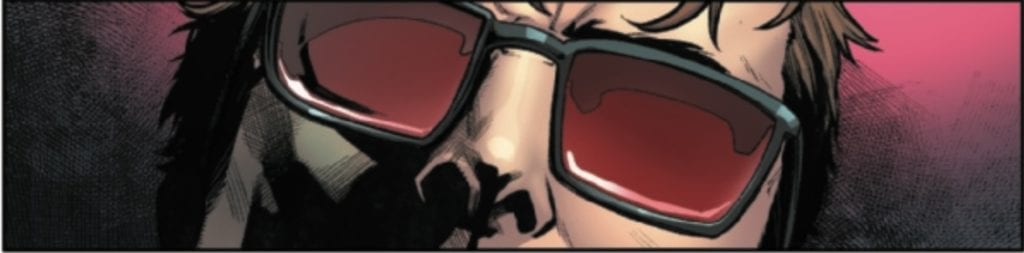
When Scott informs Alex of the council’s decision, Alex asks Scott what HE wants, and all he can do is stare.
Segovia and Curiel are able to capture the unease in Cyclops’s face. He was, after all, the one who first abandoned Madelyne for the “real” Jean Grey. This image does a good job conveying the complexity of Scott’s feelings, even his behind the deep red of his glasses.
This issue is, in many ways, a tribute to all the people that Mr. Sinister has hurt: Scott, Alex, Madelyne, Greycrow, and the original Marauders.
All is not lost though. As he watches (and takes pleasure in) Alex and Scott’s painful conversation, Sinister is approached by Nanny, who informs him that a reckoning is coming. That, and Beast’s ominous note about Psylocke from last issue, along with Alex’s disagreement with the Quiet Council’s decision, may indicate that the Hellions are on a collision course with Krakoa’s rules.
What did you think of Hellions #4? Tell us in the comments below!
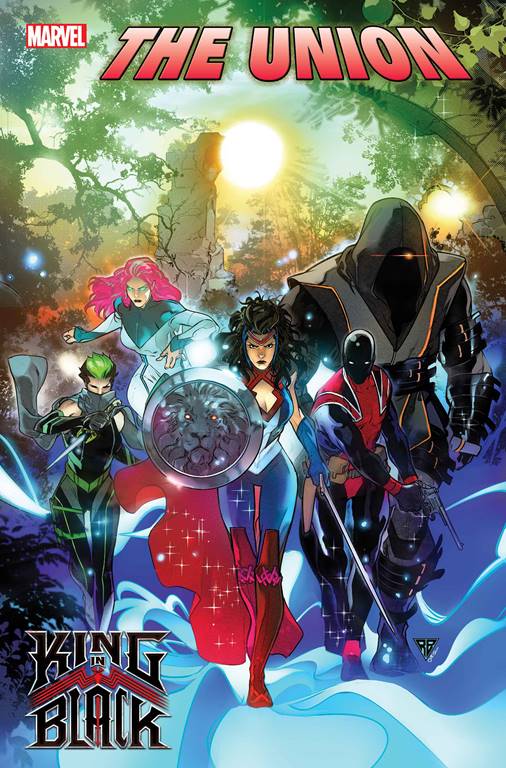
December’s arrival of the King In Black is touted by Marvel Comics as a threat to the whole universe, but the universe won’t go down without a fight. Marvel has announced a new team of British heroes will come together to face this new threat in THE UNION #1, available from Marvel in December.
Says Marvel about the new team’s mission: “to be an exemplar of what Britain can be…to show that we can overcome our differences, and work together to protect with a common purpose!” You can check out a preview of the first issue’s cover by R. B. Silva and read the full team lineup from the full Marvel press release below.
What do you think of this new team? Let us know in the Comments section, and please share this post on social media using the links below.
A NEW SUPER HERO TEAM UNITES AGAINST THE KING IN BLACK!
Prepare to meet The Union!
New York, NY— September 16, 2020 — THE UNION by writer Paul Grist (Judge Dredd, Jack Staff) and artist Andrea Di Vito (Annihilation) will make its grand debut this December! When Knull and his symbiote dragons invade Earth, the Britannia Project, a top-secret program, will assemble a new team of British super heroes. The goal: to be an exemplar of what Britain can be…to show that we can overcome our differences, and work together to protect with a common purpose!
The Union is led by the beloved Britannia, the noble warrior-hero who has long stood as a beacon for all that is best and bright in these historic isles. But despite the Project’s best efforts, these heroes aren’t quite what they seem, and Britannia may have her work cut out for her!
In addition to Union Jack, readers everywhere will soon meet exciting new UK-based heroes such as:
The Choir, a victim of scientific experiments who became a living weapon with sonic abilities: whether that’s subtle sounds to disorient people’s brains, or screams that could knock over buildings! The most tragic member of the team, she finds it hard to trust others.
Kelpie, an ancient water demon who can turn her body to water and has control over water around her. Though she seems light and breezy, she may be the most volatile member of the team.
Snakes, the muscle of the team…but also the most mysterious. He’s a man of few words–probably because he’s a telepath to boot! People are uncomfortable around him. Is he a man to be trusted?
And of course, Britannia, one of Britain’s oldest heroes. She symbolizes all that’s bright and good about Britain. If she can’t whip these heroes into a team, no one can!
Don’t miss out on an exciting new chapter of Marvel when THE UNION hits stands this December! For more information, visit marvel.com.
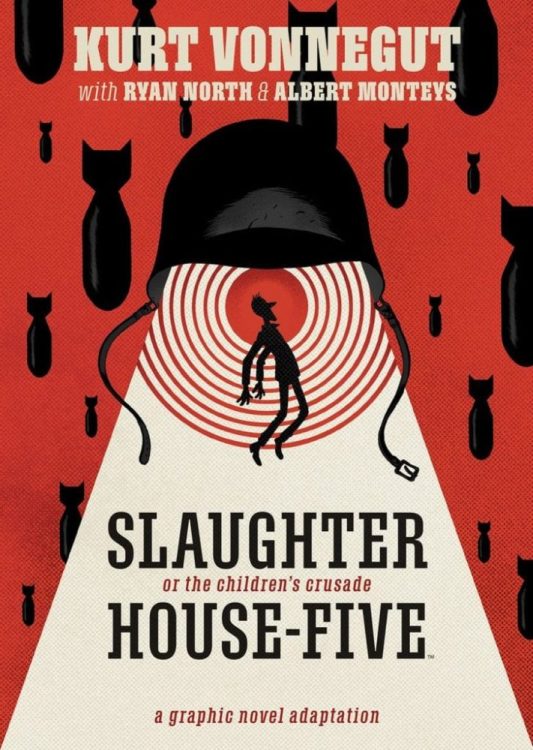
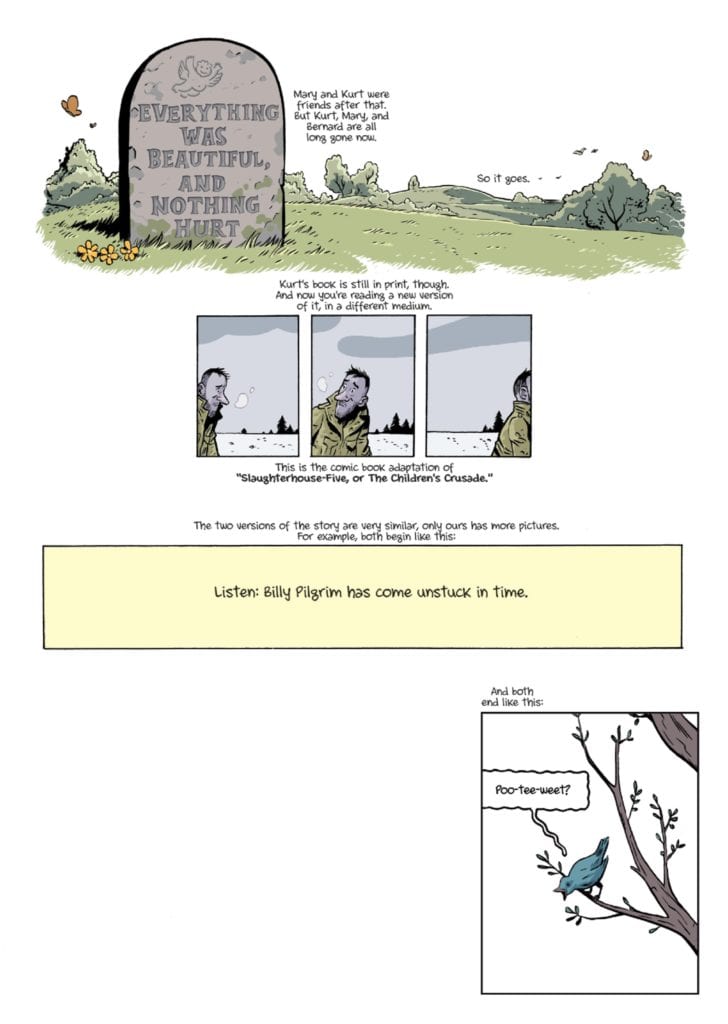
Slaughterhouse-Five, a retelling of Kurt Vonnegut’s classic story as a graphic novel published by Archaia, is a fantastic read that takes advantage of storytelling that can only be found in comic books.
About the Book:
Vonnegut’s classic novel follows Billy Pilgrim, a man who has come unstuck in time. Due to this, Billy does not experience his life linearly and jumps back and forth between different moments. His time as a soldier in World War II, his career as an optometrist, and his time spent on the planet Tralfamadore could all be shown back-to-back, despite taking place years apart. Ryan North and Albert Monteys retell this story in a completely new way that makes it deeply enjoyable whether you have read Vonnegut’s novel before or not.
Slaughterhouse-Five Story
Vonnegut’s novel has rightfully earned its place as a classic, so the work of Ryan North is not to create a riveting story but to adapt it. In the graphic novel Slaughterhouse-Five, North knocks this task out of the park. Before we even get to the part of the story concerning Billy Pilgrim, North retells the section of the novel told by Vonnegut in the first person about how the novel will be set up. North changes this to third-person and speaks about Vonnegut’s experiences. This works well because it allows North to discuss how several parts of this story — mainly the parts about being a soldier in World War II — are based upon a true story. This also allows North to set up how the graphic novel will end in the same way the original novel ended: Poo-tee-weet?
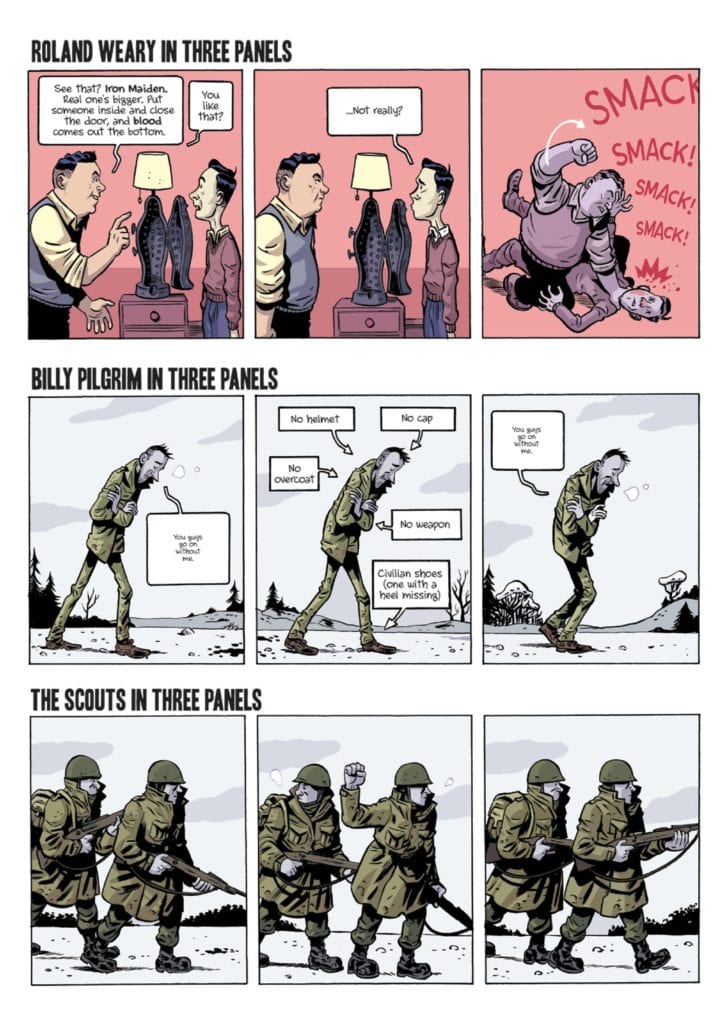
One thing that North must be applauded on is his use of storytelling elements that are specific to the comic book medium. These make Slaughterhouse-Five so much more entertaining, and mirror the unconventional storytelling Vonnegut chose when he decided to tell such a nonlinear story with an omniscient narrator. Some panels layout the entire inventory of a character on a page, a timeline, a supporting cast list, and even a reoccurring technique that describes a character in three panels. Each instance brings new life to an old story, and could not be done nearly as well in any other medium.
Art
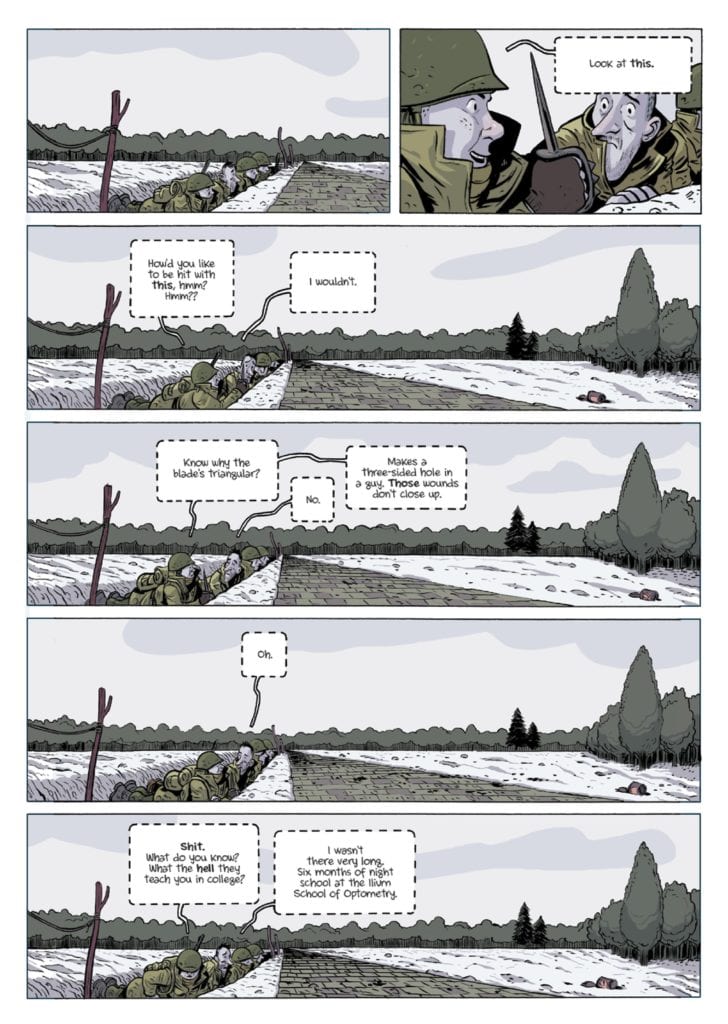
The art style of Albert Monteys is reminiscent of newspaper comic strips and feels much like a cartoon character. This style does two things for the story. One: it makes young characters seem very young, which helps drive the point that the soldiers who fought in the war were barely adults. This is why the novel is also called The Children’s Crusade, a Duty-dance with Death. The style also makes the death of characters less impactful, which goes along nicely with the phrase repeated in both the novel and graphic novel whenever someone dies: “so it goes.” When the way characters die become harsher, and they are humanized thoroughly before their demise, the continued accompaniment of “so it goes” is haunting. The framing of panels is clearly well thought out throughout Slaughterhouse-Five, and it is a great touch when Billy is in the same position before and after he travels through time.
The colors of Slaughterhouse-Five pair nicely with the line art and reflect the tone of scenes incredibly well. So much so that it is abundantly clear when Billy travels through time, When items from one time enter a panel set in a different time while Billy is transitioning, it is clear that those items don’t belong. The colors of Billy’s surroundings, while he is in Europe fighting in World War II, are very bleak, which helps highlight the harsh conditions.
Slaughterhouse-Five has a standard black-and-white speech bubble whenever the narrator speaks, which helps set a non-emotive tone that pairs well with what he is saying. Monteys also uses lettering to add small sound effects in certain scenes, that helps effectively immerse the reader in what is happening.
Conclusion
This retelling of Slaughterhouse-Five is an absolute joy to read and is something I recommend to anyone who is a fan of Vonnegut’s classic tale. For those who haven’t read the original novel, the comic book adaptation is also a great place to start and is true to the original story. The story is a well-deserved classic, and this adaptation honors it while also introducing many unique storytelling elements specific to the medium.
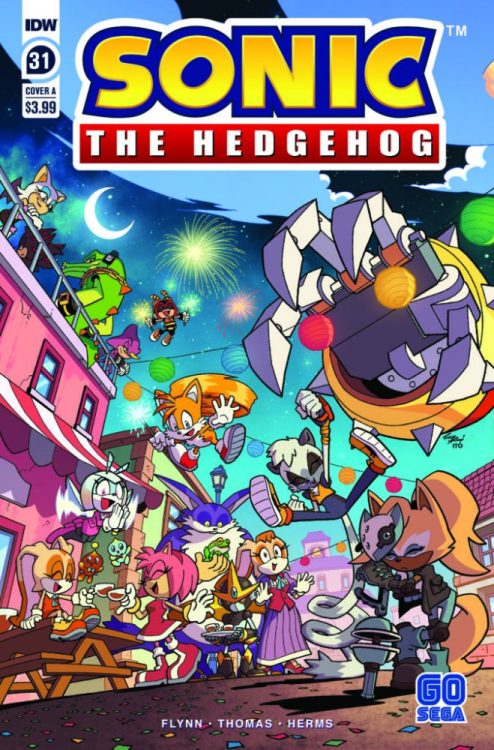
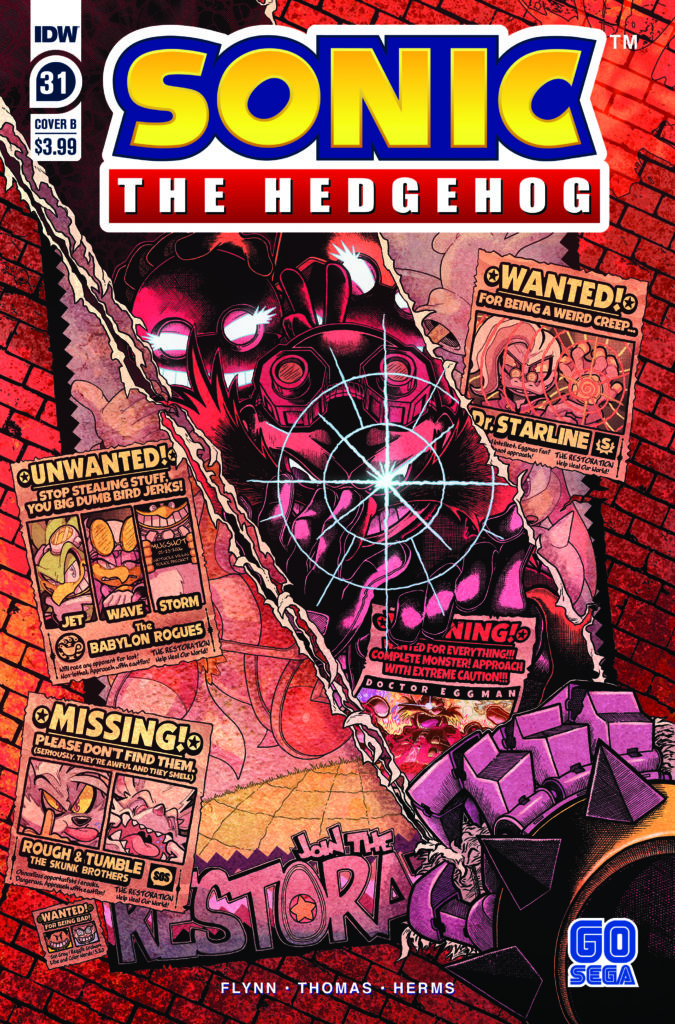
Sonic the Hedgehog #31 releases this week from IDW Publishing and focuses on wrapping up the metal virus saga. Even though the heroes were able to save the world, it becomes apparent they have a lot of rebuilding to do moving forward. The artist team consists of Ian Flynn (Writer), Adam Bryce Thomas (Pencils and Ink), Matt Herms (Colors), and Shawn Lee (Lettering).
It’s all led to this, the thrilling two-part epilogue to the Metal Virus Saga. The world has changed. Heroes and villains plan for the future as reconstruction begins. But one hero remains missing…
Writing
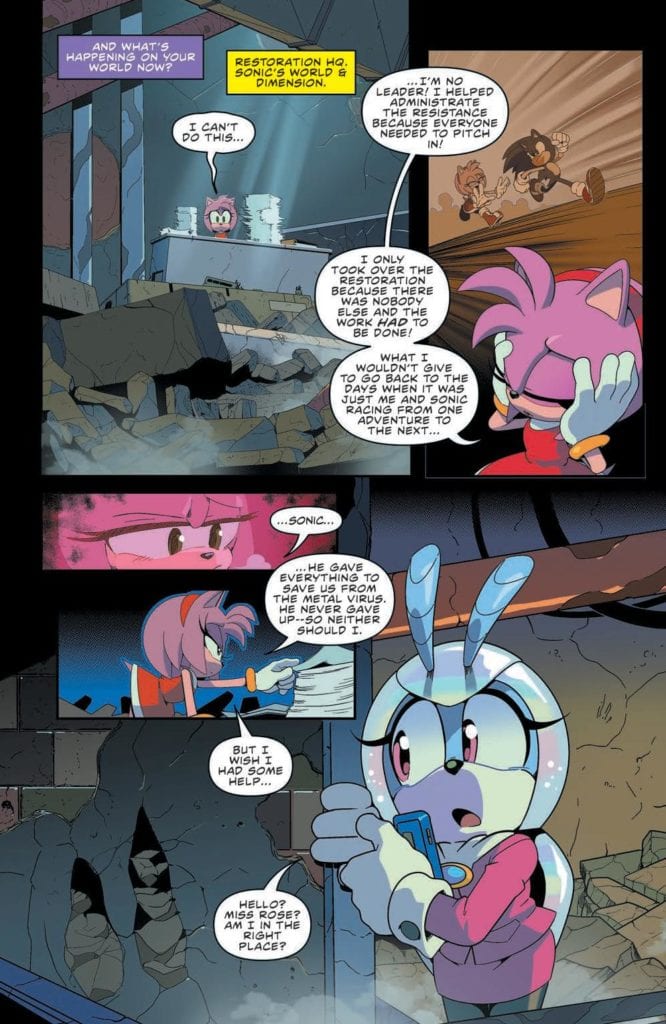
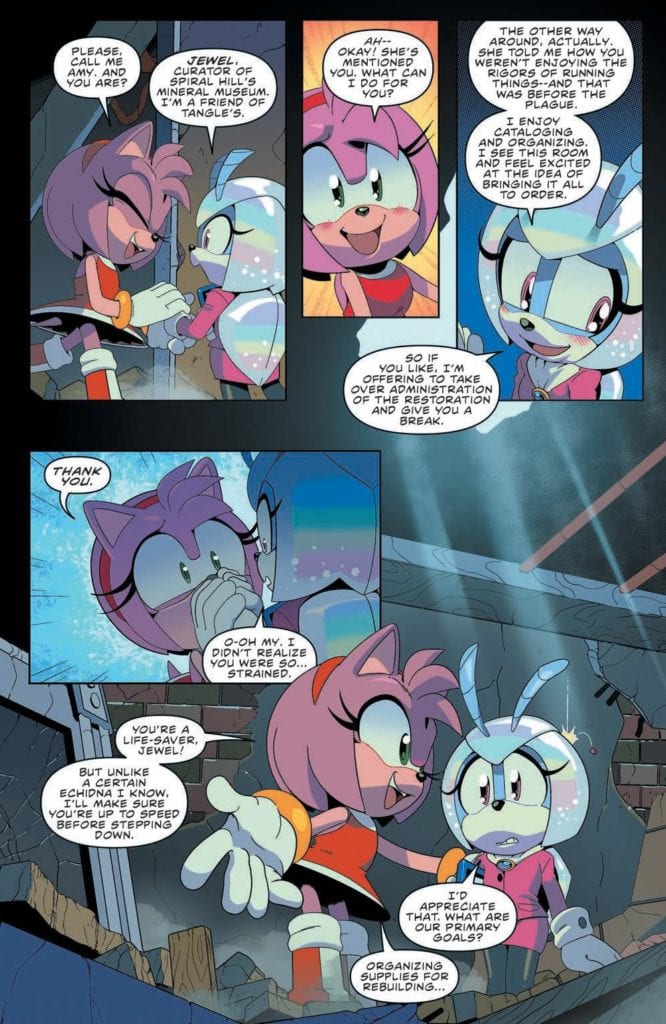
The issues feature all the characters moving forward in the aftermath of the metal virus. Most of them feel overwhelmed by the challenges in front of them. Amy Rose struggles to rebuild the Resistance base, The Chaotic are overwhelmed with person cases, and even Dr. Eggman struggles to come up with a new plan to take over the world. Luckily, all of these groups soon find they are not alone in their struggles.
The end of Ian Flynn’s time as the writer (who worked since on the first issue since IDW launched the new series) is drawing close but it is apparent there is intent to leave the characters in a good place for the next creative team. At the same time, seeds of possibilities are being laid for those who come after to address. Such as a very charming interaction between Vector and Vanilla.
Artwork
Adam Bryce Thomas pays close attention to the use of body language in this issue. Character moments vary from having more lighthearted moments but also take the time to get serious and reflect. When the moments do become heavy, Thomas makes sure to show the characters as being stiff as they feel the weight of their situation as they struggle to move forward.
The colorwork by Matt Herms emphasizes the emotional moments from panel to panel. One of the best examples comes as Silver the Hedgehog is shown making a shocking revelation. The coloring aids to show a sense of hopefulness the character has achieved after the metal virus arc.
The lettering work by Shawn Lee helps with the smooth transitions from panel to panel. Proper bubble placement allows for the reader to experience a great sense of flow the characters take the time to reflect on all they have overcome. Additional points for Lee’s use of sound effects which never distract from the overall story.
Conclusion
Sonic the Hedgehog #31 is the first part of the conclusion of Ian Flynn’s run on the title. The first part is a reminder of everything the fans enjoyed and how well the character interacts with one another. There is little worry the next issue won’t be more of the excellent quality fans have seen in the previous 31 issues.
Note: this article includes some minor spoilers for Stillwater #1. If you want to get the best experience out of the comic, don’t read anything about it. Buy it and read it first. Then come back here or check out the MFR review.
Setting a scene is important. Not just because it gives the characters a location to inhabit but because it can create a tone for the story. The setting is important for mood, for genre, and for highlighting characters. The location for a story and the way that it is depicted is as much a trope as a trench-coat wearing detective. The opening sequence in The Walking Dead is as much about the world Rick wakes up in than it is about Rick himself.
In a medium where we talk so much about character and action, it is easy to overlook the locations. However, the setting leads the reader through the narrative, signposting the genre through recognisable motifs and creating a mood that enhances the foreground action.
In Stillwater #1, published by Image Comics, Chip Zdarsky and Ramon K Perez use a changing landscape to reaffirm the central characters’ journey and draw the reader into their pseudo horror story.
Stillwater #1 Town Scene Credit: Image Comics
Cold Introductions
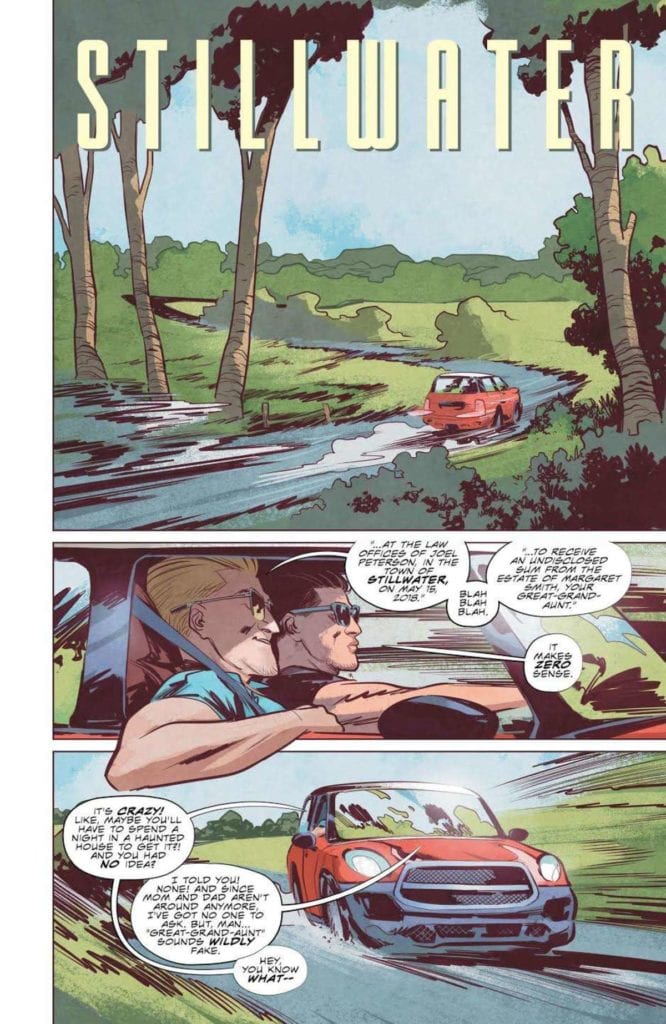
The first issue of Stillwateris a classically framed opening for a horror story. As to where the series eventually goes may be somewhat different but for the introduction Zdarsky and Perez have adopted a familiar journey. Their two main characters, one down on his luck and the other too rich to care, are mysteriously summoned to a small, out of the way town, by the promises of an inheritance.
The journey takes the characters from the urban sprawl to a quiet backwater and the changing landscapes really tell the story. One is sterile, uncomfortable and violent while the other is serene and laid back, however every horror fan knows that the grass is never greener. The contradictions between the scenery and the experiences of the characters is the mechanism that gives Stillwater it’s narrative punch. The opening scene is a perfect example of the contradiction inherent throughout the comic.
Daniel is at work, in an open plan office surrounded by fellow co-workers. It is a scene that many will identify with and must surely be a safe space. Everything is open and bright. Nothing every bad happens during the day, especially not at a mundane place of work. But if you look closer at the panels not everything is at it seems. The office is open plan but Daniel is still cut off from the rest of the workers. His desk is a physical barrier between him and everyone else; he has oversized earphones on cutting him off from the office chatter; and his name, our introduction to the character, is placed beside a large red wall hanging, the only vivid color in the room.
Letterer Rus Wooton places the speech balloons above and below the red painting which emphasises the placement and draws your attention to the vivid warning color. The added border of yellow around the second shout of the characters name gives extra weight to the interpretation that not all is as it seems. Far from being a safe place, the first panel actually insinuates that something bad is about to happen.
As the page progresses and we learn that Daniel is in trouble with his boss and the character becomes further isolated by the scenery. The red wall of the manager’s office surrounds Daniel putting him under threat. The distance between him and his Boss is exaggerated by the comparison between the different sides of the room: on one side is furniture and personal belongings which create a sense of permanence, on the other is a flat red wall with blank, white paintings, unwelcoming and empty. There is a clear division in one panel created by the desk and a cleverly placed plant, separating the characters. The panel is also silent because no words are necessary: this is clearly a man getting fired.
Stillwater #1 Into The Country Credit:Image Comics
From City to Country
In the opening scene the writer/artist uses the backgrounds to enhance the character interaction. As you move through the comic, you come to realise that the scenery also feeds into the greater narrative in a similar, but more expansive, way. The growing tension and the sense of unease that the story relies on comes from the changing landscape.
Daniel lives in the city. Zdarsky tells us through the plot that it is a dangerous and violent place. In turn Perez gives it a kind of grittiness however it is not uninviting. Mike Spicer throws a cool pink light across a nightclub scene, highlighting the characters against the grey backdrops. Despite the conflict evident on the page there is a comfort to the location, as if Daniel is at home in this place. This theme is continued into the next scene which is literally his home. He wakes up wrapped in blankets, his friend comfortable on the floor playing a games console, the warming sunlight drenches the scene.
It is a safe place and still clearly the city. The architecture and the greys in the background link Daniels apartment to the nightclub of the previous night. It is an aggressive place but one that is familiar to the characters and therefore desirable to them.
All of this is about to change with the arrival of the unassuming, little old man.
A classic unexpected inheritance is the catalyst for the story and forces Daniel and Tony to embark on their road trip. From this point onward the importance of the landscape becomes unmistakable.
Think of any horror movie or comic where the protagonists journey into an unknown location. In every single one, the change from their home, their place of safety, to the dangerous location is represented visually. The classic is the switch from the city to the county. From Evil Dead to Cabin in the Woods, 30 Days of Night to Winnebago Graveyard, the contrast of locations fuels the tone of the narrative.
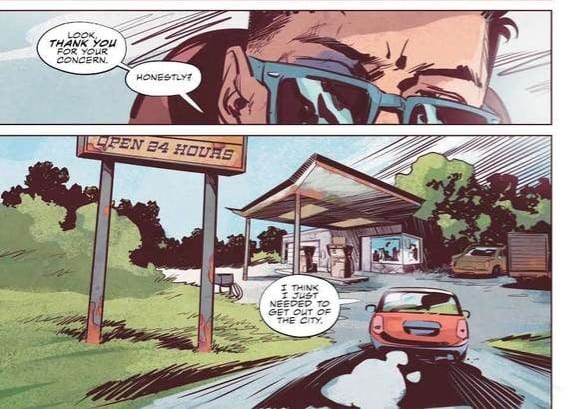
In Stillwater Perez contrasts the rigidness of the city with a free flowing, expressionistic countryside. From the moment the characters leave the urban setting Spicer’s colors become softer, greens and light browns, but there is an overbearing element to the panels and pages. Perez changes the reader’s viewpoint, moving it lower so that we are constantly looking up at the surroundings. This gives the impression of the landscape towering over us, trapping us. This is often a feeling people experience in large cities surrounded by skyscrapers, so to invoke that feeling in wide open spaces is telling of the situation. There is a moment of discomfort as Daniel drives up to a local gas station because the forecourt stretches over the reader like the lid of a box. And the further into the wilderness the two men drive, the more oppressive the landscape becomes. Perez uses dutch angles, low angles, and a lot of over the shoulder shots in order to make us as uncomfortable as possible.
Stillwater #1 Gas Station Credit: Image Comics
Unnerving outcomes
By the time Daniel and Tony reach the town of Stillwater, we already know that there is something different, something wrong with this place. Long before the unusual actions of the townspeople fill us with dread, the location has us longing for Daniel to turn around and go home.
The horror tropes are there, within the narrative but as with so much of this genre it’s the presentation that marks a title out. Zdarsky, Perez, Spicer, and Wooton encapsulate the readers expectations of a horror story in dramatic ways. They build a visual landscape that reflects the unnerving narrative so that one aspect feeds beautifully into the other. Simply put, it’s engrossing. This is exactly what you need to make the jump scares work, especially in a comic.
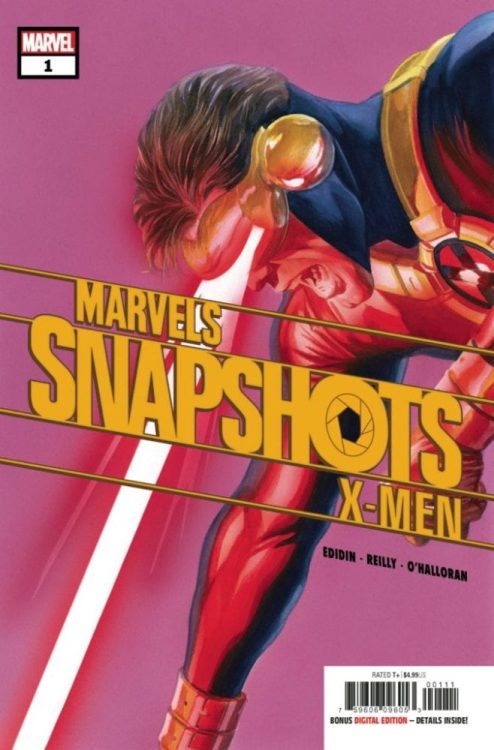
MARVEL’S SNAPSHOTS: X-MEN #1, available from Marvel Comics on September 16th, reaches back into Scott Summers’ childhood and retells how heroes are born with a little inspiration from other heroes. Written by Jay Edidin with art from Tom Reilly, this is the first Marvel Snapshots issue to showcase the tactical leader of the X-Men, and it’s the best Marvel’s Snapshots issue this reviewer had read to date.
Cover Art
Despite the vague title, Alex Ross’ cover nails the content by focusing on the subject of this issue. Scott is the planner, the leader who gets everyone moving in the right direction. He’s as laser-focused as his optic blasts, but he wasn’t always that way. It’s an interesting play to show a cover of the ending for an issue that starts at the beginning.
Writing
Edidin’s story deeply inhabits the personality of Scott Summers before he becomes Cyclops and before he even discovers he’s a mutant. We often see the origin of X-characters when they turn, and the X-gene becomes activated. That would have been the easy choice. Instead, Edidin goes back further to the plane crash that “killed” his family and subsequent life in an orphanage. From those early years, Edidin portrays a boy feeling the pull of heroism and leadership. The force grows more potent with the dawn of heroes, mostly via the arrival of the Fantastic Four and the realization that heroes inspire and beget more heroes.
MARVEL’S SNAPSHOTS: X-MEN #1 is a strong character piece by Edidin that tells a personal story of growth for a boy who chooses his path to become a man, and eventually, a hero in his own right. This comic is an excellent story by Edidin.
Pencils/Inks
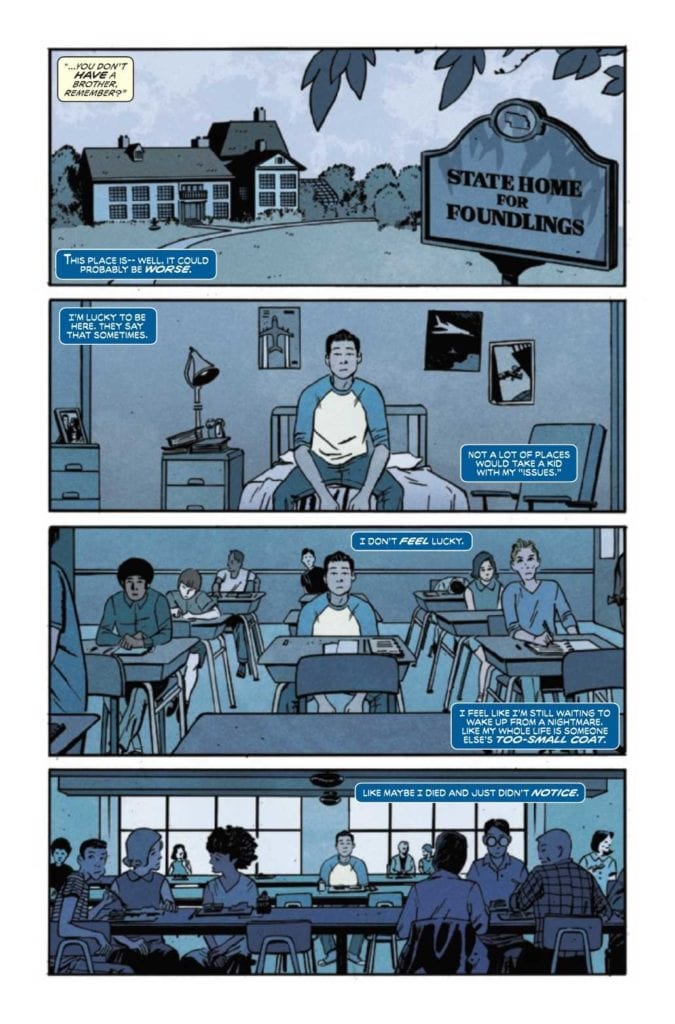
Reilly’s art style works very well for the type of narrative and the time frame in which the story is set. Scott is awakened to the concept of heroes by watching the Fantastic Four’s first public battle on TV. Reilly designed the issue in a retro, mid-century 1950’s style that’s reminiscent of the dawn of the American space age. That style typifies the nuclear family tone of the Fantastic Four, and it sets a time period for the story that places Scott in Marvel continuity in an organic way.
Reilly also chose to keep most of the panels zoomed in on Scott to force the reader to view the world as near as possible from Scott’s perspective. It’s a great panel choice to maintain the personal feel of the story—lots of great creative choices here by Reilly.
Coloring
Consistent with the retro style of the issue, Chris O’Halloran uses liberal amounts of blues on most of the pages to imply the story is in Black & White. It’s not, and when the full-color panels pop, they boldly stand out, but the patina of blues helps emphasize the sense that you’re watching an old documentary. O’Halloran’s color choices elevate Edidin’s story nicely.
Lettering
Tom Orzechowski’s lettering is the glue that holds this issue together. Edidin’s story is heavily dependent on Scott’s inner monologue to carry the whole way through. By specifically coloring and breaking up Scott’s thoughts into a very specific lettering style, it makes the story very easy to read, and the technique enhances the idea that you hear Scott’s thoughts as he wrestles with his choices. Great work here from Orzechowski.
Conclusion
MARVEL’S SNAPSHOTS: X-MEN #1, available from Marvel Comics on September 16th, is the best of the Snapshots so far by a country mile. The story is a thoughtful coming-of-age tale during the dawning age of heroes, and the artwork blends seamlessly with the writing. I strongly recommended picking up the book.
Richard Chandler is an actor, writer, and director whose horror film Parts Unknown revolves around one of his life-long interests — wrestling.
Parts Unknown is a film about a family of wrestlers known as the Von Strassers. Their days of glory in the ring are behind them. Patriarch Hermann Von Strasser (William DeCoff) is looking for a new way to satisfy the lust for violence coursing through his family’s veins. The solution comes from an unusual place and sets off a string of violence.
PopAxiom spoke with Rick at the center of the ring to talk about the road to showbiz, Doctor Doom, and Parts Unknown.
Tenacious
Richard’s IMDB resume includes 58 acting credits, plus 27 directing credits, 25 as a producer, and another 23 as a writer. What came first? “I wanted to be a writer as a teenager. I wrote books … crazy literature … that would probably be better suited to comics. Then I wrote screenplays.”
Writing was the motivating passion, but it wasn’t long before Richard “jumped into the fire and transitioned into trying to direct and produce … super low budget films.”
Richard considers himself, “… someone who is tenacious,” which is a valuable personality trait in showbiz.”
About Parts Unknown
Richard says he’s “Always been a big wrestling fan.” He continues, “It’s something that people like to talk about as having this super dark side to the business. It’s showbiz. There’s always messed up stories.”
Richard’s other favorite thing is horror. The birth of Parts Unknown was a natural connection between the two. “What if I try to put this lifelong thing that I’ve watched and put it into a horror movie vibe.”
If you’re a wrestling fan, then the Von Strasser family in the film might feel familiar. “It’s a family of wrestlers … loosely based on the Von Erichs.
Hermann Von Strasser is “… a harsh patriarch who wants everyone to be good, but he’s not exactly a loving character. He beats them if they fail.”
In Parts Unknown, the family is “… down on their luck now,” Richard says, “They’re all on drugs or involved in other bad habits. They’ve all lost their jobs with the big federation.”
“Herman,” Richard says, “ends up finding this demon creature that may or may not exist in his head. He talks to the creature, and the family slowly devolves. They become sort of this cult that uses the demon to satisfy their craving for blood and the spotlight.”
Making Parts Unknown
Earlier in life, Richard did work “… a little in local wrestling promotion, not as a wrestler, but as the evil general manager type characters. I was good at that and getting the fans upset.”
The experience let Richard see “… how things work backstage, but not a tremendous amount.”
Parts Unknown isn’t a super-budget feature from a major Hollywood studio. What was a challenging aspect of production? “Getting the ring and places to put it was a challenge. We had to film a lot in one day. It was a ridiculous amount to cram in there.”
Fortunately, casting made it a little easier. “Most of the leads did wrestle. But,” Richard adds, “finding actors who could wrestle was a challenge too.”
Wrapping Up
Our talk turns to other artists and creators who inspired Richard. “Oof, that’s tough. There are so many.” Richard ponders before answering, “John Carpenter.”
Outside of horror, Richard loves old-school action films. “Death Wish and Cobra and Commando. I grew up obsessing over that stuff.”
Who does Richard want to play? “Doctor Doom. When Fantastic Four is created for the third time, I want to play Doom. I want to give him a weird, modern spin.” What about a slasher? “I think the obvious answer is Freddy.”
Richard writes and directs. If he could only do one, which one would it be? “Probably writing. But if we throw acting in there, I’d choose acting. I have fun as an actor. As a writer or director, people constantly love saying, ‘I would’ve done this or that. It’s too reminiscent of this or that.’ They can all do it better.”
Richard explains, “But it takes so long to write a movie, and most don’t understand how frustrating it is to have comments thrown at you.”
The time spent with the project is a big difference that isn’t brought up often enough. “As an actor, you come in for a few months, train to play your character, and then you’re out. A director might have worked on the film for four years.”
Parts Unknown is available on Amazon Prime and other streaming services. You can find more information by following @BostonUndead on Instagram. What’s next? “We managed to shoot a short called Rats. It’s about 20 minutes. That’s the project that’s in post.”
Is Parts Unknown on your watch list?
Thanks to Richard Chandler and October Coast
for making this interview possible.
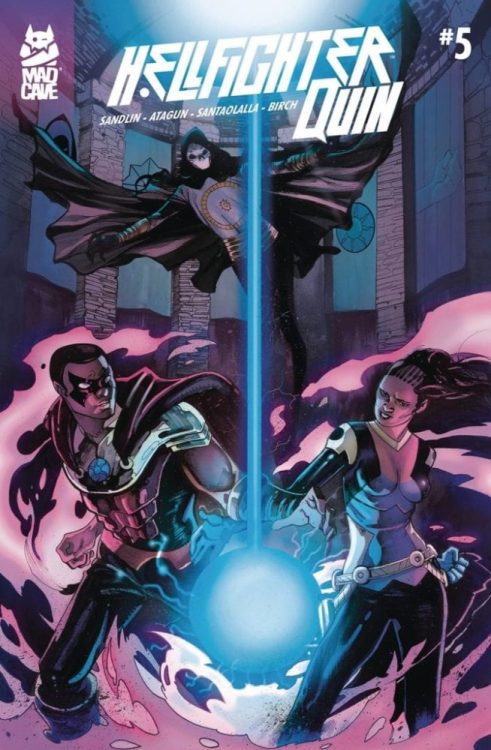
HELLFIGHTER QUIN #5, available from Mad Cave Studios on September 16th, brings Quin’s fight in the tournament to an end with a shakeup of the status quo. Jay Sandlin’s story finds a satisfying conclusion for the reluctant hero and the five tribes while wrapping up all the loose ends.
Cover Art
Atagun Ilhan’s cover demonstrates great composition and sets up the finale beautifully. Quin and Shard are ready to possess the Azure Sun as the Doomseer’s visage looms over them, but if you’ve read the last issue (read our review here), you know it’s a lot more complicated than the cover lets on. Additional credit to Maria Santaolalla for coloring work that really pops.
Writing [No Spoilers]
Sandlin wastes no time dropping Quin and Deadeye into the last round of the tournament as final opponents and secret allies. Before we get to the action, Sandlin gives the readers a brief but information-packed flashback to explain the big reveal of Doomseer’s identity in the last issue. It’s a clever twist that pits good versus evil in a completely unexpected way.
The big boss twist, in a way, informs a critical theme of the entire series. There is no cartoonish depiction of purely evil bad guys and ultra-pure good guys. Sandlin seems to suggest there’s good and evil in all of us, and those forces are vying for dominance at any given time. For a straight superhero comic, the reveal leads to some deeply thought-provoking ideas that I truly appreciated.
One side note that’s both criticism and praise, the prologue was optimistic to an almost corny degree. Yes, some of the lines like “Whoomp there it is” were eye-rolling but sincere in a way that made me smile. I couldn’t help but think, “Sure, it’s cheesy, but they earned it.” Nicely done, Jay.
Pencils/Inks
Ilhan’s artwork has shown some steady improvement throughout the series. What stood out most in this issue is the panel work and the page layouts, which don’t get enough attention in modern comics reviews. Ilhan demonstrated interesting panel shapes and arrangements to create a kaleidoscope effect for the story. Several pages felt like scenes in motion, one panel telling its tale and then quickly being replaced by a new panel.
Overlapping panels can get quite confusing, visually, so big kudos goes to Ilhan for perfecting expert level layouts.
Coloring
Santaolalla’s coloring work stands out for the use of filters during the flashback scenes, of which there are multiple. From the formation of the clan leadership to Tyrell’s acceptance in the tournament, each of the flashbacks is colored in stark contrast against the setting of current events to give them a very clean and clear separation in the timeline and add a patina of age. This is a good example of using color to tell part of the story.
Lettering
Justin Birch’s most striking technique in this issue is marrying the coloring and design of the narration boxes with the characters doing the speaking off-panel. Sandlin’s story has a lot of ground to cover to complete the story in a single issue, so it’s not always possible to have every character in every panel when there’s so much going on. The use of color in the lettering, coded to the characters, really helps the reader keep everything straight and allows for more storytelling in fewer pages—excellent work by Birch.
Conclusion
HELLFIGHTER QUIN #5, available from Mad Cave Studios on September 16th, brings the series to an exciting, fun, and at times, thought-provoking finale. The story ties up all the loose ends in a satisfying way while still leaving room for a future adventure, and the art team continues to grow and deliver solid work. I would recommend the entire 5-issue run for comics lovers looking for some creative adventure.
GRIT #3, available from Scout Comics on September 16th, pits Barrow against Ari in a competition to see who can beat the Blood Demon first. Brian Wickman’s story takes the concept of the lone wolf and gives it a twist that ends with a refreshingly human reaction.
Cover Art
Kevin Castaniero’s cover sets up the issue perfectly. Ari believes the Blood Demon was never truly vanquished and picks up the hunt where Barrow left off. Barrow, not wanting to be shown up for failing his job, follow suit. The Blood Demon uses every tool at its disposal, including the townspeople, to stop the hunters. All that can read from this one cover, and Castaniero nails it.
Writing [No Spoilers]
Wickman’s continuation of Barrow’s hunt leans heavily into the old adage: “You can’t teach an old dog new tricks.” Barrow is feeling his age, and Ari’s constant challenges to Barrow’s capabilities aggravate Barrow’s stubbornness and push him to recklessness. In the end, Barrow is forced to question whether or not he’s too old to keep hunting.
The ending of Wickman’s story was swift but extremely potent. Too often, the grizzled hunter is stereotyped into a caricature of invincibility. Unflappable. Unstoppable. Here, Wickman chose a different path that’s much more relatable and opens up a wider possibility for storytelling in the following issues.
Pencils/Inks
You can tell Castaniero had fun pushing the comedic elements of the story much more in this issue than previously. Barrow’s exaggerated attention to scat in his attempt to track the demon. Ari’s bizarre plant magic attacks that de-possess the possessed. And Barrow’s bare hint of a smile as he’s enticed to buy some unsavory looking street food. It’s these little touches that layer on dark humor charm to the issue.
In stark contrast, Castaniero’s designs for the blood demon and the big battle are tense and horrific. The juxtaposition of the humorous shows of bravado from both Barrow and Ari, combined with the deadly urgent action sequences, makes for an exciting and thoroughly enjoyable issue.
Coloring
Simon Gough continues to make a very powerful choice with the coloring by keeping everything restrained in as many earth tones as possible. When the Blood Demon shows itself, the red stands out shockingly and with a much higher impact. The coloring signifies that the Blood Demon doesn’t belong in this world, and it projects an unnatural element to the character—nice work by Gough.
Lettering
Micah Myers’ lettering is most notable here for the imaginative creation of sound effects that have no analog in the real world. Myers dreams up a Blood Demon manifesting through vomit and seed pods that explode on impact. All through very imaginative, and at times gross, sound effects that match the tone and spirit of the issue. Great work by Myers.
Conclusion
GRIT #3, available from Scout Comics on September 16th, takes the story of the old dog being shown up by the young upstart and gives it a fresh coat of paint. The writing has plenty of rise and fall to keep the reader engaged, and the stylized artwork marries to the story perfectly. A strong series so far from Scout.