Home Blog Page 216

Review: THE CROODS: A NEW AGE Dishes Out Fun Sequel

The Croods: A New Age is sure to have families across the world laughing this Thanksgiving. A worthy sequel pitting The titular family against their biggest challenge yet, another family. This is a slight improvement over the original’s weak story, and there’s a lot more heart this time around. It effectively establishes a purpose, which was lacking in its predecessor makes this a superior sequel.

Dreamworks’ follow-up delivers a story smothered in heart, colorful animation, and a message of accepting each other’s differences. The star-studded cast returns, the jokes are in large quantity, and it’s just an overall good time. The Croods: A New Age corrects the previous errors and is easily one of the best animated films this year. Directed by Joel Crawford, The Croods: A New Age stars Nicholas Cage, Emma Stone, Ryan Reynolds, Peter Dinklage, Leslie Mann, and Kelly Marie Tran. The Croods have come across their biggest threat, the Betterman’s, a more evolved form of humanity. Guy (Reynolds), who is searching for his tomorrow with Eep (Stone), begins to act differently after reconnecting with old friends. The two families are at war until a threat arises forcing them to put their differences aside.

Eep Crood and Hope Betterman in The Croods: A New Age

The film was penned by Paul Fisher, Bob Logan, and Kevin and Dan Hagerman who have collaborated in the best way here. Eep and Guy seem to have a steady relationship, but Grug (Cage), her father is still determined to keep the pack together. Once the Betterman’s are introduced the film takes off because they are a contrast to our titular family, so they instantly look down on them. The Croods love their caveman habits such as eating dry twigs for dinner, but the Betterman’s prefer fine dining and more luxurious attractions. The writers create turmoil between the families by revealing that the Betterman’s are old friends of Guy and his parents.

How the film addresses different lifestyles and looking down on others for what makes them who they are is wonderful. Guy has been looking for his tomorrow ever since his parents passed, and he begins to overlook his findings when Hope Betterman (Tran), an old friend reunites with him. The development of The two feuding families is the film’s strongest aspect, as it highlights an important message about parenting, and how life experiences can shape everyone differently. Aside from its messages, The Croods: A New Age will keep audiences laughing from start to finish thanks to a few jokes, so this will be a hit this holiday season. The Croods: A New Age stumbles a bit once a new conflict is introduced, but manages to still wrap up on a high note.

The Croods arrive at the Bettermans in The Croods: A New Age

The cast delivers yet again, and the new additions fit right in as if they were here since the last film. Stone and Reynolds do a terrific job making the chemistry between Guy and Eep seem believable. The rivalry between Phil Betterman and Grug Crood is hilarious thanks to Dinklage and Cage, who have one of the years best fatherly feuds. Crawford’s directional debut is solid, as he has put together an animated blast that has something for everyone to appreciate. It’s a beautifully shot film that features superb animation, and it’s some of the best in recent memory. Crawford understands how to evoke emotions from his audience and the film’s color scheme this time around is a massive increase.

The Croods: A New Age was a much-needed improvement over its predecessor, and perhaps that’s why this one seems so great. Still, this sequel is well made and includes terrific voice work from a star-studded cast. A cast that will keep you glued throughout the entire runtime, but the film’s underlying messages might cause discomfort for some parents, or it could be an eye-opener for others. The Croods are back for more, and fans of the original should have fun with this latest outing.


Monkeys Fighting Robots Youtube

Review: POWER PACK #1 Gets The Band Back Together

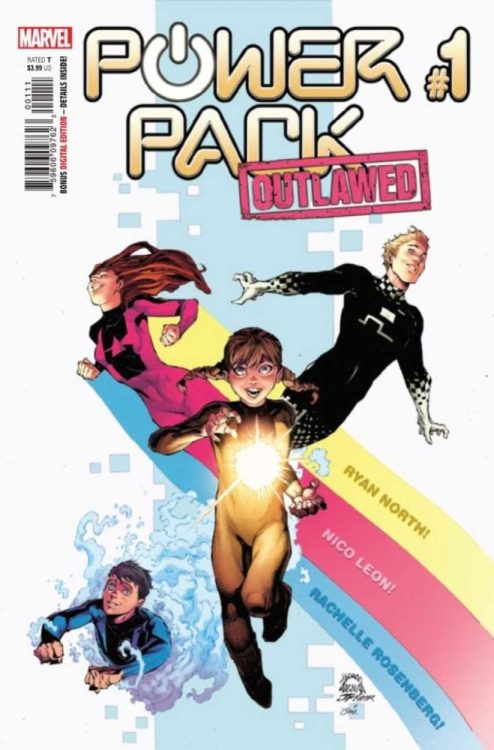
Power Pack #1, Stegman cover

POWER PACK #1, available from Marvel Comics on November 25th, brings the titular, super-powered siblings back together after years of fighting solo across time and space. This time their biggest threat is the US Government. Written by Ryan North with art by Nico Leon, this first issue in the series finds the kid team caught up in the Outlawed event when all they want to do is kick butt.

Cover Art

Ryan Stegman’s cover work for this inaugural issue is generally good. Katie Power is the focus of this cover, and that’s reflective of the internal story. With Katie and Julie fully powered up, they provide some strong visuals to leap off the cover. I would have liked to see more energy in the composition because it lacks oomph.

Writing

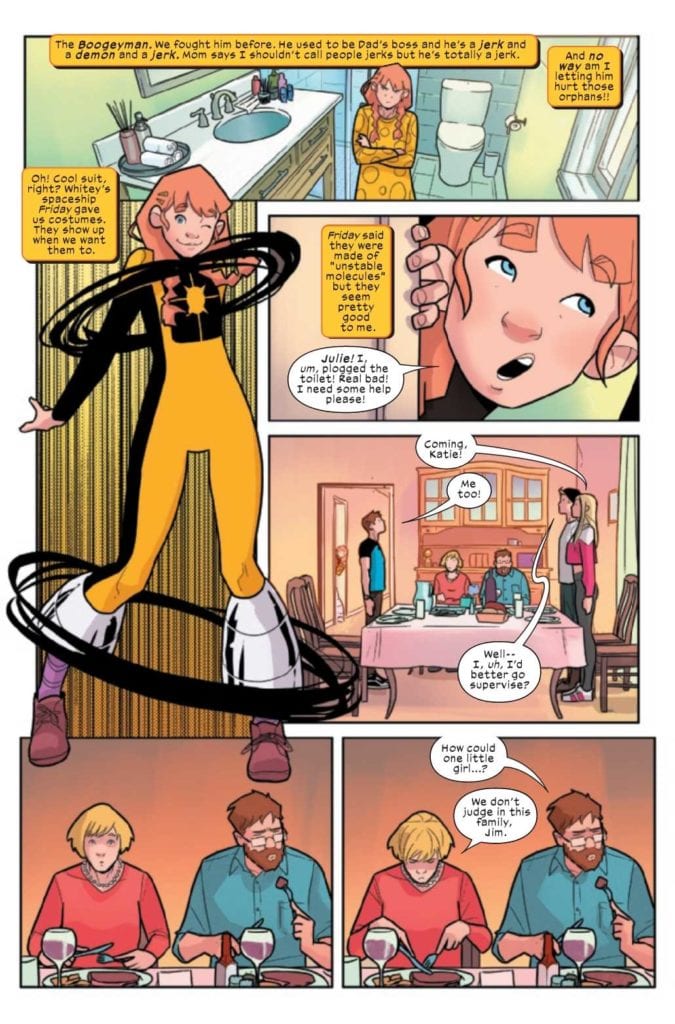
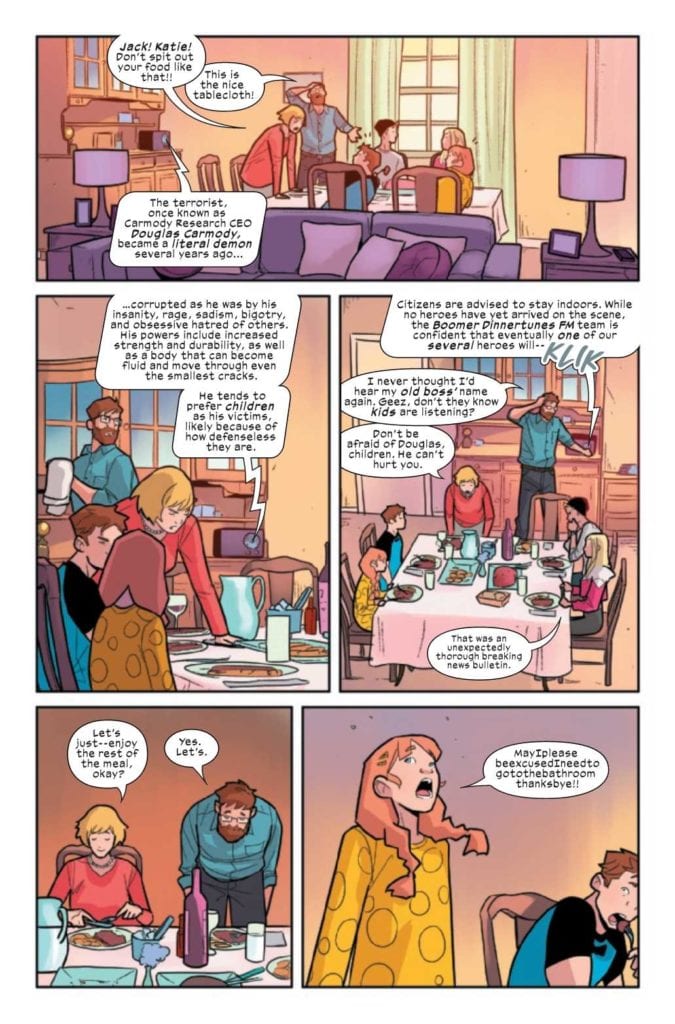
Shenanigans. North’s story is best summed up as Brady Bunch-style shenanigans. The kids get together after several years apart, fighting evil. It’s their parent’s wedding anniversary, but they do the best to sneak out of the house to fight a villain terrorizing an orphanage.

The lies and excuses they tell to sneak away from their parents are amusing but ridiculous. The dynamics of the kids feel very natural for siblings. And the strangely naive reaction of the parents to their ridiculous excuses is humorous. For the most part, it works as a quirky little book.

That said, what doesn’t make sense in this book is an overly long crayon story at the beginning where Katie imagines telling their parents about their lives as superheroes. Katie is depicted as somewhere in the 8-10-year-old age, but her crayon drawings and manner of speech are closer to a pre-schooler. It’s really offputting. Either the artist totally missed the mark on drawing Katie too old, or North’s writing completely misunderstands how a 10-year-old speaks, draws, and behaves. It’s difficult to look past this misstep when Katie is the central character in this issue.

Pencils/Inks

Nico Leon’s art style was an excellent choice for this book. Lon uses diffuse lines and curves to give every character and setting a softness that feels like a cartoon without being cartoonish. It makes the book very accessible for younger readers, and it plays up the silly tone very well.

Power Pack #1, art sample 1

In addition to the excellent lines, Leon demonstrates remarkable use of acting through body language. Jack, in particular, is slouching, grinning, fist-pumping, and high-fiving at every opportunity. Even when the kids aren’t fighting or doing anything heroic, Leon uses body language to instill a constant level of action throughout.

Power Pack #1, art sample 2

Colors

Rachelle Rosenberg is a perfect colorist for Leon’s art style. The shading is bright and sunny on every panel to set a consistently cheery mood. I often point out artists using deep, dark shadows to amplify drama, but it can work equally well to use bright light for cheery energy. Rosenberg pumps up the cheer to add a light-heartedness to an already fun story.

Lettering

VC’s Travis Lanham’s lettering is clear and well-paced for a fairly light issue. I enjoyed the fact that Lanham took the opportunity to inject a little fun into this issue with dinner table sounds like “SMOOCH” and radio musical notes. Lanham had some fun with this issue, and it shows.

Conclusion

POWER PACK #1, available from Marvel Comics on November 25th, is a light and cheery start for the super siblings’ return. Despite Katie’s bizarre characterization, the action is fun, and the family interactions are amusing. The bright art pulls it all together. POWER PACK #1 is a recommended read.

Monkeys Fighting Robots Youtube

Review: COLONEL WEIRD: COSMAGOG #2 Shows Our Inner Child

Lemire Weird Dark Horse

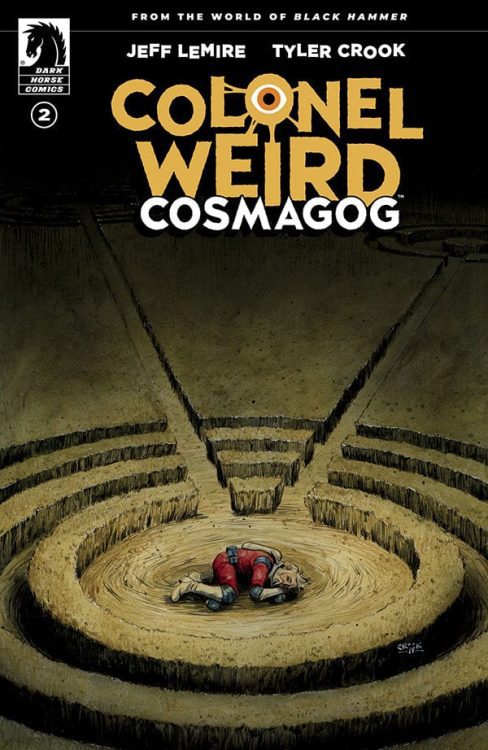
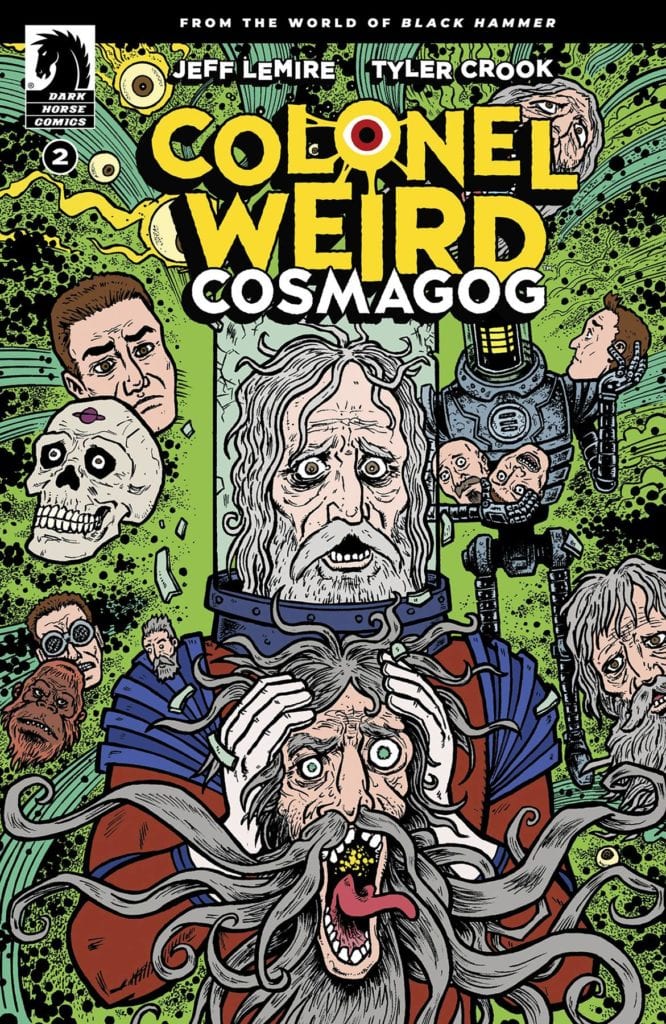
Dark Horse Comics’ Colonel Weird: Cosmagog #2, from the Black Hammer Universe, shows the frightened child at the center of this story. Writer Jeff Lemire and artist and letterer Tyler Crook peel back the layers of this complex character to show how he’s as scared as the rest of us.

Writing

The first time I read this issue, I was a little bored. There weren’t space battles and aliens. Well, there were, but they were practically off-panel. I expected this issue to be a little more sci-fi, even though the first issue was equally subtle. But Lemire doesn’t care about what we think makes Colonel Weird who he is. Lemire wants us to see why Colonel Weird is actually just like everyone else. The space battles can wait. Lemire wants us to see Weird with his mother, crying because he’s scared to go to sleep. He wants us to see Weird’s forehead resting against his wife’s face as they lay in bed and talk about his worries. So when we do see Weird as we’ve known him: haggard, floating, and ready with a blaster, we see past the window dressing to the scared little kid underneath. This script is subtle, it’s slow, and it’s damn gorgeous.

Lemire Weird Dark Horse

Art

Crook never wants us to separate these different ages of Weird in our minds. When Weird is lying in bed with his wife, his head is positioned exactly like it is on the following page, when he’s a kid again, out in a dark field at night. Not only does this help us experience time as Weird does, but it gives us the sense of his growing worry. His fear and anxiety aren’t reset with each new jump through time. In fact, we see young Weird in the classroom near the end of the issue. He sees something strange out the window, and his face is horrified. He’s scared of the things that are bigger than him, the things he doesn’t understand. Then, when we hop back to see the Weird we know, fighting alongside Black Hammer, he has the exact same look on his face. It’s killing him to know how everything turns out. Everything but his own end.

Coloring

Crook captures the feel of childhood. You can feel the happiness on the page as Weird walks by the river on his own. But once bullies dunk him underwater, Crook shows Weird a glimpse of the Para-zone. When he comes back up, the same scene looks grey, muddy, and brown. Later, when Weird is tucked into bed and talking with his mom, Crook makes the rest of the room look dark and scary. Weird and his mother are in a small halo of light. Yet when he’s an adult, Crook gives the room a light blue glow with all the lights off in his room. Crook makes the scene look like you’re seeing it now that your eyes have adjusted to the dark. This is a brilliant representation of him growing up. Yet his fear is still there; he’s just figuring out what it is he’s afraid of. Maybe it’s simpler for young Weird. Being afraid of the dark is a lot easier to wrap your mind around than being afraid of your fate.

Lettering

Crook brilliantly melds his lettering into the art. The “plop” of mud hitting the back of Weird’s head looks like mud spraying through the air. When a younger Colonel Weird is fighting aliens, the sound of his blaster actually blasts through the aliens. But just as Weird’s speech changes after he sees the Para-zone, his sound effects do too. His dialogue goes from being clear to looking warped with a winding tail, and his sound effects look frantic. When Black Hammer and Weird are fighting Hellementals, the sound of his blaster looks different than it did when he was younger. It’s almost as though the “zak” noise was hurriedly scribbled onto the page. It’s a brilliant visual representation of Weird’s growing desperation.


Lemire and Crook have created another gorgeous issue in this series. Dark Horse’s Colonel Weird: Cosmagog #2 is subtle, and it dives right into Weird’s beating heart. Lemire and Crook have taken a character who can see everything and asked him to care about all of it. It’s Dr. Manhattan with a beating heart, and it’s beautiful. Pick up Colonel Weird: Cosmagog #2, out from Dark Horse on November 25th, at a comic shop near you!

Lemire Weird Dark Horse

Monkeys Fighting Robots Youtube

FANTASTIC FOUR ANTITHESIS #4: A Nostalgic Ride

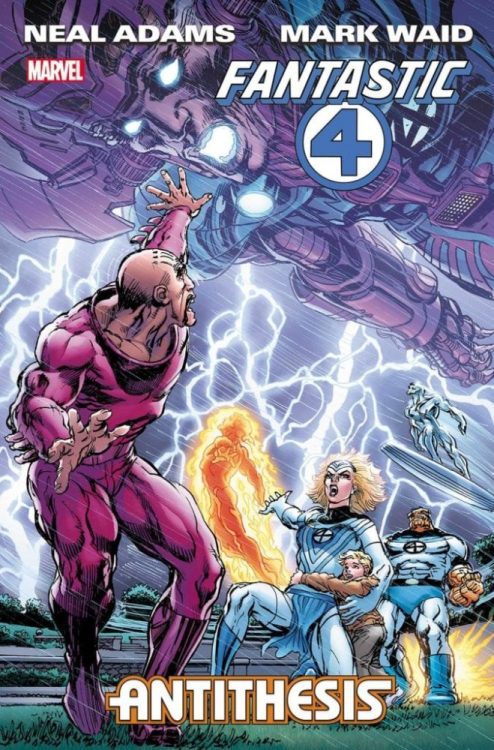
Fantastic Four Antithesis #4 Cover

Fantastic Four Antithesis #4 out November 25 from Marvel Comics from veterans writer Mark Waid and artist Neal Adams. Joining this nostalgic ride is inker Mark Farmer, colorist Laura Martin, and letterer Joe Caramagna. This issue closes out a mini-series capturing the essence of Marvel’s First Family.

Fantastic Four Antithesis #4: Family First

Fantastic Four Antithesis #4 is definitely for fans of the Fantastic Four because Waid keeps this series simple. In this issue, readers witness the team’s pure essence, feeling less like superheroes and more like a family. The love and support they give to Mr. Fantastic as he goes through an identity crisis and an ultimate sacrifice expertly show the familial chemistry. Even the parts to get there by bouncing off different characters like Galan (a de-powered Galactus) and The Thing feel authentic. Anyone familiar with The Thing’s own identity crisis knows how complex this makes him. All of these little things converge into a wholesome conclusion that fits perfectly between different runs.

The Family Dynamic

Adams gives a dynamic flow to Fantastic Four Antithesis #4. Everything from the panels to semi-splash pages move the plot from the top of one page to the next. That’s not even bringing up the evocative and stylistic designs that show the Fantastic Four’s emotional stakes in the plot. The way their faces and body language act show a direness that affects all of their decisions. Farmer’s inking assists in bringing out the intensity by lines thickening in reaction to bigger scenes. For example, a splash page where a gigantic but vulnerable Galactus-Reed towers over the Four. The Invisible Woman ironically looks the most visible when speaking to him despite being near the scale of his ankle.

Martin’s coloring gives even more depth to these situations; the above splash page features a misty rain covering Galactus-Reed to show his growing vulnerability. All while the blue-white lightning from the same storm displays the threat the Four face from him. VC’s Caramagna complements just about everything; the word balloons assist in Adams’ flow, while the blue Kirby Krackle style word balloons of Galactus-Reed show how much power he has in the immediate situation.

Fantastic Four Antithesis #4: It’s Fantastic!

Fantastic Four Antithesis, a passion project between two veterans who respect one another, is an enjoyable romp. One that can leave readers pining for the treasury edition of this series. After reading Fantastic Four Antithesis #4, I want more series like this from Marvel. Nothing that gets in the way of continuity, just quality adventures featuring the spirit of Marvel’s biggest characters.

Monkeys Fighting Robots Youtube

Review: SUICIDE SQUAD #11 is the End of the Beginning

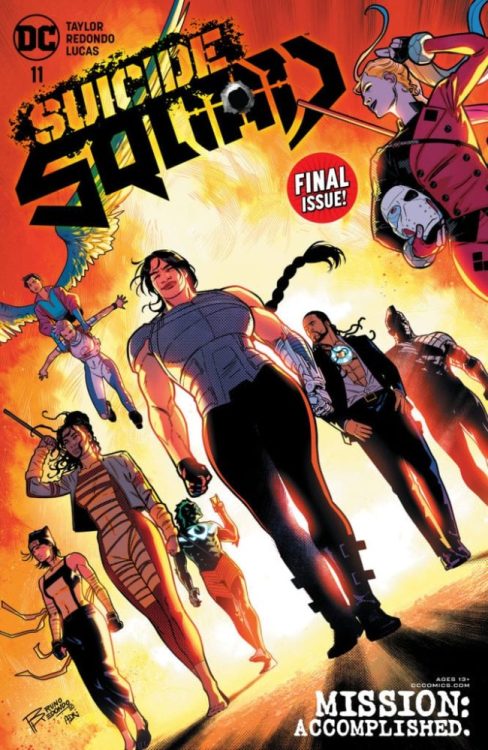
Suicide Squad Tom Taylor DC

DC Comics’ Suicide Squad #11 concludes this no-holds-barred romp through the DC Universe. Or does it? Writer Tom Taylor, artist Bruno Redondo, colorer Adriano Lucas and letterer Wes Abbott suggest that they might have more planned for this team. Regardless of what comes next, this finale issue is the send-off we all wanted.

Writing

Taylor doesn’t waste any time on this issue. He puts a couple of quick twists at the start of the book but doesn’t feel he needs to explain them. He knows we’re following, and he wants to get to what’s next. As everything begins to wind down, Taylor reminds us why we love the Suicide Squad so much. They’re mouthy, and they don’t play by anyone’s rules. Taylor brings them face to face with some of the biggest players in the DC Comics Universe, just to show that they don’t flinch for a second. Taylor gives us one final nod that this may be the beginning with some careful tying up of loose ends. Let’s hope he’s right.

Art

Redondo reminds us that the Suicide Squad doesn’t have to be the big-timers to have power. When members of the Justice League show up, Redondo makes a point of them taking up a lot of space on the page. They’re huge, and their presence is felt everywhere. But it’s a small lady, walking right up to Batman and looking him in the face, and Wink peeking over his shoulder, that drive the scene. They’re small, but they’re powerful. And as we see The Revolutionaries retake flight as a team, Redondo shows us how much power they have. Each of the pages of them in action has the whole panel grid slanted, on the diagonal. It gives us the impression that these people really are revolutionizing the world they live in.

Coloring

If you look at Lucas’ pages in Suicide Squad #11 as a whole, you could almost assign a single color to each. The first few pages start with a soft blue, with red sprinkled in. It’s a scene that’s set up to look grim and serious. Lucas establishes this tone so that one of the characters can ignore the situation’s seriousness, with great comedic effect. Later, as we transition through red and purple pages, Lucas begins to focus in on the color yellow. Yellow, which has so often been the fun backdrop to a fist to the face or a gun going off, becomes the color of The Revolutionaries. They themselves are bringing a new dawn, with a bright yellow morning on the horizon.

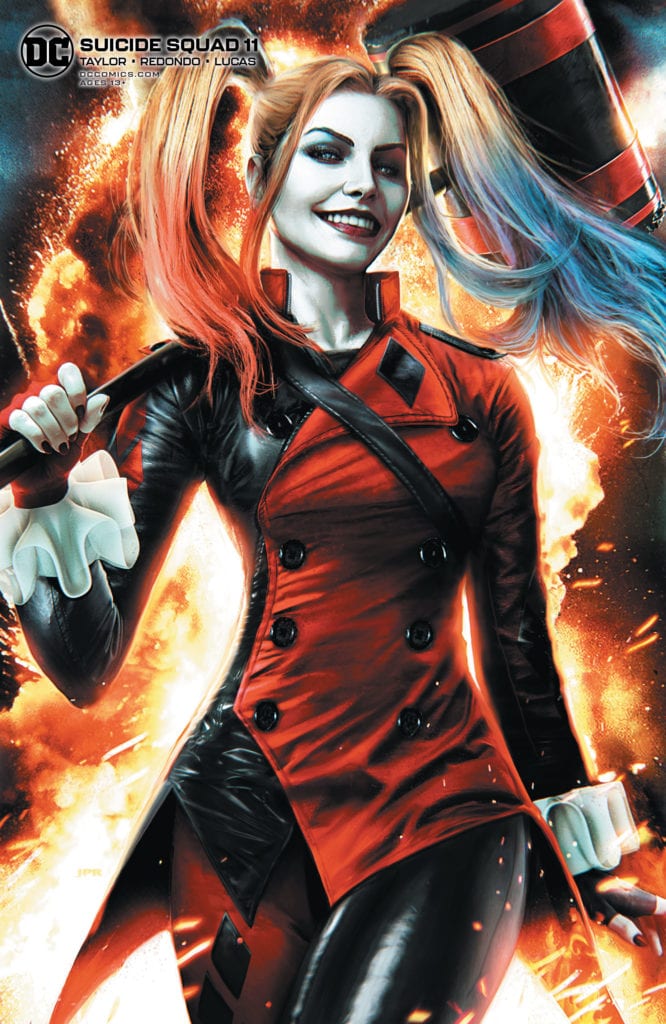
Suicide Squad Tom Taylor DC

Lettering

Abbott tones down a lot of the fun sound effects in this issue. We get the “bang” of guns, but they look subdued and small. There’s one particular moment that you would expect a large “boom” from, but no boom comes. It’s very quiet for an issue of Suicide Squad, but that’s because Abbott wants us holding our breath. As things resume to an even keel, Abbott goes back to the status quo. Large, vibrant sound effects for even the most simple noises. It acts as a kind of celebration of the return to norms.


DC Comics Suicide Squad #11 is a fun, crazy, hilarious end to a fun, crazy, hilarious series. Taylor, Redondo, Lucas, and Abbott have put out some of their best work with this series. And if we’re lucky, this finale may mean there is more to come. Pick up Suicide Squad #11, out from DC Comics on November 24th, at a comic shop near you!

Monkeys Fighting Robots Youtube

Review: JOHN CONSTANTINE: HELLBLAZER #12’s Glorious Conclusion

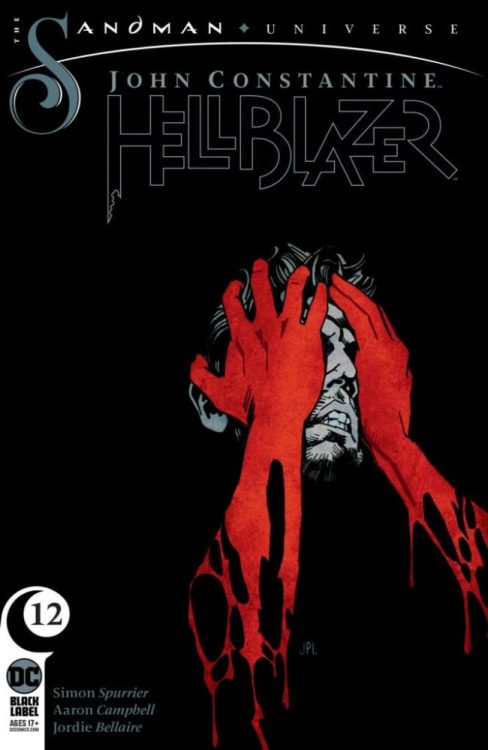
John Constantine Spurrier DC Comics

John Constantine: Hellblazer should never have been canceled.

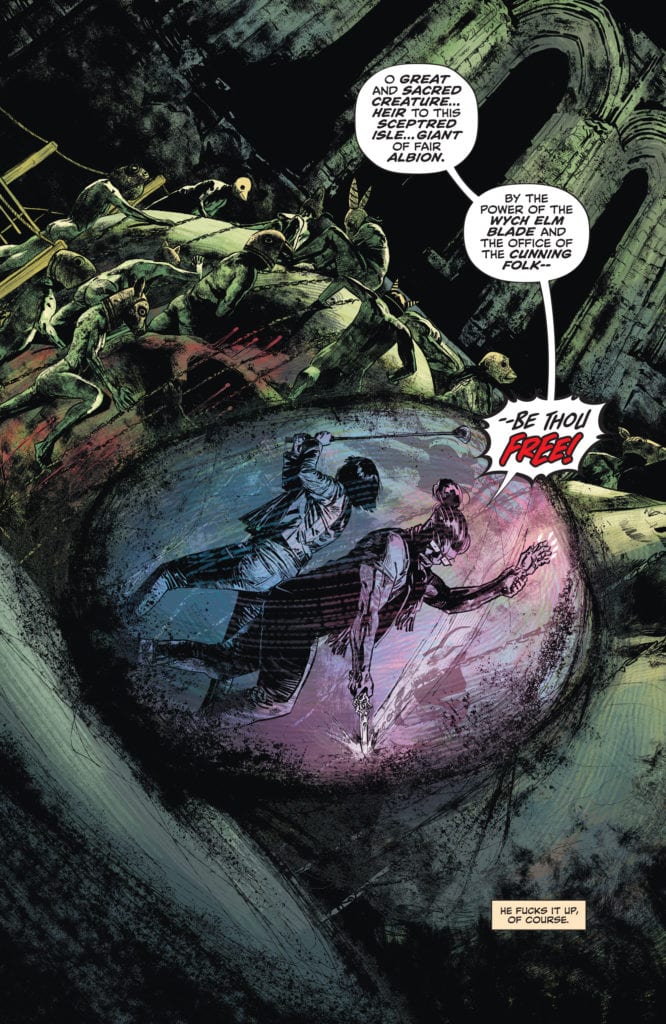
The book is one of the strongest series to ever come out of DC Comics this century (2000-2020). Its conclusion, with issue #12, cements that fact. Writer Simon Spurrier, artist Aaron Campbell, colorist Jordie Bellaire, and letterer Aditya Bidikar somehow take a series, cut down in its prime, and whittle all of their plans down to one magnificent final issue. DC Comics John Constantine: Hellblazer began as a slow trudge towards its ending, with each new development carefully teased out. This creative team isn’t scared to break the mold and get the wheels moving in order to bring us a finale that truly delivers.

Writing

There are some obvious downsides to Hellblazer‘s premature cancellation. Spurrier finds himself in the unhappy place of having to move the plot very far, very quickly. That’s nearly impossible to do without being over-explanatory and heavy on the exposition—something Spurrier typically avoids artfully. Hellblazer #12 is, in fact, very expositional. Constantine spends much of the issue describing what’s going on as it happens. But Spurrier doesn’t allow it to feel like he’s preaching at us. The book still feels natural.

That’s because Spurrier never loses John’s voice in all this. Every moment of explanation is written as a kind of “Damn, the poor sod has no clue what I’ve got him into.” The tragedy that is John Constantine is heightened by each confession of what’s really going on. So, despite Spurrier’s captions being essentially a narration of events, they’re not only necessary, they’re brilliantly executed. The reader never feels talked down to. And Spurrier has created enough of a cryptic and subtle plot that John’s explanations are important to hear. This shouldn’t have been possible. But Spurrier condensed what may have been months and months of plans down into one fantastic script, without sacrificing any of this series’ quality.

John Constantine Spurrier DC Comics

Art

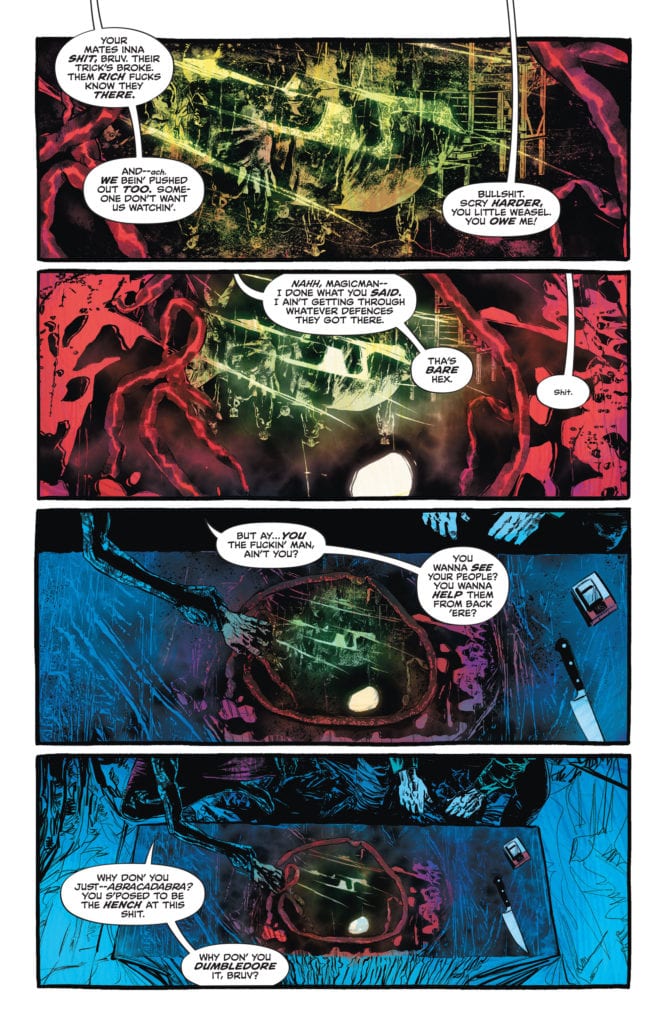
So much of Campbell’s art in this chapter focuses almost claustrophobically on John. Occasionally we see K-Mag, Noah, and the others, but there’s an artistic jostling of these characters. It’s as though Constantine, himself, is pushing them off to the sidelines. After K-Mag has been scrying, it’s not long before Constantine has taken over, pushing K-Mag out of the way. And while Tommy and Nat are busy dealing with their own fight elsewhere, Campbell sets up the conflict and then keeps us from the action. Instead, we see Constantine trying to put a stop to it from miles away.

The only other character that gets quite the same amount of attention from Campbell is, well, John Constantine. This Constantine being the older version. Campbell makes two things clear with this: this is the showdown we’ve been waiting for, and Constantine is too scared to get attached. It’s as though John can only look at his enemy or stay focused on himself because he knows there’s going to be collateral damage. He doesn’t want to have to face those getting caught in the crossfire.

Coloring

Bellaire begins our journey, back where she left us. In the same rotting cesspool of green where the last issue finished. But soon, we’re back with John, miles away. Bellaire colors John’s scenes in a bluish haze. Except for a few vibrant moments, even the blood in these scenes looks dull. Bellaire’s coloring works in tangent with Campbell’s art. It’s a window into John’s soul. He can’t allow the true nature of what he’s doing to sink in, so he keeps everything at arm’s length. The blood, which he’s covered in up to his elbows, blends in with the rest of the scene because John won’t allow himself to think about it.

Later, when John Constantine, the older, gives our own Constantine a call, Bellaire highlights the difference between them. In a nine-panel grid, set up by Campbell, Bellaire shows the human colors of John Sr. along the diagonal. The older Constantine actually looks human; his flesh looks fleshy, while the younger Constantine is still blue and distant. This is John’s worst nightmare. A version of himself that lets his guard down and experiences everything around him, no matter how horrific.

John Constantine Spurrier DC Comics

Lettering

Bidikar shows Constantine’s own discomfort with each new revelation. John Constantine is typically a very confident man, but this issue shows he may be in over his head. As the issue progresses, we see the difference between John’s confidence and his fear through Bidikar’s text boxes. Most of John’s narration is easy to see. Bidikar places these captions in orange text boxes that stand out. But occasionally, John seems a little like he doesn’t want to be telling us his thoughts. He talks about why he came back to K-Mag, admitting that he’s got no other options, and the narration is placed outside of a text box. It’s just lettering up against the art. It feels less confident and almost as Constantine wants us as readers to miss this bit.

Bidikar does this several times throughout the issue. It’s the moments when John loses his confident tone. “Bugger. All” is a prime example of his panic setting in. But it’s also the important moments of John letting his guard down for a second. Bidikar brilliantly highlights these moments by not highlighting them. The captions stand out because they’re trying to blend in with the page. It’s a brilliant step into the mind of the character. John Constantine is exactly the kind of man who would mutter the world’s truths under his breath.


DC Comics’ John Constantine: Hellblazer #12 has no right being this good. It’s too many brilliant stories, smooshed into one issue, with incredible grace. Spurrier, Campbell, Bellaire, and Bidikar have created a beautiful finale, against incredible odds. This issue may deliver, but it only makes it harder to say goodbye to this series and leaves one wondering what could have been. Pick up John Constantine: Hellblazer #12, out from DC Comics on the 24th of November, from a comic shop near you!

Monkeys Fighting Robots Youtube

Review: JUSTICE LEAGUE DARK #28 Shows Why A Price Must Always Be Paid

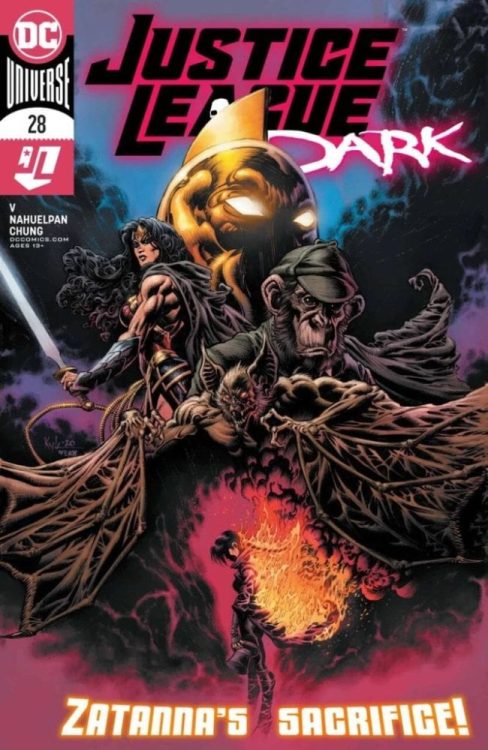
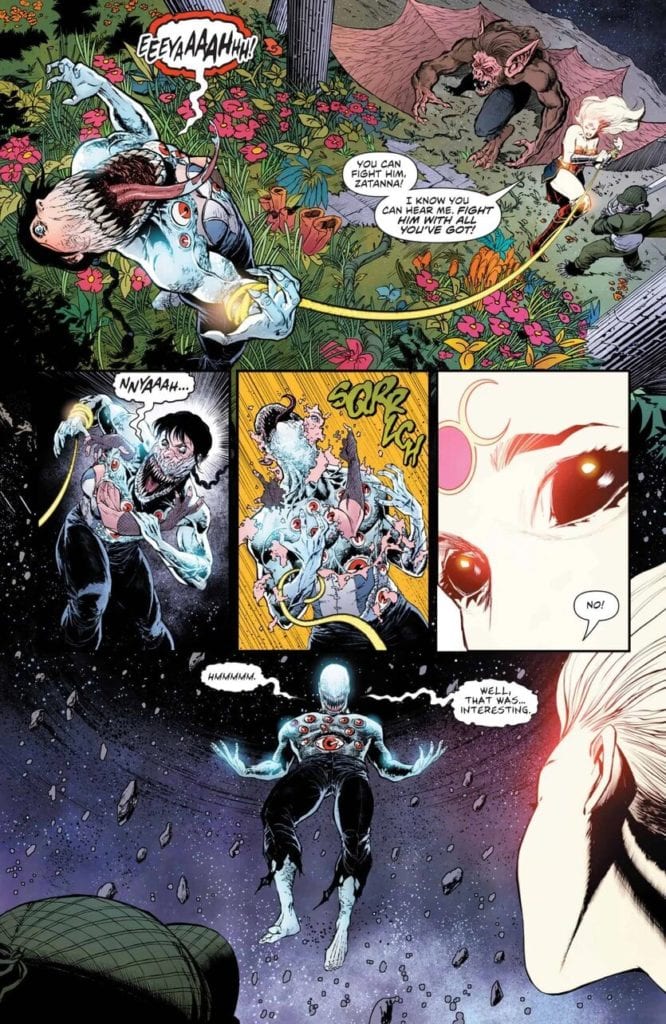
JUSTICE LEAGUE DARK #28, available in stores on Tuesday, November 24th, wraps up the The Cost arc in fantastic fashion. Last issue Zatanna used her magic to infuse her very being within the villainous Upside-Down Man. But will this ultimately hold him? The resulting story is full of suspense, horror, and hope.

Story

Faced with a now merged Upside-Down Man and Zatanna, readers will wonder whether the threat is abated (though at great cost). The heroes lost so much recently, so it would feel like the ultimate gut-punch to lose the sorcerer.

Unfortunately, the villain has the ability to counter Zatanna’s magic. What was thought to be the final blow actually turned into a seemingly equal war of wills.

Fortunately for our favorite magician, the lessons of paying the price for magic applies to the Upside-Down Man as well.

Ram V’s writing brilliantly conveys the trials and tribulations Zatanna and the protagonists experienced throughout the past arc. And the final clash is an incredible sight to behold.

Artwork

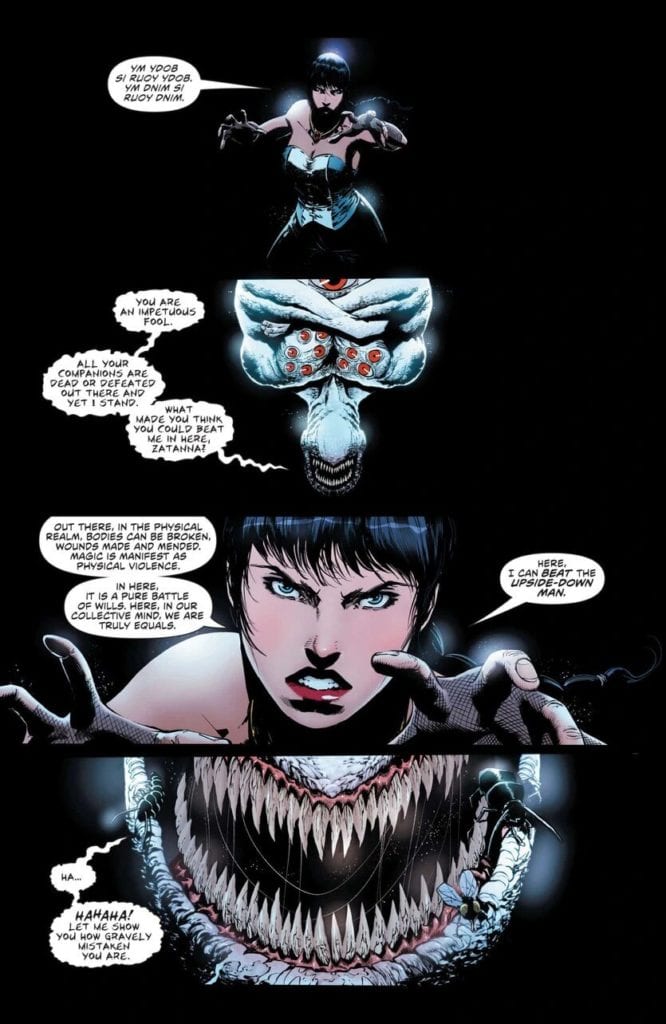
Amancay Nahuelpan’s penciling and ink work, June Chung’s coloring, and Rob Leigh’s lettering came together wonderfully in this issue. Zatanna’s transformation contains a grotesque surrealism that keeps readers’ eyes glued to the pages. The peach toned pieces of her face are stitched to the Upside-Down Man’s pale skin, which adds to the story’s eerie vibes. And the fonts complete the effect with squiggled styles featured in the villain’s word balloons.

Conclusion

JUSTICE LEAGUE DARK #28 ended an engaging storyline in one of the most satisfying ways possible. We are anxious to see what new horrors await our heroes.

What terrors do you think lie in store for our heroes going forward? Let us know in the comments below!

Monkeys Fighting Robots Youtube

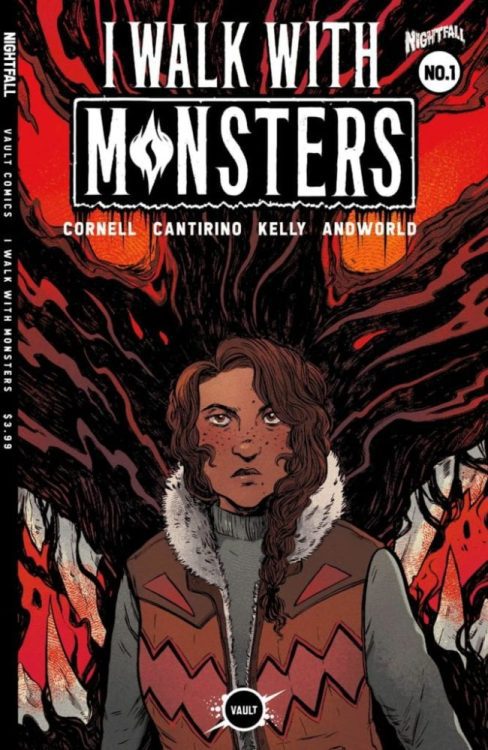
Review: I WALK WITH MONSTERS #1 Is An Irresistible & Bloody Mystery

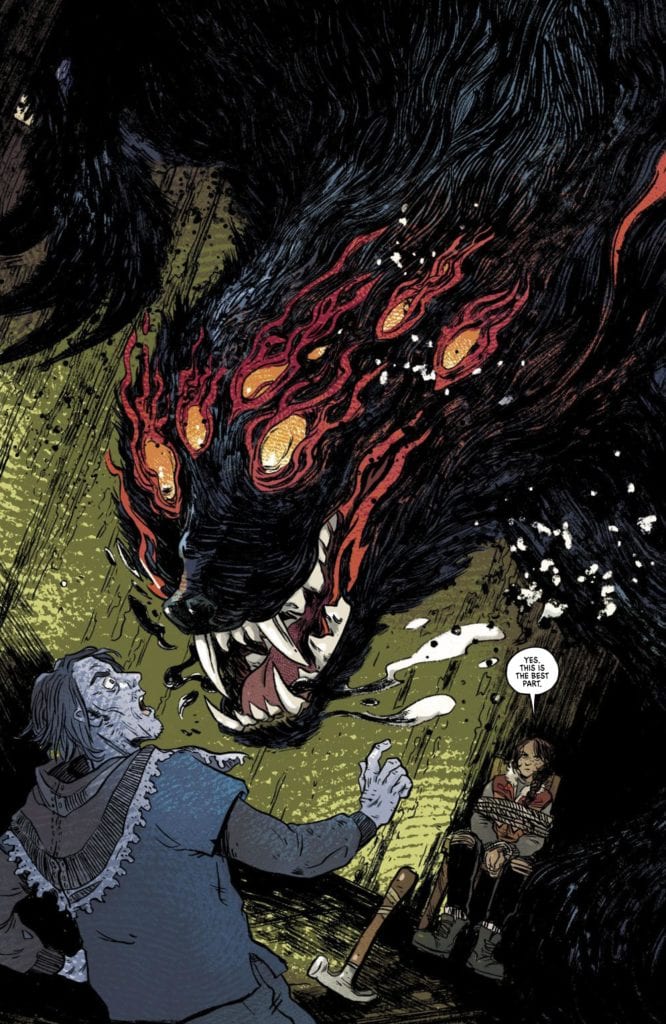
From writer Paul Cornell, artist Sally Cantirino, colorist Dearbhla Kelly and letterer Andworld Design comes cone of the most promising and intriguing starts to a horror comic in recent memory. “I Walk With Monsters” #1 is a quiet and dark comic that bleeds (literally and figuratively) with character drama and mystery. With a nuanced script and pitch-perfect visual work, this could easily be one of the best horror comics of the decade if it can keep up this momentum.

“In Jacey’s past is the Important Man who took away her brother. Now Jacey has David, who sometimes transforms into a terrifying beast. Together, they’ve found a way to live to hunt, sniffing out men who prey on the vulnerable. But Jacey and David are about to run into the Important Man again.”

Writing & Plot

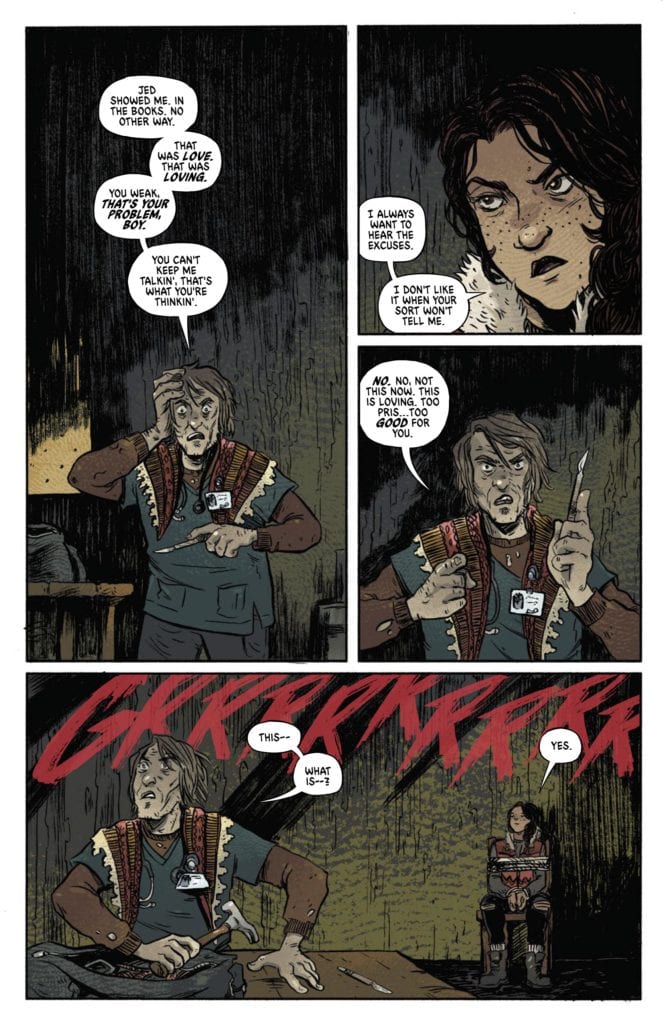
Paul Cornell throws readers right into the world of “I Walk With Monsters” #1 by picking up the shapeshifting elephant in the room and shoving it in the reader’s face in all its monstrous and bloody glory. David’s bestial transformation is this comic’s most obvious and theatrical draw, so eschewing the classic build-up to the monster in favor of an immediate introduction is a great way to then focus on the characters, their relationship, and the backstory at the heart of this series. Cornell’s script uses ultimately very few words, and the ones he uses convey very little in terms of the larger plot. He’s focused very much on visually exploring Jacey and David’s relationship, and it works out brilliantly. Cornell understands how the comics medium works, and as such there is absolutely no exposition or even discussion of the larger plot here. There are hints in the quiet two-syllable word conversations between Jacey and David as to what their relationship is and wat they do, but for the most part Cornell leaves it up to the audience to explore the truths behind the story for themselves. The quiet and minimalistic scripting is submerged in this comic’s haunting atmosphere and sense of dread.

Art Direction

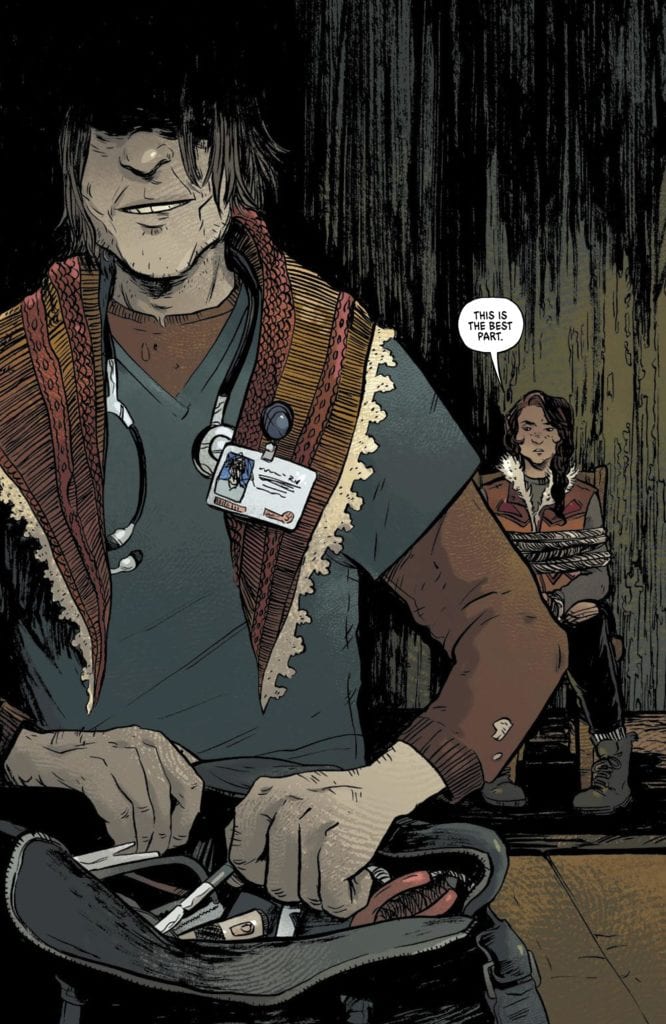
The pencils of Sally Cantirino in “I Walk With Monsters” #1 offer a rough-hewn but highly detailed and appropriate visualization of the world this story lives in. Her style is among the weird but intriguing styles often seen in horror comics today, comparable to the work of Jeff Lemire or Gabriel Ba. The monster design in here is also really, really good. There’s an almost sketchbook quality to the work that works perfectly for the quiet, desolate horror world this comic inhabits. Her panel direction offers solid horror direction, cutting to and away from the horror and revelations in a way that builds tension. The colors from Dearbhla Kelly are stunning, painting the panels in murky shadows and autumnal colors. Hers is a color palette becoming more and more common in modern horror comics, as it’s similar to the aesthetic in Harrow County and the recent TKO series Redfork. This isn’t a negative however, as it’s an effective choice that fits horror comics of this type spectacularly well. The lettering from Andworld Design has a similar effect as Cantirino’s art. It’s a rough but extremely fitting style. The font looks as though the letterer tied a bunch of sticks together in the shape of letters and called it good. I swear I mean this as a good thing, because it seriously works. The atmosphere cultivated in this comic’s visuals is murky and cold, and it’s the perfect tone for this story.

“I Walk With Monsters” #1 is a mysterious horror intro that delves on human trauma even more than it does its monstrous main attraction. Paul Cornell’s script chooses few words and no exposition to allow the reader to become in the story’s mystery. The visuals from Sally Cantirino and Dearbhla Kelly wash the visuals in detail and a cold autumnal horror atmosphere. This is a stellar opening issue to this horror comic series, and one I highly recommend picking up from your local comic shop on 11/25.


Monkeys Fighting Robots Youtube

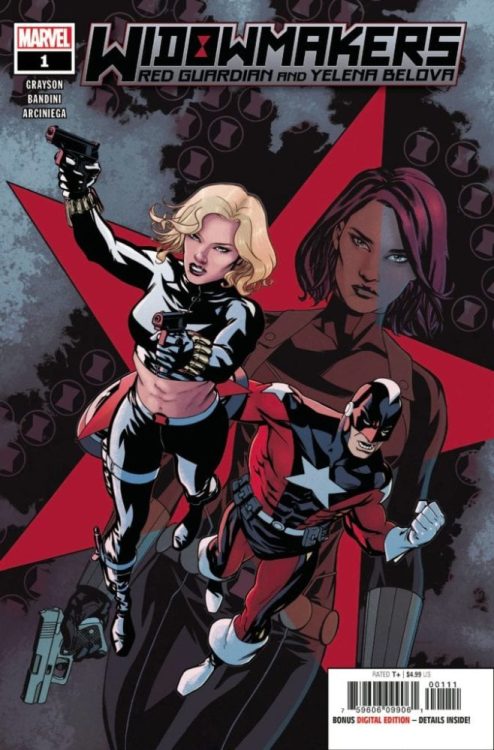
WIDOWMAKERS: RED GUARDIAN AND YELENA BELOVA #1: Standing Apart From The Greater Flame

Widowmakers #1 Cover

Widowmakers: Red Guardian and Yelena Belova #1, available now from Marvel Comics, showcases characters appearing in the Marvel Cinematic Universe Black Widow movie. Writing this action-packed issue is Devin Grayson, co-creator of one of the main stars Yelena Belova. Taking on the art duties is Michele Bandini, with Elisabetta D’Amico assisting in inking. Erick Arciniega provides some illuminating colors, while Cory Petite brings great placement for lettering.

For Mother Russia

Widowmakers: Red Guardian and Yelena Belova #1 is a good way for Grayson to show how far her creation has gone. That being said, it’s probably best to avoid going into Yelena’s convoluted history in the more recent Black Widow series unless you’re into the whole cloning plot. Who needs that when Grayson displays Yelena’s everyday life and motivations that most readers would relate towards. Because who doesn’t want to be a capable spy who can stick it to corrupt rich people? At such, James Bond levels of action even.

Then there’s Alexei, the original Red Guardian. He’s the kind of character you don’t know whether to love or hate. Alexei is both a loyal soldier willing to help out someone he barely knows and a loyalist to a regime that has a higher body count than the Third Reich. This creates some rather interesting and complicated characters who would inevitably clash with the greater Marvel Universe. The kind of clashes that get readers questioning whom to root for.

Art

The primary artist of Widowmakers: Red Guardian and Yelena Belova #1, Bandini, makes dynamically eye-catching illustrations. Whether it’s characters, backgrounds, or objects, Bandini fills the page with enough detail to show what’s going on. She’s also quite good with action scenes making them rather comparable to Chris Samnee’s Black Widow.

A noticeably great effect in the issue is the use of illumination. Arciniega makes good use of spotlights to guide readers towards plot directives. They often accompany supplementary captions from Petit that, in turn, guide readers through panels. This makes them as dynamic as the action scenes taking place. Readers are bound to get excited when they find wordmarks of gunshots accompanying fast movements.

Widowmakers: Red Guardian and Yelena Belova #1 Will Make You Want Black Widow

Whether as a standalone or a companion piece to Black Widow material, Widowmakers: Red Guardian and Yelena Belova #1 will excite people. The artwork will get your blood pumping with how it pushes the characters through intense action. With Red Guardian and Yelena Belova who could go in any direction in this espionage action setting, readers will want more.

Monkeys Fighting Robots Youtube

X OF SWORDS Aftermath: Wolverine’s Mistakes Catch Up With Him in WOLVERINE #7

This may be the coolest X of Swords issue so far, not just in terms of action and visuals, but even in terms of plot twists.

spoilers ahead

Wolverine has two intense fights in this issue, broken up by two relatively violence-free challenges, one featuring an arm-wrestling competition between Magik and Pogg Ur-Pogg and another a drinking contest between Wolverine and Storm (a “gimme” for Krakoa…but there’s a twist. More on that later).

Wolverine’s first fight with Summoner is beautifully illustrated by Joshua Cassara and Guru-eFX, as the two champions fight across Blightspoke, “a realm of collapsed realities.” A lot of esoteric and surreal imagery is used to depict this realm in easily one of the best fight sequences and drawn scenes of the whole X of Swords Event. But there’s a twist. The fight was “to the death.” As in, if you die, you win. Which Summoner does. Plot twist one.

In another twist, Solem calls in the vow that Wolverine made to him in exchange for his sword back in X-Force #13, calling in Wolverine to fight War on his behalf, a fight Wolverine wins, although the point goes to Arakko.

The fight with War also brings up another mistake Wolverine made–trying to kill Saturnyne. It turns out that the drink he had with Storm dulled his healing factor, leaving him drunk. This was Saturnyne’s revenge for the attempt on her life. Plot twist two.

Interestingly, this issue contains two contests with champions from the same team facing off with each other–Wolverine/Storm and Solem/War. This choice of champions is commented upon by Saturnyne and may reveal the long game that Saturnyne is playing. She states, “You were all born of the same place, and you all share the same blood. So no matter your nation, you are all enemies, and you are all lovers. When Krakoa fights Arakko, so does it fight itself.”

Rather than ending with a bloody conflict, perhaps the opponents of Arakko and Krakoa will find that they have more in common than not, and rather than one of them being destroyed, there may be a deeper unity between the two nations foreshadowed here. Perhaps Saturnyne has benevolent intentions.

Wolverine #7 is available now!

Monkeys Fighting Robots Youtube