Home Blog Page 193

Advance Review: BLOODSHOT #11 – Old Enemies, Familiar Concept, New Aesthetics

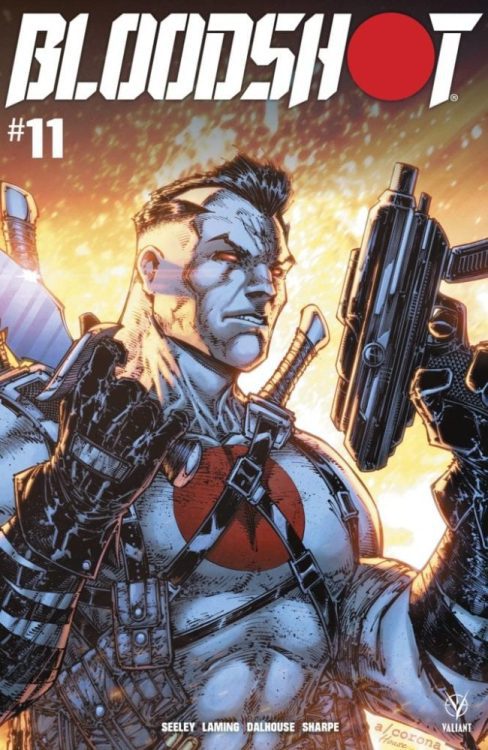
Bloodshot #11 Cover

Bloodshot #11 hits your local comic book shop on February 24 from Valiant Entertainment for a plot reintroducing past enemies. Writer Tim Seeley in this “One Last Shot” segment, uses several elements of Jeff Lemire’s run like Rampage. Artist Pedro Andreo showcases cinematic movement and anticipation worthy of action movies. Along with them are colorist Andrew Dalhouse, who makes characters stand out, and letterer Dave Sharpe keeps the action flow going.

Background

After defeating the Burned and evading Black Bar, Bloodshot was ready to hang up his guns. That is until his former handlers, Project Rising Spirit, return. Now, Bloodshot is with new allies to stop PRS before they cause more incidents.

Bloodshot #11 In Relevancy

Bloodshot #11 stands out from previous issues by going straight into social commentary. Seeley reintroduces the Bloodshot Salvation villain Rampage/Danny and the Bloodshot U.S.A. concept. It is nice to see Seeley find synergy with the redneck foil of Bloodshot and the modern political divide. He takes old concepts and makes them relevant by attacking people’s need for harmony. Any specific details will be a potential spoiler, but let’s just say that instead of turning the public into Bloodshot weapons like before, it’s more about control.

Action Movie Cuts

Andreo takes over as lead artist after a hiatus. Bloodshot #11 retains Andreo’s action movie aesthetic with how it emulates jump cuts and camera angles. One panel can feature a character on a surface until a cut features them in the water. It’s a good use of reader interpretation and implication without wasting time and space. In some sequences, a decent amount of anticipation comes from characters in the shadows. Danny, who has a decent buildup through imagery, stands out well.

And Some Attention Grabbers

Dalhouse highlights each character in Bloodshot #11 with outlines in cool colors. This presents their importance to the plot while giving them an aura that showcases their mood. Bloodshot gets a brighter and bolder one during a conflict that presents itself as a moral dilemma. It’s a feeling so powerful that this aura takes up an entire panel. Fortunately, Bloodshot’s co-stars with their more stable outlines are a display of keeping everything together.

Letterer, Sharpe showcases fonts to describe points of conflict. Zealot speaks in a robotic font that displays his new status. It’s what makes the one audio clip of his human screams so notable. With some juxtaposition, that robotic voice next to a newscast with electronic voices can look frightening. Especially considering the newscast displaying the original Bloodshot U.S.A. and a later newscast imply technology dominating minds.

Bloodshot #11: The Sequel

Bloodshot #11 has all of the hallmarks of an action sequel. It has a familiar plot, elements from past successes, and visual factors that showcase the characters’ specific traits. Andreo is the stand out of the issue elevating Seeley, with great visual storytelling.

Monkeys Fighting Robots Youtube

WANDAVISION – We Interrupt This Program | TV Review

After three episodes sitcom-focused episodes the episode “We Interrupt This Program” shows S.W.O.R.D.’s reaction to the disappearance of Westview.

Monica Rambeau (Teyonah Parris) has returned from the Blip, not realizing she has disappeared for five years. She returns to working for S.W.O.R.D. and gets assigned a mission to help the FBI with a missing persons case. It turns out that the mystery was much bigger because it involved a missing town with a static field around it resulting in S.W.O.R.D. bringing in scientists to help with their investigation, including astrophysicist Darcy Lewis (Kat Dennings).

“We Interrupt This Program” aimed to show what was going on outside of Wanda’s sitcom. It answered some of the questions that were asked in the previous episode, like who was watching the TV, who was the beekeeper, who the citizens of Westview were, and how Jimmy Woo (Randall Park) was able to send a radio message to Wanda. It also asks some new questions – the big one being is Vision alive? Other questions were why did the show keep leaping ahead a decade and why the static field had hexagon shapes? A question that hasn’t been asked but will properly become important is the role of Agnes, the noisy neighbor because her real identity wasn’t revealed. She could be an agent who keeps Wanda’s world alive.

WandaVision has been disliked by a vocal minority because of its retro styling and being a homage to sitcoms. “We Interrupt This Program” was more in line with the rest of the MCU. It looked more like a mini-movie and the tone was more serious with a few MCU-style quips thrown in. Due to the focus on S.W.O.R.D.’s investigation, this episode felt like an Agents of S.H.I.E.L.D. story.

This episode brought back Agent Woo and Darcy who previously appeared in Ant-Man and the Wasp and Thor: The Dark World. There were comic relief characters in the films, yet they come into their own in this episode, especially Darcy. I was not a fan of Darcy in the Thor films but she has improved a lot because she now has her Ph.D. and Darcy shows she’s a perfectly capable scientist. She learned a lot from Jane Foster and Selvig. Darcy and Woo worked well together.

“We Interrupt This Program” introduces new elements that will become even more important in the wider MCU. This episode finally reveals Geraldine’s real identity as Monica Rambeau, the daughter of Maria from Captain Marvel. Monica was shown to be an important agent of S.W.O.R.D. and the character is already set to appear in Captain Marvel 2. S.W.O.R.D. will have an important role in the future because they investigate the paranormal, scientific, or extra-territorial phenomenon. Phase Four is set to have stories revolving around the Multiverse they will properly become a recurring force in the MCU.

Due to the episode focusing on S.W.O.R.D.’s perspectives. they didn’t show much of the title characters. Most of their scenes were clips from the previous episodes. The only original scene was showing what happened after Wanda banished Geraldine from Westview. Wanda repaired the damage she caused and tried to pretend everything’s normal. But Wanda suffers from a vision of her husband as a living corpse, breaking her reality for a brief moment.

A moment I really liked in the episode was showing the Beekeeper’s entry into Westview because the world turned from color to black-and-white.

“We Interrupt This Broadcast” was more in keeping with the MCU style that mainstream audiences are used to. It made for a great alternative look to events we have already seen.

Monkeys Fighting Robots Youtube

Review: MEGA MAN: FULLY CHARGED #6 – Wish It’d Never End

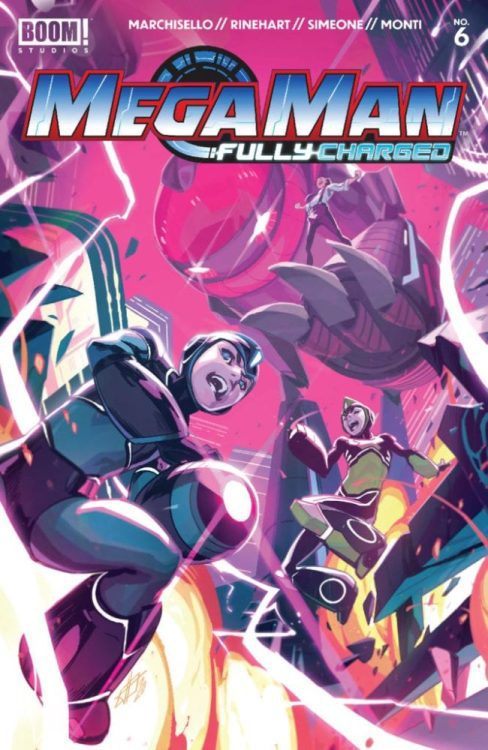
Mega Man: Fully Charged #6 Cover

Mega Man: Fully Charged #6, out now from BOOM! Studios, brings the miniseries to its conclusion with epic battles, emotional moments, and jaw-dropping art.

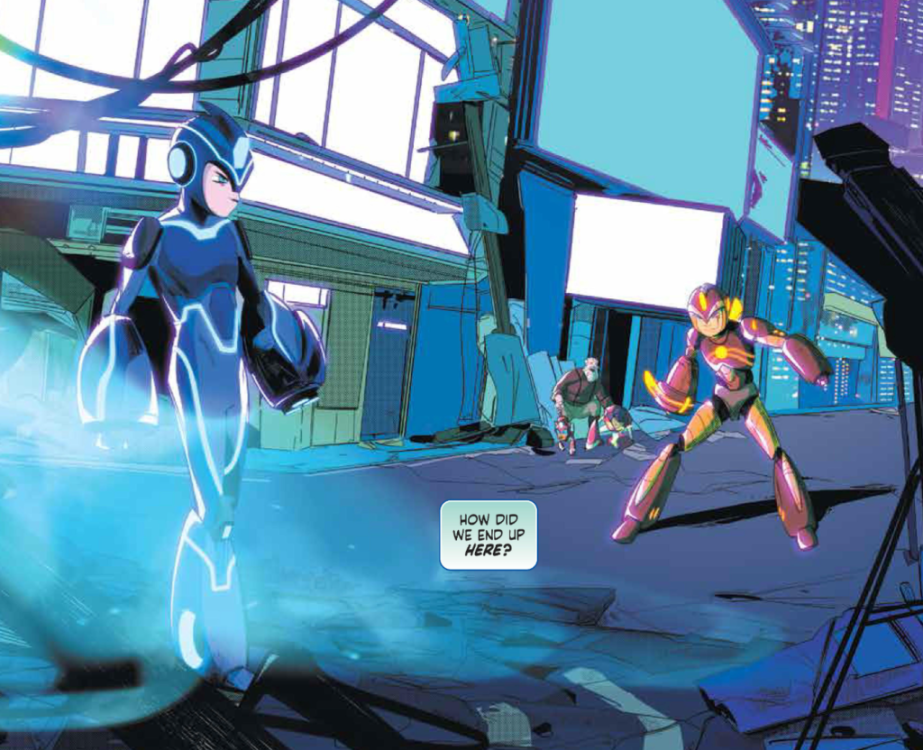
Mega Man: Fully Charged Art Example

A.J Marchisello and Marcus Rinehart close their thrilling series in Mega Man: Fully Charged #6 with an ending that leaves you wanting more. While the issue’s writing has its flaws — the cliffhanger from the previous issue has little payoff and the final plot points seem a little too condensed — Marchisello and Rinehart do a marvelous job of ending the series. It leaves room to tell more stories in the world but provides the reader with enough closure that the ending is still satisfying.

Stefano Simeone’s art in Mega Man: Fully Charged #6 is gorgeous, as always. His forms are unbelievably dynamic, and many of the panels of the issue are framed in a very cinematic way. Simeone also clearly put lots of effort into creating panels where Silicon City is in the background, as his buildings are highly detailed and often features some impressive perspective. I can not praise his work highly enough in this issue or throughout the series.

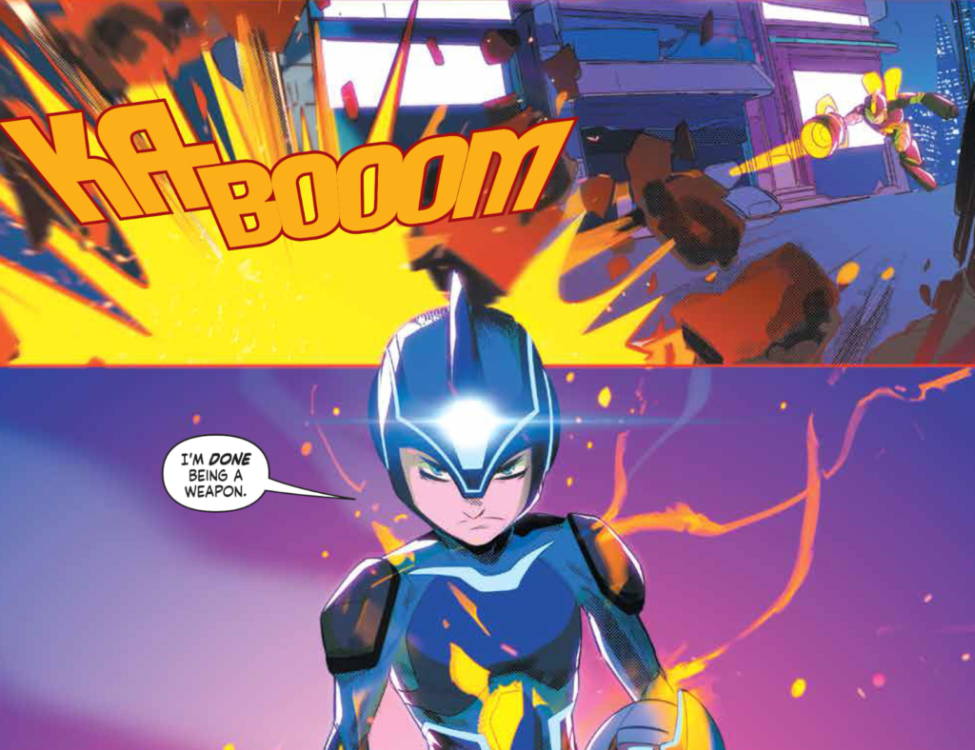
Mega Man: Fully Charged #6 Art Color Example

Igor Monti has quickly become one of my favorite colorists through this series, and his talents don’t slack in Mega Man: Fully Charged #6. Monti, with assistance from Sabrina Del Grosso, turns the art into something genuinely jaw-dropping. The gradient backgrounds are gorgeous. Monti and Grosso’s choice to distinctly change the palette to pinks and grays when showing scenes from the Hard Age gives a unique style to this point in time and makes it distinct, so the reader is never confused. Monti and Grosso also use harsh lighting whenever Mega Man’s busters fire. It illuminates nearby objects and speaks volumes for its firepower.

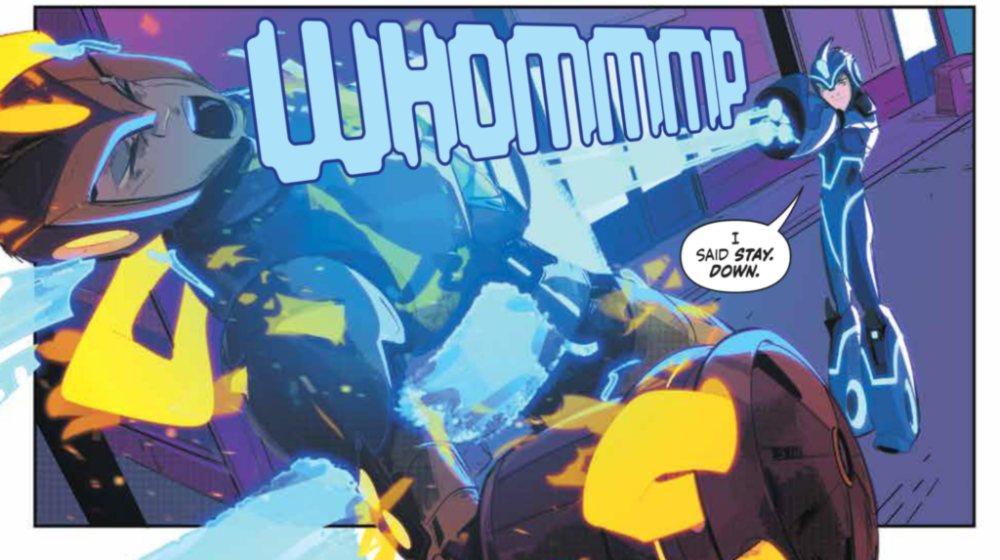
Mega Man: Fully Charged #6 Lettering Example

Ed Dukeshire’s lettering in Mega Man: Fully Charged #6 does a brilliant job of allowing the story and dialogue to flow uninterrupted. Dukeshire also had the task of handling captions from different characters on the panel at once, which he resolved through distinct captions styles that make sure no reader is confused.

This series was a delight, and I’m sure many readers are sad to see it go. It took a show that had a lackluster reception and told an engaging story with gorgeous art to support it. Fans of the show should be pleased to see they get another story in this world, and people unfamiliar with the show can still jump on and experience this dramatic tale.

Monkeys Fighting Robots Youtube

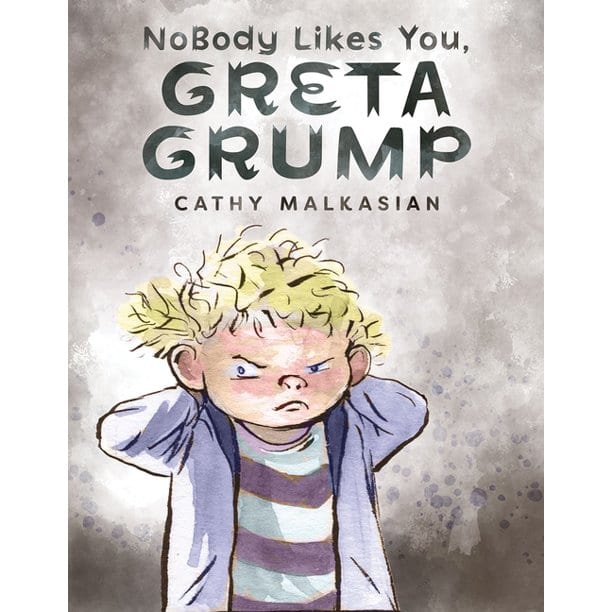
Review: NOBODY LIKES YOU, GRETA GRUMP!- An All-ages Masterpiece

NOBODY LIKES YOU, GRETA GRUMP!, out on February 23rd from Fantagraphics, is a middle-grade graphic novel by cartoonist Cathy Malkasian. It is a beautiful, incredibly sweet graphic novel. I recommend it to anyone in any age group, especially for those looking to fall in love with new characters and tear up in the process.

Story

Malkasian’s writing is really interesting to pick apart. You would think that, as a book aimed at children, the language wouldn’t be too complicated for anyone to understand. But Malkasian gives one of the main characters in this book a “posh” personality. It’s a pet turtle talking in a way that resembles old English mixed with dialects from well-known fantasy books you probably read as a kid. Already, what’s there not to love? But worry not, because every time the turtle says a word Greta hasn’t heard yet, he explains the word to her beautifully and simplistically in a way that makes sense to young kids and plays on adults’ heartstrings due to the ingenious, fabulous ways those words we’ve taken for granted for so long are explained and dissected.

Malkasian takes each main character (and even each supporting character) on an emotional arc that never ceases to amaze in its honesty. Especially the main character, Greta Grump, goes through an arc I never thought I would be able to relate to. Malkasian introduces Greta to the readers as her “last” name suggests- as a grumpy, annoying bully. But as the story progresses, we learn to fall in love with Greta and learn about her past and what makes her act the way she acts. You just start melting and crying as you witness her transformation from a bully to a kind, brave kid. Absolutely top-notch work from Malkasian. It made me an instant fan of her storytelling.
Art

At some important moments in this book which I will not spoil, the art was so honest and true to the moment and feeling Malkasian was trying to convey, I cried (!). Multiple times. The faces and the way Malkasian draws the characters and the world makes it clear that it’s a book for youngsters. The art’s feel and look is very kid-friendly. But for the adults reading this book, if you look close enough you could find (I kid you not) trippy elements to the art.

Most importantly though, the acting in this book is what truly steals the show. Instead of changing angles and shot types from panel to panel, Malkasian sometimes lingers on the moment a little longer to see how her characters act and move from one beat to another. Sometimes, this alone tells us all we need to know about the characters and their personality.

If none of this convinces you to give this book a shot, I want to leave you with this one last attempt. The last two pages in this book are the most beautiful, fulfilling pages I’ve seen from a comic’s ending in probably forever. And you’ll only be able to appreciate it and enjoy it if you read this book. So, what do you have to lose? It’s only 120 pages!

Conclusion

As a first time reader of middle-grade graphic novels, I’ll be the first to admit I went in skeptical. I wasn’t able to imagine enjoying a graphic novel aimed at children. I thought this graphic novel was probably going to deal with way less complicated matters and that I wouldn’t be able to relate to it in any way emotionally. But boy oh boy, I am so glad I was foolishly wrong.

NoBody Likes You, Greta Grump! came at exactly the right time for me. It dealt with things I haven’t even encountered before in such a gorgeous, direct way. I couldn’t help but fall in love with this book.

Monkeys Fighting Robots Youtube

Review: THE AMAZING SPIDER-MAN #58 – A Heartbreaking Moment

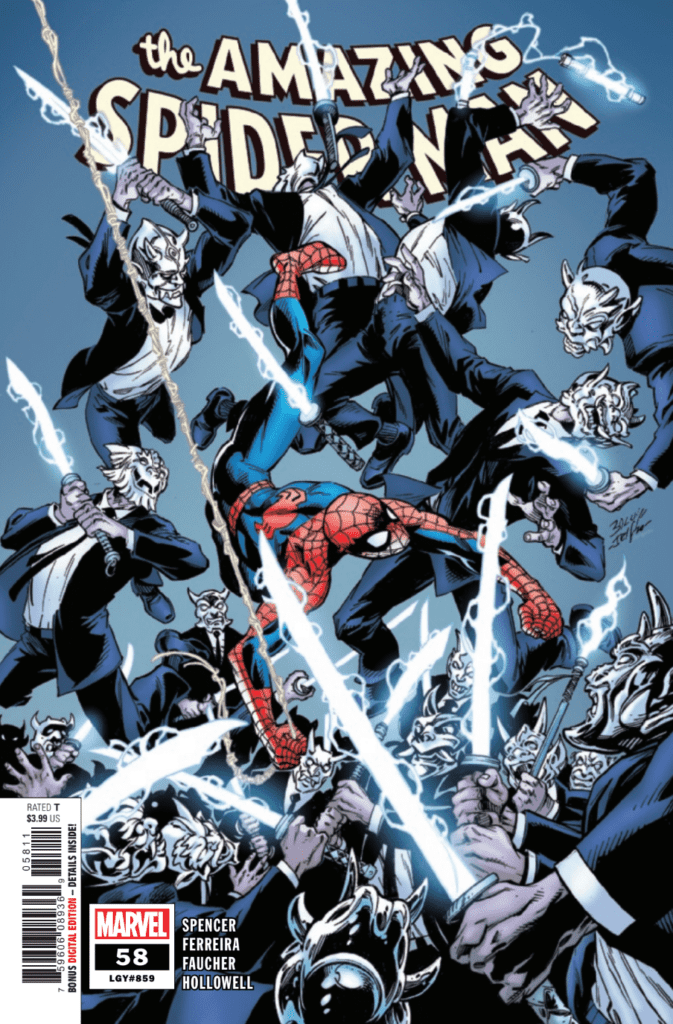
The Amazing Spider-Man #58 Cover

 The Amazing Spider-Man #58, out now from Marvel Comics, is a heartbreaking issue where the damage caused by revelations of the “Last Remains” arc needs to be dealt with.

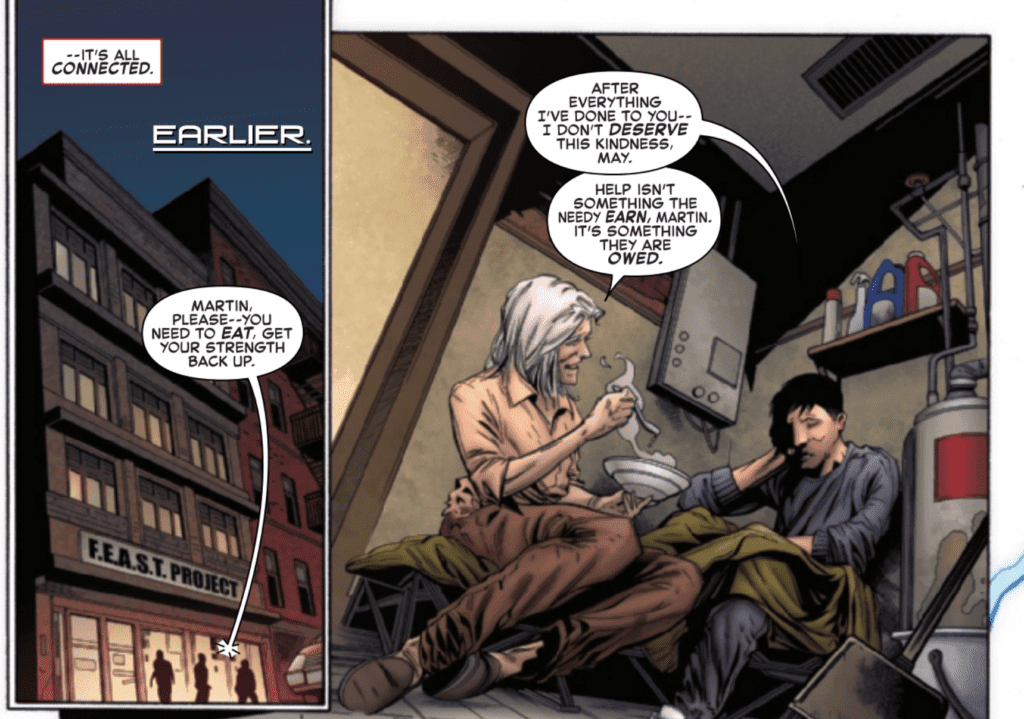
The Amazing Spider-Man #58 Story Example

The previous arc showed Spider-Man pushed to his breaking point. Nick Spencer does a perfect job of showcasing a more impatient version of the character in The Amazing Spider-Man #58. The issue features some heartbreaking moments, as the revelation of the previous arc takes its toll on people not involved in super-heroics. The dialogue is particularly noticeable, as it effortlessly tugs on your heartstrings. The story also returns to characters that haven’t appeared for a while. It’s nice to see after so many issues dedicated to the interaction between Kindred and Spider-Man.

Marcelo Ferreira’s pencils and Wayne Faucher’s inks turn The Amazing Spider-Man #58 into an astounding issue. Not only do they provide for some brilliant dynamic forms and action, but the issue also contains gorgeous panel framing. Several moments in the issue are unquestionably breathtaking, such as when Spider-Man swings across the city in a highly detailed panel. Realistic backgrounds, such as a cityscape, do wonders to awe the reader.

The Amazing Spider-Man #58 Art Example

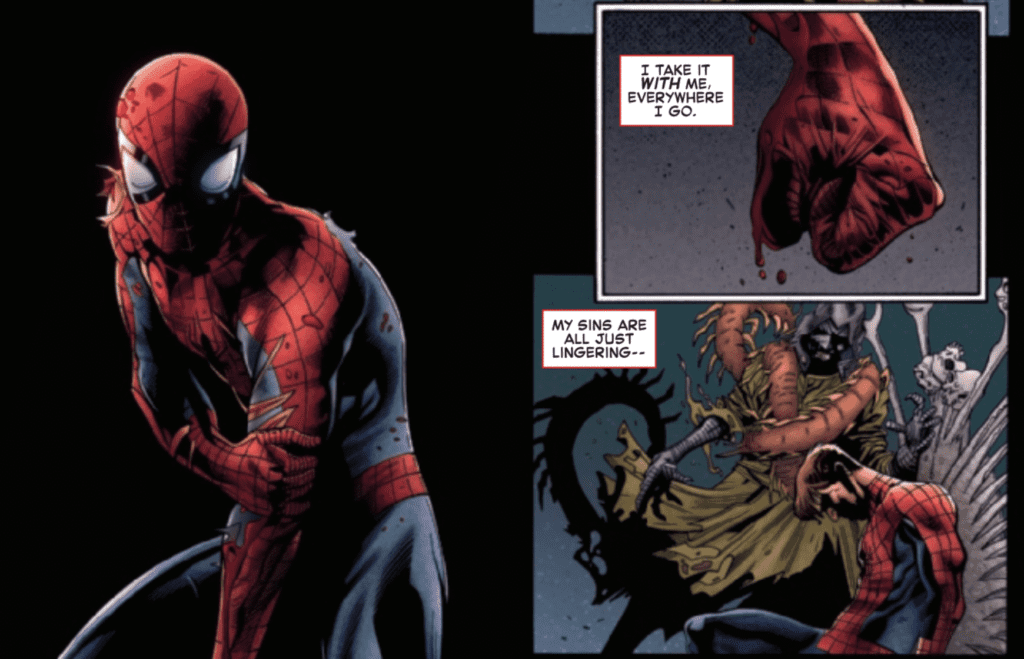
The coloring of The Amazing Spider-Man #58 does a phenomenal job of reflecting the tone. Morry Hollowell uses darker tones to reflect the grim nature of the story but isn’t afraid to throw in bright reds to add energy into a scene. He does this before Spider-Man enters combat, which causes the moment to feel much more intense. Not to mention Hollowell’s shading abilities, which allow the faces of characters to seem alive.

VC’s Joe Caramagna does a fantastic job of lettering The Amazing Spider-Man #58. He provides a wide diversity of styles for his sound effects. Each one perfectly accompanies the action it goes with. Caramagna also gives speech bubbles a red border or a thicker border to signify yelling, which is a highly effective technique that allows the dialogue to match the intensity of body language in some panels.

The Amazing Spider-Man #58 Colors Example

The Amazing Spider-Man #58 is an entertaining issue through and through. This rage-filled version of Peter is an exciting side of the character that we rarely get to see. The art and paneling of the issue add lots of drama to each scene, and the colors reflect the grim tone. Caramagna’s lettering is the needed cherry on top that makes the issue such a great beginning to a new arc.

Monkeys Fighting Robots Youtube

Review: SAINT MAUD Delivers Unsettling Religious Journey

Saint Maud will make audiences wonder how far is too far when it comes to faith, devotion, and religious beliefs. This is a terrific directional debut that welcomes the audience to interpret the events that unfold. Of Course, A24’s attachment shouldn’t surprise anyone familiar with the type of films they’ve released over the years. Saint Maud is a thought-provoking look at how religion can be unhealthy at times.

A story about a woman who has recently found God should be uplifting, but not for Maud, who has struggled to cope with a recent medical mishap. When these psychological horror films dig into the human psyche, it usually results in a very uncomfortable but engaging experience. Saint Maud tackles how devotion can lead to self-destruction, and it doesn’t hold back from being unsettling at times. Directed and written by Rose Glass, Saint Maud stars Lily Knight, Lily Frazer, Jennifer Ehle, Rosie Sansom, and Morfydd Clark. The film follows Maud (Clark), a newly devout Roman Catholic, who is working as a hospice nurse. When given the responsibility of caring for Amanda (Ehle), Maud convinces herself she must save her soul from eternal damnation.

Morfydd Clark as Maud in Saint Maud

Glass does a great job presenting this difference in lifestyles between Amanda and Maud. Before falling ill, Amanda was an artist, and she is now being forced to confront death. However, Amanda engages in several sinful activities, as noticed by Maud. Maud has to live with the unfortunate reality that she couldn’t save a patient’s life in the past, which is what sparks her religious conversion. To make up for that, she is trying to save Amanda from all of her sinful activities. The blatant difference between the two is evident throughout, and the tension only increases with each new activity Maud discovers in Amanda’s life. Despite death knocking on her door, Amanda is in good spirits and seems full of life more than her disturbed hospice nurse. It’s an ironic scenario because Maud is helping others, but she isn’t helping herself despite what she believes.

Maud is often reserved until her religion is brought into question by Amanda or anyone else who doubts. Amanda doesn’t believe in God, so this only aggravates Maud’s mental instability that becomes more apparent with each passing scene. She is drenched in guilt, regret, and blinded by obsession. She can’t enjoy life due to this, and what makes Saint Maud so disturbing is that she can’t see her self-destruction in the making. Glass’ script offers enough knowledge about Maud for audiences to become concerned for her sanity and it’s very clear that she is slipping into madness. The script doesn’t hold the audience’s hand, but still delivers details to assist with almost any interpretation.

Jennifer Ehle as Amanda in Saint Maud

Clark is impressive as this newly saved woman, who doesn’t quite seem to be as committed as she wants to be. Maud is haunted by her previous failures, and with Clark giving it her all in this role, it makes you question if she truly believes in God, or if she is using religion in order to salvage herself. Clark’s performance amplifies the unhinged nature that seems to lie beneath Maud. She brilliantly depicts a social outcast who used to be very outgoing but can’t escape her troubling thoughts. Glass paces the film fairly well, and it is a slow burn for the most part. However, with a compelling lead to carry us for a little over an hour, the slow burn never grows tired. There are some frightening shots shown throughout, and the score by Adam Bzowski is beautifully horrific to hear at certain points. The cinematography by Ben Fordesman aids the moody atmosphere and gives Saint Maud this feeling of dread from start to finish.

Saint Maud deserves every bit of praise because Glass has come out very strong here. Hopefully, her future films are on the same level as this stellar directional debut. This is a film that will stick with some after its chilling final shot. Saint Maud offers a fascinating glance at how damaging religion can become, and it leaves a feeling of unease because of how uncomfortable the film can be to watch at times. If Maud turned to God over poor medical practices, then perhaps God can assist those who decide to endure the brilliance of Saint Maud.


Monkeys Fighting Robots Youtube

3-Page Preview: LEGEND OF SHANG-CHI #1

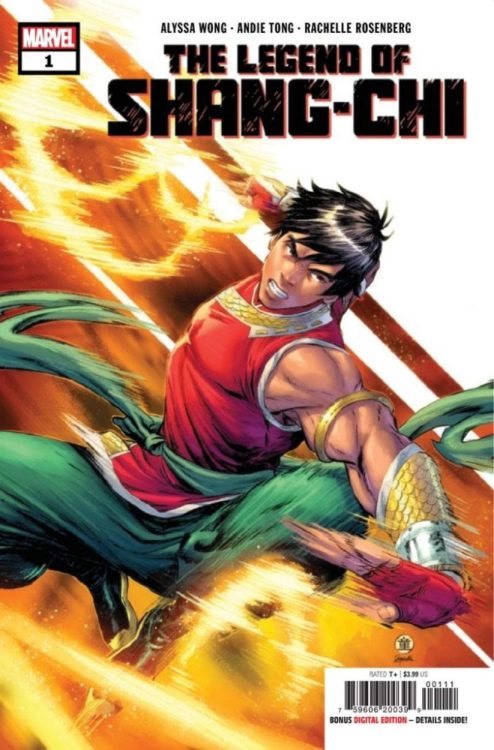
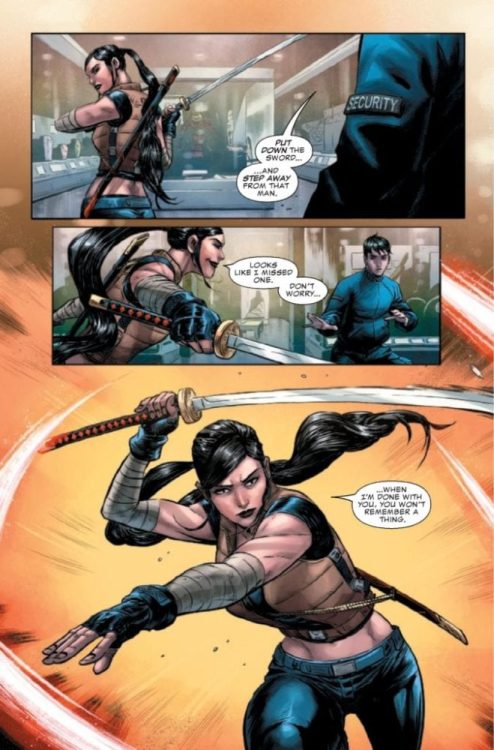
LEGEND OF SHANG-CHI #1

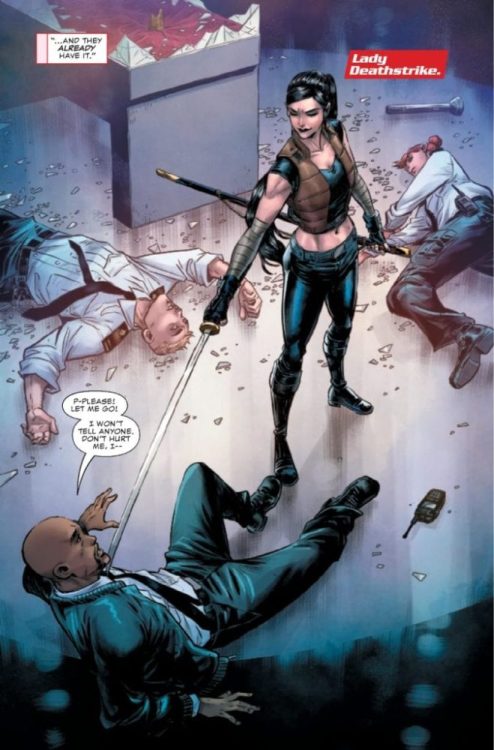
LEGEND OF SHANG-CHI #1 hits your local comic book shop next week, but thanks to Marvel Comics, Monkeys Fighting Robots has a three-page exclusive preview for our readers.


About the book:
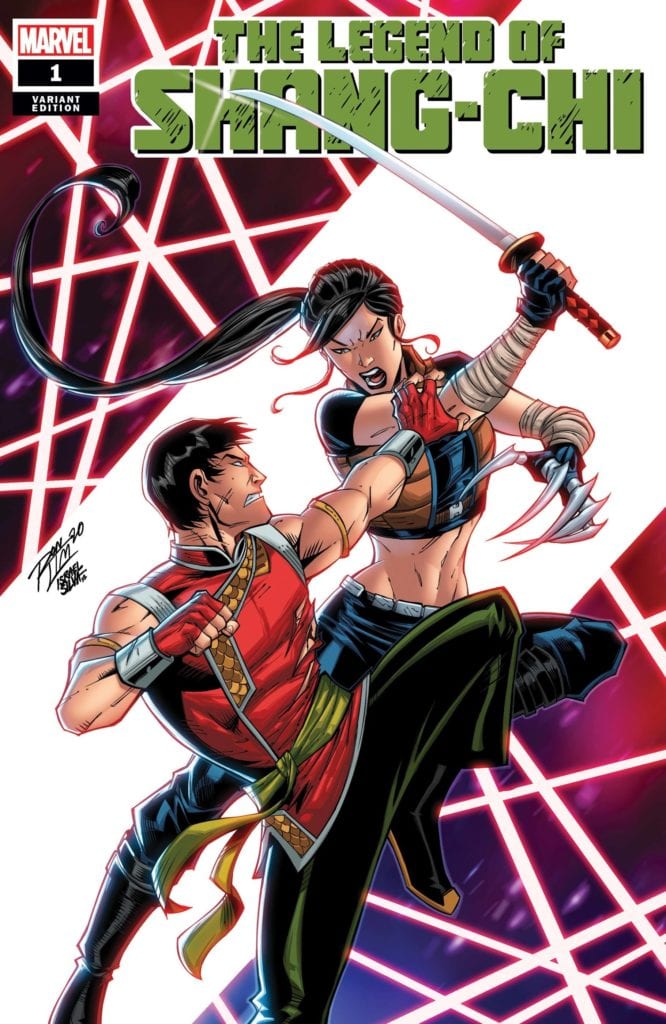
Deadly Hands vs. Deadly Blades! Someone has been stealing artifacts of WMD potential. It’s up to Shang-Chi to find this person and stop them. But is he prepared to go toe-to-toe with Lady Deathstrike?!


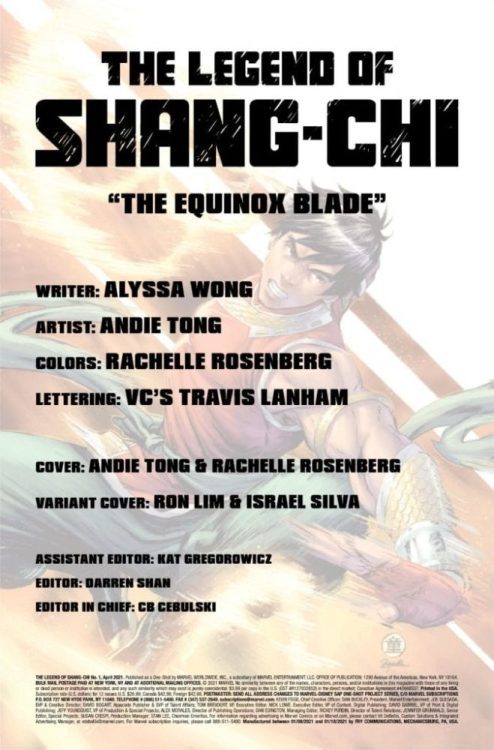
LEGEND OF SHANG-CHI #1 is written by Alyssa Wong, with art by Andie Tong, Rachelle Rosenberg drops the color, and you will read Travis Lanham’s letter work. Tong and Rosenberg worked on the cover, Ron Lim and Israel Solva created the variant cover.

Enjoy The Preview Below:

3-Page Preview: LEGEND OF SHANG-CHI #1

Review: SHANG-CHI #1 Explodes With Fun!

Monkeys Fighting Robots Youtube

4-Page KNOCK ‘EM DEAD #3 Preview From AfterShock Comics

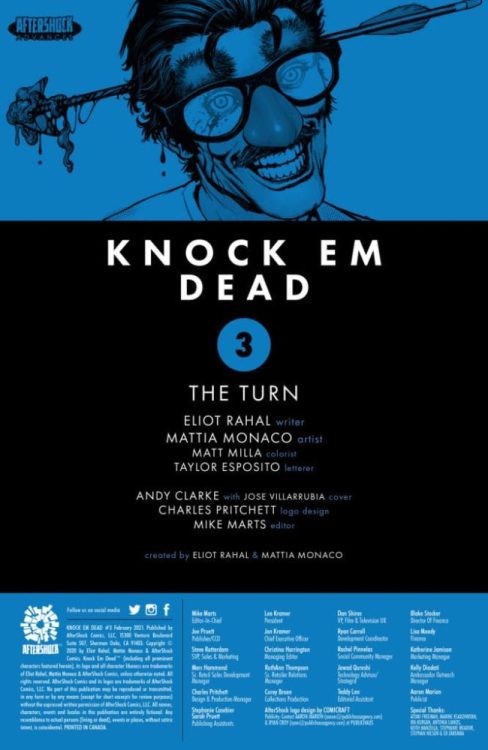
4-Page KNOCK ‘EM DEAD #3 Preview From AfterShock Comics

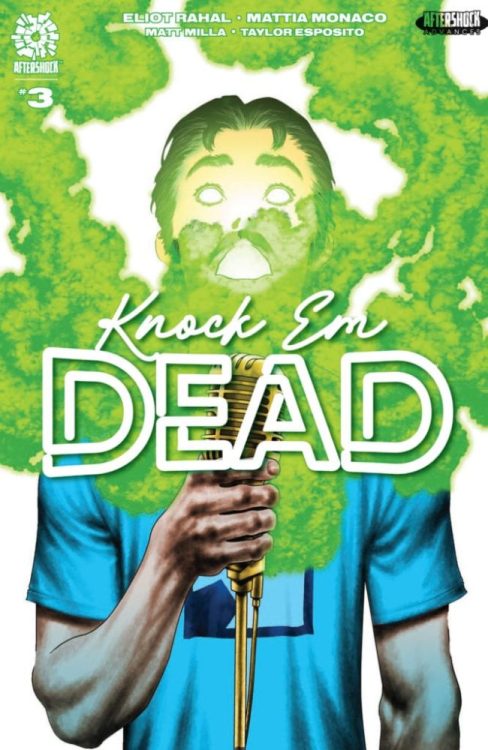
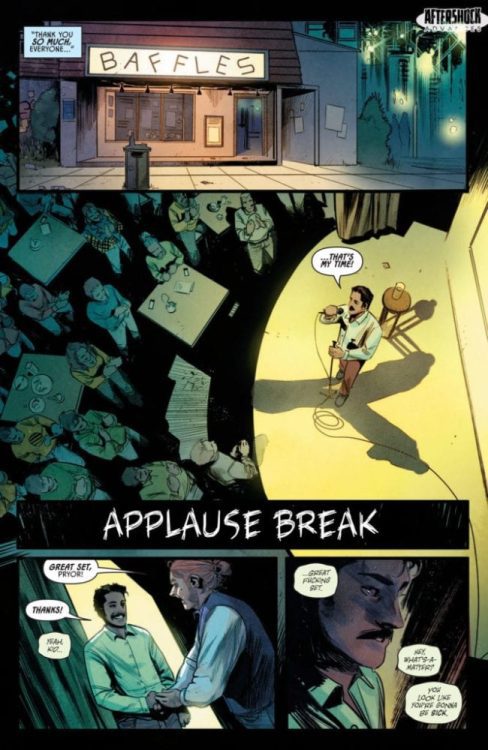
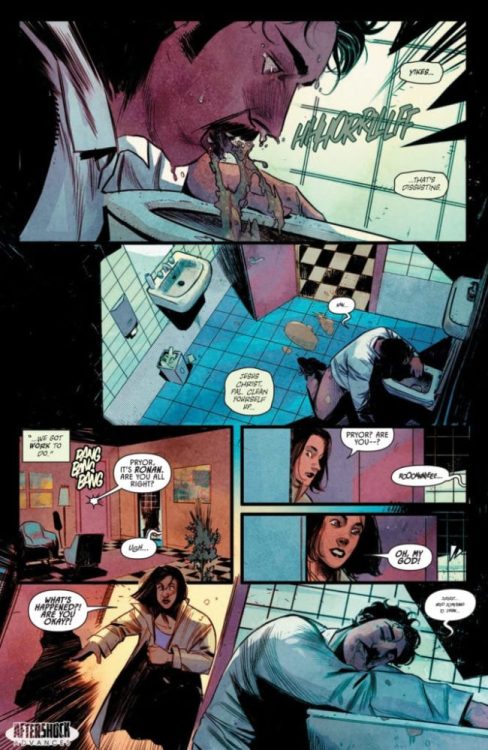
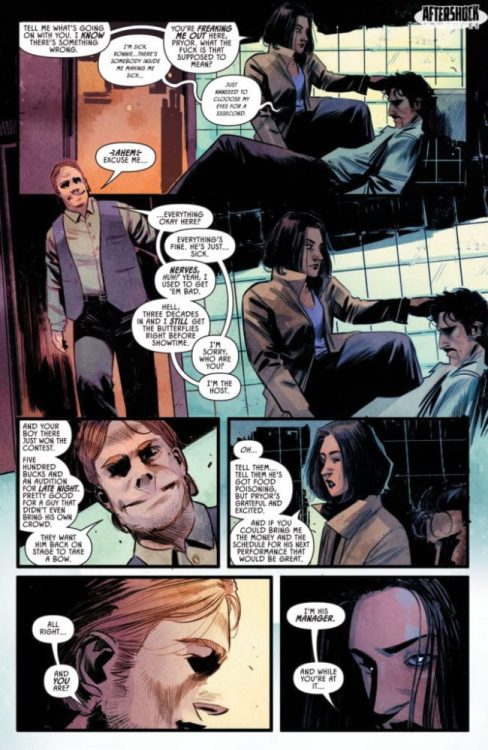
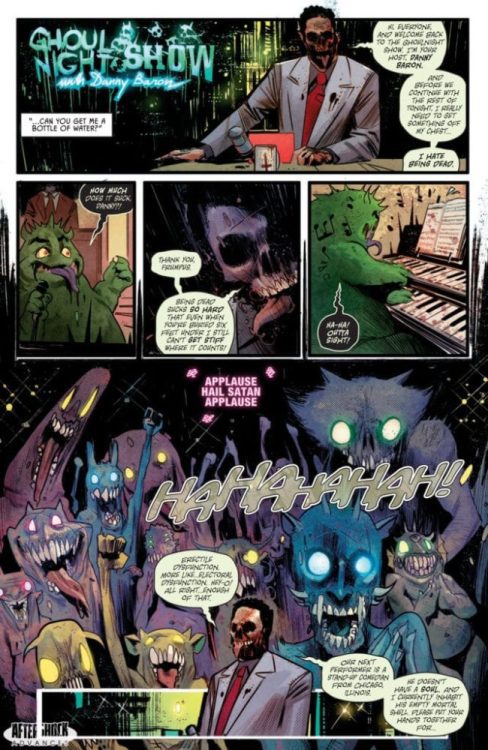
KNOCK ‘EM DEAD #3 hits your local comic book store on February 10, but thanks to AfterShock Comics, Monkeys Fighting Robots has an exclusive four-page preview for our readers.

The book is written by Eliot Rahal, with art by Mattia Monaco, Matt Milla drops the color, and you will read Taylor Esposito’s letter work. Andy Clarke with Jose Villarrubia worked on the cover.


About KNOCK ‘EM DEAD #3:
Pryor Brice has just killed an entire room full of people — because he just won a stand-up comedy competition! Pryor should be on top of the world after his win, but he’s not. The spirit of his dead friend that’s trapped inside him has grown more powerful. Now Pryor is acting…differently. How do you exorcise a malignant spirit for bargain prices on such short notice? Well, all we can say is…thank God for the internet.


Enjoy The Preview Below:

Monkeys Fighting Robots Youtube

Review: THE LITTLE THINGS Shows Little Effort To Impress

The Little Things coast on star power, struggles to leave an impact and takes pleasure in being dull. It’s hard to watch this film without getting thrown off by its odd editing choices and its ability to waste three talented actors. Still, The Little Things is an intriguing film thanks to its three lead stars. Sadly, strong performances from this trio don’t excuse this messy film. A fairly forgettable throwback to the neo-noir genre that is destined to divide audiences. 

These types of films have been around for decades and this genre has offered some classics, but The Little Things will not be joining that discussion at the moment. The most frustrating aspect is that a good film is mixed in crying out for attention. Loads of missed opportunities, but it’s a fairly decent character study at times. Directed and written by John Lee Hancock, the film stars Denzel Washington, Rami Malek, Jared Leto, Isabel Arraiza, and Sofia Vassilieva. The Little Things follows Deke (Washington), a deputy sheriff who teams with Jim (Malek), a young detective working to find a serial killer. Deke struggles to come to terms with an event from his past, as the murders seem familiar to an old case.

Rami Malek as Jim in The Little Things

Deke is a fun character to follow he has returned to town after some time away and has these odd interactions throughout that are explained as the film progresses. Hancock doesn’t struggle to write interesting characters, but none of them are worth getting invested in despite the film being over two hours. A rather long journey to take with stale characters. Hancock does deliver some development for Deke and Jim throughout, which adds to their progressions, but then it just comes to a halt. The Little Things goes above and beyond to frustrate as you wait for this serial killer mystery to be solved. A cat and mouse angle is introduced halfway through, with the introduction of Albert (Leto), who becomes the prime suspect for Deke and Jim. Again, all three are interesting characters, but none worth caring for in the end or throughout the film.

Washington, Leto, and Malek are doing what you’d expect from academy award winners, but Malek’s performance was by far the weakest. Leto manages to outshine as Albert, the prime suspect who is very reserved, suspicious, and makes you question his innocence. He easily convinces you, Albert, is hiding something, but anyone who has seen these type of films will probably not be too impressed. Washing is terrific as well, but Deke’s character is handled in a very lackluster manner and he is the star of the film. Washington just makes magic out of a rough spot here, and it’s enough to keep you invested. Hancock certainly dropped the ball with the pacing for this outing. The Little Things picks up briefly, then slows, and it never seems to pick back up again.

Denzel Washington as Deke in The Little Things

A very lifeless tale unfolds here, but the actors keep you intrigued as mentioned above. In all fairness, once Leto’s character arrives on the scene the film shows a glimpse of hope at it picking up the pace at times. The first act is by far the most compelling due to the character introductions, teases regarding Deke’s history, and the stage is set for what’s to come in the end between Deke and Jim. The score in this film by Thomas Newman is quite satisfying, particularly at its strongest when Deke is shown reflecting on the crime scenes and past cases he has worked on. A spine-tingling reinforcement to the audience that Deke isn’t at peace with something in his past that slowly unravels.

The Little Things isn’t going to get Washington or any of these academy award winners extra points. The film is a decent, but highly flawed return to the neo-noir genre of crime thrillers. All the star power in the world can’t get you to care about half baked characters and a mystery that some will probably never try to solve again after this first outing. It’s one thing to waste talent, but this was just frustrating to watch far too much at times. The Little Things will keep your attention if your into watching mysteries unravel, but don’t expect a satisfying result overall. 


Monkeys Fighting Robots Youtube

Graphic Novel Review: The Night Breathes Life In BEATNIK BUENOS AIRES

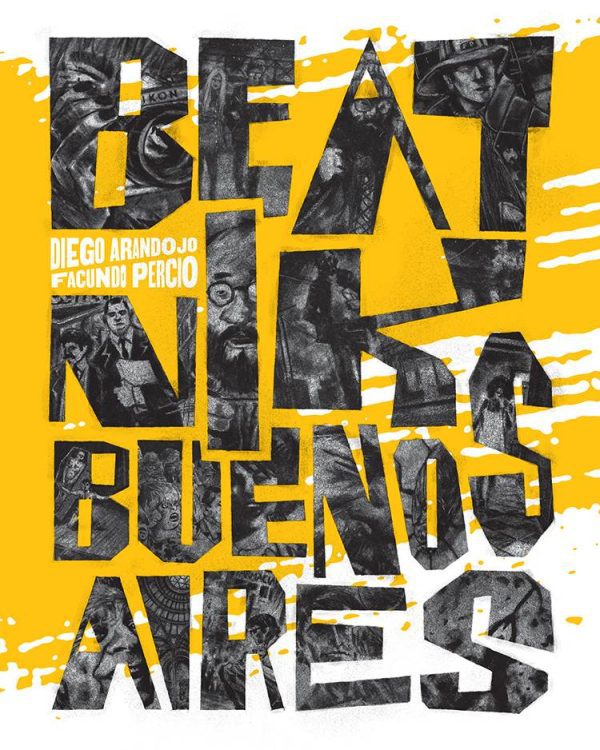
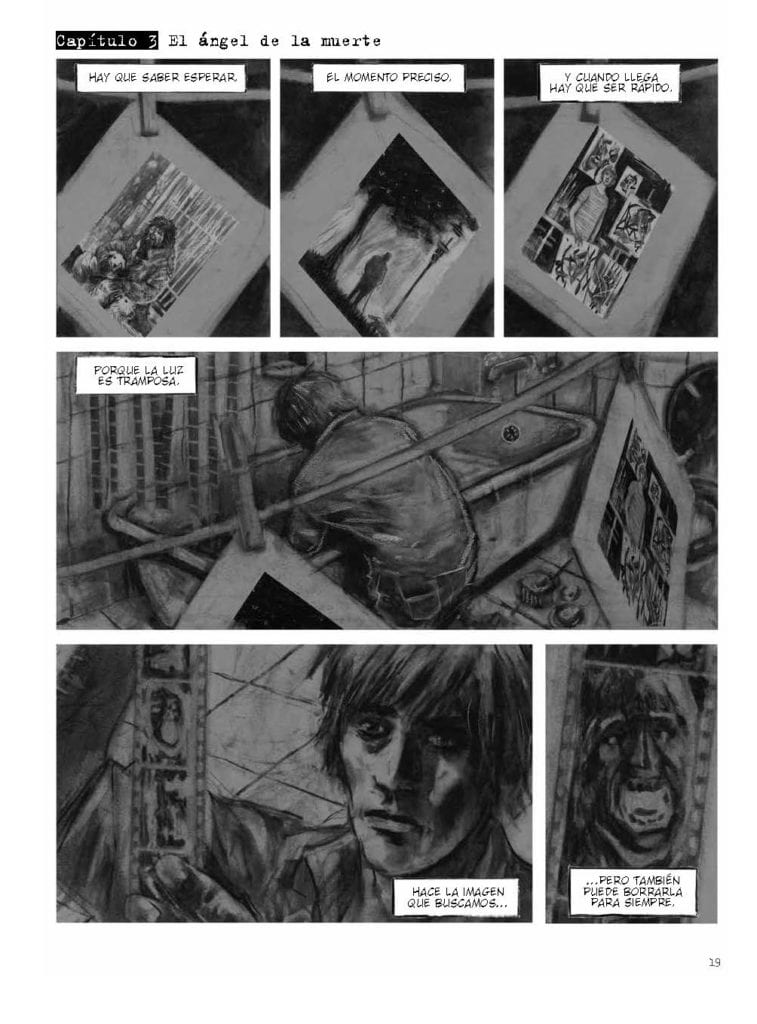
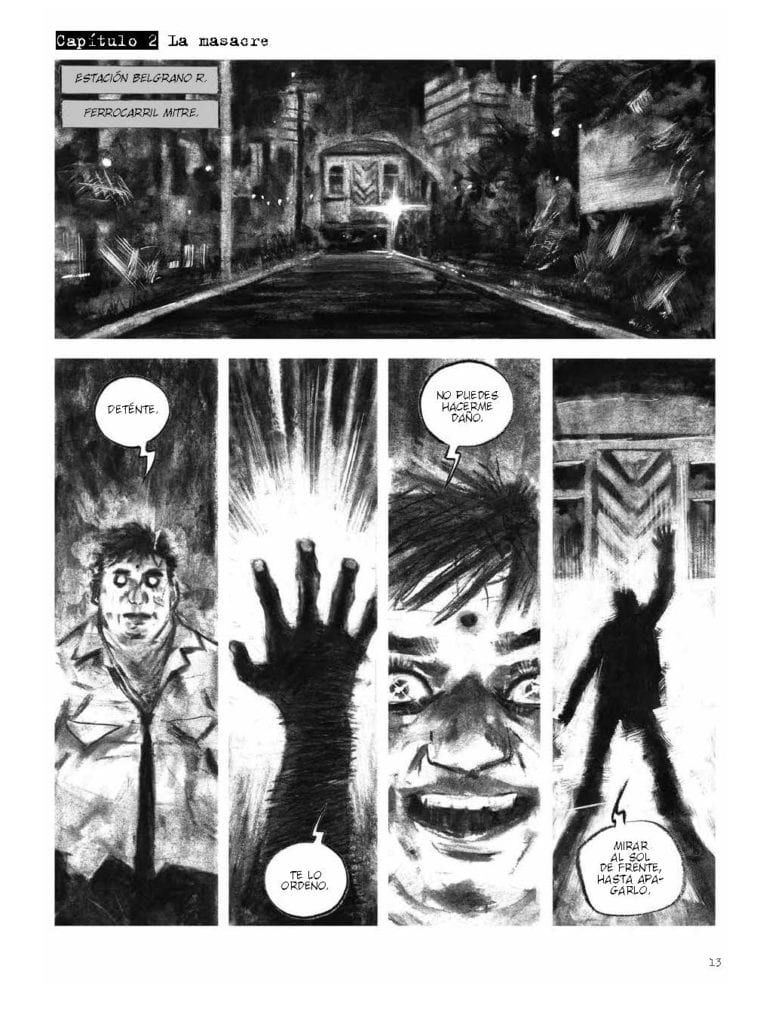
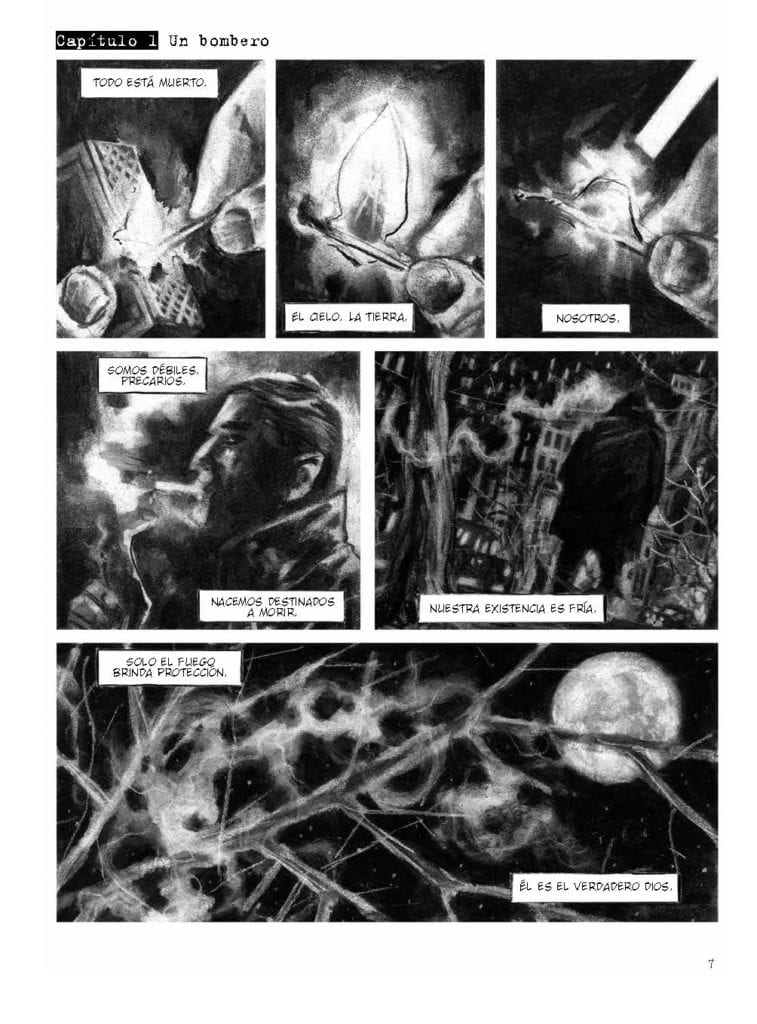
The creation of art and poetry is a chemical reaction of things that aren’t quantifiable. It can’t be observed in any sort of logical sense. It is a spark that comes alive in cafes and bars, and in cramped bedrooms or in front of the family piano. Writer Diego Arandojo and artist Facundo Percio do their best to describe a storm of nocturnal creativity in Beatnik Buenos Aires, a fictionalized account of the artistic thunderstorm that was this South American city during the 1960’s. Written in a combination of poetic verses and sparse dialogue, and visualized in smoky charcoal drawings, this graphic novel from Fantagraphics is an evocative love letter to the creation of art and the mad geniuses who live for its birth.

“When night falls in Buenos Aires, the city comes alive. Artists flock to cafes and dives to exchange ideas, listen to music, watch outré performance art, pen poetry, fall in love. In these raucous, smoke-filled rooms, the bohemian heart and soul of this vibrant city, a conflagration of creative energy burns. With the improvisational pacing of a jazz performance, Beatnik Buenos Aires follows the lives of writers, painters, musicians, sculptors, and performers as they wend their way through these hubs of creative life, seeking out inspiration and grappling with their craft. Set in 1963, this graphic novel celebrates a time in Argentine history when its art scene blossomed.”

Writing & Plot

In Beatnik Buenos Aires, Diego Arandojo sets out to portray the experience of living in the 1960 Buenos Aires nightlife art scene though a combination of believable reality and the very poeticism this movement created. He accomplishes this not via a standard A-to-B plot, but rather a staccato of short chapters from the perspective of different artists, writers, and musicians. This sort of bouncing around from person to person is held together by the setting of Buenos Aires and its signature bars, cafes, and coffee shops (the birthplaces and natural environments for creative types. There’s an improvisational feel to the book as a whole that is completely unique and addicting, though admittedly its lack of cohesion may alienate some readers looking for a more traditional story. While there is certainly a lot of love for this era displayed within the main pages of the book, there are also notes at the end which provide context for each chapter, including background information as to each character and who they represent – or directly are meant to be – in real life. Arandojo notes that there is some fictionalized embellishment in these stories for the sake of entertainment, but the heart of the stories are still largely true. It’s easy to feel the care that Diego puts into each use of words and poems, instilling a grander (if sometimes inexplicable) meaning to this work. This graphic novel not only set me down in the room with these men and women, but made me nostalgic for my own experiences among creative peers. As an English major who made a lot of friends with writers and poets, the barroom and coffee shop scenes of artistic discussion reminded me of similar moments in my own life. The moments in the book are way cooler and more intriguing, obviously.

Art Direction

While it’s Arandojo’s love for this microcosm of creativity that ultimately conceived this book, the art of Facundo Percio is what brings Beatnik Buenos Aires to life. Percio’s charcoal black-and-white visuals instill a sense of historic gravity and unmistakable character to the entire book. You would think that rendering an entire graphic novel in this style, especially with a huge cast of characters, would make the stor(ies) seem monotonous. However, Facundo manages to bring the liveliness and expressiveness of these people and their city into the story through this style in a manner completely unique to this book. The smoky charcoal grays and blacks work almost symbolically, living in tandem with the cigarette smoke, black coffee, and ink-written words found in every tale. Every character very much has their own look and sense of expression also, which is doubly amazing due to Percio’s technique. The panels flow from situation to situation and time to time with ease, like the passages and poems they are meant to dissect. The visuals here are so singularly significant that it’s actually a bit difficult to offer a critical view; the gray and black renderings of 1960’s Buenos Aires and the Avant Garde artists who gathered in its PM hours are burned into my brain and it makes me want to write. The highest compliment I can give.

When a comic really gets me (or a story of any medium really, just most often it comics), really reached into my mind and hits my taste in just the right spot, it for some reason makes me desperately need a cup of coffee and a cigarette (and I don’t even smoke). This book incited this reaction, but also explained that this was perfectly normal behavior according to South American artists in the 60’s. Beatnik Buenos Aires is a love letter to a time that was a hurricane of artistic creation. It is a tale of two cities, one of the vanilla 9-5 side of Buenos Aires, and more importantly the nocturnal side when all the artists come out to drink coffee, trade ideas over cigarettes and alcohol, and seek to experience all the uniqueness and originality that can be had in other artists. Diego Arandojo pays tribute to real artists and poets through a series of unique short stories that roll out like an improvised jam session. The smoky charcoal grays and blacks of Facundo Percio craft the perfect tone and aesthetic for this graphic novel with images and scenery that will from now on be seared into my brain. While this is surely not a book for everyone, if this does sound up your alley, be sure to grab a copy when it hits shelves on 4-27.

Monkeys Fighting Robots Youtube