Home Blog Page 174

ZACK SNYDER’S JUSTICE LEAGUE | Movie Review

The release of Zack Snyder’s version of Justice League has finally been released as a tentpole release for HBO Max. It was an improvement to the version that was released in 2017.

The death of Superman has sent ripples across the universe. These ripples are heard by Steppenwolf (Ciarán Hinds), a disgraced follower of Darkseid who’s seeking redemption by conquering Earth. Bruce Wayne (Ben Affleck) can see this threat coming from beyond the stars and sets out to form a team of superpowered beings for the upcoming fight.

The production of 2017’s Justice League was a troubled one. After the disappointing reception of Batman v Superman: Dawn of Justice Warner Brothers decided to course correct. AquamanShazam!, and Wonder Woman 1984 were all lighter in looks and tone. But to get there Justice League had to be reworked with Warner Brothers replacing Snyder with The Avengers’ director Joss Whedon, and demanded the film be less than two hours. This led to a film that was a mishmash in tone and had to skip over a lot of details. Because of this 2017’s Justice League was lambasted by critics with fans putting the blame on Whedon when in reality it was the executives who were at fault.

Comparing The Snyder Cut and the theatrical cut serves as a great lesson in filmmaking and editing and sees how much films can change. Most of the action scenes remained intact everything else has changed. The theatrical cut saw The Flash (Ezra Miller), Cyborg (Ray Fisher), and Steppenwolf were given short shrift. The Flash was given a flashy introduction with him saving Iris West (Kiersey Clemons) from a car accident, and Steppenwolf was turned from a generic alien leader to someone who wanted to atone for his past actions and seek forgiveness from his master.

Cyborg was improved greatly in this version of the film. Most of his backstory and character development was removed from the theatrical version. The Snyder Cut showed Cyborg’s issues with his dad. In this version of the film Cyborg wasn’t just resentful towards his father because he turned him into a living machine, he also blamed his father for his mother’s death. This gave the film an emotional core. Snyder’s version of the film was better at explaining Cyborg’s powers: he was more than just a man with robot parts, he was also a living computer who was able to hack any computer system. There was a sequence where the film showed Cyborg’s empathy when he views the tragic life of a poverty-stricken woman and decides to help out.

Superman’s story also had more emotion. After Superman gets resurrected, he has to accept why the Justice League did it. There has already been two films of emotional investment and Justice League called back to Man of Steel with the use of Kevin Costner’s and Russell Crowe’s voiceovers and the familiar theme music the DCEU used.

Batman was less guilt-ridden than he was in the theatrical cut. It was clear that Affleck had to come back for reshoots because he was unfit and was suffering from personal issues. In the Snyder Cut Bruce Wayne/Batman was more focused and needed to stop the alien invasion.

One of the biggest criticisms that was laid upon Batman v Superman was it was too dark and violent. This was toned down for Justice League. There is violence and swearing, it’s still a Zack Snyder film, but it felt less sadistic – Batman wasn’t the psychopathic killer he was in the 2016 film. The violence pleased my primal senses but the swearing (especially use of the f word) came across as a 13-year-old trying to be edgy. The worst example of this came with the final scene of the film involving a character who’s return was teased by the marketing.

The Snyder Cut had a lot more connective tissue, like the Amazonians sending a signal to Diana. Other scenes were clearly added to set up future installments. This was evident with scenes involving Aquaman with Atlantean characters who tell him to fulfill his destiny and become the King of Atlantis – and we got to see that story in 2018. Other storylines being set up involved Darkseid’s plans for conquest, mentions of the multiverse, and showing more scenes featuring the dark future. However, the question is what’s the future for the DCEU? Will the franchise return to the Snyderverse, or will it continue down the lighter path? The DCEU’s continuity is one of the most confusing.

Justice League is the longest film in the franchise, the story was a lot more straight-forward than Batman v Superman. The story was simply the Justice League getting formed and stopping an alien invasion. It was the same basic premise as The Avengers and the villain wanted to terraform Earth – that’s what General Zod tried to do in Man of Steel.

Zack Snyder’s Justice League has been declared a masterpiece by some people and it holds a high IMDB rating. But it has been overhyped. It’s solid but Snyder can be an over-indulgent director. The first 90 minutes was a slog and the same can be said about the ending. Despite the length already there the first 90 minutes would have done with an extra action sequence to help break things up. The film was split into parts that had title cards like it was a Tarantino film. Despite the extra money that was invested in this version of the film the CGI effects were not much of an upgrade to the theatrical cut. It’s a real shame because Man of Steel and Batman v Superman had CGI effects. The filmmakers decided to show the film in the 4:3 aspect ratio. You will get use to it but it leads to the question, why was it done?

The other issue affecting Justice League is not really its fault. That is comparisons between Marvel and The Avengers. The planned overarching plot was similar to what Marvel did with the MCU. Thanos and Darkseid were big, powerful bad guys with a bunch of lieutenants who set out to conquer. The basic setup of the film was similar to The Avengers and the wider story reminded me a lot of Avengers: Infinity Wars. If Zack Snyder’s Justice League was released as it was originally intended this issue would have been muted.

Zack Snyder’s Justice League is an interesting curiosity for movies and it provides lot of superhero entertainment. But it is not the best film in the DCEU, let alone one of the best superhero films.

Monkeys Fighting Robots Youtube

INTERVIEW: Composer KOVAS & Music Supervisor Joe O’Riordan Join Forces For COST OF WINNING On HBO

The Cost of Winning is an HBO docuseries about the St. Frances Academy football team as they reach great heights of success thanks, in part, to a unique coach. Composer Kovas and music supervisor Joe O’Riordan painted the sonic picture that elevates the narrative.

In the Cost of Winning, the St. Frances Academy struggles from a lack of financial support. It’s located in a dilapidated area of Baltimore, lacks funding, and needs desperate repair. However, things change with the arrival of a new head coach, Biff Poggi, who helps bring a wave of change that propels the school to football dominance in Baltimore and beyond.

PopAxiom discussed making music for film and TV and the Cost of Winning with KOVAS and Joe.

cost of winning-hbo-documentary

In The Beginning

“When I was a kid writing songs and making music,” Kovas says, “I didn’t think at all I would be a composer.”

For Joe, becoming a music supervisor “wasn’t what I set out to do. I grew up playing in punk bands. My band broke up. I was dating a girl who got an internship working for the Jackass guys. My choice was either stay in Columbus as a broke musician or move to LA.”

Joe’s decision quickly led to a “job at Dickhouse Productions logging film and Fantasy Factory episodes. I became friends with the music supervisor. With my background in music, I knew a bunch of artists and people. I eventually got a coordinator gig, and now I’ve been music supervising for about ten years.”

“We started working formally with each other on On My Block,” Kovas explains, “but we’ve been intertwined for a long time. I was producing and doing remixes of songs … a bunch of stuff at the Fantasy Factory.”

Officially, Kovas explains, “the first project we worked on was a Netflix series called The Comedy Lineup.”

“We work great together,” he continues, “Joe’s able to put in such great music, and I can complement that with the score.”

Joe explains why he and Kovas click. “I pride myself on being an encyclopedia of music. I can talk about Baltimore club music, and he knows the difference between that and Washington DC go-go music. I don’t know a whole lot of people that know that type of stuff.”

“I DJ as well,” Kovas expands on their shared comprehensive understanding of music, “so I have that deep knowledge of both punk bands and the hottest rappers. I started in hip-hop, and to do that, you’re sometimes referencing the entire library of music.”

Joe credits family for part of the reason he knows so much music. “I’m 35, but my grandparents raised me, so my music knowledge goes pretty far back. I think having access to that toolbox is something that Kovas has too. I know a lot of younger composers who’ve never heard something like Abby Road, and I’m like ‘Whaaat?'”

Kovas shares his philosophy on excelling at whatever it is you like to do. “I feel like when you want to be a great music supervisor or composer, you want to know what existed beforehand. When I think about music, there are only 12 notes, but I want to study what everyone’s done with those notes.”

cost of winning-hbo-interview-composer

About Cost Of Winning

Filmmakers Rob Ford (Shut Up and Dribble) and Maurice Holden (Tiger at 30) followed the St. Frances steam in the fall of 2018 and created a four-part series that’s now living on HBO. “I was brought in when it was an indie project, and they hoped it would stream in places, but we weren’t sure. As the pandemic started, HBO was busy gathering up a bunch of sports films. We were beneficiaries of that.”

“I did Baltimore bass beats in the series,” Kovas says, “that’s authentic to the sounds of that city. So, I hope when people from Baltimore hear that music, they’ll recognize it as their own and not some cheap music library music that sounds like hip-hop from 2011.”

The film business requires a lot of give and take. But Joe says he was “very adamant that this film is about Baltimore and it’s important to Baltimore, so it was important to me that any music that didn’t come from a composer would be Baltimore music.”

“When they’re listening to Talib Kwali in the projects on The Wire,” Joe shares a pet peeve, “I’m like ‘c’mon man, they won’t be listening to that!’ It’s important to me that it’s true. That was my initial pitch for The Cost of Winning.”

Kovas laughs. “It’s like putting a 1950s car in Blade Runner. What are you doing?” He further cements their goal of staying true to the music of the area. “As a composer, I try to make it authentic as possible down to figuring out what software they were using mostly at that time or whether it was this drum machine or that drum machine. I try to make it sound authentic down to the equipment.”

“Kovas said to me, ‘let me sketch you out something,'” Joe says of the early days of the process. “He sketched the opening scene, and the producers said to me ‘don’t even bother with anyone else.'”

Kovas received good and bad news soon into the process for creating the Cost of Winning score. “At the early stage when they hired me, they said, ‘Good news is we want you, the bad news is that you’ve only got about two-and-a-half weeks to get it done.”

Wrapping Up

As a musical encyclopedia, asking Joe for some of his favorite influences is a slippery slow. “I’m inclined to list off all four members of the Beatles,” he says, “I mean, seriously, aren’t we all just trying to be the Beatles? I love Daniel Johnson so much, Andy Kaufman, and Hunter S. Thompson. Anyone who is doing real sh*t and not because of the tides of the time.”

“I think of music as art,” Kovas says and shares that he experiences synesthesia. “Music is a painting to me. People like Basquiat inspire me. You could send me a photograph, and I’ll compose music based on the work’s composition and colors. To me, Quincy Jones and the breadth of his work. From working with Miles Davis to Frank Sinatra to producing Thriller and Fresh Prince of Bel-Air. I’ve always wanted to be multi-dimensional in my creative output. I also love the Beatles,” he laughs. “I have to acknowledge Frank Lloyd Wright. Music is sonic architecture, and architecture was my first love as a kid.”

Joe’s time in punk bands was spent as a bass guitarist. Kovas plays “five instruments” but shares the truth about what his go-to instrument is today “my main instrument is the computer.”

If Kovas could compose the score for a remake, reimagining, or reboot of a movie he loves, he’d pick “Citizen Kane.”

“My gut says Goodfellas, but that’s like perfect. I couldn’t do it better,” Joe says, then shares a unique answer that for those who are in the know, it’s a great answer. “I would want NBC to get the rights to the NBA back so I can have a stab at re-creating John Tesh’s NBA theme. One of the most iconic pieces of music ever, the NBA on NBC.”

Cost of Winning is available on HBO. So, what’s next for Joe? “I’m working on Ridiculousness on MTV. A show on Starz called Men In Kilts. It’s the two guys from Outlander doing a travel show based in the Scottish Highlands. I got really into learning about Scottish music. Also, a couple of spinoffs of Ridiculousness, like Deliciousness, are coming out. On My Block season four, which I hope to get my hands dirty with that real soon.”

“Season four of On My Block, we’re coming out with a bang,” Kovas says. “An artist from Montreal called Empire-I, I just produced her new album. I have a new album that I’m working on with James McCallister.”

Is Cost Of Winning on your watch list?

Thanks to KOVAS, Joe O’Riordan, and Rhapsody PR
for making this interview possible.

Read more interviews from Ruben R. Diaz!

Monkeys Fighting Robots Youtube

ORPHAN AND THE FIVE BEASTS #1: Tribute To Kung Fu Flicks

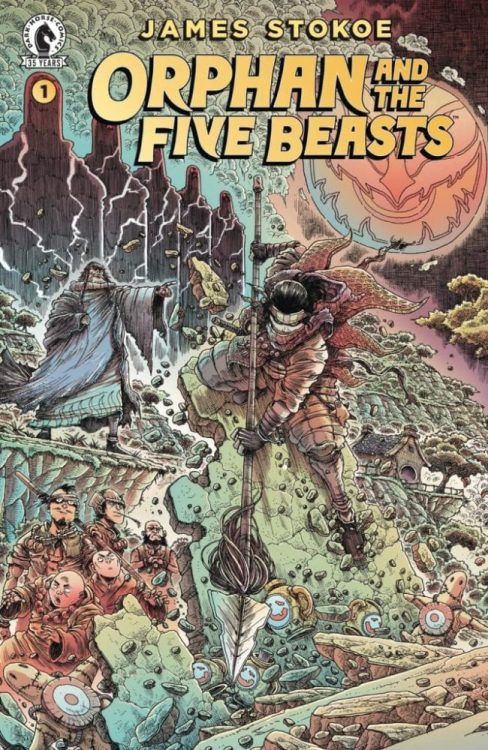
Orphan and the Five Beasts 1 Cover

Dark Horse’s Orphan and the Five Beasts #1 begins creator James Stokoe’s tribute to Hong Kong cinema. With all of the rip-roaring energy and absurdity of the wuxia genre, this series blasts onto shelves on March 17th.

That Title Sounds Familiar…

Orphan and the Five Beasts #1, in its first half, wears its influences on its sleeve. James Stokoe tributes the cult movie Five Deadly Venoms by sharing the film’s general outline. We follow the last student of a dying kung fu master, Orphan Mo, in her quest to slay her predecessors. But there’s a complimentary twist to the kung fu plot formula.

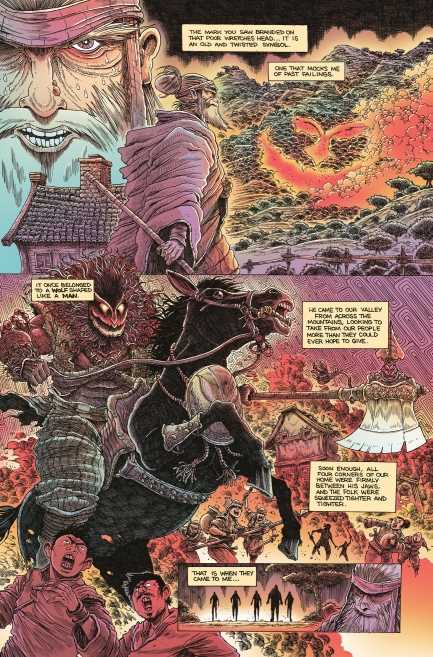
Prequel to this movieA common trope to this genre is that after the villain is defeated, the movie ends. Mo’s predecessors, the Five Beasts, were once heroes of their own story, fighting against an evil warlord. This series delves into what happens after that story ends and it’s not good. The Five Beasts’ lack of discipline caused them to become corrupt and supersede the warlord. Mo’s quest is not simply about defeating an enemy like the Beasts, but reclaiming her master’s honor. It’s a basic, yet intriguing, plot about a film genre.

Orphan and the Five Beasts #1: In HD!

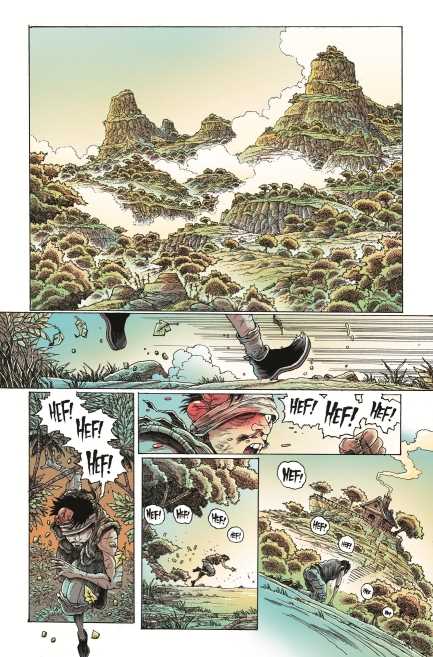
Orphan and the Five Beasts #1 PageStokoe gives Orphan and the Five Beasts #1 the majesty and absurd energy of a kung fu movie. The mountainous regions look absolutely mythical, extending into the clouds. The green landscapes look so peaceful, yet a person’s look of panic manages to disrupt the peace with its red accents. The fight scenes look finely stylized and cartoony. Mo is able to defeat thugs easily with a showy attack on her attacker’s crotch. It shows the reader that the hero can handle herself just fine. Which is good because her first major opponent is so absurdly powerful, with the issue’s deadly cliffhanger. The guy crushes horses he’s riding with his thighs!
The lettering has a large amount of uses aside from simple word balloons. The standard word balloons display someone in good health and emotional stability, unlike the word balloons of the sick master which crumple and emotional outbursts that have jagged edges and stylized words. Plenty of showy sound effects decorate actions like the noise generated by thunder thigh’s leg muscles. It’s all so eye-catching it’s impossible to look away.

Orphan and the Five Beasts #1: Kung-Fu Worship

Orphan and the Five Beasts #1 excitedly bursts right out of the pages. Loud and stylized sequences decorate the pages for some hard core action thrills. And it’s now available wherever comics are sold.

Monkeys Fighting Robots Youtube

Review: RADIANT BLACK #2 – Making the Series Stand Out

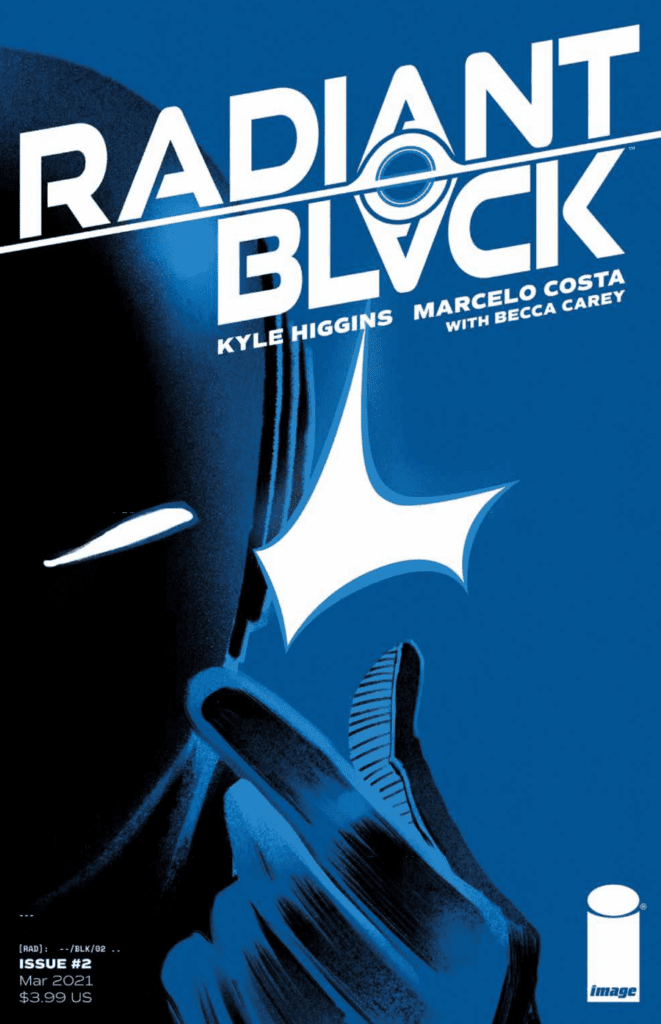
Radiant Black #2 Cover

Radiant Black #2, out now from Image Comics, establishes the unique and fascinating nature of this new superhero series.

Radiant Black #2 Art ExampleKyle Higgins has created a glorious story with this series, and he develops further it in Radiant Black #2. The previous issue introduced us to Nathan Burnett and his life circumstances, but we now get to see a deeper look into his morals and his relationships with his parents. His backstory is so easy to relate with since a significant component of it is him encountering a roadblock while chasing his dream. Nothing is easy in this world, and if you’ve ever had a passion, you’ve come across obstacles while pursuing it. There are also his parents, who he has just moved back in with. The dialogue from Nathan’s father is so realistic and gets across some complex emotions. When he and Nathan have a chat about Nathan’s financials, the father has an outward attitude that he understands, but there is a clear feeling that he doesn’t relate. As if it’s been so long since he’s been young that he’s forgotten what it’s like to have aspirations. We later get to see another side of him, highlighting how three-dimensional Higgins’s characters are and how easy it is to emphasize with them.
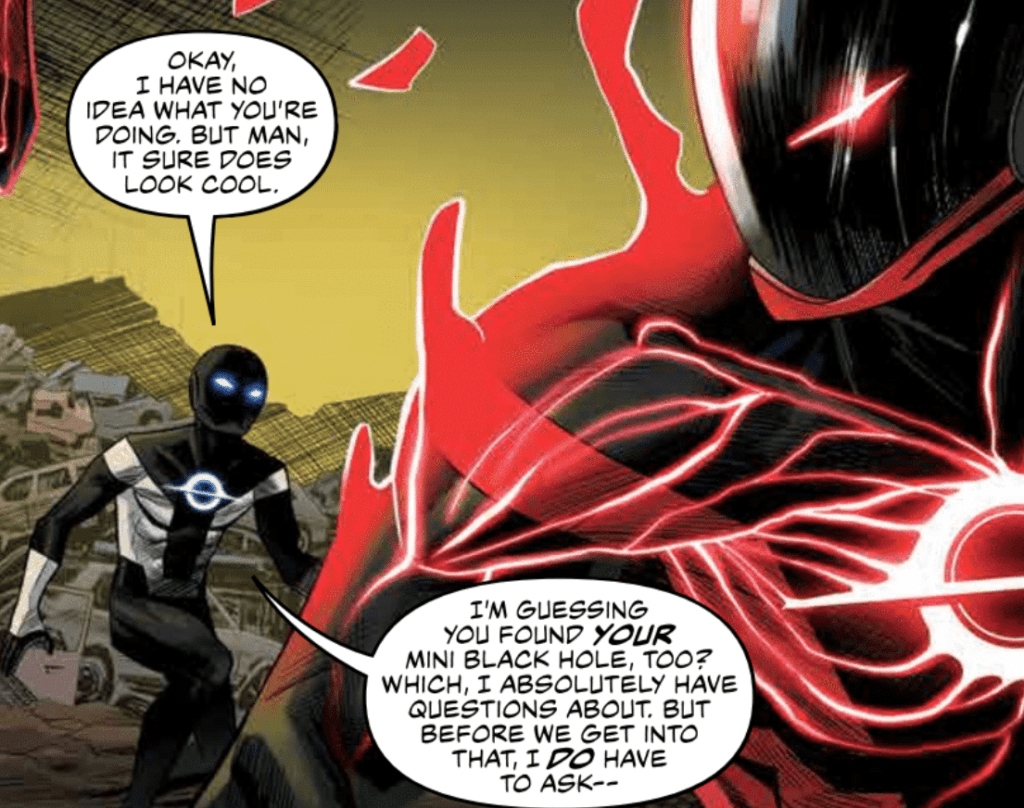
Radiant Black #2 Story Example

Radiant Black #2 is filled with gorgeous art from Marcelo Costa, who brings life to this new superhero. There are several multi-action splash pages in this issue with such beautiful composition that it would be a crime not to take an extra moment or two to appreciate them. The emotions of the characters are so well-expressed that readers quickly become immersed intense scenes. One page has no dialogue but perfectly conveys Nathan’s dilemma through emotions expressed through his mask. Costa’s art is utterly amazing, and it’s even more impressive that he is responsible for the book’s colors as well. The palette of cooler colors is a perfect complement to the art and quickly defines the series’ tone. From the spectacular fight scenes to the costume design, the art screams a sleek and modern design. This new hero is a hero for the present that isn’t just an echo of past comic book superheroes. Radiant Black is something all its own, and I’m excited to see what other breathtaking art this series will yield.

Radiant Black #2 Lettering Example

Becca Carey’s lettering of Radiant Black #2 complements the style of the art phenomenally, which assists in immersing the reader. The sound effects used don’t use over-sized fonts but instead match the sleek design of Radiant Black. Sound effects also often overlap panel borders, which makes them stand out and emphasizes the noises. Speech bubbles are placed in a manner that allows the dialogue to flow smoothly, and overall the lettering is a remarkable companion to the art and writing.

While I enjoyed the first issue of the series, Radiant Black #2 is what makes me thrilled to continue following the series. The art is stunning, the story effortlessly draws you in, and every page is a glorious experience. If you had any doubts about the series, reading issue #2 is sure to make you a fan.

Monkeys Fighting Robots Youtube

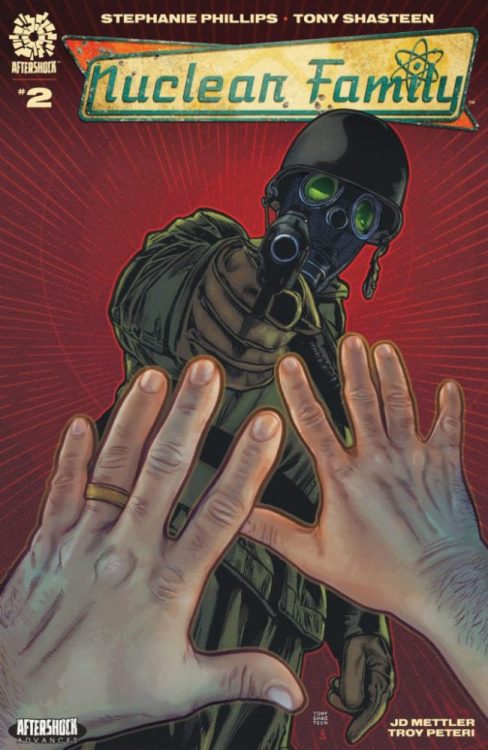
4-Page Preview: NUCLEAR FAMILY #2 by Stephanie Phillips and Tony Shasteen

4-Page Preview: NUCLEAR FAMILY #2 by Stephanie Phillips and Tony Shasteen

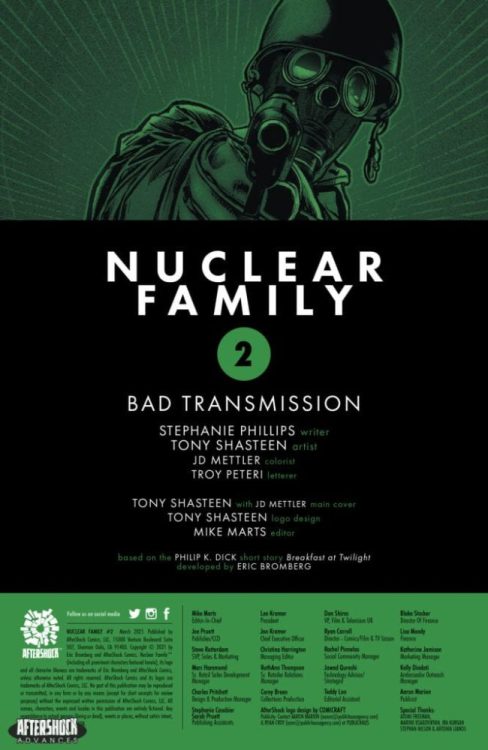
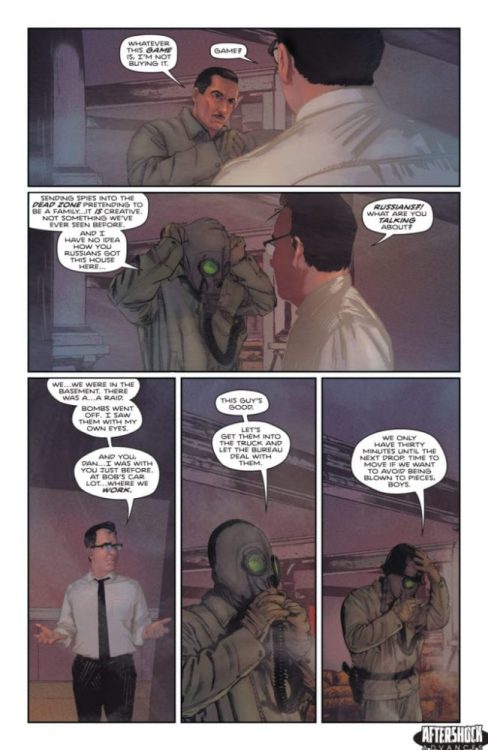
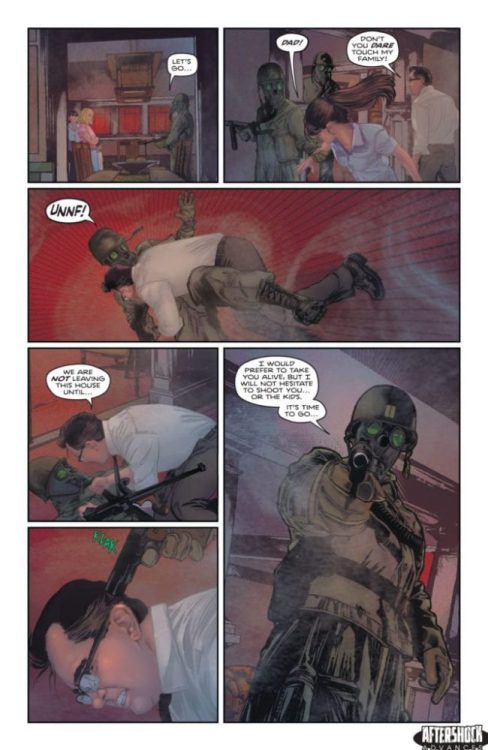
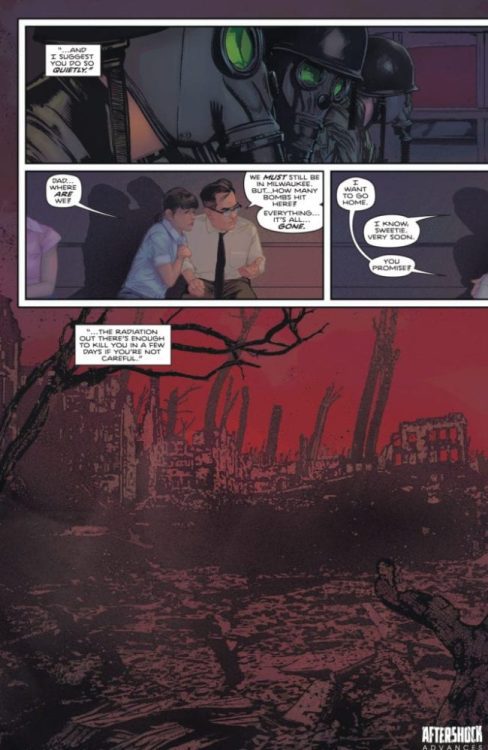
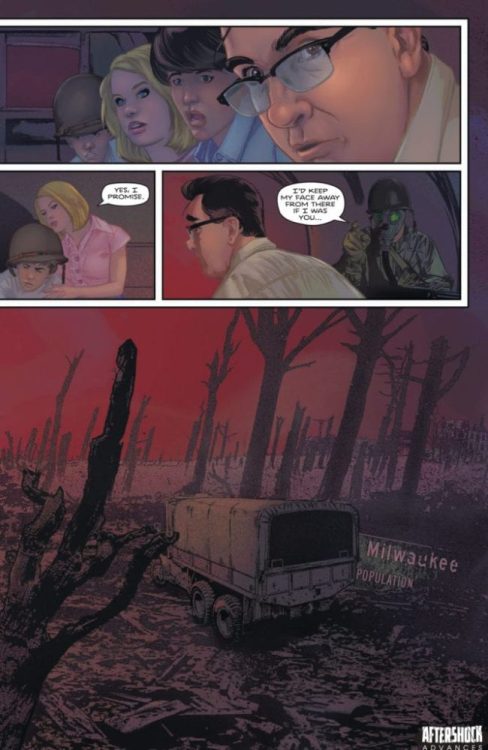
NUCLEAR FAMILY #2 hits your local comic book store on March 31, but thanks to AfterShock Comics, Monkeys Fighting Robots has an exclusive four-page preview for our readers.

The book is written by Stephanie Phillips, with art by Tony Shasteen, JD Mettler drops the color, and you will read Troy Peteri’s letter work.

About NUCLEAR FAMILY #2:
When the Big One dropped on their house in 1957, the Cold War turned hot for the McClean family. Forced to contend with the literal fallout in a Wisconsin suffering from nuclear winter, where almost all civilization has been wiped from the map, the McCleans now have to wonder, is the year still 1957, or has something more shocking happened?

Monkeys Fighting Robots Youtube

4-Page Preview: BLACK PANTHER #24

BLACK PANTHER #24

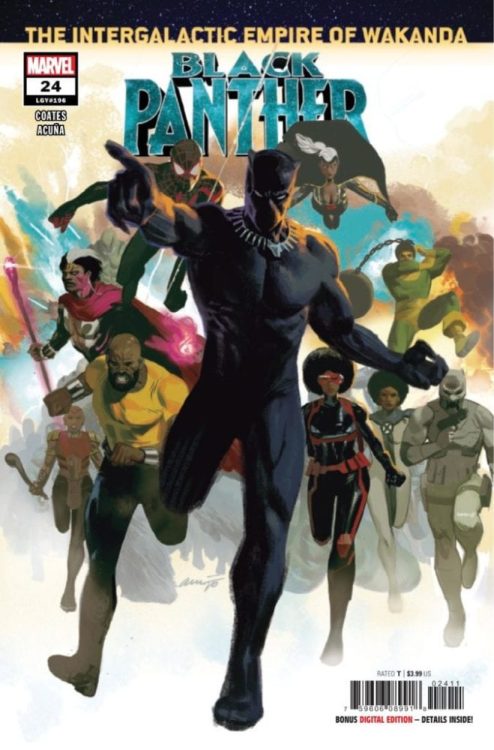
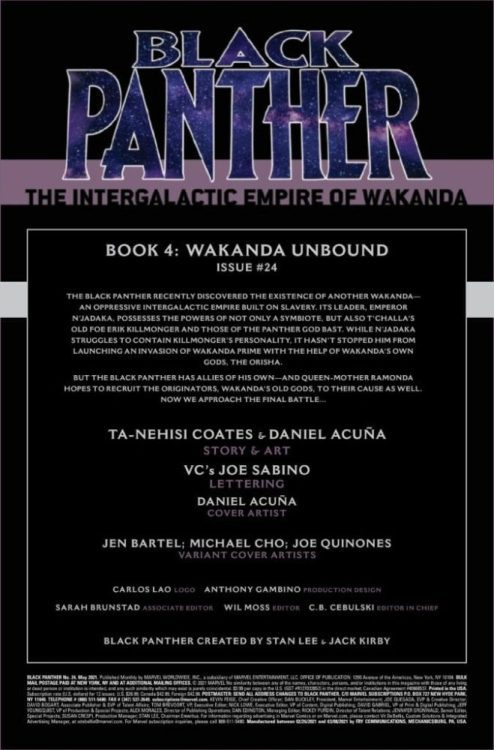
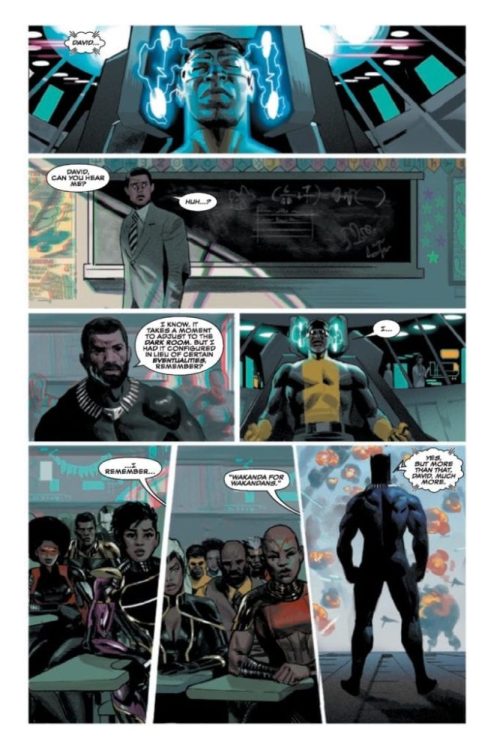
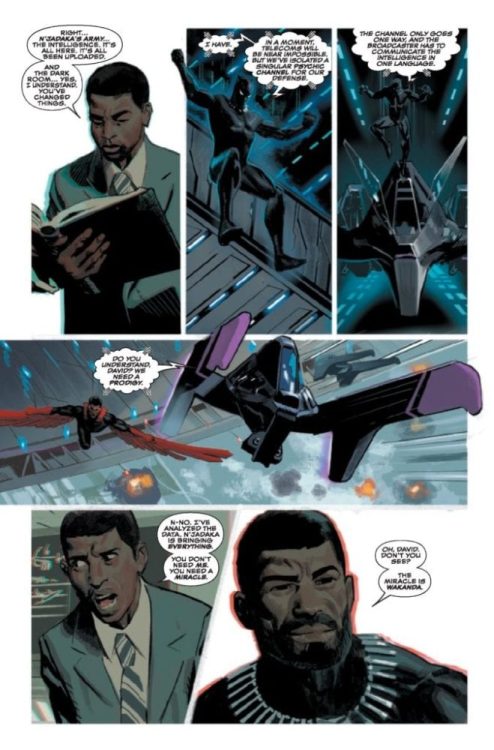
BLACK PANTHER #24 hits your local comic book shop next week, but thanks to Marvel Comics, Monkeys Fighting Robota has an exclusive four-page preview for our readers.

The book is written by Ta-Nehisi Coates with art by Daniel Acuña, and you will read Joe Sabino’s letter work.

About BLACK PANTHER #24:
THE INTERGALACTIC EMPIRE OF WAKANDA – “WAKANDA UNBOUND” Part 6
The Intergalactic Empire has suffered thousands of losses – and still, they’re coming for Earth. Wakanda Prime is in more danger than ever as Emperor N’Jadaka – A.K.A. the resurrected Killmonger, one of the Black Panther’s deadliest enemies – returns to face the king who unintentionally brought him to power.

Monkeys Fighting Robots Youtube

IRON FIST: HEART OF THE DRAGON #3: The World Can Handle It

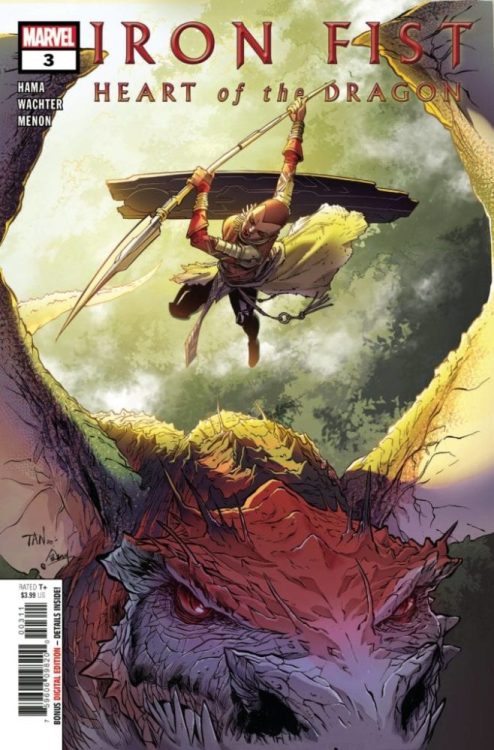
Iron Fist Heart of the Dragon #3 Cover

Iron Fist: Heart of the Dragon #3 from Marvel Comics has some clever commentary about its universe in how world shattering events are pretty much the norm. Larry Hama writes the central conflict in a way that reflects this status quo. The dark and gritty art by Dave Wachter says a lot about the series’ conflict with how the zombie ninjas try and fail to overwhelm the brightly colored settings and guest characters by Neeraj Menon. This general takeaway outshines the main plot, which is enjoyable in its own right. the lettering by VC’s Travis Lanham goes the extra mile to make sure everyone’s efforts stand out in the growing narrative.

Iron Fist: Heart of the Dragon #3: Everyday Marvel Life

Hama makes Iron Fist: Heart of the Dragon #3 a memorable depiction of how mundane Marvel’s universal threats often seem. In just the first pages, the zombie ninjas that threaten our series’ heroes don’t cause the public to panic. Instead, the Filipino military handle these monstrosities off-screen without any real trouble. Even the way Wakanda deals with these invaders pales in comparison; everybody already knows they can handle the universe’s absurdities.

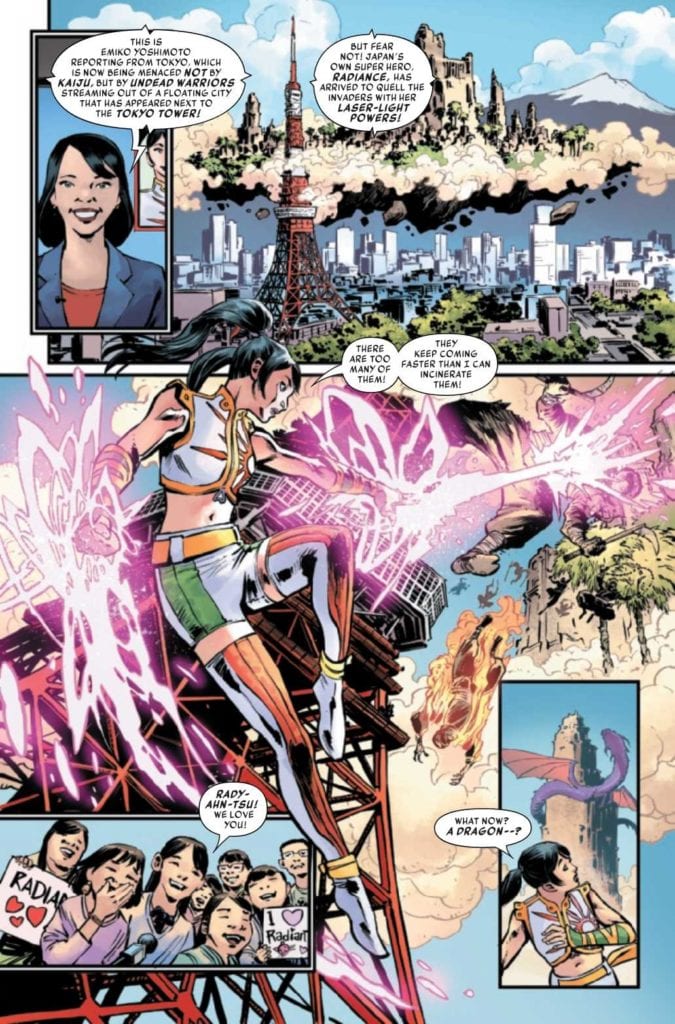
Iron Fist Heart of the Dragon #3 standoutThe citizens of Tokyo, Japan doesn’t even flinch at the sight of zombie ninjas and dragons. Instead, they cheer at the sight of a superhero fighting these monsters. It’s all set in juxtaposition to the overall plot. While Iron Fist and his entourage are taking things rather seriously, like the menacing eighth dragon, maybe Luke Cage had a point last issue. Without any personal stakes, the superheroes really don’t have a reason to take this mystic martial arts epic seriously.

Yin-Yang Art Styles

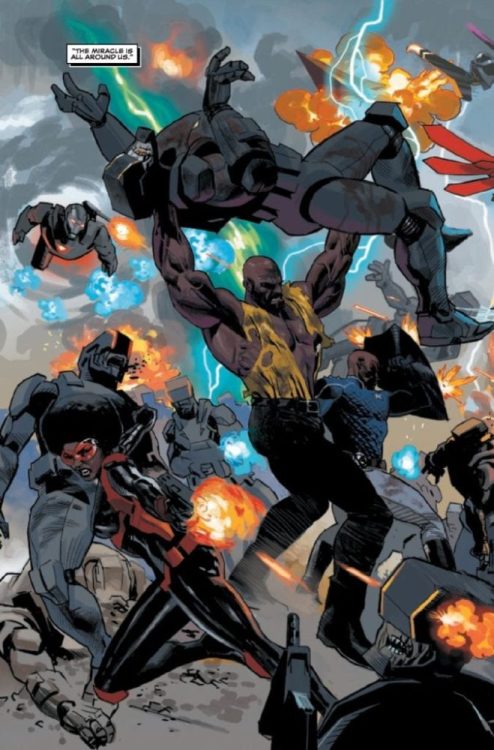
Wachter keeps the main heroes’ situation in a gloomy art style for readers, which helps the readers recall the serious nature of this conflict. Otherwise, the vivid colors of the mundane world by Menon obscures it all like a shadow. Iron Fist Heart of the Dragon #3 has the perfect depiction of this effect through Cage’s appearance. With how much of Cage’s yellow T-shirt is shaded black by Wachter, it’s as if the hero is absorbed into the series’ plot. For comparison, Cage’s panel mate, Sunspot retains his colorful costume because his involvement is marginal.

Lanham’s lettering has a simple, clean aesthetic where the words and captions describe everything. Okoye is the only person speaking in captions, which shows how the plot is moving out of her control. The most impressive display of this dynamic comes when Lanham uses loud sounds to complement Cage’s actions. Amid Sunspot’s complaining, Cage’s pure might rocks the immediate area in order to convince Sunspot of his capabilities against ninja zombies.

Check In On Iron Fist: Heart of the Dragon #3

While there is still something sinister going on in this series, Iron Fist: Heart of the Dragon #3 offers levity. Whatever changes are coming to Iron Fist lore, they should be welcome additions to the Marvel Universe. Once the zombie ninjas and evil dragon are dealt with, everything should be fine going forward.

Monkeys Fighting Robots Youtube

Interview: Pornsak Pichetshote Talks About THE GOOD ASIAN

Writer Pornsak Pichetshote sat down with MFR to talk about this new series The Good Asian, as well as his previous hit series Infidel, and some of the inspiration behind both works.

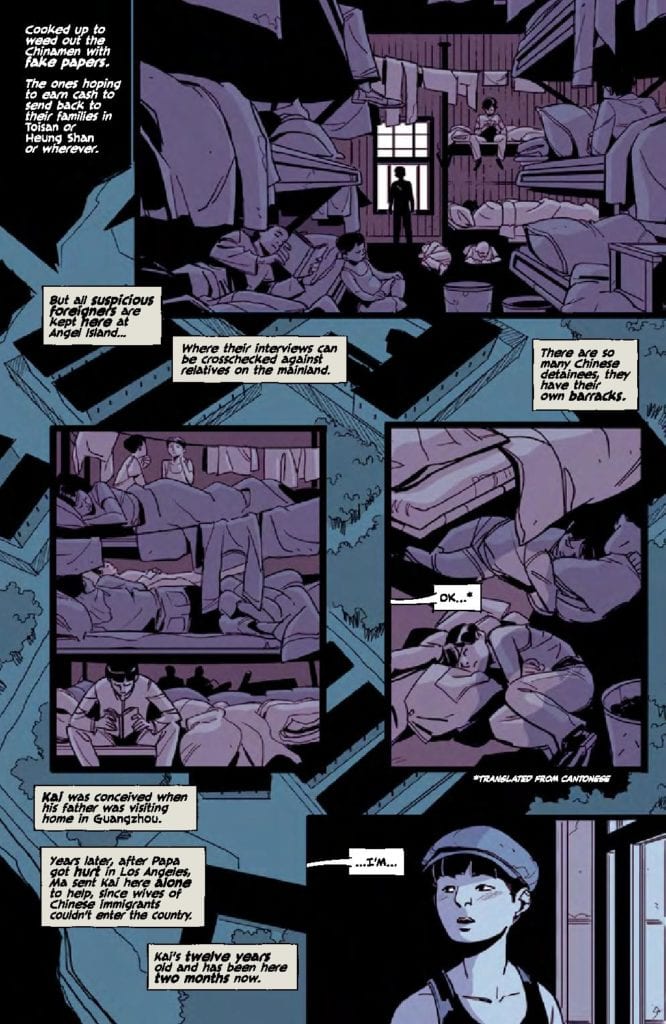
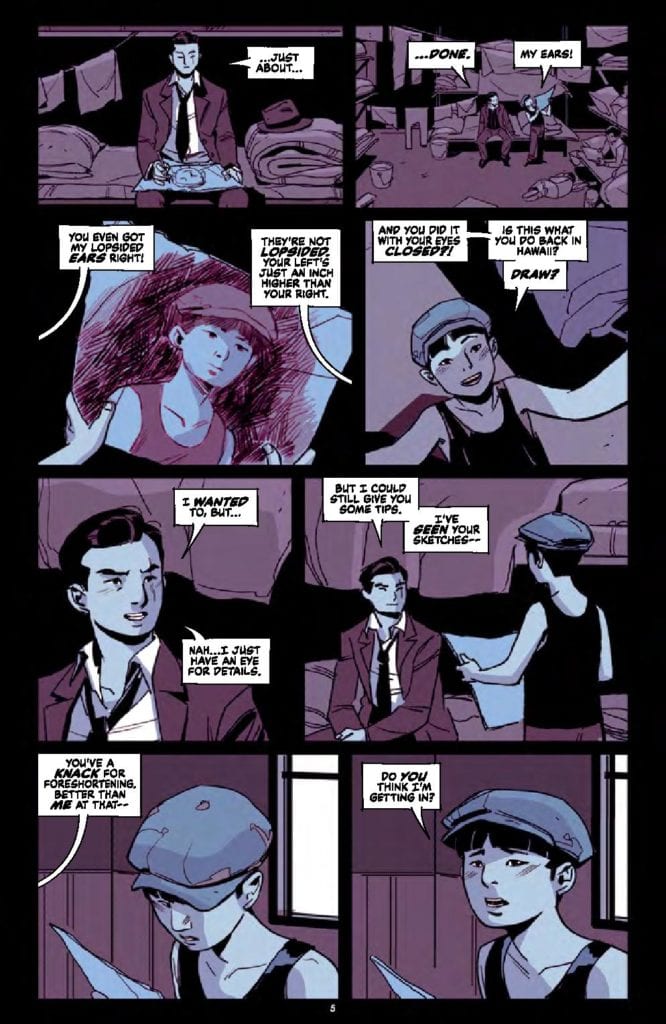
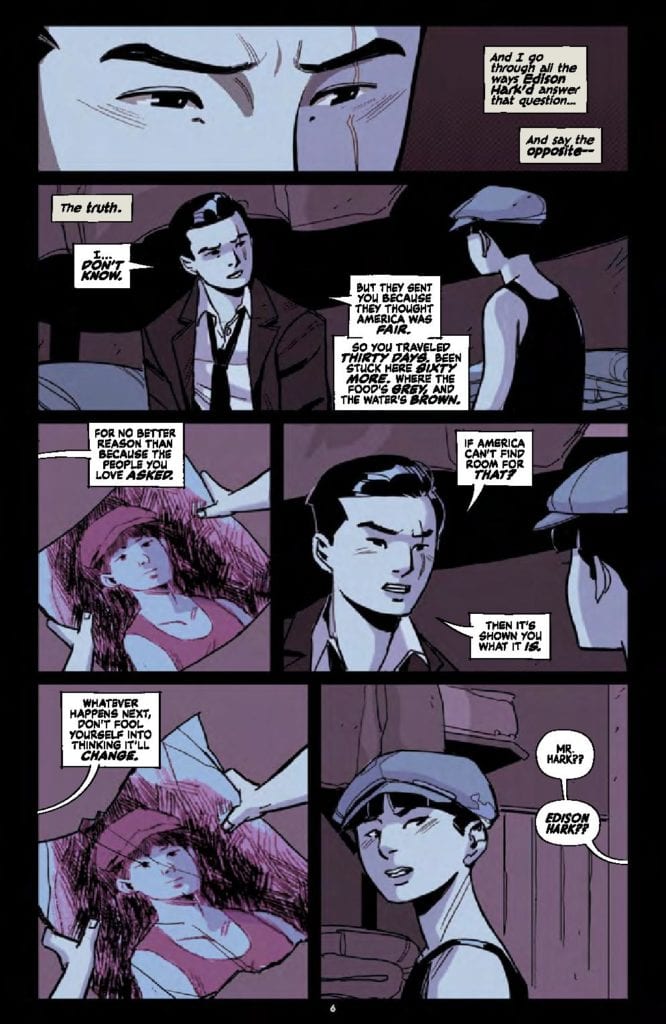
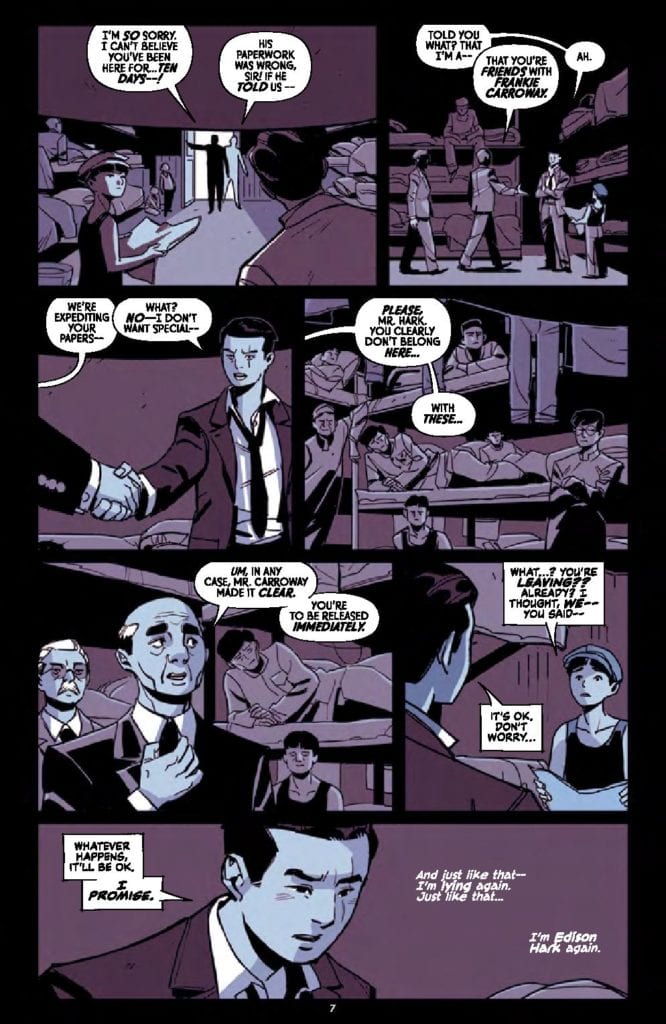
The Good Asian #1 is out on May 5th from Image Comics, and it already has a lot of people talking about it (you can read our advance review of the debut here). The series is a mystery featuring a Chinese-American detective at a time when a travel ban targeting Asians was in effect. Pichotshote works on the comic alongside artist Alexandre Tefenkgi, colorist Lee Loughridge, and letterer Jeff Powell.

Read on for our full interview with Pichotshote:

Monkeys Fighting Robots: You mention that Asian American Noir characters like Charlie Chan and Mr. Moto inspired this work. Which character in this genre was most influential for this series?

Pichetshote: When it comes to Asian Detectives, Charlie Chan is the most famous. The thing I found fascinating is there’s a generation now who has forgotten Charlie Chan, especially a generation of Asian Americans who have forgotten Charlie Chan, which I was shocked by and I hadn’t realized it had gone out of vogue. That was the one [character] I stumbled upon and was enamored by. It’s a weird thing too because the first actor was an Asian American actor but then they had a white actor doing “yellowface” for the series when it took off.

The popularity of that character endured so much, and looking back I didn’t realize it was a worldwide phenomenon and other countries had their own actors playing Charlie Chan. It had comic strips, board games, lunch boxes, and all that kind of stuff. I couldn’t tell you which actual movie I saw first, thanks to commercial breaks and stuff it was hard to tell which specific film you were watching, but that’s how I stumbled upon it. Since I started this book, I went back and watched some of the films.


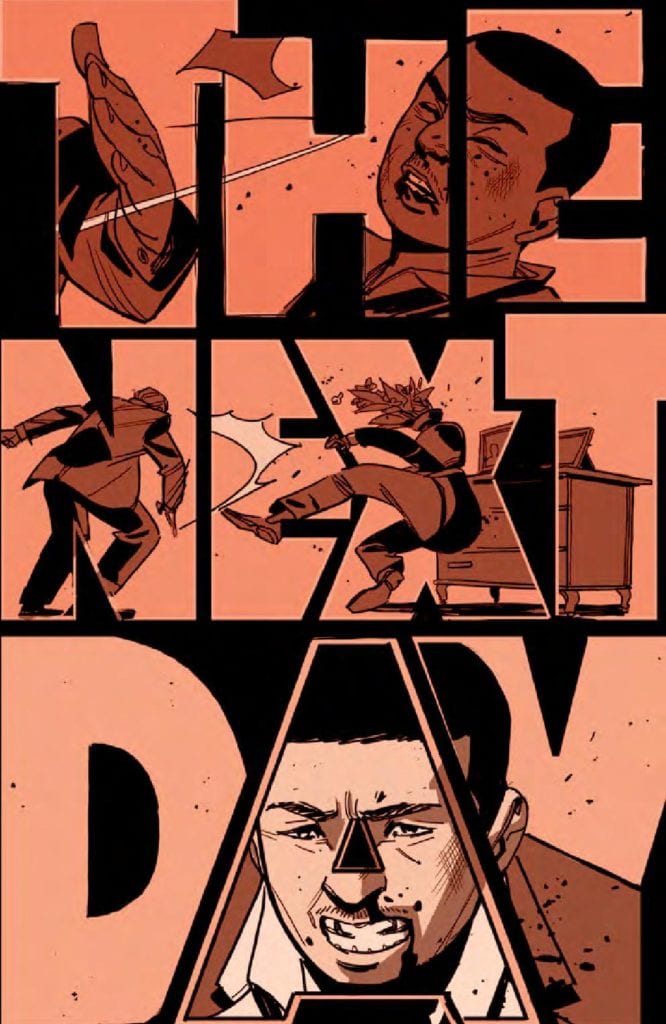
The Good Asian

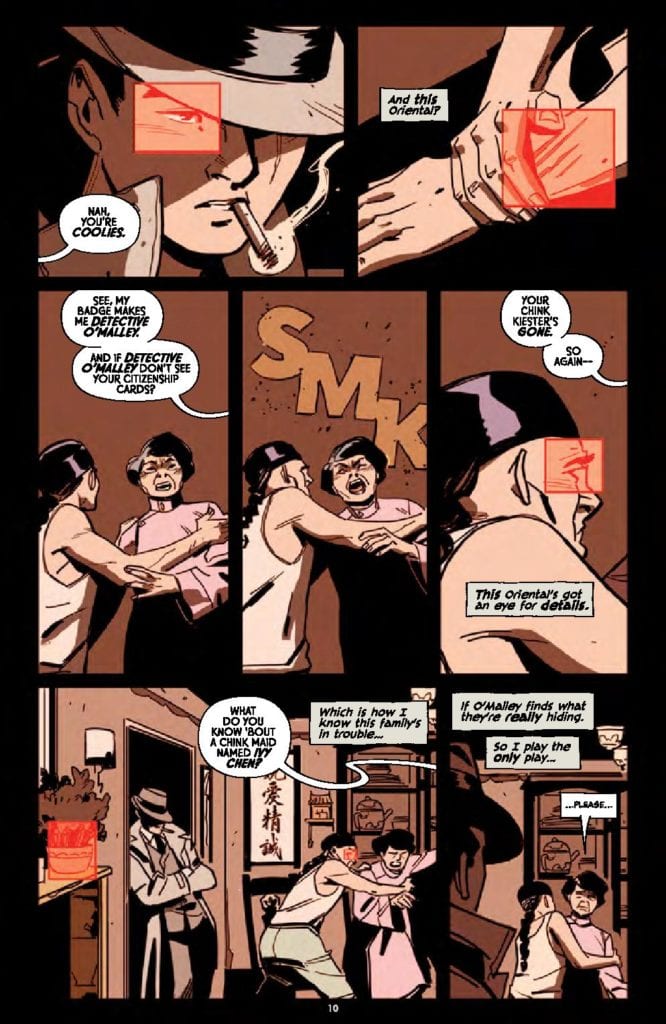
MFR: The use of the red boxes to show Edison’s focus and highlight important details in the story, was that your or artist Alexandre Tefenkgi’s idea?

Pichetshote: Mine. That was in the script. The idea was we see so many TV shows use film language and film grammar to show how a detective thinks and how they conclude. It’s funny, even though there are a lot of comic book detectives, Batman being the most obvious, there isn’t as many who use this approach in comics. A lot of this book, what I was trying to do — like with my previous book Infidel — a lot of it was like watching and encapsulating a horror movie. So I thought, “How could I use the tools of grammar in comics to evoke the same feeling of reading those old pulp novels and seeing them detect the clues?”

The fun I found with the comic was figuring out what the comic version is of the detective coming up with whether the theory is false or the theory is right and making it visual. Writing this book, you realize how crime writers — Bendis, Frank Miller, and Darwin Cooke — are so experimental in form because the genre lends itself to prose. It’s a lot of people interviewing each other and talking for ten pages straight and part of the fun is trying to use all those techniques and adding them to the genre.


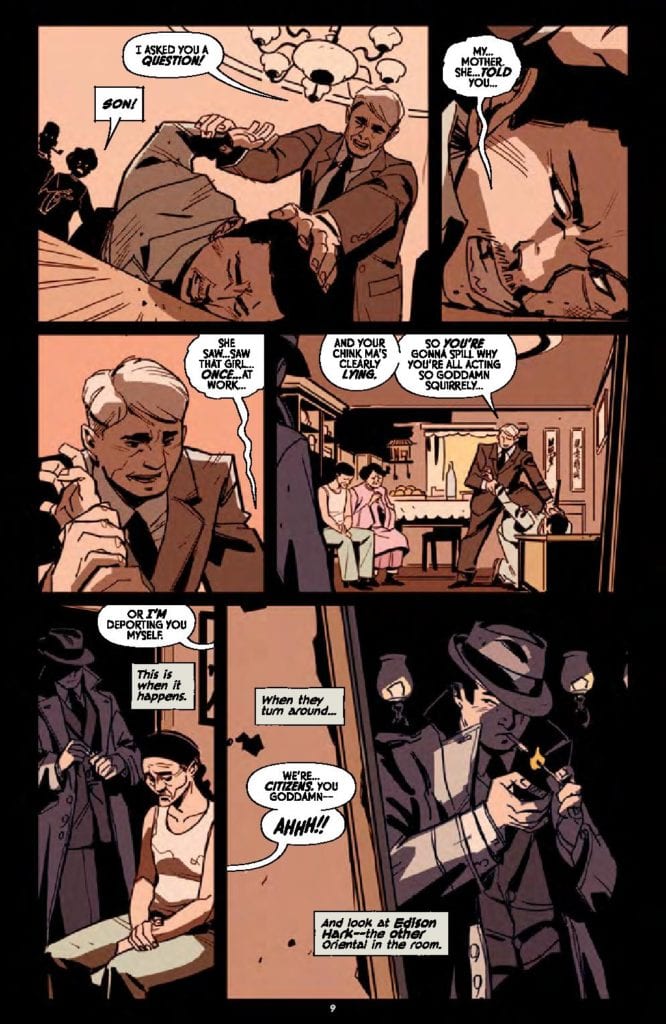
The Good Asian

MFR: With Infidel and The Good Asian, you make it a point to address the evil of racism. What do you think is the ideal way to address such a stain on society?

Pichetshote: (sighs) That’s a big question. A way to handle it, or the way I’ve chosen to handle it is to address it and be as honest with all the different facets it affects. For both of these books, research was a big part of the process. It’s the research of going to books and blogs, but other times it’s in terms of talking with people whose experiences are like mine or are not like mine. To get a sense of it.

With Infidel, I made a lot of friends talking about the themes of the book. With The Good Asian, I didn’t want to take it for granted that because I’m Asian I have a handle on everything. You don’t know what you don’t know. I had a lot of conversations with friends and other people I respect on different things. That’s how I decided to tackle it. We are all blind men trying to tell you what an elephant is. And trying to get as many blind men together to get a consensus of what the elephant is has been my strategy.

The Good Asian

MFR: The Chinese Exclusion Act plays heavily into The Good Asian and is an element of history many people seem to forget. What made you want to tackle such an issue?

Pichetshote: You just answered it. I felt kinda ashamed as an Asian American, I didn’t know about the Chinese Exclusion Act. It’s funny, I’m ethnically Chinese, but I self-identify as Thai American and the reason is that, growing up, my mom and dad would argue about politics. This would be in Thailand, my dad would always end with “That’s the problem with Thai people, they blah blah” and my mom would just be like, “You’re Thai.” He’d be like “I’m Chinese.” My mom would say “You don’t speak Chinese, you’ve never been to China, don’t give me all that Chinese crap. You and me, we are both Thai.” His parents immigrated from China and he grew up in Thailand his whole life. He passed away a few years ago and I think part of dealing with his loss was me trying to get back to my Chinese roots.

So I took a trip to China and that sort of stuff. Typically, how that story goes, someone finds something about China or Chinese Mythology that speaks to them, and for whatever reason — partly because of my interests being what they were — I ended up gravitating more towards Chinese American History than Chinese History. That’s when I learned about the Chinese Exclusion Act and The Immigration Act of 1924 that limited the number of Asians and Arabs that could enter the country until 1965. I was shocked. I was shocked I didn’t know anything about it.

That’s where the seed… and I don’t know at what point in the process, somewhere along the line that memory collided with Charlie Chan and being like “Oh Wow, here’s this Detective who was the rage in the 30s at a time where technically America didn’t let in Chinese people, unless you were in certain categories of people, but an average Chinese person couldn’t get into the country.” That felt like a way to re-examine both of these things and honestly, it led to me discovering a lot of Asian American History that I realized we have forgotten that I realize we don’t teach and we don’t explore.

The tricky thing when talking about Asian American themes and Asian Americans is like if you talk about Latin, Hispanic Themes, Latin American Themes you are talking about a large group of people from many different countries but at least they are all connected by language. But for Asian Americans, we don’t even have a language that connects us. So how do you talk about all these different groups as one thing? Now having said that though, I feel there is something from the Chinese American experience from the Chinese Exclusion Act and how the country dealt with them, you can connect the dots between that and Asian American culture in general whatever that is given the Asian American identity you can connect it. I decided to talk about this specific Chinese Exclusion. How it affected Chinese Americans at the time and I think it talks about Asian Americans today.


MFR: Easier question, what inspired you to be a writer?

Pichetshote: I think I do remember this. I went to High School in Thailand, at that time it was journal writing or some creative stuff. It might have not been more ambitious than a Dungeon and Dragons campaign, I don’t actually know. I was in college and took a writing class and I knew I was going to enjoy the writing but I thought, “This is an interesting phase I’m in, enjoying writing.” The next year, I did it again, I enjoyed it, and thought, “This is an interesting phase I’m in.” I remember going home for summer break and I happened upon those old journals that I kept in high school. It was the same thing with “I am really enjoying this writing phase I’m going through.” I realize this writing phase had lasted seven to ten years probably at this point and maybe it’s more than just a phase and I should think about doing it.

It would take me a while to get around to writing my own stories. I always had the intention of writing my own stories and then I ended up at Vertigo editing comics and honestly, I so enjoyed that, there is a world that if I didn’t move out to L.A. I’d be editing comics. Since I worked at Vertigo, I had the best writers in the industry sending scripts and I was like “I can’t do anything like this.” It wasn’t until I got away from editing comics and missing that creative urge and not being intimidated by scripts that are greater than anything I could come up with that I started doing it myself.


The Good Asian

MFR: You have writing credits for comics, movies, and TV, including an episode of “Cloak and Dagger.” What media do you prefer to write for?

Pichetshote: I like all the media and the chance to dabble in all the media. Comics I see as the girl who brought me to the dance; it’s my first love. Part of that is because I’ve lived in comics more than I lived in the world of TV. So comics is where I feel the most comfortable pushing boundaries in terms of where my perspective and the craft and the business can go.

TV I look at, I have been at for a much smaller amount of time so I feel like I’m still learning and still trying to pick up lessons. It’s enormously fun, on one hand, I can learn, and on the other, I can be bold and say, “You know the big companies are doing it wrong but these two guys out in Montana are doing this and they are smarter than everyone else.” So it’s fun to switch between those two.


The Good Asian

MFR: You have credits as both a producer and director. Do you plan to return to more films in the future or have you decided to focus on more comic-based projects moving forward?

Pichetshote: I’m definitely more focused on comics and television now. I’m never gonna turn down a future. I’m not really courting features and I’m not courting directing. I feel like I’m managing to just juggle comic writing and TV writing simultaneously. So eventually, I might try my hat into a new media but for now, I feel like my bandwidth is very full with just the two.

The Good Asian

MFR: If you could be in a buddy cop movie who would be your partner and why?

Pichetshote: Can they be fictional? Can they be real? I think the first person comes to mind, it would be interesting, but the first person who comes to mind is my friend Joshua Dysart, who’s a comic book writer. Just because I feel like we would be inept at everything. I feel like, you have two people you put their skills together and they are the sum of their parts. I feel if you put our two skills together, there is less of us there. I feel every strength we have would cancel each other out and we would get so little accomplished. So that is the first thing that comes to mind.


Check out Pornsak Pichetshote’s new book, The Good Asian when it releases on May 5th, 2021.

Monkeys Fighting Robots Youtube

Review: TEENAGE MUTANT NINJA TURTLES #115 – Why The Future Depends On Everyone

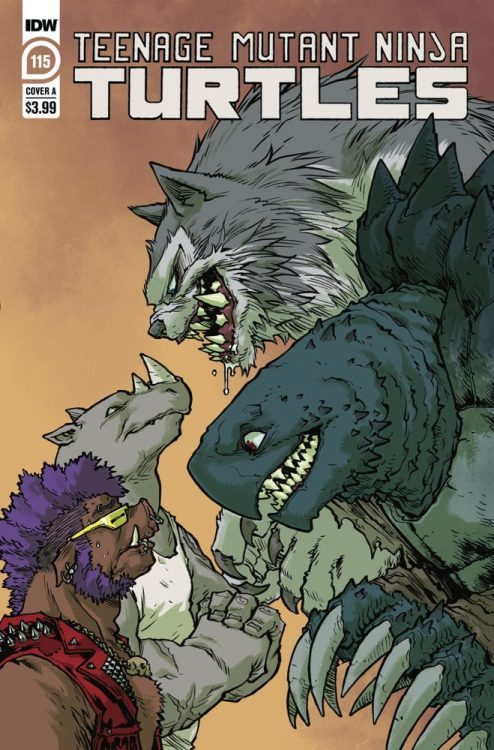
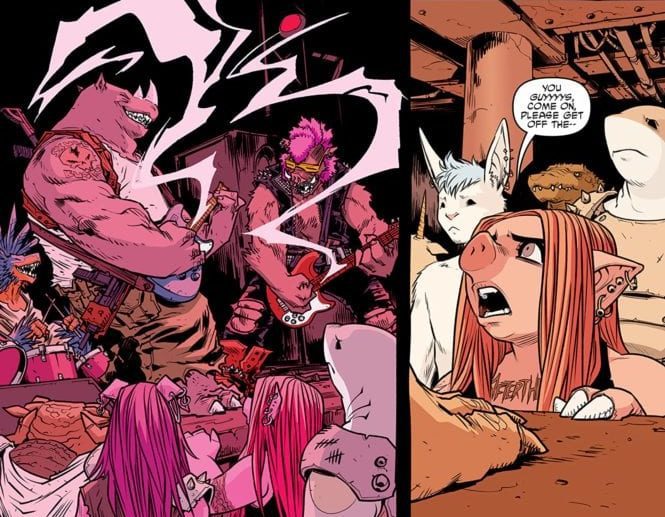
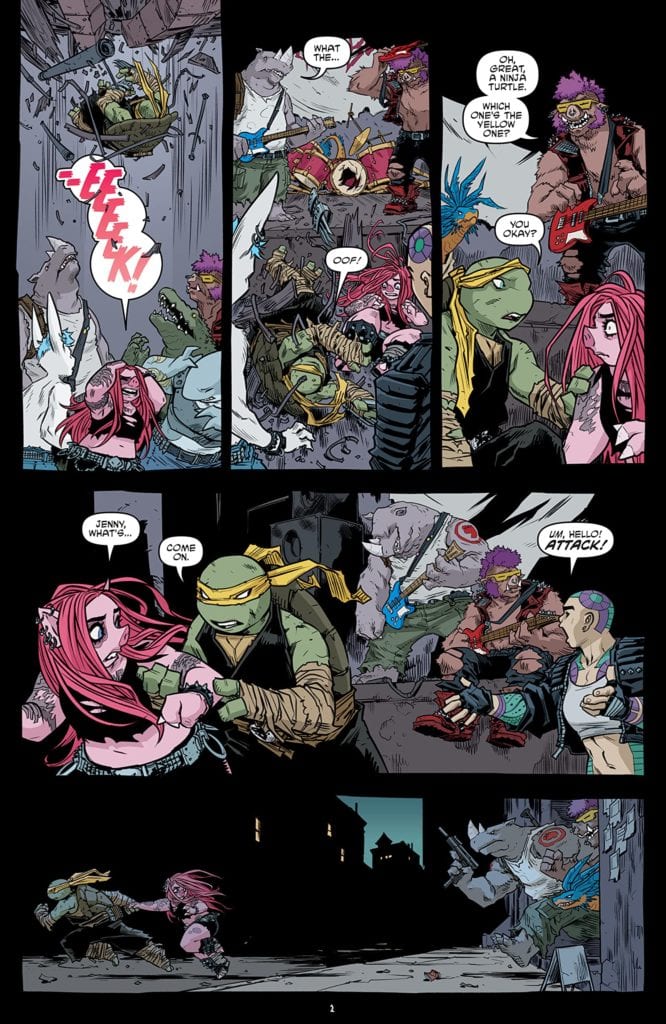
TEENAGE MUTANT NINJA TURTLES #115 hits stores on Wednesday, March 17th, promising a showdown between the Turtles, Karai’s henchmen Bebop and Rocksteady, and the mutant “babies” Tokka and Razhar. After failing to settle the mutants, our protagonists are forced to come up with a new strategy. Unfortunately for them, Rocksteady and Bebop have some plans of their own.

Story

After failing to subdue Tokka and Razhar, Jennika “drops in” on Bebop and Rocksteady’s mayhem. Taking a note of the surrounding chaos, she quickly leads her friend away. But Karai’s henchmen don’t take kindly to this choice.

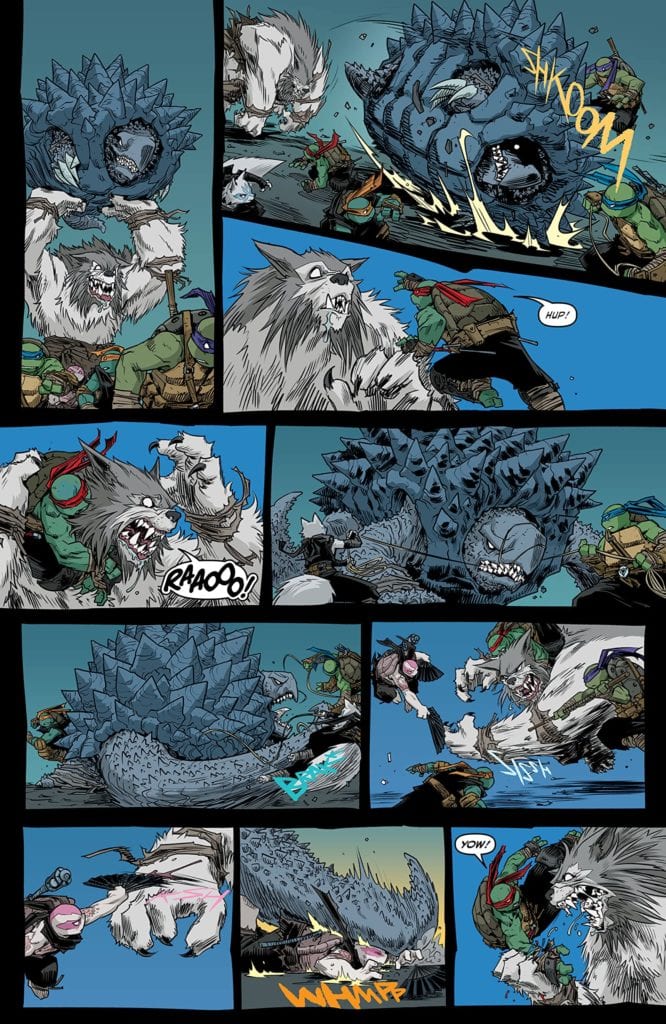
Everything the Turtles have attempted so far has amounted to zilch. Even with the future version of Lita’s help, the ninjas can’t seem to make one ounce of a difference.

It’s not until Donatello comes up with an ingenious idea: put the babies “mom” on speakerphone. The hope is that her voice will calm them down. But on a grander scale, this act represents a shift in our heroes’ consciousnesses. Writer Sophie Campbell shows how these characters must work with those they despise in order to prevent greater disasters. The future literally depends on all of them.

Artwork

Campbell’s penciling and ink work, combined with Ronda Pattison’s coloring, offered brilliant displays of action throughout this issue. The Turtles and their allies’ bright colors stood out from the dark backgrounds of Mutant Town. This helps readers follow their movements. Shawn Lee’s lettering also adds to the action with a great use of onomatopoeia fonts that follow each character.

Conclusion

TEENAGE MUTANT NINJA TURTLES #115 is a thrill and a half. We loved both the epic fights and the heartfelt message encouraging everyone to come together.

Do you think these groups can put aside their differences? Let us know in the comments below!

Monkeys Fighting Robots Youtube

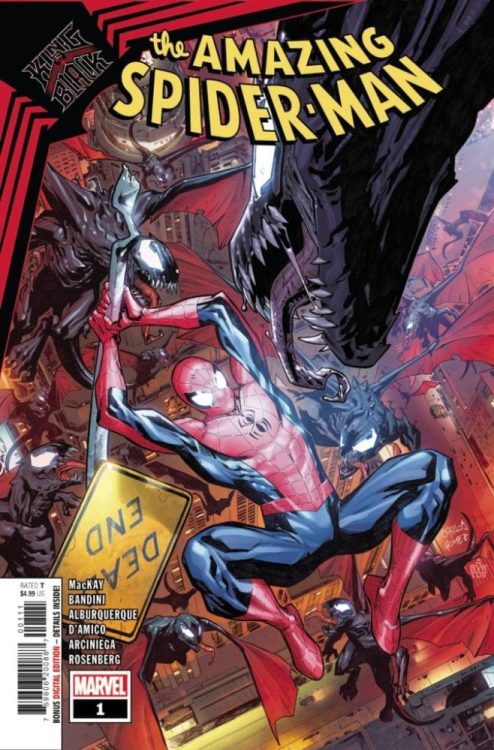
Review: KING IN BLACK: SPIDER-MAN #1 Asks What Moves Us Beyond Fear

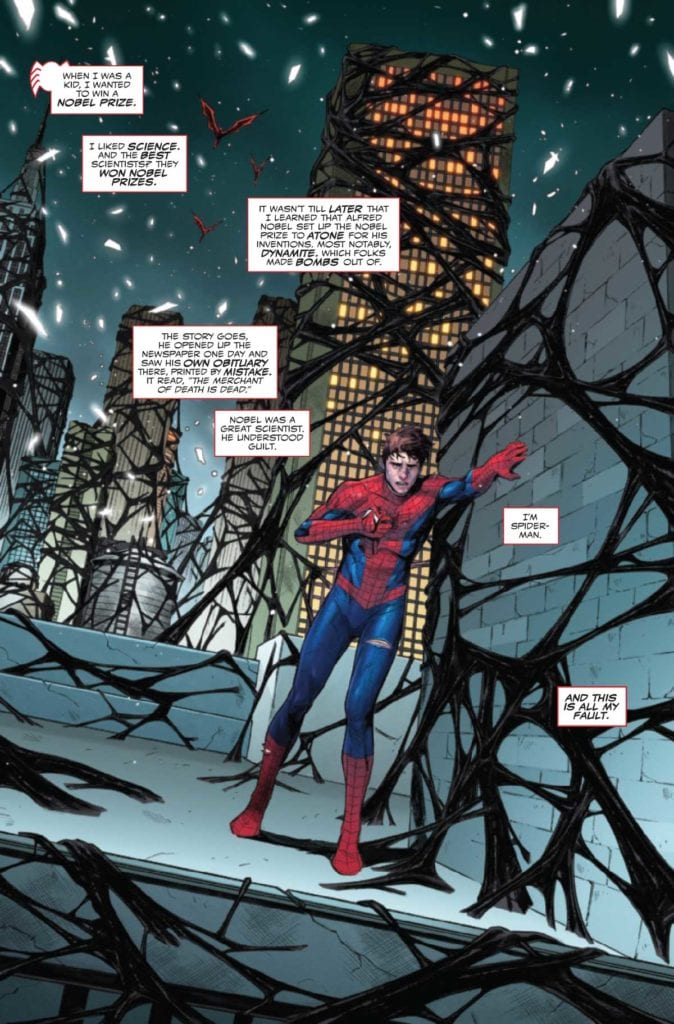
KING IN BLACK: SPIDER-MAN #1, available in comic book stores on Wednesday, March 17th, hones in on Peter Parker’s experience amidst Knull’s invasion. Our hero believes himself to be a failure after witnessing Eddie Brock’s death and Dylan’s capture. The story that follows gives readers a look at the struggle many face when striving to rise above their guilt and fear.

Story

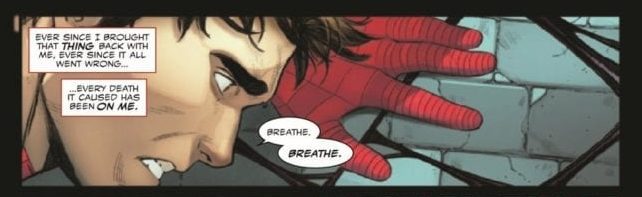
Feeling defeated, Peter wanders the streets of New York in a dazed stupor. The weight of the symbiotes’ attack is almost too much for him to bear. Though he didn’t release Knull upon Earth, Peter feels it was his fault symbiotes found their planet in the first place. His bonding with the Venom symbiote all those years ago still haunts him.

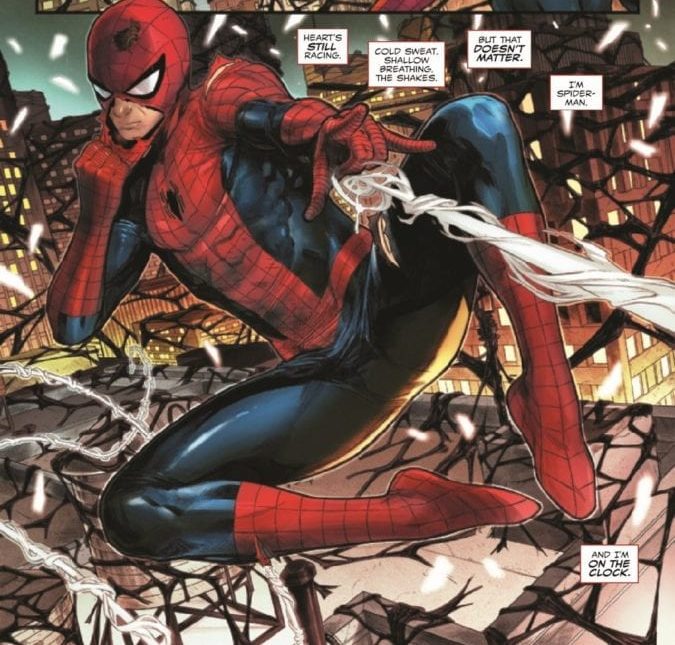
One of the beautiful aspects of Jed MacKay’s main narrative is the arc Peter goes through. Instead of succumbing to the effects of his very real anxiety, the hero moves forward. Readers can identify with this feeling, when something stronger than ourselves encourages us to act in spite of great emotional turmoil.

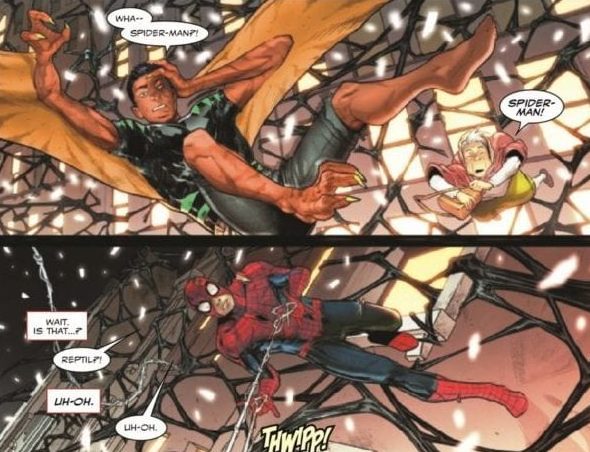
Unfortunately, Peter’s first attack hits Humberto Lopez a.k.a. Reptil, mistaking him for a symbiote dragon. But instead of creating conflict, the heroes bond over their shared sense of responsibility for the people of New York.

We see this movement from guilt-ridden despair to hope-filled action play out in MacKay’s backup story as well. Now partnered with Peter, Humberto embraces a call to protect the city. Despite his grandfather’s concerns for his safety, he stays to save more people.

The inspiring nature of both of these stories makes this issue one for the history books.

Artwork

Main Story

Michele Bandini’s penciling and ink work, along with Elisabetta D’amico’s inking, presents us with some of the most realistic depictions of Peter we’ve seen in comics. These illustrations pair well with Erick Arciniega’s coloring, which employs a mix of the hero’s standard red and blue set against harsher backgrounds.

Backup Story

Artist Alberto Alburquerque and colorist Rachelle Rosenberg craft illustrations full of fast-paced action. While focusing less on realistic details, this team uses their creative talent to depict Peter and Humberto fighting  in stunning action sequences. The sweeping lines and swirling colors generate a sense of high speed movement, reinforcing the idea that the two are fighting to save as many people as possible.

Throughout both stories, VC’s Joe Caramagna’s lettering does a great job of emphasizing the most important statements in the characters’ dialogue.

Conclusion

KING IN BLACK: SPIDER-MAN #1 reminds us why we love Spider-Man. Watching the hero take on a huge responsibility with the enthusiastic Humberto is an inspiring sight.

Do you want to see these two team up more often? Let us know in the comments below!

Monkeys Fighting Robots Youtube