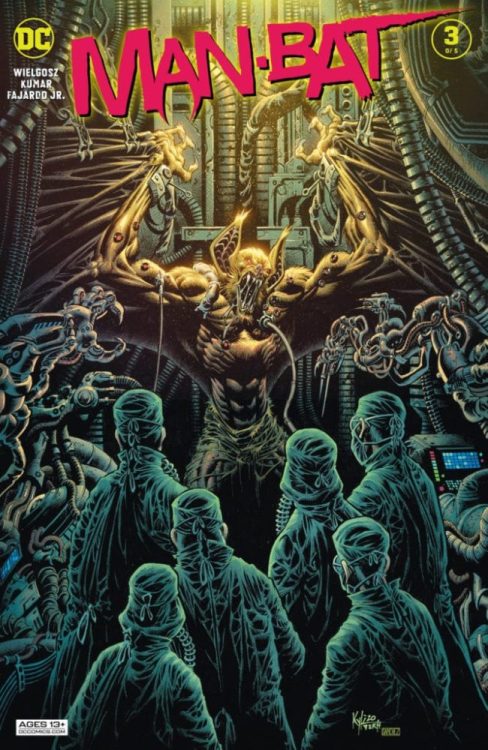
Man-Bat #3 from DC Comics hits your local comic book shop on April 6. In this issue, writer Dave Wielgosz depicts the titular character’s struggle to fix his faults. The emotional stakes of the issue come from the art of Sumit Kumar. Colorist Romulo Fajardo Jr. makes some of these encounters extremely surreal, and letterer Tom Napolitano makes the voices spoken by the major characters distinct.
Man-Bat #3: The Line Between Pro/Regression
Wielgosz really enjoys working with the characters in Man-Bat #3. Calling back to the last issue, he presents Kirk Langstrom as a character with the weight of the world on his shoulders. It’s what makes Kirk’s relationship with his monstrous alter-ego all the more interesting. Man-Bat is practically when Kirk is more honest with himself, so seeing him continuing to compartmentalize Man-Bat feels like a character regression.
And who better to feel the whiplash of this regression than Kirk’s ex-wife Francine and his sister Lisa? The two women care enough about Kirk despite all of the frustrations he brings to them. Not that it makes dealing with him any easier, and the reader empathizes with their frustrations. It also allows the reader to believe Francine can handle the domineering Scarecrow.
On the topic of Scarecrow, he comes across as genuinely villainous in this issue. The way he speaks feels like he is striking his victims at their psychological weak points. It’s what makes them so susceptible to Scarecrow’s fear tactics. They’re the kind of tactics that are steadily improving with each issue. The reader can’t help but dread what he’s planning for the Langstroms.
Expressive Art Doesn’t Hide
Kumar illustrates Man-Bat #3 with a host of expressive visuals confined to split-second panel work. In just two similarly drawn panels, it emphasizes how a quick moment changes everything. Whether it’s Francine’s shocking encounter with Scarecrow or Lisa’s blank surprise at her brother, the reactions serve as stories of their own.
The color by Fajardo gives several of these scenes a surreal presence. The way Kirk looks at a family photo with a silhouette of his face feels disheartening. It makes Kirk look like a ghost to his own family.
Napolitano’s lettering displays a very fitting narrative weight. The way Man-Bat speaks in Kirk’s mind through black captions is loud, rough, but honest. In comparison, Kirk’s own inner monologues with the smooth gray captions display him holding Man-Bat back, including the honesty.
Bring On Man-Bat #3
Man-Bat #3 continues a gripping saga of the struggles of delusion. Kirk may be a sympathetic character, but Man-Bat is looking more heroic the less he appears because at least the monster acknowledges the strength of everyone around him.
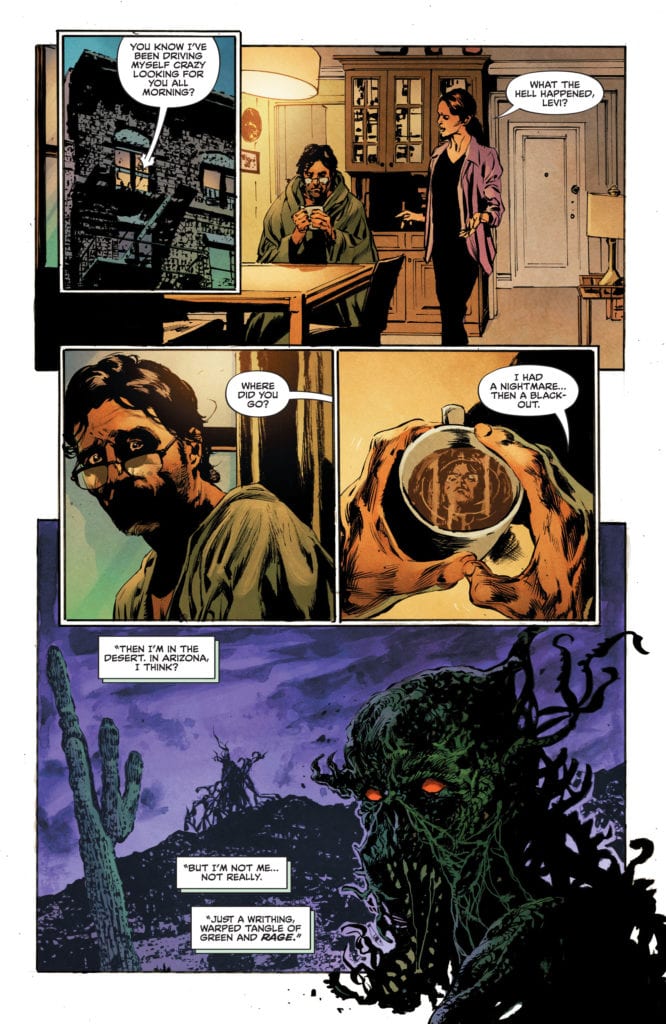
DC Comics’ latest The Swamp Thing series is beautiful. Both in its visual beauty— every page and panel is breathtaking— and in its mysterious, quiet writing. Part of what made the first issue of this series so brilliant was how this creative team threw off the burden of continuing Swamp Thing’s existing stories. They weren’t going to be telling a story about Alec Holland. This brave, new direction, with a mysterious new Swamp Thing, was fantastic. But writer Ram V, artist Mike Perkins, colorist Mike Spicer, and letterer Aditya Bidikar stumble in their second issue. While they may have put aside the contents of previous Swamp Thing comics, The Swamp Thing #2stylistically still operates in its predecessors’ shadows.
Writing
V has a brilliant narrative voice. He can really paint a picture. So much of these first few pages are spent doing just that. V describes Levi’s dreams in detail, giving the desert a mystical beauty. It’s all a little familiar, though. In fact, it’s even familiar for this character. It’s a style that feels borrowed from Alan Moore’s own work on Swamp Thing. This would be perfectly fine if V’s narration stopped at the captions. Unfortunately, much of the dialogue feels the same. It’s quite stilted. The Pale Wanderer and Swamp Thing talk as though they are just extensions of V’s own omniscient voice. And they talk in overly dramatic metaphors, with few true character moments that interrupt what feels more like preaching at one another. V’s knack for poetic writing actually does him a disservice here. His characters feel just a little too eloquent, and the discussions they have feel dry.
It really does feel as though V is seeking out a Moore’s Swamp Thing-esque voice. But, in modern comics, that voice feels a little dated. After all, those comics were written in the 80’s. And V’s move in that direction undoes some of the beautiful work he did in the first issue. It strips away some of the mystery, reduces characters to ideas rather than human beings. It robs his story of its humanity. Not only is V an eloquent writer, but he’s proven to be capable of writing heartbreaking character moments. Hopefully, we see him move back in that direction in the issues to come.
Art
Perkins brings in a lot of the lacking humanity to the story. Even in the rather big moments, Perkins still keeps us remembering that the characters are human. The Pale Wanderer refers to himself as an idea. In his dialogue, he literally dehumanizes himself. Yet when Perkins draws him, we somehow feel the Pale Wanderer is wrong. He does look human. We can see the fear under the anger, the trepidation under the cruelty. But one of the characters that really does feel human, the sheriff, is given quite a different treatment. Perkins shows the sheriff with shadows over his face. His eyes are rarely open, and when they are, they’re squinting and hard to see. His jaw is set, his face is emotionless. This is all coupled with a sad summary of the sheriff’s life. Perkins does a beautiful job of playing against each moment. He shows us glimpses of the humanity of those that deny it’s there, and he shows us the tough exterior of characters whose hearts are breaking.
Coloring
Spicer’s coloring is gorgeous. He uses a repetition of green, orange, purple and pink throughout. Many of the darker moments of the story have a tinge of purple or pink to them. These are most often the scenes that feature the Pale Wanderer. But there’s a peacefulness to the scenes too. Though the Pale Wanderer is killing and causing havoc, the scenes are almost comfortable. In one scene, the sheriff describes the hopelessness of his life. He sits in a bar with bright pink neon signs casting their light over the scene. Again, it’s a dark moment that looks beautiful. It’s as if Spicer is suggesting that despair isn’t as horrifying, at first glance, as we might like to think. In fact, it’s a comfortable place to be, and it lures us in with its subtlety.
Lettering
One of the greatest pieces of Bidikar’s lettering is found in how they connect some of the characters’ dialogue. Many of the characters have lots to say to one another. Bidikar could deliver each of their lines in one big chunk and lose all sense of rhythm, or they could stack word balloons on top of each other, dividing up each speech. Bidikar does stack word balloons, but they go a step further. Beyond just splitting the dialogue up, Bidikar actually creates space between thoughts. The sheriff gives us a speech about his bum liver and son who won’t talk to him. It’s all in one chunk. But then, when he follows up with, “I saw him, Emmet. I know he’s out there,” Bidikar places that line a half-inch away from everything else. We can hear the pause, the subtext of how these thoughts connect to one another. Bidikar shows us how the sheriff doesn’t rush through this, and it gives this moment of dialogue lots of weight.
V and Perkins’ The Swamp Thing is doing a lot right. But it’s stepping on its own toes in some ways. Its strengths lie in that it doesn’t try and be a Swamp Thing that everyone is familiar with. This isn’t Alec Holland; it’s Levi Kamei. But the creative team backtracks a little on that. They go in a new direction while also using narrative choices from past runs, choices that don’t quite jive with their story. However, there’s still lots to be excited about, and the end of this issue suggests V is already starting a new chapter in his approach. Pick up The Swamp Thing #2, out from DC Comics on April 6th, at a comic shop near you!
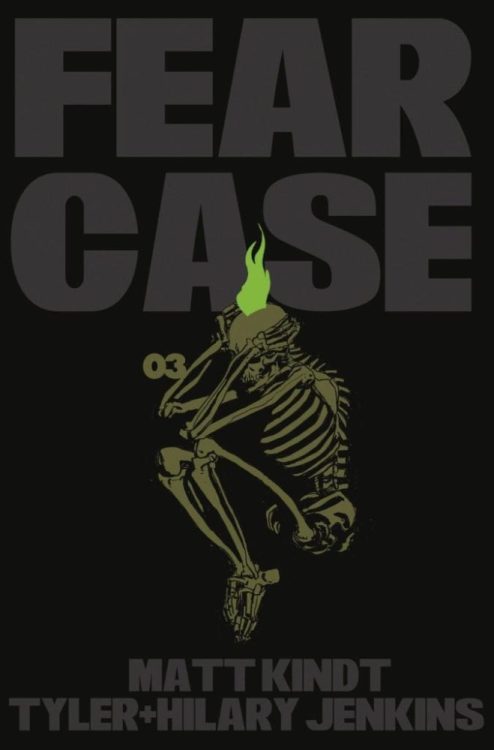
Fear Case #3 brings the latest Matt Kindt saga at Dark Horse Comics to its climax on April 8. With spooky imagery by Tyler and Hilary Jenkins, the heroes the reader comes to love are now at risk. By the issue’s end, readers will be stuck anticipating the final issue.
Fear Case #3: The Cult of Ideas
After Kindt sets up the characters and internal conflicts in the last issues, they collide for a crisis. Mitchum and Winters, with their quirky dynamic, are approaching the deadline to find the titular MacGuffin. After the case eludes them last issue, there’s a real sense of strain on the agents. Even Mitchum, who suggests going on vacation for their last day, feels himself getting consumed by their mission. So when Winters goes missing, the reader can’t help but share Mitchum’s worries for his partner. Especially when there’s a cult out there looking for the case, a clear sign of what the agents could become past the deadline.
Art That Beckons
Tyler’s art continues to make the atmosphere as foreboding to the reader as it is for the characters. Certain pages of Fear Case #3 feature scenes with large empty spaces that feel overwhelming with how they dwarf the people in it. The opening scene of the outside of a bar, for example, features a lot of people looking defeated. It’s like the feeling of failure is following Mitchum and Winters. Sometimes it’s quite literal when it appears in the form of a knocking sound effect on Winters’ door.
Then readers have to consider Hilary’s coloring for the situations at hand. The dark blue night sky might look sad inside and outside the bar, but there’s a sense of comfort to it. The agents could certainly use the relaxation. Only for the bright red neon to accent the frustrations between Mitchum and Winters. Finally, the bright orange colors manifest when a threat approaches the agents like the cult or the case.
Don’t Miss Fear Case #3
Fear Case #3 is where this epic plot reaches its boiling point. The lovable characters are now in mortal danger, and now the only thing the reader can do is wait. And wait, they will, because the mini-series has the power to make sure they can’t turn away.
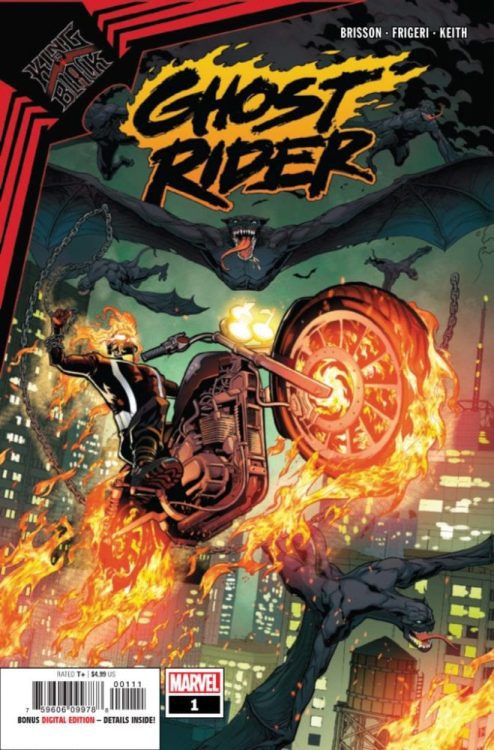
King In Black: Ghost Rider #1 isn’t just an April 1 tie-in to Marvel’s King In Black Event; it’s the end of writer Ed Brisson’s run after getting cut short. What better way to show this closure than with returning art team of Juan Frigeri and colorist Jason Kieth? Also joining is letterer Joe Caramagna to make the series voices stand out. Because everyone in-story deserves remembrance as the status quo settles in for the next Ghost Rider run.
Tying Up Loose Ends
King In Black: Ghost Rider is what Brisson’s critically successful run boils down to. It was perfect for Johnny Blaze to be Mephisto’s tormentor for a change. That is until the inevitable status quo needs to come in. The reader shares this feeling of defeat with Johnny as this means giving a bully back some of his power. Fortunately, Danny will be at his brother’s side as the Death Rider when Mephisto makes a move. It certainly feels worth the wait after all of the Covid delays even if it does come with the baggage of a tie-in where Ghost Rider and allies fight dragons.
King In Black: Ghost Rider – Art Of Kings
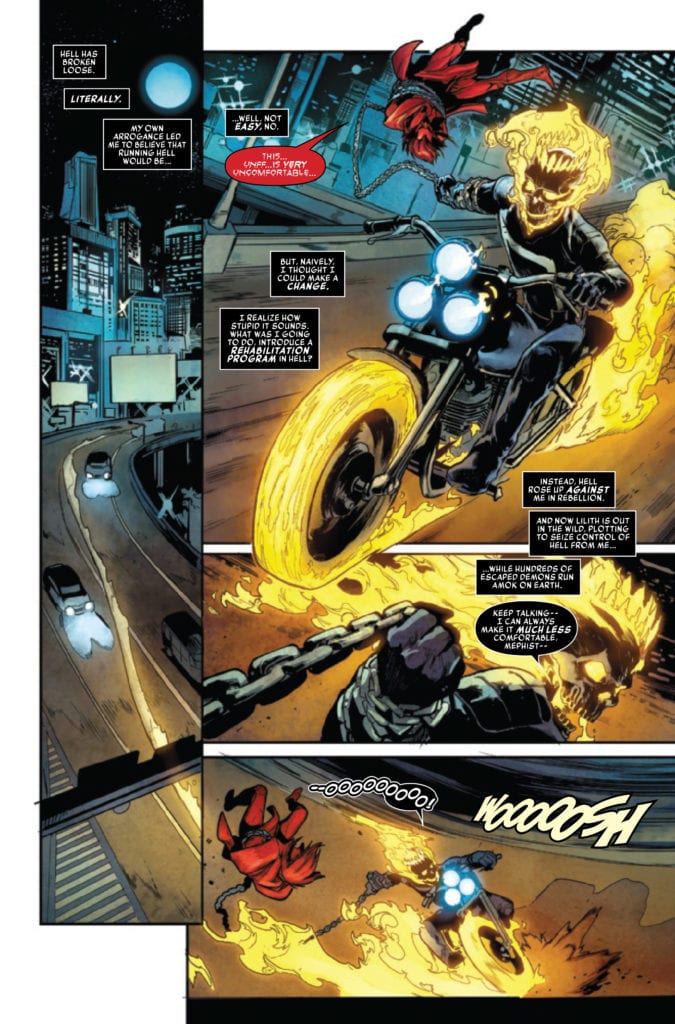
Frigeri keeps the dynamic movement of King In Black: Ghost Rider moving at a steady pace. Seeing Mephisto getting dragged around in chains by Ghost Rider riding his motorcycle is certainly a sight to behold, especially when a quick stop makes Mephisto skid against the asphalt.
Even more eye-opening is the coloring by Keith. The ever scarlet Mephisto stands out strongly in every scene he’s in, as are the flames accompanying Ghost Rider. Against the night sky and symbiote dragons, the power these characters have is felt throughout the pages.
Caramagna’s lettering makes the characters stand out twice as much. The words exchanged between Ghost Rider and Mephisto in color-coded word balloons highlight their character. Mephisto tries to taunt Johnny with monologues in an intimidating red word balloon. Unlike Ghost Rider, who speaks few words in black word balloons and as he revs his Hellcycle in loud sound effects.
King In Black: Ghost Rider – The Final Lap
King In Black: Ghost Rider ends on a bittersweet note the way it’s supposed to. After a wild ride fighting slimy dragons, this issue celebrates Ghost Rider and his supporting cast. It was certainly good to see Danny and Johnny making piece after everything that happened. Now all fans have to do is wait for the next run of Ghost Rider.
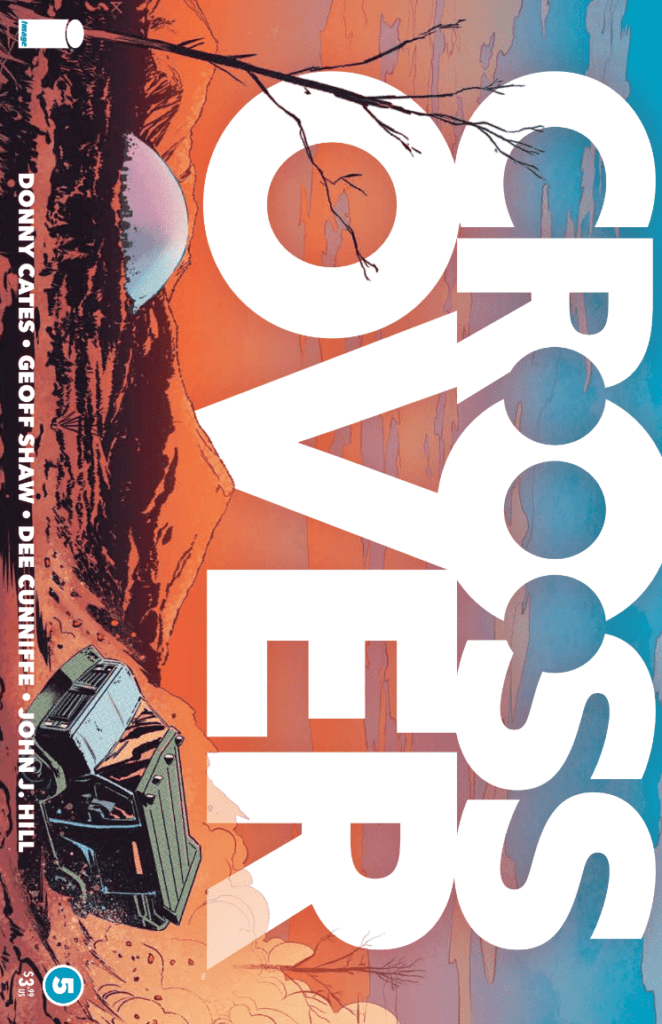
Crossover #5, out now from Image Comics, is the penultimate issue of the series’ first arc and features many events that have been set up and foreshadowed, taking fruition at once.
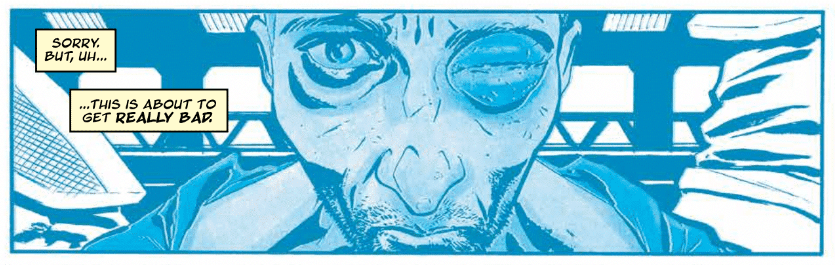
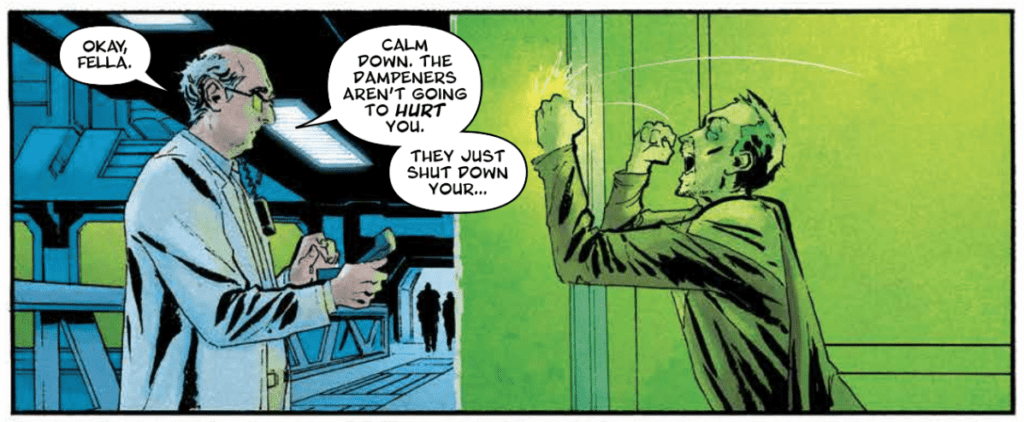
Crossover #5, written by Donny Cates, is full of action. It seems everything that the series has been building up to has been set off at once, and the first arc is reaching its climax. There are so many insane moments that make this issue a thrilling read but to give all of these important moments enough emphasis, the art needs to be larger, making the issue an incredibly quick read. The issue contains multiple single and double splash pages that allow the art to shine but have the consequence of making the issue pass by rapidly. The art is amazing and well worth the issue’s price, but some readers may feel cheated by the lack of new story developments, only tiny instances where events that have already been set up begin to play out.
Geoff Shaw pulls no punches in Crossover #5 and provides a visual spectacle. Cates gives Shaw many opportunities to showcase his wonderful talents in a multitude of splash pages, which are impressive enough to take any reader’s breath away. Shaw’s characters are expressive, and the characters that are from fictional comic books all look like they could have been real superheroes. Every form is incredibly dynamic, which makes this climactic issue an absolute joy to read.
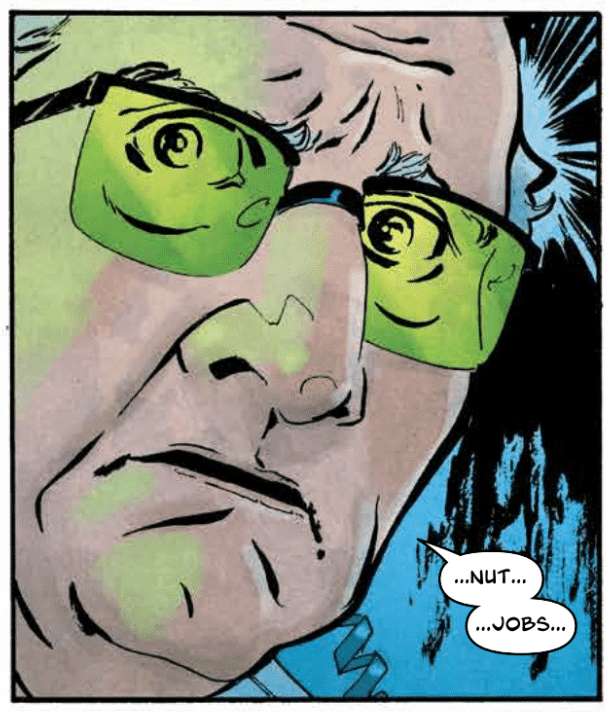
Crossover #5 comes to life through the coloring talent of Dee Cunniffe. The entire issue comprises a wide and vibrant color palette, which adds to the characters’ fantastic elements. Cunniffe’s characters that aren’t from a comic book have a much darker tone and palette that provides an amazing contrast between them and the comic book characters. Cunniffe also uses lens flares in this issue, emphasizing the panels it is used on since the effect is not often used in the series.
John J. Hill’s lettering in Crossover #5 is an excellent complement to the issue’s art. When the event happening on the panel is big, so is the font, and the style reflects the moment as well. Some characters have a different color scheme for their speech bubbles, and there are times where the words extend past the borders of a speech bubbles. Both of these are small ways that Hill is able to clarify the way that certain lines are said, and it has an enormous effect on the quality of the issue.
Crossover #5 is an issue where all the dominoes fall, and we creep towards the end of the series’ first arc. It is fast, action-packed, and a whole lot of fun.
After two episodes of world-building, The Falcon and The Winter Soldier’s third episode becomes more focused on the spy-thriller/action-adventure aspects of the story.
The new Captain America, Sam, and Bucky are on the hunt for Karli Morgenthau. Neither have any leads. In an act of desperation Bucky helps Helmut Zemo (Daniel Brühl) escape from prison, leading Sam, Bucky, and Zemo to go to the city of Madripoor.
I am a fan of espionage action franchises like James Bond, Bourne, and Mission: Impossible and this episode was right up my alley. The majority of the episode focused on Sam, Bucky and Zemo in Madripoor, watching them go into sleazy clubs and meet dodgy people. These were scenes that could easily have fitted in Bond or Mission: Impossible. Zemo’s escape was clearly influenced by the escape scenes in Mission Impossible: Ghost Protocol and Skyfall. The episode had an incredible action scene in a shipyard as one person had to fend off a load of bounty hunters. It was a change of pace for the MCU because the combatants were just highly trained agents and mercenaries, not superpowered beings.
Madripoor was a great location. It was a modern version of Tortuga, a place that’s a safe haven for criminals, pirates, and scoundrels. It was an Asian city and one of the locations the characters go looked like a dodgy nightclub in Bangkok. One of the characters had to drink a shot with a snake heart shot which reminded me of the opening of The Beach.
Whilst most of the episode focused on Sam, Bucky, and Zemo, Jack Walker, and Karli made an appearance in the episode. Jack’s darker side was hinted at again when he threatens a suspect during a raid. It’s certainly not the way Steve Rogers would have done it. Karli was shown in a sympathetic light. She was introduced to playing soccer with some kids in a relocation camp and grieves over a friend. But Karli crosses a line at the end of the episode. The point was to show what would drive people to commit terrorist acts.
In Captain America: Civil War, Zemo was only in the film to serve a purpose: get Captain America and Iron Man to fight each other. In this episode, he felt more like a character and made for a fun addition. Sam and Bucky stop bickering with each other and focus comedic energy against Zemo. Clearly, Zemo intends to try and get Bucky to re-join the dark side.
“Power Broker” worked as a spy story it did have one major issue: the overly expository dialogue. Characters were constantly explaining things to each other and it got annoying. There were moments where characters were explaining things they had already experienced (like the events of Captain America: Civil War and when two characters got injected with the super-soldier serum), but it came off as unnatural. It was done for the benefit of the audience instead of the characters.
“Power Broker” worked as a standalone episode due to the bulk of the story focusing on three main characters and taking place in one city. However, it suffered from some clunky writing and it felt a bit like a filler episode in the middle of six-episode miniseries.
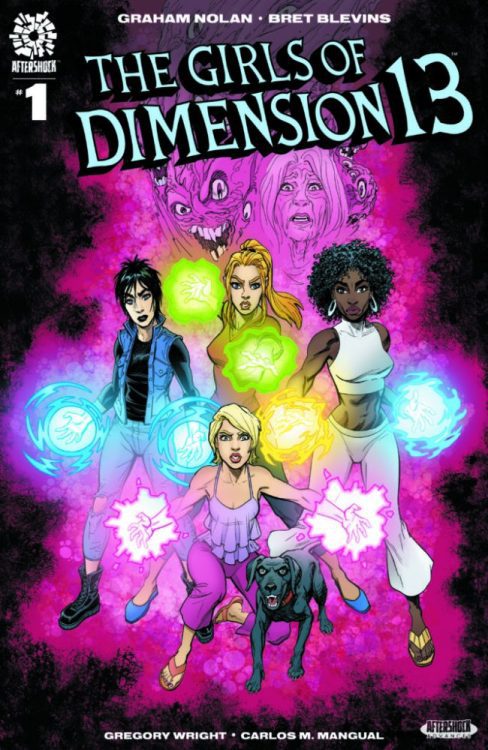
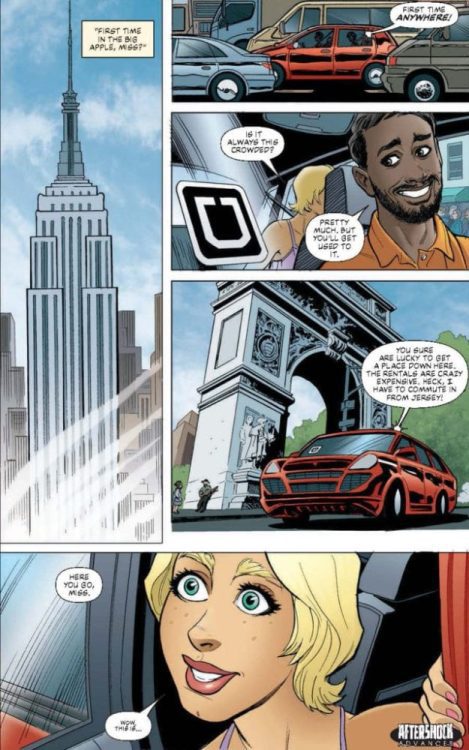
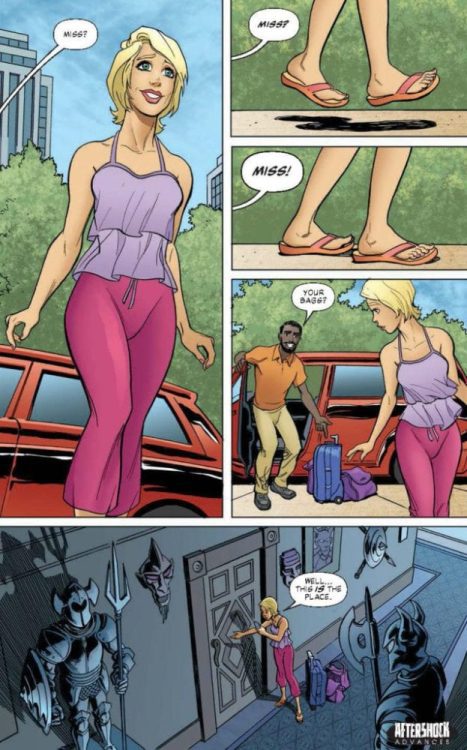
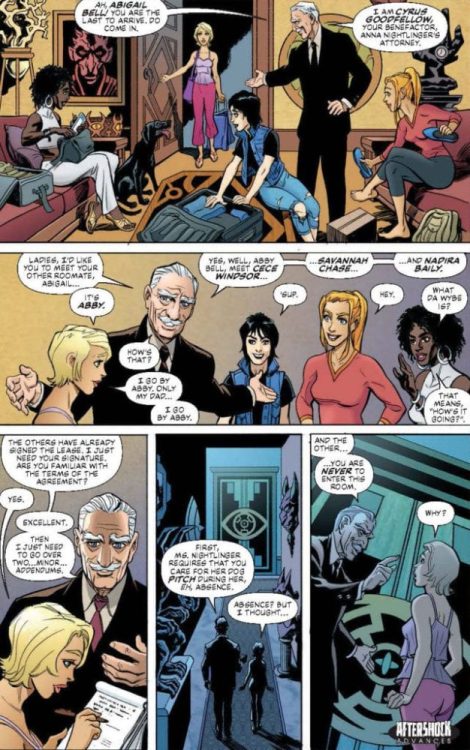
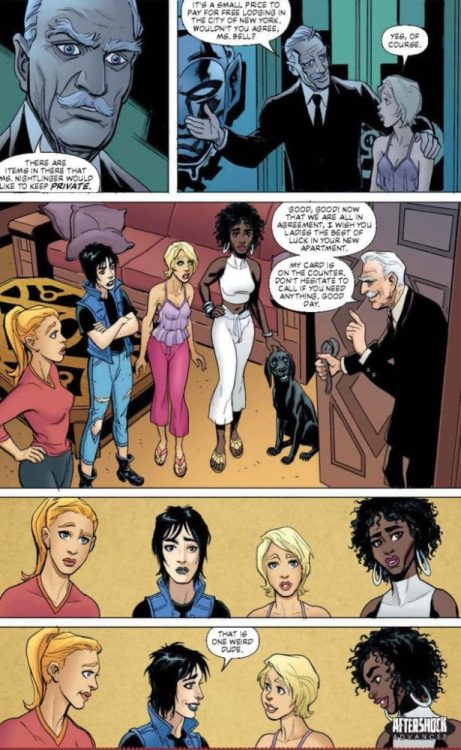
Check out an exclusive four-page preview of GIRLS OF DIMENSION 13 #1, a fantasy tale of discovery and empowerment from AfterShock Comics. The book is written by Graham Nolan, with art by Bret Blevins, Greg Wright drops the color, and you will read Carlos M. Mangual’s letter work.
About the issue: Four young women are brought together by a mysterious invitation to live in a creepy building in NYC. They soon learn that the building houses a portal to the other twelve known dimensions and that a malevolent creature known as Abraxis has bound these dimensions together, enslaving them to his will. For centuries, the portal has been guarded by a gatekeeper to prevent the evil on the other side from gaining access to OUR dimension.
Now the gatekeeper, Anna Nightlinger, is missing, and the only thing standing in Abraxis’ way is a quartet of young women with powers and abilities they don’t even know they have…for now.
GIRLS OF DIMENSION 13 #1 hits your local comic shop on April 21. Enjoy the preview below.
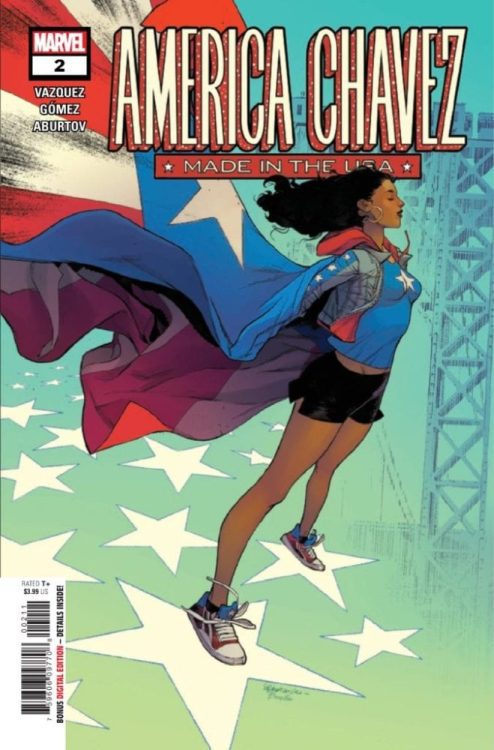
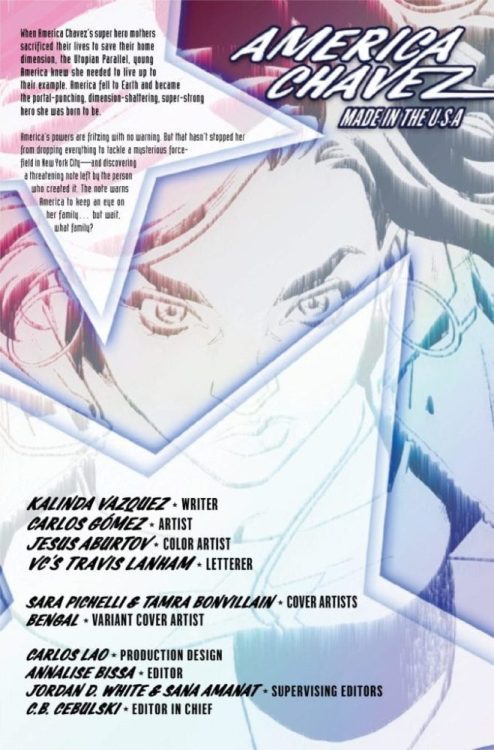
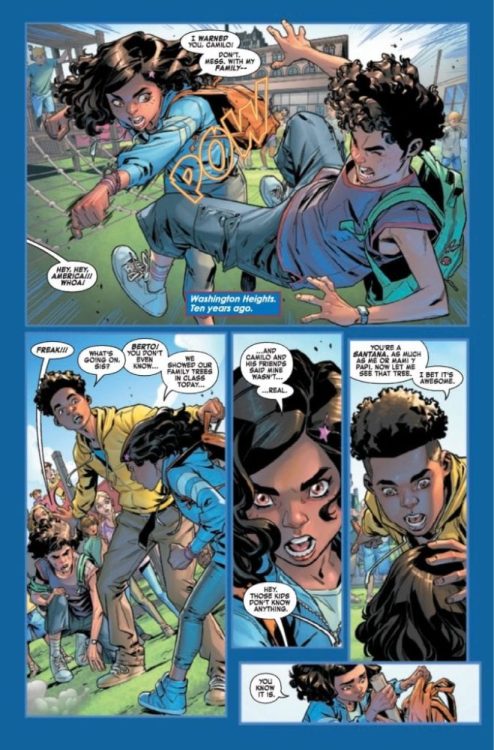
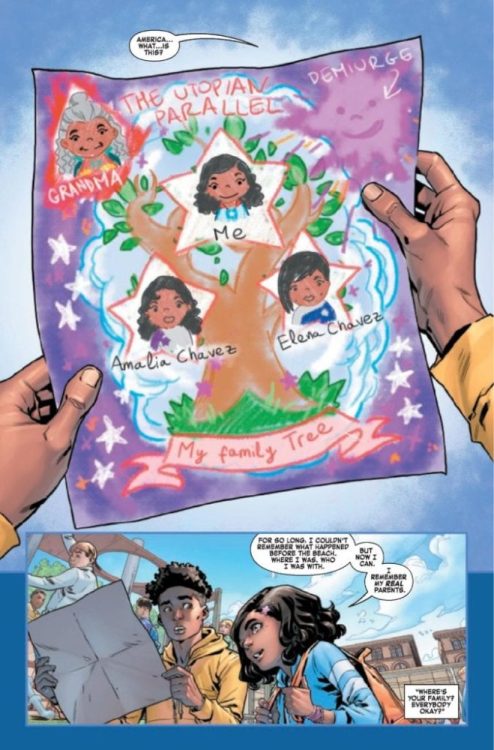
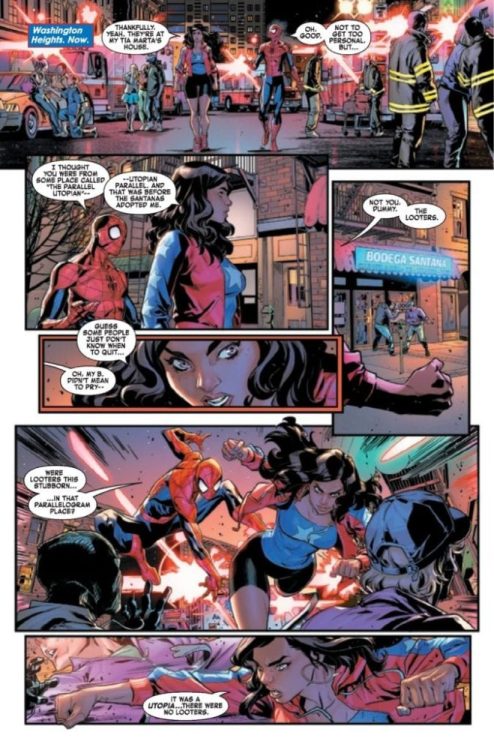
Check out this exclusive three-page preview of AMERICA CHAVEZ MADE IN USA #2 (OF 5) from Marvel Comics. The book hits your local comic book shop on April 7.
AMERICA CHAVEZ MADE IN USA #2 (OF 5) is written by Kalinda Vazquez, with art from Carlos E. Gomez, Jesus Aburtov drops the cover, you will read Travis Lanham’s letter work, and Sara Pichelli is the cover artist.
About the issue: LIFE. LIBERTY. AND THE PURSUIT OF A MASKED INDIVIDUAL…
The irony of America Chavez’s life suddenly shattering into a million pieces is not lost on her… But facing a mysterious threat who seems to know a whole lot about her – maybe even more than America herself? Well, now she’s on the brink of breaking apart.
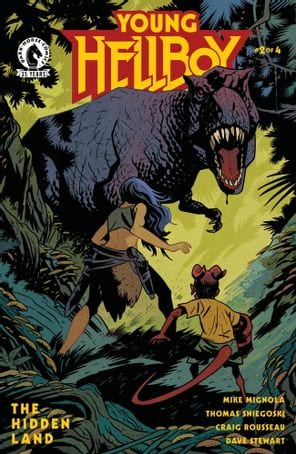
Series creator Mike Mignola and co-writer Thomas Sniegoski, along with artist Craig Rosseau, colorist Dave Stewart, and letterer Clem Robins return to the Hidden Land in “Young Hellboy” #2. This issue dives deeper into the jungle and the dark magics it holds, while having a clear focus on big Golden Age adventures with dinosaurs, giant apes, and lost civilizations. With a tight and fun script and outstanding visual work, this mini-series could easily go on to be a gem in the treasure trove that is the Mignolaverse.
“After meeting a missing adventurer and being taken in by the island’s Ohnar people, Hellboy and Professor Bruttenholm delve deeper into the strange island’s mysteries. Exploring a previous civilization’s ruins reveals more about local history . . . and grabs the attention of some gruesome foes!”
Writing & Plot
Writers Mike Mignola and Thomas Sniegoski double down on the classic sources of inspration in “Young Hellboy: The Hidden Land” #2. This issue opens with, well, a young Hellboy gushing over the adventures of the Golden Age pulp adventure comic he’s been reading (in true excited child spirit), only to be dropped into such a story himself. This comics sense of paying homage to an immensely influential genre is outstanding, and the comic’s inclusion of dinosaurs, survivalist jungle women, and sentient apes all come straight from the Golden Age of adventure stories. The wonderful thing about the Mignolaverse that makes this work so well, outside of just the writers’ efforts, is how the Mignolaverse is already a melting pot of genre stories as it is. This comic fits right into the rest of the Hellboy library, as the problems that tend to follow HB, Professor Bruttenholm, and the BPRD as a whole are here as well. The later stages of the comic go into full Mignola-mode, complete with dark magics and ancient beings carrying curses. While it obviously makes sense, it’s almost disappointing leaving behind the lost island adventure even for just a moment to introduce the conflict that needs to happen in a Hellboy book. This being said though, the upcoming ultimate villain we get introduced to still looks like it could be a good time (if ultimately a predictable one). Seeing our immeasurably charming and fun to read kid Hellboy go up against his first big bad with the help of a kickass jungle-living adventurer could very well be as much of a treat as reading this single fantastic slice of excitement is.
Art Direction
Any time a Mignolaverse book is discussed, the visuals are almost always the first elements to be judged. The art has to ‘feel’ like a Mignola work, like something that fits in the the creator’s own vision for Hellboy and the world he lives in. That’s why it’s so fortunate that we have the likes of Craig Rosseau on pencils and Dave Stewart on colors for “Young Hellboy” #2. Rosseau puts together a design language that manages to pay homage to the Golden Age adventure tales we’ve discussed at length while also having that uncanny yet fascinating aesthetic that we’ve come to know from Mignolaverse comics. Rosseau’s thick pencil lines and heavy inks disguises a ton of detail in its outward simplicity. The shadows and dimensions he gives characters and environments are full of life and animation, as well as a ton of kinetic energy. The panel direction is rife with a flow that floolows its characters and draws the eyes to their persoonalities and actions, as well as making excellent framing for the action and suspenseful revelations. The colors from Dave Stewart (a regular on Hellboy universe comics) are deep and rich, but also murky and dark in a way that adds to the combination of high-energy adventure and supernatural suspense this comic aims for. Clem Robins’s letters are a familiar and clean font used by most other books in the Mignolaverse, with a dynamic font size and great as always sound effect lettering. This is a stellar looking comic with an energetic and light yet simultaneously spooky visual style that is perfect for this story.
“Young Hellboy: The Hidden Land” #2 is a blast, held aloft by an unendingly enthusiastic and fun Kid HB, a classic sense of adventure, and pitch perfect visuals work. Mignola and Thomas Sniegoski’s script is smart and delightfully fun, with a perfect blend of Golden Age action, magic, and supernatural suspense. The visuals from Craig Rosseau and Dave Stewart are gorgeous and energetic, while still abiding by the sense of uncanny weirdness that fits in with the rest of the Hellboy universe. Be sure to grab this issue when it hits stands on 3-31!
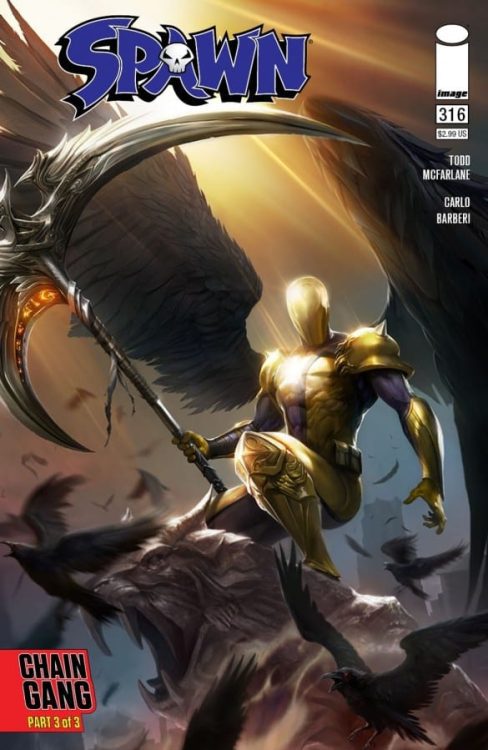
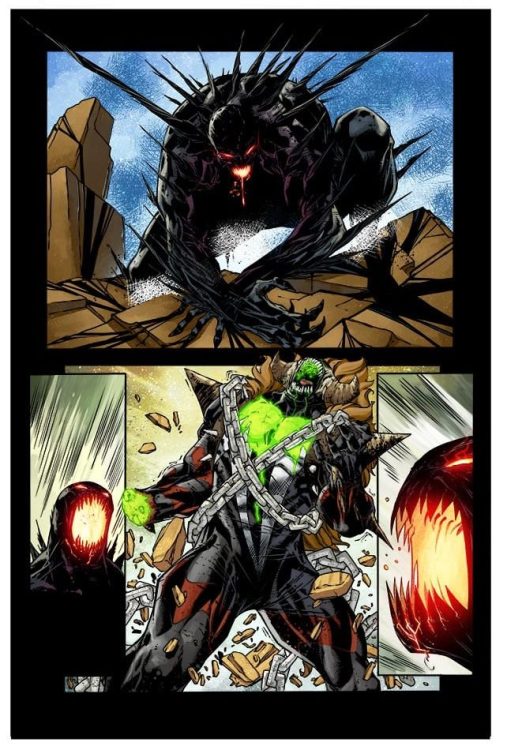
SPAWN #316 hits comic book stores on Wednesday, March 31st, the third and final installment of Todd McFarlane’s “Chain Gang” event. The fight against Omega Spawn is one of the most difficult in Spawn’s career, even with Medieval Spawn’s assistance. But an additional player has joined this battle of titans in the form of Plague, a mysterious force the protagonists and readers will find to be quite troubling.
Story
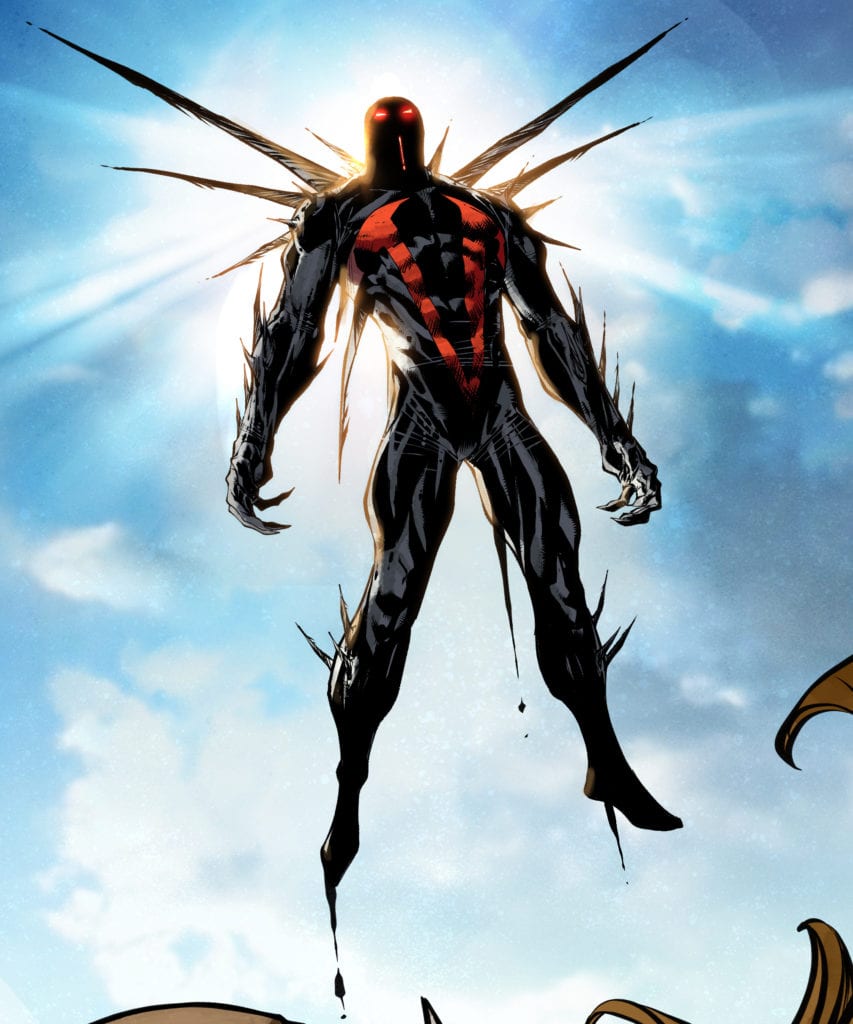
Last issue saw Spawn and Medieval Spawn on their last leg in the fight against Omega, but the arrival of Plague now gives them a moment of respite. The trouble is that our heroes have no clue as to which side this being is on. Its appearance is unsettling, especially for the big bad Omega.
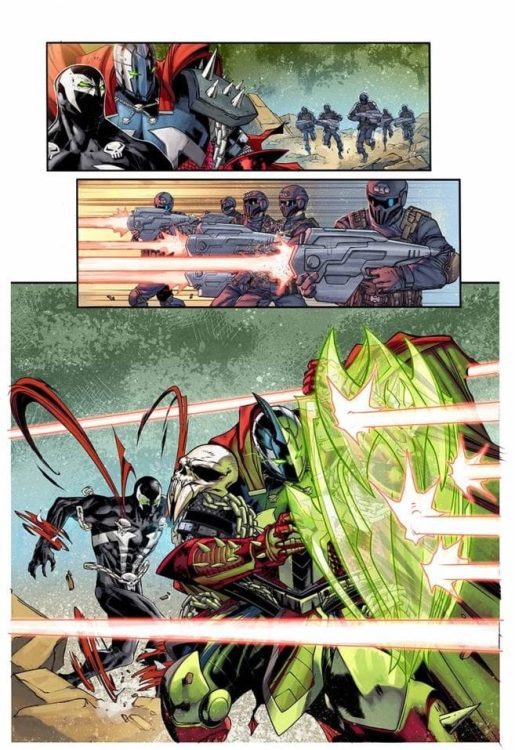
Just when Spawn and his medieval comrade believe they have a chance to escape while Omega is distracted, a military group arrives to take out all the Hellspawn. Fortunately, the two are finding they work well together and manage to elude capture.
McFarlane’s script does a fantastic job of pacing this action-packed story so readers don’t get lost in the many sequences. It was also a thrill to see a powerhouse like Omega put in his place by a being completely alien to himself.
Artwork
Carlo Barberi’s penciling and ink work, Jay David Ramos’s coloring, and Tom Orzechowski’s lettering once again hit it out of the park when it comes to Spawn illustrations. The contrast between the figures of Plague and the other Hellspawn is clear for readers to see—from the simpler design of the former to the intricate details of the latter. The shades of black, silver, red, and green swirl throughout the action in stunning brilliance. We also loved
Conclusion
SPAWN #316 is the conclusion we were waiting for in this arc. The many potential door opened up could lead to more engaging stories going forward.
Do you think Plague will join Spawn’s team? Let us know in the comments below!


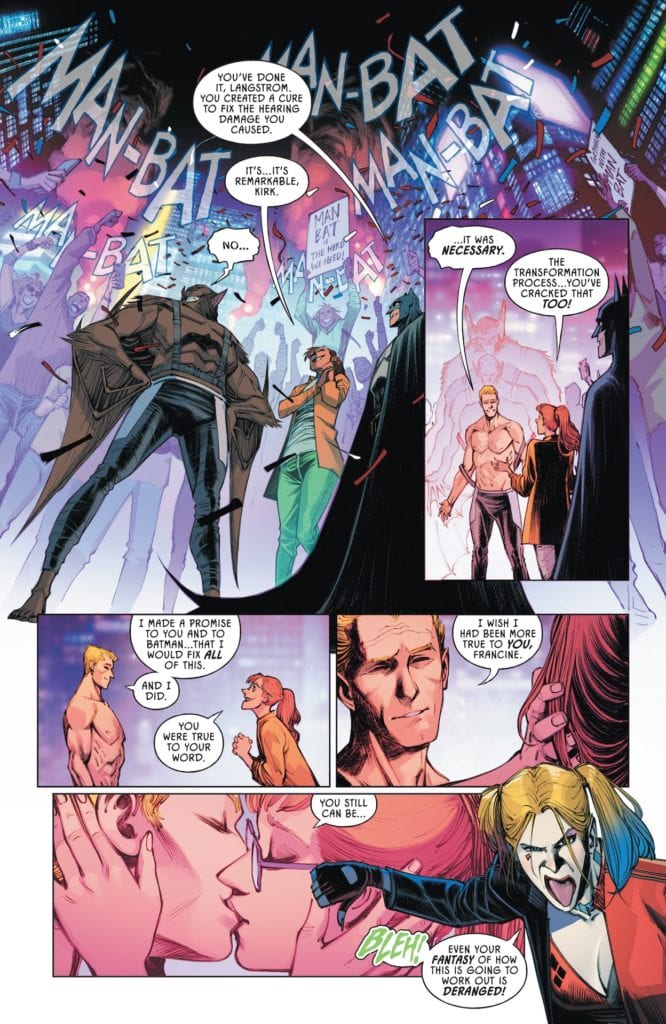 Wielgosz really enjoys working with the characters in Man-Bat #3. Calling back to the last issue, he presents Kirk Langstrom as a character with the weight of the world on his shoulders. It’s what makes Kirk’s relationship with his monstrous alter-ego all the more interesting. Man-Bat is practically when Kirk is more honest with himself, so seeing him continuing to compartmentalize Man-Bat feels like a character regression.
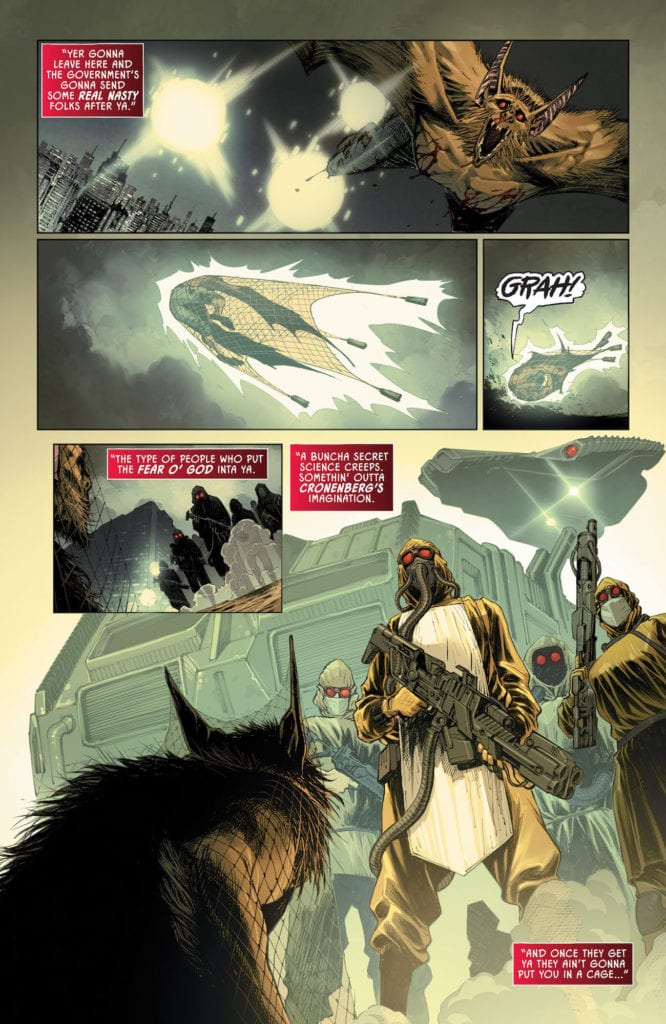 Kumar illustrates Man-Bat #3 with a host of expressive visuals confined to split-second panel work. In just two similarly drawn panels, it emphasizes how a quick moment changes everything. Whether it’s Francine’s shocking encounter with Scarecrow or Lisa’s blank surprise at her brother, the reactions serve as stories of their own.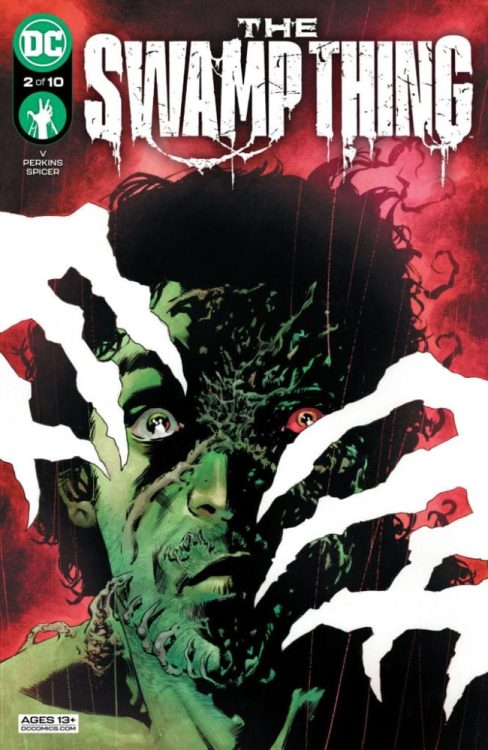
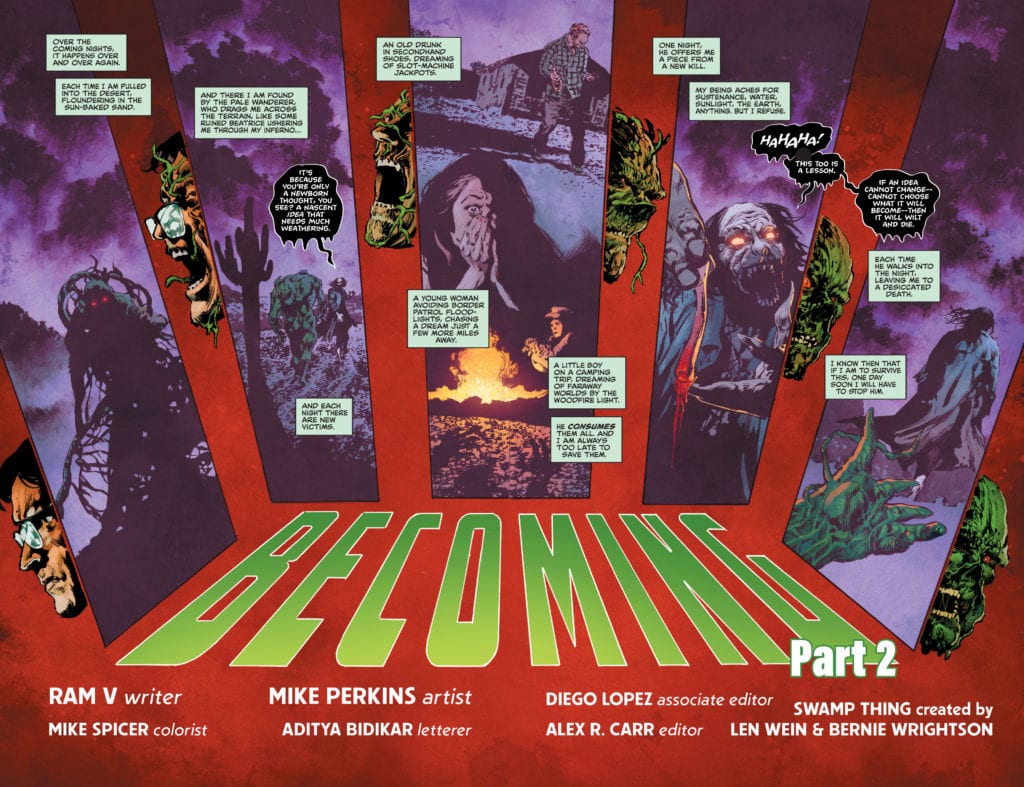
 Frigeri keeps the dynamic movement of King In Black: Ghost Rider moving at a steady pace. Seeing Mephisto getting dragged around in chains by Ghost Rider riding his motorcycle is certainly a sight to behold, especially when a quick stop makes Mephisto skid against the asphalt.
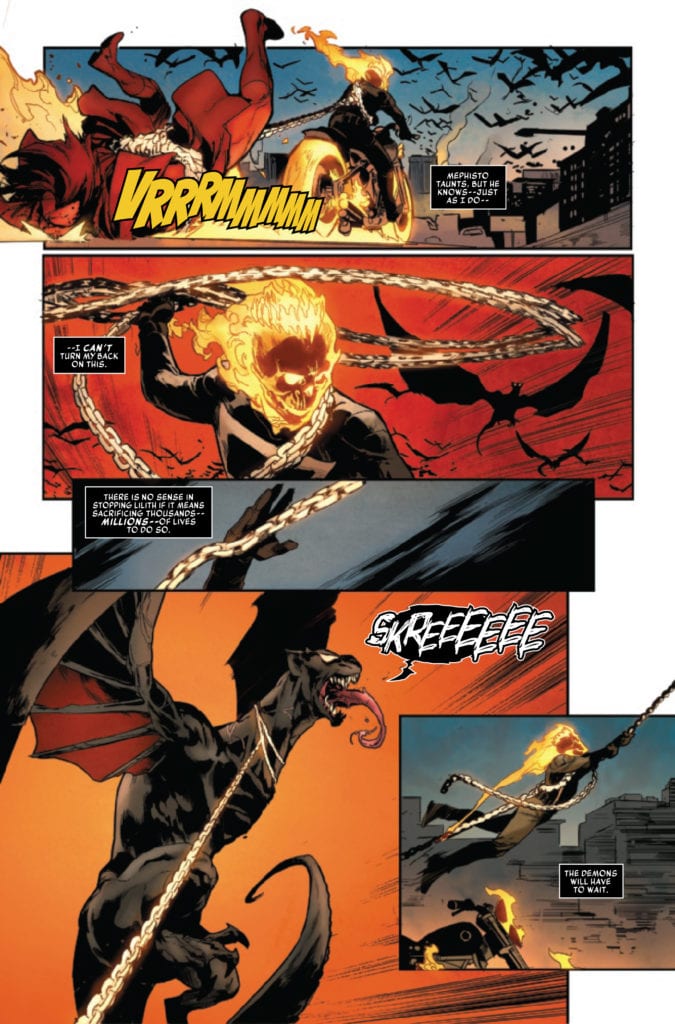 Caramagna’s lettering makes the characters stand out twice as much. The words exchanged between Ghost Rider and Mephisto in color-coded word balloons highlight their character. Mephisto tries to taunt Johnny with monologues in an intimidating red word balloon. Unlike Ghost Rider, who speaks few words in black word balloons and as he revs his Hellcycle in loud sound effects.