Home Blog Page 138

Comics Studies: COMICS: AN INTRODUCTION Book Review

Comics An Introduction
Cover to Comics An Introduction by Harriet E.H. Earle, published by Routledge

People consume comics for different reasons. There are those who enjoy the non-stop action of superhero comics, those who like to escape into a detailed fantasy world, and those who read literal stacks of comics to experience the form in as many ways as possible. Over recent years there has been a growing audience of readers whose desire is to study the comic in the same way that, for decades, people have studied literature and film. This has led to a growth spurt in the publishing of books about comics and the many aspects and themes that comics represent and embrace.

However, everyone has to start somewhere, whether it’s finding your first comic strip as a child or first independent comic book as a teenager, and for those interested in studying comics there isn’t a massive selection of books that can get you comfortably onto the first step. It goes without saying that Scott McCloud’s work is an easy recommendation, but his are not the only books out there. In 2021 there have already been a number of handy guides or introductory books released about comics and one of the best is Comics: An Introduction by Harriet E.H. Earle.

A New Guide

Comics: An Introduction is a small, handy sized, book published by Routledge and boasts a ‘clear and detailed introduction to the Comics form.’ Harriet Earle is a lecturer in English at a UK University and she has written about comics numerous times, often in relation to War and trauma. But in this latest book, she has widened her scope to focus on the history and definitions of the comic format. This is no simple task, as anyone who has studied comics will attest, but Earle manages to simplify the complicated history into bite sized chunks of information and present them in a meaningful way. The book is broken into chapters that feed off each other and create a linear reading out of a complex history of ideas and creative experiments. The growth of comics is very often not linear and different influences occur in different cultures which then seep into other aspects of comics. Earle keeps her focus on the book and holds your attention with straightforward explanations of terms and concepts so that even uninitiated readers won’t get lost in technical terms.
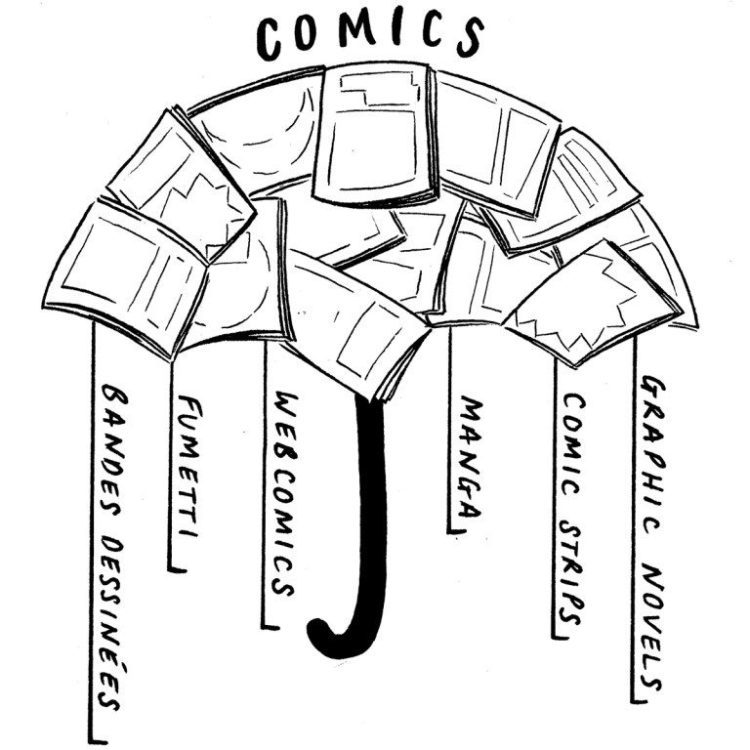
Comics an Introduction
‘Umbrella’ by Rozi Hathaway, an example of the artwork used in the book

The first half of Comics: An Introduction is a useful exploration of the form, as the titles of the early chapters indicate: Histories, Going global: comics on the world stage, and Cultures and commodities. Earle covers a lot of the ground found in other titles but does so in a more condensed and educational way. This is a sophisticated, well thought out “Comics 101.” Where some books are daunting, especially to readers just getting into Comics Studies, Comics: An Introduction is welcoming and easily digestible. After the broad introduction, the chapters are broken down into short sections for easy reading and later reference. Returning to this book after the first read is a delight because it is so easy to find what you are looking for. If you want to refer to Proto-comics, for example, a quick flick through will allow you to find the short section without having to plough through paragraphs of dense text.

But the book isn’t just a beginners guide to comics. Earle dedicates two chapters to more focused studies of particular kinds of comics. One chapter is on Journalism and the other on autobiographical works. These focused chapters are a gateway to more complex studies and they lean towards Earle’s personal study interests. They are literary heavy chapters reflecting the author’s background, but Earle does not dismiss comics as a whole by focusing only on a few worthy examples, as other writers have done. Instead, the book is inclusive and draws on all aspects of the form. This is clear from the range of topics and themes that are covered across the chapters. There are sections relating to cultural practices, geographical differences, historical significance, and even the audience itself by the way of fans and conventions. In some ways the size of the book is deceiving as Earle packs a massive amount of information into the modest page count.

Conclusion

Where McCloud’s Understanding Comics is a visual dive into the production and mechanics of comics, Comics: An Introduction is more of an academic overview with delightful hints at the possibilities that the form contains. It is an easy and enlightening read aimed more at people starting on their Comics Studies journey, but contains enough gems of information to make it worth reading for anyone in the field. There are more focused books out there, for example Comics Studies: A Guidebook or the new to 2021 Keywords for Comic Studies, each containing essays from a range of scholars and creatives. However, Comics: An Introduction offers a single coherent voice that guides you through the often difficult field of study that is Comics Studies.
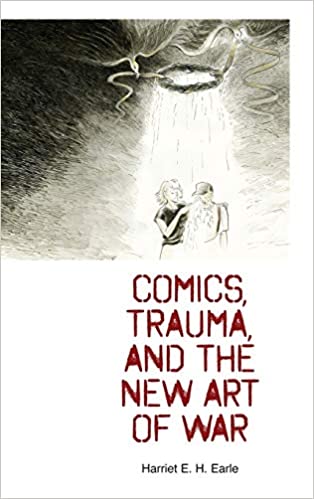
Comics Trauma
Also available by Harriet Earle: Comics, Trauma, and the New Art of War published by the University Press of Mississippi
Monkeys Fighting Robots Youtube

Review: CRIME COMICS CONFIDENTIAL Reprints And Misdemeanors

Crime Comics Confidential cover Credit: IDW Publishing

Yoe Books, IDW Publishing, and Steven Brower have brought together a collection of crime comics that, unless you are already a dedicated fan of the genre, you probably won’t have seen before. Focusing on the 1950’s, but avoiding the obvious choices from EC Comics, Crime Comics Confidential touches on a period of comics history that was as volatile as the lives the comics depicted. Dr. Fredric Wertham was stirring the pot, encouraging a number of parent organizations, churches, and community groups to stand up against the evil of comics and the Senate Subcommittee on Juvenile Delinquency was held in the center of the decade that this book covers.

Featuring a number of recognizable names within the narratives as well as in the bylines, Crime Comics Confidential is a window into a different time, mixing history and creativity like an episode of a science fiction time travelling show.

Al Capone Comic
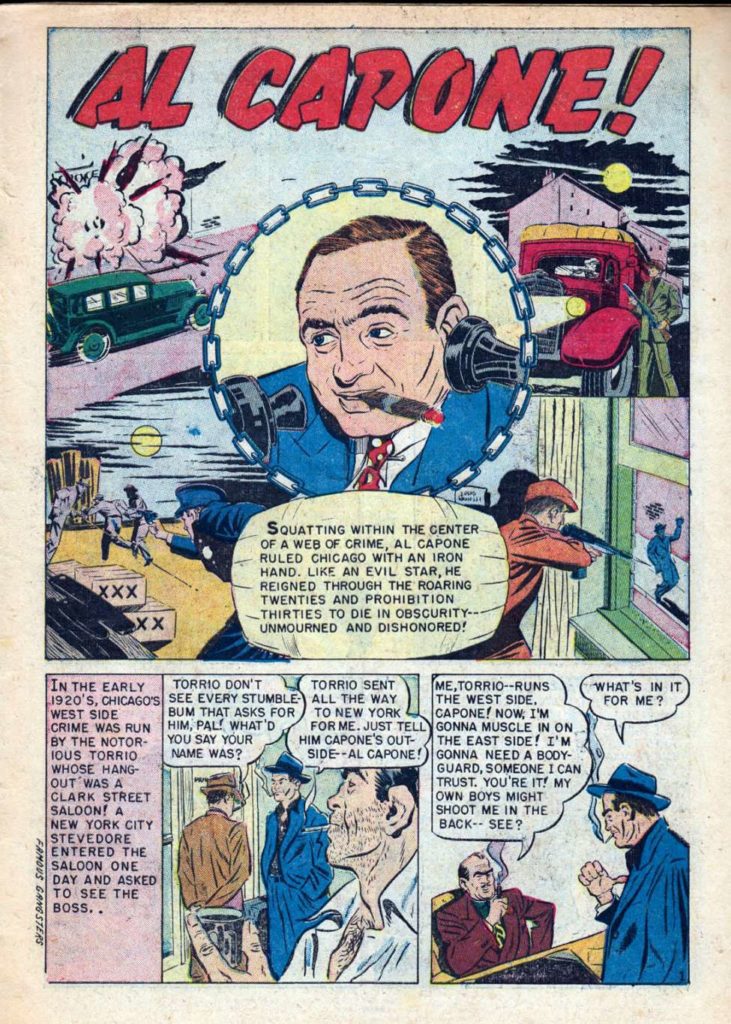
First page from Al Capone, published in Famous Gangsters #1 1951

Opening the Case

Crime Comics Confidential opens with a detailed essay written by editor Steven Brower. This is one of the highlights of the book and provides a mix of historical background and intriguing critique. Obvious elements of this introduction are followed up in the strips selected for the collection, in particular the biographies of such famous mobsters as Al Capone, Lucky Luciano, and John Dillinger. In an age where the lives of these criminals have been regurgitated several times on television and in the movies, mixing fact with cinematic license, it’s surprising that these strips still have anything to offer. And yet they do. The art direction and comic design is reflective of the period and the stories take a backseat to the more interesting study of the comic format itself.

The comics have been grouped in the book in such a way that as a reader you can compare and contrast specific narrative types, flicking back only a few pages to see how different writers and artists have dealt with a specific trope of the genre. The string of biographies that open the book are particularly interesting as they highlight the approaches that the creators took to representing fact as entertainment. Several of the narratives are a touch dry and heavy on text that could be read as preaching to the young audience the comics were aimed at, while others have the elements of danger and glorification that formed the heart of the moral crusade against comics at the time.

Re-reading these comics today, they seem tame in comparison to the current offerings from independent publishers and even the larger companies. But with the context given from Brower’s introduction it is possible to see how they could have been interpreted in a different manner. At the annual meeting of the Association for Education in Journalism and Mass Culture in Washington DC in 1995, Linda Adler-Kassner presented a paper highlighting the differences in attitudes towards comic consumption between adults and children, both in the 1950s and the present day.
The stories that were told in genre comics, such as crime and horror, were seen by those in authority as damaging to the youth, and glorifying the criminal aspects of society. However, one thing that is clear from each of the comics selected for this book is that crime never pays. There is a price for the lives the criminals lead and they always get their comeuppance before the final panel. There is very little shocking material from a visual point of view in these comics and, as Brower points out, the hero worship of the underdog villain is nothing new, even in the 1950s. Instead of a series of grotesque or violent tales, what this book contains is a selection of intriguing, well constructed short stories told by some of the biggest names in the industry at the time.

War on the Streets
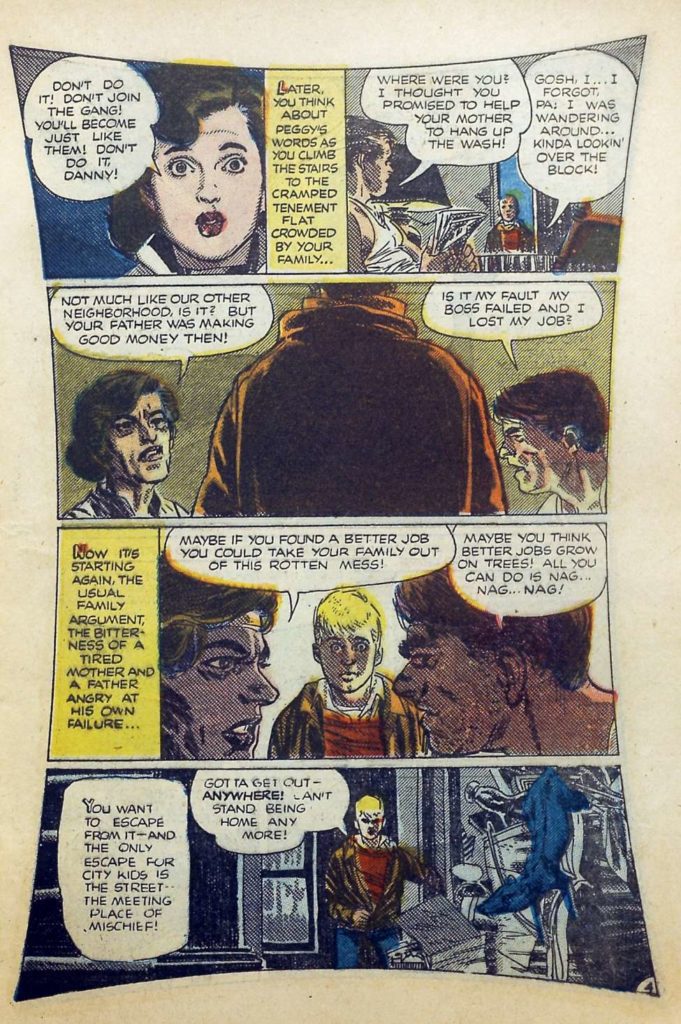
A page from War on the Streets by Alex Toth, published in Crime and Punishment #66 1954

Artist recognition

Bernie Krigstein, Dick Briefer, Alex Toth, and John Buscema all have stories featured in this book. One of the most outstanding, visually as well as narratively, is Alex Toth’s War on the Streets. A story that deals with juvenile delinquency head on with no metaphors or cloaked superhero analogies, War on the Streets is a magnificent tale of a boy becoming embroiled in a gang. Toth highlights not only the dangers of being in a gang but also demonstrates the social mechanisms behind the decisions that the boy makes: bullying, coercion, and family neglect are all to blame for the path the boy follows. It is possible to see why such a story would be deemed unsuitable by parents or community organizations in 1950, because this is placing a lot of the blame at their doorsteps.

Crime Comics Confidential‘s strength is that it presents the collection as something of historical interest, rather than pure entertainment. It would be easy to select the most famous crime comics and reprint them in a new collection, but there is a more curated feel to this book. Contained within is an evolving thematic thread running through the comic strips as if they themselves have a deeper narrative beyond the surface readings. Brower places the comics in an order that makes you question aspects of the stories, such as the authenticity of the biographies, the moral aspect of the narrative, and even the culture in which these comics were born.

Crime Comics Confidential
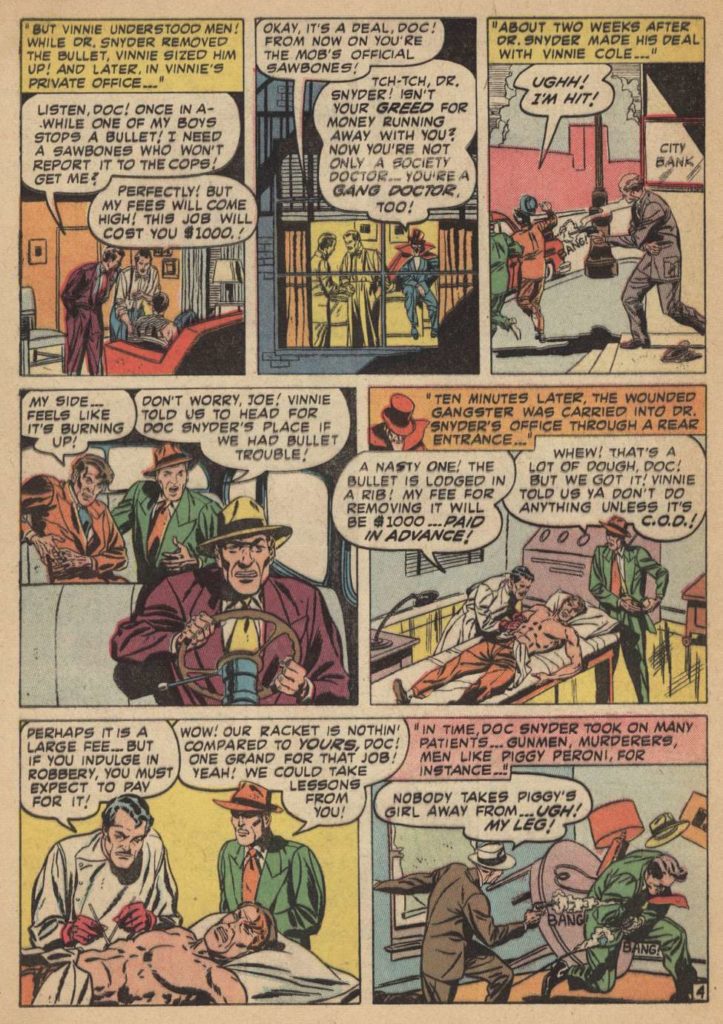
Example of John Buscema artwork from Gang Doctor published in Wanted #32 1950

Conclusion

These crime comics are from the end of the Golden Age of comics which saw the horror genre explode across America and beyond. Crime was central to that explosion and the two genres are often featured together in anthology comics. It is not surprising that communities were easily turned against these forms of youthful entertainment, especially when you look at some of the stories portrayed in this book. Reprints for comics such as Crime and Punishment, Famous Gangsters, and Wanted Comics, may seem tame by today’s standards, but 70 years ago, these stories would have been shocking and exactly what the young audience was looking for.

This book offers a glimpse into what was available to readers in tumultuous times of mass distribution, newspaper racks, senate hearings, and witch hunts against the peddlers of filth. Crime Comics Confidential is a perfect book for the shelf of anyone interested in this period of comic history and a great collection of stories that deserve a new audience.

Monkeys Fighting Robots Youtube

Marvel Comics Exclusive Preview: DEADPOOL: BLACK, WHITE, & BLOOD #2

marvel comics exclusive preview deadpool black white blood

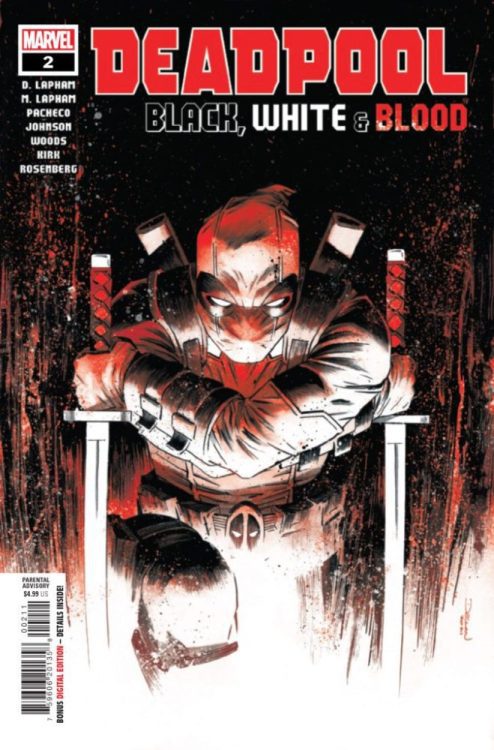
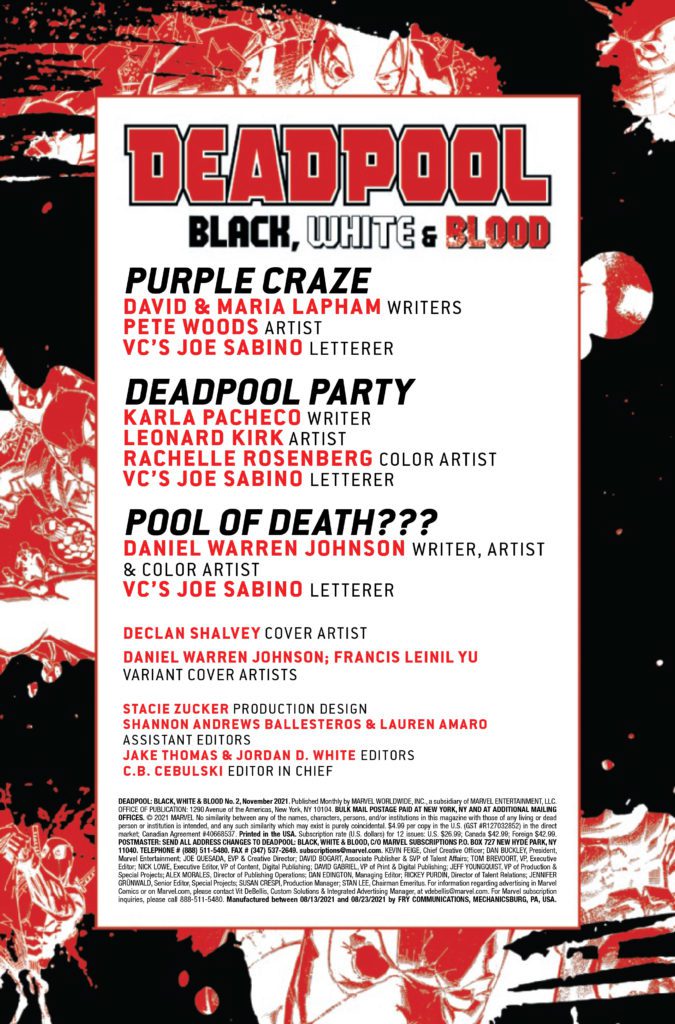
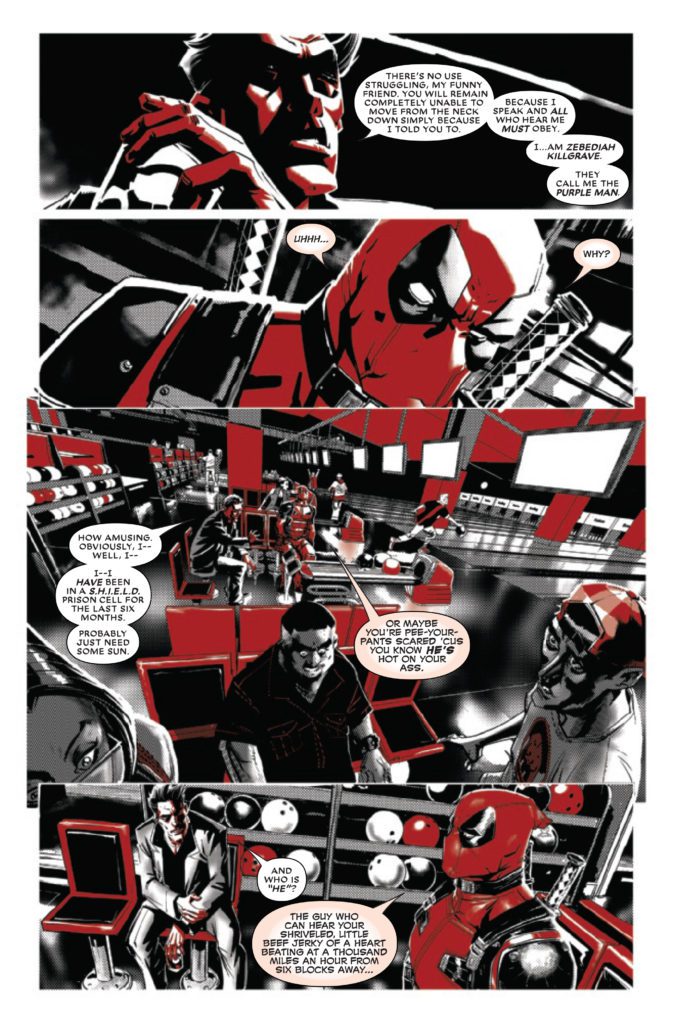
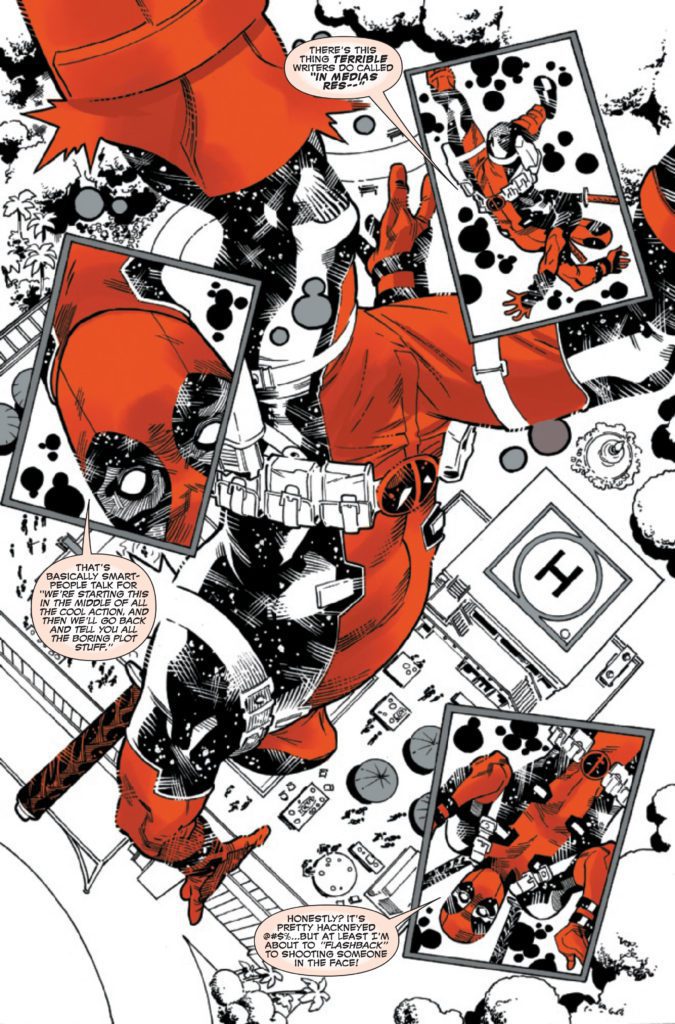
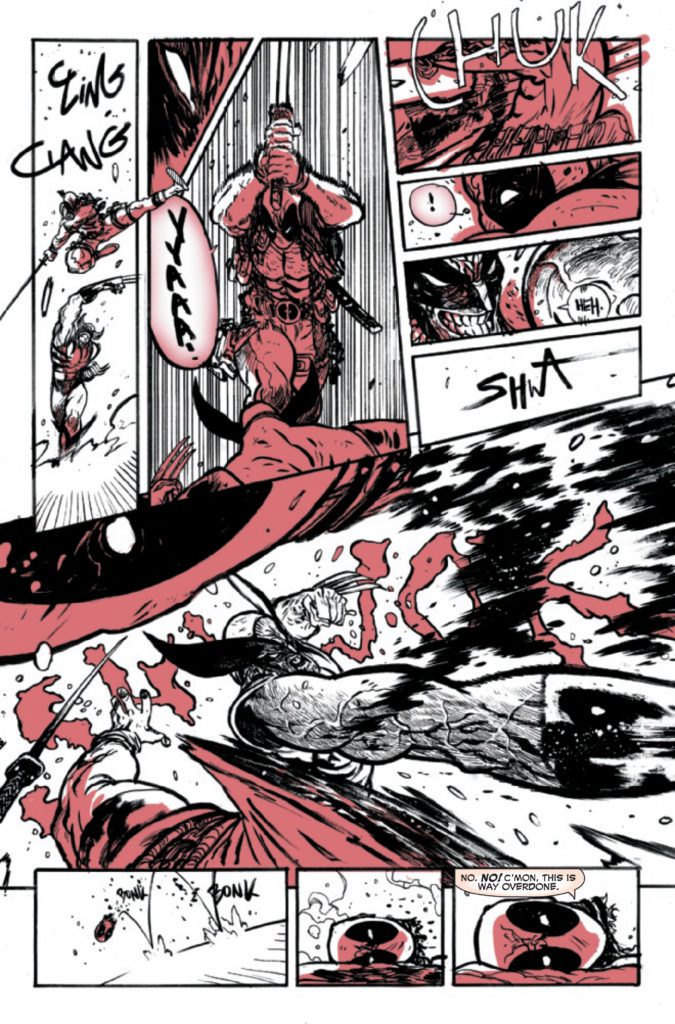
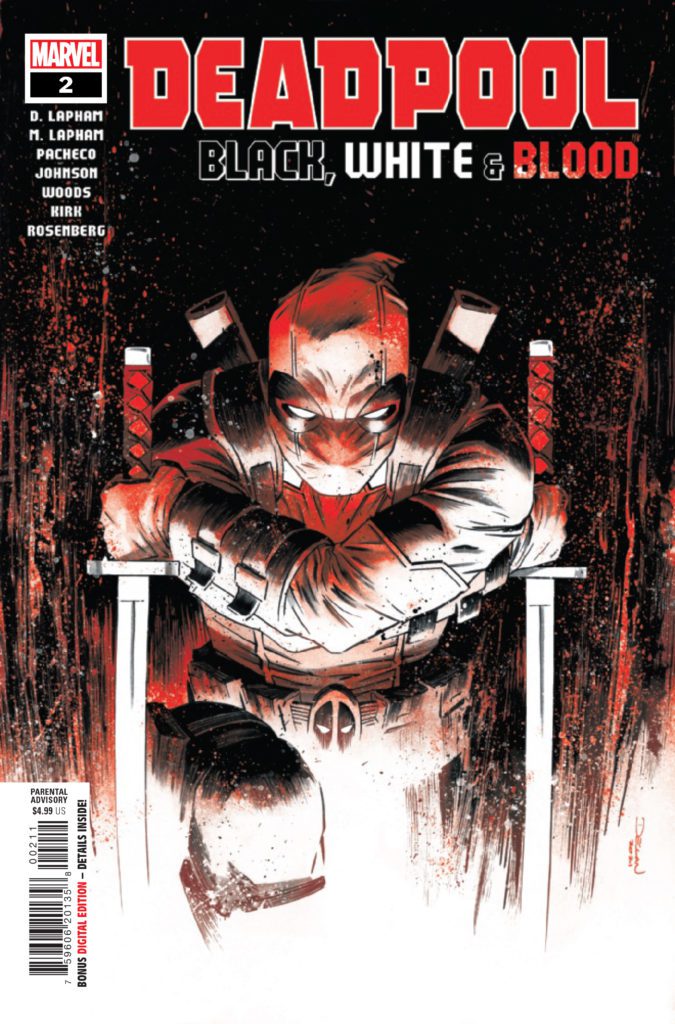
DEADPOOL: BLACK, WHITE, & BLOOD #2 hits your local comic book store September 8th, but thanks to Marvel Comics, Monkeys Fighting Robots has an exclusive 4-page preview for you.

About the issue:
WAIT, WHAT? THEY’RE LETTING US DO ANOTHER ONE? Did they not read the last one? That one was wild for sure, but this one… Hoo boy. WOW. I mean, look at those credits. You think this one’s gonna be LESS gonzo? I’m gonna need to buy our lawyers a nice fruit basket or something.

The issue features stories by David & Maria Lapham, Pete Woods, Karla Pacheco, Leonard Kirk, Rachelle Rosenberg, Daniel Warren Johnson, and Joe Sabino. The main cover is by Declan Shalvey.

Check out the DEADPOOL: BLACK, WHITE, & BLOOD #2 preview below:

marvel comics exclusive preview deadpool black white blood

marvel comics exclusive preview deadpool black white blood

marvel comics exclusive preview deadpool black white blood

marvel comics exclusive preview deadpool black white blood

marvel comics exclusive preview deadpool black white blood

marvel comics exclusive preview deadpool black white blood


What creators do you want to see on DEADPOOL: BLACK, WHITE, & BLOOD? Sound off in the comments!

Monkeys Fighting Robots Youtube

AfterShock Comics Exclusive Preview: BUNNY MASK #4

aftershock comics exclusive preview bunny mask #4

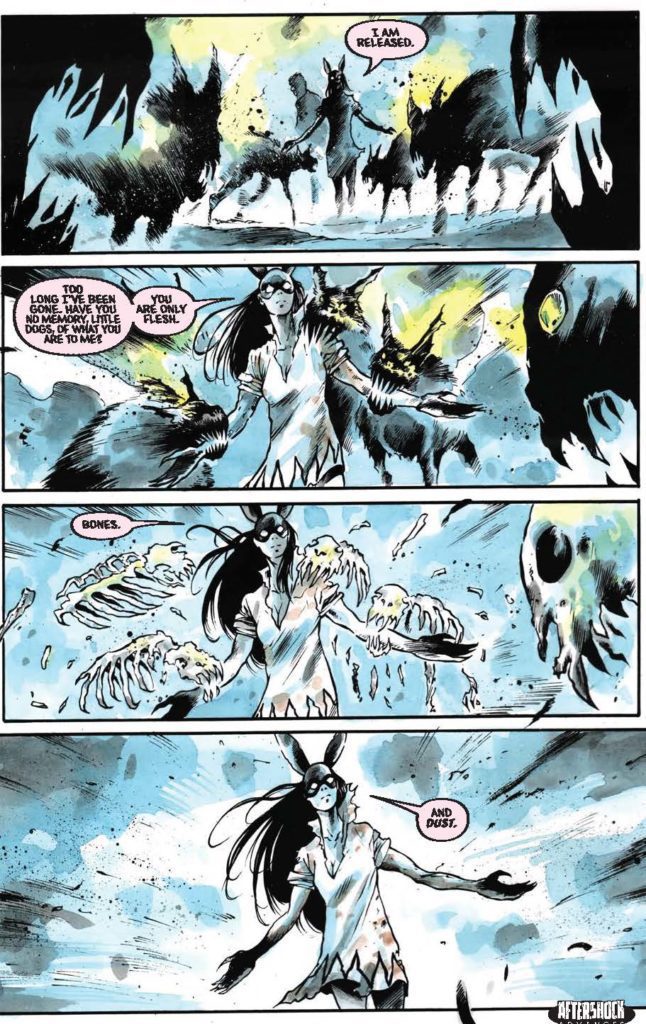
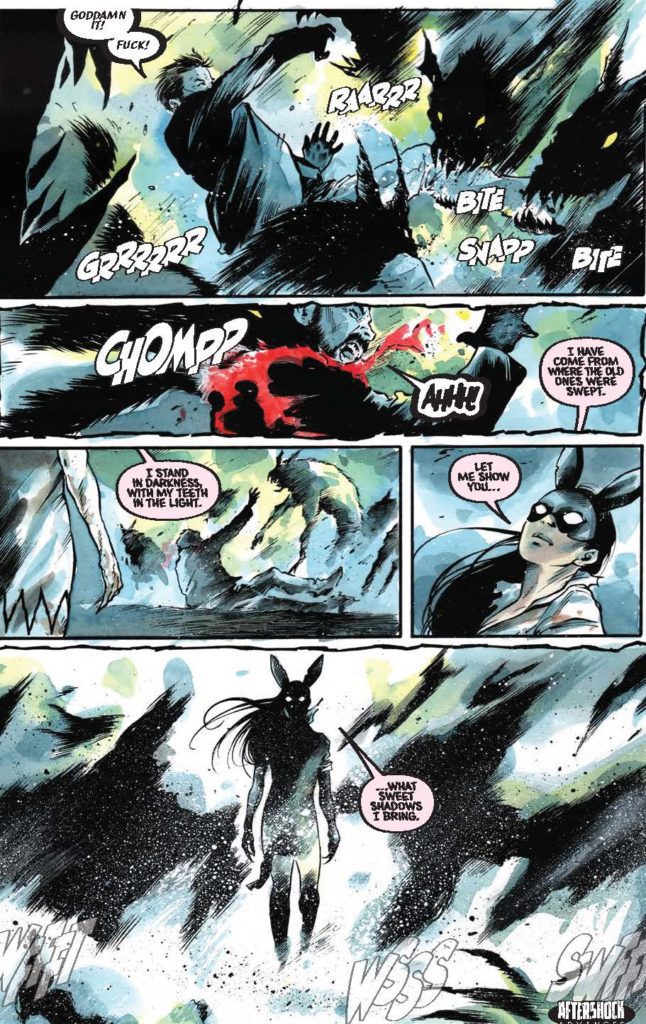
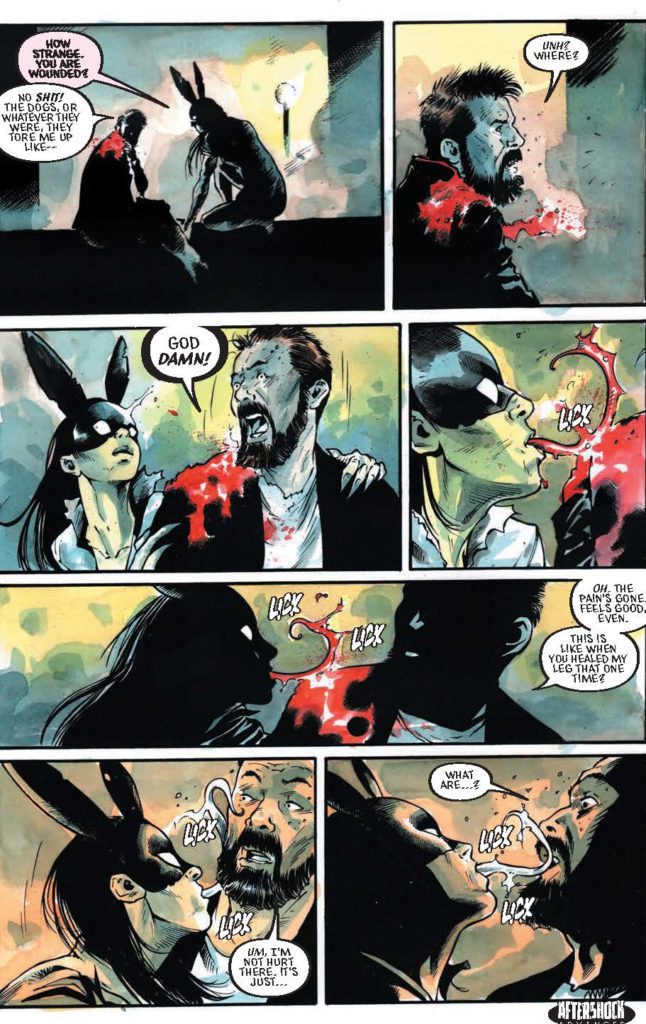
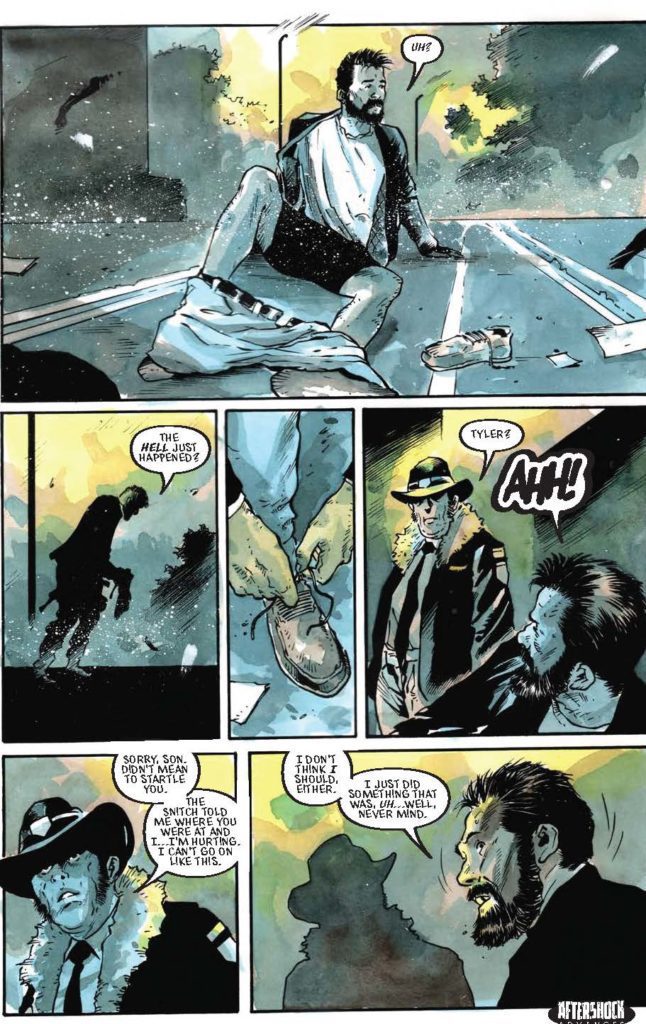
BUNNY MASK #4 hits your local comic book store September 22nd, but thanks to AfterShock Comics, Monkeys Fighting Robots has an exclusive four-page preview for you.

About the issue:
When the Snitch speaks, the truth isn’t just out there, it’s inside your head, gnawing at your sanity and seeping through the walls of your world. On the verge of absolute madness, Tyler and Sheriff Tate return to the cave where it all began, where the Snitch was given voice, and where Bunny Mask was set free. Will Bunny Mask help Tyler save himself, and, if so, what unthinkable price will she ask?

The series is by writer Paul Tobin and artist Andrea Mutti, with letters by Taylor Esposito. The cover is by Mutti and Colleen Coover.

Check out the BUNNY MASK #4 preview below:

aftershock comics exclusive preview bunny mask #4

aftershock comics exclusive preview bunny mask #4

aftershock comics exclusive preview bunny mask #4

aftershock comics exclusive preview bunny mask #4

aftershock comics exclusive preview bunny mask #4


Are you reading BUNNY MASK from AfterShock? Sound off in the comments!

Monkeys Fighting Robots Youtube

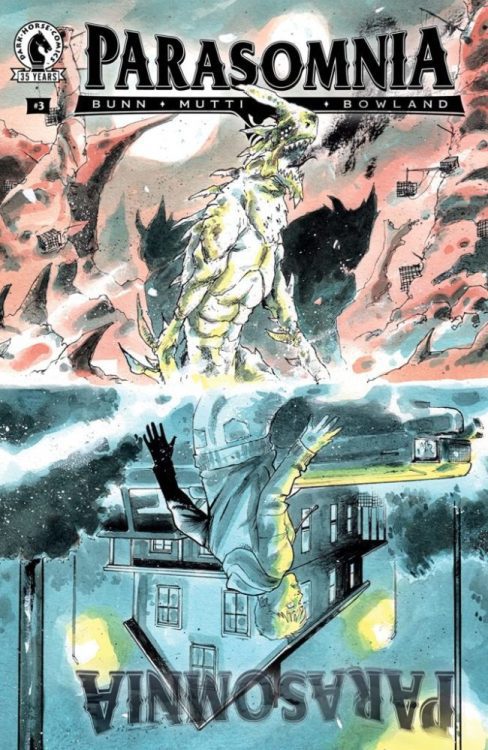
Review: Sharing Nightmares In PARASOMNIA #3

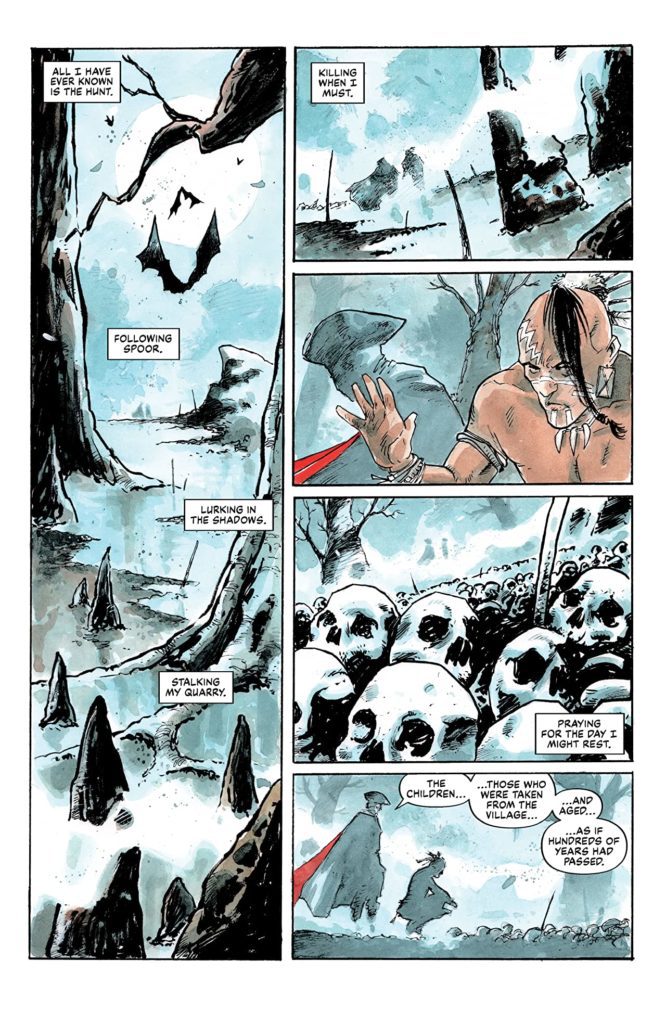
Writer Cullen Bunn and artist Andrea Mutti, along with letterer Simon Bowland, bring us the penultimate chapter of their supernatural thriller. Parasomnia #3 is a well-paced and suspenseful comic, even though it’s plot is still a bit fuzzy. With engaging writing and atmospheric, gorgeous visuals, this series still proves to be a slow burn – a bold choice for only a four-issue series.
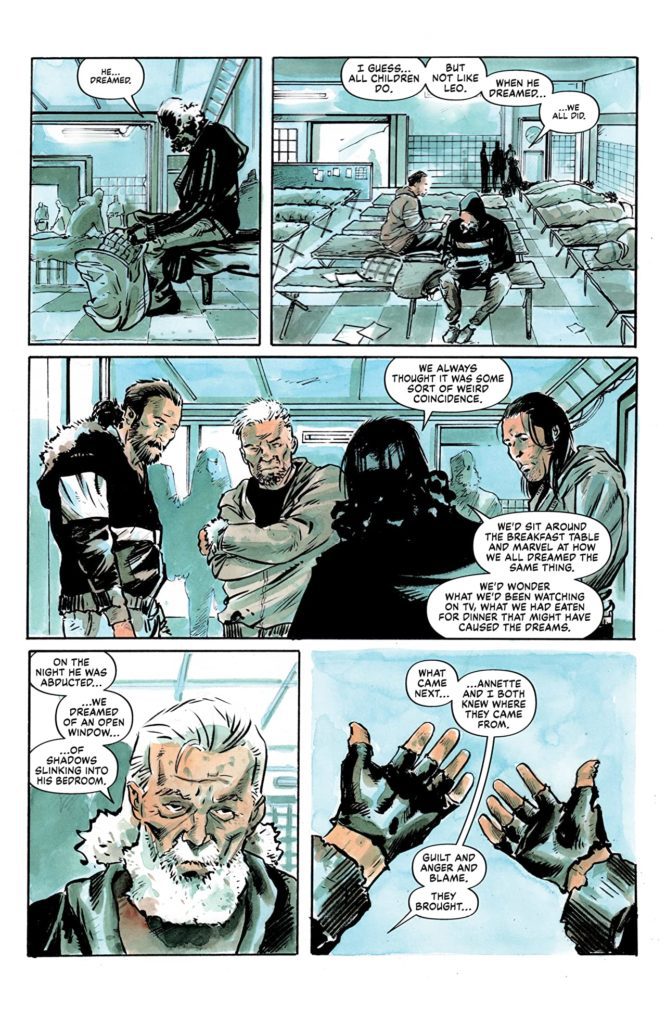
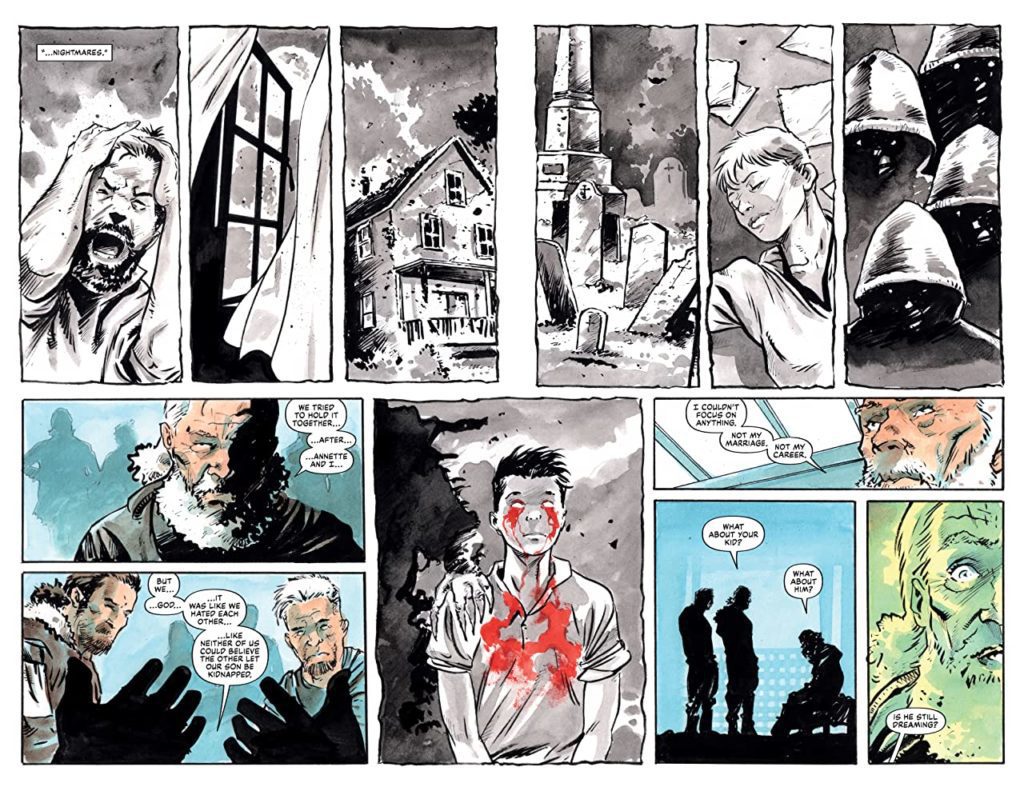
“In a twisted dream world, a nameless stranger battles nightmares in his hunt for his missing son–while in the waking world, the boy’s parents find their lives falling apart. As the search for his son in his dreams carries on a bizarre plot is uncovered of children being used as bait for monsters.”

Writing & Plot

Cullen Bunn (Harrow County, Bone Parrish) cleans up some of the prior’s issues problems in Parasomnia #3. The dialogue is more focused on the task at hand, opening up only at character’s distinct realizations. The last issue’s blocky pacing and excessive exposition are replaced by much more alluring scripting. The discoveries in this comic are tense and unnerving, just what I’d expect from a Cullen Bunn comic.
As much as I like the idea behind this supernatural thriller, I can’t help but still find it’s plot to still be a bit fuzzy. The distinction between dream and reality is clear. The facts behind the missing children in the story have also been mostly stated. It’s hard to articulate what the problem is without spoiling the story. Essentially, it seems too far in for elements to still be so unclear. This is the second to last issue, and unfortunately I’m having trouble picturing this comic ending satisfactorily. Bunn is a stellar writer though, so I’m optimistic. The ingredients and much of the process thus far have been fascinating to watch come together. I just hope the final script can stick the landing.

Art Direction

The absolute star of Parasomnia #3 is the atmospheric art of Andrea Mutti. His foggy watercolor visuals once again create the perfect nightmare-scape for this comic. Our protagonists remain mysterious and appropriately stoic. The stranger is almost entirely covered in his garments, so his expressions can only come from body language. Fortunately Mutti does a stellar job of demonstrating that emotion through posture. Small details like head tilts and shoulder level tell us where our mysterious lead is at mentally. The less mysterious human characters back in reality are drawn with great animated detail as well. We get our first look at some monsters in this issue, and they are satisfyingly creepy. They give off a slight Mignolaverse-esque feel while still being something uniquely of Mutti’s design.

Mutti’s colors once again perfectly set the tone for this story. Each page is bathed in a light, foggy hue that adds to the unnerving chill in this comic. He abstains from using any sort of traditional coloring, and instead creates entire pages with this singular vision. The lettering from Simon Bowland is solid, but doesn’t do much to stand out or enhance the experience. He uses a standard contemporary font along with some good yet slightly generic SFX lettering. Visually, Parasomnia remains a stellar atmospheric horror comic experience.

Verdict

Parasomnia #3 is an engaging issue that leaves a worrying amount of questions before the final issue. Cullen Bunn’s script is well-paced and offers more answers for this world’s lore, but still leaves some plot elements fuzzy. Andrea Mutti’s art is dense and atmospheric, putting together this supernatural thriller’s atmosphere perfectly. Be sure to grab this penultimate issue when it hits shelves on 9-1!


Monkeys Fighting Robots Youtube

Review: MIDNIGHTER ANNUAL 2021: Time Travel And Cyborg Beatdowns – Wildstorm Style

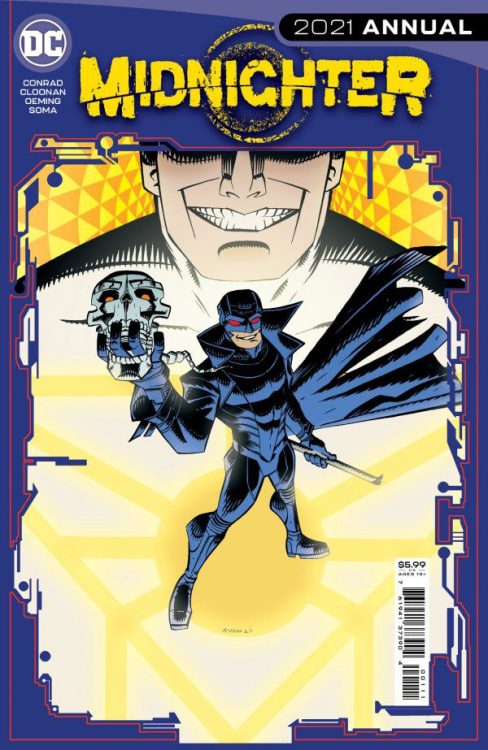
From writers Becky Cloonan and Michael W. Conrad and artist Michael Avon Oeming comes the standalone conclusion to a complex and fraught story. Midnighter Annual 2021 takes our favorite Wildstorm couple and places them within their own struggle in a complex internal and external fight. Despite being held back by a semi-confusing and formulaic script as well as oddly-fit visuals, this is still a thoroughly entertaining annual.

“Midnighter traveled into the future to help get himself out of a jam, only to swap places with his future self. Now, the Midnighter from the future finds himself trapped in a paradox, working his way back to his onetime present to swap places again. Don’t worry if you’re confused—so is he! The key to this whole thing is Andrej Trojan, the nefarious industrialist who tried using Superman’s mission on Warworld to his own end. Midnighter has been carrying Trojan’s robotic skull with him, hunting for the 2021 iteration of the man, and shutting his whole company down before any of this trouble even starts.”

Writing & Plot

Becky Cloonan and Michael W. Conrad take Midnighter Annual 2021 as an opportunity to tie off a loose end. This issue takes place after Future State: Superman and resolves plot points introduced there. It doesn’t end there though. This Annual also leads into Grant Morrison and Mikel Janin’s Superman And The Authority. While this is all cool news for fans of the DC Universe at large who have been keeping up, what does it mean for more purist Midnighter fans? Unfortunately, this comic does suffer from feeling like a small part in a larger story.

In my view, annuals and one-shots are a good opportunity to tell a single solid story. The story can of course connect to other plot events going on in the surrounding universe, but I feel that it should be an accessible single chapter. Midnighter Annual partially accomplishes this. At the very least it smooths out the “you had to be there” moments from prior books to be more palatable. It does still read like you’re walking into a room halfway through a conversation though. I have to give Cloonan and Conrad credit where it’s due. Their script manages to take some pretty off-the-wall events and sort them out to a new reader without gobs of exposition.

Any fans of Midnighter and Apollo, aka the best couple in comics, will still be pleased with this Annual. Despite its connection with other DC plot points, this still remains an entertaining comic on its own.

Art Direction

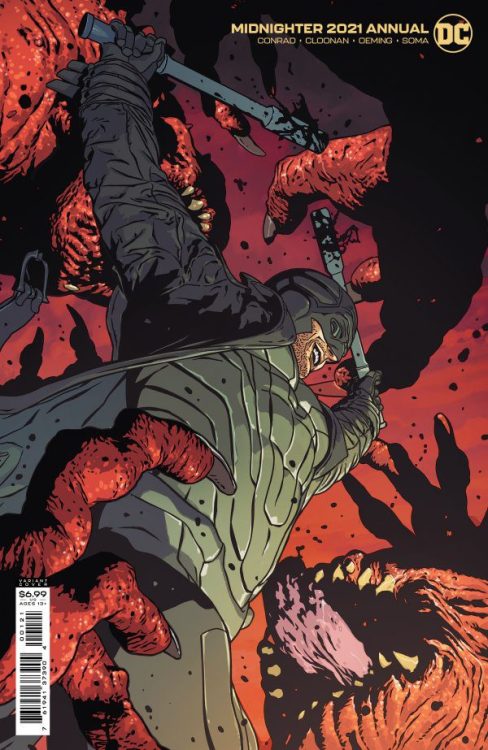
It has to be said that Michael Avon Oeming (Powers, Cave Carson Has A Cybernetic Eye) is an odd fit for Midnighter. I sincerely adore Oeming’s singular cartoony-pulp art style. His work is pure perfection on certain comics, such as Cave Carson. However, his art just doesn’t do Midnighter any justice, and vice versa. Oeming’s brand of animation and expression don’t fit the intensity of a Midnighter comic book. Even with the stereotypically silly cyborg enemies (the kind of thing Oeming excels at) the human weapon fights here, the pencils just don’t work.

This effect is unfortunately doubled down on by Taki Soma’s colors. Soma does a fantastic job filling in Oeming’s pencils with her saturated and deep palette selection. There’s an almost early 90’s Genndy Tartakovsky aesthetic to this comic thanks largely to Soma’s work here. The visuals are fantastic on their own. They just happen to be in a comic that does them no justice. Dave Sharpe’s lettering is solid work, but nothing exemplary. He uses a clean, contemporary font for dialogue and standard, unobtrusive SFX lettering. This is a great looking comic book. It just has the wrong team for this character and story.

Verdict

Midnighter Annual 2021 is a decently entertaining one-shot that suffers from its connections with other DC Comics events. Cloonan and Conrad manage to smooth over  of the more obtuse references and get the gist of the story without too much exposition. However, it still feels like walking into the middle of a conversation. Oeming and Soma’s visual work is brilliant in its own right. That’s why it’s sad to say that it has been placed in the wrong comic. If you’re a diehard fan of Midnighter and Apollo, be sure to grab this Annual when it hits shelves on 8/31!

Monkeys Fighting Robots Youtube

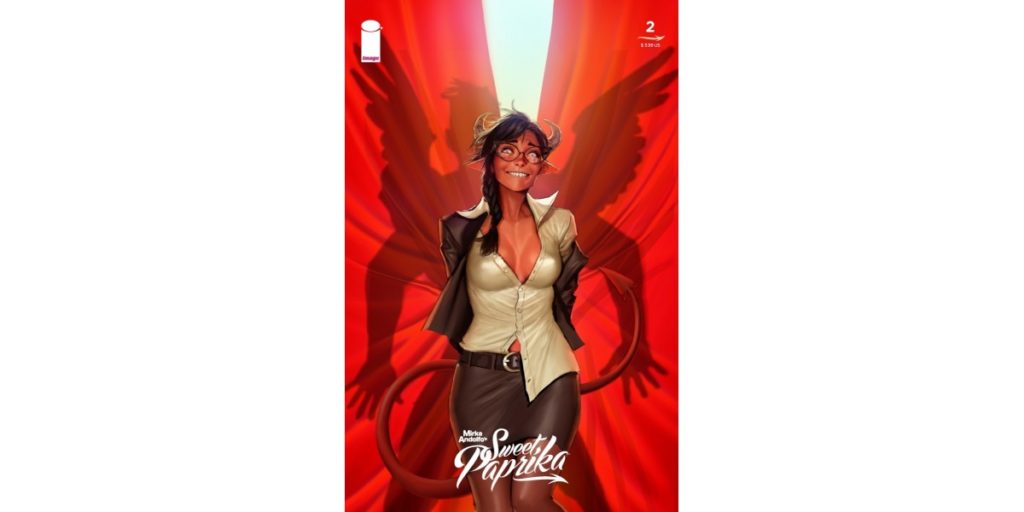
Review: SWEET PAPRIKA #2 – The Daddy Issue

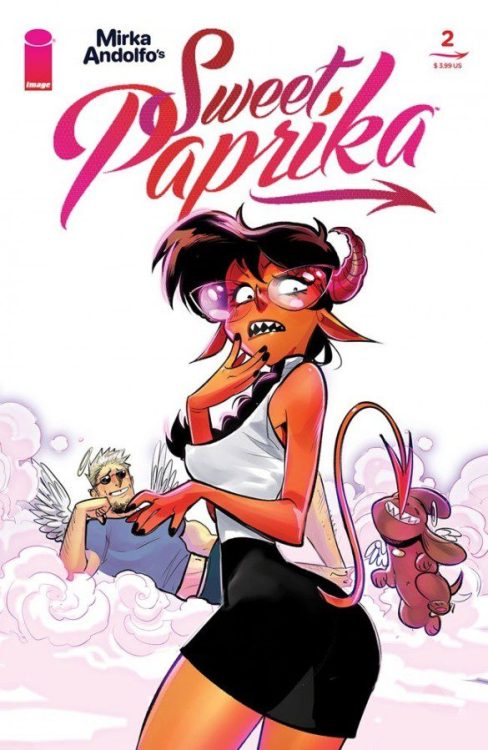
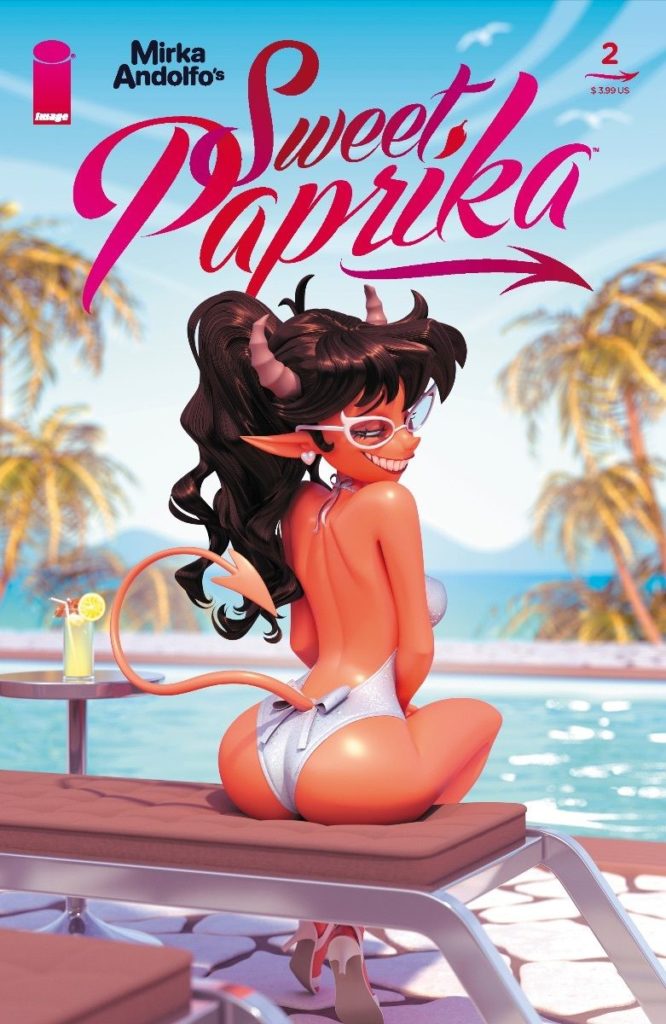
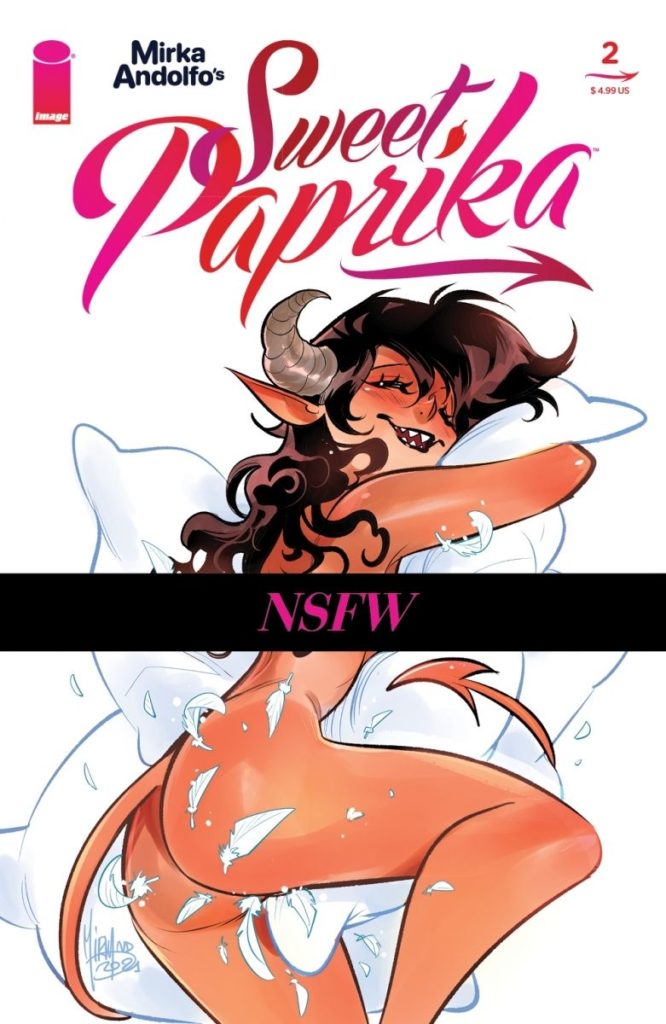
Creator Mirka Andolfo returns with the second chapter of her newest erotic comedy series in Sweet Paprika #2. Along with colorist Simon Tessuto, letterer Fabia Amelia, and localization from Steve Orlando, this new issue maintains all the greatness of the first issue. With a deeper dive into Paprika’s traumas and more great raunchy hijinks, this visually stunning and hilarious comic nails the landing for a second time around.

“Paprika is living a difficult situation brought on by her father’s illness and the complex work situation that awaits her. It’s the only kind of business she’s not really able to handle: a dinner where being dynamic, kind, and relaxed is just as important as being competent. But there is also another reason why the young and skilled professional is in trouble: she doesn’t want to see one of the guests again…”

Writing & Plot

Sweet Paprika #2 continues to blend deep personal storytelling with goofy erotic comedy, and it absolutely nails it. Mirka Andolfo continues to tell a relatable story while keeping the overall tone fantastical and hilarious. This chapter focuses more on Paprika’s troubled romantic past, as well as the source of her trauma and apprehension towards sex. She then delves more into how these problems can affect every other aspect of a person’s life. Andolfo keeps her heavier subject matter light by dotting it with more absurd, humorous moments. Her character work is compelling, and her use of raunchy and often silly humor is still great.

Dill, our package delivering (*wink wink*) angel is the source of most of the comic’s erotic moments and ridiculous comedy. His time in the comic may be a bit too in-your-face for for some, but I find that he fits the overall tone well. He also functions as a great foil for Paprika. I also have to note Steve Orlando’s work here on localization. He does a fantastic job fitting Andolfo’s words to suit English-speaking readers while keeping everything she wants to tell. The charming humor is aided by Andolfo’s quirky dialogue and fantastic timing and pacing. All of the scripted storytelling aspects mesh together fantastically for this smart and funny second issue.

Art Direction

Of course, what really draws readers to Sweet Paprika #2 is most likely Mirka Andolfo’s visuals. It’s for good reason, as her work here sees the already incredible artist in top form. Her highly animated and ultra-expressive characters are a joy to see on every panel. Every character’s design is unique, making it near-impossible to mix up even minor characters. The almost cartoonish style makes the more fantastical scenes and designs a slight surprise, but one that flawlessly fits the world. Her panel design stays unconventional as well. Characters often break out of panels in the more over-the-top moments before the structure returns to “normal.” Mind you, normal here is constantly shifting panel and page structures that still flow naturally. Her detail work is fantastic as well, with elements such as outfits and environmental design are drawn with a keen eye.

The colors from Simon Tessuto perfectly fill in Andolfo’s work. Much of what keeps Paprika so lively is the energetic palette he utilizes for this comic. Every panel is bright and lively, with perfectly reflected light on every surface. Paprika and all of demon-kind shine with a vibrant multitude of reds. The multitude of colors on clothing capture the varied walks of life different beings (angels and demons alike) in this book. Every page of this comic is alive with rich energy provided by Tessuto’s work. The lettering from Fabia Amelia is highly dynamic and surprising as well. Her classy modern font shifts at all times, often exploding in line with the characters. Visually, Paprika is equal parts funhouse attraction and comic-book visual mastery. This is easily one of the most fantastic feats of visual art on shelves right now.

Verdict

Sweet Paprika #2 is a deceptively deep and all-around stellar second issue. Mirka Andolfo’s script is both heartfelt and hilarious, with a focus on past traumas as well as the usual sexy hijinks. Her art colored by Simon Tessuto is beyond stunning, full of a life and vibrancy seldom seen. Be sure to grab this issue when it hits shelves on 9-1!

Monkeys Fighting Robots Youtube

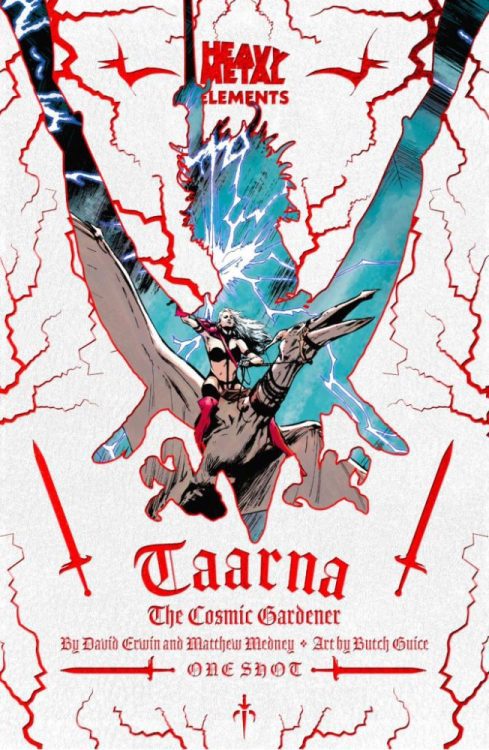
Heavy Metal Exclusive Preview: TAARNA: THE COSMIC GARDENER

taarna cosmic gardener exclusive preview heavy metal comics

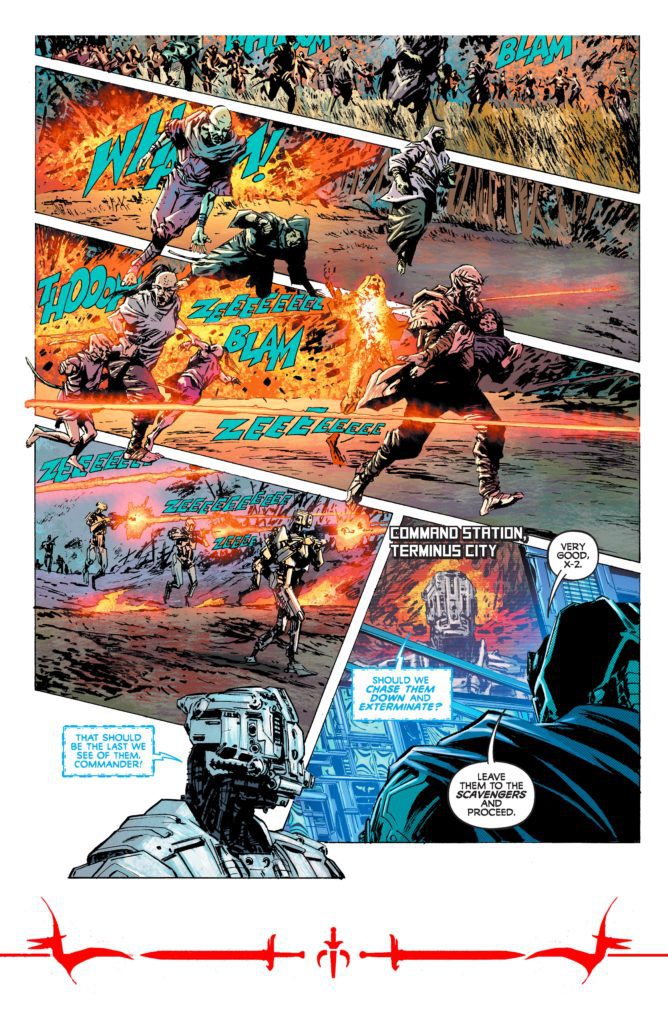
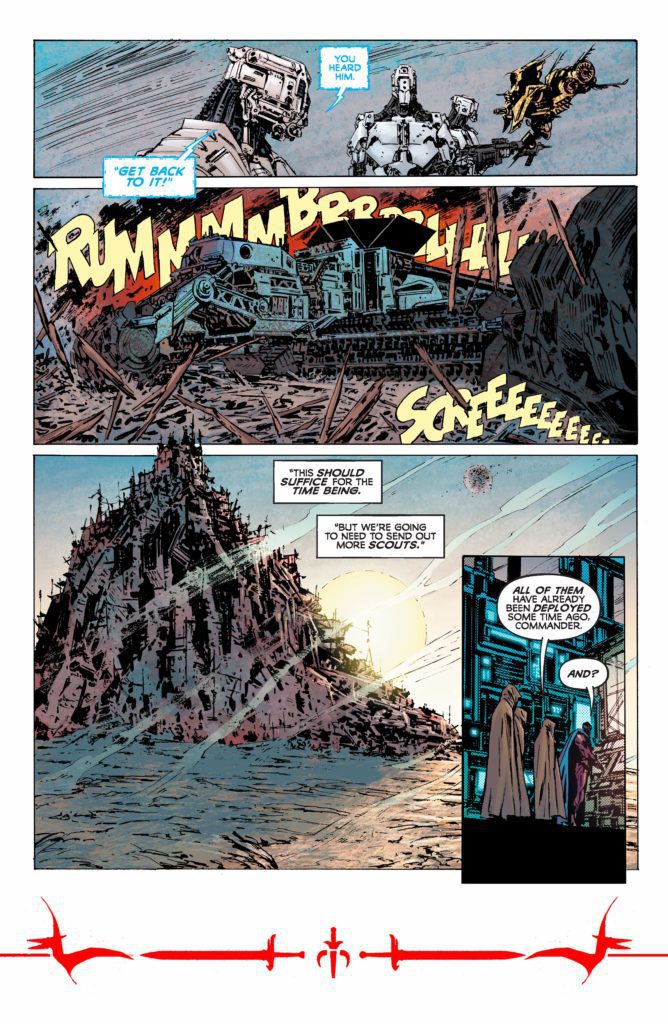
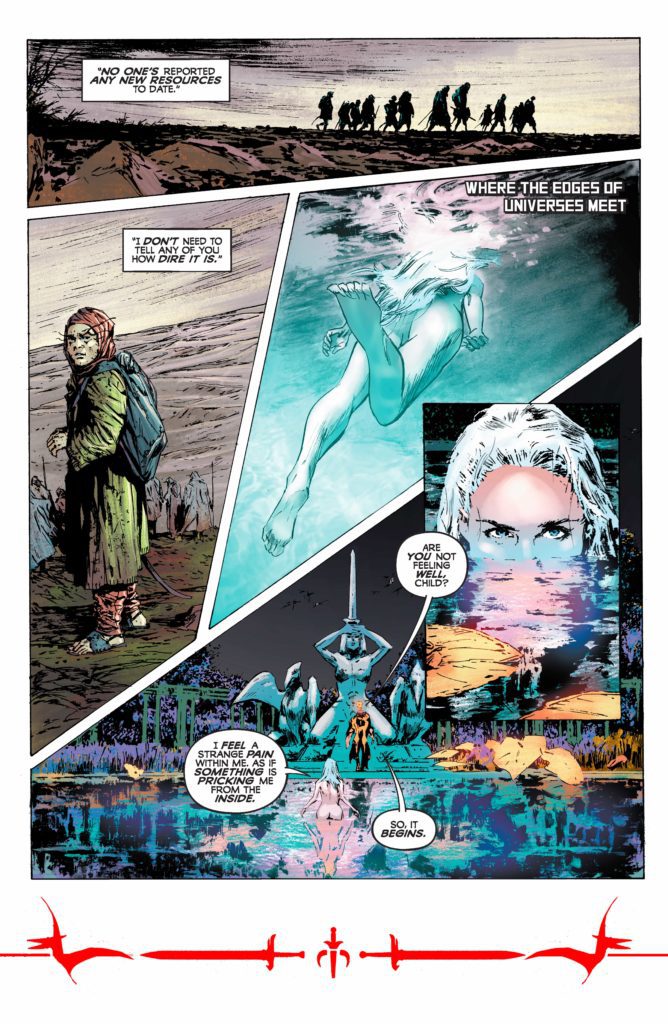
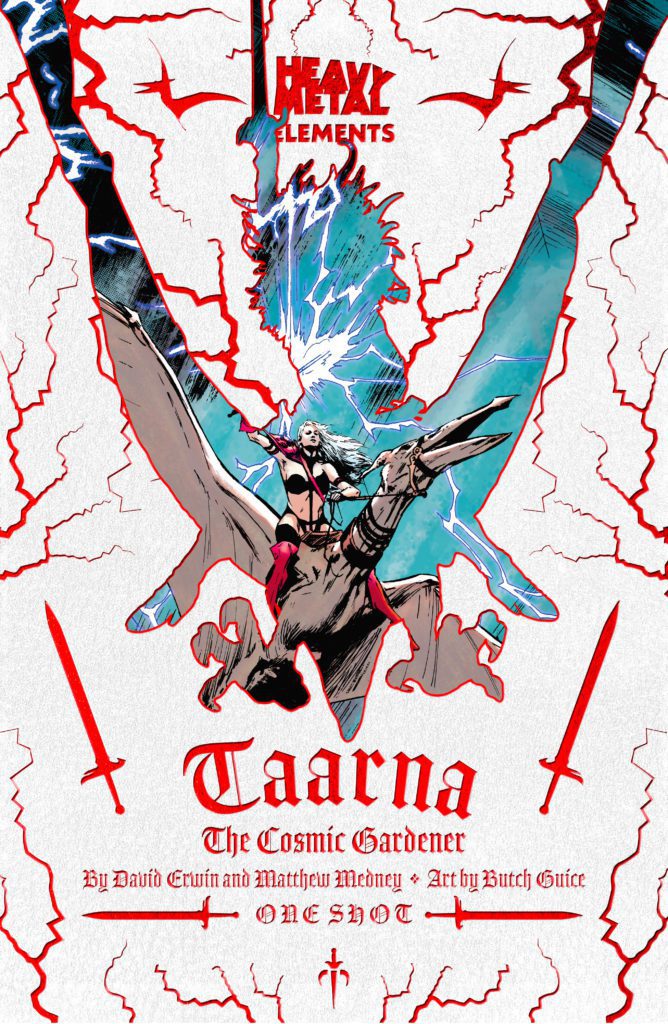
TAARNA: THE COSMIC GARDENER is available at your local comic shop September 1st, but thanks to Heavy Metal, Monkeys Fighting Robots has an exclusive three-page preview for you!

About the issue:
13.8 billion years ago, the universe burst into existence. Each universe has one guardian that is responsible for protecting and nurturing its growth and health. From the death of the last Taarakian and a collapsed universe, Taarna was born. Heavy Metal’s flagship character from the animated film returns in a new series of cosmic mystery and battles throughout the multiverse. Originally published in Heavy Metal Magazine, Taarna: The Cosmic Gardener follows Taarna’s journey from her past into a bold new direction. This issue also contains “Evolution of a Scene,” featuring drawings and commentary by Butch Guice.

TAARNA: THE COSMIC GARDENER is a one-shot by writers David Erwin & Matthew Medney and artist Butch Guice, with colors by Chris Sotomayor, and letters by Marshall Dillon.

Check out the TAARNA: THE COSMIC GARDENER preview below:

taarna cosmic gardener exclusive preview heavy metal comics

taarna cosmic gardener exclusive preview heavy metal comics

taarna cosmic gardener exclusive preview heavy metal comics

taarna cosmic gardener exclusive preview heavy metal comics

taarna cosmic gardener exclusive preview heavy metal comics


What’s your favorite Taarna story? Sound off in the comments below!

Monkeys Fighting Robots Youtube

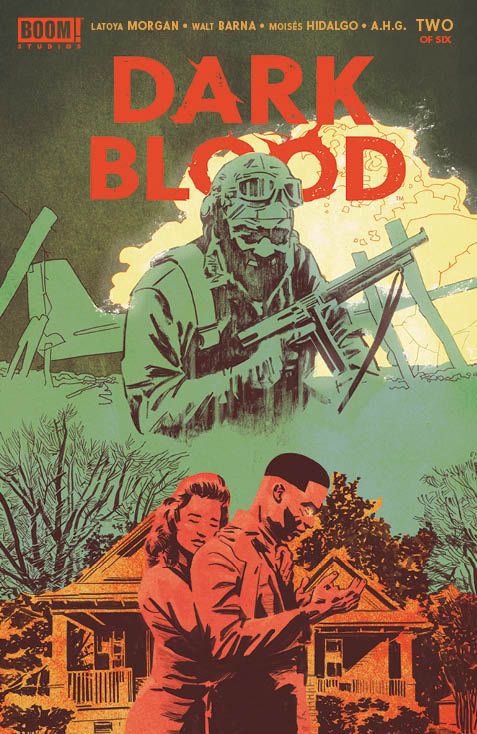
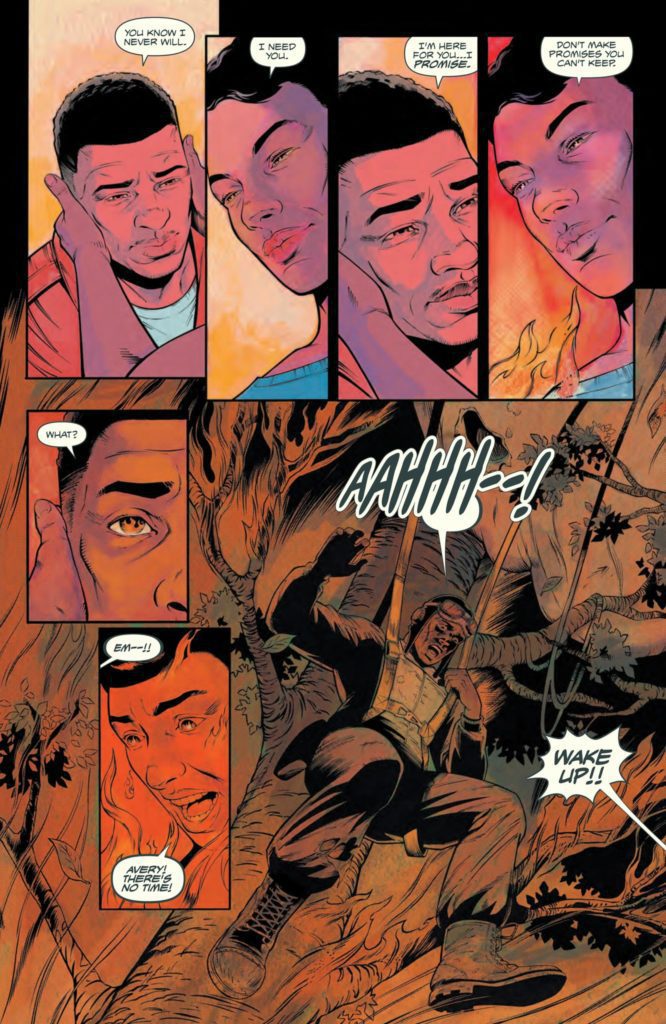
Review: Surviving The Hostile Homeland In DARK BLOOD #2

Writer Latoya Morgan and artist Walt Barna return with an emotionally powerful new chapter with Dark Blood #2. Morgan crafts a script full of both loving hope and ever-frustrating injustice. Guest artist Moises Hidalgo, along with colorist A.H.G. and letters from Andworld Design, all help Barna create a setting and characters that pull the reader into the story with ease. This is a second issue that carefully builds towards the inevitable super heroics, and it makes this story increasingly engaging.

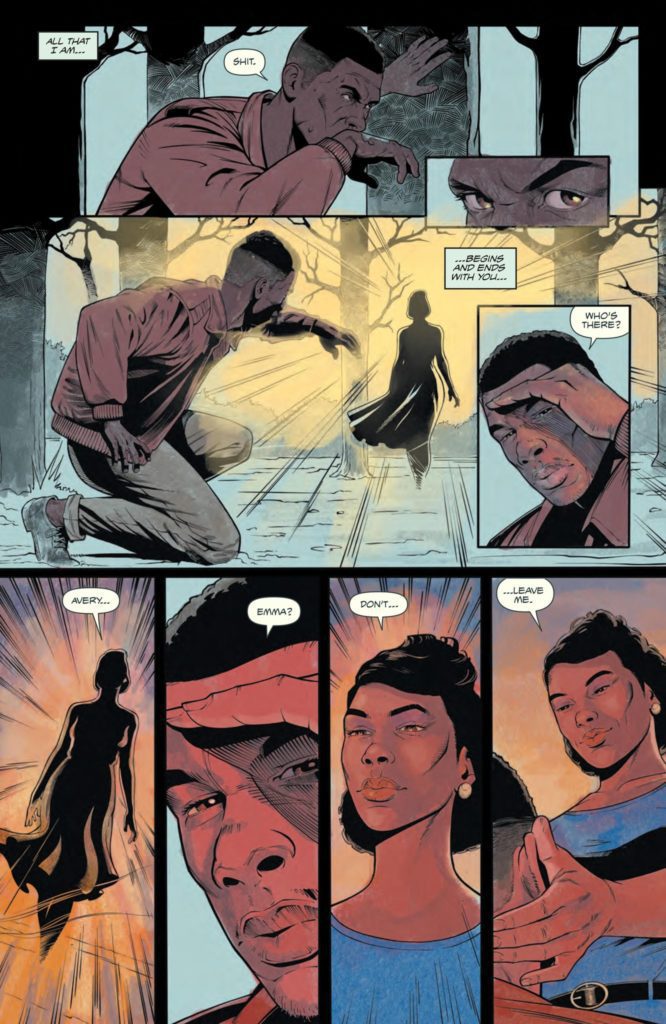
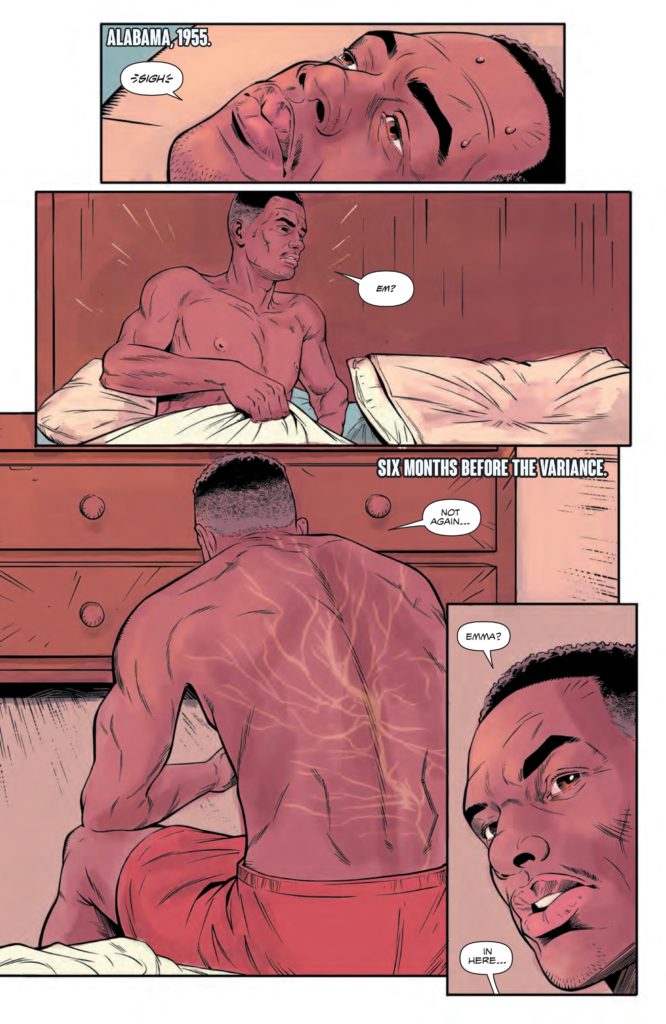
“Does even the kindness of strangers come with a cost? Avery has adjusted to his post WWII life in Alabama but when an altercation with some local boys leaves him hurt, an unlikely bystander steps in. And while Carlisle, a white university doctor, not only offers Avery immediate first aid but free ongoing medical care… nothing is truly free, not even a stranger’s kindness.”

Writing & Plot

Writer Latoya Morgan makes the brave choice to be deliberately methodical in Dark Blood #2. When I say brave I’m remarking on the fact that this entire second chapter is a big flashback. Here we get to see Avery living with his family and witnessing his experiences in the segregated South before his powers manifest. Morgan lays down a strong emotional base for us to relate to Avery that also re-contextualize his struggles as a black man and a war veteran. Witnessing him live with and work for his family’s happiness makes us care for this character even more than we may already have. His wife and daughter are written wonderfully as well. The trio all read and feel like real human beings with quirks and numerous qualities. Morgan’s decision to use a whole issue for backstory pays off in spades with a beautiful and emotional second chapter.

Art Direction

Walt Barna, along with guest artist Moises Hidalgo, capture intimate character moments beautifully well in Dark Blood  #2. The two artists get to focus almost entirely on characterization through expression in this issue. Most of the art is animating characters as they react to one another, both loving families and hostile neighbors. Barna captures the emotional range perfectly. There are picturesque moments of sweetness, dotted by realistic worry between Avery and his wife. These are juxtaposed by faces twisted in malicious malice, reminders of Avery and his family’s reality. The environmental art is stellar as well. Barna nails the sense of place and time, recreating 1950’s Alabama country and small towns with genuine detail. Hidalgo’s guest art is noticeably different from Barna’s, but only slightly so. The guest artist maintains the book’s visual style without missing a beat.

I dare attribute the clean transition between the two pencilers to the colors from A.H.G. The colorist uses a softer palette of mottled greens and browns blended with warm interior colors. The visual feel these colors provide sells the time period and tone of the scenes. The mud roads of rural Alabama look hot and sticky. Avery and his family’s home is bathed in warm light. The restaurant Avery works at is colored by harsh fluorescent light. A.H.G’s work here is both practical and tonally rich. The lettering from Andworld Design is clean and spot-on in terms of crafting dialogue tone. The modern-style font changes size and italics to match a scene’s tone very naturally. This is a stellar comic on the visual end.

Verdict

Dark Blood #1 is a bold and emotional second chapter for this uniquely built comic series. Latoya Morgan scripts an issue that focuses on us getting to know Avery as a family man and gets us to know him for what he fights for. The visuals from Walt Barna, Moises Hidalgo, and A.H.G. are well-animated and tonally rich. Be sure to grab this issue when it hits shelves on 8-26!

Monkeys Fighting Robots Youtube

Marvel Comics Exclusive Preview: NEW MUTANTS #21

marvel comics exclusive preview new mutants

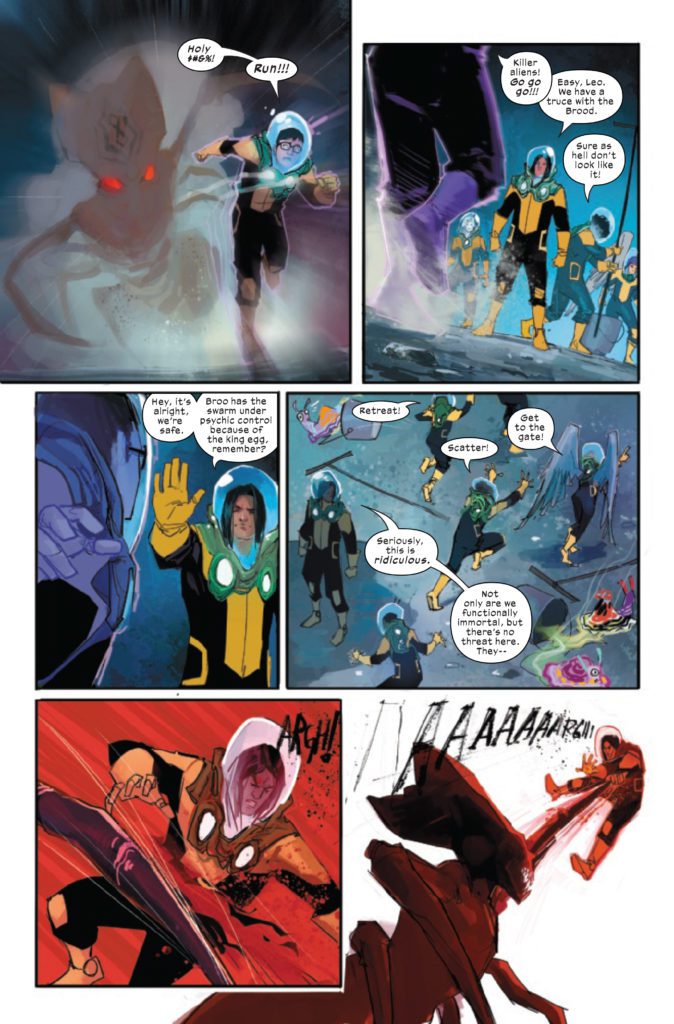
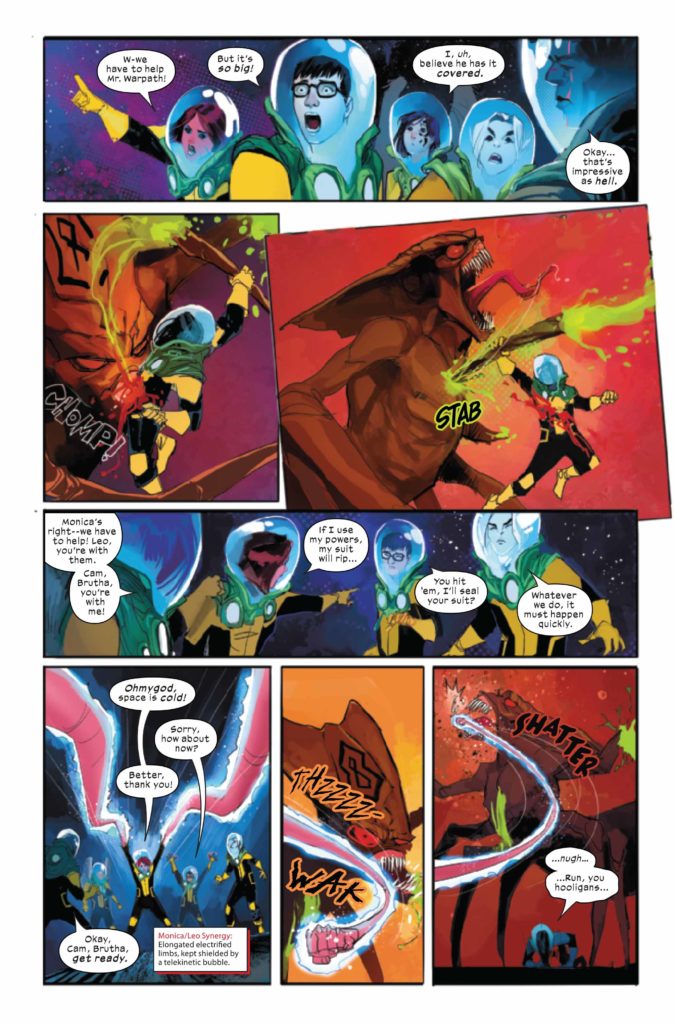
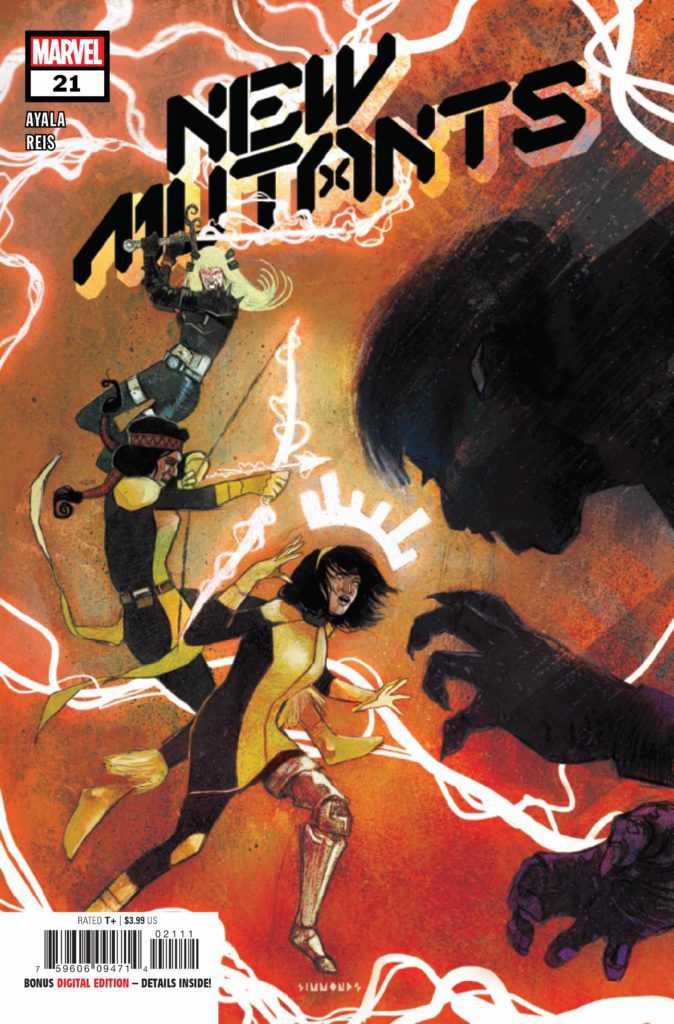
NEW MUTANTS #21 hits your local comic book store September 1st, but thanks to Marvel Comics, Monkeys Fighting Robots has an exclusive early preview for you.

About the issue:
MAYHEM ON THE MOON! There’s something creeping in the shadows of the Summer House…and the NEW MUTANTS are about to come face-to-face with it. And back on Earth, the team is turning against itself as they gear up for their biggest battle yet.

The issue is by writer Vita Ayala and artist Rod Reis, with letters by Travis Lanham and Joe Caramagna. The cover is by Martin Simmonds.

Check out the NEW MUTANTS #21 preview below:

marvel comics exclusive preview new mutants

marvel comics exclusive preview new mutants

marvel comics exclusive preview new mutants


Are you reading NEW MUTANTS? Sound off in the comments below!

Monkeys Fighting Robots Youtube