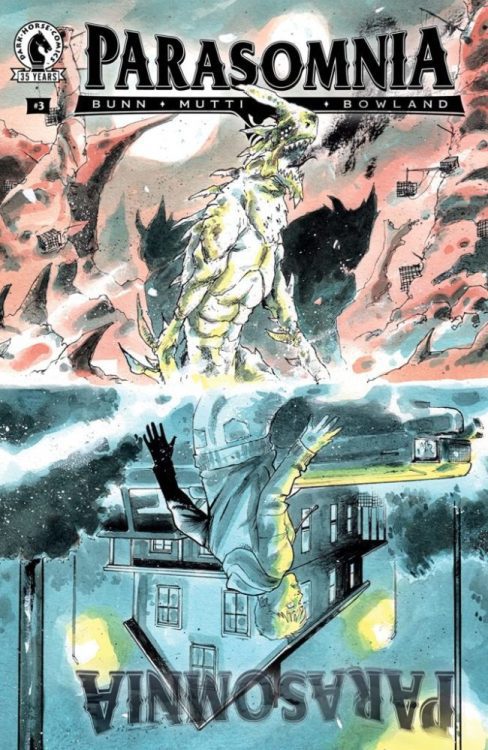
Writer Cullen Bunn and artist Andrea Mutti, along with letterer Simon Bowland, bring us the penultimate chapter of their supernatural thriller. Parasomnia #3 is a well-paced and suspenseful comic, even though it’s plot is still a bit fuzzy. With engaging writing and atmospheric, gorgeous visuals, this series still proves to be a slow burn – a bold choice for only a four-issue series.
“In a twisted dream world, a nameless stranger battles nightmares in his hunt for his missing son–while in the waking world, the boy’s parents find their lives falling apart. As the search for his son in his dreams carries on a bizarre plot is uncovered of children being used as bait for monsters.”
Writing & Plot
Cullen Bunn (Harrow County, Bone Parrish) cleans up some of the prior’s issues problems in Parasomnia #3. The dialogue is more focused on the task at hand, opening up only at character’s distinct realizations. The last issue’s blocky pacing and excessive exposition are replaced by much more alluring scripting. The discoveries in this comic are tense and unnerving, just what I’d expect from a Cullen Bunn comic.
As much as I like the idea behind this supernatural thriller, I can’t help but still find it’s plot to still be a bit fuzzy. The distinction between dream and reality is clear. The facts behind the missing children in the story have also been mostly stated. It’s hard to articulate what the problem is without spoiling the story. Essentially, it seems too far in for elements to still be so unclear. This is the second to last issue, and unfortunately I’m having trouble picturing this comic ending satisfactorily. Bunn is a stellar writer though, so I’m optimistic. The ingredients and much of the process thus far have been fascinating to watch come together. I just hope the final script can stick the landing.
Art Direction
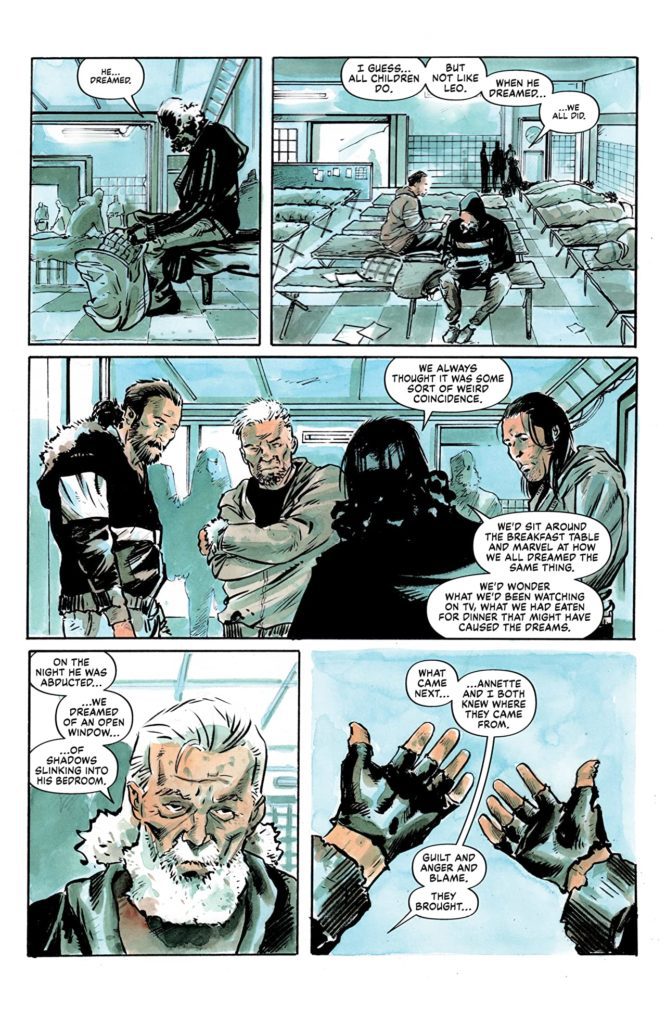
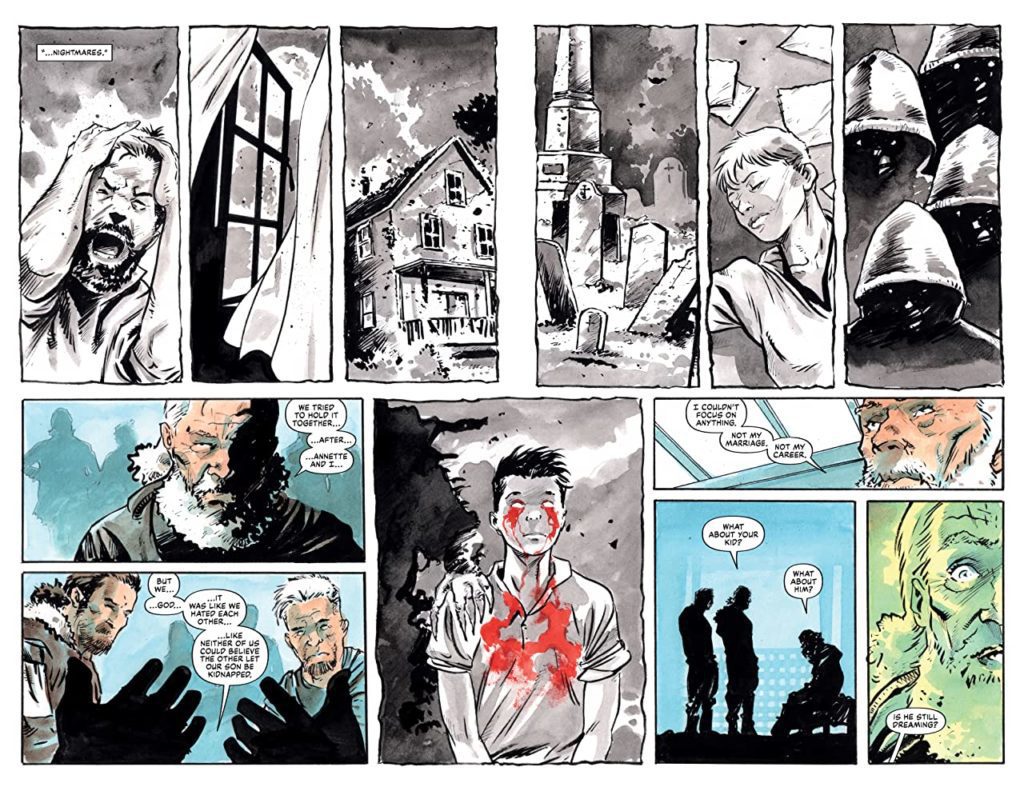
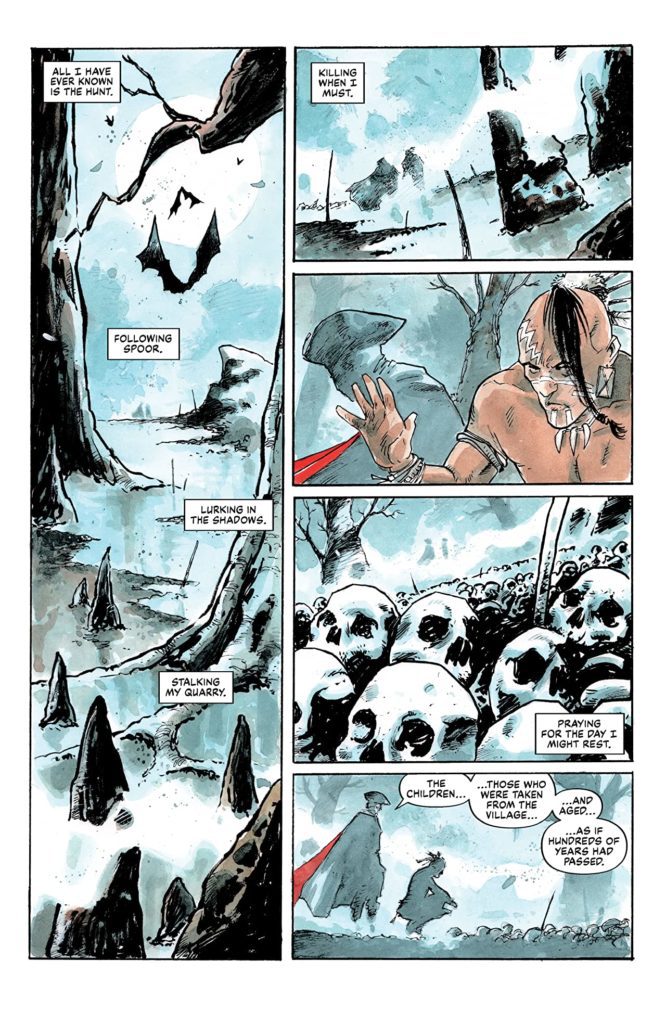
The absolute star of Parasomnia #3 is the atmospheric art of Andrea Mutti. His foggy watercolor visuals once again create the perfect nightmare-scape for this comic. Our protagonists remain mysterious and appropriately stoic. The stranger is almost entirely covered in his garments, so his expressions can only come from body language. Fortunately Mutti does a stellar job of demonstrating that emotion through posture. Small details like head tilts and shoulder level tell us where our mysterious lead is at mentally. The less mysterious human characters back in reality are drawn with great animated detail as well. We get our first look at some monsters in this issue, and they are satisfyingly creepy. They give off a slight Mignolaverse-esque feel while still being something uniquely of Mutti’s design.
Mutti’s colors once again perfectly set the tone for this story. Each page is bathed in a light, foggy hue that adds to the unnerving chill in this comic. He abstains from using any sort of traditional coloring, and instead creates entire pages with this singular vision. The lettering from Simon Bowland is solid, but doesn’t do much to stand out or enhance the experience. He uses a standard contemporary font along with some good yet slightly generic SFX lettering. Visually, Parasomnia remains a stellar atmospheric horror comic experience.
Verdict
Parasomnia #3 is an engaging issue that leaves a worrying amount of questions before the final issue. Cullen Bunn’s script is well-paced and offers more answers for this world’s lore, but still leaves some plot elements fuzzy. Andrea Mutti’s art is dense and atmospheric, putting together this supernatural thriller’s atmosphere perfectly. Be sure to grab this penultimate issue when it hits shelves on 9-1!
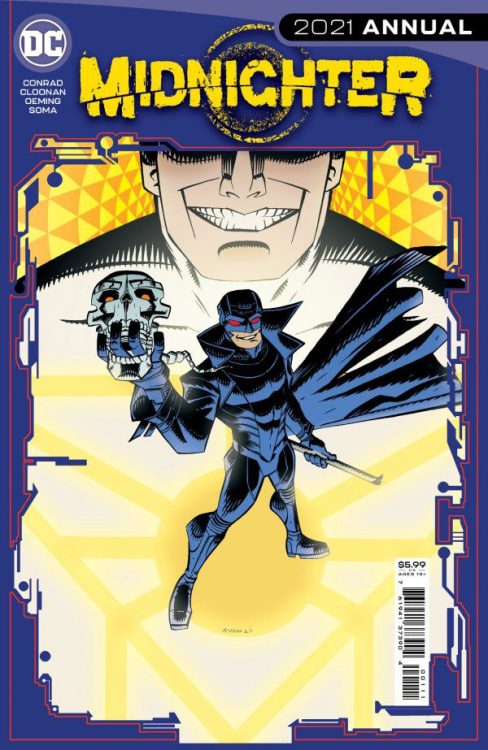
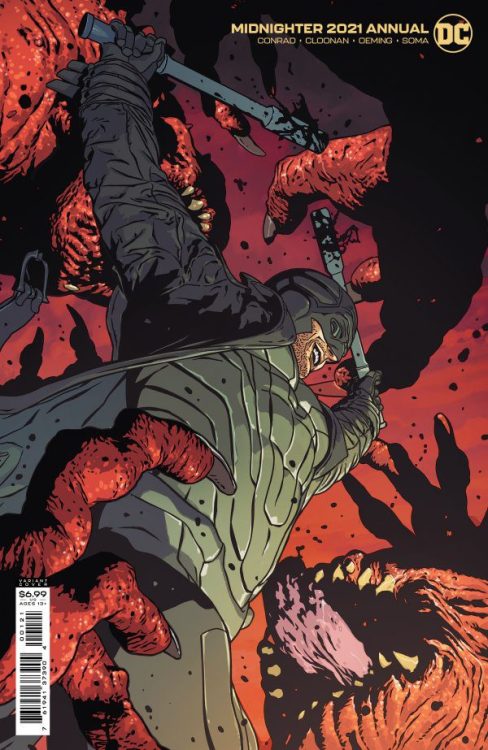
From writers Becky Cloonan and Michael W. Conrad and artist Michael Avon Oeming comes the standalone conclusion to a complex and fraught story. Midnighter Annual 2021 takes our favorite Wildstorm couple and places them within their own struggle in a complex internal and external fight. Despite being held back by a semi-confusing and formulaic script as well as oddly-fit visuals, this is still a thoroughly entertaining annual.
“Midnighter traveled into the future to help get himself out of a jam, only to swap places with his future self. Now, the Midnighter from the future finds himself trapped in a paradox, working his way back to his onetime present to swap places again. Don’t worry if you’re confused—so is he! The key to this whole thing is Andrej Trojan, the nefarious industrialist who tried using Superman’s mission on Warworld to his own end. Midnighter has been carrying Trojan’s robotic skull with him, hunting for the 2021 iteration of the man, and shutting his whole company down before any of this trouble even starts.”
Writing & Plot
Becky Cloonan and Michael W. Conrad take Midnighter Annual 2021 as an opportunity to tie off a loose end. This issue takes place after Future State: Superman and resolves plot points introduced there. It doesn’t end there though. This Annual also leads into Grant Morrison and Mikel Janin’s Superman And The Authority. While this is all cool news for fans of the DC Universe at large who have been keeping up, what does it mean for more purist Midnighter fans? Unfortunately, this comic does suffer from feeling like a small part in a larger story.
In my view, annuals and one-shots are a good opportunity to tell a single solid story. The story can of course connect to other plot events going on in the surrounding universe, but I feel that it should be an accessible single chapter. Midnighter Annual partially accomplishes this. At the very least it smooths out the “you had to be there” moments from prior books to be more palatable. It does still read like you’re walking into a room halfway through a conversation though. I have to give Cloonan and Conrad credit where it’s due. Their script manages to take some pretty off-the-wall events and sort them out to a new reader without gobs of exposition.
Any fans of Midnighter and Apollo, aka the best couple in comics, will still be pleased with this Annual. Despite its connection with other DC plot points, this still remains an entertaining comic on its own.
Art Direction
It has to be said that Michael Avon Oeming (Powers, Cave Carson Has A Cybernetic Eye) is an odd fit for Midnighter. I sincerely adore Oeming’s singular cartoony-pulp art style. His work is pure perfection on certain comics, such as Cave Carson. However, his art just doesn’t do Midnighter any justice, and vice versa. Oeming’s brand of animation and expression don’t fit the intensity of a Midnighter comic book. Even with the stereotypically silly cyborg enemies (the kind of thing Oeming excels at) the human weapon fights here, the pencils just don’t work.
This effect is unfortunately doubled down on by Taki Soma’s colors. Soma does a fantastic job filling in Oeming’s pencils with her saturated and deep palette selection. There’s an almost early 90’s Genndy Tartakovsky aesthetic to this comic thanks largely to Soma’s work here. The visuals are fantastic on their own. They just happen to be in a comic that does them no justice. Dave Sharpe’s lettering is solid work, but nothing exemplary. He uses a clean, contemporary font for dialogue and standard, unobtrusive SFX lettering. This is a great looking comic book. It just has the wrong team for this character and story.
Verdict
Midnighter Annual 2021 is a decently entertaining one-shot that suffers from its connections with other DC Comics events. Cloonan and Conrad manage to smooth over of the more obtuse references and get the gist of the story without too much exposition. However, it still feels like walking into the middle of a conversation. Oeming and Soma’s visual work is brilliant in its own right. That’s why it’s sad to say that it has been placed in the wrong comic. If you’re a diehard fan of Midnighter and Apollo, be sure to grab this Annual when it hits shelves on 8/31!
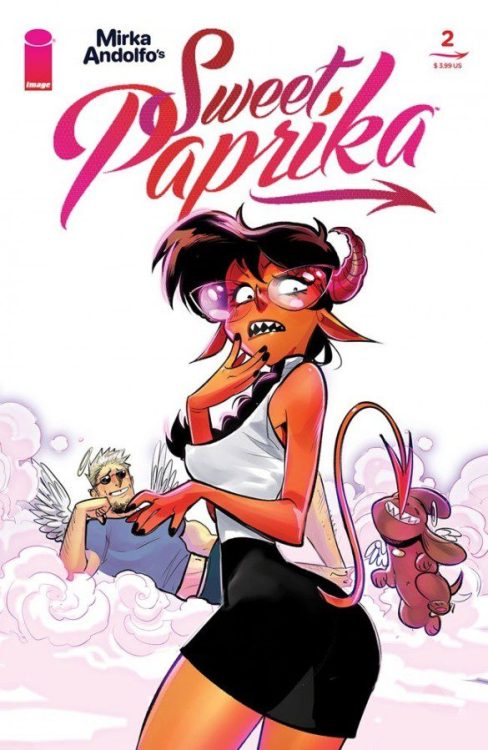
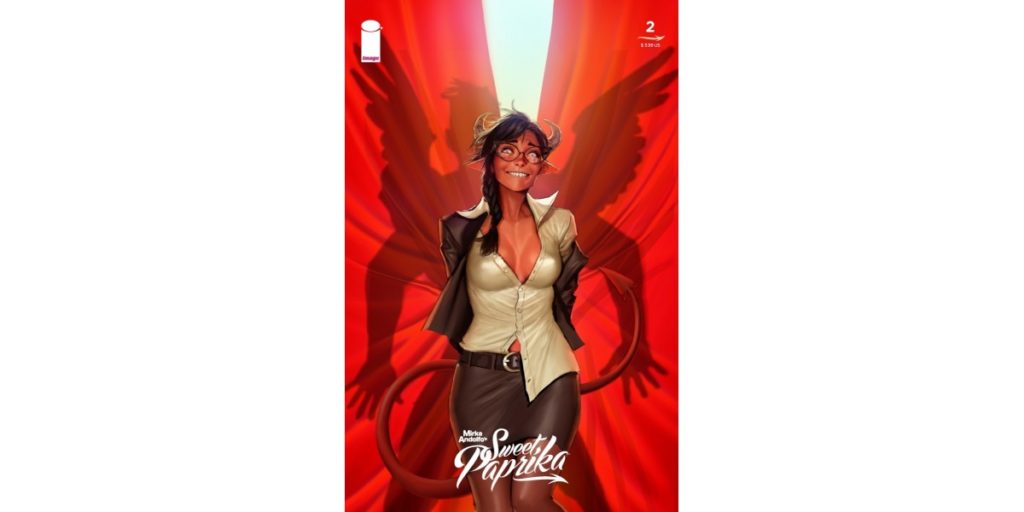
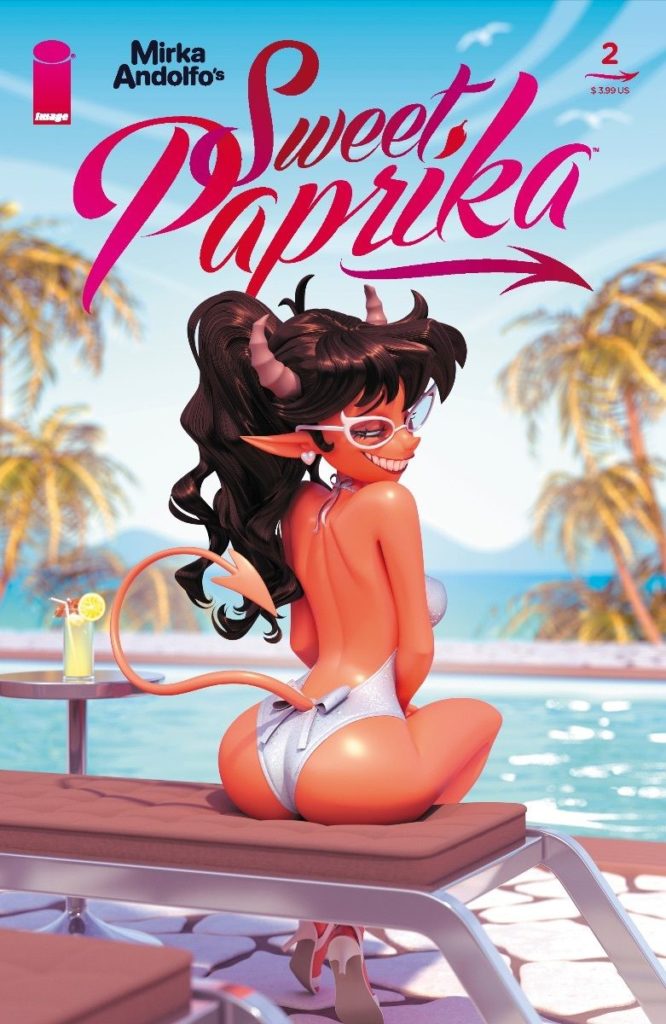
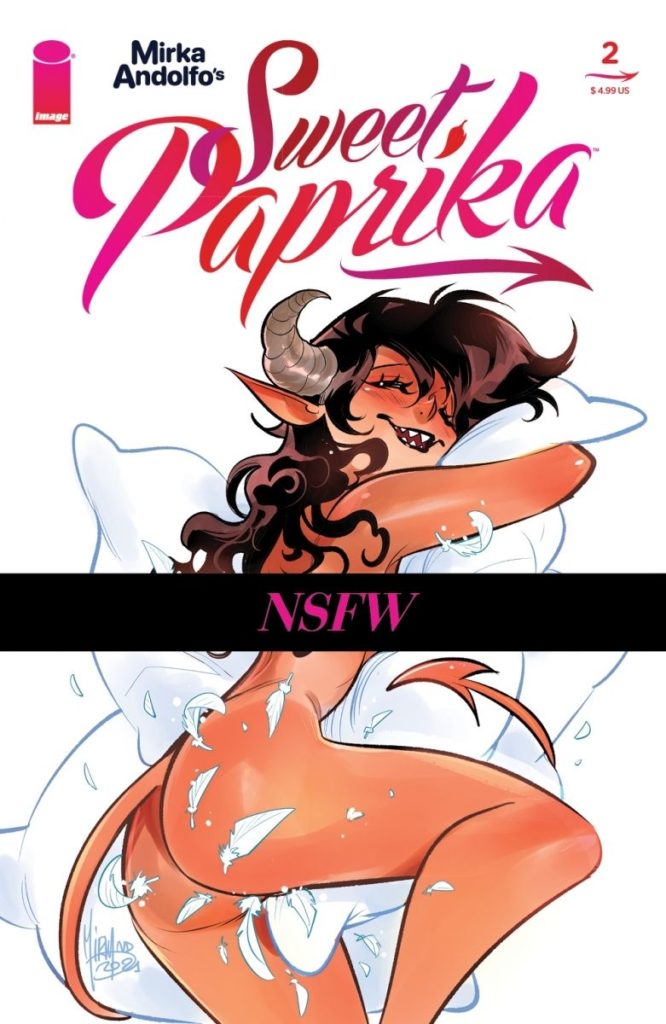
Creator Mirka Andolfo returns with the second chapter of her newest erotic comedy series in Sweet Paprika #2. Along with colorist Simon Tessuto, letterer Fabia Amelia, and localization from Steve Orlando, this new issue maintains all the greatness of the first issue. With a deeper dive into Paprika’s traumas and more great raunchy hijinks, this visually stunning and hilarious comic nails the landing for a second time around.
“Paprika is living a difficult situation brought on by her father’s illness and the complex work situation that awaits her. It’s the only kind of business she’s not really able to handle: a dinner where being dynamic, kind, and relaxed is just as important as being competent. But there is also another reason why the young and skilled professional is in trouble: she doesn’t want to see one of the guests again…”
Writing & Plot
Sweet Paprika #2 continues to blend deep personal storytelling with goofy erotic comedy, and it absolutely nails it. Mirka Andolfo continues to tell a relatable story while keeping the overall tone fantastical and hilarious. This chapter focuses more on Paprika’s troubled romantic past, as well as the source of her trauma and apprehension towards sex. She then delves more into how these problems can affect every other aspect of a person’s life. Andolfo keeps her heavier subject matter light by dotting it with more absurd, humorous moments. Her character work is compelling, and her use of raunchy and often silly humor is still great.
Dill, our package delivering (*wink wink*) angel is the source of most of the comic’s erotic moments and ridiculous comedy. His time in the comic may be a bit too in-your-face for for some, but I find that he fits the overall tone well. He also functions as a great foil for Paprika. I also have to note Steve Orlando’s work here on localization. He does a fantastic job fitting Andolfo’s words to suit English-speaking readers while keeping everything she wants to tell. The charming humor is aided by Andolfo’s quirky dialogue and fantastic timing and pacing. All of the scripted storytelling aspects mesh together fantastically for this smart and funny second issue.
Art Direction
Of course, what really draws readers to Sweet Paprika #2 is most likely Mirka Andolfo’s visuals. It’s for good reason, as her work here sees the already incredible artist in top form. Her highly animated and ultra-expressive characters are a joy to see on every panel. Every character’s design is unique, making it near-impossible to mix up even minor characters. The almost cartoonish style makes the more fantastical scenes and designs a slight surprise, but one that flawlessly fits the world. Her panel design stays unconventional as well. Characters often break out of panels in the more over-the-top moments before the structure returns to “normal.” Mind you, normal here is constantly shifting panel and page structures that still flow naturally. Her detail work is fantastic as well, with elements such as outfits and environmental design are drawn with a keen eye.
The colors from Simon Tessuto perfectly fill in Andolfo’s work. Much of what keeps Paprika so lively is the energetic palette he utilizes for this comic. Every panel is bright and lively, with perfectly reflected light on every surface. Paprika and all of demon-kind shine with a vibrant multitude of reds. The multitude of colors on clothing capture the varied walks of life different beings (angels and demons alike) in this book. Every page of this comic is alive with rich energy provided by Tessuto’s work. The lettering from Fabia Amelia is highly dynamic and surprising as well. Her classy modern font shifts at all times, often exploding in line with the characters. Visually, Paprika is equal parts funhouse attraction and comic-book visual mastery. This is easily one of the most fantastic feats of visual art on shelves right now.
Verdict
Sweet Paprika #2 is a deceptively deep and all-around stellar second issue. Mirka Andolfo’s script is both heartfelt and hilarious, with a focus on past traumas as well as the usual sexy hijinks. Her art colored by Simon Tessuto is beyond stunning, full of a life and vibrancy seldom seen. Be sure to grab this issue when it hits shelves on 9-1!
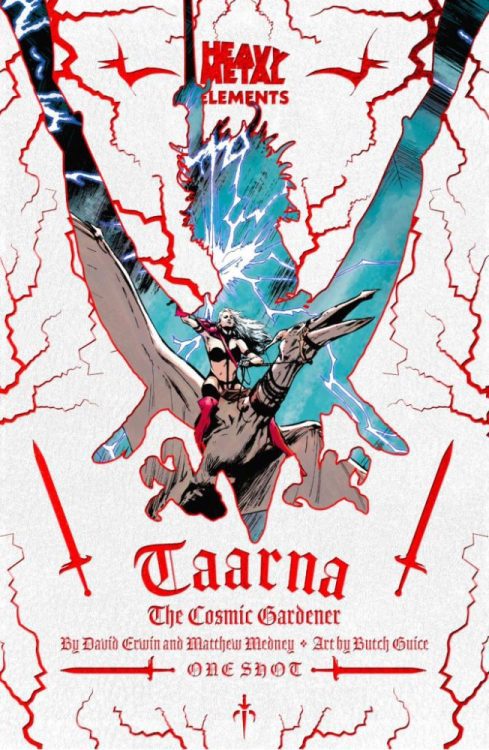
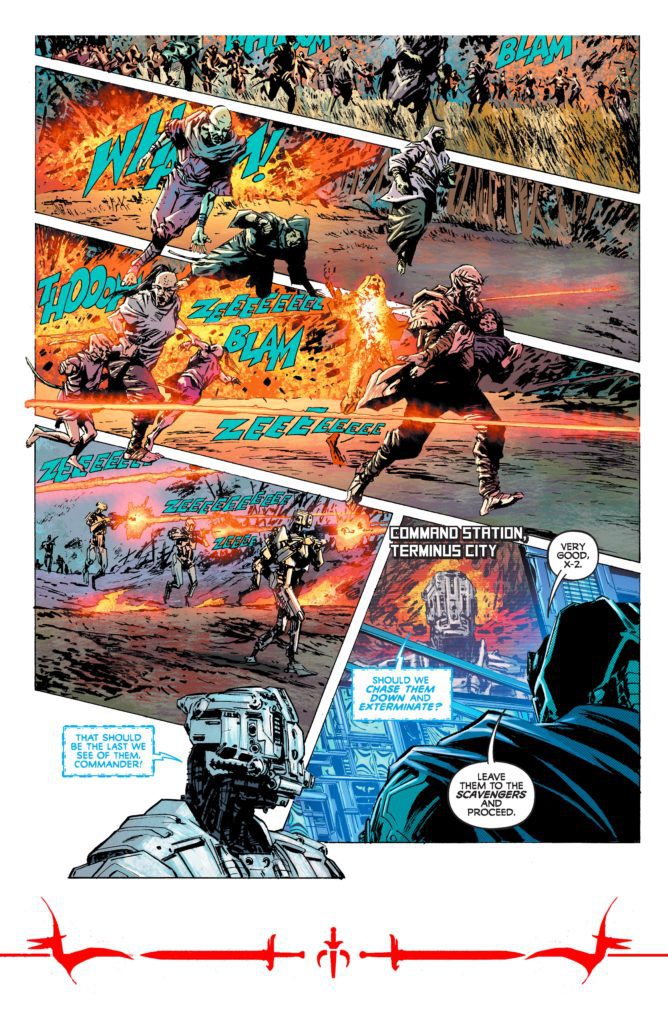
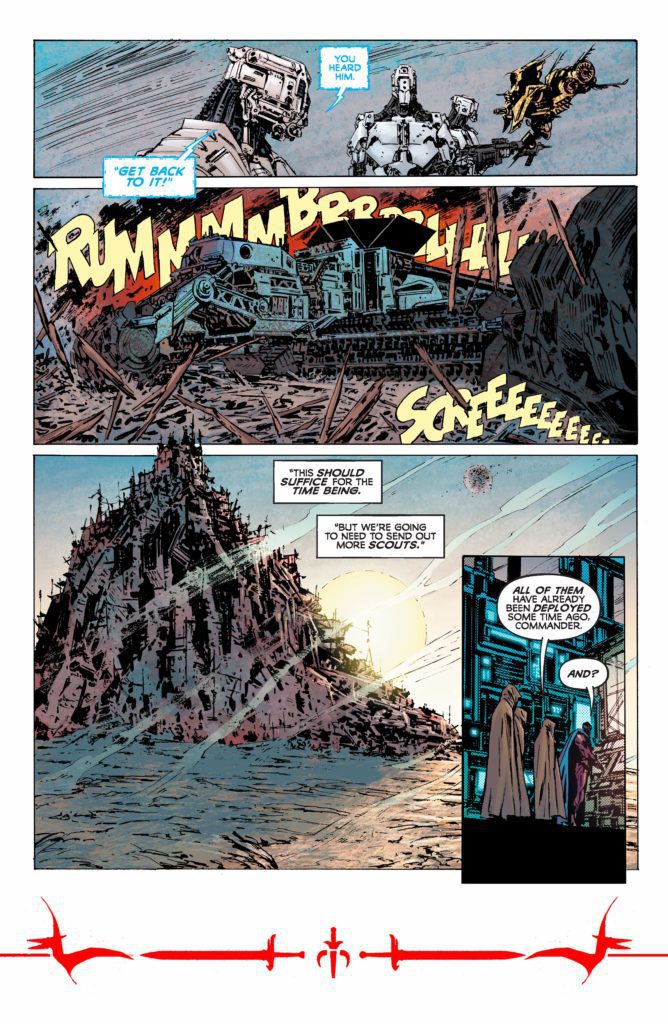
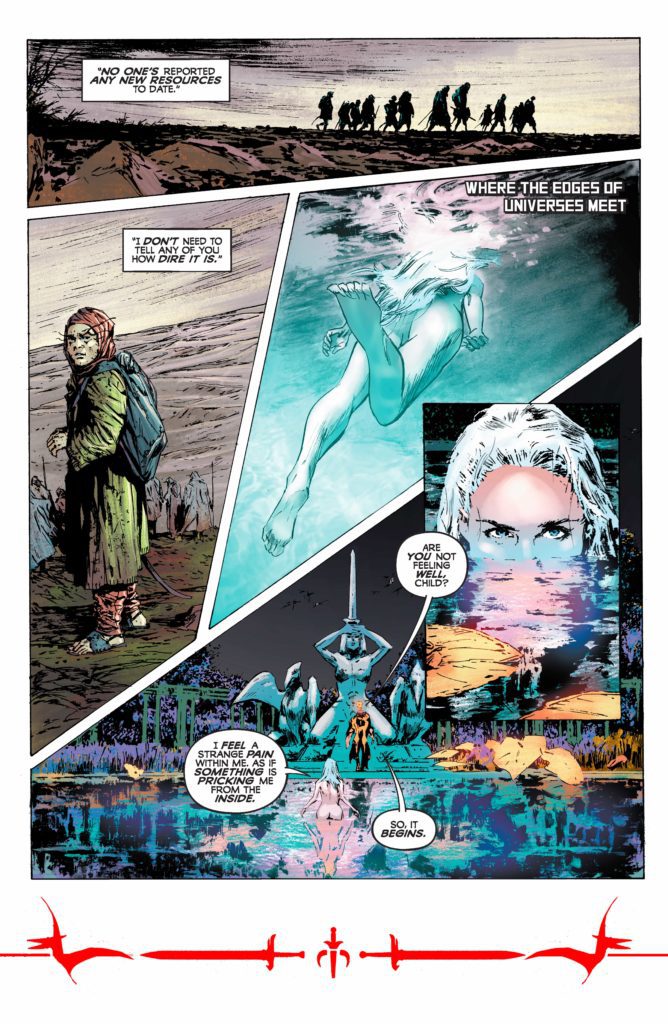
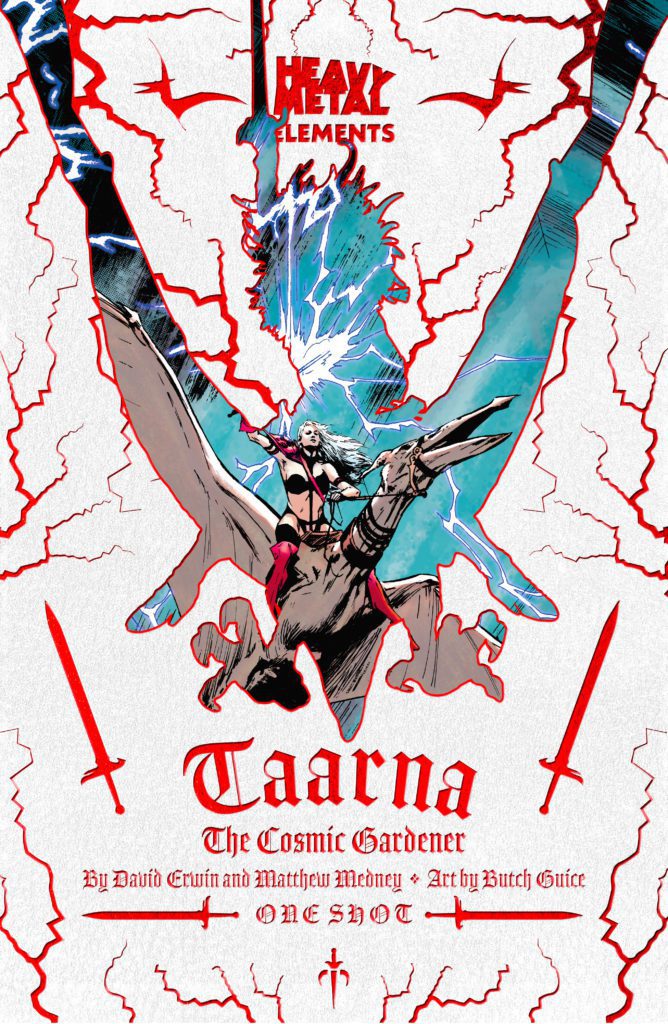
TAARNA: THE COSMIC GARDENER is available at your local comic shop September 1st, but thanks to Heavy Metal, Monkeys Fighting Robots has an exclusive three-page preview for you!
About the issue: 13.8 billion years ago, the universe burst into existence. Each universe has one guardian that is responsible for protecting and nurturing its growth and health. From the death of the last Taarakian and a collapsed universe, Taarna was born. Heavy Metal’s flagship character from the animated film returns in a new series of cosmic mystery and battles throughout the multiverse. Originally published in Heavy Metal Magazine, Taarna: The Cosmic Gardener follows Taarna’s journey from her past into a bold new direction. This issue also contains “Evolution of a Scene,” featuring drawings and commentary by Butch Guice.
TAARNA: THE COSMIC GARDENER is a one-shot by writers David Erwin & Matthew Medney and artist Butch Guice, with colors by Chris Sotomayor, and letters by Marshall Dillon.
Check out the TAARNA: THE COSMIC GARDENER preview below:
What’s your favorite Taarna story? Sound off in the comments below!
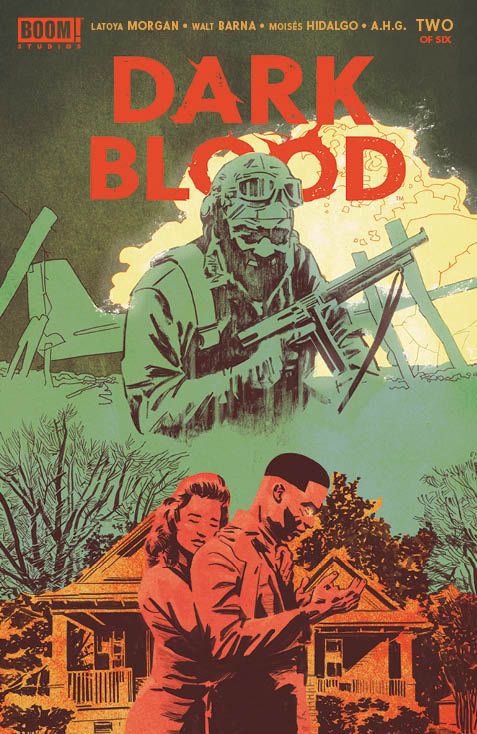
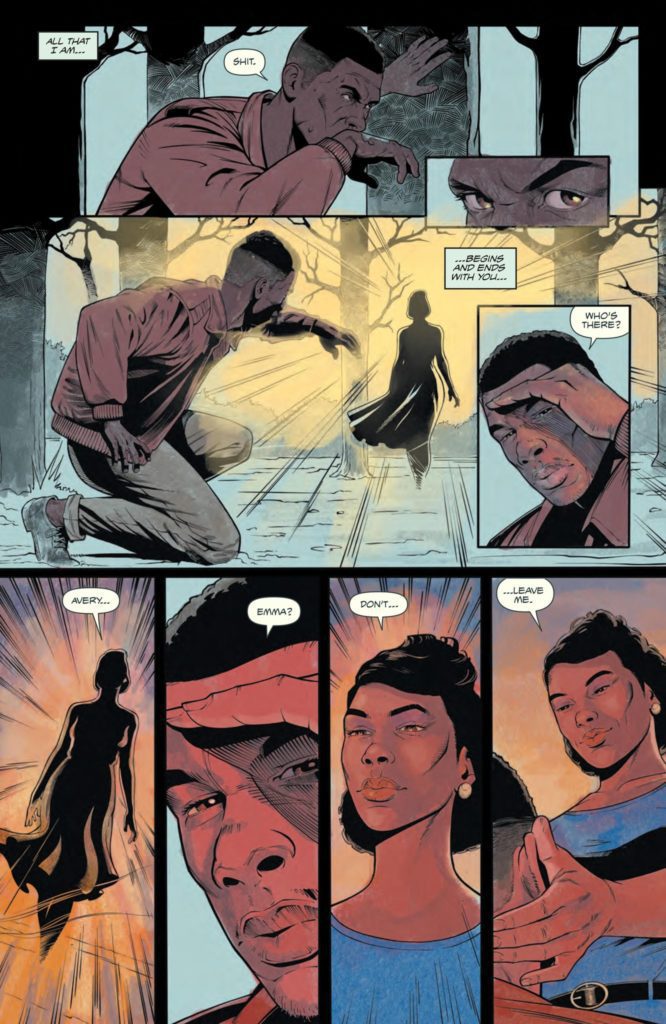
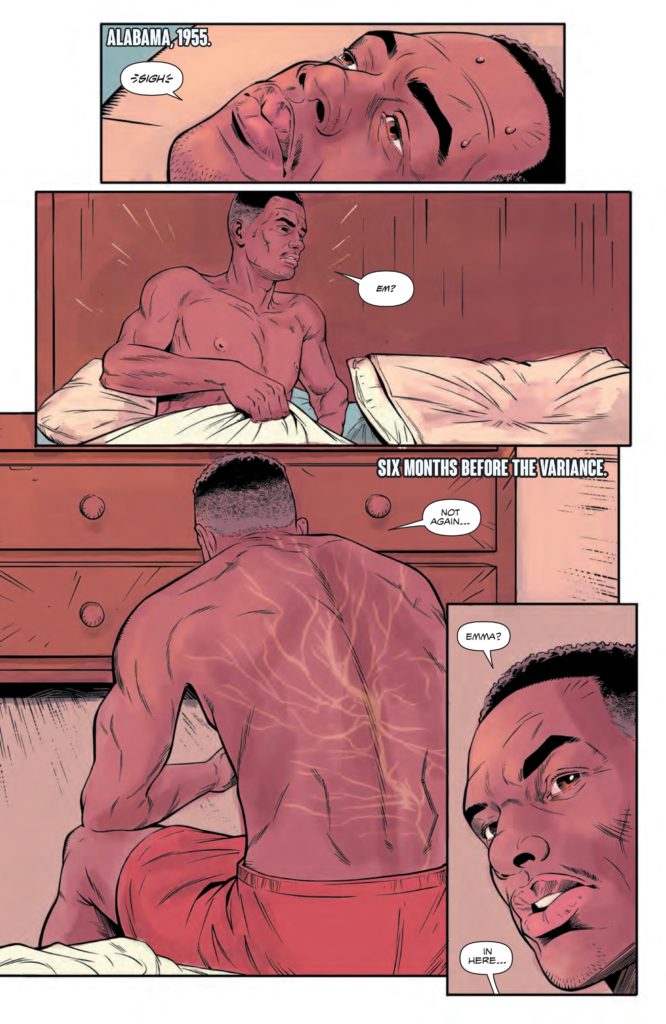
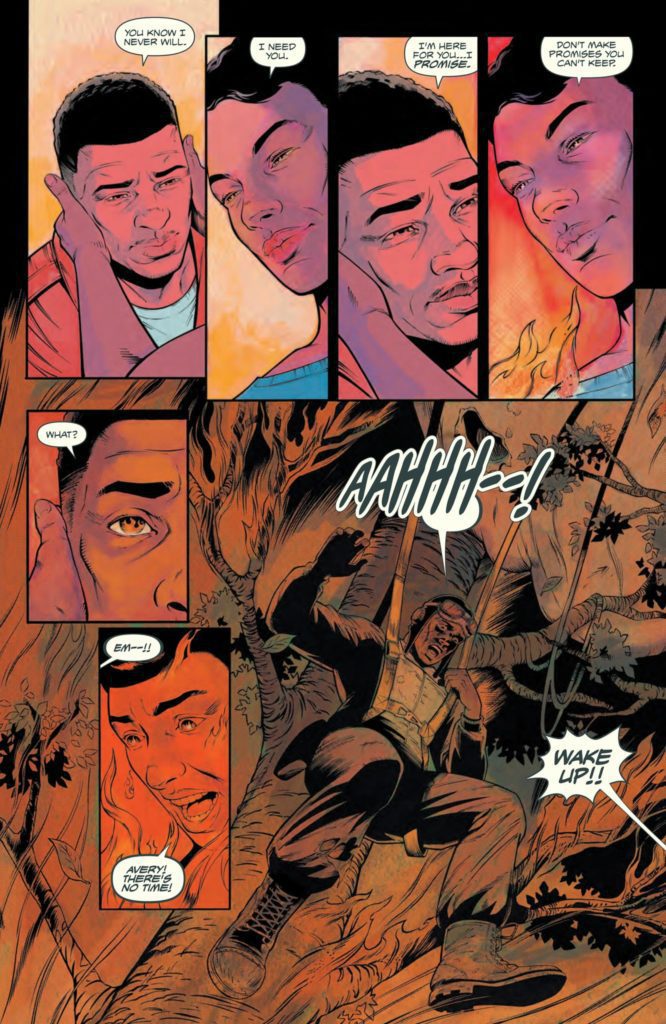
Writer Latoya Morgan and artist Walt Barna return with an emotionally powerful new chapter with Dark Blood #2. Morgan crafts a script full of both loving hope and ever-frustrating injustice. Guest artist Moises Hidalgo, along with colorist A.H.G. and letters from Andworld Design, all help Barna create a setting and characters that pull the reader into the story with ease. This is a second issue that carefully builds towards the inevitable super heroics, and it makes this story increasingly engaging.
“Does even the kindness of strangers come with a cost? Avery has adjusted to his post WWII life in Alabama but when an altercation with some local boys leaves him hurt, an unlikely bystander steps in. And while Carlisle, a white university doctor, not only offers Avery immediate first aid but free ongoing medical care… nothing is truly free, not even a stranger’s kindness.”
Writing & Plot
Writer Latoya Morgan makes the brave choice to be deliberately methodical in Dark Blood #2. When I say brave I’m remarking on the fact that this entire second chapter is a big flashback. Here we get to see Avery living with his family and witnessing his experiences in the segregated South before his powers manifest. Morgan lays down a strong emotional base for us to relate to Avery that also re-contextualize his struggles as a black man and a war veteran. Witnessing him live with and work for his family’s happiness makes us care for this character even more than we may already have. His wife and daughter are written wonderfully as well. The trio all read and feel like real human beings with quirks and numerous qualities. Morgan’s decision to use a whole issue for backstory pays off in spades with a beautiful and emotional second chapter.
Art Direction
Walt Barna, along with guest artist Moises Hidalgo, capture intimate character moments beautifully well in Dark Blood #2. The two artists get to focus almost entirely on characterization through expression in this issue. Most of the art is animating characters as they react to one another, both loving families and hostile neighbors. Barna captures the emotional range perfectly. There are picturesque moments of sweetness, dotted by realistic worry between Avery and his wife. These are juxtaposed by faces twisted in malicious malice, reminders of Avery and his family’s reality. The environmental art is stellar as well. Barna nails the sense of place and time, recreating 1950’s Alabama country and small towns with genuine detail. Hidalgo’s guest art is noticeably different from Barna’s, but only slightly so. The guest artist maintains the book’s visual style without missing a beat.
I dare attribute the clean transition between the two pencilers to the colors from A.H.G. The colorist uses a softer palette of mottled greens and browns blended with warm interior colors. The visual feel these colors provide sells the time period and tone of the scenes. The mud roads of rural Alabama look hot and sticky. Avery and his family’s home is bathed in warm light. The restaurant Avery works at is colored by harsh fluorescent light. A.H.G’s work here is both practical and tonally rich. The lettering from Andworld Design is clean and spot-on in terms of crafting dialogue tone. The modern-style font changes size and italics to match a scene’s tone very naturally. This is a stellar comic on the visual end.
Verdict
Dark Blood #1 is a bold and emotional second chapter for this uniquely built comic series. Latoya Morgan scripts an issue that focuses on us getting to know Avery as a family man and gets us to know him for what he fights for. The visuals from Walt Barna, Moises Hidalgo, and A.H.G. are well-animated and tonally rich. Be sure to grab this issue when it hits shelves on 8-26!
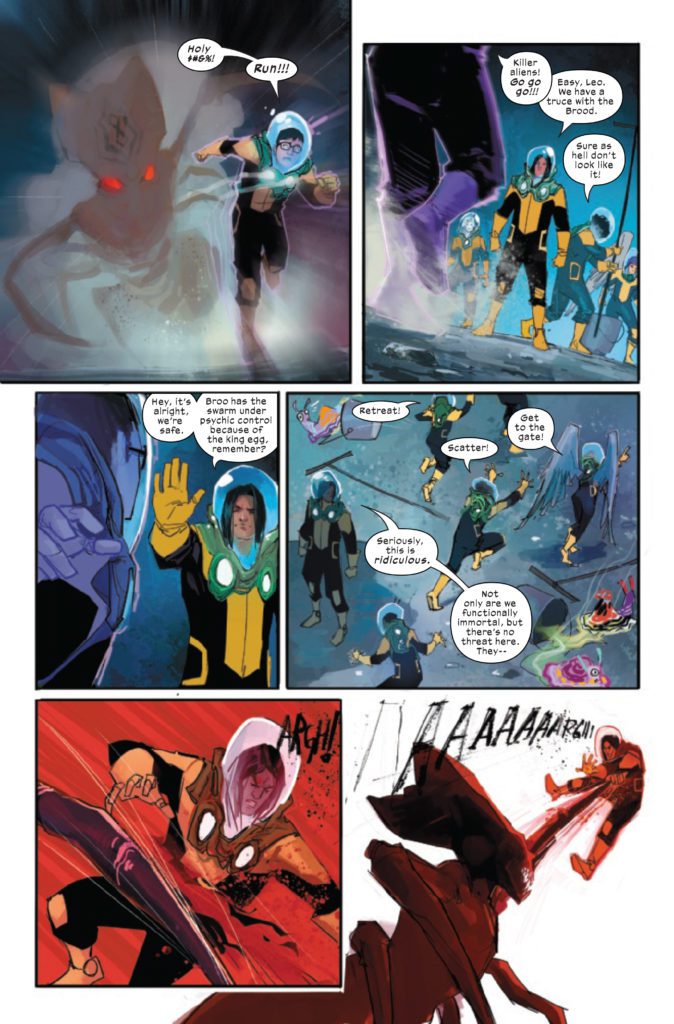
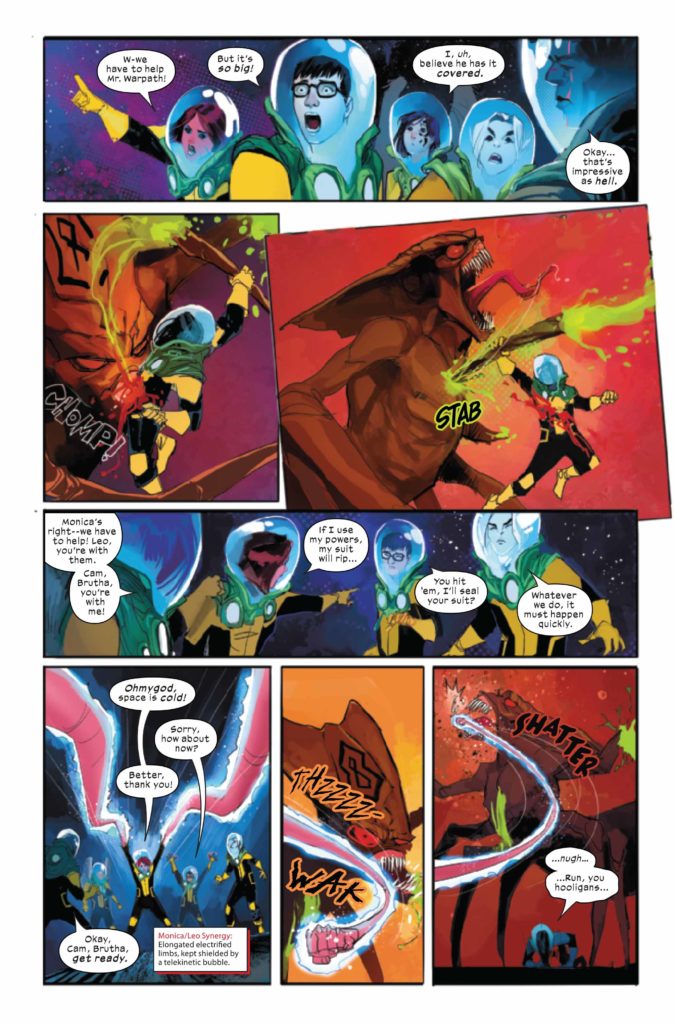
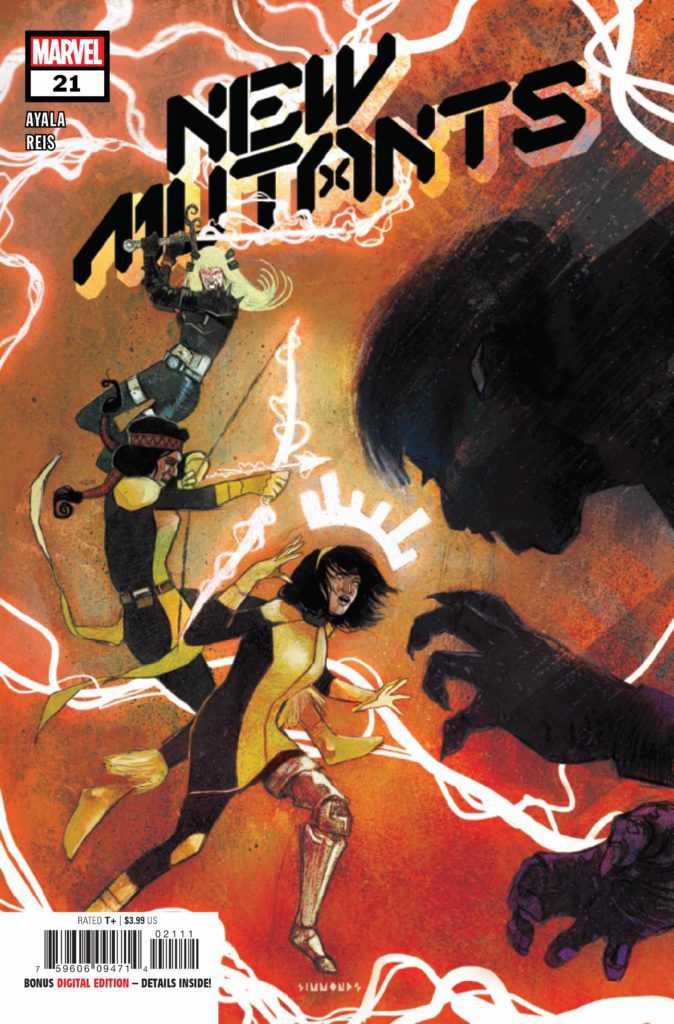
NEW MUTANTS #21 hits your local comic book store September 1st, but thanks to Marvel Comics, Monkeys Fighting Robots has an exclusive early preview for you.
About the issue: MAYHEM ON THE MOON! There’s something creeping in the shadows of the Summer House…and the NEW MUTANTS are about to come face-to-face with it. And back on Earth, the team is turning against itself as they gear up for their biggest battle yet.
The issue is by writer Vita Ayala and artist Rod Reis, with letters by Travis Lanham and Joe Caramagna. The cover is by Martin Simmonds.
Check out the NEW MUTANTS #21 preview below:
Are you reading NEW MUTANTS? Sound off in the comments below!
Welcome to Self-Published Spotlight, a regular interview column where I will be highlighting self-published comics and the creators and small print publishers who make them.
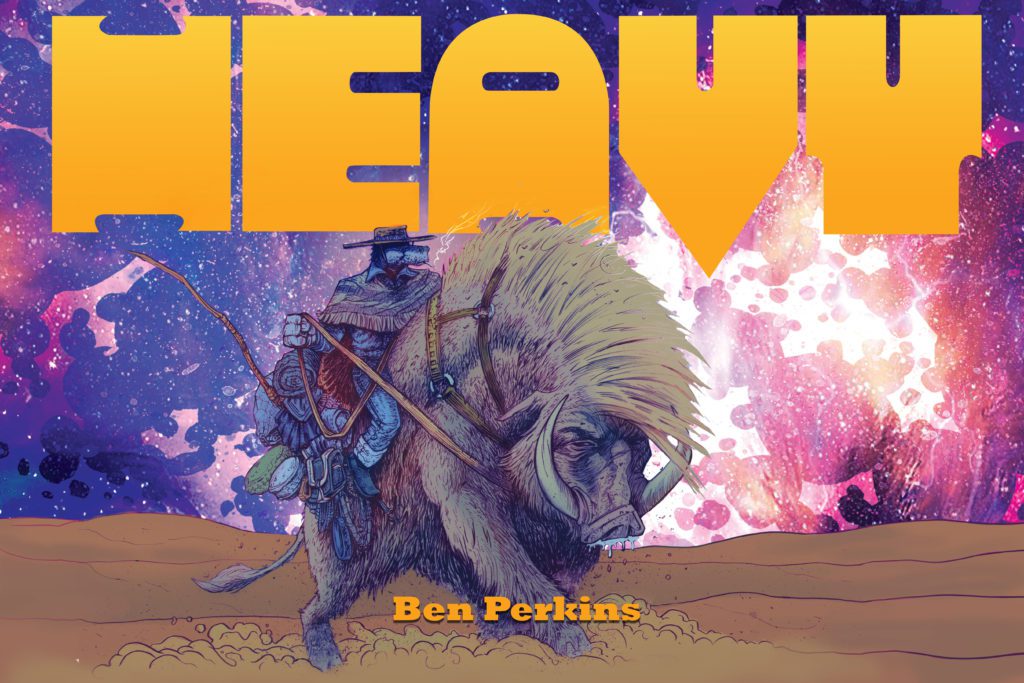
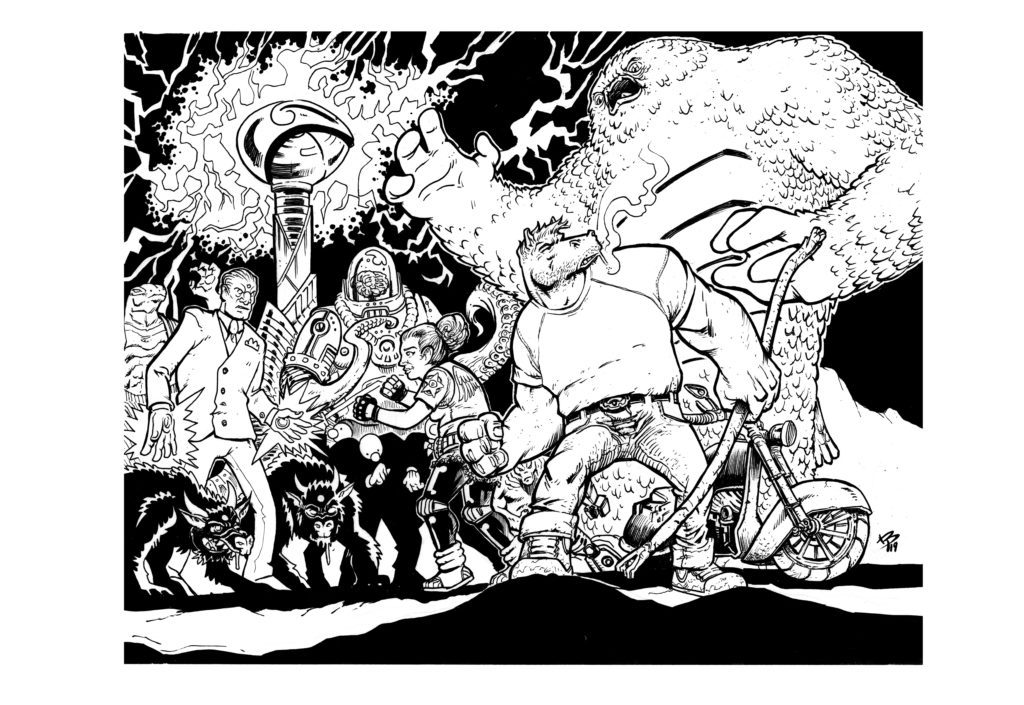
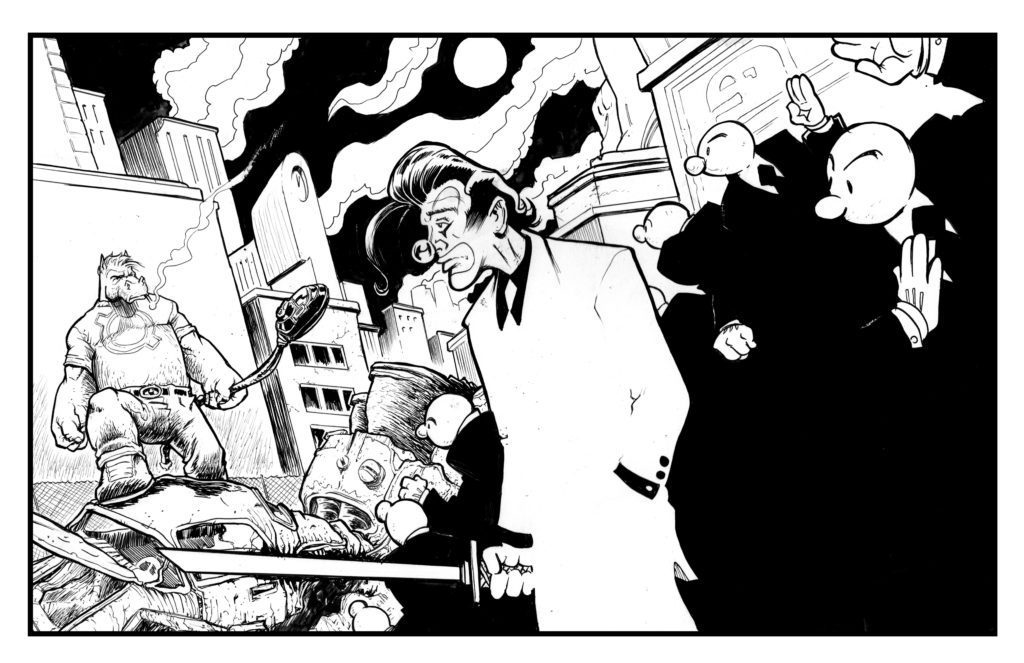
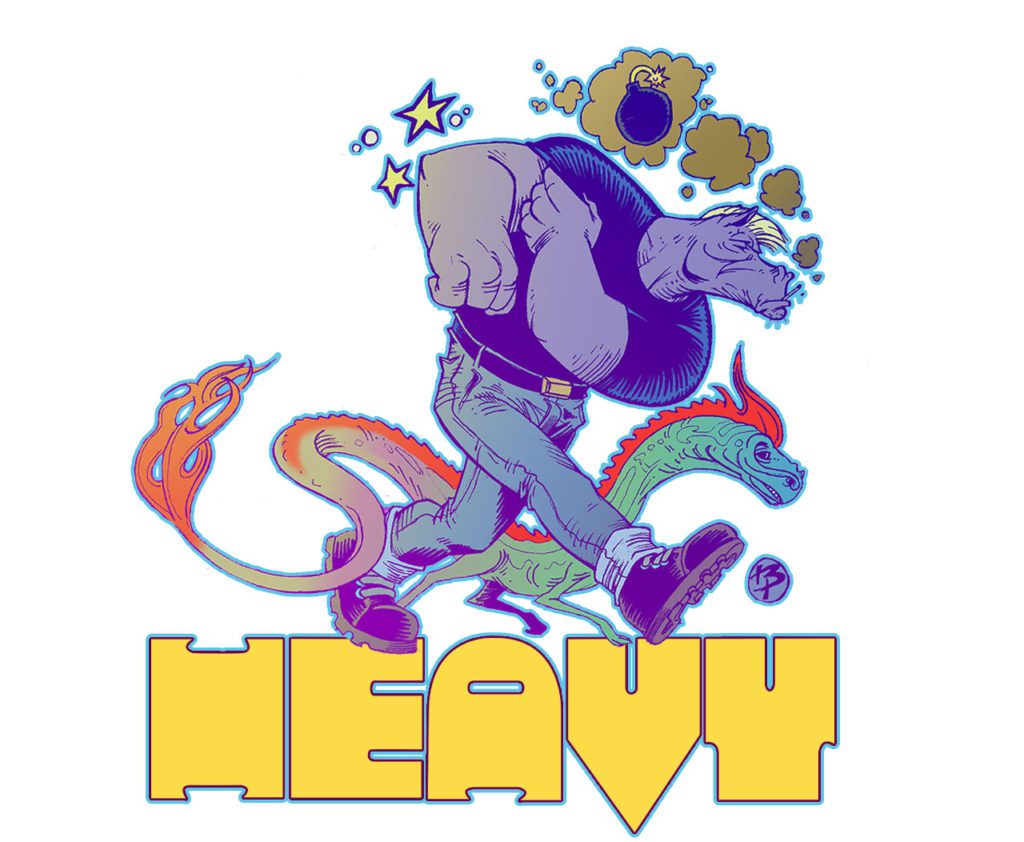
When I started seeing Ben Perkins’ art on social media, I was floored. This guy can draw! So when Ben launched the Kickstarter campaign for his book, HEAVY, I was immediately on board. The book has reached its goal, and with the end of the campaign looming, the prospect of holding HEAVY in my hands has me stoked beyond belief. I reached out to Ben and he was gracious enough to take some time to chat about his art, process and of course HEAVY. Make sure to support and grab the book before the campaign ends!
Monkeys Fighting Robots: First off, thanks for taking the time to talk Ben, I know how busy you are with various projects!
Ben Perkins:Thanks for taking the time to speak with me. Very exciting times and I’m never too busy to talk about comics!!
MFR: I always start every Spotlight by asking about comic book origins. So what’s your comic book origin? When did you get the four-color bug?
BP:My comic book origins are murky. I know I loved cartoons from an early age and was really into the Batman ’66 show which would run on Nickelodeon in the afternoons and weekends, and I know comics swirled around somewhere, but it was really in fourth grade when my buddy Alan gave me a Flash book, I can’t remember the issue, but I do remember it ended with this huge villain, with a morning star beats the bloody paste out of the Crimson Speedster and the last panel had Flash with blood all over his face in the foreground, like RIGHT THERE!!, with this behemoth of a man headed towards the city. I was riveted. After that it was finding them at the drug store and such. It wasn’t until I got in high school, I learned there was a comic shop in my small town and then I was nearly spending every day there.
MFR: Do you have a comics Mount Rushmore? Who are your biggest influences?
BP: Mt. Rushmore of comics, huh? I can never remember how many white dudes are carved upon that stolen rock. Four? Five? Regardless, I think mine would be Miller, Eisner, Mignola, Smith, and Klaus. (I know there are four, I just cheated.)
MFR: What’s your favorite thing about creating comics? Or favorite thing about comics in general?
BP:My favorite thing about making comics is the puzzle making. For me, it’s the layout. I love laying out a book, and when I learned that a good trick is to lay out the entire book at once, it unlocked so many things for me, in terms of pacing, viewing angles, etc. I like the fact that, if I can use filmmaking as an analogy, you get to be everyone. The director, the costume designer, the special effects house, the editor, the choreographer, make-up artist, lighting, set designer, etc. It’s daunting when you really think about tearing down all those decisions into a whole department of people, you understand just how much thinking goes into cartooning. For me, at least.
MFR: Alright so let’s get into HEAVY. Can you give us an elevator pitch? What’s the history behind the story and idea? Is it something you had been cooking for a while?
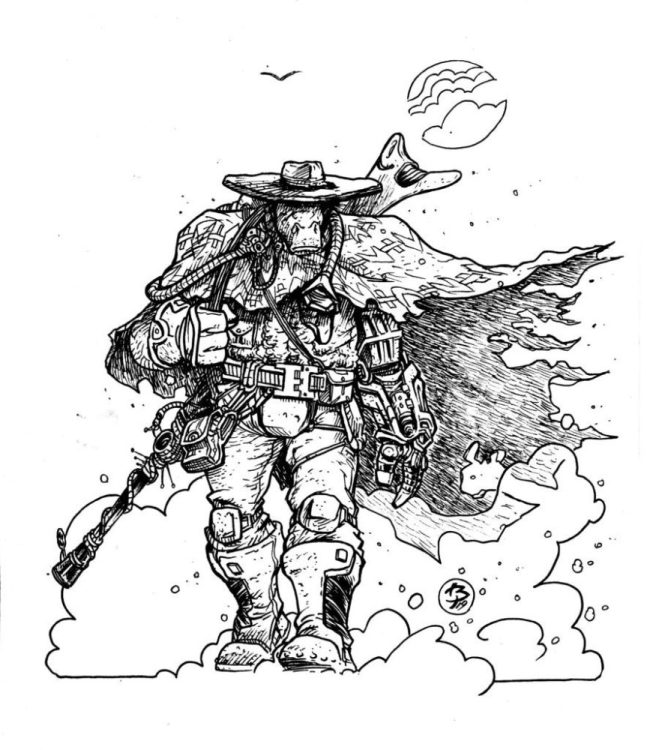
BP:The pitch for HEAVY is very simple: In a ruined world, Heavy must navigate the wastelands to restore balance to a world he has inadvertently destroyed. The history behind the character is long. Very long. I’ve been developing this story for fifteen to twenty years. Honestly, I’ve lost count. It started as a joke between me and some roommates I was living with when I was in my early twenties and had just moved to Portland. Years later we would reunite and reminisce and he mentioned this “heavy horse” threat we used to use and it just sparked my imagination and I saw this horse-headed badass coming out of the shadows. Really powerful. It didn’t start how it ended up. It started as a joke. A farmhouse horse who took mushrooms all the time. It was limited. So I just kept rotating worlds around Heavy that I thought would work. None really did until I realized I could use the horse motif easier if I made the story a western. That’s when the ideas I’d been cultivating really took off.
MFR: This is also your first Kickstarter project. What made you take the leap and what was the process like?
BP: Kickstarter wasn’t an easy decision for me. Primarily because of how I was aware that not all of them did well, and the people I saw running the successful ones seem a heck of a lot smarter than me. I was at the time in a fortunate position of having a small publishing company license the pages for their app as I was creating the pages for the first issue, effectively paying me to work on the book. It was a real dream come true and a real nice bump in finances, but they had to close because the publisher felt the app wouldn’t be viable for what they were spending. Fortunately, I had the first issue all done. So I decided it was time to maybe crowdfund and see if I should make more of this book.
MFR: Kickstarter has become one of the best ways to publish comics. Why do you think the method has taken off so much?
BP:Kickstarter has taken off for most because you can control every aspect. This is my first one, so I have no real experience to speak of, but I took about three weeks to read, and speak to other folks who have run a campaign so I could understand the pitfalls and responsibilities. I wanted to understand the amount of work it would be, and I’m glad I did. I still have the other side, with the fulfillment section, that will be when the real work comes in, but I’m prepared and excited.
MFR: Do you think you will use Kickstarter again on a future project?
BP: I will definitely use Kickstarter in the future and be able to really take advantage and try something new. I don’t know what that would be, yet, hopefully, more Heavy, but I have other ideas that are coming into fruition and other gimmicks I want to try out that I think people will really enjoy.
MFR: Your art is fantastic. There is a lot of weight and texture to it. How do you create the images? Like what tools do you use? More specifically, what is your creative process like?
BP:Thanks for the compliments about the art. I appreciate that. I just use regular pencils. I have some Japanese brush pens I like and I love my Gpen, but I’ve been using digital a bit more, obviously for coloring, but I’ve found some brushes that simulate what I need to do. I can never give up the analog though, so most of the Heavy pages are traditional pen and paper.
MFR: Did you approach HEAVY differently than past projects?
BP:Yeah, with HEAVY, it was this thing where I had this character that I didn’t know what to do with. It started as a Miller/Sin City kind of homage/spoof, and I didn’t really like that, because I couldn’t write detective fiction at the time, and so the world around him and his role in it kept getting redefined. A boxer, a mental patient, a cab driver, all these things and different worlds and tones for each. It was getting overwhelming. So I hit on the idea of trying to do every version. Then when I made Heavy immortal, that was the key. From there everything seemed to fit. It was a trope, in a way, but it was a way to give his moods context by time period. It was a weird notion I clung to. Then just figuring out what that world would be like with him running around on this planet. And what would happen if his meddling may have accidentally destroyed Earth? What would happen then? How do you fix that? How do you take responsibility for that? That’s the story I found.
MFR: Are there any other projects you want to mention or talk about?
BP:I’m doing a number of fan projects. Both Batman fan comic projects, 1963 Annual and Darker Image. I have a secret anthology I’m a part of that I’m excited about. I’m in the new WEAPON ECHH, which I’m super happy with. What else? Oh! I have an original graphic novel dropping on Friday so I’m excited to share that at that time. I’m working with Eli and Cosmic Lion for a really cool gimmick I think I’ll keep to myself right now, but I can almost promise you’ve never seen a comic like it. That I’m really excited for!
MFR: Can we expect more HEAVY stories in the future?
BP:With HEAVY, I don’t know what to do with him now. I have the first half of the next issue done but I’m at a stage with it right now that I’m thinking of restructuring. Initially, it was very overblown. It took me about a month to figure out how to make it twelve issues. I really like the idea of that, but as a Kickstarter, I’m not sure I can ask people to hold out and keep coming back, and I don’t know how long twelve issues at average 40 pages a piece it’ll take me. I’m debating seeing how much fat I can trim off and still be able to tell the story and see if I can shrink it to half the size and make it a one-and-done type of adventure. Jim Rugg’s AFRODISIAC kind of inspired me on how to handle a character in multiple ways. I don’t think I can use that exact model, but that off-balance nature of the narrative he was pulling off, while at the same time keeping everything in this understandable continuity, is something I took away from that project. Plus it looks really pretty.
MFR: Where and how can readers get your work and output?
BP:Right now, my Kickstarter is where you can sign up for the first issue of Heavy. You should be able to search that and it’ll pop right up. I have a book I did with a very good friend of mine over at galaxygator.net which is Galaxy Gator. I think there are five or six issues. There’s a trade. It’s actually pretty beautiful and a great all-ages book. Very proud to be a part of that one. Otherwise, I’m plugging things on Facebook, I’m @brattyben on Instagram and if you’re a dinosaur like me, DeviantArt as well.
MFR: Any final thoughts or comments you wanna share with us?
BP:Anyone out there that wants to make a comic, just do it. Keep on keeping on!
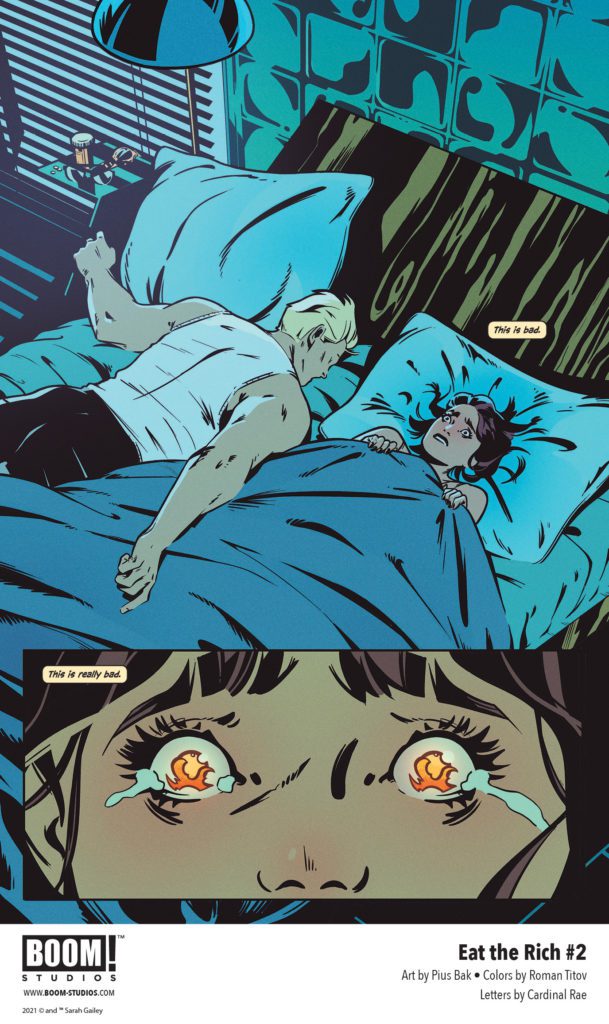
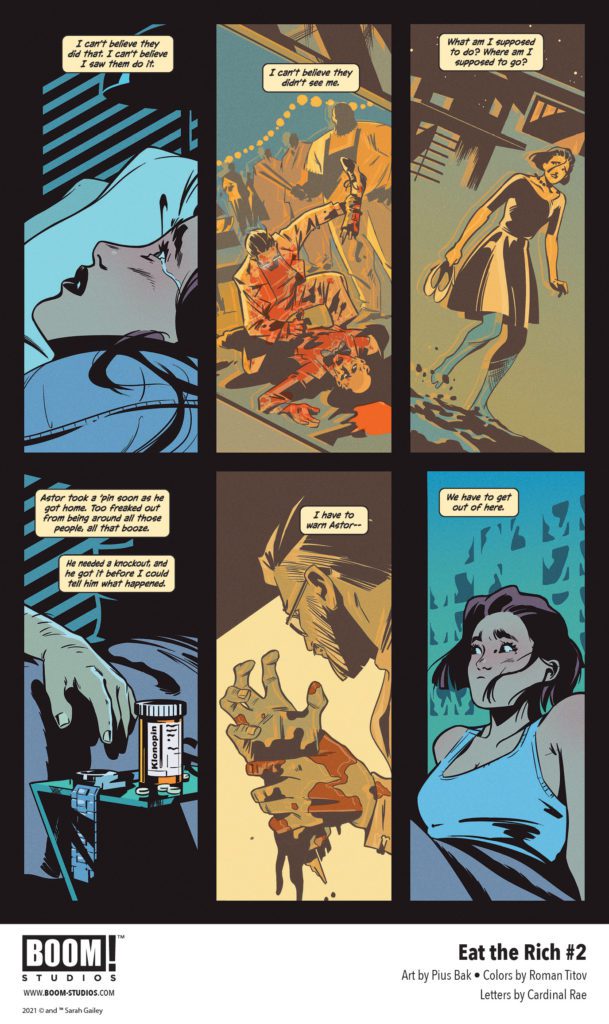
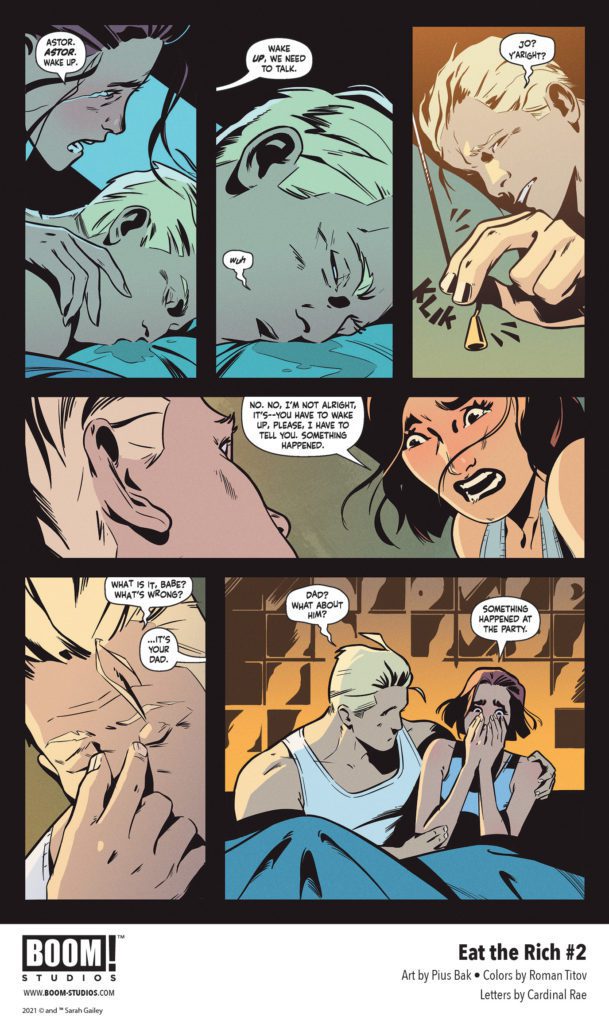
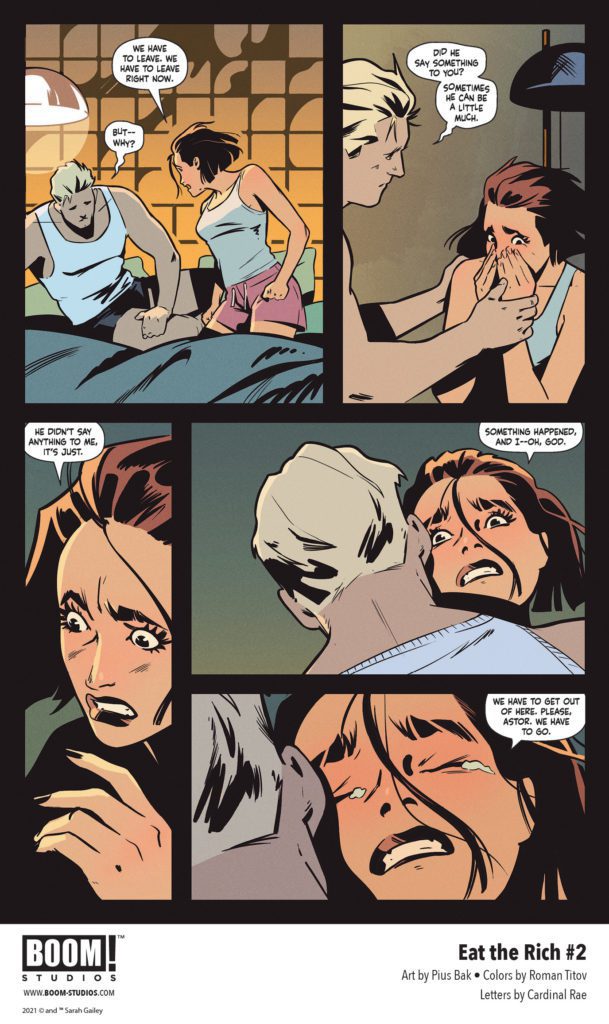
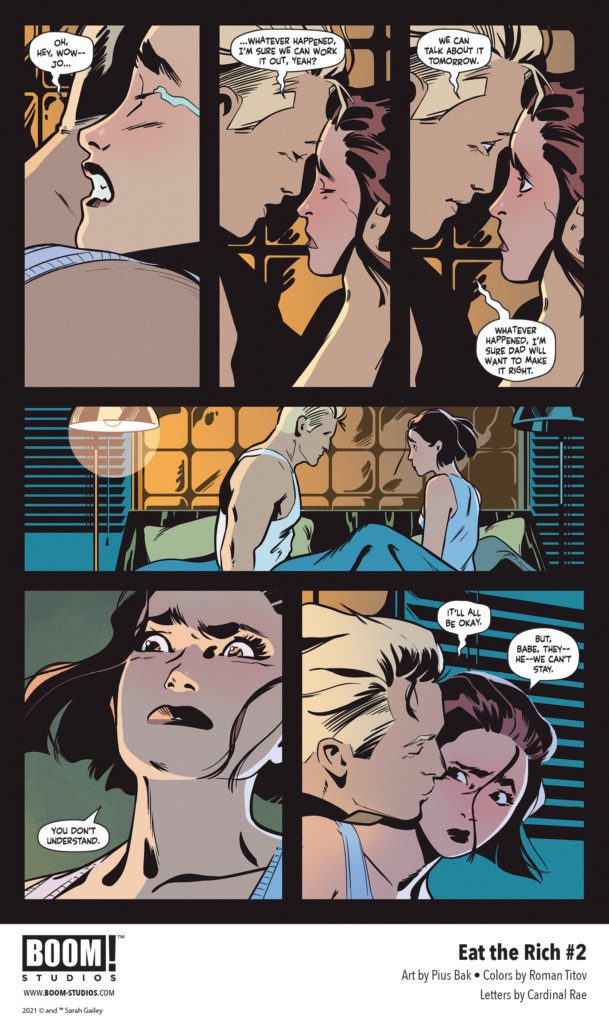
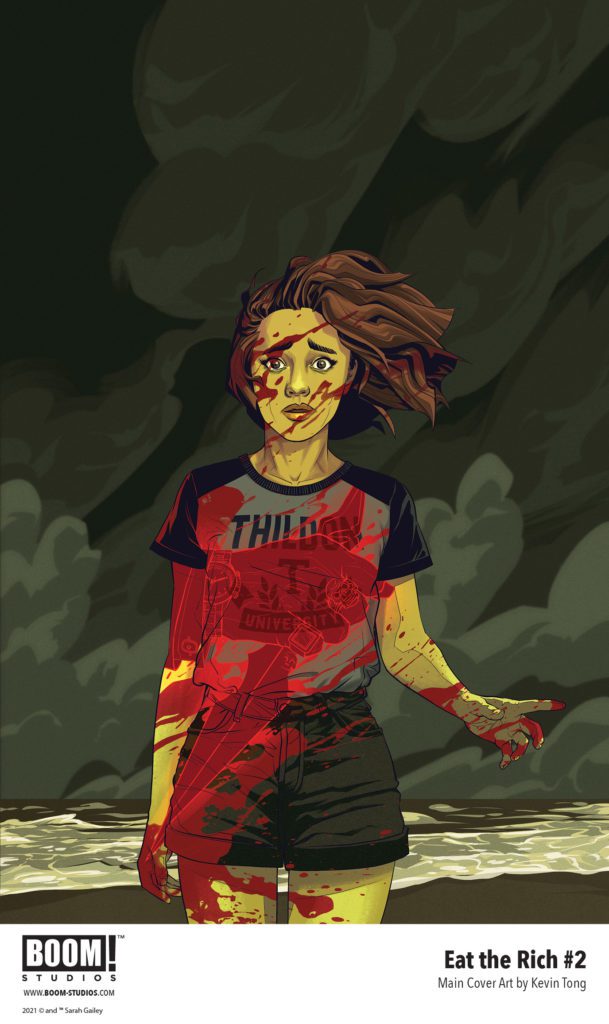
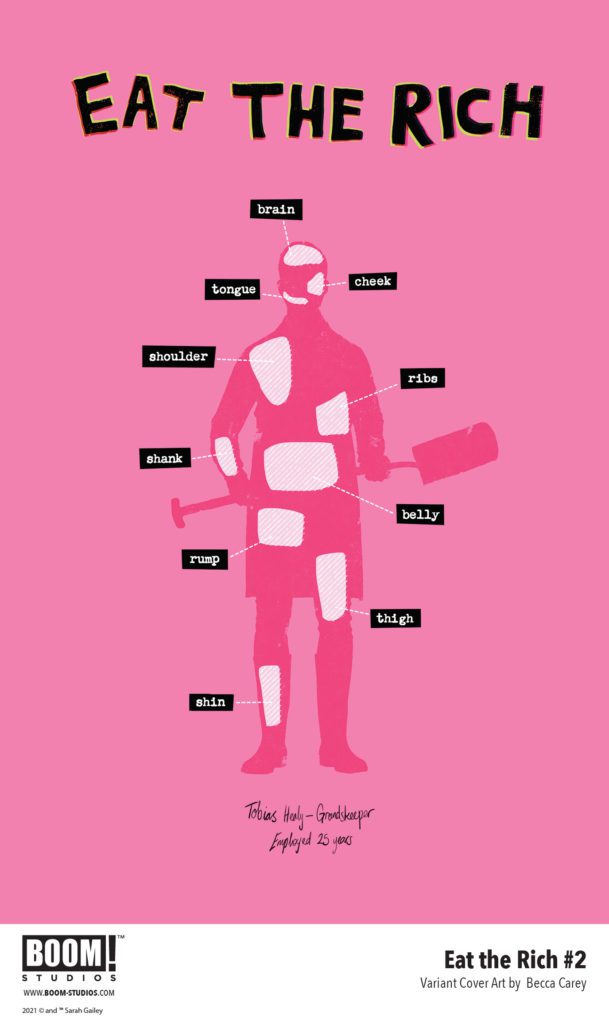
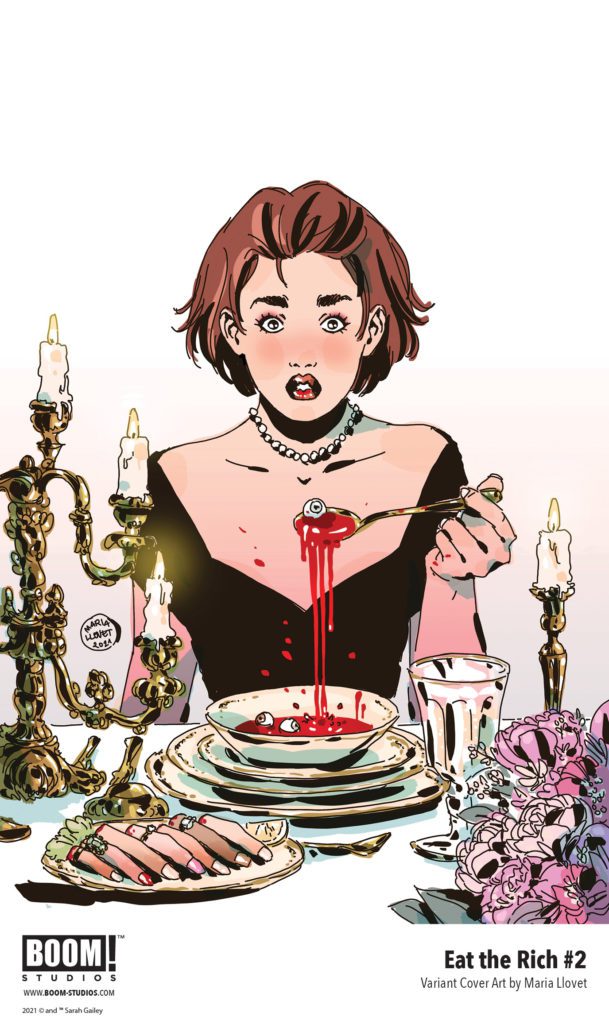
EAT THE RICH #2 hits your local comic book store September 22nd, but thanks to BOOM! Studios, Monkeys Fighting Robots has an exclusive five-page preview for you.
About the issue: Is Joey willing to pay with her life to uncover the gruesome secrets behind Crestfall Bluffs? Joey is beyond disturbed by what she has just witnessed, but when she confides in her boyfriend Astor, his reassurance about his family’s weird rituals and traditions only fuels her suspicions. As she digs further, what she finds produces more questions and danger than answers!
EAT THE RICH #2 is by writer Sarah Gailey and artist Pius Bak, with colors by Roman Titov, and letters by Cardinal Rae. The main cover is by Kevin Tong, with variant covers by Becca Carey and Maria Llovet.
What unspeakable horrors are lying in wait behind the idyllic lives of the one percent?
Check out the EAT THE RICH #2 preview below:
Are you reading EAT THE RICH from BOOM! Studios? Sound off in the comments!
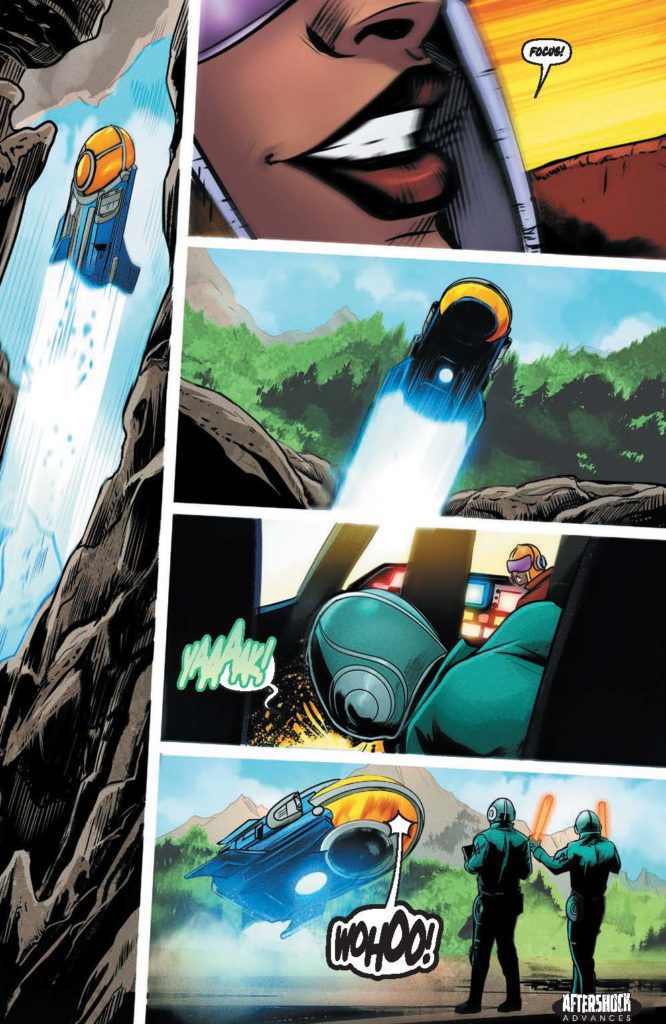
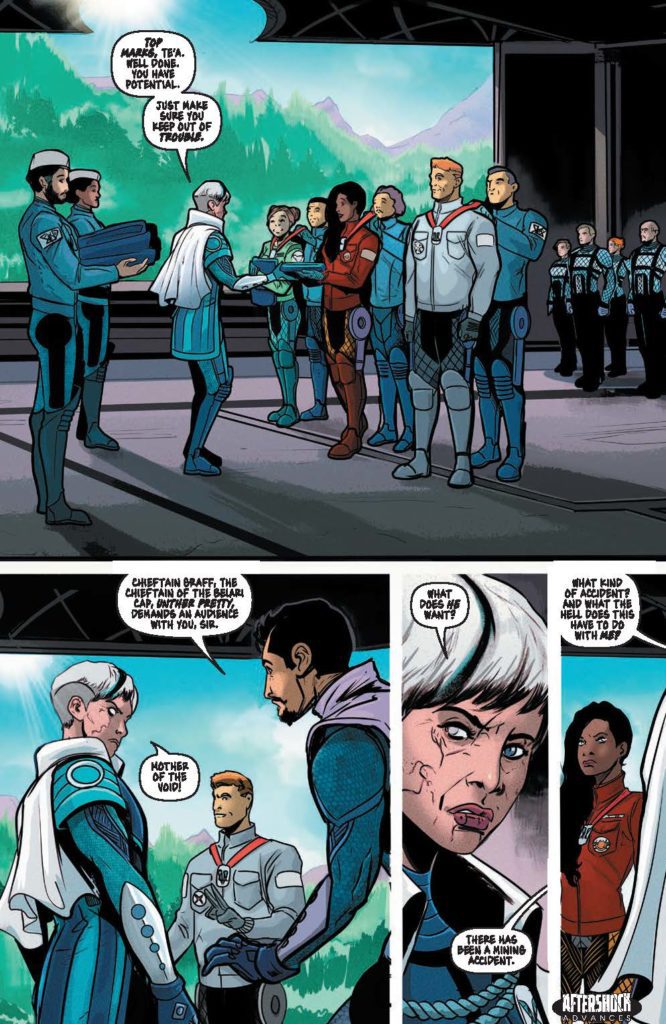
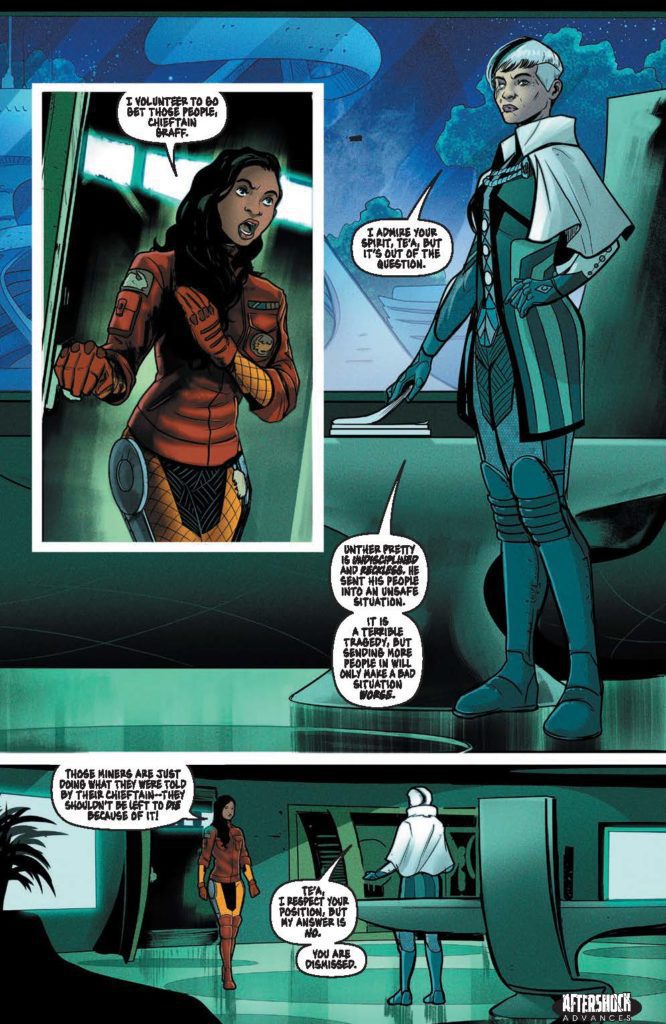
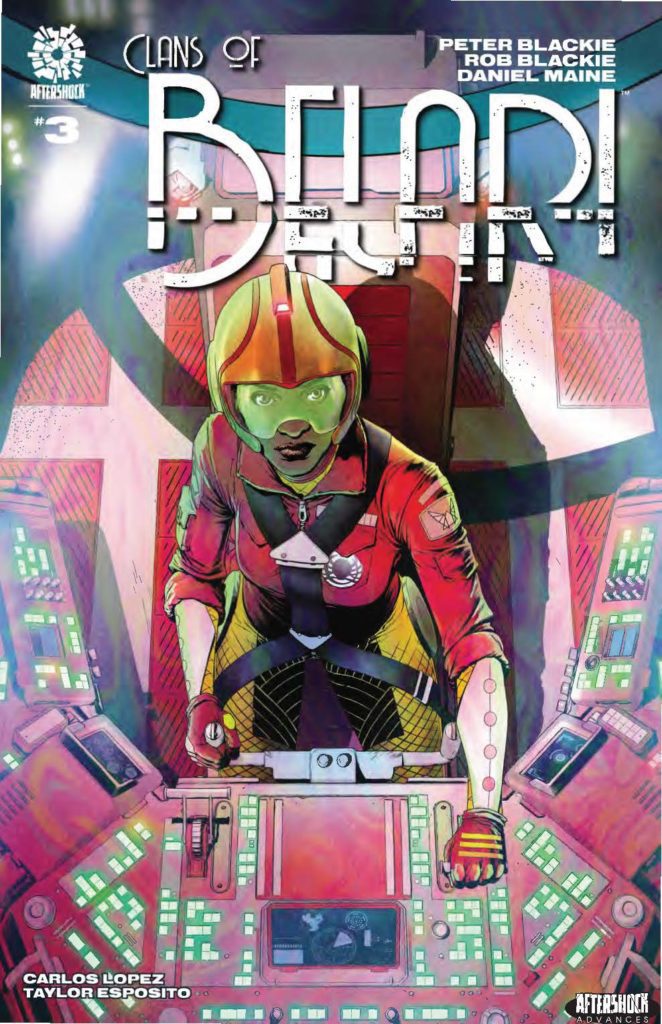
CLANS OF BELARI #3 hits your local comic book store September 15th, but thanks to AfterShock Comics, Monkeys Fighting Robots has an exclusive four-page preview for you.
About the issue: After Gummy bribes the right people, Te’a is able to pursue her dream of being a pilot. As it turns out she is a gifted pilot, whose accomplishments quickly earn her notoriety. But her maverick decision-making puts her at odds with her own Chieftain, Burke Graff.
Cluthian’s quest for alien-tech weaponry leads him to a surprising discovery: a technology that is destined to alter the balance of power in the System. But for Cluthian to carry out his plan, he needs someone capable, and expendable…
The series is by writers Rob Blackie & Peter Blackie and artist Daniel Maine, with colors by Carlos Lopez, and letters by Taylor Esposito. The cover is by Andy Clarke with Jose Villarrubia.
Check out the CLANS OF BELARI #3 preview below:
Are you reading CLANS OF BELARI? Sound off in the comments!
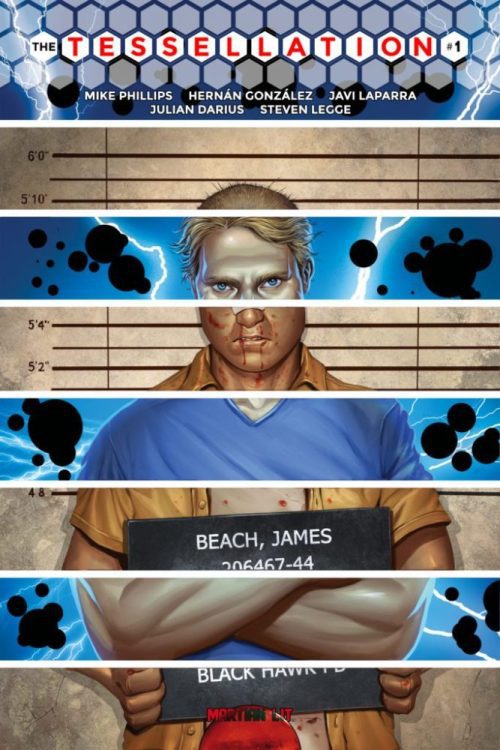
Martian Lit’s The Tessellation #1 is, quite frankly, terrifying. But it’s not necessarily a horror comic. Its scares go deeper than a typical horror story. The Tessellation isn’t about ghosts or nightmares. It’s about all the little, seemingly insignificant choices in life that can lead to all kinds of horrible consequences. Writer Mike Phillips, artist Hernán González, colorist Javi Laparra, and letterers Julian Darius and Steve Legge deliver a haunting first issue to this anthology series, all about how easy it is for your life to go off the rails.
The Premise:
What if every decision you (n)ever made, big or small, became a new reality, with infinite you’s living out those decisions. What if you could travel to these other realities, even observe other versions of you? Welcome to The Tessellation. This dazzling, mind-bending first issue tells four related stories in four separate “reality rows,” playing out horizontally through the issue… Buckle up for a new kind of anthology!
Writing
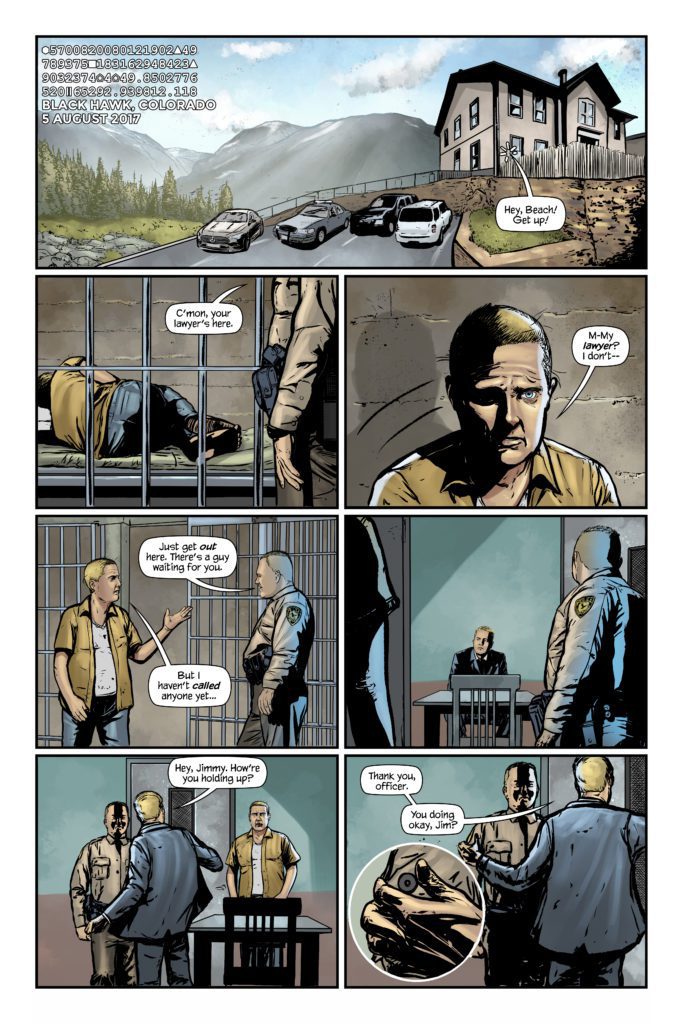
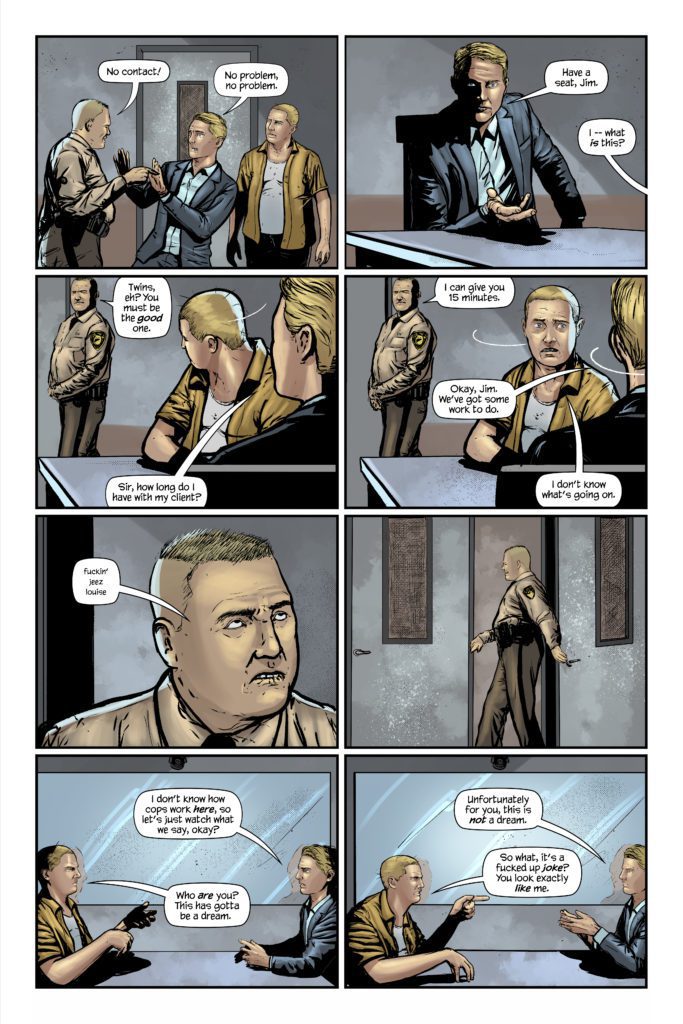
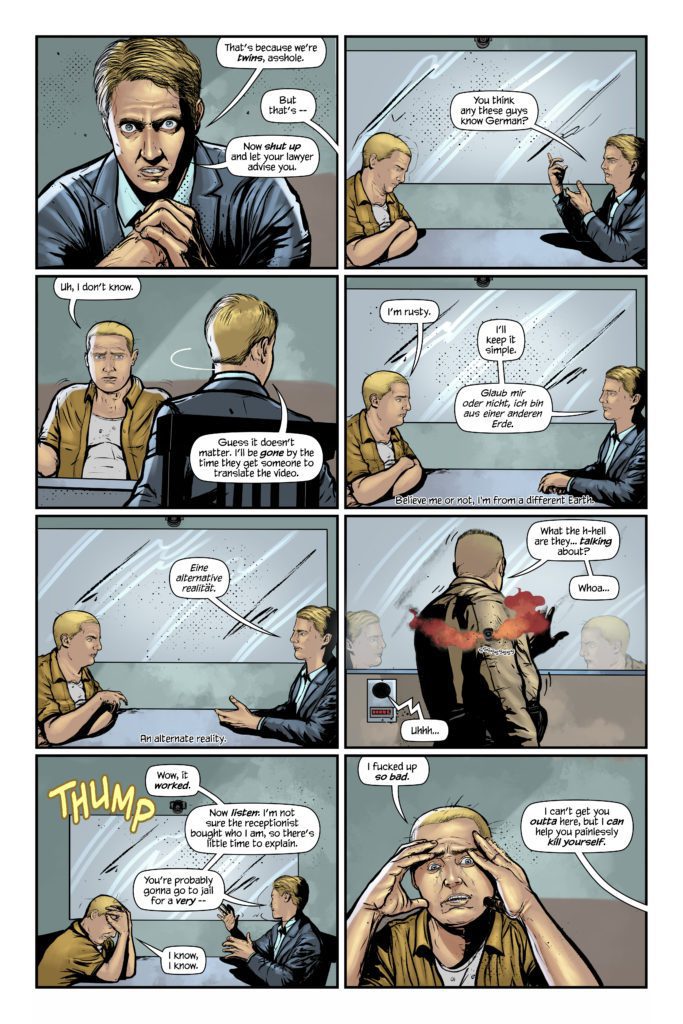
The Tessellation #1 marks Phillips’ first outing as a solo writer in comics. But you certainly wouldn’t know it. Phillips’ confidence in storytelling is what makes this issue so compelling. Instead of carefully setting up the rules of this narrative, Phillips throws readers right into the action. We see the life of our protagonist, James Beach, play out. Or maybe “lives” is the better word. At first, the issue seems to be stuck in a loop. The same scenes happen over and over. But as the issue progresses, tiny changes begin to occur. Soon, we’re witnessing massively different versions of one person’s life. And Phillips lets each of these moments speak for themselves. No explanations are provided, no exposition dumps occur. Instead, the reader coaxes answers out of every scene, getting fully immersed in the world this creative team has created.
It’s tempting to go into more details about the plot and the incredibly efficient script, but it’s the process of discovering these details that make this such a strong first issue. Phillips is a master of the golden rule of writing: “Show, don’t tell.” What seem like normal conversations are full of subtext. Little quips from characters are actually brilliant tools for Phillips’ worldbuilding. The Tessellation #1 is subtle and explosive, all at the same time.
Art
González creates a visual rhythm in these pages. As the issue begins exploring the idea of multiple realities, we see rows of repeated images. But it’s when these realities begin to diverge that González’s work really shines. An image of a hospital bed is juxtaposed against an image of a bed from a brothel. Similarly, a scene in a graveyard mimics a panel of a couple fighting. The gravestones stand in a similar place in the panel as the couple did before. González seems to be showing that even James’ worst moments have become impossible to get back to. That reality is dead to him now.
González also hones in on each character’s body language in this issue. You can see the awkwardness of James trying to be a good dad. His shoulders are tense and his face is anxious. Elsewhere, you can see his casual anger or disregard for morality. It’s in the shape of James’ brow or the look in his eyes that González tells us everything.
Coloring
Laparra’s coloring shows us a lot of the differences in James’ many lives. The James we meet at first, stuck in a prison cell, lives in a world that’s devoid of color. When his alternate self shows up, we see a huge difference. This version of James lives a colorful life. His panels are full of bright red signs and vibrant blue suits. He’s an adventurer. But the other versions of James are often just busy surviving. In their lives, we see when tragedy strikes that color slowly fades from each panel. Laparra is showing us visually how much each loss is affecting James’ outlook on life.
Lettering
Darius and Legge’s lettering is brilliant. Right from the get-go, we see how they’re always changing up their font to show rhythm or volume. When James is confused by his lawyer’s presence, the cop in the scene has had enough. “fuckin’ jeez louise,” he says in small lettering. The lower case “F,” even the oversized “ee” in “jeez,” tells us everything we need to know to hear this line in our head. But that’s far from the only brilliant example of lettering in this issue. At one point, the rows on the page almost act as a kind of acceleration of events. We see bad things occur, and they get worse and more impactful as the page goes down. Darius and Legge mirror this in the sound effects. As the page progresses the sound effects get bigger and more messy looking, showing us the impact and destruction caused by each moment.
Martian Lit’s The Tessellation #1 is an incredible start to this anthology series. This creative team presents a complicated idea in a surprisingly simple way. Yet, they never overexplain or talk down to the reader. It’s a smart, tight script for a great new series. We can only hope there’s plenty more where that came from!