The Supergirl/Flash crossover event is this Monday, and CBS released a quick teaser of the two superheroes lining up for a race. And doing some superhero things in between.
“Kara gains a new ally when the lightning-fast superhero The Flash (Grant Gustin) suddenly appears from an alternate universe,” reads the official episode synopsis,” and helps Kara battle Siobhan, aka Silver Banshee, and Livewire in exchange for her help in finding a way to return him home.”
The crossover episode of Supergirl, “World’s Finest,” airs March 28 on CBS.
Against all odds, The Bronze (Bryan Buckley’s dark comedy about the twisted world of Gymnastics) was a solid film. Often, critics will make generalizations about a movie before they even see it (it’s happened to us all), and I can say my perception of the film going in was all wrong. Maybe I’m guilty of what most people are, and that’s assuming Bernadette from The Big Bang Theory and Melissa Rauch were very similar. How could our lovely Bernadette play the raunchy ego driven Hope Ann Gregory? If Hope Ann Gregory were to respond to that question, my guess is she would threaten to rip out my throat.
The Bronze tells the story of Hope Ann Gregory (the aforementioned Melissa Rauch, who also co-wrote the script), a fictional gymnast from Amherst, Ohio, who became America’s sweetheart (think Kerri Strug) when she landed a bronze medal at the 2004 Olympics despite a significant injury. Fast-forward to today and Hope is a foul-mouthed local celebrity living with her dad (Gary Cole), still basking in her former Olympic glories. Hope eventually take on a local apprentice (Haley Lu Richardson), but with other motives.
Hope’s estranged former Coach Pavleck (Christine E. Abraham), dies and leaves a letter promising half a million dollars if she finishes Maggie Townsend (Hayley Lu Richardson) for the upcoming Toronto Olympics. Hope gets to work with Maggie by instilling a terrible dietary and social regime sure to sabotage Maggie’s chances. Horrified by the wasted potential, Lance (Hope’s ex-flame played by Sebastian Stan), who’s now a coach, steps up and promises Maggie’s mom Janice (Cecily Strong) that he will return Maggie to her former glory. Realizing this would negate her deal with Coach P, Hope changes her tune and starts to coach her the right way. Hayley Lu Richardson (Maggie) is solid as the happy go lucky gymnast who Hope sees as annoying because she reminds her of what she once was. Sebastian Stan (Lance) sells the role of being the sleazeball ex-boyfriend that has it out for Hope. However, Melissa Rauch shines the brightest in this film. Rauch commands the screen as a former gymnast who’s stunted maturity, and foul nature is the source the hilarity in the movie.
The premise of The Bronze, at first, seems like something out of a Saturday Night Live skit, but in reality, Winston and Melissa Rauch developed a screenplay that’s not only wonderful comedically but certainly has a lot to say about our fame driven society. It’s not hard to envision Hope Ann Gregory going around and demanding free items and being awful because athletes being terrible has become commonplace. Winston and Melissa Rauch create wonderfully rich comedic characters that all play a role in making this film hilarious. Sebastian Stan (Lance) isn’t playing your typical male gymnastics coach; he’s the chauvinistic male coach who’s everything that Hope hates (even though they have slept together). Gary Cole’s Stan isn’t playing the typical “father” figure; he’s more of a meek version of a father figure which is perfect for Hope to push around. Every character in this film plays a small part in why this movie clicks. The only question that I do have is how in the world did they get the idea for the sex scene between Hope and Lance (let’s just say it involves a somersault and gymnastic rings)?
While The Bronze does have it flaws as it meanders towards predictability in the last half of the film, the film is a solid comedy overall and certainly worth your consideration.
During Kieron Gillen’s critically up and down run of Marvel NOW’s Iron Man “The Secret Origin of Iron Man” arc, we learn that Tony Stark’s parents are exactly not that. His parents. And, after the end of the world, the loss of a fortune and new outlook on life, Tony Stark is back on the hunt for his real parents. But it may take more than just a walk down memory lane for him to find them.
It begins with a defeat. The Iron Man lays lifeless on the battlefield. Those around him questioning his ability to continue. Then, like most books that begin at the end, we are taken back to a beginning. 20 years earlier. Tony is back in college, working through his Cambridge education, when he meets a beautiful woman. The type of woman who he could only introduce to Daddy-Stark as to purposefully piss him off. She may also be the type of woman whose family could be directly in the line of Hydra fire.
Following the anxious yet highly anticipated release of his All-New, All-Different Invincible Iron Man, Brian Michael Bendis brings us yet another Iron-title. International Iron Man introduces us to another side of the invincible super hero. That of an international man of wonder who only wishes to find his family.
As we move through the pages of Alex Maleev’s art and Bendis’s typically decent writing, you find yourself asking, “Do we really need another Tony Stark centered on-going?” The answer? Not really.
Though Bendis very rarely disappoints, having written one of the most popular Guardians of the Galaxyseries since their inception or spurring a television series based off his Icon (Marvel’s creator-owned imprint) series Powers. Iron Man is part of the main All-New, All-Different Avengers, had the inaugural title of the All-New, All-Different line and even stole one of the most prominent characters from the Spider-man universe. Spreading himself (both Tony Stark and Bendis) thinner with yet another Iron Man title is slightly unnecessary.
With that said, International Iron Man is an above par title. It has all the basic requirements of an intriguing, espionage style story. There is a new piece of Tony’s background is examined, giving him an all new air/angle of mystery. Introduces a new character that helped shape Tony into the figure he is today and whom will obviously alter his parental search in the near future. Though there were some basic timeline inconsistencies. Yes, Google did exist 20 years ago, but the idea of “Googling” someone was not so much commonplace. Or sitting at a dinner table and being distracted with one’s cell phone was far from the everyday reality, even for those rich and famous. But, as we know, time in comics is relative. But the little timeline inconsistencies were more momentarily distractions than an actual problems.
Maleev (Lando) portrays the billionaire playboy in a whole new light. The curious, yet non-concerned college student. Long hair, air of confidence but with a hint of shadowed doubt. A large portion (probably in the area of 85%) of the first issue is flashback. And, along with Paul Mounts (Ultimates) dulled color-tones, Tony’s memories unfold with broken faces, emotional connection and pieced together loss. And it all ends with a short, yet precise action sequence.
The art is pleasant, telling the story in fragmented time and the writing consistent with Bendis’s talent. However, is it a necessity at pick-up? That is really up to the type of fan you are. For those itching for a new Bendis title or real Iron Man fans routing for Tony to finally find his real parents, then International Iron Man is worth the pick-up. But if you are a casual reader, already browsing through Invincible Iron Man, save a few dollars or catch up on something a little different. Maybe Bendis’s Spider-Man featuring fan-favorite Miles Morales? (The first two issues now on shelves.)
From a Fan: Brian Michael Bendis, Alex Maleev and Paul Mounts have comes together to make a good read. Not exactly what we would call “required reading”, but a good read nonetheless. For those Iron Man buffs out there, make sure to stop by your local comic shop and pick up International Iron Man #1 today.
Now that Leonardo DiCaprio has won his Academy Award, maybe we could start this grassroots Internet meme campaign for the greatness that is Gary Oldman. Today, Oldman turns 58-years old, and his career is filled to the brim with wonderful, wild, energetic, powerful performances. Whether he is a supporting player, a villain, a hero, or the central figure in his films, Gary Oldman brings the goods. He is a chameleon on par with Sir Ben Kingsley, able to slip in and out of ethnicities and manic personalities with truth and dedication.
With 70 plus film credits to his name (and a whole slew of work on the horizon), let’s take a look back at his 10 finest work, performances of all shapes and sizes, roles that managed to dominate the film in which they appeared, no matter how much screen time may have been involved.
10. Jack Grimaldi, Romeo is Bleeding – Oldman’s early career was loaded with seedy, sweaty characters whose moral compass failed them years prior. His performance in Romero is Bleeding as Grimaldi, a corrupt cop in over his head with a mysterious new woman in his life, wallows gleefully in the depraved underworld of evil cops and killers. The young Oldman had a masterful penchant for chewing scenery, and this role is a sort of pregame show for what he was going to deliver one year later in Luc Besson’s The Professional.
9. Zorg, The Fifth Element – As campy and flamboyant as Luc Besson’s sci-fi circus may be, Gary Oldman’s quirky villain Zerg is the peak of the zany mountain. Zorg is part politician, part brutal killer, searching for “the stones” and trying to get his hands on Lee-Loo, the perfect human. With his strange Hitler haircut riff, the plastic plate, and a strange underbite, Oldman is having just as much fun as all the other colorful characters in the picture.
8. Jim Gordon, The Dark Knight Trilogy – Okay, so the construction of his character in The Dark Knight Rises was a little strange – he’s really going to send ALL the police into the sewer? – but Oldman gave more depth and emotion to Jim Gordon in the Batman universe than the character had ever had before on film. Many of the Batman stories paid close attention to the family and work life of Jim Gordon throughout the years, and casting Oldman in the role was a master stroke from Chris Nolan and Co.
7. Shelly Runyon, The Contender – In the incredibly underrated political thriller The Contender, Oldman embodies a different sort of evil: an arrogant, simple-minded Republican. Shelly Runyon is the blockade to the Vice-Presidential appointment for Laine Hanson (Joan Allen), whose sexual trysts are brought to light during the confirmation process. Runyon is creepy in his obsession regarding Hanson’s college years, and his slimy arrogance and hypocritical outlook on women’s rights makes this one of the most despicable and compelling of his career.
6. Stansfield, Leon: The Professional – Here is arguably the most overacted role in Gary Oldman’s career. His wicked cop Stansfield is a drug chewing, scenery chewing murderer who “hasn’t got time for this Mickey Mouse bullshit!” It is Oldman going over the top, then finding the top again and going over it once more, but it’s still fascinating and hypnotizing at times. Stansfield is a volcano of anger and hate, with seemingly no redeeming qualities anywhere inside his black soul. Oldman owns the overacting, and his dedication makes it all work beautifully.
5. Drexl, True Romance – “He said that his mama was an Apache,” Alabama tells us, “but I suspect that he’s lyin’.” That sums up Drexl Spivey, a lowlife pimp and murderer who kickstarts the central plot of True Romance, one of the greatest American crime thrillers of all time. That’s right, of all time. In a film loaded with cameos and small performances building an entire, complete masterwork from Tony Scott (with an assist from screenwriter Quentin Tarantino), it is Oldman’s murderous pimp who steals every scene in which he’s involved.
4. Sid Vicious, Sid and Nancy – One of his earliest roles had Gary Oldman embodying the self-destructive Godfather of the punk movement in the early 80s who may or may not have killed his loving bride in a drug-fueled murder suicide. With all the corrupt souls in his catalogue, Sid and Nancy was a true-life precursor to the fictional madmen he would define in the following years. Not only does Oldman shine as the troubled singer, his young, thin frame and sickly hue of a man in the throes of crippling heroin addiction resembles Sid Vicious with stunning clarity.
3. Sirius Black, Harry Potter and The Prisoner of Azkaban – Before he was Jim Gordon, Oldman had another challenge of playing a beloved character with a throng of fans who had their mind made up regarding the falsely-accused Sirius Black in the Harry Potter mythology. That’s a slippery slope for any actor, and Oldman nailed the role; he absolutely became Sirius Black. There is nobody who could better transition from murderous villain to a man wrongly convicted of crimes in the same film. Sirius Black popped up again in the Harry Potter films, but The Prisoner of Azkaban was his finest achievement for the character.
2. Dracula, Bram Stoker’s Dracula – For all the unhinged insanity that derailed Francis Ford Coppola’s adaptation of Bram Stoker’s novel, the flamboyant Opera theatrics and the camera’s idiosyncrasies, Gary Oldman’s performance as the Prince of Darkness is the one true constant of greatness running from start to finish. Oldman is one of the greatest chameleons in film history, and here he is allowed to transform himself time and time again in the same role. No matter what the final result may have been, the appearance of Dracula as an old man is still a captivating moment in horror cinema.
1. George Smiley, Tinker Tailor Soldier Spy – Sometimes a celebrated actor’s Oscar-nominated roles aren’t his most indelible, they are observed more so because of the way the actor changes perception. As Gorge Smiley, a semi-retired agent forced back into action to try and uncover a Soviet spy in British Intelligence, Oldman manages to deliver on both fronts; it is a wonderfully restrained and very un-Gary Olmdan performance, while also being the greatest and most nuanced role in his career. He was nominated for Best Actor – the first and only one of his career – and time has told us perhaps he was the most deserving of the nominee pool that year.
Once it became clear this would be an episode focusing on side-characters, it also became clear this wouldn’t be a good episode. The problem with a lot of The Walking Dead’s side character adventures is that they don’t do a good enough job making the audience any more invested in the characters. And while they tried to add new depth and sorrow, none of the choices really worked this time around
First off, we have the death of Denise to think about. It’s become clear that there’s a host of untouchable characters, and apparently Abraham secured his spot on the list once his name was added to the credits. See, in The Walking Dead comics, Abraham suffered the fate meant for Denise, but in the television show, Denise is the one who bites the dust. And honestly, I’m not too distressed over it. I’m sure it sucks that the group just lost their doctor, but she didn’t provide anything new, she was just the female Eugene. And as I’d mentioned in a previous review, the development of Denise has meant the deterioration of Tara’s character into the mopey girlfriend. Sure, it’s a shame that Denise is dead, but what does it really matter?
Then there’s Rosita, a character that’s needed further development, but got nothing good out of this episode. As the battle-hardened trainer, Rosita was an important presence to the group. But in this episode, she’s more of a mopey, angry presence, as if she’s a spurned popular girl in high school. Maybe its due to this episode following an episode centered on Carol & Maggie – two of the show’s strongest female characters – but this episode served more to highlight the weaknesses of their females. Could they really not develop Rosita any further? Denise having a brother’s sort of an interesting development, but what real significance does it have? And as Daryl even points out, he’s got the same sort of sibling relationship. A random nameplate of her brother doesn’t change the fact that the little new developments to her character don’t mean squat.
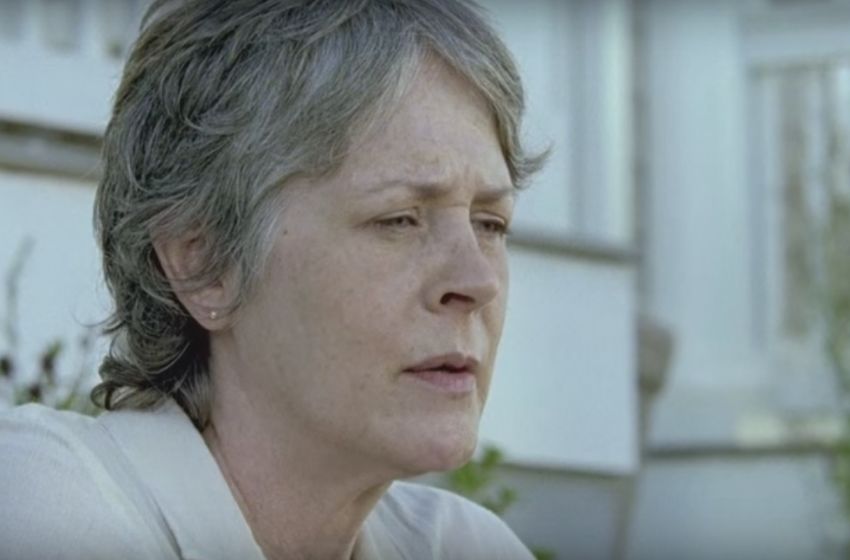
Speaking of which, Carol’s choice to leave at the end, due to the fact she no longer can kill for the group, feels more than unjustified – it’s flat-out dumb. The Walking Dead has been trying to change Carol into a more sympathetic character, but this transition feels incredibly rushed. She’s been feeling less bloodthirsty for maybe three or four episodes. That’s not enough to herald such a big change, and certainly not enough to explain why she’s leaving Alexandria with her rosary beads, especially since she is very protective of Maggie and her new baby.
The one bit of development that did work was with Eugene. While he’s still a goofy nerd character, as evidenced by his knowledge of making bullets and big nerd words, he’s at a point where he feels he’s competent as a fighter, and no one gives him credit for it. It makes sense, therefore, that once Abraham leaves him, he ends up getting himself into trouble. What makes his story work is that he does manage to prove his worth as a combatant, by biting Dwight’s, uh, Dixon brother, and taking a bullet grazing. As an audience member, I totally buy that Eugene has entered Stage 2.
Thing is, Denise’s fight with the car walker also justified her worth as a fighter. But rather than be congratulated, both Daryl and Rosita give her no respect. Why? Just so that, as she’s convincing them otherwise, she can be killed mid-speech? Maybe that wasn’t the intention, but that’s certainly how it came off, and it came off as a cheap trick.
Overall, this episode suffered from a lot of unjustified character choices. The chemistry of Daryl, Rosita, and Denise as a team feels forced, just so we can have a couple side characters get screen time. Sasha giving Abraham a shot at love, asking him to come inside, doesn’t make sense. We only see Rosita sleep with Spencer once, and now he’s asking her over for stroganoff? Why bother showing Rick and Morgan for a second? Is Morgan’s cell that important, and if it is, why does it get so little screen time? And is The Walking Dead STILL trying to make us care about Gabriel? Because that’s not happening. The Walking Dead has to find better ways to make fans care about characters, and they’d better figure it out before Negan comes to slaughter half of them.
Last year audiences were blown away by the action in a hallway for Marvel’s Daredevil on Netflix. The filmmakers used a dolly shot to follow Daredevil as he pummeled the bad guys, which was staged, choreographed and then done all in one take.
This year, Daredevil Season 2 raises the bar in episode 3 when Daredevil goes all Ghost Rider on a biker gang in a stairwell while a gun is duct taped to his hand. See how far the series has come in less than a year as you can compare the two fight scenes below.
March 2016 Daredevil Season 2
April 2015 Daredevil Season 1
You can watch season one and two of Marvel’s Daredevil on Netflix
Many critics have said Daredevil Season 2 is to The Dark Knight, what Season 1 is to Batman Begins. I would agree with that assessment, but would argue that the latter is the better piece in both scenarios. Season 2, like The Dark Knight, does a lot of things better than it’s predecessor, but often it’s main character gets lost amidst everything it’s throwing into the melting pot.
This episodes features another stunning fight scenes as Elektra and Daredevil face off with Nobu and The Hand on a rooftop, with some unexpected back up from everyone’s favourite serial killer; The Punisher. No other show or property compares to Daredevil when it comes to it’s action scenes, but this season used them as a crutch. Flashy martial arts came at the expense of character development in the latter half of the season, leading to characters being underwritten. Indeed, between battles Matt Murdock would seem to flip on his moral code or ignore the actions of his compatriots without an indication of a change in his character on a fundamental level. His development this season lead him to abandon his girlfriend, best friend and his law firm in order to become a full-time vigilante. I’m not sure to what extent the season earned Matt’s dissent into assholery. He admits to loving Elektra because she is the only one who understands why he needs Daredevil; the side of him that yearns for action, but it felt forced. Matt is continuously horrified by her love of killing, but he doesn’t seem to mind by the end of the season and arguably loves her for it. Daredevil has often been the author of his own misfortunes through his unwillingness to open up to others. Maybe it’s best that he pushed Foggy out of his life, Matt Murdock is a dangerous man to be around.Many writers fall into the Batman trap, by failing to realise he has a great supporting cast capable of picking him up, but the best Daredevil stories are about him overcoming his darker side and returning from the brink. Matt is now firmly on the path towards “Born Again” and I’d imagine Season 3 will focus on the rebuilding of relationships.
Elektra’s death at the hand (pardon the pun) of Nubu was a bold choice to say the least. Most of the season hinted at her sticking around for at least another season, but her final conversation about running away with Matt made it clear that she was not long for this world. Daredevil is a character full of despair and catholic guilt, so of course he needs another death on his conscience. Her demise was in many ways an inevitability given the character’s history in the comics. Indeed, one of the most iconic Daredevil comics of all time is Issue 181 which featured her death at the hands of Bullseye. Visually speaking, Elektra’s end matches that of the comics as she is impaled with her own sai. She originally only appeared for a bare 13 issues, so Elektra dying quickly after her introduction is part of the character’s history, but there is still something inherently problematic about a female character dying in such a manner. Her death isn’t her own, in so much as it is in furtherance of Matt’s character development. This episode attempts to solve that by having Elektra claim her noble death as her one truly “good” act. It does lead to the tremendous exchange between the two where Matt confirms that being “good” is always painful, demonstrating the frustration and restraint his moral code places on him, but again, it isn’t her agency that is being validated, but rather Matt’s principles. Elektra is destined to return, but her death within the show was premature and didn’t do anything to dispel the women in refrigerators trope. Structurally, this season became a bit of a mess in it’s latter half. The Punisher story-line, the most interesting part of the season, detracted from the mysticism and mystery of The Hand. Just as we seemed to be getting resolution on one side, we were pulled away to deal with the other. It would be one thing if they were significantly interlinked, but they weren’t. Madame Gao (who I am still convinced is Crane Mother), a character we know to be linked to Iron Fist’s mystical side of the universe, is brought back not to give us information on The Hand, but on the location of Blacksmith. This smacks of a show that didn’t know if it was returning for a third season and attempted to solve for that by shoe-horning in all the ideas from their brainstorming session. This could have been easily resolved by having the properly separating the story arcs and allowing each of them to have the appropriate breathing space. The Punisher could have still been lurking in the background during The Hand stuff, we could have still gotten the wonderful prison episode with Fisk, but without having that distract us from Elektra and Matt’s relationship.
Daredevil, despite it’s commitment to realism,had the courage to introduce the martial arts mysticism into the Marvel Cinematic Universe, but not enough confidence in it’s vision to allow it to become our sole focus or to significantly develop it. We have characters who return from the dead, but it’s brushed off as if it’s nothing. Indeed, Stick says that explanations of who, what and why are irrelevant; The Hand is a threat to Hell’s Kitchen and that’s all we need to know. I don’t buy it. Matt attempts to brush off the Black Sky revelation as if it’s nothing, but cultist propaganda and thus doesn’t matter. You can’t have this big reveal without telling us why it matters. If it’s important enough that two ancient orders are fighting over it, then its important to the audience. We are still clueless as to what a Black Sky actually is and why we should care other than because the show tells us too. If it is just nonsense, then we deserve to know that too. The exhumation of Elektra’s body by The Hand only for her to be placed in that mysterious sarcophagus shows that this story-line is far from over. Indeed, I may be proven wrong if the death of Elektra was all part of The Hand’s plan and part of the Black Sky legacy, but I may be giving the writers too much credit. The Defenders series may turn out to revolve around Black Sky and Elektra’s return as the leader of The Hand, but the promise of a potential pay-off later does not give Daredevil a pass for failing to make us care in the present. It’s surprising apt that Frank Castle complains about “half-measures” early on in the season because that is what The Hand’s’ story-line amounts to. When all is said and done, we are left feeling incomplete and that is problematic.
It’s unclear why The Punisher shows up in the climatic battle with the Hand, but it does offer us the opportunity to see that lovely skull vest we’ve been clamoring for all season. It’s also poetic, if albeit foreseeable, that the inspiration for adopting such a symbol was the x-ray of Frank’s own skull. A headline found in The Punisher’s home reads “Frank Castle Dead” and proudly displays that x-ray. In that moment, we are told in no uncertain terms Frank Castle is dead, with The Punisher being all that remains. Frank Castle is a tragic figure, if not an admirable one, and this season was at its best when it centered around his story-line.
That is not to say that the season was bad, far from it, rather it made interesting choices that might contribute to the wider narrative, but ultimately damage the show in the now. Much of the season felt like The Punisher show co-starring Daredevil with a weird ninja side-plot thrown in for good measure. There have been moments of great writing in the season’s latter half, but character was sacrificed in favour of spectacle. Season 2 badly needed a central villain to ground it and push it forward. Nobu’s return could have helped solve that problem, but he turns out to be little more than a final boss fight as opposed to a substantial antagonist. This season wasn’t about a clash between good and evil, but rather how one begins to understand their conception of the good and what it means to be a hero. Elektra and The Punisher presented different views of justice that challenged the very core of Matt’s moral code, but his story takes a backseat. As Karen’s article highlights, each is the hero of their own story and no one has a monopoly on morality in this world. This review may seem overly critical, but it is only because I enjoyed this season so much that these flaws become so blinding.We finally got a comic accurate version of Daredevil’s billy club, courtesy of Melvin Potter with grappling hook, nunchuku and everything. We saw our first example of Daredevil swinging from rooftop to rooftop, so I wouldn’t be surprised if we didn’t get a hint of the Daredevil-Spiderman friendship in future installments of the Marvel Cinematic Universe. The show closed on a fantastic cliffhanger as Matt hands Karen his cowl and reveals himself to be Daredevil; The Man Without Fear. Season 3, if and when it happens, needs to focus on Matt again and it can’t come soon enough.
Stay tuned to Monkeys Fighting Robots for more Daredevil coverage, opinion and theories including our Top 5 Predictions for Season 3.
This Daredevil episode delivers plenty of answers, all of which were well-built up to. As all the stories begin tying up nicely, we get a penultimate episode for season 2, with an emphasis on “Ultimate.”
“The Dark at the End of the Tunnel” provides us the identities of both The Blacksmith and The Black Sky. First, we learn that The Blacksmith is none other than Colonel Ray Schoonover. While it’s funny that Clancy Brown is playing such a similar part in Daredevil that he plays in The Flash. It’s a very sensible conclusion to the Punisher storyline – the whole time; his arch nemesis is his commanding officer that Frank had to save in the line of duty. Thankfully, Frank Castle reveals he’s alive and kicking before Schoonover has a chance to kill Karen, but it’s hardly a happy matter. Karen tries to convince Frank to spare Schoonover’s life, to no avail. Frank is frank in his dealings with Schoonover and still doesn’t care about killing others. In his mind, he’s already dead. Disregarding his staged death at the docks, the man Frank Castle is no longer alive. Frank has crossed over entirely into his Punisher persona, immersing himself in the Colonel’s gun supply and attractive black skull suit.
Speaking of spurned father figures, Elektra makes her stand against Stick, amidst training flashbacks, only to find that she is the thing she’s been trained to kill. That’s right – The Black Sky, The Hand’s rumored big weapon, is none other than Elektra. While Matt tries his best to convince Elektra otherwise, both she, Stick and Nobu firmly believe that she’s a killer weapon, incapable of righteousness. Much like Punisher, she seems only to be capable of death, unlike Matt. It puts Stick’s relationship with Elektra in an interesting light – he tried his hardest to protect her, as he did legitimately care for her, but once The Hand realizes who she is, he’s more than willing to kill her himself. Stick’s an oddball father figure – while he’s proud of both Matt and Elektra, he also hates basically every choice they make for themselves and sees himself as the only one capable of handling them.
Daredevil is placed in yet another situation where everyone in his secret life is rooted in violence, he tries to keep himself above. While his vigilante friends are surrounded by death, his Matt Murdock law friends are doing just fine. Foggy, acknowledged by Matt as “the heart of the firm,” is officially selling out and moving on to the big leagues. It’s a sad moment to see the end of Nelson & Murdock, but it’s hardly unexpected, and as both men agree, it’s better that they move on from their young, pre-Daredevil lives. And it turns out Karen’s as good at being a reporter as being a lawyer – or as good at being shot at. Whether she’s doomed to be the next Ben Urich remains to be seen.
The fact that Daredevil was able to provide answers in such a satisfying matter is excellent – both mysteries have definite answers, which frees up the finale for resolution and, undoubtedly, more fantastic fight choreography. The “dark at the end of the tunnel” is in reference to the revelations this episode has provided – while we know the Black Sky and Blacksmith, they’re hardly happy endings. It’s not as simple as a Scooby-Doo unmasking – for both Punisher and Elektra, they find out how their formative experiences have influenced the Hell that has been reigning in the Kitchen all season. The fact that Daredevil has been able to avoid the amount of death haunting his comrades is downright astounding, but will it last? Or will the fact that he’s pushed away his closest allies mean that he never has the chance to suffer similar loss? ‘The Dark at the End of the Tunnel’ provides great insight into the lives of our B-story heroes, but it doesn’t bode well for what’s coming for our Matt Murdock.
As Frank and Matt make their way through the death permeating Hell’s Kitchen, and Frank dishing out more than his fair share, we get closer to uncovering the mystery of The Blacksmith. Matt tracks down Madame Gao, another returning villain from Season 1 while Frank has a sit-down with Karen, who can’t seem to help getting herself wrapped into the world of danger.
Overall, this is an episode of people finding answers to their big problems. While we don’t yet know who this Blacksmith is, we get more insight, as Matt sits down with Madame Gao, and Frank tracks down a prime suspect onto a boat. Foggy, hospitalized after the fake Punisher shooting, had thought his law career might be over, but Marci – Foggy’s equivalent of Elektra – comes to tell him he may have a chance at lawyering in the big leagues. Claire gets her moment in the sun, shaming the other hospital workers who are covering up for The Hand’s attack, before resigning. This may be Netflix’s way of opening up Claire to taking on the Night Nurse mantle full-time, but for now, she’s no longer on call at Daredevil. Supposedly, anyways.
Speaking of supposed farewells, the episode ended with a Stick-Elektra standoff, where only one is likely to walk away, and the possible death of Punisher. Now for a character that’s been hyped up as much as Frank Castle has been, it seems unlikely that he’s gone for good, but it is a real possibility. Frank uses his freedom to do something most doomed characters on TV shows do – dispense advice to as many main characters as possible. He advises Karen to keep after Matt because the ones that hurt you the most are the people that care the most. Then, when on the boat hunting down The Blacksmith, Frank warns Daredevil not to go down his same route, claiming that “You cross over to my side of the line, you don’t get to come back from that.” Unlike his Episode 3 tirade, Frank seems to respect Matt’s moral code – that, or he just doesn’t care, now that he may have brought down the man responsible for his family’s murder.
As far as what comes next for the series, it’s hard to say. Karen seems to have a propensity for getting herself in danger, and she spends the majority of this episode crying over events. That being said, now that she’s seen the brutal nature of Frank’s actions first-hand, it’s possible she’ll make more of an effort to separate herself from the carnage. Kingpin may not be done exercising his power from prison so he may have a hand in the final conflict. Whether or not Elektra and Stick’s fight goes to the death, it’ll likely have some effect on their larger conflict against The Hand. Speaking of which, who knows what the deal with the bleeding Children of the Corn is, but there’s no way it bodes well for our heroes. But as Matt stares out the window, taking in the sounds of violence and danger, there’s no doubt that Daredevil has not seen the end of its carnage, despite losing Punisher, its greatest harbinger. We’ll have to see whether he comes back, or if Frank Castle died in a viking funeral blaze of glory.
DC Comics was on hand for the red carpet premiere of Batman v Superman: Dawn of Justice at Radio City Music Hall Sunday night.
The DC Comics dream team of (left to right) The Dark Knight Returns writer Frank Miller, DC Entertainment Co-Publishers Jim Lee and Dan DiDio, and Superman writer Dan Jurgens attend tonight’s worldwide premiere of “Batman v Superman: Dawn of Justice” at Radio City Music Hall in New York.
About Superman v Batman: Dawn of Justice
Fearing the actions of a god-like Super Hero left unchecked, Gotham City’s own formidable, violent vigilante takes on Metropolis’s most revered, modern-day savior while the world wrestles with what sort of hero it needs. And with Batman and Superman at war with one another, a new threat quickly arises, putting the world in greater danger.
Batman v. Superman: Dawn Of Justice stars Henry Cavill, Amy Adams, Jason Momoa, Ben Affleck, Jesse Eisenberg, Gal Gadot, Jena Malone, Jeffrey Dean Morgan, Diane Lane, Ezra Miller, Jeremy Irons, Holly Hunter, Michael Shannon, and Laurence Fishburne.
Batman v. Superman: Dawn Of Justice has a worldwide release on March 25.



 During Kieron Gillen’s critically up and down run of Marvel NOW’s


 Structurally, this season became a bit of a mess in it’s latter half. The Punisher story-line, the most interesting part of the season, detracted from the mysticism and mystery of The Hand. Just as we seemed to be getting resolution on one side, we were pulled away to deal with the other. It would be one thing if they were significantly interlinked, but they weren’t. Madame Gao (who I am still convinced is Crane Mother), a character we know to be linked to Iron Fist’s mystical side of the universe, is brought back not to give us information on The Hand, but on the location of Blacksmith. This smacks of a show that didn’t know if it was returning for a third season and attempted to solve for that by shoe-horning in all the ideas from their brainstorming session. This could have been easily resolved by having the properly separating the story arcs and allowing each of them to have the appropriate breathing space. The Punisher could have still been lurking in the background during The Hand stuff, we could have still gotten the wonderful prison episode with Fisk, but without having that distract us from Elektra and Matt’s relationship.
 It’s unclear why The Punisher shows up in the climatic battle with the Hand, but it does offer us the opportunity to see that lovely skull vest we’ve been clamoring for all season. It’s also poetic, if albeit foreseeable, that the inspiration for adopting such a symbol was the x-ray of Frank’s own skull. A headline found in The Punisher’s home reads “Frank Castle Dead” and proudly displays that x-ray. In that moment, we are told in no uncertain terms Frank Castle is dead, with The Punisher being all that remains. Frank Castle is a tragic figure, if not an admirable one, and this season was at its best when it centered around his story-line.


