A trip to Niagara-on-the-Lake offered me a chance to fill my Niagara Oast House Brewers 64-oz. growler with their tasty Barn Raiser Country Ale, check out my review if you’re interested, and it also provided a chance to fill up my second growler with another brew. After some deliberation and taste-testing, I chose to make my second growler home to Hef’s Big Wood, one of the Oast House’s semi-rotational brews.
Named for the fact that this is a barrel-fermented and aged hefeweizen, not in honour of Hugh Hefner, this brew is only available at the brewery, although some of Niagara Oast House’s beers are available at the LCBO.
Niagara Oast House Brewers: Hef’s Big Wood – First Sip
I should start by saying that my experience drinking this beer three days after it was poured into a 64-oz growler will differ from that of someone drinking it at the brewery. But, the label on the jug says to drink it within five days of pouring, so I’m solidly within the brewery’s prescribed margin of enjoyment.
Hef’s Big Wood pours a cloudy straw-yellow. A layer of foam gathers at the top of my glass and quickly dissipates to a film. I smell vanilla as I enjoy this brew’s toasty flavour. With a clove-y flavour at first, Hef’s Big Wood develops a semi-sweet aftertaste. And, because of its considerably low carbonation level — especially because it’s three days old — this beer has a very smooth mouthfeel.
Niagara Oast House Brewers: Hef’s Big Wood – Last Sip
Even though it’s three days old, this is a tasty beer with a lot to offer. I’ve always been in favour of things oak-aged, and this brew is no exception to that rule. Although some may find this beer too strong — it does weigh in at a respectable 6% ABV — I say that the clove-y flavour, almost like a pumpkin pie at times, proves a great companion to salty snacks and/or moldy cheeses.
Scott Snyder is a busy, busy man. Not only is he spearheading DC’s upcoming Metal event, but he’s also bringing back his creator-owned books Wytches and American Vampire.
Monkeys Fighting Robots had the chance to speak with Scott about all of his upcoming projects at MegaCon this past weekend. Watch his full response here:
On Wytches, Snyder discussed how volume two picks up three years after volume one, and will center on protagonist Sailor joining the wytch-hunting group The Irons. Snyder and series co-creator Jock will also be working on a separate story focusing on the backstory of Sailor’s mentor. This second story will be serialized in the pages of Image+ magazine.
Another one of the writer’s creator-owned series, American Vampire, is also returning. Snyder disclosed that the team plans to bring the series back once Vertigo relaunches under new management. “I’d really like to bring American Vampire back in a big way with the new format,” he stated before going into minor plot details.
Finally, Scott closed out the interview by talking about the upcoming Dark Nights: Metal event at DC. “I was always saying it’s like if Kirby and Frazetta had a baby to like a heavy metal soundtrack,” he started. “It’s Joker dragons, and robots, and dinosaurs, and all that. It’s a personal story. It’s about things that matter to me and Greg [Capullo], about the ways in which history can fall backwards very suddenly and you can find yourself in a dark time. Batman sort of learns that lesson quickly.”
“What it’s really about is the Justice League discover the existence of a dark multiverse, which is essentially based on [my five-year-old’s love for Cosmos]. He loves Cosmos dearly. He calls Neil deGrasse Tyson ‘Cosmo,'” Snyder said. “But I became really fixated with this notion with the discovery of dark matter and dark energy … The universe being made up of 80+% things that are imperceivable to us that essentially affect our universe in ways that are actual or are detectable is terrifying, and also kind of wondrous at once.”
Metal will have Batman and the League uncovering a mystery that goes back through Snyder’s Court of Owls and beyond, through Grant Morrison’s run on Batman. “I really want people to be able to have fun this summer with it, and feel like they can release their inner rock god and celebrate the fun of comics,” Snyder concluded. “It is meant to be sort of celebratory, and out-of-control, and zany, and all of those things that I think are the best aspects of DC events, and yet hopefully people will see it has heart.”
For additional details on Wytches, American Vampire, and Metal, be sure to watch our full interview with Scott Snyder above.
Sarah Silverman will make you love squirrels in her new Netflix comedy special A Speck of Dust. The comedian is as fearless as ever as she lays down some hilarious sardonic law. From squirrels to martyr puppies, to real martyrs, Silverman knows few bounds, and we’re all better off for it. We should also all collectively thank Netflix for delivering an avalanche of comedy gold.
It feels like Silverman is a Lyft driver who may have
taken a few shots before picking you up.
If you’re not familiar with Sarah Silverman, then let me be the first to welcome you back to reality. She is a comedian with an impressive range of material. The funny woman can be equal parts smart and crass. Of course, the vulgar nature of her sets take most of the attention, but Silverman’s subtle way of crafting clever jokes makes her one of the best in the business.
“I love the aggressively stupid stuff as equally as anything deep I have to say. And I give them equal importance.
Equal parts artsy and fartsy.”
In the Justice League of Comedy, Silverman is Wonder Woman. Albeit, fighting for what’s right with razor-sharp sarcasm as her superpower. Her style is conversational here. It feels like Silverman is a Lyft driver who may have taken a few shots before picking you up. She’s driving fine, but you wonder how she can concentrate while jumping around topics.
The comedian’s leaps of logic aren’t jarring. When she moves from the bible to Game of Thrones, the transition is a fun slide. “I’ve never read the Bible,” admits Silverman, “It’s like bad Game of Thrones fan fiction.”
The comedian spares little for religion, particularly Christianity. Silverman unleashes a bit that chops down faith with one fell swoop. She presents an ultimate test of faith that most every “true believer” will fail, particularly the male ones.
The heartbeat of this show for Silverman is a series of brushes with death. The first few instances were of three essential people in her life: Harris Wittels, Gary Shandling, and her mother. The fourth was Silverman’s surgery for an obstruction in her throat. The comedian’s new perspective inspires her to strip away further the bullshit. As she puts it, “We’re breathing egos acting like we aren’t a speck of dust on a speck of dust on a speck of dust hurtling through space.” It’s an introspection Silverman doesn’t consider something that makes us insignificant but the same.
“Do you think Jesus would be famous if we put him down
like a household pet?”
One of the best bits in the special that exemplifies Silverman’s skill level is about squirrels who like paranoid coke-heads and are necessary parts of nature. “Squirrels can not find 80% of the nuts that they hide.” The audience laughs at the silly fact. “Hold your skulls in because you’re brain is about to explode. That’s how trees are planted.” Silverman deduces that squirrels think everyone is after their acorns.
Silverman is in top-form here. From one-liner winners to detailed stories with a huge punchline, the comedian uses all the tools at her disposal. Along the way, she builds one funny hour of comedy.
As Starscream faces down the encroaching machinations of Elita One, he enlists Blast Off to help him bring Bruticus back!
Writing
What makes a character more than simply a product? Usually it is when they are given a history, problems to overcome, and a personality of their own. With Transformers comics, most of the success with the stories the books have told come from giving these individuals much more depth than they ever experienced before. This issue expands on a member of the Combaticons and finds a way to keep the reader engrossed through the entire process.
As the description says, Starscream offers Blast Off a deal he cannot pass up. With the help of Airachnid (finally introduced into the comic series from the Transformer: Prime cartoon, who steals the show with her skills), Starscream paints a reality Blast Off has always wanted and can have. All Blast Off has to do is agree to Starscream’s terms. What plays out is a smart and trippy ride through a character’s hopes and dreams which becomes captivating with each turn of the page. Writer Mairghread Scott finds a way to hook the reader and truly get them invested.
Artwork
The art team of Sara Pitre-Durocher on art and Joana Lafuente on colors yields a truly visually pleasing issue. The character designs are solid with great moments of expressive art when certain individuals are being vulnerable or affectionate. The pair are ideal for every issue of Transformers from here on which focuses on character development or when the robots need to appear helpless or an emotional low.
Conclusion
Great bits of character intrigue, development, and subtle world building as Starscream works to keep his world from falling into pieces all expressed through fantastic art. This new side of Blast Off will also have a lot of fans curious how events unfold in the future. This book succeeds in showing the fascinating life of the Cybertron side of the Transformers universe. More issues of the series should strive to hit this level of performance.
Webcomics have made massive strides in representation all across the board, and asexuality is no exception. Asexuality – being sexually attracted to nobody or no gender in particular – is hard to find in mainstream media. That makes these five comics all the more important for their inclusion of asexual characters and discussion of ace issues! These comics include both romantic and non-romantic aces.
1. Sister Claire
Sister Claire started as a raunchy Powerpuff Girls inspired farce. Since the comic’s start in 2011, however, it’s developed into something much darker, richer and fantastical. In addition to the growth of its plot, it’s taken massive steps in representation. The cast of Sister Claire is filled with queer folks of all stripes, including lesbian women, trans women, non-binary and genderfluid characters. It also includes at least one, if not more asexual characters.
Sister Catharine is one of the main characters, and she’s in a relationship with Sister Oscar. Her asexuality comes up mostly in the ‘Missing Moments’, text stories that give further details on characters and their backstories. Of particular note is when she comes out to her adopted mother.
“…you are not the only way to feel that way, and it surely doesn’t mean that your love is not real love…it only means that you love differently.”
2. Girls With Slingshots
A slice-of-life webcomic with some decidedly weird moments, GWS by Danielle Corsetto ran from 2004 to 2015. Most of its storylines are humorous. However, when it takes the time to delve into real-life issues, it does it beautifully.
Jamie, one of the main characters, starts exploring her sexuality, and in the process, ends up with a girlfriend by the name of Erin. The kicker: Jamie is only an “above-the-waist” lesbian (bisexual, technically). Erin, on the other hand, is asexual. There’s a series of miscommunications while both of them figure out what they want, but it culminates in this:
Jamie: “I guess – we never DID talk about the rules of our relationship…”
Erin: “Pfft. WHAT rules? I just want to love you. And even more than that I want you to be happy. I can still love you while you get your freak on with other people, y’know.”
Jamie: “You mean…”
Erin: “OH! Not in the same room. That would make for a REALLY awkward threesome.”
They settle on being open and polyamorous, and it’s done with a tremendous amount of respect for Erin’s identity.
3. Rock and Riot
Rock and Riotis a webcomic following two gangs in a 1950s highschool, one of them all girls and one of them all boys. Written and drawn by Chelsey Furedi, there are several characters who identify as various types of asexual – some are romantic, some aren’t.
While the word ‘asexual’ hasn’t come up in the comic, the experiences are talked about in a fairly unambiguous way. The cast page for the comic is also explicitly clear about orientations.
4. Heartless
Heartless is a vampire webcomic set in Victorian London. The main character – Clara – is explicitly asexual, although in the comic it’s referred to being ‘Heartless’.
What makes Heartless particularly interesting is that its creator is also asexual. The comic functions as a ‘flipped script’ on the old, Victorian tales of vampiric seduction.
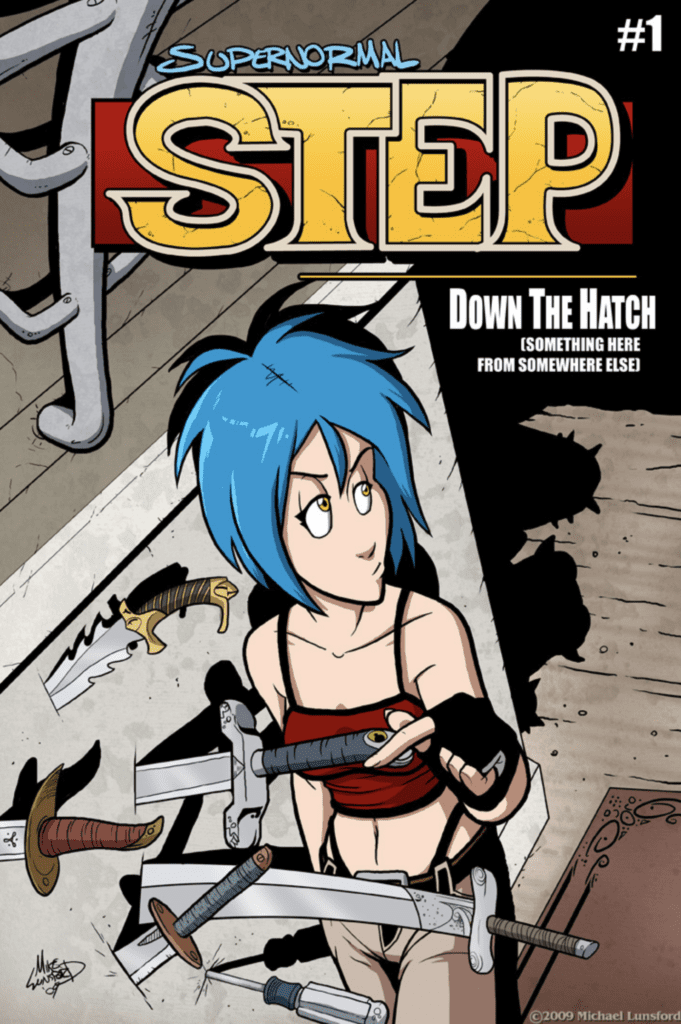
Supernormal Step by Mike L. Lunsford is a very odd comic. It features Fiona, a woman who trapped in a parallel universe full of superheroes, mutants and magic. It’s one of those comics you just kind of have to take as it goes.
Fiona, however, is also asexual and aromantic. When Akela makes a move on her, Fiona responds by coming out to her, and explaining her identity.
“I’m asexual, ace if you prefer…and aromantic at that. I’m not interested in anyone.” – Fiona
What other comics do you know that talk about asexuality?
After a soft preview of the ride two months ago, Disneyland’s newest ride “Guardians of the Galaxy Mission: Breakout!” opened to massive crowds over the holiday weekend, according to The Hollywood Reporter.
Guardians of the Galaxy Mission: Breakout
Just a few weeks after Guardians of the Galaxy: Volume Two released in theatres, the first Marvel-themed ride opened in Disneyland. The ride took over the skeleton of the “Twilight Zone: Tower of Terror” ride which opened in 1994. While there was some resistance to the change, as there always is with popular Disney attractions, that resistance was nowhere to be seen during opening weekend.
Over Memorial day weekend, lines for the ride snaked through the entire park. The wait time crept to five, even seven hours at a time. Wait times in Disney are notoriously long, especially on holiday weekends and attraction openings. However, even by Disney standards, “Mission: Breakout” is already a success.
Photo Credit: Ryan Parker, The Hollywood Reporter
Out With The Old
Disney attractions are all about storytelling using as many senses as possible. According to reports from early riders, “Mission: Breakout” does not disappoint. The queue space that was once a dusty, haunted hotel is now the Collector’s lair, complete with a life-size Cosmo animatronic.
Instead of an eerily realistic CGI Rod Serling, you are now ushered to the loading area by an eerily realistic Rocket Racoon. Rocket briefs you on your mission–helping him bust the rest of the Guardians out of the Collector’s museum–and you’re on your way.
Hollywood Reporter senior staff writer Ryan Parker explains how the “Mission: Breakout” differs from “Tower of Terror” in its ride design: “It was a whole new ride. A whole new experience…The drops are just as terrifying as they were on Tower, but Guardians also features quick ascents. The initial one is like being shot out of cannon. This is all happening while riders stop at certain sections and watch the Guardians — on screens so clear they look like windows — fight their way out while the selected song blares.”
Hidden Wonders
Some of Disney’s newer attractions keep riders coming back with multiple ride experiences. The “Tower of Terror” was an early adapter, with multiple “ride patterns”. “Mission: Breakout” has six escape scenarios, each with their own story and soundtrack. Disney started using multiple stories when updating “Star Tours” several years ago. “Star Tours” got more options each time a new Star Wars film was released. Mission: Breakout will likely do the same as the Marvel Cinematic Universe expands.
Early concept art of the ride
If the different scenarios don’t bring you back, perhaps an Easter egg hunt will. The attraction contains approximately 2,200 artifacts or ‘easter eggs’, hidden in places you may not expect. This is something the “Twilight Zone” boasted, as well–only time will tell if or more likely where the new designs pay homage to what came before.
Can’t wait your turn to ride in person? Several scenarios are already available on youtube. Check out the “We Want the Funk” version in the video below, from Disney bloggers “Inside the Magic”.
Back in May, we reviewed a fantastic new comic book by the name of Crosswind. The soon-to-be-released book from Image Comics is written by Gail Simone and illustrated by Cat Staggs. Crosswind is a body-swapping story involving a Seattle housewife and Chicago hitman.
We’ve been saying it’s Freaky Friday meets Goodfellas, which is enticing enough to get my interest,” said Staggs.
Monkeys Fighting Robots sat down with artist Staggs at MegaCon to talk about Crosswind.
“This was an unusual and interesting challenge. This book relies so heavily on me being able to portray the acting as well as I possibly can. You have to believe that this is her in his body and you have to believe that’s him in her body. So it’s an incredible study in human behavior for me. Which is something I always kind of do anyway but I have to study the way a man will carry himself versus way a woman will carry himself and when I switch, I have to display a man’s mannerisms in her body and her mannerisms in his body and I’ve given myself a list of attributes for each one of them those little habit things they would do so that the reader knows who is who at what point,” said Staggs.
Watch the complete interview below.
Will you add Crosswind to your pull-list? Comment below. The book is due out June 21 from Image Comics.
8 Years Of Extreme Rules And There’s Been Many Memorable Matches
With the latest installment of WWE Extreme Rules just around the corner, it’s time to look back at the show’s history. Starting in 2009, this event brings out hardcore & violent side of the WWE superstars. Ever since then, WWE turned a secondary PPV to something people can look forward to. Extreme Rules is even known for producing some stunning matches.
Honorable Mentions:
El Torito vs Hornswoggle (Extreme Rules 2014)
Chris Jericho vs CM Punk (Extreme Rules 2012)
Edge vs Jeff Hardy (Extreme Rules 2009)
– The first Extreme Rules PPV isn’t hailed as one of the better editions but it’s known for one of the best Ladder matches in company history. Edge and Jeff Hardy ushered in the modern Ladder match during The Attitude Era. About a decade later, they showed the WWE Universe that they were still Ladder match kings.
The Miz vs Kevin Owens vs Sami Zayn vs Cesaro (Extreme Rules 2016)
– Last year’s event featured a shocking Seth Rollins return but that moment is forever eclipsed by how amazing this match is. These four men took a mid-card match and stole the show. Sami Zayn and Kevin Owens have amazing chemistry, Cesaro is one of WWE’s best workers, and no one plays the villain quite like The Miz.
Brock Lesnar vs John Cena (Extreme Rules 2012)
– Magic happened this night. Extreme Rules 2012 is known as the best in the event’s history and this glorious main event is one of the reasons why. The return match of Brock Lesnar would’ve had hype but taking on John Cena gave it that “big fight feel”. The pairing captured lightening in a bottle with a mix of brutality and storytelling.
Evolution vs The Shield (Extreme Rules 2014)
– For many, this is their top choice. It just misses the top spot for me. Something about how chaotic the match gets takes away from it. Things get a bit lackluster towards the middle of the 6-man tag match but that’s the only complaint. What these men did was show that tag wrestling is an art form that is vastly underappreciated in wrestling.
Sheamus vs Daniel Bryan (Extreme Rules 2012)
– This match takes the top spot for so many reasons. First, it did the impossible task of following the horrid 18-second match from Wrestlemania 28. Second, Daniel Bryan displayed why he is a master of this craft; he even brought Sheamus up to his level. And finally, this match is just a perfectly booked match. Professional wrestling at its purist.
Let me know if you agree with my list in the comments below. Don’t forget to leave your choices on the best matches in Extreme Rules history!
Jason Aaron can do it all. Aside from writing grand, galactic stories for Marvel like Star Wars and Thor, Aaron also has his own best-selling, creator-owned work like Southern Bastards. Monkeys Fighting Robots had the chance to speak with Aaron at MegaCon this past weekend, and asked him about that range, about what makes a good Thor story, and about how he handles nerd outrage online.
Watch his full response here:
On Thor:
“The idea of this magic hammer and this enchantment and that it can transform you into something else was literally the first thing that Stan and Jack did with that character, so that part has always been intrinsic in who Thor is,” Aaron stated. “That inscription on the hammer, that promise of transformation has always been a part of Thor’s mythology … so the idea of Jane Foster being someone who is struggling with cancer and at the same time is worthy to pick up the hammer and fly around the cosmos as Thor saving the day, that to me is a Thor story. That is not changing anything that has come before it. Just because it’s a different person holding the hammer doesn’t change the nature of what the story is. To me, it’s the most Thor story of all the Thor stories I’ve done so far.”
On If He Worries About Nerd Rage:
“No, I never worry about any of that. I don’t know how to do that. I don’t know how to write stories like that. I don’t know how to sit down and write a story for you, or for somebody on Twitter, or for anybody else other than myself. So every day when I sit down to work, it’s really just for me. I’m writing stories that I want to read, and then I somehow get these amazing people to draw them and make them a real thing … I just know that if I’m invested in it, if I have an emotional response to it, then hopefully somebody else out there will as well.”
On Writing Different Kinds Of Stories:
“I don’t do things any differently. It’s different in terms of, with Thor, I get to stand on the shoulders of giants and that I’ve got this toy box full of stuff to play with that people have been building for decades … with Southern Bastards, if I didn’t make it up, it doesn’t exist yet. Everything’s gotta come out of your own head. So it’s different challenges, but it’s not a different sort of job, really, going from one to the other.”
“I read a lot of different stuff, me as a fan, as a reader. I like independent stuff, I like superhero stuff, so I read a diverse mix of stuff. So I always love it when somebody comes up to my table and they’ve got like Scalped and Thor, or Southern Bastards and Wolverine and the X-Men, books that are very, very different. Cause I like doing books that don’t have the same voice, the same tone, that are very, very different … But if you only like one of those, if you don’t like the rest, that’s cool too. Like, read the stuff that makes you happy. If you don’t like superhero stuff, then I do other stuff. My wife doesn’t read my superhero stuff … so even in my own home I have somebody who isn’t reading all of my stuff.”
Aaron had a lot more to say, so be sure to watch the full video above. And keep it tuned to Monkeys Fighting Robots for more MegaCon interviews from this past weekend!
If you come into Brian De Palma’s The Untouchables expecting a history lesson, well, that’s your fault. In no way is this an accurate portrayal of treasury officer Eliot Ness and his showdown with the volcanic, tax-evading sociopath mobster Al Capone; what it is is a magnificent cops and robbers fable whose romanticism has only grown more endearing over the last thirty years.
With the razor-sharp, melodramatic score from the incomparable maestro Ennio Morricone, tapping into a certain urgency when needed, the prickly screenplay from the master, David Mamet, the slick cinematography, terrific suspense, and a cast who seemed to be born for their respective roles at the time, The Untouchables whisks along on its substantial merits, leaving all historical accuracy behind in lieu of a rich bit of pulp storytelling that makes it one of the best of all gangster films. And in 1987, this sort of story felt alien.
The mid 80s was a bit of a void for the gangster genre. Save for De Palma’s other gangster opus, Scarface in 1983, the genre had seen a significant ebb in the midst of Reagan’s “Morning in America” hedonism. A look back at the crooks and thieves of America’s past wasn’t in vogue, and The Untouchables represented a distant era of the country that hadn’t been explored during the decade. But De Palma delivered the goods, and his film was noticed; and as the decades tick away, the idiosyncratic style De Palma employs here has become both a relic and a flashpoint of a certain type of crime drama we may never see again.
Sean Connery’s Jim Malone has always gotten the bulk of praise, and rightfully so because his character is the most magnanimous of the group. Connery knows how to deliver David Mamet’s words with a certain extra bit of juice – the scene inside the church is one of the best of the entire genre thanks to the urgency in his cadence. But The Untouchables wouldn’t be near as captivating were it not for the blank-slate performances of Kevin Costner as Eliot Ness. Costner’s dry, deliberately wooden performance as the Boy Scout treasury officer grounds the entire story in reality. As the cops and robbers shoot-em-up elements spiral up and out around him, De Palma’s camera flourishes brilliantly, and Mamet’s screenplay embellishes at every turn, it’s Costner’s flat delivery and dry vocal chords that keep the story centered.
The rest of the cast is just as perfect as Connery and Costner. Robert De Niro, who seems to be working with his own set of rules, adds a specter of menace as Al Capone. He may only have a few moments to shine – namely the baseball bat scene in the middle of the second act – but his presence looms large. He is more of a mythological beast come to life as his performance is exclusive from the center of the story, but the distance works. Andy Garcia is perfectly prickly as Stone, and Charles Martin Smith handles the unfortunate duties of “First to Die” team member, Oscar.
For all its pomp and circumstance at the time, The Untouchables has managed to sing even louder and sharper in this, it’s thirtieth year. It has all the familiar De Palma style flourishes, but remains a classic tale of cops and crooks, told less as a true story and more as a fable of pulp fiction, handed down through generations of kids who remember Eliot Ness wiping the streets clean of crime during the prohibition. De Palma captures the mysticism of these unflappable lawmen, dedicated to justice and unflinching in the face of danger. The purity of this story feels wholly unfamiliar when compared to the De Palma catalogue, full of rogues and murderers. But he manages to hit all the right beats to romanticize a bygone era in both cinema and American history.
De Palma’s action set pieces still work beautifully, for all their flaws. The shootout at the Canada border, the showdown between Ness and Frank Nitti (Billy Drago) on the rooftop, the Battleship Potemkin homage on the staircase in Grand Central and, most tragically, Nitti’s visit to Malone’s apartment… they all sing with the terrific choreography of a master at the top of his craft.
The immediate play would be to compare The Untouchables to the classic gangster films. How does it stack up against the likes of White Heat? The Godfather? Goodfellas? Maybe it isn’t as seamless or classic as some of the best of the genre – and for my money Carlito’s Way is the better De Palma entry into this field – but something about The Untouchables feels more timeless than just about any of the greats. Perhaps it’s the effervescent approach to the story, or Mamet’s killer words, or the impeccable casting that give the film a timeless quality. Whatever the case, the story has only gotten more potent and more captivating over the last thirty years.
Perhaps The Untouchables is a classic because of its flaws rather than in spite of them.