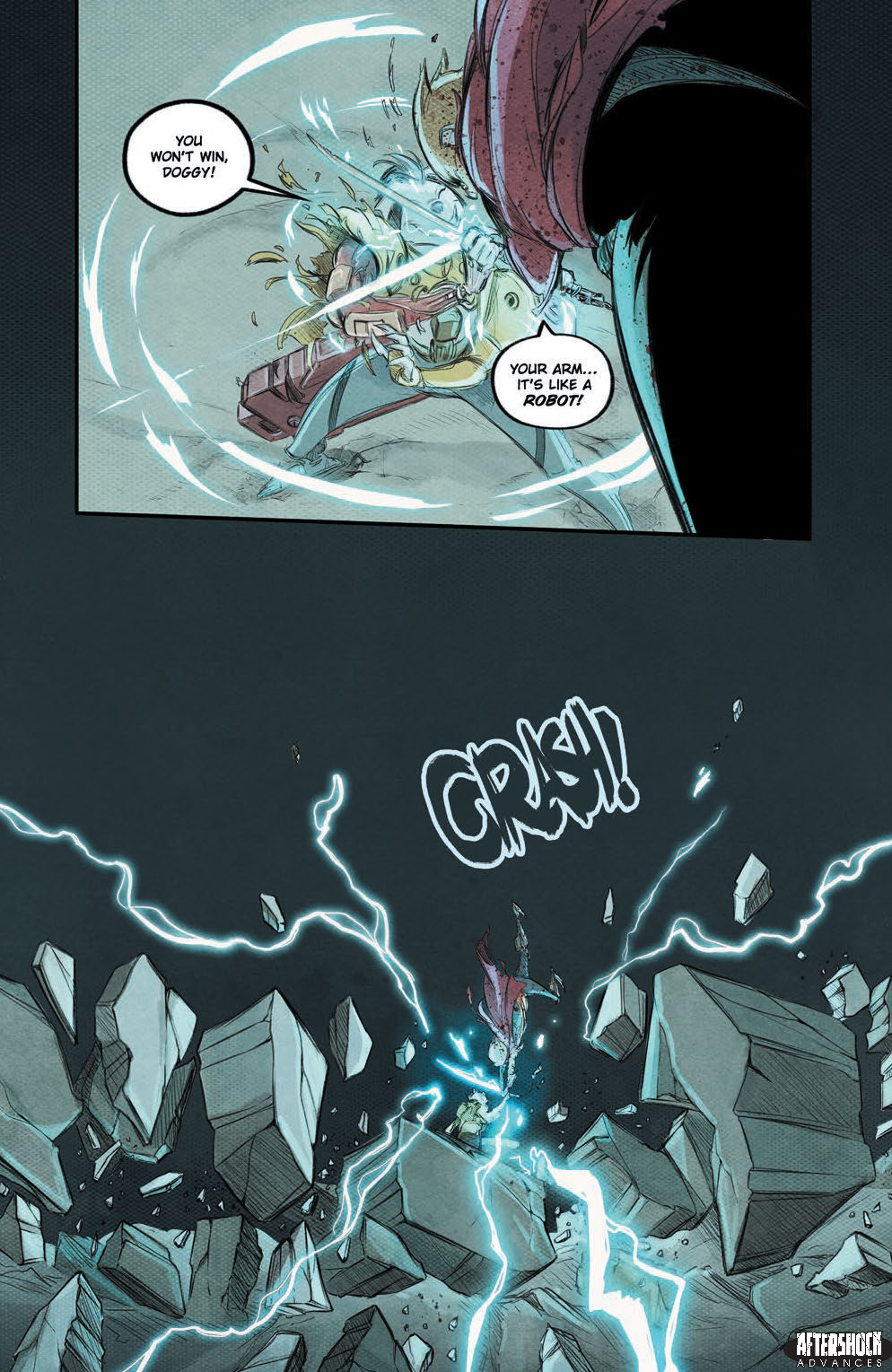
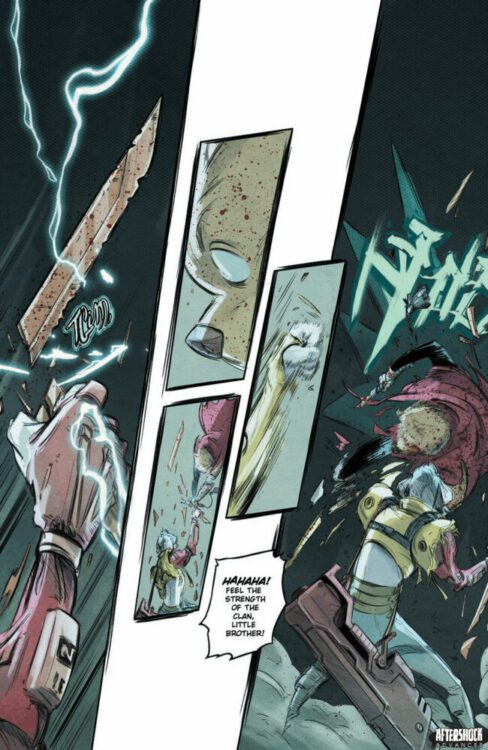
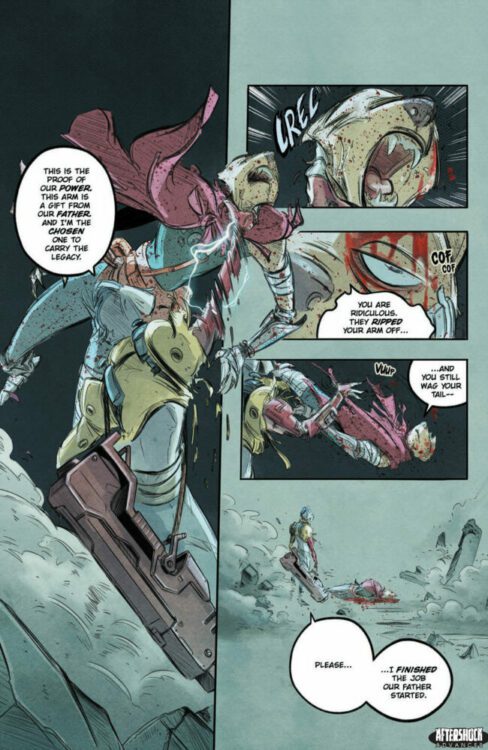
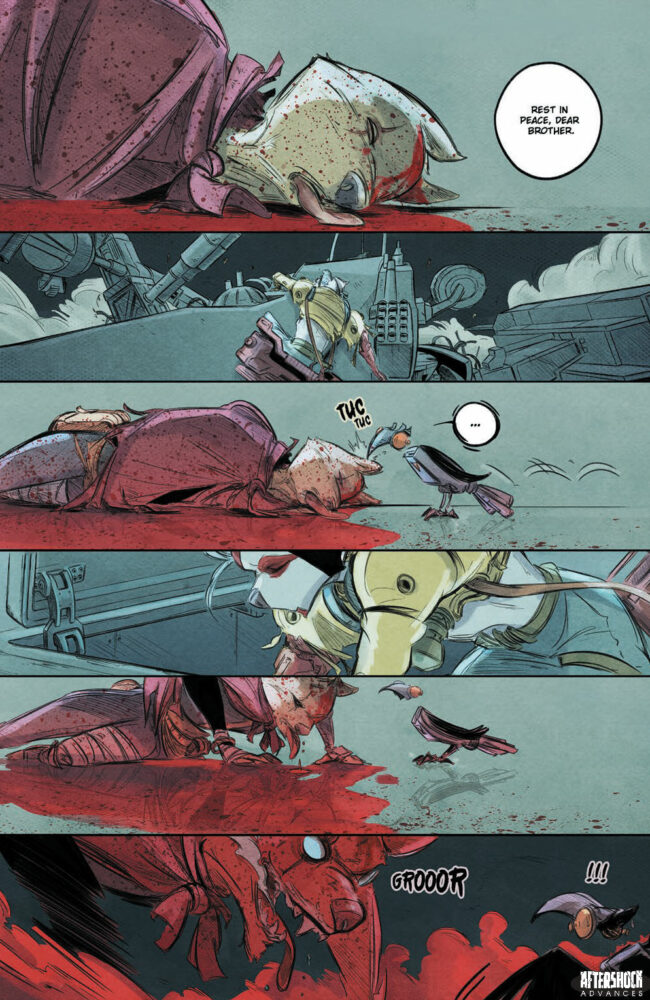
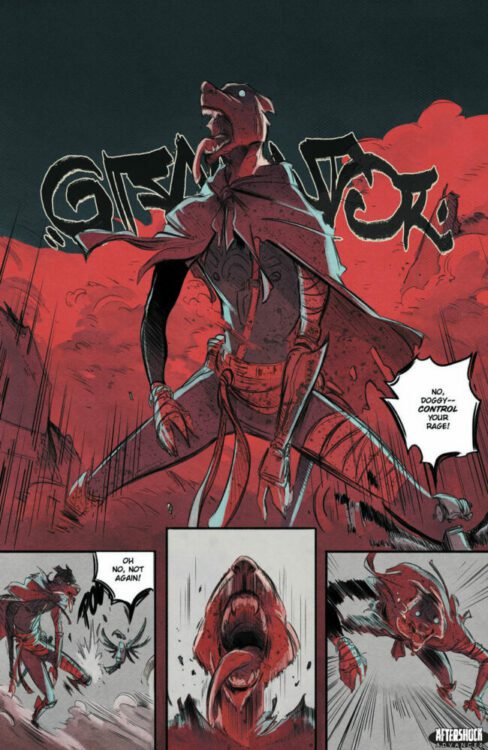
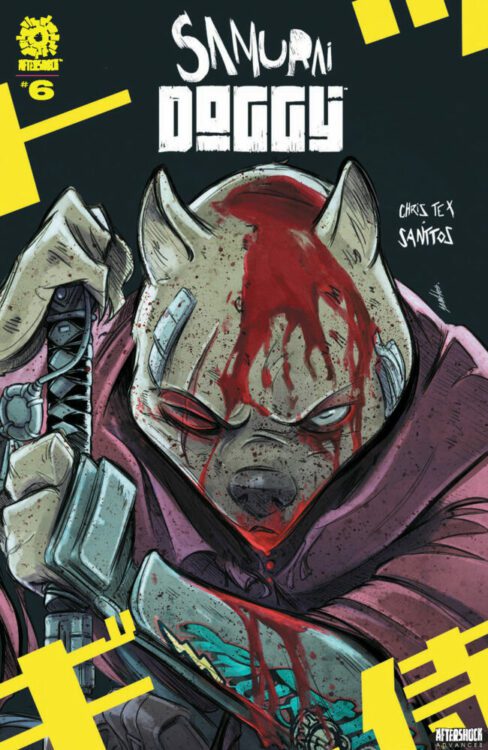
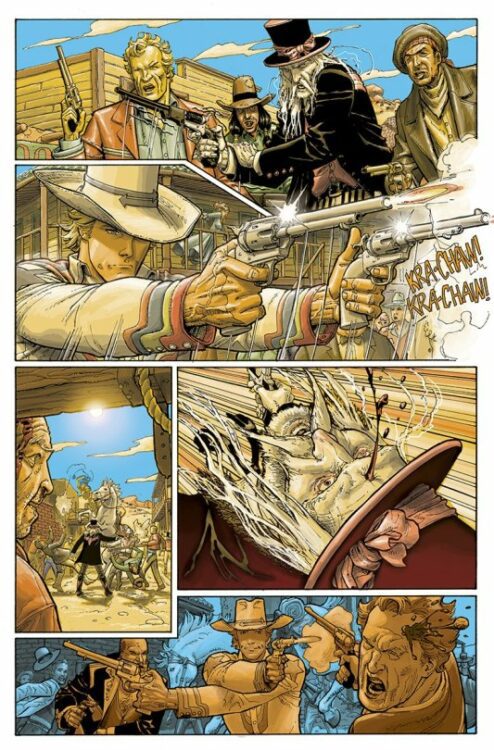
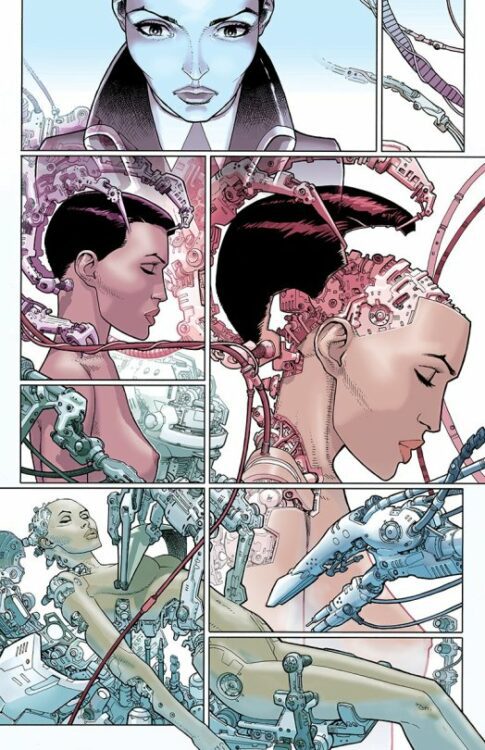
SAMURAI DOGGY #6 hits your local comic book store May 10th, but thanks to AfterShock Comics, Monkeys Fighting Robots has an exclusive five-page preview for you.
About the issue: After a long and tiring search, Doggy has finally found one of his siblings, but after so much time apart, can Doggy trust him?
The series is by writer Chris Tex and artist Santtos; the cover is by Santtos.
Check out our SAMURAI DOGGY #6 preview below:
Are you reading SAMURAI DOGGY? Sound off in the comments!
We are here to tell you what trades and collections you should be looking out for this month from Marvel Comics!
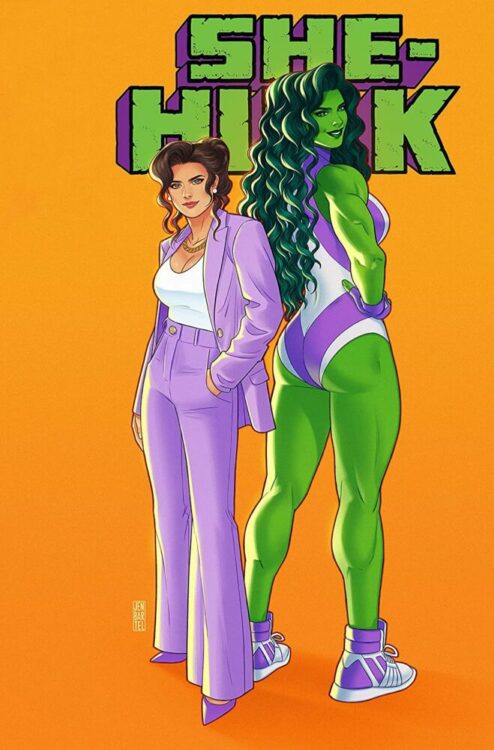
1. She-Hulk Volume 2: Jen of Hearts
The second volume of writer Rainbow Rowell’s She-Hulk is out at the end of the month, and this series continues to be a delight.
Rowell seamlessly blends slice-of-life with superhero antics and legal drama. You get romance, comedy, action, and more with this series, as She-Hulk’s relationship with Jack of Hearts blossoms while she tries to re-establish her law career.
This volume is illustrated by Luca Maresca and Takeshi Miyazawa, with colors by Rico Renzi and letters by Joe Caramagna, and it’s a visual treat. A story like this requires art that can balance big action with small character moments, and this team does just that.
She-Hulk: Jen ofHearts is an overall fun read that will put a smile on your face right before it punches you in the heart (in a good way).
Release date: May 30th, 2023
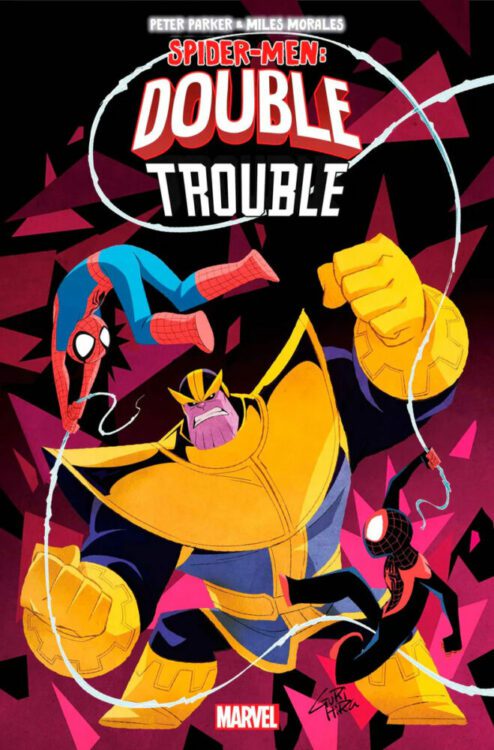
2. Peter Parker & Miles Morales: Spider-Men Double Trouble
We have a new digest-sized Double Trouble book out this month, this one featuring both infamous wall-crawlers, written by Mariko Tamaki and Vita Ayala, with art by Gurihiru, and letters by Cory Petit.
Miles Morales shadows Peter Parker on “Take Your Sidekick to Work Day” (despite his vocal protests) and the two end up battling just about every supervillain in Spider-Man’s rogue gallery. This all-ages romp is a blast for Spider-Fans of any age, full of jokes, Looney Tunes antics, and some legitimate superhero action sequences.
Gurihiru is the perfect choice for art on these Double Trouble books. Their work is whimsical and cartoony, and overall just delightful — a perfect match for Tamaki and Ayala’s lighthearted and witty script.
Release date: May 23rd, 2023
3. She-Hulk Epic Collection: The Cosmic Squish Principle
Marvel is releasing their second She-Hulk Epic Collection this month, this one collecting Sensational She-Hulk #13-30, featuring work by Steve Gerber, Simon Furman, Bryan Hitch, and many more!
She may have started out “Savage,” but She-Hulk’s “Sensational” period is where she came into her own as a character. If you’re looking to see where many of Jen Walters’ modern character traits come from, simply pick up her two Epic Collections that will be available by the end of the month, compiling the first half of Sensational She-Hulk‘s run.
This volume features cameos from a large chunk of Marvel’s great pantheon of characters, and also includes Jen’s very brief stint as the more savage-minded Grey She-Hulk.
Release date: May 31st, 2023
4. Sgt. Fury Epic Collection: Berlin Breakout
It’s been a few years, but we’re finally getting the second volume of Sgt. Fury and his Howling Commandos in Marvel’s Epic Collection series, gathering issues #20-36 and Annuals #1 and 2, by writers Stan Lee and Roy Thomas, and penciller Dick Ayers.
Celebrate Nick Fury’s 60th anniversary this year by going back to where his adventures began: World War II. If you ever wanted to check out what classic Marvel had to offer outside of superhero shenanigans, here is your chance. This title follows Sgt. Fury and his elite squad as they take on the Axis of Evil — and in this volume, you’ll even get to see the origin of Fury’s iconic eyepatch (spoiler-alert, it does not include a scratch from an alien cat).
Release date: May 31st, 2023
What trades and collections are you planning to pick up this month from Marvel Comics? Sound off in the comments, and we’ll see you back here in a month!
The premise is simple: read one comic every day for the entire year. It seems like a simple task but there is no way that I read 365 comics last year, even if you count the individual issues in collections. So, this year, I am committing myself to this reading challenge, in the hope that I can broaden my reading habits and fully engage with my favorite hobby again.
I’ve seen a post doing the rounds of Twitter asking people to post the comic that got them into the medium. Not necessarily the first comic that people read, but the one that was their gateway into the world of sequential art. If you’ve been reading this column for a while, it’ll come as no surprise that The Transformers was instrumental in my early comic addiction. However, I have been reading comics for as long as I can remember, and there are a number of other comics from the same time that helped nurture my love of the medium.
I remember that I had a large collection of Beano comics dating from 1984 to the end of the 1980s. This collection included a long running mystery that involved the disappearance of Dennis the Menace’s pet dog Gnasher. Gnasher went missing for 7 whole weeks (a long time for a young reader). Reading about the growing distress of the central character as he searched for his best friend must have made an emotional impact, because I couldn’t tell you what happened in any of the other 200 issues that I kept until my late teens. However, I can still remember aspects of that particular story.
I also remember reading Scouse Mouse Presents ACE, a comic featuring a Liverpudlian cartoon mouse and his friends. Again, I don’t remember much that happened in the actual stories but I do remember copying the characters onto my school books and even cutting out the artwork to stick on my wall and on folders. Luckily, I didn’t do that with any of the Amazing Spider-Man comics I had at the time (at least not that I will admit to).
The point is, I find it difficult to pinpoint one comic that started my obsession; it was a multitude of comics, bought and read over a period of years. Like a chain reaction, leading from one creative product to the next. One aspect of comic publishing (in the UK at least) that was instrumental to my early reading was the Annual. Long running, popular comics released a hardback book each year full of comic strips, text stories, and other paraphernalia. The most famous are probably Beano and Dandy, but there were so many others. And it is a tradition that is still going on today. There is a lot of excitement every year for the release of the Doctor Who and Beano Annuals, so hopefully these books are inspiring the comics fans of the future.
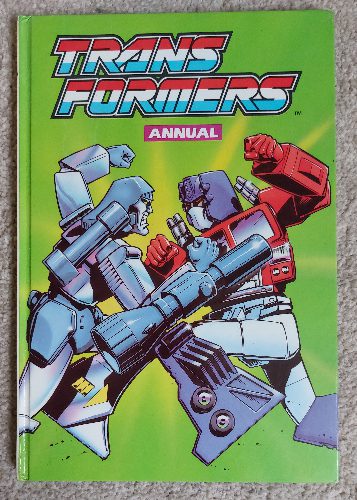
Transformers Annual 1990 Credit: Marvel Comics UK
Comic Number 113: Transformers Annual 1990
Obviously, I have a number of Transformers Annuals, from the first one in 1985 through to this one from 1990. I only missed out on two that were published in 1991 and 1992. I picked the wrong one to read this week though, because this came out after the weeklies I’m currently reading. Luckily, nothing gets spoiled…
The book contains a mix of comic strips, text stories, a history so far (which I skipped), and a collection of quizzes and fact-files. It’s a treasure trove for young Transformers fans. The stories are entertaining and the comics are wonderfully drawn. The best part of this book is checking out the British talent involved in putting it together. Names like Dan Abnett, Dan Reed, Andy Wildman, and Ian Rimmer, are all creators recognizable from the weekly comics but also from a host of other comics published at the time and in the 30 years since this annual was released.
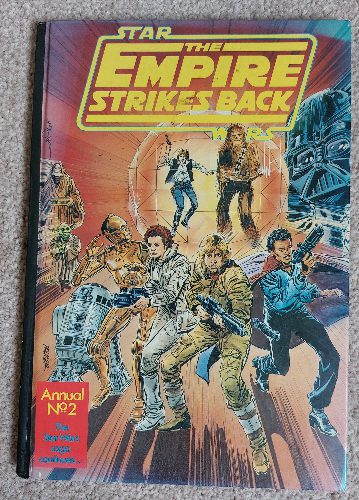
The Empire Strikes Back Annual Number 2 Credit: Marvel Comics
Comic Number 114: The Empire Strikes Backs Annual 2 1981
Another Marvel offering, this time reprinting issues #50 and #46 of the Star Wars comic (I’ve numbered them that way around because that’s the way they have been printed in the book).
Set after The Empire Strikes Back , these stories fill in some of the story between Empire and Return of the Jedi, but still manage to use all of the popular characters. The Crimson Forever employs the story within a story literary technique to include the popular, scruffy looking scoundrel Han Solo, and an expressive dream sequence allows Luke to interact with Darth Vader.
Archie Goodwin writes a compelling narrative that incorporates movie and comic continuity in a stand alone story. The artwork is intricate but it is the coloring by Don Warfield that makes the visuals stand out in this reprint.
There’s nothing else in this book beside the two comic stories. There isn’t even an introduction page, which, compared to the other annuals I used to read growing up, seems a bit content stingy. I nearly wrote that it might have something to do with the date of publication, as most of the annuals I read were from the later half of the 1980’s but then I remembered the next book I’ve got out to read…
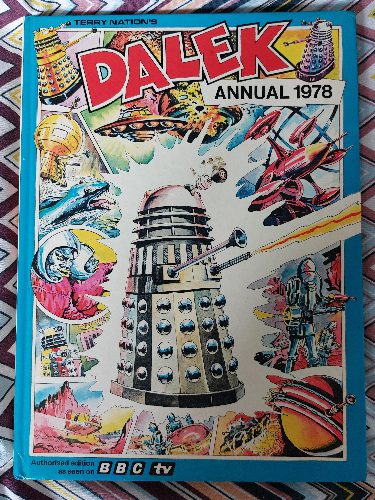
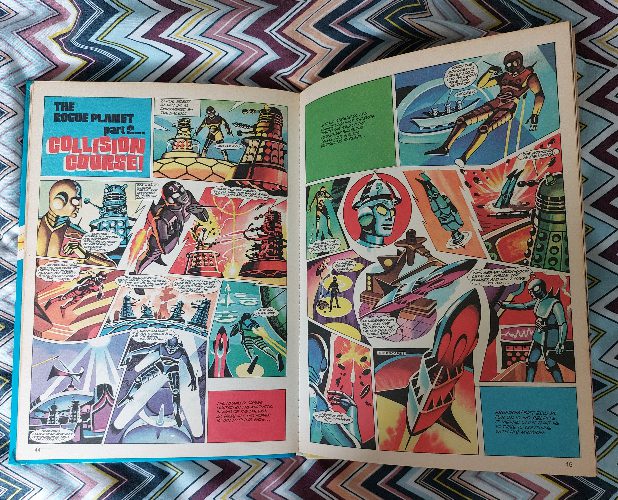
Dalek Annual 1978 Credit: World Distributors
Comic Number 115: Dalek Annual 1978
What a wonderful piece of children’s entertainment this book is. Fact based trivia sits side-by-side with science-fiction fantasy. The life and times of Davros, creator of the Daleks, is presented as a historical examination of the fall of a genius and asks the question: was he a madman?
The text stories are accompanied with beautiful illustrations by… who knows? There are no credits in this book, aside from Terry Nation’s name as creator, which is a shame because there is some outstanding work in this book. The Dalek comic strips are sublime. The page layouts are truly adventurous with barely a stable grid pattern to be seen. The standard layout is obscured by odd shaped panels that lack uniformity, page after page. The opening and closing panels of each page are the only regularly shaped panels and hint at the fact they have been resourced from a weekly format. I love the expansive and elaborate Dalek comic strips and the range of design for the characters and creatures that inhabit the worlds.
Dalek Comics Strip reprinted in the 1978 Dalek Annual
There is something joyful about the comic strips in this book and the fun factor spreads to the rest of the annual. Yes, this is for children, but it does not speak down to anyone and therefore becomes a pleasure to read, even as an adult.
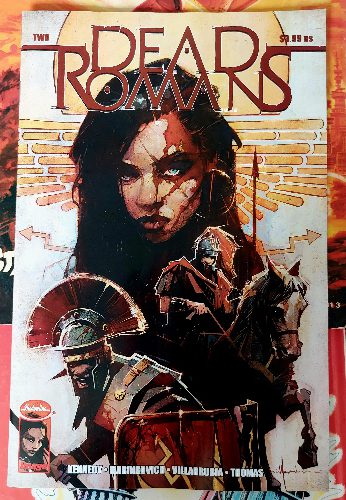
Dead Romans #2 Credit: Image Comics
Comic Number 116: Dead Romans #2
All stop for the new issue of Dead Romans. I’m loving this comic and don’t have much more to say about it.
I mean, the artwork by Nick Marinkovich is outstanding. It captures the desperation of the Roman Legion lost in the Teutoburg swamp lands, hounded by the combined forces of local tribes. The violence of the narrative — written superbly by Fred Kennedy — is there in every panel, accentuated by Jose Villarrubia’s coloring. Even the word balloons by Andrew Thomas are smudged, illustrating the rain and mud that traps the soldiers in the forest.
It is an absolute visual treat and easily one of the best new comics I have read this year.
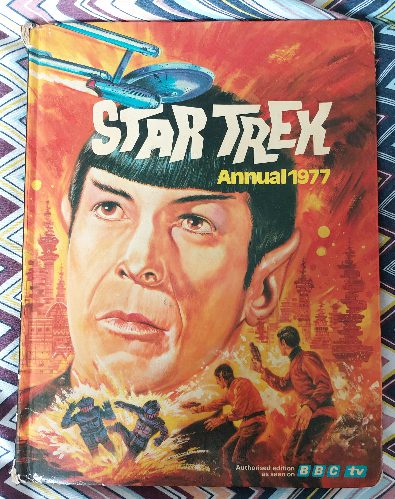
Star Trek Annual 1977 Credit: World Distributors
Comic Number 117: Star Trek Annual 1977
This is the oldest annual I am reading this week (but not the oldest I own, as I have some Doctor Who annuals from a few years earlier) but it isn’t much different from any of the others. The paratext has an educational leaning and the comic stories feel as though they could be set on the same back lots where the original series was filmed. The narratives are more elaborate but the design and setting is not too outlandish, almost a contrast to the Star Wars comics from the same period.
The most fascinating thing about this book is that, once again, there are no credits inside. Even the creators’ names have been removed from the re-printed comic strips. In today’s internet world, it is relatively easy to track down the original comics and the creators, but when this comic came out, especially in the UK, finding out who wrote or illustrated any of this book would have been extremely difficult. Even into the late 1980s, creator credit was not given to the people who worked on British comics. I remember meeting Dan Abnett and finding out that one of the text sections in the Real Ghostbusters comic was written by him. Each issue had a page of Egon Spengler’s Spirit Guide, so over the years, it amounted to a significant number of pages and not once was Abnett credited. A number of creators who I have spoken to who worked in British Comics publishing, especially Marvel UK, have indicated that a lot of the filler work in the comics were produced by whoever happened to be in the office at the time. It’s an interesting way of working and one that would not be tolerated today. Probably…
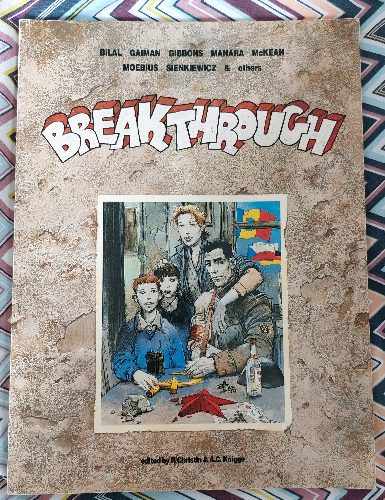
Breakthrough Credit: Titan Books
Comic Number 118: Breakthrough
Published by Titan Books in 1990, this book edited by P Christin and AC Knigge collects a selection of stories all written as a reaction to the fall of the Berlin Wall. It has work by some of the biggest comic book creators from the last 50 years and is a thought provoking, moving examination of an important historical event. Unfortunately, some of the stories are still relevant to today’s world and a cynic may say that we haven’t learned a thing.
Writers and artists such as Bill Sienkiewicz, Neil Gaiman, Milo Manara, Dave Gibbons, and the outstanding Moebius contributed to this book. There are science fiction stories, superhero tales, and moving life dramas, all that have a common theme derived from the fall of the Berlin Wall. Some of the work is cynical, some heartbreaking, but there is an overriding feeling of hope emanating from the collection. It is a stunning book and one that I would recommend to people. Stories such as Matthias Schultheiss’ Them are subtle social commentaries whereas Zeljko Pahek’s The Black Scar is a little more on the nose. But all are compelling reads.
As a way of commemorating an event, producing a book like Breakthrough is a wonderful idea. The fact that the editors used writers and artists from a range of countries and backgrounds also adds to the excitement of the book. Each comic has a different perspective of the same event and, as a reader, you can’t help but compare and contrast.
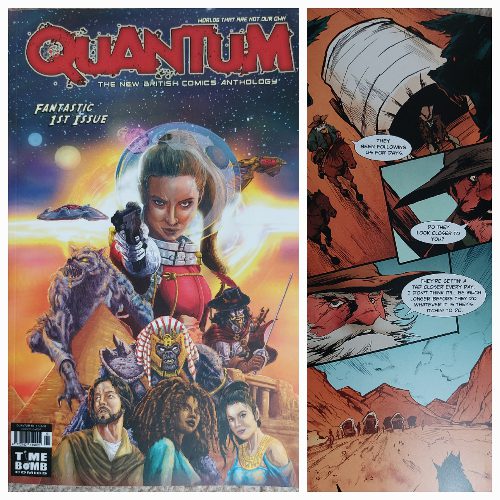
Quantum #1 Credit: Time Bomb Comics
Comic Number 119: Quantum #1
The final entry for this week is a bit different. It is a new anthology comic from British publishers Time Bomb Comics. The aim of the comic is to recapture some of the newsagent sales that were the backbone of British comics for decades. When I was young, all of my comics came from newsagents and I didn’t go to a specialist comic shop until I was a teenager — however the range of comics that I could buy and read was immense. Children’s titles such as The Beano sat on the shelf with The Transformers, The Punisher,Aliens, and, of course, 2000AD. There were even a selection of adult humor comics such as Viz and Electric Soup that were available on the shelf every month without having to travel to a city or a specialist shop.
I’m not sure at what point the newsagent sales died out but it was definitely in the last 25 years. I worked for WH Smiths (one of the biggest stationary and magazine shops in the country), and in my time there I saw a decline in the comic titles that we stocked. Randomly, I saw the number of boating magazines increase. I don’t think the two were related.
The point is, these days buying comics is no longer a simple, impulsive thing to do, especially if you are younger. You have to go out of your way to find and buy comics. Time Bomb Comics are wanting to change that, just a little bit, with this new title Quantum. It is a kind of rival title to 2000AD but with a more historical edge, rather than straight sci-fi. Quantum features alternative realities of the British Empire, Supernatural Westerns, and modern day Superhero-esq stories. All are fascinating as first parts, but “WesterNoir” by Dave West and Gary Crutchley and “Whatever Happened to the World’s Fastest Man?” by West (again) and Marleen Starksfield Lowe are the standout comics for me. I have already built up a love for “WesterNoir” as for a number of years I’ve been buying the comics from the Thought Bubble convention whenever I’ve been there, but the latter comic also has an interesting premise and well structured gray scale artwork.
I’m not sure if this comic has the strength to reignite the newsagent market for comics, but it has got off to a good start and I will be checking out issue two.
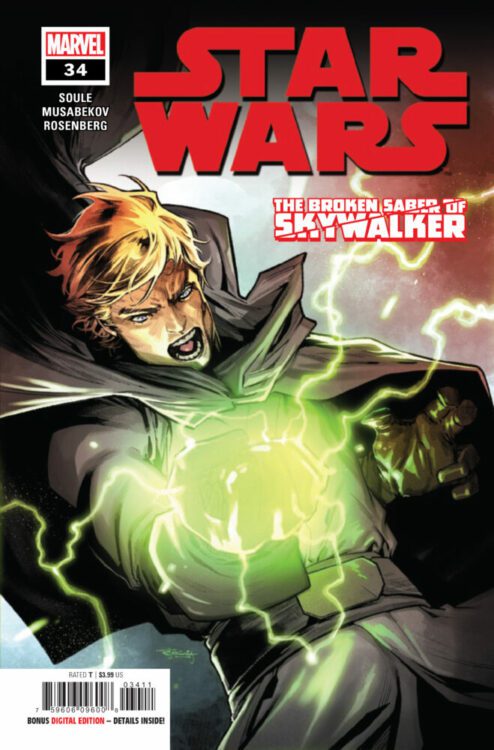
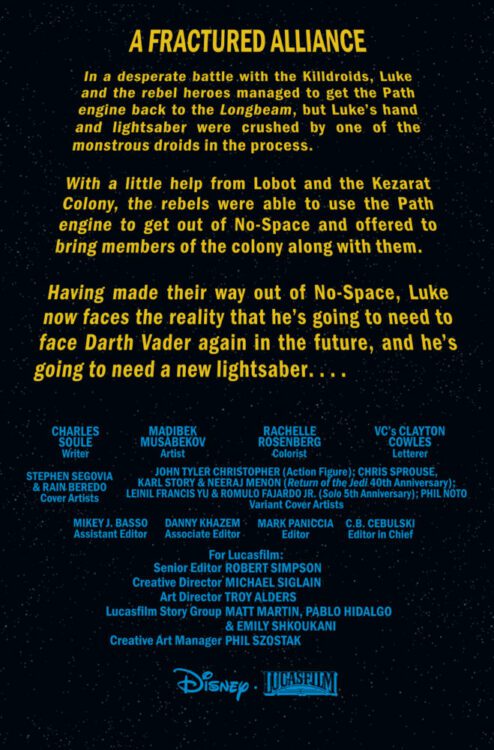
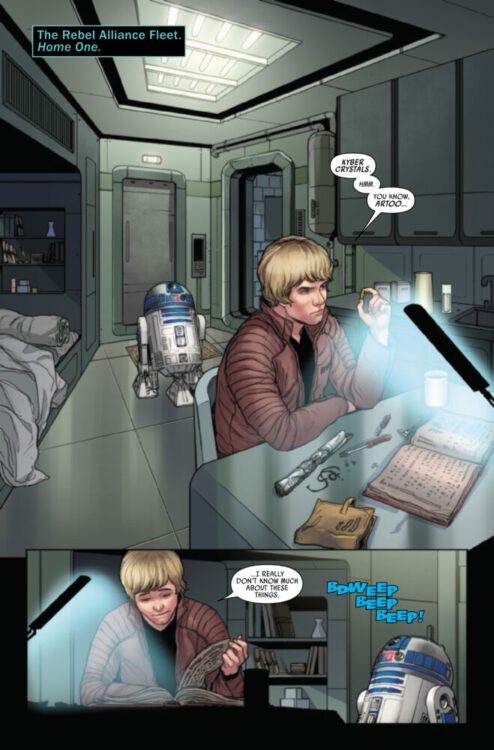
STAR WARS #34 hits your local comic book store on May 3rd, but thanks to Marvel Comics, Monkeys Fighting Robots has an exclusive four-page preview for you!
About the issue: THE BROKEN SABER OF SKYWALKER!
LUKE SKYWALKER searches for one of the rarest substances in the galaxy — KYBER, the living crystal that powers LIGHTSABERS! Does it hold the answer to the unpredictable thing the Force has become (see HIDDEN EMPIRE #5!)? What long-lost secret is he about to uncover?
The issue is by writer Charles Soule and artist Madibek Musabekov, with colors by Rachelle Rosenberg, and letters by Clayton Cowles. The main cover is by Stephen Segovia and Rain Beredo.
Check out the STAR WARS #34 preview below:
Are you reading Marvel’s STAR WARS comic? Sound off in the comments!
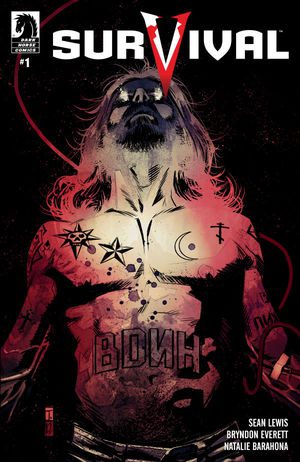
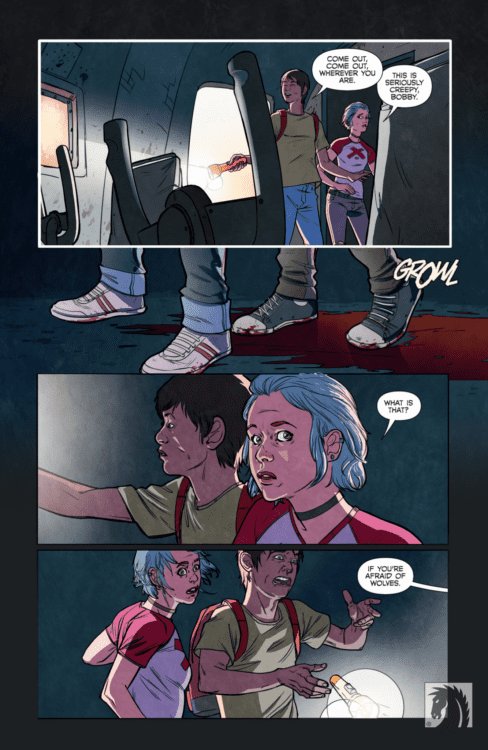
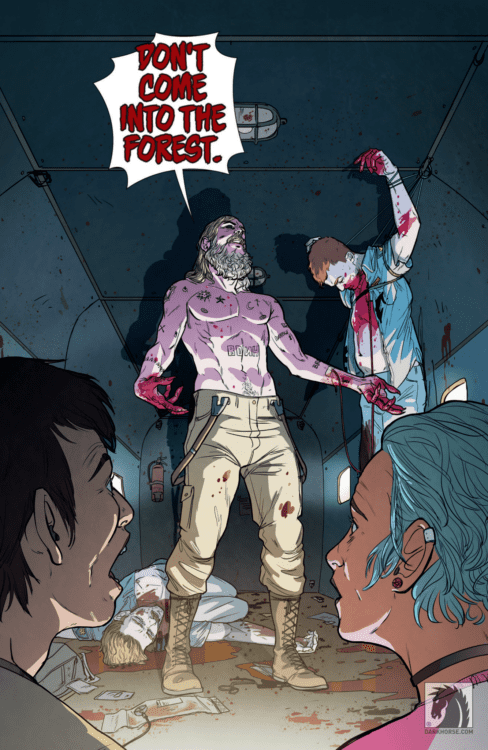
SEAN LEWIS AND BRYNDON EVERETT INFUSE POLITICAL STRIFE WITH VICIOUS BLOODSUCKERS IN “SURVIVAL #1”
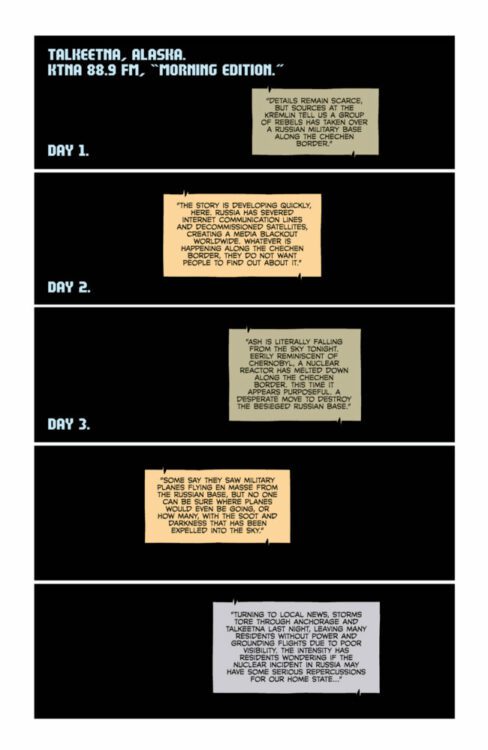
Dark Horse Comics presents a new political horror-action comic set in the Alaskan wilderness with Survival #1. This new comic series combines the action-packed drama of Red Dawn and the horror of 30 Days of Night. Sean Lewis (King Spawn) and artist Bryndon Everett (Half Breeds) present a new invasion as supernatural Russian forces storm the coast of Alaska. But this siege isn’t just designed for political dominance and empire building—these invaders will literally attempt to suck the blood from their new target. Natalie Barahona (Kill Whitney Donovan) provides colors, with lettering by Ed Dukeshire, and cover art by Tomm Coker (The Black Monday Murders). The series is produced by 12-Gauge Comics (Plastic, Plush).
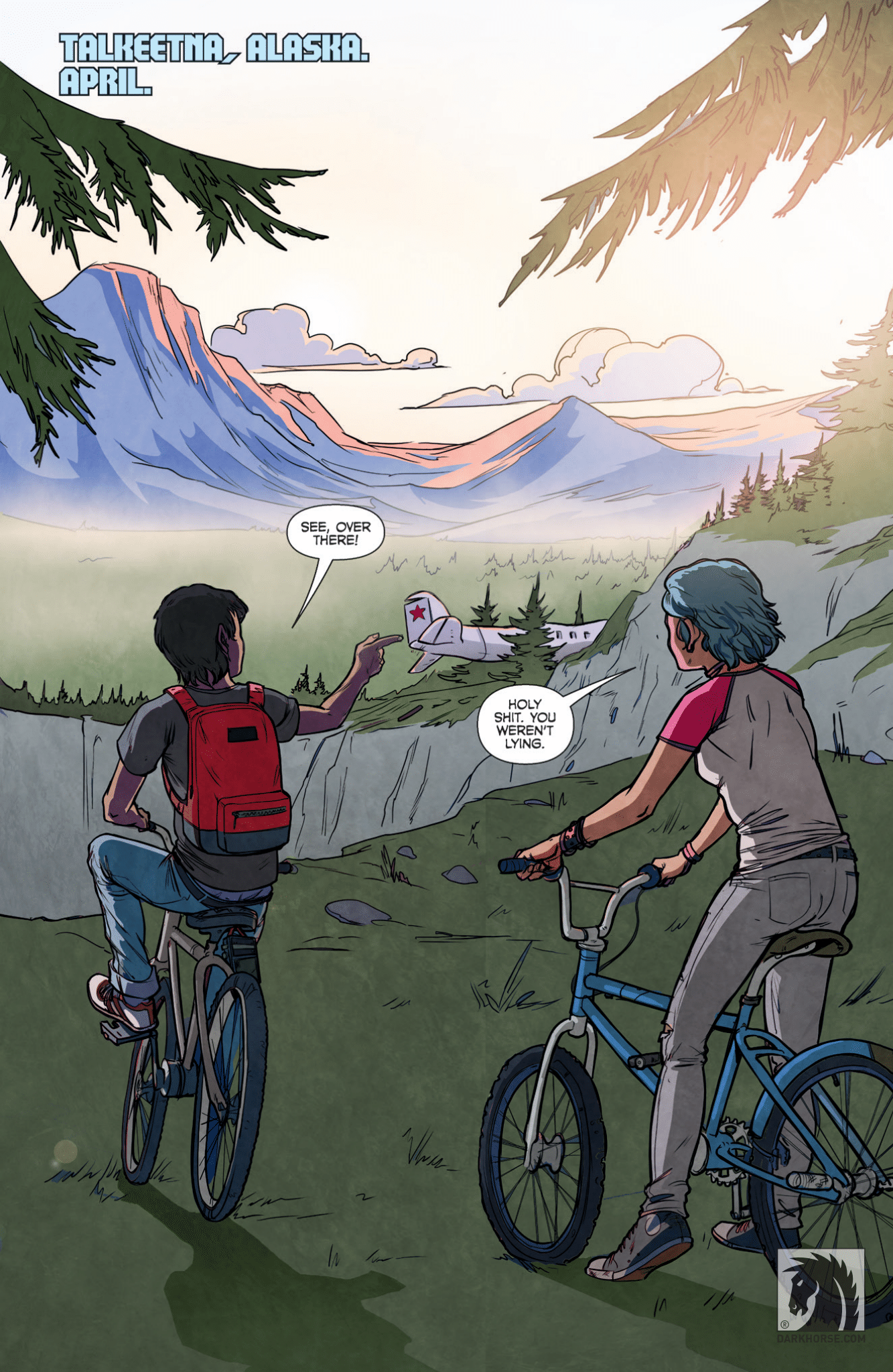
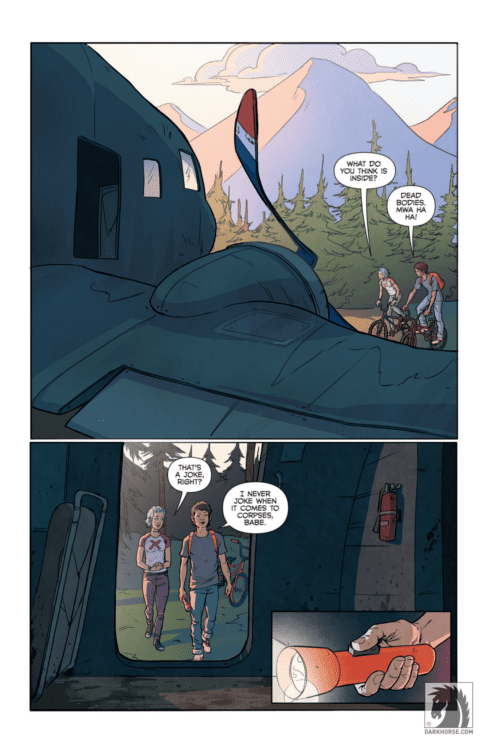
When Emma Reed journeyed back to her hometown in Alaska, she was expecting little more than a tense family reunion at the annual military alumni get together. But early that morning, a plane crash landed in the thick woods near the mountain. And the creature within brings an ancient terror to the last American frontier, and will turn this unspoiled wilderness into a killing ground.
“Survival was written years before Russia invaded Ukraine,” writer Sean Lewis reflects. “Some would call it prescient, but it seemed obvious—old empires don’t like to fall. Survival merges a social aspect with a very fun, very pulp story of vampires and machine guns, survivalists and invaders.”
“Not only did I grow up at the tail-end of the Cold War reading comics, pulp novels, and watching B-movies with my Dad, but my Grandfather was also a hermit on the Olympic peninsula,” artist Bryndon Everett explains. “I spent my summers with him on his mountain, learning bushcraft and learning the value of self-reliance. This is my world, so it was a whole lot of fun getting to be a part of this project.”
Survival #1 hits your local comic shop on May 3rd!
The premise is simple: read one comic every day for the entire year. It seems like a simple task but there is no way that I read 365 comics last year, even if you count the individual issues in collections. So, this year, I am committing myself to this reading challenge, in the hope that I can broaden my reading habits and fully engage with my favorite hobby again.
This week I will mostly be reading X-Men related titles. After starting on the Endangered Species story-line last week I ended up pulling out a bunch of related titles. The best part of the X-Men comics is that they manage to tap into the pure superhero entertainment vibe while having something worthwhile to say about culture and make wider social statements.
I also noticed a problem, however, with a number of the titles that I pulled out. It is fair to say that over the years a number of creators have fallen out of favor due to their inappropriate and, sometimes, criminal behavior. A selection of writers who have written X-Men titles number among these and I do not want to be seen to promote their work. However, this does pose a dilemma when the work that they produced has cultural or historical significance to the comics I am reading and studying.
In January 2013 USA Today published an article promoting a new X-Men title that would feature the first entirely female team. The main lead was Jubilee and the comic would feature A-list characters such as Storm, Kitty Pryde, and Rouge as central team members. This was a big, pivotal announcement for a franchise that has always featured strong female characters. Unfortunately for the comic, later in 2013 the writer was accused of sexual harassment and spreading malicious rumors. Although this did not end the comic’s run, the writer left on his own volition after 17 issues and was replaced by someone else. Later allegations, however, did put an end to his public comic book career.
What this means is that we are left with a significant entry into X-Men lore that has become difficult to discuss. Something similar is happening in the world of Harry Potter, where a new T.V. series has been announced but fans are torn between being excited for a new show based on their favorite books and supporting an author who has courted controversy with her public transgender statements. It is a difficult task to separate Art from the Artist, especially when the artist is still alive and creating.
Therefore, this week I may discuss comics produced by controversial creators but that does not mean that I endorse their actions. I would not recommend that anyone go out and buy the comics produced by these creators but they are still worth reading and, therefore, if you are interested, I would advise sourcing copies from friends or from a library.
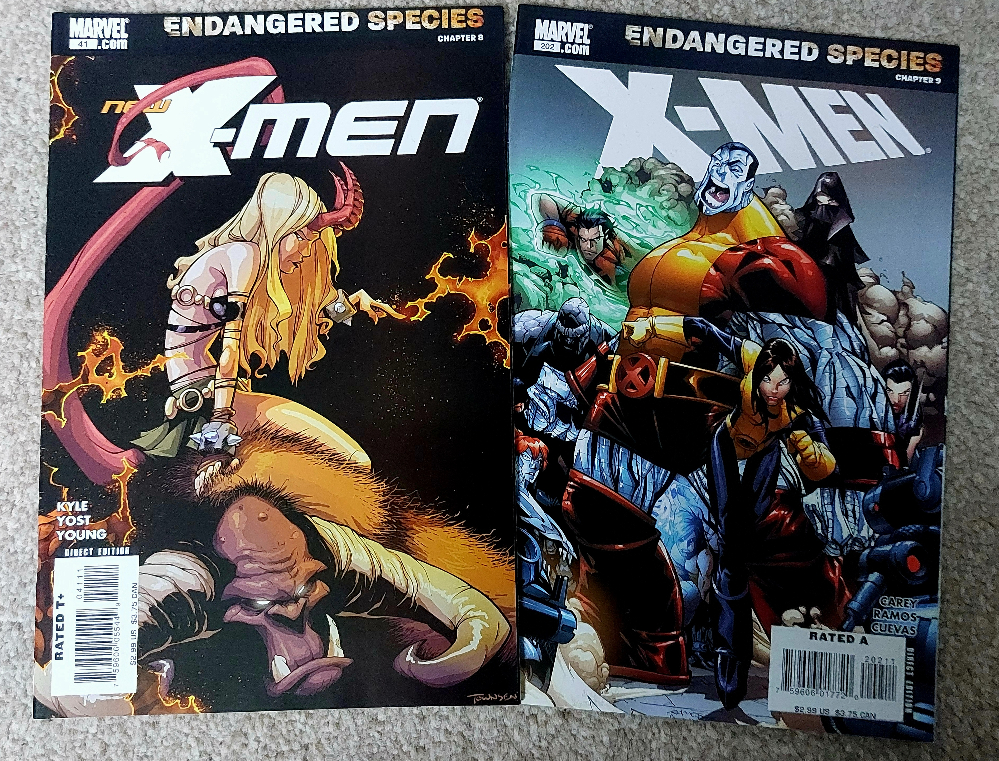
Endangered Species Story Line in X-Men comics Credit: Marvel Comics
Comic Number 106: Endangered Species (various comics)
I’m still working my way through Endangered Species and the comics that the story features in. In chapters 6 through 8 the reader is exposed to places of torture and medical experiments thanks to Beasts uncomfortable truce with the Dark Beast. This combination of contrasting characters allows the creators to demonstrate the good and evil that can come from scientific experimentation. It also shows the reader how a character could have turned out if different choices had been made: it is a prime example of the road not taken. In his desire to save mutantkind, what lengths will Beast go to? In these chapters we get a glimpse into a potential outcome.
What is worth noting at this point is that out of the four titles, X-Men, Uncanny X-Men, New X-Men and X-Factor, I am only reading two of the main stories. I have stopped reading X-Men and New X-Men as I wasn’t enjoying either. I am still finding the Uncanny X-Men story, The Extremists, interesting but it is the X-Factor comic that I am enjoying the most. Perhaps because it has a more mature feel to the characters and the narrative, and less of the superheroics of the other comics. Or perhaps I’m just currently more in tune with Peter David and Pablo Raimondi’s work at present.
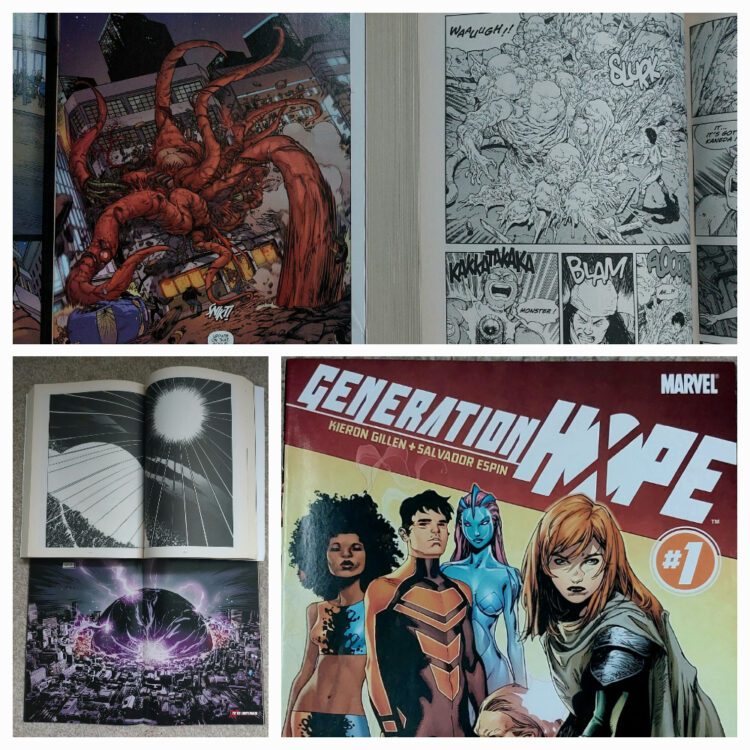
Generation Hope/Akira Panel Comparison
Comic Number 107: Generation Hope #1
A few years ago (by few I mean over a decade) I met a relatively new writer on the comic scene, Kieron Gillen. Journalist turned comics writer, he was an extremely approachable and friendly face in the crazy sea of a large comic convention which had some big hitters there signing and panels featuring the cast of Thor. Gillen was down to Earth and made an instant, positive, impression on me. So much so that I started to collect any comic that had his name on it. I have rarely been disappointed by one of his comics.
Generation Hope features the character Hope, the future of mutants, and a cast of new, teenage X-Men struggling in a world of hatred and fear. This first issue is, on the surface, standard X-Men fair but it does what Gillen does best; sets up the ongoing story.
The script is littered with quips, one liners, and in jokes but they are all matched to the characters that Salvador Espin is drawing. You can see the influence of past X-Men writers creeping into the narrative but the biggest influence has to be Manga, or more specifically, Akira. Surely Espin had a copy of Katsuhiro Otomo’s seminal work on his desk when drawing Generation Hope #1? Surely?
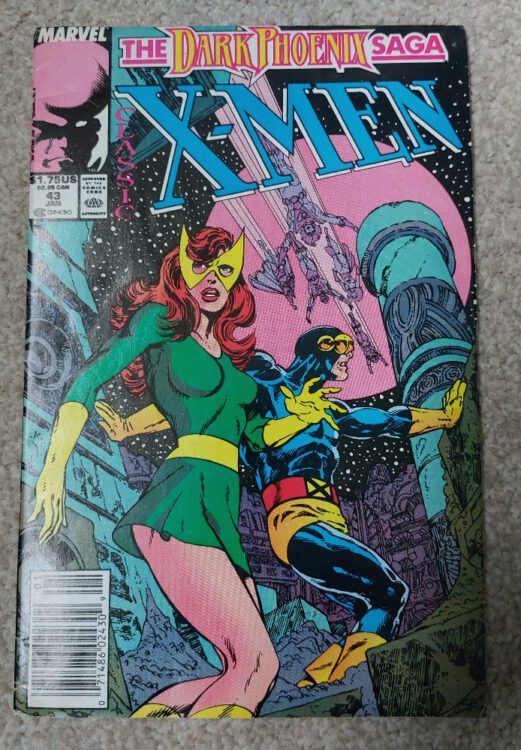
Classic X-Men #43 Credit: Marvel Comics
Comic Number 108: Classic X-Men #43
The end of the Dark Phoenix Saga (originally published in The Uncanny X-Men #137) has been reprinted a number of times; in collected editions; reprint editions (like this one); and even in alternative editions such as Phoenix: The Untold Story which includes the original ending Chris Claremont and John Bryne produced. Spoiler alert, this version has Phoenix dying at the end.
Chris Claremont, along with artists Dave Cockrum and John Byrne, revolutionized the X-Men, turned it into a franchise and laid the foundations that the comic is still building on today. As Marc Singer explains, they “turned an unpopular title into a fan favorite by focusing on complex (if melodramatic) characterization, long-running story lines, an elaborate continuity, and a diverse, multinational cast of heroes.” Not only did they turn the fledgling comic around around but they set “the tone for most mainstream superhero comics in the 1980s and beyond” (from Comic Studies: A Guidebook pg 218,219) If you talk about influential comic books or series, you can’t talk about the superhero genre without talking about Claremont and his 16 year run on the X-Men.
Rereading the end of the Dark Phoenix Saga, even just this final chapter, is still an emotional, thought provoking experience. The soap opera of the narrative hits all of the right spots, making it an emotional and entertaining roller-coaster. But there are also much larger concerns being discussed in the narrative. Whether they are there on purpose or just a lucky happenstance, the moralistic and ethical questions that the Dark Phoenix story line throws at the reader are complex. Jeff McLaughlin wrote an interesting essay on the philosophy of comics focusing on the X-Men entitled “The Triumph of the Human Spirit” in X-Men. I highly recommend reading it (it can be found in Comical Approaches to Comics published by Routledge) because it dissects elements of the comic and gives the reader potential new ways of reading superhero narratives. McLaughlin highlights that the “[d]ramatic struggles are not just about a battle of “us against them”, but also “us against ourselves”. Although this is especially relevant to the Dark Phoenix Saga, it is true of all the best X-Men stories and can be used to understand the superhero genre in general. Comics hold up a mirror to the real world and, even in the exaggerated fantasy worlds of the superhero, we can always find a part of ourselves in them. How we interpret the narratives and empathize with the characters is, in turn, a reflection on who we are.
Bringing it back to the comic in question, where do you fall in relation to the fate of the Phoenix? Did she deserve to die? Should Jean Gray pay for the crimes of the Phoenix force? Were the X-Men right to try and save her?
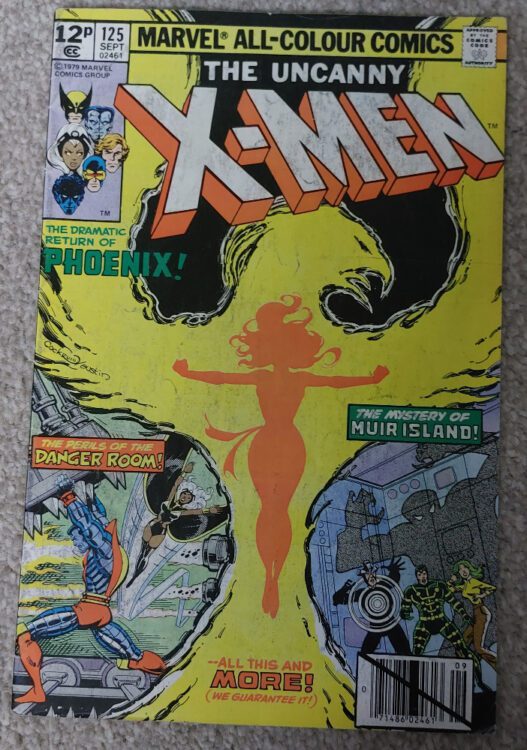
The Uncanny X-Men #125 Credit: Marvel Comics
Comic Number 109: The Uncanny X-Men #125
Rolling back a few issues, issue #125 of The Uncanny X-Men is a wonderful example of Claremont’s storytelling abilities. The comic is technically set in the middle of a story; big things have happened in the issues leading up to this one and the road to the Dark Phoenix is only just beginning. And yet, this is still a comic worth reading by itself. The art work by John Byrne, with inking by Terry Austin, is beautiful. The characters are dynamic and each page has an energy, whether physical or emotional. And the coloring by Glynis Wein bleeds into the newsprint it is printed on. There is something to be said for reading the comics in their original printings.
There’s something Awful on Muir Island is probably what you would call a filler episode these days. The majority of it is taken up with the central characters going about their business, interacting in a very ordinary, day to day type way. There is a ‘threat’ in the story but even this seems mundane by superhero standards as it takes the form of a home invasion (obviously it has greater consequences later down the line). This issue illustrates why Claremont is such a good writer. The characters’ thoughts are laid out across the page and we as readers become immersed in this world. Claremont builds such strong emotional ties to the characters that he is able to create intense drama through small moments, such as Moira finding a gold tooth on the floor. Douglas Wolk sums it up best in his book All The Marvels, “Claremont mastered the storyteller’s greatest trick, Scheherazade’s imperative of making the audience need to find out what happens next”. It is difficult to just read one of Claremont’s X-men comics, you are always left wanting more.
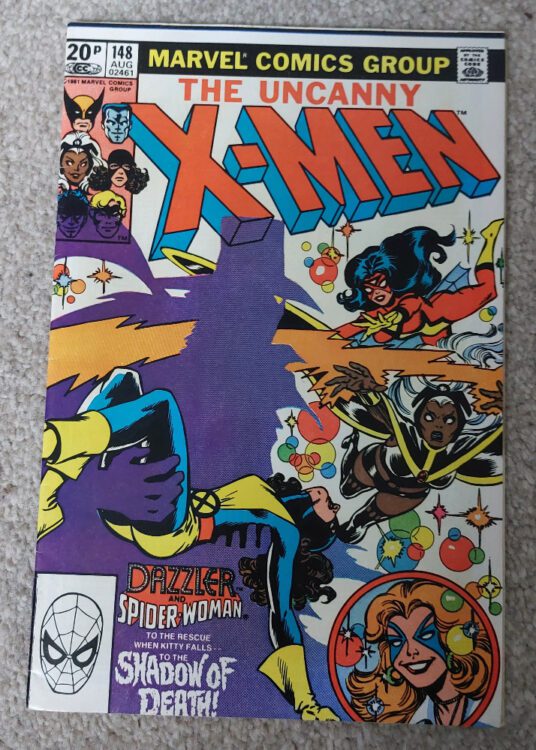
The Uncanny X-Men #148 Credit Marvel Comics
Comic Number 110: The Uncanny X-Men #148
I love the Cry, Mutant story. Similar to issue #125, it features several stories that are happening across the globe at the same time. On the one hand you have the kind of ridiculous, castaway love story with Cyclops and Aleytys Forrester who find themselves lost in an ancient city on a forgotten island in the middle of nowhere, wearing virtually no clothes because… reasons. Contrasting this is the confrontation at an inner city nightclub between the women of the X-Men and Caliban, in his first appearance. Claremont extends the mother/daughter dynamic between Ororo and Kitty while comparing their attitudes to those of Stevie Hunter and Jessica Drew. The concepts of over protection, jealousy, and the family, are all mixed into the ladies night out, even after it is interrupted by Caliban.
Caliban himself is an interesting character. Aware of his own appearance and deeply paranoid about how humans will react to him, he is constantly on the defensive, even in his personal mission to simply find a friend. His fear fueled actions lead to the revulsion and horror that created the fear in the first place. In this one issue, Claremont is able to give the Caliban a fully rounded character that readers can identify with, or at the very least empathize with. He is a tragic figure, desperate for friendship but can we forgive him for his harmful actions? There are the ethical questions, creeping in again.
Cry, Mutant, like many of the issues in Claremont’s run, has it all. Plus, Dazzler doing what Dazzler does best.
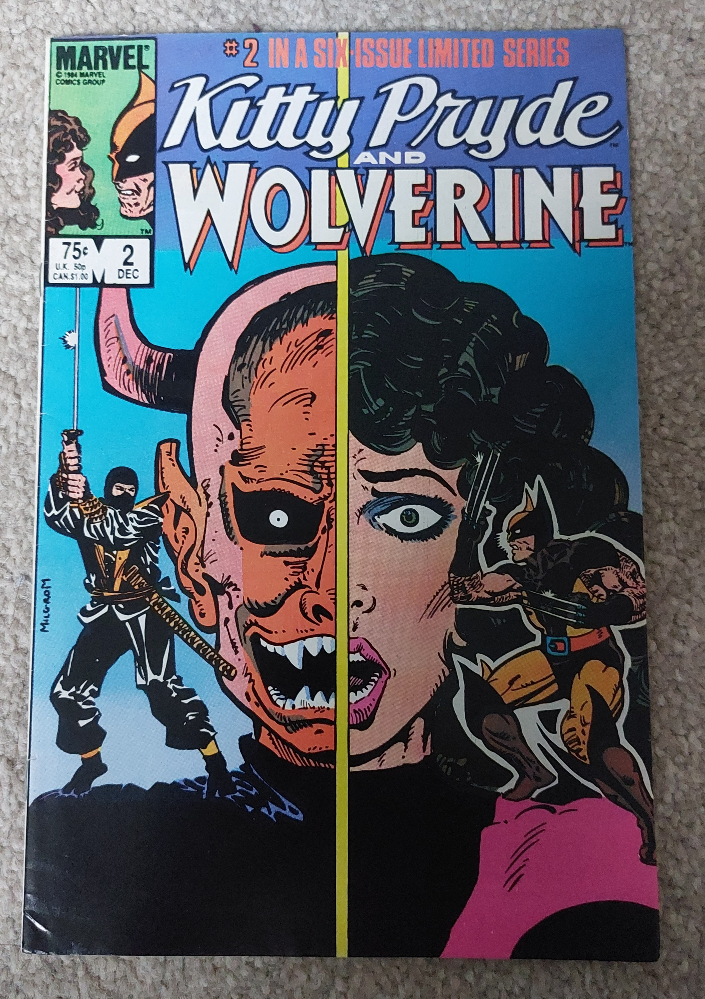
Kitty Pryde and Wolverine #1 Credit: Marvel Comics
Comic Number 111: Kitty Pryde and Wolverine #2
Whenever a superhero comic becomes popular the publishers capitalize on its success by releasing tie-in titles. This is often affectionately referred to as a ‘family’ of comics and, as a publishing strategy, has its pros and cons. With Chris Claremont’s X-Men selling in its millions, Marvel obviously didn’t waste time expanding the X-Universe. A number of new comics appeared featuring new mutants, new teams of existing mutants, or titles featuring individual characters.
Wolverine quickly became one of the most popular characters, in fact based on his popularity today it’s difficult to imagine an X-Men without Logan. After appearing in his own 4 issue mini-series, which fleshed out his background and character, Logan was teamed with Kitty Pryde for a 6 issue limited series. The series exists because of the popularity of Wolverine and the fact that Kitty was one of Claremont’s personal favorites. He wrote the series in order to give Kitty more character and depth, beyond the innocent foil to the world weary X-Men. And by pairing her with Wolverine, the title was sure to be a success.
In essence, Kitty Pryde and Wolverine is a coming of age story. In issue 2 Kitty stumbles into a mob meeting where she finds her father, knee deep in gangsters. This leads to her being kidnapped, tortured, and brainwashed. The ending of the issue teases the readers with a fight to the death between the two titular characters. The entire issue is pure Claremont gold. It contains everything that you would associate with the writer. Long, internal monologues allow the reader to get inside the characters head and this helps to really explore the thoughts of Kitty as she struggles with her life as a mutant. This comic is about Kitty finding her place in the world as well as learning who she really is. A by product of teaming her with Wolverine, just to sell the comic, is that Wolverine also grows as a character and a bond is created between the two that is still present in modern X-Men comics.
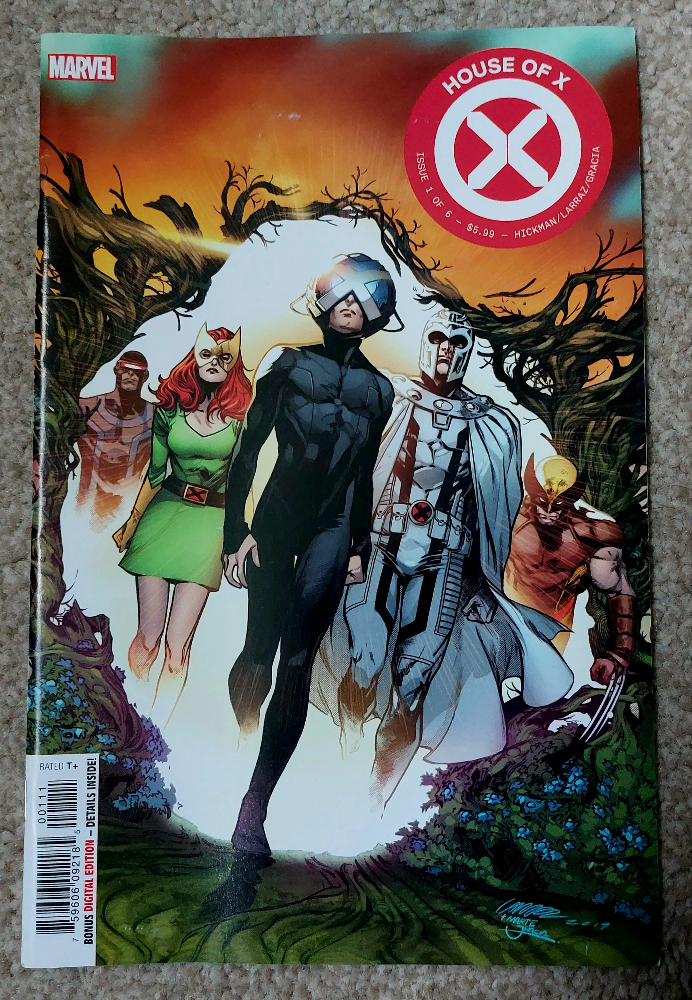
House of X #1 Credit: Marvel Comics
Comic Number 112: House of X #1
“Humans of the planet Earth. While you slept, the world changed.” (House of X #1)
In 2019 Marvel canceled all of its X-Men titles and re-launched the line with an ambitious new project starting with House of X and Powers of X. The 12 issue, bi-weekly, interconnected series was the launching pad for a string of new X-Men titles with a diverse array of characters and creators. Overseeing this re-launch, and writing the main titles, was Johnathan Hickman, one of the best writers working in comics today. It was all very exciting.
House of X#1 sets the scene brilliantly and introduces the characters to the readers as if they were brand new. Hickman packs so much character into this first issue that you get a great understanding of many of the lead roles but also their standing within the greater Marvel Comic Universe. If you had never read an X-Men comic before, you could start with House of X and not feel left behind. Hickman is very good at writing comics for new readers and his run on Fantastic Four and Avengers are the only runs I have kept of those titles as they are so self contained.
One of the highlights of the series is how Hickman used a superhero cliche and turned it into an important plot point that had ramifications throughout the X-Men titles. There used to be a saying in superhero comics that ‘only Bucky stays dead’ but this itself has proven untrue. The death of any superhero character is no longer dramatic because the cynical reader knows it will never last. Hickman ‘killed’ Johnny Storm in his Fantastic Four run but it was never meant to last and readers weren’t meant to believe it. The purpose of the death served the narrative, affecting the other members of the superhero family and their actions. In the X-Men, Hickman introduces the mutant resurrection, thus making the concept of death less of a threat and, ironically, making the threat of death for other characters more impactful. Hickman deals with ideas of mortality as well as morality and combines these to raise the question: are Mutants the new Gods?
Unfortunately for me, the X-Men run suffers from multiple crossovers and too many tie-ins. When the new titles started to appear I kept up with each one for about 6 issues but then it became difficult to keep up with them all. I just couldn’t afford it. I ended up collecting just the Hickman written X-Men title but, despite owning all of his run, I have never read past the Sword of X crossover.
One day maybe.
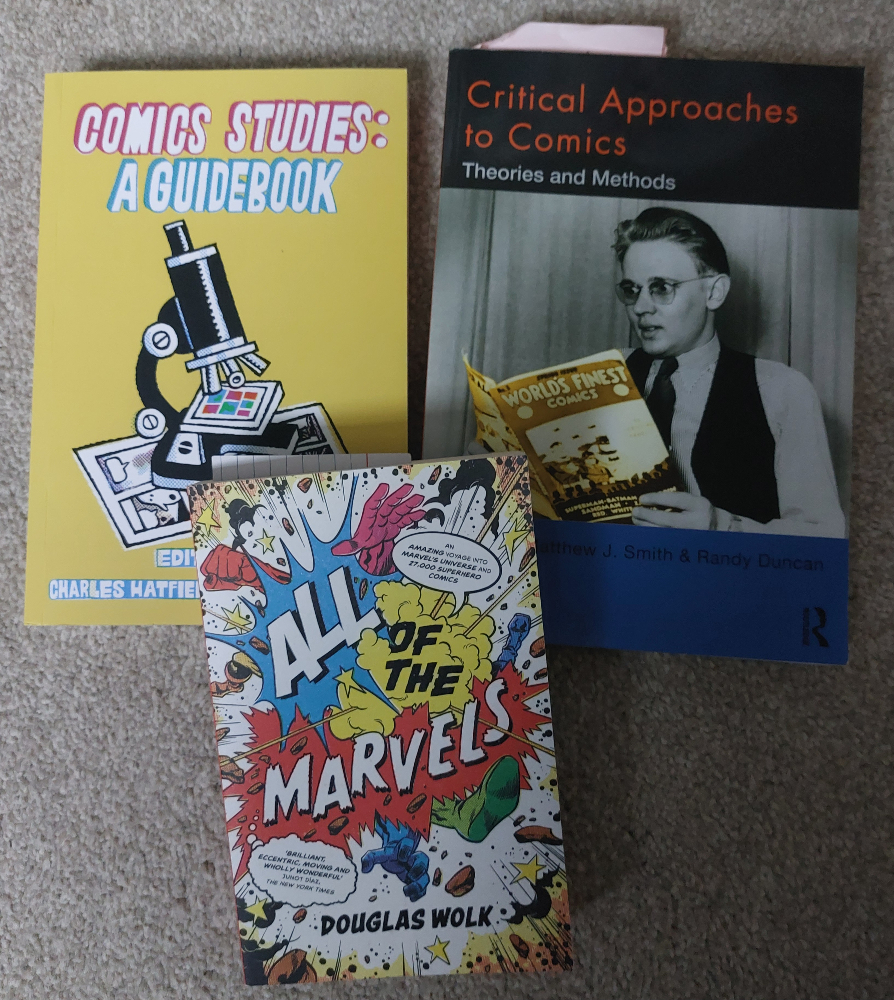
A Collection of Comics Studies Books Worth Reading
In the introduction to this week I mentioned problematic and disgraced creators. You may have noticed that I have not covered any comics by these creators this week. I have on my bedside table a stack of X-Men comics that I was going to read this week but instead, as the week went on, I decided to focus on the positives in the X-Men comics. Despite the trials that the characters have to face time and time again, there is a lot of positivity in the pages of the X-Men comics. Instead of reading certain comics, I read a collection of essays from numerous books, all of which I recommend if you want to begin to understand the history and psychology behind the X-Men. These books are:
All the Marvels by Douglas Wolk Comics Studies: A Guidebook Edited by Charles Hatfield & Bart Beaty Critical Approaches to Comics Edited by Matthew J. Smith & Randy Duncan
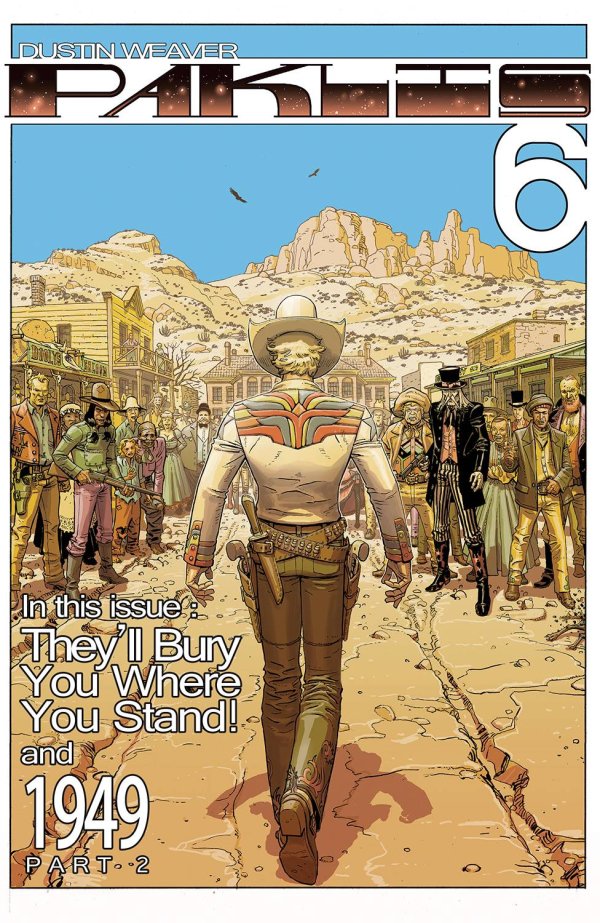
Go back to the 1930s — the birth of the American comic book — and most of what you’ll find are anthologies. Characters beloved for generations started in titles like Action Comics, Whiz Comics, or Detective Comics. But those mainstream anthologies came from teams of creators, pumping out whatever they could to meet a monthly demand. One-man anthologies are more often relegated to the alternative scene. Dustin Weaver is a creator who has never firmly fit into either category. He has a definite love for genre and high concept, but without a focus on tight, punchy plots. His stories often start from a single image or concept that he explores page by page, piecing a narrative together alongside the readers. Paklis is Weaver’s solo anthology, created as a place for him to tell his own stories after years illustrating for Marvel. It’s been around six years since the last issue, but Paklis #6 has finally hit the stands with a guest contribution from writer Jeremy Barlow, making it a great time to go over the series’ unique appeal.
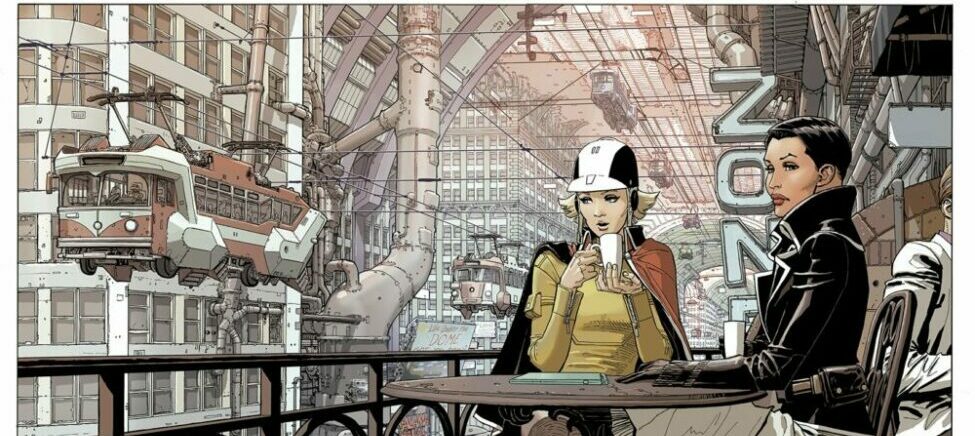
Paklis #6 is split into four separate stories. The first, “They’ll Bury You Where You Stand,” follows a Russian chosen for sacrifice in an off-kilter wild west town named “Pious Knife.” He seeks salvation in a mysterious stranger that’s blown in from out of town — and that’s almost what he gets. The second story, “1945 Part 2,” continues the tech-noir series from Paklis #5, with a deep-dive into detective work in the world of the future. “Sagitarus” offers two more pages to the ongoing Space Opera that’s been running since issue one, and then “Quitting Comics” wraps things up with an autobiographical story of what lead Weaver to create Paklis.
“1945 Part 2” is the longest story in the anthology, taking up over half the page count. Where the original “1945” was a straightforward noir story with occasional cuts to strange sci-fi imagery, the second part focuses on the far future. The sudden shift means a lot of explaining up front to help readers find their feet before the later pages knock them back off balance. It all makes “1945” a kind of creative balancing act: a story that began from imagery Weaver found in a dream, where every attempt at explanation causes more questions and strange images to come bubbling to the surface. A push-and-pull between narrative and raw imagery. But progress is still being made, a bigger picture slowly coming together. A lot rides on how “1945” concludes in the next issue, but what’s come so far is one of the stand-out serials Paklis has to offer.
As for the cover story, “Pious Knife,” Jeremy Barlow’s assistance makes for a more traditional genre tale. Information is drip-fed page-by-page, with a final act twist to cap everything off. It’s a smart choice for an opener, giving a taste of what Weaver is capable of before slowing down the pace. The Wild West setting also offers a nice contrast to Paklis’ heavier sci-fi focus. Which doesn’t mean the story’s realistic or grounded. It’s still full of high concepts, just given a more mystical edge, like a gun that demands blood every twelve hours.
Weaver’s art is one of the main attractions of Paklis, both for its versatility and sheer sense of spectacle. An anthology is the perfect way for him to show off his range — from the dirty, wrinkled look of “Pious Knife” to the harsh shadows and zipatone of the past segments in “1945.” The one constant throughout the book is that, no matter the style, each page stays remarkably dense. Even when taking on a looser, cartoonier style for his self-deprecating autobiography, Weaver ups both the panel and word count, trading detailed backgrounds for rambling looks into his subconscious.
As for the colors, Weaver shifts the palette to suit each story’s tone. “Pious Knife” gets earthy tones offset by bright, garish clothing. “1945” switches frantically between a black-and-white past and a stark future, with different locations dominated by different tones, from an ominous red to cool blue and purple. “Sagitarus” gets greytones, while “Quitting Comics” spices up a monotone palette by focusing on bright orange.
Weaver’s lettering stays a bit more consistent throughout, relying on clear, all-caps lettering with a few bold words for flavor. It’s the sound-effects where he tries to get more creative, like a scratchy, hand-written “Ring-a-ling ling” for an alarm clock, or a translucent, humming “Dooooooom” to set the scene for a mechanical complex.
VERDICT
Paklis #6 keeps the series moving towards the future, feeling as if no time passed at all. Which for this issue, specifically is… more or less true. Weaver admits in the afterword that Paklis #6 had been finished back in 2018, but he wanted one more issue done before moving forward with publishing — which is why the first issue in quite a while doesn’t feel like a jumping-on point. But with Paklis coming out quarterly, there’s more than enough time to catch up. It’s out now from Image, so make sure to check it out. There’s nothing else on the stands quite like it.
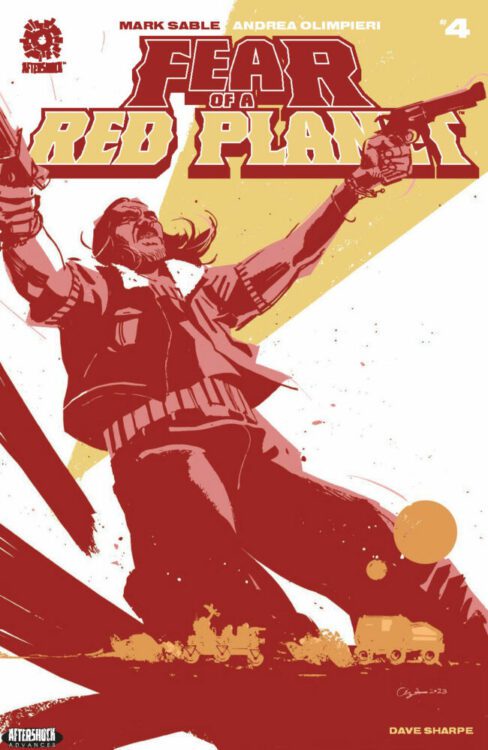
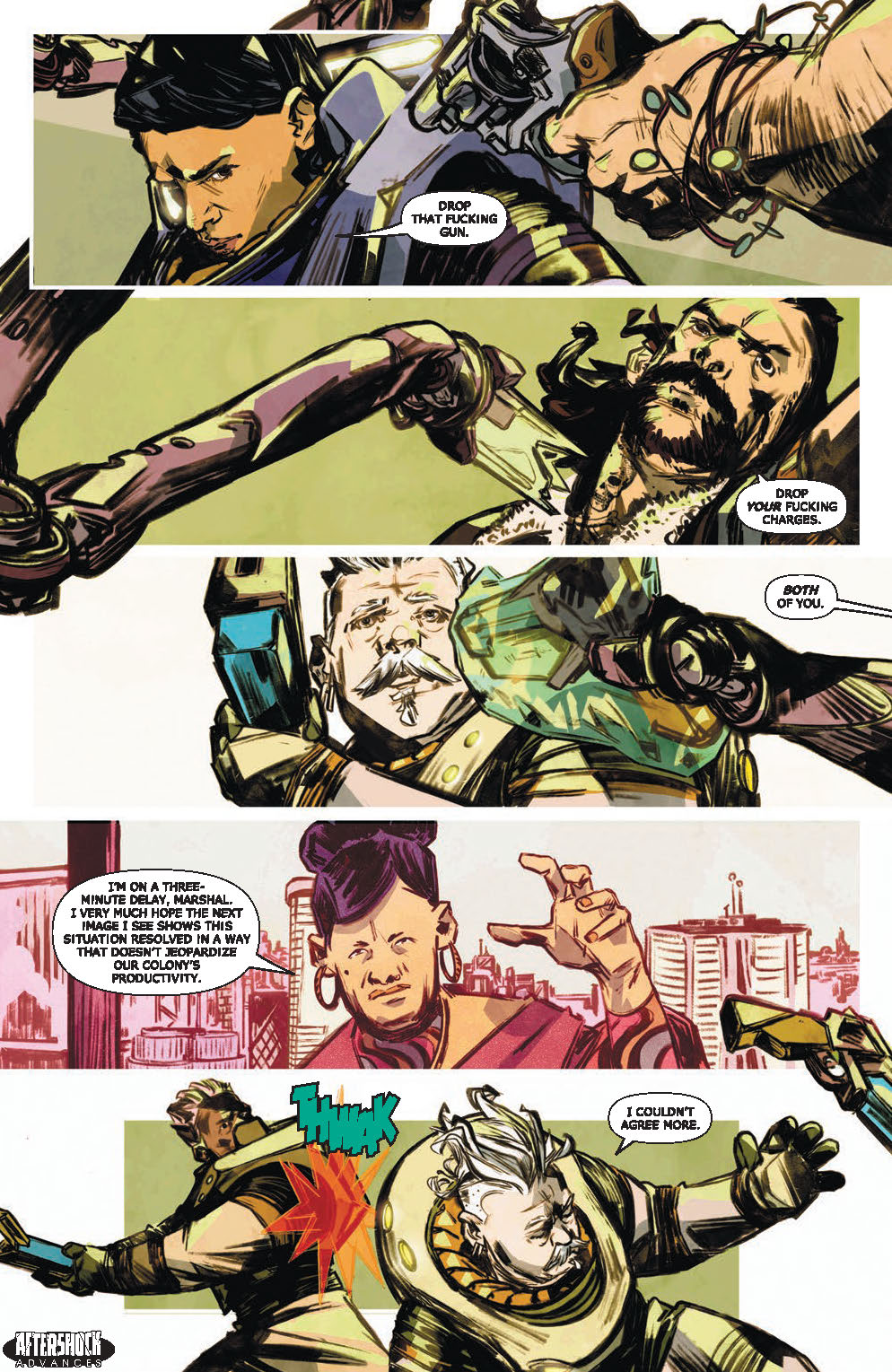
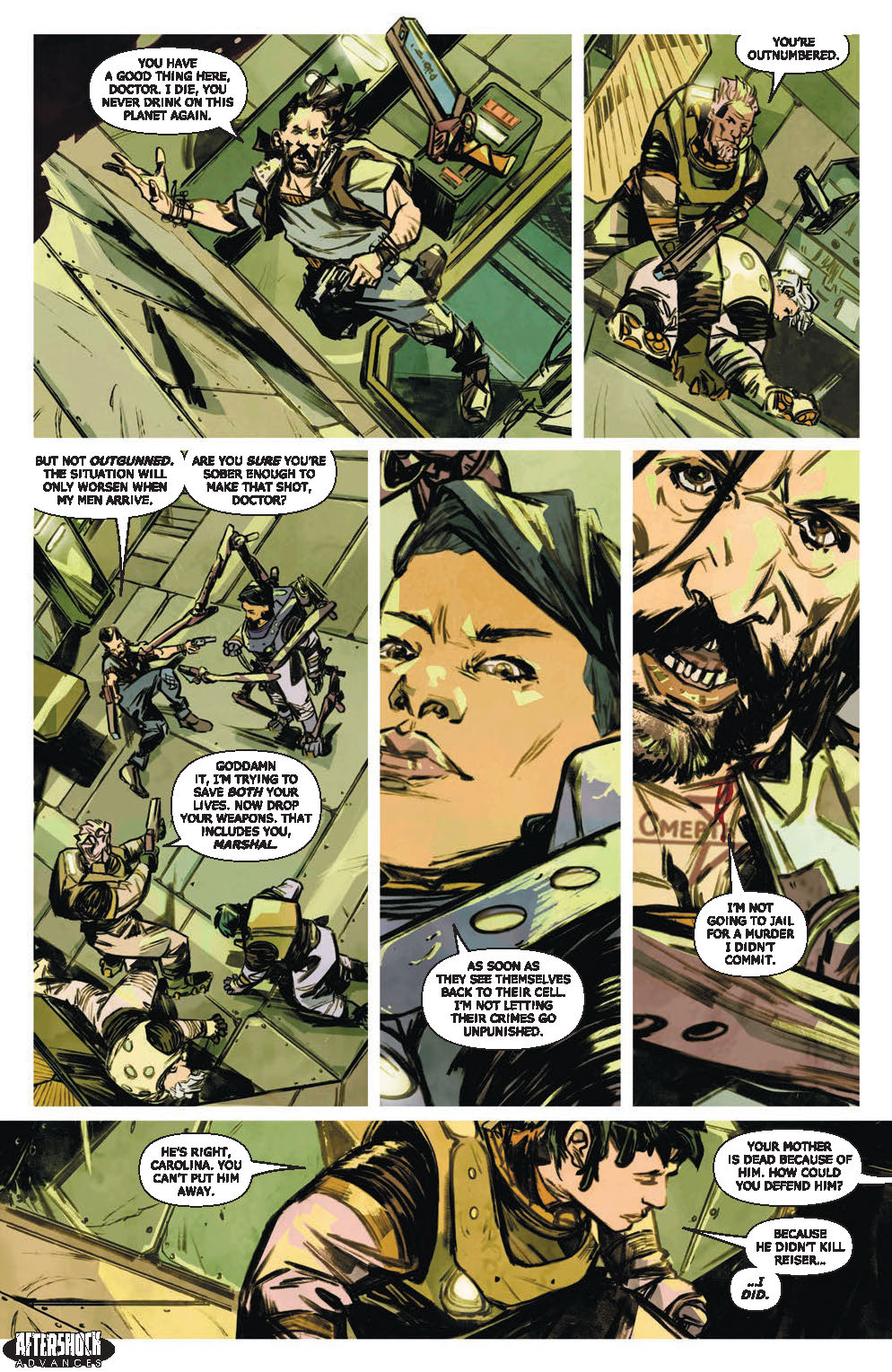
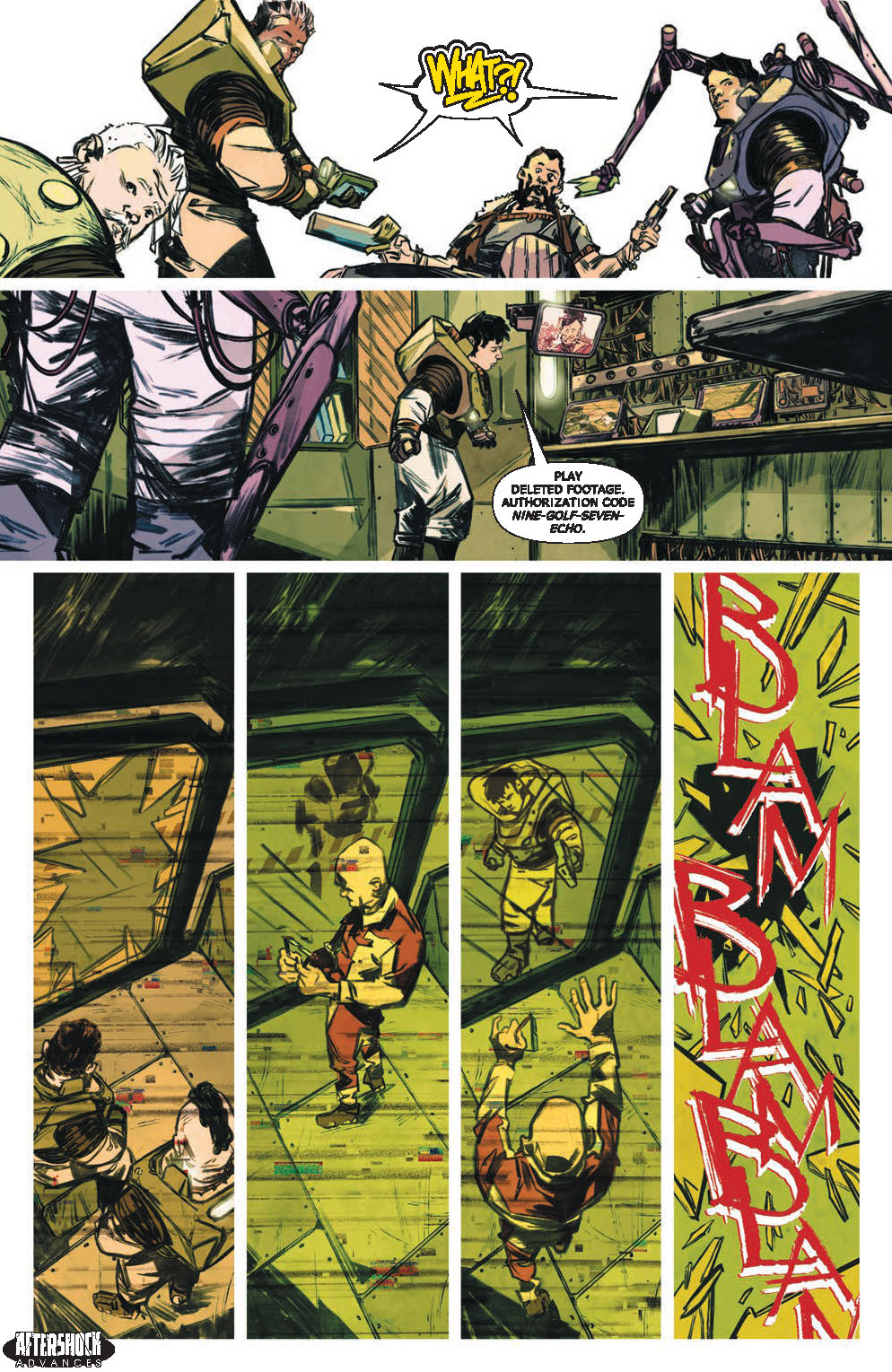
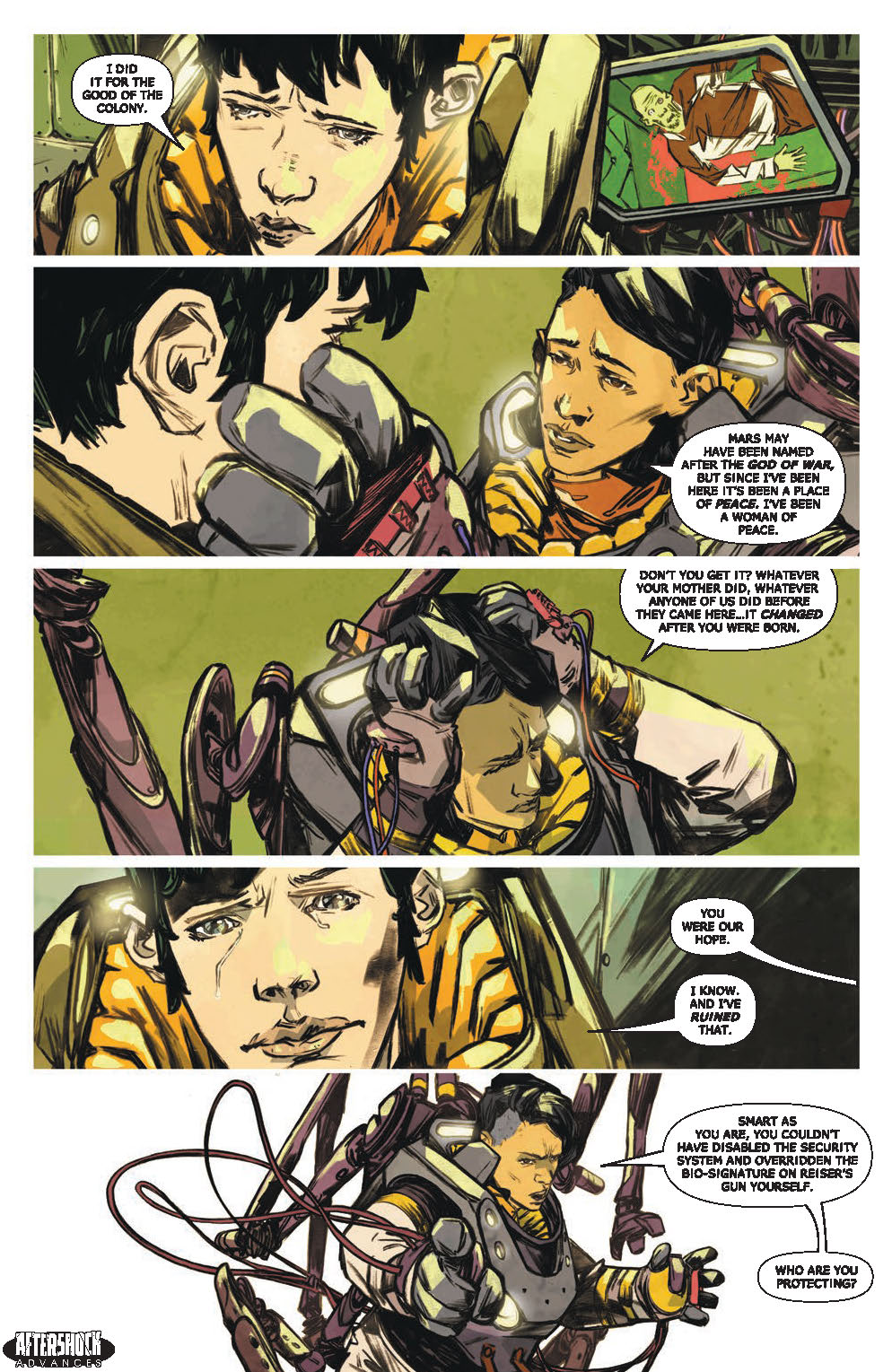
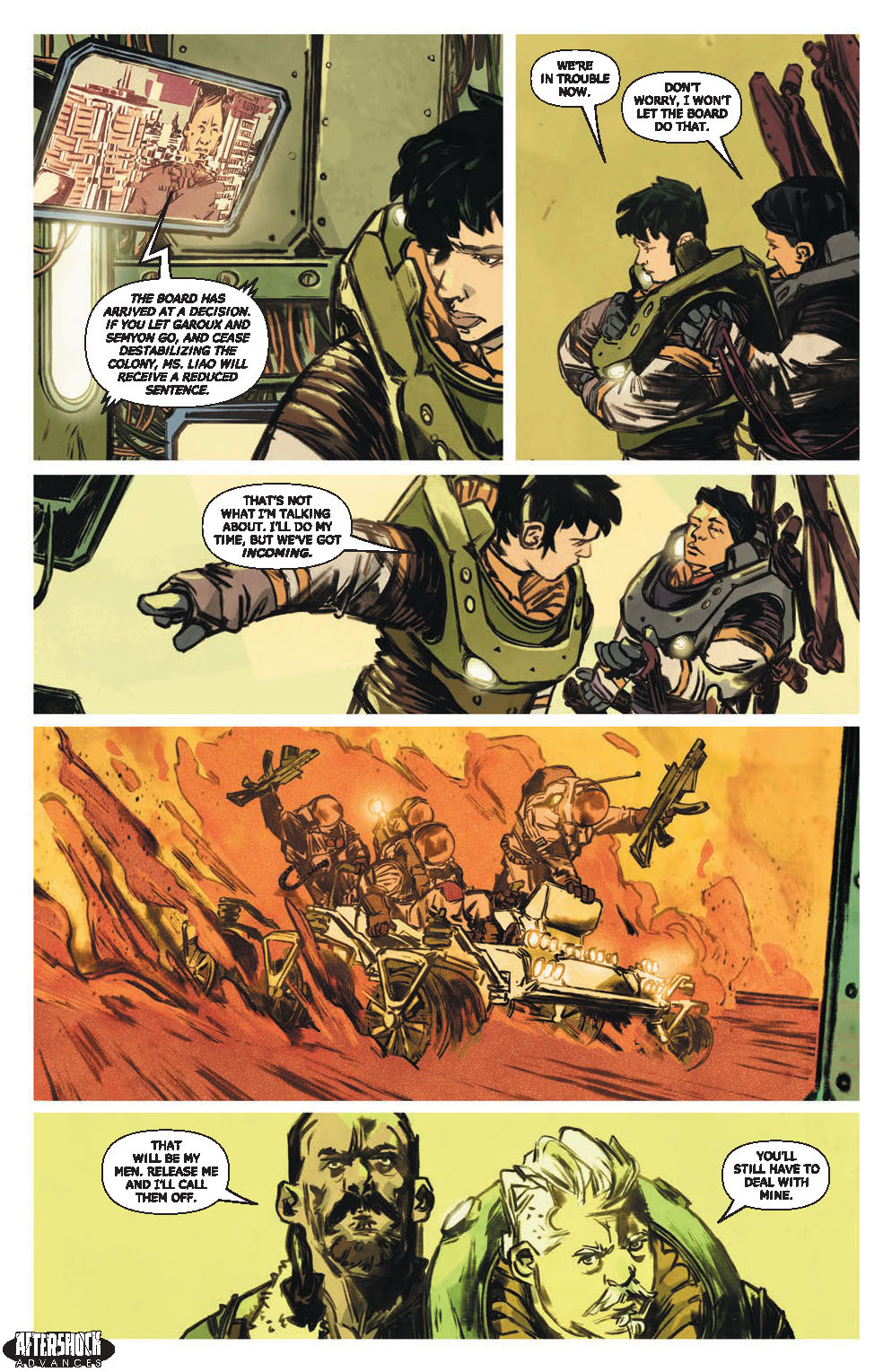
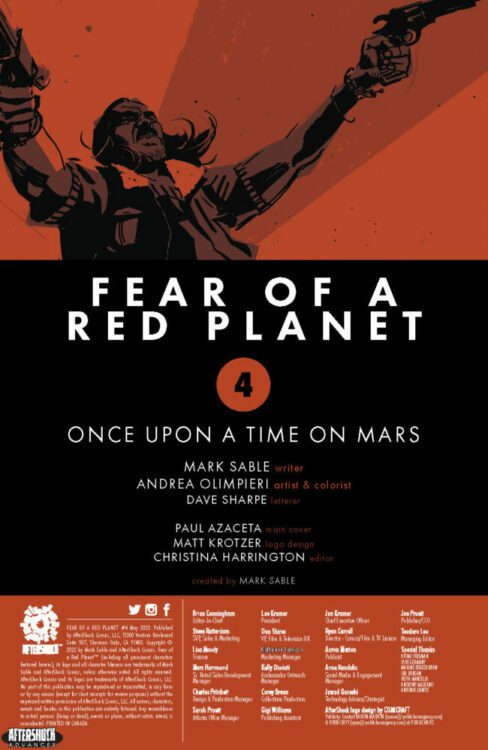
FEAR OF A RED PLANET #4 hits your local comic book store May 17th, but thanks to AfterShock Comics, Monkeys Fighting Robots has an exclusive five-page preview for you.
About the issue: Carolina Law, the U.N. Marshal tasked with keeping the peace on Mars’ struggling colony, is trying to solve its first murder. In so doing, she’s arrested the two most dangerous individuals on the planet. But both have angry private militias waiting to free their bosses without a moment’s hesitation…
The series is by writer Mark Sable and artist Andrea Olimpieri, with letters by Dave Sharpe. The main cover is by Paul Azaceta.
Check out our FEAR OF A RED PLANET #4 preview below:
Have you been reading FEAR OF A RED PLANET? Sound off in the comments!
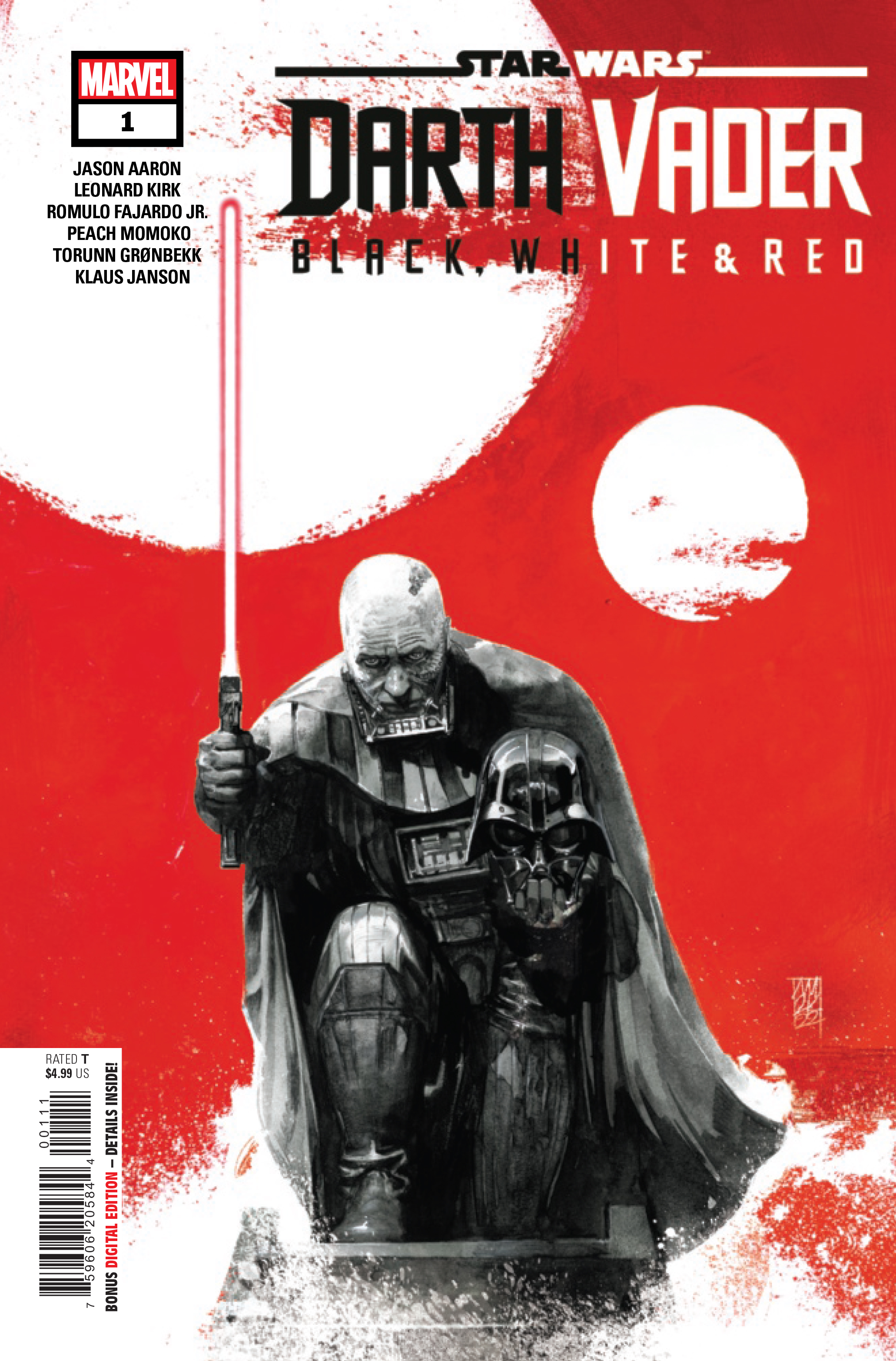
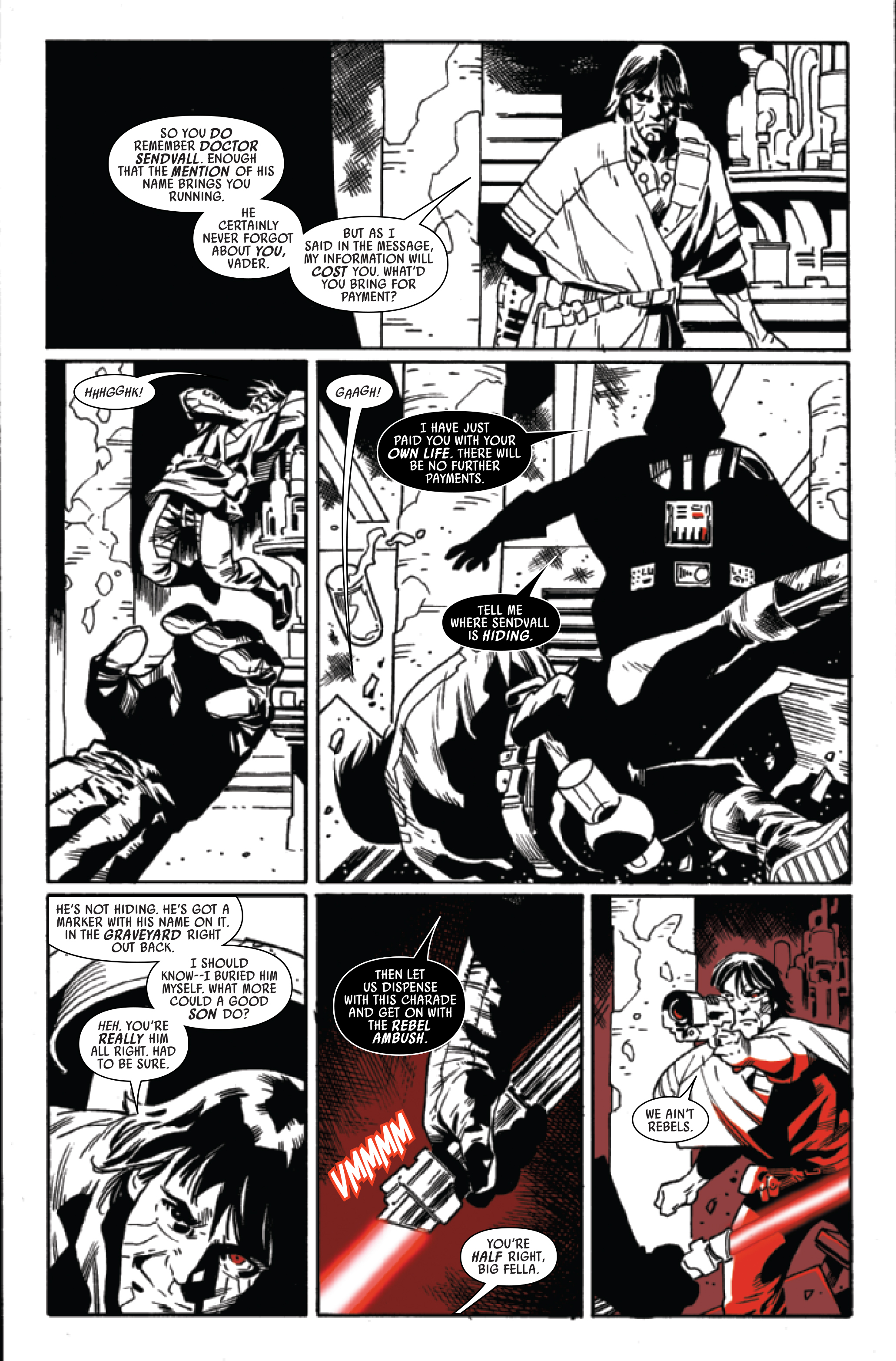
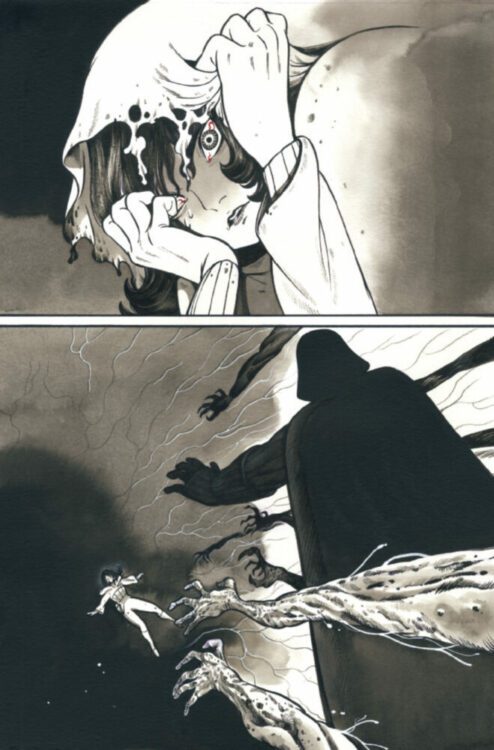
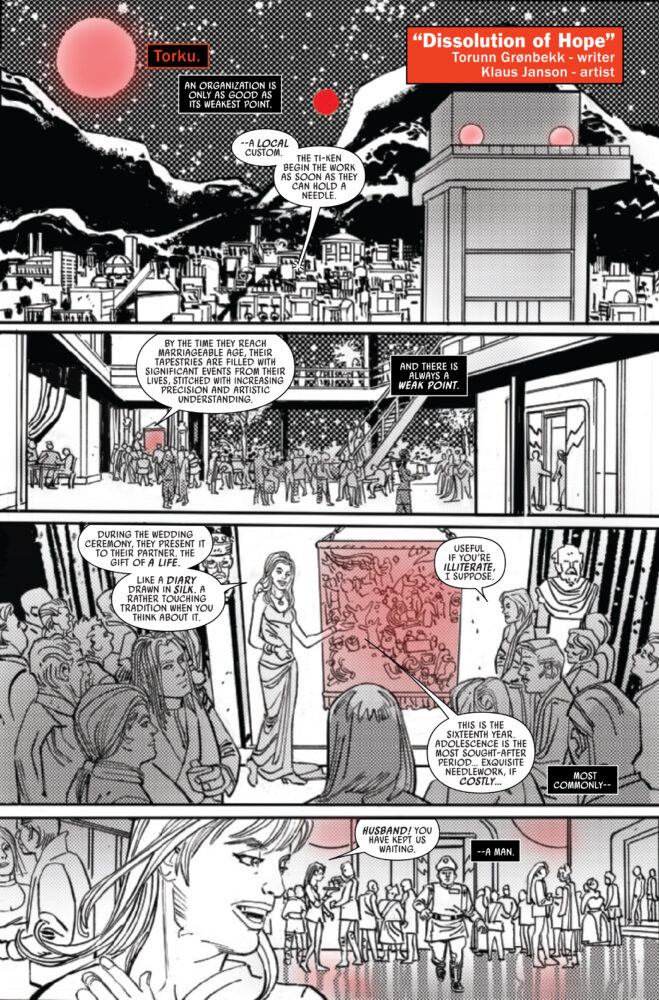
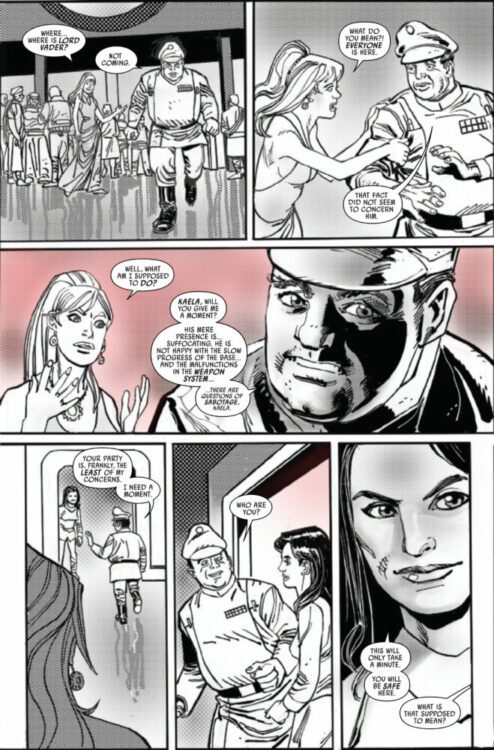
STAR WARS DARTH VADER BLACK WHITE AND RED #1 hits your local comic book store on April 26th, but thanks to Marvel Comics, Monkeys Fighting Robots has an exclusive six-page preview for you!
About the issue: THE DARK LORD OF THE SITH LIKE YOU’VE NEVER SEEN HIM BEFORE!
Following the successful black, white and red series produced by Marvel Comics, DARTH VADER now takes the spotlight for tales of terror by some of the industries most talented creators!
PEACH MOMOKO will spin a story only she can bring to life!
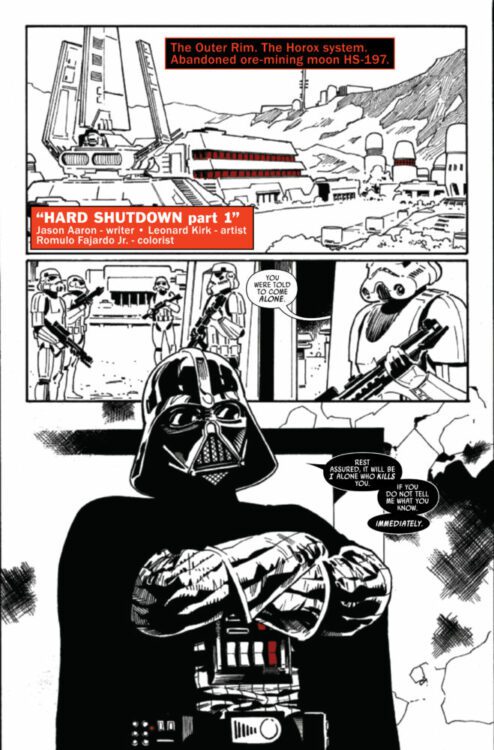
PLUS, the return of JASON AARON to the world of STAR WARS with Part One of his Vader tale spanning all four issues!
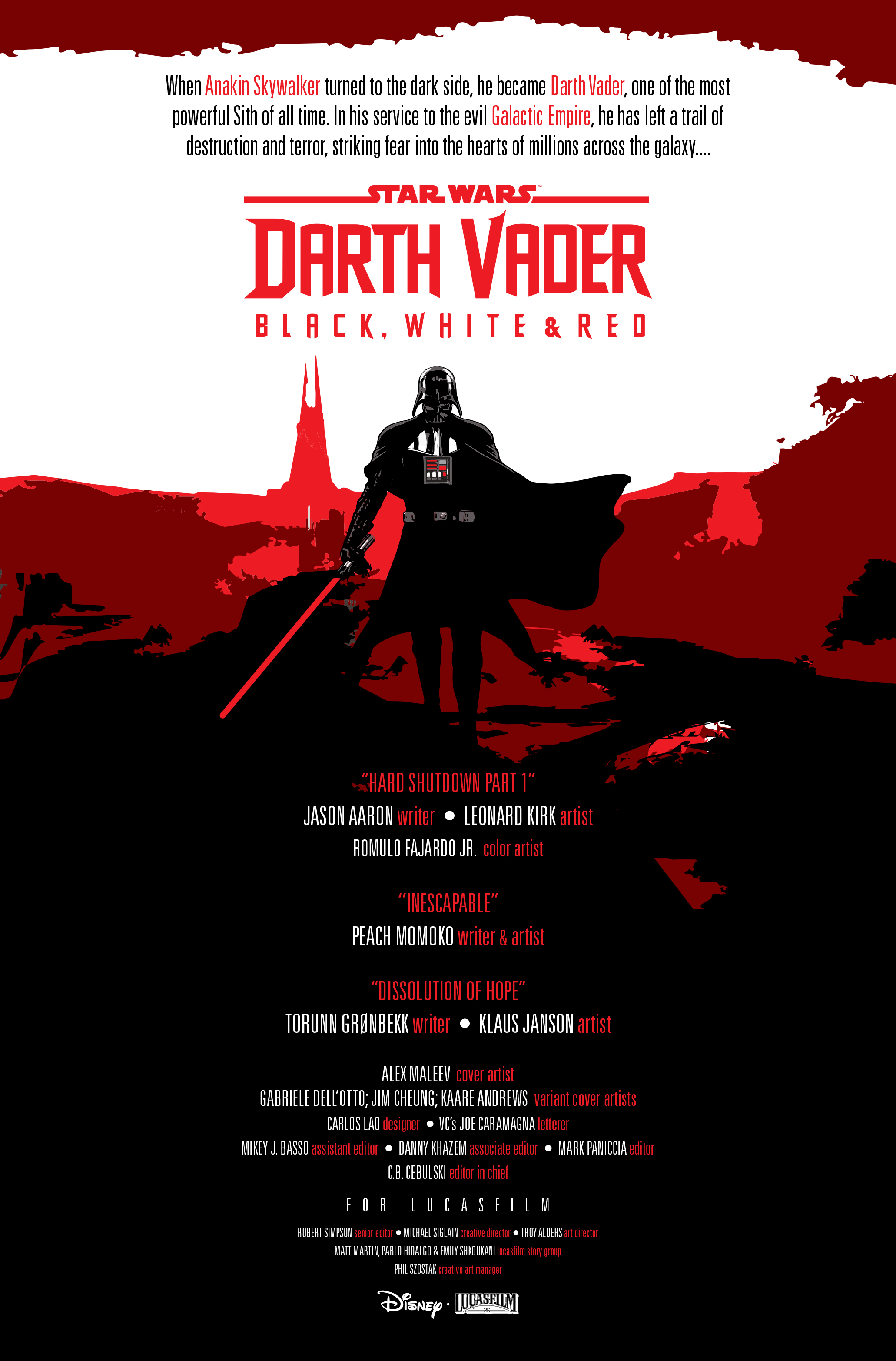
The issue features three short stories: the first is by Jason Aaron, Leonard Kirk, and Romulo Fajardo Jr., the second is by Peach Momoko, and the third is by Torunn Grønbekk and Klaus Janson. Joe Caramagna lettered all three stories, and the main cover is by Alex Maleev.
Check out the STAR WARS DARTH VADER BLACK WHITE AND RED #1 preview — featuring two pages from each story — below:
Are you picking up STAR WARS DARTH VADER BLACK WHITE AND RED #1 next week? Sound off in the comments!
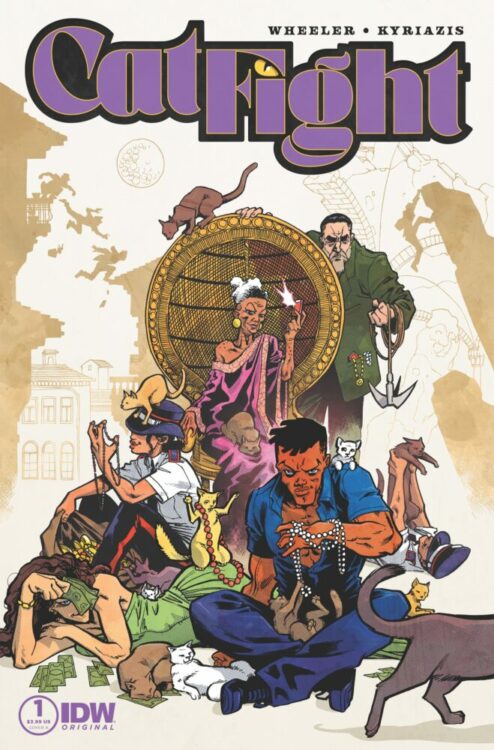
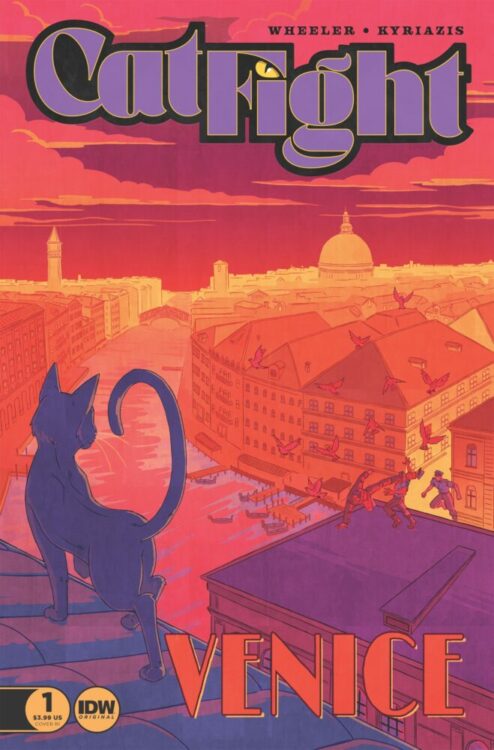
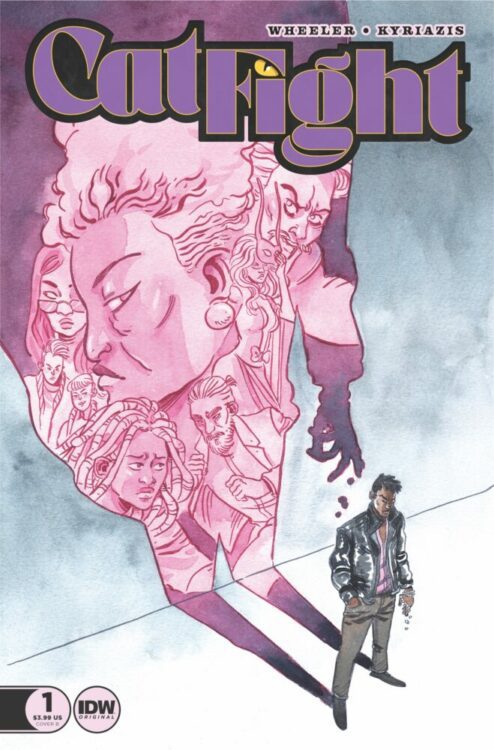
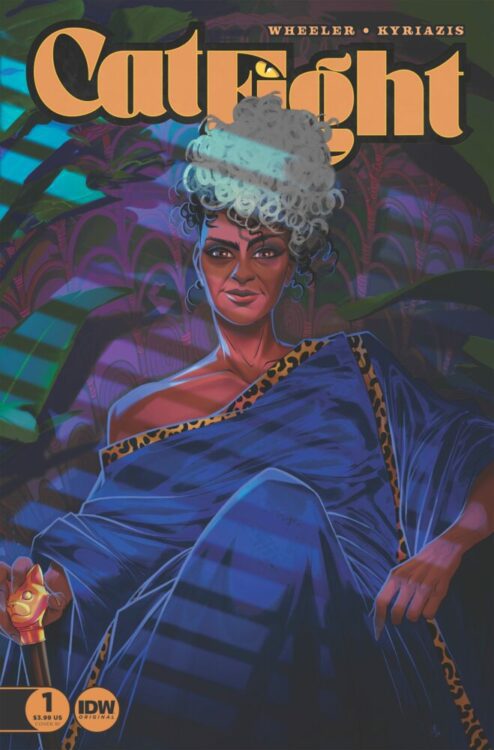
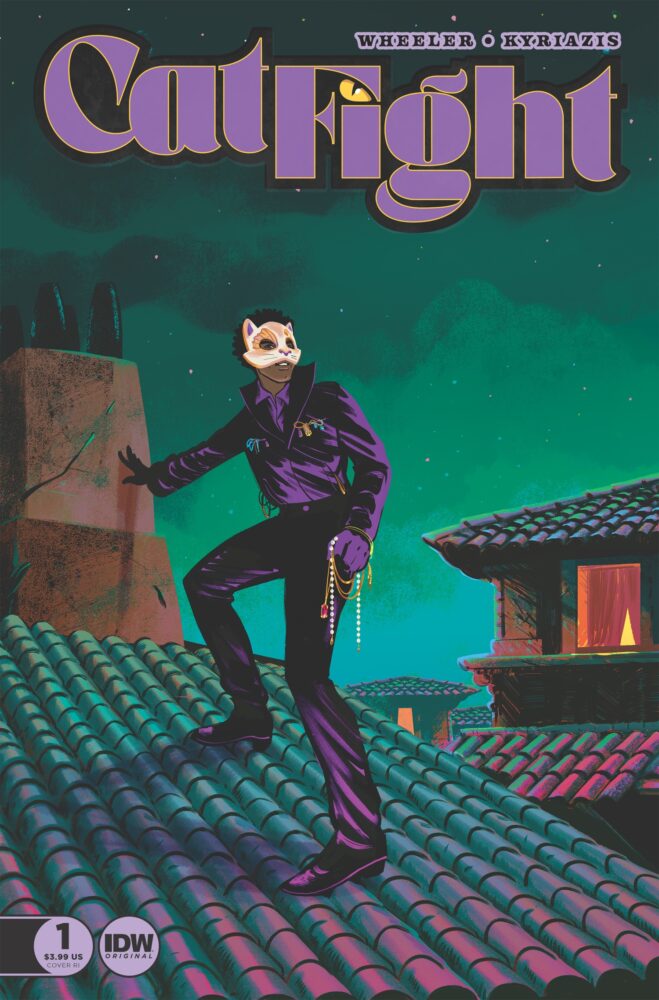
Get ready to paws and grab your copy of CAT FIGHT #1, hitting your local comic book store on May 31. Thanks to IDW Publishing, Monkeys Fighting Robots was able to sneakily chat with the creators of the series to get a behind-the-scenes look at the heist thriller. And don’t worry, no actual cats were harmed in the making of this comic…unless you count the artist’s scratched-up couch.
The series is written by Andrew Wheeler with art by Ilias Kyriazis, inks by Auguste, colors by Dennis Yatras, and you will read Hassan Otsmane-Elhaou’s letter work.
About CAT FIGHT #1: Caught up in the glamor and excessive lifestyle of an international career criminal, Felix Lamarr lives only for the thrill of the next big score. Suddenly contacted by his estranged and wealthy grandmother, he is shocked to learn that she is a storied career criminal herself—the lithe and legendary burglar Kitty Midnight—and that she wants him to partner with her cat-themed associates on a lucrative upcoming heist. Unaccustomed to collaboration, Felix declines Kitty’s offer…but a shocking incident sends his life into a sudden, chaotic tailspin. Framed for murder and on the run from a mysterious syndicate, he leaps at full-throttle from one international hot spot to the next in a deadly game of cat and mouse!
Enjoy the interview below.
Andrew, CAT FIGHT #1 is a fun, sexy adventure that sets the stage for the series. How did you keep the story well-paced without overloading the issue with exposition?
Andrew:Thank you so much! One of my favourite things about comics is their ability to convey a lot of information without overloading the reader. I’m not a decompression guy, I like a rich page, and there are so many ways to convey information on a comics page. Body language, dialogue, lettering, composition, captioning, colour theory, time travel, even the choice of a location and how it’s framed. There are a lot of ways to tell the reader what’s happening without slowing the action down. In working with Ilias, Auguste, and Dennis, I’m blessed to have collaborators who can deliver nuance and bombast on the same page!
Ilias, the panel layout keeps the story moving quickly. What was your goal for the first issue?
Ilias:Thank you! Cat Fight, from Andrew’s pitch even, has a very specific tone. It was clear that it needed to be fun, fast-paced, glamorous, and exciting. Playing with the panel layout is one of my favorite things when doing a comic, and here I tried to have a balance between it being quirky and being quick to read.
Ilias, the POP! with the champagne on the third page, has such a cinematic quality. What were your influences on the series?
Ilias:Truth is, I’m never much aware of my influences. I set a goal as to the feeling I want the comic to evoke and I try my best. I like to believe there’s a mixture of many different artists in my work.
Andrew, why do we love the heist genre so much? What’s the writing process like? Do you have to work backward?
Andrew:Backwards, forwards, upside-down. It’s a headache, and I should stop writing thieves, but they’re so damned sexy.
One thing that’s explicit in Cat Fight and Sins of the Black Flamingo and in a lot of heist stories is that the thieves are the little guy and the people they’re stealing from deserve it. Now more than ever, I think that makes thieves appealing, even heroic. And so sexy!
Ilias and Andrew, what were your conversations like with colorist Dennis Yatras? The purple pops so well; what was it like when you saw a finished page from Dennis for the first time?
Andrew:I’ll let Ilias field this one!
Ilias:The funny thing is, I approached Auguste and Dennis as a duo and I was more or less “you pick how you’ll divide the work.” So it was Dennis who opted for the coloring.
In my experience, having a very specific idea for how you want another artist to color (or ink) your work and trying to direct them always leads to disappointment. It’s much better to just pick collaborators that you already like what they do and just step aside and let them do it. The three of us went over every page before sending it to editorial, and my only notes were about moments where my pencils were misinterpreted. “Oh that drop isn’t blood, it’s sweat,” that type of thing. We all know that pencil-ink-color collaborations in comics often happen for scheduling reasons and I’m very happy that our approach for this book was “let’s make something that’ll look different than the comics we each make on our own.”
Andrew, the heist genre, has been done well in cinema. What can you do in CAT FIGHT on a comic page that you can’t do in a film?
Andrew:I think heist movies actually borrow one of their favourite tricks from comics, which is the use of split screens. Norman Jewison’s Thomas Crown Affair is the most famous example, but also Jackie Brown, Snatch, the Ocean’s movies.
In comics, the visual juxtaposition of mood, of moment, of idea is our bread and butter, and I think it works so well for capers because it’s like a card trick. We show you the cards; you create the relationships between them.
Ilias, when creating Felix, how do you give him his swagger with a static image?
Ilias:Well, I did live with a cat while I was drawing the book. Paying attention to how a cat moves gives you all you need to know about how to depict a sexy, acrobatic thief. Felix has two modes: posing and leaping.
Ilias and Andrew, since you give almost every character a full-page introduction, what will your reaction be when you see someone cosplay as Felix or Tabitha Post?
Ilias:Boy, that’d be amazing! If they find me at a con they get a free character sketch.
Andrew:Ooh, I hadn’t thought about that, but there’s no higher compliment than cosplay! I’ve seen a couple of examples of people cosplaying as Sebastian Harlow from Sins of the Black Flamingo, but never in person, so now I’m wondering if I’ll see a Sebastian or a Felix first!
The whole team is very invested in making these characters look distinctive and memorable, so I hope we’ve given cosplayers some fun source material to work with!
About the creators:
ANDREW WHEELER BIO Andrew Wheeler is the critically acclaimed writer of the GLAAD-nominated Sins of the Black Flamingo, the feminist fantasy comic Another Castle, the queer sports comedy Love & War, and the gay superhero series Freelance. He’s also a contributor to the groundbreaking DC Pride and Marvel Voices: Pride anthologies and the hugely popular Dungeons & Dragons Young Adventurer’s Guides. Wheeler was born in the United Kingdom but makes his home in Toronto, Canada.
LLIAS KYRIAZIS BIO Ilias Kyriazis has been writing and drawing comics all his life. Since 2008 he’s been working mainly for the U.S. market. He’s worked for DC Comics, Image Comics, IDW, Dark Horse, Dynamite Entertainment, and more. His work includes Collapser, Manifesto, Elysium Online, The Crow: Lethe, Dirk Gently’s Holistic Detective Agency, Falling for Lionheart, Harpe, and more. His latest comic is Chronophage. He’s currently writing and drawing a graphic novel for Humanoids.