Home Blog Page 474

Review: HEROES IN CRISIS #7 Adds More Clues to the Mystery

Monkeys Fighting Robots

The previous issue of Heroes in Crisis was primarily a introverted look at three DC heroes in, well, crisis – Wally West Flash, Harley Quinn, and Gnarrk. The installment concluded with a shocking (and confusing) revelation as to who might be behind the horrendous murders in the Sanctuary.

Heroes in Crisis #7 uses three different styles of artistry to convey the three different storylines – or timelines – taking place. As the clues continue to pile up, the heroes must learn to stop pointing fingers in order to figure out who the real mastermind is.

**Some Spoilers Below**

Heroes in Crisis #7 Cover

Story

The Trinity may have uncovered the true killer responsible for the deaths at Sanctuary, but the artificial intelligence that ran the institution is the one thing standing between them and the culprit. Now Batman, Superman and Wonder Woman must face off with their own creation—and face the consequences for what they created. Also, as the truth is uncovered, Booster and Harley go from being enemies to allies.

What tangled webs Tom King has woven. As Heroes in Crisis enters its final issues, it’s still fairly unclear who committed the Sanctuary murders. Readers will find themselves needing to double back to previous issues, or even going back to the very beginning, to reexamine the information that has been shared thus far.

Writing

In this particular issue, King uses three narratives to continue his intricate murder mystery. The brief interaction between Batman and Barry Allen Flash is amusing, with the Scarlet Speedster speaking in a sort of hyper-tongue as the duo searches for Booster Gold’s whereabouts.

The bulk of Heroes in Crisis #7 involves Harley Quinn pummeling Booster Gold after witnessing him murder Wally West, all while Batgirl and Blue Beetle watch from the sidelines. Here, King crafts some interesting moments of inner-conflict, particularly with Booster ready to give up on everything and let Harley dole put a fatal blow.

Then there’s the Wally West segment, which finds the speedster lamenting a timeline he longs to return to. Here, King adds the next (potentially big, yet highly frustrating) piece to his puzzle. Using his speed force power, Wally speeds up the blooming of a red rose. And from out of that blossomed rose comes — Poison Ivy, with no skin, showing a green muscular system instead. How this affects the rest of the story will have to be answered in the next issue. It has to, for the readers’ sake. 

Heroes in Crisis 7 Cover Variant

Art

Each narrative (or perspective, or timeline) is illustrated by different artists, which in itself is worth noting. Clay Mann handles the scenes involving Wally West, including his confessionals, and delivers some of the best art in comics today. Though the story may leave some readers vexed, it’s hard to deny that Heroes in Crisis is a visually stunning book. Mann’s characters have a great range of expressions, perfect for a book dealing with emotional issues.

Travis Moore takes over for the pages with Harley, Booster, Batgirl, and Blue Beetle. Moore continues his admirable work, creating a similar aesthetic as Mann’s.

Jorge Fornes illustrates the pages with Batman and Barry Allen Flash. His artwork has a much different look than Mann and Moore’s. It’s certainly not as picturesque as the rest of the book, but it holds its own in a more vintage style of pencils.

Tomeu Morey’s colors brings the three styles of artistry together in Heroes in Crisis. It’s textured and simply striking.

Conclusion

As Heroes in Crisis draws to a close, the seventh issue offers truly compelling moments that deal with introspection, particularly between Wally West and Booster Gold. As the clues continue to pile on, however, it’s still difficult to say if it will all pay off in the end.
Who – or what – do you think is the mastermind behind the Heroes in Crisis deaths? Share in the comments!

Monkeys Fighting Robots Youtube

Review: Interplanetary Road-Tripping in SHARKEY THE BOUNTY HUNTER #2

Monkeys Fighting Robots

Sharkey and his traveling companion, Extra-Billy, are on an interplanetary road trip in Sharkey the Bounty Hunter #2.

The pair makes a pit-stop for Sharkey to track the notorious terrorist Edra Deering. However, Sharkey’s rivals and former allies are out to make like hell for him any way possible in this energetic follow-up to the series’ stellar debut.

The Writing

Millar does an excellent job with Sharkey the Bounty Hunter #2, developing much of what he introduced in the first issue. There, he established a lot of the characters and the world, giving us a solid narrative footing. Here, we flesh-out the relationships and dynamics between different individuals, specifically between Sharkey and his fellow(?) bounty hunters.

Sharkey and Extra Billy bickering their way across space occupies a large portion of the book. But, by the issue’s end, the two manage to develop a bit of a rapport, and even bond a bit. The dynamic between the two characters could easily fall off the cliff into annoying. However, Millar manages to keep their interactions genuinely charming in Sharkey the Bounty Hunter #2.

We discover a bit more about Sharky’s past, and his abilities, through his interactions with other bounty hunters. The writer plants story threads to develop later, like alluding to a double-cross that left him broke and living out of an ice cream truck.

The Artwork

Like the writing, Simone Bianchi’s artwork takes what was good in the first issue and doubles-down on it. The different cityscapes and species are a visual treat, and Bianchi presents everything with dynamic energy and great flow.

Bianchi again handles both color and pencil work for this issue. It’s hard, at many points, to distinguish the two (that’s meant in the best way possible). The book blends dreamy, watercolor-styled images with detailed illustrations, reinforcing the alien tone. Everything is incredibly vibrant.

Final Thoughts

Sharkey the Bounty Hunter #2 takes everything that worked in the debut issue and pushes it along. Excellent storytelling and artwork in what is, probably, one of the best new comics of 2019 so far.

Monkeys Fighting Robots Youtube

Scream it Loud: VOLUME to Debut in 2019 at Scout Comics

Monkeys Fighting Robots

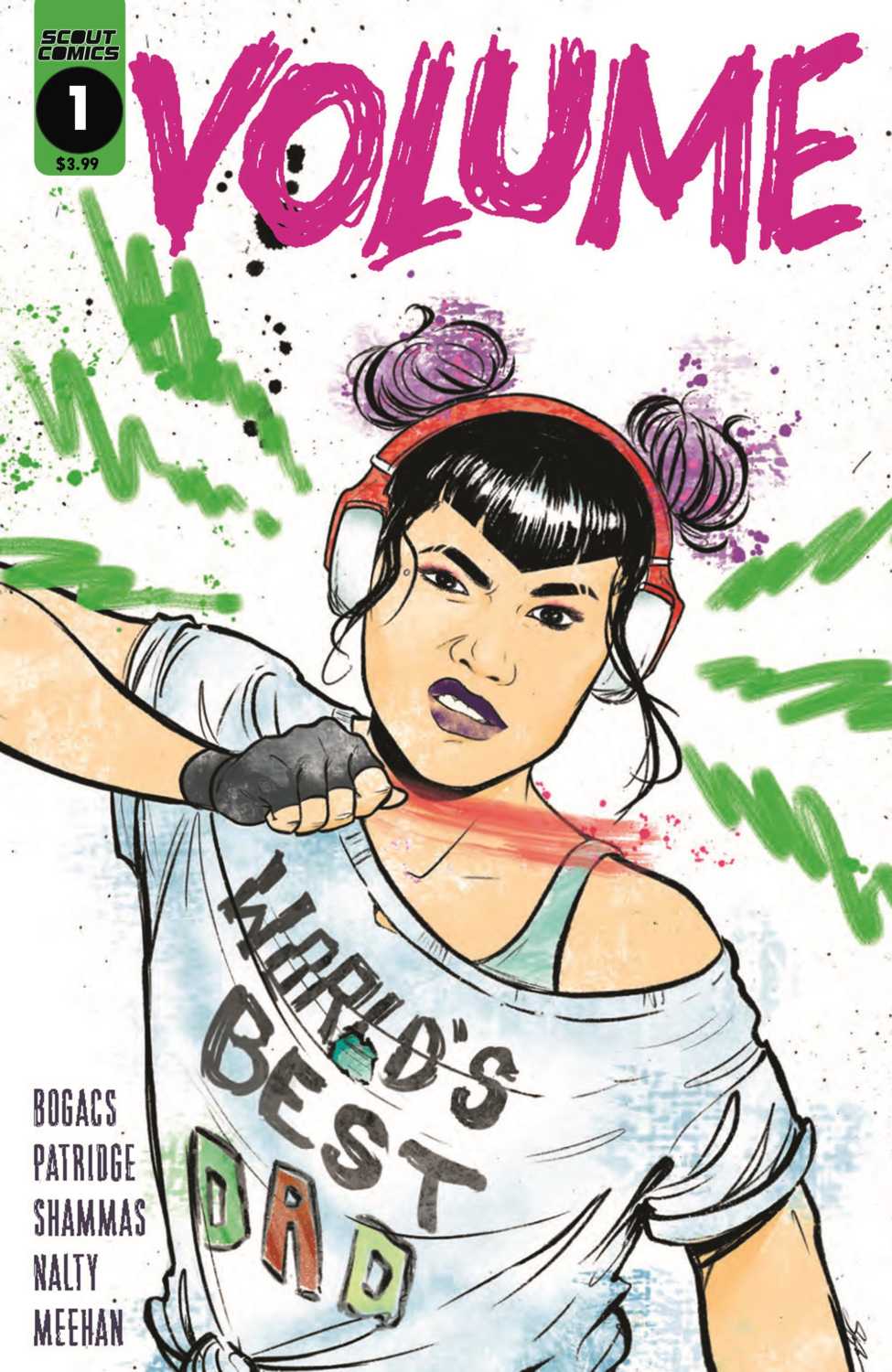
The creative team of Christof Bogacs, Skylar Patridge and Nadia Shammas, are set to debut Volume in 2019 at Scout Comics, a story of teenage angst and rebellion.

The story will take place in the future, which is overseen by a populist dictatorship called, The Regime. Essa, a teenager fed up with the bland and colorless world, seeks to stand up against them through the noise that is one killer rock song.

Volume has been rattling around in my head for a while now,” Said Bogacs. “This is me venting all my pent-up teenage rage in an immature display of punching, explosions and song lyrics. The best part is I get to pull Skye and Nadia into the fray with me!”

The creative trio is on a mission to take a created world devoid of personality and smash it with color and punk music, but also capture what encapsulates the way teen girls are seemingly silenced and undervalued.

Volume #1 will land on shelves in 2019. For more information regarding this upcoming series or any other Scout titles, please contact Publisher James Pruett at: james.pruett@scoutcomics.com.

Check out the cover for the first issue, above, and a sneak peek at some interiors, below.

Monkeys Fighting Robots Youtube

Review: TRANSFORMERS #2 Building Tension With Immaculate Style

Monkeys Fighting Robots

This week sees the release of the second issue of Transformers from IDW Publishing. Still basking in the glow of the new,  The World In Your Eyes part 2 continues the story of Cybertron before the civil war and the civil unrest brewing on the horizon.

Breathing new life into these giant robots is no easy task but Brian Ruckley has a large artistic team helping him do just that. Drawing on Transformers lore to bring something new to the readers is the driving force behind this reboot and IDW Publishing are committed to making this a success.

Cover art detail
Transformers #2 Credit: IDW Publishing

Writing/Story

After the shock of finding a dead body at the end of the last issue, Rubble and Bumblebee attempt to go about their business as if nothing has changed. For Rubble this is easier as he lacks experience in almost everything but for Bumblebee this proves to be harder. No unnatural deaths have occurred on Cybertron in generations.

Brian Ruckley splits this issue into two sections. The first is a classic police procedural with a murder mystery at its heart.  Ruckley gives the readers a victim, some suspects, and an investigating team. Like all good ‘cop’ stories the effects of the crime are far reaching. Ruckley makes this very clear but then reins it in so the reader is left in the dark as to the true consequences.

This is a wonderful play on pulp fiction novels; the inconsequential aspects of the story often feature heavily in the final outcome. Because of the way Ruckley structures the narrative, the reader can make this literary connection and in turn starts to suspect everything.

This leads into the second part of the story where Megatron is leading an Ascenticon march. An unknown assailant attempts to assassinate the future Decepticon leader which adds more layers to the overall story. At each turn Ruckley teases the reader with information producing a surprisingly thrilling comic.

Ruckley has also used the structure of this issue to slowly increase the underlining tension relating to the coming civil war. As a stand-alone issue it might not be as obvious but when compared to issue 1 of Transformers, the civil unrest element of the story has grown. It only took up a few pages from the last issue but here more pages are dedicated to the Ascenticon’s and their rebellious nature. The increase in page number in turn increases the importance of the storyline. Ruckley is using the structure of the ongoing comic to enhance the narrative.

Interior art detail
Transformers #2 Credit: IDW Publishing

Art

Just like last issue, the two different storylines have different artists working on them. The style between Angel Hernandez and Cachet Whitman aren’t too dissimilar and the transition from one artist to another does not jar the reading experience. Hernandez’s fluid style matches the innocent characters featured in the first part of the narrative and his scenery is beautifully alien. In contrast Whitman has a more mechanical look suited to the inner city settings.

The artists, along with the two colorists Joana Lafuente and Josh Burcham, make each section of Cybertron physically and tonally different. The emotional reaction from the reader to the two halves of the story is controlled by the subtly different art styles.

Tom B. Long layers the speech balloons across the panels directing the reader. His caption boxes for Rubble’s inner monologue on the opening page have a mechanical, computerised edge but with a naivety reflecting Rubble’s new life. Long also uses short balloon tails for most of the speech except on rare occasions, such as the appearance of Orion Pax as a hologram. By altering the tail length it distinguishes the speech and gives the impression of distance. Long is making a point about the different locations and story elements: not only is Orion Pax physically further away but the action in the city is thematically distant from the quiet life in the wilderness of Cybertron.

Interior art
Transformers #2 Credit: IDW Publishing

Conclusion

As a murder mystery, Transformers issue 2 works beautifully. A range of suspects and motives have been laid out by Ruckley; a number of which will be red herrings. He is building a story to engage the reader without filling each page with violence. These Transformers are just trying to live their lives which makes them relatable: not something you can often say about giant alien robots.

The other aspect of the comic, the civil unrest, is also unfortunately relatable in today’s political climate. The fact that most people reading this comic will know where this is heading, Civil War, only adds to the growing tension of the situation. The creative team use that to manipulate the reader.

This new Transformers comic is a pleasure to read and the focus on a few characters works to its advantage.  There is plenty here for long time readers and new readers alike. The style of the narrative is also a fresh direction for the giant robots. By building the narrative slowly the creators engage the readers and hook them into the expanding storyline.

Monkeys Fighting Robots Youtube

TRUST FALL, a Story of Family, Superpowers and Thievery, Coming this Summer

Monkeys Fighting Robots

Coming this summer, from creators Christopher Sebela and Chris Visions, comes the new series, Trust Fall, at AfterShock, the publisher that encourages its fans to read dangerously.

The story follows a dysfunctional family of thieves with superpowers, led by Ash Parsons, who can teleport objects, but not herself. She lives isolated and has never actually been a real part of the world as she relies on her family to catch her after each and every heist. The crime family depends heavily on Ash as she can steal things they otherwise wouldn’t be able to move. Growing weary of being used, once she starts to push back, the scenario won’t be favorable for all involved.

“It’s both fast and brutal but with a beating heart in the middle of it all,” Sebela said. “We’re not just rolling out a neat concept and coasting on that, we’re trying to give all this stuff life, give things stakes, give you characters you can care about, root for or against.”

Keep an eye out for Trust Fall, which drops on June 12 and click HERE for the Deadline presser, which announced the upcoming series, which includes some interiors as well.

What do you think, are you ready to dive into this heist tale? If you had superpowers, what kind of things would you get into? Let us know in the comments section below.

Monkeys Fighting Robots Youtube

Review: GLOW The Hit TV Show Body Slams Into Comics

Monkeys Fighting Robots

While anticipation is growing for the third series of GLOW from Netflix, the void is being filled by IDW Publishing and their new monthly comic. Featuring all of the characters from the hit T.V. series, the creators are attempting to capture the essence of the show that made it a success.

Interior Art GLOW
GLOW #1 Credit: IDW Publishing

Writing/Story

Believing that they have a free weekend coming up, The Glorious Ladies Of Wrestling begin to plan their relaxing break. That is until Sam Sylvia wrecks their plans with the announcement of a weekend of wrestling at Wrestlefest: a wrestler’s convention with exhibition matches featuring the cream of the crop.

It may appear like a perfect opportunity to showcase what they can do but there will be a cost. And that’s even before they get on the tour bus.

Not a new comer to wrestling stories, Tini Howard has written for a number of Boom! Studios’ WWE comics. With the first issue of GLOW she has created a storyline which deliberately highlights each character in succession in order to remind the reader who is who or introduce them to people new to GLOW. This works like a double edged sword; working well by bringing the readers up to speed on each character, jogging the memory since series 2 dropped; however, it also reduces the cast to caricatures.

Each character appears defined by a single trait which sums up who they are. This is a touch derivative especially as the Netflix show strived to do the complete opposite. This is only the first issue so there is plenty of time for the characters to emerge however this approach could be off putting to fans of the show.

Apart from the lack of character, the story itself does its job. An obstacle is placed in the ladies’ way which they have to overcome. This allows Howard to focus on each character in turn to define who they are for the reader while also setting up future conflict and drama. The consequences of Ruth having an office key and Carmen’s fears of running into ‘real’ wrestlers are threads of the narrative left open for future issues. Howard feeds the background story lines into the main narrative in a subtle and satisfying way. They do not detract from the obvious drama but they bulk out the narrative for an improved reading experience.

interior art detail GLOW
GLOW #1 Credit: IDW Publishing

Art

The most challenging aspect of the comic for fans of the GLOW T.V. show will be getting used to the art work by Hannah Templer. She has a wonderful expressionistic style which is very emotive. Her figure work expresses character traits and emphasises the performance aspect of the story. Each of cast is a physical representation of the characteristics displayed in the narrative.

However, the simplified style and reliance on over the top gestures is a contrast to the harsh realities depicted in the show. On the surface GLOW has this larger than life, fun appearance but there are dark undertones throughout the storylines that are not reflected anywhere in this comic. Templar’s art captures the fun element and is packed with quirky humour but the darker tones are lost or fall flat.

Sam’s character suffers the most in this comic. His vicious sarcasm and emotionally disturbed cruelty is lost in the cartoonish punchlines and cute visuals. He is depicted more like someone’s grumpy father rather than someone the women should be challenging. An underhand joke about lap dancing is almost brushed off with a childish stomp and fire symbol bursting from Yolanda’s head. Challenging chauvinistic attitudes is one of the major themes in GLOW so to see it passed over so lightly feels like an opportunity missed.

Rebecca Nalty uses flat, blocks of color with little shading. This produces a layered effect to the panels providing definition between the backgrounds and characters. The bright colored background splashes, with no background detail, have become a popular style in recent years, especially with Boom! Studios’ teenage sports comics. Nalty makes it work by generally complementing the colors in a panel but occasionally throwing in a contrasting hue so that the moment is emphasised.

Christa Miesner employs comical sound effects throughout the pages of GLOW. On a humour level these work successfully, especially during the orchestrated fight scenes. There is nothing outstanding about the rest of the lettering. This is both a compliment and a criticism. The speech balloons are placed on the page to help the readers flow from panel to panel but there isn’t enough emphasis in the text itself. There is little direction for the reader towards tone in individual voices. This in turn makes speech heavy pages a hardship to read as there is no distinction between the characters.

interior art
GLOW #1 Credit: IDW Publishing

Conclusion

GLOW is an enjoyable, young adult, sports comic along the lines of SLAM! or Dodge City from Boom! Studios. However, for fans of the T.V. show this reads like a watered down adaption. It lacks the constant struggle that the characters go through, merging the wrestling ‘in show’ theatrics with the all to disturbing real life problems.

This first issue is best described as twee. It’s as if the creators have viewed the show through rose tinted glasses and picked up on the jovial nature of it but leaving any darkness behind. As a story in its own right, the comic GLOW has a place and will find an audience. It is fun and slightly risqué but so far lacks the depth of the source material.

Monkeys Fighting Robots Youtube

Review: Disaster on Demand in BAD LUCK CHUCK #1

Monkeys Fighting Robots

In Bad Luck Chuck #1, the new title from writer Lela Gwenn on Dark Horse, we’re introduced to Tashi Charlene ”Chuck” Manchester, a walking bad luck magnet. So much so, in fact, she’s managed to turn it around into a pretty lucrative business prospect.

A new client contracts Chuck’s “disaster on demand” service in this energetic debut. However, her new customer may not be on the up-and-up.

The Writing

The writing in Bad Luck Chuck #1 is fun, above all else. The work is extremely energetic, pushing the story forward at high pace from the beginning.

Chuck is a fun character, embodying a lot of your classic, low-rent P.I. tropes. She’s cynical, blunt, and seemingly only motivated by cash. As for her powers, they’re not so much her own “bad luck;” rather, bad luck seems to happen to those around her, and she uses that to her advantage. What differentiates her from a character like Domino, though, is that Chuck’s powers seem genuinely supernatural. So much so, that she surrounds herself with rabbits’ feet, clovers, and other charms, just to keep it under control. It’s an interesting concept, always keeping an element of spontaneity and unpredictability in the story.

While Bad Luck Chuck #1 is a fast-paced story, that can actually work to its disadvantage at times. Primarily, there’s the fact that the book doesn’t really establish the persona of our lead. We know she has her powers, but we don’t get much else as far as motivation, background, or personality.

Certain plot threads seem a little underdeveloped or arbitrary at points. For example, why Chuck’s new client chose her is not really clear. Then, later in the book, Chuck’s charge seems indifferent about leaving her adopted “home.”

The Artwork

Matthew Dow Smith’s artwork is charming in Bad Luck Chuck #1. He employs a sketchy, rough look to the book, which works alongside the tone of the storytelling.

You lose a degree of detail with the sketchier style, and some poses may feel a bit awkward. However, it’s a nice effect. The artwork offers an impression, rather than a literal recreation of life, and it’s pleasing to the eye.

The color work by Kelly Fitzpatrick works nicely alongside Smith’s pencils. The colors appear flat at first glance, complimenting the sketchy art. Upon closer inspection, though, readers can pick up on more subtle details of Fitzpatrick’s work, especially in illuminating characters’ faces.

Final Thoughts

Bad Luck Chuck #1 is a solid start to this new series. While the details might be a bit fuzzy, the larger work is a fun, fast-paced, and engaging read.

Monkeys Fighting Robots Youtube

Hickman’s Return To Marvel: New X-Books, New Logo

Monkeys Fighting Robots

Marvel Comics made a lot of news at C2E2 this year, but maybe none bigger than the return of writer Jonathan Hickman to the Marvel Universe. Hickman will be writing two new X-Men series — House of X and Powers of X — beginning in July. Art will come courtesy of Marvel “Young Gun” Pepe Laraz (on House) and R.B. Silva (on Powers), with colors by Marte Gracia. The two six issue series are being released on an alternating weekly schedule, according to Marvel.

The news comes after weeks of speculation on what Hickman would be writing — maybe The Eternals? — following teases like this:

hickman x-men

While fans have been looking for clues in Mark Brooks’s promotional image from the announcement, for now we’ll have to wait and wonder why there are multiple versions of some characters.

hickman x-men marvel

Editor in Chief C.B. Cebulski said,

“We are excited to have Jon back with the Marvel family, and we could not have asked for a better creative team to help usher the X-Men into a whole new era. While we can’t reveal too much about the story just yet, these new stories will redefine the X-Men and their place in the Marvel Universe. This is a historic moment both new and passionate fans won’t want to miss.”

Additionally, artist Tom Muller tweeted his design for a new X-logo that will arrive with the new books:

tom muller x-men

Hickman is no stranger to the Marvel Universe, of course; his last big splash was Secret Wars.

Are you an X-Men fan, a Hickman fan, or both? Will you be picking up these new books? Leave us a comment!


Monkeys Fighting Robots Youtube

C2E2 2019: Marvel’s New Title Announcements

Monkeys Fighting Robots

Marvel Comics wasted no time making news at this year’s C2E2 convention. Diamond’s retailer event is where representatives from all the major publishers tease — or outright announce — upcoming projects they wish to get on store owners’ radar; four new projects were unveiled by Marvel this time around.

Absolute Carnage by Donny Cates and Ryan Stegman was previously hinted at in the news about Marvel’s FCBD Spider-Man/Venom issue. Now we know that the event starts in August. According to Cates,

“Cletus Kasady is back, and he is deadlier than he’s ever been. ABSOLUTE CARNAGE encompasses every single character who has ever worn a symbiote and every symbiote that has ever been, going all the way back to when Peter found the black suit.”

You can watch the video announcement via Marvel Entertainment on Twitter.

marvel comics c2e2

Next up is the return of the Infinity Warps characters — introduced in Infinity Wars — in an Al Ewing-written story that will unfold across six Marvel annuals. If you need a quick refresher, the “mashup” characters included Weapon Hex, Soldier Supreme, Arach-Knight, Iron Hammer, and Ghost Panther. We have yet to hear who the artists will be.

marvel c2e2

Kurt Busiek and Alex Ross will be reteaming for a new Marvels story, set after the events of the original series. Marvel is already publishing an annotated version of the material for its 25th anniversary this year. Release date for the new story is still TBD.

marvel comics c2e2

Finally, speaking of old Marvel, Mark Waid, Javier Rodriguez, and Alvaro Lopez will be uniting to tell The History of the Marvel Universe as a six issue series. Waid posted on Facebook,

“This is a fun project, but I gotta tell you, this is not a one-man show. Javier Rodriguez and Tom Breevort and the Marvel Research Crew are doing MUCH of the heavy lifting. That said, we’re VERY proud of this.”

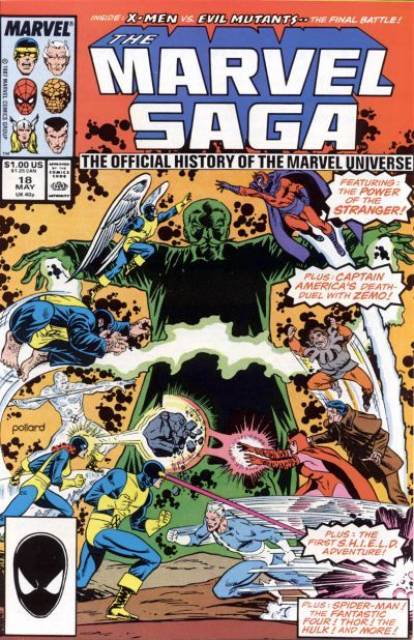
In addition to Marvels, the company has previously dug into their past in books like The Marvels Project and, back in the 1980s, The Marvel Saga — which was dubbed “the official history of the Marvel Universe.”

marvel comics c2e2

Of course, a lot of continuity has piled up since then.

That’s a lot to look forward to. Which of these books sounds the most exciting to you? Leave us a comment below!

Monkeys Fighting Robots Youtube

Review: Alien Conspiracies And Superhero Mysteries In STRONGHOLD #2

Monkeys Fighting Robots

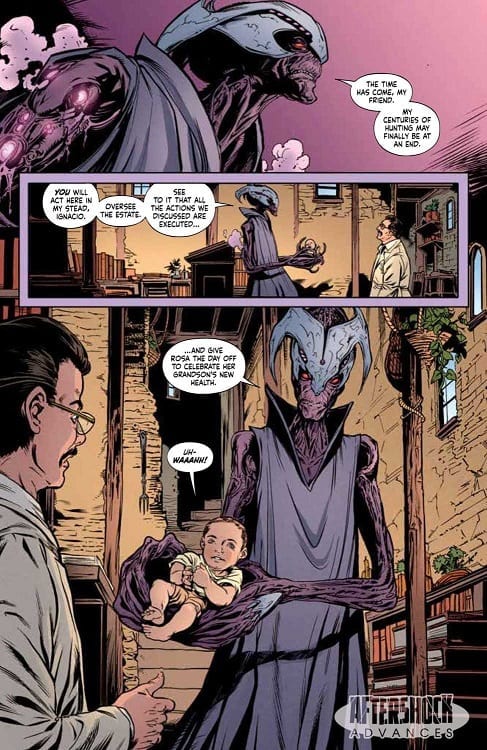
After the magnificent first issue of Stronghold, can Phil Hester and Ryan Kelly continue to impress with their conspiracy heavy Alien invasion story? AfterShock Comics are hoping so. The story continues with a host of characters and a creative team producing some grade A work.

Writing/Story

Like a Spider at the centre of a Web, the ‘Teacher’ is introduced during the opening of this second issue. From the first page his alien origins are evident but how he relates to the Primacy and the Stronghold is let to be revealed. Giving out instructions relating to a number of heinous acts, the Teacher is evidently searching for something, and he may have just found it.

Meanwhile in America, Michael is left wandering, trying to process what happened to him and Claire is preparing for life outside the Stronghold.

Hester shifts the focus of this issue away from the two central characters by introducing a more superior villain. He wastes no time in setting up the Alien presence and makes it clear from page one that this creature is behind some of the World’s most horrible acts of violence. However, Hester manages to give the Alien another side, a tenderness to counter the ‘evil creature’ of first impressions. Hester’s ability to make you question the nature of this beast is impressive and illustrates how well he has crafted the characters in Stronghold. All of this tenderness is soon forgotten, however, as the story unfolds.

By concentrating on the villainous characters, Hester is able to speed up the pace of the narrative. This makes this issue of Stronghold a much quicker read than last month. However, it is still packed with concepts and parallel storylines, expanding the world for the readers.

Stronghold interior art
Stronghold #2 Credit: AfterShock Comics

Art

Ryan Kelly’s art work is extremely detailed with complex figure work. He designs the backgrounds to be more than just settings, they reflect the tone of the narrative at any given point. An empty, almost deserted bus station acts as a symbol for Michael’s mental state just as the screen filled walls of the Stronghold reflect the high tech element of their storyline.

Kelly doesn’t use any set grid pattern throughout, chopping and changing to suit the situation. In the same way he alters his frame styles to add impact to certain panels. The use of colored gutters strengthens the settings and are an indicator to the reader whose story line they are reading. If a comic book is a language then Kelly’s layout design is a strong accent that is recognisably his.

The colors in Stronghold, provided by Dee Cunniffe, are an emotional backdrop to the narrative. They are especially effective when he moves away from the realistic, varied palate and highlights a specific color.  The blood red dream sequence, for example, has more of an impact because it stands out visually from the pages surrounding it.

Simon Bowland’s lettering is subtler. Slight inflections or bolding of the text creates emphasis but also gives each page a rhythm for the reader to follow.

Interior Art
Stronghold #2 Credit: AfterShock Comics

Conclusion

Everything about Stronghold, from the script to each aspect of the art, is about building a pace for the narrative. It succeeds in drawing the reader in and then drowning them in a diverse world populated by mysteries and violence. The experience of reading this comic is over much quicker than you realise, especially considering how much happens in this issue. There are a lot of concepts and story threads weaving through each other and surprisingly, in this issue, none of those threads actually interact.

The success of Stronghold lies with the co-ordination of the creative team, all working together to produce something that flows effortlessly. The narrative gives the reader a lot to digest but the art work makes the consumption really easy. The ending comes almost too soon, but the final shocking splash page will leave you wanting more.


Monkeys Fighting Robots Youtube