Home Blog Page 323

REVIEW: FRIDAY #1 Patches Together A New And Brilliant Genre

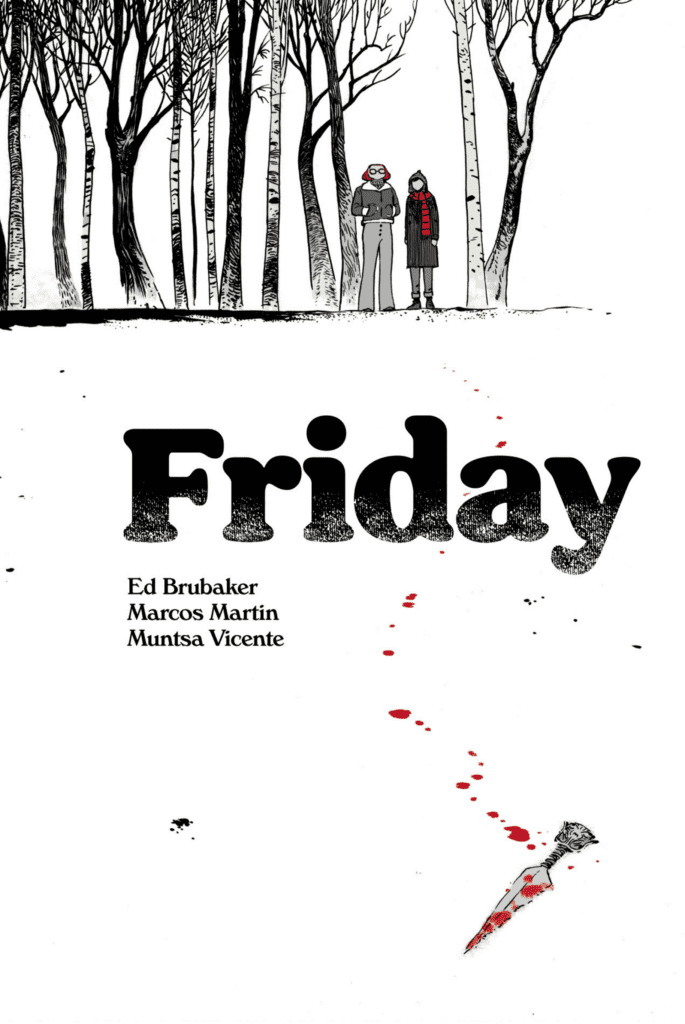
Friday #1 Cover, Panel Syndicate by Brubaker

Friday #1, out now from Panel Syndicate by writer Ed Brubaker, artist Marcos Martin, and colorist Muntsa Vicente, is the kind of fresh storytelling the comic book industry sorely needs right now. With Friday #1, this creative team reinvents old genres to come up with something new. Taking from elements of classic YA like Nancy Drew, a hint of occult comics like Hellboy, and a splash of coming-of-age stories, we get what Brubaker calls “Post-YA.” Whatever you want to call it, it’s one of those things you wish you’d thought of yourself.
Friday Brubaker Panel Syndicate

Writing

Brubaker shows us a grown up kid detective in this series. We tend to leave the doe-eyed investigators of such franchises long before the innocence of youth has gone out of them. With Friday Fitzhugh, Brubaker creates a character that is somehow immediately familiar. We feel like we’ve grown up reading her novels, solving crimes over her shoulder. So when Friday returns to Kings Hill after a year at college, change is in the air. Thanks to her ever-approaching adulthood, we feel as though we’re revisiting Kings Hill with Friday for one last case. We’ve never met her before, yet we’re nostalgic from page 1.

The tone of the narrative captions is clearly borrowed from old YA mystery novels, like The Hardy Boys. It accounts for much of the issue’s nostalgia. Yet the understated references to sexual tension, and the gradual transition to things more spooky makes it all feel more adult. We get the sense that the characters are being given an option. Keep moving on, keep growing up, or return to the patterns of your childhood. Though they can’t have it both ways, Brubaker’s empathy for his characters makes us wish they could. We relive our own loss of innocence through Friday. And while we know she must grow up, and already has in many ways, we see the growing pains on the horizon.

Art

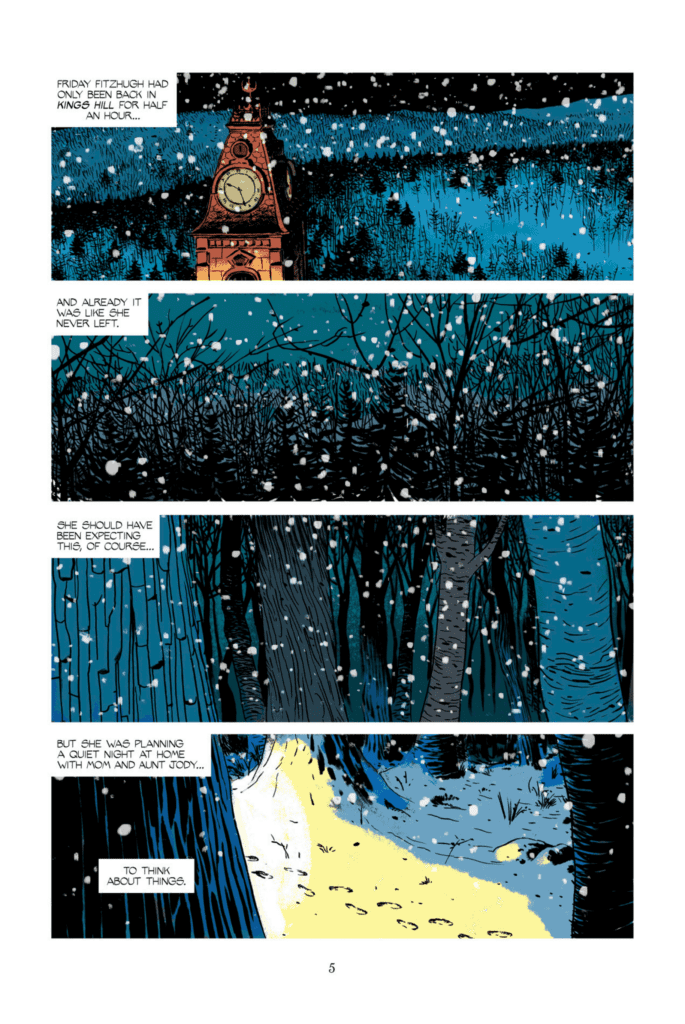
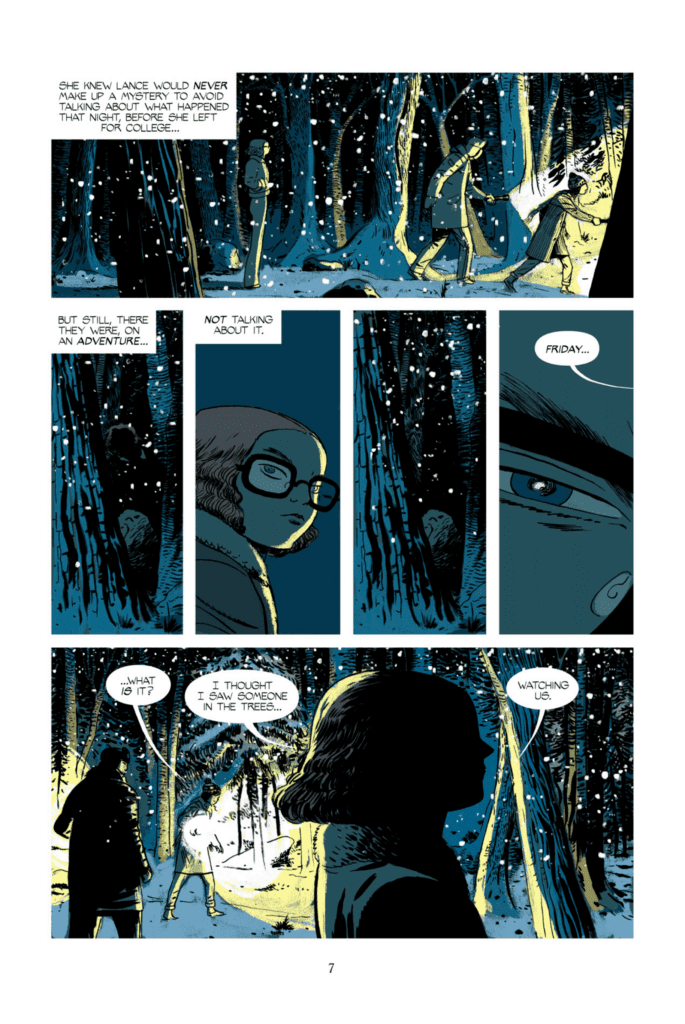
Martin strikes a perfect balance with his art. He seamlessly moves from sweet characters to creepy tapestries without skipping a beat. It simultaneously lends the comic a sense of familiarity and mystery. We feel as though we’re walking through dark woods, trying to stick close to these characters who make us feel safe. At one point, as Friday is walking through the woods, she spots someone watching them further out. Or so she thinks. Martin manages to depict what Friday sees in such a way that you’re unsure if it’s snow or a figure in the darkness. He obscures details to enhance the mystery, and the mystery is chilling.
Friday Brubaker Panel Syndicate

Coloring

With the light blues of shadows and the yellows of flashlights, Vicente sets a creepy tone for much of the comic. Yet it’s clear, even from a comic that mostly takes place in the woods, that this is not a monochromatic series. The moments that aren’t in the woods are often bright and colorful. And when Friday hucks an ice-ball at someone who’s fleeing the scene, the panel lights up in bright neon colors. With every page, Vicente makes us feel safe or afraid, but never unmoved. She sets the tone and the rhythm of this issue, as we rush to get back to safety and then dwell there once we arrive.


Friday #1 is wonderfully reminiscent of the mystery novels you read as a kid. But it feels appropriate to read this, years later. It feels like you’re checking up on how those kid detectives are doing and what they’ve done with their lives. Don’t miss this brilliant new comic. Get it at Panel Syndicate, a platform for digital comics, straight from the creators at whatever price you’d like to pay. Learn more about the awesome work and projects the Panel Syndicate crew are producing on their “About” page.
Monkeys Fighting Robots Youtube

Longbox Legends: Tartakovsky’s CAGE! Goes back to The ’70s

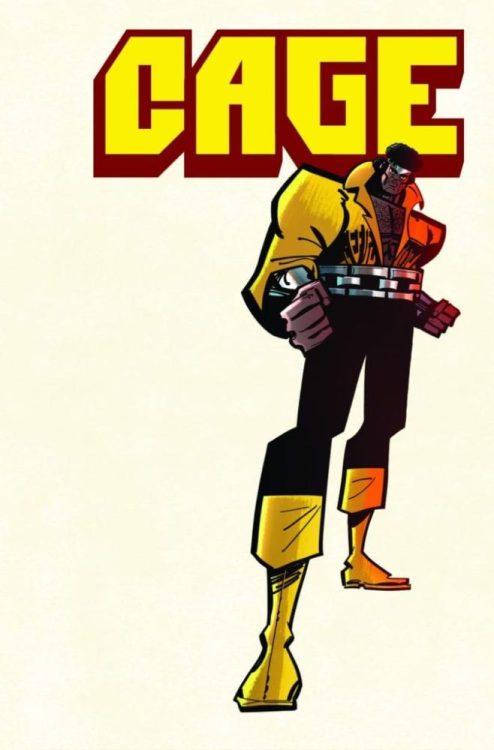
In the early 2000’s legendary animator Genndy Tartakovsky was working on a Luke Cage comic for Marvel, but nothing ever came of it until 2016’s CAGE! which took the titular character back to his ’70s roots as only Tartakovsky could.

Marvel Comics’ CAGE! originally came out in four separate issues throughout 2016 with the story, art, and some color by Tartakovsky. CAGE! also employed long time inker, Stephen DeStefano. Helping Tartakovsky on colors was Scott Wills and Bill Wray, with VC’s Clayton Cowles on letters.

BREAKING OUT OF MY CAGE!

Luke Cage isn’t a character I go out of my way for. He is a cool character to read when written well, but it seems that it doesn’t happen often. I had heard Marvel Digital Original Luke Cage #1 was good, yet never looked into it. The few Epic Collections Marvel has released of his original series aren’t bad for when they came out but hasn’t aged too well. Nonetheless, when Luke Cage and Danny Rand (Power Man and Iron Fist) team up, its a damn blast. Yet when these two characters are separated, they don’t interest me.

Enter Tartakovsky’s CAGE!

Big Story! – Genndy Tartakovsky, Stephen DeStefano, Scott Wills, Bill Wray, VC’s Clayton Cowles

When it was initially published it got favorable reviews. But, following its debut, it is barely spoken of. This is surprising as this mini-series was Tartakovsky’s second comic he ever did. Plus, his name is extremely well known for Dexter’s Lab, and Samurai Jack, among other works. Even more so, this year marked the return of Samurai Jack and its final season. With such a big name doing such a significant character, it seems four years it has since been forgotten.

BIG CHARACTER, BIG 70’S STORY

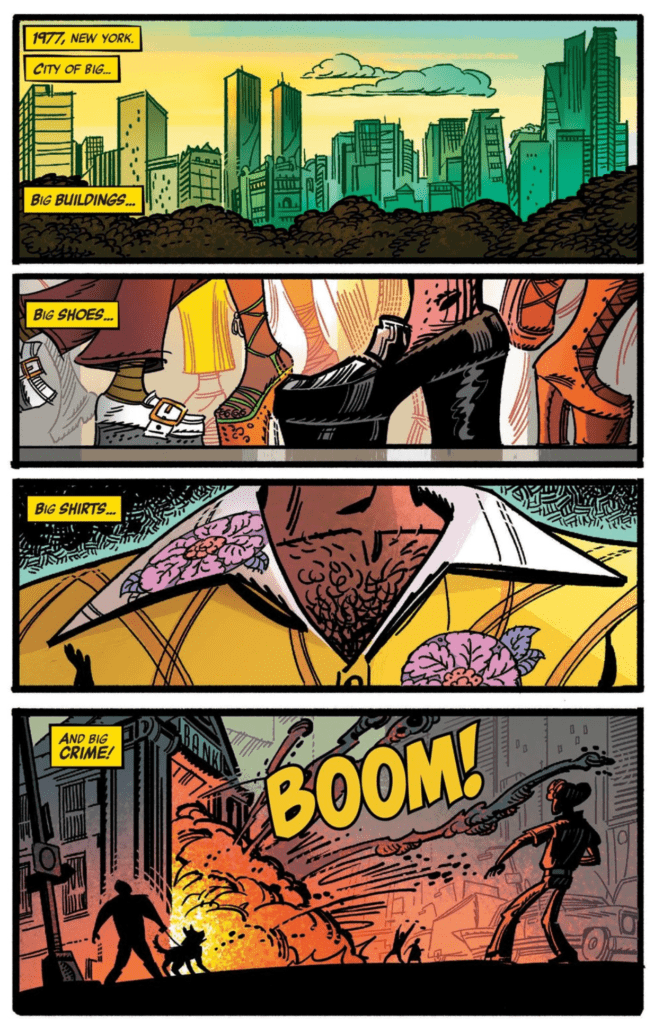
Tartakovsky’s CAGE! is a return to Luke Cage’s original ’70s era with its share of amazing and less amazing features. Tartakovsky’s dialogue and narration ooze the ’70s vibe perfectly, which makes sense has he grew up on these comics. The dialogue and story beats would be something you’d see back in the day. On the story side, CAGE! begins with Luke Cage looking for Misty Knight after being stood up. Sadly, he isn’t able to find her or other heroes. That is until he is kidnapped like the rest of the heroes to fight a rhyming villain’s creations.

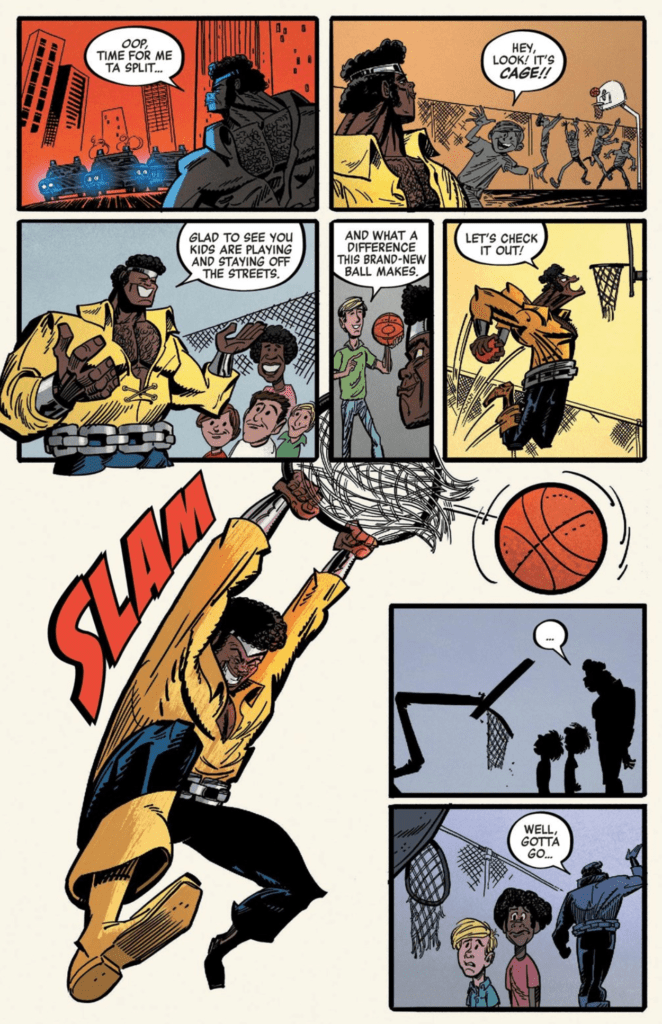
This plot of kidnapping a bunch of powered beings, putting them on an island, and having them fight themselves, or monsters isn’t new. Hell, it was used quite often back in the day. But what sets Tartakovsky’s story apart is Luke Cage himself. The series features weird, yet fun humor, high stakes, and breakneck pacing. It helps that Luke Cage is fun as hell to read in this series and a cool cat to boot. Hell, he even has time to play ball with local kids! To dramatic effect, though.

Oops – Genndy Tartakovsky, Stephen DeStefano, Scott Wills, Bill Wray, VC’s Clayton Cowles

Nonetheless, one thing that stands out most is the humor. A lot of CAGE!’s humor comes in the form of Looney Tune’s visuals, which Tartakovsky absolutely nails. At times his visual humor is reminiscent of Kyle Baker’s Plastic Man. If the series was based on anything other than the ’70s, this aesthetic wouldn’t work. Yet, since it is it makes it a strong suit and is a joy to read.

Something you’d see in Looney Tunes – Genndy Tartakovsky, Stephen DeStefano, Scott Wills, Bill Wray, VC’s Clayton Cowles

CAGE! AND BLAXPLOITATION

Luke Cage was the first black superhero to receive his own titled series and debuted June of 1972 during the blaxploitation era. As famous as this genre of media became, it also had a lot of backlashes. A fair amount of blaxploitation films had questionable characteristics for characters that leaned on the racist side. This happened often by being very stereotypical towards races and taking this to far. Much like Tom and Jerry that had some racist undertones, it was sadly a product of its times.

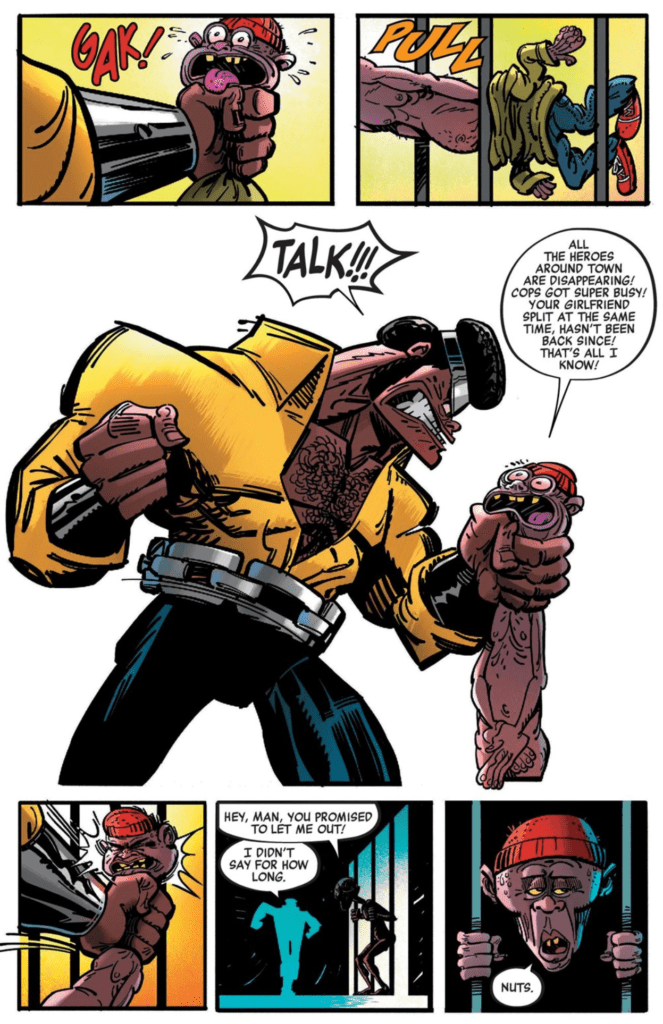
Yet, the original Luke Cage series never went too far, especially since it was the first of its type. But, Tartakovsky’s CAGE! can be seen with a few of the stereotypes. Such as an absurdly muscle-bound angry black character, and the way some of the black villains are drawn, mainly the character he meets in jail (seen above). As the series released in 2016, these problems were looked at less favorably, which is understandable.

OVER THE TOP ART

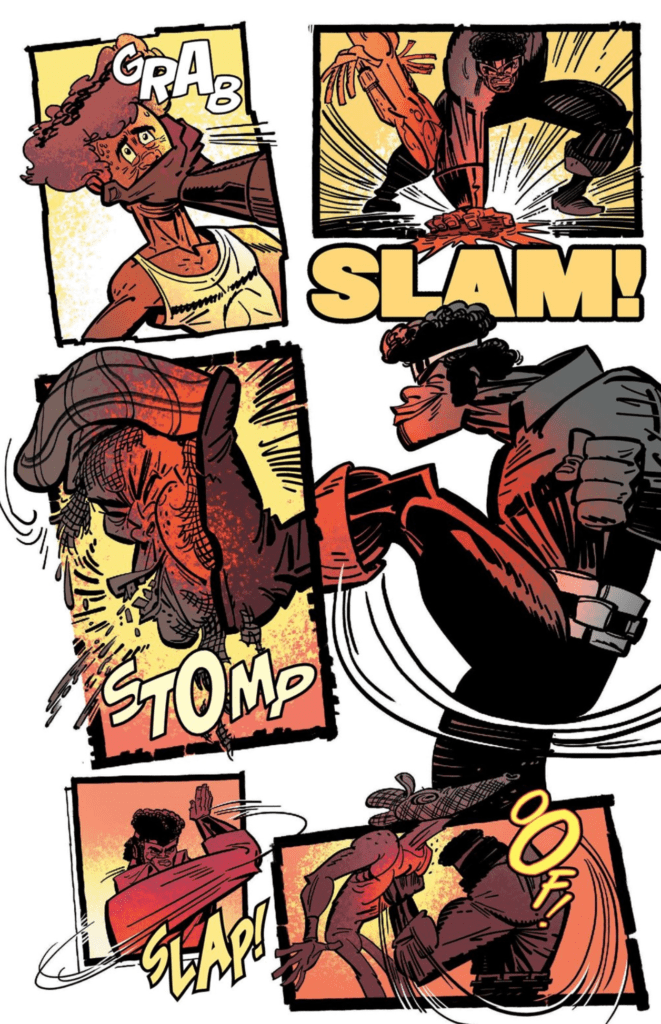
As much as people were hyped for Tartakovsky’s story, another aspect was even more desired—his art. Damn, does Tartakovsky’s artwork amazingly for fun comics. If you’ve watched Samurai Jack, you’ll know he understands action scenes. He brings this knowledge to CAGE! and it is gorgeous. Tartakovsky plays with negative space and panels fantastically. During the first issue, he showcases this skill to great effect when Luke Cage fights some bank robbers.

Ouch – Genndy Tartakovsky, Stephen DeStefano, Scott Wills, Bill Wray, VC’s Clayton Cowles

The flow of the action elegantly guides the reader while he breaks the panels making the actions seem larger than the page itself. Each fight that takes place involves heavy movements that make you feel each hit in your gut. CAGE! shows that Tartakovsky knows how to do action even in comic form. But this isn’t due to just him, as DeStefano’s inks help the characters and action pop.

Looks painful – Genndy Tartakovsky, Stephen DeStefano, Scott Wills, Bill Wray, VC’s Clayton Cowles

Nevertheless, not everything involves action, but even the quieter moments look beautiful due to Tartakovsky’s art.

PSYCHEDELIC COLORS/’70s LETTERING

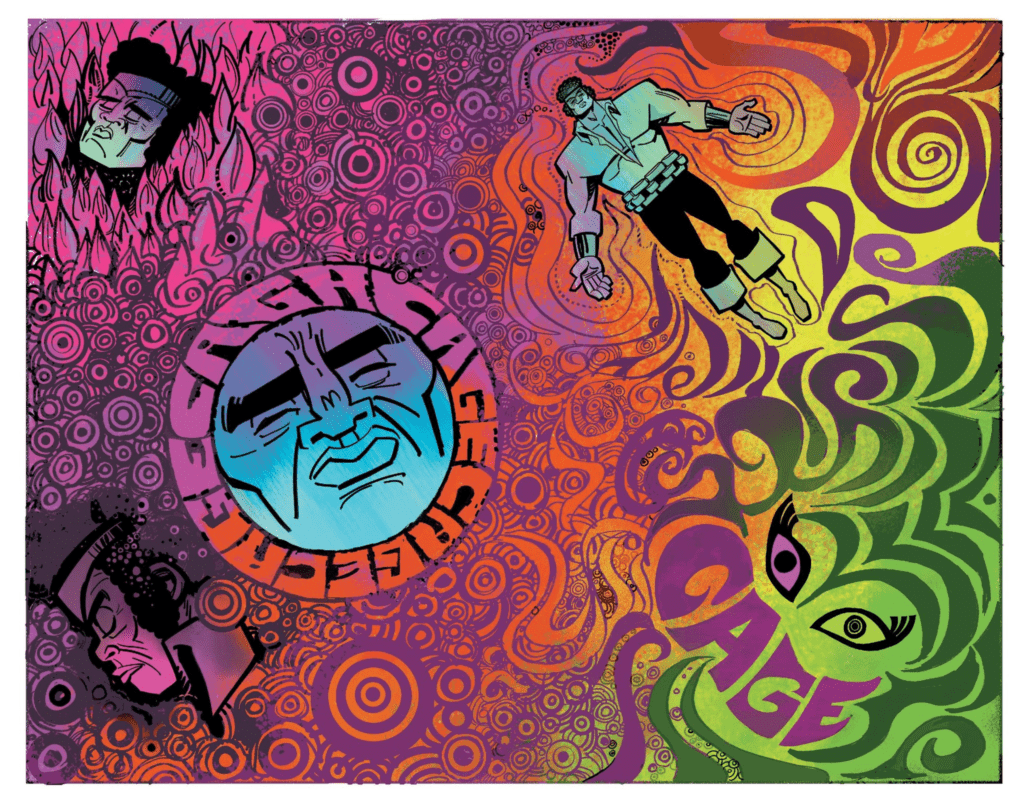
Much like the rest of the series, the colors by Tartakovsky, Wills and Wray emulate the ’70s fantastically. The colors are bright, popping, and oozing with life. It almost seems like the colors made a trip from the ’70s themselves, especially at one moment when Luke Cage gets drugged. When drugged, Luke Cage goes on a mindbending soul trip that looks like someone wanted to make tie-dye lucid dreams. These pages look absolutely jaw-dropping with vivid colors.

Trippy – Genndy Tartakovsky, Stephen DeStefano, Scott Wills, Bill Wray, VC’s Clayton Cowles

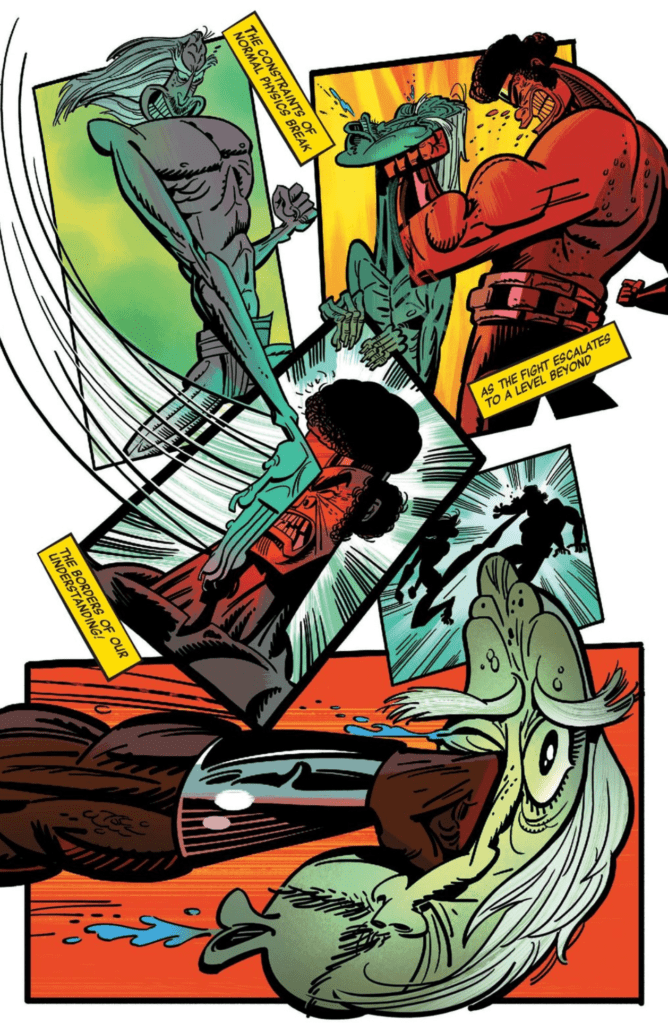
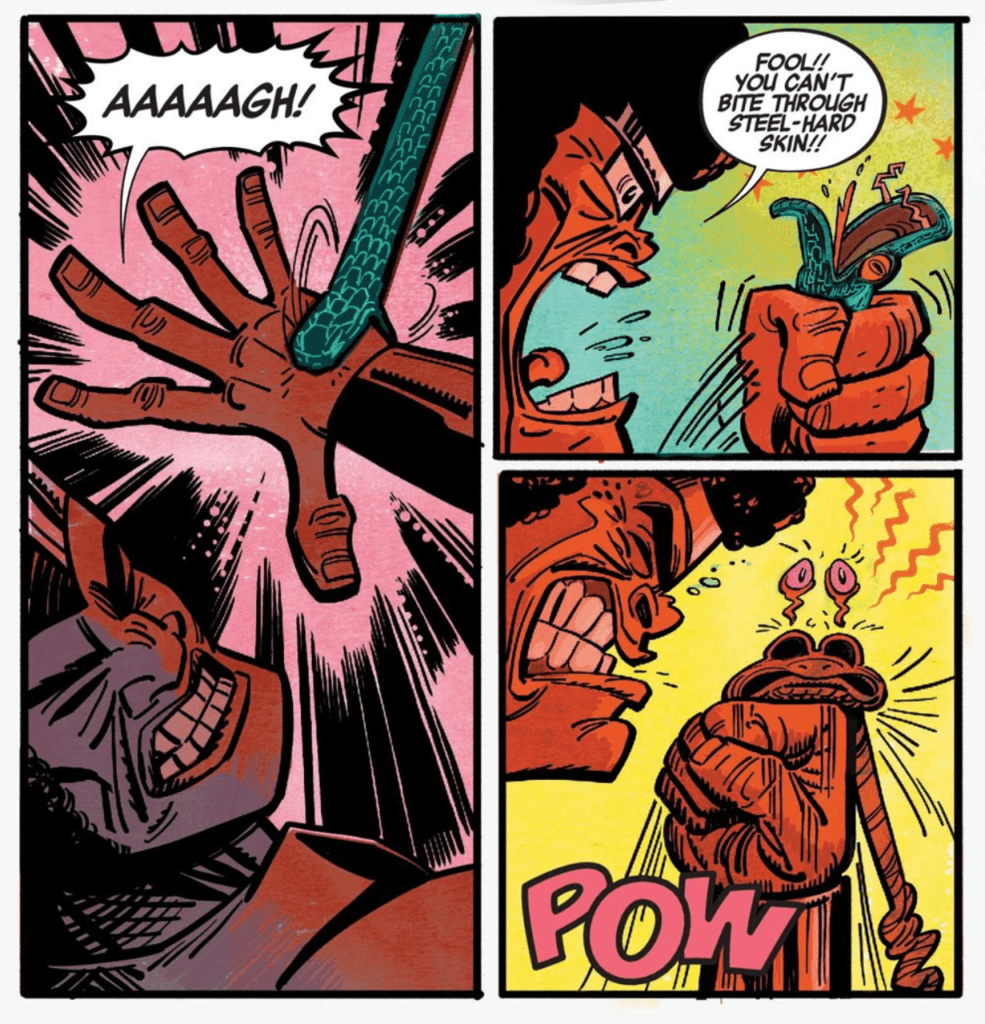
The colors don’t only work amazingly there, as they are used in other instances to the same effect. Namely, fight scenes. The team puts a single color in some fights to help the action pop, yet in other scenes, they add dazzling colors. An amazing example is when Luke Cage encounters a snake, and the colors showcase varying emotions.

Bye Bye Snake – Genndy Tartakovsky, Stephen DeStefano, Scott Wills, Bill Wray, VC’s Clayton Cowles

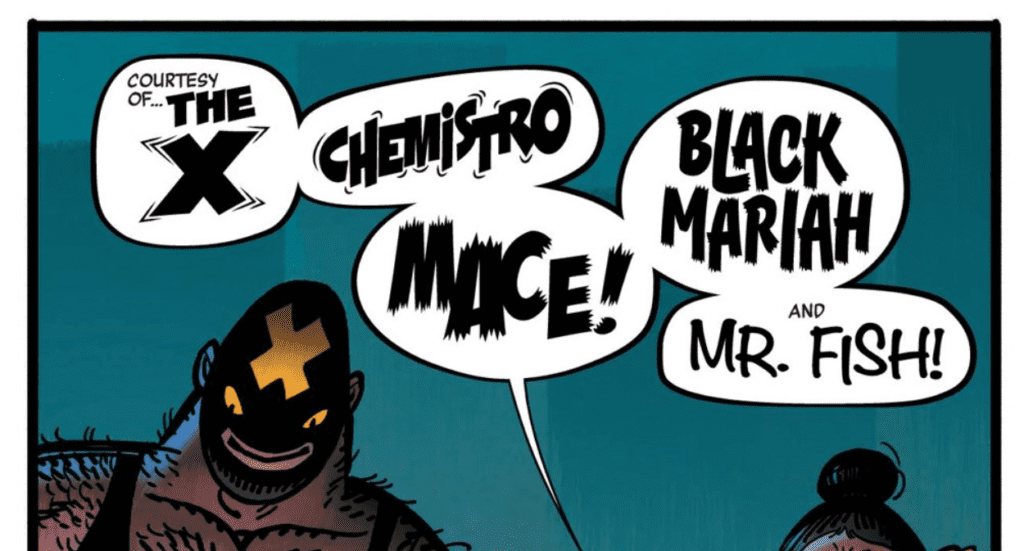
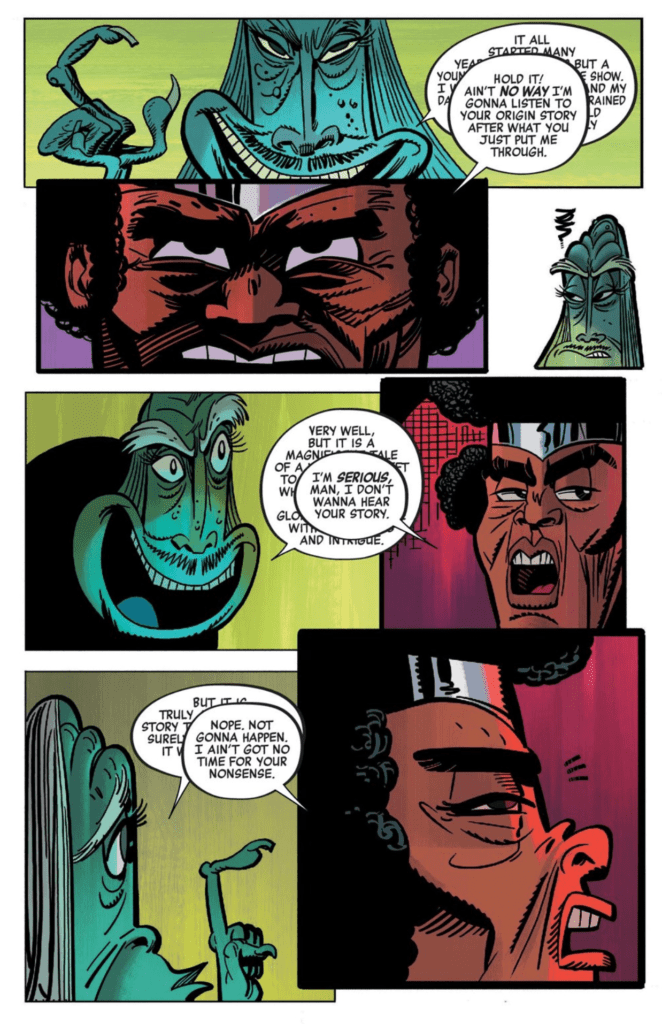
Cowles’ lettering is a perfect and magnificent fit in CAGE! His style mirrors that of fun ’70s comics with the word bubbles breathing life into the pages. One of the best aspects is when characters ay their names, and they are loud and proud. Yet one scene sticks out, where the villain reveals their origin. Luke Cage wants none of that and talks over him, Cowles shows this with Luke Cage’s dialogue blocking it.

Who? – Genndy Tartakovsky, Stephen DeStefano, Scott Wills, Bill Wray, VC’s Clayton Cowles
Rude – Genndy Tartakovsky, Stephen DeStefano, Scott Wills, Bill Wray, VC’s Clayton Cowles

CAGE! FOUR YEARS LATER

Tartakovsky’s CAGE! has a few problems with how some characters are portrayed in a ’70s blaxploitation manner. Yet, that only occurs in minor ways and shows that era’s problems. If you’re looking for a quick, fun read give CAGE! a try. Then let us know what you thought below.

Monkeys Fighting Robots Youtube

Noughts + Crosses | TV Review

The TV adaptation of Noughts + Crosses is a story of two people from different races who fall for each other in a world filled with prejudice.

700-years-ago the Aprican Empire has conquered most of Europe, including the British Isles. During this period the population of Albion has split into two classes: the dark-skinned Crosses who control the nation, and the Noughts, the light-skinned underclass. Within this society are two families: The McGregors and the Hadleys.

Callum McGregor (Jack Rowan) is a Nought who is set to become one of the first Nought cadets at Mercy Point, Albion’s elite military academy. Sephy (Masali Baduza) is the daughter of Kamal Hadley (Paterson Joseph), a powerful minister within the government with aspirations to become the Prime Minister. Callum and Sephy meet for the first time since they were children and embark on a dangerous relationship.

The strength of the series was its world-building and themes. The world of Noughts + Crosses was based on Apartheid South Africa, Segregation-era America, and European Colonial Regime and touched on commentary on issues like stop and search and police brutality.

The series was set in an alternative version of Britain, so the culture on display was a mix of European and West African. The government of Albion operated a lot like the British government – it had a Prime Minister, both used the title Home Secretary, there was collective cabinet responsibility and can launch a judge lead inquiry. West African culture dominated: people wore African style clothing and hairstyles. Soldiers had to perform an African style war dance at a parade. There were great little details like a painting of an African victory done in a European style.

Whilst Noughts + Crosses was great at showing the big picture the heart of the series was the family issues and Callum and Sephy’s relationship. Callum and Sephy’s story was a modern retelling of Romeo + Juliet. They were young adults from different walks of life: Sephy was a girl of privilege who was well-meaning but naive whilst Callum was from the roughest district of the country who suffers at the hands of institutionalized racism. Their relationship fluctuates throughout the series because of their difficult backgrounds and viewpoints.

Noughts + Crosses could easily be seen having similarities to YA dystopias like The Hunger Games and Divergent franchises, even though Noughts + Crosses was published first. All of them have young adult protagonists and had a romance element. In Noughts + Crosses, the romance was central not a side issue or has a forced love triangle. The show was broadcast after the 9 pm watershed in the UK, so it could be more direct about sex. In the second episode Callum and Sephy do try and rendezvous at a love hotel and during the series, it’s stated they were sleeping together. It’s better than The Twilight Saga‘s handling of sex where Edward and Bella avoided having intercourse before having a clingy moment of mating.

A trope of YA dystopias is teenage protagonists being the ones who liberate their worlds. Katniss because a symbol for the rebellion, Tris Prior was mentally and genetically different, and the Maze Runners were immune to the Flare virus. The characters in Noughts + Crosses attempts at changing the system were more realistic. Sephy considers going to university and become a politician, like her father, Callum wanted to become a symbol for change, and Callum’s brother, Jude (Josh Dylan) looked to join a terrorist group. They were small parts of a big machine.

A feature of Noughts + Crosses was the ideology of various people and factions. Both communities have people with differing views. Callum believed in changing the symbol by being an example whilst Jack Dorn (Shaun Dingwell) lead a terrorist movement. They were Martin Luther King and Malcolm X, or if you prefer a comic book reference: Charles Xavier and Magneto. Within the government, the Prime Minister (Rakie Ayola) was a moderate who aimed to give the Noughts more rights, and Kamal was the opposite because he wanted to bring in increase segregation.

Noughts + Crosses did attract a recognizable cast for a British audience. There was Helen Baxendale (Friends, Cold Feet), Paterson Joseph (Peep Show), Ian Hart (Harry Potter and the Sorcerer’s Stone, The Last Kingdom) and Shaun Dingwell (Doctor Who) present. They are all solid actors and Dingwell impressed as a villain because he has an end justifies the means approach. The young actors also impressed in their roles. Rowan, Baduza, and Dylan are rising stars in the UK and South Africa. Rowan and Baduza had to give strong performances since they were the leads. Rowan had a great ability to express emotion with like his little glances and facial expressions.

Noughts + Crosses excels because of its social themes and commentary about race and discrimination. It’s a good experience for anyone interested in politics and sociology. And the series successes as a romance story.

Monkeys Fighting Robots Youtube

Is PAX ROMANA Still Ahead Of It’s Time?

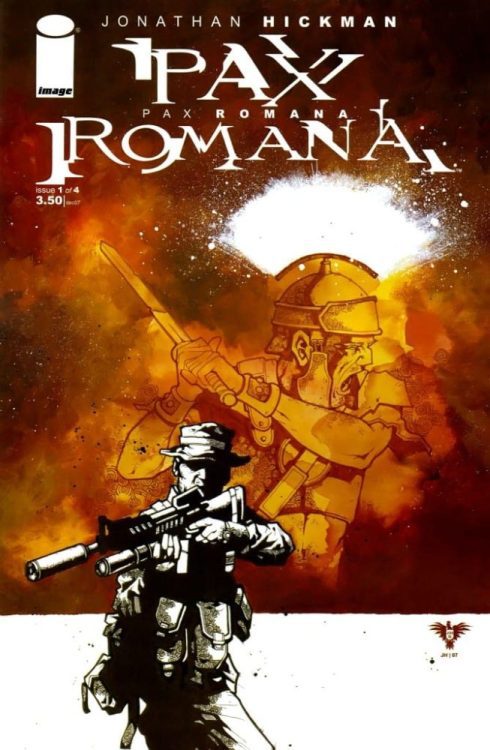
Pax Romana Cover
Pax Romana Credit: Image Comics

In 2007 Image Comics published Pax Romana by the upcoming writer/artist Jonathan Hickman. With this being one of his first forays into comic book publishing, with his first title The Nightly News just starting to make waves, has Hickman written a reader friendly, industry embracing, historical romp packed with action and adventure?

Not even slightly.

That, however, is the beauty of Jonathan Hickman.

Pax Romana
Pax Romana Credit: Image Comics

Secret Histories

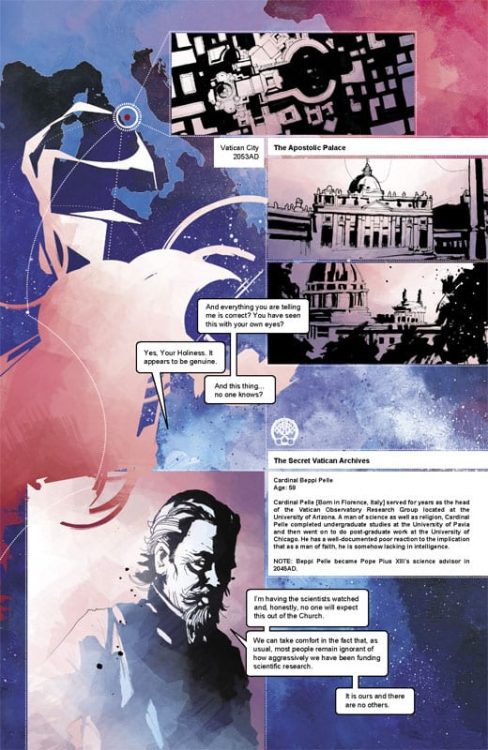
The plot In summary: The Emperor has died and a new Emperor must rise but first he must learn of the secret history of Rome. A history that starts centuries in the future. In 2053, the discovery of time travel allows the Vatican the opportunity to influence history in a whole new way. Plans are drawn, an army raised, and the journey into the past begins.

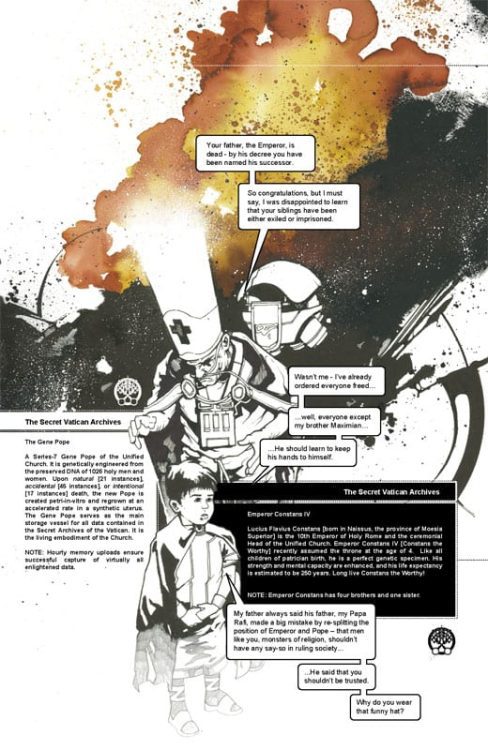
Drawing on the political intrigues of the Roman Empire and a modern obsession with conspiracies, Hickman weaves a complex narrative with an interesting framing sequence. Starting in the middle, with the Gene Pope instructing the new child Emperor, the story takes the form of a dry history lesson based on the archived files within the Church. Elements of the modern world, including the CERN laboratories in Switzerland, become merged with the political world of ancient Rome.

The narrative is told through a mix of dossier style caption boxes, recorded conversations, prose, and occasionally panelled comics. It is this structure that makes Pax Romana so distinctive and surprising for a creator’s early work. Most readers will know Hickman from his current Marvel work, as overseer of the current X-Men line, but the groundwork for the style of those big comics is founded in his early works such as Pax Romana. Divergent timelines? Check. Resurrected characters? Check. Complex narratives that build up from the first page to the last? Double check.

Pax Romana has, on the surface, a very simple story-line. Hickman, however, has the skills to tear open his ideas and slowly dissect them so that the audience can see exactly how it all works and all fits together. At the start it is a mass of sinew and organs but by the end it is a complex machine where every artery serves a purpose.

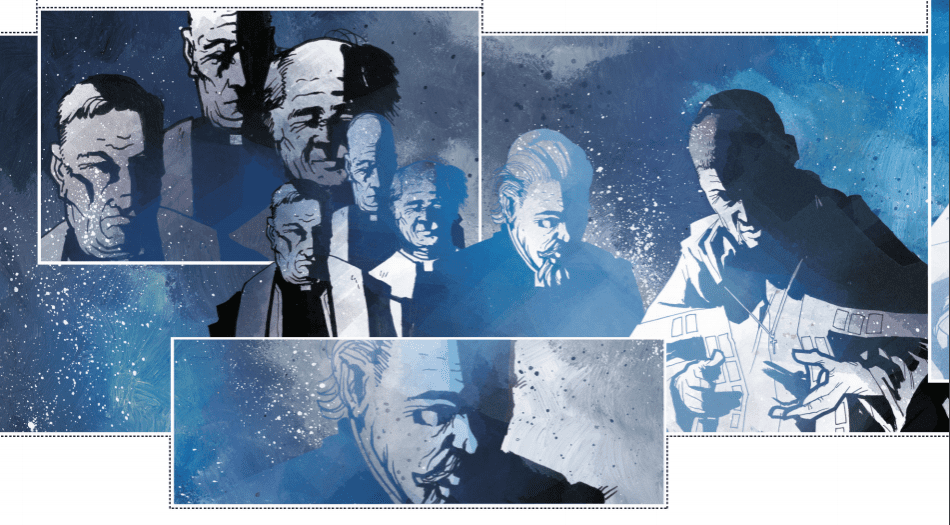
Pax Romana Page Art
Pax Romana Credit: Image Comics

Dissecting Rome

When recommending a book it helps to compare it to something else. With Pax Romana you want to say it’s like Terminator meets Gladiator, conjuring up elaborate time travel and Roman battle scenes. Although, it is actually more like a Robert Harris novel set in an episode of Quantum Leap. The future characters are trying to alter the past for the better, their better at least, but political intrigue means that they ultimately become helpless to a constant shifting world alliances and personal agendas.

To help the reader navigate all of this Hickman creates a collage of literary techniques, jumping from one form of storytelling to another with ease. There is no doubt that as an artist he holds prose, scripts, and illustration in the same regard, using whichever fits the scene best to get his ideas across. The outcome is a unique comic that has as more in common with novels like Slow Chocolate Autopsy by Iain Sinclair and Dave McKean than it does comics published by the Big Two.

The style can be difficult to adapt to if all you are used to is standard Superhero-esq comics. The linear progression of panel to panel transitions barely features in these pages. Instead vistas of dialogue cross double page spreads or trail down the centre of a page, slicing through a single, heavily inked image.

The visuals are created by using a combination of heavy shadows and negative space, colored with blocks of emotive color. It’s as if Hickman is chipping the illustrations out of narrative granite, revealing a story that has been buried for centuries. The shadowy nature of art also reflects the conspiratorial nature of the narrative. Everything is shrouded in secrecy and mere tricks of the light. At times you are not sure if what you read was real or imagined. It has a fleeting quality to it while also being, by its very nature, permanent; as solid as rock.

It’s also impressive that Hickman created everything on the page. From story, to design, to color and lettering. The main body of this comic is a one man job; not a feat that many creators can pull off with such elegance as is evident here.

Pax Romana
Pax Romana Credit: Image Comics

Conclusion

Hickman books can look overwhelming, especially when collected together, and because of this many readers will be but off. Pax Romana is only four issues, 148 pages in the collected edition, but the ideas and concepts contained within will keep you thinking for weeks and months afterwards. It is a comic that will stay with you. This is because the style is unique and a testament to Hickman’s creativity.

Visually, this comic is beautiful. It has a look that is heavily designed and orchestrated to produce a singular world from the cover to the very last page. Knowing that Hickman worked in advertising will not come as a surprise because this comic makes an immediate, lasting impression. Normally you shouldn’t judge a book by it’s cover but in the case of Pax Romana, the cover perfectly sets up the contents.

If you read comics to see muscled guys punching other guys in the face, panel after predictable panel, then you will find nothing in Pax Romana. For everyone else, to quote from Blair Butler’s foreword in the collected edition, “If you’re looking for the future of comics, welcome aboard”.

Pax Romana is currently available as part of the Humble Bundle Creative Spotlight here.

Monkeys Fighting Robots Youtube

INTERVIEW: ‘This Is Us’ Composer Siddhartha Khosla Goes ‘Looking For Alaska’

Looking For Alaska is a drama from Hulu based on John Green’s novel of the same name that centers around the lives of teenagers at a boarding school in Alabama. Filling the world with an emotional soundscape is This Is Us composer Siddhartha Khosla’s job.

Miles “Pudge” Halter (Charlie Plummer, Boardwalk Empire) is a teenager from Florida who’s sent to Alabama to spend his days studying at Culver Creek Academy. Miles meets a cohort of characters at the school, including “The Colonel” and a girl named Alaska (Kristine Froseth, The Society). Together, these young adults learn about life and love. So far, the reaction to the series has been spectacular.

PopAxiom spent some time speaking with Siddhartha about his work on This Is Us, the Hulu series Looking For Alaska, and the only remake he’d be willing to be a part of.

Strange Days

The world is in the midst of managing COVID-19. Siddhartha shares his thoughts on the global pandemic. “In this crazy time we’re all living in right now, part of me feels uncomfortable having conversations about my work when there are so many bigger problems that people in the world are facing right now.”

But he asserts another truth “… we have to continue to live our lives as much as we can too.”

Measures taken in countries around the world have certainly changed the way we’re living life. “It’s a very strange time.”

https://www.youtube.com/watch?v=rWNlrgNNVm4

About Looking For Alaska

Looking For Alaska was going to be a movie for years. After repeated delays, producers Josh Schwartz (Gossip Girl) and Stephanie Savage (Runaways) hit the ground running when Hulu picked it up as a mini-series. But long before it was in production the show found its composer. “Josh, Stephanie, and I worked together several times over the last few years on so many different projects. The first thing we started working on together was Marvel’s Runaways, and that lead to this.”

For Siddhartha, creating the score meant more than he expected. “Working on that show was such a special experience for me. I loved every minute of it. I loved getting together with Josh and Stephanie and our whole team to talk about episodes and where music would need to go.”

Looking For Alaska takes place in 2005. Siddhartha explains how the period played in the score. “Josh and I spoke a lot about tone and music and score. There were definitely influences from all different directions. One of my favorite bands that I was listening to back in 2005 was Sigur Ros. So, in the palette, I wanted to make sure I was very atmospheric and ethereal when needed and sweeping and epic when we also needed to be as well. More of the broad stroke, Sigur Ros approach. That lends itself really nicely for this. It was a super-creative project to work on.”

To achieve the sounds on Looking For Alaska, Siddhartha says he used, “Piano, atmospheric tones made with real instruments that I run through various reverb and echo chambers and all sorts of different effects to give that wide, cinematic feel. I’m singing on the score as well …”

A textured dramatic narrative, Looking For Alaska’s score from Siddhartha features “… several signature themes that weave in and out during the show.”

Siddhartha’s voice crackles with excitement when he talks about Looking For Alaska. “It’s a dream project for me. It was really deep in my wheelhouse. It was a deeply emotional show. I was able to pull from all sorts of interesting influences.”

sid khosla-interview-composer

Timelessness

The score for This Is Us, a show that features an array of time periods, is intentionally made to feel timeless. It’s a “… classic sound. You can’t really put a stamp on where it came from …”

The same goes for Looking For Alaska. Siddhartha says, “I don’t think I really grounded the score in 2005.”

Siddhartha takes us deeper into his creative process. “I like to immerse myself in my score as much as possible. Knowing this took place in 2005,” Siddhartha thought, “… let me hear what I was listening to in 2005 to kind of put myself in an emotional space.”

For Siddhartha, this helps him “… draw more from the emotional weight of what people were listening to back then.”

Looking For Alaska features songs deeply rooted in the era, and that’s thanks to music supervisor Alexandra Patsavas. So, how does one aim for timelessness? “It’s all very subjective. For me, timeless means using instrumentation that was around 50 years ago, 80 years ago, and that will continue to be around years from now. That’s timeless. An acoustic guitar, piano, voice, cellos; those are very organic sounds. If I’m rooted in organic sounds, not drawing from something that’s trendy, because then all of a sudden, there’s a timestamp on it.”

Siddhartha continues, “I think creating your own palette in your own original voice keeps things timeless. I don’t think someone listens to the This Is Us score and says ‘It sounds like this, or it sounds like that.’”

After four seasons, Siddhartha says, “I feel like it sounds like me. It sounds like what comes out of my soul. I think that’s important to maintain artistic integrity and to also feel classic and timeless.”

this is us-nbc-series

Season Four

This Is Us just completed it’s fourth season on NBC. Series ratings are going strong, and so are the creative juices behind the show. “… it’s probably our most ambitious and biggest season yet. It’s been a really wonderful ride this season. The finale was epic and sweeping and big and expansive. That’s where the show continues to go.”

The evolution towards a big-screen feel on television has made This Is Us ��… really fun for me,” says Siddhartha.

Siddhartha asserts, “The score’s gotten more cinematic than ever.”

Wrapping Up

COVID-19 has changed a lot of ways people do business. Fortunately, working remotely is much more common today and easier to do now than ever. Siddhartha says, “On This Is Us, there’s a lot of cello work happening, and Ginger Murphy plays cello on the score. She does a phenomenal job. She and her husband, who’s a musician as well, they are recording and doing some arrangements from afar. I’ve never recorded Ginger in person once. This is the time when we can do more of that.”

Productions are at a standstill at the moment, but the creative process never stops. “In this off time, I’m continuing to write. I’m flirting with writing a little a classical record.”

So, what’s the remake that would get Siddhartha’s attention? “I think, E.T.. If there was an E.T. remake, that would be something that would excite me. I would love to do that.”

For now, Siddhartha ends our interview by saying, “… we should all stay safe. And who knows, maybe I’ll write a score for a project that doesn’t exist.”

Are you a fan of This Is Us? Will you be watching Looking For Alaska?

Thanks to Siddhartha Khosla and Rhapsody PR for making this interview possible.

Want to read more interviews like this? CLICK HERE.

Monkeys Fighting Robots Youtube

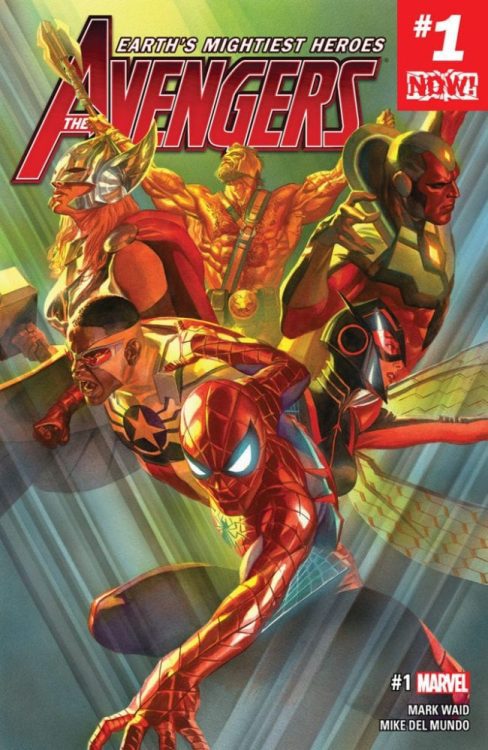
Longbox Legends: Why AVENGERS (2016) #1 Was A Perfect Blend Of Old And New

Avengers comic tittles have undergone too many changes to count in its long history. But of the modern reboots, Mark Waid’s AVENGERS #1 is perhaps the most unique among its peers. How? It beautifully blends a passion for the history of the mythos with a yearning for the future.

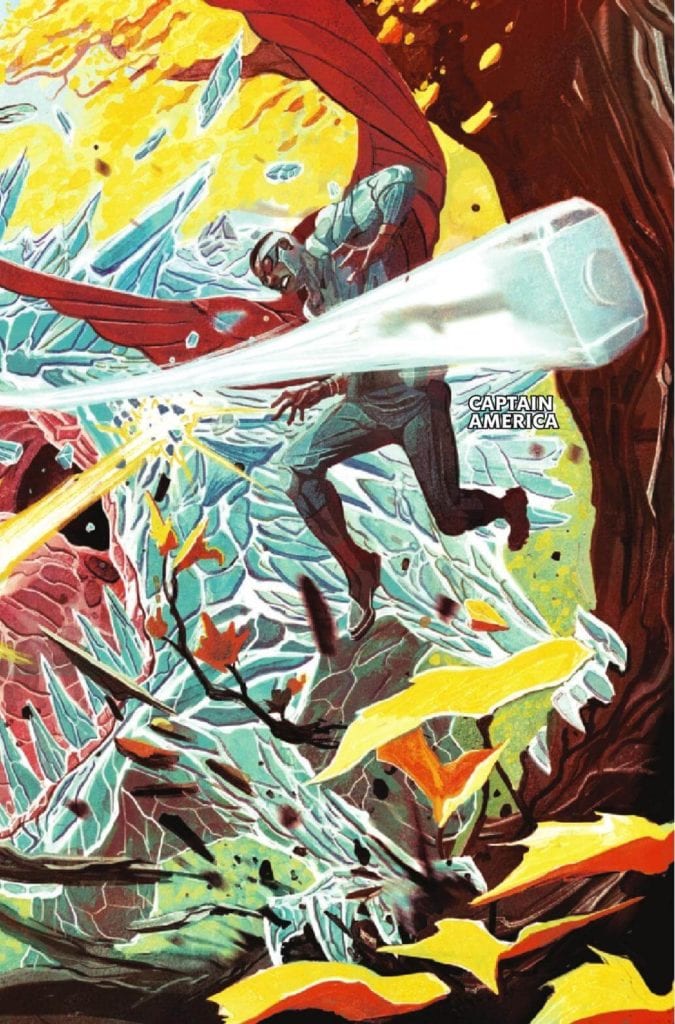
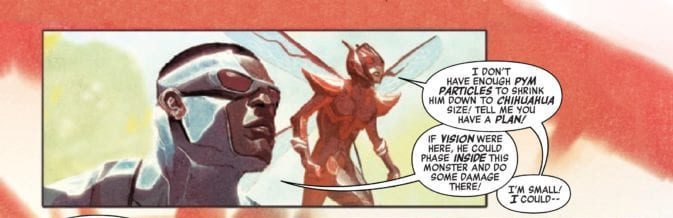
The scene is set: an all-new Avengers team assembles to take down a Frost-Wolf in classic superhero fashion. But the creature isn’t the only thing on their mind. The Vision is missing, and Peter Parker, the CEO of Parker Industries, has requested that they pay him a visit.

Story

The new roster of Avengers—consisting of Captain America (Sam Wilson), Thor (Jane Foster), Hercules, The Wasp (Nadia Pym), and The Vision (who’s suspiciously missing)—take down the Frost-Wolf with relative ease. However, they soon find themselves in Parker’s building with doubts about his intentions. But to their surprise he offers technological goodies in the hopes that they invite Spider-Man to join their crew.

The team is repelled by Parker’s overeager attitude, but are soon interrupted by Kang the Conqueror. In response, the heroes spring into action with the help of Spider-Man (who is just as cringeworthy as his alter ego). What’s more, they find the villain in conflict with The Vision, who seems to be hiding something from the rest of the team.

Waid’s narrative offers readers a breath of fresh air for fans of Earth’s mightiest heroes. The banter between Parker and the other teammates, even when facing the time warping powers of Kang, reminds us of classic Avengers stories. And Vision’s secrets adds plenty of intrigue. But the best gem in this issue is Waid’s updated roster of heroes, which adds a fresh flavor that makes this a saga to remember.

Artwork

Mike Del Mundo’s penciling, ink work, and coloring, combined with Marco D’alfonso’s color work, presents readers with a cohesive set of beautiful panels. Readers will find the illustrations transition smoothly throughout the story—it’s as if the characters blend in with the environments around them like an abstract painting. Yet at the same time each hero’s colors are differentiated to showcase their unique superhero identities. Cory Petit’s lettering, working in tandem, seems to flow with the action as if it were part of the scene itself.

Conclusion

AVENGERS #1 was an exciting start to this particular era in Avengers history. It brought fan favorites together from the past and the future in marvelous fashion.

Were you excited to see Kang make an appearance in this issue? Let us know in the comments below!

Monkeys Fighting Robots Youtube

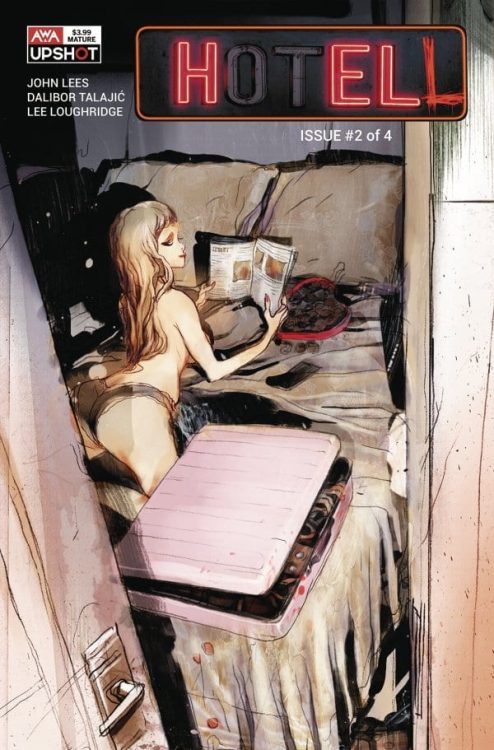
Review: HOTELL #2 – Or, a Case for Couples Therapy

Writer John Lees and artist Dalibor Talajic, along with Lee Loughridge on colors and Sal Cipriano’s lettering, bring another chapter of short comic horror with “Hotell” #2. This issue manages to smooth out the rougher edges of the first issue by more carefully implementing its completely off-the-wall moments. The final product is a comic with a familiar premise that still offers gruesome and darkly hilarious slasher-horror fun in an ever-building mythos.

“You won’t find it on any map, but if you happen to be driving down Route 66 late at night and you’re truly desperate for shelter, sanctuary or secrecy, you might see a battered sign on the side of the road: The Pierrot Courts Hotel. – where many check in but few check out.”

Writing & Plot

The story of “Hotell” #2 centers around a couple taking a road trip who check into the Pierot Courts Hotel for the night. They seem like a simple and lovey-dovey couple until the husband’s intentions become clear. What starts as a simple story of two lovebirds turns into a grisly and eerie tale in a Hotel at the edge of reality and sanity. The idea that Pierrot Courts makes itself available to travelers with questionable motives is the central element to these comics. This issue reinforces that element with a simple example of murder trope, but then complicates it with the Hotel’s own supernatural elements. That’s the real potential in “Hotell,” just the idea that such a place can elevate familiar horror and add twists specific to the strange aspects of Pierrot Courts.

Lees’ linear plotting and mix of horror and gallows humor are reinforced by his sense of dialogue. “Hotell” has little to no narration outside of the desk clerk’s ominous introduction to the establishment, and so the rest of the storytelling is told by silent panels and character interaction. The dialogue has a naturalistic and believable flow to it that aligns with whatever strange or grotesque happening may occur in-panel. The silent panels are used largely for foreshadowing, an effect that creates an entertaining reveal for the final page. The blend of horror and gallows humor in this issue is reminiscent of a  “Tales From The Crypt” episode, and will no doubt be a treat for fans of this kind of short-horror experience.

Art Direction

Dalibor Talajic demonstrates an incredible amount of artistic range in “Hotell” #2. Like the first issue, he is capable of crafting character drawings and environments that are naturalistic and believable, while also creating moments of eerie supernatural horror. There’s an unusual subplot involving a black rabbit (no spoilers) that jumps out in immediate contrast to the rest of the relatively normal-looking events that really showcase how Talajic can jump from one tone to the complete opposite. While there isn’t anything quite as trippy or outlandish as the prior issue here, the art holds its own just by being so sharp. This is helped by Lee Loughridge’s colors, which provide the meat to Talajic’s bones of penciling. The more alarming scenes mentioned earlier are so striking because of Loughridge’s color choice, with deep blacks taking up whole panels and then shifting into literal rainbows on the next page. There’s a shifting range from the innocuous to the insane that makes the art in this series a perfect match for what’s planned in the scripts.

“Hotell” #2 is a simple yet satisfying and fun second chapter in this short-horror anthology series. The abstract elements from the prior issue are cut down in favor of a familiar premise that is contorted by the supernatural elements of Pierrot Courts to create a surprising and often humorous time in the desert at the edge of sanity. If “Hotell” seems like your kind of trip, be sure to check out AWA Studios at webtoons.com, where you can read this and other comics for free right now!


Monkeys Fighting Robots Youtube

DAREDEVIL: YELLOW Brightens the Life of Matt Murdock

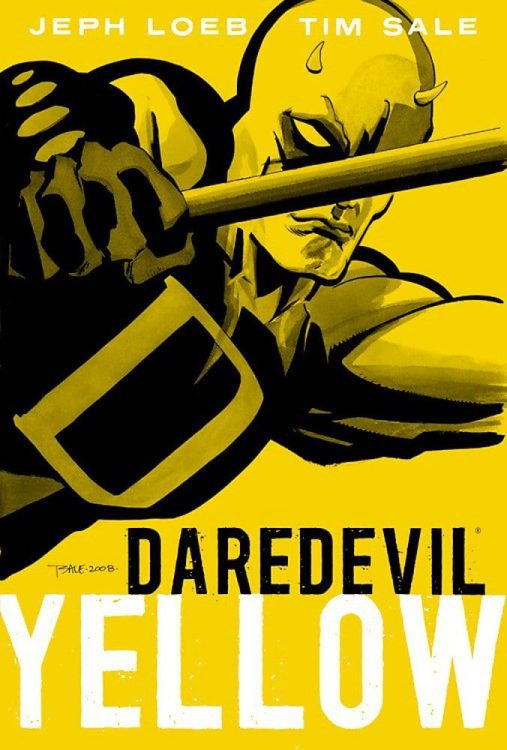
Daredevil Yellow Cover

The Brighter Origins of Daredevil

Daredevil is one of Marvel’s most famous street-level heroes. Since 1964, Matt Murdock had defended the streets of Hell’s Kitchen from the likes of the Kingpin and other threats. Most comic readers would recognize the hero from his red suit that he’s worn over his publication history. Not many actually know, however, he started his career wearing a yellow suit. This suit is seen most prominently in Jeph Loeb and Tim Sale’s miniseries, Daredevil: Yellow. This duo, famous for their work on Batman: The Long Halloween, approached the origin of Daredevil in a different way from other stories with the character. How can you change up the formula for a man dressed like a devil?

Daredevil Yellow Cover

**Major Spoilers Below**

Story:

The framing device of the story is Matt Murdock writing a letter to his late love interest, Karen Page, as a way to move on from her passing. He decides to write the story of how his origin of Daredevil leads him to her. Starting from his time in law school, Matt and his friend, Foggy Nelson, are close to graduating law school. Matt’s father, Battlin’ Jack Murdock, inspires the boys and takes them out to dinner the night before a big boxing match. Knowing that his father fights fixed fights, Matt urges him just to fight next time. 

After he wins the match, Jack gives his son his bright yellow boxing robe. A few hours after that, Jack is murdered by gangsters for not taking a fall. Matt and Foggy try to take down the gangsters in court, but due to the alibis given, they get off scot-free. Matt doesn’t take kindly to this, and that night creates his first Daredevil outfit out of the robe.

Daredevil Yellow p1

The biggest thing to note here is that, unlike other retellings of his origin, this version of Daredevil’s origin is more grounded. We don’t focus on Daredevil. We focus on Matt Murdock. The majority of the story follows the life of Matt without the need for extravagant action sequences. While the battles can be neat, a simple scene where Matt, Foggy, and Karen go out to a bar is much more intriguing. It’s this slower, more character-driven burn that allows this story to thrive. 

Another fantastic aspect is seeing the dynamic between the trio in this early time. When it’s the three of them, one can feel the tension around them as the men try to win Karen’s heart. It’s a dynamic that’s uncommon in comics nowadays, as the girl picks the hero. However, since we focus more on the human side of things, you see both men having a chance to win this girl’s heart. There are times readers will honestly root for them both to get the girl. It’s a smaller aspect, but one that gives this story charm.

Daredevil Yellow p2
Art:

Tim Sale illustrates the story, and it can be seen as divisive, if anything else. His style is unique, harkening back to classic stories rather than the more smooth style of today. Some might be turned away by this look, but honestly, it’s the perfect style for the story. There are iconic panels that genuinely define this comic, and it wouldn’t have the same impact in another style. The greatest part, however, comes in the form of Daredevil’s suit. The yellow suit is ridiculous in concept, but thanks to Sale’s design and Matt Hollingsworth’s colors, it has become this reviewer’s favorite Daredevil Design.


Conclusion:


Daredevil: Yellow is an excellent Matt Murdock story that gives a little more light in a character that seems darker than most. There are still dark moments littered throughout, but its seen more as character building than something terrifying to shock audiences. We have a tale of a young man who grows into the hero we know while finding love in an unlikely place. With the unique art of Tim Sale illustrating this tale, Yellow might be one of the greatest origin stories of all time.

Monkeys Fighting Robots Youtube

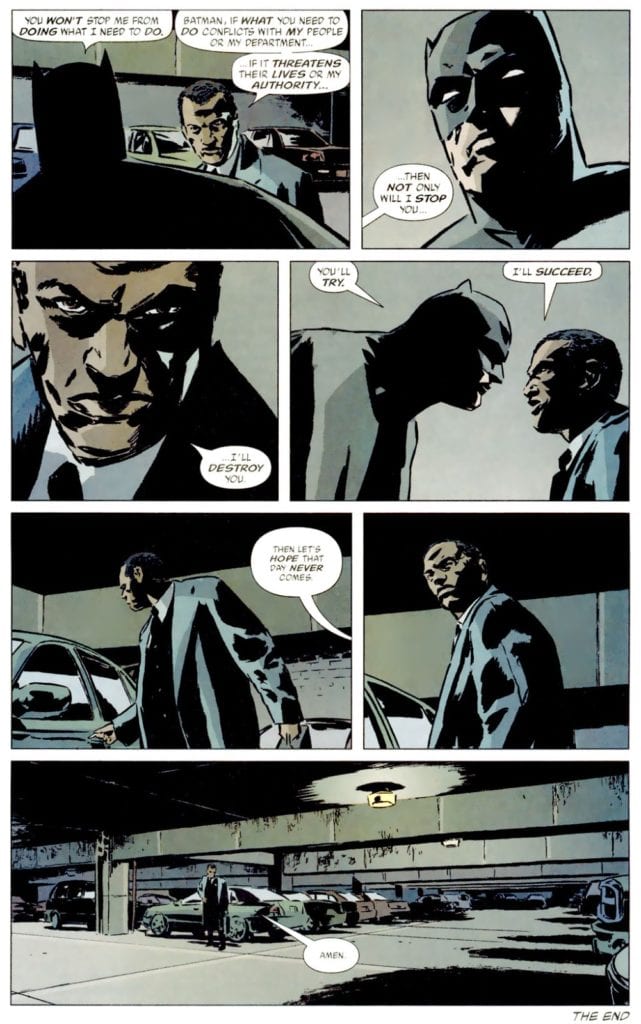
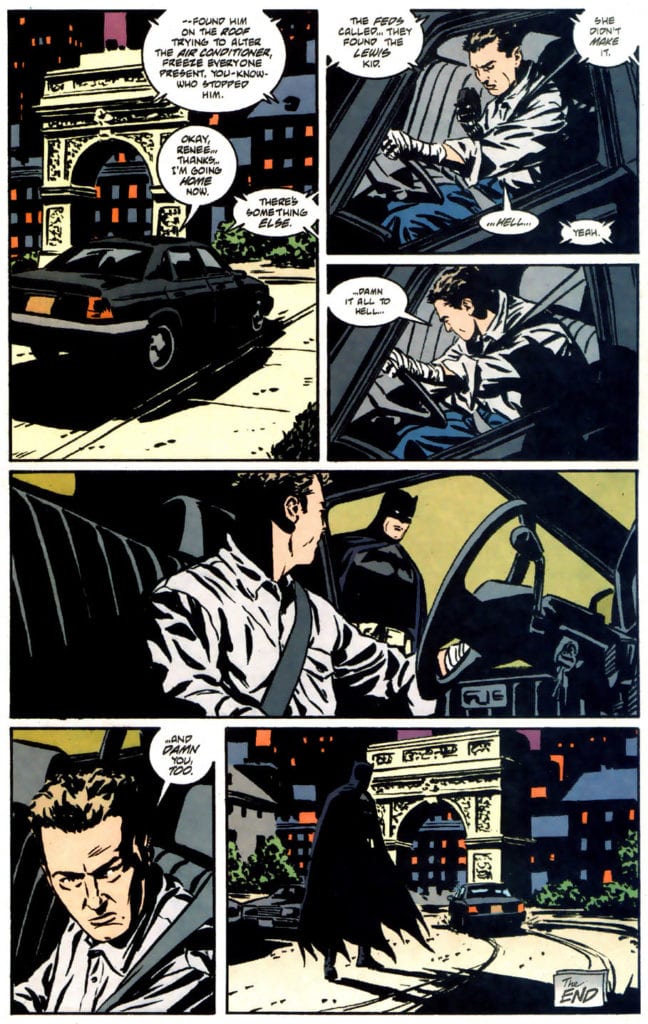
OPED: Why GOTHAM CENTRAL Wants Us To Hate Batman

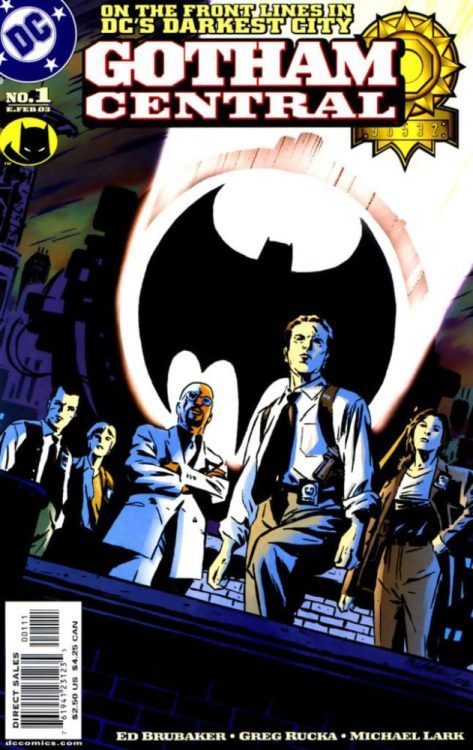
GOTHAM CENTRAL #1 cover by Michael Lark.

Gotham Central takes every superhero comic and places them under a microscope. It takes the Deus ex machina of decades gone by and asks, “Is life really that simple?” Because if life isn’t as simple as superheroes make it out to be, what good are they? Writers Ed Brubaker and Greg Rucka say you should hate Batman. And by the end of this heavy-hitting series from DC Comics, it’s hard to argue the point.

It’s simple, really; life that is. Or at least, that’s how life is depicted in the vast majority of superhero comics. The tedious paperwork and depressing repercussions of catastrophes are sidelined. Instead, we get heroes with dimpled chins in tight spandex and titillating banter. The paperwork and consequences are stories for another time. Brubaker and Rucka draw a line in the sand and say that’s enough of that. The time for paperwork is now.

In Gotham Central, we follow the cops who work in the GCPD. Not Batman or Joker, though their presence is felt throughout. It’s a police procedural that’s haunted by Batman. Gotham Central occurs in Batman’s shadow, and how the detectives feel about his influence is what drives the series forward.

Batman: Ringleader of the Rogues

Gotham Central Rucka DC
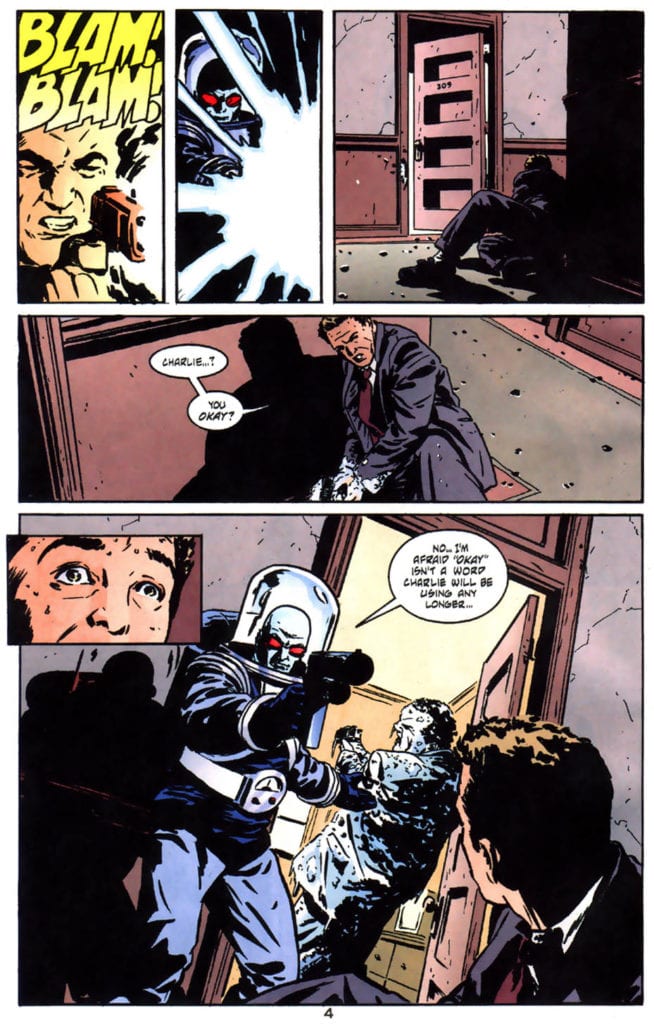
GOTHAM CENTRAL #1, art by Michael Lark. The first arc of this series is titled “Line of Duty,” to imply further these kinds of things are all in a day’s work.

Right out the gates, we see how Batman seems to make Gotham worse. Key players like Mr. Freeze and Two-Face gleefully inflict misery upon the general populace. It all reads as a kind of twisted love letter to Batman. They just want his attention, and no one is too insignificant to die for that. So whether the freaks followed the Caped Crusader’s example or not, his dysfunctional relationship with his gallery of rogues affects everyone in Gotham.

Issue 1 sees Detective Fields and Driver investigating a lead on a kidnapping. Instead, they accidentally stumble onto Mr. Freeze, hiding out in an apartment. Driver watches Fields get frozen and then deliberately shattered by Freeze. Michael Lark, the regular series artist for Gotham Central, makes it clear with every face that this is all in the line of duty. No one cries or vomits when they come onto the scene. One officer even cracks a joke. Thanks to Batman acting as a kind of flame that the twisted gather to, this kind of horror show isn’t uncommon in Gotham.

Batman: Reminder of GCPD Shortcomings

Batman Brubaker DC Gotham Central
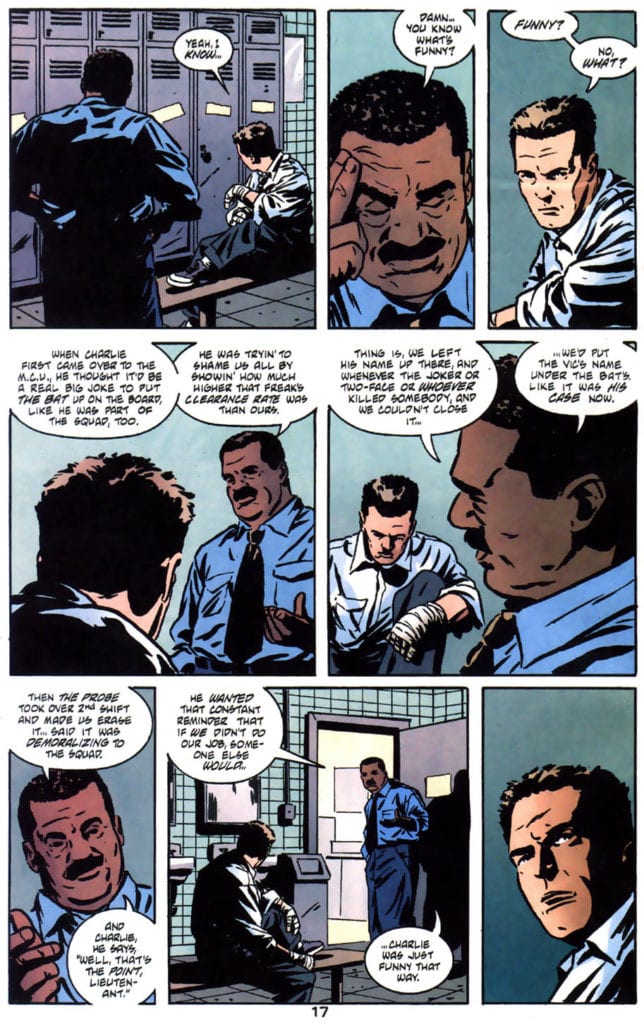
GOTHAM CENTRAL #1. The shadow of the Bat looms large in the GCPD bullpen.

The GCPD are only human. And, as far as they know, so is Batman. Yet Batman often operates with superhuman speed. When the cops arrive on the scene of a burning building, they find Batman leaping out with the last tenants in hand. The detectives are happy to see lives saved, but the Bat’s help can be as belittling as bedwetting. He spurs them forward or leaves them grumbling in his wake. More often, he does both.

There are some obvious reasons that Batman is more efficient than the GCPD. He does not have to work within the law. He’s a criminal they’ve all come to rely on. And while they may have an intern to turn on the bat signal, who technically doesn’t work for the GCPD officially so they can deny a tie to Batman, they hate that they have the signal at all. Some officers even seem to question whether inside the law is worthwhile. Detectives like Harvey Bullock and Renee Montoya, Batman’s sometime confidantes, seem lured away from their uniforms towards vigilantism.

Batman: Arrogant Son of a Bitch

Batman GCPD Brubaker DC
GOTHAM CENTRAL #25. Art by Michael Lark. Seeing Commissioner Akins’ side to the story, you find yourself hoping he’ll put the Bat in his place.

Criminals plague Gotham City to get the Batman’s time. Some want his attention; others just want to meet him. They’ll do anything to get a piece of the Bat. Yet Bruce Wayne waltzes into many scenes in this series and stares down his cowl at the officers. His problems are so much more significant. Their issues are petty and small. The thing is, their problem is they’re cleaning up another mess he made.

He’s the silent-type when called in. His code of conduct and ways of communicating take precedence. But when you’ve lived in these pages with Detectives Driver, Bartlett, and Allen, you care that they’re being belittled. We read about them working their asses off only to have Batman insinuate in a rooftop meeting that they need to do better. Life is not as simple as Bruce Wayne sees it. And no matter how much he agonizes on gargoyles, he isn’t as down-to-earth as the GCPD.

Batman Rucka DC GCPD
GOTHAM CENTRAL #2. Art by Michael Lark.

Brubaker and Rucka accomplish a feat with Gotham Central. They take one of the most popular DC characters, one they themselves have made you love in their own Batman and Detective Comics issues, and they get you to hate him. And when you see the hoops the GCPD has to jump through to live in “the Bat’s city,” you understand why. It’s the kind of series that makes you wish every comic were like it.

This creative team shows us what it’s like to be a regular human being in the world of comic books. While human beings don’t get the trumpeting herald of Batman or Superman, they see life for what it is. It’ll make you think twice about buying real estate in the DC Universe, but not about buying this masterpiece of a series.

Monkeys Fighting Robots Youtube

Longbox Legends: URTH 4 Holds A Key To Comics’ Future

Urth4 #1, Adams cover

Urth 4 is a superhero team book published by Continuity Comics, and their first issue solves a mystery about what’s been missing from comics for the last 30 years. What’s that? You’ve never heard of Urth 4 OR Continuity Comics? Is this going to be a boring history lesson? Let’s find out.

What the heck is Continuity Comics?

Good question. Way back in the decade of plastic, hairspray, and shoulder pads, (aka the 80’s) a new comic publishing company was formed by Neal Adams, the famed DC artist. Adams’ goal was to create a comics house where he could exercise more creative ownership and control over his own creations. Sound familiar? It’s the same model used by other creators to start companies such as Image. You can read much more about it here.

Alas, the dream only lasted a few years, and Continuity Comics folded in 1994. Many of the properties created in their 10-year existence disappeared into a dusty cabinet somewhere, or they were picked up by other publishers like Valiant. One such property, the subject of this post, is a little team known as Urth 4.

Tell me more about this Urth 4

Gladly. Urth 4 was a 4-person superhero team with powersets matching the basic elementals: Earth, Fire, Air, Water. The group was diverse in gender and ethnicity, and they interacted (at least in the first issue) as a coordinated team. In a way, this was Adams’ attempt at creating his own version of the Fantastic Four with a different origin spin and a general focus on environmentalism. You would expect to see similar story themes on an episode of Captain Planet, but the story structure catered to an action-oriented audience. In short, cross Captain Planet with the Fantastic Four and you get Urth 4.

Urth 4 ran for eleven issues in total. The team called themselves Urth 4 through the first four issues. They renamed themselves (and the book) to Earth 4 for the remaining seven. Neal Adams, co-founder of Continuity Comics, painted the debut issue’s cover, and the first issue’s art team is a cavalcade of who’s who from comics history:

  • Peter Stone – Lead writer
  • Trevor Von Eeden – Pencils
  • Ian Akin, Brian Garvey – Inks
  • Liz Berube – Colors
  • Ken Bruzenak – Letters

Was it the best superhero team book ever created? No

Does the first issue contain the best art ever seen on planet Earth up to that point? It’s good but not THAT good.

Does the story and dialog read like the second coming of Shakespeare? No. To be honest the dialog is clunky, and I found several typos.

How does this book hold the key to anything?

Ahh, the key is in the premise of the team’s origin. On page 17, we learn the team was gifted their powers by the entity that embodies the life force of the planet.

Don’t call her Mother Nature. She reprimands the team for calling her that.

She chooses the team to possess the elemental powers based on their collective strength of character and will. She believes these four are the best candidates to use elemental gifts to defend her body (Earth) for the betterment of all its inhabitants. In effect, the team is powered and assembled by a call from a greater, higher power.

The team doesn’t come together to fight for a mutual benefit, or to fulfill a promise, or to avenge a lost loved one. They are brought together by something greater than themselves as defenders and champions. And, that’s what’s been missing of late in so many story arcs from current publishers: A call to fight for some greater purpose.

Call it Fate. Call it Destiny. Call it God. Call it the Universe. Call it the Force. Call it whatever you like, but the idea is the source of an higher mind that has a greater view of our world and the struggles between good and evil. From this source comes the call to adventure that is referenced in every version of “the hero’s journey” that’s been the archetype of every legendary adventure story since the beginning of the written word.

Heroes Heed The Call, Everything Else Is Just Squabbling

When heroes fight against villains or worse, against each other, in many books that are published at the time of this writing, it’s usually in pursuit of a personal goal. That goal being a tribal interest (Marvel’s mutants), or a governmental interest (Marvel’s SHIELD), or a personal albeit altruistic interest (pretty much anything related to Batman). It’s rare to find any superhero these days that’s fighting in answer to a call. A call that comes from some higher power or ideal that’s greater than themselves; barring some staunch personal code.

Too often we’re finding superheroes who’s main focus is wrestling with their personal demons or at odds with their friends and foes in ideological conflicts. The fight of every hero has almost universally degenerated into the squabbling of mere mortals. Consider examples where popular heroes are either connected to, or in some way, beholden to a higher power and the opportunity that connection has opened up for more fertile storytelling:

  • The Flash has the Speed Force
  • Green Lantern has the Guardians of OA
  • Luke Skywalker has the Force
  • Every Marvel character has the One-Above-All

All good examples of this point in action, and there are not nearly enough of them.

In each of these examples, the connection to a higher, guiding influence not only gives the storytelling a larger scope to explore, but adds so much more diversity and complexity to the story ideas. Let’s face it, there’s only so many ways to explore the Bat/Cat relationship or Peter Parker/Osborn clan relationship before you start to think “This again?”

Hey, Publishers! Take a tip from a defunct superhero team. Give your old heroes something to fight for that’s greater than themselves, and watch the story well overflow.

Thank you, Urth 4! You left us too soon.


Author’s Note: Local Comic Shops (LCS) are going through a tough time right now with the pandemic outbreak of COVID-19. Comics fans of every flavor that care about his or her LCS should try to do what they can. So, here’s my part:

If you’re in Northern Delaware, South East Pennsylvania, or Southern New Jersey area, please take a moment to visit Captain Blue Hen Comics in Newark, DE. Say ‘hi,’ pick up a book, order a book (they’re on Comichub.com), and let them know you support them.

If you’re nowhere near that area, please find YOUR LCS using Comic Shop Locator and lend your support.

Thanks, and stay safe.

Monkeys Fighting Robots Youtube