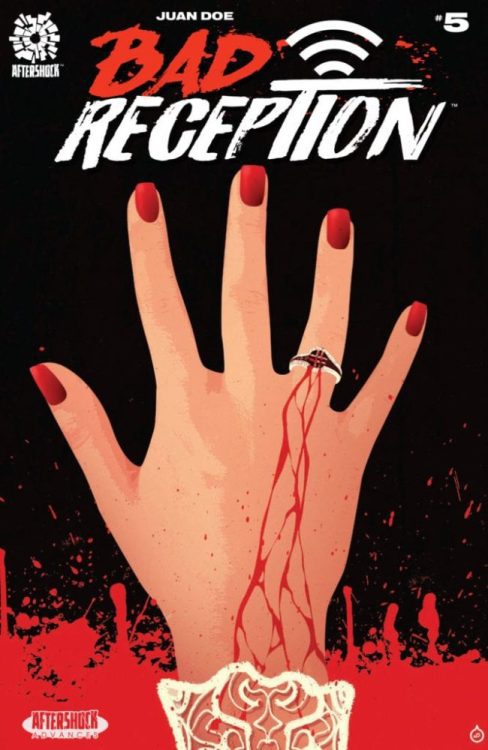
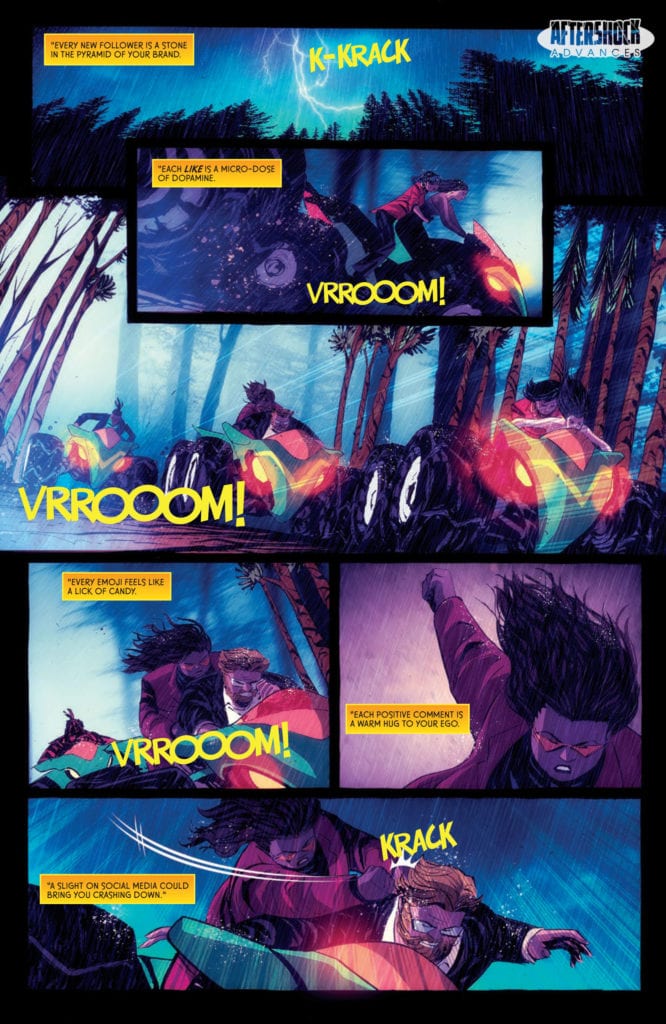
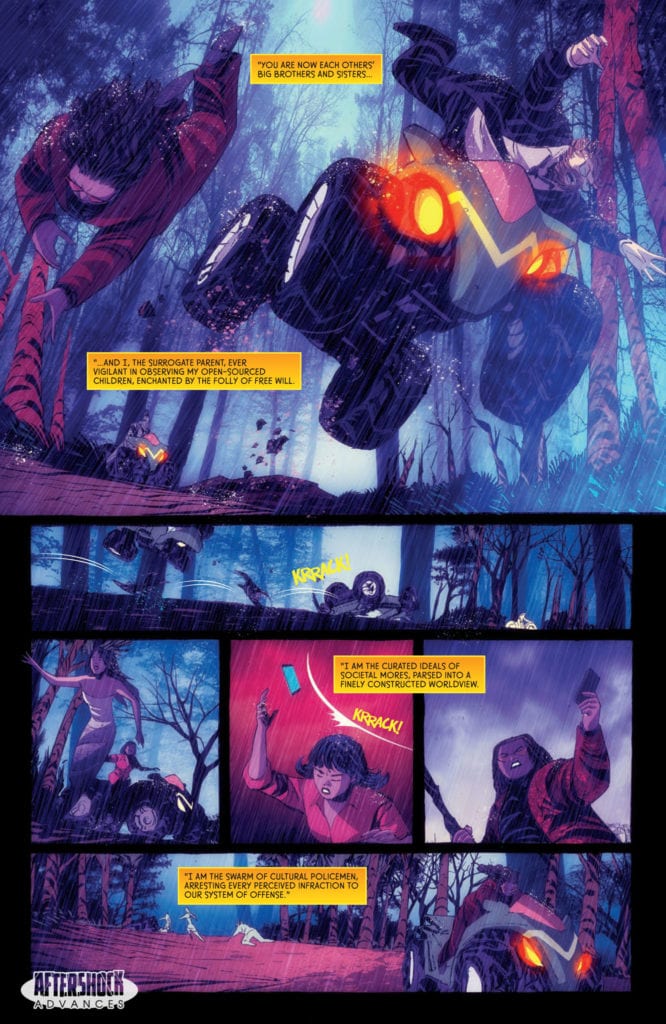
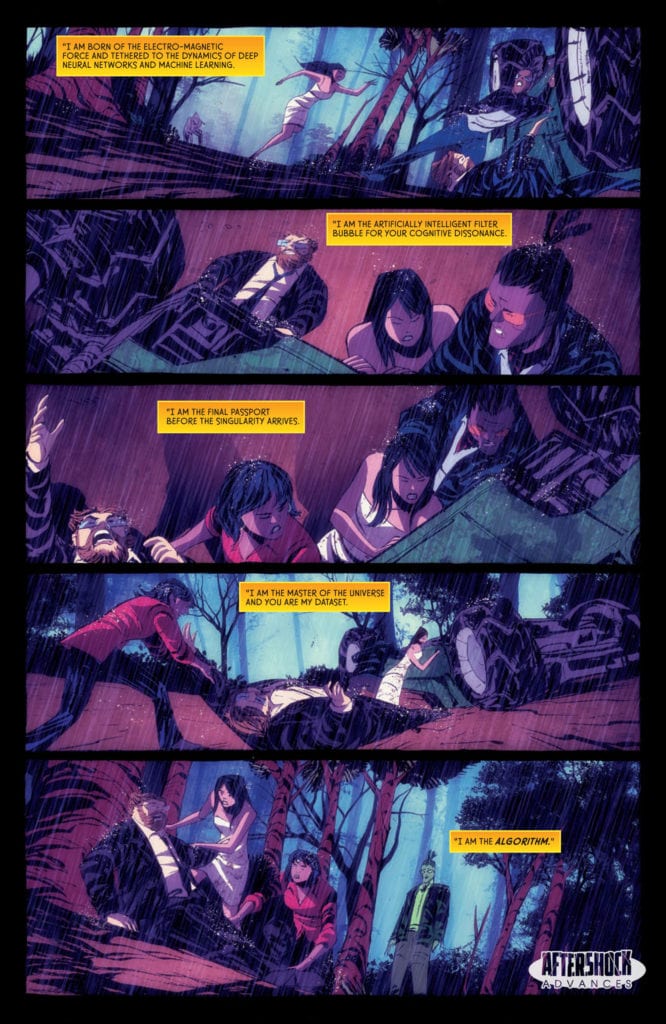
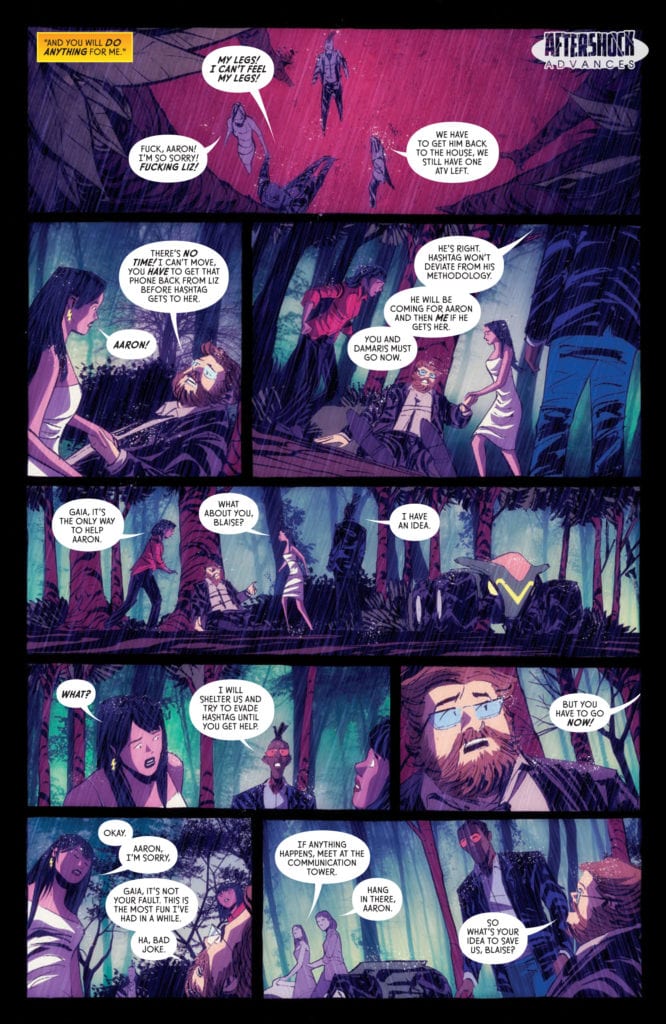
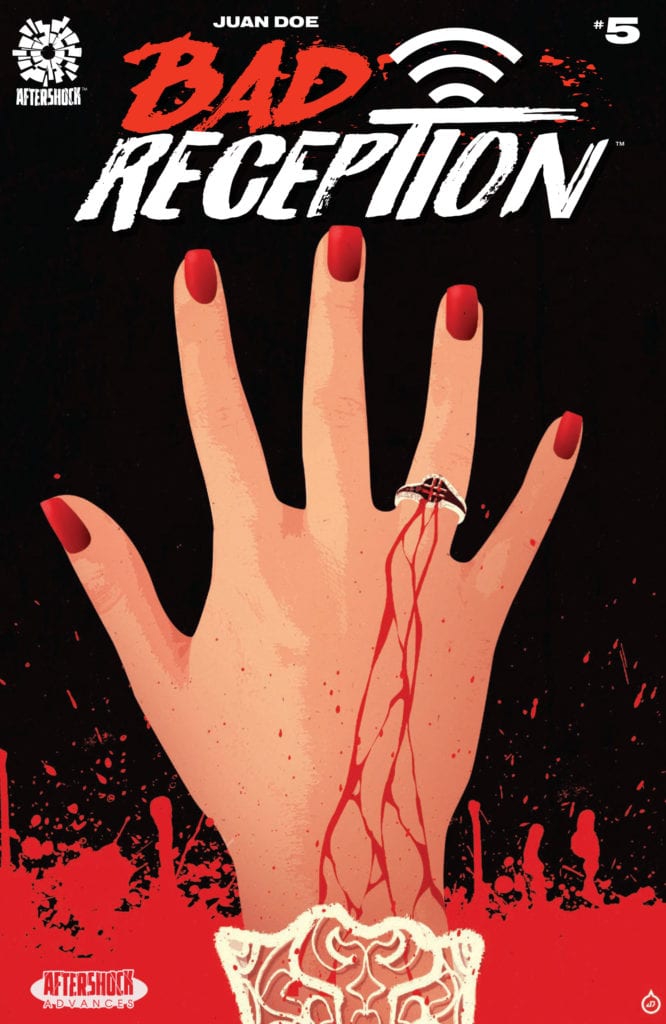
BAD RECEPTION #5 hits your local comic book store July 22nd, but thanks to AfterShock Comics, Monkeys Fighting Robots has an exclusive four-page preview for you.
About the issue: The last dance has finally arrived—but will it be for Hashtag, or for those who have survived this far? Join superstar creator Juan Doe for this finale as we bid farewell to everyone that attended this “off-the-grid” wedding extravaganza. We leave you with these parting words, the first day of the rest of your life may be your last.
BAD RECEPTION #5 is written, illustrated, and lettered all by series creator Juan Doe. Charles Pritchett is credited as production, and Mikes Marts is the series editor.
“A searing horror story that doubles as a topical, satirical critique on society’s obsession with technology, social media, and the cult of celebrity.”
Check out the BAD RECEPTION #5 preview below:
Have you been reading BAD RECEPTION from AfterShock? What are your thoughts heading into the finale? Sound off in the comments!
Director Andy Palmer went from small-town actor to editor and director of many feature films, including the recent horror films Camp Cold Brook starring Chad Michael Murray (One Tree Hill) and Danielle Harris (Halloween) and The Funhouse Massacre, which featured a cavalcade of cameos from familiar faces.
The Funhouse Massacre and Camp Cold Brook are both horror films. However, they could not be more different. Funhouse takes a more comedic approach and weaves in a bit of rom-com into things while delivering over-the-top death scenes and some deliciously gory practical effects. Meanwhile, Cold Brook crawls under viewers’ skin for the runtime. There’s a fraction of the gore or laughs, but the film is thick with the tension and terror.
PopAxiom spoke with Andy Palmer about editing, directing, Camp Cold Brook, indie filmmaking, and working with screen legend Robert Englund!
Miami Vice
Andy liked movies like any other kid, but becoming a filmmaker wasn’t his goal early on. “I wanted to be a cop when I was a little kid because I loved Miami Vice and thought Don Johnson was the coolest guy ever.”
A day out on the water with his dad changed the course of things. “I remember hanging out with my dad. We had this little sailboat. I told him I wanted to be a cop. He suggested I be an actor that way, I can play any part and not get shot. That sounded like a better deal.”
Andy grew up in a small town where he “… got into acting and did all sorts of plays and stuff.” After high school, he went into college as a theatre major. “I went to my first acting class and realized that I grew up in a town with like nine people, and I was the best actor in a town of nine people. But hanging out with these people who were amazing actors I realized ‘Oh, you’re terrible at this.’”
The would-be editor and director was still in love with the world of creating entertainment on film. “I started dabbling in writing and camera work. That morphed into wanting to be a director. I went to a school for editing.”
Why editing? “I’d done a short film in college that we shot weekend after weekend, not knowing a thing about editing. Once we edited it together, I realized we could’ve shot it in one weekend if I would’ve known what I wanted and how things cut together.”
Young Andy learned, “… the power of prep and the power of storytelling.” He credits being an editor as a significant influence on his skill as a director and storyteller. “That’s why I’m so grateful I came up in editing because editing is a form of storytelling that’s taking a story and crafting it to be the leanest and most effective story possible. That informs me as a writer and director because I know how things cut together.”
Indie Filmmaking
Filmmaking is never easy, and there’s an ever-present enemy looming. “… your biggest enemy is time. There’s never enough time or not enough days. We only have this actor for two days.”
Case in point, Robert Englund. The legendary actor who played Freddy Krueger appears in The Funhouse Massacre. “We only had him on set for two days. It’s only an extended cameo, but it’s still about 10 minutes of screen time in multiple locations.”
For fans of Englund who might be wondering, Andy says, “He’s just the kindest, warmest man. He’s so much fun to work with.”
Funhouse Massacre features cameos from Clint Howard (Star Trek, The Waterboy), Jere Burns (Burn Notice), and Courtney Gains (Children of the Corn). What’s key to working with young and veteran talent? “For actors, it’s important to establish trust so that they feel they’re in good hands.”
Veteran actors like Howard or England know their stuff and expect their director to know their stuff. Andy’s approach is to create trust. “As soon as we started our rhythm — block, light, last looks, shoot — everyone feels at ease.”
Reality Of Reality
Andy’s filmography includes editing a lot of reality television like Rock of Love with Bret Michaels and Flavor of Love with Flavor Flav! “I feel fortunate that I came up through reality television because it made me a better narrative filmmaker.”
But reality is a whole other world. “With reality, you have this whole mess of footage … you have a beat sheet. ‘Here’s the things we have to accomplish.’ You have to look at that footage and manipulate the footage to create that story.”
For Andy, those muscles flexed while editing reality television makes him look at filmmaking differently. “I don’t look at a film as what we have, but what could it be?”
The filmmaking process, they say, creates three films—the film that’s written, the film that’s shot, and the film that’s edited. “The most important thing is the tone. When I’m directing something or editing, you can sometimes play fast and loose with script elements as long as you don’t bone the tone. The tone is everything. How we get there is up to interpretation, but it needs to feel a certain way.”
Filmmaking requires creative, on-your-feet thinking, particularly when time and money are not plentiful. “With Camp Cold Brook, I had to deviate from the script purely out of financial reasons.” Andy explains, “In the original script, there was a big lake with all these underwater scenes with the ghost kids underwater. It was fucking amazing. But on our budget, I was never going to be able to pull that off.”
The solution is in the tone. “So, it was all about saying ‘Tonally, what are we trying to say here? How are we trying to convey this scare? How can we make it so that we can afford to do it? We don’t have a lake, but we have a creek and a spillway so let’s build the legend around that.’”
Like Spielberg compensating for when the shark didn’t want to work in Jaws, filmmakers must “… take what you have and figure out ways to make it work.”
Little Things
Andy’s decades of experience allow him to share some insight into being a better director. “Young directors when they’re coming up get so obsessed with shots. ‘Oh, I’m going to get this shot and this shot.’ I was very guilty of that on my first films. And they don’t take time to focus on blocking. If you take a look at Spielberg and Hitchcock, the way that they moved characters in the scene informed how the camera moved.”
Andy connects this advice with his own learning experience. “When my cinematographer, Filip Vandewal and I sat down for Funhouse, he made me switch my brain off from ‘This shot’s going to be cool, and this shot’s going to be cool’ to ‘What are these actors doing in a scene? How is that going to be interesting? How will that inform the camera? I took that to heart and became very passionate about it.”
That’s not to say there’s no room for some fun flare or “cool shots.” “There’s always a style shot, but if the characters are doing interesting things, then the actors get into it more, their performance feels more genuine, and then the whole movie feels better.”
Wrapping Up
There are many filmmakers to draw inspiration from, and Andy shares some who live in his creative DNA. “When I came up in film and fell in love with film, the guy I wanted to emulate was … Robert Rodriguez was the guy that made me flip that switch to wanting to be a director. I read Rebel Without A Crew in my freshman/sophomore year in college and thought, ‘We can do this!’ Rodriguez is probably the guy who propelled me the most to want to be a director. But I loved Kevin Smith (Dogma) for his writing. Edward Burns (Brothers McMullen). Those are the guys who I looked up to. They made these indie movies for nothing and got noticed then got to make a studio movie after. I love Peter Berg. He’s a versatile director. I love the style of his films and bridging raw action with a topical story. I thought Patriot’s Day was incredible. I love Ron Howard.”
In the age of remakes, Andy knows precisely what movie he’d love to reimagine for the 21st century. “My dream would be to remake The Cannonball Run. I love the Cannonball Run movies. They’re perfect movies to remake because they’re not maybe considered classics, but they’re super-fun. It’s not The Goonies. But with modern cameras and some cool CG plus a smorgasbord of cameos from A-list celebrities, I think Cannonball Run would be an awesome movie to remake.”
Funhouse Massacre and Camp Cold Brook are available on Amazon Prime Video. What’s next for Andy? “… another movie I directed called Witness Infection is in the middle of its festival run. It’s another horror-comedy. It’s got a ton of Funhouse alums in it. Carlos Alazraqui, one of the Funhouse DJs, wrote it and produced it. Robert Peters, the other DJ, is in it. Erick Chavarria, who played Machete [in Funhouse], is in it. It’s a zombie comedy about two mob families from New Jersey that get witness relocated to the same town, Lake Elsinore, California. Because they’re the only two Italian families in town, they’re always fighting with each other. They call a truce, and the son of one family is going to marry the daughter of the other, but he’s not in love with her. Amid this weird courtship, a zombie apocalypse breaks out. It’s a lot of fun.”
Andy’s films as a director make a few things clear. He loves horror, and he loves comedy, and he’s not shy about mixing the two. “With everything going on in the world, comedy is a good place to be. I’m working on a comedy — no horror this time — that we’re in the midst of casting.”
Are TheFunhouse Massacre or Camp Cold Brook on your watch list?
Thanks to Andy Palmer for making this interview possible.
Want to read more interviews like this? CLICK HERE.
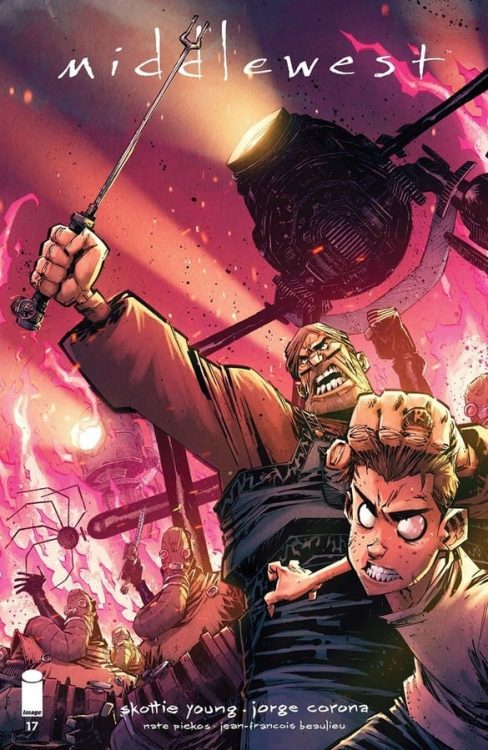
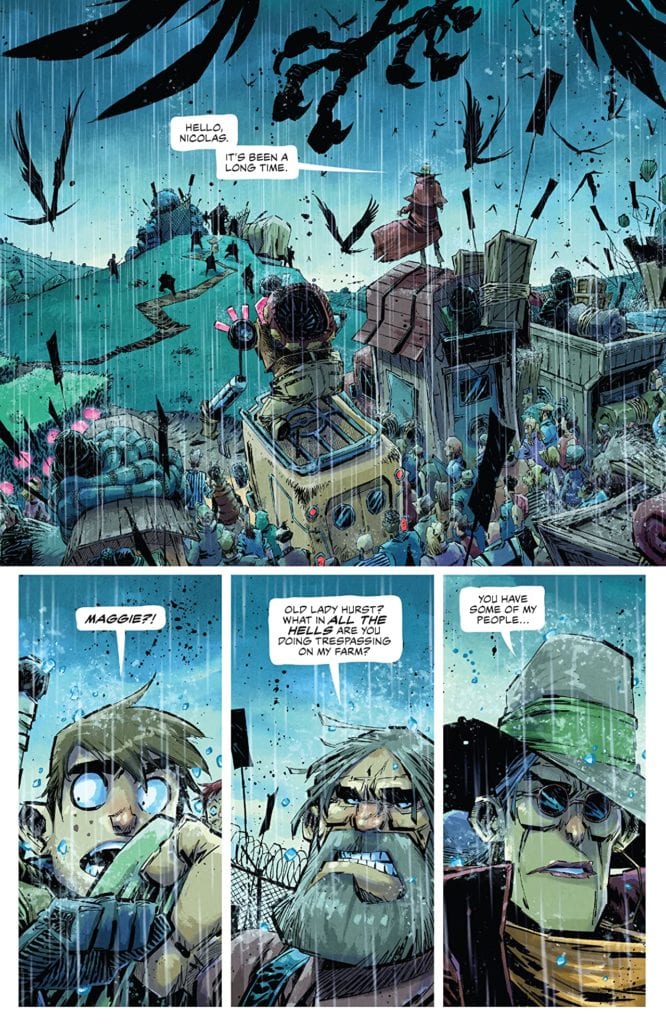
MIDDLEWEST #17, available in comic book stores on Wednesday, June 24th, ignites a flame of conflict between Raider Farms and the townspeople from Abel and Bobby’s village. Led by Maggie, the villagers are ready to destroy the Farms to save those Nicholas Raider has enslaved.
Story
It all comes down to this battle: On one end of the farm we see Raider, holding Abel in check, while the other end showcases Maggie, Fox, Jeb, and an army of ordinary townspeople. The scene set gives readers the feeling of the calm discussions that take place before chaotic battles in our favorite war movies.
As it turns out, Fox is the one to attack first, leading to a rage-filled Raider commanding his forces to kill every man, woman, and child. The chaos erupts, leaving our hero Abel feeling more hopeless than ever—that is until he gives into the rage, and there’s no telling what the consequences will be.
Skottie Young’s script gives readers a a look at all of the emotions wrapped up in war. We feel for our protagonists as they fight for their lives.
Artwork
The wonderful illustrations come from Jorge Corona’s penciling and ink work, Jean-Francois Beaulieu’s coloring, and Nate Piekos of Blambot’s lettering. Raider Farms’s fields are set ablaze with explosions full of vibrant reds and oranges. And in the midst of the chaos readers get glimpses of the terror chiseled onto Abel and Bobby’s faces as the fate of their future hangs in the balance. This is further complemented by effective font use of their exclamations of terror.
Conclusion
MIDDLEWEST #17’s story is the perfect setup for the concluding tale next issue. We’re anxiously awaiting the final conflict between Abel and the forces of rage that plague him.
Do you think Raider Farms will ever be taken down? Let us know in the comments below!
Continuing the trend of 80th-anniversary one-shots starring some of their iconic characters, DC Comics released its Green Lantern 80th Anniversary 100-Page Super Spectacular this week. Several popular Green Lantern writers are showcased in this issue, including Geoff Johns, Robert Venditti, and the late, great Denny O’Neil. Strangely absent is current The Green Lantern writer, Grant Morrison, but Liam Sharp does do the main cover for the book.
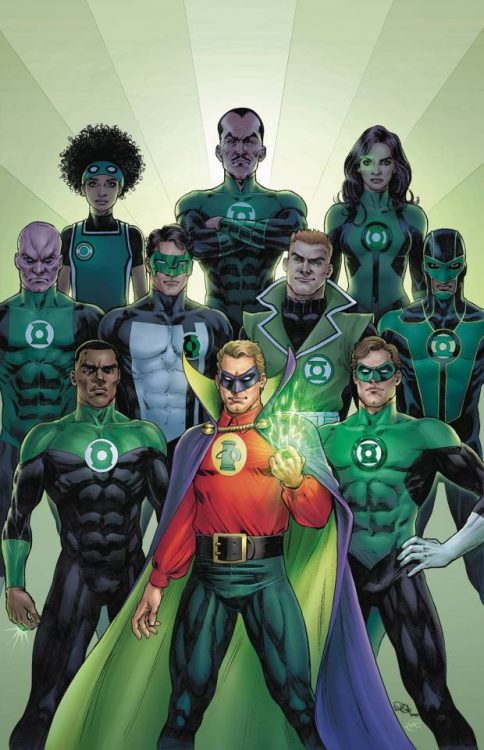
This issue also showcases stories drawn by a number of talented artists, including Gary Frank, Ivan Reiss, and Mike Grell. Several artists are also featured throughout the issue in various pin-ups. This accomplishes two things. It allows the issue to feature the work of other artists, such as Jamal Campbell, Joëlle Jones, and Bruce Timm, while also allowing for the appearances of various Green Lanterns who don’t have a story in this issue, such as Jo Mullein from Far Sector, Teen Lantern from Young Justice, and Tai Pham from Green Lantern: Legacy.
Writing
There are a number of stories worth commenting on in this issue, from Geoff Johns’s heartfelt tale about Hal Jordan (featuring a humorous twist ending) to Denny O’Neil’s final Green Lantern/Green Arrow tale. But I think there are two stories that deserve special attention, and they both bookend this issue. The first is James Tynion IV’s story about Alan Scott, drawn by Gary Frank. When DC Comics rebooted its universe with the New 52, the original Alan Scott disappeared and was replaced by a counterpart from Earth-2 who was gay. This was a departure from the Golden Age Green Lantern, who had two kids. This tale seems to bring the Earth-2 counterpart’s sexuality back into play for the classic Alan Scott. It will be interesting to see what this revelation will do for his character in the future and how it affects the existence of his children (Obsidian and Jade). I’m not the first to point this out, but whether DC decides to make him gay or bisexual, any stories told about him from the 1940s and 50s will certainly have a new layer of complexity, as Alan struggles to be a gay or bisexual man in an era when being so was unacceptable.
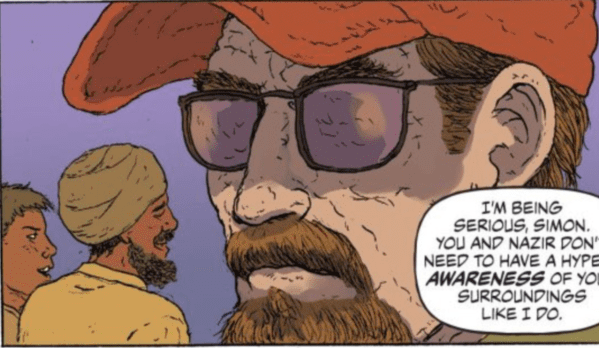
The second story is about Simon Baz, written by Sina Grace, and drawn by Ramon Villalobos. This is an important story for our times, highlighting the problems of racism, Islamophobia, and white terrorism. One problem I often find with Simon Baz stories, though, is that he can often get lost in the shuffle of Green Lanterns and hasn’t always been given a distinct voice. To some extent, that is true in this issue, too. Baz serves as a voice battling and speaking out against Islamophobia and white supremacy, but his words could just as easily have been spoken by any character. He more often than not, seems to serve as an empty signifier without a unique personality, into which people can say anti-Islamophobia things. This is certainly true in this story, and some of the dialogue screams, “Hey! I’m a Muslim. Get it?” Don’t get my wrong. I enjoyed this story, and I think Baz’s character is an important and necessary addition to DC’s roster. I, for one, appreciate the message of the story and the speech that Simon gives about his Islamic faith. I just think DC struggles to provide Baz with his own voice so that he is more than a mouthpiece for on-the-nose anti-Islamophobic dialogue and representation.
All of that said, I think both of these stories are important, and the fact that they bookend this issue is representative of the diversity of the Green Lantern franchise.
Art
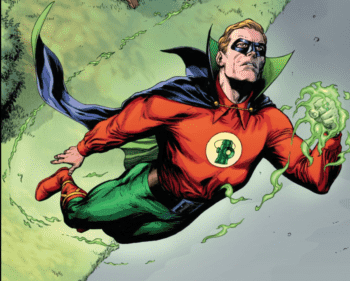
I’ve become a big Alan Scott fan over the last few years, and few things made me more excited than seeing Gary Frank draw him in Doomsday Clock #12.
Alan Scott (right), seen here only “sort of” being added back to continuity.
Throughout Tynion’s story, Frank (with colorist Steve Oliff) draws the characters beautifully, adding his signature lining and shading to the characters’ faces. The standout moment of this first story (besides its message) is when the reader turns to the last page and sees Scott’s Green Lantern take flight.
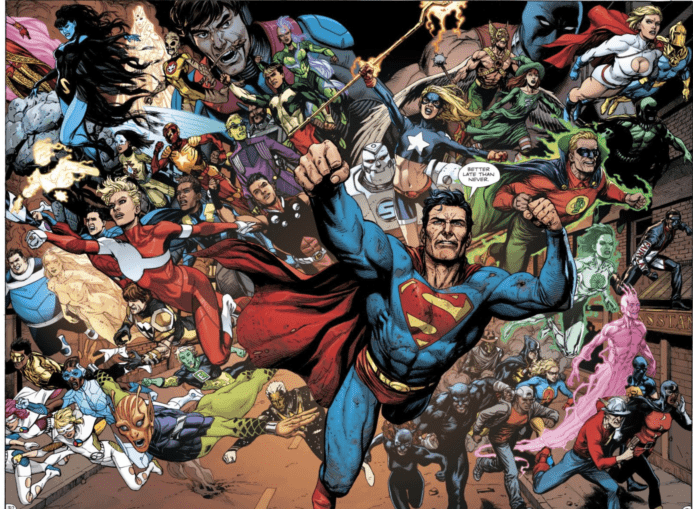
Frank was made to draw noble-looking superheroes! After so many years of waiting for the JSA to return and having Alan Scott teased in everything from Doomsday Clock to Wonder Woman’s own anniversary issue to the previews for Death Metal #2, it was great to see Alan explored in his own story. While short, I appreciated seeing all of the small character moments and conversations that made this tale work, and no one could’ve done it better than Gary Frank!
Villalobos’s art (with colorist Rico Renzi) on the Simon Baz story is reminiscent of Frank Quitely or Chris Burnham.
Villalobos really captures the look of white terrorism well.
Villalobos’s work, like Quitely and Burnham, is an acquired taste. I, personally, have always thought that Quitely’s line work (and here, Villalobos’s), makes every character’s face, and even every surface, look like a crinkled up sponge. But it’s grown on me. The coloring and line work are solid, and Villalobos and Renzi make every character “pop” and look distinct on the page.
This issue is a beautiful love letter to 80 years of Green Lantern. I do think it’s a little unfortunate that one of the younger lanterns, like Teen Lantern, didn’t have a feature (although she does have a pin-up). Still, I understand that choices had to be made and that the focus was put on the most historically popular lanterns. Again, it was good to see Denny O’Neil take one last swing at the Green Lantern/Green Arrow team-up that helped establish him as one of the most important comic book writers in DC’s history, and it was fun to see Guy Gardner’s strategy for distracting Sinestro.
Did you read the Green Lantern anniversary one-shot? Tell us your favorite story from it in the comments below.
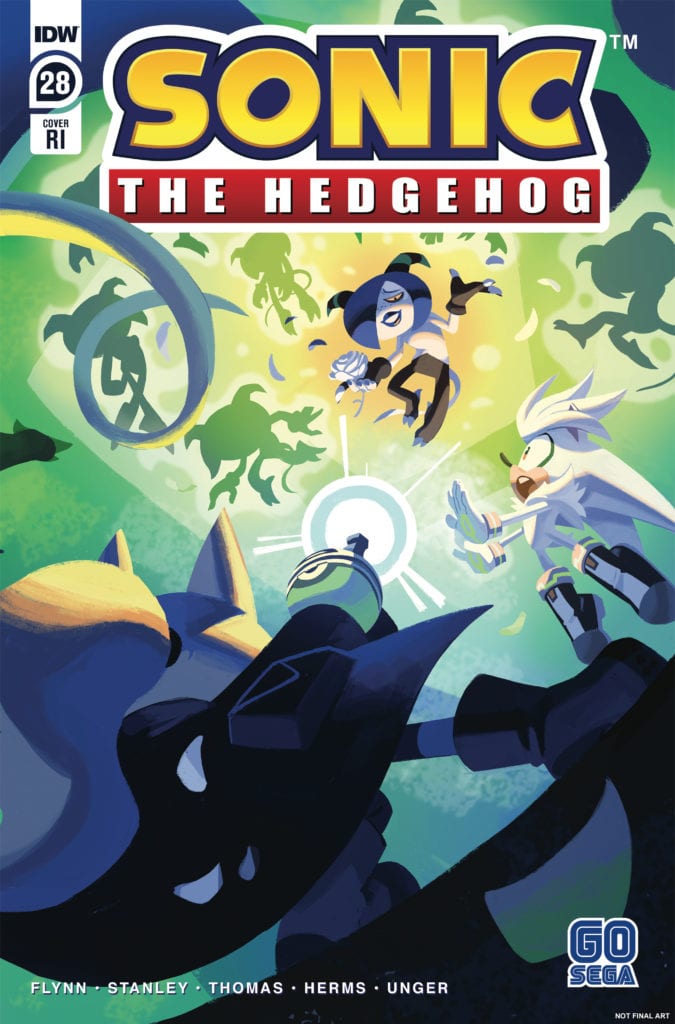
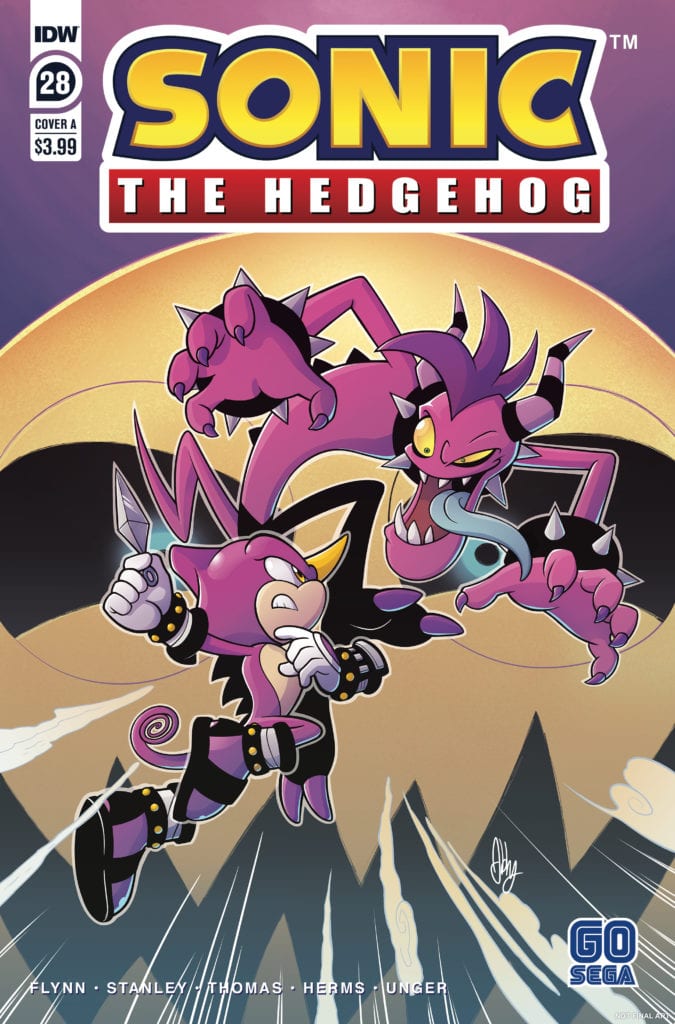
Sonic The Hedgehog #28 by Ian Flynn, Evan Stanley, Adam Bryce Thomas, Matt Herms, Elicia Unger, and Shawn Lee delivers the climax of the Zombat saga. This is the last issue before the final battle with Sonic and his friends facing off against an army of their former friends. It’s going to be hard to top the previous issue in emotion but this issue still achieves some impressive victories.
“All or Nothing,” Part Three! Sonic’s allies continue their missions against the Deadly Six, attempting to reclaim the Chaos Emeralds. Who will return from their final stands? And will they make it back before Sonic has to face Zavok?
Writing
Taking this issue by itself, the fights here seem a bit rushed. The previous issue’s battles were much more drawn out and emotional but here the opponents are beaten without any difficulty. Though it feels like the creators are in a hurry to get this story arc has been going on for over a year and it seems like an acceptable aspect to gloss over.
The writing by Ian Flynn is plotted well overall. The ploy to take the chaos emeralds was laid out in a previous issue so here it seems like just a natural continuation of what was set up. The issue also takes the time to touch on how Silver being from the future is the deciding factor to help turn the tide in the upcoming battle. It will be interesting to see how the story wraps up and what it will setup for future plotlines.
Artwork
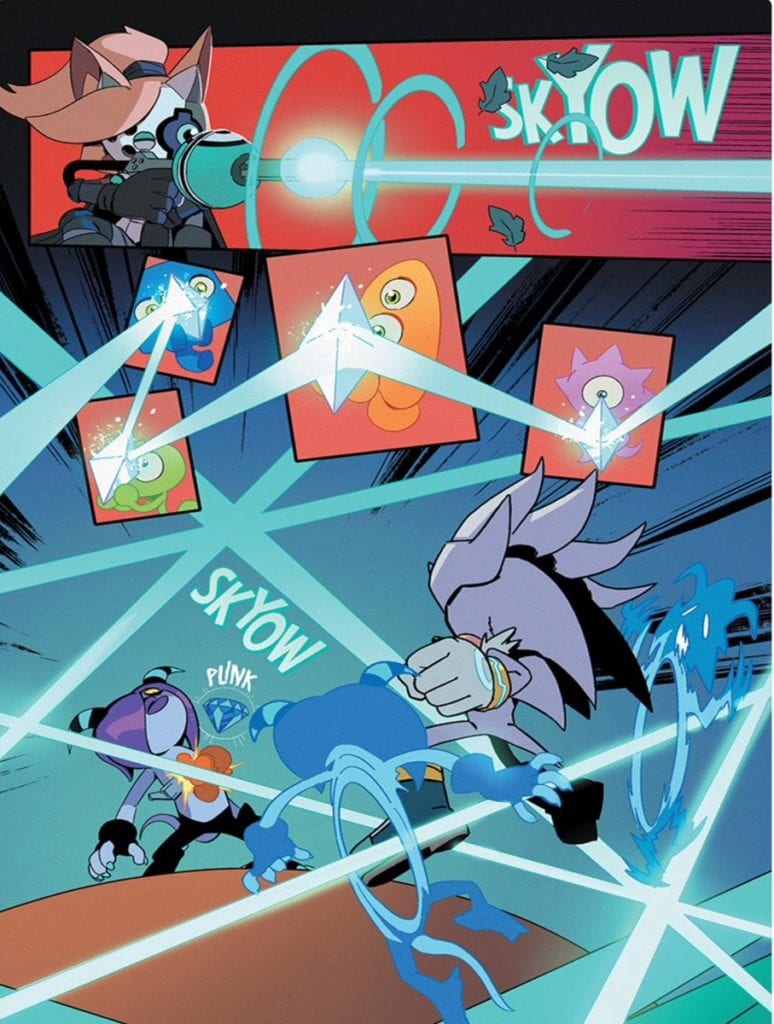
The artwork by Evan Stanley and Adam Bryce Thomas helps to sell just how intense the fight scenes are. One panel particular stands out where Whisper waits for her shot against Zor. It’s easy to feel how intensity from the look of concentration on her face as she knows she’s only going to have one opportunity to make her shot count.
The use of color by Matt Herms and Elicia Unger helps to add to the action elements of the issue. A prime example of this is when Whisper finally takes her shot on Zor (seen below). The use of color and direction helps to make the page feel alive with action.
The letter work by Shawn Lee makes sure to use the careful placement of effects to add to the scene without distracting from the action. The error of using large lettering effects in an effort to showcase intensity happens too easily and usually has the opposite effect of being more distracting than helping with the story. The lettering work by Lee makes sure to always have a focus on the characters and action and only add to the overall aspect of the reading experience.
Conclusion
Sonic the Hedgehog #28 feels like the creators are rushing to finish a bit and sadly lacks the emotional impact of the previous issue. Still, when looking at it as a whole storyline, this was only accomplished by proper setup and tight storytelling. While it lacks in-depth, it makes up for in solid plot development. Next time, the battle to end the Zombot plague will commence.
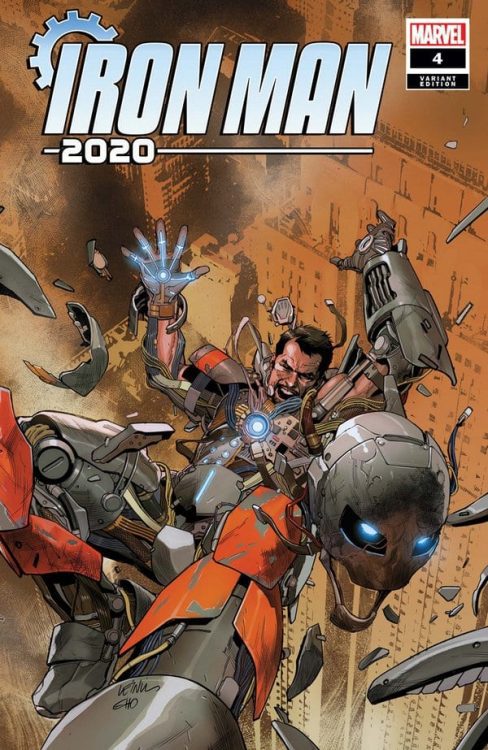
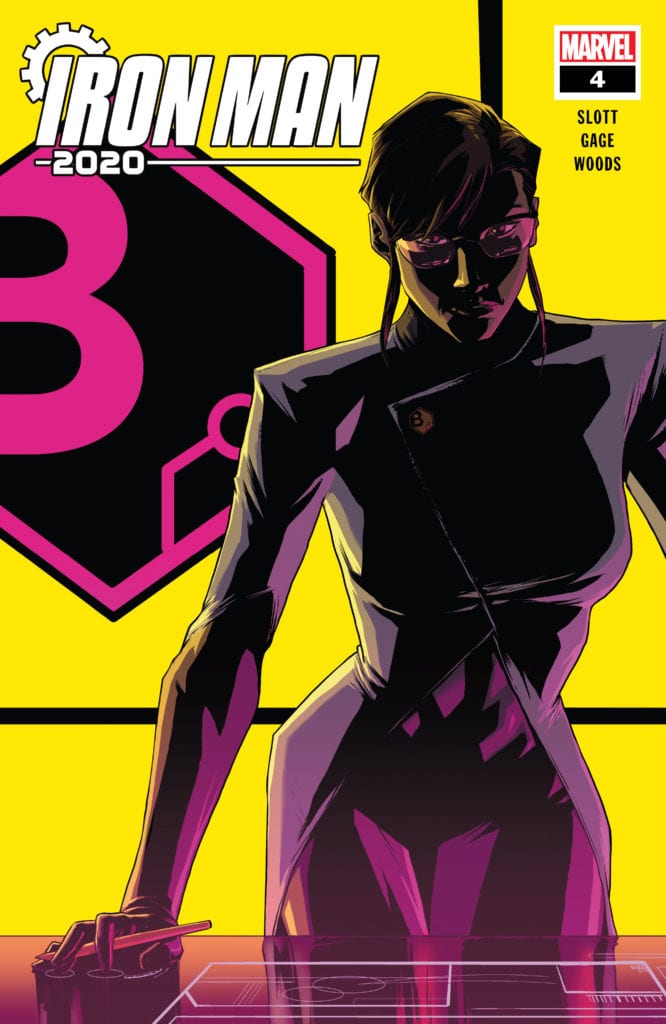
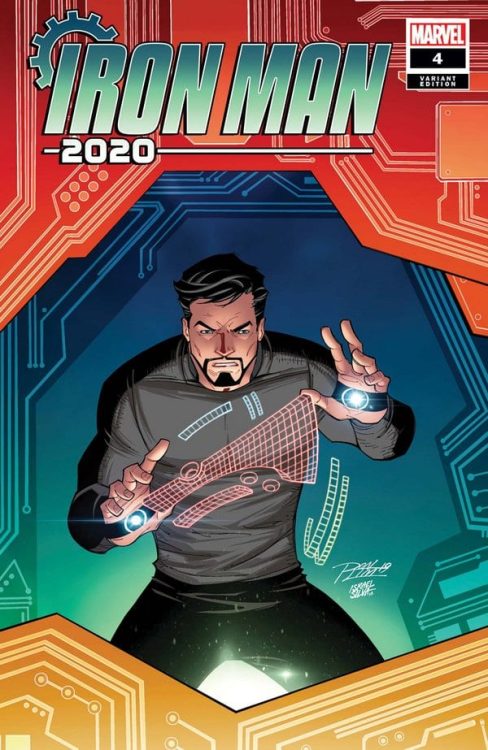
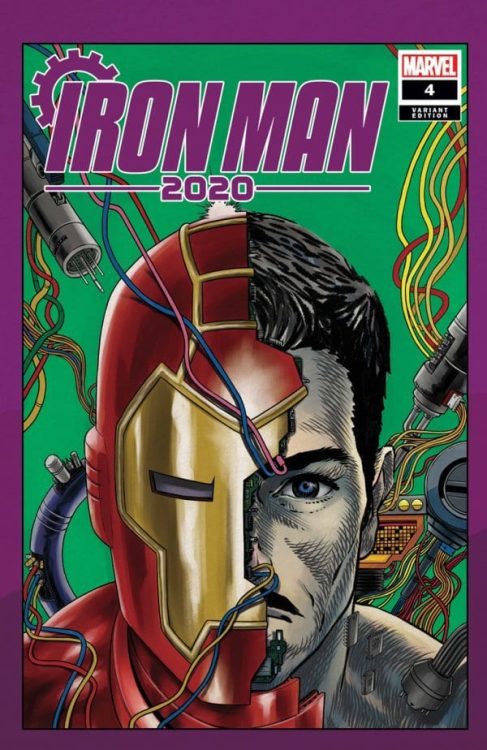
The robots are on the run in Iron Man 2020 #4, and Dan Slott, Christos Gage, Pete Woods, Celeste Woods, and VC’s Joe Caramanga deliver an incredible issue full of both visual wonder and plot development. After the events of the previous issue, Arno Stark has removed the most significant threat on his quest to eliminate all the rebellious robots in the world. What events could be happening behind the scenes to throw a wrench in his plans?
Summary
Arno Stark seems like he is on the precipice of absolute victory. Sadly, he’s about to have some setbacks thanks to his cloned parents and his comatose brother, Mark-1.
Writing
Arno keeps having villain moments without officially wearing a sign reading, “I am the new Doctor Doom.” This time around, his callus nature is put on full display by how he interacts with his parents and how he treats Sunset Bain. Sure the first issue of this series established he has an alien threat he needs to defeat, but he could accomplish this without treating everyone around him like crap. It’s painfully obvious at this point we were never even remotely supposed to consider Arno as a permanent replacement to Iron Man.
Meanwhile, after the devasting blow he suffered in the previous issue, Mark-1 becomes comatose and gets lost in his memories. This is a classic staple with Iron Man comics, where Tony finds himself injured, has flashbacks, and allows for the character to reflect on what makes him a hero. Slott and Gage take the time to help Mark-1 get over the issues which have plagued him since the 2020 event began with the help of a friend. All of it leads up to a final page, which has to be seen to appreciate.
Artwork
The most appealing thing about Woods’ art in this issue is how it’s used to showcase the dive into Tony Stark’s Mark 1’s mind. Moments of his life through fragment, including him donning the armor and the Avengers assembling for the first time, are easily recognizable thanks to his art. Again, the final page can’t be undersold, and the art helps to bring it all together.
The colorwork by Woods adds to the fantastic elements and effect as they dive into Mark 1’s subconscious. Through the right use of colors, the reader can feel themselves being drawn into the depths of Mark 1’s journey. It also helps to sell the ominous nature of Arno Stark’s Iron Legion, an army of remote-controlled robot killing machines (but he’s totally not evil or anything).
The lettering by Caramanga helps to push the soundtrack and direction of the comic. From panel to panel, carefully placed fonts and styles give the story a sense of sound. This is especially true as when different versions of Tony Stark from throughout start to chime in and the speech bubbles imply one of them is when Tony was struggling with his alcoholism.
Conclusion
The power of a good comic can put a smile on your face and make you remember hope springs eternal. Is Iron Man 2020 #4 a perfect issue? No, but it offers a feeling of positivity, which is a win in itself. With all the chaos happening in the world today, everyone could stand to have a few more victories.
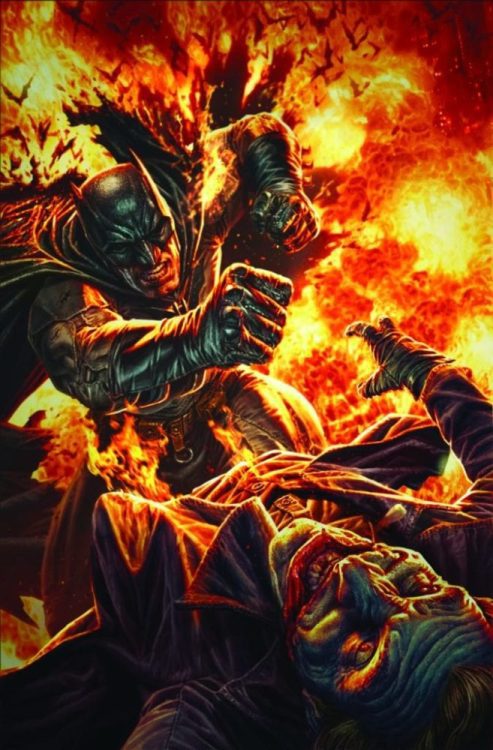
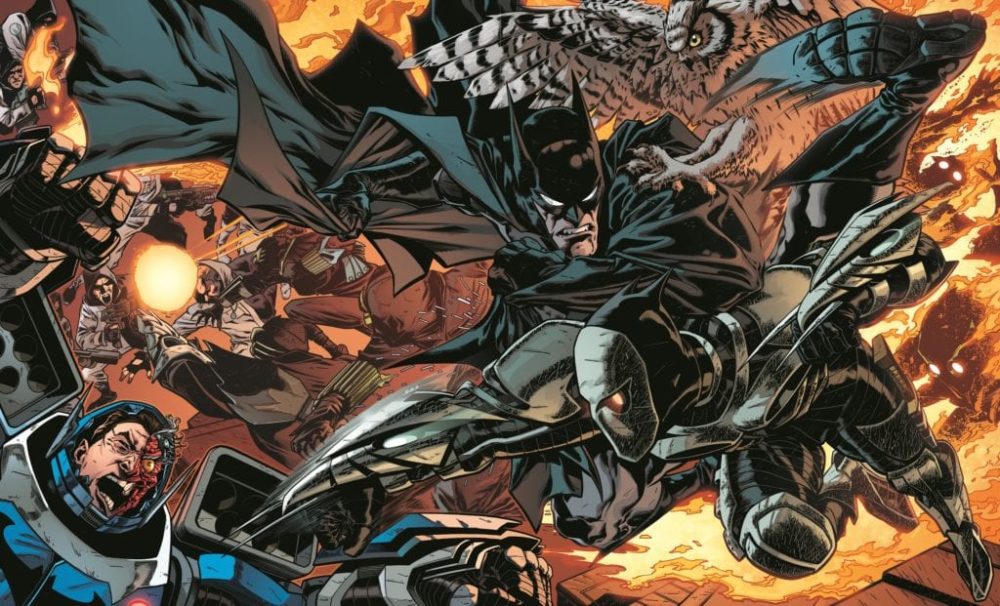
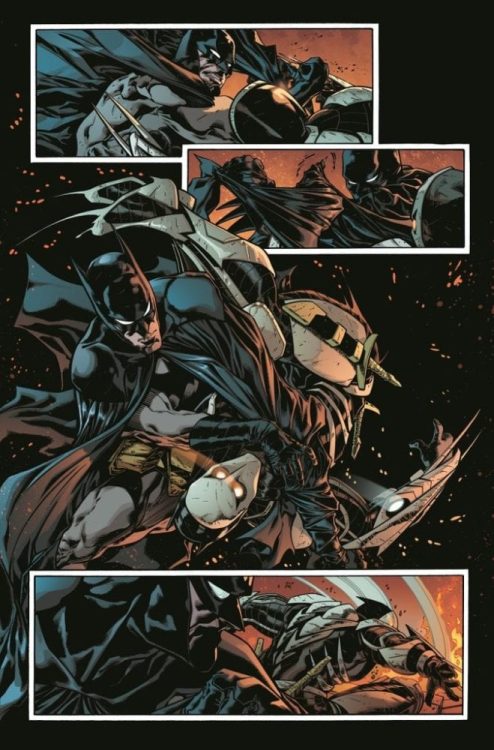
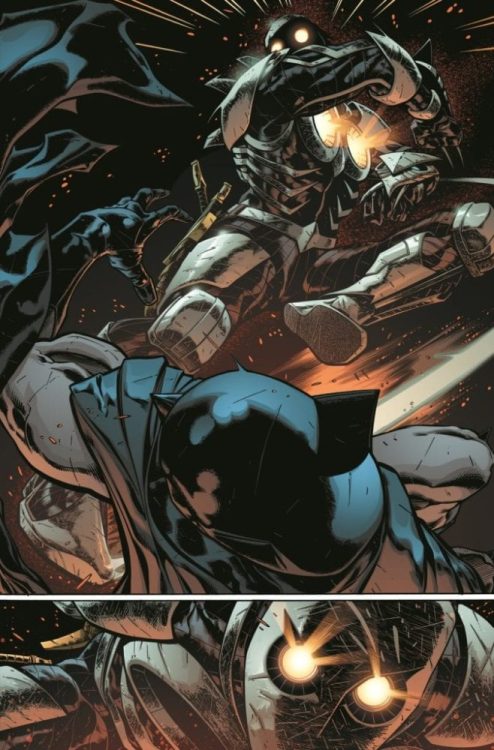
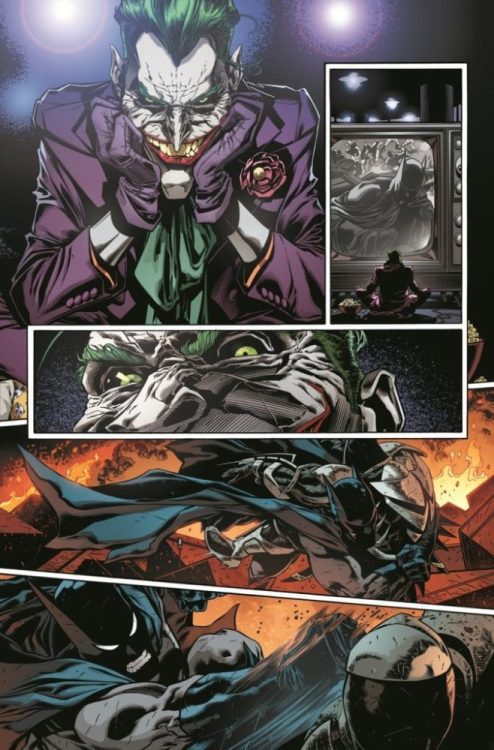
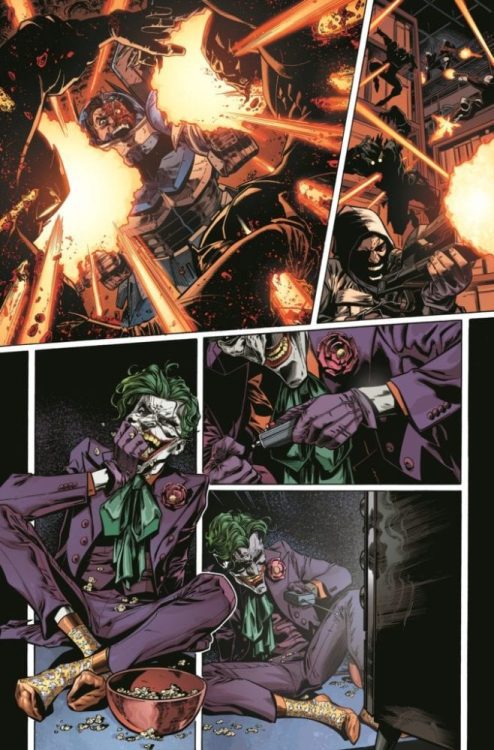
Each week brings us closer to the “Joker War” storyline in the various Bat-titles, and DC continues to tease some of the dramatic events on the horizon. This time they’ve got a preview of Detective Comics #1024, featuring another longtime Batman foe. What exactly does Two-Face have do with the Clown Prince of Crime?
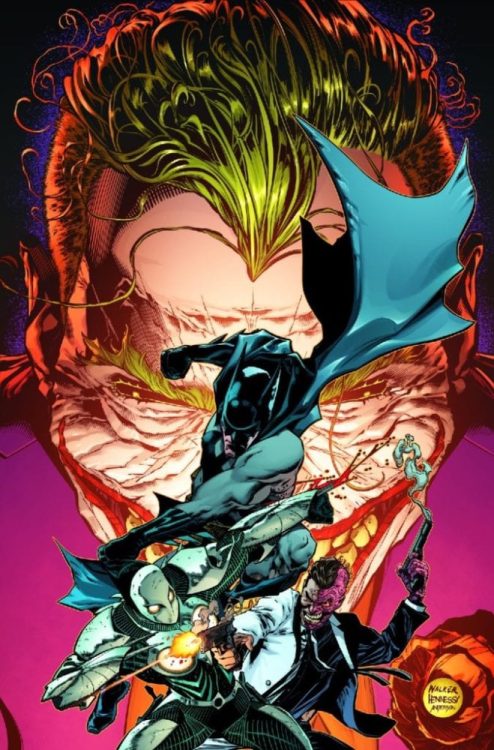
Check out the official description and preview art, including Lee Bermejo’s variant cover for the issue:
DETECTIVE COMICS #1024
Written by PETER J. TOMASI
art and cover by BRAD WALKER and ANDREW HENNESSY
Card stock variant cover by LEE BERMEJO
In this prelude to “Batman: The Joker War,” the story of Two-Face reaches its end, and Harvey Dent will at last find peace after decades of schism. But will that peace be in death, or in the chance at a new life?
All along, The Joker has been the puppet master behind the torment of Two-Face, and in this issue, the Clown Prince of Crime definitely knows how to make an entrance! Don’t miss the final battle between Batman, Two-Face, and Lincoln March, with a shocking conclusion that’s sure to split you right in two!
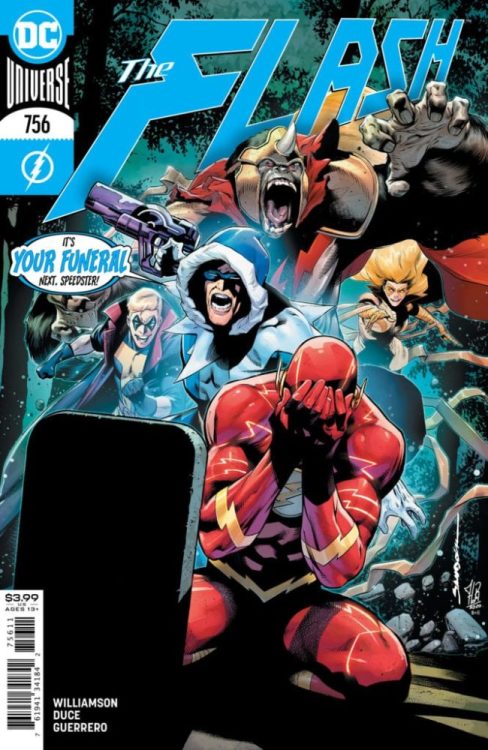
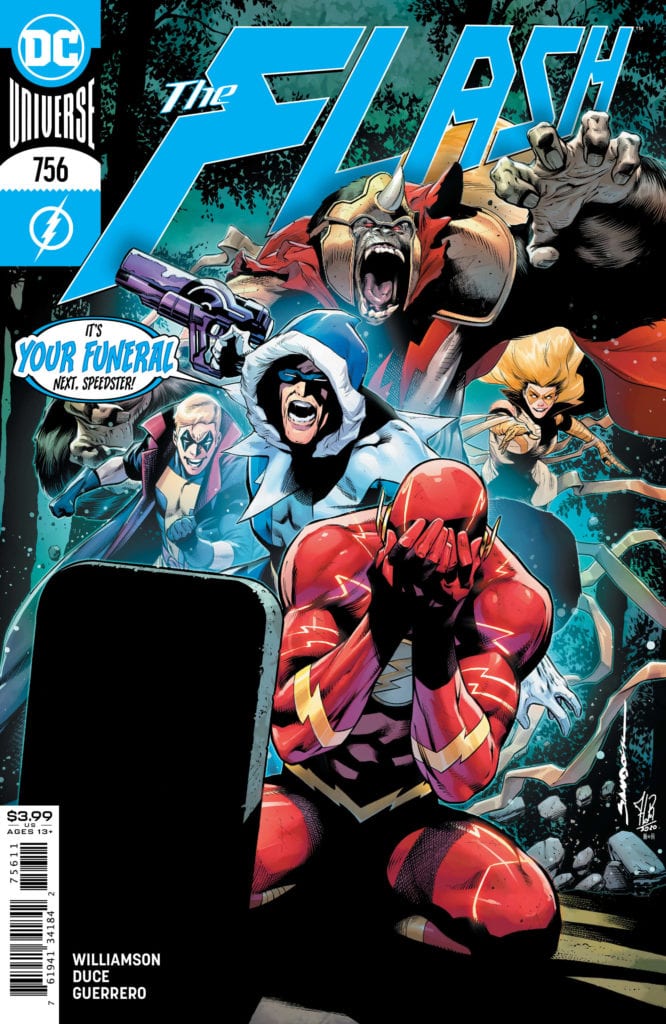
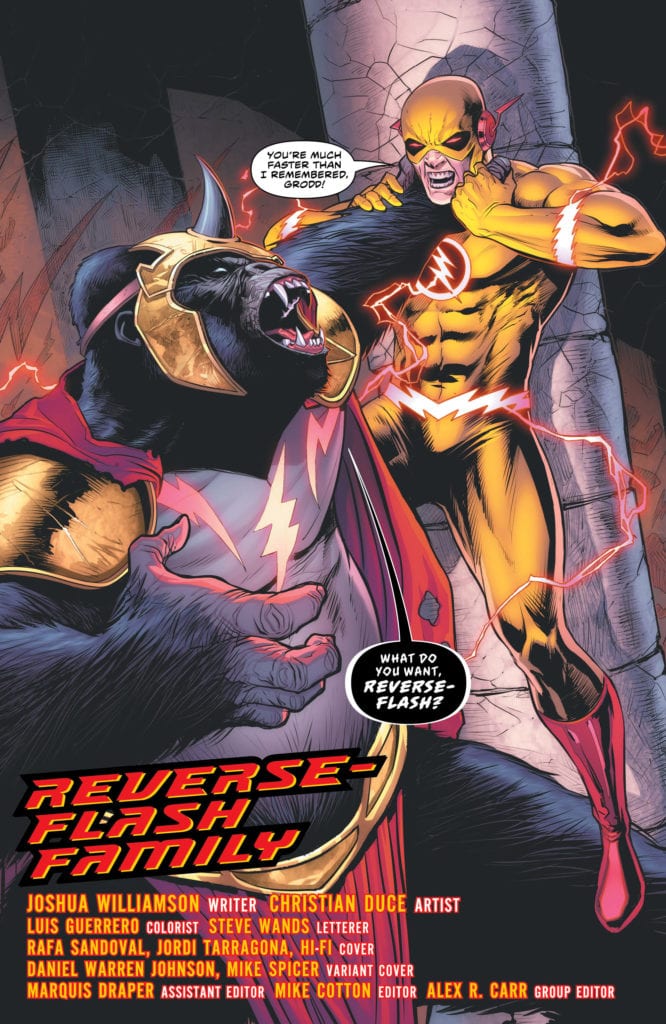
There is a new war between Flash and Thawne coming. After setting aside their differences, Barry and his nemesis from the future took on Paradox. The villain threatened the very timeline by removing the Flash with the help of Godspeed. Barry frees the villainous speedster and proceeds to distract the time-breaking villain as Thawne heads back and averts the accident that created Paradox in the first place. The trio of speedsters escape the realm of Paradox, and the Flash Age is saved. Just when everything seemed to be going great, Reverse-Flash kills Godspeed and swears to create a Flash Family of his own. Will Barry be prepared?
**Some Spoilers Below**
Story:
Barry is still reeling from the end of the Flash Age. As he mourns to his friend/enemy, Godspeed, he begins to mentally prep himself for the coming battle. He first tells Iris that she has to lay low for the coming battle. She finds this suspicious as Barry runs off to find the young speedsters. After telling them to run, Barry prepares for his confrontation with Thawne.
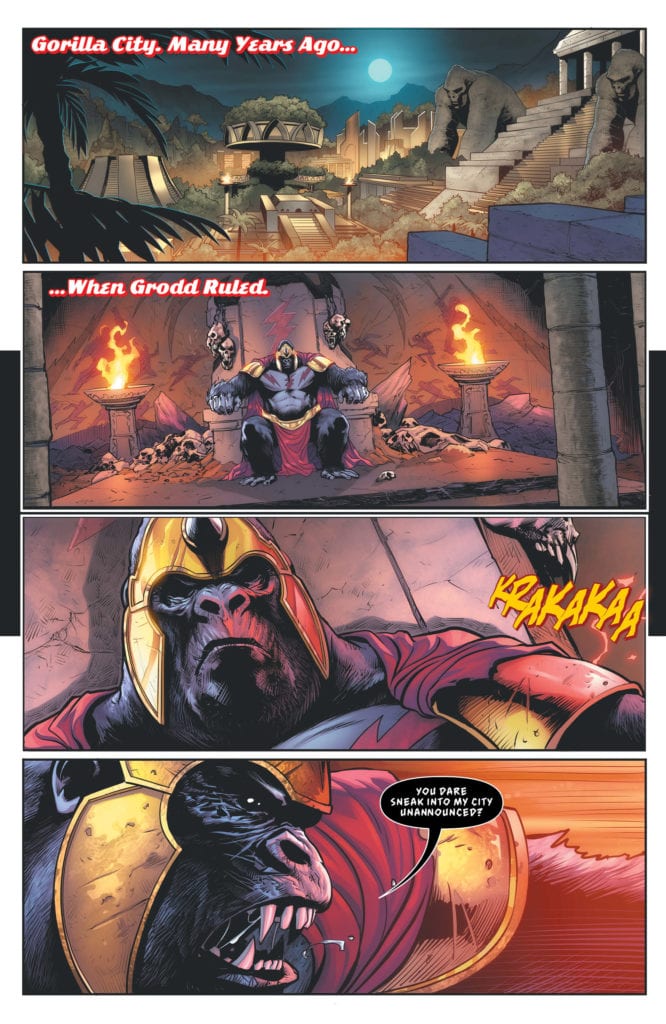
Meanwhile, Reverse-Flash travels to the past and begins recruiting Flash villains. After he recruits Grodd, The Rogues, and Turtle, he heads to the future to recruit two dangerous villains to his cause.
After the explosive ending last issue, we take it down a few notches for this one. This issue is hinting at a coming battle between Barry and Thawne, which will likely lead to Thawne’s death(again). This time around, however, we get the hype that this will be an all-out throwdown with the entire cast of the Flash series. The biggest surprise, however, comes from the villains Thawne picks up from the future. While this reviewer will be keeping it a secret, I can already tell this is going to be one hell of a game-changer.
The problem of the issue comes from the basis that it is just hyping up the next arc. There isn’t much else to it. Sure we get what both Flash and Reverse-Flash are thinking, but there isn’t a huge action set piece and is mostly just discussion. While that usually isn’t a problem, it wouldn’t have hurt to have some excitement in the issue. There is drama building that will make for nice character building in the not too distant future, but as it stands alone, it’s a bit boring.
Art:
Christian Duce provides his usual fantastic art for this in-between arcs chapter. His designs for all of The Flash’s villains are excellent, with the highlights being the surprise future villains. Along with the visuals for the powers used, Duce is able to capture the emotions of the slower scenes. You can feel the frustration with Barry radiating off the page. I don’t just mean the anger, but the sadness and regret as well. The illustrations are able to convey emotions from everyone exceptionally well. The only thing that makes it better is the fantastic vibrant colorwork of Luis Guerrero, which has characters pop off the page. A great team effort for a great looking book.
Conclusion:
Overall, this issue isn’t a terrible follow up to Flash Age, but it could have been better. Big arcs can get a pass for a slower, emotional issue, but they need to be game-changers. With the finale being subpar, it just felt like a boring follow-up. The art team did a fantastic job for the comic, all grievances aside. I hope this team returns as we enter this next arc. There is a lot of promise to be seen here, but I’d rather it now then promised later.
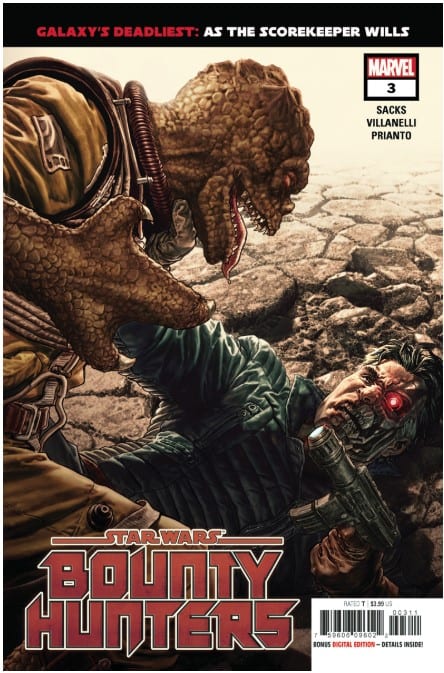
STAR WARS: BOUNTY HUNTERS #3, available from Marvel Comics on June 24th, pits Bossk against Valance in a battle to the death for Nakano Lash’s location. Ethan Sacks’ story picks up right in the middle of the action from issue #2 (read our review here), with the two bounty hunters locked in mortal combat. Paolo Villanelli’s art brings the story to life with an action-heavy issue that answers the key question about Nakano Lash’s betrayal: Why?
Cover Art
Lee Bermejo’s cover stands as a strong representation of this issue’s central conflict. With the exception of a few sub-plot panels and the big reveal at the end, it’s all Bossk and Valance duking it out. Bermejo’s art is strong realism with excellent us of texture. Bermejo’s signature style captures the little bumps and curves that bring a character to life, and that style is on full display with the cover.
Writing [No Spoilers]
Now we’re cooking with Midachlorians!
Ethan Sacks put together a fast-paced, knock-down, drag-out fight between Bossk and Valance. Rather than a simple blaster battle, Sacks used the opportunity to showcase how Valance’s cybernetics give him an extra edge as a bounty hunter with some “I didn’t know he could do that” moments.
Meanwhile, we get a little flashback action showing how Nakano Lash assembled the team she would ultimately betray. Flash forward to now, and we finally (partly) get the answer to why Nakano Lash killed the team’s client and went into exile. Valance is already positioned as the series anti-hero protagonist, so it will be interesting to see what Sacks will do with the characters once Valance learns of Nakano’s secret.
Pencils/Inks
Paolo Villanelli deftly handles the action in this issue with expert execution of momentum. Valance’s cybernetic fist slamming into Bossk’s jaw. Valance getting flung backwards into a wall. General Vukorah mercilessly gunning down the spice smugglers. Nearly every panel is a visual feast of deadly speed and momentum with things hitting things. Villanelli’s action art practically crackles with energy.
On the flip side, the quiet, conversational moments with Nakano Lash, as she plans to make her return, are filled with deep, deep shadow. Villanelli’s choice to reserve the deep shadow for Nakano’s scenes heightens the dramatic effect of her conversations that separate it from the main story with Valance, and it heightens the mystery of the changes that have happened to her since she left.
Coloring
Arif Prianto’s coloring style is highlighted best in the light sources: lens flares, sunbeams, explosion bursts, and cybernetic eyes. Every light source glows with brightness and heat, giving the action sequences more energy on top of Villanelli’s dynamic art.
Lettering
Travis Lanham’s lettering excels in complimenting the art and coloring with excellent use of contrast. The explosions are big and bright, so the bombastic and heavily-bordered lettering accentuates the SFX rather than getting lost in the visuals. Lanham’s lettering is impact on top of impact, which makes every panel feel bigger.
Conclusion
STAR WARS: BOUNTY HUNTERS #3 unveils the answer to a lingering mystery and turns the action up full blast. The art is exciting, and the story engages the reader equally well in both action and dialog. The story is finally kicking into high gear, and I’m looking forward to seeing what happens next.
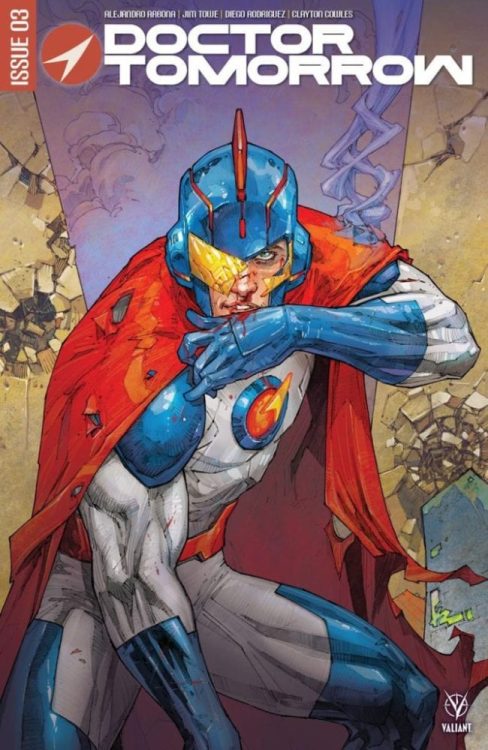
Doctor Tomorrow #3 after Valiant’s long hiatus returns this week with a head-turning issue. But is it enough for readers to get back on track after the pandemic hold? In a comic about subtle context, it just might be possible in the multiversal lotus.
Recap
15-year old Bart Simms encounters his older superhero self, Dr. Tomorrow, who needs help defeating his archenemy Hadrian. So Tomorrow recruits Bart and (somehow) the Valiant Universe to stop him from destroying their world.
Doctor Tomorrow #3 Story
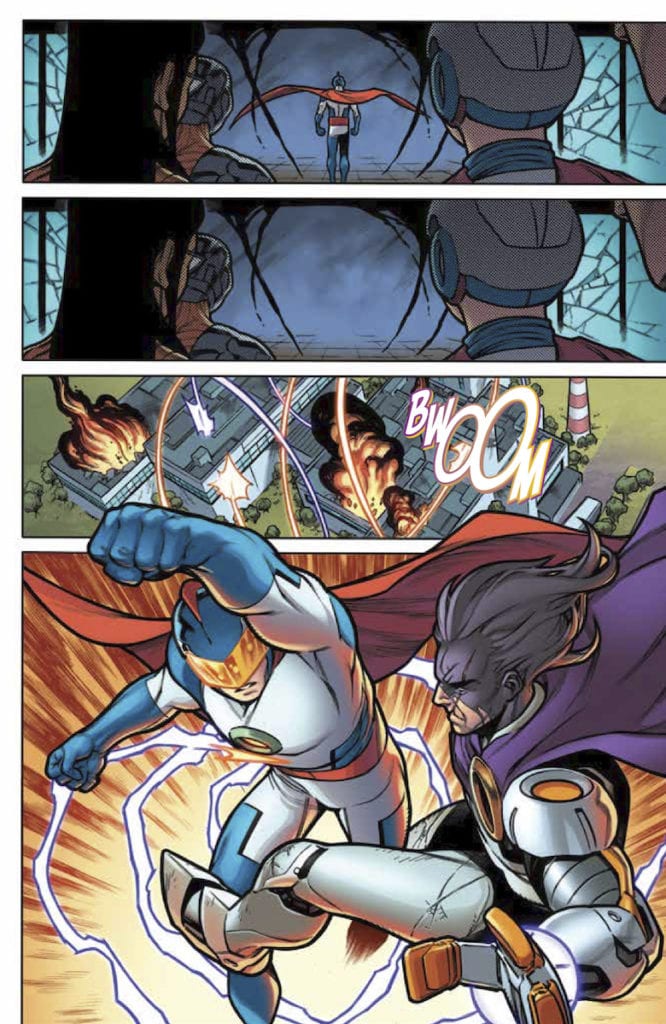
Doctor Tomorrow #3 wastes no time when it comes to driving the plot forward. Yet it’s still somewhat strange how the Valiant superheroes are on board with this. It’s very sudden, and they might come across as mere plot elements than characters. But no one can deny that the battle with Hadrian isn’t essential considering what happened in the first issue. Yet it’s how the Doctor fights against Hadrian that reveal their motives. Like when Bart’s failing in his attack, the Doctor holds him by the neck to continue. Neela is right to be surprised by this to the point of asking Hadrian’s story. Because as it turns out, these events happened before; something that Bart pieces together from just Hadrian’s words.
Alejandro Arbona has this context serve a dual purpose, both as character-driven exposition and as Bart’s Hero’s Journey. In this way, Hadrian serves as a helper and unwitting mentor the way he was with Dr. Tomorrow. One that drives both Barts into the Abyss, but only the Doctor ends up metaphorically dead. Bart, however goes through the rebirth and transformation phase. It’s a pretty interesting dynamic despite the series rushing this formula.
Artwork
Jim Towe keeps up a very good art style in Doctor Tomorrow #3 that keeps up with the pace of Arbona’s writing. The simple act of making subtle changes creates great dynamics in big action scenes. Yet it’s the facial features that make the biggest impact from Neela’s reaction to Dr. Tomorrow’s actions to the faces of Hadrian and Tomorrow as they get burned. It practically says everything about the revelations of these two and how ugly their ambitions are. Compare that to some of the volumes of character outlines of characters who barely even speak.
The colors by Diego Rodriguez and Kelly Fitzpatrick meanwhile have just the right amount of contrast to make sure the emotional scenes have weight. Otherwise, without Towe’s inking, some of the colors would blend.
Lettering
Clayton Cowles’ lettering, for the most part, mirrors the artwork of Doctor Tomorrow #3. Some of the word marks combine color outlines to display the clash between the Doctor and Hadrian. Other wordmarks have weight with their size and texture that accent a punch to the face. Even the word balloons flow nicely between where to guide the reader although there are a few minor errors like when the Eternal Warrior speaks up with a command that previous panels display come from Doctor Tomorrow.
Doctor Tomorrow #3 Has Its Strengths
Doctor Tomorrow #3 is not a perfect issue, especially if you take it at face value. With a plot that moves for its own sake, it’s easy to overlook how the series interweaves a narrative. The subtle writing techniques and changes in art hold a decent amount of weight when it comes to the decisions Bart makes. This series shows how the formula of the Hero’s Journey can be more than just a superhero formula. Self-reflection is an important theme, one the absurdity of superheroes uses to its finest.
What do you think? Is this series in too big a rush, or is there something to all of this? Leave your thoughts in the comments.





 Jim Towe keeps up a very good art style in Doctor Tomorrow #3 that keeps up with the pace of Arbona’s writing. The simple act of making subtle changes creates great dynamics in big action scenes. Yet it’s the facial features that make the biggest impact from Neela’s reaction to Dr. Tomorrow’s actions to the faces of Hadrian and Tomorrow as they get burned. It practically says everything about the revelations of these two and how ugly their ambitions are. Compare that to some of the volumes of character outlines of characters who barely even speak.