Home Blog Page 273

EMPYRE #5 Asks, “What Does It Mean To Be A King?”

Empyre #5 #1

Empyre #5 #1

Empyre #5

Story: Al Ewing & Dan Slott

Script: Al Ewing

Artist: Valerio Schiti

Color artist: Marte Gracia

Letterer: VC’s Joe Caramagna

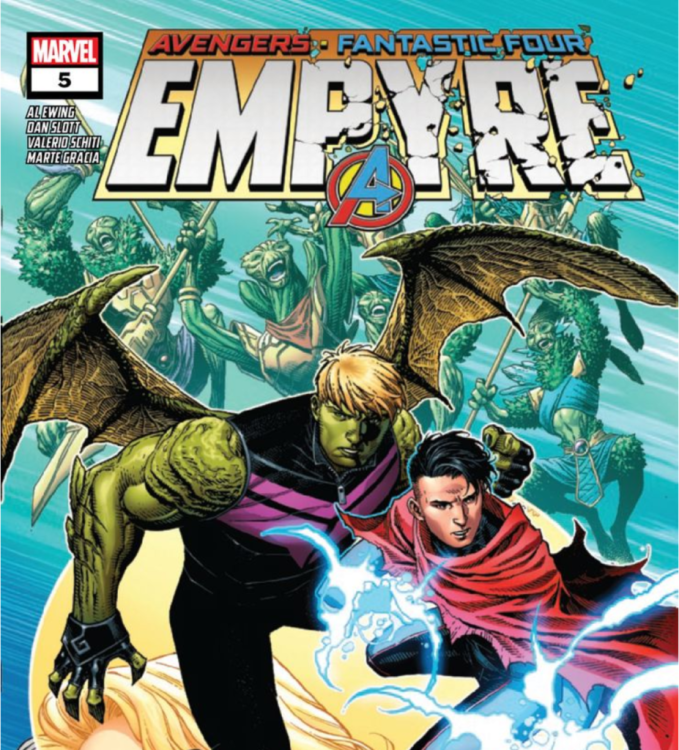
Some events tend to focus on the story that’s unfolding on the page, the literal battle between heroes and the latest threat they face. Marvel Comics’ Empyre #5 (on sale August 12th) bucks that trend, as writer Al Ewing explores the costs of loyalty, a theme that has   been a consistent through line during the series. In this latest issue, Ewing explores differing consequences of power for two of the most influential leaders in the Marvel Universe right now: Quoi, Black Panther and Emperor Hulkling. 

Through Ewing’s script, we see how these three figures respond to the challenges caused by the Cotati invasion of Earth. First, Quoi now embodies the saying, “Absolute power corrupts absolutely.” Last issue, he rejected Mantis’ emotional pleas for her son to end the violence because the Swordsman convinced him that listening to his mother would be a sign of weakness. The Swordsman continues to mentor his son, the Cotati’s Celestial Messiah, and the consequences could be deadly. Here, we see that Quoi has become almost as wicked and power-hungry as his father.
Empyre #5 #2
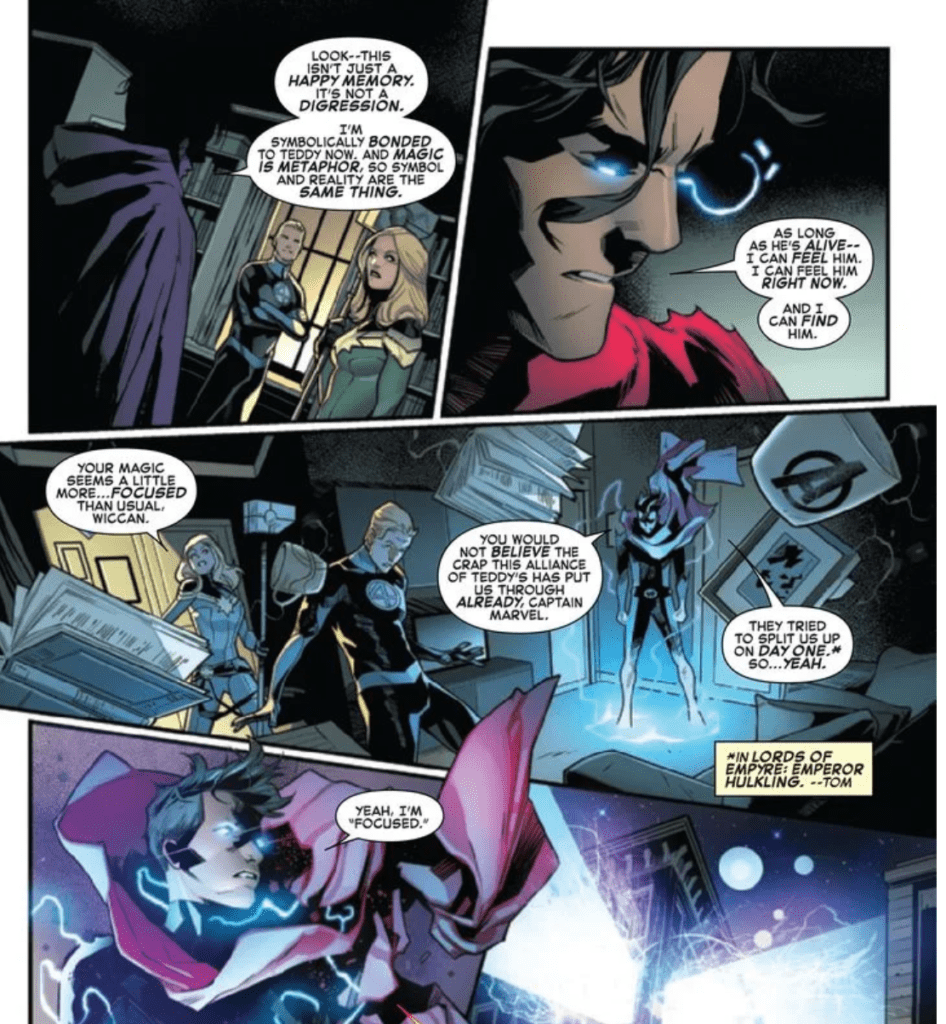
In Empyre #5, the fate of the universe is in in the hands of…Wiccan?!

”I will become a god, a god of the trees,” Quoi declares. “My divine wrath will be all-consuming…and none shall stand against it.” Here, Artist Valerio Schiti shows Quoi staring off into the distance during this villainous monologue, and shows the supposed savior with arrogant pride written all over his face. And why wouldn’t he? The death blossom, an appropriately blood-red seed, has been planted in Wakanda’s Great Mound; victory for the Cotati has all but been assured. Quoi has every reason to be proud. 

Speaking of Wakanda, its ruler tries to overcome “impossible odds,” at least according to Shuri. Unlike Avengers: Endgame, where the Earth’s Mightiest Heroes face Thanos’ minions, the Cotati army can constantly regrow troops. Black Panther battles a never-ending swarm of invaders, and of course his fighting spirit is admirable. But ironically, his persistent battle for survival turns the tides of this war in the wrong direction.
Empyre #5 #3
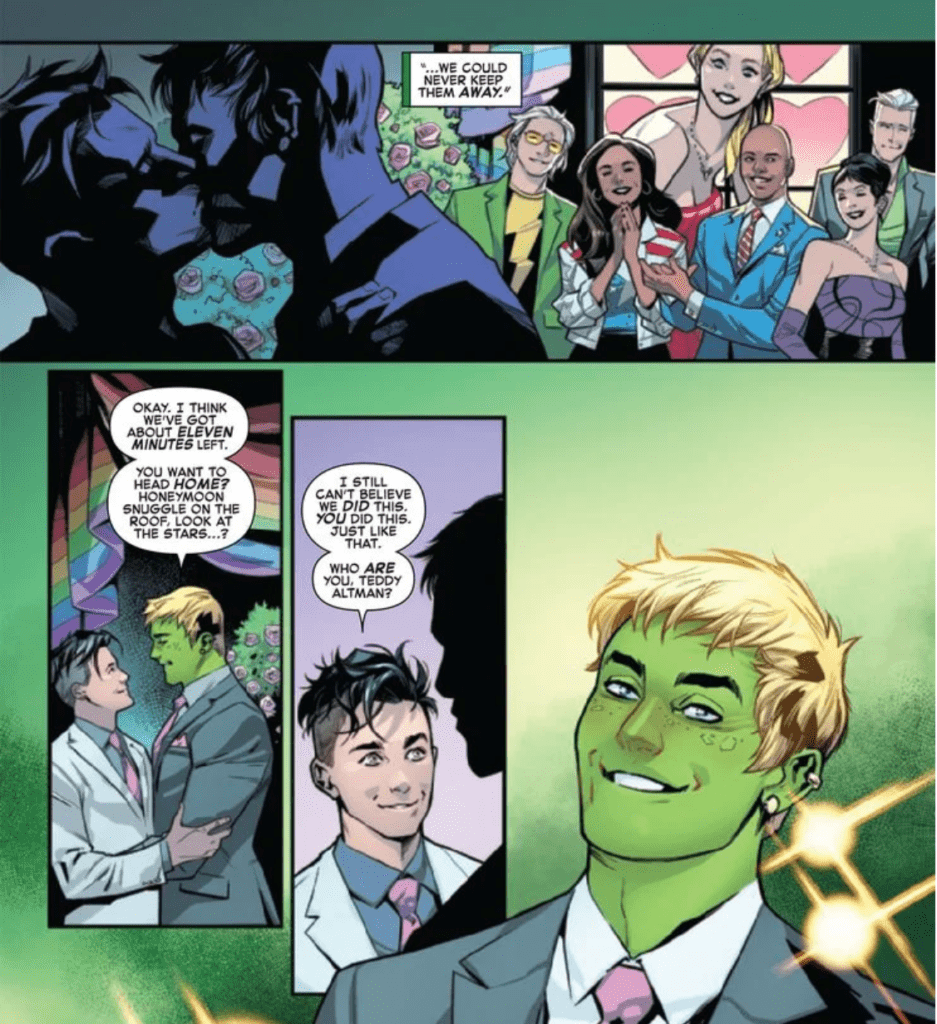
Is Empyre secretly a love story?

While T’Challa seeks to win the day so he and his countrymen may live, the Cotati lackeys sacrifice themselves because they can defeat Black Panther even in death. The invaders aim to overwhelm T’Challa in the sap from their corpses, and the resulting image is horrifying. Schiti shows the Cotati horde drowning T’Challa, who is covered with their vines and their claw-like roots. Schiti zooms in on Black Panther, whose face is split between sheer fear and determination to defend his country. This complex emotion is conveyed by his bulging eyes, which color artist Marte Gracia fittingly fills with a green that’s the same shade as the Cotati’s expansive garden. 

The lackeys tie T’Challa down, and once he’s neutralized, the Cotati successfully plant a death blossom in Wakanda’s Great Mound. In other words, the bad guys just got what they wanted. T’Challa has the perfect response, as he borrows from Dr. Strange’s iconic line from Avengers: Infinity War “We’re in the endgame now.” By all appearances, the heros have lost this battle. But, hopefully, they haven’t lost the war yet.

With Empyre #5, this event remains unspectacular, though the stakes on the page couldn’t be higher. The fate of the universe is at stake, but Slott and Ewing don’t present a flashy story. Instead, Ewing’s script relies on good old-fashioned storytelling, and it’s a refreshing change of pace. Events don’t have to blow you away with every issue, as long as the entire product offers the reader a compelling, satisfying narrative. As a result, Slott and Ewing might be revolutionizing event stories, and the comic book industry, before our very eyes.

What’d you think of Empyre #5? Where do you hope to see the series go from here?

Check out your local comic shop to see if you can pick this issue up there, or consider buying it online.
Monkeys Fighting Robots Youtube

Review: USAGI YOJIMBO COLOR CLASSICS #6 — A Tribute Beyond Time

Usagi Yojimbo Color Classics #6 Cover

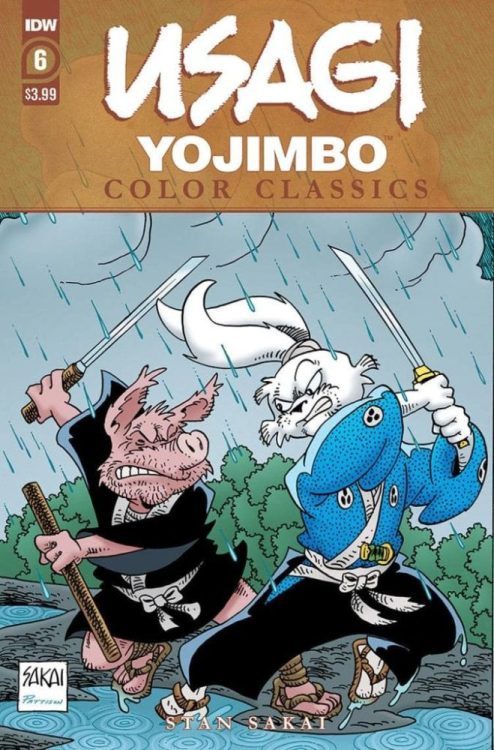
Usagi Yojimbo Color Classics #6 continues to reprint the Fantagraphics publication in a new display. While Ronda Pattison continues to provide color to the original black and white story, Stan Sakai’s classic beginnings remain intact.

Background

Usagi Yojimbo’s earliest publications began in Fantagraphics Books’ Critter anthology until Usagi received his own series. With influences including Groo, The Wanderer and samurai cinema, the franchise goes through several publishers as a testament to its success.

Usagi Yojimbo Color Classics #6 Tributes

Usagi Yojimbo Color Classics #6 makes use of two unconnected stories as a way to display and contrast character. This serves as a good jumping on point to anyone who hasn’t been reading from the beginning. All any reader needs is a character introduction. Usagi doesn’t strike unless he absolutely has to, and even then the most he would do to rowdy crowds is scare them with his swordsmanship. This comes in contrast to Zato-Ino, a blind swordsman who genuinely wants good company. But his hair-trigger temper at threats in addition to his swordsmanship causes wanton destruction. The clash between these kindred spirits feels tragic when they get along in their first encounter.

Art

Stan Sakai’s art complements his writing skills. While Sakai’s art changes after decades, this early version of artwork is a display of humble beginnings. Usagi for example looks only marginally similar to his design on the cover. There is also a three-headed dragon for some unknown reason. It’s simple yet cartoonishly detailed, allowing for the casual times to feel lax and at ease. When things get serious however, these details sharpen to reflect the mood. Not unlike Usagi and Zato-Ino’s clash featuring speed lines.

Ronda Pattison’s coloring, however, gives Usagi Yojimbo Color Classics #6 its title. The coloring and simple shading certainly gives the art a little more depth, otherwise they may look a little flat. But it’s the backgrounds that benefit from the coloring the most. A sunrise looks better as the lighter color begins to illuminate a formerly dark sky. Moments of intense emotion like Usagi and Zato-Ino’s duel even get a background to demonstrate the intensity.

Usagi Yojimbo Color Classics #6 is Waiting For You

Whether you are feeling nostalgic or are looking for a place to begin, Usagi Yojimbo Color Classics #6 might be for you. You might not get Usagi’s backstory, but you do have a chance to see everything you need from an Usagi Yojimbo story. Some things will be a little strange like character designs that doesn’t match the cover. But there are good stories and character unavailable in modern times like Zato-Ino.

Monkeys Fighting Robots Youtube

Review: The Robin King Arrives In DARK NIGHTS: DEATH METAL #3

Death Metal #3 Cover
Death Metal #3 credit of DC Comics
Death Metal #3 #2
In Dark Nights: Death Metal #3, cool guys don’t look at explosions.

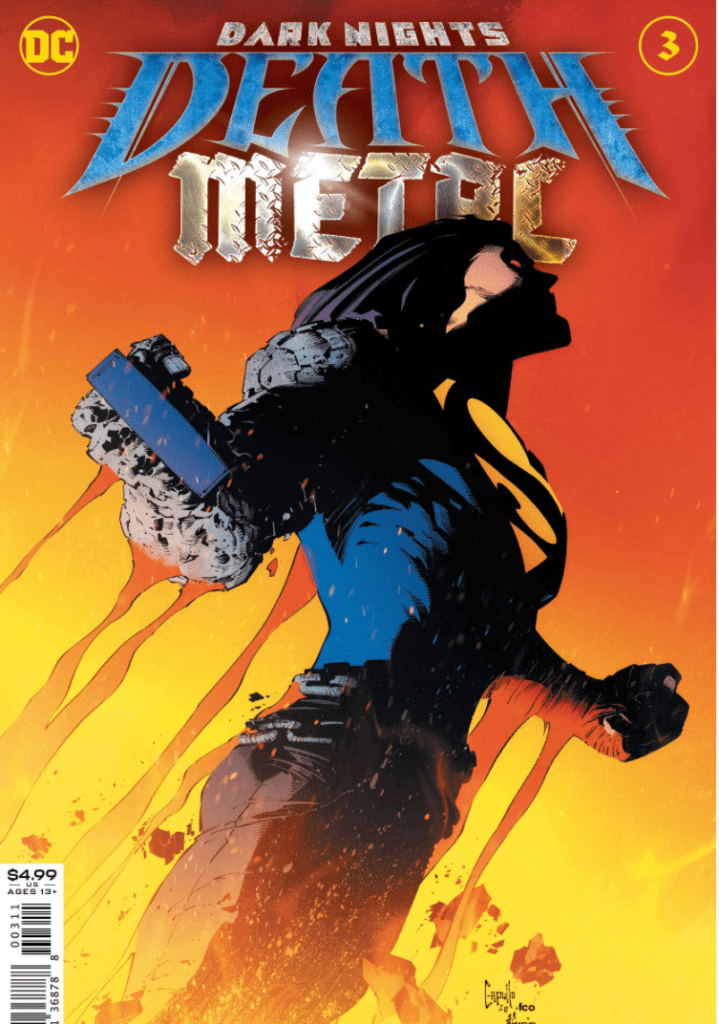
In DC Comics’ Dark Knights: Death Metal #3 (on sale August 11,) the latest chapter of writer Scott Snyder’s epic unleashes even more outlandish inventions and packs more heartfelt storytelling than you’d expect in an event that can seem like it’s trying to be crazy for the sake of it. This third installment shows that Death Metal features plenty of substance through its exquisite dialogue and Snyder’s consistently firm grasp on the characters he’s using.

Dark Nights: Death Metal #3

Story: Scott Snyder

Art: Greg Capullo and Jonathan Glapion

Strange Frontiers

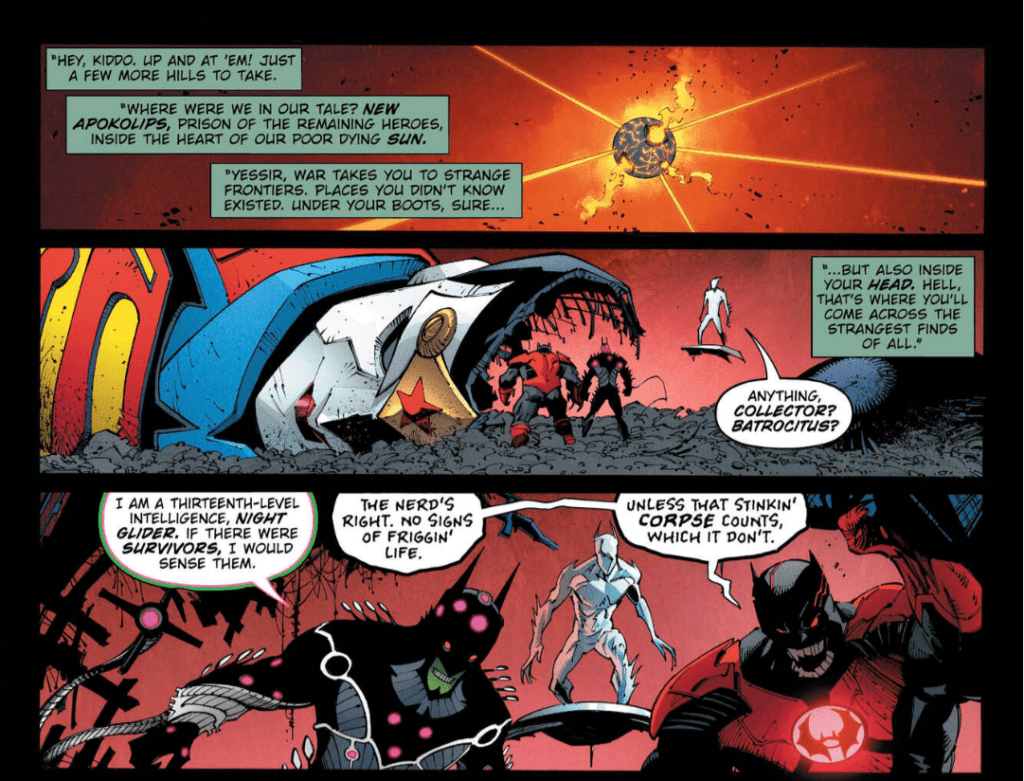
“War takes you to strange frontiers,” Sgt. Rock appropriately narrates on the opening page. Places you didn’t know existed. Under your boots, sure…but also inside your head. Hell, that’s where you’ll come across the strangest finds of all.” Isn’t that Dark Nights: Death Metal in a nutshell? Snyder’s creations get crazier with every passing issue. By now, it may seem redundant to point out every fun thing he packs into the story, but we just can’t help it.

Death Metal #3 #1
Sgt. Rock continues to be the perfect narrator for Death Metal.

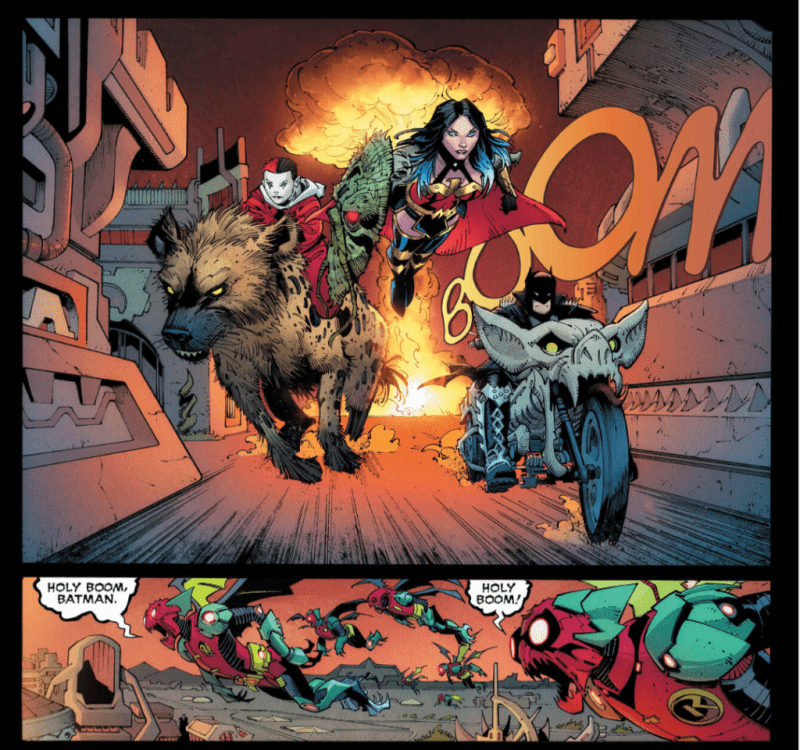
I mean, come on. Lobo slaughtering a goofy imp named Mr. Wobo, a self-proclaimed “widdle twee,” who screams an expletive when the “Main Man” shoves his fist down the creature’s throat is the most bonkers image you’ll see this week. Artists Greg Capullo and Jonathan Glapion make the scene as wacky as it should be, as cartoonish surroundings and Mr. Wobo’s bulging eyes make the fifth dimension feel like an old-school Disney cartoon turned on its head. Every page of Snyder’s Death Metal absurdity makes you beg for more, especially when you toss in robotic Robin-Parademon hybrids and Harley Quinn riding a hyena with an explosion wreaking havoc behind her.

Fear Itself

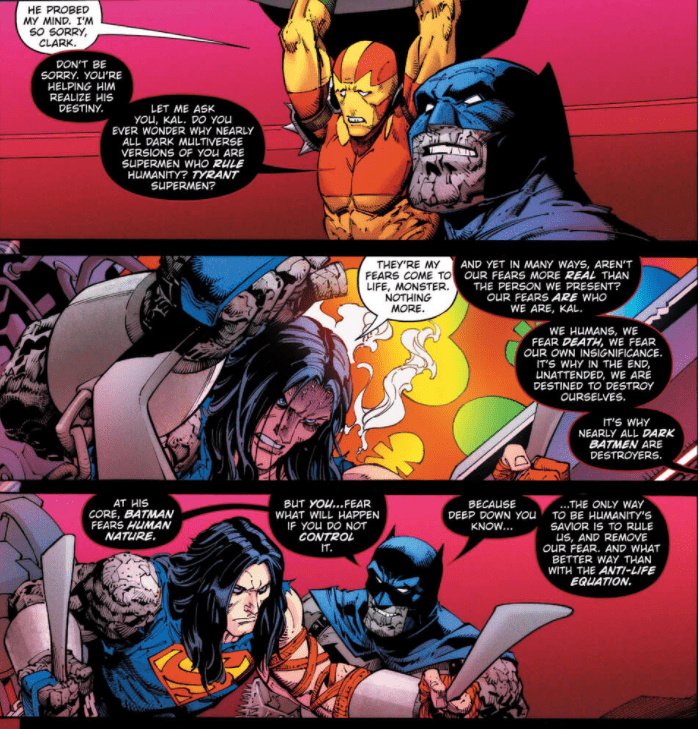
But the best thing about this series continues to be the balance between Snyder’s wonderfully wacky innovations and his remarkably addicting narrative. Here, an exchange between Darkfather (an evil Batman/Darkseid hybrid) and Superman shines brightest. When the villain asks the Man of Steel why his evil counterparts rule over humanity, Clark Kent dismisses these dark reflections as nothing more than his fears. But Darkfather wisely fires back, “Aren’t our fears more real than the person we present? Our fears are who we are, Kal.” With this line, Snyder takes the scene to another gear.

Death Metal #3 3
Darkfather is one of Snyder’s many innovations we’d like to see more of.

Capullo and Glapion place Darkfather right by Superman’s side and place a smug smirk on his face, so he literally looks like the devil on Clark’s shoulder. This sight perfectly fits Snyder’s insightful dialogue, as Bat-Darkseid is trying to convince Superman to come to the dark side. His strong sales pitch might even work on a lesser being. “At his core, Batman fears human nature, but you… fear what will happen if you don’t control it,” Darkfather says. “Because deep down, you know…the only way to be humanity’s savior is to rule us, and remove our fear.” Darkfather urges Superman to embrace his destiny. But thankfully, with an Earth-shaking punch, the Last Son of Krypton tells him, “No deal.” Still, this conversation shows Snyder’s handle on the intricate dynamic between Superman, Batman and human nature itself is second to none.

The Robin King Cometh

Snyder has been hyping up the Robin King, and he enters the spotlight in this issue. His arrival couldn’t be more chilling, as he comes prepared with some sinister hero-killing weapons. As he smiles at the Flash, the Robin King describes his devious anti-speedster gadget. “I dug up your dead mom, covered her remains in this great Speed Force-cancelling toxin that liquifies your muscles,” he says. “…Such cool stuff. I stuffed rotting corpse into a Flash Ring that he stuffed the hero’s dead mother into a Flash Ring.” In just two lines, the Robin King already comes across like he’s evil incarnate. Capullo and Glapion zoom in on his face, where his costume only shows two white circles for eyes, and his genuine smile make his words even more menacing. The best is yet to come with the Robin King, and we can’t wait to see what’s next.

Death Metal doesn’t need every issue to have that singular moment that makes your jaw drop, and this installment doesn’t. Instead, it continues the series’ tradition of offering delightfully bizarre additions to the DC Universe, like Batrocitus and Night Glider, and masterful storytelling, such as the profound reflection on Superman’s fears. It’s hard for any event to live up to the hype but Snyder keeps knocking it out of the park.

What did you think of Dark Nights: Death Metal #3? Which one of Scott Snyder’s innovations is your favorite?

Check out your local comic store to see if you can pick this issue up there, or consider buying it online.
Monkeys Fighting Robots Youtube

Review: SUPERMAN #24 — Can Supes Take On Magic?

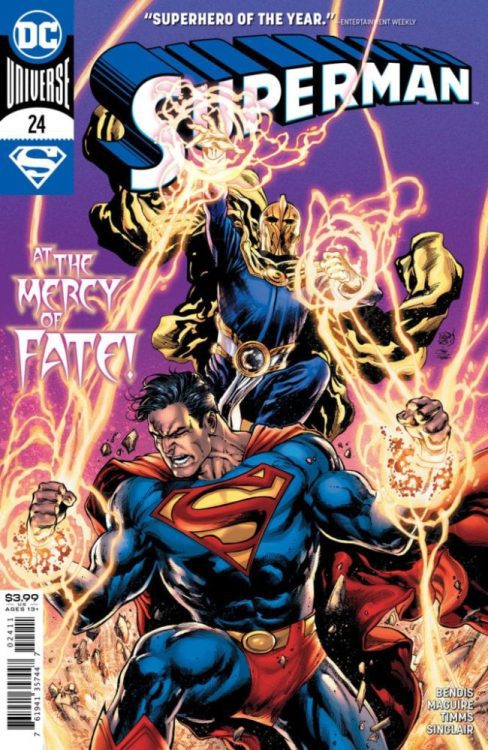
SUPERMAN #24, available in comic book stores on Tuesday, July 11th, pits our hero against a threat just as dangerous as kryptonite: magic. An ancient evil is hell-bent on stealing the Helmet of Fate from Khalid Nassour, the new Doctor Fate. With the mystical god Nabu on his side, the forces of good may stand a chance. But could Superman’s vulnerability prove fatal to their plans?

Story

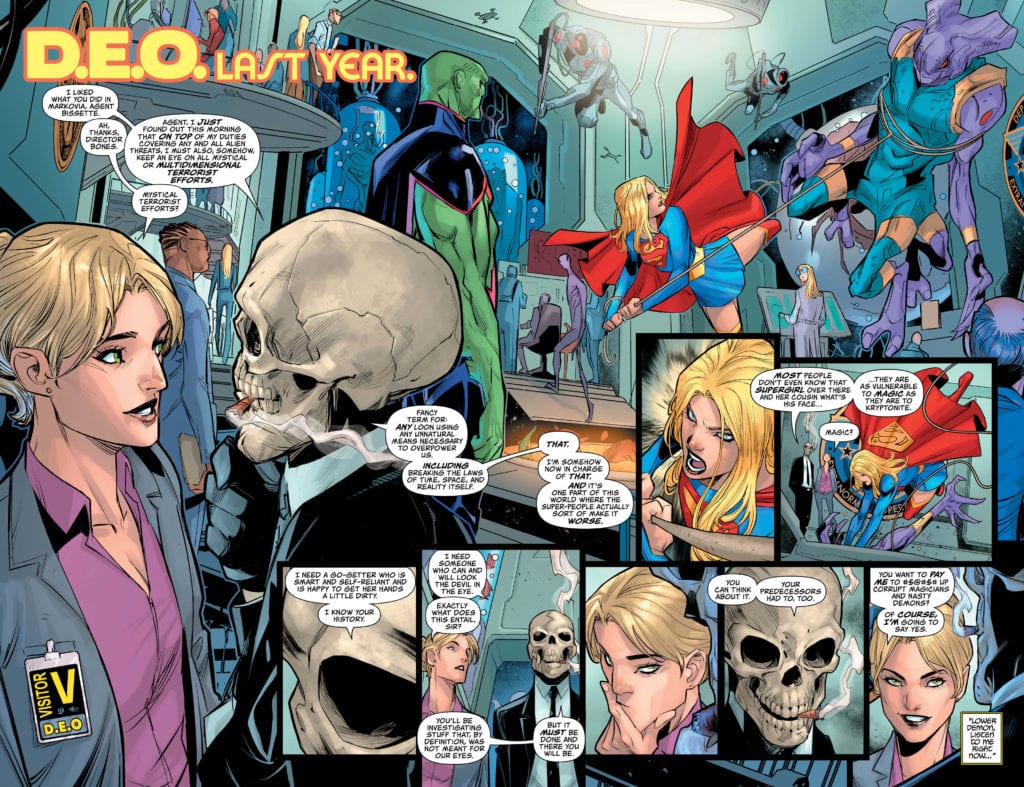
The evil Xanadoth, one of the ancient lords of chaos, has invaded the Tower of Fate. Her imprisonment eons ago clearly wasn’t permanent, as Nabu makes clear. She appears to have acquired a vessel by the  name of Veronica Bissette, a DEO agent. And with that connection she plans to instill chaos upon the world once again.

Brian Michael Bendis’s writing did a great job of capturing the essence of these magical characters alongside Superman. Their otherworldly powers and grandiose plans are complemented by the down to earth, can-do nature of the Big Blue Boy Scout. What’s more, it turns out Superman’s vulnerability may be the key to defeating the monster.

Artwork

Kevin Maguire and John Timms’s penciling and ink work, Alex Sinclair’s coloring, and Dave Sharpe’s lettering give readers illustrations that are reminiscent of stories past. The characters embody the features that are most well-known about them—whether it be Superman’s chiseled muscles or Dr. Fate’s flowing cape. These images are brought to life through bold blues on their suits and much harsher reds on Xanadoth. In addition, the lettering is distinctive when moving from character to character, helping readers distinguish between each ones’ speech.

Conclusion

SUPERMAN #24 wrapped up this arc in an unexpected way. It was great getting to see Superman team up with a purely magical character.

Do you want to see more magic in Superman’s stories? Let us know in the comments below!

Monkeys Fighting Robots Youtube

DC Preview: DETECTIVE #1027 And The Batman’s Future

Detective #1027

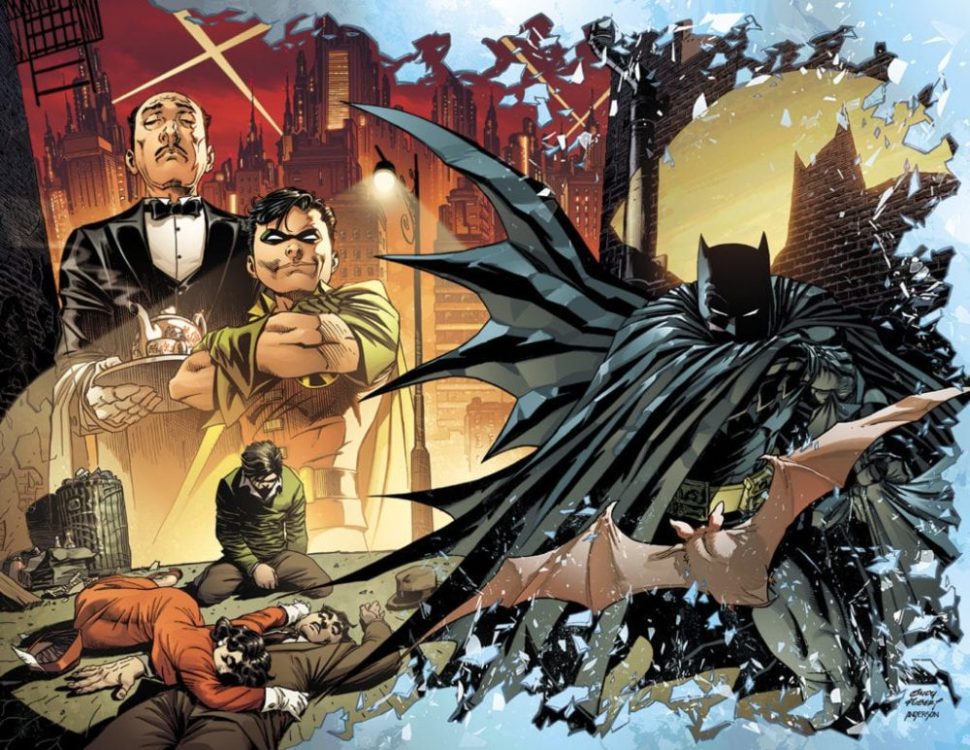
September marks the release of Detective Comics #1027, a milestone issue in the history of Batman (who debuted in 1939’s Detective #27). DC Comics is going all-out with the issue, a massive 144-page comic priced at $9.99.

Now we get a peek inside two of the stories in the issue. Check ’em out below:

Detective Comics #1027:

A “Fractured” Future for Batman and the DC Universe?

What’s in the “Black Casebook?”

When DC announced that Detective Comics #1027 would feature some of comics’ greatest storytellers, there was also mention that this must-have comic book would contain …”a few early hints at what’s in store for the future of the Caped Crusader!”

DC also said that fans would have to wait until September 15 to find out, but that’s not fair, so here’s a first look at two stories revealing more about what’s to come, not just the Dark Knight, but all of the DC Universe!

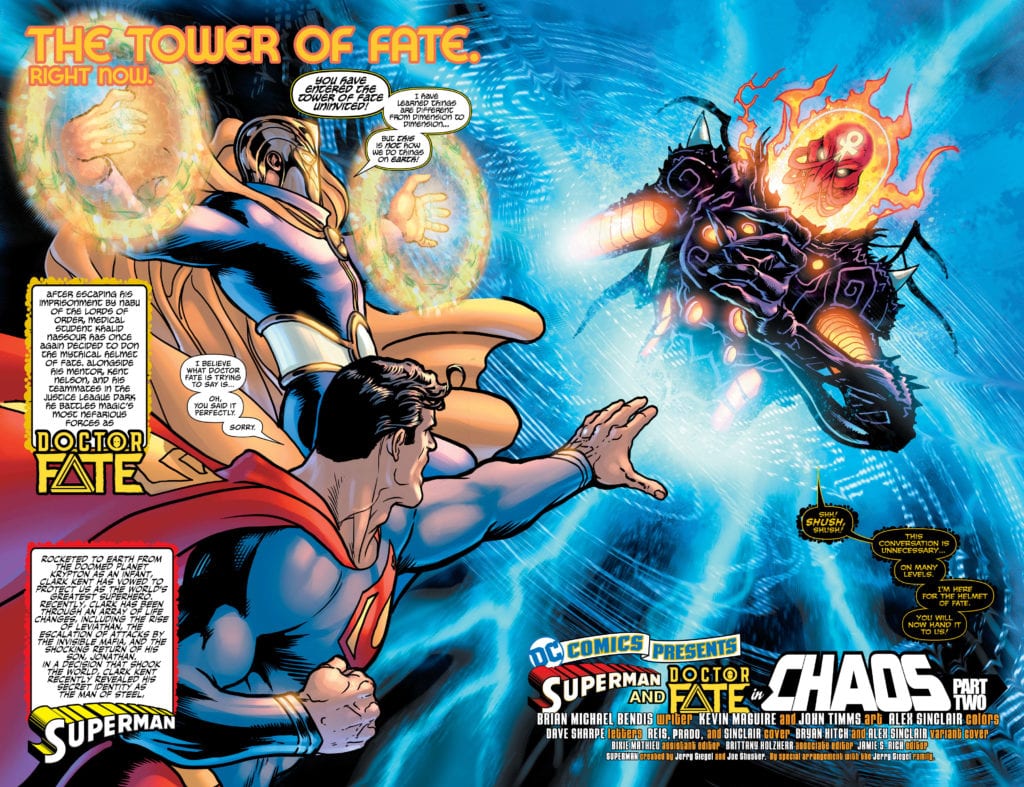
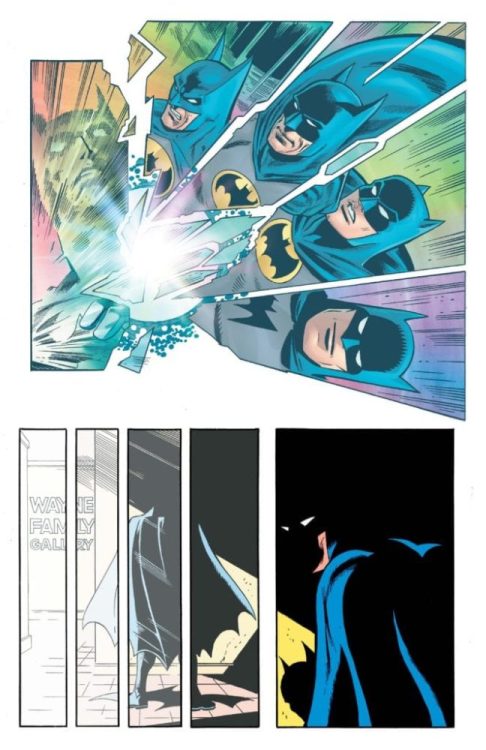
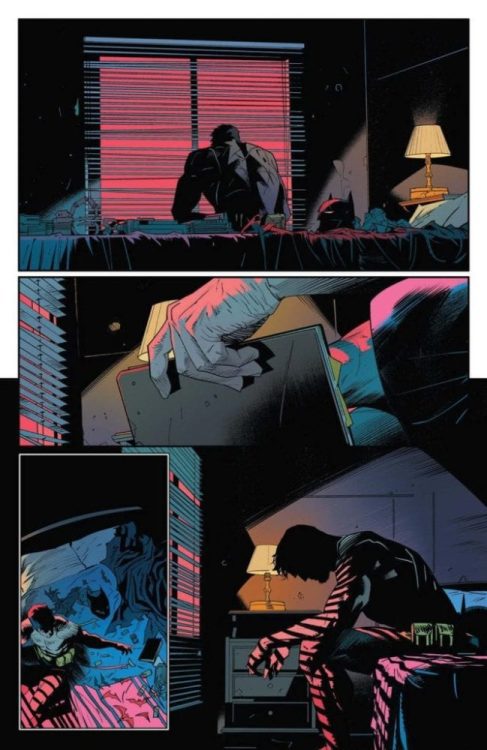
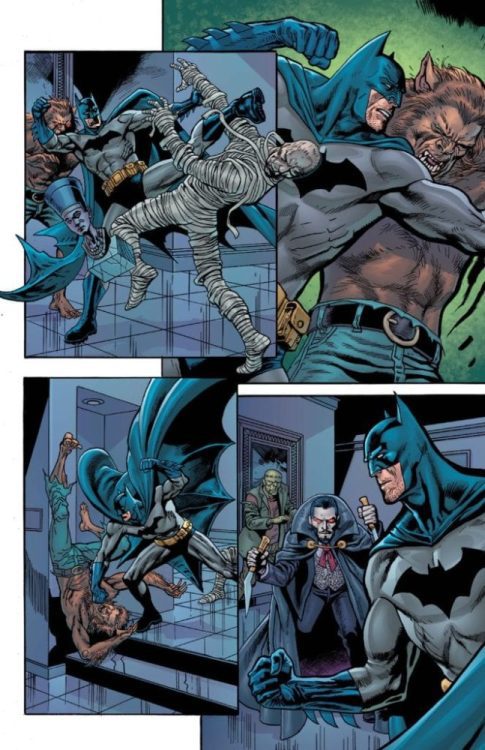
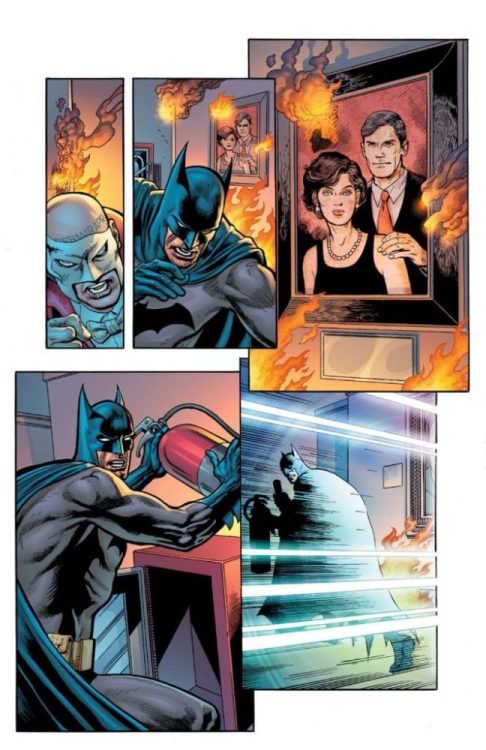
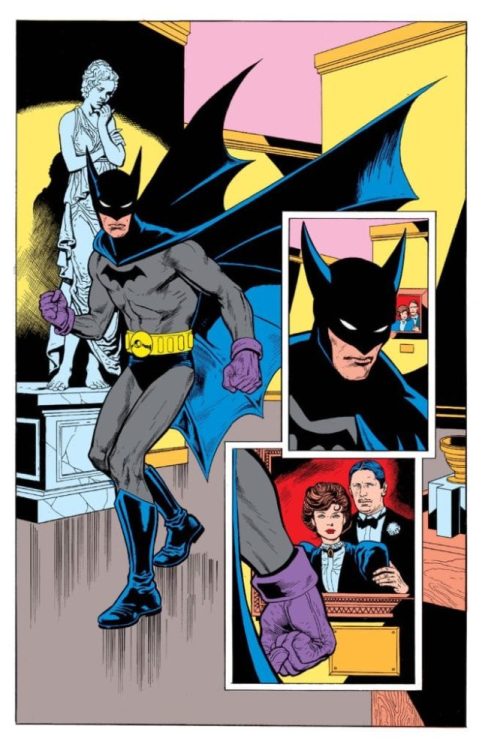
Written by Dan Jurgens with layouts and finished art by Jurgens and Kevin Nowlan, “Generations: Fractured” pits Batman against a would-be gang of museum vandals, led by Calendar Man. As the Dark Knight tries to stop him from torching priceless artifacts, a mysterious flash of light appears to break reality, and Batman finds that everything is different in Gotham, as he’s transported back to 1939!

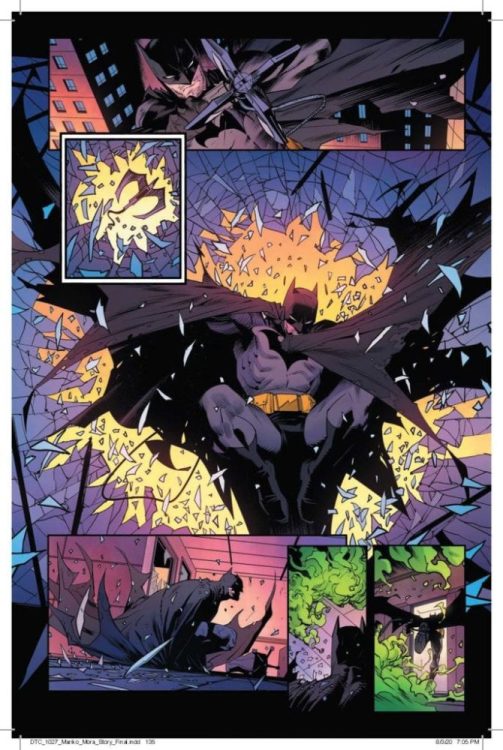
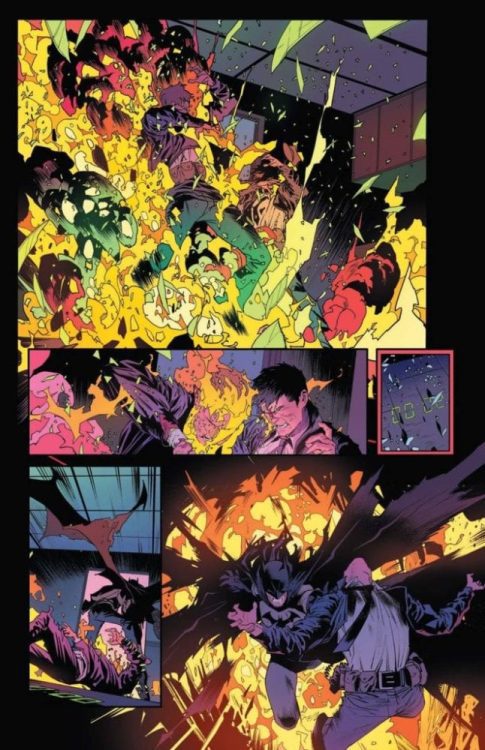
Eisner award-winning writer Mariko Tamaki and artist Dan Mora team up to tell a tie-in story to “The Joker War.” In “A Gift,” The Joker’s attack on Batman and Gotham City leaves a GCPD officer dead. His partner identifies the perpetrator as the Caped Crusader, swearing that he’ll bring him to justice. This tragedy forces Batman to reluctantly open the pages of a mysterious “black casebook,” the contents of which are yet to be known.

Hardcore Batman fans can look forward to some of their favorite writers and artists taking part in this landmark issue, including Greg Rucka/Eduardo Risso, Grant Morrison/Chris Burnham, James Tynion IV/Riley Rossmo, Tom King/Walter Simonson and Scott Snyder/Ivan Reis. They’re also joined by Kelly Sue DeConnick with John Romita Jr. and Klaus Janson, Marv Wolfman/Emanuela Lupacchino/Bill Sienkiewicz, Brian Michael Bendis/David Marquez and more top creators!

Detective Comics #1027 arrives at open and operating comic book stores and participating digital retailers on Tuesday, September 15 with a retail price of $9.99.

Monkeys Fighting Robots Youtube

The Zeppo: BUFFY THE VAMPIRE SLAYER #16 Review

Ring of Fire

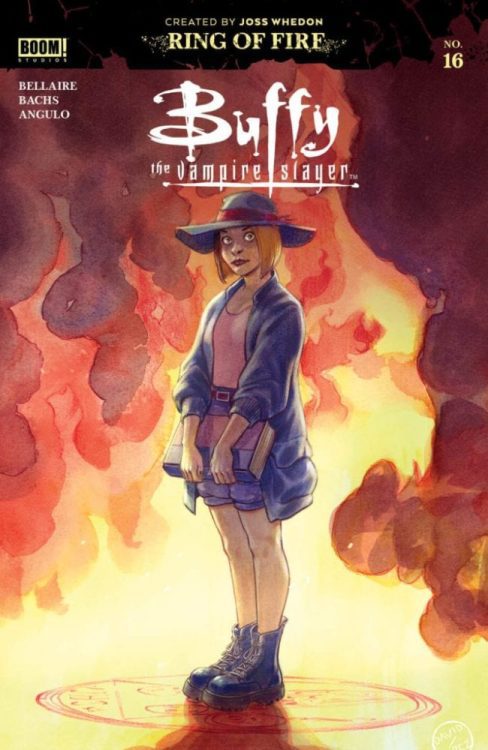
Buffy the Vampire Slayer #16 out this past week from Boom! Studios picks up right where we left off in the previous issue.

spoilers ahead

Following the conclusion of the Hellmouth crossover, the Scooby Gang are on a break, to quote Ross Geller. Willow’s in England, Xander’s ostensibly dead, and Buffy’s feeling quite alone and full of guilt. Writer Jordie Bellaire uses a dream sequence to draw the reader into the mystery.

In his book The Secret Life of the American Musical, Jack Viertel describes the “recess” number, a classic motif of musical theater. The recess number is usually a fun, noisy song designed to reinvigorate the audience in preparation for the next hour or two of the show. In the Buffyverse, the recess number is the dream sequence.

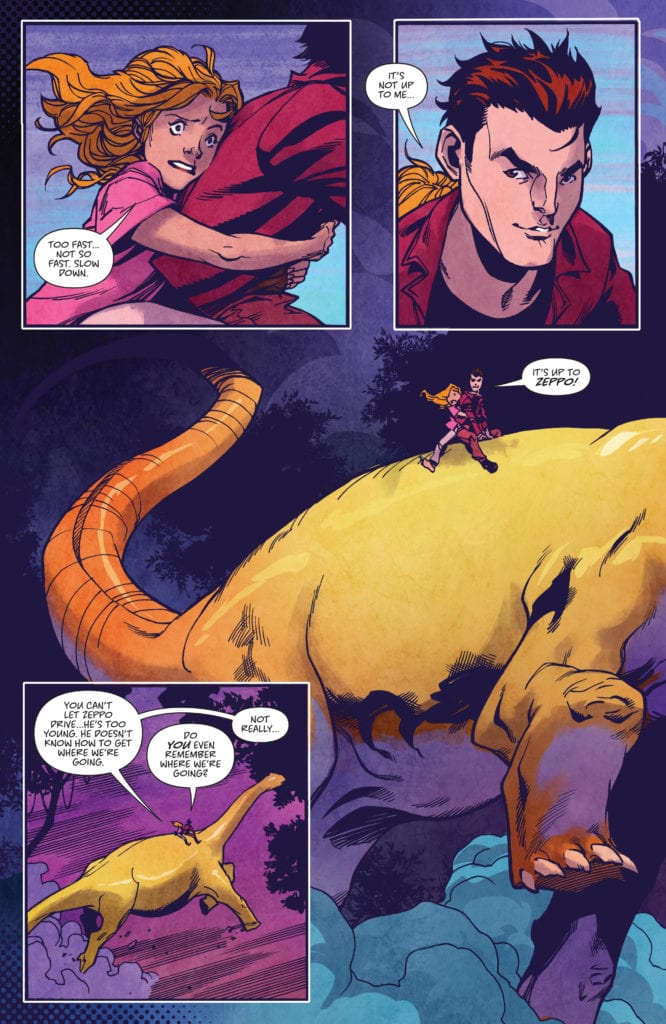
Bellaire used a subtle moment in issue fifteen to foreshadow a character’s return. Cleverly referencing season three, episode thirteen of the TV series, Buffy’s almost-boyfriend, Robin, calls a toy brontosaurus “Zeppo.” This brontosaurus reappears in issue sixteen in Buffy’s bizarre dream in which she and Xander ride a full-size Zeppo.

The Zeppo

Zeppo is what Cordelia calls Xander in the episode of the same name. The name refers to Zeppo Marx, the youngest of the five Marx Brothers. He’s the last-minute stand-in, the one who doesn’t have much to contribute among a group of gifted people.

In this Xander-centric issue, however, he’s not really a Zeppo at all. In fact, he’s a vampire.  It’s a heartbreaking twist the seasoned Buffy fan might have seen coming given that he’d already been halfsies and lost his soul completely in issue twelve.

Another motif adapted from the TV series comes in the form of a tarot card presented in the issue by Ms. Calendar. Xander, in an Angel-esque move, assaults Jenny and sets her house on fire, then fights Buffy and Kendra. He flees, leaving Buffy to discover the now charred tarot card. It’s The Fool. Jenny had been giving herself a reading and picked an upside-down Fool out of the deck right before Xander came knocking.

The Fool

According to The Tarot Guide website, an upside-down Fool portends bad tidings, symbolizing both new beginnings and uncertainty in a current relationship. An apropos card if you’ve been keeping up with the story so far. After all, an evil Xander poses new challenges to the gang’s already tenuous relationship.

Buffy dreams of Xander and Zeppo.

But The Fool’s message hasn’t been revealed to the gang. The card gets passed on to a distraught Giles who may or may not later uncover its meaning.

The issue concludes with Willow’s return to Sunnydale. Buffy, post-Zeppo dream, sought out her witch friend’s guidance and revealed that her ex-girlfriend’s in a coma. While the redhead can definitely help Buffy save Ms. Calendar and restore Xander’s soul, her return will complicate matters. We all know that the forces of evil have nothing on teenage drama.

Buffy the Vampire Slayer #16 employs all the hallmarks of the Buffy TV series, offering fun and an enticing mystery. There’s a new Big Bad in Sunnydale and he’s got Hell(mouth) to pay.

Monkeys Fighting Robots Youtube

Advance Review: INKBLOT #1 Is The Comic We Need Right Now

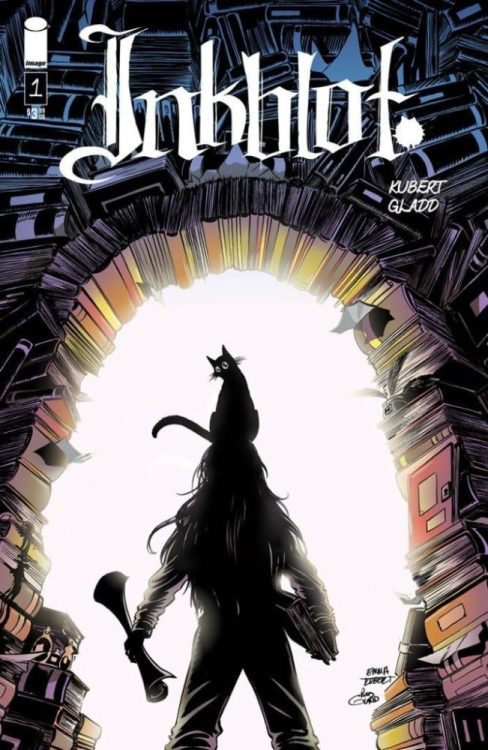
Inkblot #1
Inkblot #1 Credit: Image Comics

Among all of the big releases, the special Walking Dead one-shots and comics that inspired Netflix’s latest blockbuster movie, there are a number of, for want of a better phrase, smaller titles. Comics that slip out into the world with less fuss, waiting to be picked from the shelf. On September 2nd, Image Comics will release Inkblot #1, a fantasy adventure by Emma Kubert and Rusty Gladd. It is an unassuming comic with a simple opening premise that is packed with charm.

In a world of magic and mystery, it only takes one little cat to shake the foundations of the kingdom.

Inkblot #1
Inkblot #1 Credit: Image Comics

World Building

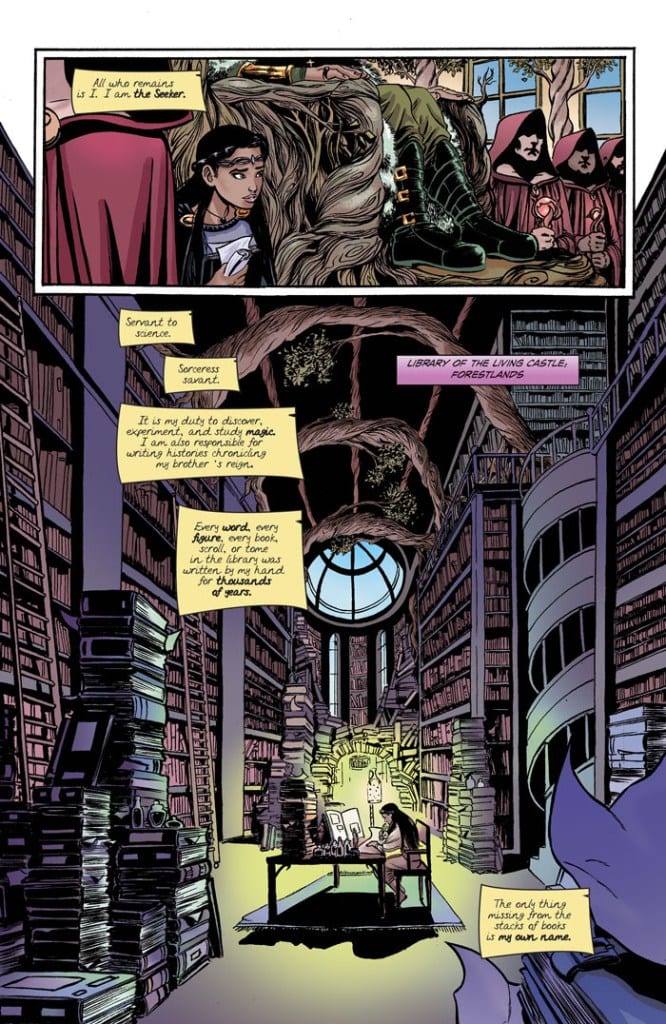
Emma Kubert and Rusty Gladd’s opening to Inkblot is grandiose and majestic. A number of tall thin panels represent an array of ideas and concepts. These are placed over beautiful vistas that engulf the page, bleeding off in every direction. Within the first four pages the creators have displayed a world full of history and wonder. There are already so many avenues that the story can take, even before the reader has been properly introduced to the main character.

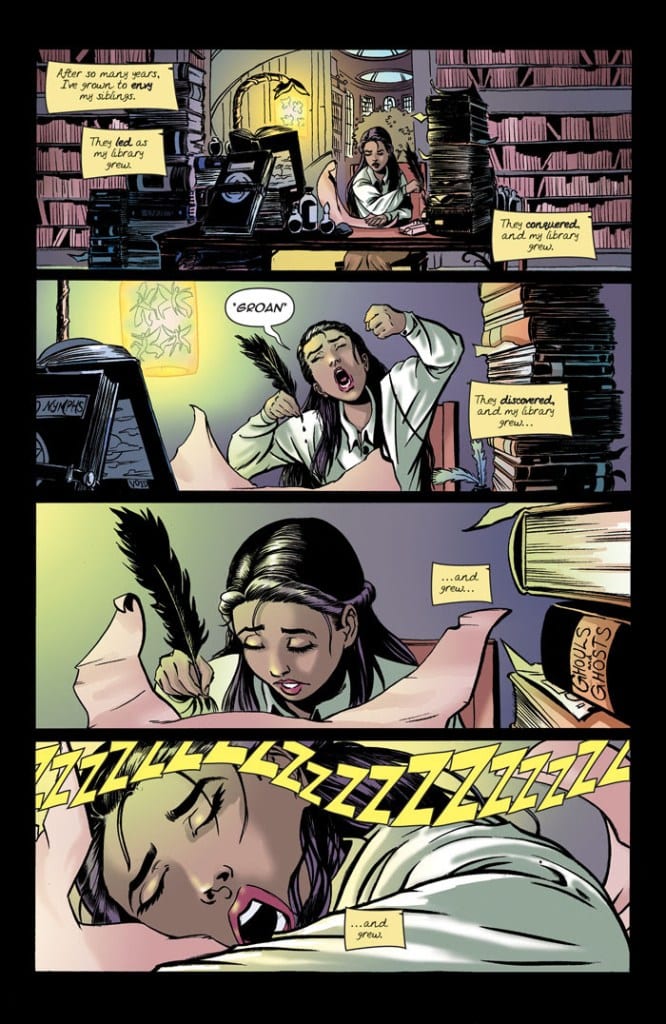
When we finally get to see The Seeker, she is tired and hard at work behind a desk. There is nothing out of the ordinary about her and only the roof of tree roots in the library reveal this to be a fantasy world. The captions that accompany the introduction to the series reiterate The Seekers dedication to her work, making us notice the size of the library which she has created.

The first third of Inkblot is about establishing the world in which The Seeker lives and her role there in. She is like the creators of the series themselves; a custodian of stories and a scribe of ideas. There are elements of Lucien from the Sandman but with the dust blown from his shoulders. Kubert and Gladd make their heroine as relatable as possible, which is no mean feat considering the family history she relates in the opening of her tale. We identify with her immediately and, like the companions in Doctor Who, we will follow her wherever she leads.

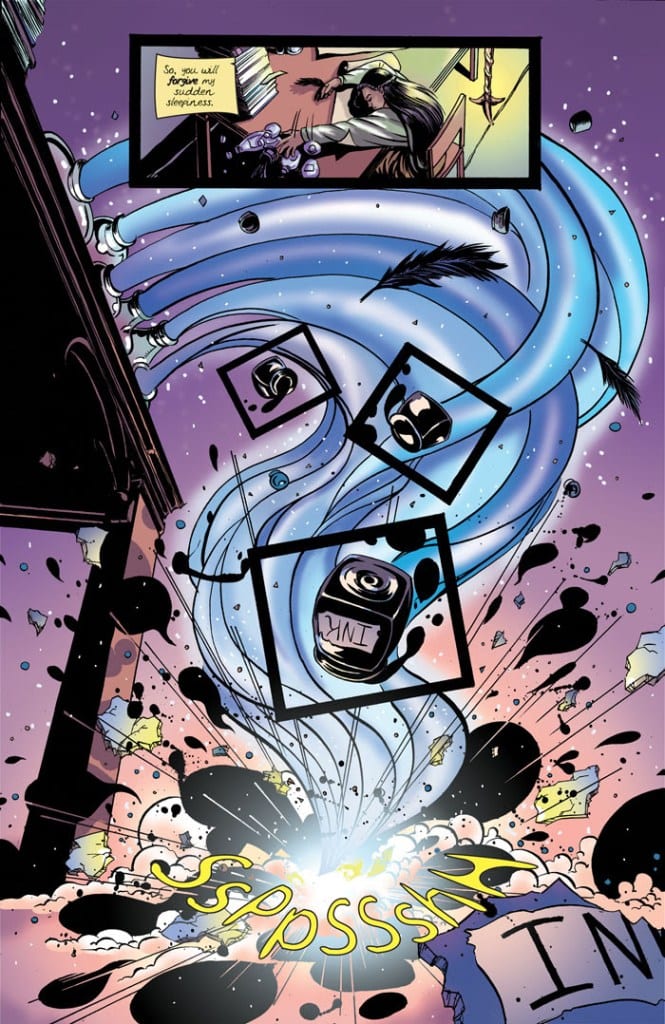
This bond to the character is important so early in the comic because of what happens next. Via an accident, The Seeker creates a strange and magical cat. The cute little black creature becomes the catalyst for adventure and the tool the creators use to drag the Seeker, and the readers, into distant parts of their world.

Inkblot #1 Credit: Image Comics

Creative Collaboration

The beauty of Inkblot is that everything works so wonderfully together. Emma Kubert and Rusty Gladd created it, and are writing and drawing it. It starts with Kubert’s pencils, then to Gladd for inks, back to Kubert for colours before a collaboration on the letters. This synergy between the creators and the process creates a single voice on the page. Each element of the comic comes together perfectly. Everything matches with a singular style so that it feels like it is the work of a single person. The Kubert/Gladd team inject Inkblot with energy and a well of visual quirks only possible by working so closely together.

The artwork is highly detailed with scenery fully rendered to create a sense of location. The design of the backgrounds and habitats is alluring and perfectly set the scene for this fantasy adventure. Comics such as Elfquest and The Sandman have clearly influenced the visuals but Kubert/Gladd give everything a little twist. There are dynamic scenes that burst from the page and intimate moments that resonate peace and calm.

Page after page, Kubert/Gladd reel out a world of wonders and yet their central two characters are straightforward and down to Earth. The Seeker, as mentioned, is not strikingly different in any respect, she could be any of us. The Cat is almost just a black shape, a shadow on the landscape with adorable eyes and mischief in it’s step. The Seeker is partly the reader and partly the creators, with the Cat playing the role of unrestrained imagination.

Inkblot #1
Inkblot #1 Credit: Image Comics

Conclusion

This opening issue of Inkblot reminds me of the first issue of Shutter, released back in 2014. It has a mysterious cat-like figure leading the central character into a world of wonder and discovery. But it also has the same sense of wonder at the world and a cheeky humour that is impossible to ignore. This is a comic that makes you smile.

In fact, I would go as far as saying this is exactly the type of comic we need right now. You can keep your end of the world stories and your obsessions with violent, evil characters. Inkblot is a breath of fresh air. It mixes comedy and adventure in a beautiful setting to create perfect escapism. You will often hear certain comic fans say they want less politics and more fun, well this is it; Inkblot is pure, unadulterated fun. It has fun with the tropes of fantasy tales, fun with page layouts and design, and above all else, the characters have fun that the readers can share.

Inkblot is a surprisingly entertaining and inclusive comic that will steal your heart at a time when the world at large could do with a bit more fun.

Monkeys Fighting Robots Youtube

Review: LEAVE SOMETHING WITCHY — The Manson Story Told Like No Other

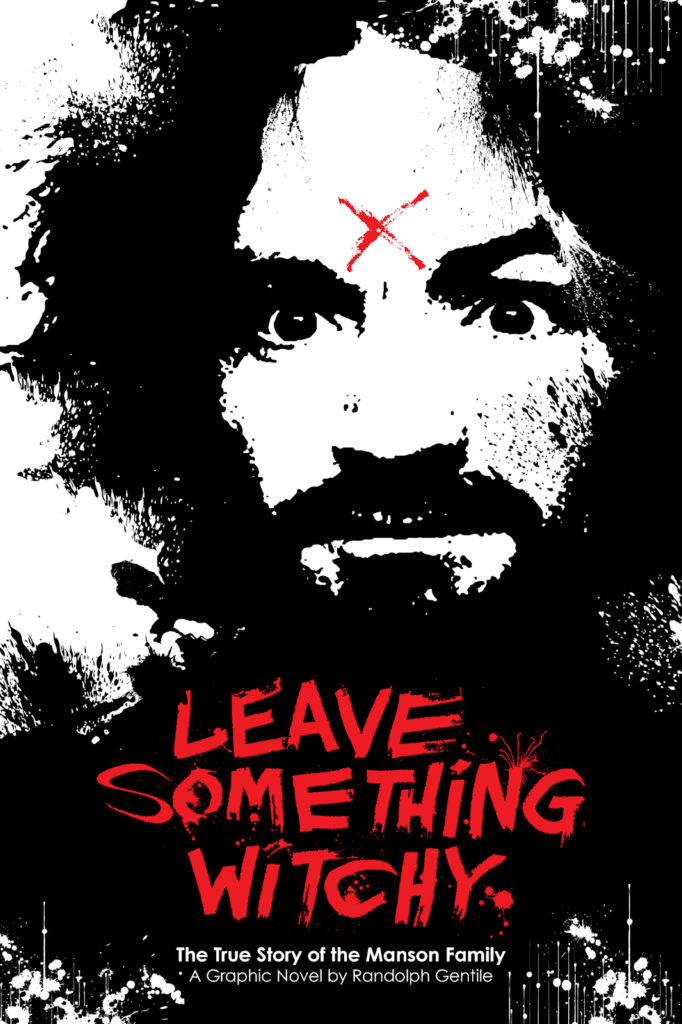
Leave Something Witchy Cover

Leave Something Witchy, published by Lazy Comix, is a graphic novel detailing the story behind the Manson murders. It has a unique art style, is clearly well-researched, and is most certainly enjoyable.

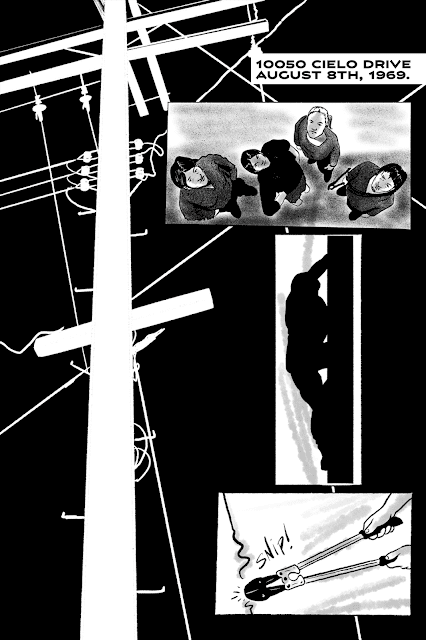
Leave Something Witchy Typical Page

About the book:
Leave Something Witchy depicts the life of Charles Manson and the Manson family very thoroughly, from before they had become a group all the way to their time in prison. The story and art of Randolph Gentile seamlessly work together to portray the horrific events in a new way that is sure to entertain anyone with even a slight interest in true crime.

Leave Something Witchy Story

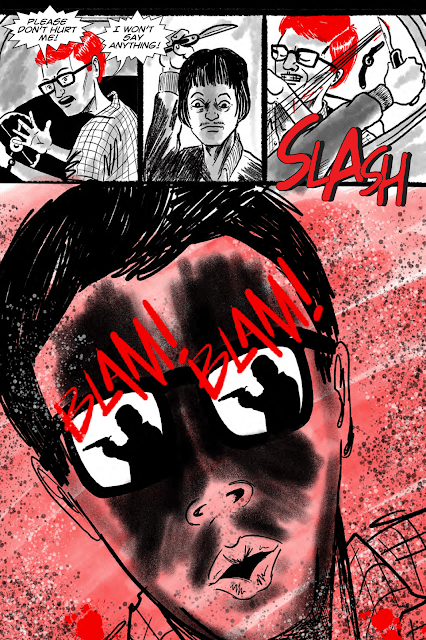
Randolph Gentile begins his telling of the Manson murders in an unusual way: depicting a gruesome murder before jumping backward in time to tell the story from the beginning. It is certainly not a new technique, but it used effectively in Leave Something Witchy by tempting the audience with what they know is to come. Everyone knows at least something about the Manson murders, and it was most likely the violent crimes committed by the family that drew in readers. By showing one of the killings first before starting from the beginning, Gentile gives the reader a taste of what is to come, before jumping back and explaining what events led to the situation. It works phenomenally well and intrigues a reader from very early on.

It is also abundantly clear that Gentile did extensive research while writing Leave Something Witchy. The details of the Manson family are incredibly in-depth, and the graphic novel goes as far as to explain in detail how several members of the family wound up in the group, what happened to several surviving members after they were arrested, and dozens of other facts related to the Manson family. Leave Something Witchy is saturated with information, which simply adds to why the graphic novel is worth reading.

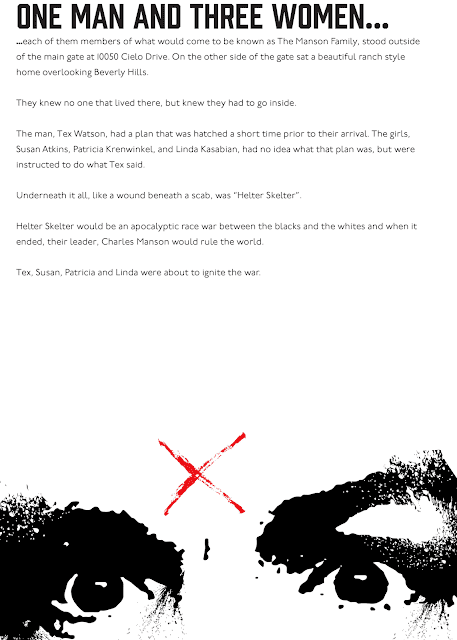
Leave Something Witchy Page with Words

The way that Randolph Gentile is able to fit so much information into the graphic novel is interesting as well. He has pages with nothing besides words on them to relay large chunks of information in a smaller space. While this may at first seem to distract from the feeling of reading a graphic novel, these pages often were used as pleasant scene transitions, and also helped to convey scenes that would have been nothing except for action. These pages save the graphic novel from being dozens and dozens of pages longer than it was, and it is already a lengthy read. By the addition of the pages filled with words, Gentile is able to keep up the pace and excitement of the read, while also fitting in interesting information that he had uncovered.

Art

The art of Leave Something Witchy is distinct and does a great job of working with the story to get information across. The foreword asks the reader to “forgive [Gentile’s] shortcomings as an artist,” but that is rarely, if at all, necessary. There are a few moments where the anatomy of a character is wrong, which does stand out. Still, Gentile’s distinct art style mostly does a fantastic job of telling the Manson story and is a fun change-of-pace from the typical art you would see on comic book store shelves.

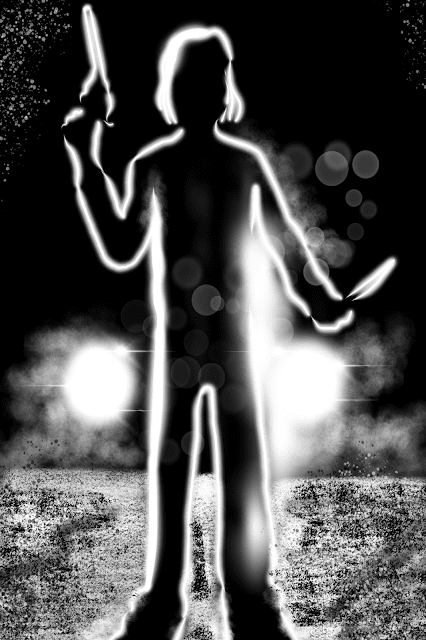
In the foreword of Leave Something Witchy, Randolph Gentile mentions his want to explore with the various tools available to him when working in the digital medium. This is very evident in the graphic novel and is used to create genuinely stunning art in many cases. The mix of various tools provides distinct aesthetics that bring scenes together, and give a variety that is an absolute pleasure to look at.

Use of Different Digital Tools Example

The art improved significantly towards the end of the graphic novel, which Gentile attributes in the foreword to the experience he gained in the long time it took him to compose the story. I believe this change in talent works in Gentile’s favor because the gruesome scenes that occur near the end of the book are done in a style that makes them profoundly striking. The change of art makes these scenes feel more real and important than other events in the book, almost as if signifying the transition of the Manson family from a group that preached about love to one only concerned with bringing death.

Leave Something Witchy Color Example

Most of Leave Something Witchy is composed of only black-and-white imagery, but color is interjected to highlight certain aspects of some scenes. Bright red is used for blood, and the choice of illustrating this with color makes the violence of certain scenes stand out, due to the rest of the book being mostly colorless. Color is also used to produce an effect that illustrates a hippie lifestyle or a drug-induced trip and is sometimes used to establish the tone of a scene when it has a lighter mood than the rest of the book.

The lettering of Leave Something Witchy is not outstanding but does a great job of allowing the story to progress smoothly. The words are mostly colored black but can be a bright red or another color when depicting captions from violent scenes or when emphasizing certain words, like the graphic novel’s title.

Conclusion

Leave Something Witchy is an outstanding telling of the Manson murders, filled with so much information that even those well-versed with the true story are likely to find something they did not know before. Randolph Gentile creates a truly unique experience to learn about the horrific event, and reading through the graphic novel is incredibly enjoyable.

Monkeys Fighting Robots Youtube

Marvel Preview: Did Black Widow Join The Archer-verse In BLACK WIDOW #1 ?

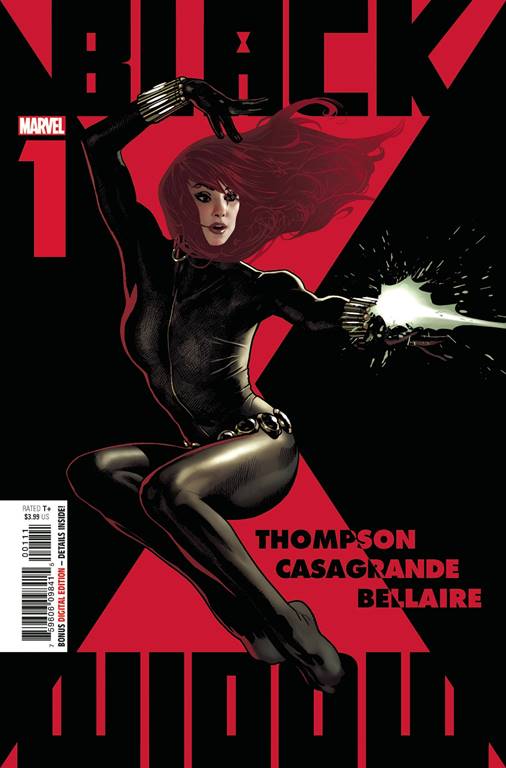
Black Widow #1, Hughes cover

Not much is clear about the current state of the MCU’s Black Widow film, but Marvel Comics is moving full steam ahead with its release of a new series that presumably would have dovetailed with the films original release date. Today, Marvel has released a preview of the first issue’s cover and a trailer for the comic that has a decidedly Archer-esque style to the art.

Written Kelly Thompson with art by Elena Casagrande, the story from the official Marvel press release is light on details. However, the trailer seems to indicate our crimson-haired super spy is pulled out of retirement when her enemies refuse to let her leave the old life behind.

You can check out the cover, watch the trailer and read the official Marvel press release below.

Which are you more excited for: the new Black Widow comic or the pending film? Let us know what you think in the Comments section, and please share this post on social media using the links below.

NATASHA ROMANOFF IS THE BLACK WIDOW NO MORE IN NEW COMIC SERIES!

Take a peek at Kelly Thompson and Elena Casagrande’s Black Widow #1 in a thrilling new trailer!

New York, NY— August 7, 2020 — What happens when Black Widow’s deadliest enemies discover a way to take her out? Find out this September when Eisner-nominated writer Kelly Thompson (Captain Marvel) and rising star artist Elena Casagrande (Catwoman) take the Marvel Universe’s greatest spy on a heartbreaking thrill ride into uncharted territory. Natasha Romanoff’s world is upended when the superspy Avenger finds herself trapped in a mystery that even she can’t solve. Your first clues about the mission that could mark the end of Black Widow await in this top-secret trailer!

“It’s a bold new vision for Black Widow and one I am really hoping people can get excited about,” Thompson told Marvel.com earlier this year. “Our first arc has some of the stuff you would expect in a Black Widow book, but I think twisted in a new way that’s interesting – and where she ends up at the end of this highly personal and life changing story is ALSO interesting!”

Discover all the secrets of Natasha Romanoff’s latest adventure when BLACK WIDOW #1, written by Kelly Thompson with art by Elena Casagrande and colors by Jordie Bellaire, goes on sale this September. Pre-order your copy today online or at your local comic shop! For more information, visit marvel.com.

BLACK WIDOW #1

Written by KELLY THOMPSON

Art by ELENA CASAGRANDE

Colors by JORDIE BELLAIRE

Cover by ADAM HUGHES

Black Widow #1, Hughes cover

Monkeys Fighting Robots Youtube

DC Preview: It’s A Punchline v. Harley Smackdown Rematch In BATMAN #98

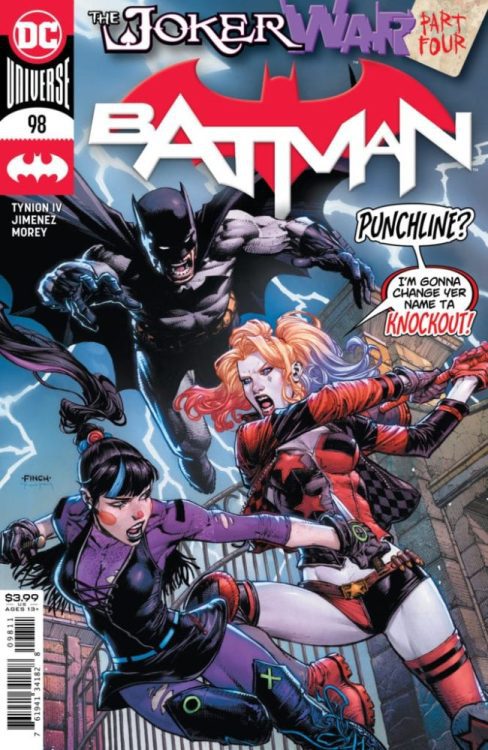
Batman #98, Finch cover

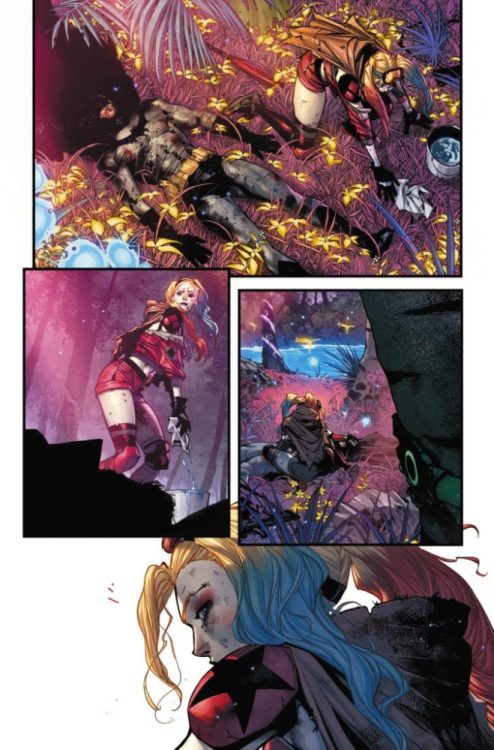
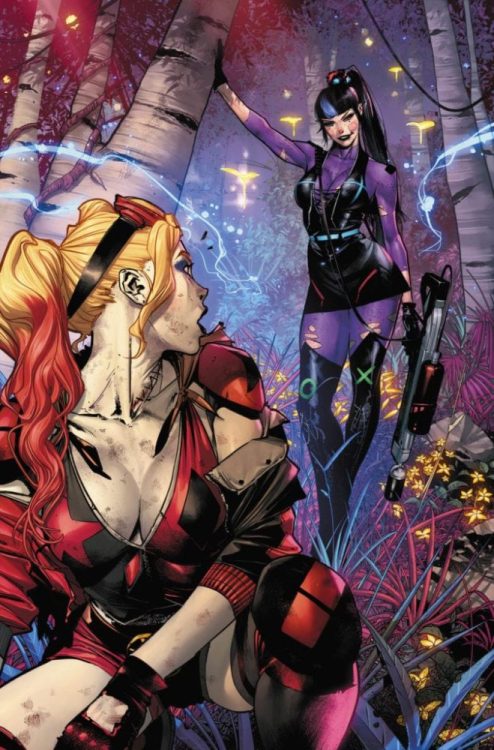
The first time they met, Harley got her ditzy butt handed to her. Now, Punchline is coming to finish Harley off in this DC Comics preview of BATMAN #98, available in shops on September 1st.

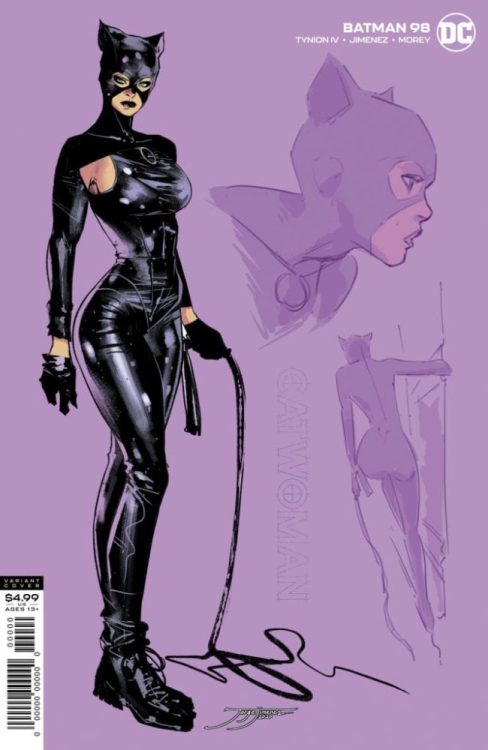
Written by James Tynion IV and drawn by Jorge Jimenez, a battered Harley is nursing Batman back to health after exposure to the latest brand of Joker Toxin when “Punchline returns to finish the job.” Says DC of this latest smackdown between the former and current Joker sidekick: “you can bet Harley will be looking for some serious payback.”

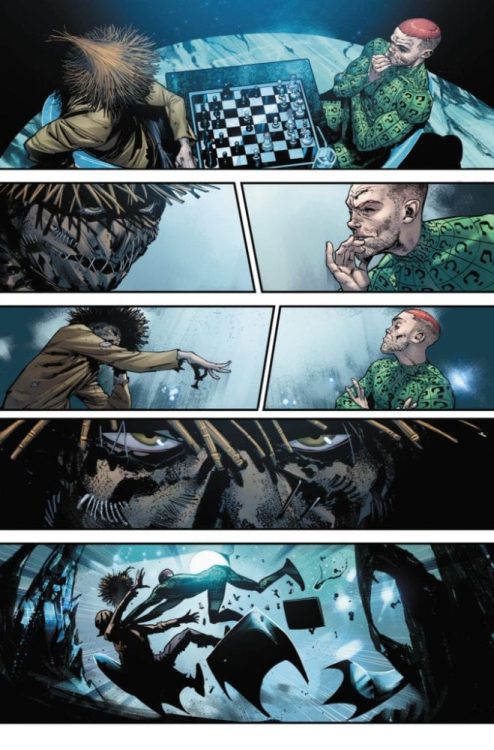
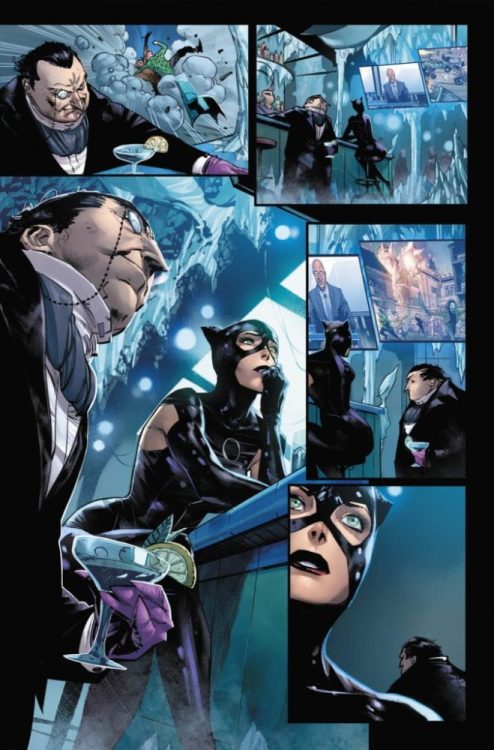
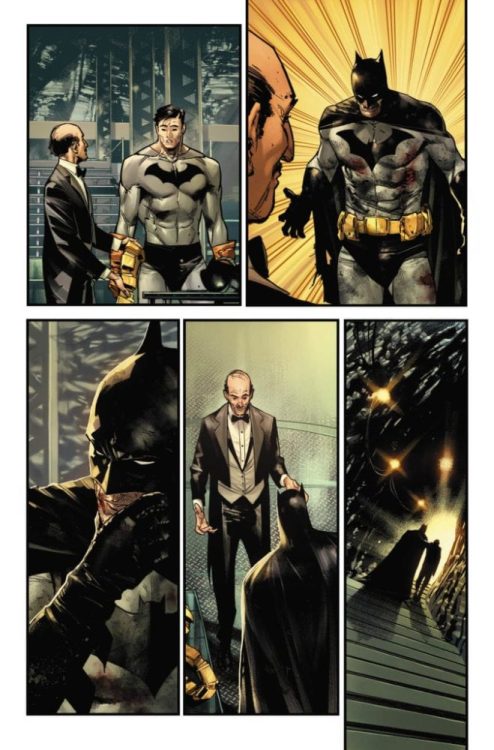
You can check out a few preview pages and read the full DC press release below.

Who’s your favorite Joker sidekick: Punchline or Harley Quinn? Let us know in the Comments section, and please share this post on social media using the links below.

BATMAN #98: PUNCHLINE VS. HARLEY QUINN, ROUND TWO!

In Batman #93, class was definitely in session and Punchline took Harley Quinn to school in a no holds barred throwdown for the ages! Although she was left for dead, reports of Harley’s demise were “greatly exaggerated” (with apologies to Mark Twain) and she’s the only one left to help Batman recover from the effects of the strongest Joker toxin attack yet! And as she helps him overcome his wild hallucinations, Punchline returns to finish the job she started and you can bet Harley will be looking for some serious payback. Here’s a preview of Batman #98, on sale Tuesday, September 1!

“The Joker War” part four of six! Batman is at his most vulnerable following a massive dose of an experimental new Joker toxin. With the Dark Knight haunted by demons and visions, it’s up to Harley Quinn to protect him while he recovers—because Punchline is on her way!

BATMAN #98

Written by James Tynion IV

Art by Jorge Jimenez

Main Cover by David Finch

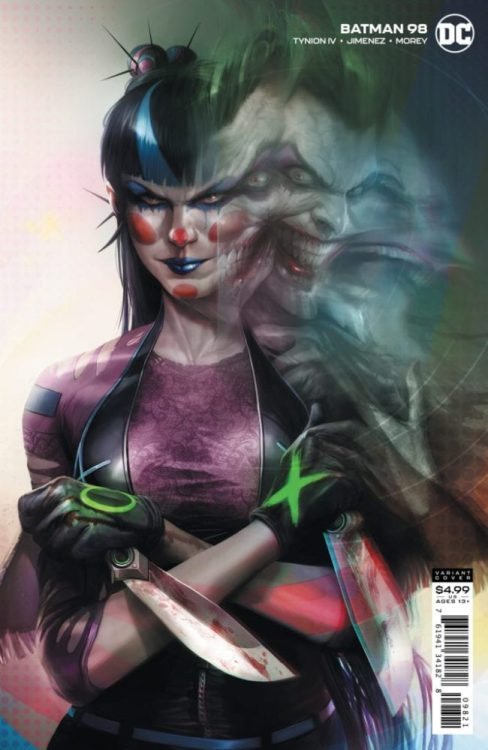
Card stock variant cover by Francesco Mattina

1:25 Catwoman variant cover by Jorge Jimenez

On Sale Tuesday, September 1, 2020

$3.99/32 Pages

$4.99 card stock variant covers

Monkeys Fighting Robots Youtube