Ethan Hawke and John Travolta seem to be having a blast in this new trailer for Ti West’s In a Valley of Violence. And on top of that, Travolta looks to have actual human skin in this film in lieu of that weird wax sheen he’s been rocking for a long time.
Here’s the trailer:
And the synopsis, which also doesn’t come out and tell us what the trailer kinda does… the dog dies. Not sure I can handle that:
A mysterious stranger and a random act of violence drag a town of misfits and nitwits into the bloody crosshairs of revenge.
In a Valley of Violence debuted at SXSW this past March, and was met with pretty solid word of mouth. Travolta might… might… be in the middle of an unlikely career renaissance, and the always steady brilliance of Ethan Hawke is enough to sell me on the film. Not to mention it’s a Western. We need more Westerns.
Still, the inevitable dog murder is already upsetting me.
In a Valley of Violence is set for an October 21 release.
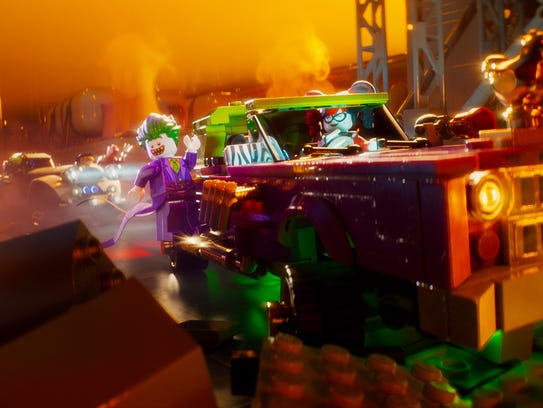
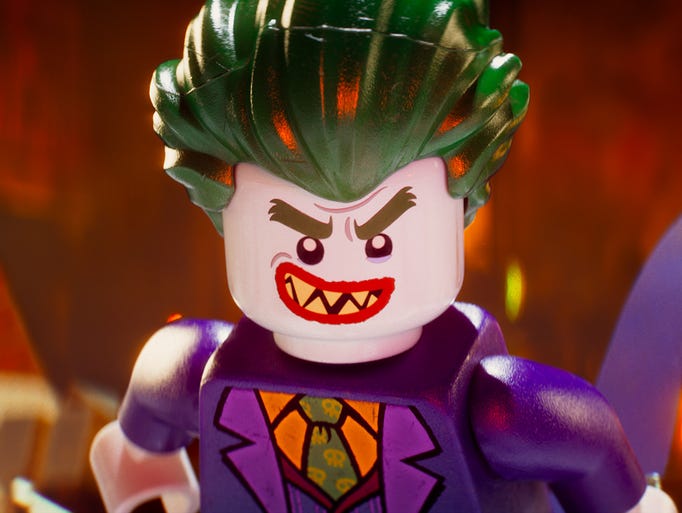
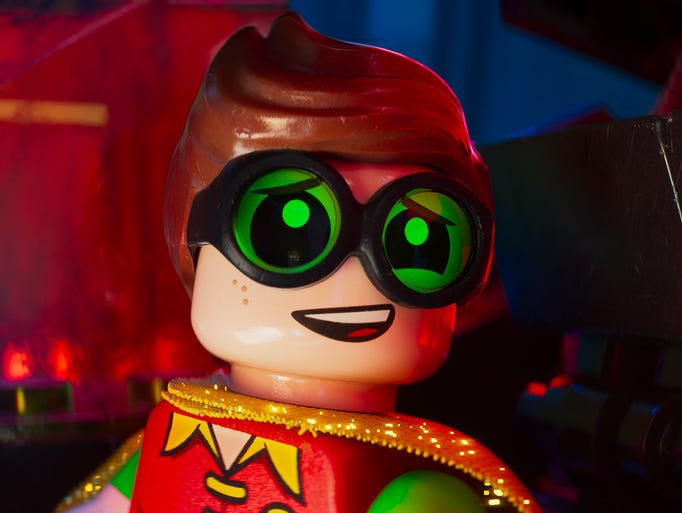
USA Today recently dropped some exclusive images from next year’s Lego Batman movie, giving us looks at The Joker, Harley Quinn, and Robin.
Along with these new photos, Warner Bros. released a brand new promo for the film, via the JoBlo Movie Trailers Youtube channel, promoting its appearance at this year’s San Diego Comic-Con International.
https://www.youtube.com/watch?v=kb77fWGy95c
“In the irreverent spirit of fun that made “The LEGO® Movie” a worldwide phenomenon, the self-described leading man of that ensemble – LEGO Batman – stars in his own big-screen adventure: “The LEGO® Batman Movie.” But there are big changes brewing in Gotham, and if he wants to save the city from The Joker’s hostile takeover, Batman may have to drop the lone vigilante thing, try to work with others and maybe, just maybe, learn to lighten up.”
The Lego Batman Movie hits theaters on February 10, 2017.
With the DC Universe experiencing a reboot, new trouble was bound to show itself. When the danger gets too overwhelming for Superman or Aquaman alone, the legendary Justice League is called in to take care of business.
This first issue sets up the level of chaos to expect in this series. It also introduces the first villain they will fight, the Kindred. It was an intense issue, and these are the top five moments to come out of it.
Wonder Woman steals the number one spot for this issue. In the first few pages of the issue she comes crashing into a war zone to stop an invading army. Tearing apart their forces and pushing them back, she stands over her defeated foes and lets her know how much she is not pleased with their attempts to overpower innocents by saying, “Now I am angry.” It’s intense and gets you excited for the rest of the issue. This why this scene took the number one spot.
What were some of your favorite scenes from Justice League #1? Leave your comments below.
If you didn’t already know, Disney XD is coming out with a brand new Ducktales reboot cartoon in 2017, and the show will have somewhat of a presence at this year’s San Diego Comic-Con International.
A new piece of art from the upcoming cartoon was released online, giving us a cool look at Donald, Huey, Dewey, and Louie in the shape of Scrooge McDuck.
The new show has a talented team behind it, including such names as Matt Youngberg (Ben 10: Omniverse, Teen Titans), and Sean Jimenez (Gravity Falls, The Iron Giant).
Ducktales will hit Disney XD in 2017, and is likely to have footage premiered at SDCC 2016.
After fleeing a monster-infested underground base, Fred, Daphne, Velma, Shaggy and Scooby stumble upon a desert ghost town where they hope to catch their breath. But when night falls, they learn it’s not a ghost town after all—and the terrors that show up like to bite! Scooby Snack is about to take on a whole new meaning.
Writing
The story continues to move at a snail’s pace. This issue begins with the gang having made their way out of the compound, and leading the readers to think they have to fill in the blank themselves. Then the issue issues does a flashback and shows everything in so much detail that there’s absolutely nothing to wonder about. Just as it seems there was some more advanced movement with the plot, it remains going as slow as possible.
So far, the team has managed to get out of the compound and have a made a supply run. They barely have a grasp on the new situation (despite talking about it constantly through the entire issue) and Velma keeps mentioning The Four, the higher ups who put the entire plan into motion. At the rate they are going it will take twenty more issues just to defeat the first member of this mysterious quartet. Writer Keith Giffen and scripter J.M. Dematteris really need to take a few leaps forward and stop pacing things so slowly.
Artwork
It’s probably a moot point to keep pointing out the shiny, chapstick covered lips of all the characters, but it’s still frustrating to look at it in every panel. The creature designs are good enough to make up for it. Still, artist Howard Porter probably should have drawn Fred looking a bit more damaged after he survives a monster attack. A wrapped head and two bandages on the arm? He’s supposed to look like he is clinging to life not like he just slipped on some ice going to get his mail.
Conclusion
This series has so much potential but keeps dragging its feet. It’s supposed to be directed at an older audience, but it keeps telling a story that needs constant explanation. It’s as if the creators aren’t sure their readers will be able to understand what is happening. We understand, and frankly we’re a bit annoyed that it’s taking so long for more to happen.
Awhile back, it was revealed that Fathom Events would be holding screenings of the R rated Batman: The Killing Joke in theaters all across the country. Monday, July 25 was the only day it would be screened, so tickets went on high demand. Eventually, they added 300 theaters from all around the nation, giving even more fans the chance to see Killing Joke done on the big screen. Now, Fathom Events is adding a second night of screenings, which will take place on Tuesday, July 26.
Along with the movie, fans attending the screening will get to see a special introduction by Mark Hamill, along with an exclusive documentary about his passion for this project.
“Based on the acclaimed DC graphic novel of the same name, Batman: The Killing Joke takes a journey into the dark psyche of the Clown Prince of Crime – from his humble beginnings as a struggling comedian to his fateful encounter with Batman that changes both of their lives forever. Years later, and now escaped from Arkham Asylum, The Joker devises a plan to prove that one bad day can make anyone as insane as he is – setting his sights on Commissioner Gordon. It’s up to the Dark Knight to put a stop to The Joker’s latest scheme and save one of Gotham City’s finest. Following a gripping prologue introducing Barbara Gordon’s heroic adventures alongside Batman as Batgirl, Batman: The Killing Joke stays true to the authentic tale that has held fans’ imaginations for nearly three decades – spotlighting the birth of a Super-Villain, the fortitude of a Super Hero and the punchline that will leave you speechless.”
Are you planning to see the film in theaters? Let us know in the comment section of this article, down below.
Have you ever wondered how Captain America and Bucky met? Have you ever thought about the origins of what we now refer to as the “Marvel Universe?” Prepare yourselves, True Believers! I, the Timely Comics Watchamacallit, though unable to interfere in Golden Age Marvel events, have watched diligently. I watched as Timely Comics was born in four fantastic colours in 1939. I watched heroes like the original Human Torch and the Sub-Mariner battle mobster after inadequate mobster. I watched the first Marvel hero-on-hero battle. I watched mobsters and con-men cede their roles as Timely villains to foreign leaders like Hitler, Mussolini, and Tojo. And I watched as these propagandistic issues that encouraged young men to enlist and children to spy on fifth columnists gave way to a renewed sense of innocence that paved the way for funny animal and romance cartoons.
Reviewing the contents of Marvel Comics #1, if not for the inconsistent art and the corny dialogue, you might think you’re looking at a Silver or Bronze Age comic for all the familiar names: the Human Torch, Namor, Ka-Zar, and the Angel. But, although Golden Age Namor is simply a younger version of the feathered fish-man we landlubbers see today, the Human Torch, the Angel, and Ka-Zar are not.
Golden Age Marvel – The Original Human Torch
The misleadingly named Human Torch, brainchild of Carl Burgos, is actually an android who eventually names himself “Jim Hammond.” Created by Professor Phineas Horton, Jim becomes a police officer who routinely goes above and beyond the call of duty. As a template for a superhero, the original Human Torch is an odd one, though typical of Golden Age Marvel heroes. Jim is brutal in his meting out of justice: on more than one occasion he uses his flaming body to scald criminals to death or burn them alive. In fact, though later stories featuring the Golden Age Human Torch sought to amend this chapter in his life, the android actually murders his creator in a Frankenstein’s monster type rage.
Golden Age Marvel – The Sub-Mariner
Bill Everett‘s Namor similarly starts off by showing us his dark side in Marvel Comics #1. Namor happens upon two salvage divers, and, initially mistaking them for robots, severs their oxygen lines, stabs one diver, and crushes the helmet of the other. Both men die at the undersea prince’s hands. When the divers’ shipmates investigate, Namor destroys their ship.
When Namor brings the two dead divers back to his mother Fen, she tells Namor that he is the offspring of a union between herself and Commander Leonard McKenzie, the man in charge of an American scientific vessel named The Oracle. As Namor’s mother describes, during the course of the ship’s scientific investigations, the ship’s crew inadvertently destroyed the majority of their undersea kingdom. So Namor’s mother commands him to wage a war on all “earth-men” to wreak their bloody vengeance. Namor, along with his cousin Dorma, attacks a lighthouse and high-jacks a plane, tossing the pilot out of the aircraft.
Golden Age Marvel – Adventures of Ka-Zar the Great
Golden Age Ka-Zar’s first appearance in Marvel Comics #1 shows a character that readers are more likely to sympathize with. Drawn and illustrated by Ben Thompson and based on the character created by untraced pseudonym Bob Byrd, David Rand is a three-year old boy en route to Cairo with his parents John and Constance Rand when their plane goes down in the Belgian Congo. Constance eventually succumbs to a tropical fever and dies. And, after a tree falls on his father’s head, John tells David the jungle is their home.
David learns how to communicate with animals, and, after rescuing a lion named Zar from a pit of quicksand, he and the lion become respectful comrades. Shortly after the lion’s rescue, David and his father find a group of men sifting for gold and gems in a nearby river. The group of men is led by Paul De Kraft.
John Rand and De Kraft get in an argument. David stops De Kraft from shooting John in the back by shooting De Kraft in the arm with an arrow. But De Kraft, having found emeralds in the stream, vows to take care of John and David. Later, David finds his father wounded by gunfire. But before De Kraft is able to murder father and son, Zar the lion scares De Kraft away. John Rand is too far gone and dies of his wounds. But, Zar, taking pity on the jungle orphan, invites David to share his cave. And, in the language of the animals Zar renames David “Ka-Zar,” meaning “brother of Zar”.
Golden Age Marvel – The Angel
Now for Paul Gustavson‘s creation, the Golden Age Angel. Compared to Namor, the Human Torch, and Ka-Zar, The Angel is likely the least similar to his Silver Age counterpart. Clad in red, white, and blue (later red, gold, and blue), The Angel is Dr. Thomas Halloway, a renowned surgeon who moonlights as a crime-fighter. With no wings to speak of, The Angel leaves a permanent silhouette at the scenes of his capers as a reminder to keep on the up and up.
The Angel’s first effort to clean up the streets results in the deaths of six mobsters (three murdered by The Angel, two who killed each other, and one who fell out a window while trying to escape The Angel’s special brand of justice, i.e. no due process). It’s revealed that the mobsters’ deaths were orchestrated by a secret seventh mobster (interested in 100% of his criminal septet’s take rather than the paltry 14% he agreed to) who is clumsily revealed in a couple of very wordy panels at the end of the story. This practice of wrapping a story up using boring and wordy exposition was, unfortunately, very common practice in the Golden Age.
Golden Age Marvel – And the Rest…
Marvel Comics #1 also featured The Masked Raider (a Lone Ranger type who wears a black bandana over his face and seeks to bring law and order to USA’s old west, created by Al Anders), a relatively racist and, thankfully, self-contained knock-off of the “Ka-Zar” formula named “Jungle Terror” by Arthur Pinajian (pseudonym Tohm Dixon), and, a staple of Golden Age comicbooks, the inevitable prose story (this one by Ray Gill concerning auto racing is entitled “Burning Rubber”).
Golden Age Marvel – Just the Beginning
These classic characters, some more memorable than others, helped shape the Timely Comics model. The heroes-cum-executioners of the Golden Age exhibit the same level of moral aversion to mobsters’ misdeeds as Spider-Man; it’s just their methods that differ.
Over the next few years, Timely’s publisher Martin Goodman pushed his staff to come up with super-powered characters that would rival the “Distinguished Competition‘s,” then operating under two corporate entities, National Allied Publications and Detective Comics, Inc. By the time Marvel Comics #1 hit the stands, National and DC, which eventually merged in 1946, had already introduced what became their two heaviest hitters, Superman (June, 1938) and Batman (May, 1939). As the years went by, artists and writers with names like Joe Simon, Jack Kirby, Stan Lee, and many others, including the ones mentioned above, added their own marks to the Timely Comics brand, creating characters that would stick around for decades … and some who didn’t.
IDW Publishing is commemorating Star Trek‘s 50th anniversary with Star Trek: Boldly Go, a new ongoing series hitting shelves this October. Boldly Go will follow the events of Star Trek: Beyond, the franchise’s latest film (hitting theaters this weekend).
The series reunites writer Mike Johnson with artist Tony Shasteen, a “fan-favorite Trek team.”
Star Trek editor Sarah Gaydos:
“What better way to celebrate the 50th anniversary of STAR TREK? And what better team to do it with? Mike and Tony are poised to take the series in such an exciting direction. I can’t wait to introduce the world to these new characters… as well as some interesting friends and foes from the past.”
Chronicling the adventures of Captain Kirk and his iconic crew, a danger unlike anything the Federation has faced before threatens our heroes as they explore new worlds and encounter new species. All that plus brand-new uniforms for the crew!
Boldly Go replaces the current Trek comic, which will end at issue 60.
So for those who don’t know, there is a group of creators on Youtube who create Abridged series. An Abridged series is when an episode of a cartoon show, typically an anime, is shortened down and redubbed for comedic effect.
My own experience in Abridged entertainment began with Youtuber Lanipator Yu Yu Hakusho Abridged. This is a series I highly recommend if you have an interest in checking this kind of series out.
Ironically, Lanipator and a few other compatriots have their own Youtube Channel, Team Four Star(TFS). One of the main works is the abridgment of the famous anime, Dragon Ball Z. Titled Dragon Ball Z Abridged, or DBZA for short, this is one of the best examples of an abridged series out there.
One of the unusual elements of such a series is the room these creators have to completely remake an established character. Though I am a proud anime fan, there is a real problem with characters coming off as wooden and predictable. That and they sometimes say more than they need to say to make their point. Usually this comes with translating the original Japanese scripts and trying to keep the English dubbed in perfect unison.
Because a whole new script is written for these episodes, this problem is completely avoided. Furthermore, characters have the chance to break away from tropes and stereotypes in interesting ways.
So without further ado, I present my favorite characters from DBZA:
10. Maron
Maron is a throw away character during the Garlic, Jr. Saga and the first part of the greater Cell Saga. For the most part she replaces Bulma as the eye candy of the group once Bulma’s took on a greater in the team’s efforts to stop the androids.
That and I think Toryama didn’t wan’t Bulma to give young Trunks a bad role model.
Regardless, in the original series, Maron is pretty lame. She is the epitome of the dumb blonde, sans the blonde hair.
Which is why I love her in this form. Though is in only one episode, her character enjoys a full arc. You know she’s hiding a lot, and it isn’t until the end you find out just how much she is hiding. Pun partially intended.
The fact she’s putting on an act, and why she’s doing it makes her character memorable, and it makes you look forward to re-watching the episode again.
Having in a few more episodes of the series would’ve been fantastic. But when you think about it, her brief cameo somewhat captures her character’s treatment in the original series. Though it is nice to see her character having more importance than being mere eye candy.
Source: Gatnne/Deviantart
9. King Kai
King Kai’s role in the DBZ and DBZA universe is bar none. Being the first celestial tutor to Goku, and his guide through much of the series, Kai holds a unique place in this eclectic cast.
And seeing him lose his sanity because of the people around him is hilarious. Of course his original counterpart is not lacking in jokes, but seeing the DBZA version suffer from complete idiots is a treat.
Particularly with his protege, Goku, who gives Kai many reasons to scream for any reason. This is gives Kai a look into the limitations he has when teaching his wards. He still cares for his duties and the protection of his universe. But it doesn’t mean he enjoys it. Especially when his best student is a complete idiot.
I still feel his commentaries during Goku’s and Freeza’s fight is among the highlights of the whole second season. And it gives that season a unique vibe from the first one.
Source: elfaceitoso/deviantart
8. Frieza
Wow, this character underwent an incredible change in DBZA. Frieza is in the DBZ a very typical villain. Bloodthirsty, merciless, backstabbing, the works.
Retaining all these traits, Team Four Star added another facet that fits Frieza perfectly, managerial. Despite being a space emperor who kills entire planets on a whim, this guy cannot catch a break when dealing with his staff. And his reactions are fantastic.
The anguish from hearing one bad news to the other, suffering the limitless absentmindedness of Goku, and the constant speeches by Vegeta made Frieza a real joy to watch. And in all honesty, he isn’t a character I enjoy in the original series.
Nothing against the V.O. actors in their work, but the character was never that interesting. Here we see a guy trying to achieve immortality, and losing his marbles because Murphy’s Law is running rampant.
I also love how he keeps track of certain lines made in heroic speeches. That makes his presence the more interesting, and slightly terrifying when you think about it. And by the time he’s killed off the show, I was sad to see him go. (Which makes me wish to see TFS do their own take on Resurrection of F when they get the chance.)
source: bardocksonic
7. Goku
First, I want to give kudos to Team Four Star for using Goku’s proper name from the manga, Son-Goku. I know it isn’t a big change in the character, but it shows the team’s dedication to both the manga and anime. Which I respect, greatly.
Second, how they crafted Goku from a valiant hero, into a complete klutz is pure genius. Goku suffers a bit from naivete in the original series. But in DBZA he just has no sense of how the world works.
The man thought Chi-Chi had cinnabuns underneath her shirt when she was pregnant with Gohan. I’m not joking, this was an actual joke.
Despite being a savant in battle, Goku is almost lost in every other aspect in life. And seeing how his relationship with Gohan grows more and more twisted is a real treat. This is in no small part to how Piccolo, a one time enemy of Goku, pretty much becomes Gohan’s substitute father. Essentially arguing Goku’s inability to rise a child.
A fact that DBZA reminds you of throughout the series without reservation.
I also love how Goku is eager to punch something, disregarding the total danger to his health and well being.
Seeing this deconstruction of his character never fails to make me smile.
6. Super Kami Guru
This guy, this guy truly embodies the spirit of DBZA. A complete twist on the original character, Super Kami Guru goes from being a kind, caring, compassionate leader of Planet Namek to a near uninterested tyrant.
The way he treats Nail were among the best scenes of the entire second season. Guru’s complete misuse of the dragonballs to create a mail service and wanting a big plasma screen TV cause my sides to hurt from laughing so hard.
Do yourself a favor and Google ‘Guru Batman Reference’; you’ll thank me later.
And hearing how he orchestrated a complete genocide to cover his devouring of Namek’s fresh water is…magical. Which is weird considering the annihilation of an entire people.
Just seeing how little he cares for his fellow Namekians adds to the humor of the situation, as everyone else is trying to save the planet from eventual destruction. All the while he just wants to watch TV in style.
And hearing him detested by global warming and natural light are a scream. Despite the hilarity of his departure, he was another character I was sad to see go away.
source: maffo1989/deviantart
5. Krillin
At the risk of incurring troll hate, I make this statement. I…never…liked Krillin. Honestly, it wasn’t until the proper Cell Saga I started liking this guy.
Until DBZA. The ‘Krillin Gets Owned’ counter was the first thing that made me love this series. And the constant reminder of Krillin’s growing uselessness actually adds to his character. Despite being among the weakest of the Z-Fighters, he still seems to offer the most assistance.
But it doesn’t stop people from giving him trouble on how weak and useless he is in battle. Piccolo aptly puts it when he refers to Krillin as being a meat shield for the rest of the group.
Ironic, as Krillin survives that battle and Piccolo didn’t…hmm…ah well. I digress.
Though Krillin still retains his comedic role in the series, the humor in DBZA fits his character much better than in the original series, in my opinion. It’s not just him acting over the top for the sake of the joke. And his reactions to the situations he’s forced into make sense.
I mean, who wouldn’t freak out when confronting insanely powerful beings from other planets?
And seeing his frenemy relationship with Vegeta develop gives all three seasons a nice touch. This is on top of fact that despite his supposed weakness, Krillin is probably the bravest of the Z-Fighters, given his willingness to enter the fray, regardless of his weaknesses. Which TFS subtly bring up during the series.
source: khmaivietboi/devianart
4. Mr. Popo
Wow…what they did to this guy…just wow.
In the original series, Mr. Popo is a sweet caring attendant to the Guardian on earth. Always eager to help aid in Earth’s protection.
But this guy…this guy is just disturbing!
DBZA‘s Mr. Popo has more issues than a Tennessee William’s play, and pretty much has everyone in the series scared beyond words, including Goku (and members of TFS!)
Sexist, racist, sadistic, selfish, arrogant, and apathetic to a Tee, he is probably one of the best characters in the series.
He is such a deviation from his original persona it makes his character truly intriguing. You never forget a scene he’s in, and you almost hope he appears in the next episode TFS uploads to their channel.
You also wonder at what point will this guy go nuts and just destroy the world.
source: maffo1989/deviantart
3. Nappa
Without a doubt, TFS proved their mettle when they turned this one-dimensional character into the darling of the first season.
Having no sense of direction throughout his time onscreen, Nappa was the exact opposite of his partner, Vegeta. Landing them in jail, referring to the prince as a “prison bitch” repeatedly, never taking a fight seriously, and enjoying wanton death and destruction with child-like glee.
Nappa appears to be one of the few characters to have a realization of the nature of the show, and just has fun with the story. That doesn’t mean he isn’t psychotic, but he enjoys the insanity along the way.
Whether it’s making a royal couple perform coitus, making anime references, or antagonizing Aquaman, Nappa never fails to entertain the audience. This is in no small part to the voice actor, Curtis Arnott (aka Takahata101). The voice behind TFS‘s Guru, Dende, Perfect Cell, and he really nails the roles perfectly.
And when Nappa comes back as a ghost at the end of season one and as a recurring character for season two, those scenes were a treat to watch.
source: salvamakoto/deviantart
2. Vegeta
In essence, Vegeta’s character experiences the least amount of change between the original series and DBZA. Which is why his character in DBZA is always entertaining. You almost feel that Vegeta from the original series wound up in this mixed up universe and is trying desperately to keeping the story on track.
His constant posturing as being the best there is also makes his time on screen memorable. One line he utters during the Cell Saga captures his ethos perfectly, “I AM THE HYPE!” And he is.
Lanipator voices the Saiyan prince and both the unyielding rage and constant suffering of idiocy of his peers with skill. His interactions with Takahata101 and Masakox, who voice Nappa and Goku, respectively, really make the show shine.
The utter astounding disappointment Vegeta has in his relationship with Goku in DBZA helps set it apart from the original series. Vegeta just wants to be back on top and his ego almost cannot allow him to fathom the idea of Goku’s increase in skill.
That and Vegeta’s response to someone increasing in power levels always puts a smile on my face.
source: bejitsu/deviantart
1. Bulma
Another character whose character is not changed too much from the original series. Bulma’s treatment in DBZA is actually quite refreshing. Let’s be honest with ourselves about the show, she’s pretty much been playing fanboy service since the beginning.
And when looking for pictures to use for this list, this was the first one that was actually family friendly. I’m not joking, if you didn’t know about her history in the show, you’d think she was in an entirely different genre of anime entirely.
So for DBZA to have her character have more to offer is a real service. She speaks her mind, has a personality from the beginning, she’s eager to partake in the Z-Fighters’ exploits, she uses her intelligence to try and aid her friends.
Plus, one could make the argument she’s one of the main reasons Vegeta starts to become a real hero in the story.
Her lines improve considerably from the original anime, and fits her personality. Also, the TFS team gives her attitude when necessary, not just for the sake of having an attitude.
Added with her calling out characters for keeping her out of the action during the Namek Saga, and putting herself more and more into the thick of things as the series progresses, TFS really give Bulma depth and development she was sorely missing in the original series.
So that’s my list of characters I felt were improved the most in DBZA. Who do you think had the most development between the original and abridged? Leave your thoughts in the comments below.
Also, TFS held a contest for new talent for abridged series called a Tenkaichi Ironman Budokai Abridgathon. Check out the entries for the contest, and stay updated on their choice for the winner.
Horror Films Come In All Shapes And Sizes But We Just Keep Getting Supernatural Jump Scares
Horror works in trends. We get one concept that runs American cinemas for years. The 80’s had the rise of slashers while the 00’s introduced American audiences to J-horror films. Recently, those Japanese ghost stories have influenced a massive paranormal sub-genre that dominates box-offices.
First, ‘Paranormal Activity‘ re-introduced haunted films. Then the genre was taken over by James Wan. Before he was the ghost movie master, he ushered in the torture horror films with ‘Saw’. Ever since then, Wan moved away from gore and became known for his “jump scares” with films like ‘Insidious‘ and ‘The Conjuring‘. His influences can be found over in almost EVERY paranormal film that has come out in the 2010’s.
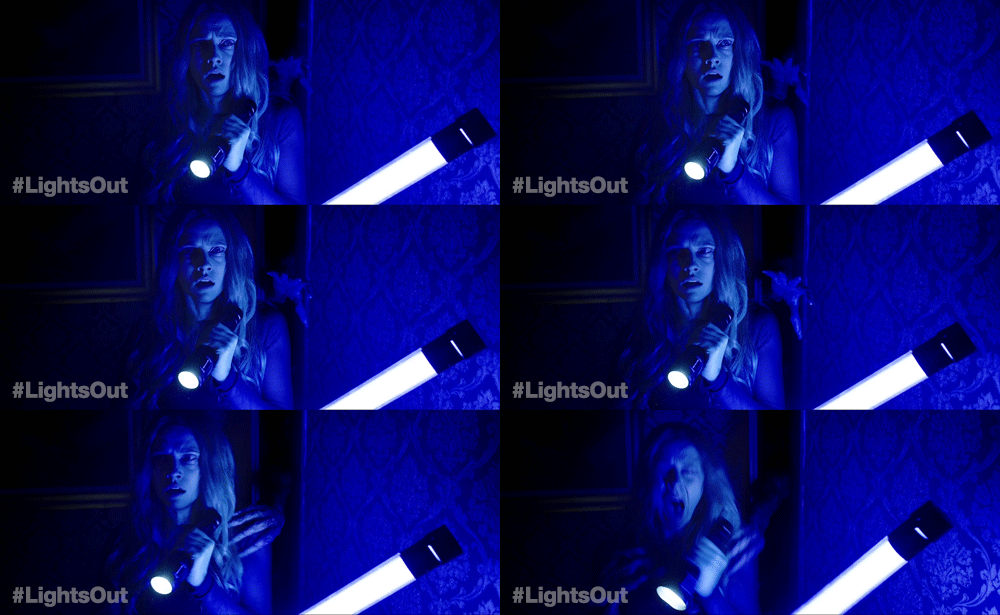
‘Lights Out’ is no different.
Producer James Wan and relatively new director David F. Sandberg crafted yet another movie in a long list of haunted horror films. ‘Lights Out‘ originally started as a short film directed by Sandberg that went viral. Facebook pages re-posted it daring viewers to watch; this attention sparked the interest of many producers. Now, Sandberg directed the project on a much larger scale. Sadly, he falls into some tropes that are far too typical within the studio horror system.
Some will say the horror genre is based on cliches. That excuse causes lazy scares. Audiences jump when that loud score strikes and something lunges at you but the terror is superficial. That’s why a strong story needs to be in place to make up for Hollywood faults. ‘Lights Out‘, like many of these horror films, had the jump scares that weakly work but Sandberg’s film was backed by an interesting explanation for the haunting. If only the screenwriters didn’t pile on so much useless exposition.
“You were right to be afraid of the dark.”
I believe the simple scares are what attracts people to these types of films. With the real-world being so cruel, films tinged with reality scare people off. These supernatural boogeymen save viewers from the real things that go bump in the night. I personally loved to be challenged on a deeper level in horror films. Pieces like ‘Neon Demon‘ and another 2016 standout ‘The Shallows‘ scared me beyond some simple jumps. You carry the terror dealt with in the films long after the credits.
I’m thankful that this is one of the rare original horror films and not a franchised project but I can’t help but feel ‘Lights Out‘ blends into the other supernatural films like this year’s ‘The Conjuring 2‘. I’m a minority in my feelings towards the sub-genre. As of now, Sandberg’s film is sitting at 100% on Rotten Tomatoes with little negative feedback. Compare that to the 51% on a film that I believe is far superior, ‘Neon Demon‘, and you can see my confusion on the beloved status of films like ‘Lights Out‘. Only thing they have in common in some serious Dario Argento ‘Suspria‘-inspired cinematography.
It will be interesting to see if ‘Lights Out‘ makes their small budget back and grab sequel buzz. The story seemed fairly contained and ended on a VERY definitive note BUT studios can always squeeze the most out of any idea. I’m not against more supernatural films, especially if they are all handed with this raw style of a new director, but studios like Warner Bros. needs to back more than just one type of horror. The audiences deserves more and so do the artist creating the films.
“Whether it’s a popcorn movie or some really intellectual sociopolitical movie, I think to some degree they’re all influenced by the social climate that we’re living in.”
–James Wan
We are in a time where our horror needs to reflect our times. It’s been a duty of the genre long before ‘Night Of The Living Dead‘ was a social commentary on race. If the Hollywood studio system wants to keep pumping out these ghost movies year after year, the viewers will never get the chance to deal with real horror. Sure, we get one or two genre pieces that are different but mainstream audiences are only treated to the lowest common denominator in horror.
When will we get another revolution in horror films? Before that, when will supernatural films start to decline with critics & viewers? I believe the sub-genre will be around for a few more years as James Wan is producing two films next year: ‘Annabelle 2‘ and ‘Insidious Chapter 4‘. As he leaves the horror genre for bigger pieces like ‘Furious 7‘ and the upcoming ‘Aquaman‘, who will replace him as the leader of modern horror? Creators like Adam Wingard and Fede Alvarez could lead their pack with their inventive edgy films. We also could see deeper horror films to provoke audiences.





 It will be interesting to see if ‘Lights Out‘ makes their small budget back and grab sequel buzz. The story seemed fairly contained and ended on a VERY definitive note BUT studios can always squeeze the most out of any idea. I’m not against more supernatural films, especially if they are all handed with this raw style of a new director, but studios like Warner Bros. needs to back more than just one type of horror. The audiences deserves more and so do the artist creating the films.