Home Blog Page 124

Review: CHUCKY Season 1 Demonstrates Good Guys Are Still In Style

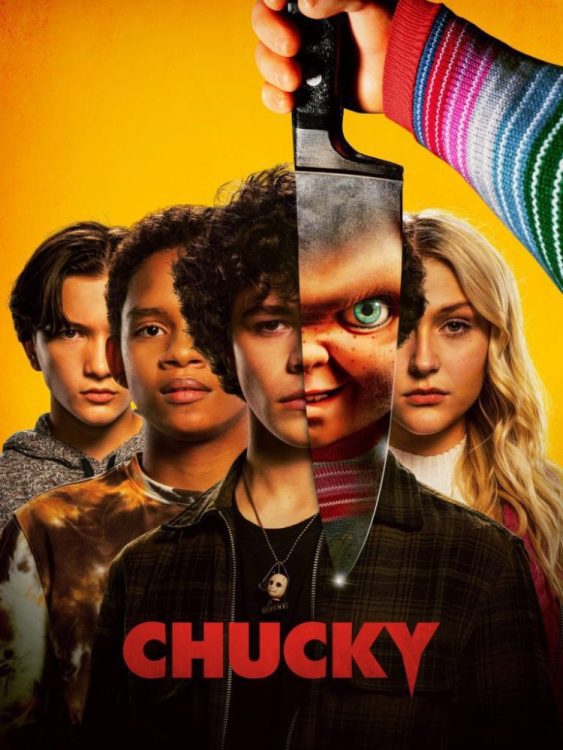
Don Mancini’s Child’s Play franchise has made its way to cable television with Chucky. A series based on the hit slasher franchise that has been growing strong for the past 30 years. In the words of Charles Lee Ray, “You just can’t keep a Good Guy down.” Chucky effectively carves a fresh path into the legacy of this iconic slasher.

The pint-sized killer doll returns with an eight-episode series, which recently got renewed for a second season. Airing weekly on the USA and Syfy networks, Chucky has surpassed my expectations and shows no signs of slowing down. Taking place a few weeks after Cult of Chucky, Charles Lee Ray has made his way home to Hackensack, New Jersey. Chucky centers on Jake Wheeler (Zackary Arthur), a young teen who recently lost his mother and lives with Logan (Devon Sawa), his alcoholic father. After purchasing a Good Guy doll at a yard sale, Jake’s life becomes a blood-drenched nightmare. Each episode builds on what came before, which keeps the series intriguing.
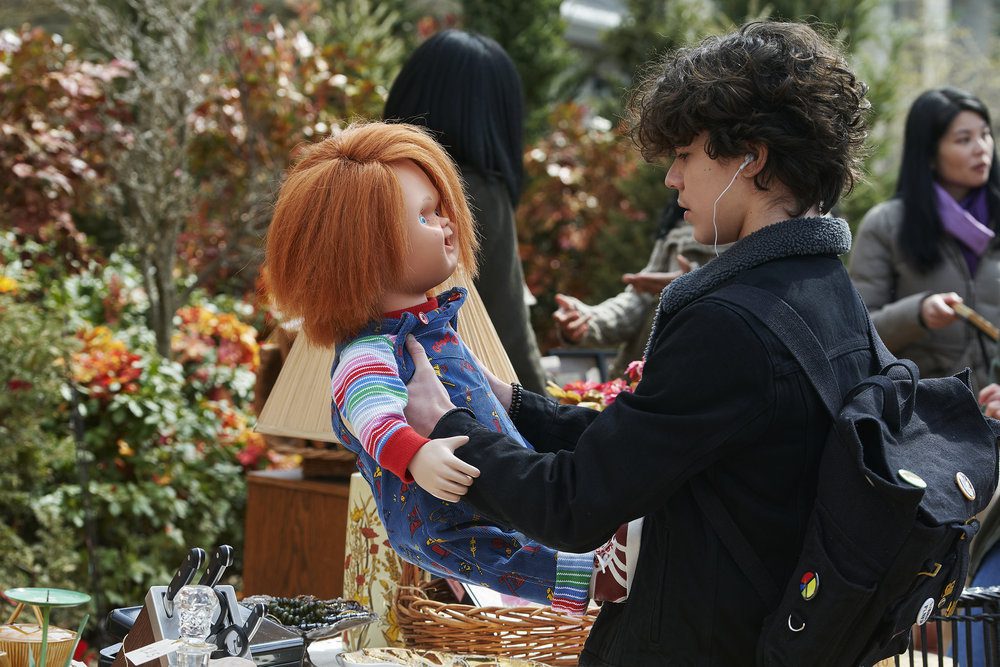
Brad Dourif returns to voice Chucky and the foul-mouthed one-liners are better than ever. Placing this doll with Jake allows an enticing game of emotional manipulation to play out. When his dad isn’t harassing him, Jake is bullied by his peers at school. Junior Wheeler (Teo Briones) and Lexy Cross (Alyvia Alyn Lind) spend their days mocking Jake. Junior is Jake’s cousin and they don’t get along. Lexy is Junior’s girlfriend and represents the typical mean girl. Devon Evans (Bjorgvin Arnarson) is Jake’s crush, and Jake struggles to come out to him.

Mancini and his team, don’t hold back in terms of the gore and bloodshed. Chucky explores multiple avenues that allow for a kill per episode. In fact, the series taps into the upbringing of Charles Lee Ray for the first time. The Lakeshore strangler didn’t have a specific tragedy that made him snap though, he’s always been insane and deranged. In between the bloodshed, Chucky can feel rushed at times, and certain elements may have needed more time to breathe. For instance, Lexy starts off as an entitled rich girl who bullies Jake for being less fortunate.
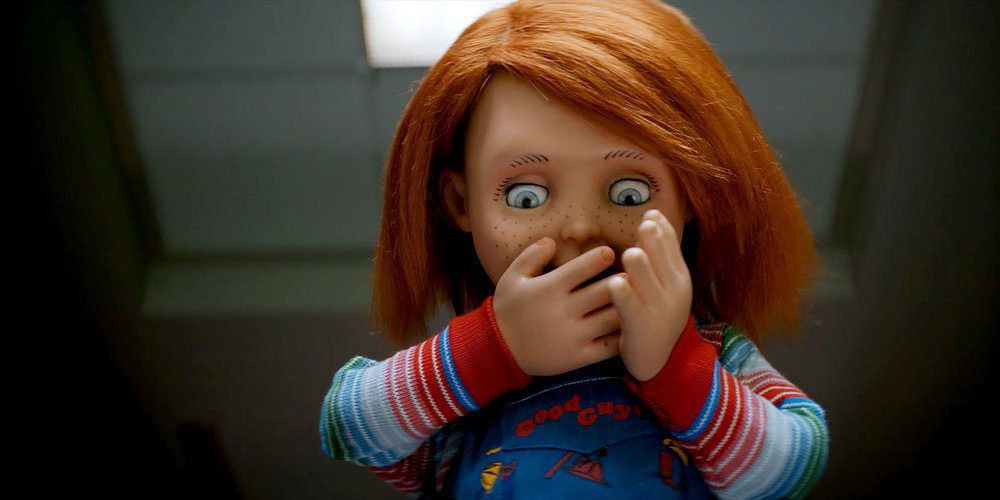
However, by the end of the season, she’s redeemed and achieves final girl status. Lind’s performance makes Lexy’s progression a highlight of the series, but her redemption arc deserved better. There are some homages to kills done throughout the film franchise that fans should enjoy. Chucky recreating Maggie’s death from Child’s Play was my personal favorite. The use of practical effects was great to witness, but some of the puppetry was poor at times. In regards to performances, the young cast impresses in more ways than one.

Lind and Arthur were the standouts, displaying a lot of depth and range as the series progressed. Franchise veterans joined the young cast as well to assist in taking down Chucky. Alex Vincent and Christine Elise return as Andy Barclay (Vincent) and Kyle (Elise). Their presence is mostly underwhelming since they aren’t used till midway through the season. Building up Jake and his friends was for the best, but Andy and Kyle’s presence certainly could have been more impactful. Fiona Dourif returns as Nica Pierce, still possessed by Chucky following the last film.

Jennifer Tilly has returned as Tiffany Valentine, Chucky’s lover who has been around since Bride of Chucky. Nica spends most of the series being tormented by Tiffany and adding to the body count when Chucky is in control. Her progression might be the most disappointing for some fans, as seen by reactions to the finale. While Chucky has more pros than cons, certain narrative choices are jarring. The production design was immaculate, especially during the Halloween-themed episode. I’d say the series understands how to keep viewers invested.

An important event occurs at the end of several episodes to keep you on the edge for next week. While Chucky is rooted in horror, the balance of humor and terror is handled tremendously. Humor has been present in this franchise for a while, but Chucky does it better than a few past entries. Mancini was allowed to explore his own upbringing through the character of Jake and delivered a clever slasher series that builds on Chucky’s legacy. Also, the series does include a few surprises along the way for fans to get excited about the upcoming second season.
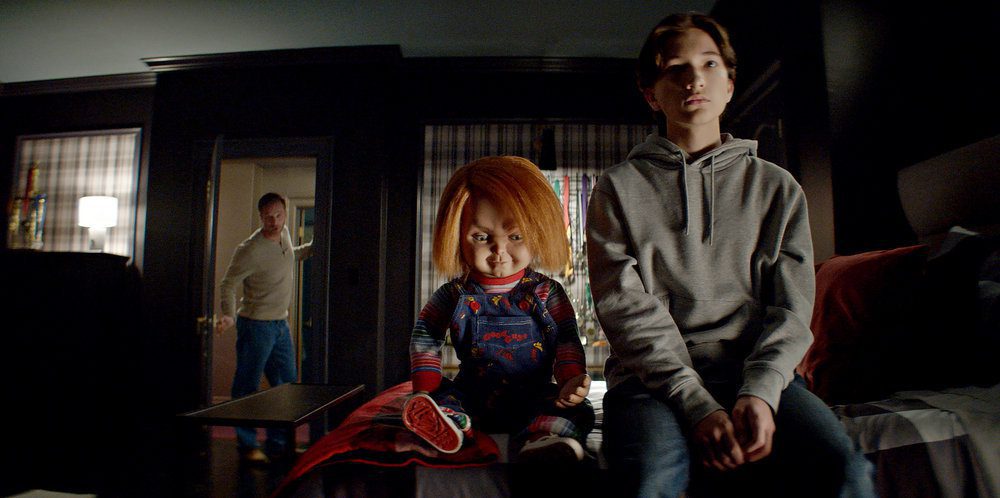
The inaugural season of Chucky was a delight and proved this series has a few more tricks up its sleeve. This Good Guy definitely hasn’t gone out of style and perhaps Chucky is here to stay for many more years. Chucky accomplishes so much by serving as a direct follow-up and brilliant jump to television. The events of the finale raise several questions for Chucky and the victims he left behind in Hackensack, but the upcoming second season should provide even more chaos along with the appropriate answers.


Monkeys Fighting Robots Youtube

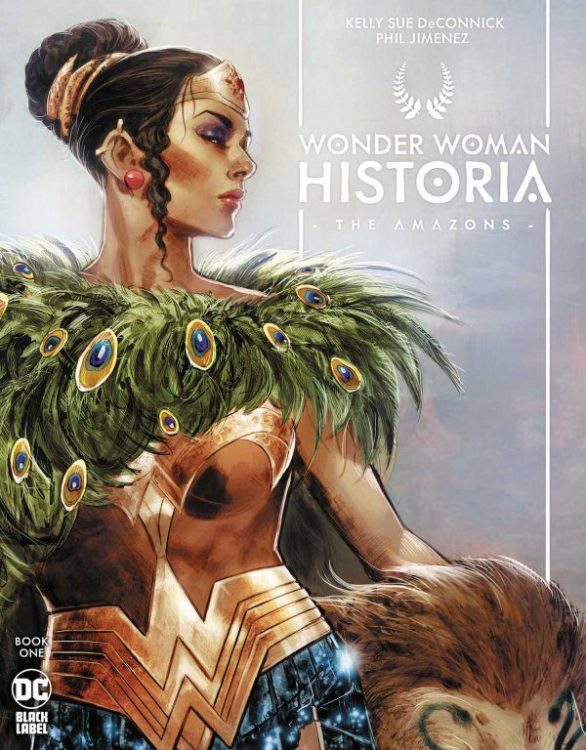
Review: WONDER WOMAN HISTORIA: THE AMAZONS #1 – Myth, Legend, And Absolute Mastery

Writer Kelly Sue DeConnick (Captain Marvel, Bitch Planet) and artist Phil Jimenez (Wonder Woman, The Invisibles) have come together to weave and uncover a new mythology in Wonder Woman Historia #1. With colors from Hi-Fi, Arif Prianto, and Romula Fajardo Jr. and letters from Clayton Cowles, this first chapter eschews the known history of the famous Amazon and digs deep into malleable nature of Greek mythology itself. As such, DeConnick and Jimenez have created something that surpasses the world of superhero storytelling and lands squarely in the realm of legend. With pointed, timeless writing and medium-breaking art, this comic could be the start of a new absolute essential read for the DC stable.

“The wait is over, and the entire story of the Amazons can finally be told! Millennia ago, Queen Hera and the goddesses of the Olympian pantheon grew greatly dissatisfied with their male counterparts…and far from their sight, they put a plan into action. A new society was born, one never before seen on Earth, capable of wondrous and terrible things…but their existence could not stay secret for long. When a despairing woman named Hippolyta crossed the Amazons’ path, a series of events was set in motion that would lead to an outright war in heaven—and the creation of the Earth’s greatest guardian!”

Writing & Plot

Kelly Sue DeConnick creates possibly the most effective script of her career in Wonder Woman Historia #1. Removed from the expectations of modern superheroes or current speculative fiction, the Bitch Planet writer settles on a brutal yet inspiring mythological tale in DC’s universe. Make no mistake, this comic can be both physically and emotionally jarring. Exploring the construction of the Amazons as a reaction to the treatment of women by a male-led society isn’t new by itself. Doing so with near-complete creative control, out of continuity, in a mature-readers book, is. DeConnick does not hide the reasons for Hera and the other goddess’s fury – nor the indifference of men. This topical treatment of mythological beings weaves in beautifully with elements of the known Wonder Woman story, while leaving mystery for the chapters to come.

Style

DeConnick adopts a narrative style that reads as a perfect mix of modern and timeless poetic writing. Her syntax and diction is reminiscent of Gaiman’s Sandman, but with her distinct voice making it markedly unique. DeConnick’s voices for each goddess is perfectly reflective of each being. Hera is measured yet stern, and speaks with the weight of knowing more than she lets on. Athena is matter-of-fact, with words of logic rather than just wisdom. Artemis is full of youthful anger and speaks mostly in quips and threats. Each of these characters are written so distinctly that we could pick out who was talking by just reading an out-of-context sentence.

I should perhaps warn that this is not a light comic. DeConnick’s portrayal of the pain women experience in the patriarchal world is unflinching and never steps away from its truth. In this fountain of emotional and poetic writing however, it will be easy for most readers to see the new/old mythology DeConnick is weaving for this series.

Art Direction

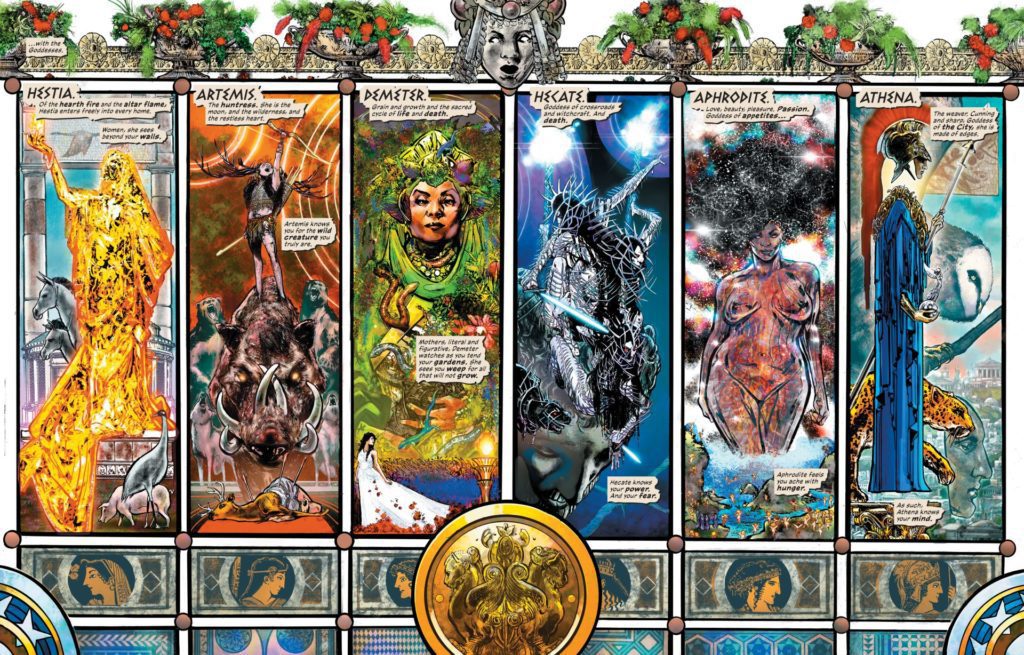
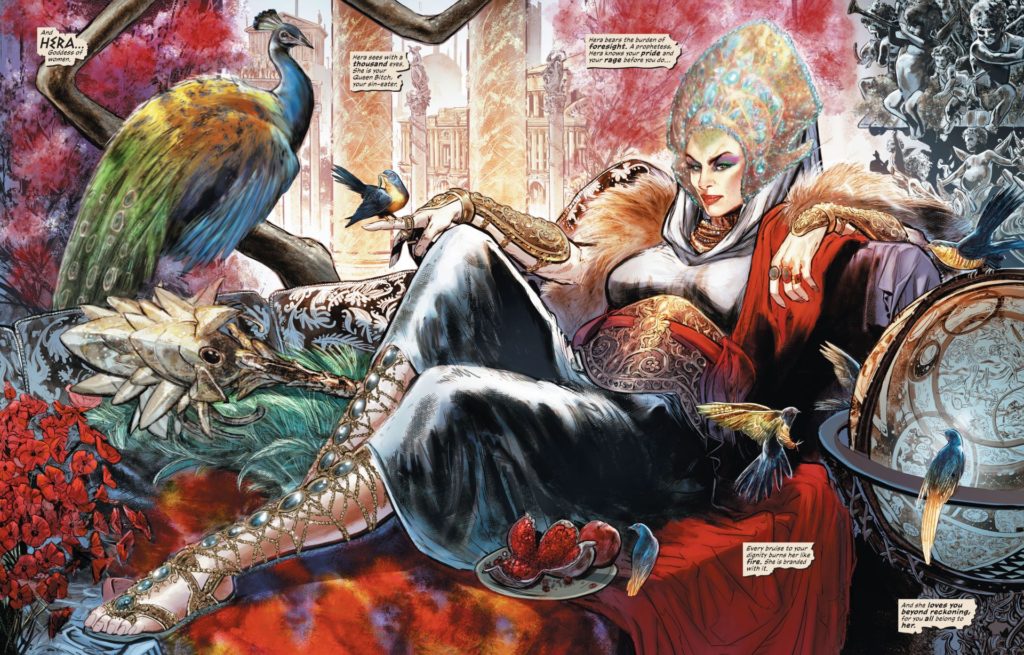
Holy crap, Phil Jimenez. When the first shots of art from Wonder Woman Historia #1 hit the internet, this quickly became one of the most anticipated comics of the past couple years. While DeConnick’s script is incredible, it’s Jimenez’s work that really makes this book a must-read. The modern icon steps outside of the style we’ve largely seen his use and into something almost monolithic. Much of the work here appears more like gallery work than something found in a comic book. Jimenez’s designs for the Greek gods and goddesses are both familiar and unique. The grace and power that Hera, Hestia, and Aphrodite are presented with is beautifully singular. The one that sticks out in my mind the most is Jimenez’s design for Hecate. The dark goddess is presented as multiple bodies all wrapped in barbed wire, and with different heads that take turns speaking.

Design

What’s so different about Jimenez’s renditions versus other artists for these goddesses is how ethereal they are. These beings feel like gods. The classic fallible nature in classic Greek mythology has led many artists to render them as appearing almost entirely human. Jimenez offers designs that, for some of them such as Hera and Demeter, are obviously human but still ethereal. However, with the likes of Athena’s bodiless form and Aphrodite’s starry, shimmering skin, the sense that these are cosmically powerful entities really sticks. It doesn’t hurt that the settings of Olympus and the Underworld also appear as nebulous voids of beauty and despair. Jimenez’s design language for the gods gives J.H. Williams III best work a run for its money.

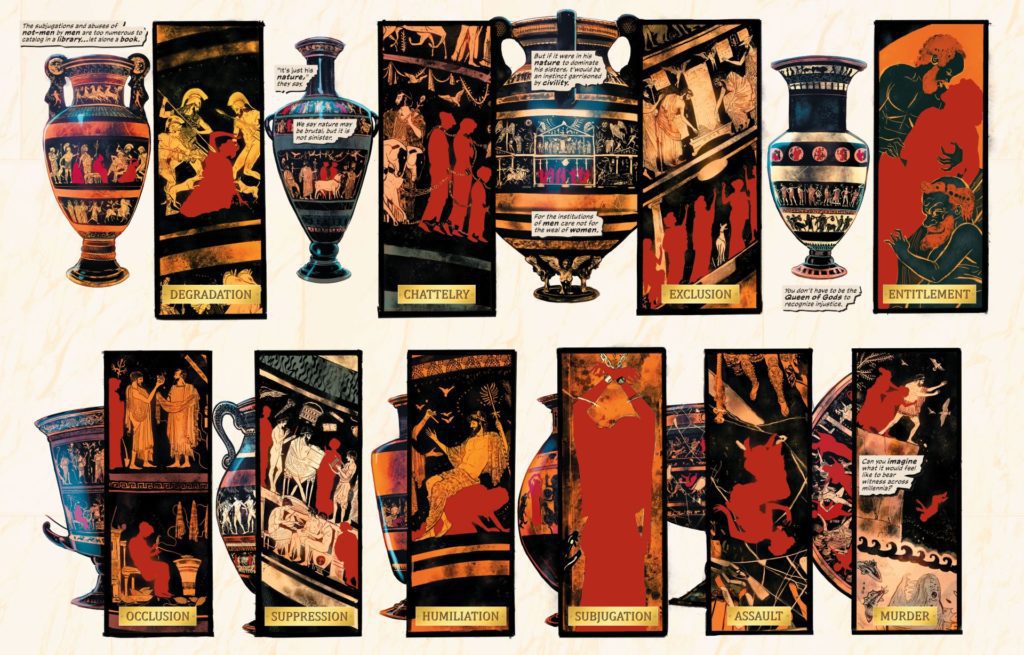
Another smart feat of Jimenez’s here is how he morphs styles for scenes that take place on Earth. Here he switches to an approach that’s more like what we’ve seen from him in his other mainstream comics works. He adopts a more conventional panel style to tell a story from the perspective of the mortals who will late become very important to this history. I won’t spoil anything, but Jimenez’s art here is as stellar as always.

Color

A massive part of what makes the visuals so successful here is the coloring of Hi-Fi, Arif Prianto, and Romula Fajardo Jr. The barrage of tonal blends in the palette for the goddesses and their heavenly abode has that “reach your hand in” quality. The accented details for the characters themselves adds elements to their personality that are only outlined by Jimenez’s pencils. I get the sense that they were effectively allowed to run wild with their work here, and it pays off in spades. The letters from Clayton Cowles are varied and cleverly tonal, with just enough variance to convey scenes spectacularly well. Every visual aspect of this comic is absolutely stunning.

Verdict

Wonder Woman Historia: The Amazons #1 is a poignant and beautiful triumph of a comic. Kelly Sue DeConnick and Phil Jimenez craft what may be the best work of their careers in this mythic piece of storytelling. DeConnick’s topical and powerful script reads like a piece of timeless mythology that sets up later chapters while still feeling like a story in itself. Jimenez and the colorists craft a comic that transcends the rules of comic book direction to make something indescribably mesmerizing. This is an absolute triumph of a comic, so be sure to grab it when it hits shelves on 11/30!


Monkeys Fighting Robots Youtube

Review: The Sweet Seduction of THE HUMAN TARGET #2

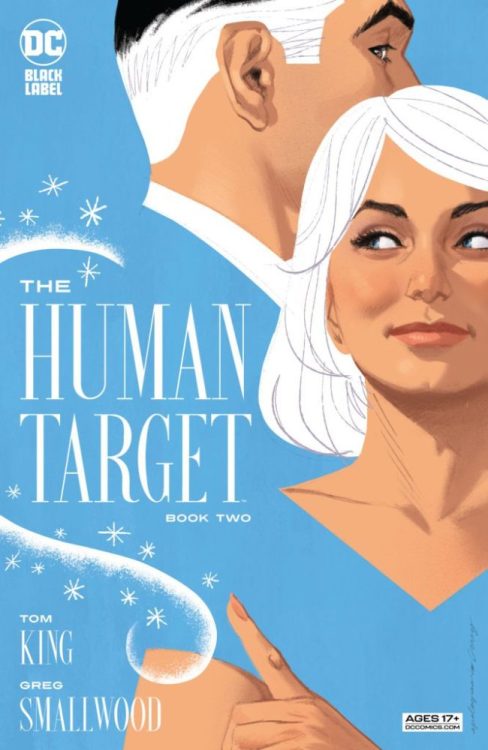
The Human Target DC Comics King

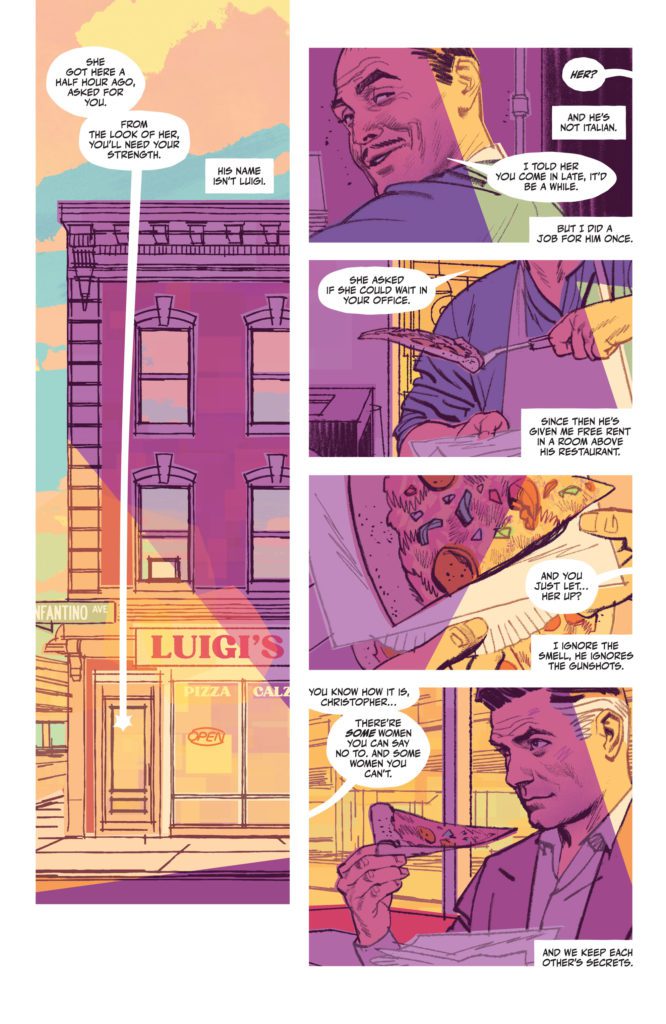
“You know how it is, Christopher… There’re some women you can say no to. And some women you can’t.”

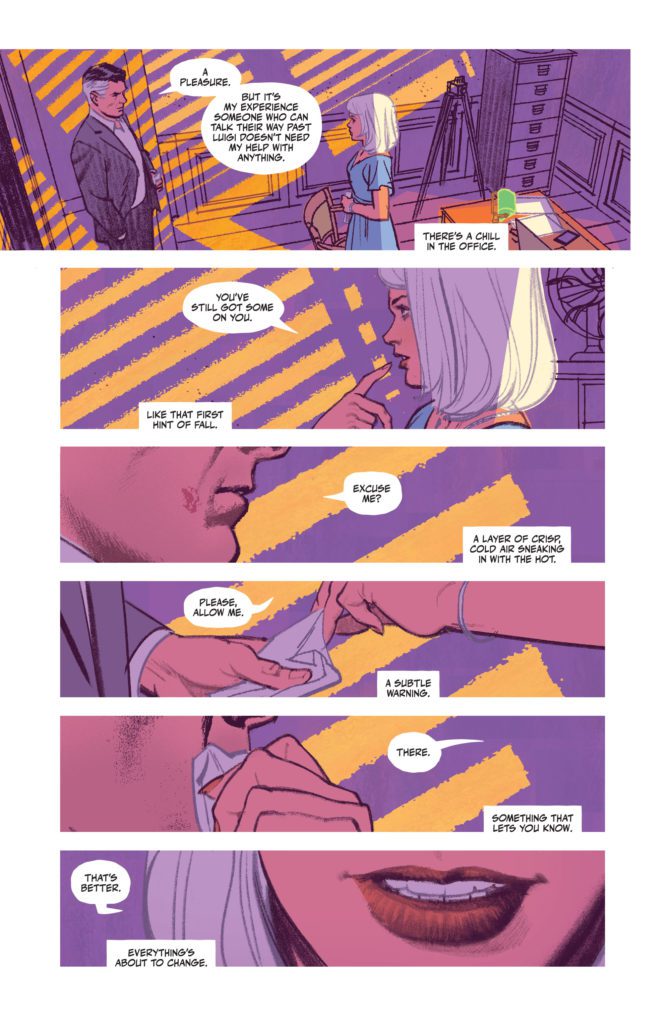
With this, writer Tom King introduces us to his take on the superhero, of Justice League International fame, known as Ice. When artist Greg Smallwood shows us this woman you can’t say no to, she’s not what you’d expect. She looks quiet and unassuming. Letterer Clayton Cowles delivers her first, rather short, line of dialogue in a three tiered word balloon. She’s gentle and careful in her speech. With this, we learn two things. One: Christopher Chance, the Human Target, is in big trouble. And two: so are we.

DC Comics’ The Human Target takes no prisoners. It gets its hooks into you, making you fall in love with characters, even when you know they’re doomed. Writer Tom King, artist Greg Smallwood, and letterer Clayton Cowles are masters of seduction.

The Human Target DC Comics King

Writing

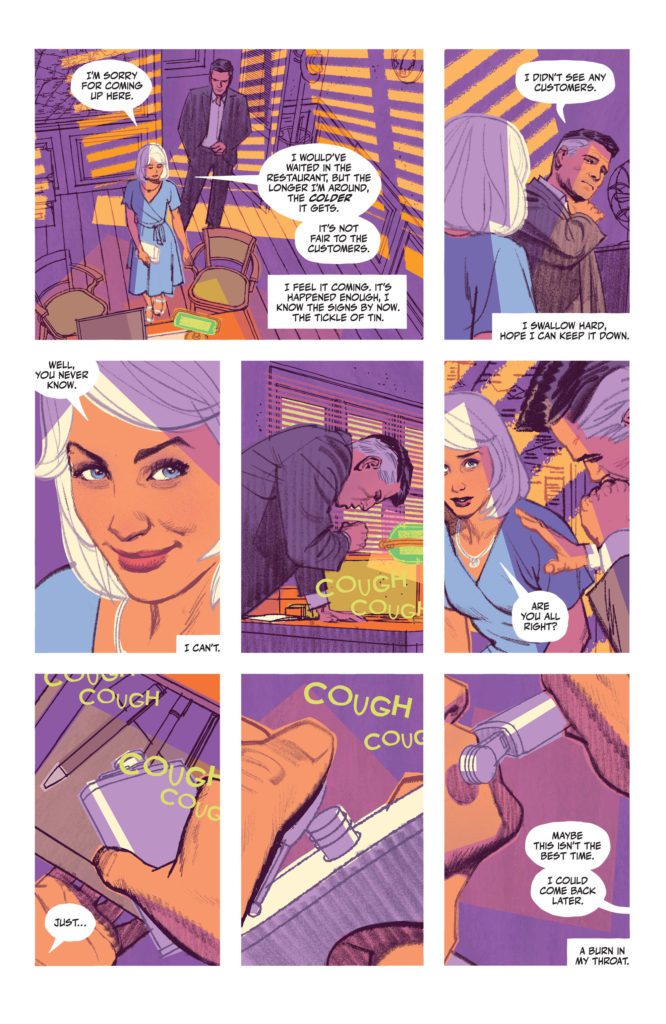
King’s writing oozes with dramatic irony in The Human Target #2. Not only do we see how Chance keeps details of his poisoning close to the vest, but every innocent line from Ice is coupled with a caption box of Chance’s narration. He’s reading her like a book, but it’s not keeping him from being reeled in. Christopher Chance is decidedly not James Bond. He doesn’t have everything under control. He isn’t immortal or bulletproof, he’s not immune to a woman’s charms, and he doesn’t have a cure-all gadget up his sleeve. Christopher Chance is a human being. He’s capable of getting himself into all kinds of trouble. And Ice is trouble incarnate. This is why we can’t help but love them both.

Art

Smallwood’s art keeps us delightfully in the dark. While it’s tempting to claim these observations as my own, it’s actually Hassan Otsmane-Elhaou who made many of the discoveries I’m about to lay out, on his brilliant YouTube channel, Strip Panel Naked. First, Otsmane-Elhaou points out that Smallwood only shows us snippets of each scene. We rarely see a character’s full face. They’re either cut off in some way – seeing only their eyes, their lips, their chin – or they’re facing away. It’s the perfect approach to a mystery. We’re left piecing together each scene, trying to make sure we have all the right details.

The Human Target DC Comics King

Secondly, Otsmane-Elhaou discusses, The Human Target #1 showed nearly every panel from eye-level. We, as readers, are on Chance’s level. We relate to him, we solve this mystery with him. But The Human Target #2 is actually quite different in that regard. With Ice entering the picture, we are often looking down at her, and she’s often looking upwards towards Chance. Yet, as the issue progresses, their perspectives begin to level out. We even look up at Ice at some points, as she looks down towards Chance. Smallwood shows the tumultuous nature of their dynamic. This is not a woman Chance can simply understand and move on from. She’s changing as he watches her. She’s capable of more than he could know and he’s constantly reassessing her.


Coloring

Smallwood creates an atmosphere like no other artist. You can feel the warm air of his late mornings. You can feel the wind bite when he shows you a freezing day at the beach. But Smallwood’s coloring tells us more than just the temperature of each scene. When Ice tells Chance about her past, we see how she feels about everything. We see the soft blues of a melancholy childhood, the vibrant yellows of a joyful career in the Justice League, and then we see those moods collide in a fateful, complicated memory from that very morning. And all of it is done with a stunning attention to detail, especially in Smallwood’s use of light. The blocky shapes of sunlight look just like they would if you were squinting out at a real ocean. The dark shadows create a stark contrast to the bright spots on characters that have a chat out in the noonday sun. It’s a gorgeous mix of realism, impressionism, and pure comic book joy.

The Human Target DC Comics King

Lettering

This comic is smooth. Not just in its art and story, but in how it delivers its story. Cowles weaves us through each page seamlessly. But it takes a while to get to that point. When we first see Christopher Chance, he’s waking up. His caption boxes stick lazily to the bottom of each panel. His banter with Luigi, a chef in a pizza place, isn’t as smooth as it could be. Your eyes dart back and forth between their dialogue, dipping down to catch Chance’s captions which seem out of the way. But the caption boxes are mimicking Chance’s thoughts. He’s not thinking about Luigi, he’s thinking about how he’s dying. And when Ice arrives on the scene, the captions and dialogue become smoother than ever. We see Chance relax. We can see it in how he talks and how he thinks. He’s at ease, but he’s also fully present in each conversation.


DC Comics’ The Human Target is a stunning series. It’s outright seductive. Despite the dangers and doom these characters face, you have no choice but to love them. King, Smallwood, and Cowles deliver a mesmerizing issue that will pull you deeper still into this mystery. Pick up The Human Target #2, out from DC Comics November 30th, at a comic shop near you. You definitely don’t want to miss it!

Monkeys Fighting Robots Youtube

3 Best Online Casino Tips From Experts

3 Best Online Casino Tips From Experts

Gambling online and playing casino games in casinos in Sweden are excellent ways to make money while having a great time. However, it is important to remember that gambling is a matter of chance, with equal chances to win as well as losing. If you’ve had a burning desire to gamble, however, anything and everything is possible. 

You should gain knowledge of some online casino Tips and tricks as well as stick to your strategy if you want to ensure that you find success and win every wagering and casino game you play with bonus utan insättning casinos. 

Read on to know more about the three most successful online casino gambler tips to improve your casino gambling experience. If you enjoyed it, why not check out more content from the author, Dominic Andreasson.

  • Use no-deposit bonuses to your advantage

There are numerous online gambling establishments and online casino sites. Online gambling seems to be your best alternative if you want to engage in an exciting and thrilling interaction where you can have a lot of fun while also making a lot of money. 

However, you should be aware that a portion of the money you win on forms of gambling is subject to taxation; you can also benefit from no-deposit bonuses and Online Casino Welcome Bonus. Another reason to enjoy online gambling is that it allows you to meet new people. 

You are not required to make a deposit or provide any additional funds. And you’d be able to win bonus payments and make more money in no time.

  • Look into the game’s creator i.e. the developer of the game

On the online platforms, it is obvious that in this digital age entertainment culture influences the modern online casino themes and ventures. There are numerous online gambling websites as well as portals, all of which are managed by distinct managers/developers and project managers and have many distinct themes like adventure, maze, and many more based on the entertainment industry. 

If you want to know and understand more about the developers of the online games, you can do so by visiting their website. The website also includes all of the service providers’ contact information. 

You can contact people or even strike up a conversation with them if you have any questions about a transaction or any other issue. You can also try sending those emails to the email account and easily resolve your problem online.

  • Get to Know Your Strategy and plan accordingly

Obviously, there are some games at online casinos that will not benefit from any strategy. When trying to play online slots, for instance, there is no strategy that you can have been using to help you win. However, games like blackjack and poker allow you to increase your winning percentage but unless you learn the proper strategic plan. 

Other games, such as roulette and craps, do not even give you much control over the outcome, but then you can improve your payout percentage and reduce your house edge by placing different bets. 

There are numerous resources available to assist you in learning these techniques. Eventually, luck would even out, as well as the best gamblers will be those who understand how to play the games correctly. 

One of the defining characteristics of successful gamblers is self-control. Even if you have the best strategy, there will be times when you face challenges. 

That kind of volatility is driven by luck, and there’s nothing you can do about it. Try to be patient and wait for good fortune to come your way. 

Also, be willing to accept that certain sessions will undoubtedly be losers, which is unavoidable due to the house advantage. Your main outcome will be much stronger than the gambler who has been all over the place with one‘s strategy if you keep focus.

Final Thoughts

In conclusion, the following tips mentioned above were some of the best online casino gambling tips to improve your game and chances of winning to the most. It is important to not only play consciously but also to play with a limited budget that will help you stick with the limited amount as set by you. 

You can learn about the advantages of playing gambling games and how to win money on slots using the information provided. So, if you’re bored, go online and play online slots and betting games to make a lot of money! 

Monkeys Fighting Robots Youtube

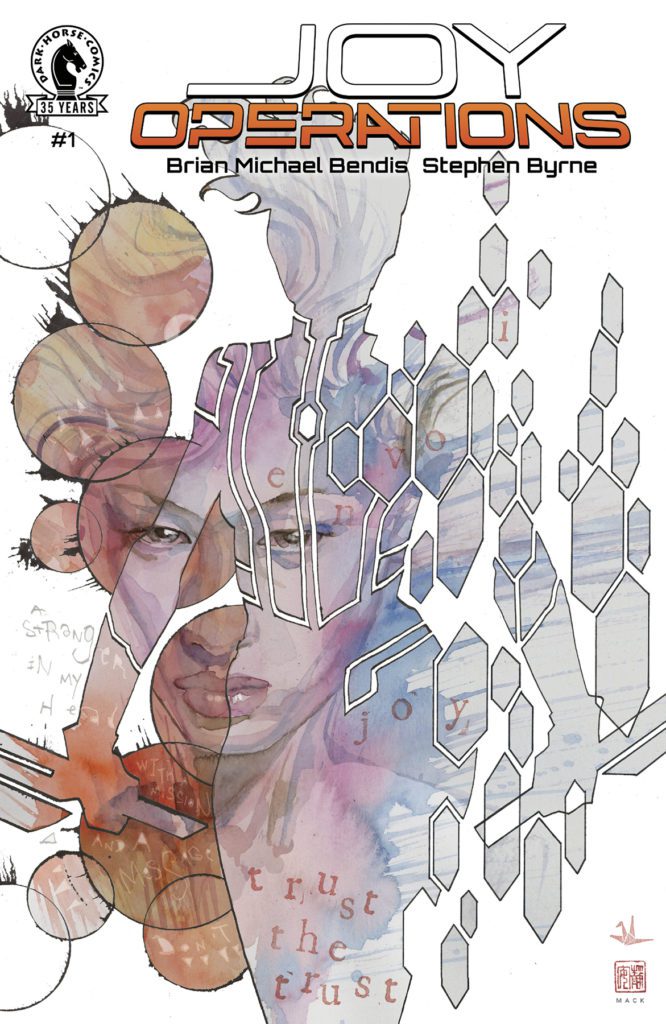
Review: JOY OPERATIONS #1 – A Lesson In Overwriting

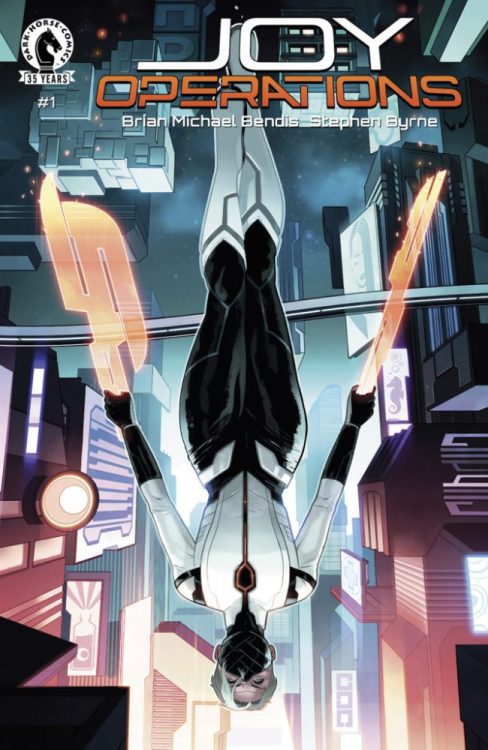
Modern comics icon Brian Michael Bendis (DaredevilAlias) and artist Stephen Byrne team up for Cyberpunk-action hijinks in Joy Operations #1. This opening chapter for Bendis’s Jinxworld imprint at Dark Horse is impeccably drawn and presents some cool ideas, but it’s so harshly overwritten that it’s a labor to enjoy.

“Fifty-five years from now. Joy is an EN·VOI. A special agent of one of the JONANDO TRUST. Trusts are corporate-owned cities that are the centerpiece of modern society. She rights wrongs for the trust. She is excellent. Perfection. Hard on herself. Driven. Almost legendary in some parts. Until one day a voice pops in her head trying to get her to betray everything she has ever believed.”

Writing & Plot

Bendis has decided to contribute to the current wave of Cyberpunk popularity with Joy Operations #1. Our physically augmented, skyscraper-parkouring, power-hungry executive protecting protagonist, Joy, is proof of that on her own. Bendis’s use of made-up in-story words fits the futuristic, corporation-driven setting being built here on the tentpoles of the genre. I can’t really discuss the plot in any capacity, though. This is because Bendis delivers the core in a two-page spread full of painfully obnoxious expository dialogue. In fact, the entire comic is covered in this ridiculous style. It’s like the Whedon-esque quip-filled dialogue that gets meme’d all the time now, but slapped with an MR rating so Bendis can use the F-word ever third line.

What’s so unfortunate about this last point is that there is so much potential in this idea. Bendis writing a street-level Cyberpunk tale rife with action and corporate corruption is a relatively easy sell. He puts some neat ideas on display here, like representing how hacking someone’s brain could look. He also has several great moments of quiet, wordless bliss where he lets Byrne do the storytelling with stunning visual work. These qualities are overshadowed stamped by the unending juvenile internal dialogue that covers every panel. There’s a twist to this naration that could have been interesting – if it wasn’t so damned annoying. Bendis’s writing execution is just so grating that it ruins any momentum this comic could have had.

Art Direction

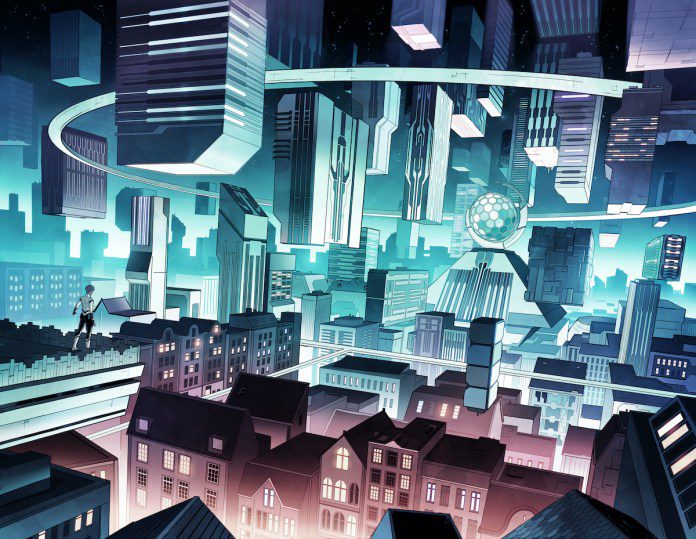
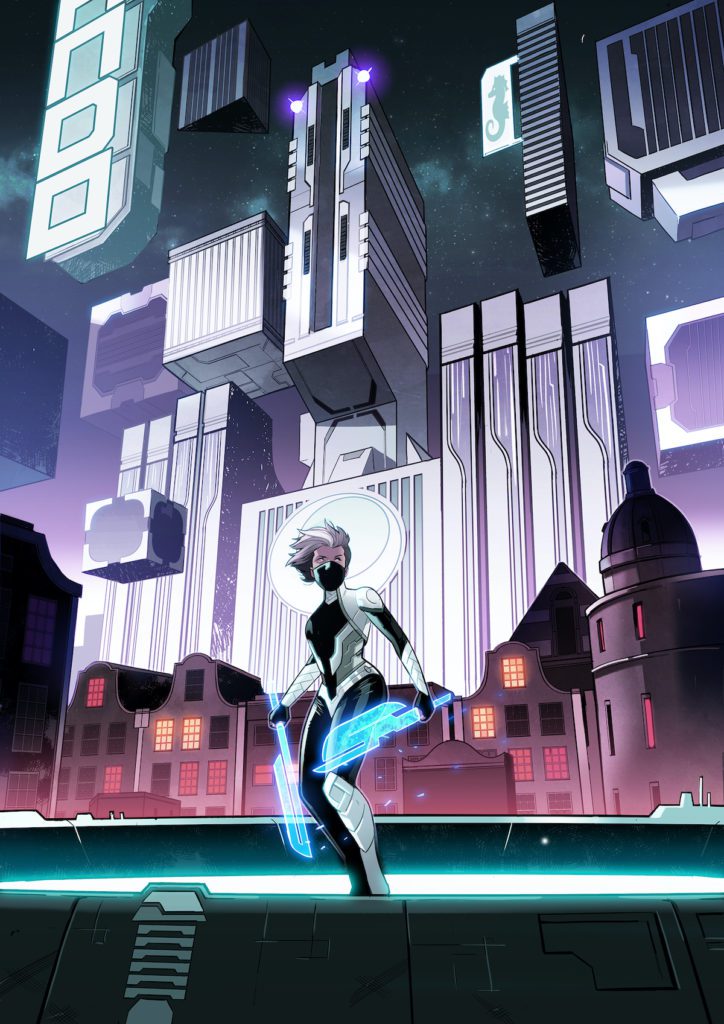
Joy Operations #1’s saving grace is Stephen Byrne’s outstanding artwork. His crisp, detailed linework and vivid, atmospheric colors make the rest of the comic’s delivery semi-bearable. Joy’s design is relatively par for the course as far as modern Cyberpunk characters go. However, it’s the fluidity that Byrne gives her that makes the character shine. Her facial expressions and graceful combat movements make her exciting to follow and engaging to interface with where the writing fails to do so. Byrne’s flexible, unconventional panel direction has scenes bleed seamlessly from one moment to the next like a gorgeous techo-tapestry. His choice of color is perfect for the story being told here, with neon city lights reflecting in the night sky and off of character’s faces. I would like to see more of the cityscape itself, but I’m sure there’s more of that forthcoming.

Where the script falls short, the visuals convey the experience of this comic beautifully.

Verdict

Joy Operations  #1 is a gorgeously constructed comic from the visual end with a woefully overwritten and obnoxious script. Bendis has some cool ideas scattered about in here, but it’s all marred by how he conducts the narrative voice. Stephen Byrne’s art does a lot of work fixing what the writing gets wrong, but whether that makes this worth your time is up to you. Joy Operations hits shelves on 11/24.


Monkeys Fighting Robots Youtube

Review: THE HARBINGER #2 – A Conflict on Two Fronts

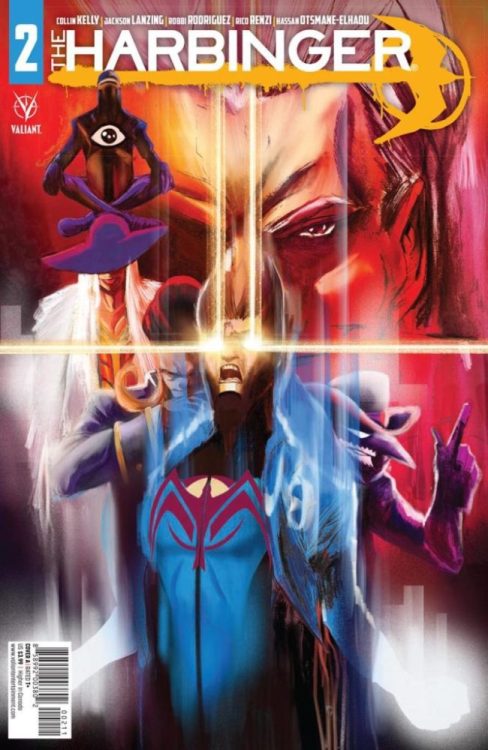
The Harbinger #2 Cover

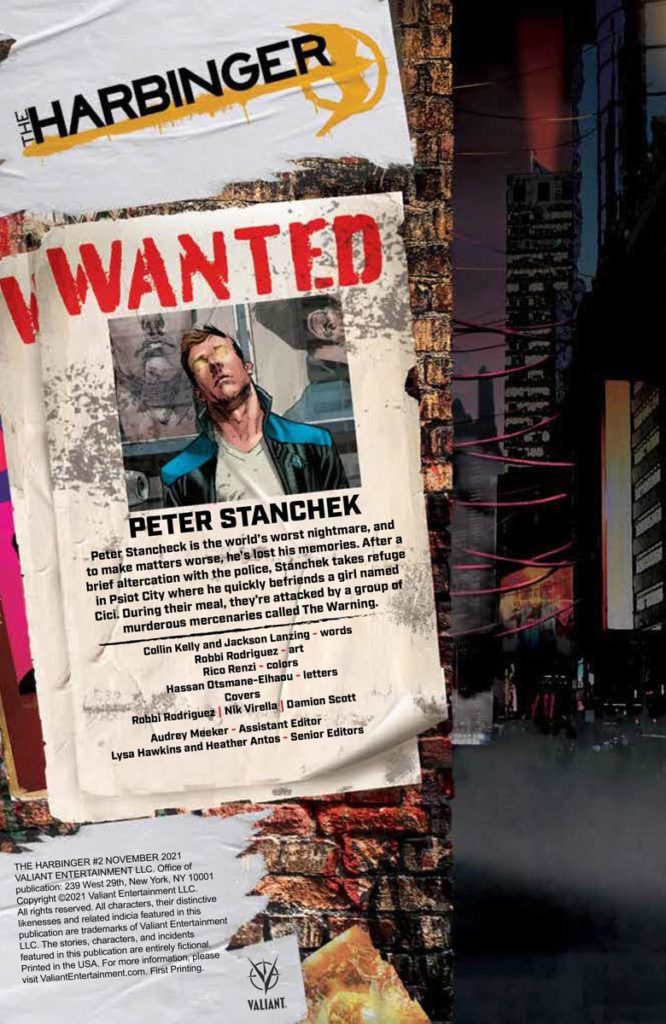
The Harbinger #2 is where this Valiant Entertainment series really begins. Peter Stanchek’s inner conflict starts tying into a bigger story that’s at work. On November 24th, comes a story about how having power isn’t quite the same as having strength.

Recap

Visual reminderPeter Stanchek of the Renegades is back from the dead and only Chicago’s Psiot City inhabitants are happy about it. Now, Peter has to face off against Chicago’s state superheroes and his inner self, The Renegade.
The Harbinger #2: Down With The Renegade!

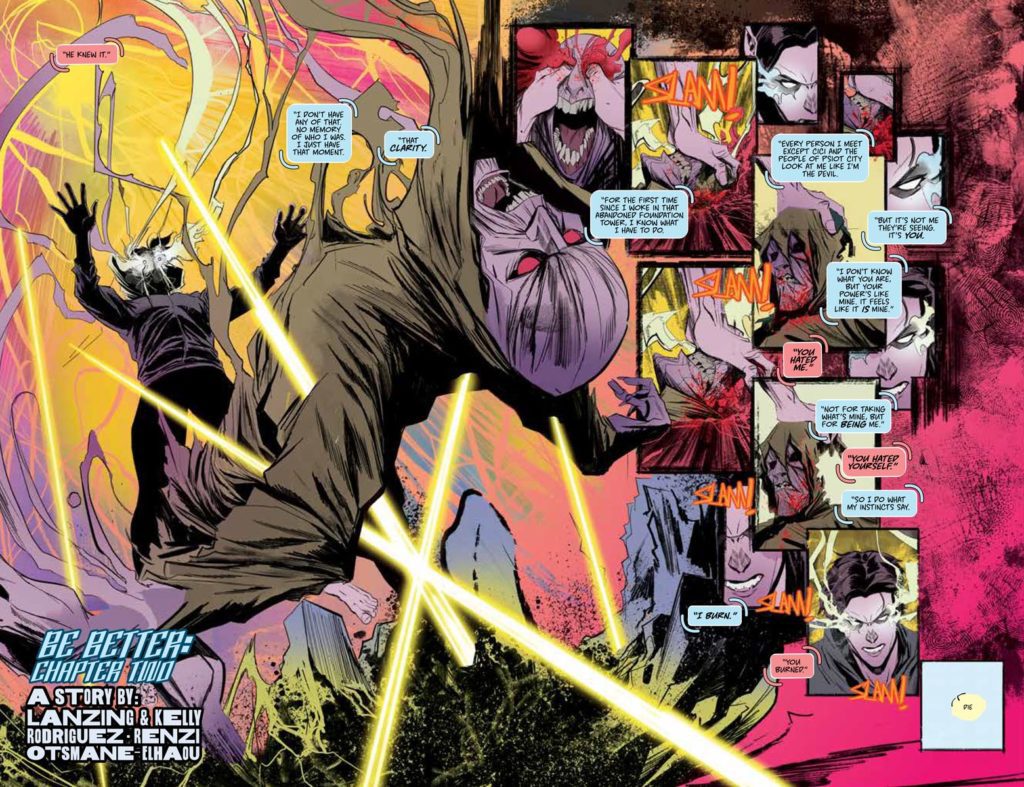
Between writers Collin Kelly and Jackson Lanzing, there are two plots brewing. The Harbinger #2 puts a compelling focus on Peter Stanchek’s legacy as “The Renegade.” The last issue introduces readers to The Renegade, an angry, self-loathing thoughtform who represents Peter’s past. While Peter tries to be better than The Renegade by being more moral, we tragically witness some of his shortcomings. This manifests in the form of The Warning, a group of mercenary superheroes who have a bone to pick with Psiots. The violations they enact on Psiots, by stripping the Psiots of their minds, suggests a truly insidious plot; a campaign for ideological gain.

The Harbinger #2 spread

Hyper Expressive Detail

Artist Robbi Rodriguez continues to illustrate some eye-catching artwork in The Harbinger #2. The facial language of the characters gives readers a very good idea of their personalities. Just one look at how the villainous Futurist nonchalantly reacts to Peter’s presence gives readers a glimpse of his scheming. That’s not even including how otherworldly Peter’s powers look, especially with the coloring of Rico Renzi. Unlike the more mundane powers of one civilian, Peter genuinely looks powerful enough to take on the world.

On the note of that civilian Psiot, Young Ago, Hassan Otsmane-Elhaou uses his lettering in conjunction with the artists to showcase his powers. The way Young Ago’s words take up so much space and obscure the SWAT Teams demonstrates how much power he has in a situation. In juxtaposition with Psiots standing nonviolently up to these oppressive police forces, Young Ago’s powers might not look as fancy, but that doesn’t mean he can’t hold his own.

Get Involved In The Harbinger #2

The Harbinger #2 is where the series gets really interesting and makes a big impression. A plot is brewing and it all revolves around Peter’s character arc. To go along with this is artwork that demonstrates the flashy powers of these characters. Readers are going to be left waiting expectantly for the next great issue of a story that gets better and better.

Monkeys Fighting Robots Youtube

Marvel Comics Exclusive Preview: THE DARKHOLD: BLACK BOLT #1

marvel comics exclusive preview darkhold black bolt

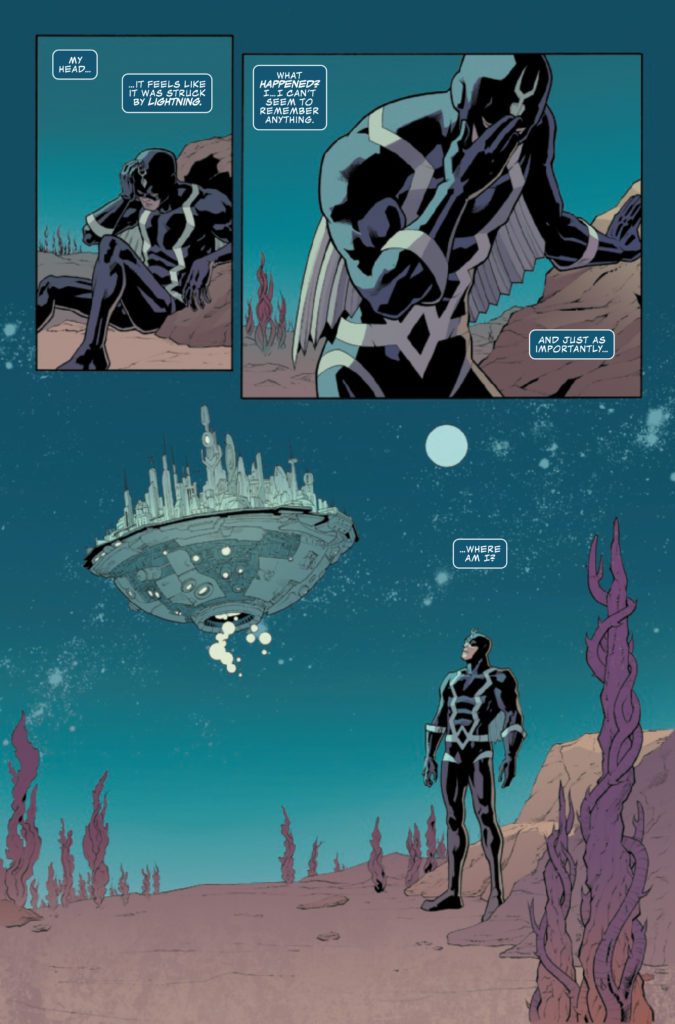
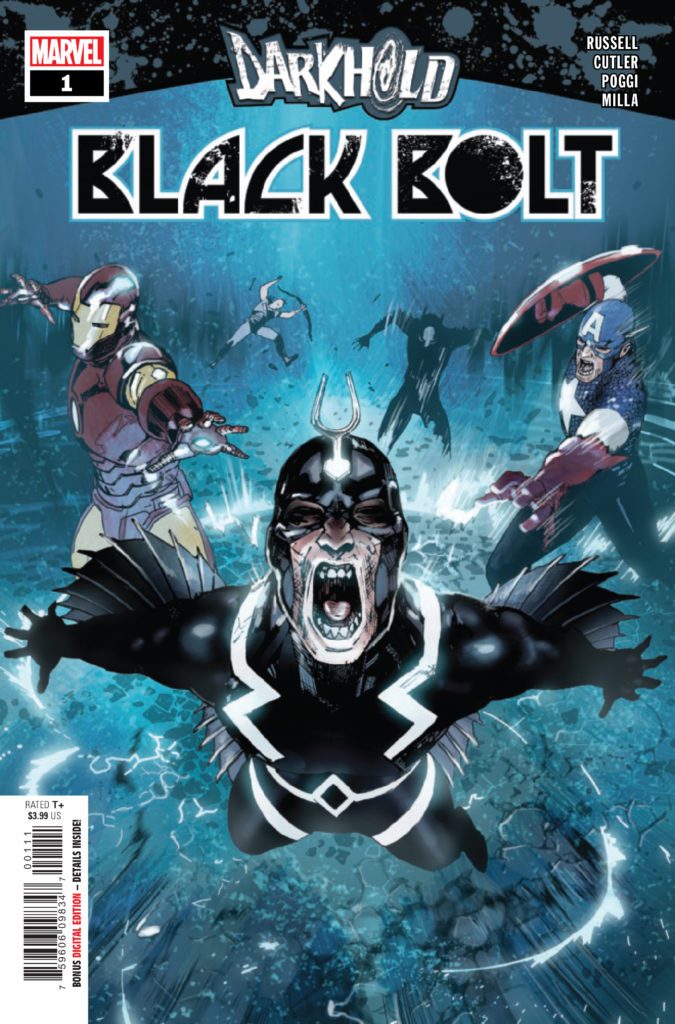
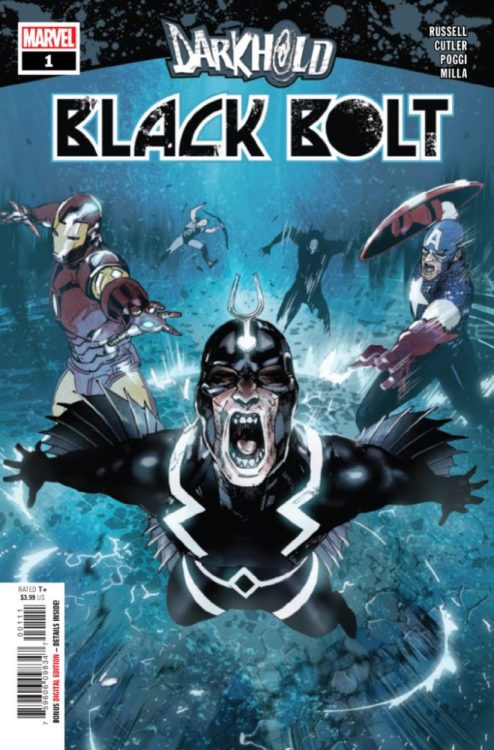
THE DARKHOLD: BLACK BOLT #1 hits your local comic book store December 1st, but thanks to Marvel Comics, Monkeys Fighting Robots has an exclusive four-page preview for you.

About the issue:
THE KING OF THE INHUMANS BREAKS HIS SILENCE! Black Bolt’s mighty voice is his greatest gift…and since childhood, it has been his greatest curse. Recruited with four other heroes to read from the Darkhold, a powerful evil text written by the elder god Chthon, Black Bolt thought he was signing up for a battle befitting a king. But the true battlefield…is his own mind. Critically acclaimed writer Marvel Russell brings you a scream-worthy story that will break an empire!

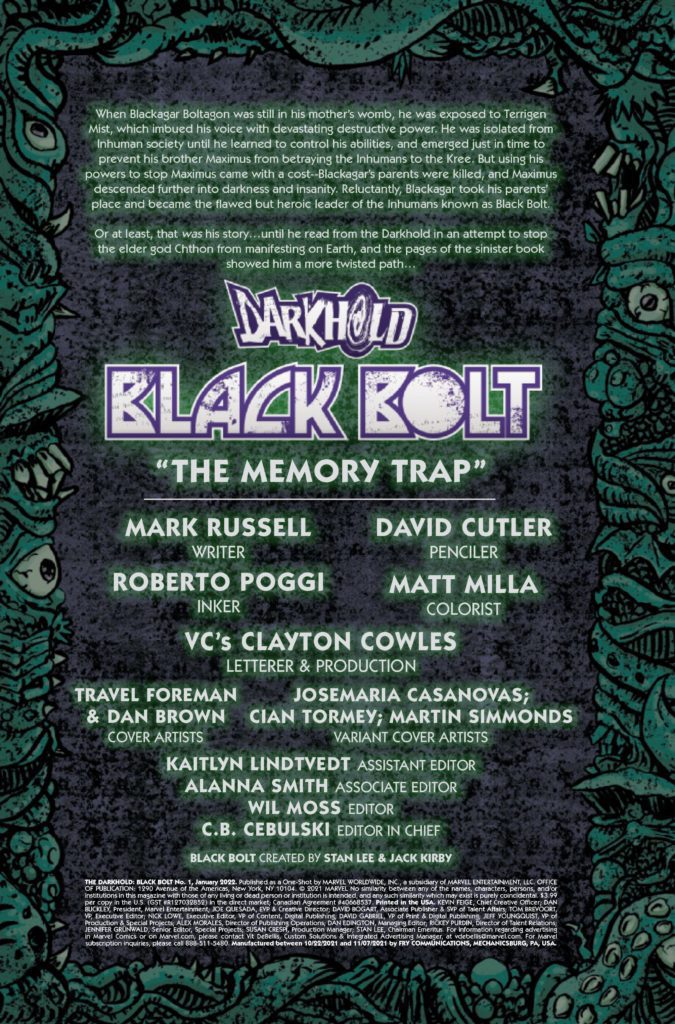
The issue is by writer Mark Russell, penciler David Cutler, inker Roberto Poggi, colorist Matt Milla, and letterer Clayton Cowles, with a cover by Travel Foreman and Dan Brown.

Check out the DARKHOLD: BLACK BOLT #1 preview below:

marvel comics exclusive preview darkhold black bolt

marvel comics exclusive preview darkhold black bolt

marvel comics exclusive preview darkhold black bolt

marvel comics exclusive preview darkhold black bolt

marvel comics exclusive preview darkhold black bolt

marvel comics exclusive preview darkhold black bolt


Who is your favorite Inhuman? Sound off in the comments!

Monkeys Fighting Robots Youtube

Op-Ed: Superhero Comics Are Held Back by Their Noncommitment to Change

noncommitment in superhero comic books -- cover from Dan Slott's Spider-Man

Comic books are a relatively recent medium of art but, unlike other art forms, comic book characters haven’t changed much. They have been around since the near beginning and are still thriving today, still protected by copyright law and owned by the same publishers. People have come and gone in that time frame, and these beloved characters have gone on their own path, but not as much as an outside observer would expect. Especially recently, any change in status or lessons learned in superhero comic books are reverted after a short period, leading to many versions of the same story being told repeatedly. There are many reasons why this occurs, but it results in  stories without consequences and leads to stagnant characters.

End of Parker Industries -- example of noncommitment in superhero comic books

The Stagnant Spider-Man

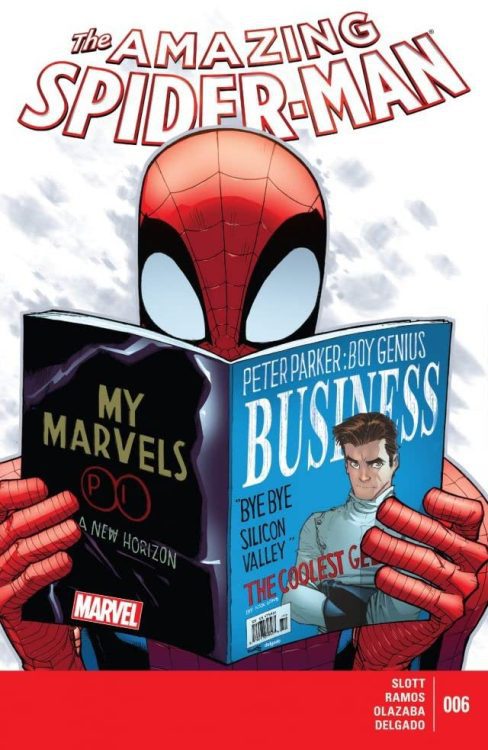
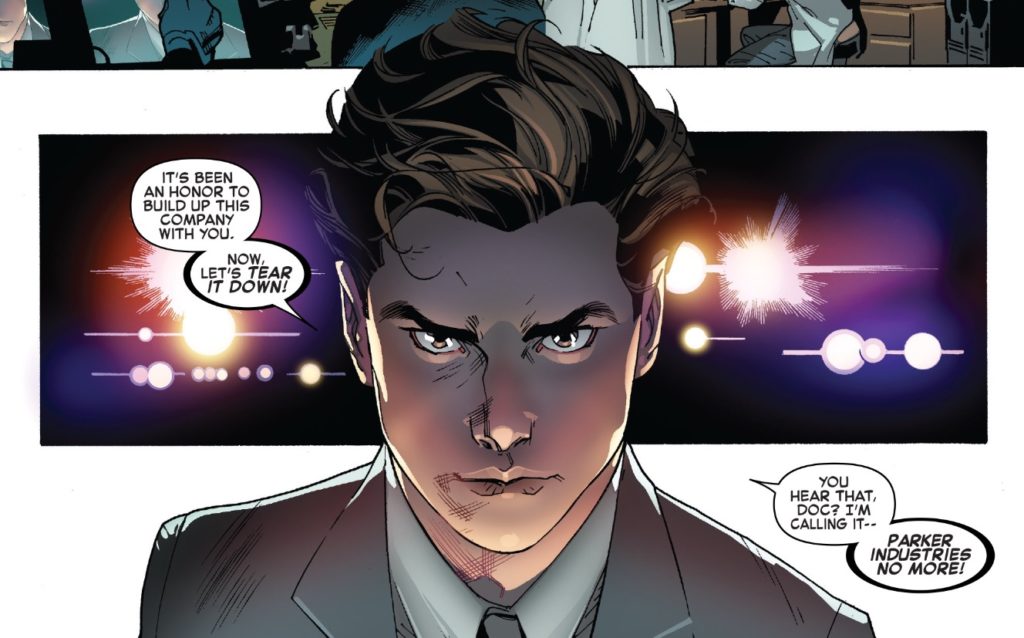
A prime example of a character in superhero comic books that is often refused the opportunity to grow is Peter Parker’s Spider-Man. This can be seen in Dan Slott’s run of The Amazing Spider-Man and The Superior Spider-Man. Whether or not you enjoyed Slott’s time with Spider-Man, you must give him props for doing something different with the famous web-slinger. For those unfamiliar with the run, Doctor Octopus took over Peter’s body, becoming the “Superior Spider-Man” for an enormous portion of the run. Peter was eventually restored to his original body but found himself in charge of Parker Industries — a global company that employed thousands. This was a drastic shift from the typical making-ends-meet Peter we know from his appearances in other media. Slott’s run would be a fantastic example to refute my premise that superhero comic books refuse to change, had it ended differently.

By the end of his run, Parker Industries was gone, and Peter was poor once again, bringing back the typical image of Spider-Man that most people have in their minds. One of the only large changes Slott had made to the character was allowing him to finish his graduate degree — a change that was reversed in the first issue of Nick Spencer’s run with the character (not including the story he did for Free Comic Book Day). Slott discussed this purposeful reversion of the character in an interview he did with Syfy Wire in 2019. “I always knew his company was going to lie in ruins by the end of the story… I always knew I was going to return it to factory setting before I passed it off to the next guy.” This is a kind and considerate action to take when thinking of future writers of the character but results in a dull overall story with no lasting consequences from supposedly earth-shattering storylines.

Crisis on Infinite Earths -- actual change in superhero comic books

Another Consequence

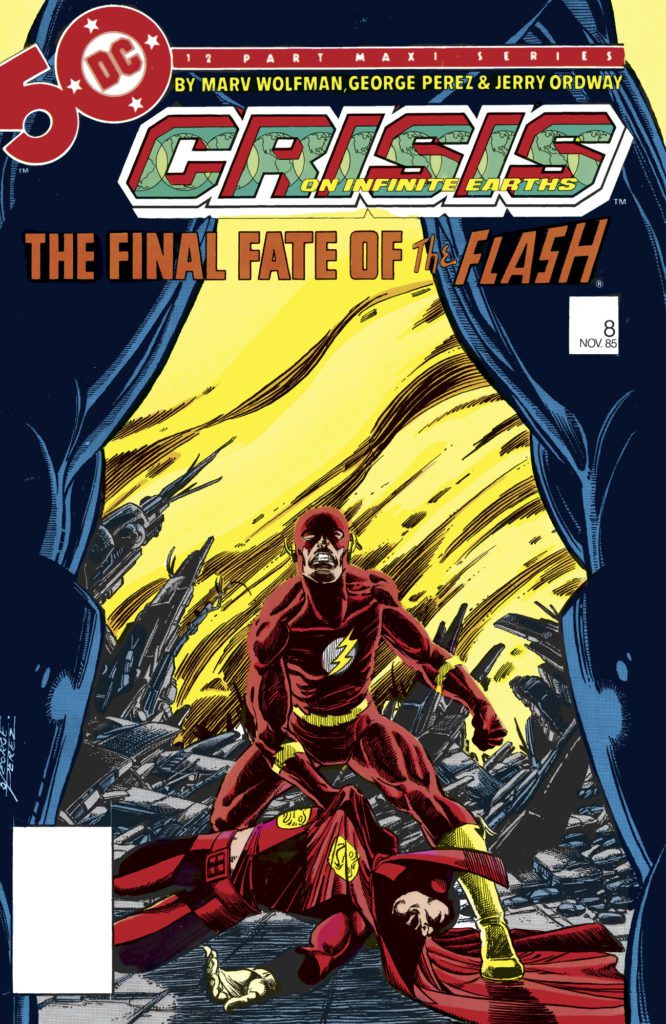
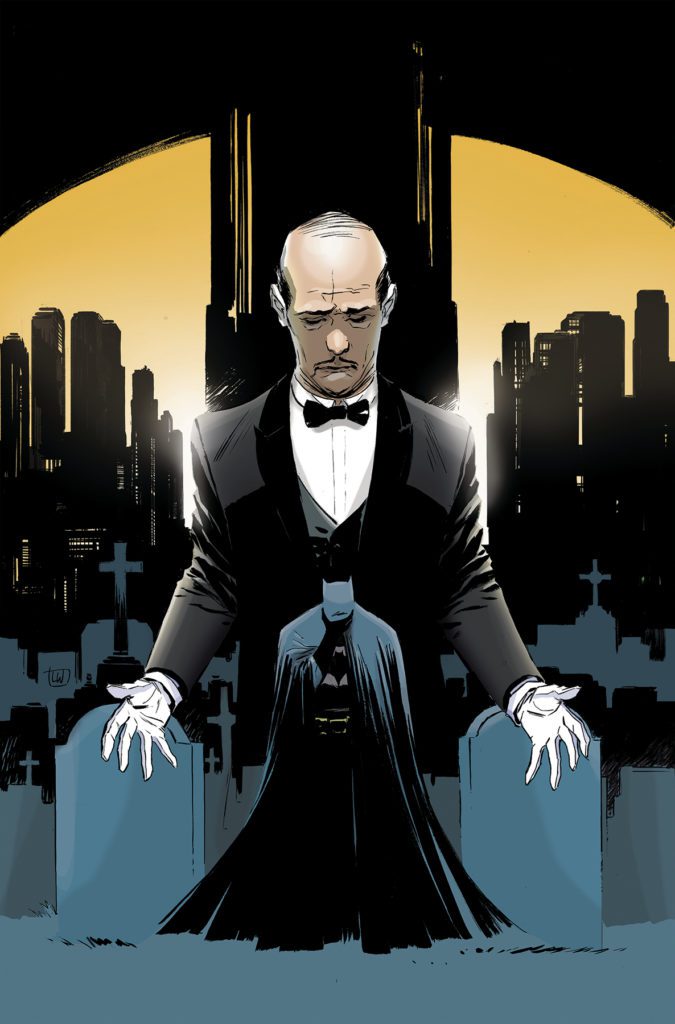
One consequence of this noncommitment to change in superhero comic books that permeates most Marvel and DC Comics characters is the feeling of no stakes during huge events. For example, when DC Comics has a “Crisis” event today, it is never anywhere near as impactful as the original Crisis on Infinite Earths. Even if similar situations occur, such as two major characters dying, it still won’t have the same effect. Because well-versed readers are aware of how infrequently significant changes stick. Even when the publisher decides to keep a major change, such as Alfred Pennyworth’s death in Batman #77, it still doesn’t make a lasting impression since it is a “Boy Who Cried Wolf” scenario. We’ve had Superman, the Flash, Batman (several times), Jason Todd, and Damian Wayne die and then come back to life. Who’s to say that Alfred won’t come walking out of the tomb any day now?

The Flip Side of the Coin

One may argue that this act of returning characters to a well-known state at the end of a writer’s run is a fantastic action because it allows for the first issue of a run to be more accessible to new readers. This is a valid point, as I firmly believe that the superhero comic books (and the comic book industry in general) should put as much effort as possible into drawing in new readers. Still, it does put aside the interests of individuals who have been following a series past the end of a writer’s run in favor of those of a new reader. Also, the only way to keep returning to the same state over and over again is to ignore the character’s long history, constantly reboot, or have such unchanging and boring characters that they don’t shift in any noticeable way after many years. As long as the certain core elements of a character are kept — their heart, philosophy, and ideals — they will be recognizable.  The character will have decades more history impacting their every decision, so whether the character works at the Daily Bugle or not is inconsequential.

Alfred RIP cover -- example of noncommitment in superhero comic books

Conclusion

Claiming that comic book characters have not changed over their extensive history is ridiculous, but it doesn’t take a detective to see that slightly altered versions of the same story have been told again and again for major characters in superhero comic books. They are rarely allowed to grow and learn their lessons, leading to a character that seems either stubborn, stupid, or stuck in an endlessly long streak of bad luck. This doesn’t mean that the storytelling within current superhero comic books is dull — else I would not read so many of them — just that it is disappointing to see a character supposedly growing and changing throughout a run, only to have them continually return to the place they started.

Monkeys Fighting Robots Youtube

Review: THOR #19 Heralds a Powerful New Villain

Thor Cates Marvel

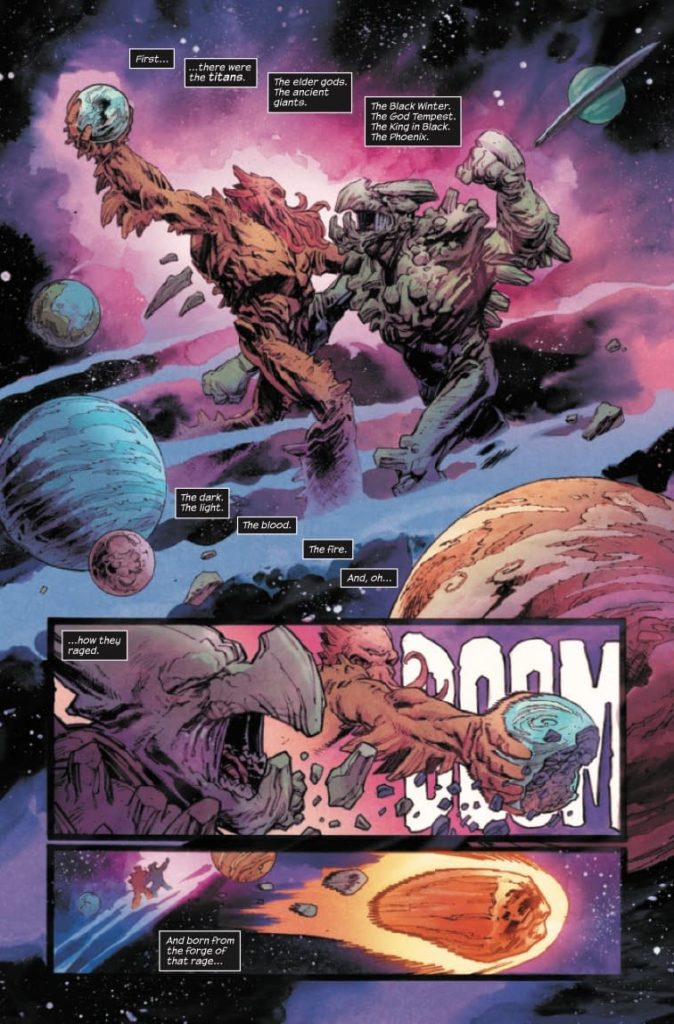
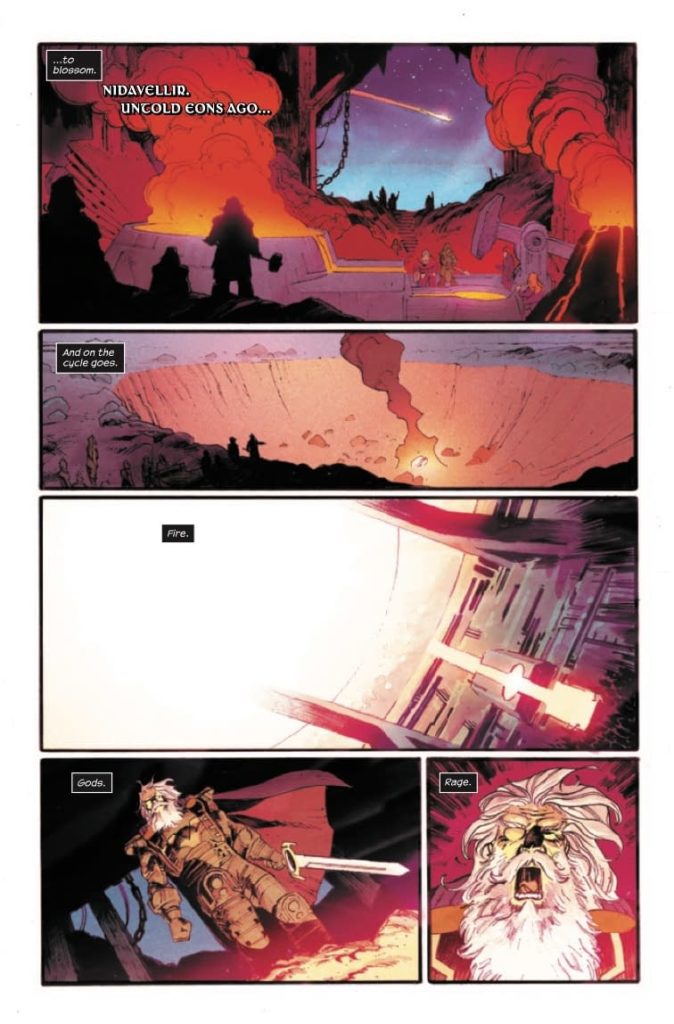
Marvel Comics’ Thor #19 feels like eons of storytelling, boiled down to a sleek 20 pages. Writer Donny Cates, artist Nic Klein, colorist Matt Wilson, and letterer/designer Joe Sabino set the stage for a terrifying new villain to enter the fray. And they do so by going all the way back to the beginning.

About Thor #19 (from Marvel Comics)

“GOD OF HAMMERS” STARTS HERE! Mjolnir has gone missing! And nobody, not even the powerful eyes of Lady Sif, is able to locate it. So Thor must turn to the last person he wants help from…Odin. For until the hammer is found, nobody in the realms is safe! Artist Nic Klein is back for the twists and turns not even the All-Father is ready for!

Writing

Cates shows, in his opening pages, that he can get through huge amounts of exposition smoothly. He gives us a nuanced rundown of the Norse Gods’ entire history. And as he reaches present day, it becomes clear why he took us back in time. To fully understand what’s going to happen next, Cates wants us to know a thing or two about Mjolnir. But as Thor and Lady Sif talk about recent events, Cates briefly gets out of his rhythm. Thor’s dialogue is clunky and expository. It feels more like Cates is telling us what we need to know, not showing us. It’s only really noticeable because Cates’ intro is such a brilliant example of packaging exposition well. And it’s only a small speedbump in a script that feels full of mystery and subtlety.

Thor Cates Marvel

Art

Klein’s art is stunning. He draws in his own unique style, yet occasionally dabbles in the techniques of Jack Kirby. A monster that Thor, Jane Foster, fights in a flashback gives Klein the opportunity to draw briefly like the King of Comics. Even as he does this, he holds on to his own unique style throughout. But it’s more than just his style that makes Klein’s art work so well. He has a way of luring the reader in, before punching them backwards. He brings the reader’s eyes inward, to the center of the page, then uses the action of the scene to push the art back outwards again. It makes you feel involved in the story, like you’re watching each fight closely from the sidelines, betting on who will come out on top.

Coloring

This is a dark time for Thor. He feels like the whole world is against him. But a lot of the darkness is coming from within him too. Wilson has a brilliant way of showing this. When Thor stands on the Rainbow Bridge, talking to Lady Sif, the contrast couldn’t be any clearer. The vibrant colors of the bridge are under his feet. They ought to shine on the whole scene and make things bright. But no, instead the scene is cast in a cold blue light. We see that Thor isn’t letting brightness into his world. Maybe he’s punishing himself, maybe he’s hunkering down for the next fight. But either way, Wilson shows us that Thor definitely isn’t allowing himself to be happy.

Thor Cates Marvel

Lettering

In one of the fight scenes, Sabino makes subtle choices that make big changes to how the scene sounds in the reader’s mind. As two figures fight, one of them grunts and yells each time he’s hit. The font tries to burst past the borders of each word balloon, pushing the edges of the balloon out so that they wrap each letter. When another character swoops in to his friend’s aid, he kicks the attacker in the chest. In response to being kicked, the attacker grunts. Instead of letters that are trying to escape their word balloon, Sabino goes in the opposite direction. He shows a “RAGHH!” that’s written smaller than the rest of the font on that page. Instead of grunting loudly, we hear it as the character having the wind knocked right out of them. They’re barely able to make a noise at all. It’s just one example of the many intricacies to Sabino’s work in this issue.


Marvel Comics’ Thor #19 is a comic that exists to herald a coming doom. This creative team sets everything up for the God of Hammers to take the spotlight. When he does arrive, there will be plenty of dread waiting for him. Pick up Thor #19, out from Marvel Comics November 24th, at a comic shop near you!

Monkeys Fighting Robots Youtube

Review: HULK #1 – Welcome to Starship Hulk

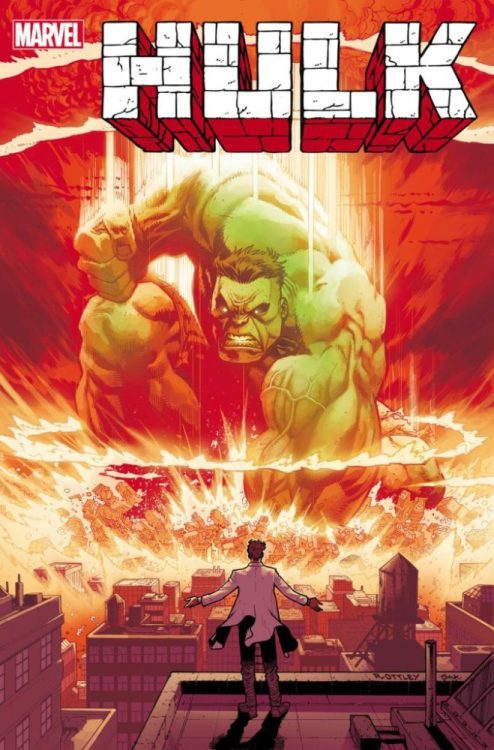
Hulk #1 Cover

Hulk #1, out tomorrow from Marvel Comics, is the first bombastic issue from the new creative team that takes the Hulk in a wildly different direction.

Writing

It is not difficult to argue that the first issue of a series is its most important. Often, it sells the most and has the responsibility of telling the readers what the new series will do differently from its predecessors. Donny Cates makes sure his first Hulk tale stands out loud and proud. Not only does Hulk #1 give us a wildly new scenario that allows for character exploration we have never seen before, but it also is filled with an impressive fight, even for a Hulk book. Cates quickly lets readers know that while we will be treading lots of new ground for our favorite green monster, the epic battles are here to stay.

Art

Ryan Ottley is such a unique and brilliant artistic talent, and it is great to see him putting his abilities towards this character. Hulk #1 has Ottley making abundantly clear that he is amazing at everything vital to the art of the Hulk. Dynamic poses, stunning inhuman muscles, and intricate debris and destruction make it evident that Ottley will not disappoint during his time on this series. Ottley also makes use of dramatic lighting for much of this issue, which pushes already intense scenes to be almost frightening.

Coloring

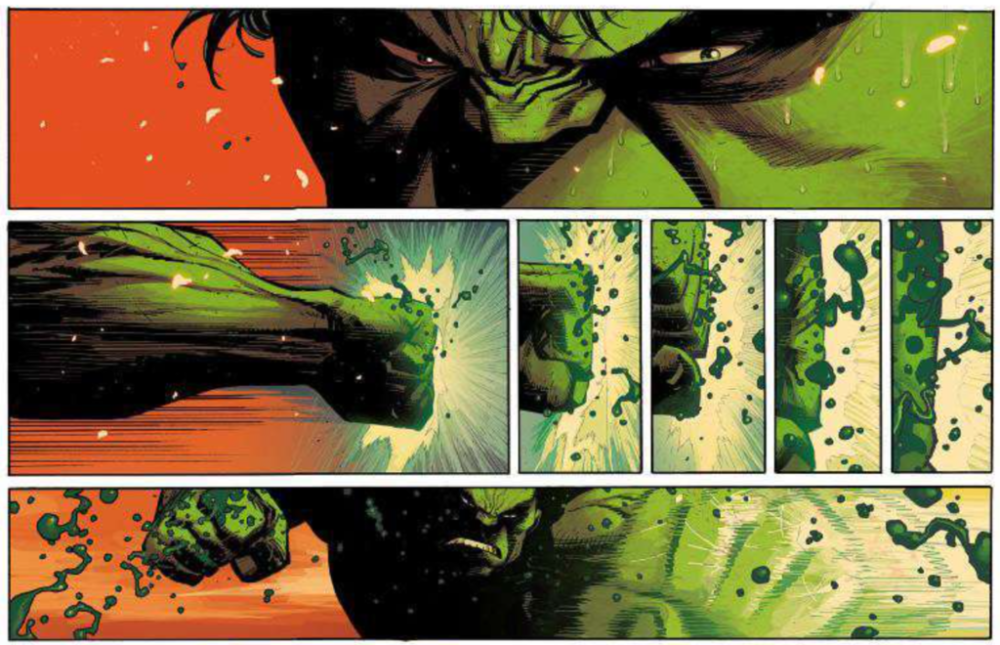
Frank Martin uses a bold and wide color palette for much of Hulk #1, and when he restricts it, the colors present make a strong statement. This can be seen during the final blow of the main fight of the issue, where the brighter and warmer palette is replaced with one much darker and cooler, giving a brutal and merciless tone to this vicious punch. Strong choices like this allow Martin’s coloring to enhance the story and art in a way that could never be present otherwise.

Lettering

The lettering choices that VC’s Cory Petit makes in Hulk #1 fit well with the story and art and help to strengthen the narrative. Examples of this are when Petit uses a bold and jagged font for intense sound effects or description, and when words extend far past the edges of a speech bubble to emphasize their loud volume. Petit’s efforts result in an issue that can flow without interruption, and never takes the reader out of the story for even a second.


Hulk #1 takes the timeless character in an entirely new direction and lets readers know to expect the unexpected. This series has a phenomenal creative team, and if this first issue is any indication, you will not want to miss where this intense story will lead.

Monkeys Fighting Robots Youtube