Wonder Woman director Patty Jenkins took part in a Reddit AMA, and included in it were some interesting pieces of information about Wonder Woman, the film’s inspiration, and her opinion on cinematic universes.
Q: Aside from Richard Donner’s Superman, what other films/Wonder Woman comics influenced the movie?
A:
Casablanca
the original Indiana Jones (Raiders of the Lost Ark)
Geoff Johns let fans know that a big Superman moment is coming on Twitter.
The popular news blog Heroic Hollywood had an article talking about the character’s top five moments in the DC Extended Universe thus far. Johns responded to the piece saying, “Get ready to revise your list”.
While he did not give specifics, it’s obvious to me that he’s referencing Superman’s return in Justice League. However, since we already know the character is returning, Zack Snyder’s film must bring him back in a big way.
How do you think Superman will return in Justice League? Sound off in the comments below.
“Fueled by his restored faith in humanity and inspired by Superman’s (Henry Cavill) selfless act, Bruce Wayne (Ben Affleck) enlists newfound ally Diana Prince to face an even greater threat. Together, Batman and Wonder Woman work quickly to recruit a team to stand against this newly awakened enemy. Despite the formation of an unprecedented league of heroes — Batman, Wonder Woman, Aquaman, Cyborg and the Flash — it may be too late to save the planet from an assault of catastrophic proportions.”
Justice League stars Gal Gadot as Wonder Woman, Ben Affleck as Batman, Ezra Miller as Flash, Jason Momoa as Aquaman, Ray Fisher as Cyborg, Henry Cavill as Superman, Amy Adams as Lois Lane, Amber Heard as Mera, Jesse Eisenberg as Lex Luthor, Jeremy Irons as Alfred Pennyworth, Willem Dafoe as Vulko, and Connie Nielsen as Hippolyta.
Going from supermarket to spaceport, Sausage Party director Conrad Vernon has signed on to direct the animated feature film adaptation of The Jetsons. Somehow, the big screen version of the 1960s animated comedy has managed to yet again crawl its way out of developmental hell. This is just the latest development in a twenty year saga of stalls that include attempts at animated and live action adaptations. Directors like A Walk to Remember‘s Adam Shankman and Sin City‘s Robert Rodriguez were previously attached, before parting ways.
Being mired in a production bog is not reason enough to say that a movie should be abandoned. Dallas Buyers Club was written in 1992 and went through three directors, and Deadpool was in production for a decade. Given their eventual success, it’s safe to say that to have given up on either of them would have been a mistake. The Jetsons’ problem isn’t that it has taken a long time to make. Rather, it’s being made at exactly the wrong time. And unless they are very creative, it will not succeed.
Setting the Stage: Hanna-Barbera and the Adult Sitcom
On September 30th, 1960, at 8:30 PM, Hanna-Barbera changed television forever. They debuted the first adult targeted animated sitcom, about a simple blue-collar family dealing with everyday issues. That family consisted of a crane operator, his loving wife, and later their daughter, as they navigated problems familiar to the average 60’s American family. The day after its premiere itwas deemed a flop by critics, complaining about the low-brow humor and derivative plot lines. In 1961, it would be nominated for an Outstanding Comedy Series Primetime Emmy Award. In total, 166 episodes were produced over six years, and were rerun continuously for fifty years. And it was all built on “Yabba-Dabba-Doo!”
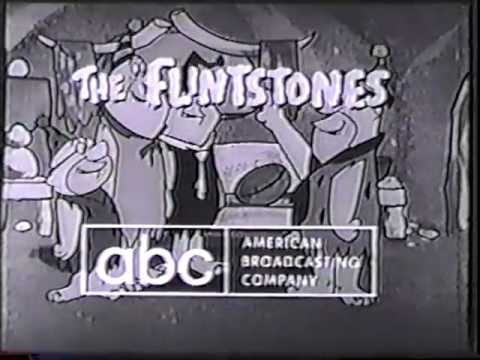
‘The Flinstones’ wouldn’t be broadcast in color (ABC’s first show to do so) until 1962
Hanna-Barbera knew that they had a hit with The Flinstones, and followed up with what seemed a winning formula: the exact same show but set in a space-age city 100 years in the future. The Jetsons premiered on Sunday, September 23, 1962 as the first program in color on NBC. The critical reception was largely the same. The public response was not; the show ran for 24 episodes before moving to Saturday morning syndication. There, like The Flinstones, it would become a cultural powerhouse among succeeding generations of children.
Perfectly Timed Success
The reason The Flinstones and TheJetsons worked so well in syndication is simple: their sitcom premises were recognizable to the adults at whom they were aimed, while the animation and slapstick comedy appealed to the kids on Saturday morning. Both revolved around a “typical” white American family, with a husband who worked at a blue-collar job with a tough boss, a wife who was loving though shopping prone, and kids who got up to all sorts of shenanigans.
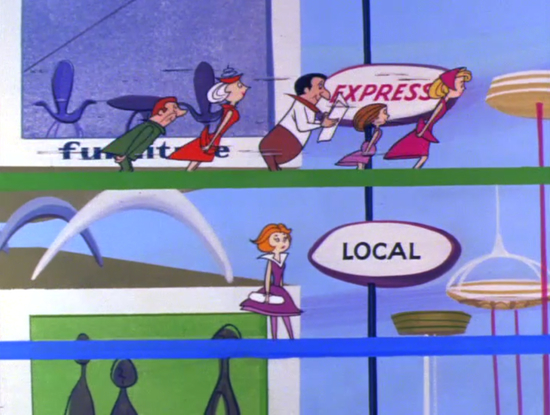
The moving sidewalk as envisioned by ‘The Jetsons’
The important difference between the shows is their setting. The Jetsons was reflective of everything that Space Age America had promised: jetpacks, robots, flying cars, moving sidewalks, etc. Parents could see themselves reflected in George and Jane Jetson’s struggles with new fangled gadgets and disobedient children, while still enjoying the utopian futurist vision painted by the show. As syndicated time passed, kids could enjoy their parent’s increasingly antiquated vision of the future.
Futurism is Now…And it Sucks
The Jetsons succeeded, in part, because it painted a futuristic picture that Space Age America not only wanted, but expected. Of course, that future world is ours now. Things that appeared in the show that are now a reality include: 3D television, moving sidewalks, tablet computers, the computer virus, on-demand virtual exercise programs, and video chat. Others are still in development, like the pneumatic tube transport system that Elroy uses to go to school.
While our technology is the same, the utopia painted by the show is very much absent. George Jetson works 3 hours a day at a job that requires him to literally push a single button, and is still able to give his wife, two children, and dog a middle to upper-middle class life. Even a realistic version of this humorous scenario is, today, unthinkable.
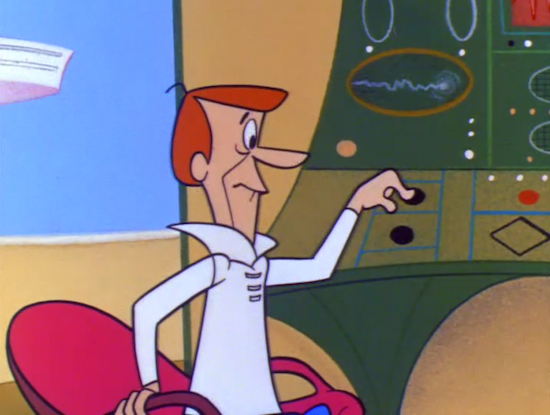
This is George Jetson’s entire career
This lack of futuristic idealism is exactly why a film adaptation of The Jetsons wouldn’t work today. It’s no longer the future; it’s the now, and we know better. The show has taken on a depressing nostalgia, the Boomer vision of the future that never came to be.
There’s Could Still be a Rosey Future
So then how to fix this temporal issue that The Jetsons faces? Vernon and Co. would be smart to look to the show’s perennial sister. The Flinstones had an incredibly successful comic series, published through DC Comics. It ran for a year, and was met with critical appraise. Across just twelve issues, the series managed to bringa sixty year old show into relevance by updating the problems faced by the famous Stone Age family.
Wilma now has a character beyond being Fred’s wife, with complex motivations and desires. Fred and Barney Rubble encounter issues of worker’s rights, the ills of capitalism, racism (against Neanderthals), and changing gender norms. Even Fred and Wilma’s relationship is put into a fascinating social context, with their marriage seen as atypical. This allowed newer readers the same engagement their parents had with the original show. They saw a fairly typical blue-collar family dealing with updated modern issues, in a Stone Age aesthetic.
Biting commentary on capitalism from the ‘The Flinstones’ comic
The Jetsons would be smart to follow a similar route. Their version of a utopia was that envisioned by Space Age 60’s America: technological improvements would allow for easier lives that would change little about the social mechanics of American families. To connect with a modern audience, that falsehood must be addressed.
Jane is the key to this updated story. The typical American sitcom doting mother/wife whose primary personality trait is to shop no longer works. By keeping the idyllic future, supposedly made utopian by their technology, the movie can easily and effectively comment on two things for Jane:
1) This narrative of technology based utopia was already sold to women during the 50s and 60s. Household appliances were going to save them considerable time, “allowing” them to be modern women. Instead, they created higher standards of efficiency, requiring more time to maintain their modern household. Personal assistant devices, smartphones, and on demand companies are creating this same basic principle today.
Household chores made easy in ‘The Jetsons’
2) The future envisioned in The Jetsons is one that promoted no social change in the dynamics of the family, wherein the wife’s job was to maintain the home while the husband worked. In reality, the percentage of women in the workplace increased considerably. The percentage of women with a college degree has tripled since the show’s premiere.
Addressing these points will allow audiences to connect with the characters more than a direct adaptation would. Millennials will recognize the modernity of the story set against a classic background (see: Wonder Woman). GenX and Boomers will have a more realistic nostalgia, seeing both the future they dreamed of, and the one they made for themselves. Kids will have a fun aesthetic, a role model character, and Elroy and Astro.
The marketing cash cow duo that is Elroy and Astro
Even if The Jetsons takes a modern approach to their movie, Vernon and Co. have their work cut out for them. Commenting on a generation, modern technological reliance, gender norms, and more, while still making it funny and family friendly is no easy task. If they succeed, the Warner Animation Group could have a veritable hit. It’s a movie that appeals to four generations and is highly marketable.
Plus, it already has a contiguously catchy theme song.
Do you think The Jetsons film will ever get made? How would you change it for the big screen? Let us know on Twitter and Facebook, and in the comments below!
Marvel finally revealed the first look at next year’s Black Panther Friday night during the NBA finals. Andy Serkis returns as his Avengers: Age of Ultron character Ulysses Klaue. He offers Martin Freeman’s Everett K. Ross some seemingly vital intel. But the real stars here are the glimpses of Wakanda and its king.
Marvel Studios’ “Black Panther” follows T’Challa who, after the death of his father, the King of Wakanda, returns home to the isolated, technologically advanced African nation to succeed to the throne and take his rightful place as king. But when a powerful old enemy reappears, T’Challa’s mettle as king-and Black Panther-is tested when he is drawn into a formidable conflict that puts the fate of Wakanda and the entire world at risk. Faced with treachery and danger, the young king must rally his allies and release the full power of Black Panther to defeat his foes and secure the safety of his people and their way of life.
Black Panther stars Chadwick Boseman, Michael B. Jordan, Lupita Nyong’o, Danai Gurira, Martin Freeman, Daniel Kaluuya, Letitia Wright, Winston Duke, with Angela Bassett, with Forest Whitaker, and Andy Serkis.
The film is directed by Ryan Coogler and produced by Kevin Feige with Louis D’Esposito, Victoria Alonso, Nate Moore, Jeffrey Chernov and Stan Lee serving as executive producers. Ryan Coogler & Joe Robert Cole wrote the screenplay.
New Mutants is shaping up to be a different kind of comic book movie.
What’s more, it won’t feel like a superhero film, according to reports.
Director Josh Boone a “full-fledged horror movie set within the X-Men universe.” In an interview, he calls it “a darker and more surreal and impressionistic X-Men.”
“You can’t have a bigger nerd or fan making this. It’s so important to me,” he says. “I’m not the 12-year-old who decided to write Stephen King a letter and loved Marvel Comics anymore, but I try to hold myself accountable to that kid. Because that kid is what keeps me from becoming a Hollywood whore. I look back and think: Would he think this would be cool? Would he proud of me? Did I fulfill the dream we had when we were kids?”
In fact, the movie isn’t going to feature the team’s uniforms. “There are no costumes. There are no super villains,” Boone says. “We’re trying to do something very, very different.”
From these details, it is clear New Mutants won’t feel your traditional X-Men movie. Rather, it will be like a coming of age film akin to many YA stories. No doubt this will make for a nice change of pace.
For his part, Boone is looking forward to the “Stephen King meets John Hughes” direction of the movie. “We love that Fox wants to make all these different X-Men spinoffs as drastically different as they can,” Boone says.
A new synopsis is as follows: “Held in a secret facility against their will, five new mutants have to battle the dangers of their powers, as well as the sins of their past. They aren’t out to save the world — they’re just trying to save themselves.”
The cast includes Maisie Williams as Wolfsbane, Anna Taylor-Joy as Magik, Charlie Heaton as Cannonball, and Henry Zaga as Sunspot. Rosario Dawson is also in talks for a role.
It’s 1955. The life of a superhero is often a lonely one. And, though heroes and heroines periodically form super teams, more often than not super individuals must retreat back to their secret civilian identities and singularly bear the burden of keeping their identities super secret. There are exceptions to this rule: obviously right off the bat Bruce Wayne (Batman) and Dick Grayson (Robin) knew of each other’s secret identity, and Clark Kent (Superman) and Bruce Wayne have similarly known of each other’s crime-fighting persona since they took a cruise together back in 1952.
But what of companionship? Both Bruce and Clark have difficulty finding steady girlfriends. Bruce, too dedicated to his crusade against crime, hardly has time to meet a romantic partner except during Catwoman encounters. And Clark, who only has eyes for Lois Lane, finds himself in a continual battle for supremacy with his own super-identity. Superman provides stiff competition.
So, I refer to what Johnny Cash once said — or will say 13 years in the future if it’s 1955 — “You know, the man’s best friend is his dog, if he’s got nothing else.” Let’s talk about the first appearances of Superman’s and Batman’s best friends, the super dogs Krypto and Ace the Bat-Hound. I’ll try not to make this too “ruff.”
“Krypto! Another wall? That’s it! No cookie!”
Super Dogs: A Shiny Bulletproof Coat
The first of the super dogs to hit magazine racks was Krypto back in Adventure Comics #210, with a cover date of March 1955. Written by Otto Binder with pencils by Curt Swan, Krypto retroactively worked his way into a young Clark Kent’s heart in this issue’s Superboy story. For the uninitiated, Superboy stories from the ’50s told stories of Superman’s youth growing up in Smallville. This proves that even in 1955 prequels were popular.
The story opens on the Smallville dog catcher rounding up strays, one of whom breaks out of the dog catcher’s truck by smashing through a wall. An overworked Superboy re-catches the mutts and fixes the dog catcher’s vehicle. But after completing this good deed, Superboy notes that one of the dogs escaped him. There’s no time to waste finding the mutt, though, since a young Clark must help his father out at the store.
But, quite early on in Clark’s shift, burglars make off with the contents of his father’s cash register. Clark is just about to change into his super garb when a dog rushes the robbers. Thinking the dog a mad stray, the thieves open fire. But, they’re alarmed when the bullets bounce off of the angry canine. Clark is able to discreetly disarm the thugs, and eventually police assistance arrives.
Super Dogs: It’s A Bird, It’s A Plane, It’s Superboy Chasing A Flying Dog … ?
Shortly after the police arrive, the bulletproof dog literally takes off and Superboy pursues. And, after sensing with his super-intelligence “for a dog, that is,” that Superboy is confused, the mutt leads Superboy to a crashed green rocket very similar to the vessel that brought Clark (Kal-El) to Earth. A letter signed by Jor-El states that Krypto was both the initial test pilot for the prototype of the rocket that brought Kal-El to Earth and Kal-El’s pet.
Super Dogs: Lost Dog/Kryptonian Test Pilot
The rest of the issue involves Superboy doing damage control for a frisky Krypto. Krypto uses a steel beam from a bridge as a toy. Superboy fixes it. Krypto tears the wing off of an airplane. Superboy fixes it.
Eventually, Superboy chains his dog up on a remote island. But one morning when he takes Krypto off leash, the super dog again takes flight. Unfortunately, this time Krypto makes a beeline for deep space. Noting that to super dogs the universe must be like a gigantic backyard, a sombre Superboy hopes that Krypto might “come back once in awhile, j-just to say hello.”
“I love any excuse to put a mask on a dog, Robin!”
Super Dogs: His Bat-Bark Is Worse Than His Bat-Bite
Shortly after the slightly heartbreaking end to Superboy’s interaction with super dogs, three months after to be precise, a similar story, written by Bill Finger and penciled by Sheldon Moldoff, appeared in Batman #92 (cover date June 1955). On patrol in the Batmobile, Robin spots a dog drowning in a river. After saving the dog, the dynamic duo bring him back to the Batcave and decide to put an ad for the lost dog in the paper (giving Bruce Wayne as the contact).
The problem apparently in hand, Batman and Robin respond to a call from police headquarters, but their furry companion chases the Batmobile on its route. Realizing that the dog, advertised in the paper as being under the care of Bruce Wayne, will give away their secret identities, Batman and Robin pick the dog up, Robin holding it while Batman meets with Commissioner Gordon. Robin fashions a mask for the lost dog, Ace, recognizable without his mask because of a distinctive mark on his head.
The masked canine helps Batman and Robin apprehend an escaped convict who, during his protest at being bitten, calls the dog a Bat-Hound. Batman and Robin agree that this would be a good name for the dog if he were able to join their team.
Super Dogs: An Ace Crime-Fighter
But the next day, Bruce gets a call about the lost dog’s owner. A neighbour identifies the dog as belonging to John Wilker. Bruce and Dick go to Wilker’s house but it appears to have been the scene of a struggle. Further investigation finds that Mr. Wilker hasn’t reported to work for two days. Before long, the dynamic trio is on the case.
After performing a few crime-fighting and philanthropic deeds (including saving a lost boy from a drainpipe), the trio responds to a burglary at a paper mill. Ace has a strong reaction, starting to growl almost as soon as he arrives. Batman determines that the thugs who robbed the mill must be the same ones who kidnapped Mr. Wilker. They follow Ace the Bat-Hound, following the criminals’ scent, to the Eastern Printing Ink Company.
Finding the thugs, but caught flat-footed when the gangsters threaten Mr. Wilker, Batman, Robin, and Ace are all subdued. The crooks reveal that Mr. Wilker, a professional engraver, was kidnapped so that he could help them print counterfeit money.
The crooks move Batman and Robin, bound hand and foot, to a cabin on the outskirts of town. Ace, knocked out by a thug back at the Eastern Printing Ink Company, is unexpected to provide help.
Super Dogs: A Suspicious Snapshot
Luckily, Batman and Robin are able to MacGyver an improvised Batsignal using Batman’s chest emblem and an old lamp. They shine the signal out of the chimney of the cabin. And, the keen eyes of Ace the Bat-Hound see the signal. Ace rushes to the rescue and chews through the ropes that bind Batman and Robin. The reunited trio take on the thugs.
As the fight ends, Mr. Wilker unmasks the Bat-Hound and finds that it’s his own dog, who’s supposed to be in the care of Bruce Wayne. An on-the-scene reporter asks Batman if this means that Batman is secretly Bruce Wayne. But, Batman produces a snapshot showing Bruce Wayne giving the dog to him. Batman claims that Bruce Wayne gave him the dog in order to help track down Wilker. Robin, on the other hand, knows that the snapshot is a photo of Bruce with their trusty butler Alfred wearing the Batsuit as a disguise.
The dynamic duo thank Mr. Wilker for his dog’s help. Robin tells Ace that his position as Bat-Hound is open should he ever want it again.
Super Dogs: Final Thoughts
It’s interesting to note that Batman #92 hit magazine racks just three months after Adventure Comics #210. It seems that Bill Finger must have been responding to something, whether it was DC’s demands or fan reaction, when he wrote his super dog story.
I don’t have any sales figures for Adventure Comics #210. But, I imagine that stories about dogs have always sold well, especially to a mid-’50s readership intent upon analogizing everything to the nuclear family. And, because sales for one super dog were probably very good, the powers that be might have thought that, in the unpredictable and ever-changing medium that comicbooks represent, super dogs were the new standard. Either way, these stories represent important milestones in both Batman’s and Superman’s rise in becoming DC’s flagship characters.
For my money, I think the better superhero tale is the Batman one. But, in terms of heartstring-tugging moments, it’s tough to beat Superboy lamenting the loss of his space-faring super doggy, the only tie he has with his home planet. A sad ending indeed for anyone who has lost a pet, super or otherwise.
If there ever were a streaming service that knows its audience its YouTube Red. Netflix is going through a period of throwing spaghetti at the wall, and they certainly use nostalgia to their advantage. YouTube Red, however, takes a different approach. For starters, as a website with entirely user-generated content, they don’t need to go too far to understand what their audience likes. At 9.4 million subscribers, it’s clear that fans love violinist/dancer extraordinaire Lindsey Stirling. The entertainer turned 30 and celebrated her career with a documentary called Brave Enough. But is she interesting enough?
Quick answer: yes. Lindsey Stirling is something of a unique talent. There aren’t a lot of pop violinists making a living out there and even fewer who do it with Stirling’s wild dance moves and sense of performance. If you’ve never watched Stirling perform, then that’s reason enough to watch Brave Enough (or watch the video below). If the drama behind the stage isn’t exciting, then the look into her performances certainly will be.
Stirling’s Brave Enough doesn’t break any new ground here. However, it doesn’t need to. This doc is to service her fans and maybe create new ones. Stirling’s combination of violins, dancing, and modern beats, guitars, and more is all the groundbreaking that needs to be done. The young woman is in a category all by herself. Put it this way, outside of classical music nerds, who thinks the violin is a “cool” instrument? Few people. But thanks to Lindsey, there are nearly 10 million people who know it’s an incredible musical instrument.
The important message in Lindsey Stirling: Brave Enough is about Lindsey overcoming the challenges that life throws at everyone. She had a talent and passion and let it drive her forward to meet life head on. When things got dark, talent and passion turned up the light, but it all didn’t happen with a lot of handwork along the way.
AfterShock Comics has a new creator joining their growing family! Writer Jai Nitz (El Diablo, Suicide Squad Most Wanted) is bringing readers Fu Jitsu, a new action comic with art by Wes St. Claire (Teen Titans Annual).
Check out the details below, along with a preview of the first issue!
FU JITSU #1 / $3.99 / 32 pages / Color writer: Jai Nitz
artist: Wes St. Claire
cover A: Wes St. Claire
cover B: Greg Smallwood
Fu Jitsu is the world’s smartest boy, and has been for the last hundred years. Wait, what? Fu is an un-aging genius, and has had adventures around the globe and around the galaxy. From Einstein and the Wright brothers, to Gandhi and Johnny Unitas, Fu has met everyone in history while protecting Earth from Robert Wadlow, the world’s tallest man, and his dangerous magi-science.
Fu exiles himself to Antarctica to try to forget the painful break up with his ex-girlfriend, Rachel. Meanwhile, Wadlow returns from the far-flung future and sends James Dean, his ultimate assassin, to kill Fu at the South Pole. And you thought your teenage years were tough?
From Jai Notz, the award-winning writer of El Diablo, Suicide Squad Most Wanted and Dream Thief, comes this action-packed new series with art from Teen Titans Annual artist Wes St. Claire!
[Jai Nitz] on why comic book readers should add this title to their pull list:
“Fu Jitsu should be on everyone’s pull list because it’s a comic book for comic book readers. Fu Jitsu has more in common with early Hellboy than it does with End-Around-Movie-Pitch-as-a-Graphic-Novel. Wes St. Claire and I are here to make COMICS. We are sequential storytellers. We want to knock your socks off with a comic the way Walt Simonson or Howard Chaykin or Jim Starlin knocked you on your butt with the power of words and pictures. That’s our goal. We want to capture and keep comic book readers and take them on a journey every issue. If every issue is as satisfying to read as it is to write and draw, we’ll have done our jobs well. Everyone wishes they’d have taken a chance on Hellboy #1, or Calibur Presents #1 (1st app. The Crow), or God Country #1. But the talent inside was largely untested, and concept was alien, so people passed. Now, you’ll pay a pretty penny for each. If new readers try Fu Jitsu #1, I think they’ll be pleasantly surprised as readers, collectors, and fans.”
[Jai] on why this book was brought to AfterShock Comics:
“Fu Jitsu belongs at AfterShock because of the people behind the scenes in publishing from the top down. I’ve known (publisher) Joe Pruett for 15 years thanks to Phil Hester. Joe has an amazing eye for talent and he’s discovered a bunch of creators who are now industry giants. Joe sees angles for publishing, marketing, and distribution that elude other publishers. Joe knows a ton about the industry and how it works. Editor in Chief Mike Marts is another great reason. Mike also has a great eye for talent, that’s why I think Wes St. Claire is going to blow up after Fu Jitsu. I’ve known Mike for about 15 years too, starting with his first run at Marvel. He has only increased his reputation and footprint in the industry since that time. When AfterShock hired Marts I said, “oh, they’re SERIOUS,” because I knew what kind of business plan they would have to have in place to lure one of the biggest and brightest editors in comics into their fold. That’s a testament to AfterShock’s long-view plan, their backing, and Joe Pruett. Besides them, every person I’ve met on their team including Lisa Wu and Mike Zagari has been professional, adroit, and intelligent. Finally, AfterShock has such a good deal for creators. Look at their stable! Ellis, Ennis, Waid, Layman, Jenkins, Cates, Hester, Palmiotti, Conner, Harris… I could go on, but that’s just off the top of my head. I want to be in that club. AfterShock earned those creators, and they were fair to me and Wes, so Fu Jitsu is in amazing hands. Deadly hands. Of Kung Fu. Or something like that.”
Fu Jitsu #1 hits shelves on September 27. Will you be picking it up? Comment below and let us know!
AfterShock Comics has just launched a contest for both fans AND retailers surrounding their new horror book Babyteeth.
For those not familiar with Babyteeth, a quick summary:
“Sadie Ritter is sixteen years old, nine months pregnant, and scared out of her sweet nerdy mind. Having a baby that young is tough, but with the support of her loving family behind her, everything should be okay. OH YEAH, and also her baby is the antichrist and it’s going to break open the barriers between the earthly and demonic planes and unleash eternal suffering to all of humankind. Other than that, though…should be fine.
From [Donny Cates] the writer of Buzzkill, Paybacks, Redneck and the break-out hit God Country comes a pulse-pounding new series with art from THE REVISIONIST’s Garry Brown!”
Fans have the chance to win retailer exclusive variants for Babyteeth #1, while retailers original sketch covers from the book! The contest is super simple to enter; check out the details below…
ENTER TO WIN!
AfterShock Comics want to give back to fans and retailers. No purchase necessary, just be on our newsletter lists to win! Fan Contest: A) DAILY WINNER: One of the BABYTEETH #1 retailer variants B) GRAND PRIZE WINNER: A copy of each BABYTEETH #1 retailer variant, 30 comics total (announced at the end of contest)
Sign-up for FREE between June 8th and July 5th 2017 here: http://bit.ly/ASarmy Retailer Contest: TWO GRAND PRIZE WINNERS: Each retailer winner receives an ORIGINAL SKETCH cover by Garry Brown and an ORIGINAL SKETCH cover by Mike Rooth.
Sign up for FREE between June 8th and July 5th 2017 by emailing your Store Name, Diamond Store Number, and physical address to: Retailers@aftershock.ninja
Movie lovers everywhere have two great options out this week on DVD and Digital HD in the live action Beauty and the Beast and Bambi. Here are five reasons why everyone should give these releases a chance.
In the Beauty and the Beast release, there are features such as a complete breakdown of how they used motion capture technology to bring the beast to life. It’s amazing to see how technology has evolved.
4. Walt Disney Himself
How often do you get to hear from the legend himself about what went into developing one of the most lauded animated classics of all time? Check out this clip from the Bambi release.
3. Céline Dion Does What She Does Best
Céline Dion is one of those rare performers whose talent has stood the course of time. She played a significant role in the original animated classic and had a big role in the live action film. There’s a featurette on the Beauty and the Beast DVD where she spends time discussing her contributions in both films. It’s well worth the watch.
2. Deleted Scenes
In Beauty and the Beast, the deleted scenes don’t have the same flair as they do in the Bambi release. However, Beauty and the Beast does have the most hilarious deleted scene where Lefou meets Monsieur Toilette. Bambi’s deleted scenes included commentary from Walt Disney himself, and that was way cool.
1. Enhancements
In the Bambi release, the 2D animation of the animals is enhanced in such a drastic manner that they pop off the screen. The only downside is when the animals stand out that much, the background of the scene seems flat and less realistic than in the original release.
In Beauty and the Beast, we can get an “enhanced” look at how all the musical numbers were staged. The most interesting part was when they pulled off “Be Our Guest.”
What is your favorite scene from ‘Beauty and the Beast?’ Comment below.