The World’s Mightiest Mortal is getting his first big-budget movie, but Dwayne Johnson won’t be in it.
Shazam will be shooting early next year, according to reports. The movie is to begin filming in February 2018. However, Johnson is not going to appear as Black Adam.
Geoff Johns, DC’s chief creative officer, confirms that the Fast & Furious actor will sit this one out. The reason is due to the upcoming Black Adam film.
“We haven’t announced any casting yet,” Johns says in an interview. “But Dwayne isn’t going to be in this movie. He’s still doing Black Adam, but he won’t be in Shazam!”
Based on this news, it looks like Johnson’s DCEU debut will be in Black Adam. The plan is to have the former WWE star headline a solo movie, which will set him up as an anti-hero. Johnson is also producing the film with Warner Brothers and New Line Cinema.
According to The Hollywood Reporter, Black Adam will then appear with Shazam in future DCEU movies. Whether or not he’ll take on the Justice League remains to be seen.
Who Shazam will face in the first movie is unknown. Since Adam won’t be in it, there is always the possibility of Doctor Sivana. In DC lore, Sivana is a mad scientist and the arch-rival of Shazam. Ironically, it was Sivana who inadvertently gave him the nickname “the Big Red Cheese.” While he mean it as an insult, people use it as a term of affection for Shazam.
Then there’s always the possibility of Mr. Mind. In the comics, Mr. Mind is an alien worm that can control people’s thoughts. The character is a recurring for Shazam over the years. During Jeff Smith’s Shazam and the Monster Society of Evil, he is the main villain of the 2007 miniseries.
Another option is Captain Nazi, a genetically-modified soldier who was built to be the pinnacle of Nazi Germany. He’s also the one who cripples Captain Marvel Jr. in the comics. Don’t know how this would go over well with film audiences, though. Plus, Marvel Studios has done the World War II angle with some villains. Wonder Woman had German villains, but that was set in World War I.
David F. Sandberg is going to direct Shazam. No word yet on who is starring as the World’s Mightiest Mortal in the film. Nor are there any updates on who will play his alter-ego Billy Batson.
Podcasts have been around for over a decade, but the last few years have seen a boom in popularity. It’s truly amazing what someone can do with a couple of microphones and an idea. Lauren Shippen, an actress and singer, took it upon herself to write and produce a narrative podcast, complete with a cast, foley, and score. This podcast, The Bright Sessions, has garnered much praise from fans and critics alike.
The Bright Sessions is a sci-fi podcast that follows a mysterious therapist and her unique set of patients, each struggling with a supernatural ability. Created and written by Lauren Shippen, the acclaimed podcast has been downloaded over 6 million times.
And now, Universal Cable Productions is currently developing a TV adaptation of The Bright Sessions. Gabrielle G. Stanton (Grey’s Anatomy, The Flash) and Shippen are penning the TV adaptation.
You can listen to The Bright Sessions podcast from the very beginning on iTunes, SoundCloud, and other podcast streaming services. New episodes will begin airing in October.
Monkeys Fighting Robots had the chance to ask Lauren Shippen a few questions about The Bright Sessions, and making her own path to success. You can read the full interview below:
MFR: When did you contract the “acting/writing bug?” What was it that made you realize, ‘this is what I’ll be doing the rest of my life?’
Lauren Shippen: I grew up in a really creative family – I’m the only one who actually works in entertainment, but my parents were always exposing my sister and me to all sorts of art and we were performing musicals in our living room from a very young age. So it was always somewhat on my radar as a thing to do. But I think it was seeing Sutton Foster in Thoroughly Modern Millie on Broadway in 2001. I was 10 years old and here was this young woman commanding a stage in a way that was completely mesmerizing. She was singing, tap-dancing, acting – the whole nine yards. I remember sitting in the theatre thinking, “This. I want to do this.” That show really spurred my interest in pursuing musical theatre as a craft, which eventually led me to my love of acting overall.
Writing was always one of those things that I did sort of secretly. Along with theatre, reading was a really big part of my upbringing and after reading The Lost Years of Merlin by T.A. Barron, I became obsessed with fantasy. From the moment I could, I started writing little fantasy stories. Coming up with worlds and characters was so fun for me, but it never occurred to me to share any of those things with anyone. I don’t know if it’s that I never had any finished product to show or that I didn’t think I was any good (and, having dug up those old stories, I wasn’t any good), but talking about it or sharing it seemed too scary. I wish I had, regardless of how bad those stories were, because sharing your work is such an important piece of becoming a better writer.
MFR: Who are your major influences?
Lauren Shippen: T.A. Barron is definitely one of the earliest big influences – reading his Merlin series primed me to love Harry Potter when my sister handed it to me and both series sent me down the fantasy rabbit hole. That eventually led to my love of sci-fi, which got me into watching all of Joss Whedon’s shows, Battlestar Galactica, The X-Files, etc. Those shows along with mystery (Twin Peaks, Veronica Mars) that really made me love TV and think about film/television as a potential career path. Whether or not I realized it at the time, I learned a lot from those shows about how to structure a story, what makes compelling character dynamics, and how to write dialogue.
My major overall influence is Stephen Sondheim. I grew up on his musicals and still listen to them obsessively. You can find words of wisdom about literally any topic in his shows and there are very few people that understand and craft language as well as he does. About half my brain is Sondheim. Another thirty percent belongs to Phillip Pullman, who absolutely destroyed me with the His Dark Materials series. Those books had such a major affect on who I am in a way that not even Harry Potter did.
MFR: When and how did you stumble upon using the Podcast medium to tell The Bright Sessions?
Lauren Shippen: By the time I was thinking about telling this story, I’d been listening to podcasts for quite a while. But in 2014, I started listening to Welcome to Night Vale and that was the first time that telling a fiction story in podcast form seemed like a possibility. I knew I wanted to make something and had this character of a girl with anxiety who can travel to other dimensions for a while and when I heard WTNV, podcasting seemed like the perfect answer. It’s inexpensive, I could do everything on my own, and I didn’t have to worry about visuals.
MFR: What was your biggest challenge in the production of The Bright Sessions Podcast? How have you been able to overcome that challenge?
Lauren Shippen: This answer has changed so much in the course of two years. In the beginning the whole thing was a challenge. I wasn’t an expert at any aspect of production – I knew a little about writing, a little about recording, and a little about sound editing. So I spent a lot of time watching YouTube tutorials and just winging it. Then when I made the thing and wanted to get it out there, finding an audience was the challenge. Many, many hours on twitter, Tumblr, and Reddit later, we started to get listeners.
Since then, the challenge has been keeping up with production and handling what feels like a rapid expansion. While I don’t have to spend hours on the internet asking people to listen, we now have people to respond to, more actors to schedule, a merch store to run, a Patreon to maintain, and so on. Somewhere in there, the scripts have to be written and that’s where the challenge stays the same. Finding a balance between staying true to the characters and the story and keeping things fresh and interesting was tough in the beginning and it’s tough now. I always worry about jumping the shark or letting things grow stale or disappointing the amazing listeners we have. My only way of dealing with this kind of doubt is to always bring it back to the characters. When I take some time away from all the nitty-gritty production stuff to just have a conversation with my characters (sometimes a literal, out loud conversation – I almost never work in coffee shops for this reason), things usually become clear.
MFR: Was a TV show something you thought about when initially creating the concept?
Lauren Shippen: It was definitely something I thought about it the way that, when I was 16, I thought about what my Tony Awards acceptance speech would be. It was a total fantasy. There was definitely a thought in the back of my mind that, if the podcast did really, really well, maybe ten years down the line I could try to adapt it for television. There are so many characters and stories within the podcast story that I haven’t been able to tell because of the constraints of our production – when those things came up, I would always think about how fun it would be to play in a bigger sandbox.
MFR: Will there be any changes to The Bright Sessions story when being adapted from a Podcast to TV series?
Lauren Shippen: Yes. Those stories and characters that have been sidelined because of the limits of the podcast will hopefully get some attention in the TV show. Then there are things that I want to change because I won’t be limited by recording with two mics in my bedroom – we can get out of the therapy room from the start, have characters interact more rather than refer to those interactions. This is also an amazing opportunity to get a second chance at aspects of my story that I wasn’t happy with. Hindsight is 20/20 and I think a TV adaptation will benefit from that and from the fact that I have Gabrielle Stanton bringing a new perspective. I think with any kind of adaptation, you can’t do a direct translation, especially when considering the differences in medium. But at the end of the day, the central things – who the characters are and how they relate – will be true to what the audience already knows and loves.
MFR: What advice can you give any creative/artist/entertainer – be it in podcasting or acting or any arts/entertainment medium – trying to break into their respective industry?
Lauren Shippen: No one likes networking, but get to know people that are in your industry. Reach out to people you admire, work on friend’s projects, surround yourself with other passionate, creative people. “Working for exposure” is a really dangerous trend in the industry, especially for actors, but I think when you’re starting out, it can be helpful to learn on the job by volunteering to help out with projects. Take classes and stretch outside your comfort zone. I think all actors should try writing, all writers and directors should take an acting class and everyone can benefit from taking an improv class. Find new ways to challenge yourself.
The best hard advice I’ve ever gotten about this industry came from my uncles who are both in musical theatre. When I started to get serious about acting, they told me, “If there’s anything else that makes you just as happy, do that instead”. It’s a tough thing to hear, but so vital. This is not an easy industry and, in my opinion, not worth pursuing unless you really, really love it. While I ultimately discovered it wasn’t just acting that made me happy, my need to tell stories has kept me plugging away even when things are tough. I can’t imagine doing anything else. If you don’t feel that way, there are so many other fields to feel lukewarm about that you can actually earn a living in.
Related to that (but on a positive note), if you discover that this is your passion, follow it. “Follow your dreams” sounds like dumb, trite advice, but I think it’s important to focus on projects that you’re passionate about. That doesn’t mean you can do it 100% of the time (we all work on things that we enjoy but don’t occupy our minds 24/7) but if there’s something that you absolutely cannot shake – a story, a new way of doing something, a character – do what you can to bring that to fruition. It doesn’t matter if you think you can’t (you can) or if you think the story has been told before; it hasn’t been told by you. if you’re passionate about it, it is worth doing. I’ll cheat here and use words from Stephen Sondheim that everyone who knows me is probably sick of hearing at this point because I quote it constantly. But it’s the best piece of artistic advice that I’ve ever encountered: “Anything you do, let it come from you, then it will be new. Give us more to see”.
Could Warner Bros Interference Be The Downfall of Justice League?
As negative news stories make its round in the trades, it becomes more apparent something is wrong with Warner Bros. and Justice League. The drama is noticeable when director Zack Snyder removed all things related to the movie from his Twitter. Snyder must’ve known it would stir the pot. This Twitter drama came days ahead of a major Warner Bros panel at SDCC and followed months of behind-the-scenes drama.
A few days ago when Variety broke the story about costly reshoots, the film got another slashing from the media. At the center of that news story is Joss Whedon. There are talks that his reshoots would cost about $25 million and take longer than most post-production reshoots. Things also get messy when discussing if Whedon will get a directing credit for the film. Some reports say he will share the credit, while others report he is credited as producer and screenwriter. This type of report isn’t the first issue for Justice League, but it is one of the more problematic situations.
But what is the inciting incident for this growing dilemma? Finding the root of all this drama is hard as there’s plenty of factors leading to this.
“Yeah, Geoff and I have had a great working relationship, even on Batman v Superman, and on Wonder Woman we worked together really closely, and we have a project coming up that we want to do together… I can’t talk about that.”
-Zack Snyder on working with Geoff Johns
Zack Snyder’s relationship with DC and Warner Brothers goes back years. Nothing felt off until the backlash of Man of Steel. Box office returns were fair, but the grim take on Superman angered comic book purist. The relationship between studio and director was damaged more with the handling of Batman v Superman. Like his usual persona, Snyder ignored most of the hate towards his first DCEU film and went forward with his vision. Warner Brothers saw that and stepped in with their theatrical cut.
Everyone had re-grouped, and Justice League was on the way. Tragedy sadly struck Zack Snyder’s personal life, and he attempted to work through it. It would come out soon that he needed to take time off and he would not be working on re-shoots. Joss Whedon, who allegedly was working on re-writes and some reshoots, announced that he’d be stepping in and completing Snyder’s film.
“We were saddened by the events that caused Zack Snyder and Deborah Snyder to have to leave and turn the reins over to Joss Whedon. He was already working with us on some of the scenes for the additional photography that we’re gonna be doing shortly, and it was fortunate that Zack convinced him, and he agreed to step in and finish the movie, help Zack finish his vision, and we’re excited about that.”
-Producer Charles Roven
Original reports said Whedon would provide “connective tissue” between the set pieces. That would include some added dialogue for team building and exposition. One of his first moves was firing Junkie XL and replacing him with Danny Elfman. That sounds more like an entire reworking than a “reshoot.”.
Once that news broke, the conversation for Justice League got messier. Anyone who hates Zack Snyder’s work says that Joss Whedon is saving the project, others became upset Whedon is attempting to “steal” Snyder’s movie. Look at the headline pictured below from the website Wired:
This article comes only months after saying the first Justice League trailer is “everything wrong with DC’s movie universe.”. The author ignores the fact that both previews are similar with only extended sequences and that tease ending separating them. Personally, it looks even more like a Zack Snyder film with the apocalyptic red toned set piece and more slow motion. With Joss Whedon coming into play, it gives the DCEU naysayers more reasons to give the movie backhanded compliments. Moving ahead toward the release, the conversation will no longer be clear on who did what and why this will succeed or fail. If it does even $5 million more than Batman v Superman, people will sing the praise of Joss Whedon. If the film flops, bloggers will be quick to blame Zack Snyder still. It’s a no-win situation for not only the original director but Justice League itself.
“They’re brief if anything…Zack picked a great director to help clean up for us.”
-Ray Fisher (Cyborg) on the reshoots
That leads us up to the Variety story about Justice League reshoots becoming a problem for the actors. One of them, in particular, is Henry Cavill. Cavill recently grew a mustache for Mission Impossible 6, since he had finished with his Superman look. The actor is asked to do JL reshoots during the filming of MI6. The problem being Paramount says Cavill can not shave his mustache. As petty as this sounds, it’s expensive and would explain the reshoot costs. Warner Brothers will either have to shoot less of Superman than they planned or remove this stache in post-production. Why would the studio cut it this close to the November release date and focus on such VFX heavy reshoots? These aren’t the first film reshoots ever and is becoming part of every film’s schedule, but this is just strange.
As stated earlier, it is hard to nail down the source of the behind-the-scenes problem. The only clear thing is that this will affect the final product. Best case is the movie is great. That is believable after some impressive trailers and this year’s Wonder Woman. If it is praised by the right influencers and makes enough money, all could be forgotten.
Warner Brothers needs this happen before going forward with more films. This self-sabotage sets the studio and more importantly the movies up for failure. For every Wonder Woman, there is one massive Suicide Squad. After being praised as a comic book studio where directors could shine and very little drama, Warner Brothers is making up for lost times with Justice League.
What do you think? Is Warner Bros. going in the right direction or is this too messy?
Let me know your feelings in the comments below!
“Fueled by his restored faith in humanity and inspired by Superman’s selfless act, Bruce Wayne enlists the help of his newfound ally, Diana Prince, to face an even greater enemy. Together, Batman and Wonder Woman work quickly to find and recruit a team of metahumans to stand against this newly awakened threat. But despite the formation of this unprecedented league of heroes—Batman, Wonder Woman, Aquaman, Cyborg and The Flash—it may already be too late to save the planet from an assault of catastrophic proportions.”
Justice League stars Ben Affleck, Gal Gadot, Henry Cavill, Ezra Miller, Jason Momoa, and Ray Fisher as the superhero team. The film hits theaters on November 17th.
Once upon a time, not that long ago, men-owned the ass-kicking corner of major motion pictures. That is, until directors like James Cameron, Ridley Scott. Eventually, Quentin Tarantino came along, flipping the gender of their lead, and creating a new wave of incredible female action heroes. They are still a little too few and far between, but the ratio is evening out, as evidence by Charlize Theron’s Atomic Blonde hitting theaters this weekend.
Here are five of the kick-ass female action heroes who came before the Atomic Blonde. One might have more in common with her than the others…
Honorable Mention – Sarah Connor (Terminator 2: Judgment Day)
The evolution of Linda Hamilton’s Sarah Connor, from the mild-mannered princess in trouble in The Terminator to the chiseled, manic survivalist in T2, is a fascinating character transition in modern action movies. Connor is moving with a single motivation in the sequel, a machine even more so than Schwarzenegger at times. And Hamilton sells the role. But is she really an action hero? Her decisions seem rash at times; her mind seems unstable too often to be relied upon, which pushes her just out of the top five.
Evelyn Salt (Salt)
Angelina Jolie’s wrongly-accused agent on the run film is often overlooked when it comes to these lists, but Philip Noyce’s movie works because of Jolie’s incredibly physical performance. If there is one thing Jolie can do, it is dedicate herself to the physicality of her roles, and she flashes otherworldly athleticism at times. The story is standard, but that is intentional. It allows Noyce to show off in the set pieces, and Jolie is game.
Charli Baltimore (The Long Kiss Goodnight)
A.K.A. Samantha Caine. Had The Long Kiss Goodnight waited twenty years, it would have turned into a sizable hit. A screenplay from Shane Black, directed by Renny Harlin, it sings of 2016 nostalgia-fueled reappraisal. Gene Davis is terrific as the amnesia-stricken assassin, and Black’s screenplay takes unconventional routes with its female action hero. It’s time for this one to make its rounds again.
Furiosa
2015 was the moment Charlize Theron transitioned to an action star. From her role here, as the rebellious, one-armed soldier of Immortan Joe, Theron hopped aboard the Fast and Furious franchise train and, this weekend, it’s Atomic Blonde. Theron has the size and physical build to be an incredible action star, and her Furiosa becomes the central character in Mad Max: Fury Road. She is tough and determined, and she can hang with Max at every turn.
The Bride
A.K.A. Beatrix Kiddo. Uma Thurman’s The Bride was the sea change. This was the moment in time where female action heroes were front and center, and Tarantino’s revenge opus showcased the ass-kicking skills of Thurman through two terrific films. And I won’t be one of THOSE people who say they liked Kill Bill, Volume 2 better than 1, because Volume 1 has the most iconic female action hero look of all time: The Yellow Jumpsuit.
Ellen Ripley
We have reached The Godmother of Them All. Sigourney Weaver’s Ellen Ripley is, unofficially (but officially, really), the birth of the female action star. Driven by a singular hatred for the xenomorph, Ripley is consistently the most intelligent person in every room, even when idiots ignore her logic. Ridley Scott’s Alien birthed her, but James Cameron let her shine in the sequel.
Are you keeping an eye on August as a moviegoer? ‘Logan Lucky’ looks to be in play for an Oscar for the performance by Daniel Craig, or at the very least Craig will go home with a Golden Globe.
The Golden Globes are the drunk uncle of award shows, and the Hollywood Foreign Press Association will eat up Craig as Joe Bang and ask for more.
Watch the latest TV trailer:
The first appreance of Joe Bang:
[totalpoll id=”85483″]
About ‘Logan Lucky’ – Trying to reverse a family curse, brothers Jimmy and Clyde Logan set out to execute an elaborate robbery during the legendary Coca-Cola 600 race at Charlotte Motor Speedway.
‘Logan Lucky’ is directed by Steven Soderbergh from a script by Rebecca Blunt, and stars Channing Tatum, Adam Driver, Seth MacFarlane, Riley Keough, Katie Holmes, Katherine Waterston, Dwight Yoakam, Sebastian Stan, Brian Gleeson, Jack Quaid, Hilary Swank and Daniel Craig.
This weekend, Jeremy Jordan (Supergirl, Smash, The Last Five Years, Newsies) was mislabeled a homophobe for his factual statement that “Supercorp” is not canon. In an interview with MTV, the cast of Supergirl performed a musical recap of season 2. Jordan took the lead. As soon as he introduced Lena Luthor’s character, Jordan shouted that she and Kara are “Not gonna get together, they’re ONLY FRIENDS”.
The interview is almost ten minutes long, but if you want to see the offending remarks, start at 1:26 and watch until 2:00. The comments created a massive backlash on social media. Fans of the “Supercorp” pairing (Supergirl and Luthor Corp, or Kara and Lena) went as far as threatening Jordan’s life, encouraging him to kill himself, and calling him a homophobe.
Jeremy Jordan: The Ally
Jordan is a Broadway alum. His first television show Smash was often referenced as a grown-up Glee, but set in New York and focused on members of the theatre industry. Jordan has taken part in “Broadway Cares/Equity Fights AIDS” fundraising efforts for years. Recently, he ran a crowd-sourcing campaign to save his cousin from conversion treatment. Jeremy Jordan is not a good candidate for Homophobic Poster Boy: 2017. However, he found himself nominated.
Of course, a good track record doesn’t excuse new behaviors. Taking action as an ally doesn’t mean you can say hurtful things, or make jokes about the LGBTQ+ community. It means the opposite. Allies are trusted by community members to help make it better. And humans make mistakes, especially at a massive event where they are over-stimulated for days and constantly on display for tens of thousands of people who expect everything they say and do to be perfect. What matters is the follow-up, which Jordan handled as follows:
A post shared by Jeremy Jordan (@jeremymjordan) on
Fandom and Representation
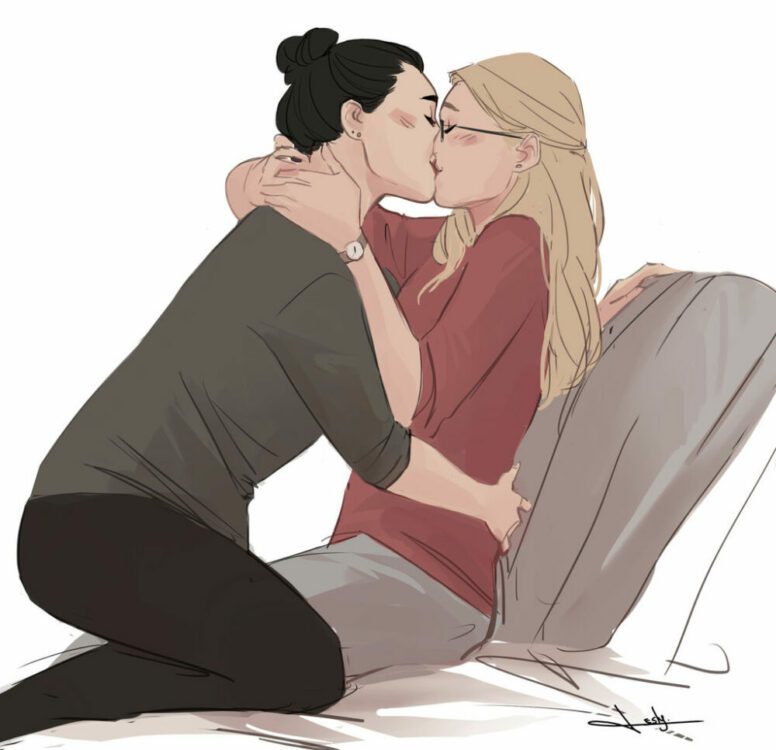
Fans did not believe that Jordan learned his lesson, even after this initial apology. He ended up issuing a second apology on his Instagram, and then engaging further with fans on his Twitter. To be fair, he’d stumbled into a minefield. Representation is important. Full stop. But here’s the thing: Supergirlhas a lesbian relationship. Kara’s sister Alex struggled with her sexuality in season two, coming out to her sister and then asking another woman out for drinks. The Supergirl creative team put up with a lot of protests from fans who disagreed with the relationship. They also enjoyed a lot of praise from fans who are starving for queer representation in mainstream media.
Again, please don’t misunderstand: MORE queer representation would be great. Kara and Lena together could be adorable. They have established a strong friendship based on mutual trust and respect. However, much like Steve Rogers and Bucky Barnes, the romantic elements of the “Supercorp” relationship are not canon. This creates a tricky situation for stars, who must walk a very fine line between acknowledging relationships fans want to see, and queerbaiting.
I learned a lot yesterday. I will carry those lessons w me wherever I go. Now, all we can try to do is move forward with greater compassion.
Jordan is in good company having trouble finding that line. His co-star Katie McGrath is a vocal supporter of “Supercorp” shippers, but Melissa Benoist has been the opposite. Among the Riverdale cast (another CW show), Camila Mendes and Lili Reinhart have toyed with that line in regards to “Beronica” becoming canon. And, while Cole Sprouse was vocal about staying true to Jughead’s comic book asexuality, the character ended the season in a sexual relationship with Betty, and Sprouse has gone silent on the issue.
Fandom and Entitlement
Fans have taken ownership of fiction ever since Sherlock Holmes (the original). Doyle tried killing off his massively popular character when the pressure to write Holmes serials became too much. Fans were so outraged that many canceled their subscriptions to Strand magazine. In direct response, Doyle brought Holmes back in The Hound of the Baskervilles, but was miserable about it until the day he died.
We’ve come a long way since then–fanfiction and fanart are now expected parts of any fictional realm. Beginning most famously with Star Trekfanfiction in the 1970s, these works, for the most part, served a very specific purpose. Trekkies began writing stories about Spock/Kirk getting together. The two shared no explicitly romantic scenes on-screen, but fans insisted their relationship was subtextually homoerotic. Some of these works showed a fetishized version of gay relationships, true. Others filled a representation void in a time when homosexuality was considered an “alternative” lifestyle. And so the trend caught on.
Today, queer relationships are represented in many media forms, but still considered a “bold move” or an alternative relationship. Riverdale leaned hard on an on-screen Beronica kiss while promoting the first season, but the kiss wound up being part of an act Veronica performed to prove herself “edgy.”
“Supercorp” is another example of a non-canon relationship that serves to provide representation. It blows that queer viewers have to literally invent relationships in order to feel represented, but how strongly should we cling to those relationships? More and more, fans ask questions at conventions and star appearances about fan-created content. This is a dangerous game to play, as there is a 50/50 shot at getting a disappointing answer. Are actors/creators obligated to accept an alternate version of their character? And should queerness change the answer to that question?
Jeremy Jordan: Still not a Homophobe
Many questions still need answering. Many miles of murky water lie ahead regarding representation in media. But at the end of the day, Jordan is not the biggest threat to the LGBTQA+ community. He’s not a threat at all, because he’s not a homophobe.
Jordan is in an impossible situation with “Supercorp”, where the relationship is not and will not be canon, per the creators. The fact that it provides representation to an under-represented group is great. However, it is not Jordan’s obligation to lie about that relationship. Many fans objected to the fact that Jordan shouted, aggressively, as though he was against the “Supercorp” relationship. And he might be–considering he’s been told it’s not real. But that doesn’t make him a homophobe.
As a smart man once said: “Now, all we can try to do is move forward with greater compassion.”
Netflix made a big announcement Tuesday morning, with the order of twenty episodes of ‘Disenchantment,’ an adult animated comedy fantasy series from Matt Groening.
According to Netflix, the series will whisk viewers away to the crumbling medieval kingdom of Dreamland, where they will follow the misadventures of hard-drinking young princess Bean, her feisty elf companion Elfo, and her personal demon Luci. Along the way, the oddball trio will encounter ogres, sprites, harpies, imps, trolls, walruses, and lots of human fools.
“Ultimately,” says Matt Groening, “Disenchantment will be about life and death, love and sex, and how to keep laughing in a world full of suffering and idiots, despite what the elders and wizards and other jerks tell you.”
‘Disenchantment’ stars the voice talents of Abbi Jacobson (“Bean”), Nat Faxon (“Elfo”) and Eric Andre (“Luci”), along with John DiMaggio, Billy West, Maurice LaMarche, Tress MacNeille, David Herman, Matt Berry, Jeny Batten, Rich Fulcher, Noel Fielding, and Lucy Montgomery. The animation will be done by Rough Draft Studios (Futurama).
The first ten episodes of ‘Disenchantment’ will hit Netflix in 2018.
Archie Comics’ Chilling Adventures of Sabrina seems to be back on a regular schedule and that is great news. It’s one of my favorite current titles. You can listen to me rave about it here. And for now, also enjoy some gorgeous preview pages with some perfectly atmospheric unlettered Robert Hack art work (just look at that amazing cover! Love the detail with the price sticker!)
Enjoy, comment and discuss below. Be sure to pick up Chilling Adventures of Sabrina #8 when it hit’s your local comic shop on August 18th!
CHILLING ADVENTURES OF SABRINA #8 “WITCH-WAR” Part Two, “Burnt Offerings”: Edward Spellman, trapped in Harvey’s body, has been reunited with Sabrina, and is ready to enact his dark agenda!
Script: Roberto Aguire-Sacasa
Art: Robert Hack, Jack Morelli
Cover: Robert Hack
Variant Cover: Matthew Southworth
On Sale Date: 8/16
32-page, full-color comic
$3.99 U.S.
COMPLEX is a multi-media giant, and the company just launched a new series ‘Blueprint.’ The series focuses on innovators and in the third episode, Noah Callahan-Beaver interviews Todd McFarlane.
McFarlane is a very intense person, and he uses his passion for baseball to explain business and the comic book industry. If you are a fan of his work, this is a great one-on-one interview. Also, there is a certain tenacity needed to be a game changer, and McFarlane is over flowing with what it takes to dump an industry on its head and improve it.
Watch the full epiosde below:
About Todd McFarlane:
McFarlane became a comic book superstar due to his work on Marvel’s Amazing Spider-Man franchise. With his style and commitment to work, Todd eventually worked his way to the top of Marvel’s artist roster. His pencils and covers for Spider-Man ultimately took that title to #1 and launched McFarlane’s career into comic book superstardom. McFarlane and a group of other prominent comic artists went on to form Image Comics, the parent corporation and publisher of each artist’s individual comic book company. Through Image Comics, McFarlane went on to publish Spawn, selling 1.7 million copies of the first issue. Spawn’s popularity led to the formation of McFarlane Toys to create action figures, an animated series, a live action film, spawn.com – company website and fan community and more.
About ‘Blueprint’
At the crossroad of inspiration, drive and genius sit the visionaries. In “Blueprint,” Complex Chief Content Officer Noah Callahan-Bever sits down with today’s most impactful Creative Directors, Inventors, Designers, Executives and Artists for an exploration of the key moves they made to realize their career and their impact on the culture.
What did you think of the first episode? Are you inspired to innovate? Comment below.
Amazon Studios released the first trailer to ‘Brad’s Status’ Tuesday morning. It appears the mid-life crisis for Generation X is hitting Hollywood and Ben Stiller is at ground zero.
When Brad Sloan (Ben Stiller) accompanies his college bound son to the East Coast, the visit triggers a crisis of confidence in Brad’s Status, writer and director Mike White’s bittersweet comedy. Brad has a satisfying career and a comfortable life in suburban Sacramento where he lives with his sweet-natured wife, Melanie (Jenna Fischer), and their musical prodigy son, Troy (Austin Abrams), but it’s not quite what he imagined during his college glory days. Showing Troy around Boston, where Brad went to university, he can’t help comparing his life with those of his four best college friends: a Hollywood bigshot (White), a hedge fund founder (Luke Wilson), a tech entrepreneur (Jemaine Clement), and a political pundit and bestselling author (Michael Sheen). As he imagines their wealthy, glamorous lives, he wonders if this is all he will ever amount to. But when circumstances force him to reconnect with his former friends, Brad begins to question whether he has really failed or is, in some ways at least, the most successful of them all.
‘Brad’s Status’ is written and directed by Mike White, and stars Ben Stiller, Michael Sheen, Luke Wilson, Jemaine Clement, Jenna Fischer, and Austin Abrams.
Amazon Studios will release Brad’s Status in theaters September 15. Amazon and Netflix have two different approached to its original films, and it will be interesting to watch which streaming service wins in the long run.




 CHILLING ADVENTURES OF SABRINA #8