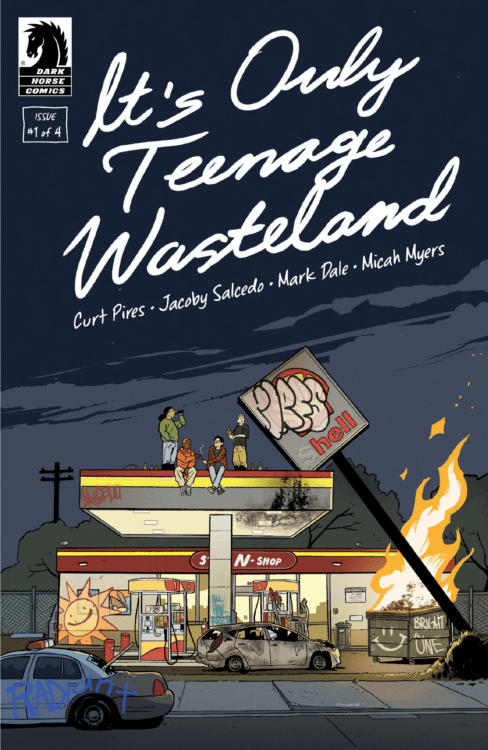
From Olympia and Wyrd writer Curt Pires comes a delightfully fun and surprisingly deep teen-humor/sci-fi romp with It’s Only Teenage Wasteland. Joined by artist Jacoby Salcedo, Pires crafts a teen comedy with some surprise genre twists to make a comic story that has just as much heart as it does irreverent humor.
I sat down with Pires to talk about his process, his influences, and what working with his collaborators is like.
-MFR: What were some of your biggest influences – in any medium – going into creating this teenage comedy/apocalypse story?
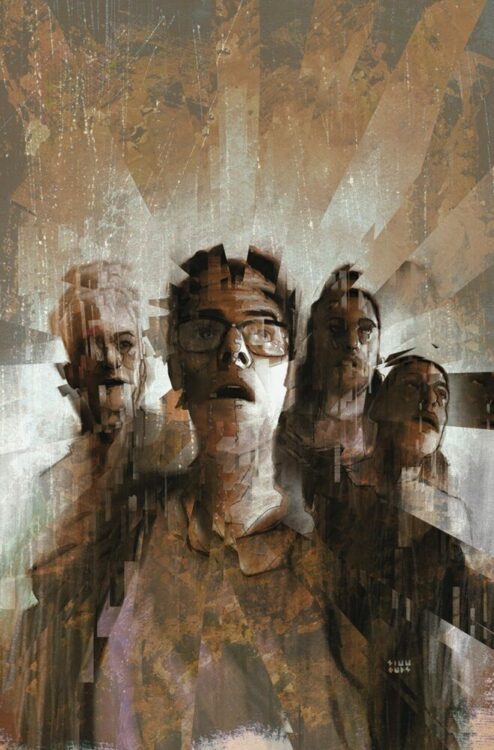
-Pires: I was inspired by the hilarity of classic comedy coming-of-age movies like Superbad and the early 2000s Judd Apatow comedies, and combining that comedy with a serious grounded mystery box narrative, something akin to Lost. The idea of mashing up these two genres that typically don’t get mashed up appealed to me.
-MFR: Something that makes Wasteland so enjoyable is that its characterizations feel so genuine, which is something that is so hard for some writers to do when it comes to writing from the perspective of modern teenagers. What is your approach to writing these types of characters, and what are some elements you keep in mind?
-Pires: I think my approach to writing these characters was to pull from people that are near and dear to me in real life—real-life hilarious conversations, real-life human tics—and instill each character with a real-life relatability. All good character writing is grounded in humanism ultimately.
-MFR: Jacoby Salcedo absolutely kills the visual storytelling in this comic with his stellar character animations. How did you two come to work together, and what has the experience been like?
-Pires: Jacoby and I had a very close collaboration on this. Lots of going back and forth and ideating and refining ideas. It’s one of the best collaborations I’ve had in a while and we’re already figuring out what we are going to do next.
-MFR: How did the folks at Dark Horse help you bring Wasteland to life?
-Pires: Keeping the trains running and providing key infrastructure, but also getting out of the way at times and giving Jacoby and I room to create.
-MFR: Film and television have always been the home of slice of life teen stories (apocalypse notwithstanding). What about the comics medium sets itself apart to be able to tell this sort of story in a unique way?
-Pires: I really feel like comics are a medium not a genre. You can tell any story you want here. That’s sort of the magic of it.
-MFR: Do you think the genre twist in Teenage Wasteland allows you to explore your cast as characters in unique ways a slice of life wouldn’t? Or is it more about just making the book more fun?
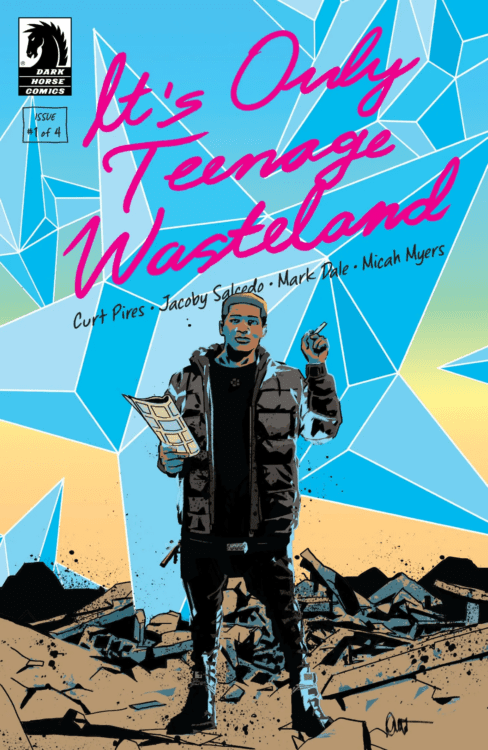
-Pires: Exactly. You get to put them through a crucible of sorts—while still having the comedy and teen drama stuff. They’re still processing their feelings and this overwhelming metamorphosis of being a teenager when they’re thrust into this bigger scarier world.
Be sure to grab It’s Only Teenage Wasteland #1 from your local comic shop when it hits shelves on December 7th!
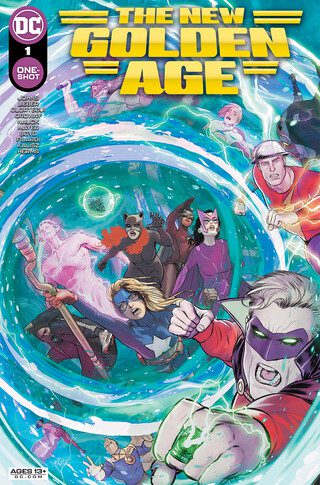
THE NEW GOLDEN AGE one-shot from DC Comics jit your local comic book store this week, and the book does something unique with time and art that you can not pull off in a movie. Very impressive.
The one-shot is written by Geoff Johns, with art by Diego Olortegui with JP Maher and Scott Hanna, Jerry Ordway, Steve Lieber, Todd Nauck, Scott Kollins, Viktor Bogdanovic, Brandon Peterson, and Gary Frank. The color work is by Nick Falardi, John Kalisz, Matt Herms, Jordan Boyd, and Brad Anderson. You will read Rob Leigh’s letter work.
About THE NEW GOLDEN AGE: From the Justice Society of America to the Legion of Super-Heroes, The New Golden Age will unlock DC’s epic and secret-ridden history of heroism, launching a new group of titles set firmly in the DC Universe. From the 1940s to the 3040s, heroes take on the great evils of their time. But in the aftermath of Flashpoint Beyond, those heroes and villains will have their lives turned upside down. DC’s future…and its past…will never be the same again. But how are Mime and Marionette connected to this? Why are Rip Hunter and the Time Masters the most unlikable heroes in the DC Universe? And who or what is…Nostalgia? Don’t miss the start of the strangest mystery to have ever plagued the DC Universe.
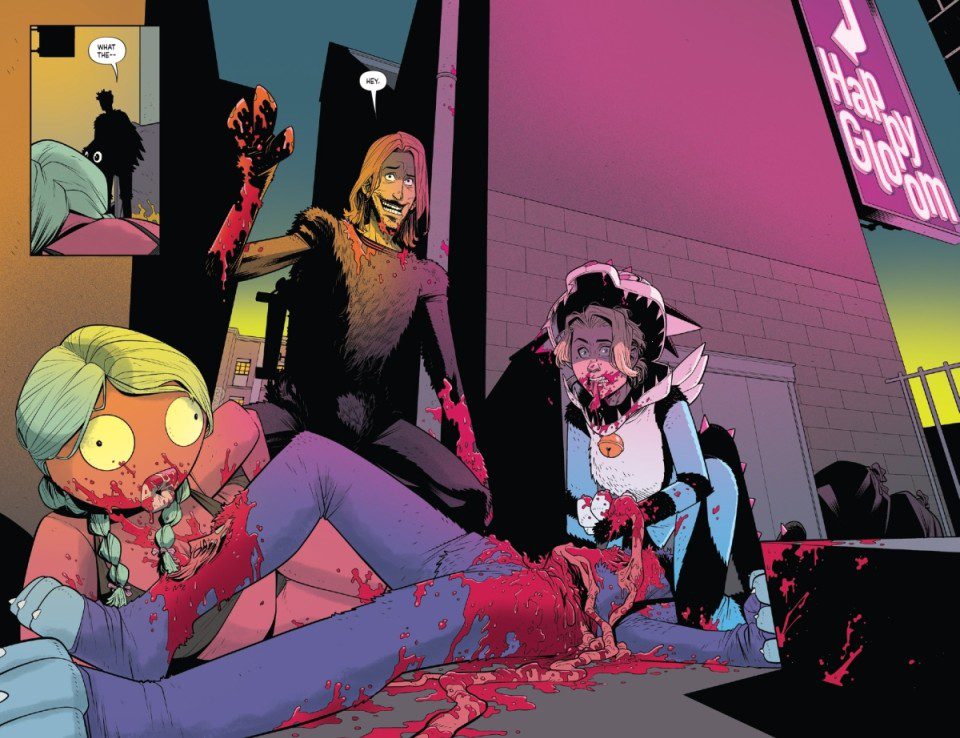
From Plastic and Vinyl creators writer Doug Wagner and artist Daniel Hillyard comes yet another blood-soaked and fetish-filled comics romp with Plush #1. Featuring colors from Rico Renzi and lettering by Ed Dukeshire.
I got so sit down once again with Wagner and Hillyard and talk about their influences, their process, and how Image handles the insanity they throw into their comics.
Thank you guys for sitting down to talk with me and congrats on yet another delightfully depraved creation.
MFR: For anyone who doesn’t know, your “Material” series at Image has taken us on a couple sprees of twisted and kinky blood-soaked murder. What made you two land on furry cannibalism this time around?
DOUG: To be honest, it’s all the fault of the muses, the universe, the sun god, the idea fairy… whomever or wherever you want to believe ideas come from. Daniel and I knew we wanted to do a third installment, but we had no idea what that was going to look like for what seemed like forever. I believe we were over halfway done with Vinyl when the idea struck. I was poking around the internet and bumped into a furry image that made me laugh, and felt that horror movie kind-of terrified all at the same time. The same week I was having a discussion with some friends and the topic of cannibalism came up…as it does…and it all just came together in one magical moment. I threw the idea at Daniel (mostly to make sure I wasn’t going too far), he said he loved it, and we took off from there.
DANIEL: I wonder if either one of us ever will have a story that goes too far? We always share our ideas with each other expecting that one of us might say it’s too crazy, bloody, or strange, but that’s never been the case…so far, at least.
MFR: Plastic and Vinyl both succeed by being a perfect mix of over-the-top gore and genuine heart. How do you maintain that formula, and is your approach any different when it comes to Plush?
DOUG: Well, thank you for saying that. We do our best, but it’s really just one big crazy experiment. You never really know if a story works or not until it comes out. Daniel and I do spend hours poring over every detail together, from the plot summary to the inks. We just hope and pray that if we like it, so will at least one other person.
DANIEL: Yes, thank you.
MFR: The mega-talented Rico Renzi is on board to provide colors in Plush. How has the creative process been with this new member of the Material team?
DOUG: Brilliant. I’ve known Rico for years and I always hoped we’d work together at some point. When Daniel and I started talking “neon horror,” we both immediately thought of Rico. Lucky for us, he was able to fit us into his schedule. He’s an absolute pro, so it’s been easy-peasy the whole way. His colors are always genius, he takes notes without even so much as a peep or sigh, and he’s always a blast to chat with.
DANIEL: I love Rico’s colors so much! It’s like Christmas morning every time I get to see a fresh batch of pages.
MFR: What were some of your biggest influences coming into Plush?
DOUG: This is always one of the toughest questions for me to answer, mostly because I want to say it’s every single comic, graphic novel, book, TV show, and movie I’ve ever consumed. I would have to admit each of the “Material” trilogy books were influenced by different aspects of all of those. With Plastic, I leaned more into horror and dark comedies. With Vinyl, it was horror and action films. With Plush, I’m going to say horror and romcoms. Yes, I said romcoms.
MFR: What is your guys’ creative process like for Plush? How much of the story comes straight from Doug’s scripts, and how much does Daniel add in when he sits down to draw?
DOUG: Like I said before, Daniel and I work pretty closely during every step of the process, so I see us as true co-creators. We kick things back and forth until we settle on something we both like. Sometimes Daniel has me change things in the script, and sometimes I ask for changes in his designs or layouts. The wonderful thing about working with Daniel is he always puts his ego aside. Like me, he only cares about telling the best possible story we can.
DANIEL: It’s like a tennis rally where we smack the story back and forth [laughs]. Like Doug said, having a great comic at the end of it is our drive. The good ideas stick around while the bad ones fall away.
MFR: How has working with the folks at Image been, and have they shown any signs of wear from publishing the insane stuff you guys make?
DOUG: LOL. I adore working with the folks at Image, but now you’ve got me worried. They haven’t shown any signs yet of wanting to kick us to the curb, so I can only assume they are just as disturbed as we are or they’re hiding it from us pretty well. I mean, I’m not the best at picking up on subtlety, so they could totally have me fooled. Do you think they’d tell me if I asked?
DANIEL: They are a pretty cool group. And I imagine they wouldn’t say.
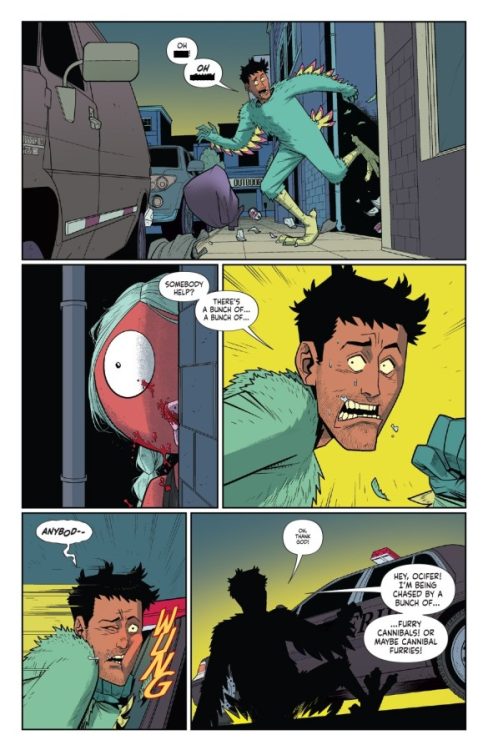
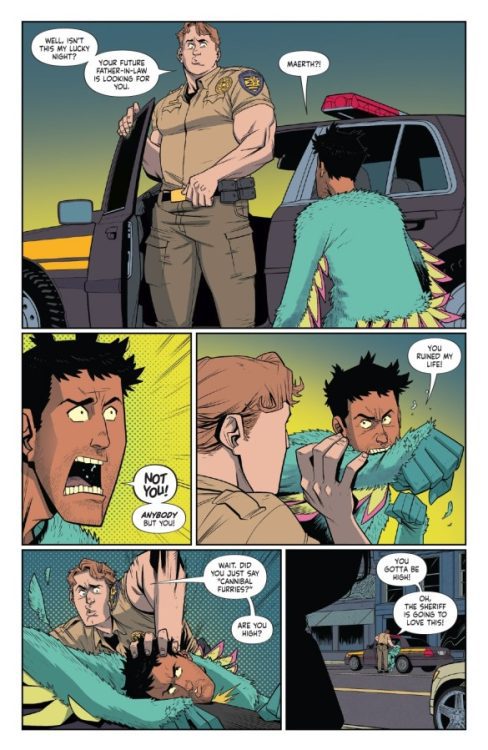
MINISERIES PREMIERE Serial killing cannibalistic furries! PLASTIC and VINYL creators DOUG WAGNER and DANIEL HILLYARD are back. This time they’ve recruited colorist extraordinaire RICO RENZI for their disturbing “neon-horror” spin on fursuit psychopaths and bizarre love. In PLUSH Devin Fulcher is coerced into attending his first furry convention. When he accidentally happens upon a group of furries devouring a human the insanity begins. Do they just want Devin for dinner… or something much more wicked?
Be sure to put Plush on your pull list before its release on November 30th!
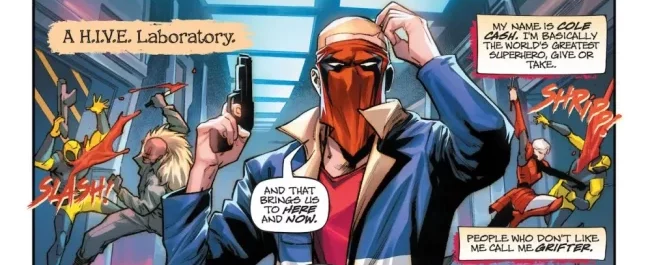
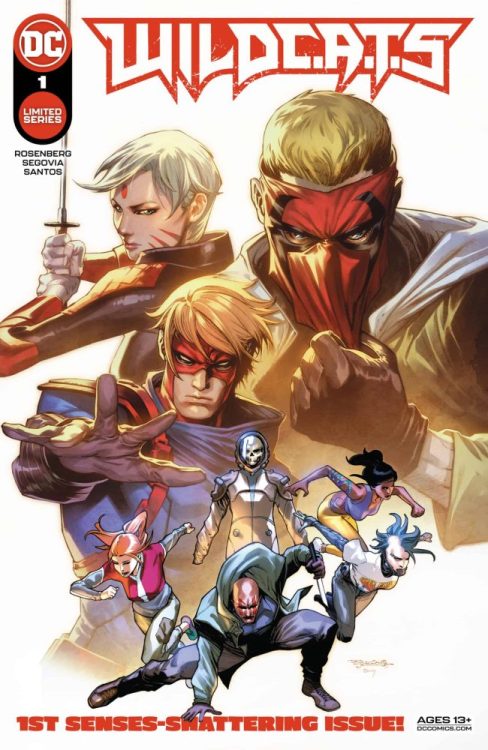
“Oh, good. Superheroes.” curses masked gunslinger Grifter near the close of WildC.A.Ts #1. It might not seem like he has much room to talk. After all, Jim Lee’s Wildstorm imprint made a name for itself in the ’90s by combining superheroes with super-spy corporate espionage. But while the early comics leaned heavier on the superhero side of things (the “Covert Action Team” featured a giant purple bruiser and a man with a green ponytail and knife hands), an influx of British creators like Bryan Hitch, Warren Ellis, and Alan Moore began to move the characters towards trench coats, armor, and high concept sci-fi. By the time Ellis was tapped to oversee a reboot of the universe, costumes were dropped almost entirely for greater focus on conspiracy and intrigue. That project died from a mixture of missed deadlines and abuse allegations. So here we are back in the DC universe proper, with writer Matthew Rosenberg, artist Stephen Segovia, colorist Elmer Santos, and letterer Ferran Delgado, set to introduce the WildC.A.T.s to a new generation of readers. Let’s see how well the team gets along with the capes and spandex crowd.
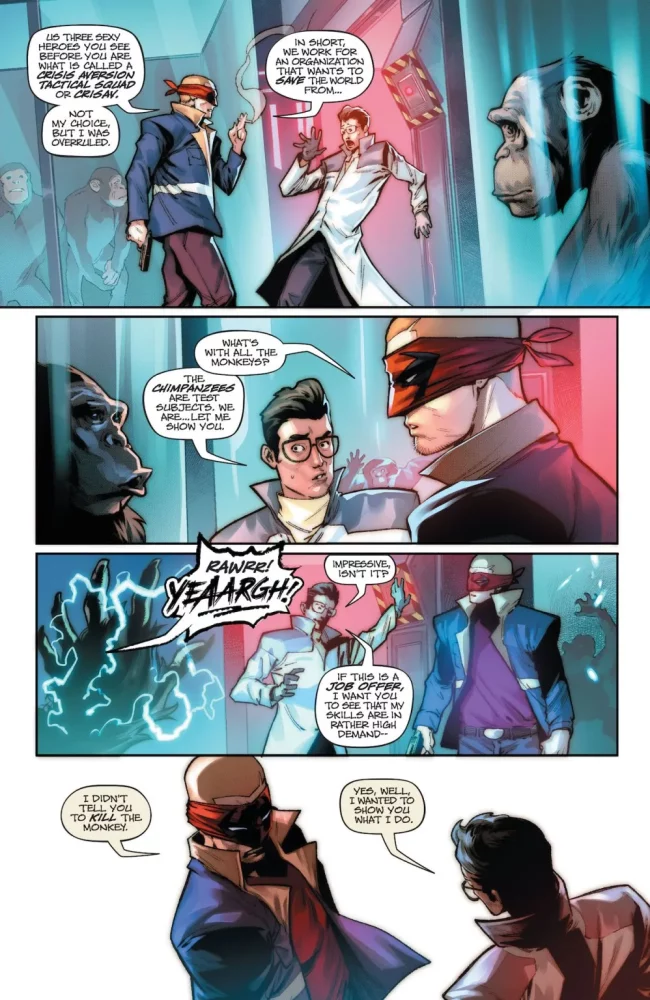
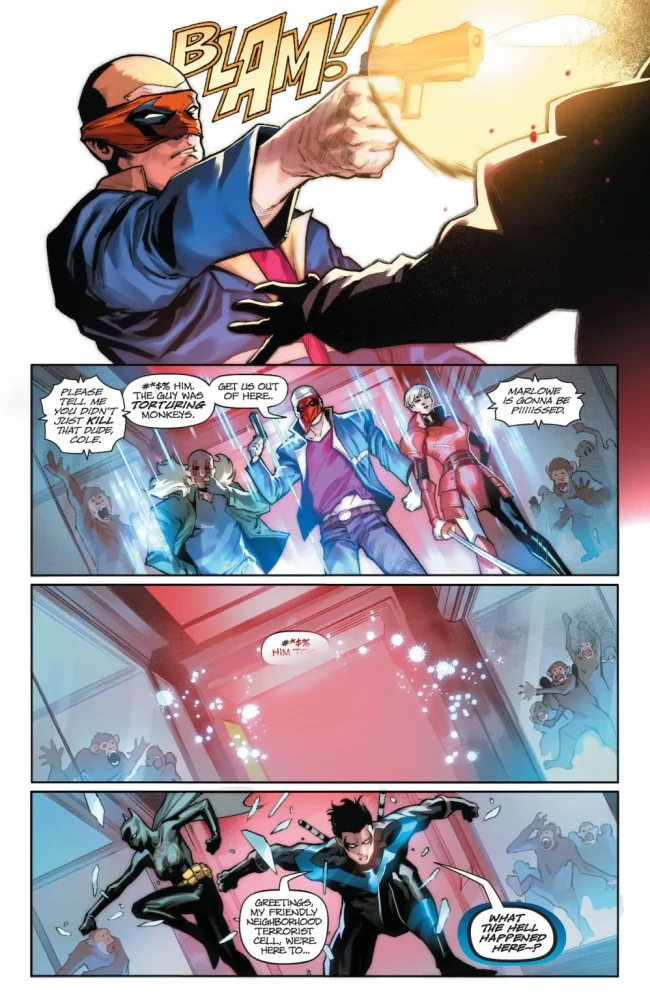
The first mission the WildC.A.T.s are sent on is fairly straightforward: infiltrate a H.I.V.E. laboratory and kidnap a scientist. But said scientist has been performing fatal experiments on apes, so Grifter decides to kill him on the spot. Team leader Marlowe is less than pleased. Doubly so when Grifter gets into a barfight and lands himself in jail. Fearing the team is in over their heads, Marlowe decides to introduce a new member: Fairchild. But she’ll have to shape up fast if she’s going to help the Crisis Aversion Team survive a surprise run-in with superheroes and a different, mysterious order.
Matthew Rosenberg follows up on his Batman: Urban Legends stories by keeping Grifter as the main point of view. The character may not like the title “Grifter,” but Rosenberg’s characterization leans into the moniker. He’s a man who loves spinning tall tales, from exaggerated stories of his adventures to attempts to convince his enemies their employers are secret aliens. However, all his bravado comes with the baggage of trying to live up to his late older brother. Said sibling is the source of the tattered remains of a mask he drapes over his face, along with his nickname. It’s a looser, more comedic take on the character, which helps give the entire team a more rough-and-tumble, barely-holding-together vibe.
The other characters aren’t as established yet, which admittedly isn’t surprising for the first issue of a team book with such a large cast. But all the Grifter focus does take away from chances for the team to interact. Part of the fun of big team books is getting to see personalities bounce off one another. The first half of the issue gets some fun dynamics in, especially when Marlowe tries the shout down the relatively cool-headed Zealot and Deathblow. But the second half is mostly confined to radio chatter between Maxine and Grifter while the rest of the team quietly carries out their duties. The banter between the two got quite a bit of play during Batman: Urban Legends, so it’s hard not to wish we saw more of how other teammates felt about one another. Though again, this is a first issue. These aren’t insurmountable problems.
It was Wildstorm’s book The Authority that helped usher in the “Widescreen Comics” movement back in 1999, and Stephen Segovia’s art keeps the tradition alive with a focus on sweeping spectacle and long, vertically-stacked panels. It’s a slick-looking book, favoring a slightly thicker, black outline around key characters to help them pop out against the backdrop. It’s especially helpful since chaotic action is the name of the game here, the art’s cool, confident approach lending some nice contrast to the hectic bloodshed.
Adding to the vibe are Elmer Santos’ colors, which favor cool blues, purples, and pinks. Lamps and Streetlights all create blurry lens flares, cigarette smoke against the pink glow of the morning sky. It’s a look that feels somewhat inspired by the modern wave of neon-soaked action movies like John Wick or Drive, if not as exaggerated, which is a nice fit for the WildC.A.T.s brand of stylish action.
Ferran Delgado’s letters have a pricklier, more hand-drawn feel to the house style more typically used by the big two. Sometimes the word balloons get in on the act too, shouts get balloons with thick, scratchy outlines. Sound effects run the gamut from precise and blocky to rounded bubble letters to uneven brush strokes. Delgado has a chance to try out a lot of different styles here, and they help bring out the mayhem of the final fight.
VERDICT
WildC.A.T.s #1 is a promising start towards planting the C.A.T.s back in the DC universe. Hopefully, the characters will all get time to shine as the series continues, but Grifter’s strong presence, along with the fun action makes the book more than worth picking up. WildC.A.T.s #1 is out right now from DC comics, so give it a shot.
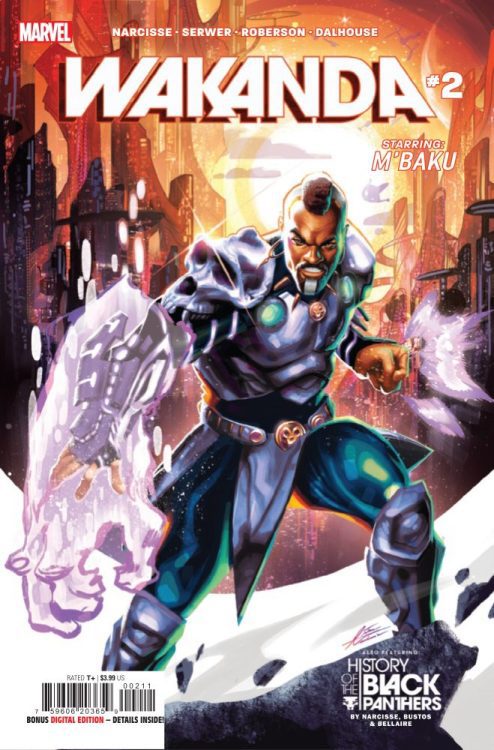
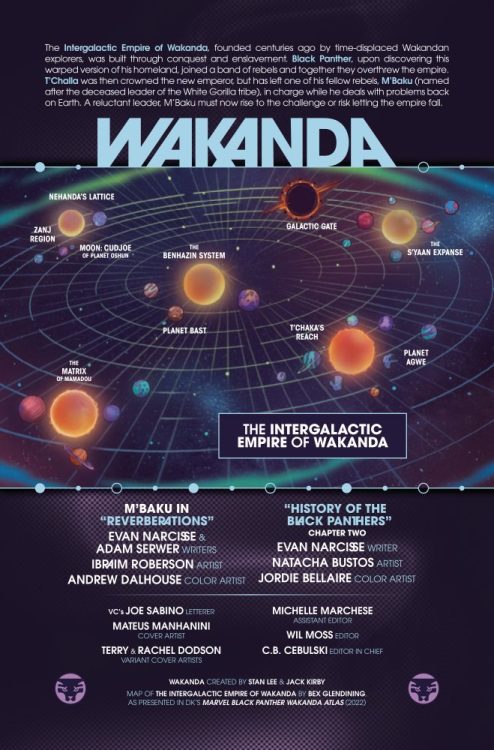
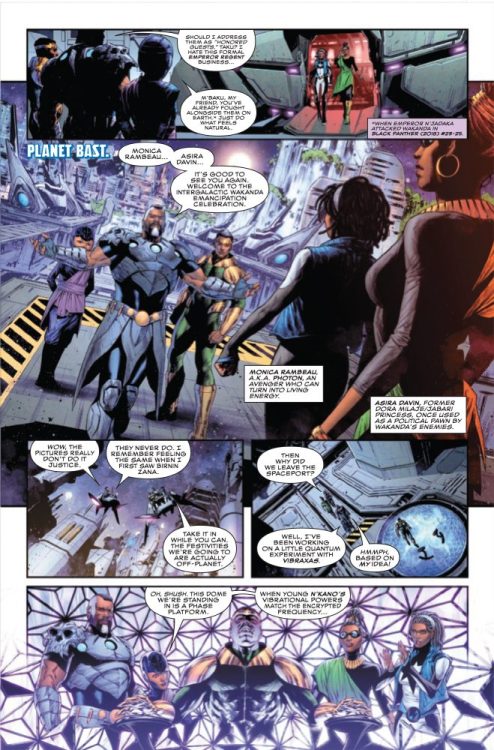
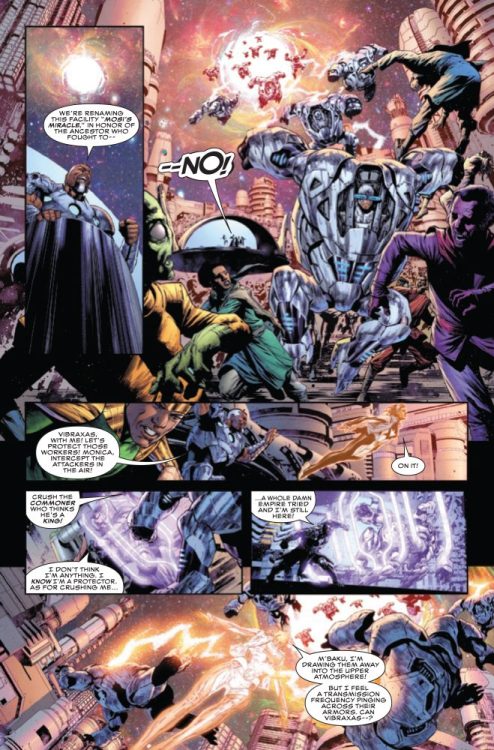
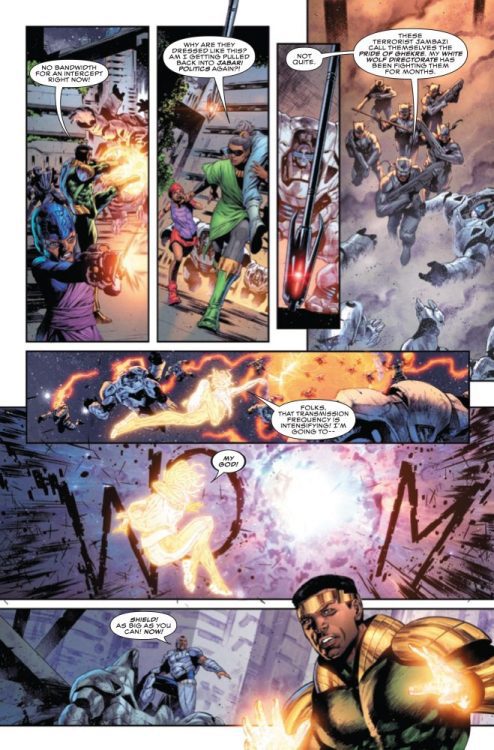
WAKANDA #2 hits your local comic book store on November 16th, but thanks to Marvel Comics, Monkeys Fighting Robots has an exclusive four-page preview for you!
About the issue: M’Baku proves his worth! While T’Challa has been handling situations on Earth, M’Baku has acted as regent over the Intergalactic Empire. And when a foe from Wakanda’s past threatens to destroy its future, M’Baku will prove why the cosmos were entrusted to him. Plus, Evan Narcisse and Natacha Bustos’s definitive History Of The Black Panthers continues!
The issue features two stories: “Reverberations” is by writers Evan Narcisse & Adam Serwer and artist Ibraim Roberson, with colors by Andrew Dalhouse; “History of the Black Panthers” continues from WAKANDA #1, and is also written by Narcisse, with art by Natacha Bustos, and colors by Jordie Bellaire. Joe Sabino letters both stories, and the main cover is by Mateus Manhanini.
Marvel Studios’ Black Panther: Wakanda Forever hits theaters this weekend on November 11th.
Check out the WAKANDA #2 preview below:
Are you seeing Black Panther: Wakanda Forever this weekend? Sound off in the comments!
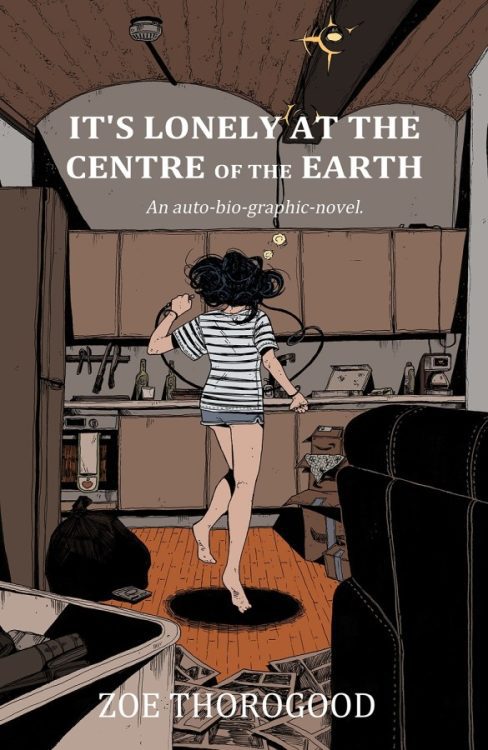
From rising comics talent Zoe Thorogood (The Impending Blindness of Billie Scott, Rain) comes her deeply personal and impossibly creative autobiographical graphic novel creation in It’s Lonely at the Centre of the Earth. Running the gamut of human emotion with her narrative and reflecting upon Thorogood’s life via hyper-imaginative visuals, Center of the Earth feels like something we shouldn’t be allowed to read – but will come away thankful that we can.
“Cartoonist ZOE THOROGOOD records six months of her own life as it falls apart in a desperate attempt to put it back together again in the only way she knows how. IT’S LONELY AT THE CENTRE OF THE EARTH is an intimate metanarrative that looks into the life of a selfish artist who must create for her own survival.”
The Thorogood Method
So, normally I structure reviews by discussing the writing and visual elements of a comic separately and on their own merits, and how they interact with one another. That approach doesn’t work with It’s Lonely at the Centre of the Earth. Thorogood’s writing is so intertwined with her visual approach that the two are completely inseparable.
It’s Lonely at the Centre of the Earth is a tough book to talk about in terms of its storytelling approach because it doesn’t really have a structure. Thorogood covers this six-month span of her life while spinning into hyper-imaginative asides and flashbacks that give context to her thought process. This graphic novel’s intimate account of very personal experiences is another thing that makes the story tough to critique because it’s so, well, personal. Thorogood allows readers a first-hand look at her depression, past traumas, and intimate life interactions. There’s an inescapable feeling while reading Centre of the Earth that we shouldn’t be seeing this – like we’re opening Thorogood’s sock drawer and reading her diary. Similar to Marjane Satrapi’s Persepolis, Thorogood illustrates her lowest moments alongside her greatest feats with seemingly no fear. This work’s greatest strength is how it balances levity and absurdity alongside the doldrums of normalcy – and the trenches of crippling depression. Thorogood’s choice to anthropomorphize the people she encounters in her life is very clever, and adds whimsy to some of the comic’s more delightful scenes. The humor – which always hits – feels that much better coming out of the bird-version of Thorogood’s best friend. One of my favorite scenes involves a convention and a little frog guy cackling like a goblin after Zoe draws him a picture. Most surprising though is just how much emotion she is able to wring out of these anthropomorphized figures. In true Bojack Horseman fashion, a boy with a cat’s head breaking off any possibility of romance somehow manages to be emotionally difficult to watch.
All of this is really just scratching the surface of what this graphic novel accomplishes – and just how deeply it delves into Thorogood’s personal life. Centre of the Earth is not a light read. As funny as this book often is, it’s matched by a very real bleakness due to Thorogood’s exploration of her own depression. For every belly laugh, there’s a heartbreak. While this is a warning about what readers will be getting into, it’s also an enthusiastic endorsement of how she discusses these complex issues. Her dialogue sensibilities and timing are stellar, feeling naturalistic while fitting into her dreamlike visualizations. Thorogood interweaves interaction and thought with her page structure to craft a reading experience that is both smooth and enrapturing. Her weakest moments are presented with a feeling of cold isolation, with dull grey colors and typically a plainer sequential style that slows down the reading pace. When Zoe dives deep into her own head is where the book – and her visual style – get immensely more creative. Any sort of panel and sequential structure is eschewed in favor of sheer imaginative depth. Thorogood blends so many artistic styles together – from her typical style to hyperrealism to simplified pencil sketches – to create something that is so uniquely hers. There are a couple moments where she actually incorporates photos into the book. This could easily be seen as overkill bordering on pretentiousness from other creators, but with this graphic novel’s tone and thematic feel, it’s a move that really works. Thorogood’s work here is the best example of a creation of something that is so wholly comics this year.
Zoe Thorogood’s It’s Lonely at the Centre of the Earth is a wondrous achievement as both an autobiographical discussion and as a piece of the comics medium. The skill and ingenuity of her visual storytelling approach is staggering and awe-inspiring. Thorogood’s courageous honesty is supported by her hilarious deadpan humor and then tied all together by her absolutely insane artistic vision. Centre of the Earth is an important work as a discussion of trauma, depression, and the hope that can keep one moving forward. This is an absolute must-read, and without a doubt one of the best comic creations of recent years.
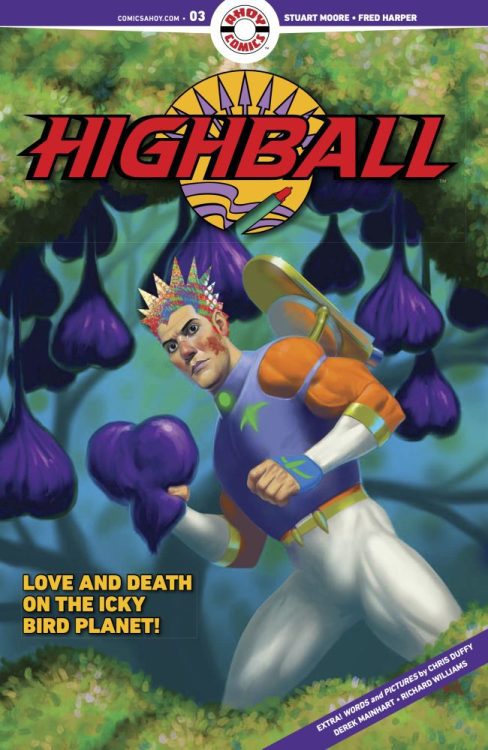
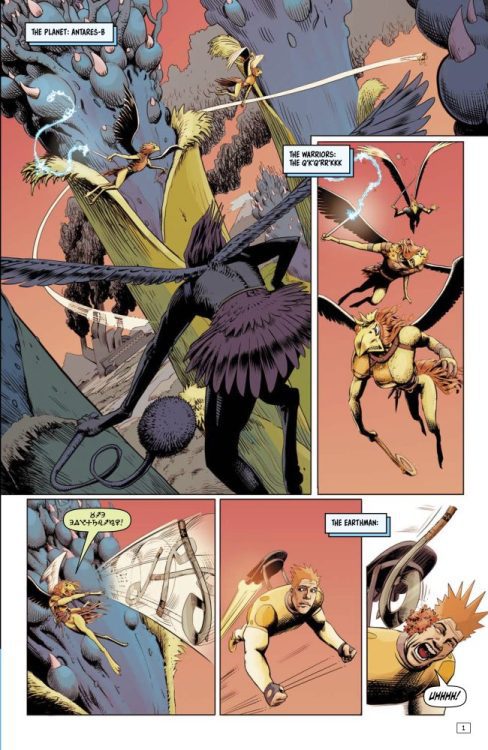
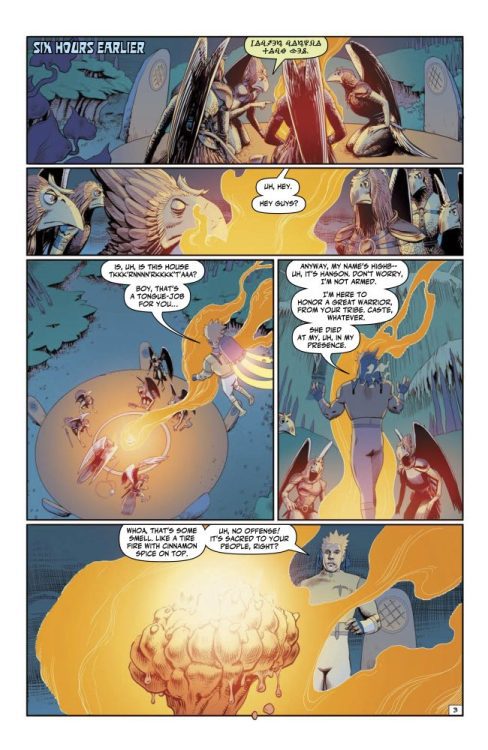
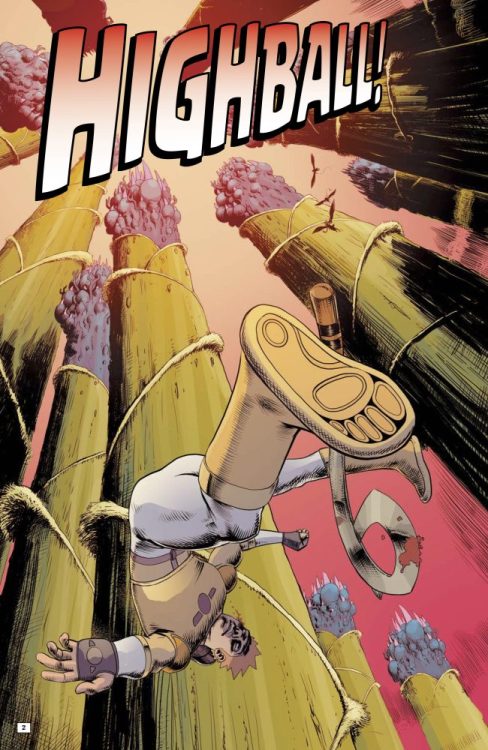
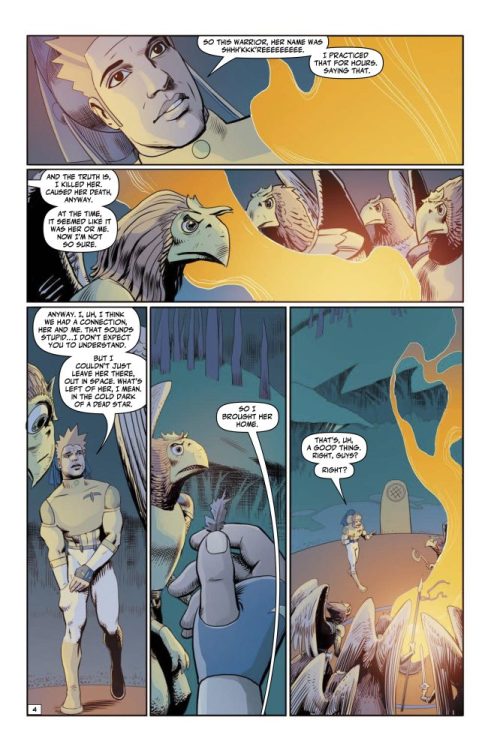
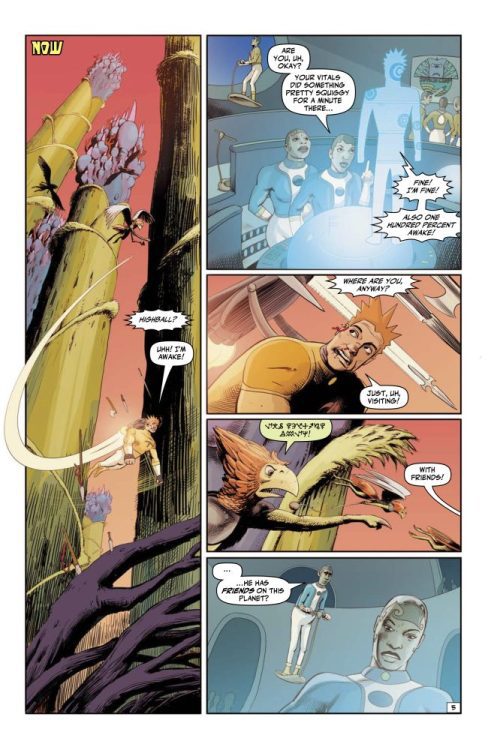
HIGHBALL #3 hits your local comic book store on November 16, but thanks to AHOY Comics, Monkeys Fighting Robots has an exclusive five-page preview for our readers. The book is written by Stuart Moore, with art by Fred Harper, Lee Loughridge drops the colors, and you will read Rob Steen’s letter work.
About the book: It’s a “Battle in the F***ing Trees” when Highball tries to return the remains of a dead bird-warrior to her home planet. Featuring more action, more angst, more alcohol, and more very, very bad decisions!
WILDC.A.T.S #1 from DC Comics hit your local comic book shop Tuesday; we take a look at the colors, letter work, and our favorite panel of the issue on this week’s episode of the Panel Breakdown.
WILDC.A.T.S #1 is written by Matthew Rosenberg, with art by Stephen Segovia, Elmer Santos drops the colors, and you will read Ferran Delgado’s letter work.
About WILDC.A.T.S #1: Spinning from the pages of Batman comes the senses-shattering new series! The HALO Corporation has gathered a motley crew of operatives, led by Cole “Grifter” Cash, who are going to make the world a better place…no matter who they have to kill! Working in the shadows of the DC Universe, this new covert team has been tasked with gathering an elite group of scientists for the first phase of their plan…but the ‘Cats mysterious leader, Void, might have other plans!
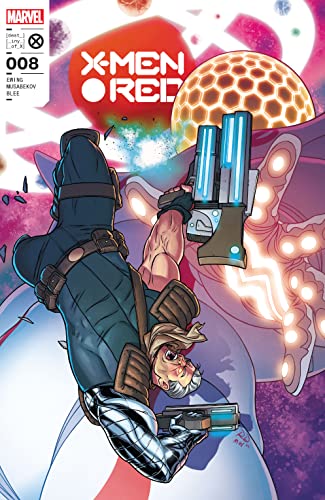
Judgement Day has come and gone, and the world is still standing. There will be no rest for the X-Men, though, as there is always another threat waiting to attack. X-Men Red #8 hit shelves this week, and Al Ewing has another problem for our mutants to handle. Madibek Musabekov on pencils, Federico Blee on colors, and Ariana Maher on letters are joining Ewing on this issue.
WRITING
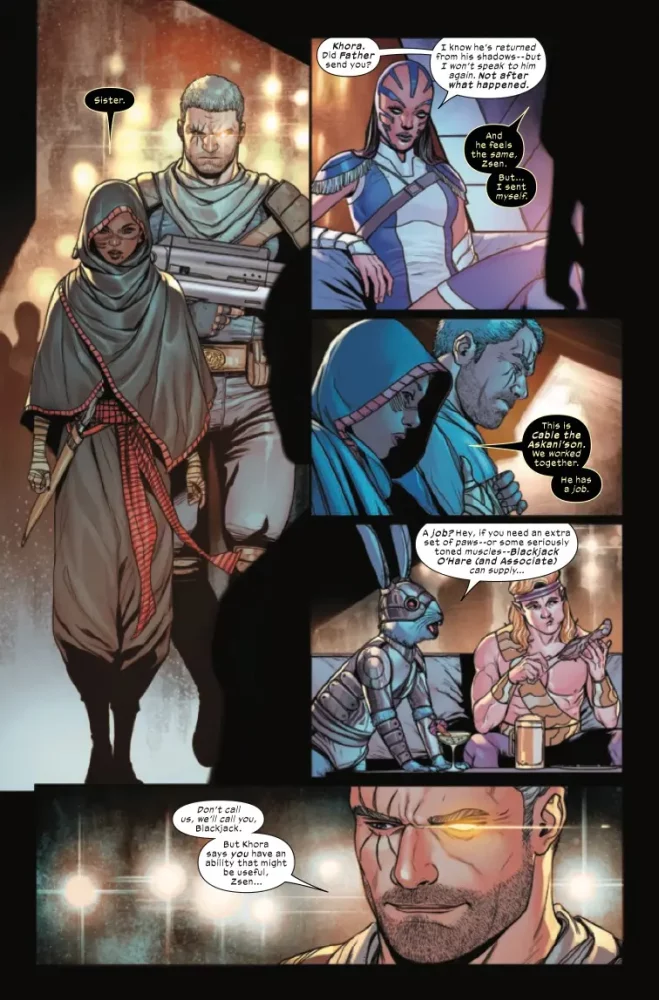
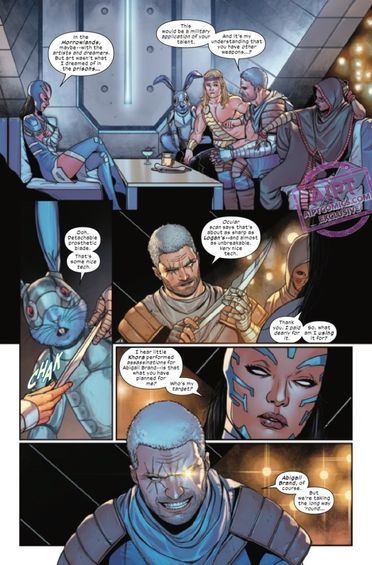
X-Men Red is considered one of the best X-books on the shelves. Al Ewing is a big reason for the praise of this title. His writing resonates with readers, and he takes the necessary time to build up a story arc. This latest issue feels like a continuation of his S.W.O.R.D. series. Ewing uses many of the same characters, Cable, Manifold, and Brand, and the story has a similar tone. I love that Ewing is utilizing Frenzy in this issue. He also brings up her crush on Scott Summers, a call back to Mike Carey’s Age of X story. Ewing does a great job of showing what a tactical mastermind Abigail Brand is. She’s been playing mutants from the beginning and has made some nasty alliances. Ewing will likely delve more into this as the story arc progresses, but he has set up an exciting start with this issue. If there is one thing we can count on when we pick up an issue of X-Men Red, it’s that Al Ewing is a great writer and will always do right by the fans and characters. This continues to be one of the best titles Marvel put out.
ART
Madibek Musabekov handles the pencils. Having never heard of Musabekov before reading this issue, I thought he was a fantastic artist. The pencils for this issue are clean and clear. It’s easy to go from panel to panel and admire the talent that Musabekov has. It’s great to see Brand sitting with a stern look as she watches the events play out between the Kree and the Shi’ar. While this isn’t an action-packed issue, Musabekov does draw great group pages. As Manifold teleports the team, Musabekov uses different panel layouts. One is a close-up of the team. When they arrive, he uses a shot from above to establish some layout of the new and mysterious location. Musabekov’s work on this issue is outstanding and gives readers beautiful visuals as they read Ewing’s script. The art team on this book crushed it this week, and Musabekov’s pencils paved the way.
The colors by Federico Blee are as good as they usually are. Blee has a high standard for his work, and this issue highlights his talents. Blee uses a vibrant yellow and gold as the team transports. This is simply eye-catching and impossible not to look at. As the X-Men travel on their ship, Blee uses bright blues to symbolize coldness. This is contrasted by the bright gold on Manifold’s uniform, who is a key contributor to the mission. The thing that works the best for this issue color-wise is the fact that Blee allows certain things to pop into the issue. Abigail Brand’s green lips and hair stand out. Deathbird’s purple uniform. All of these are strategic moves made by Blee, and they work exceptionally well.
The letters by Ariana Maher complement the art that is on the page. My biggest gripe with the lettering is that there aren’t enough sound effects. Maher gives us a “SNIKT” as Cable unsheathes techno-organic claws, but that is nearly it. Maher’s word placement is top-notch, though. She never allows anything to be covered up by word balloons and enables her placement to show off the art. An overall good issue from Maher, but more sound effects are always welcome.
CONCLUSION
X-Men Red #8 is starting this story arc the right way. Al Ewing brings back fan-favorite characters and uses them. The art is excellent for this issue and may not be topped by another book out this week. X-Men Red is out at a comic shop near you!
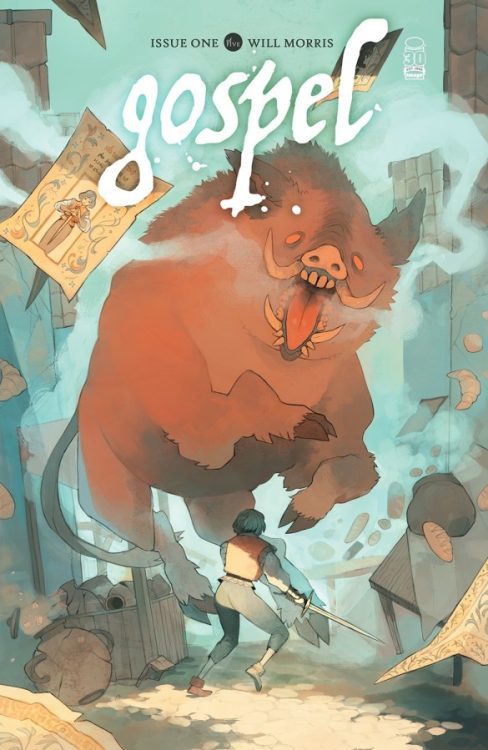
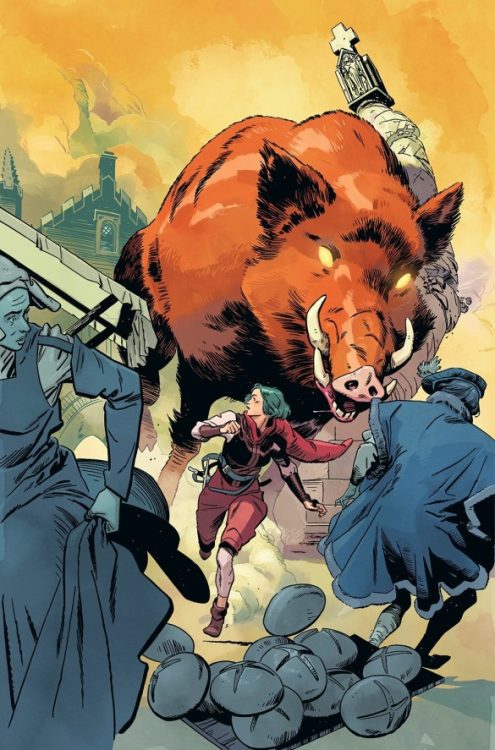
From acclaimed comics creator Will Morris (The Silver Darlings) comes a fascinating and endearing piece of historical fantasy in Gospel #1. Smart, witty, and beautifully constructed, Gospel is a style of comic that is seldom seen in the medium — one planted in reality while dabbing its toes in the fantastical, all the while asking the reader to keep up.
About Gospel:
When opportunity refuses to knock for restless hero Matilde, the devil comes knocking. Inspired by the work of Hayao Miyazaki and set in the chaos of King Henry VIII’s reign, Gospel is a thrilling fantasy adventure that questions the truth behind the stories we tell. Thrust into action by a hellish arrival, Matilde and storyteller Pitt will quest for answers that threaten to tear them apart and trigger the toughest question of all: “who am I?”
Writing & Plot
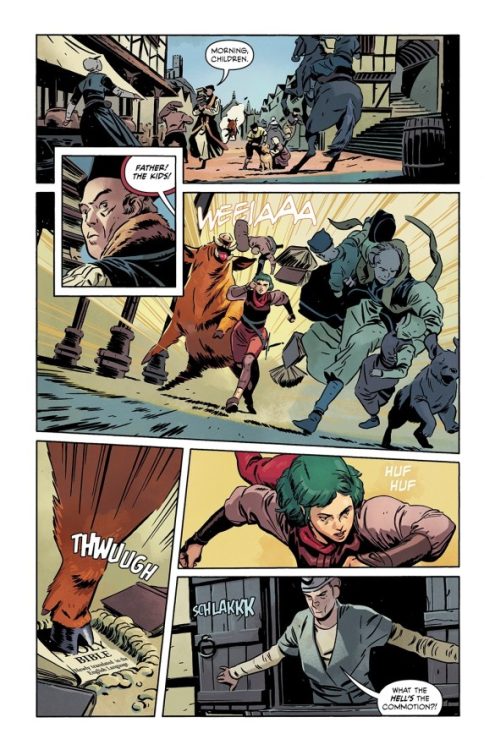
Gospel #1 cements its fictional identity with Morris’s clever historical fantasy style. A masterful work of tone, this comic stays on the serious side with its subject matter, but is somehow also immensely fun. The reformation of the Catholic church under Henry VIII was, as we could gather, a historically turbulent and brutal time. However, with this period being so long past and with the fantasy possibilities tied to post-renaissance storytelling, Morris jumps at the opportunity to create something both joyfully endearing and insightful. The core plot is relatively simple: Matilde is a parish defender of the faith trying to do good deeds and earn a reputation as a sort of religious hero. Her problem is that, with all this upheaval and chaos in the wake of the Church’s reforming, it’s very difficult to find anything of note to even do. This is where Pitt the storyteller comes in, as he agrees to embellish tales of her heroics. Of course, the inner details of the characters’ lives — as well as the appearance of a possibly truly formidable foe — add complications to the plot that will no doubt make this story all the more intriguing as it continues.
Morris’s dialogue sensibilities do a great job of instilling a sense of place as the reader spends time with the cast. He uses a sort of modernized period-speak to maintain the blend of history and fantasy, even through the characters’ own words. There’s a great moment midway through the issue where the fantastical period speak and more plain, modern dialogue directly clash in one of the comic’s most memorable (and a touch confusing) scenes. Morris has created a brilliantly interesting first chapter that may be a bit dense for some, but is a sheer delight for those looking for something as whimsical as it is complex.
Art Direction
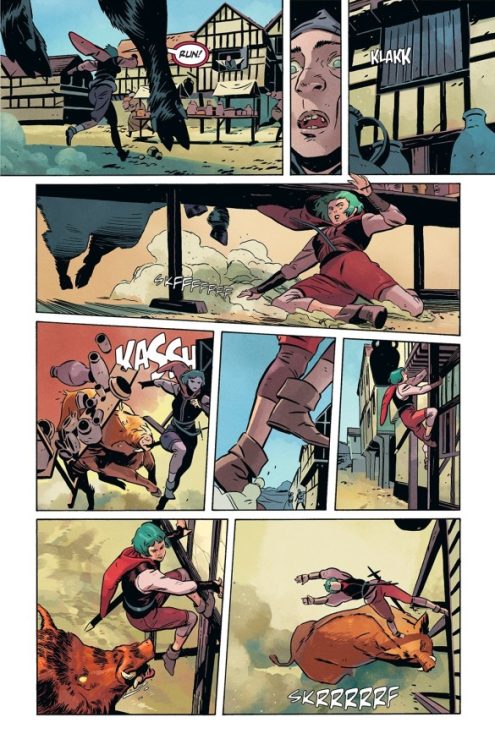
Will Morris is an even more impressive artist than he is a writer, which makes Gospel #1 an even more insane achievement. His densely detailed environments and beautifully animated characters pull readers into the story with ease. His Miyazaki-inspired historical-fantasy direction is remarkable to experience, with Morris crafting one of the most memorable settings in comics this year. His sequential direction stays busy as well, with pages being filled with numerous panels that carry both action and quieter moments along with a perfect sense of pace. The visual experience is rounded out by Morris’s vivid and varied color palette, which is some of the most stunning work I’ve seen in a comic this year. His work here is very similar to Mat Lopes’s work in comics like The Dreaming, with a style that retains a sort of familiar realism while being airy enough to pass off as fantasy. This is a visually stunning comic, and I can’t wait to see how Morris presents it as the plot thickens.
Verdict
Gospel #1 is a brilliant and unique opening chapter of historical fantasy. Will Morris’ storytelling is complex, clever, and constantly fun, making for a wildly engaging read. His visual work is among the best in comics this year, with excellent detail, animations, sequencing, and staggering color work. Be sure to grab this opening issue when it hits shelves on November 9th!