We are here to tell you what trades and collections you should be looking out for this month from Marvel Comics!
With Across the Spider-Verse hitting theaters this weekend, Marvel is loading fans up on spider-related reading material, as well as some fan-favorite stories!
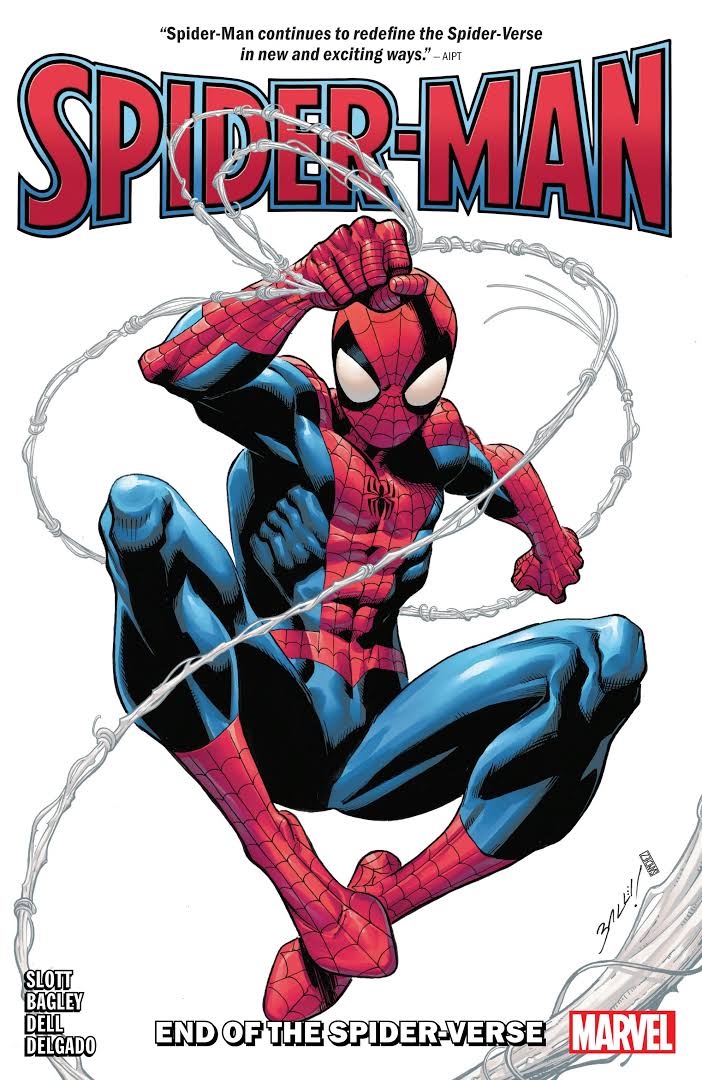
1. Spider-Man Vol. 1: End of the Spider-Verse
Dan Slott and Mark Bagley’s Spider-Man run gets its first collection this month. As the title suggests, the Spider-Verse is in danger, and Spiders are dropping like flies. It’s a big, sprawling, action-packed story featuring all kinds of spider-people from across the Spider-Verse (honestly didn’t intend the pun there), making this a great book to pick up following the new spider-movie’s release.
Slott’s Spider-Man stories can be divisive amongst fans, but Bagley’s art is always a delight, making this a story worth checking out on its own.
Release date: June 7th, 2023
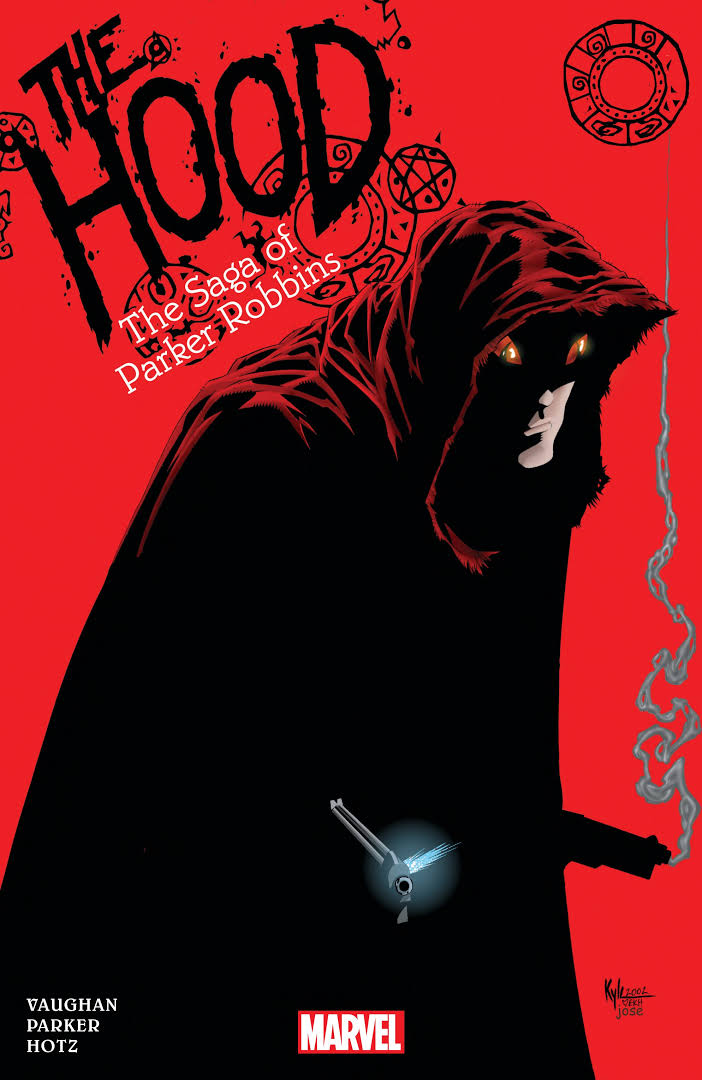
2. The Hood: The Saga of Parker Robbins
If you’re unfamiliar with The Hood, now is the time to jump in and learn why he is such a fan-favorite character. This new trade paperback collects the original six-issue MAX mini-series, as well as the character’s follow-up Dark Reign series.
Parker Robbins is designed to sort of be the anti-Spider-Man (even his name is a nod to Peter Parker). He’s a down-on-his-luck guy who has great power thrust upon him. But Robbins did not have the upbringing or the support system that Peter had, so he views his new abilities as an opportunity rather than a responsibility. The Hood’s story is a dark, gritty, compelling tale that continues to captivate readers. He’s become a major player in the Marvel Comics gang world, and he’ll be making his live-action debut in next year’s Ironheart show, making this a great time to catch up on his backstory.
Release date: June 7th, 2023
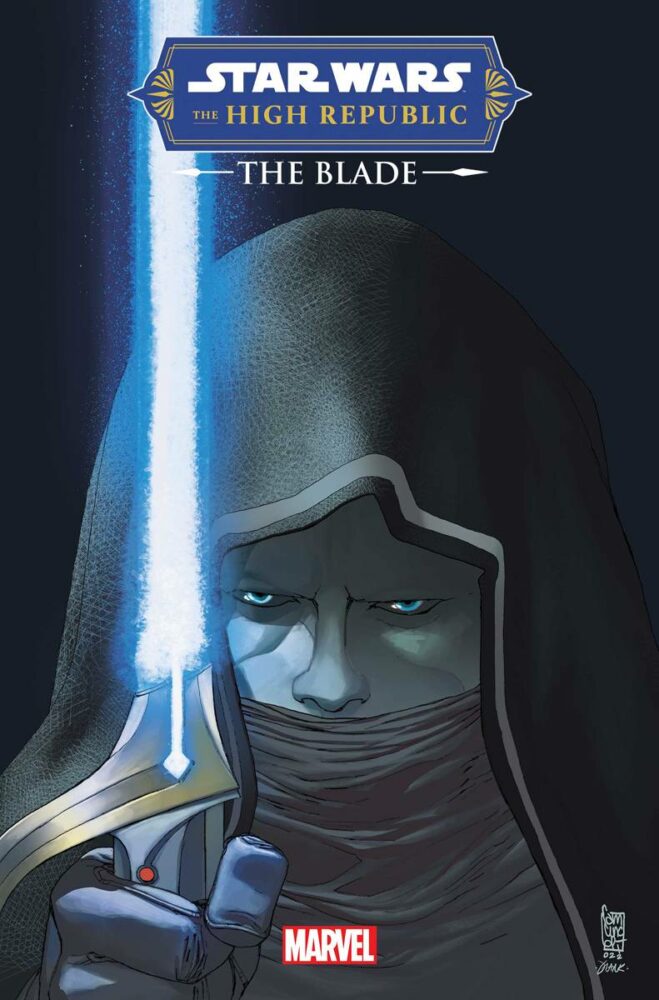
3. Star Wars: The High Republic — The Blade
Jump into the High Republic era with Charles Soule and Marco Castiello’s The Blade! Follow brother and sister Jedi Knights Porter Engle and Barash Silvain on an adventure set hundreds of years before the Skywalker Saga. Porter is perhaps the greatest lightsaber of his era — a legend in the making — but he may meet his match.
The Blade is a gritty, thrilling Star Wars adventure. If you’ve been a fan of stuff like Star Wars: Visions, or you’re looking forward to The Acolyte, and you’re looking for more Star Wars content set outside the typical Republic/Empire/Resistance era, pick this up at the end of the month.
Release date: June 28th, 2023
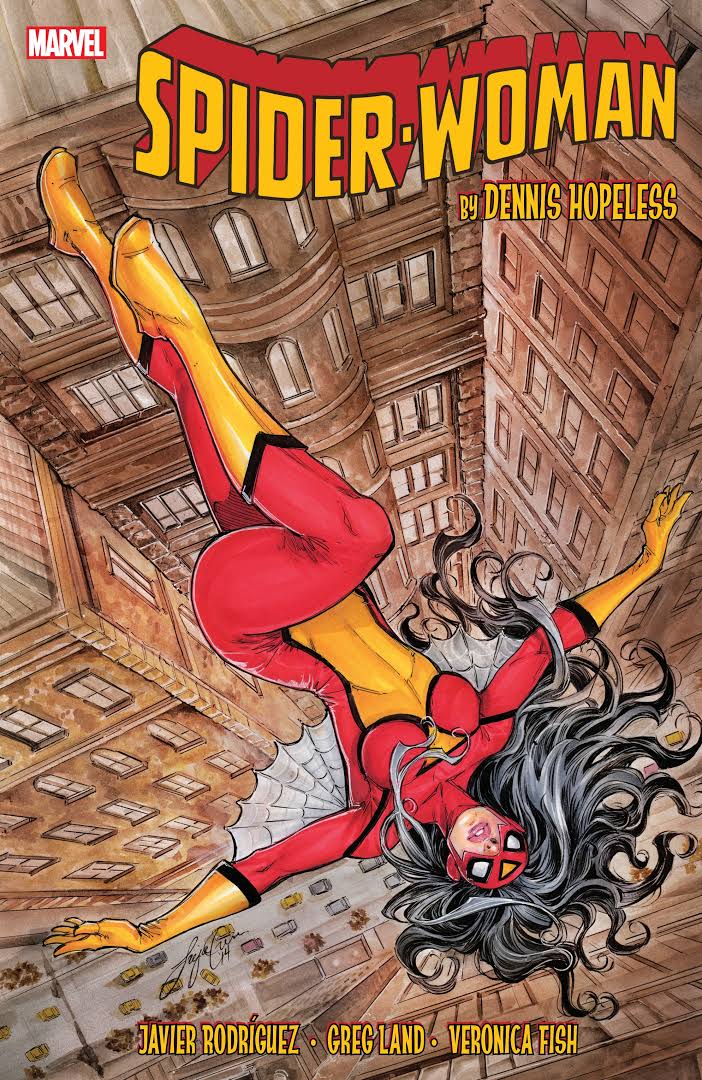
4. Spider-Woman by Dennis Hopeless
This fan-favorite run by writer Dennis Hopeless features Jessica Drew as a member of the Spider-Verse, a private investigator, and an expectant mother. That might seem like a lot of ground to cover, but Hopeless and company balance it all well and provide a captivating Spider-Woman story for fans new or old.
Issa Rae’s Jessica Drew in Across the Spider-Verse seems to borrow heavily from this run, so if you’re looking to read up on Spider-Woman after you leave the theater, head over to your local comic shop and pick this collection up.
Release date: June 7th, 2023
5. Captain America Epic Collection: The Secret Empire
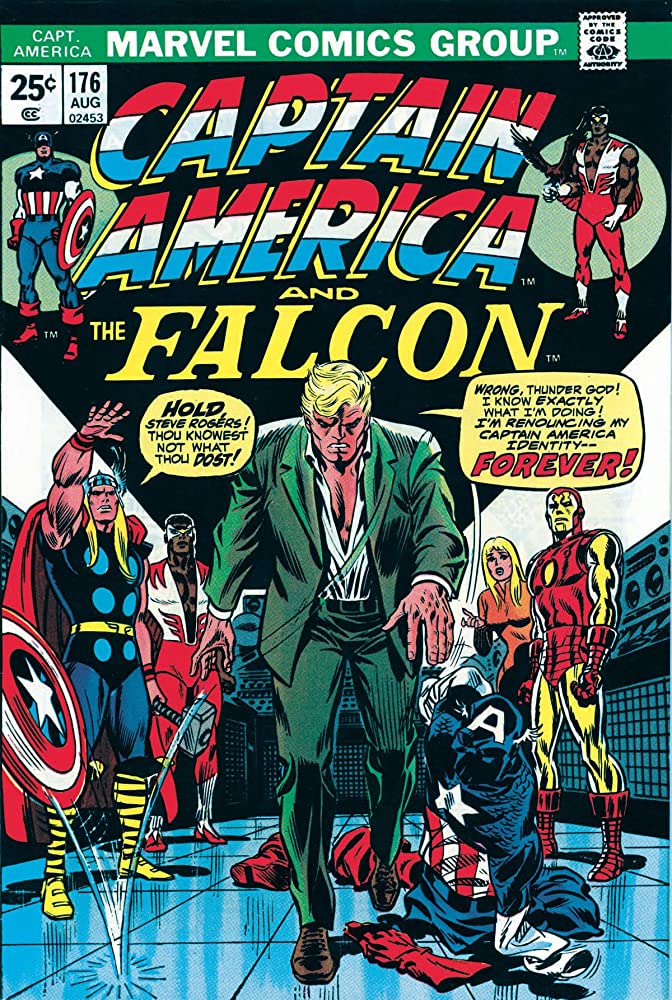
Cover image from CAPTAIN AMERICA #176, one of the iconic issues featured within the new Epic Collection.
This landmark Captain America story by Steve Englehart and Sal Buscema finally gets the Epic Collection treatment this month. In addition to classic stories featuring Doctor Faustus and Nick Fury, this collection is headlined by the Secret Empire Saga, a story arc that rattled Steve Rogers’ faith in his country and led him to give up the Captain America mantle for a time.
The arc includes political intrigue, espionage, action, and superhero cameos galore, making this a great Epic Collection to pick up if you’re looking to get into 1970s Captain America.
Release date: June 28th, 2023
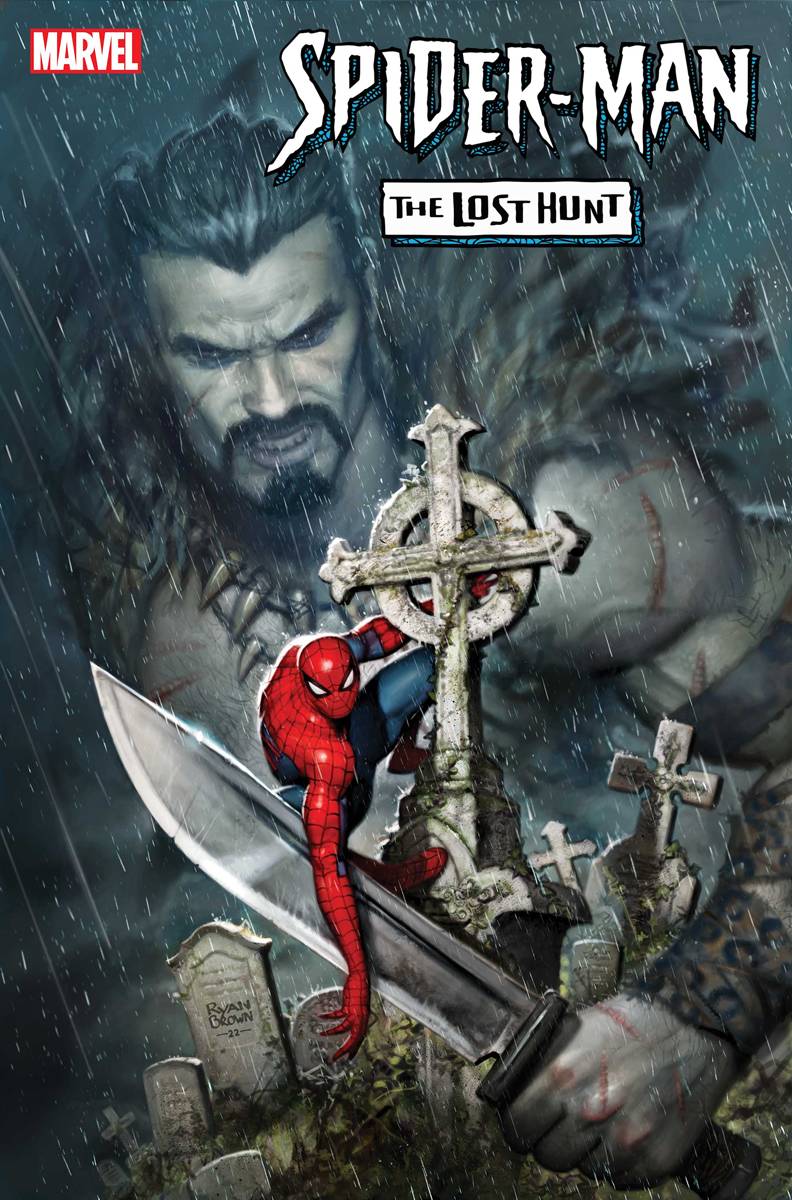
6. Spider-Man: The Lost Hunt
J.M. DeMatteis — writer of the seminal Spider-Man story “Kraven’s Last Hunt” — is joined by artist Eder Messias to tell this new story set shortly after 1995’s Spider-Man: The Final Adventure. “The Lost Hunt” promises to reveal secrets and answer mysteries that Spidey fans have been waiting decades for, adding depth and context to one of the wall-crawler’s greatest tales.
And for all of you (very vocal) fans out there longing for the days Peter Parker and Mary Jane Watson were married, this story just might scratch the itch you’ve been having!
Release date: June 28th, 2023
What trades and collections are you planning to pick up this month from Marvel Comics? Sound off in the comments, and we’ll see you back here in a month!

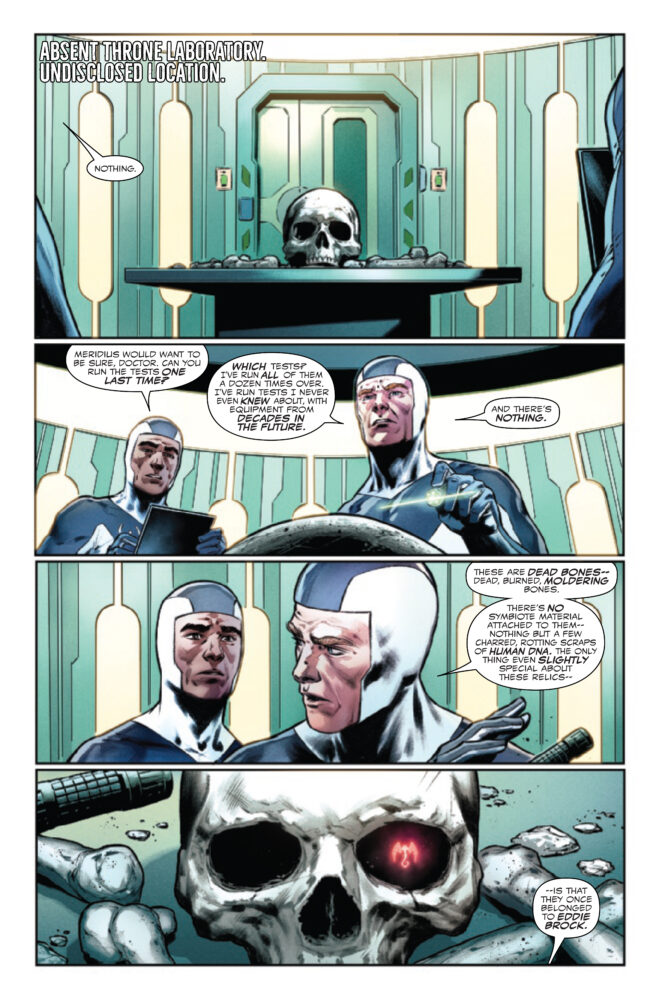
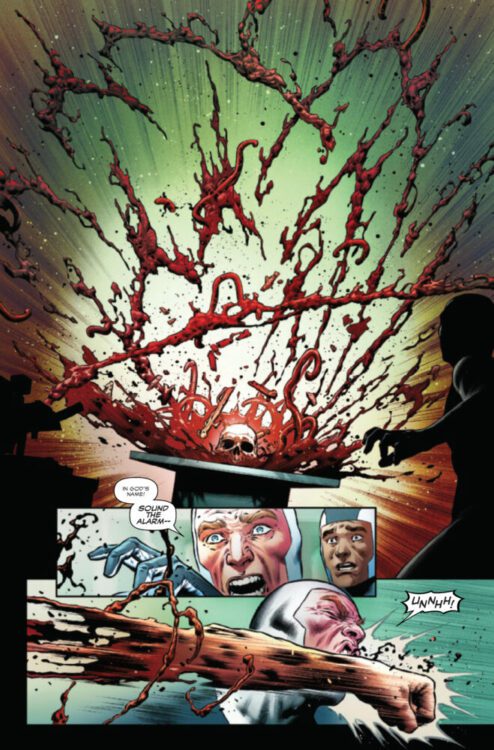
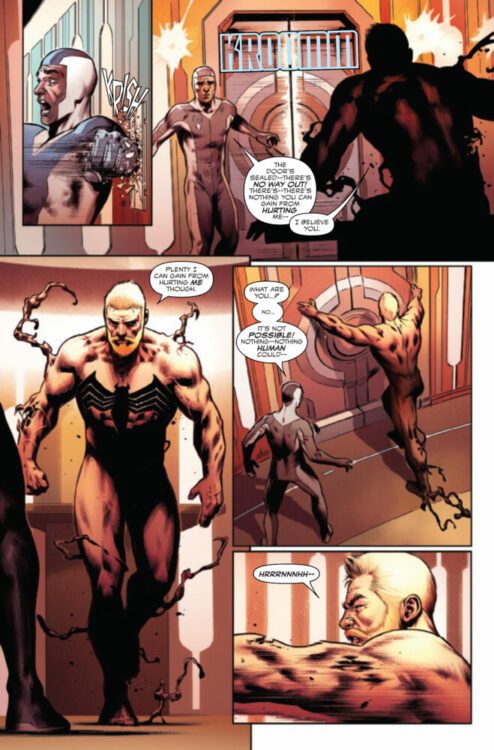
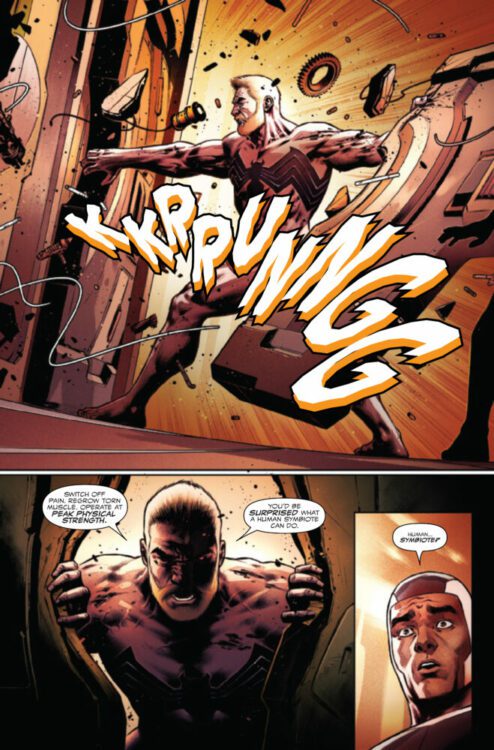
VENOM #20 hits your local comic book store on June 7th, but thanks to Marvel Comics, Monkeys Fighting Robots has an exclusive four-page preview for you!
About the issue: THERE AND BROCK AGAIN!
Eddie Brock has fought and fought and fought some more to get back to the Marvel Universe and fight by his son’s side.
IN THIS ISSUE – HE SUCCEEDS! And the charred skeletal remains of Eddie’s physical body are REANIMATED by the King in Black incarnate! Wielding the very marrow in his broken bones, Eddie makes his presence in the present known in explosive fashion! Not that you’d expect anything less!
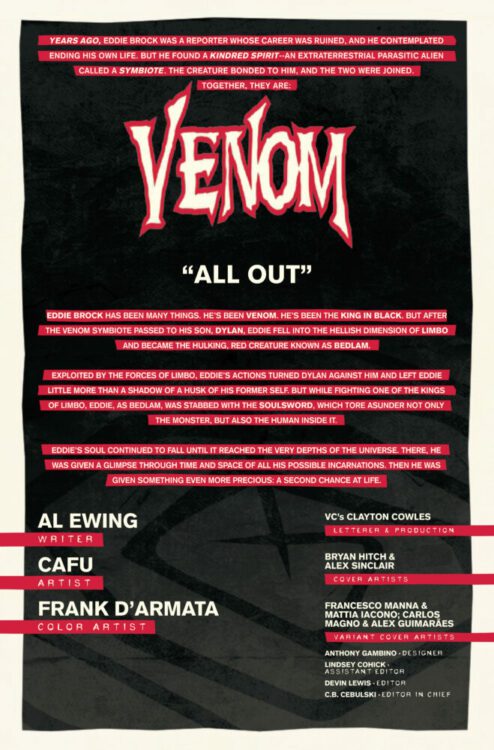
The issue is by writer AL Ewing and artist CAFU, with colors by Frank D’Armata, and letters by Clayton Cowles. The main cover is by Bryan Hitch and Alex SInclair.
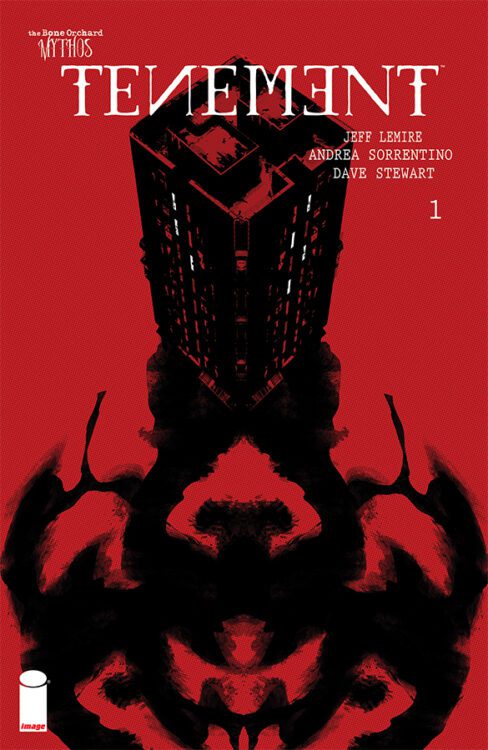
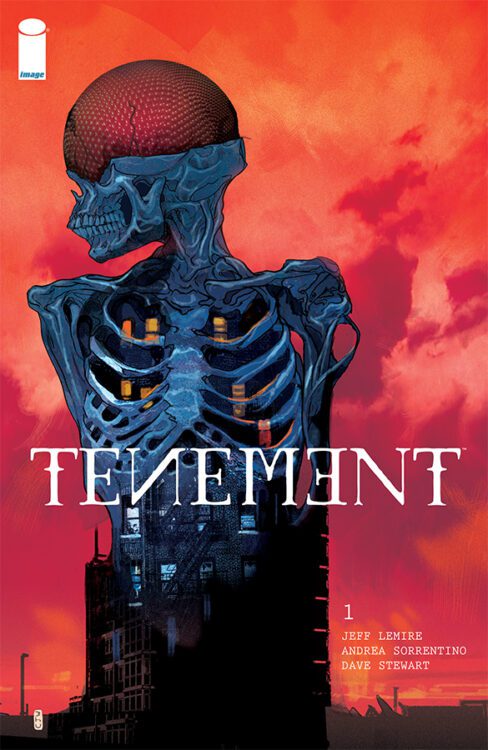
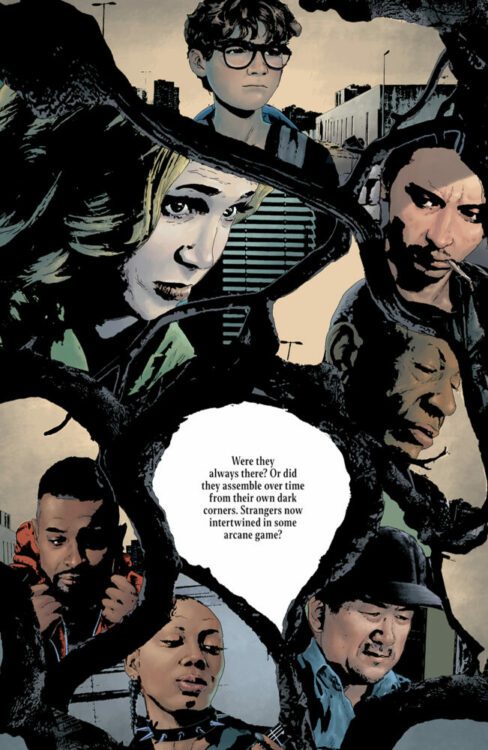
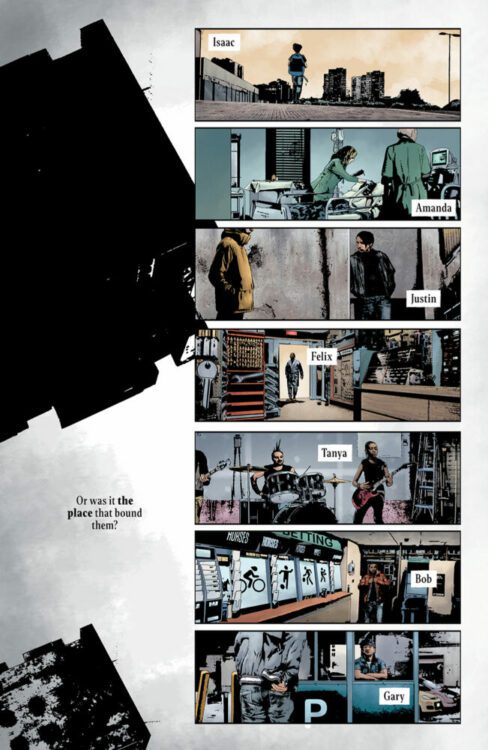
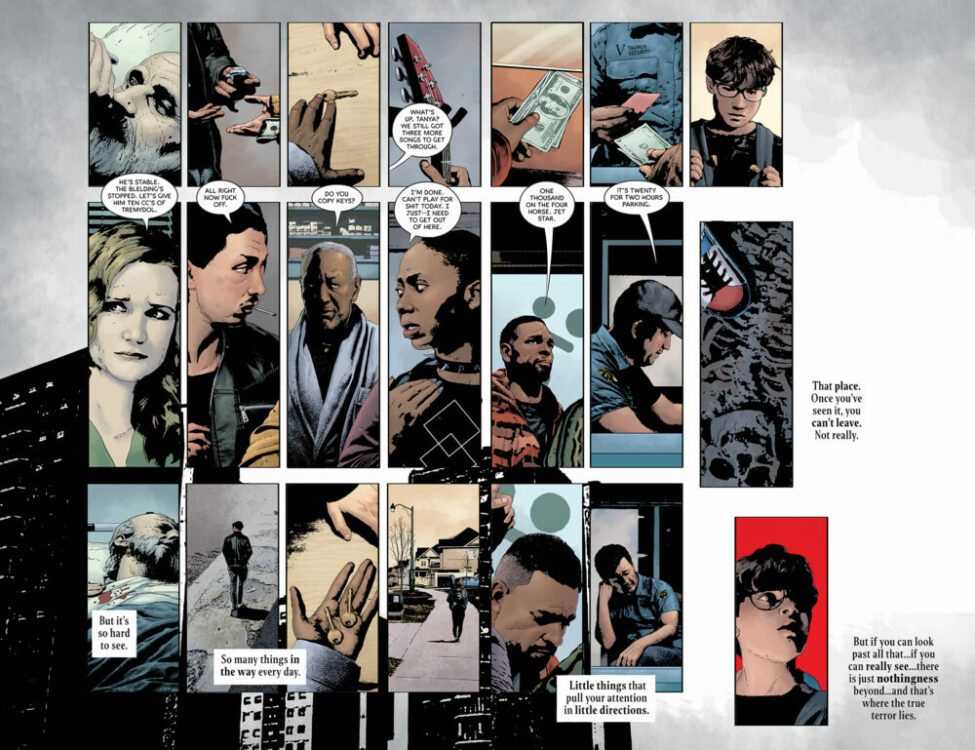
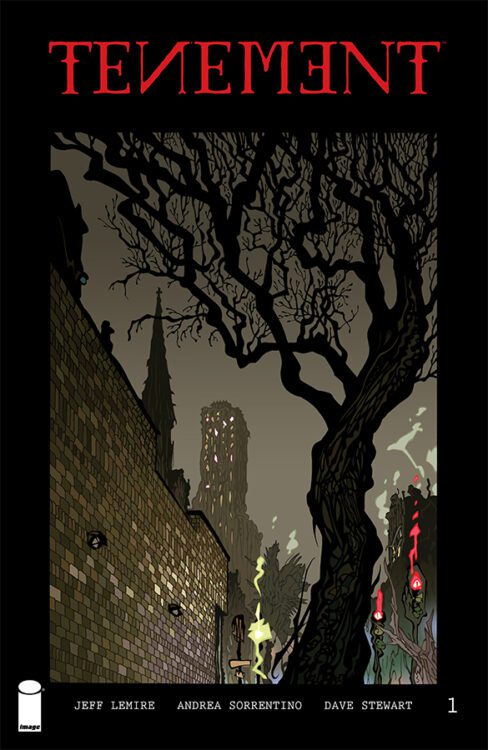
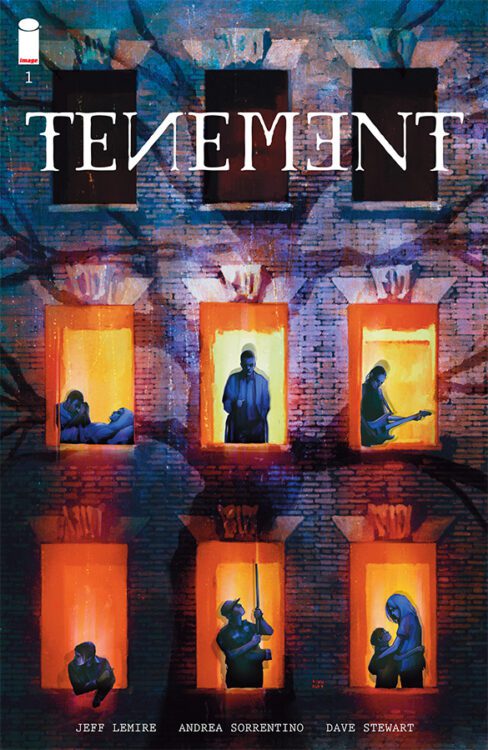
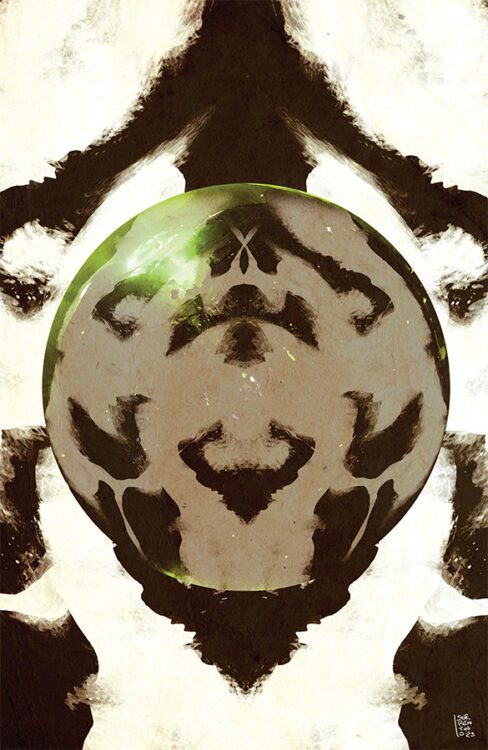
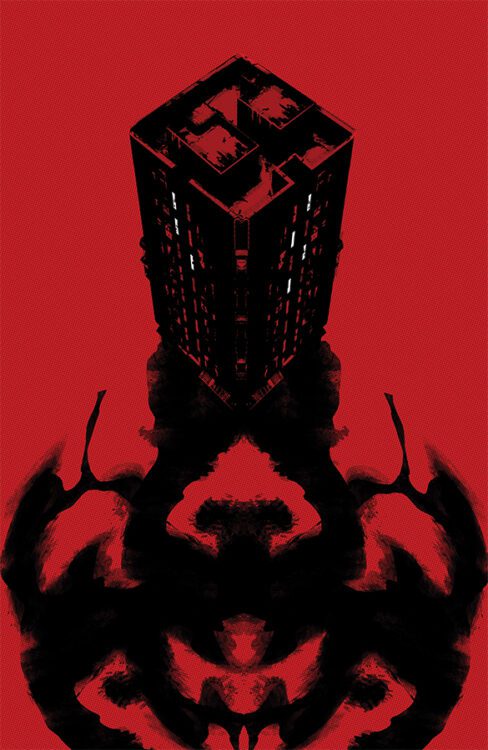
TENEMENT #1 hits your local comic book shop on June 21 from Image Comics. The book is written by Jeff Lemire, with art by Andrea Sorrentino, and Dave Stewart drops the colors. Image Comics describes the series as Dario Argento’s Inferno meets Rosemary’s Baby in a claustrophobic tale of terror, perfect for fans of atmospheric horror. The story follows seven residents in a building and the dark secrets that bind them together…beginning with a death that feels much more sinister than natural.
TENEMENT #1 is a slow burn that’s very unsettling and will have you at the edge of your seat. Sorrentino’s photo-realistic style and clean panel layouts create a bleakness waiting to be corrupted by Lemire’s story. In addition, Stewart’s color palette triggers haunting memories of watching horror films as a kid. The first issue leaves you wanting more which is always a good feeling.
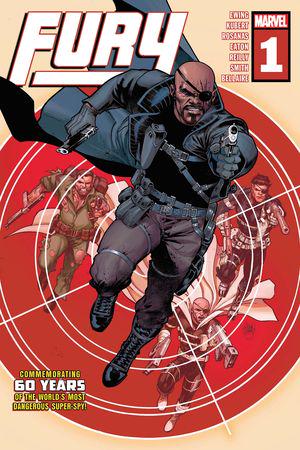
With the upcoming live action release of Secret Invasion on Disney+, it makes sense for Marvel to release a book that highlights the main character of the series, Nick Fury Jr. This one-shot features stories from Nick Fury Sr as well as his son. Al Ewing is writing this love letter to the Super spy and old school mystery genre. Joining him are Scot Eaton, Tom Reilly, Adam Kubert and Roman Rosanas on pencils, Jordie Bellaire on colors and Joe Caramagna on letters.
WRITING
Al Ewing has the difficult task of writing both Nick Fury characters and making them seem different personality-wise. This issue takes place in the present as Nick Fury Jr. tries to figure out what S.C.O.R.P.I.O. is, and in the past that details the origin of the Zodiac key. Stories like this work when the writing is good and the timelines match up well. Ewing does that here. Everything in the past is connected and important to what is happening in present day. Ewing also gives readers continuity as he draws all the way back to the Sgt.Fury And His Howling Commandos days for part of the issue. Original Sin is also used and referenced in this book as well. Ewing’s internal monologue for Nick Fury Jr. is extremely important for this issue as well. Ewing allows us to see how Fury Jr. uses his intellect and skills to get what he needs. Things like asking Cyclops to help him get to the moon or using a multipurpose gun gives readers an insight into why he’s such an amazing character. At the heart of all of this is a story about a father and son though. While the panel time of them together isn’t a large sample, Ewing makes their time count. Fury #1 is a book that should appeal to anyone who loves a good mystery and family reunions.
ART
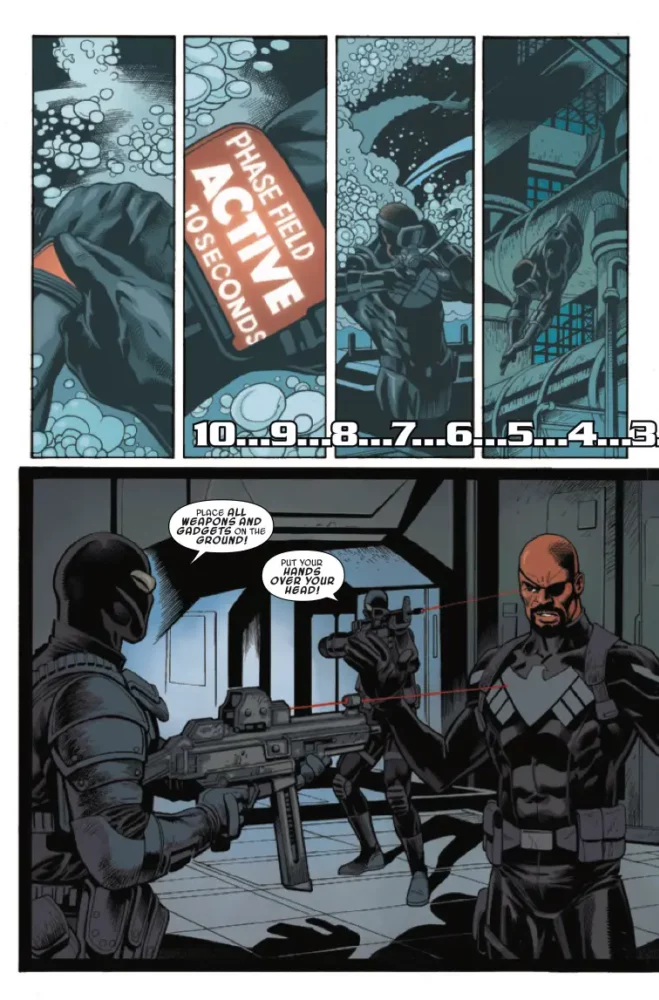
The pencils are split up between several different artists. Each section details a different period in time for Nick Fury Sr. or Nick Fury Jr. Scot Eaton starts off the issue with a current Nick Fury Jr. Eaton’s work, with inks by Cam Smith, feels close and personal. We get a lot of panels with close ups of half of Fury Jr.’s face. Tom Reilly takes over after page 11 and he has a similar style to Eaton. Where Reilly shines is in his flashback sequences. These pages have a dated yet modern feel to them. Reilly will leave some panels with less detail during the flashback, and it works out well because it feels like it fits the time. Adam Kubert takes over after that for another flashback portion. This is the section that feels like you’re reading an old school comic. It looks like newsprint and almost has a texture to the art work. Finally Roman Rosanas wraps things up with his style that is very modern, yet pulp comic. Panels in this section bring detail to the characters, but leave much of the background open. Rosanas accentuates the characters and draws the reader into their actions.
The colors by Jordie Bellaire are amazing here. Bellaire has to use multiple different color pallets for several different artists. Doing colors for this book was no easy task. The section that sticks out the most are the vibrant and pop of the Roman Rosanas section. Bellaire uses a perfect blend of light and dark to bring attention to the characters. The backgrounds are the perfect color to allow a red or green to demand your attention. In the pages she colors for Adam Kubert, the colors need to feel old fashioned. Bellaire uses lots of lighter greens and peach for army uniforms and skin tones. Tom Reilly’s portion of the book has a vintage feel to it as well, but Bellaire uses harder tones than in the Kubert section. She allows backgrounds to be dark until there is some action, then they blow up with a fiery red or an incendiary green. Bellaire did a phenomenal job using different styles of color to match each artist. This is a masterclass in how to color comics.
The letters by Joe Caramagna shine in this issue as well. His placement of narration boxes in the vintage Nick Fury Sr. story are perfect. They appear at the bottom and upper left corner of each panel and are simple to read. When something drastic is said, like “Nick Fury ain’t dead yet!” Caramagna uses red around the words for emphasis. There are a few sound effects that have an impact on the story. Nick Fury Jr. using a multipurpose weapon to blast a villain leaves a “VWEEEEE” on the page. Caramagna also layers the letters so they nearly overlap one another. Good lettering can really help a story out, and Joe Caramagna gave Fury #1 a nice boost.
CONCLUSION
Fury #1 is a good read, but it’s also a touching story about a father and son. Al Ewing always shows up and delivers whenever he’s on a book. The art works wonderfully and the colors blow the top off of this issue. Nick Fury Jr. is in good hands as long as Al Ewing is working his magic on him. Fury #1 is available at a comic shop near you!
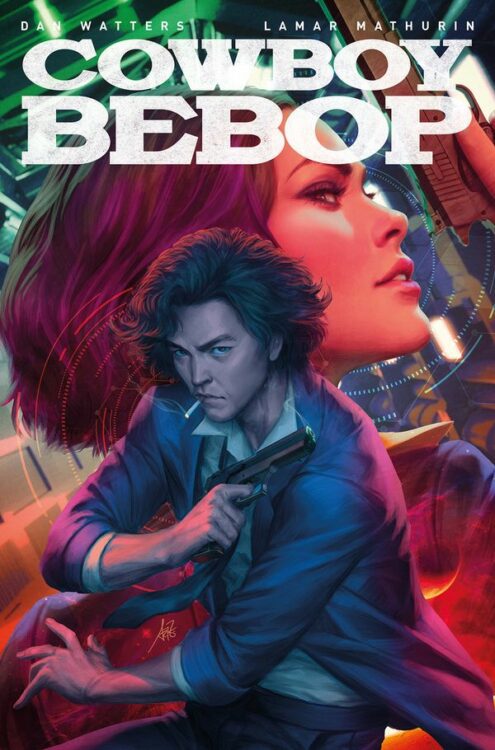
There’s scarcely a more convoluted source for an adaptation than Titan Comics’ Cowboy Bebop: Supernova Swing. This 4-issue mini-series penned by Lucifer and Sword of Azrael writer Dan Watters and drawn by up-and-coming phenom Lamar Mathurin is technically a tie-in to the atrocious and deservedly cancelled Netflix adaptation of Shinichiro Watanabe’s masterpiece anime. Fortunately, what makes this comic work so well is how much its creators understand what truly makes the original source material tick – and how much they decided to ignore the live-action series they were tied to. Both a thorough understanding of what made Watanabe’s masterwork such an influential piece of art and the creative team’s comics-making synergy propel this mini-series into the stratosphere as not just a create comic, but one of the best adaptations ever put to page.
Originally released in 1998, Shinichiro Watanabe and Sunrise Studio’s Cowboy Bebop still stands tall as one of the greatest works in the medium of animation. Watanabe’s influences from Western cinema bleed into this 26-episode cyberpunk tale of a crew of desperate bounty hunters and the strange situations they end up in. The series’ use of music remains one of the best blends of cinema and song in both animation and film. While the show on the whole does have an episodic structure for long stretches, its main story beats are filled with an existential weight that still hangs heavy on viewers years after wrapping its final episode. Bebop is an undeniable peak in anime and the medium of animation as a whole. So how does a creative team follow that influence into the comics medium? Especially when tying said comic to a live-action show that missed the mark completely? There’s been a Bebop comic before, in the form of a decent but forgettable manga. The key to making a great adaptation comes down to having a thorough understanding of the source material, while also being a brilliant creative force in your own medium.
Cowboy Bebop: Supernova Swing follows the crew of the Bebop – Spike Spiegel, Faye Valentine, Jet Black, and Ein the genius corgi (Ed hadn’t been introduced in the Netflix series yet) as they go after a mark named Melville. As with every Bebop bounty, there’s a catch: Melville is supposedly wearing a “quantum probability vest,” granting him an unlimited amount of luck and making him impossible to catch. Each issue sees the crew in a different snag, from escaping a laziness-poisoned planet or fighting other bounty hunters in a flying delivery truck. This mini-series feels exactly like a lost episode of the original anime, transcribed into the comics medium. A huge part of this is due to how writer Dan Watters clearly understands every facet of Cowboy Bebop. The very plot itself fits right in as such a distinctive Bebop story. Each crewmember’s distinct personality is nailed down in these pages; Spike’s distant nonchalance with sudden explosions of determination, Faye’s reckless confidence, and Jet’s guarded paternalism are straight out of the original series. What’s more here though is that Watters hits the thematic elements and story arc structure of Bebop on the head. Each issue features the property’s signature style of humor and swinging, noir-esque dialogue punctured that fans know and love and that newcomers will be seduced by. Watters also understands how the small moments are so huge in Bebop – how many of the original’s key moments were just small, deeply meaningful conversations that added into the show’s overall thematic tone. Each one of the crew has a talk with a new character that leaves a noticeable impression on them, and that influences their moves in subsequent scenes. These moments in turn leave an impression on the reader. Dan Watters understands Cowboy Bebop, and has given fans old and new a story that is one-hundred percent a representation of the tone and feel of the original show.
All of the praise over Watters’ scripts would be meaningless if the visual team didn’t capture Cowboy Bebop’s original atmosphere. Lamar Mathurin and the incredible work of color artists Roman Titov and Emilio Lecce succeed at crafting an experience in Supernova Swing that looks and feels like Watanabe & Co.’s original work, but is also entirely distinct. Due to the comic’s ties to the Netflix series, Mathurin does stick to that show’s cast as visual reference to the crew in this book. However, this is almost unnoticeable for the most part, save for the difference in Faye’s outfit. This mini-series abides by the visual language of the anime with the loose postures and characters designs, focus on character interactions, and the overall used-future look of the setting. The urban environments are full of debris and people just trying to get by, while the remote settlement of Cyllene feels like a place society forgot. Mathurin and the rest of the art team do a wonderful job of reminding readers what Bebop has always in some form been about – the people you meet who leave an impression on you. Every interaction in this comic has a depth that stays in the reader’s mind throughout the whole issue. The action and movement are exhilarating and in line with the loose, jazzy feel of the series as well. Mathurin nails the animation behind Spike’s Jeet Kune Do martial arts, to the point where you can almost hear the music in the background while the fists and feel fly. The absurdity of some situations – like a delivery van full of spicy noodles being towed by a spaceship while a fight breaks out on board – is both inescapably comics and anime. Even the lettering, crafted beautifully by Richard Starkings and Jimmy Betancourt, becomes a part of the overall storytelling environment in a way that somehow just *feels* Bebop. The outstanding hand-lettered look of the dialogue is impressive on its own, but it’s joined by artistically brilliant SFX lettering that looks like it naturally belongs in the space alongside the action. Supernova Swing has visuals that understand the source material as well as the script, perfecting this stellar adaptation.
Cowboy Bebop: Supernova Swing is a masterful adaptation because it seamlessly turns the iconic anime’s style into a comic book. From the overall plot to the minutiae of its quieter moments, Dan Watters shows that he understands the fundamental aspects of what makes Bebop tick and delivers what could easily be a lost script from Watanabe & Co.’s original work. The artistic vision made by Lamar Mathurin’s pencils with Roman Titov and Emilio Lecce’s colors is reminiscent of the source material while still crafting a sleekness and swagger all its own. Despite its attachment to a messy, failed live-action adaptation, this four-issue mini-series is an absolute must-read for Bebop fans and readers of stylish comics alike.
The premise is simple: read one comic every day for the entire year. It seems like a simple task but there is no way that I read 365 comics last year, even if you count the individual issues in collections. So, this year, I am committing myself to this reading challenge, in the hope that I can broaden my reading habits and fully engage with my favorite hobby again.
I started the week off in 1994. At that point in my comics reading life, I was very much entrenched in the world of Vertigo Comics, an imprint that had been founded a year earlier. It was also the year that I moved to somewhere that had an actual, specialized, comic shop. Previously, most of my comics had come from mail order or the occasional visit to a city. For the first time, in 1994, I had an LCS (local comic shop).
I was also a student. So, it was lucky for me that the average comic cost around a pound (£). The speculation boom in this period was just starting to build and it would only be a few years until the entire industry crashed. But, until then, there were many great comics to be found.
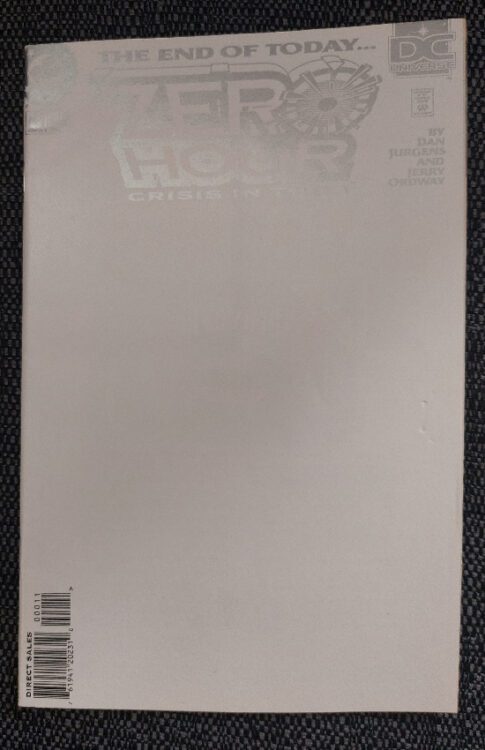
Zero Hour #0 The First Black Variant? Credit: DC Comics
Comic Number 141: Zero Hour #4 -0
Small confession time: I have never read any of DC Comics big event stories, except for the weekly 52 comic and the five issue Zero Hour. I missed out on Crisis on Infinite Earths, Final Crisis, and Flashpoint. I guess by reading 52 I experienced some of Infinite Crisis but I didn’t have a grounding for a lot of the narrative. And that’s my problem with DC events: I don’t really read DC (superhero) comics. I have some Batman, a few Superman, more Supergirl. The only Green Lantern I own ties in with the Supergirl comics and I think I only have a single issue of the Flash.
Therefore, the complex event stories that DC produces are completely lost on me.
I couldn’t tell you why I own Zero Hour. Perhaps it was the cheap cover price (70p per issue). Or maybe the gimmicky reverse numbering of the series, starting at number 4 and going back to 0. Somewhere, I have some Batman and Superman issue 0’s that tie in with this event but I didn’t feel the need to dig them out.
Some people might say that the creators, Dan Jurgens and Jerry Ordway, are a big sell but I find the script a bit cliched and the artwork very DC standard. It looks like a 1990’s superhero comic. There is nothing outstanding or inventive inside the covers. The occasional use of white space, an element of the story itself, makes for a striking page but generally, this series looks exactly as you might expect for a comic from this period.
The narrative is continuity heavy, as you might expect, and even now, after years of reading more DC comics, I still don’t know who a lot of the characters are. Even the main hero and villains of the story are a bit of a mystery to me. I have no biographical knowledge for them and haven’t read a comic that included them outside of this series (that I’m aware of). If you look at it from that point of view, Zero Hour must work on some level because, nearly 30 years later, I still own and occasionally read this series. Many comics have come and, literally, gone from my collection in that time but Zero Hour hangs in there. I couldn’t tell you why.
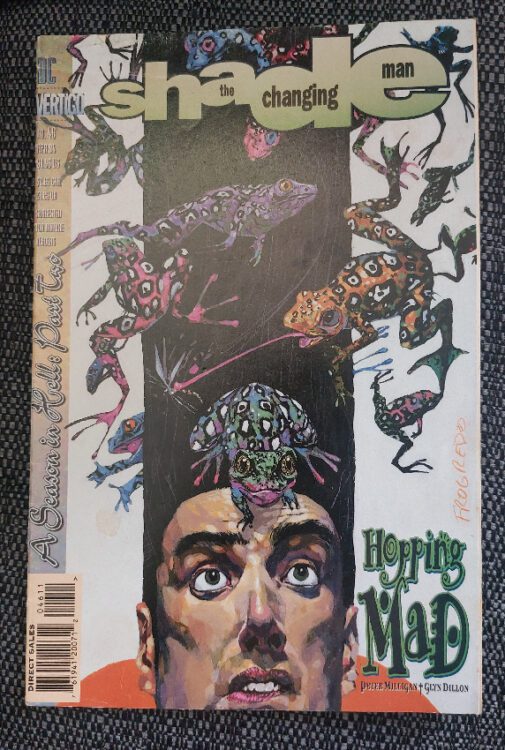
Shade The Changing Man #46 Credit: DC Vertigo
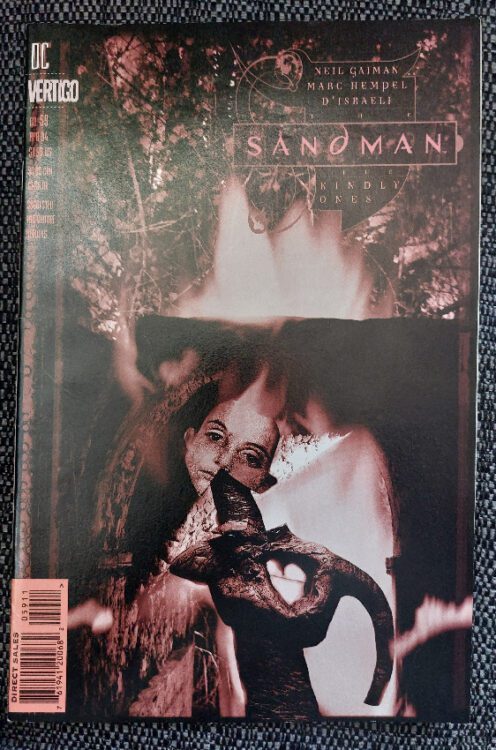
Comic Number 142 and 143: Shade the Changing Man #46 and The Sandman #59
I have lumped these two together because they have a lot in common. Not only are they published under the Vertigo banner but they are both early parts of a bigger story, poetically written by superb writers, and illustrated with expressive art that even today seems bold and fresh.
Peter Milligan (Shade) and Neil Gaiman (Sandman) both concentrate on the characters in their narratives but manage to do this by incorporating the environment around them and threading the plot through them. The characters are the story, not just facilitators of it. And one aspect that these two comics share is the large cast. Despite their titles referring to a specific character, both comics have a wide lens, taking in all of the supporting cast and treating them as central characters. Milligan and Gaiman write very different stories but both of them create worlds for the readers to explore.
However, it is the artwork in these two comics that is the real star. You have Marc Hemple and D’israeli providing strong, bold artwork for The Sandman. Shapes and color form the world the narrative sits in, holding it firmly in place like a ridgid framework. The structure of the comic page is mirrored within the panels where the images have very defined forms. But this is then subverted by the expressionistic coloring and poetic script that seems contrary to the art style. Together, it creates a fantastical world where anything, and everything, is possible.
The Sandman #59 Credit: DC Vertigo
This is exactly the same impression you get from Glyn Dillon’s work in Shade. He takes the script from Milligan and transforms it into a disconcerting visual world where everything is slightly off kilter. The reader’s point of view is barely direct, with so many panels viewed from unconventional angles. The scenery, especially the backgrounds in the hotel scenes, is often skewiff creating an uncomfortable setting for the story. This is not a place where you want to be, and it represents the breakdown in the characters’ relationships.
Both of these comics are visually impressive and have narratives that are engaging. Yes, they are both chapters in larger stories but you can still enjoy them as individual issues. Over the years I bought The Sandman on a regular basis, only missing a few issues now and then but Shade was a lot more hit and miss. However, I can still read Shade, even with the jumps between issues and gaps in the story. The artwork is reason enough to open the cover.
Witch Craft #1 Credit: DC Vertigo
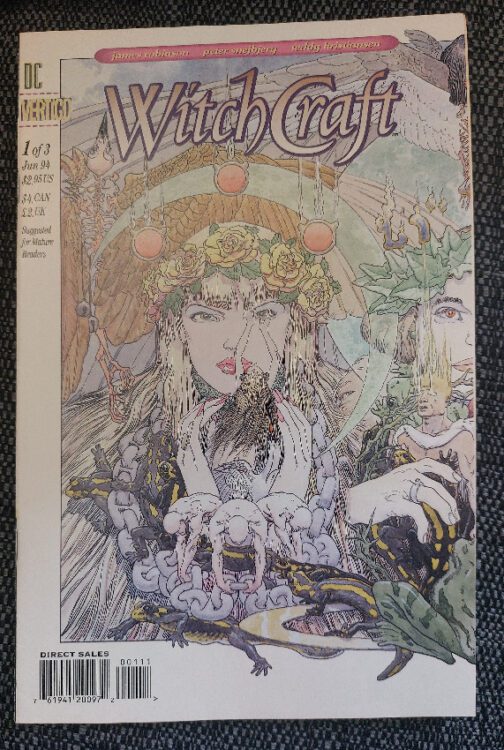
Comic Number 144: Witch Craft #1
The Sandman was a massive hit and in 1994 it was heading towards a spectacular finale. Therefore it’s not surprising that there were spin off comics around. Witch Craft took the Kindly Ones, the three witches that caused so much grief in The Sandman, and gave them another story of revenge.
Witch Craft includes some disturbing elements and the abuse of a central female character is the foundation of the narrative. The rape and murder of a priestess catches the attention of the three witches and, spurred by an urge for vengeance, they start to conceive a plan that stretches across decades and involves future generations of the original characters.
James Robinson writes an involved script, heavy on the description and conversation. Some pages contain a lot of text and there are some pages that are almost swallowed up in the speech. At these moments, it reads more like a stage play than a comic but there are other pages that counter this, pages that visually capture the reader. The more upsetting elements of the narrative are dealt with via text, with visuals that are not explicit or exploitative. The two artists, Peter Snejbjerg and Teddy Kristiansen, handle the script perfectly and combine the 1990’s Vertigo style with a dark, horror-esq imagery.
This comic looks like a Shakespearean tragedy. And I’m sure that’s not by accident.
Anderson PSI Division: The Dead Run Credit: Rebellion
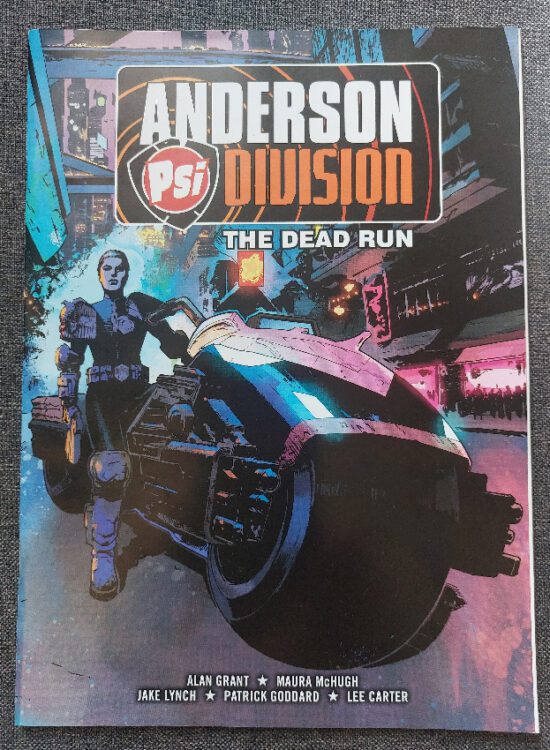
Comic Number 145: Anderson PSI Division: The Dead Run
My 1994 adventure was derailed halfway through this week. Long story short: I happened upon a stack of 2000AD comics that a neighbor was selling. While my son got a few of them to read (he has not read any Judge Dredd but was interested so I couldn’t say no) I have ended up with a number of Judge Anderson and Rogue Trooper comics. These comics are collections of stories originally printed in various issues of 2000AD and the collections were given away free with the Judge Dredd Megazine.
In The Dead Run, there are three stories, with The Dead Run being the main feature. However, it is the opening story, Death’s Dark Angels, that’s the most interesting. It features a cult who worship Judge Death and try to trap and sacrifice Judge Anderson in an attempt to resurrect the Dark Judges. It is a short, black and white reprint but includes every aspect you would expect from a Judge Dredd story: violence, crime, sarcasm, and brutality. The cult is portrayed as losers: lost souls who have nothing else in their life except to idolize something that is detrimental to their own health. And the Judges stand above them, bewildered by the depths that some people sink to.
Judge Anderson is lured into the cultists’ den and is then rescued by Judge Dredd in a seemingly sexist trope but there is something about the way Alan Grant has written the characters that dull that cliche. You don’t get the feeling that Anderson is a damsel in distress, instead she is calm and cool under pressure. Her attitude is one of disappointment in the criminals rather than a fear for her life. When Dredd turns up, she quips about his tardiness highlighting the relationship the two Judges have; there are very few characters who would speak to Dredd with such sarcasm, friend or foe.
The other two stories in this collection are entertaining but it is Death’s Dark Angels that has the classic 2000AD feel to it. You can see from this short story why the characters have endured as long as they have.
Rogue Trooper: The Machine War volume 1 Credit: Rebellion
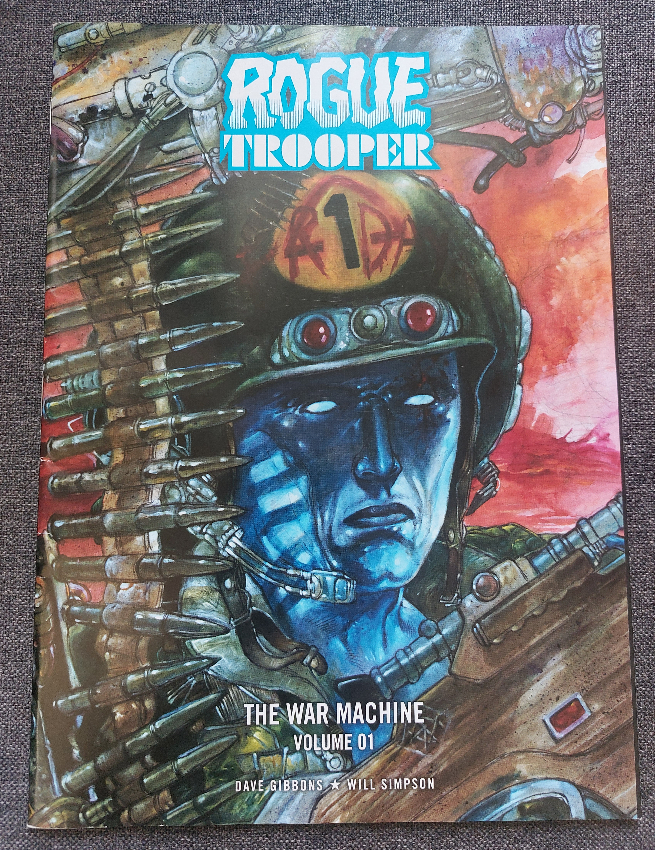
Comic Number 146: Rogue Trooper: The War Machine volume 1
Another comic from my find this week and another story new to me. Out of all of 2000AD‘s on ongoing characters, Rogue Trooper is the one I probably have read the most, however, this is the first time I have read Dave Gibbons’ reboot of the character from 1989. The War Machine introduces a genetically enhanced soldier who discovers an unsettling truth behind the war he has been sent to fight. The comic is violent and pessimistic. The Trooper, in this series called Friday, internalizes his own mission and purpose which creates an element of hope. Hope for the character at least, but not the reader. At each step the audience knows that the answers Friday seeks are not ones he wants to hear.
The artwork by Will Simpson epitomizes late 1980’s British comics. The painted images arranged in often misshapen panels demonstrate the experimentation and excitement for the medium. There is an expressionist approach to the visuals that lends itself to the narrative and the disconnection that the central character has to the world around him. The violence of the war and the helplessness of the soldiers is expressed through the often abstract images and odd shaped panels. Even the lettering by Bambos captures how small the Trooper is in the grand scheme of things. Small, rounded text is fit snugly into caption boxes barely big enough for all of the monologuing.
This first part of The War Machine is a tour de force of storytelling. Superb artwork by all involved and an engaging script that makes it difficult to imagine reading it in small segments in the original 2000AD issues. If only I had the second volume..
Rogue Trooper: The War Machine volume 2 Credit: Rebellion
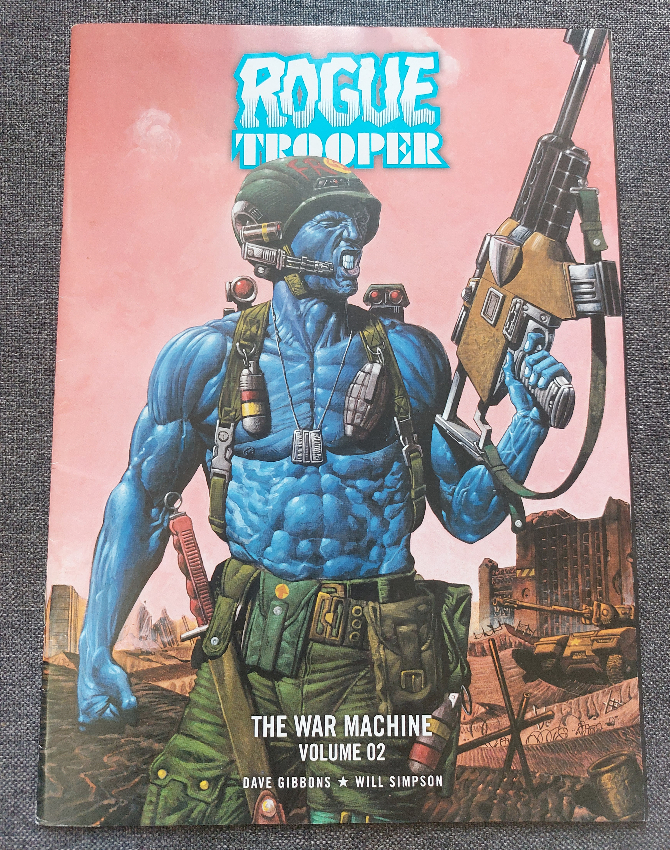
Comic Number 147: Rogue Trooper: The War Machine Volume 2.
This continuation of the Rogue Trooper story as re-invented by Dave Gibbons is as good as the first part. There’s not a lot that I can add although there are some other extras in this volume. The additional stories in the volume are also great reads (even the Mark Millar one) but do suffer in comparison to the title piece.
That seems like a bit of a cop out for the end of the week. But it’s been a busy one. Again my plan to focus on a particular year has gone astray. Hopefully I can manage to stick to my guns next week when I pick a third, specific year of publications.
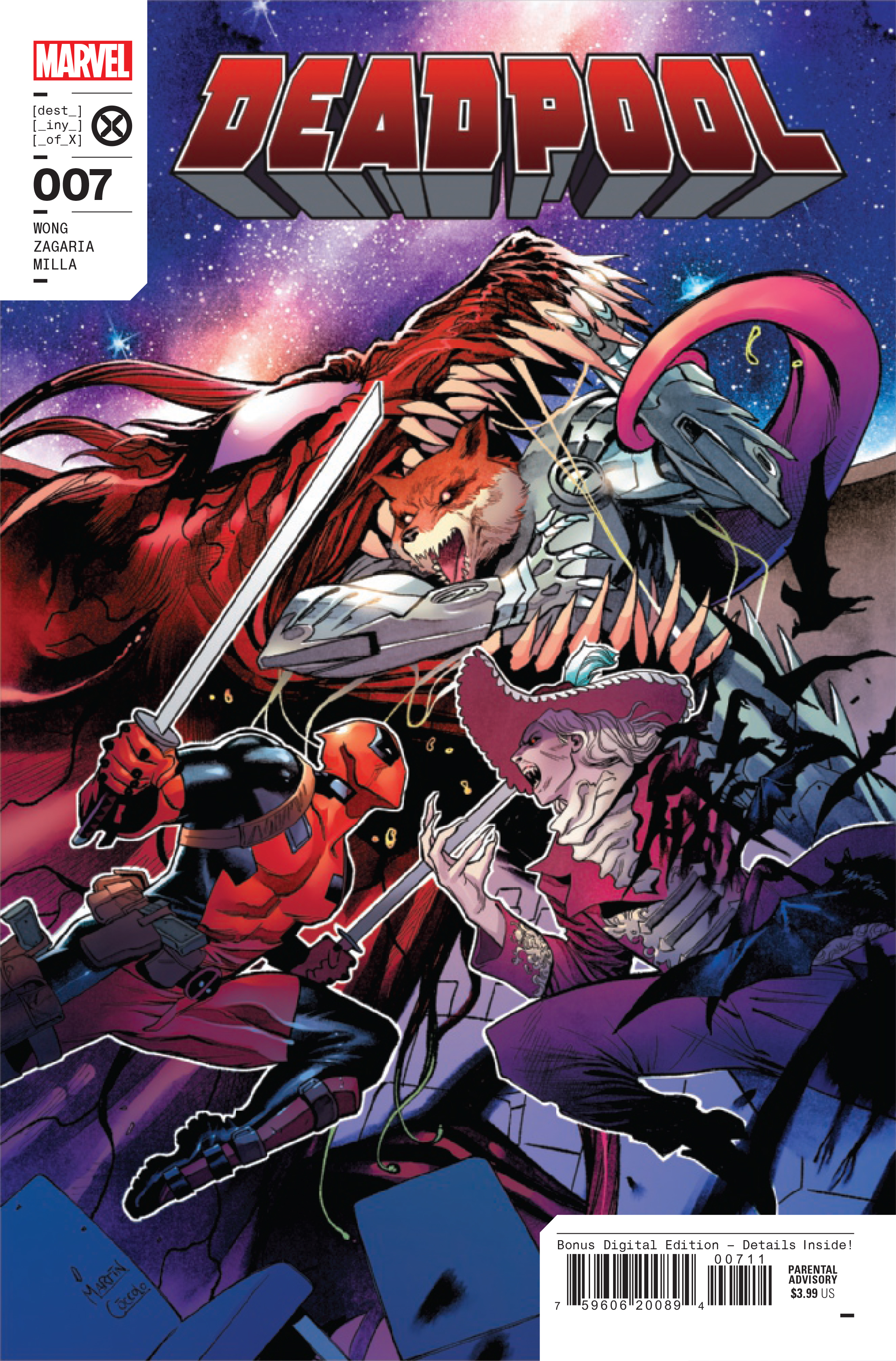
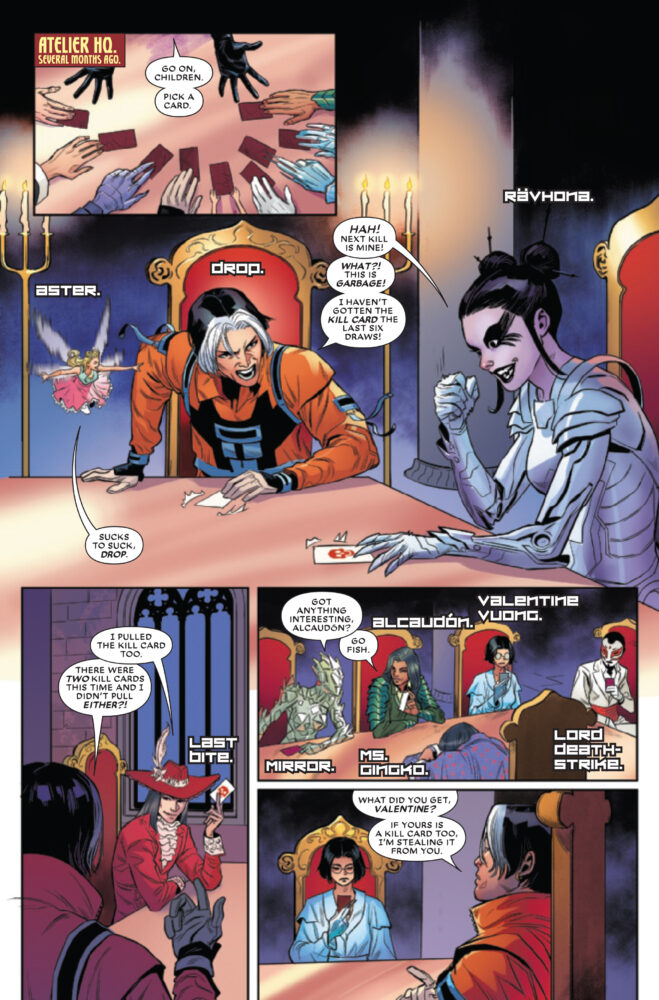
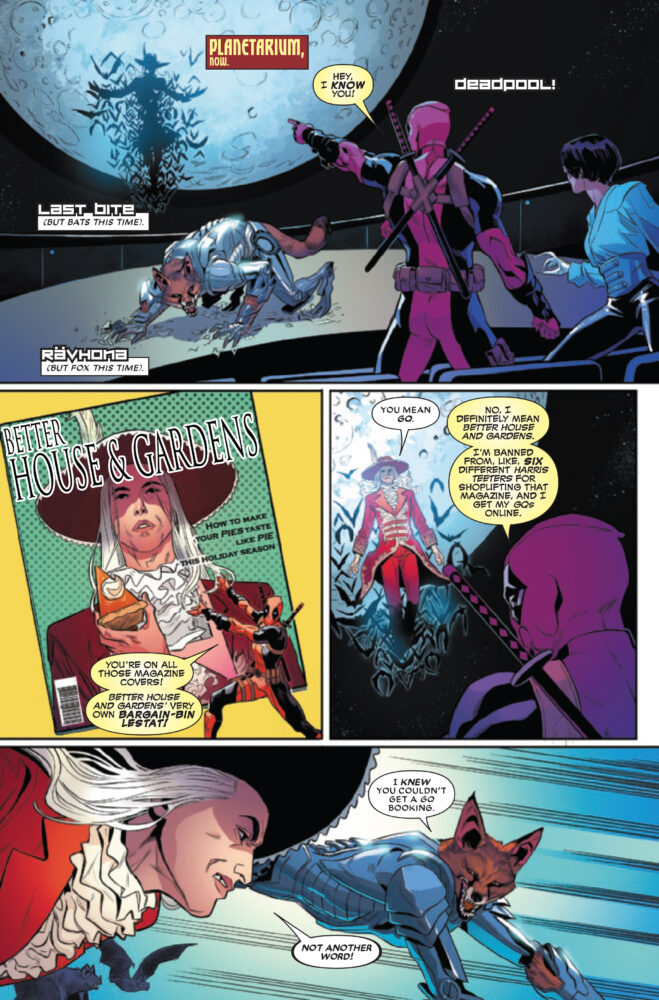
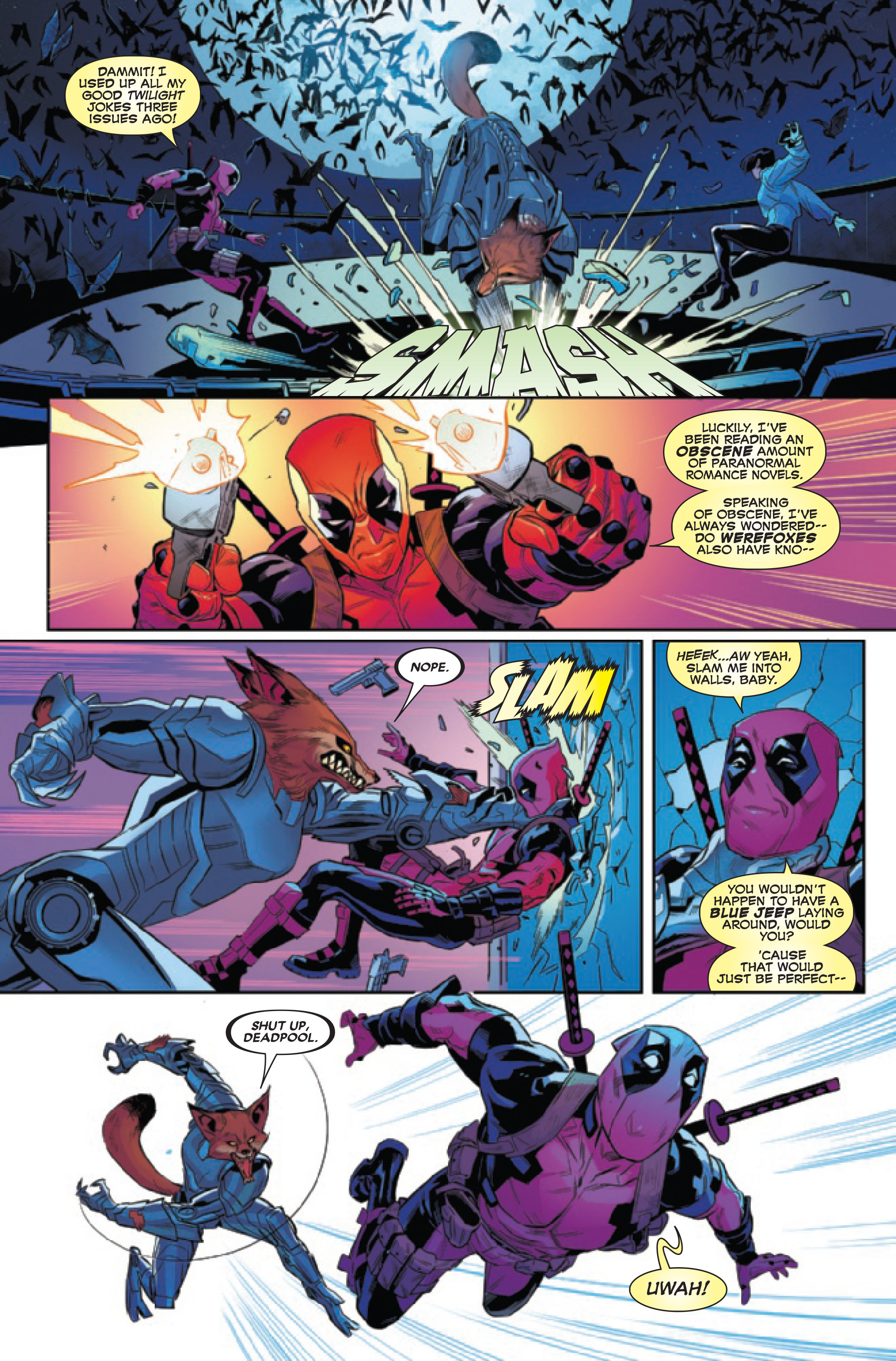
DEADPOOL #7 hits your local comic book store on May 31st, but thanks to Marvel Comics, Monkeys Fighting Robots has an exclusive four-page preview for you!
About the issue: TO KILL THE KILLER OR BE KILLED!
What does a trained killer do when trained killers try to kill them? Naturally, they try to kill those trained killers first. That’s right – the hunter becomes the hunted and then becomes the hunter again because, duh, he’s Deadpool, killing is his answer to most problems.
The issue is by writer Alyssa Wong and artist Luigi Zagaria, with colors by Matt Milla, and letters by Joe Sabino. The main cover is by Martín Cóccolo and Neeraj Menon, and the book’s design is by Tom Muller.
Check out the DEADPOOL #7 preview below:
Are you reading the current DEADPOOL run? Sound off in the comments below!
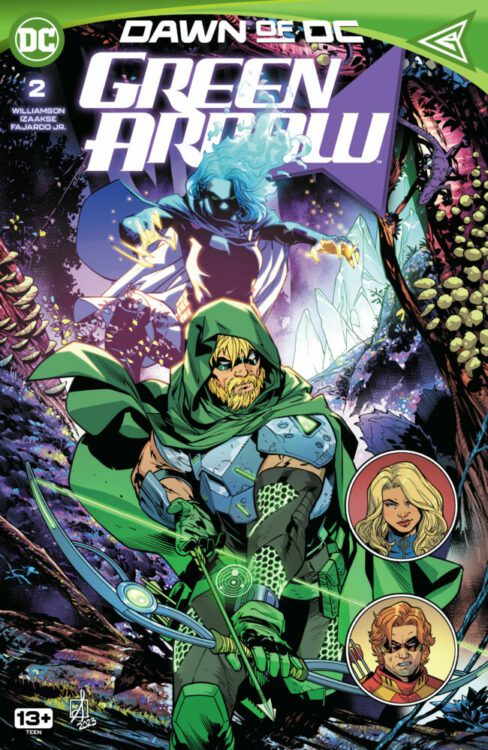
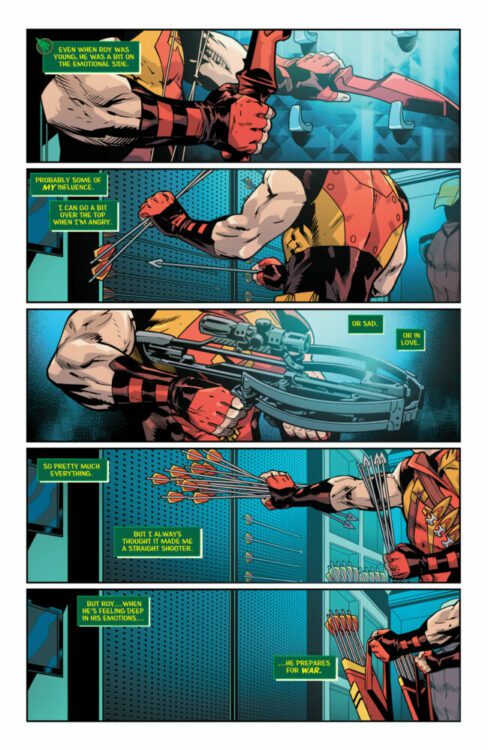
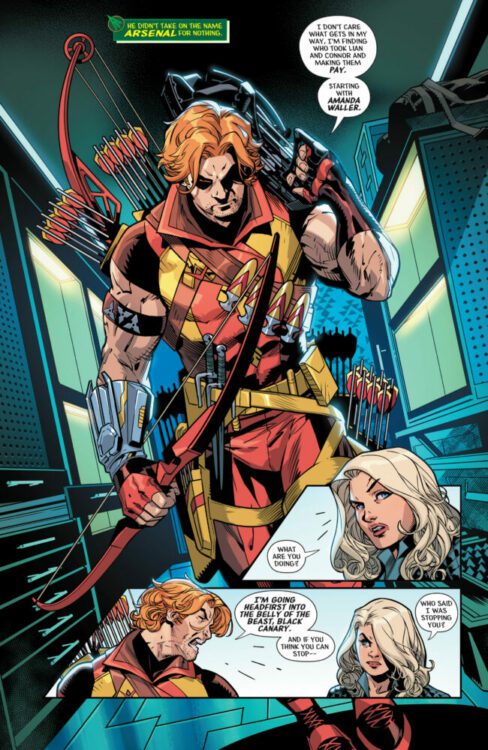
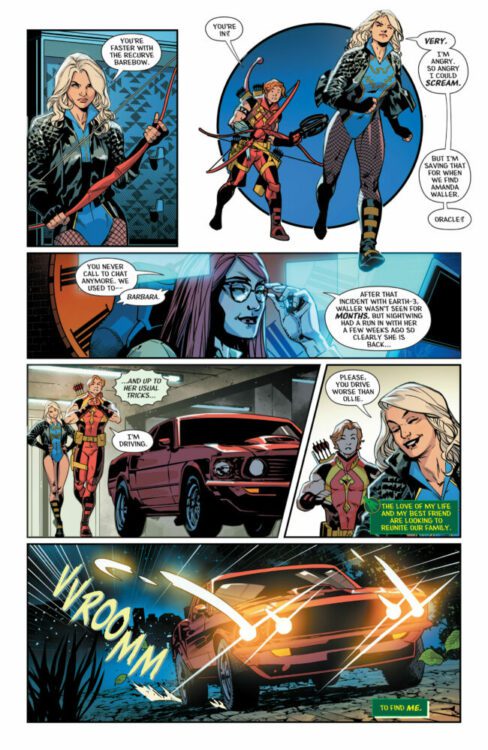
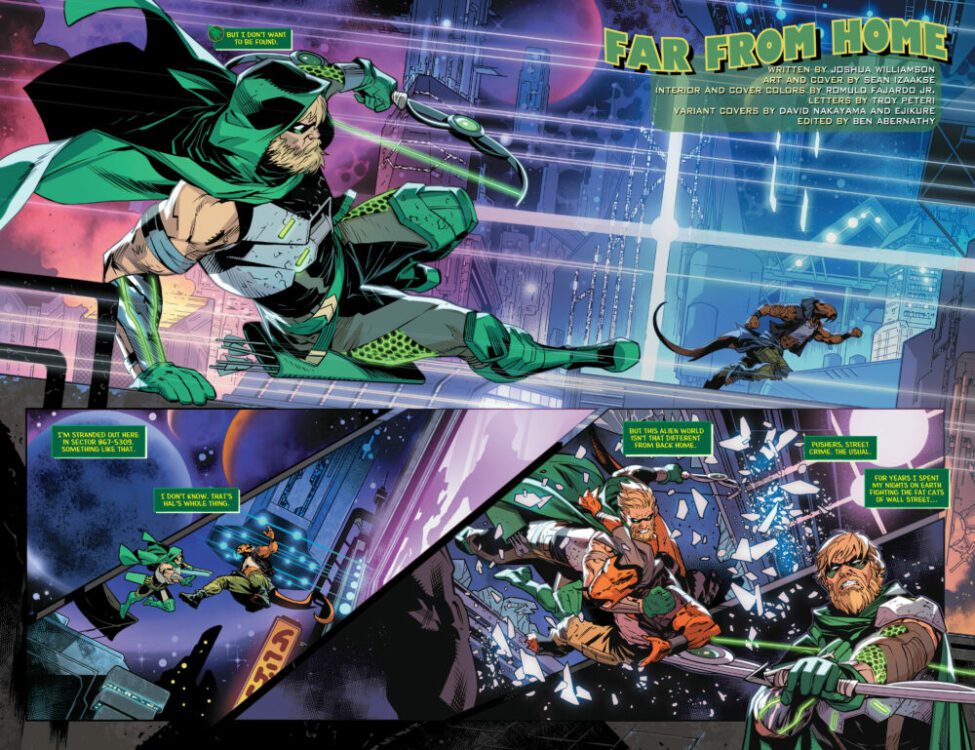
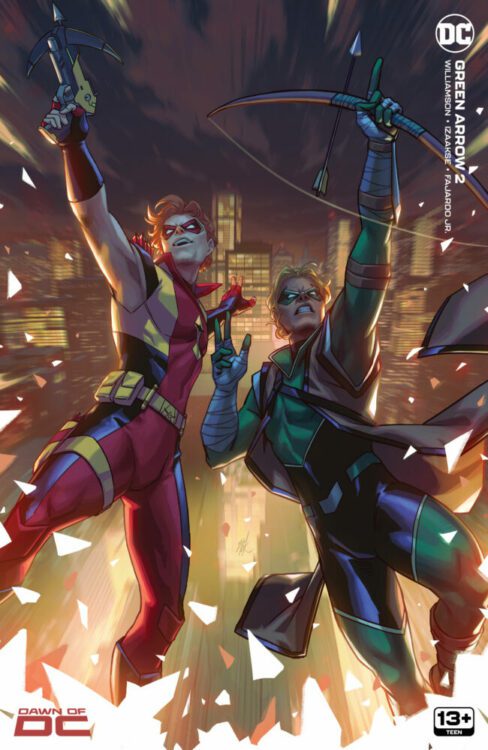
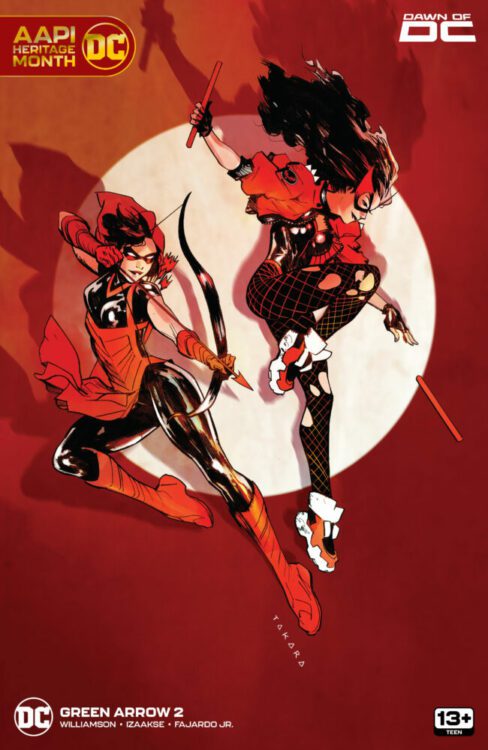
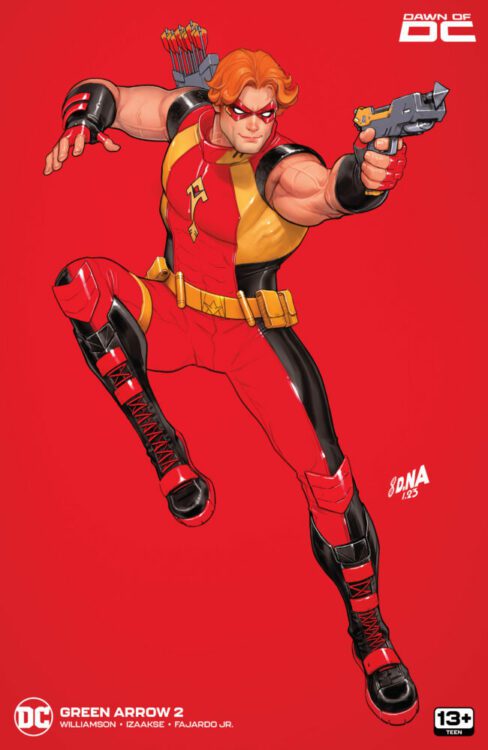
GREEN ARROW #2 hits your local comic book store this week from DC Comics. The creative team is firing on all cylinders, and I’m so excited to see where this series is going. The combination of Joshua Williamson’s uses narration to place the reader in the story and Sean Izaakse’s aggressive panel design creates a heart-pounding series, and the third issue can’t get here soon enough. GREEN ARROW is the type of book that reminds me why I love comic books. Check out my review below.
FYI – the first issue is a great entry point for new readers. The extensive cast and grand concepts are introduced in a way that guides newbies without belittling passionate fans. GREEN ARROW #2 is written by Joshua Williamson, with art by Sean Izaakse, Romulo Fajardo Jr. drops the colors, and you will read Troy Peteri’s letter work.
About the issue: FAR FROM HOME
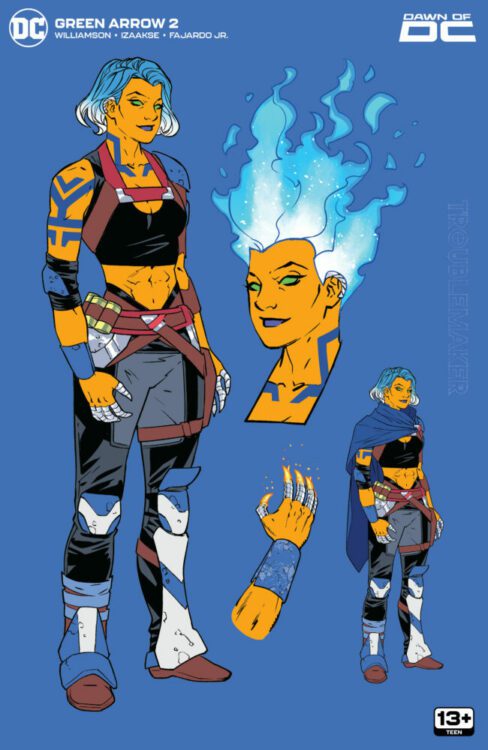
Green Arrow is alive…but where the hell is he?! That’s what Roy Harper and Black Canary want to know, and their search takes them into the bowels of Belle Reve. But they’d better hurry—the stranded Oliver Queen and another lost member of the Green Arrow family are both being hunted by a brand-new villain called…Troublemaker.
The premise is simple: read one comic every day for the entire year. It seems like a simple task but there is no way that I read 365 comics last year, even if you count the individual issues in collections. So, this year, I am committing myself to this reading challenge, in the hope that I can broaden my reading habits and fully engage with my favorite hobby again.
I’m behind on my writing. Not my reading, I’ve easily read 7 comics this week but I have stumbled in my writing. There are two reasons for this (outside of the usual ‘busy with life’ reasons) and they both relate to comics that have garnered strong reactions from readers.
My plan this week, and for the next couple of weeks, was to pick a year and read some of my comics that were published in that year. For no particular reason (that matters) I picked 1987 for this week and started the week off with some Spider-Man comics, you can see my takes below, and then moved onto issue 9 of Watchmen.
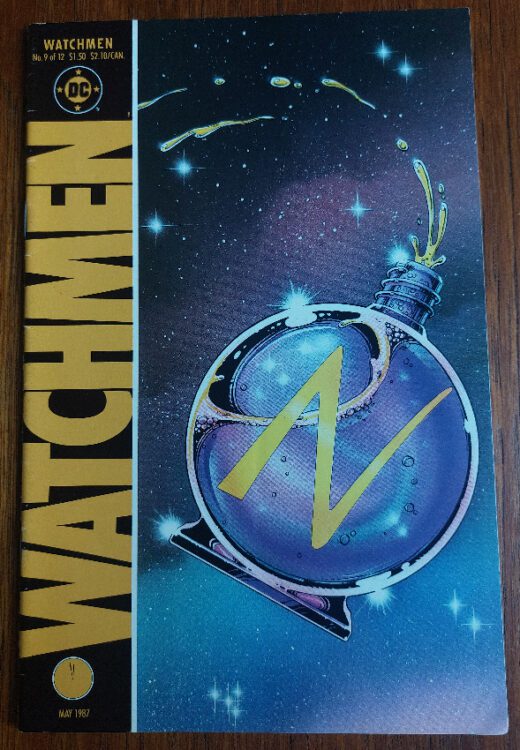
Issue 9 is The Darkness of Mere Being and sees Doctor Manhatten travel to Mars to have a chat with Laurie. Some secrets are revealed, pieces of the puzzle start to fall into palace, and the doomsday clock hands move one step closer to midnight.
The problem is, what do you say about Watchmen? Everyone knows that it is one of the most influential American comic books ever published. Even if you are not a fan of the comic itself, you can’t deny that it had a major impact on comic storytelling and the publishing industry. When it was released it changed the way that a lot of people looked at comics and the stories that you could tell, especially in the superhero genre. Alan Moore, Dave Gibbons, and John Higgins used the tropes of superhero comics, and North American comics in general, to reinvent the wheel, so to speak. Each issue was something special and you can see the influence even on today’s creators. However, through the packaging as a graphic novel, the comic also changed the way that publishers sold their comics and contracted their creators. There is plenty written about the ongoing quarrel between Moore and DC comics, or to be fair, the whole comic industry. There are numerous podcasts and journal articles about the different aspects of Watchmen and it’s everlasting influence.
So, what more can you say? And is it fair to write two to three hundred words about one issue and unintentionally marginalize such an important comic? Maybe, later in the year, I can look at the series as a whole and in more depth, but this week trying to write about it clogged me up and pushed me away from my keyboard.
Watchmen #9 Credit: DC Comics
As a bit of light relief I thought I’d read The Amazing Spider-Man #25 because I have seen a lot of chatter about it and that it is an important issue in the series. Full disclosure: I haven’t really read any new Spider-Man comics in over a decade. I pretty much used the One More Day story line to get out, as I had already dropped most Marvel comics after the Civil War event. With that in mind, it might explain my reaction to #25. I thought it was.. Okay. The story was fine, well written, but not really original material where alternate dimensions are concerned. The fact I grew up with Doctor Who, Star Trek and, more pertinent to this comparison, Buffy the Vampire Slayer, means that I’ve seen all of this before. I guess that the shock elements come from the direct relation to Peter Parker and Mary Jane but (again, emphasizing that I’ve not read the title in years) since when were Peter and MJ a thing again? I thought the comic and the readers had moved on from this? So, there is clearly something going on that none Spider-Man fans are not a party to.
Which is fine, but the difference between the two comics, The Amazing Spider-Man #25 and Watchmen #9 is that the former will be pretty much forgotten, even by Spider-Man fans, in a few years whereas the latter is still a much discussed part of comics history and popular culture.
Trying to write about these two comics has been difficult as I didn’t feel as though I could find anything worthwhile or new to say about either of them. Hopefully, next week I can get my teeth into the comics a bit more. Although, I’m already regretting selecting an issue of the Sandman..
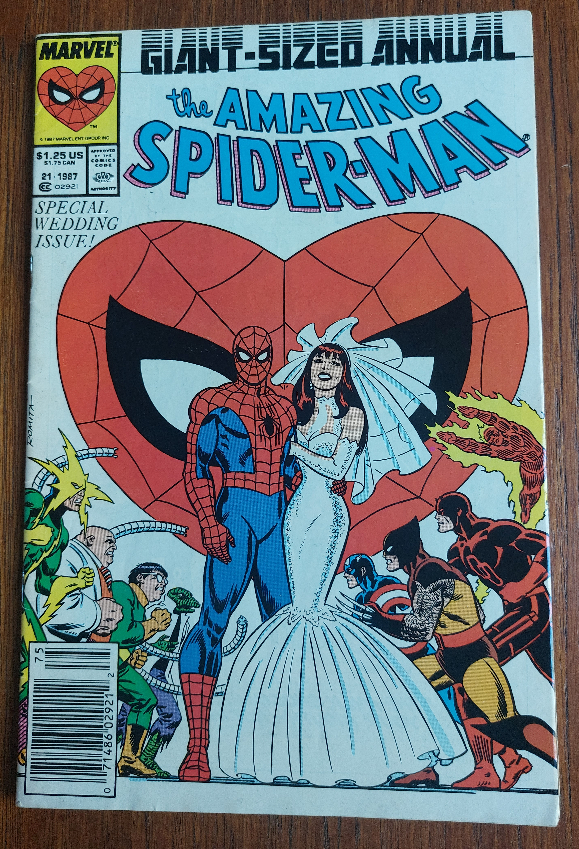
The Amazing Spider-Man Annual #21 Credit: Marvel Comics
Comic Number 134: The Amazing Spider-Man: Giant Sized Annual #21
The Wedding!
I couldn’t read comics from 1987 and not read some Spider-Man, and obviously the biggest story of the year is Peter and MJ’s wedding. Jim Shooter and David Michelinie play the will-they-won’t-they game throughout most of the issue. The readers gets to read Peter’s inner thoughts as he swings through New York, meeting his friends, and allowing doubt to creep in. Nothing major can happen in his life without him revisiting the worst parts of his past. It is something that we can all relate to.
On top of that, MJ’s journey to the wedding day is fueled by parties and another man trying to woo her away. Her lifestyle is contrasted against Peters, and it looks as though the two are incompatible, However, Shooter and Michelinie concentrate on the two characters, their relationship with each other, and their connections through friends and family. The comic is quite lite on super-heroics despite the cover promising a large hero versus villain stand off.
This is an enthralling read and is exactly why I love this period in Spider-Man history; it’s all about the soap opera.
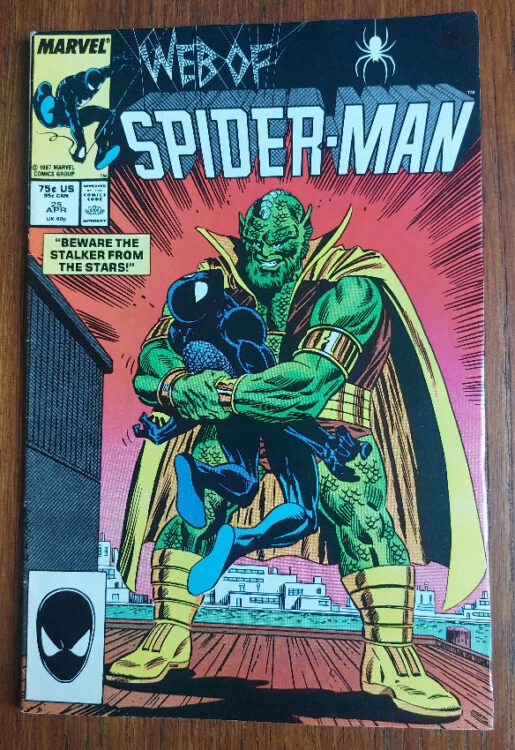
Web of Spider-Man #25 Credit: Marvel Comics
Comic Number 135: Web of Spider-Man #25
“Beware the Stalker from Beyond the Stars”, because he brings a rather underwhelming story.
This issue sees Peter Parker in his black costume run around the city after an alien who is searching for a super powerful weapon. It has some adventure and the ludicrousness of the plot can almost be forgiven for the tongue in cheek script and commitment by artist Vince Colletta.
This comic feels like it is introducing something more spectacular, as if the brief foray into Spider-Man’s life is the precursor to a much larger story line. But, as far as I am aware, nothing ever came of the alien characters and their intergalactic struggle. Perhaps they turned up in some Guardians of the Galaxy comics or something, who knows?
(according to a quick internet search, they were never seen again. Opportunity wasted? In this case, I think not)
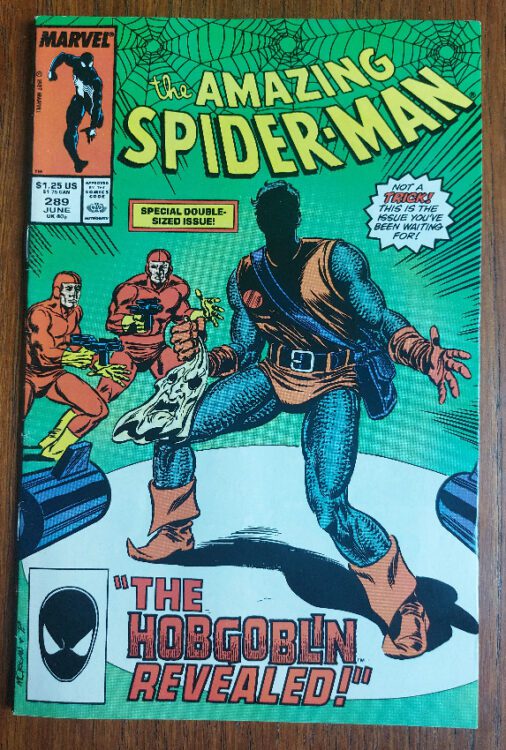
The Amazing Spider-Man #289 Credit: Marvel comics
Comic Number 136: The Amazing Spider-Man #289
The cover of this special double-sized issue promises the shocking unmasking of The Hobgoblin! Inside, it starts with the fallout from Ned Leeds’ death and the Kingpin faces down one of his foes, while there is an assassin out roaming and Flash Thompson has reached rock bottom. How can it not be exciting?
I don’t know but somehow, Peter David (Writer), Alan Kupperburg, and Tom Morgan (artists) make it an extremely humdrum affair. Compelling scenes, deftly drawn, lead to nothing or the excitement is killed in an instant by overwritten inner dialogue. The worst part of this comic is Spider-Man’s inner voice and his constant reminder to the audience that he is Peter Parker or Spider-Man and he’s not having a good day. The plot is convoluted and reads as if it had been planned by several people who never met each other or even had a conversation. There are moments of brilliance in the artwork but the black hole that is the Hobgoblins face does the opposite of what it is meant to: he is not a terrifying figure to be feared in this comic, he’s a cartoonish Halloween costume.
It might seem that I am being a bit harsh but the reason is that this issue of Amazing Spider-Man is such a disappointment. It promises so much and, being a big fan of the Hobgoblin, I really want to be excited by this. But I can’t. It took me three sittings to read it. Three!
I know from reading about the character that there have always been problems with the Hobgoblin. Different writers and editors have had their own thoughts about who he is and what he stands for. Often Editorials have dictated the course of the story and new writers re-imagined previous incarnations and story lines in a series of mini-retcons. Issue 289 reads like a writer trying to rearrange known facts about characters to prove something new and surprising. It doesn’t work in these pages and hampers what should have been a great comic.
Comic Number 137: Watchmen #9
See the introduction above.
Comic Number 138: The Amazing Spider-Man #25 (legacy 919)
Again, see above.
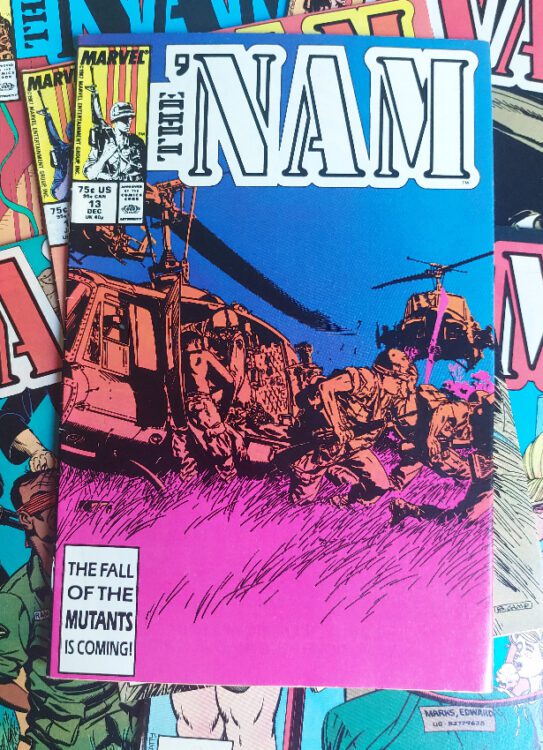
The ‘Nam #13 Credit: Marvel Comics
Comic Number 139: The ‘Nam #13
This comic is a wonderful companion piece to the first issue that I read last week. A mere 13 issues in and Ed Marks is ready to go back to the world. He counts down his days as he welcomes new recruits to his platoon and spends his final few days out in the jungle or holed up at the military camp.
This issue contains deliberate comparisons to the first issue and writer Doug Murray does a wonderful job of showing the reader how much Ed has grown over the last year. Scenes in this issue mirror scenes from the first issue but here Ed has become the relaxed soldier, unperturbed by the violence around him. He has become accustomed to his life as a soldier and the war in Vietnam. There are some scenes that are a little bit questionable, such as a drunken Ed being coerced into visiting a Vietnamese prostitute and having no recollection of it the following morning, but this helps to emphasize the main theme in this comic: acclimatization.
The ‘Nam continued for 71 issues after this one but in some ways this is a good place to finish the series. It has told the story of one young man’s experience of war and the effect it has upon him. There is a satisfactory ending in this issue, one that makes a call back to the opening panels of issue one. It has a sense of closure. The fact it continued is great, but for me, I can read the first 13 issues and experience a full story.
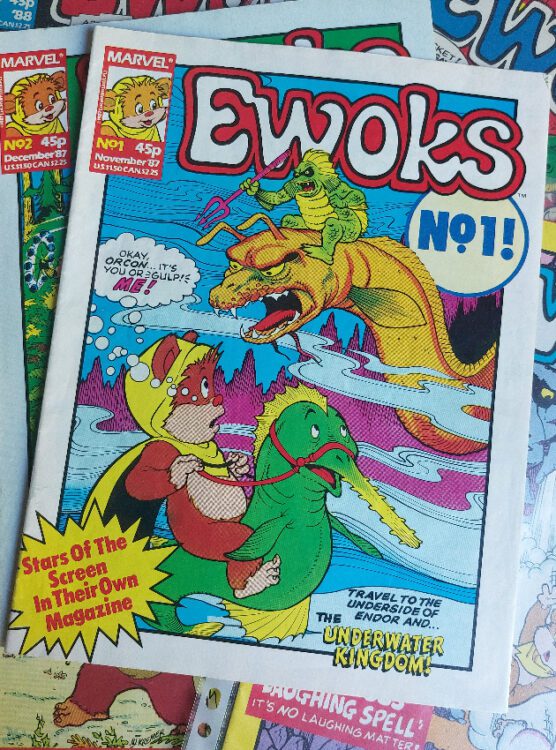
Ewoks #1 Credit: Marvel UK
Comic Number 140: Ewoks #1
This is another Marvel UK publication, reprinting American comics in a magazine format. Written by David Manak and drawn by Warren Kremer and Jon D’Agostino, this is a child friendly adventure of the month style comic. The artwork and layouts are simple and direct working perfectly for the audience it is aimed at. It’s like the younger sister of the Star Wars comic, or the My Little Pony of George Lucas’ world.
And, when it was released, I loved it.
Reading them today takes me back. They play on my sense of nostalgia and remind me of how I experienced the Star Wars movies when they were released: as a child. I didn’t grow into the massive Star Wars fan but there is still a small part of my childhood that will be eternally linked to the franchise, and it is because of the Ewoks and Droids comics.
This week did not go to plan, reading wise. Although I did manage to read 6 out of 7 comics from 1987. One thing that has become clear is that reading comics is an emotional pastime. It is easy to get wrapped up in the nostalgia of comics and slip into a mindset of older means better. But the truth is, just like music and movies, in fact any media, the majority of the comics produced won’t be remembered passed the generations that grew up on them. And only a select few will reach the heady heights of becoming considered a work of Art. The best thing to do is read what you enjoy reading, keep what you will enjoy reading again, and don’t presume to tell anyone else what they should read and enjoy.
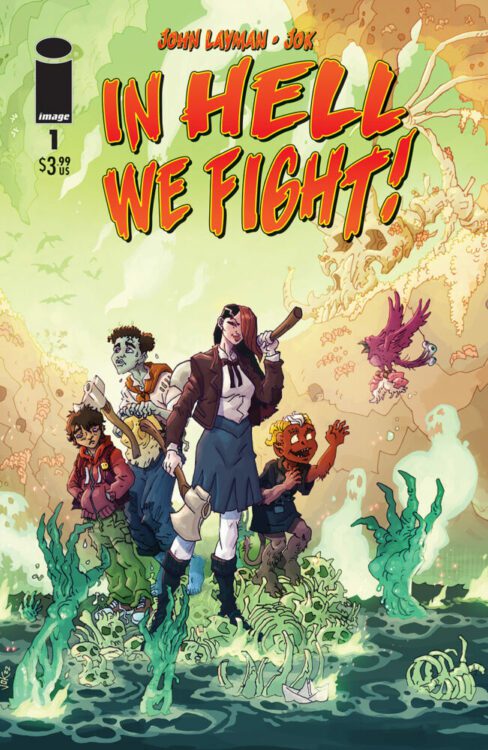
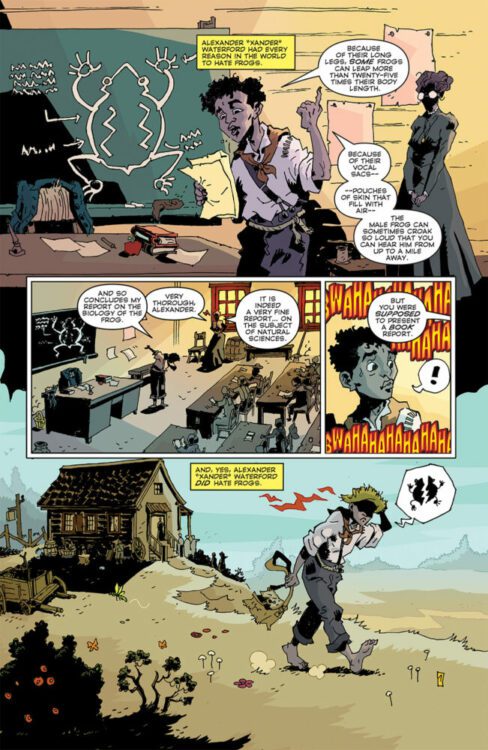
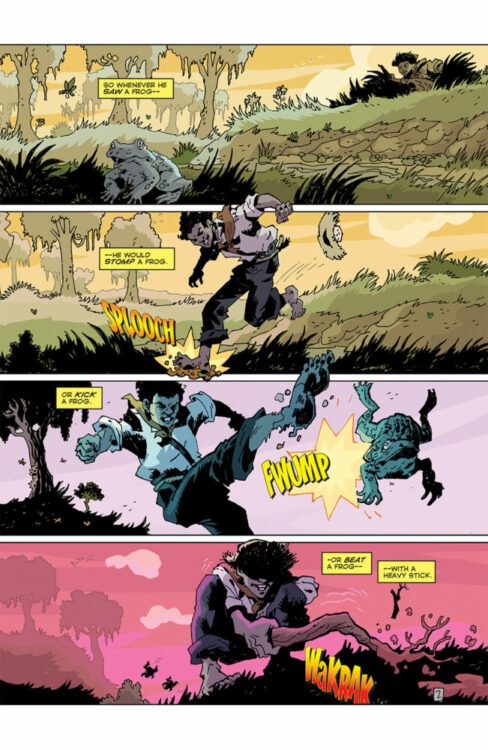
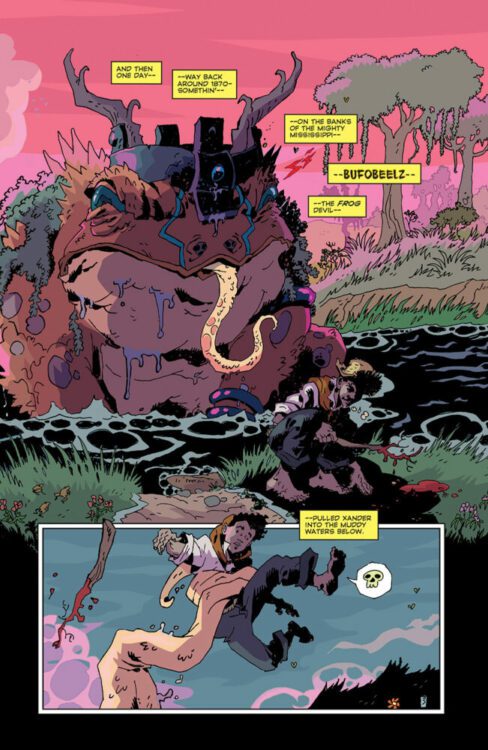
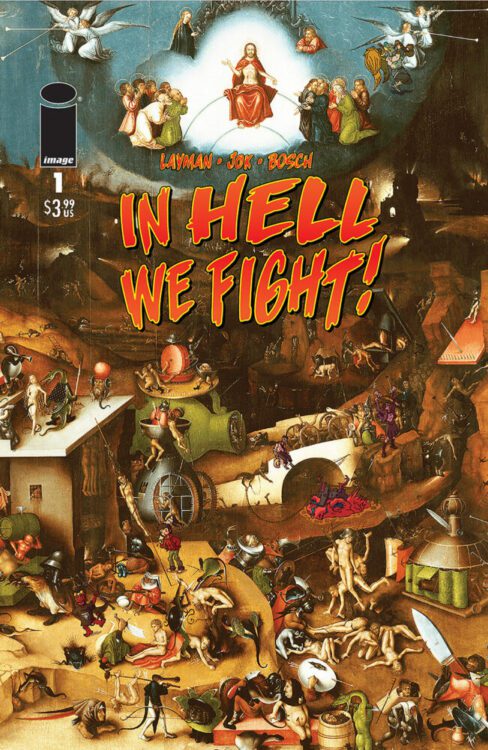
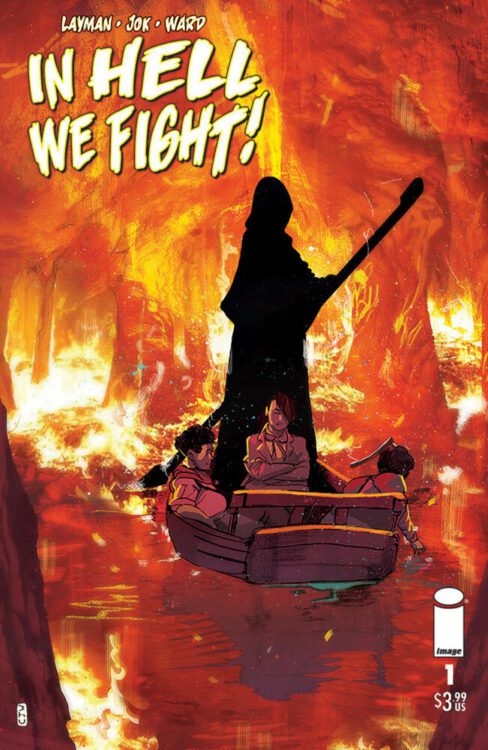
IN HELL WE FIGHT! #1 hits your local comic shop on June 7 from Image Comics; this is a fun, insane series that put a smile on my face, which is extremely weird since all the main characters are in Hell. Check out the video below for my full review.
The book is written by John Layman with art by JOK and an assist on colors from MEY.
About the series: Life in Hell ain’t easy. Demons try to torture you for all eternity. Monsters want to eat you. There’s a stunning lack of reliable indoor plumbing. And it’s almost impossible to get ice cream. At least, until today, when three condemned teens and their annoying tagalong demon frenemy embark on a daring scheme to hijack a demon lord’s delivery truck. What happens next will take them on an epic journey across the underworld, an infernal excursion of non-stop excitement, danger, and adventure.