Home Blog Page 440

Review: Frosty The Snowman Comes To Marvel In LOKI #1

Monkeys Fighting Robots

Loki #1 feels like an issue of Deadpool with the trappings of a story about the God of Mischief.
Loki #1
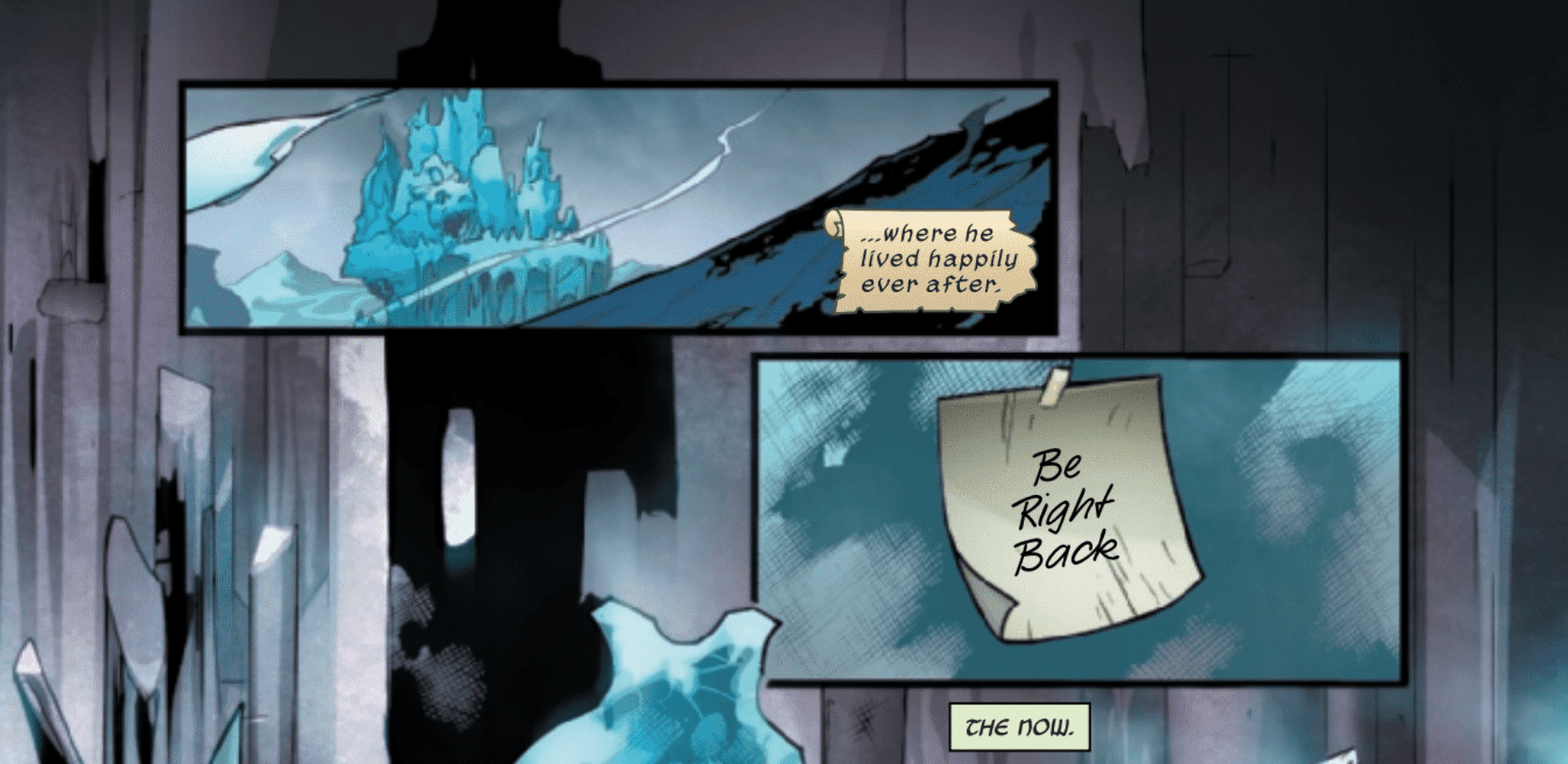
In Loki #1, It’s safe to say Loki won’t live happily ever after.

Loki #1

Written by: Daniel Kibblesmith 

Drawn by: Oscar Bazaldua 

Colored by: David Curiel

Lettered by: VC’s Clayton Cowles

After the first issue, Daniel Kibblesmith’s Loki feels a lot like his Black Panther Vs. Deadpool miniseries. There’s not a strong villain and it’s too soon to predict the writer’s long-term plans for the titular character. But given how successfully he captures the essence of the God of Mischief, this series is worth keeping an eye on. The first issue is a lot of fun and it’s fair to hope Loki will get even more wild as it progresses.

Loki #1
Loki brings a snowman to life and lets him sit on the throne.

For example, this installment features Frosty the Snowman. No, it’s not the same character we all know from childhood Christmas movies but it’s pretty close. Loki, at the request of Thor, finds an assistant in his new quest to rule Jotunheim. But the Trickster God’s version of a right-hand man is an animated snowman named Frösti. The new character even saves the day when he eats Nightmare, the first villain of the week in this series. A sentient (and possibly menacing) snowman is exactly the kind of wonderfully weird supporting character Loki needs. The inclusion of this character is one of the several ways Kibblesmith demonstrates his successful feel for the God of Mischief.

Loki #1
You can practically hear Tom Hiddleston in this narration.

The narration is a callback to the beloved Deadpool film because it feels like Loki is actually describing the events of the story. Sometimes, it’s as simple as clever writing. “Anyone who’s anyone is here,” Kibblesmith writes. “And I’m an anyone who can be anyone. So here I am.” The narration pairs nicely with Cowles’ lettering, especially with a singular add-in of “Loki’s Trickster Tips.” Hopefully, Loki giving these tips to the reader will be a recurring bit in the series; here, it acts like a fourth wall break that complements the humorous tone of the issue. Loki tends to be a funny character and Kibblesmith seems willing and able to exploit the comedic elements of the Asgardian corner(s) of Marvel.

The artwork of Bazaldua and Curiel significantly adds to the issue in the action scenes. During Loki’s fight with the Armadillo, the duo of artists make the super-villain feel like a speeding locomotive. In one panel where he’s about to run over Loki, Bazaldua and Curiel convey the sense of motion, which helps an intentionally lackluster villain feel slightly more menacing. The artists do the same thing for Nightmare, who has a cringe-inducing habit of using his own name in the few lines he has throughout the issue. Curiel’s colors make Nightmare look as demonic as Mephisto. Ominous red skies and shows, along with Bazaldua’s usage of Death Eater-like spirits give Nightmare some much-needed credibility as an antagonist.

Loki #1 makes a solid first impression and it’s a fun ride with the combination of Deadpool-like humor and classic Asgardian fantasy.

What’d you think of Loki #1? Where do you hope to see the series go?

Monkeys Fighting Robots Youtube

30+ Page Preview Of IDW’s SONS OF CHAOS From Chris Jaymes And Alejandro Aragon

Monkeys Fighting Robots

The oversized, panoramic graphic novel Sons Of Chaos written by Chris Jaymes with art by Alejandro Aragon hits your local comic book shop on July 17, but thanks to IDW, Monkeys Fighting Robots has a 30-plus page exclusive preview. WOW!

30+ Page Preview Of IDW's SONS OF CHAOS From Chris Jaymes And Alejandro Aragon

About Sons Of Chaos:

Sons of Chaos, exposes the quiet agenda of the Ottoman Empire’s most brutal dictator, and his fascination with a young Greek boy that led to a war that would define the Western World.

An immersion into the moments we never see, and the self-serving motivations that convince a nation that violence is warranted, and that war is necessary.

In honor of the 200 year anniversary of the Greek War for Independence, Sons of Chaos presents the story of 1821 through the eyes of Marcos Botsaris, the son of a respected Greek leader taken prisoner as a child and raised within the dungeons of history’s most infamous Ottoman Pasha, known as the “Napoleon of the East”– Ali Pasha of Ioannina. Over the next ten years, the bond formed between them would define history.

The Greek War for Independence was a conflict that quietly influenced the entire world and participants ranged from the London Stock Exchange to celebrities such as Lord Byron, as well as average impassioned Americans willing to transport themselves across the Atlantic to fight alongside the Greeks.

This conflict was the pinnacle of what we now know as the Romantic Period, and yet, it’s a war that few know ever existed outside of the Greek and Turkish cultures; a war that stimulated the fall of the Ottoman Empire and shaped Western Civilization as we now know it, and in a sense is being fought today under a different heading amongst today’s political world leaders.

Hundreds of years of Ottoman rule gave the Greeks a reason to fight. Marcos Botsaris gave them a leader.


You can find Sons Of Chaos in book stores on July 30.

What do you think of Jaymes and Aragon’s epic? Comment below with your thoughts.

Check out the preview:

Monkeys Fighting Robots Youtube

Review: GENTLEMAN JACK SEASON 1 – A Fresh Take on the Period Drama

Gentleman Jack is one of the big prestige shows of 2019 – a period drama that was made by the BBC and HBO. It is a show that history enthusiasts will immediately enjoy.

In 1832 Anne Lister (Suranne Jones) returns to her family home in Yorkshire after having her heart been broken in Paris. Miss Lister intends to travel once again but she has to sort out a number of issues affecting her family estate before she can go. These include farmers not paying their rents, the house needing repairs, and finding out a local businessman has been stealing coal on her land. She’s also drawn to the beautiful Ann Walker (Sophie Rundle.)

Gentleman Jack was a passion project for Sally Wainwright who has wanted to make a series about Anne Lister for 20 years. Wainwright is a well-regarded screenwriter in the UK, her credits include The Amazing Mrs. Pritchard and Happy Valley and likes to set stories in the North of England. Gentleman Jack was very much her baby – she directed four of the episodes as well as writing all eight. She has made a fantasizing show.

Wainwright has shown she can make highly dramatic and lighter stories and with Gentleman Jack she mixes the two styles. Gentleman Jack has a fair amount of humor spread throughout the series. Miss Lister’s first scene in the series shows her literally speeding down Halifax town center and continues from there. The series has lots of witty exchanges and because the show was based on Lister’s diaries she breaks the fourth wall by speaking to the camera at times.

The show does look at darker subject matter. There is murder, violence, betrayals, corruption, and heartbreak. The heart of the series is Lister’s relationship with Ann Walker and there are trials on the way because of family judgments, Ann Walker’s religious beliefs, and her delicate mental state. As well as being a witty character Lister experiences moments of raw emotion.

The main two plotlines were Lister’s business dealings and her relationship with Ann Walker but there were a few subplots. One of the biggest was focused on the Sowden family, one of Lister’s tenant farmers who were dragged down by the family patriarch (Anthony Flanagan). Others included Lister’s sister, Marian (Gemma Whelan) looking for a husband and Ann Walker having a potential suitor. Like with many British period dramas there is a look at both the upstairs and downstairs drama.

Gentleman Jack was a show filled with historical details. As someone who studied the period at university, there were some great little tidbits. One of my favorites was referring to the Great Reform Act of 1832 which as the name suggests an important piece of legislation – but Lister argues she would lose out because of the reforms. The sets and costumes looked fantastic and the show was shot on location at the real Shibden Hall. Any fan of Dickens would enjoy little aspects like the use of children in the coal mines.

Due to the show being set mostly in the Halifax and Lister’s attempts to enter into the coal business Gentleman Jack acts like a British version of Deadwood. When Lister negotiates deals, talks about politics, and face off against the dastardly Christopher Rawson (Vincent Franklin) it gave Gentleman Jack that Deadwood air. Deadwood was praised by historians for its historical accuracy and Gentleman Jack should have a similar reception.

The show made Anne Lister out to be a woman way ahead for her time. She was highly educated with a great brain for business and much more masculine compared to her contemporaries. Lister did not wear dresses like other women around her and was willing to get her hands dirty. She was an early feminist due to her independent and determined nature – who would not let anyone get in her way.
Gentleman Jack was blessed with a terrific cast. Jones is a fantastic actress and she delivers as the lead character – she was determined, witty, but she was prone to bouts of anger and upset. She was not someone to be crossed. And she was surrounded by great actors like Gemma Jones and Timothy West. My favorite member was Whelan as the younger sister because Anne Lister dismissed her as being intellectually lacking whilst Marian feels her older sister should keep to her duties. Their relationship evolves as the series progresses to one where they care about each other. Plus Whelan is completely different to her role as Yara Greyjoy in Game of Thrones.

Gentleman Jack is one of the most unique period dramas to be broadcast in recent years because of its subject matter and Sally Wainwright’s approach to the material. Gentleman Jack‘s energy makes it a period drama that can appeal to people who are not normally interested in the genre.

Monkeys Fighting Robots Youtube

Review: The Queen Returns with VAMPIRELLA #1

Monkeys Fighting Robots

It’s been 50 years since Vampirella first graced the comic page. Now, Dynamite Entertainment reintroduces the fan favorite anti-heroine with Vampirella #1.

The story picks up from Vampirella #0, a Free Comic Book Day 2019 title. However, readers can still gather most of what’s going on without the prologue’s help. Vampirella—the only apparent survivor of a plane crash—tries to convince a psychiatrist of her story. Through their conversation, we see the events that led up to this moment as she tracks the immortal Von Kreist on the plane.

The Writing

Writer Christopher Priest takes on writing duties for the title. With Vampirella #1, he presents an interpretation of the character that feels lonelier and more vulnerable than most incarnations. It’s a different direction than what we’re accustomed to, and an interesting change.

Priest tells the story through the frame of Vampirella speaking to a psychiatrist, Dr. Chary. This can be a useful storytelling device, allowing characters to exposit while still making the exposition feel like it’s part of the narrative. That said, the exchanges between these two are a weak point in the book.

For a trauma specialist, Dr. Chary has a pretty terrible bedside manner in Vampirella #1. He constantly challenges and discounts everything Vampirella says. His characterization constantly wavers between “curious man of science” and “beleaguered school counselor.”

Through all the exposition, we don’t have a firm grasp on why Vampirella is tracking an immortal on a crashing plane. This isn’t necessarily a problem; after all, it’s just the first issue, and everything need not be spelled out for us right away. However, there’s not much else to ground readers in the story outside that.

Von Kreist’s lines help, so it’s useful for the sake of context to either speak German or use Google Translate. He calls Vampirella an “ungehorsames kind,” which translates to “disobedient child” or “child who won’t listen,” and tells her “beobachte wie deine träume sterben,” meaning “watch as your dreams die.” This makes more sense by the issue’s end, but is cryptic and not super-helpful in providing context or understanding.

Overall, the writing in Vampirella #1 is fine, but is a bit underwhelming.

Vampirella #1

Vampirella #1

The Artwork

The artwork by Ergün Gündüz is one of the book’s strong points. He opts for a lot of crisp and detailed work, balanced by sketchy elements in the book’s first half that give it a dreamlike, almost impressionistic sense. His character designs are powerful, allowing for characters to express a wide range of emotions.

Vampirella #1 opens to the carnage in the wake of a plane crash, setting the tone for what comes next. Gündüz presents a lot of dynamic, eye-catching action sequences, coupled alongside sparse, minimal illustrations. The repetition of the latter sequences helps accentuate the drama while retaining their own allure. It’s a strong showing overall.

Gündüz also pulls double-duty, providing color work as well. He mutes many of the backgrounds, making them monochrome to keep focus on the characters. Flipping through the pages, one can tell he had a coherent and singular vision for the work.

Final Thoughts

Vampirella #1 is a solid start for the new series. Even if this issue doesn’t blow readers away, it feels like the team is setting us up for something good.

Monkeys Fighting Robots Youtube

Review: We Could Use a Few More Pages for THE QUIET KIND

Monkeys Fighting Robots

In many ways, The Quiet Kind by Chuck Brown, with art by Jeremy Treece and Kelly Williams, is an inversion of the clichéd “chosen children get superpowers” trope.

The 64-page one shot features two stories. Our main tale focuses on a group of kids granted godlike powers by a guardian of the Flame of Reality. Her motives in doing so, however, seem immediately sinister in nature. The second, much shorter story, offers a glimpse at the guardians before they’re granted their roles.

The Writing

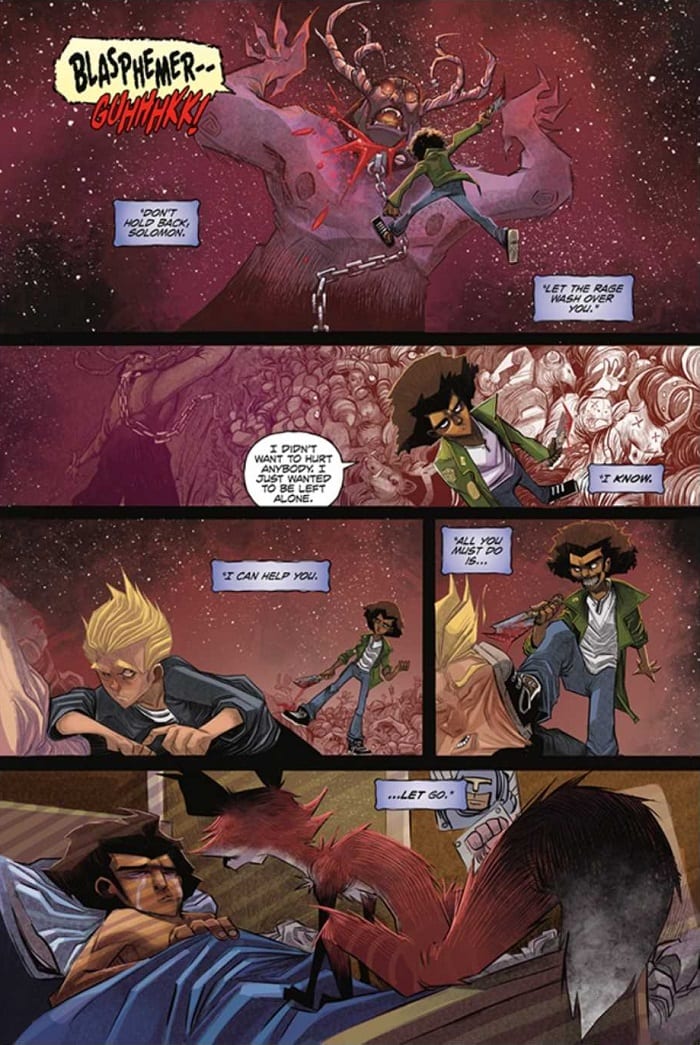
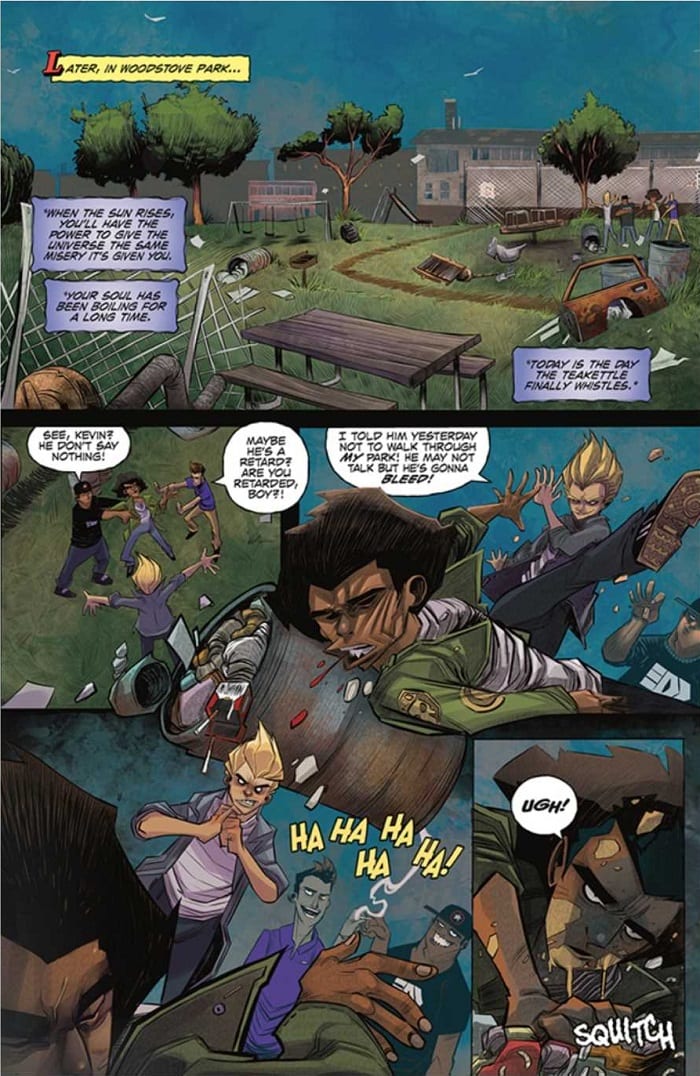
Brown presents an intriguing idea for his story in The Quiet Kind. Our protagonist, Solomon, is a shy and angsty kid suffering from pretty vicious bullying. He turns the tables on his tormentors, though, once he’s granted his powers.

Revenge—and whether one can really turn away from the desire for revenge—is a dominant theme here. It’s handled in a surprisingly complex manner given the story’s setup. We see multiple characters struggle with the same choice between revenge and destruction, as opposed to forgiveness and survival.

Beyond the concept and the revenge fantasy, though, the story has some issues. The characters inhabit a fascinating world in The Quiet Kind; the problem is we only get a glimpse at it. We don’t really know much about these supernatural forces, who they are, or what motivates them beyond protecting the Flame. The Fox’s desire to destroy everything, for example, seems to have little motivation beyond a nihilistic death drive. I’m not saying that a writer must thoroughly explain every inner working of their world. However, readers need to have enough to get them invested and interested in the story’s environment.

For a book about the nature of revenge, the characters are surprisingly lacking in empathy and pathos. Sure, our protagonist gets bullied, but his revenge is so over the top, it’s to the point we can’t empathize with him. We have little to go on with the other characters, most of whom remain pretty flat throughout.

Ultimately, the story and themes in The Quiet Kind seem like they could have been much better served if written in graphic novel format. This would have allowed Brown to expand on and flesh out the characters and the story itself. It’s a story that feels like it should be much larger than what we have here.

The Quiet Kind

The Quiet Kind

The Quiet Kind

The Artwork

Treece and Williams both turn in quality artwork for the two narratives in this volume.

Treece’s work on the main story in The Quiet Kind is angular and expressive. His illustrations have a unique, stylized feel that hint at varied influences, while still making the images feel fresh. I’m not completely sold on the more cartoonish character designs. However, the artist presents them with enough flair and confidence to make it work. It’s lively, vibrant, and really helps bring the storytelling to life.

Williams’s illustrations, in contrast, are softer and more ethereal. There’s a delicate, poised sense of refinement to the work, with a hint of a surreal undertone. While both artists’ use of color is excellent, Williams steals the show in this area, producing some truly breathtaking images.

Overall, the artwork in The Quiet Kind is what really steals the show.

Final Thoughts

The Quiet Kind is a decent story as is, but the premise promises a lot more. It’s a shame it wasn’t given more space to really unfold and explore its themes, characters, and world. Want to decide for yourself? Check it out at your local comic shop this Wednesday.

Monkeys Fighting Robots Youtube

Review: UNEARTH #1 – Plunging Into a New Horror Series

Monkeys Fighting Robots

Something is clearly not right in the small Mexican town of Mitlán Itzá as Unearth #1 sets the stage for a twisted blend of science fiction and body horror effectively with a thrilling script from Cullen Bunn and Kyle Strahm, disturbing art from Baldemar Rivas, and punchy letters from CRANK!.

When a small scientific/military team investigates the mysterious body mutating disease afflicting Mitlán Itzá’s residents some weird cult, alien, backwoods hillbilly stuff gets revealed in a nearby cave. The creative team was inspired by classics of the genres as there are scenes that feel ripped out of films such as The Thing, Alien, or most Cronenberg films. But these short instances don’t feel cheap or like simple cut and copy imitations. Instead, these different inspirations meld together to form one of the most disturbing tales beginning this year.

Bunn and Strahm’s script is mysterious and does not concede much information to the reader. It took me a couple of read-throughs to properly understand who was who and the proper stakes of the story. But this confusion and illusion feel purposeful as it heightens the overall uneasy mood of the story.

Some of the characters can feel very one-note and cliché, particularly Lieutenant Morris. Morris comes off as the typical hyper-masculine soon-to-be traitor of the group. He disagrees with the ideas and plans of Dr. Reyes and McCommick, but we are never given a reason why. And Dr. McCommick herself seems simply overly plucky and naïve despite the horrors she encounters in the cave or in town, which sometimes fights the horror tone of the story. Dr. Reyes, on the other hand, holds some depth and intrigue. Plagued by mysterious nightmares from her past, she is haunted by some demons that will come to light later in the series.

Dr. Reyes Looking in Mirror
How everyone feels monday morning

Rivas’s art is expressive and disturbing. Sometimes his lack of detail can become cumbersome. For instance, when the team is entering the cave and encounter the glowing life form, the faces are difficult to make out. Coupled with the fact that they only briefly identify some of the members once they’re in their protective suits, it can get confusing remembering who is doing what and what is happening to whom.

But in other instances, Rivas’s art is perfect. Particularly, when he is depicting shock, awe, and other emotions on the character’s faces. Dr. Reyes’s when she awakes from her nightmare, the guerilla as he is being absorbed by the underground monster, and Alejandro’s face as he is first introduced in the hospital, all share this wild-eyed bewilderment that does not look healthy and sane. The eyes looking in separate directions with the tongue sticking out almost remind of a rabid animal.

Rivas also shows a knack for depicting the strange and surreal. The blobs people turn into because of the disease are rendered in gruesome imagery reminiscent of something Cronenberg-ian. And the glowing specimen Dr. McCommick encounters is eerily reminiscent of the proto-facehugger from Prometheus.

Not everything Unearth #1 attempts are successful, but the overall mood and general blend of horror influences work wonderfully. Creative team Cullen Bunn, Kyle Strahm, and Baldemar Rivas create a robust new series that could hopefully mutate into something stellar.

Monkeys Fighting Robots Youtube

Review: STAR WARS: AGE OF RESISTANCE: CAPTAIN PHASMA #1- A Galaxy Far Less Interesting

Monkeys Fighting Robots

It’s hard not to feel sympathy for the character Captain Phasma. Not that she was dealt a particularly difficult lot in life, but the fact that she has been notoriously underserved in the larger Star Wars mythos. When she was first introduced before The Force Awakens fans were excited for a mysterious new villain anxious to learn more about her, casting Game of Thrones veteran Gwendoline Christie only amplified the fan excitement. Then The Force Awakens came out, and she was in it for 5 minutes. Then The Last Jedi came out, and she unceremoniously died. Unfortunately Star Wars: Age Of Resistance: Captain Phasma #1 continues this trend of presenting an interesting character who is essentially a blank canvas history-wise, and simply doing nothing with her.

It’s not that Tom Taylor’s script is horrible. It reinforces the ruthlessness one would expect from a high-ranking official in the evil galactic empire. Told from the perspective of nameless admiring stormtrooper KM-8713, Captain Phasma depicts how the titular villain uses her troops as bait and her “no matter the cost” methods.

KM-8713 is surprisingly well written. Her drive to be acknowledged and named feels legitimate and supports why she would admire her ruthless commander. But her genuine sympathy and empathy for her fellow trooper unsurprisingly is her demise and only widens the gap between her and Phasma. It’s disheartening that Phasma was not gifted the same attention, as she is incredibly one-note. She is more of a menacing threat than an actual character.

In some ways, one could argue that Phasma is this generation’s Boba Fett, in that they were interesting characters that looked threatening, had helmets and capes, and were unceremoniously defeated in the Star Wars films after no exposition into who they were. The difference between Fett and Phasma is that in the original extended universe Fett was a major player and was expanded upon to great success. Some of the best-extended universe stories revolved around Fett’s growth and history. Phasma has not had the same luck, and her debut comic extends the trend.

Phasma Fades into Helmet
Cool people don’t look at destroyed battlefields

The art suffers from having too many people working on it. Leonard Kirk handles the pencils, Cory Hamscher is responsible for the inks, Guru-eFX is in charge of colors, and VC’s Travis Lanham contributes the letters. Kirk’s overall designs are fine, although there is a concerning lack of detail in some of the more complex panels, the real culprit is the colors. They look sloppy. In one instance where the image of Phasma’s back fades into the profile of a stormtrooper’s helmet, and the image comes off tacky and blurry. Panels that are meant to look impressive, underperform due to lack of layout experimentation and composite imagery.

It is hard to fault Star Wars: Age Of Resistance: Captain Phasma #1’s creative team entirely. It’s understandably almost every comic creator’s dream to work on an iconic property such as Star Wars. But Captain Plasma #1 is just such a disappointment for such a criminally depicted character that could have been so much more.

Monkeys Fighting Robots Youtube

Review: DEAD END KIDS #1 Is A Somber Murder Mystery

Monkeys Fighting Robots

Dead End Kids #1 is the new book from Source Point Press, written by Frank Gogol, with artwork by Nenad Cviticanin and letters by Sean Rinehart. If you’re looking for a story of mystery, friendship, and a murder most foul – this will be right up your alley. 

Dead End Kids #1 Cover

Story

A new 3-issue mini-series from Source Point Press! Issue #1 hits stores July 24th, 2019. It’s 1999. Ben, Murphy, Tank, and Amanda are four screwed-up kids from broken homes, but they have–had each other. When Ben is murdered, Murphy and his friends set out to find who killed him and find themselves in the crosshairs. Dead End Kids is a dark coming-of-age murder mystery set in the 90’s from the creative team behind 2018’s critically acclaimed GRIEF.

If there is one thing that writer Frank Gogol got right in the first issue of Dead End Kids, it’s his capturing of the isolation and mundanity of suburbia in the dead of winter. The first few pages work well to introduce the setting, the characters, and what’s to come. The narration is reminiscent of American Beauty, letting the audience know that there is some kind of darkness lurking in this quiet, run-of-the-mill town. 

Much like the town itself seems somewhat isolated from the rest of the world, the characters we follow seem to be secluded in their own right. They are loners, outcasts, even among their families, but found a deep connection in one another. This notion is admirably explained in the book’s opening pages, showing each teen’s relationship with their respective parents. That dynamic has been forever changed, which sets the remaining friends on the hunt for a killer.

Gogol makes it clear that the mystery is not as simple as the eponymous Dead End Kids are make it out to be. The death of their friend will send them down the deepest, darkest paths of their hometown, and will hopefully also learn something profound about themselves along the way. 

Art

Artist Nenad Cviticanin really helps amplify the bleak setting in Dead End Kids. You can feel the cold coming through each panel, as well as the air of death that hangs over this small town. The style is somewhat reminiscent of the work of Daniel Clowes (Ghost World, Eightball), who specializes in artwork that depicts the drabness of nowhere, America. Furthermore, the backdrop of a winter-capped landscape are filled with shades of grey and purple, exemplifying the stark and desolate aesthetic. 

Conclusion

The first issue is a satisfying introduction to the characters and story of Dead End Kids. It’ll certainly make you want to go on this life-altering journey with these teens. 

Dead End Kids #1 hits comic shops on July 24, and will also be available to purchase on digital platforms, including Comixology, Spinwhiz Comics, and DriveThru Comics. 

Monkeys Fighting Robots Youtube

Review: CRAWL Is A Silly, Intense, Claustrophobic Thriller

Marvel Comics Preview: FORCE WORKS 2020 #1

Crawl is the latest creature film from director Alexandre Aja (Piranha 3D) and is also this year’s unexpected summer hit. A grounded concept that isn’t overly unrealistic, but heightens the situation just enough. Clocking in at nearly 90 minutes, the film doesn’t waste any time, as from start to finish it does precisely what is supposed to do.

Written by Michael and Shawn Rasmussen, Crawl stars Kaya Scodelario and Barry Pepper as a father and daughter duo who find themselves trapped in a crawl space during a hurricane. They aren’t alone, as the water rises, so do the number of alligators that occupy the crawl space with them. The premise is simple, and the film never goes outside of that simplicity by keeping its two leads interesting, staying grounded, and building endless amounts of tension till the film’s last shot. However, it is ridiculous at times; the decisions made by the characters can be mind-boggling given the severe nature of the situation.

c
Photo Credit: Sergej Radović. © 2019 Paramount Pictures. All rights reserved.

After a brief introduction to the characters, the Rasmussens launch an edge of your seat thriller that is carried by a rekindled bond between a young woman and her father. Haley (Scodelario), is a swimmer at the University of Florida who doesn’t have the best relationship with her dad. Crawl highlights her swimming background to add logic to the madness that awaits her and to illustrate her chances of surviving compared to everyone else. Haley isn’t just a swimmer; she has been practicing since her childhood, which means the audience should now believe she can survive a space full of alligators (horror cliche). Due to the film’s no time to waste pacing, it’s easy to overlook all of the logistics of the matter.

Adding to that, Scodelario and Pepper are a delight to watch as they try to stay away from their sharp-toothed guests. Both portray characters that the audience can get behind, specifically Haley, who uses her swimming abilities to save herself as well as her father. From the moment Haley is presented, the viewer is made to feel for her because the expressions Scodelario gives says that she isn’t entirely happy in life. While the decisions in their efforts to survive are quite doltish, they learn from their mistakes. Blending an emotional arc between two likable characters, and putting them against savage creatures is always effective, but Crawl does it better than most.

crawl basement
Photo Credit: Sergej Radović. © 2019 Paramount Pictures. All rights reserved.

Surprisingly, the film might not be as gory as some would like. Usually, when Aje is attached to direct, that means blood-splattering is a sure thing. Crawl is more interested in focusing on the fear of the unknown, and as the water rises, the character’s chances of survival decrease. However, Aje again shows he is capable of directing a tightly wound, suspenseful story. Crawl is an improvement from some of his previous work, but not enough to welcome a return to form. The film only falls short in its logic, and the never-ending makeup story between our two leads, which grows tiresome.

CRAWL Final Thoughts

Crawl is a film that wasn’t expected to be as good as it was. Due in part to the fact that similar projects over the years have been riddled with bad acting, poor storytelling, and more illogical nonsense that one can manage. Luckily, is no Sharknado  and is a surprising summer blast due to its emotional story, solid performances, and intense action sequences.


Did you see Crawl this weekend, what did you think? Comment below with your thoughts and how many stars you would give the film.

Monkeys Fighting Robots Youtube

THE WALKING DEAD: The Shocking Death Of An Indie Titan

Monkeys Fighting Robots

Leave it to Robert Kirkman to pull off another unprecedented event in comics. The end of The Walking Dead, arguably the most popular independent title. Kirkman went so far as soliciting fake covers for issues 194-197. The surprise ending was abrupt and shocking, to say the least.

I learned about this the day after attending the wedding of my best friend as a groomsman… in Portugal. Amidst the drunken hangover haze and the intense, blinding sunlight glaring off the ocean, the first thing on my mind was, “I’m in Europe, this is going to be spoiled all over the internet, and all the copies will be gone by the time I get stateside.” I knew if I was able to get to a shop in Portugal, they wouldn’t have books from this week anyway. Consequently, I spent the majority of the rest of my vacation avoiding social media at all costs (great decision by the way).

THE WALKING DEAD: The Shocking Death Of An Indie Titan

After the death of the main character Rick Grimes in issue #192, I was excited to finally see what this story was going to be like without him in the forefront of everything going on. Sadly, we didn’t really get much of that in this final issue. The time jump evident at the very beginning spares us what might’ve been a few issues of other characters dealing with the loss, while also letting Charlie Adlard age these characters he’s been drawing mostly the same for years. We see how the world has fared without Rick Grimes. There’s a statue erected in his honor featuring him in a pose from his last big speech at the Commonwealth. Life has, for the most part, returned to how it was before the walking dead. Average citizens are back to participating in practices that would anger you. Maggie has taken a ruling role in the new world, but it appears in the process, has neglecting being a good parent, as Hershel is the main antagonist in this future story. Carl is still holding onto his fear, as he explains he doesn’t even want his daughter to be aware that the dead ever walked the earth, and we know what happens when you ignore the past instead of learning from it.

THE WALKING DEAD: The Shocking Death Of An Indie Titan

The abrupt ending leaves us with many unanswered questions. I’m sure most people are interested in; What was Negan up to all this time? The biggest unanswered question for me, what was the cause? Why wouldn’t the dead stay dead? Why was everyone infected? How could something infect everyone? What happened in other countries and around the world? I was told while online the following days that Aliens were mentioned as the reason the dead wouldn’t stay dead. I’ll have to go back and see if I can find that, even then, that raises more questions for me. Why wouldn’t anyone be worried about aliens trying to end life as you know it on your planet? Wouldn’t you be worried they might return and try again? Were they even looking for a cure? This is obviously not the story Kirkman wanted to tell.

THE WALKING DEAD: The Shocking Death Of An Indie Titan

I’m always interested in what storytellers think would cause the end of the world. What did Kirkman think would cause this kind of devastation and death all across the country? In his notes for the series, does Kirkman even have a reason or cause to the zombie virus? I guess that’s a story for later or something to discuss at an appearance. Choosing to end the story when he did, maybe he will tie it in with a future book. Maybe Oblivion Song will end with the start of The Walking Dead. At least with TWD over, any other personal conflicts or family drama that would’ve been used to keep TWD going can now be used as subplots for Oblivion Song or Outcast. I would definitely recommend reading Oblivion Song if you’re not already. It’s got a little Stranger Things flavor to it.

As an avid reader of The Walking Dead, I’m sad it’s over, but I’m very glad it’s over. It was satisfying enough to be a great ending, all the while, still leaving plenty open for interpretation.


Are you a Walking Dead fan, what did you think of the last issue? Comment below with your thoughts.

Monkeys Fighting Robots Youtube