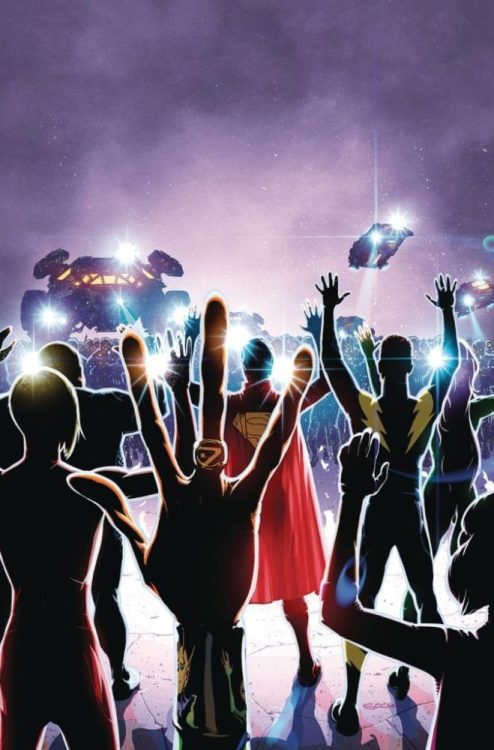
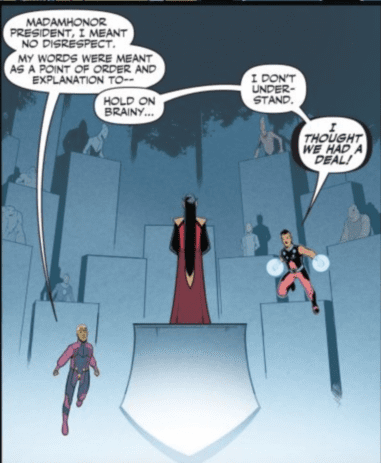
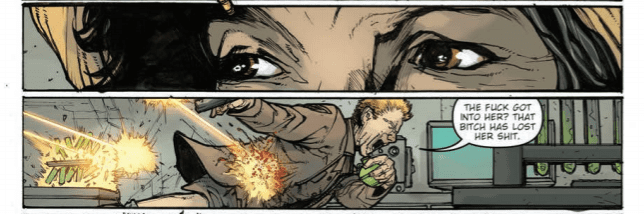
On July 28, DC Comics released Legion of Superheroes #7, continuing with writer Brian Michael Bendis’s reimagining of the icon superhero team. Artist Ryan Sook is joined by Wade von Grawbadger (for page 1) and Stephen Byrne, who does the art for pages 2-22. Jordie Bellaire works colors, while Dave Sharpe serves as letterer.
Writing
If you bought this issue thinking it would be about the Legion getting arrested by the United Planets, given the fact that they were previously detained by the police, and this issue begins with them confronting President Brande and the United Planets assembly, I‘d understand your confusion. You would, however, be wrong.
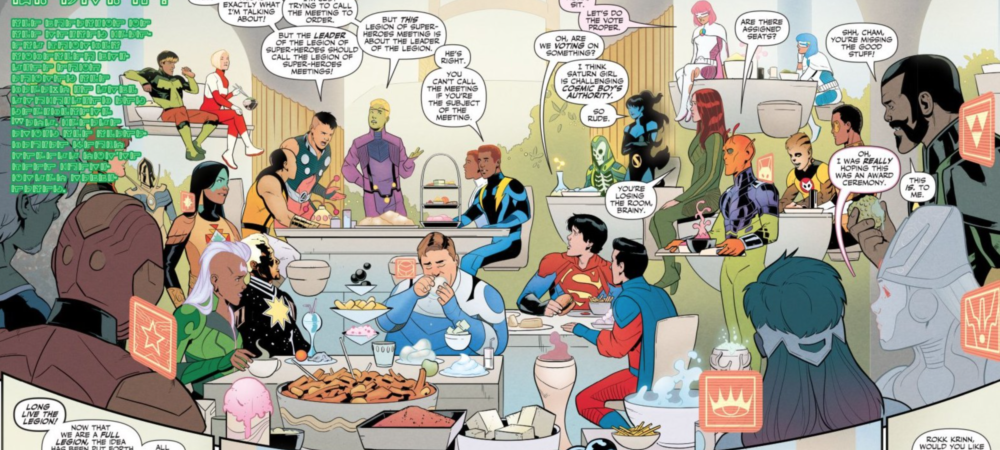
Instead, this issue revives a very old Legion tradition…arguing over who the leader is and holding an election about it. I’m sure longtime Legion fans will appreciate this nod to the Legion’s history, although if you are a person who gets annoyed with comics where people sit around talking the whole time, then this issue isn’t for you.
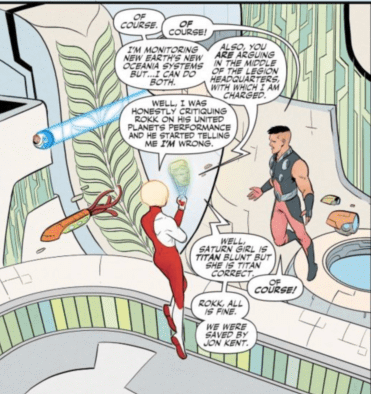
As someone who has enjoyed Bendis’s work on the whole, I have to say some of his dialogue has been a bit “extra” lately. Reading the dialogue in Young Justice can be a bit of a chore, and while it’s a little better here, the dialogue can be a little “jumpy” and frenetic.
Oh? Were you wondering about the “arrest” thing? That’s just Ultra Boy’s father, the leader of Rimbor, showing up at the end to arrest the Legion. We’ll see how that goes, what with Rimbor leaving the United Planets and Ultra Boy getting elected as the leader of the Legion.
Art & Colors
I know sometimes a change in artist can wreck the tone of the book and take readers out of the story. While I’m sure some people will miss Ryan Sook being the main artist of this book, Byrne does a fine job. Aside from his faces looking a bit more rounded at times (I wanted to say “slightly lumpy,” but I’m afraid that will convey the wrong idea), with Bellaire still doing colors, it still looks like the same book. Byrne’s line work is solid, and Bellaire’s colors make this book a joy to read, even if a huge chunk of it is dedicated to the inner politics of the Legion and its relationship with the United Planets.
The art team should be commended for their attention to detail with each character. This isn’t like a Justice League or Avengers book, with maybe seven characters tops. The Legion is vast, and it would be easy to skimp on details for each character, but each character design pops on the page.
It would be easy to cheat and skip some details of character designs of people in the background, but the art team avoids that temptation.
Lettering
I’ve already noted some of my issues with Bendis’s dialogue of late, and as I pointed out, some of the dialogue bounces back and forth in ways that are slightly confusing.
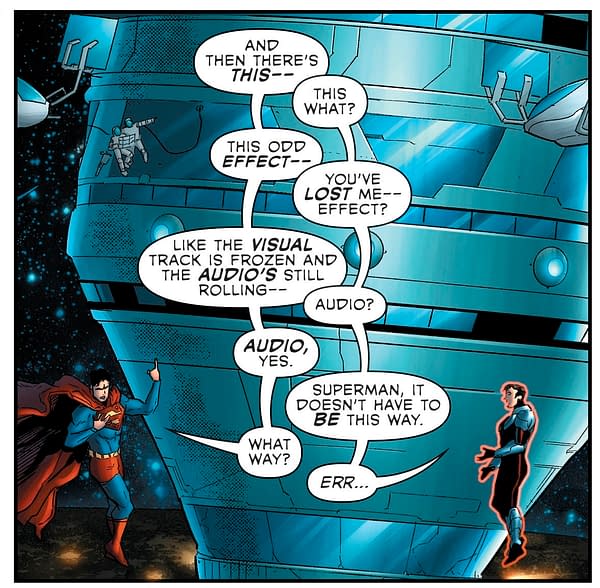
I understand the dynamic that Bendis and Sharpe are going for here, and on the whole, I appreciate Bendis’s quippy dialogue, but this issue flirts dangerously with Grant Morrison’s satire of such dialogue in The Green Lantern.
This awkward pacing and positioning of dialogue can further be seen when Cosmic Boy and Brainiac 5 have a bit of a squabble over leadership (at least I think that’s what’s going on) in front of the United Planets.
I’m just a bit confused about the pacing of Cosmic Boy’s comments. It reads a bit too close to that Green Lantern panel.
Conclusion
I know I’ve been a bit critical of Bendis and company in this review, but I don’t want that to create a misunderstanding. I like this book, and I’m rooting for it! I think Bendis is doing some cool things in this book reimagining DC’s future. I’m not even saying that I don’t like books that consist more of character interactions than flashy action sequences. I just think he needs to reign in his dialogue a little bit. I’m still excited to see what he has in store for the future of this title, and I hope this book stays with us for a long time!
What do you think of Bendis’s work on The Legion of Superheroes so far? Are you excited? Nervous? Tell us in the comments below!
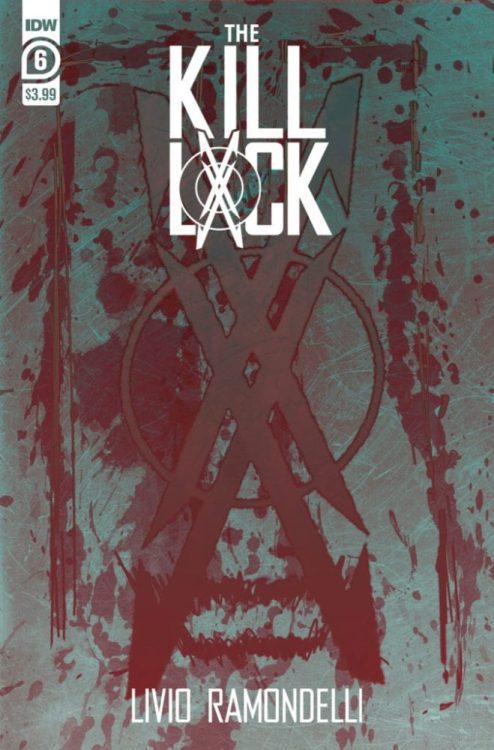
The final chapter of Livio Ramondelli’s surprise hit “The Kill Lock” has arrived, and it’s as brilliant an ending a mini-series could hope for. Ramondelli’s handling of character development and pacing out the histories of his cast results in an immensely satisfying and sharp ending, fitting for the trajectory of this comic. Along with his consistently incredible signature art style and sense of visual direction, Ramondelli’s final issue of “Kill Lock” will stand out as one of the most memorable finales in comics this year.
“The Kill Lock works. An individual, or a pair, you may be able to hide and survive. Four cannot. When the Artisan, the Kid, the Wraith, and the Laborer reach the end of their journey, doom seems certain, unless…”
Writing & Plot
Livio Ramondelli has maintained much of the mystery in “The Kill Lock” by withholding the backstories of its two most mysterious characters: The Wraith and The Artisan. This issue’s focus on their lives before the Lock while also resolving the prior issue‘s tragic and tumultuous events ends the series with a plot revelation that takes advantage of one character’s (no spoilers) inherent selfishness. However, watching these four machines develop to care about one another, all the while maintaining the core aspects of their individuality, makes for a fantastic and emotionally compelling journey. Much of this comic relies on flashbacks, which are so well-constructed and fascinating that they never detract from the present story. Ramondelli’s ending to this story is both bittersweet and fittingly shocking, with the incredible amount of humanity injected into these robots crescendoing into a beautifully memorable character-driven story that is riveting from beginning to end.
Art Direction
I’ve been singing the praises of Livio Ramondelli’s artwork on “The Kill Lock” ever since the first issue arrived, and now here I am to do the exact same thing. The writer and artist of this mini-series get travels into some new territory on this finale, with the addition of some ethereal and dreamlike sequences during the story’s final moments. Outside of his general beautiful renderings, his direction and focus on character is what makes “Kill Lock” truly special. Ramondelli is able to somehow make the expressionless steel-plate faces of robots some of the most believably expressive comic characters I’ve ever seen. Much of this has to do with how he frames his cast based on context. The Wraith staring upwards into a white void as he awaits his banishment is full of tragedy, although the character wears only a blank metal visage. The artisan plotting his scheme for diabolical greatness is so obvious just from how Ramondelli frames the robot in the panel; obvious to the point that he might as well be rubbing his hands together and cackling. The lettering of Tom Long on “The Kill Lock” has been outstanding from the beginning of the series to the end, with different and unique fonts for each character that perfectly encapsulate their personalities and make it easy to imagine how they sound. Ramondelli’s sensibilities with visual storytelling, as well as his overall artistic talent, are the aspects that make “The Kill Lock” stand out as a fantastic series.
“The Kill Lock” #6 is an emotionally satisfying finale with a fittingly character-driven twist. The steady development of these four exiled machines has been a riveting journey to watch unravel under Livio Ramondelli’s skill as both a writer and a visual storyteller. The sense of pace, characterization, and worldbuilding are matched by his incredible painted artwork and panel direction. With excellent lettering by Tom Long, this entire mini-series has been a joy to experience, and this final issue makes it one of the most easily recommendable reads of the past year. Be sure to grab this final issue when it hits the shelves of your local comic shop on 7/29!
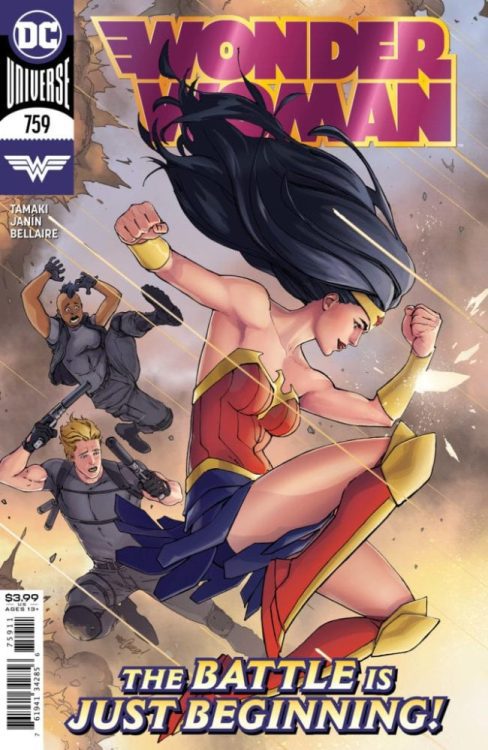
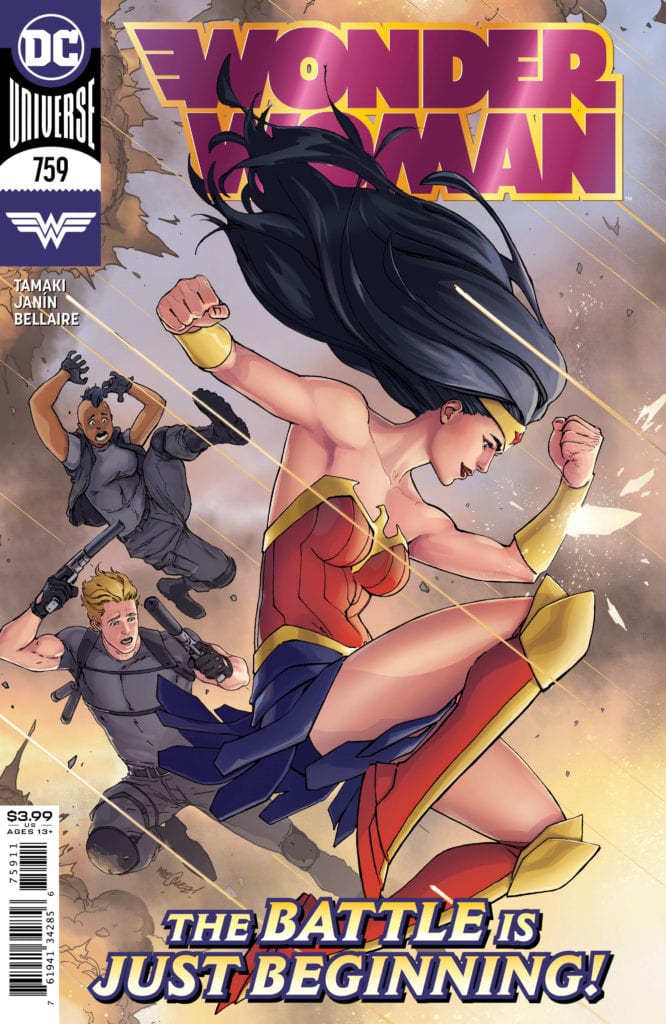
It’s time for another new team to step in for Wonder Woman. Since 2017, we’ve had teams come and go more frequently than most of the other comics. Each team brought their own stories to the table, some of them good while others were bad. The last few issues written by Steve Orlando were average, but now we get a new writer: Mariko Tamaki. While she is still relatively new to the superhero game, only starting to write superhero stories in 2016, her work has been out of this world. With Supergirl: Being Super and She-Hulk under her belt, what stories will she bring to the table for the Amazonian Princess?
**Some Spoilers Below**
Story:
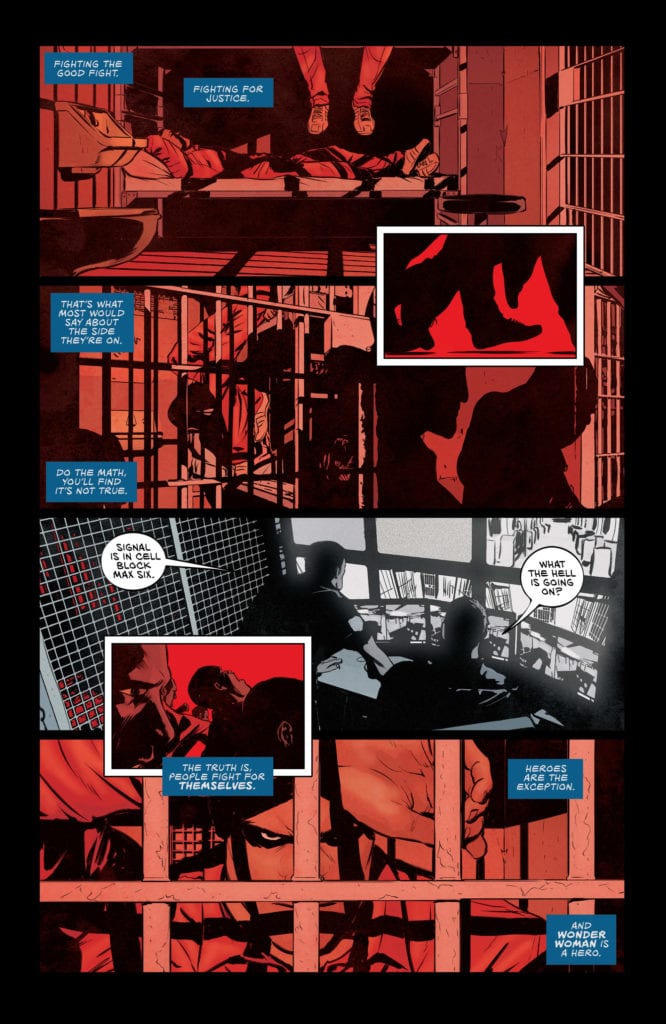
We open with a mysterious narrator talking about the line between good and evil. They point out how those who fight for justice usually fight more for themselves than anything else. The narrator does point out that there is an exception to this belief: Heroes. The example they use is Wonder Woman and how she overcame those who believed they were doing good, such as Max Lord. This is when we cut to the present and find Diana has moved back to Washington DC. She meets her new neighbor, Emma, and joins her on a trip to the DC equivalent of IKEA. There they find a mother out of control, driving her car into oncoming traffic. While not a problem for Wonder Woman, she realizes that the mother was being mind-controlled into doing it.
This issue is an exciting read that is honestly a good issue for both long time fans and first-time readers. We get callbacks to previous iconic stories while getting a grasp on how heroes like Wonder Woman genuinely are good people. Using Max Lord as the opposite end of this belief is a fantastic choice. He is the ultimate example of a “fighting for the greater good” style of character. While many remember him for his evil actions, he started out claiming his want to protect the world. If Tamaki wants to tell this story about the definition of justice, and if the heroes can be held accountable, she picked a great villain for it.
The only real problem I had with the issue was honestly how quick the pacing was. We go from moving in, to stopping the runaway car, to heading to the prison with Max Lord so quickly we don’t get a chance to breathe. It’s nothing that detracts heavily from the story, but it does worry me that we might quickly rush through this story before getting a chance to enjoy it. We’ll just have to see as the series continues.
Art:
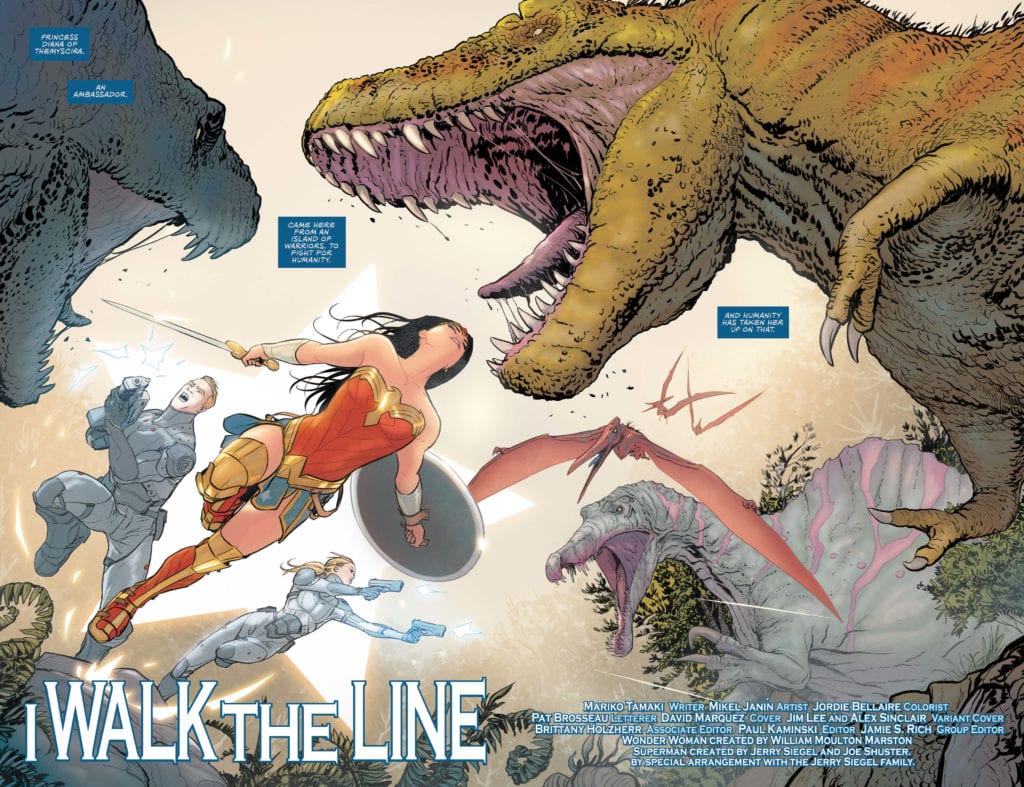
Mikel Janin is the artist for the team, and he illustrates a fantastic first issue. His previous work in Grayson and King’s Batman run shows he has the skills to pull us into the action, and this issue is no exception. Along with brilliant character designs, his work in the chase was terrific. Through the speed lines and sparks, Janin can convey how fast everything is and how dangerous it is. It looked more like stills from an action movie rather than a comic, and I loved it!
Conclusion:
This first issue has me more excited for Wonder Woman more than ever. We have the reintroduction of a menacing villain, a great action piece to set the bar, and Wonder Woman being the kindhearted hero we’ve always known her to be. Mikel Janin’s beautiful art is going to be a draw for the run, but the story itself shows promise. There might be pacing problems going forward, but it can easily be overlooked. This series is in good hands, and this reviewer can’t wait for the next issue.
They say that with comics, there is no budget, that you can do whatever you want and not have to worry about the logistics of creating it on the page. This is probably said more by writers than artists, but in essence, the idea is true. A comic is only limited by the imagination of the creators. This means that there are some comics with ludicrously outlandish concepts out there, way beyond the simple ideas of people with superpowers, able to fly or shoot lazy blasts from their eyes. A character like Deadpool may seem like a fantastical notion, with his constantly healing body and fourth-wall-breaking puns. Still, compared to the mind-boggling, dimension-hopping in Simon Spurrier and Rachael Stott’s Motherlands, he appears rather ordinary and straight forward.
Whether it’s the characters that are absurd, like the over evolved animals of The Superannuated Man, or the story itself, refer to Daniel Warren Johnson’s Murder Falcon, ludicrous ideas can form the backbone of a comic, but that does not make it unreadable or lacking in worth. Some of the more poignant comics from the last one hundred plus years have a concept that appears baffling at least. You only need to look at Art Spiegelman’s Maus to see how a seemingly ridiculous idea can become a work of art. A story about Jewish persecution told using Mice and Cats? If anything, it sounds like a joke and one in poor taste at that. But Maus is a seminal work of Art and recommended reading for all comic book fans.
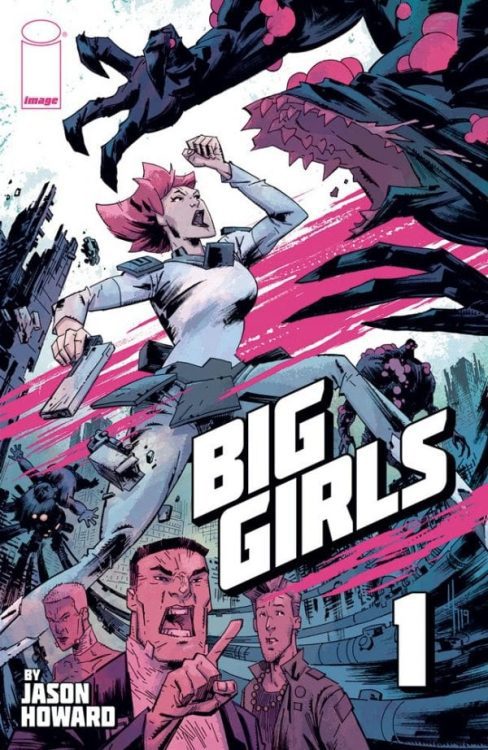
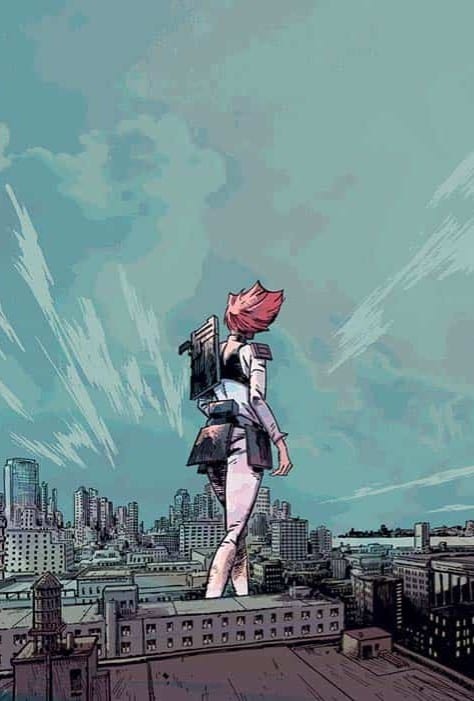
In comparison, Jason Howard’s upcoming comic from Image, Big Girls, is as much a joke on paper as Maus might appear. Set in a near-future world where giant monsters regularly stomp through downtown American, the only line of defense is a group of giant women controlled by a defense organization called The Preserve. I would argue that such a pitch has limited appeal. However, like so many things in the world of comics, there is so much more going on in this title than making a ‘sexy’ Godzilla.
Big Girls #1 Credit: Jason Howard/Image Comics
Drawing In The Reader
As with any medium, the success or failure of a comic rests on the creator’s abilities to engage the audience. The plot can revolve around anthropomorphic beings dealing in mythological real estate, but if it is written well, a reader will find an element of identification. A small morsel is all that is required to entice an audience in and get them hooked into the story.
The easiest way to engage a reader is to give them empathetic characters. The most relatable element of any story is the cast because, as a reader and a person, we can identify with emotional reactions. The more outlandish the story, the more critical it is to have a grounded central character. This is why most superheroes or adventurers have sidekicks. They act as our entrance into the world depicted on the page.
Howard has set himself a mammoth task with Big Girls. Not only is he drawing the series, but he is writing it as well. Not only has he created a Western Kaiju but also a social discourse on genetics and procreative control. From the very beginning, Big Girls is an alien environment packed with a mixed iconography. The reader is thrown directly into the melee, with a coordinated operation involving The Preserve defense team, but Howard does not overwhelm his audience. Instead, he uses the chaotic opening to give the reader exactly what they need to navigate the story that follows: an empathetic hero.
Big Girls #1 Credit: Jason Howard/Image Comics
Capturing Character
The opening page of Big Girls portrays a shadowed landscape that is instantly recognizable as a modern urban dwelling. There are hints that this is not an idyllic place: a plume of thick smoke drifting over the city, a closer inspection of the buildings reveals some to be in disrepair. Cemented into this image are four panels featuring people running in fear. Across the top of this scene of terror is a voice-over which, by page three, the reader comes to understand is the central character, Ember.
The voice-over is Howard’s first step in integrating the reader into the story. The tone of the speech is down to Earth. The speaker endears herself to the reader by referring to things that we would understand but also by creating an ‘every person’ image. She does not pretend to understand the complex science behind the event she is discussing or to have any insider knowledge. She knows what anyone on the street would know, and this comes across in the way she words her explanations.
When Ember is finally introduced visually, it is with a head and shoulder shot on a featureless background. She appears to be a normal woman. The clothing she wears isn’t too exotic, and even the communications device she wears around her neck is instantly understandable. Howard reinforces the idea that Ember is just like us by making this mission her ‘first,’ as explained in the speech. As a reader, we are experiencing this world for the first time, just as Ember is doing something new. Howard creates a bond between character and reader, an experience that we can share together over the following pages. From the first panel on page three, we know that what we are about to see is new to us but also, to a large extent, new to Ember as well.
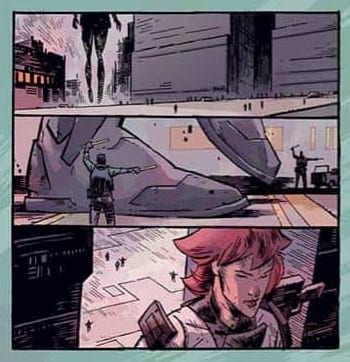
Howard leaves the reveal of Ember’s size until the next page, by which time the reader has already accepted her on an emotional level. We have connected with her personality and the normal-ness that she has displayed. When the reveal comes, it is like a ‘wow’ moment. Her stature is impressive, and we are suddenly looking up at her in wonder. However, there is no sense of fear; she is not portrayed in a threatening light. In fact, the way Howard draws Ember reinforces what we have already learned about her on the previous pages.
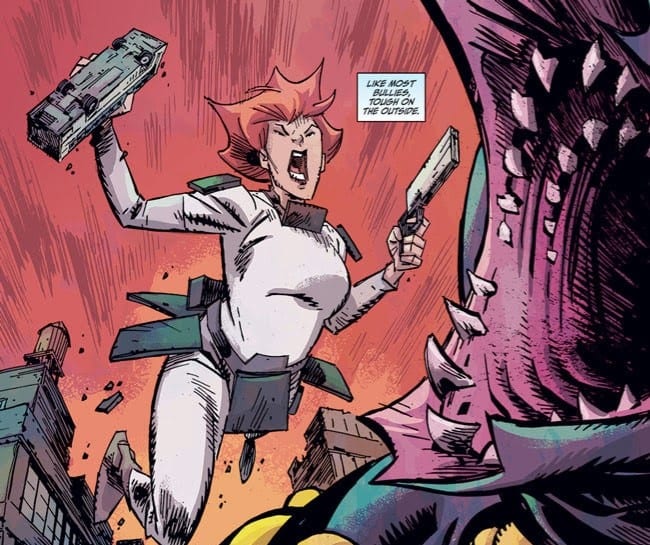
Ember is stood casually at the end of the block with one hand on her hip. Her uniform is mostly white, which catches the sunlight making her a bright beacon in the panel. Her fiery red hair finishes off the image. She stands tall and proud with a smile upon her face. The way Howard draws Ember at this moment makes it impossible not to like her. The other characters on the page are small and mostly featureless, but Ember stands out, warm and welcoming.
Big Girls #1 Credit: Jason Howard/Image Comics
Reinforcement and Horror
As The Preserve operation progresses, Howard continues to grow Ember’s character and personality by contrasting her against the other characters and by constant reinforcement of her gentle nature. This issue builds her up to be a gentle giant in a harsh, unrelenting world.
The main comparison that Howard draws is between Ember and her onsite handler James Tannick. Tannick is the opposite of Ember. He is ‘normal’ sized, experienced at his job, and blunt to the point of being rude. When he confronts Martin Martinez, the subject of the operation, he is insulting, aggressive, and like all bullies, he surrounds himself with colleagues to give him the advantage. He shows no compassion towards Martinez or his son. In fact, his brutal actions makeup one of the most shocking moments of the comic and help establish another aspect of Ember.
Her reaction to the violence she witnesses is as shocking and heartfelt as the readers. The horror on her face and the depression that follows is precisely how Howard wants the reader to react. In the opening pages, the audience is imprinted on Ember so that as the narrative progresses, we follow her and become sensitive to her side of the story. It’s difficult to root for the organization, even when you factor in their ‘for the greater good’ arguments because our entry into this world is through Ember, a character disgusted at the actions of her boss.
From this point onward, we have a center to the narrative, a character to rely on and root for. When anything starts to become outrageous or unfathomable, we can turn to Ember for guidance. Howard pins his outlandish story to the ground with Ember, giving us a solid foundation to watch the mayhem.
Murder Falcon Emotional Art Credit: Daniel Warren Johnson
Conclusion
In Murder Falcon Daniel Warren Johnson was able to ground his story of Heavy Metal demon fighters with a central character suffering from a terminal illness. His pain and struggle is something that most readers can identify with making it easier to accept the rest of the story, no matter how bonkers it gets
With Brian K Vaughan and Fiona Staples’ Saga it is the down to Earth situations that the characters find themselves in that becomes the foundation of the comic. Falling in love, finding a babysitter, arguing with family, all of these things are commonplace across the world. It doesn’t matter who is falling in love; an alien, ghost, or robot with a television for a head, the process, and emotional reactions are the same.
Howard has a very firm understanding of this process of creating a solid foundation from which the readers can view the rest of the narrative. In Big Girls, Howard decides to use emotional response, and his lead character, as that foundation, that solid rock for us to hold onto throughout. He successfully establishes Ember in the opening page, and through that initial engagement, he can draw us deeper and deeper into his wild ride.
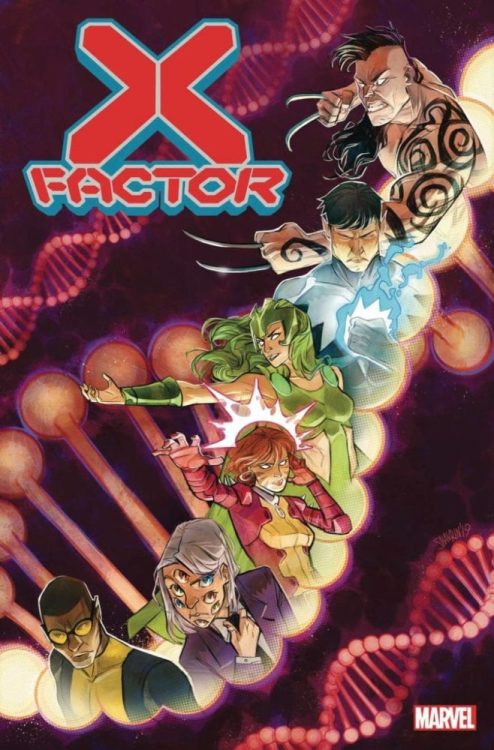
After waiting a long time since Hickman and company first launched the Dawn of X, Marvel Comics is giving us a new X-Factor book, releasing X-Factor #1 this Wednesday, July 29. Written by Leah Williams, with art by David Baldeon, colors by Israel Silva, and lettering from VC’s Joe Caramagna, this issue launches a new version of X-Factor Investigations to further serve Krakoan society.
Writing
X-Factor #1 is a fun look into some more of the internal politics of Krakoan life, specifically the resurrection protocols. What does someone do in order to prove that their fellow mutant and loved one is in fact deceased? After all, no one wants a bunch of duplicates of the same person walking around. That could get confusing! This is the question that X-Factor is founded to tackle.
The formation of X-Factor is instigated when one mutant goes missing, prompting the Quiet Council to approve a missing persons bureau. Williams does a good job setting up the initial mystery prompting the formation of X-Factor, firmly establishing this team’s reason for existing and establishing a status quo for future adventures.
This is another one of those books with a cast that may be just a little too big (like New Mutants), but a number of characters are given their moments to shine, including Northstar, Polaris, and Daken. Some of the dialogue, banter, and characterization could, it seems to me, be interchangeable between the characters, such that I think sometimes they can lack their own unique voices (versus just being interchangeable quip machines). Still, it does make for a potentially fun book moving forward.
Art & Colors
Baldean’s art is serviceable in this issue, although at times, I think he makes some of the characters look at bit young. Polaris looks like she’s been aged down, even though once upon a time, in both the original X-Men series and in the early 90s X-Factor, she was one of the X-veterans.
Speaking of character drawings and designs, I didn’t both doing this myself, but if any of our readers read X-Factor #1, please count the number of times, each character’s beady eyes are looking up. Now that I’ve pointed it out, you won’t be able to unsee it.
I should say there are some beautiful pages in this book. A few scenes involving Lorna are a delight (and are a credit to Silva’s colors), and the new X-Factor headquarters has a gorgeous design.
Lettering
The lettering by Caramagna in this issue is fine. I just think there’s a bit too much of it at times. This has a bit more to do with the scripting, but as I said about New Mutants #10, the dialogue can take up a bit too much of the panel sometimes. However, maybe this is to be expected in what amounts to a team detective series. It’s going to involve a discussion of the details of the case, so maybe that can’t be helped.
Recently, I’ve very much been enjoying the prose pages of some of these X-titles. I’ve praised Caramagna before for his work on the prose pages, and I think he does some good work here as well. When you read this issue, you’ll have to comment below and let me know if you agree with me!
Conclusion
X-Factor #1 is a fine launch for the new series. I’m always happy to see a new X-title launch post-House/Powers of X, and the extra page length doesn’t hurt that either! This issue does a fine job establishing the basis and purpose of the series. It’ll be fun to see how some of the mysteries from this issue play out and how this mixture of characters learns to work together.
What did you think of X-Factor #1? Tell us in the comments below!
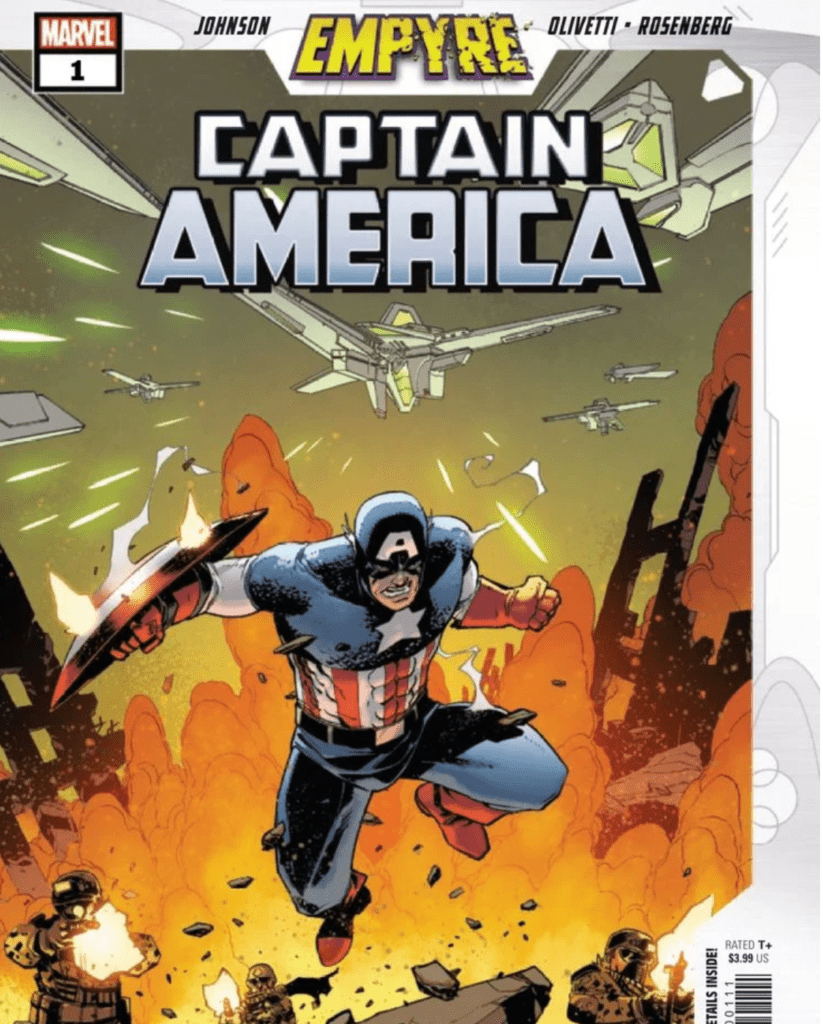
Empyre Captain America Cover credit of Marvel Comics via CBR
Empyre Captain America Cover credit of Marvel Comics via CBR
Empyre: Captain America 1
Writer: Phillip Kennedy Johnson
Artist: Ariel Olivetti
Color artist: Rachelle Rosenberg
Letterers: VC’s Ariana Maher with Joe Caramagna
In Marvel Comics’ Empyre: Captain America #1, on sale July 28, writer Phillip Kennedy Johnson brings the Cotati invasion to America, where Steve Rogers fights alongside the nation’s armed forces. The issue’s patriotic themes resonate in an increasingly challenging time. By the end of the comic, even jaded readers will feel red, white and blue coursing through their veins.
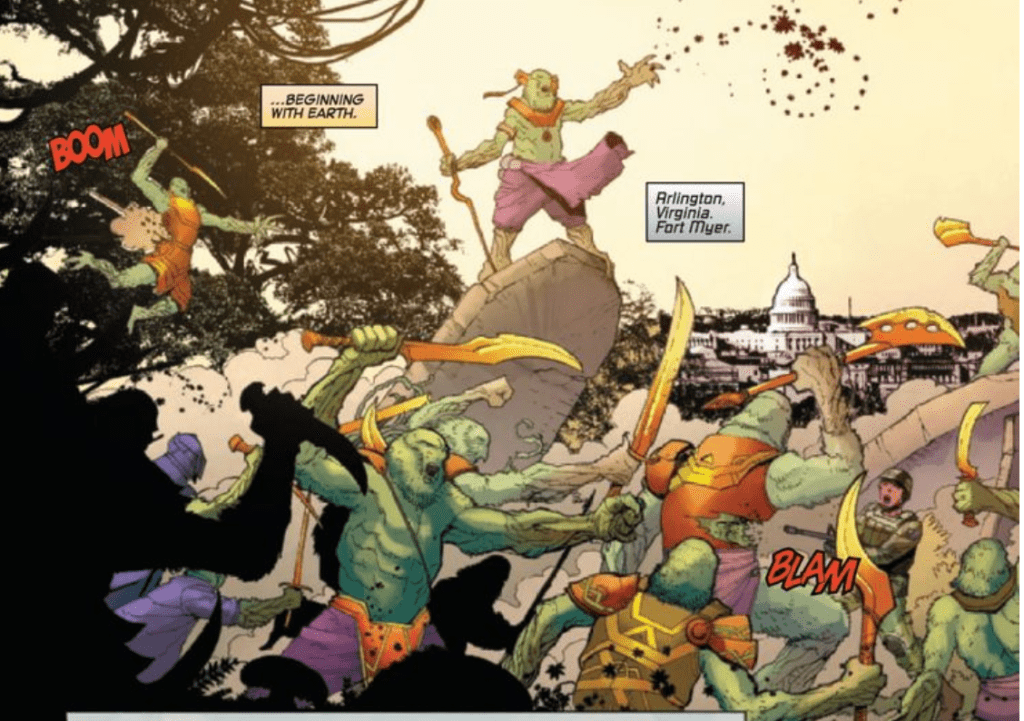
In Empyre, the Cotati’s invasion of Earth plunges the planet into a global fight for survival. Naturally, Captain America steps up to defend his homeland. Right away, the narrator of Empyre: Captain America #1 (presumably Rogers) frames the Cotati as the threat in this high-stakes war. “[They are] led by a self-styled messiah…in a holy war to kill all animal-based life in the universe,” the narrator states. Artiest Ariel Olivetti complements the script by repeatedly proving several cinematic images that are sure to pull at your patriotic heartstrings. In the first few pages, she shows the Cotati annihilating some American soldiers with the Washington Monument towering in the background.
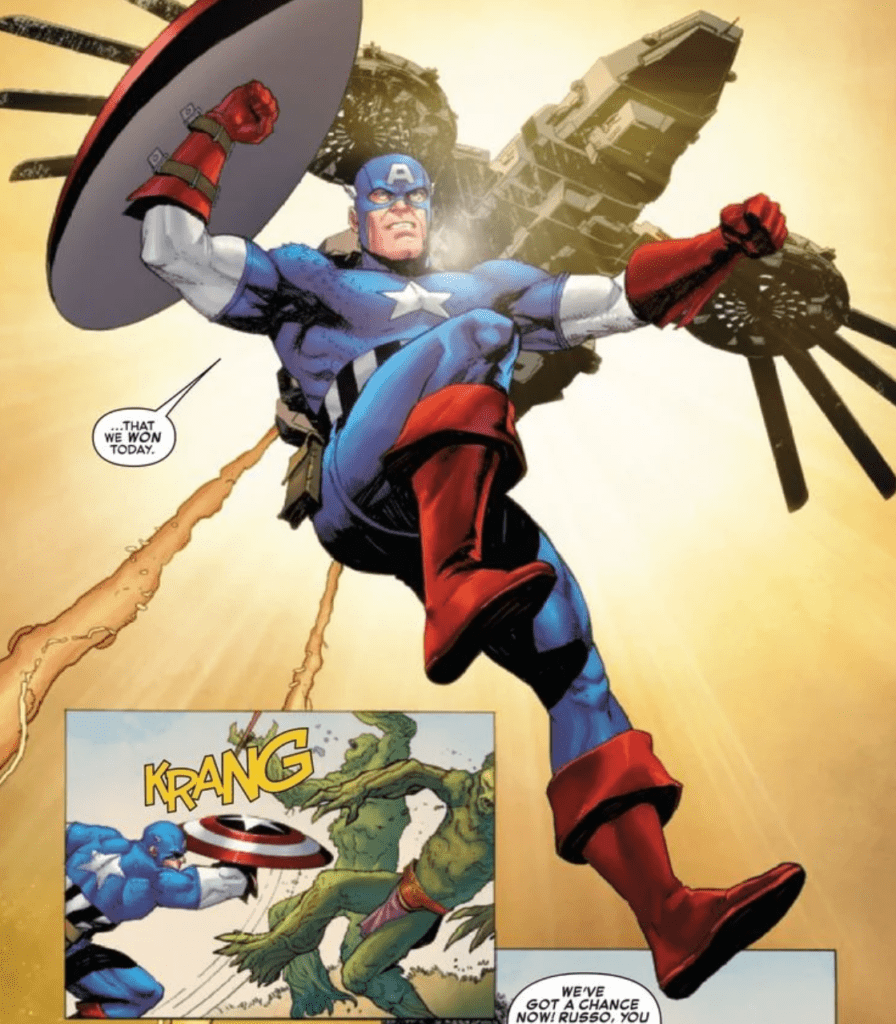
This emotional sight makes the reader feel sympathetic for the soldiers, who are dying with the nation’s capital a stone’s throw away. But Olivetti similarly evokes a strong response when she shows Captain America literally swooping in to save the day. The First Avenger looks angelic as he flies through the air with the sun brightly shining behind him. Cap immediately tips the scales of the battle and helps the troops fend off the invaders and score one for the good guys.
In Empyre: Captain America #1, the global invasion comes to America’s capital.
Any Captain America story, especially with an all-out war like the one featured in Empyre, is the perfect opportunity to tie in real-world politics and philosophy. Kenny Johnson capitalizes on this opportunity by offering some commentary on non-interventionism. When Captain America travels to The Pentagon, he tries to convince a military general to lend a helping hand to America’s allies around the globe. “Our allies need to us supporting them so they’ll support us and one another,” Cap says. The general denies Rogers’ plea, saying that the armed forces need to focus on defending America.He also refuses to help nations who will never be able to return the favor. Olivetti shows unflinching resolve and obstinance on the general’s face, which conveys his unwillingness to compromise.
This self-interested attitude angers Cap, who states that all life is threatened, so every human needs to stand together. In this exchange, Kennedy Johnson may be commenting on some ideological conflicts we’ve seen time and again in the real world; he’s suggesting that in the face of such a powerful threat, border-based philosophy should cease to exist in favor of unity. Thankfully, Cap convinces some soldiers to fight by his side, so the planet might not be doomed after all.
Captain America looks like an angel when he literally flies in and saves the day.
Empyre: Captain America #1 is the event’s first openly political comic. In a story where two opposing empires unite and threaten the Earth, it’s likely that there will be many more to come. If so, they’ll have a hard time topping Kennedy Johnson’s opening salvo, as he comments on real-world philosophy and makes the reader feel proud to be an American at a time where it’s increasingly hard to do so.
What’d you think of Empyre: Captain America #1? Where do you hope to see the story go from here? Check out your local comic shop to see if you can pick it up there, or consider buying the issue online.
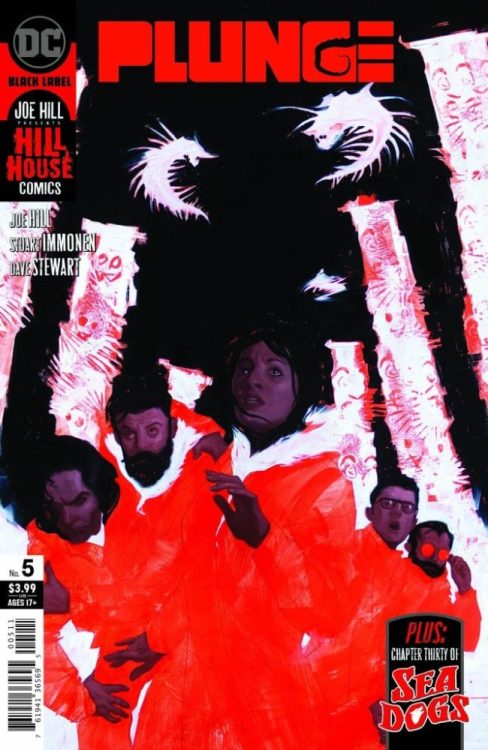
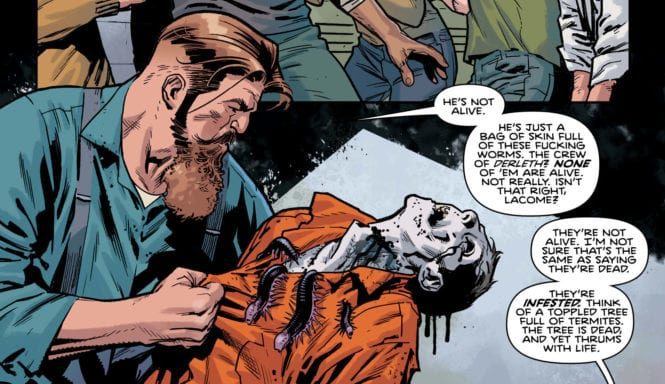
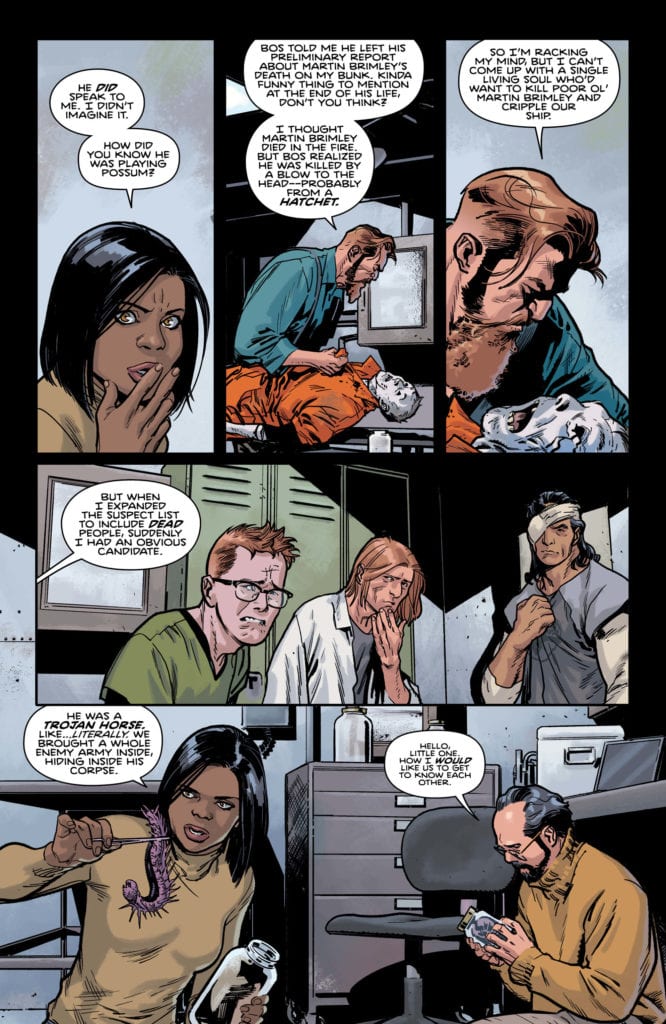
PLUNGE #5 hits comic book stores on Tuesday, July 28th, and it promises to give readers some answers. The team of divers have just learned the secret of the zombie-like crew from the Derelth, and it’s not for the faint of heart. They are actually dead, but extraterrestrial worms have taken over their corpses to further spread their kind.
Story
Once cracking open their books, readers are brought to a moment of tension—one in which the salvage crew must reckon with the plotting of these worm-like creatures. And surprisingly, they were able to hatch a plan that would have lead the crew to a locked hatch in the Derelth.
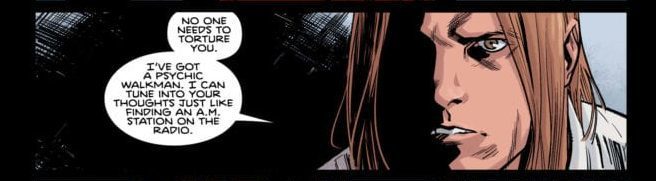
Though Gage Carpenter discovered this secret, it’s clear the crew has no idea how to unveil the creatures’ true intentions. That is until Russell Gage volunteers to use his psychic-fueled headphones to dive into their minds.
Unfortunately, the young diver finds more than he bargained for in the motive behind the worms. One that could alter the fate of the known world.
Joe Hill’s narrative is as startling as it is engaging. We’re drawn into the mystery of the worm creatures just as we’re repulsed by their goriness. The safety of our protagonists is at the forefront of most readers minds, but many of us can’t resist probing the depths of this extraterrestrial threat.
Artwork
Stuart Immonen’s penciling and ink work, David Stewart’s coloring, and Deron Bennett’s lettering added just the right flavor to compliment the narrative. The dark shading applied to each panels adds to its mysteriousness. Each of the zombie creatures’ forms are outlined by wavy lines in front of these shading backdrops, which helps them stand out more prominently. And the word balloons are placed in such a way as to guide the reader through each terrifying scene.
Conclusion
While PLUNGE #5 answered many questions, it also gave us dozens of new ones. How did these worms get to Earth? Why are they so interested in spreading their kind? We’re eager to find out.
What was the biggest surprise for you in this issue? Let us know in the comments below!
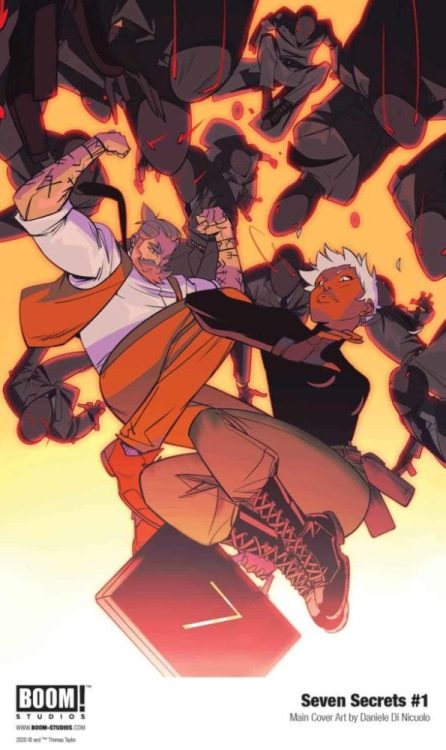
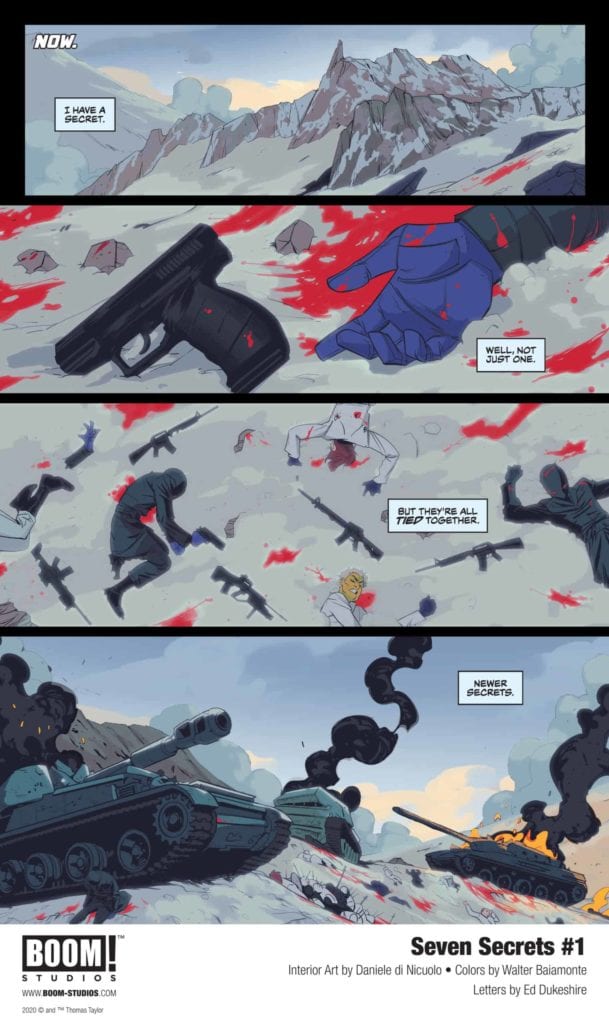
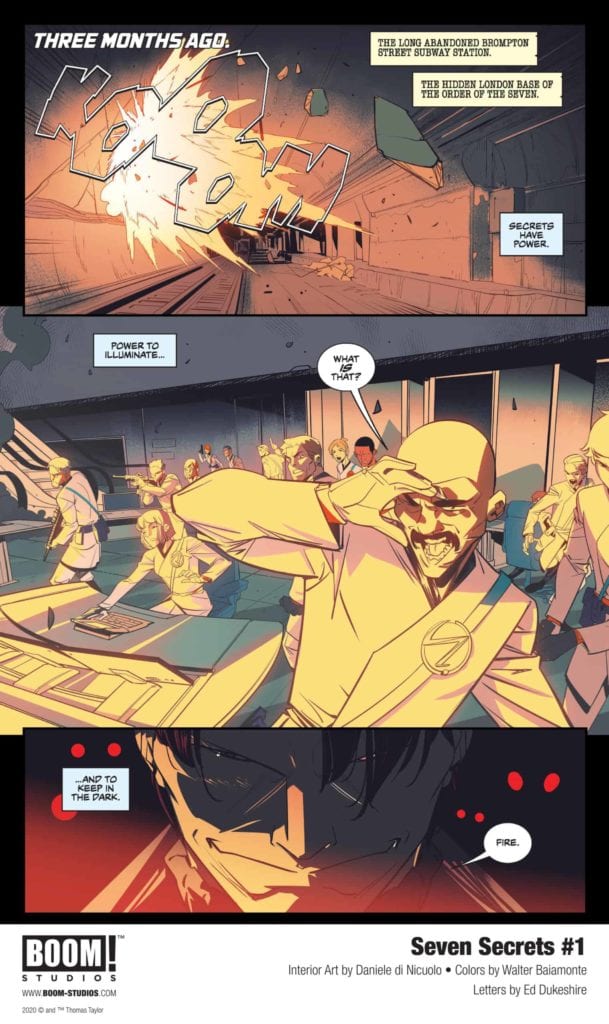
Writer Tom Taylor, artist Daniele Di Nicuolo, colorist Walter Baiamonte, and letterer Ed Dukeshire know how to keep more than seven secrets. In fact, in BOOM! Studios’ Seven Secrets #1pretty much everything is a secret. We don’t know who any of the characters are, what they’re fighting about, or what kind of world they inhabit. It’s madness. And it’s some of the best world-building in a first issue out there.
Writing
Taylor doesn’t treat his readers like they’re idiots. He doesn’t beat us over the head with who’s who and what’s what. We’re intrigued by what we don’t know, so Taylor doesn’t let us know much. Briefly, he slips into vague language that gets a little repetitive, talking about the nature of a secret. But that’s a small price for the truly secretive intro that Seven Secrets #1 is. Even the characters, and how they’re connected, become hard to read. But Taylor uses that. Characters in this world seem so callous and unloving that the slightest touch of familiarity speaks volumes. A passing joke, speaks of a deep connection, a simple apology points to a life bond. It’s going to be interesting to see if Taylor keeps his great wit in check, or if Caspar’s generation will be of a different kind than the stone-faced characters we’ve seen so far.
Art
It’s Di Nicuolo to whom we owe these stone faces. It doesn’t matter what is happening to these characters; they will not be moved. One character thinks he’s dying, but his face is simply serene. There’s no fear, no pain in his eyes. And when another character announces her pregnancy, she scowls. Seven Secrets exists in a world where people cannot show weakness. They can’t show happiness when they’re family is growing, or sadness when they face the great beyond. It’s for this reason that the moments of fear, the few tears, have great meaning. These characters have been told to never show emotion. When an emotion breaks through to the surface, and we see it on their face, we know it must be overpowering.
Coloring
Baiamonte’s colors cascade over every scene. It’s not just a matter of what are the right colors, but what is the overwhelming feeling in each moment. Baiamonte gives moments of danger a red film, explained by a light in the distance or a splattering of blood. He gives scenes filled with fear a yellow tint. Whether it’s the color of Sigurd’s hair or the tiles behind Eva, Baiamonte tells us they’re scared even if their faces don’t. Sigurd and Eva’s trial is shown in bright white. It speaks of the indifference their judges have for them and the cold, calculating atmosphere of the room. Baiamonte’s work on Seven Secrets is efficient, and his colors are all carefully chosen to tell us more about each scene.
Lettering
Dukeshire brings the fun and pizzazz to this issue. It’s what makes Seven Secrets feel like a comic book. But his use of bright yellow and white lettering, in big block letters, dwindles as the issue progresses. Sure, there’s less opportunity for sound effects in Eva and Sigur’s backstory, but even when we come back to the present chaos, Dukeshire is restrained. It takes away the fun for a second. And the silence is terrifying. As Amon and Sigur square off, we become nervous about what will break the silence. It’s the pause before the finale that makes us lean forward in our seats and bend our ears. It focuses us in on the conclusion and leaves us ready for the next issue.
BOOM! Studios’ Seven Secrets #1 is a feat in storytelling. It may occasionally get lost in the weeds of trying to fill pages with captions, but it never gets lost in exposition. Every new character is exactly that, new. We don’t need to know more; this creative team expects us to take each character as they are, and trust that we’ll know more when we need to. BOOM! Studios’ Seven Secrets is aptly named. It uses the best tool a writer has to get readers intrigued: secrets. Pick Seven Secrets #1 up from a comic book shop near you, out August 12th from BOOM! Studios!
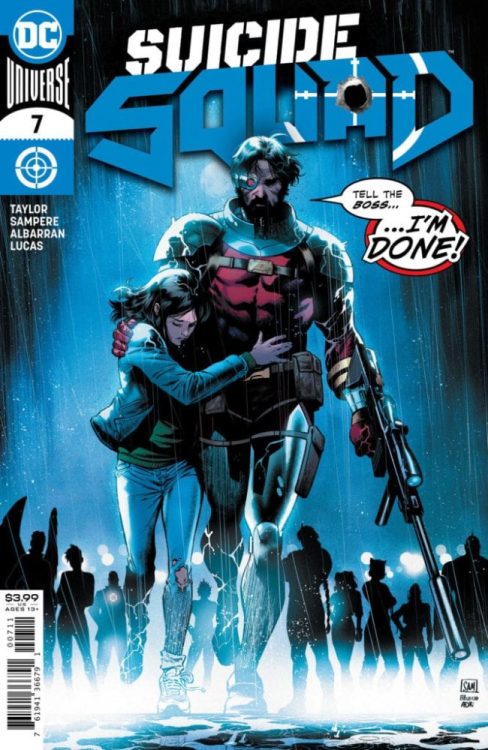
DC Comics’ Suicide Squad #7, written by Tom Taylor, with pencils by Daniel Sampere, inks by Juan Albarran, colors by Adriano Lucas and letters by Wes Abbott, is an issue that flips the series formula on its head. What has so far been a punchy, fast-moving, funny series, takes a little timeout to raise the stakes. This issue’s tone flies in the face of every issue so far, but still strikes a perfect balance.
Writing
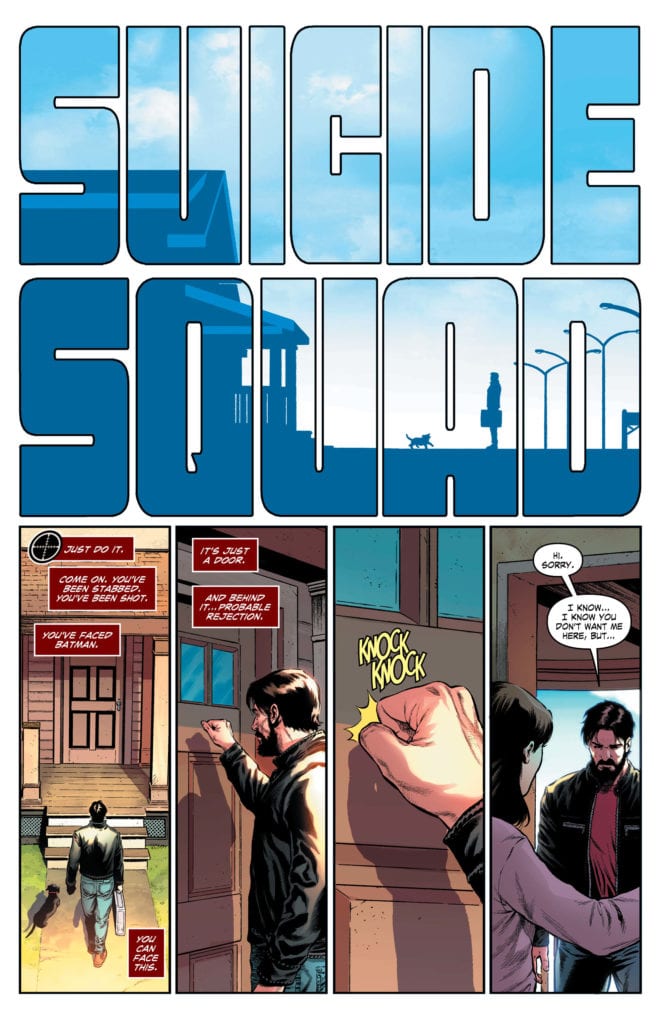
Taylor’s scripts are always pretty funny. Suicide Squad #7 still has some great jokes thrown in, but it’s not as raucous as a typical Taylor script. With Deadshot going home to see his wife and daughter, Taylor slows down the pace and allows things to get serious. It’s in this issue that we see how much Floyd loves his family. How scared he is of losing them. And even in the midst of all the fear, Taylor fills the most terrifying moments with hope. With Zoe being happy to see her father, and Michelle already back to teasing Floyd, Taylor provides a dream for Deadshot. We now know why we want Deadshot to survive this series. Floyd is no longer just “trying to get home.” His home now has a face and a name, and we want him to get back there as much as he does.
Art
There is always a feeling of whiplash when one artist takes the wheel from another in a series. But Sampere and Albarran give us a new layer to these characters. The Floyd Lawton that comes home to his family isn’t the one we saw in the last issue. He has lines on his face. He looks tired. So while it feels strange on some level that Redondo isn’t drawing this issue, the strangeness adds to the experience. It highlights the difference in their styles, and Sampere and Albarran’s version of the characters look a little more worn out. And a lot more pissed off. In most of the depictions of the Suicide Squad, we don’t see their eyes. It’s their eyebrows, knit in anger, that cast a shadow over their eyes. Sampere and Albarran’s Suicide Squad is out for blood.
Coloring
Lucas shows with his coloring that he wants Floyd Lawton to stay home. When Floyd is outside, it almost hurts your eyes to look at the page. Lucas’ depiction of the bright sunlight feels too real not to squint at. But when Floyd enters his house, we get the cool blues of the interior. It makes it feel safe, calm, and welcoming. We see this especially when contrasted with Deadshot leaving the house and being incapacitated by a bunch of soldiers. As he’s held against the ground, the light shines over him and into our eyes. The Suicide Squad enters the fray soon after, accompanied by a cooling in the colors. But as it gets mingled with a ray of sunshine, and later the glare of headlights, it leaves one wondering: is the Suicide Squad bringing the cool blues of safety or is this the beginning of Deadshot’s twilight?
Lettering
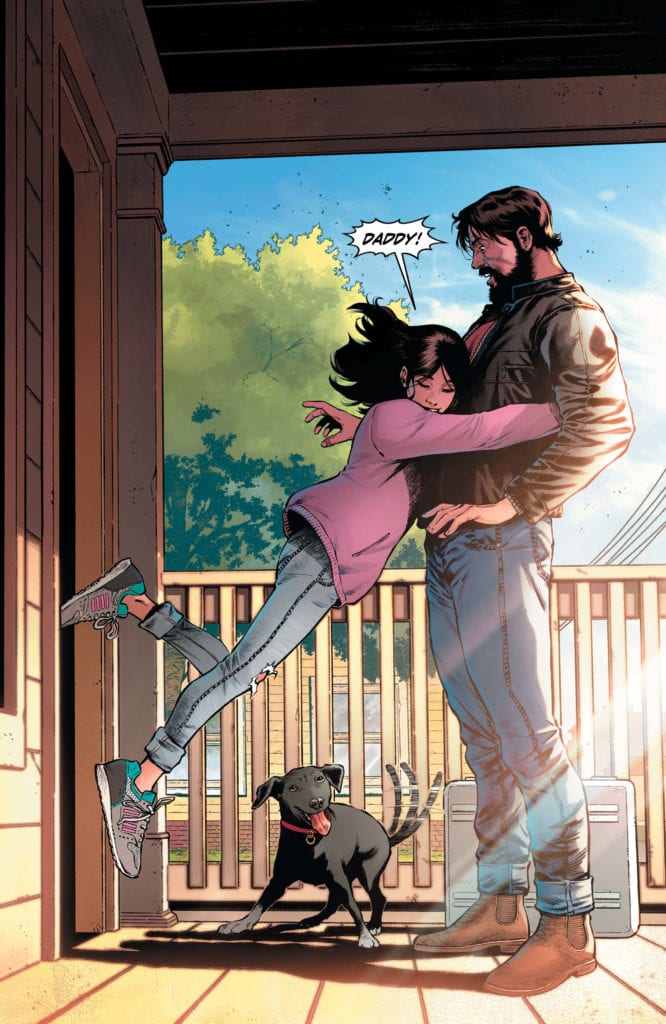
Abbott creates the tension in this issue. It’s all great that Floyd is back home, but will his family want to see him after all his years in the Suicide Squad? We see Floyd at the door of his home, waiting to have to give a defense. He wants to be back with his family, but he figures he’s got some explaining to do. The silence is palpable. The sound of him knocking on the door is dwarfed by his fist. His lettering is small, and even after his daughter has jumped into his arms, he doesn’t have much to say. His word balloons stay close to his face as if he’s scared to speak. This is what makes Floyd’s character so brilliant in this issue. Even when things seem to be going well, he’s used to pain, and he’s scared of screwing up. He loves his daughter and won’t say anything confidently until he’s sure he won’t hurt her.
DC Comics’ Suicide Squad #7 might be a change in pace, but it’s the perfect intro to Deadshot’s family life. We’re no longer talking in hypotheticals here. We know what Deadshot is risking every time he heads out with Task Force X. This quiet issue (for this series, there’s still plenty of fighting) brilliantly raises the stakes. Pick up DC Comics’ Suicide Squad #7 July 28th at a comic book shop near you!
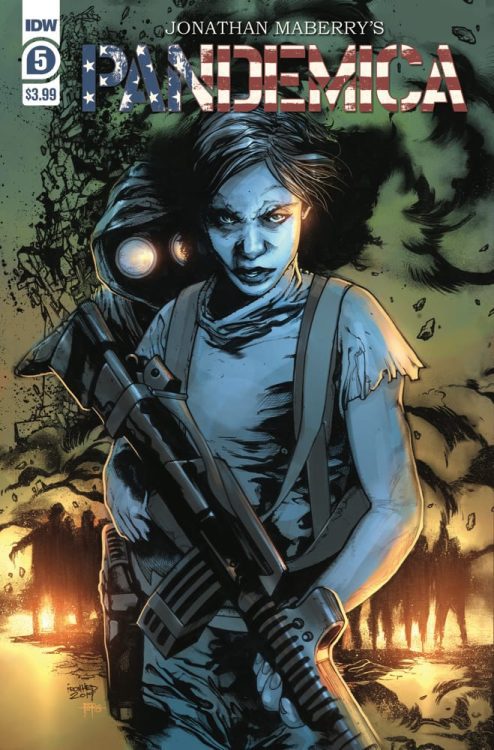
It has been nearly five months since the penultimate issue of IDW Publishing’s Pandemica was released and in that time the real world has changed dramatically. Jonathan Maberry’s thriller about a manufactured, ethnic cleansing disease and the conspiracies behind it’s creation was a lot more fun when it started but the narrative has become much more uncomfortable.
Real world events have not escalated in the same manner as Maberry’s comic but the subjects and the themes behind his narrative have definitely become more relevant. A growing number of conspiracies have emerged regarding Covid-19 and various government’s handling of the pandemic. When world new is dominated by a deadly disease is there still a place for a comic like Pandemica?
Pandemica #5 Credit: IDW Publishing
Unsettling Fictions
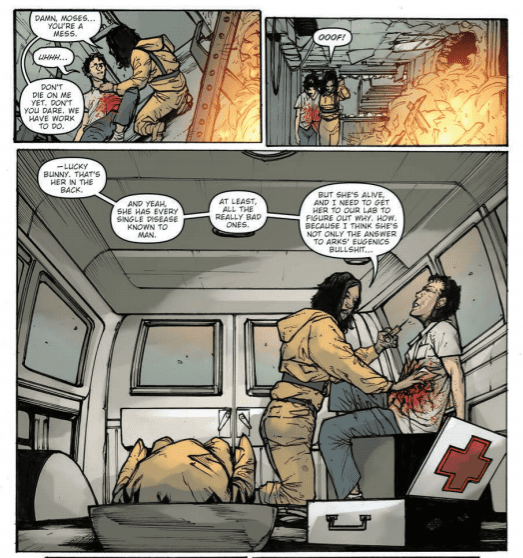
In the final part of Maberry’s story, De struggles to protect Mya, a child infected with all of the world’s worst diseases and also the potential saviour of humanity. She fights to stay alive and stay one step ahead of the conspiracy member’s while searching for the Lighthouse. The Lighthouse is a place of safety where a cure is being developed and is De’s ultimate goal.
From the start of this issue Maberry puts De on her path towards safety. He teases his central character, and the reader, with a morsel of hope. The insinuation that Mya is the saviour is constantly reiterated to increase the stakes. De isn’t just struggling to survive, she has a greater mission that Maberry wants the reader to understand. This is achieved by repeating over and over again the threat and the supposed solution.
This on the one hand does help to make De’s experience’s mean something significant. She has a purpose and a desired outcome which will benefit the world. A noble goal indeed. Unfortunately it hampers some of the storytelling. The constant requirement to have De in danger means that Maberry doesn’t have a chance to explore the characters very much. By this issue their intentions have been set out and they move through this issue like personality traits rather than characters with complex emotions. Maybe there is no need for that form of narrative this late in the day but the simplistic nature of the character’s motives make them two dimensional and sadly predictable.
The overall plot itself seems to take a step backwards in complexity from previous issues. Whether or not the recent events have affected the story-line, although it is doubtful, it seems that the focus shifting purely onto De takes away from the larger narrative. The morally corrupt people behind the spread of the disease become nothing more than hired guns to shoehorn in action sequences. The terrible effects of the disease and the social commentary created by it’s spread is barely mentioned, thus losing the impact that the story once had.
Pandemica #5 Credit: IDW Publishing
Rushed But Finished
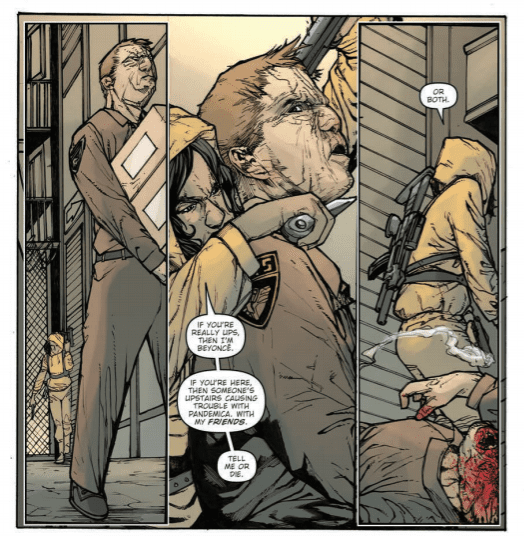
There are problems with the pacing of the narrative that effect the art production. Some of the pages feel as though Alex Sanchez wasn’t given enough space to allow the action to breath. Transitions between panels are cumbersome with more work required on the readers part than is necessary. On page two, for example, De moves to threaten a fake UPS guy, she issues her warning and then, instantly, he’s dead on the following panel. The insinuation is that he has imparted some information or resisted, however the panels play as if she issued the warning then instantly sliced open his throat. The moment is too fast and nothing is done in the artwork to slow it down.
Shawn Lee’s letters are a good guide for following the action. He creates a simple reading pattern, placing captions and speech balloons in an easy to follow string of letters. There is also a clear definition of De’s emotional states as she moves through the scenes. Lee places emphasis on her speech to express anger or fear, allowing the reader to have some insight into her reactions in certain scenes. Unfortunately, Lee’s lettering isn’t enough to fill the gaps lacking from other parts of the storytelling.
Jay Fotos gives the world of Pandemica a realistic atmosphere. His colors are muted and toned down. Across the page the scenery and characters blend together with a lot of murky colors giving the impression of a worn out environment. The notion of sickness, that is at the heart of the story, definitely is represented through Fotos’ work. Page after page, scene after scene, the most oppressive element of the comic is the coloring that wears the reader down.
Pandemica #5 Credit: IDW Publishing
Conclusion
There is a rushed feel to the narrative and the storytelling as a whole in the issue. Maberry has a number of plot threads to tie up and that compulsion not to leave anything hanging produces a by-the-book effect. This is ultimately neither satisfying nor rewarding.
Despite the ease of the narrative flow created by the lettering and the atmospheric nature of the coloring, this issue of Pandemica doesn’t draw the reader in. The gap of four months since the last issue doesn’t help as any attachment to the characters has dissipated. Without revisiting previous issues you will find yourself wondering what, if anything, there was to like about the cast.
The comic book industry has suffered in a number of different ways because of the pandemic that has shut down so much of the world. Pandemica as an idea should have stronger resonances with readers because, in part, the narrative deals with a lot of current real world issues. Unfortunately, the final issue is the weakest of the five and suffers more by having turned into an action/chase story instead of an investigation into the effects of a deadly disease.
As a conclusion it is rushed. Binge reading the series may induce a greater empathy for De and her struggles but for most this ending will come as a disappointment. The very end itself is nothing more than a ploy to make you think that something dramatic or exciting has happened when in actuality it’s a paint-by-numbers near apocalypse thriller. Lacking in emotional drive and any real spark of imagination, Pandemica feels outdated even before it is finished. Current circumstances will affect the way that you approach this material, and you will find it wanting, but even without the shut down of the world, Pandemica still does little to push it’s own narrative into new and exciting places.