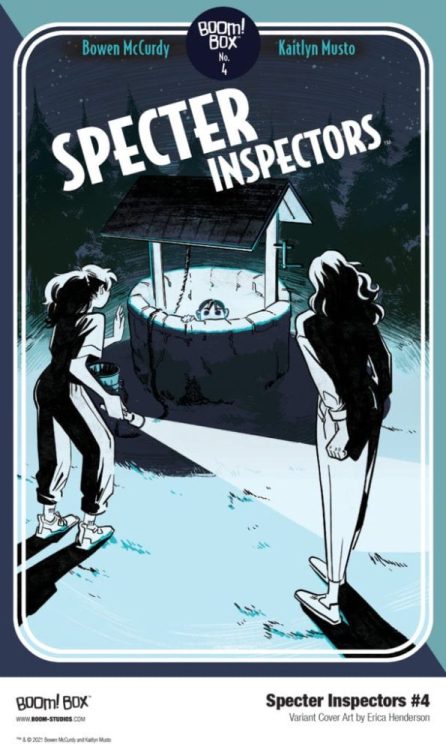
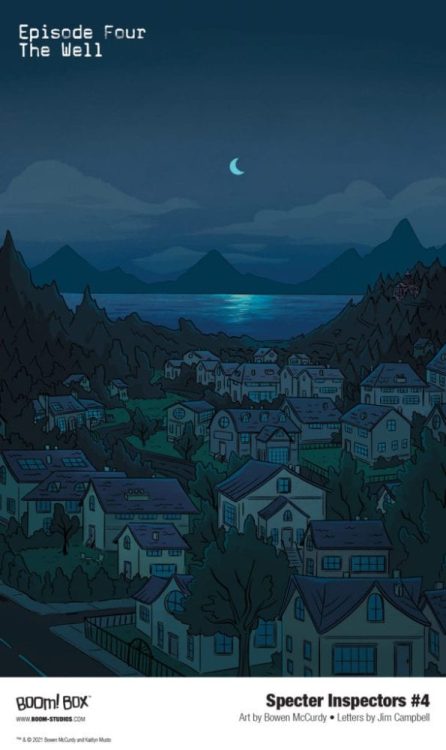
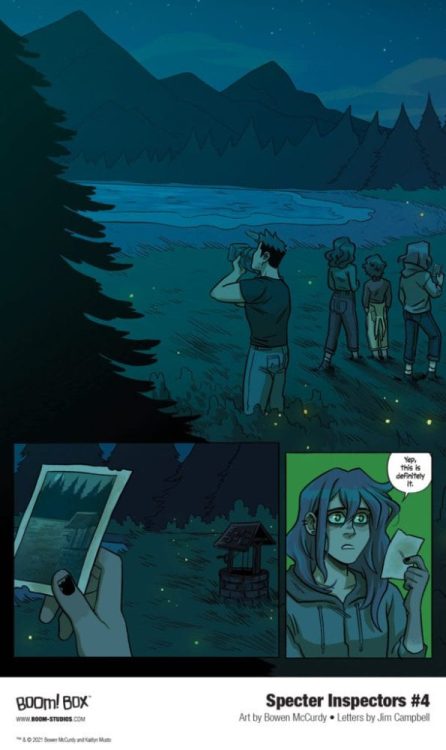
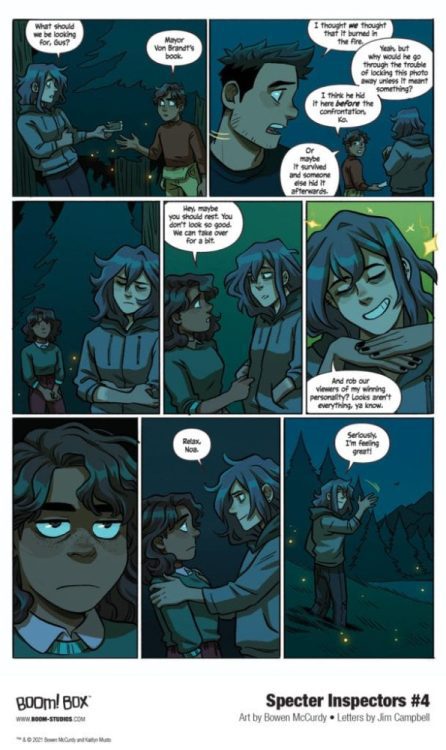
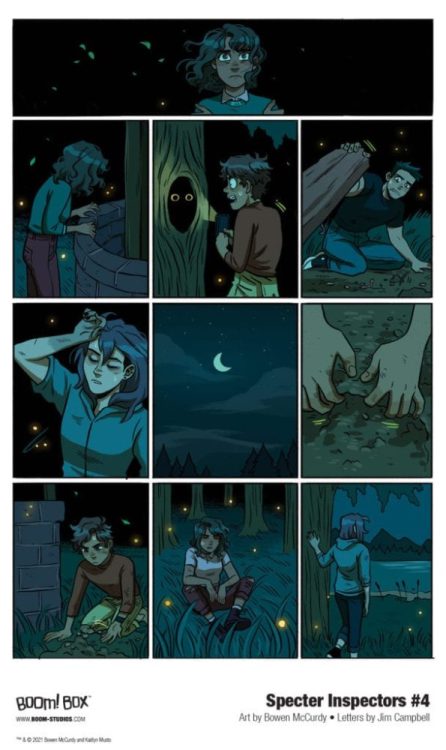
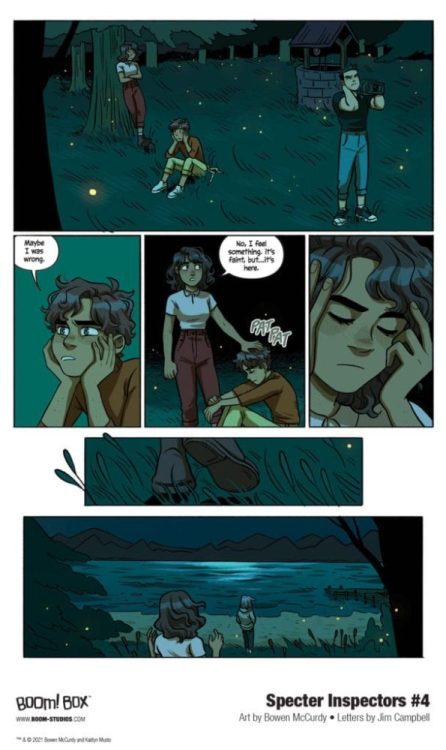
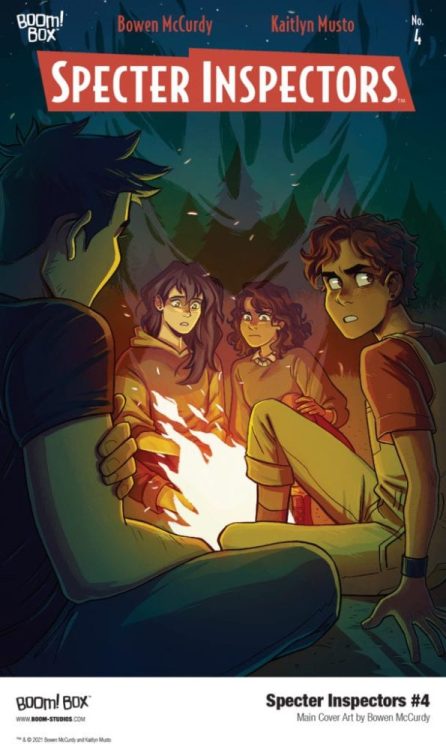
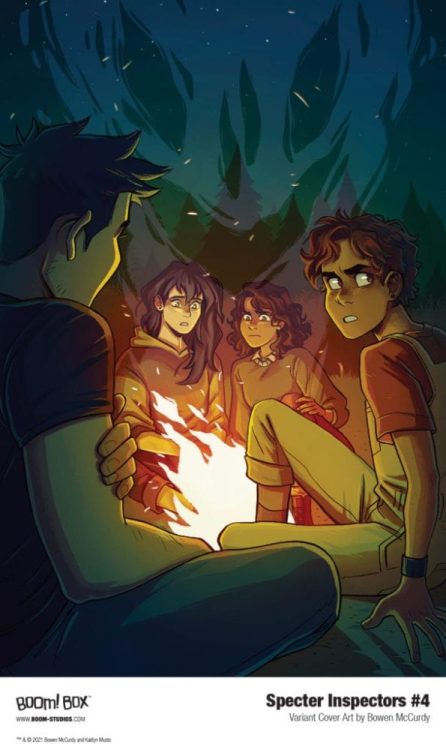
SPECTER INSPECTORS #4 from BOOM! Studios hits your local comic book store on May 26, but thanks to the publisher, Monkeys Fighting Robots has an exclusive four-page preview of the penultimate issue in the five-issue series. The book is created and written by Bowen McCurdy and rising star Kaitlyn Musto, with art by McCurdy and letters by Jim Campbell. McCurdy creates the cover art for SPECTER INSPECTORS #4, with a variant cover by Erica Henderson.
About the issue: The Spector Inspectors are on the trail of a demon and just met a ghost. The problem is, that’s the good news. It turns out Cape Grace has a whole lot of secrets, and none of those are good.
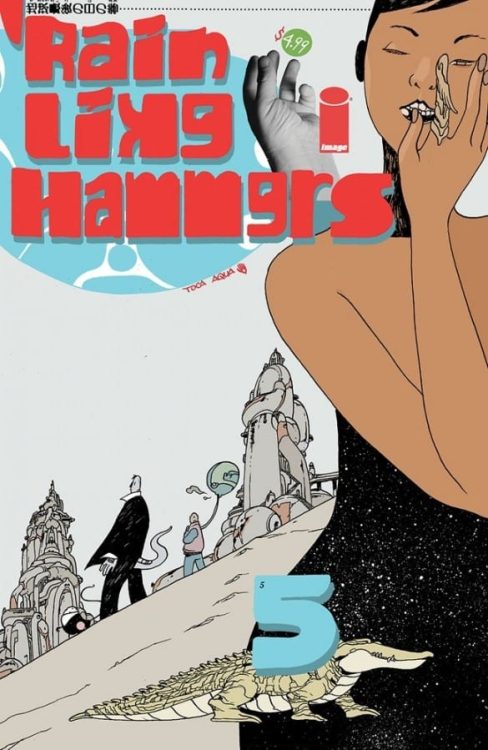
Brandon Graham, auteur of strange and wonderful comics, ends his latest satirical and insightful science fiction story with “Rain Like Hammers” #5. This final chapter of this outstanding comic is a vast and gorgeous gulf of bittersweet emotions, bringing this series to an end in a way that some will find a bit unusual (if you didn’t already think that of the whole series), but in truth feels like the only way it could have ended.
“On the desert world of Crown Majesty, space butler Brik Blok, Little Monster, and Eugene fend off desert marauders and witness a trial for the fate of known space. Who will be the winner? That’s for the ancient demon-king-judge to decide.”
Writing & Plot
All of the scattered and seemingly unrelated plot points in this series finally all meet together in “Rain Like Hammers” #5, an they do so in deeply satisfying fashion. We finally get back together with our friend Eugene from the first issue, and his inclusion fits perfectly alongside that of Brik Blok and the rest of the cast we’ve met since then. Brik’s isolation in his new body, and his alienation from his old allies, fits perfectly with the loneliness felt in Eugene’s story, and everything comes full circle. The massive and faraway-seeming machinations of those in power play in the background while deep introspection and decision making plays out in the heads of our two main protagonists, which makes for a quiet but beautifully well-deserved ending to this story. Graham’s sense of oddball humor mixed with poignant emotional struggles makes for yet another dynamic and effective script that endears itself to its readers in a multitude of ways. The overhead narration fits in this story as it describes the actions of characters in an unrecognizable setting, and grounds us in this story’s reality. This is a beautiful narrative that we’re given here, and while I obviously can’t talk about what happens, it wraps up superbly both emotionally and in terms of its plot, and it will be something that stays on my mind for some time to come.
Art Direction
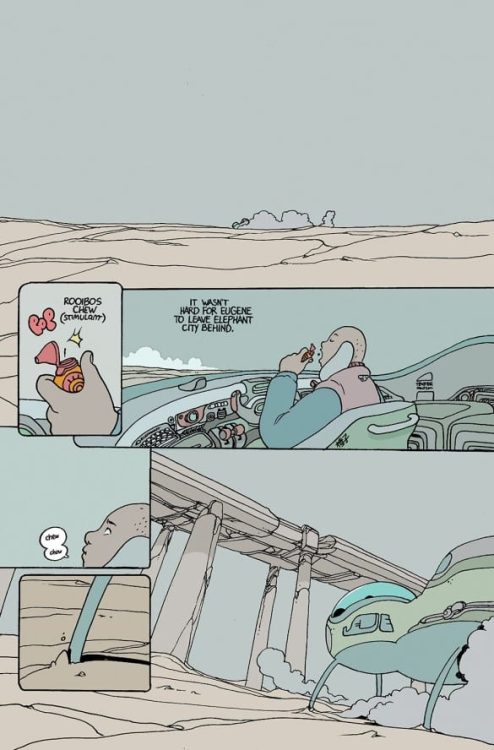
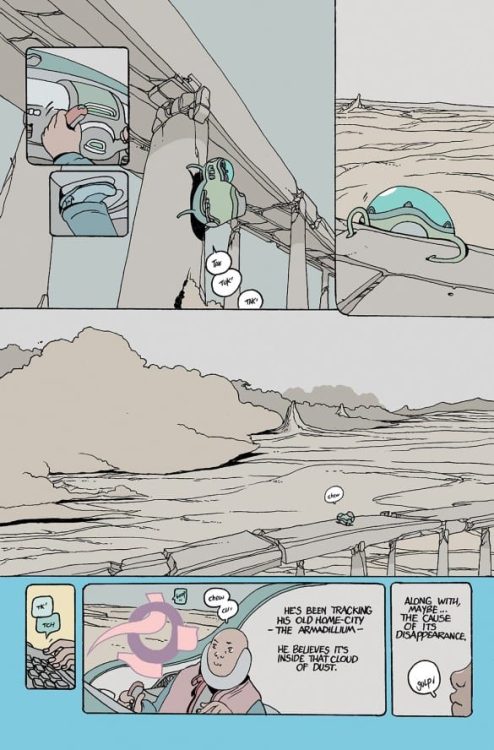
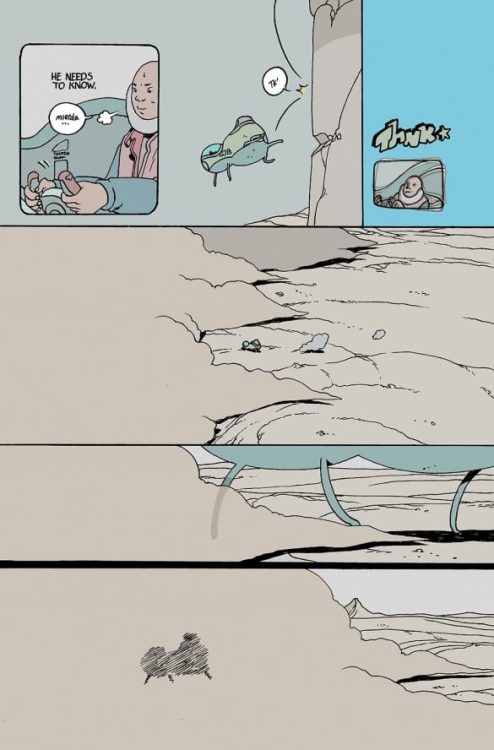
As unbelievable as this is to say, Brandon Graham really saved his best work on this series for last in “Rain Like Hammers” #5. The visual range this issue has as it closely examines our characters in their most intimate moments, as well as surveys the landscape as space-faring cities and interstellar gods make landfall, is utterly astounding. Every time I have been taken aback at Graham’s visuals in prior issues was multiplied tenfold in the pages of this final chapter. The tone evoked by the drawings of a barren planet being traveled by a lonely Eugene in a gumball machine-shaped land walker is both soothing and somehow disquieting. The sense of awe I felt once I realized the mountain range I was looking at was actually a massive god-king entity was something I rarely ever feel in any medium. In all honestly though, I believe that the best and most impressive moments were the ones where we got to see the characters up close as they traveled and reflected on their decisions. Brik Blok’s quiet contemplation regarding the how’s and why of his quest for the woman he loves is a genuinely painful moment, all conveyed in the careful and minimalistic detail in his expressions. There’s a melancholic solitude conveyed in every panel in this book, and in all honestly that’s probably how I’d describe the entire series. Of course all of the zany designs and clever little artistic witticisms are still here, but this finale feels so much quieter and more reflective than what came before. It’s a stellar ending that fades out in a bittersweet and beautiful manner.
“Rain Like Hammers” #5 is an emotionally satisfying, intelligent, and poignant end to this brilliant comic series. Brandon Graham reflects on the struggles and societal ills that have created both the larger isuues in the series, as well as the steps that brought both Eugene and Brik Blok to the point in their lives where they are now, and what they decide to do about it. With series-best art and hard-hitting reflective moments, this is an incredible comic that I cannot recommend enough. Be sure to finish this series off when this final issue hits shelves on 5-19!
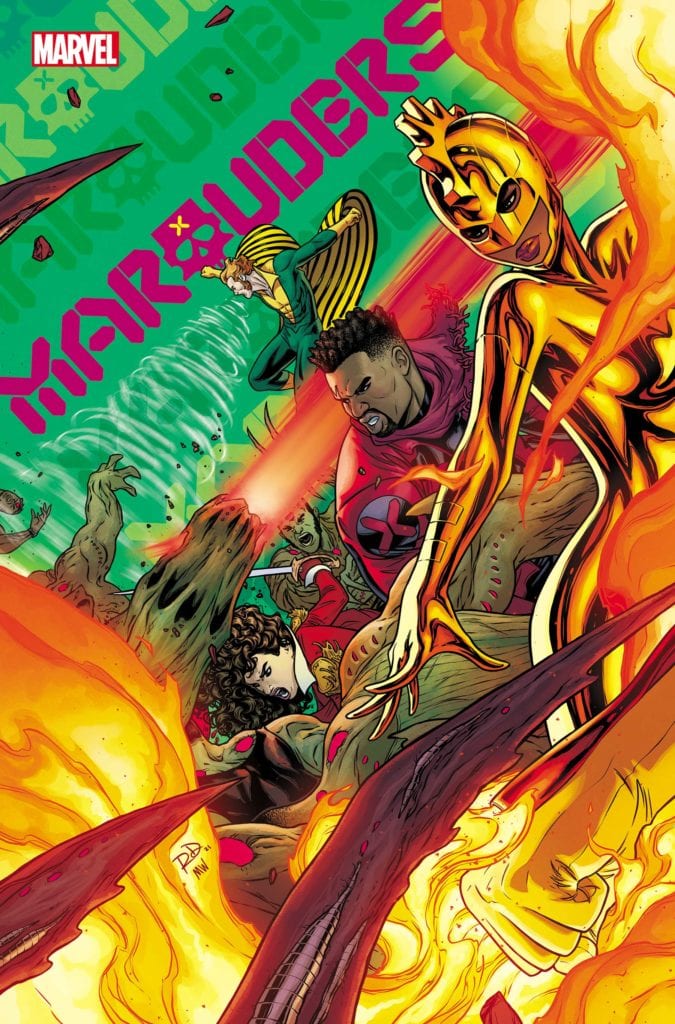
Check out the cover to MARAUDERS #23 by Russell Dauterman below. You will notice Banshee and Tempo, who are the guest stars of the issue.
MARAUDERS #23
GERRY DUGGAN (W)
ZE CARLOS (A)
Cover by RUSSELL DAUTERMAN
SCREAMING INTO BATTLE!
As new problems face mutantkind in Ireland, the Marauders bring in Banshee for some assistance. Meanwhile…one prominent member of Verendi has their mind changed.
MARAUDERS #23 hots your local comic book shop in August. Banshee (Sean Cassidy) was created by writer Roy Thomas and artist Werner Roth, the character first appeared in X-Men #28 (January 1967).
Oslo is an HBO Original film based on the Tony Award-winning play that’s coming soon from director Bartlett Sher about the back-channel negotiations during the 90s Oslo Peace Accords. Emmy Award-winning composer Jeff Russo creates the sonic soundscapes for the political narrative.
In the early 1990s, the Oslo Peace Accords aimed at achieving peace and fulfilling the right of self-determination for the Palestinian people. The film stars Ruth Wilson (Luther, His Dark Materials) as Mona Juul, a Norwegian foreign minister, and Andrew Scott (His Dark Materials, Fleabag) as Terje Rod-Larsen, a Norwegian sociologist and Mona’s husband. It follows a small but committed group of Israelis and Palestinians whose unlikely friendships helped bring about the talks.
PopAxiom spoke with Jeff about going from rock bands to creating scores for film and television shows like American Gothic, Fargo, and The Umbrella Academy.
Musical Journey
“I’ve been playing music since I was a kid,” Jeff’s journey begins. “It’s hard to put a time on the exact moment I realized I wanted to make music for my life.”
“I’d been writing songs and playing in rock bands all my life,” he continues. Those bands include Tonic and Low Stars. “It wasn’t until about 12 years ago that I wanted to make a go at writing music for film and TV.”
The Band
Adding composer to his skillset came about organically. “Two or three moments happened,” he explains, “In 2000, I was asked to be an actor in an indie movie playing a guitar player because that’s what I was.”
“The director asked me down to the composer’s studio to play guitar on the score and in the movie for some ADR,” he continues, “When I got to the studio, I got to talking to the composer where I found the whole idea of writing for movies and television exciting. That person went on to become one of my best friends, composer Ben Decker.”
Five or six years later, Jeff and the band decided to take a break. “I was handing out with a friend of my wife, Wendy Melvoin (of the duo Wendy & Lisa). She asked me to come down to the studio and hang out and just watch what they were doing. They were working on some TV shows at the time.”
“I watched what they did and basically went to work for them as an assistant,” he says. “Eventually, they asked me if I wanted to try writing a cue, so I did, and I got the bug.”
At first, things were slow, but Jeff juggled creating demos for various projects. “In 2009, I got my first job scoring a television show on my own [The Unusuals]. That’s sort of when everything changed.”
But the band’s not a thing of the past. Jeff’s new bug was composition, but his lifelong bug is creating music with a band. “I still do stuff with the band and some minor amounts of touring and shows. We continue to make music together, write songs, and make records.”
Making Music
Jeff’s credits include many science fiction projects such as Brave New World on PeacockTV, Netflix’s Altered Carbon, and Star Trek: Discovery and Picard on Paramount+. He says he’s “drawn to those types of projects. I enjoy the way those stories are told. I don’t know if science fiction is a deliberate choice. As I’ve done a good amount of sci-fi films and TV, producers and directors know my work in that realm.”
It is also what comes around that pique’s Jeff interest the most regardless of genre. “That’s really the way it goes.”
“There are the occasions,” he says, “where producers like a particular thing you’ve done, and they want that same sort of sound for a different genre altogether. I did a show called Channel Zero, and that was in the horror genre. I wouldn’t say I’ve done a lot of horror, but it was an interesting way to utilize the way I write.”
Jeff writes from a “melodic standpoint. That’s how I roll. This producer thought it would be an interesting idea to utilize that type of writing for the type of story.”
One producer for the Umbrella Academy called Jeff about Vanya’s violin solo in season one. “We talked about creating that piece and how important it was for the soundtrack. “Creating the violin solo for Vanya in that first season was pretty memorable.”
Into The Project
Every film and television project is a unique beast. There are familiar parts and repeated processes, but it’s rarely, if ever, the same from one project to the next. “Like, for real. I’ve done it all different ways,” Jeff says about his process for creating a score.
“The best way for me to get into a project is the script,” he says of his ideal situation. “As soon as I start reading the script and get into the story, music starts to occur to me.
I look for inspiration in the storytelling, the character development, the geographical locations, and how things are described. What piques my imagination?”
“When it happens and it all lines up well, the music starts to write itself early on.”
How much of the process produces unused material? “Not very much ends up on the cutting room floor in Fargo in terms of music. Even when things don’t get used where they were meant to, they get moved around and used elsewhere. Music is an important part of that storytelling, and I would say most stuff gets used.”
“I think I have a particular writing style,” he explains. “I’m not saying that stuff doesn’t get changed around. I’ve worked on movies where I’ve gotten to version twelve of a piece of music. That happens.”
Jeff thinks his tool includes the ability to “figure out how to repurpose things throughout a project so that not much gets wasted.”
Wrapping Up
“I’m inspired by everything,” he says with a lot of joy in his voice. “There isn’t one thing that I look to for inspiration. I grew up listening to Pink Floyd, The Beatles, and all these different types of music that inspired the kind of music that I wanted to make. I listen to film scores, classical music, then turn on some AC/DC and rock out with my kids.”
Jeff’s dream project only needs one qualification: “I always want to work on interesting narratives and a well-told story.”
“The filmmakers I tend to work with are the same, and they want to tell evocative stories,” he explains. “Would I love to work on the next Star Wars? Sure! Would I love to work on some interesting pieces by filmmakers that I love? Yes, of course!”
But he shares that it’s impossible to know what’s a dream project. “I’m currently working on finishing a movie that’s coming out in May. It’s been incredible working on this movie. I’d never worked with the director before, and he’d never made a movie before. So, there was no way I would know that this would be such an interesting thing.”
Russo’s worked on dozens of TV shows, wildly popular shows I’ve already mentioned, but you can add Lucifer, Bull, and Santa Clarita Diet to the mix. But there’s one that’s left a mark. “I would love to do something else along the lines of Legion. That was interesting to me, and I had so much fun creating the music because I had this very big sandbox to play in. Those are the best kinds of projects where I have a wide playpen so-to-speak and can utilize many different tools to get where I wanted to go.”
“I tend to work on a lot of things I can’t talk about,” he says as we get to talking about what’s coming next. “I’m starting to work on season four of Star Trek: Discovery and looking at season two of Picard. I’m working on a big video game. I’ve been working with an artist named Zoe Keating, with who I’ve collaborated in the past. I’m a very collaborative composer and enjoy that very much.”
Oslo releases in May. Is it on your watch list?
Thanks to Jeff Russo and Rhapsody PR
for making this interview possible.
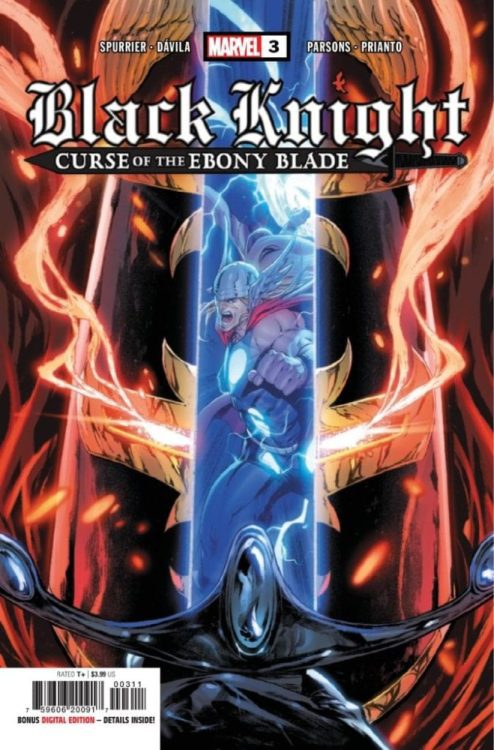
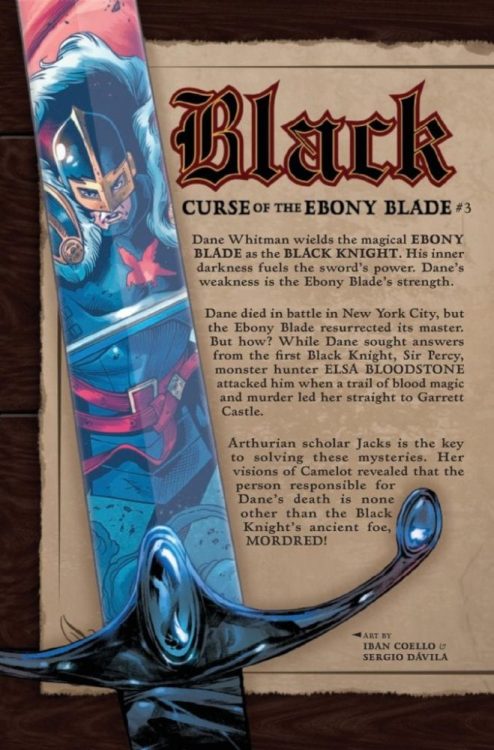
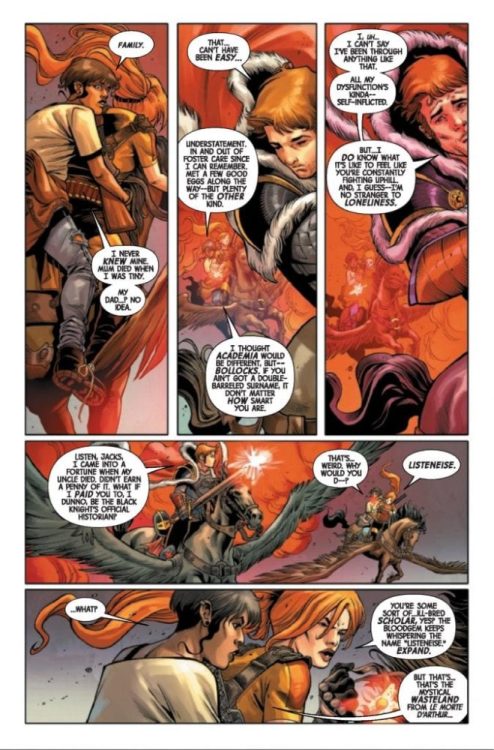
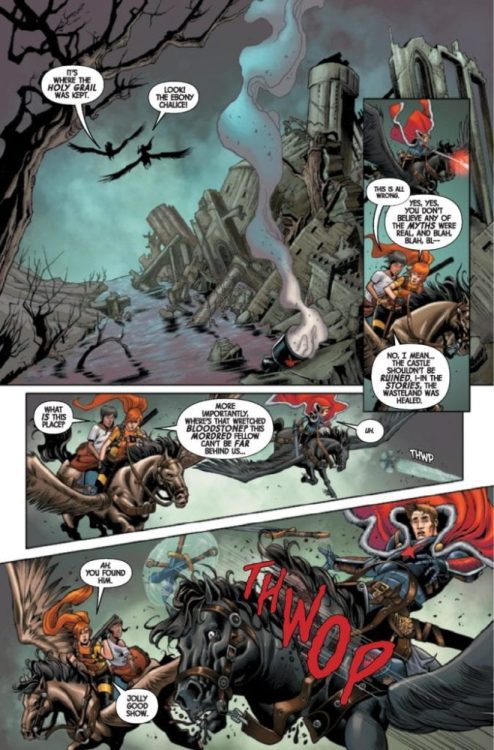
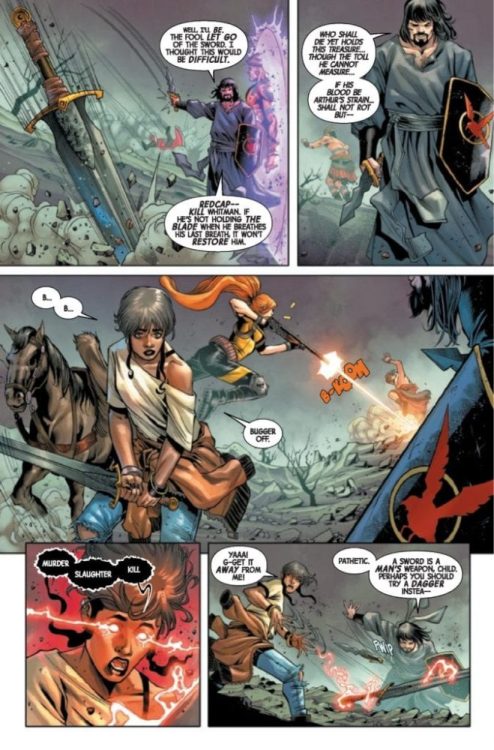
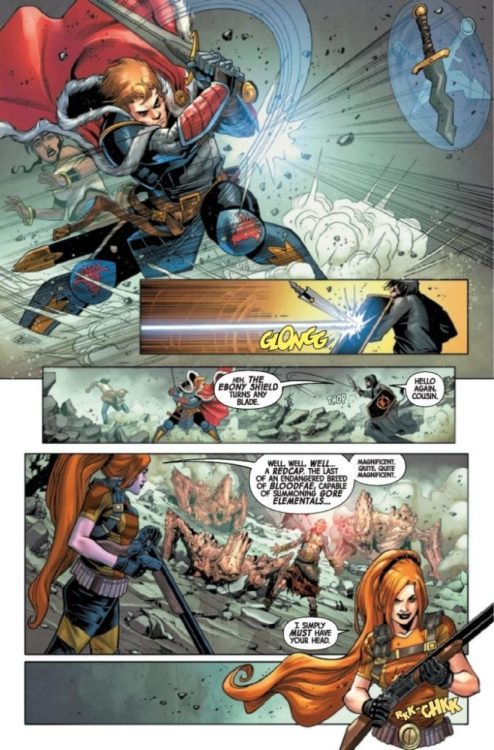
BLACK KNIGHT CURSE EBONY BLADE #3 (OF 5) hits your local comic book shop next week, but thanks to Marvel Comics, Monkeys Fighting Robots has an exclusive four-page preview for our readers!
The book is written by Simon Spurrier, with art by Sergio Davila, Sean Parsons drops the ink, Arif Prianto and Chris Sotomayor handle the colors, and you will read Cory Petit’s letter work. Iban Coello and Jesus Aburtov are the cover artists.
About BLACK KNIGHT CURSE EBONY BLADE #3 (OF 5): THE MIGHTY THOR VS. THE BLACK KNIGHT! Dane Whitman wields the magical Ebony Blade as the BLACK KNIGHT! He needs ELSA BLOODSTONE’s help if he’s going to stop an enemy’s murderous hunt for the EBONY ARTIFACTS. But the EBONY CHALICE lies beyond this world in a wasteland of dangerous fantasies and predatory magic. Their battle in the present will reveal dangerous secrets of the past as THE MIGHTY THOR duels the first Black Knight at Camelot! The Chalice’s power, like the Ebony Blade’s, comes at a terrible cost…is Dane willing to pay it?!
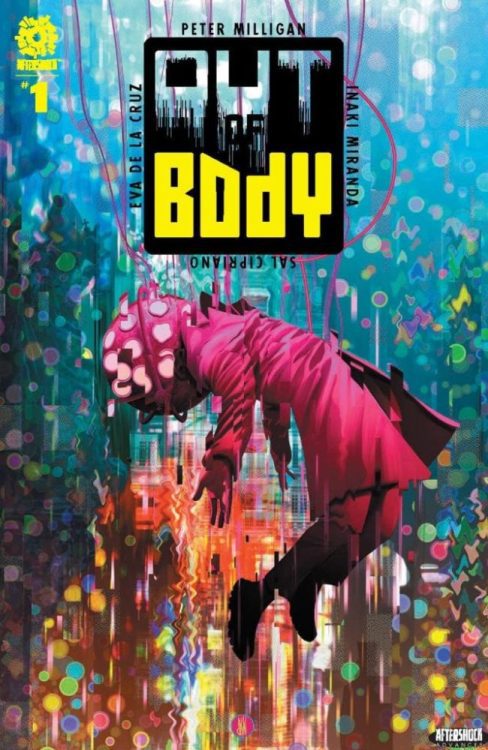
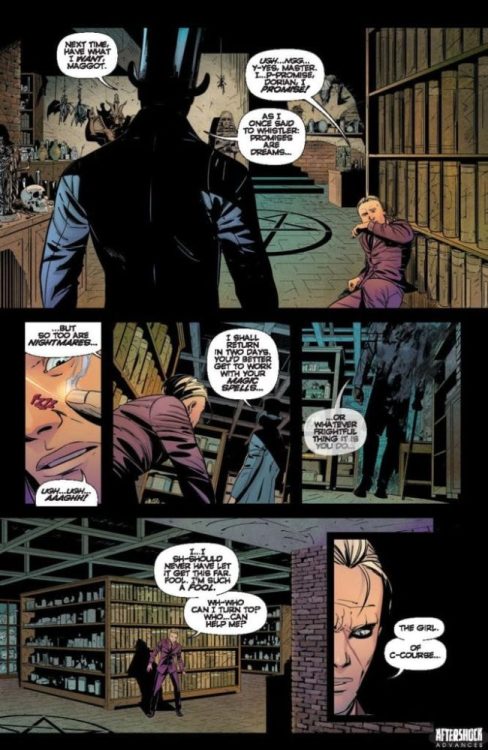
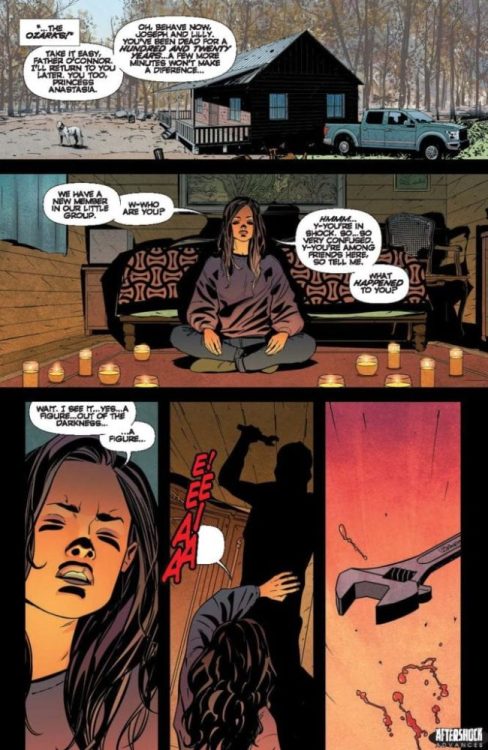
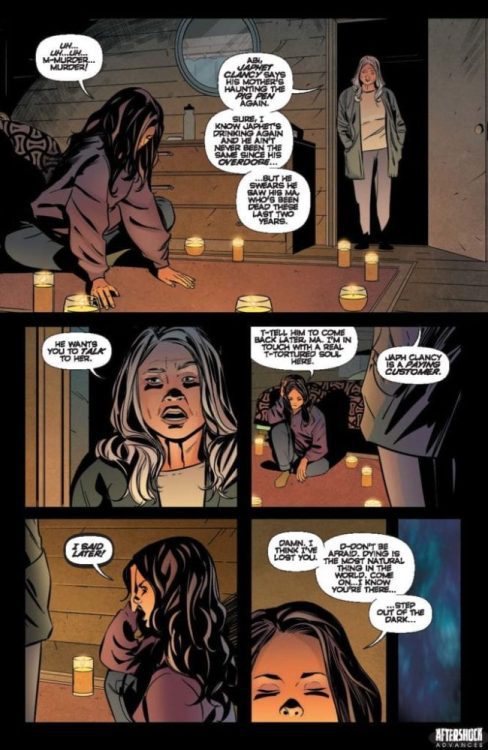
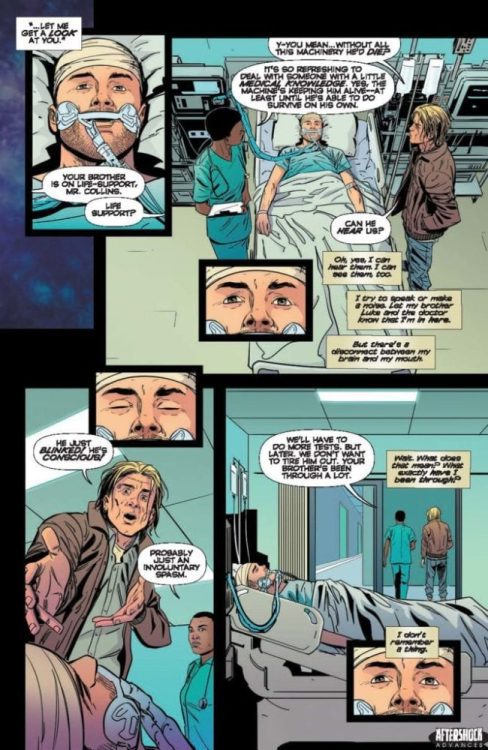
Out of Body #1 hits your local comic book store on June 2, but thanks to AfterShock Comics, Monkeys Fighting Robots has an exclusive four-page preview for our readers.
The book is written by Peter Milligan, with art by Inaki Miranda, Eva De La Cruz drops the color, you will read Sal Cipriano’s letter work, and Inaki Miranda created the cover, with an incentive cover by Charlie Adlard.
About Out of Body #1: When Dan Collins wakes to finds his life hanging by a thread, he must use his astral projection to discover who tried to kill him. Who is the beautiful mystic who tries to help him? Why does August Fryne want Dan’s soul – and what does it have to do with a demon who seems to be Dorian Gray? A weird, occult detective thriller about life, death – and whatever lies in between.
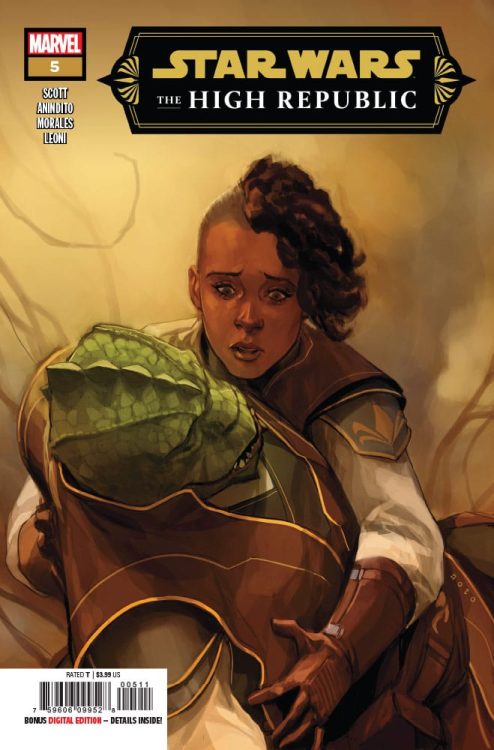
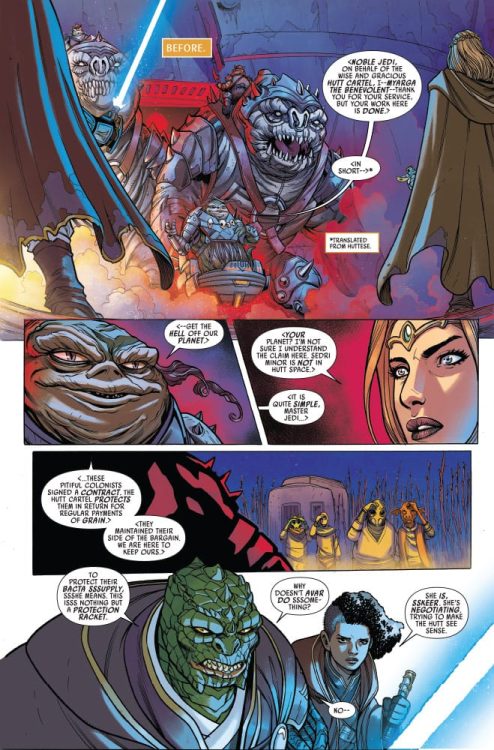
From writer Cavan Scott and artist Ario Anindito, with inks by Mark Morales, colors from Annalisa Leoni, and letter by Ariana Maher, “Star Wars: The High Republic” #5 is an entertaining and fast paced chapter in this stellar comic series, although it is slightly bogged down by a bit of an absurd resolution in the book’s final moments. Supported by ever-excellent visual work, this is yet another solid issue in this uncharted era of the Star Wars universe.
“ATTACK OF THE HUTTS! The HIGH REPUBLIC JEDI clash with HUTT forces. GAMORREANS! NIKTO! BATTLE RANCORS! STARLIGHT BEACON over-run by a creeping alien horror! Can VERNESTRA RWOH and her Padawan IMRI CANTAROS find a way to save Starlight’s infected masses? Plus, KEEVE TRENNIS learns the terrible secret MASTER SSKEER has been carrying for so long. Can she ever trust him again?”
Writing & Plot
Cavan Scott has always written fun and tightly paced scripts for this series, and now with “The High Republic” #5 we get more of the same , but with some caveats. This comic is a ride to be sure, full of intense action and high stakes as Jedi all over the galaxy fight off the hordes of ancient dark side plants. There is plenty to grab onto as both a seasoned Star Wars fan and a relative newcomer; watching the Jedi deal with a Hutt warlord and their mass of armed goons, including a freakin’ battle Rancor, is top-notch fun stuff. The dialogue and plot progression are (mostly) solid, retaining a sense of both lighthearted adventure and emotional depth that truly feels like Star Wars. Unfortunately, this comic suffers from a rather strange and sudden turn in the later pages. This deus ex machina-esque moment is delivered in a large blurb of expository dialogue that, on its own, really wasn’t too bad to get through. However, when delivering this sort of game changing bomb shell in this sort of manner, it tends to get lost in the shuffle; especially when it’s a twist that doesn’t have much buildup. It’s an unfortunate distraction that hurts the book’s pacing, but it is bolstered by how fun this issue is overall.
Art Direction
Thanks to the work of Ario Anindito’s pencils and Mark Morales’s inks, “Star Wars : The High Republic” #5 is yet another chapter in this series with outstanding visual work. The detail in the human character and alien designs is still staggering, with animations and expressions feeling distinct and lifelike. Alien beings, from new faces to old classics like Hutts and Trandoshans, are all drawn with care and distinction; by this I mean they didn’t just draw a Hutt and decide to make it look like Jabba, but actually craft a different set of features for this specific character. The environmental design is still top notch, with both the farm-filled planet Keeve Trennis fights on and the Starlight Beacon station having solid design work put into them. Panel and page layouts flow smoothly, maintaining the story’s fast pace with a natural feel to the reading experience. The colors from Annalisa Leoni are vivid and tonally rich, with every space being filled by varying shades. Light reflections and atmospheric hues add depth to every panel, creating a comic with the look of a high production set piece. The letters from Ariana Maher use a soft, easy to follow font that stays dynamic for changing character tones, and utilizes great sound effect lettering that resonates with the audience. This is, unsurprisingly, a great looking Star Wars comic.
“Star Wars: The High Republic” #5 is a sharply paced and action-packed comic that falters due to a strange choice in conflict resolution, but is still entertaining enough to be worth the read. Cavan Scott’s script is still mostly full of fun and smart choices, which make the exposition-laden and very out of left field approach to the issue’s climax a major anomaly. The visuals from Ario Anindito, Mark Morales, and Annalisa Leoni are stellar as always, delivering a properly epic Star Wars experience. Be sure to pick up this latest issue when it hits shelves on 5-12!
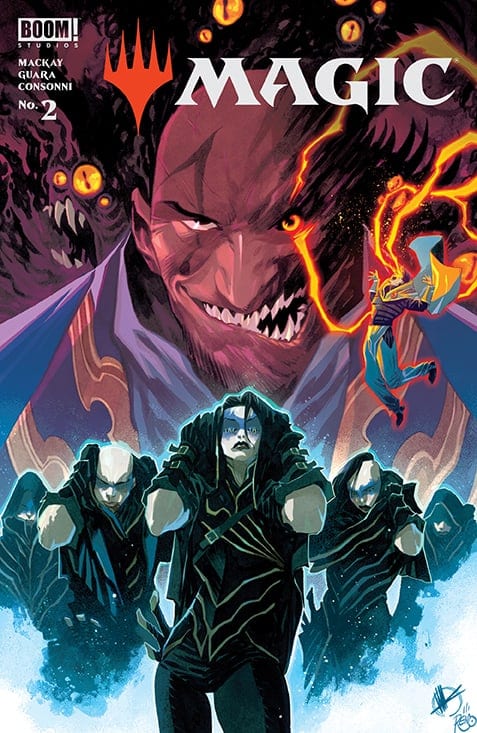
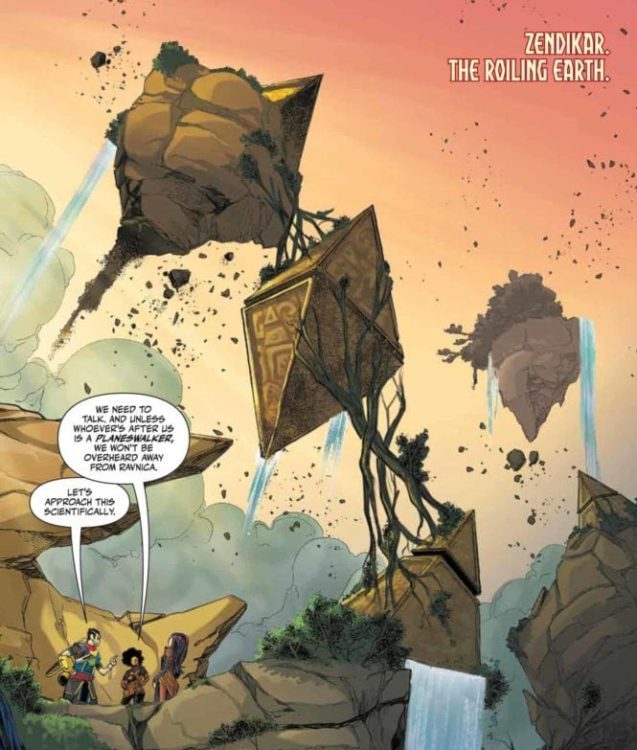
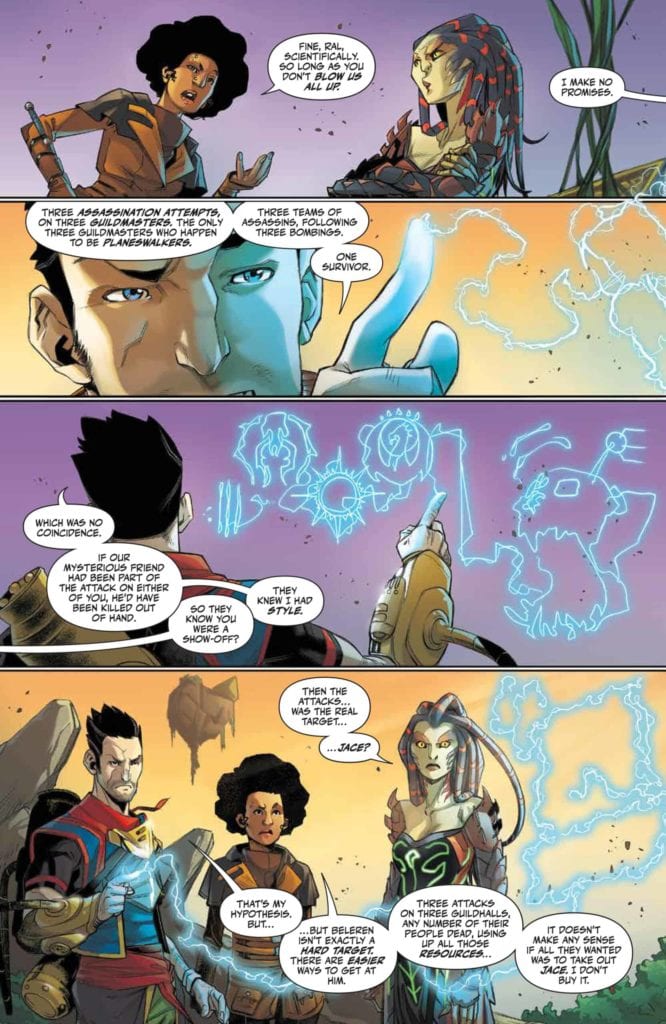
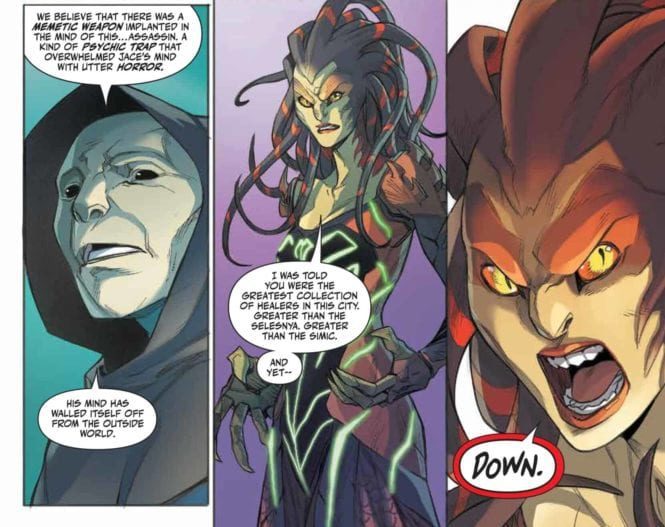
MAGIC #2 hits comic book stores on Wednesday, May 12th, bringing readers along on the mystery of a series of Zendikar assassination attempts. Readers will remember the brutal psychic damage inflicted upon Guildmaster Jace Beleren last issue, provoking further investigation into the assassins plans. Now the three planeswalker guildmasters must stay alive long enough to find out who’s targeting them.
Story
Coming of off three assassination attempts has left our three heroes on high alert. Kaya, Vraska and Ral Zarek spend some time discussing what to do next.
Despite such disparate personalities, readers will find these unlikely teammates find a way to combine their investigative skills in unique ways. Their sibling-esque rivalries add just the right amount of flair to their interactions. Such fleshed out personalities bring the world of Zendikar to life.
Jed MacKay’s narrative is engaging and thrilling. Whether you’re a longtime fan of the lore or a newbie, this script draws you into its key elements. The suspense grows at a reasonable pace, leading to a direct attack on our protagonists. The thrills never end in this exciting story!
Artwork
Ig Guara’s penciling and ink work presents readers with highly expressive characters, highlighting their unique personalities. Arianna Consonni’s coloring brings these individuals to life via brilliant displays of yellows, blues, reds, and greens, emphasizing the multifaceted guilds that find their home in Zendikar. In addition, Ed Dukeshire’s lettering helps us feel the energy from each character via varying font sizes and styles.
Conclusion
MAGIC #2 is a brilliant, drama-filled tale that hooks readers from the get-go. The amazing displays of sorcery are only matched by the depth of the mysteries.
Who do you think is behind the assassination attempts? Let us know in the comments below!
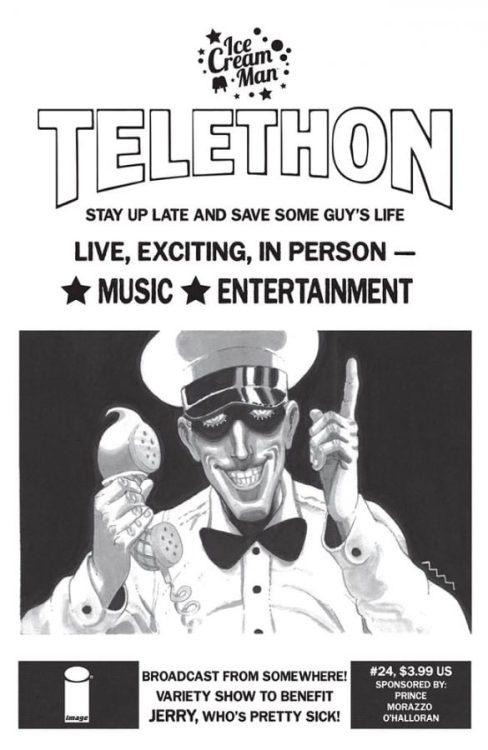
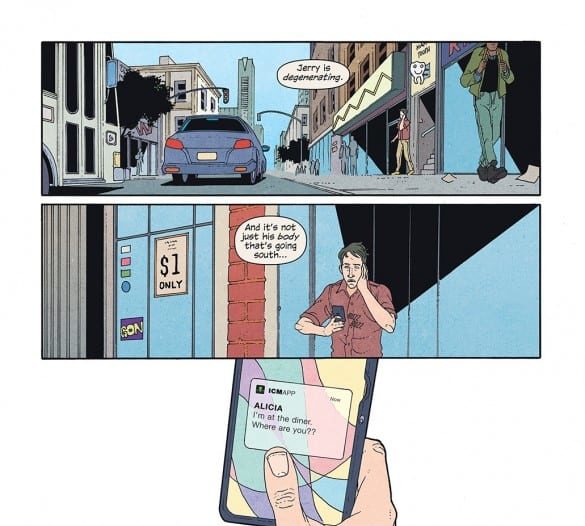
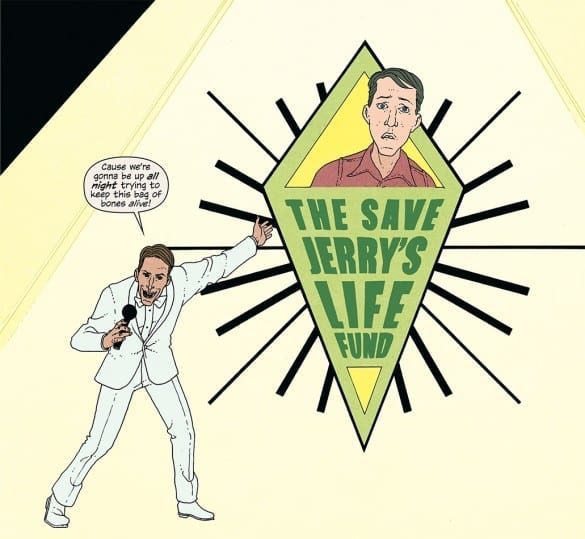
ICE CREAM MAN #24 hits stores on Wednesday, May 12th, bringing with it fresh horrors for fans of the series. Readers are introduced to Jerry, who happens to be locked in an never-ending cycle of heartache. What’s more, a mysterious organization seems to be affecting the outcome these events. Whether it’s for good or ill remains to be seen, but one thing is certain: many readers will relate to in this man who just can’t seem to keep himself from falling apart.
Story
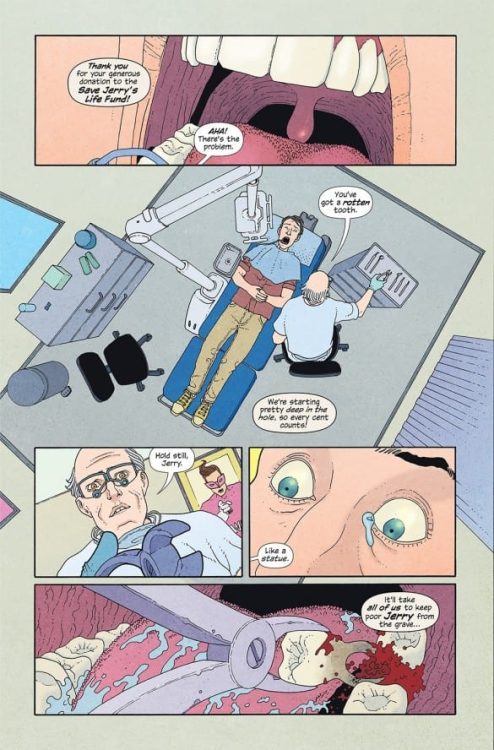
This horrific tale’s unwilling participant seems like your average Joe. Jerry is doing the best he can to stay positive despite poor familial and work circumstances, but fate (literally) doesn’t seem to be going his way. In fact, the “telethon” begging callers to donate and prevent disaster could be interpreted as the ultimate slap in the face from destiny.
Writer W. Maxwell Prince’s use of this telethon medium—complete with a lack of calls—to connect with those who feel as if our lives are crumbling. Employing this metaphor, it captures the feeling that everything would fall apart even if our lives were run by such a program.
If readers look closely at the delivery and style of speech, they’ll undoubtedly notice that the announcer is actually the Ice Cream Man. What this nefarious individual has planned for the unfortunate Jerry remains to be seen, but readers can bet it’s something dreadful.
Artwork
Martín Morazzo’s penciling and ink work, Chris O’Halloran’s coloring, and Good Old Neon’s lettering worked extremely well together in this issue. The semi-realistic depictions of Jerry and the other characters is unsettling, drawing readers into the story’s theme. The contrast between the duller colors of Jerry’s everyday life with the more vibrant hues featured in the Telethon further gives us the feeling something is off in this scenario. We also found that the use of bolded letters in the word balloons helped us follow the most important pieces of the story.
Conclusion
The traditional one-shot storytelling in this series stands above others in the arena, and ICE CREAM MAN #24’s story is no exception. This sobering tale will leave the most confident of us questioning our own experiences.
Do you think Jerry has a shot at surviving? Let us know in the comments below!