The deadly secret behind the newly risen Joker is revealed, and it’s about to shake up Terry McGinnis’ world! Terminal has been using the existence of the Clown Prince of Crime to set himself up as the leader of the anarchic gang of Jokerz, but this new revelation may even put his own criminal empire in jeopardy. This is a turning-point chapter in the life of the Batman of the future.
Writing
The revelation of the previous issue doesn’t come into play much here. Instead, this issue serves to debut the new batsuit Terry will be wearing during this series. It has a distinct look to it and some wonderful toys for him to beat bad guys with. Nothing like a good fight scene with Batman gadgets to help the reader remember what makes the character so entertaining to follow.
Unfortunately, the story is moving very slowly with little advancement. Terry needs to make up for the lost time he spent temporary dead before coming back to life thanks to the events of Rebirth. Writer Dan Jurgens has properly set the stage and caught the audience up with what’s happening in the future world. This storyline just needs to end so events can get moving from here on.
Artwork
Pete Woods takes over on art and color in this issue. He keeps the same tone as previous issues which helps to capture the gritty cyberpunk future but thanks to some great effect work helps to make the issue stand out a bit more. Also the abilities and features he shows with the new batsuit are very impressive.
Conclusion
Lots of good build-up here, but there has been enough of an introduction for this comic. It’s time to see what Terry can do as a Batman without Bruce Wayne constantly backing him up. He’s had a long ride as a character and he deserves to finally spread his wings fly.
If there ever were a place that gave random genre series a chance it’s SyFy. The now 24-year-old network regularly presents hungry viewers with new sci-fi, supernatural, and fantasy entertainment to feast upon. Over the years, SyFy shows like Battlestar Galactica and Z Nation have gone on to great pop culture success. Often, though, the magic doesn’t come together and shows like Flash Gordon or Aftermath fizzle fast. Between the Expanse and Dark Matter, SyFy is locked in with solid science fiction. So, to balance things out they added The Magicians last year. Season two of the magic/fantasy story approaches. But if you’re not caught up, you’re probably wondering if The Magicians is mesmerizing or all smoke and mirrors?
Based on novels by Lev Grossman, the easiest way for me to describe The Magicians is like this: It’s Harry Potter: The College Years. Take Hogwarts, make it look like Ivy League, call it Brakebills and that’s the magic school in this universe. Take Hermione and give her a tragic loss in her past that she’s trying to correct. Ron is of Middle Eastern descent and uses drugs to calm voices in his head. And Quentin Coldwater (“Harry”) is the budding hero who is possibly bi-polar and a man-child.
The basics of The Magicians is this: Quentin and his friend Julia grow up in love with a storybook called Fillory. Fillory is basically a wink and nod to C.S. Lewis, including furniture which serves as portals to an alternate world. Magic is said to come from Fillory and while Julia grew out of such childhood fantasies, Quentin held on, learned “normal” magic tricks, and was diagnosed with mood disorders. One day, lo and behold, Quentin and Julia step from our world into the world of Brakebills and a series of events, destined to happen, begins to unfold.
It’s easy to compare The Magicians to Harry Potter. However, the two are little alike. There are no wands in The Magicians, for instance. Instead, most spells are cast a little slower and often with wild hand gestures. I like to picture the actors behind the scenes having to learn all the intricate movements. But the way magic is created in The Magicians is a unique aspect of the show that I find fun and exciting.
On the negative side of things, season one plods along at times and falls short on the world-building front. Intricate hand gestures and some expository lore aside, sometimes things feel matter-of-fact or glossed over. Parts of The Magicians feels rushed, other parts feel a little too by-the-numbers. And if I said any single negative thing about the show it would be: uneven.
I’m sure by now you realize this isn’t a glowing review of The Magicians, but it’s not a bleak one either. The second season of The Magicians begins tonight at 9 P.M. on SyFy. So, if you enjoy genre shows of this nature, binge watching season one (available on Netflix) is worth it. While The Magicians has it’s flaws, it ends strong, opening the door for season two to expand on the show’s raunchy style of magic.
tl;dr: The Magicians is the love-child of Harry Potter and Requiem For A Dream and it’s fun to watch.
During Oscar season, it’s always fun (at least for me) to go back and look through history, at Best Picture Oscar winners of year’s gone by. Some of these movies age like fine wine, others curdle and wilt from our collective consciousness over time.
So here’s a little reindeer game for you: ranking the Best Picture Oscar winners in different decades. Let’s start with what is probably the most difficult of all the decades, the 1970s. Difficult because this was the turning point in American cinema. Difficult because all of these films, deserving of the Best Picture statue or not, are truly wonderful and important – at least, in the sense that movies can be important. Here goes nothing…
All the cool kids like to say The Godfather Part II is better than the original. And this time, the hip thing to do is probably the correct thing to do. The original is a game changer, but its sequel manages to expand an already fascinating epic examination of Italian-American criminals. The dueling storylines between Michael Corleone and his painful downfall, and the rise of his young father Vito (Robert De Niro) in the early days of the 20th century, are on equal footing as far as dramatic thrust is concerned. There is not a false note here.
Stranger Things, the surprise hit summer series, has begun production for its second season. The first season became something of a cultural phenomenon, and its likely the second season will receive similar acclaim. There may not be much in the way of summary details, or what monsters will be attacking. However, we now know a little more about our returning characters, thanks to one of the show’s stars.
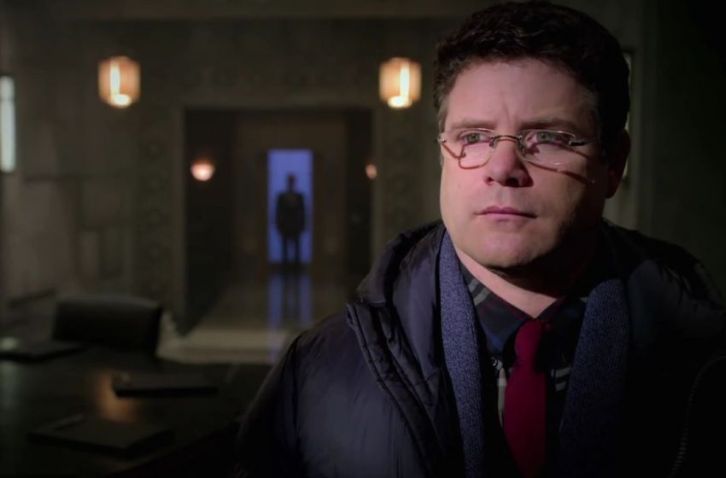
David Harbour, who plays Chief Hopper on Stranger Things, attended the Fan2Sea cruise-set comic-con. Harbour was one of many stars who attended, including Gaten Matarazzo, Shannon Purser, and Caleb McLaughlin. During the panel, several new cast members were confirmed for season two, including Sean Astin. Harbour spoke specifically on Astin’s role, saying that Astin would play the new boyfriend to Winona Ryder’s character “much to the chagrin to the Chief of Police.” Harbour doesn’t give any information of how Astin will fit into the Stranger Things world beyond this relationship with Joyce, but it’s still interesting information.
Sean Astin, THE STRAIN
As far as where the show will go, Harbour also talked about where the second season picks up. “It’s a year later in the story, so there are several things that happened last year — like Will has come back — there are certain people in the town that know what happened, and then certain people that don’t know what happened,” said Harbour. Stranger Things’ new season won’t directly pick up from Season One, but will still be closely related. The transition will probably be like transition between the two seasons of Young Justice, the DC cartoon.
Harbour also confirmed the unfortunate fate of Barb. Barb was a flagship Stranger Things character for many, who demanded she return after being killed by the Demogorgon. Harbour said that Barb would not be coming back, but was not forgotten. Apparently, Nancy (Natalia Dyer) feels the same way as many fans, angry that people have forgotten about her friend. But hey, if nothing else, that means Shannon Purser is free to play Squirrel Girl!
If you haven’t already, be sure to binge the eight-episode season now on Netflix!
There’s never a point in Gold, the latest from Matthew McConaughey and director Stephen Gaghan (Traffic), where you don’t know how things are going to turn out. From the early going, the film sets itself up as an archetypal “rise and fall” cautionary tale.
That’s not to say it’s not well constructed or executed. In fact, Gold is an entertaining film, with a compelling, committed performance from McConaughey at its heart.
But the familiarity of the story arc takes something away from the film’s lasting dramatic impact. It’s just a lesson we’ve been taught before in more or less this same way.
Given that, audiences are more likely to be talking about McConaughey’s weight gain for the role rather than the film’s message once the credits roll.
What’s it about?
Based loosely on true events, Gold tells the story of Kenny Wells, a third-generation mining prospector who lives by the same desire to strike it big that drove his father and grandfather.
In 1988, Wells’ fortunes have reached an all-time low. He’s operating the family business out of a bar, his once-reliable financial backers now hesitant to underwrite more land buys for scant returns on investment.
All isn’t terrible for Wells, however. His staff remains fiercely loyal, and his loving, patient girlfriend Kay (Bryce Dallas Howard) remains steadfast in her support.
With the last of his finances, Wells turns to maverick geologist Mike Acosta (Edgar Ramirez), who built his reputation on a massive copper find in Indonesia years before and then watched that reputation crumble as his subsequent ventures failed to yield similar results.
Both at the ends of their respective ropes, the two partner in order to investigate one last Indonesian site Acosta believes will yield a “mother lode.” With local workers toiling beside them in the mud, the two work for months through rains, mudslides, and malaria, once again with little to show for it.
Then one morning, everything changes. Analysis of core samples the miners pulled from deep in the ground reveal an epic gold find, the kind potentially worth billions.
Validated at last, Wells returns to Reno a hero. Once the news of his find breaks, he finds himself courted by all manner of bankers, politicians, and speculators all eager to cash in.
At last, Kenny Wells finds himself winning, and he revels in his triumph. He knew it was out there, and he was right.
Or was he?
McConaughey larger than life (literally)
At the heart of Gold lies the charismatic, complicated character Kenny Wells. What makes him so interesting is that it’s not greed that drives him, as it might others like him.
Pride and belief drive Kenny Wells. Pride in the accomplishments of his fathers, belief in his own instincts and his eventual place among the world’s giants of success — these are what keep the fires going within Wells, and more still. He’s also aware of others’ belief in him, and he strives to be worthy of that belief, to reward their loyalty and faith.
What results is a man who lives every day as large as his expectations for success. Some see him as magnanimous and inspiring in his seemingly boundless energy and belief. Others just dismiss him as crazy and small-time, a hopeless dreamer. What they might agree on is that the man is genuine.
To bring Kenny Wells to life, Matthew McConaughey reportedly gained 40 pounds on a diet of cheeseburgers, beer and milkshakes. Makeup effects thin his hairline, and wardrobe emphasizes the gut of a man who eats, drinks, and loves large and in the moment.
Arguably, those physical trappings may prove too distracting for some audiences. But combined with McConaughey’s innate charm and almost maniac energy, they help yield a very convincing character study, yet another for the talented actor’s resumé.
Stop me if you’ve heard this one …
But for all the strength of McConaughey’s work here, Gold still feels too familiar, too “we’ve heard this story before.”
It’s a shame, because this isn’t the case of a solitary strong performance trapped within a bad film. Edgar Ramirez and Bryce Dallas Howard each turn in solid performances which also complement McConaughey’s efforts. Supporting cast members Craig T. Nelson, Stacy Keach, and Bruce Greenwood all provide memorable turns, as well.
Behind the camera, Stephen Gaghan and cinematographer Robert Elswit (There Will Be Blood) deliver visuals that make the scientific complexities of modern mining palatable, while realistically immersing audiences in jungles both natural and urban. It’s all put together with thought and care to bring the best out of the performers, and at times, it works.
But the script is just too conventional. The story’s plot beats are just a little too predictable for Gold to transcend its genre trappings and result in something great. It also tends to drag in its final act, with each successive scene feeling like it will be the last, only to yield to another narrative beat of questionable importance.
Worth seeing?
For fans of based-on-true-events dramas, Gold is a solid entertainment choice. In fact, it may be worth seeing for McConaughey’s work alone.
But it’s not necessarily a film that needs to be seen in theaters. It may prove just as compelling as a rental or digital download down the road. There are no stunning visual effects or sound editing that require the movie theater experience here.
Just don’t expect anything truly revolutionary, either in the material or the film’s approach to it.
Gold
Starring Matthew McConaughey, Edgar Ramirez, and Bryce Dallas Howard. Directed by Stephen Gaghan.
Running Time: 161 minutes
Rated R for language throughout and some sexuality/nudity.
The Micronauts have encountered many strange allies and enemies since they became stranded on Earth, a planet of giants, but perhaps none have been as unexpected as those awaiting them here. As we explore the origins of the various Micronauts, the team encounters a future version of… themselves? Are they friend or foe?
Writing
Annuals usually help to tell side stories or to explore deeper into the aspects of different characters. This issues does this, but also tries to expand on the main plot of the comic series. It’s a bad annual by not sticking to what makes an annual, but a good issue overall. I guess it can’t be faulted too much for trying to do its own thing. Unfortunately, it feels like too much to take in all at once and requires a re-read to appreciate everything introduced or touched on.
Writer Cullen Bunn should still be given credit for writing a story which is so deep it requires a revisit to appreciate. Also the annual is filled with some very impressive fight scenes as the team fights off against the mysterious future selves.
Artwork
Marcelo Ferreira does a lot of good work thought most of the tissue but there are a lot of odd facial expressions which becomes noticeable. The most glaring of these is Oz being drawn with his eyes closed as he keeps screaming. This happens in more than one panel which is why its so distracting.
Conclusion
It’s hard to tell if this is what the series needed or if this is too much of a good thing. The series finally takes the time to expand on the characters by diving into their personal stakes and what happened to lead them to where they are. It just comes a bit too fast though and can be a bit overwhelming. Fans of the series will want to check it out though as it helps to add details to the main story in the regular series.
In theaters this Thursday, Gold tells a familiar tale with a flat performance from Matthew McConaughey and a rehashed narrative.
Summary:
Gold starts off with a flashback to when Kenny Wells (Matthew McConaughey) was learning the mining business from his father (Craig T. Nelson). They were on top of the world, in the money until his sudden death, leaving Kenny to run the company. Fast Forward a few years and everything is a disaster. His once-mighty mining firm works out of a local bar where Kenny’s girlfriend (Bryce Dallas Howard) is slinging drinks for the patrons. Facing the prospects of the family business going under forever, Wells risks it all to meet up with geologist Micheal Acosta (Edgar Ramirez).
Acosta’s theory is that if they mine a specific uncharted portion of the Indonesian Desert, they will strike gold. This film then is the story of how they went into uncharted territory, struck it rich, and how Wells/Acosta become an overnight sensation.
Performances:
Gold is like American Hustle sans chemistry and well-written dialogue. The film wants to be an edgy ensemble piece, but the story is extremely rote. There’s no heart to this tale as each actor is merely meant to check a narrative box while director Stephen Gaghan tells the tale of achieving the American Dream and ultimately falling short for the one millionth time.
McConaughey certainly attempts to make Wells memorable. He puts on a fake bald spot, wears fake teeth, and he put on some weight for the role, but no amount of prosthetics could cover up his flat performance. The Academy Award winner isn’t even the most interesting person in the film.
Acosta is far more compelling because there isn’t much known about him. For most of the film, you wonder why he’s helping Wells. How do these two polar opposites even get along? Who is going to be the person to restrain him when he finally wants to smother Wells in his sleep?
Writing and Direction:
The best way to evaluate director Stephen Gaghan, writer Patrick Massett, and writer John Zinman’s film is to look at it in four acts. The first act is the flashback sequence at the start of the film and it contains an insane amount of distracting voiceover narration. Why would you have McConaughey talk over roughly 40% of the opening, discussing things we can clearly see on screen?
The second act of the film is very long and extremely tedious. I understand that we have to get to the Indonesian Jungle to find his fortune but they easily could have cut out so many frivolous portions. Do I really need to see Wells catch Malaria? Do I want to watch Acosta travel from camp to camp to try and persuade workers who walked off the job to reconsider? I can only assume the writers want us to know just how difficult this all is for them.
The third act of the film is Wells’ rise to the top, which they convey rather quickly with montages. We do have certain strategically placed scenes that are meant to further along just how quickly he became filthy rich; of course in this act, we have all sort of new characters who are hanging by Kenny’s side while Kay melts down because she sees through them. Again, all of this is very typical.
In the fourth act of the film, we see Wells’ downfall. The downfall as in any of these types of narratives is epic and all his new “friends” are nowhere to be found. His partner has even skipped the country. The only person who is still on her side is Kay because she loves him no matter.
The writing in the film is simplistic and serves to just move things along and nothing more. Had an effort been made to allow this characters to gel together by writing better dialogue and scenes where these characters bonds were at least evident, we would have had a better overall product. It appears to me that more time was spent on making this film have the illusion of grandeur while short-changing the story at hand.
Gold gives off the appearance of a film with substance and some potentially great performances. In reality, none of that is accurate. This film uses a recycled narrative to tell a story that has been told in an extremely bland manner.
High school, dating, parents, acne, figuring out what you’re going to do with your life after graduation… Let’s face it, it’s stressful being a teenager. The urge to fit in and live a normal life free of embarrassment is overwhelming. So it’s a fair bet that being targeted by an alien artifact that resembles a big bug to become a superhero known as Blue Beetle probably wasn’t high on Jaime Reyes’ playlist.
Blue Beetle #5 Story by: Keith Giffen & Scott Kolins Script by: Keith Giffen Art by: Scott Kollins Colors by: Romulo Fajardo Jr.
Writing
After last issue’s flashback to an origin, we jump right into a very action packed and fantastically paced series of events. This whole issue is full of movement and energy, and it just about THE perfect example of classic superhero comics. We get to see a superpowered battle on city streets that not only showcases the GREAT supporting cast this comic has, it also moves the plot forward without relying on clumsy narration or exposition. I think that having both Keith Giffen and Scott Kolins work on the plot together is a key factor in the storytelling. The energy is created up front, with Giffen later giving it necessary structure with a script. There is an added strength to things when writers and artists work so closely.
I mentioned the cast earlier, but I want to single them out. Not since they heyday of old-school Spider-Man comics have I seen a supporting cast of characters that are not only vital to the main character, but are also immensely interesting in themselves. Everyone here has something going on, from Jaime’s friends, to his parents, and to Ted Kord, who finally jumps into action in a scene that will make older Blue Beetle fans VERY happy. And then there’s an ending with Dr. Fate that makes me think is the best way to handle that character, ambiguous and creepy.
Art
I could write accolades about Scott Kolins all day. I truly think he is one of the modern masters of superhero art. And like The Flash before it, Blue Beetle is a perfect title for him. The nature of the character allows him to create very intricate designs and layouts; it allows him to really unleash his very modern take on the Kirby style. The best way I can describe it is that he makes these pages buzz, crackle, and sizzle.
His panel structure continues to create fantastic pacing, with some truly eye-popping splash page moments to really grab you. I really get lost in his artwork, even though the story’s momentum is frantic. It’s a unique balance.
Coloring
Romulo Fajardo Jr. is as responsible for Blue Beetle as the rest of the creative team. His colors are the most vibrant in any current DCU title and have a very “pop-art” feel to them. But they also convey a very hand colored look, without the overly glossy sheen that comes with so many comics today. It feels like he used markers, and that is a compliment.
Conclusion
Enough is enough, just go ahead and pick up this title. You really won’t be disappointed. You’ll be reminded why we all were drawn to comics in the first place. They have a delivery that no other medium can provide. A synchronicity of story, art, and color that give you a particular type of experience. Pure. Good. Comics.
Doctor Strange director Scott Derrickson recently talked to Comingsoon.net about the possibilities of taking the sequel in a more horror, supernatural direction. Derrickson had this to say.
“I wouldn’t necessarily rule anything out. That’s certainly where the comics went in the ’80s but I also think that was probably the weakest era of the comics. The alternate dimensions and possibilities of the multiverse that we set up with the first film already give limitless possibilities. What I will say is that the goal would not be to underutilize that, or to create something that was less innovative than the first ‘Doctor Strange.’ The comics, especially the Lee/Ditko comics, were always pushing into unexpectedly weird places and storylines. That has continued on into the current Doctor Strange comics, which are really great. So anything’s possible with Doctor Strange, I wouldn’t rule anything out.”
What direction would you like to see Doctor Strange 2 head in? Should it get darker and be more like a true science fiction movie? Be sure to leave your thoughts with us in the comments section down below.
Plot synopsis:“Marvel’s Doctor Strange follows the story of the talented neurosurgeon Doctor Stephen Strange who, after a tragic car accident, must put ego aside and learn the secrets of a hidden world of mysticism and alternate dimensions. Based in New York City’s Greenwich Village, Doctor Strange must act as an intermediary between the real world and what lies beyond, utilizing a vast array of metaphysical abilities and artifacts to protect the Marvel cinematic universe.”
Doctor Strange stars Benedict Cumberbatch, Chiwetel Ejiofor, Tilda Swinton, Benedict Wong, Mads Mikkelson, Rachel McAdams, and Scott Adkins. The film was released on November 4, 2016, and grossed 659,930,151, according to Box Office Mojo. It hits Bllu-Ray and DVD in just over a month, on February 28.
February is almost here and it’s time to look at what’s coming to Netflix. In the month of Valentine’s Day it’s time to look at the different movies and TV shows guaranteed to fill you with feelings of compassion and love. Or to entertain you at the very least.
10Sausage Party (February 19th)
Have a soft spot for crude humor and adult animation? Then you should check out this incredibly entertaining film from Seth Meyers. It comes highly recommended from the MFR Crew.
—
Which new arrival are you looking forward to watch on Netflix in February? Leave a comment below and let us know.






 Blue Beetle #5