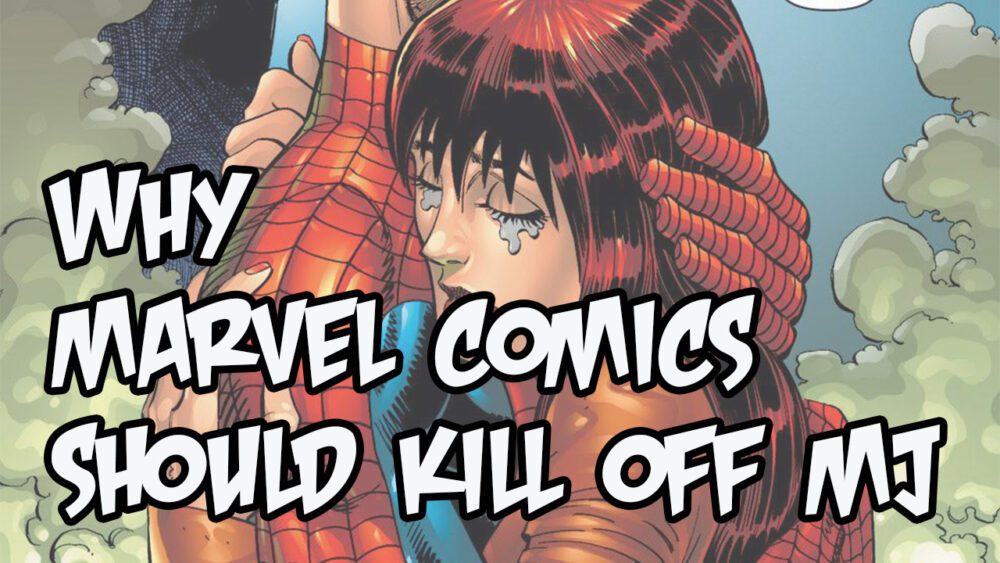
Why Marvel Comics should kill off Mary Jane in Amazing Spider-Man, that’s a bold statement. But after years of thinking about it and following how Marvel has handled the character, it is the right decision. Moreover, if written well, a decision that will elevate the character and pull Amazing Spider-Man out of stagnation.
The premise is simple: read one comic every day for the entire year. It seems like a simple task but there is no way that I read 365 comics last year, even if you count the individual issues in collections. So, this year, I am committing myself to this reading challenge, in the hope that I can broaden my reading habits and fully engage with my favorite hobby again.
This week has been a long week. I have been trying to get my head back in the game for some personal study but I am finding it difficult to concentrate and focus. I guess it’s that time of year. As a result, this week’s reading is all over the place and I’m not sure how much time I gave the new comics I tried to read. Probably not enough.
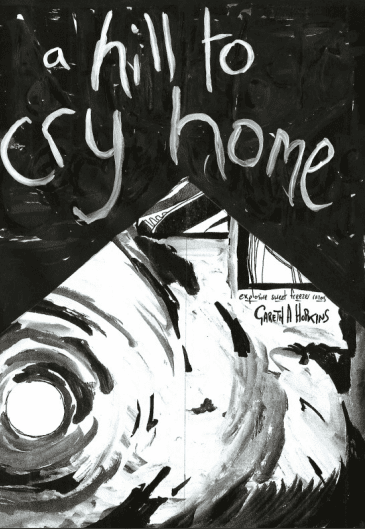
A Hill to Cry Home by Gareth A Hopkins
Comic Number 50: A Hill to Cry Home
I’m fascinated by the comics form, what you can and can’t do within the medium. Since the late 1950’s, comics in Western culture have been dominated by the superhero and what most people understand as comics today is based on a very straight forward formula of panels on a page telling a narrative. But comics can be so much more. Once, during a conversation over a drink, one of my friends said that we have only just begun to discover what comics can be and I agree with him. Over time there have been people who have pushed the envelope and experimented with the medium, people such as Chris Ware, Seth, and Melinda Gebbie. Although not as prevalent as in the Art world, there have been movements within comics, such as Underground Comix and Abstract comics.
Which leads me to Gareth A Hopkins’ A Hill to Cry Home. Last year Hopkins released a collection of abstract comics in a book called Explosive Sweet Freezer Razor. The book contains 10 very visually different short stories and this one is available free on the following website: abstractcomics.blogspot.com
One thing that this comic will do is start a conversation. The idea that a narrative is instrumental to a comic is thrown into question by abstract comics but not, perhaps, by this one. There is a narrative leading through the pages which you can piece together from the different text boxes. But what the text does is force you as a reader to look for forms and meaning within the visuals. However, whether this is a merit or a detriment to the comic is open for debate, one that has led me down an internet wormhole of blog pages and research articles.
Fantastic Four Vol 1 Credit: Marvel Comics
Comic Number: 51: Fantastic Four #570
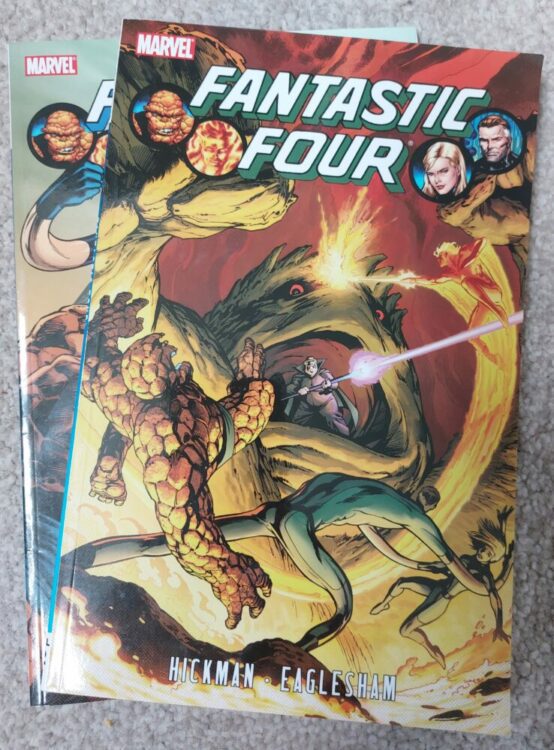
Speaking of high concepts.. Jonathan Hickman’s run on Fantastic Four is as high concept as modern superhero comics get (I’m sure that people will have opinions on that and any recommendations for alternatives are greatly welcome).
This issue is the one that starts Hickman’s journey through the “worlds greatest comic magazine” and immediately introduces a number of narrative elements that will pop up across the entire run. There is Reed’s relationship with his father; the introduction of Bentley, the Wizard’s son; and the Council of Reeds. Hickman packs so much into each issue. But the highlight is that the comic is focused, at every step, on the family. First and foremost is the Fantastic Four themselves, but this is an extended family and the concept of ‘family’ in greater terms.
I can’t always put my finger on it, but Hickman elevates the comics that he works on above the standard monthly floppy. He imbues the story with gravitas and his ruthless planning is visible from the first page.
Dale Eaglesham captures the grandiose world beautifully and makes it impossible not to become engrossed in the lives of these superheroes. If I have a complaint, it’s that Eaglesham sometimes has trouble with children’s anatomy. Unfortunately, Val occasionally appears more like a design for a Funko Pop figure than the super intelligent daughter of the strongest character in the Marvel Universe*. But, it doesn’t affect the reading experience, unlike some artists’ work, and everything else is superbly drawn so pretend I didn’t mention it.
*Sue Reed. I stand by my statement.
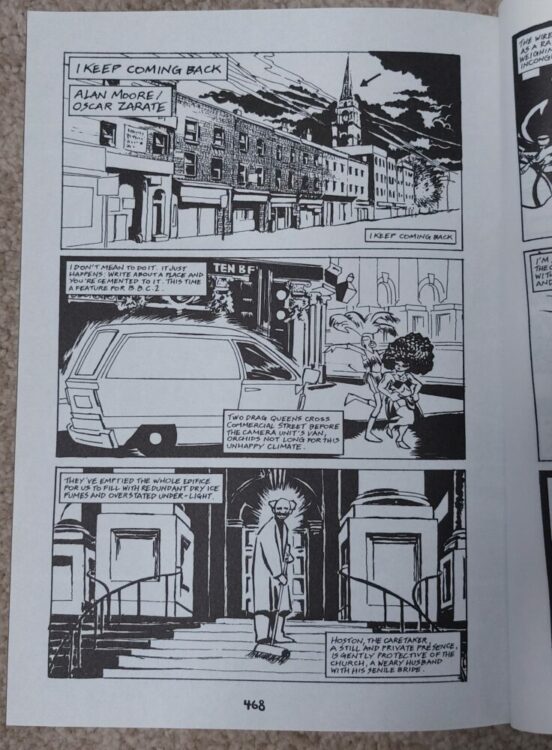
I Keep Coming Back written by Alan Moore
Comic Number 52: I Keep Coming Back
Everyone knows Alan Moore and can probably name a whole bunch of his comics that have had some influence on the industry. He is, after all, one of the best comic writers ever. However, for as good as Watchmen or V for Vendetta is, I think that some of his best writing is in the lesser known titles and short stories that have littered his career.
There are two of his stories book-ending The Mammoth Book of Best Crime Comics, both of which resonate with two of his more famous works. I Keep Coming Back is an exploration of the exploitation of famous murderers, in this case Jack the Ripper. The story is told in first person narrative, as an unseen writer visits a location related to the killings and some of the victims. It is almost a ghost story as history haunts the buildings that are trying to move on.
Oscar Zarate uses three stacked panels per page to capture the locations and the people as they awkwardly interact. Zarate’s artwork is expressionistic and often as poetic as Moore’s words. There is a beauty to some of the characters while others are portrayed as voyeurs of the macabre, creepy and uncomfortable to be around.
It is only a short story, 12 pages, but contains so much to pick apart that an immediate re-read will reveal new depths. Alan Moore is a genius writer and his work is improved by the superb artists that he worked with. Together, Moore and Zarate created a fascinating masterpiece in 12 simple pages.
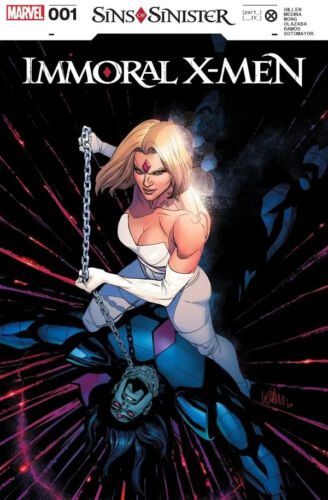
Immoral X=Men #1 Credit: Marvel Comics
Comic Number 53: The Amazing Spider-Man #20 (914), Immoral X-Men #1, She Hulk #10 (sort of)
One of the reasons for this project is for me to engage with comics, therefore I am trying to pick up brand new releases, to keep up to date. As such I picked up a couple of Marvel new releases.
Unfortunately, none of them really grabbed me and I’ll have to count them all as one in order to get my page count in. I didn’t actually get to the end of any of these titles.
I ended up flicking from page to page, then comic to comic. Part of the problem is that I’m not keeping up to date with any of these titles and none of them are easy jumping on points. I felt like I was joining in the middle of a story, even with Immoral X-Men #1, which you would have thought would be a good starting point for a new reader. But, no, it’s actually part four of an ongoing story.
I tried.
Fantastic Four Vol 2 Credit: Marvel Comics
Comic Number 54: Fantastic Four #575
Onto book 2 of Hickman’s Fantastic Four run and the introduction of the four cities. What four cities? “There will be a war between the four cities. The dead must not be forgotten. The future man must return to save the past.” (from Fantastic Four #576) Haven’t you been keeping up?
This four part arc is a mix of adventure and world building. The fun, often ridiculous, adventures speed the reader through each issue but then you spend hours deliberating over the world building. What is relevant and what isn’t? Although, this is Hickman, everything is relevant.
On a re-reading of these comics, I again feel that the only let down comes from the art. Eaglesham draws some amazing scene’s and captures the dynamic sequences very well but some of the family drama elements don’t have the same gravitas. However, that doesn’t stop this issue, and the three that follow it, being a superb read. This is Hickman learning to play with the big publishers’ toys and, in my opinion, he does a better job than most writers. Especially at this point in his career.
The Mammoth Book of the Best Crime Comics
Comic Number 55: The Court
Back to The Mammoth Book of Best Crime Comics for The Court written by Neil Gaiman and drawn by Warren Pleece. This is an obscure little tale of organised crime and the indulgence of the extremely rich. It contains an element of the supernatural and a cultish organisation or religion. It’s not clear exactly which. And that is the major hook for this short story: it’s never clear exactly what is going on. The reader is led into this world by the narrator and we never learn any more than he does.
In literature there is the notion of the unreliable narrator, one who is untrustworthy and deliberately deceptive, whereas in The Court Gaiman uses an uninformed narrator, one who doesn’t really understand what is going on. He is judgmental and overconfident but he is nothing more than a cog in a greater machine that the reader is aware of but can’t fully see.
Pleece uses strong contrasts between light and dark to build up the pages. Dense shadows fill panels, blocking out characters or locations. There is a sense of unease underlining the narrative which is overlaid with a noir voice-over equal in tone to any Mickey Spillane novel.
The Ten-Cent Plague
Comic Number 56: The Ten-cent Plague by David Hajdu
When it comes to reading books, I’m a bit slow. I tend to have several books on the go at the same time which means I might only read a handful of pages from any one book every few days. But I do love a good book and The Ten-Cent Plague is a damn fine book.
(I know this is not a comic, but it is about comics and I’ve read 8 issues of the Fantastic Four this week so, if you think this should just be 100% comics, copy and paste Comic Number 54 above and just change the issue number)
Hajdu’s book is a fascinating and intricate examination of the early days of the American comic book leading up to, and including, the famous comic book scare of the 1950’s. It is packed with insights from artists, writers, and even publishers from the time, giving their view of the industry and lending an authenticity to the historical narrative. Contained within the book are some of the great comic book legends which Hajdu tears open and picks apart, layering different perspectives to give a fairer, if more unsettling, account of actual events. One of the most unsettling is the list of names at the end of the book, detailing those who never worked in the comic industry again after the introduction of the Comics Code Authority. So much talent was driven away by the greed and power hungry who wanted to control one of the biggest mediums of the 20th Century.
I would highly recommend this book if you are interested in the history of comics. I have read a fair few books about this period in history but, as demonstrated by The Ten-Cent Plague, I am still only just scratching the surface of the ins and outs of the industry.
Are you reading many, many comics, or have any recommendations/thoughts about what I could read in the approaching weeks? If so, let me know in the comments below.
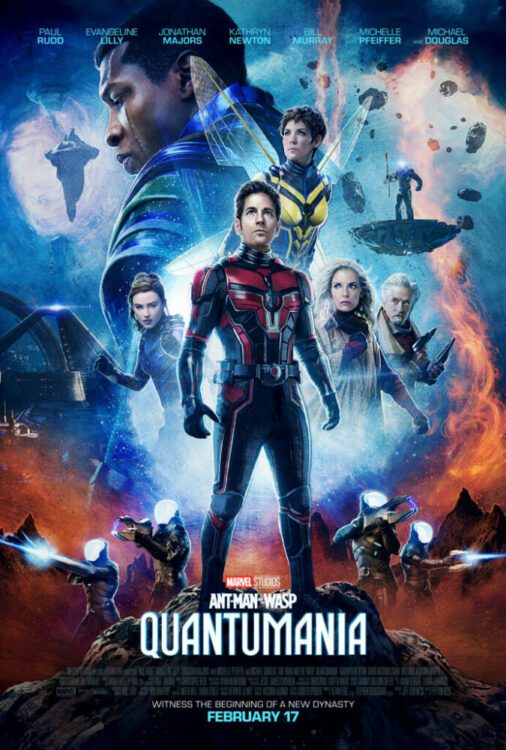
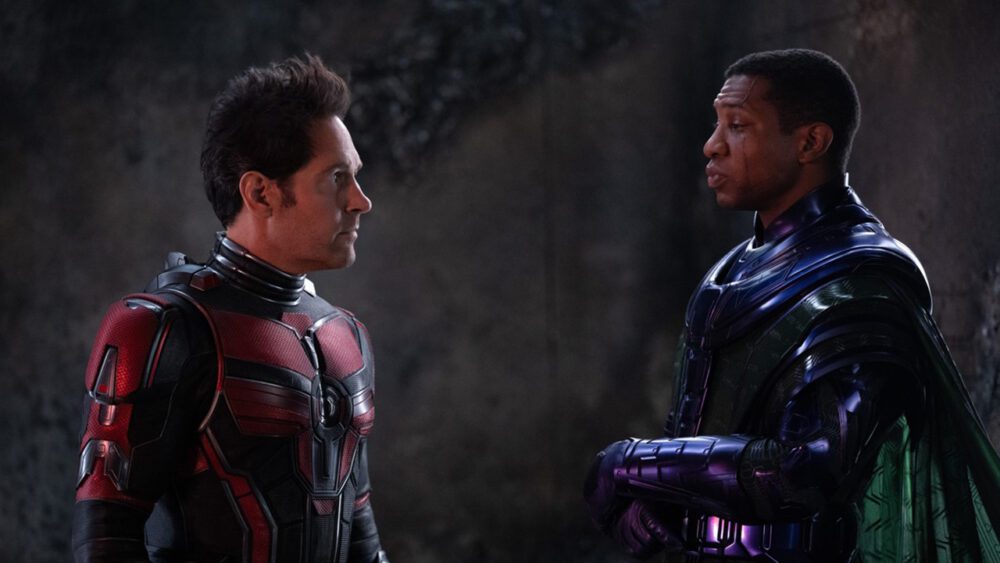
Ant-Man: Quantumania is consistently entertaining, but the film doesn’t excite me for what lies ahead. While it features some lighthearted moments that are in line with what I love about this series, the overall story is underwhelming and comes off like a mature Spy Kids 3 meets Sharkboy and Lavagirl. Still, Ant-Man: Quantumania does allow Jonathan Majors to showcase why he is such a tremendous talent. It’s unfortunate that he isn’t enough to make this third entry worthwhile.
I was hoping Ant-Man 3 would deliver a plot that was worth investing in, but instead, it’s thin and underwhelming at best. Admittedly, Scott and Cassie’s relationship still manages to pull at your heartstrings. With Phase 5 now underway, this beginning doesn’t get me interested in future projects. Directed by Peyton Reed, Ant-Man: Quantumania stars Paul Rudd, Kathryn Newton, Jonathan Majors, Evangeline Lilly, Michelle Pfeiffer, Michael Douglas, and Bill Murray. Scott Lang (Rudd) explores the Quantum Realm with his family and comes across Kang the conqueror (Majors).
The visual effects can be a bit jarring at times, which is unfortunate since there are a few cool moments in the Quantum Realm. Setting the film completely away from Earth wasn’t the best decision. What’s worse is the jumbled story that accompanies this visual fest. Ant-Man: Quantumania is more interested in telling jokes about genitalia than letting its real strengths carry the story. Kang’s introduction shifts gears, but anything related to the Lang’s is mostly carried by Janet Van Dyne (Pfeiffer), who has the most compelling arc outside of Kang. Her connections to Kang give her a purpose, while her family is mostly standing around.
Cassie and Scott’s relationship is on the fence, and pieces are being set up for Cassie to prove her worth as a hero, but then someone else claims the spotlight. Dr. Hank Pym (Douglas), is here to tell us about his relationship life while his wife was gone, and then he has an atrocious reunion with an old friend. Douglas’ contributions to this project are useless and not necessary. While this film is messy, each performance was decent or exceptional. The exceptional is reserved for Majors, who excels at playing villains you will love to root for. His delivery makes Kang an intimidating force.
Newton’s performance as Cassie is effective enough, and I was able to believe that she and Rudd were a father-daughter duo. Her character traits might not be the most likable, but Newton’s downfall comes from the dialogue she has to work with, which leads to a very poor joke about genitalia once again. The writing felt like a never-ending rollercoaster of jumbled subplots, bizarre character decisions, and terrible jokes. Ant-Man: Quantumania has an engaging opening, but takes you through an underwhelming story to connect back to that highly effective opening. While Pfieffer is incredible as Jane, her motivations also make her unlikable at times.
I’m not surprised that Ant-Man 3 is receiving a polarizing reception, but I’m shocked that this was decided on as a good start to Phase 5. If not for Pfieffer and Majors, a majority of the story would be struggling to stay afloat. The action isn’t that great either sadly, and I did enjoy the last brawl between Scott and Kang. Some of the editing decisions lead to less fluid motions, which is never a good experience. Examples of this can be found when Kang and Scott are battling. Still, I wasn’t completely bored during this film and did enjoy it for what it was.
Ant-Man: Quantumania might not be one of the better MCU entries, but audiences should still be able to have fun with it. Strong performances and the mid-credit scenes might make this worthwhile. Sadly, this third entry is the weakest addition to the series, but I’m sure Ant-Man 4 will be here sooner than later.
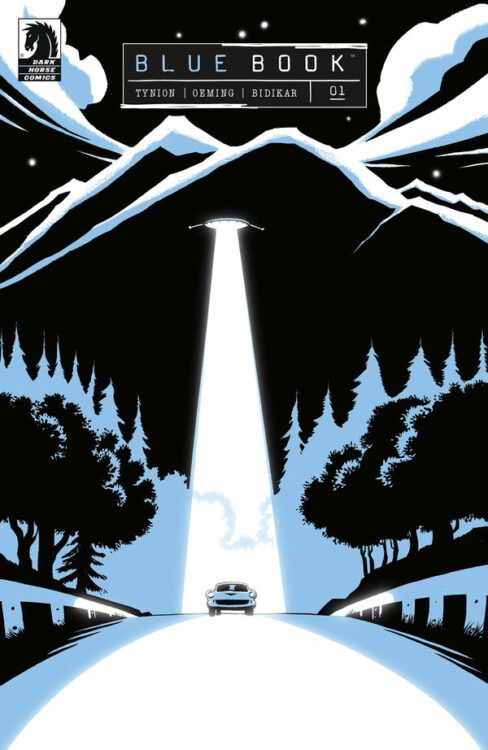
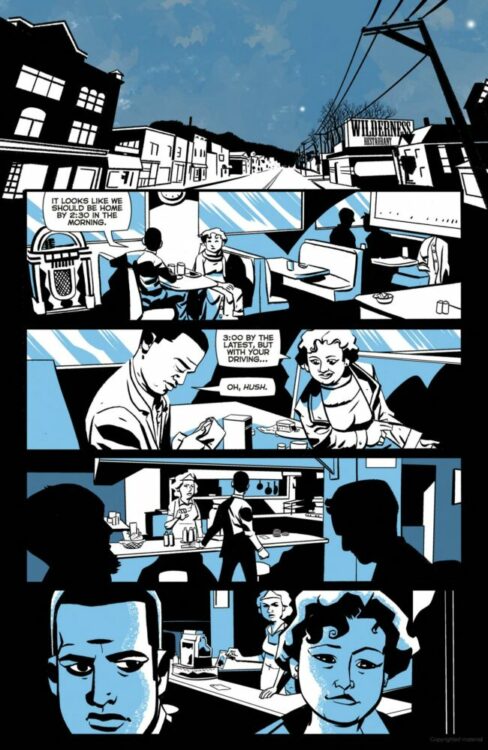
From acclaimed writer James Tynion IV (Something is Killing the Children, Detective Comics) and artist Michael Avon Oeming (Powers, Cave Carson has a Cybernetic Eye) comes an intriguing and creepy love letter to classic paranormal encounter stories in Blue Book #1. Featuring Aditya Bidikar on letters and a backup story drawn by the legendary Klaus Janson, Blue Book #1 is a stellar start to this paranormal thriller from Dark Horse Comics and Tynion’s own Tiny Onion Studios. With a script that focuses on bringing the reader into the setting of these strange encounters and gorgeous, moody art from Oeming, this opening issue is a gem of genre-work and a must-read for fans of all manner of horror storytelling.
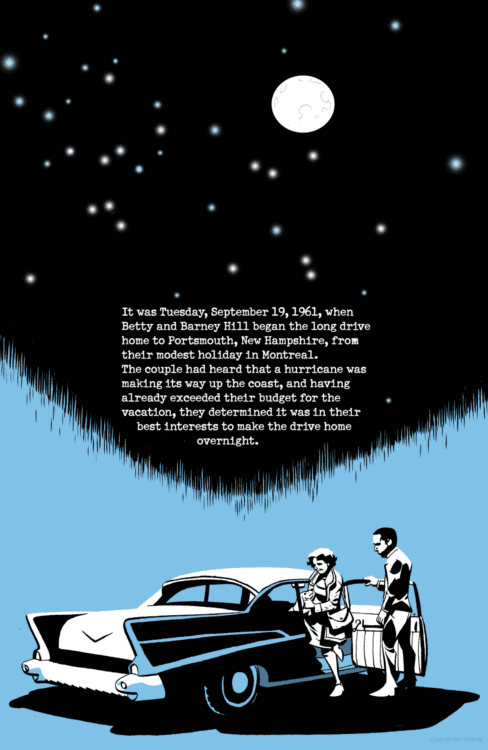
“In this debut issue, Tynion presents what he calls his “True Weird” stories. Tales of ordinary people encountering the strange and the impossible. Teaming with artist Michael Avon Oeming, they retell some of the most popular UFO and alien encounter accounts starting with the infamous Betty and Barney Hill abduction–the widely publicized and very first abduction that went on to shape and influence all future encounter stories.”
Writing & Plot
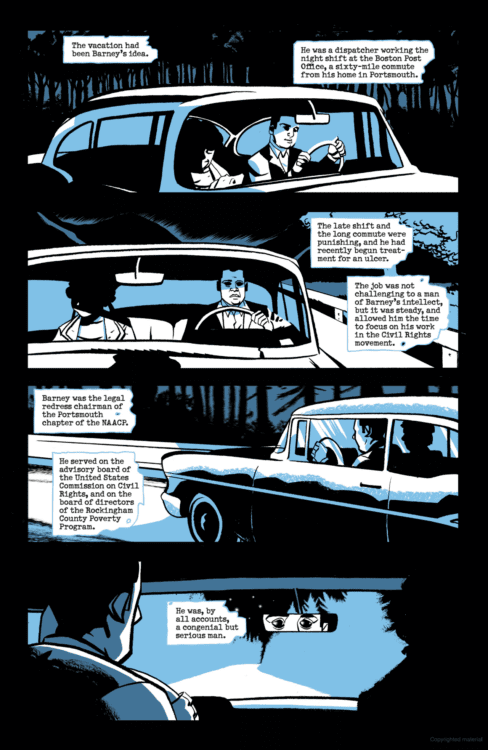
James Tynion IV calls upon the terror of a historical encounter with his script for Blue Book #1. This opening chapter tells the start of the tale of Betty and Barney Hill, the Civil Rights activists who were infamously known for having been – supposedly – abducted by extraterrestrials. Every alien abduction story since the 1961 incident, both fictional and anecdotal, has been modeled in some way by this event. Tynion approaches this tale with the drama of a classic television recounting, but combined with his own seasoned style as a horror comics writer. This comic sees use of expository blurbs to give background info and context about our two lead characters. While info-dumps like this are often frowned upon in the comics medium, they fit in here perfectly. Tynion conveys the feeling of this story being an especially intense dramatization – the kind of thing that you’d catch on the Discovery channel in the middle of the day or late at night. This comic took me back to the feeling of being enthralled and unnerved by these kinds of abduction stories as a kid. Tynion’s writing outside of the narration is subdued, with minimal dialogue between Betty and Barney. What dialogue is there feels naturalistic and sharp, with an increasing sense of urgency as the couple becomes more concerned by what is following them through the sky. This approach continues into the backup story, a recounting of some unusual sights in and around Coney Island in the 1920’s. Being a gifted horror writer who understands comics, Tynion scripts many wordless panels where the visuals do all the talking. This first chapter of Blue Book is tightly scripted and suitably intense due to James Tynion’s horror-writing talents.
Art Direction
An unsettling “weird-true” horror comic needs equally unsettling visuals, and that’s where the unmistakable style of Michael Avon Oeming comes into play. The Cave Carson artist brings the strange, UFO-based events of that night in 1961 to life with a beautiful yet chilling visual aesthetic. Oeming’s ever-distinct character designs capture the humanity and growing terror on the Hill couple’s faces as they are pursued. Oeming’s constantly tense mood takes a couple sharp turns into the outright menacing, making for some panels that will stay in my mind for some time to come. His color choices – a steady background of deep blues, blacks, and pale white lighting – completes this visual journey with an atmosphere that wraps readers up in its setting. His sequential direction keeps the tense while flowing at an even pace. Close-up shots of the Hill’s as they drive and observe the thing chasing them are followed by wide-shot panels of the peaceful Northeastern setting turned sinister by the craft floating through the night sky. Klaus Janson’s art on the backup story is just as impressive, but in a different manner. His heavily inked black and white imagery creates a vision of Coney Island that feels like a setting from an ancient myth. Janson’s work here makes Tynion’s narration and dialogue feel like an episode of The Twilight Zone. This backup story shows that the goal of Blue Book isn’t necessarily just to terrify – but to inspire wonder and curiosity in the unusual. Aditya Bidikar finishes the book off with his expertly handled lettering. His fonts are easy to read and shift naturally with the tone of dialogue. The narration text mimics a typewriter font, and the actual style of the dialogue lettering has a distinctly classic appearance. This approach furthers the aesthetic of decades past, perfecting an already outstanding visual experience.
Verdict
Blue Book #1 is a brilliantly creepy and unique comic in a genre seldom utilized in the comics medium. James Tynion IV pens a script that captures the specific feel of a great TV dramatization, but with the tension of a true thriller. The visuals from Michael Avon Oeming in the main story and Klaus Janson in the backup are utterly stunning and will leave a lasting impression on unsuspecting readers. Be sure to grab this new release when it hits shelves on February 22nd!
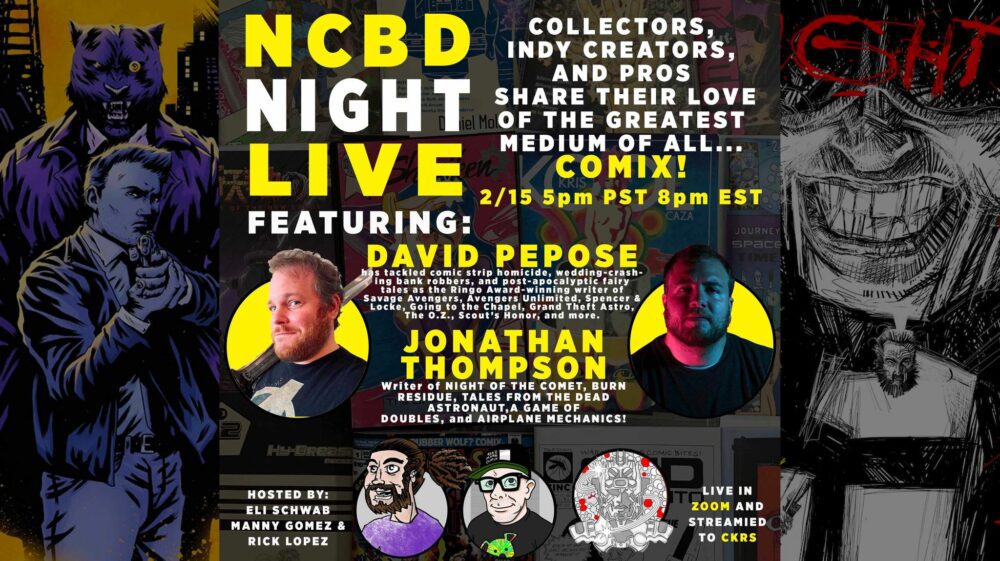
Comic fans! Welcome to NCBD Night Live, a new monthly comics interview show hosted by Eli Schwab (Cosmic Lion Productions), Rick Lopez (Next Panel Press) and Manny Gomez (MFR’s Self-Published Spotlight). You can catch the show LIVE every third Wednesday of the month (on New Comic Book Day) at the Cartoonist Kayfabe Ringside Seats page on Facebook, but if you miss the live event, you can catch it here on Monkeys Fighting Robots.
This episode features comic creators Jonathan Thompson (Burn Residue/Airplane Mechanics/Night Of The Comet), David Pepose (Savage Avengers/Spencer & Locke/Going To The Chapel) along with comics collector Shaun McNally.
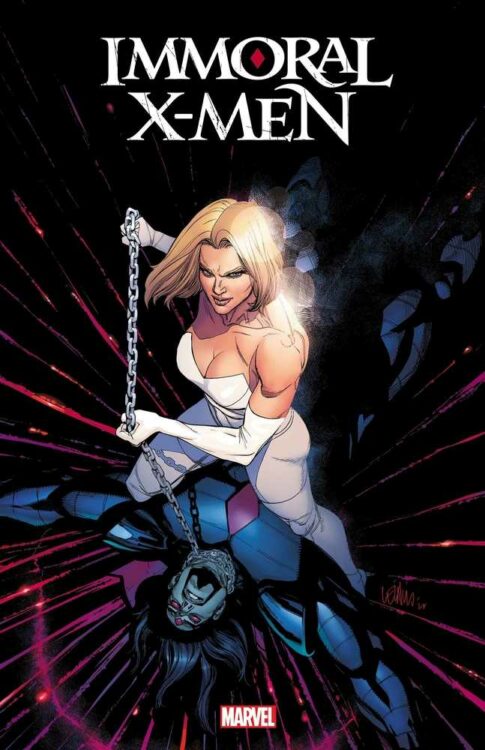
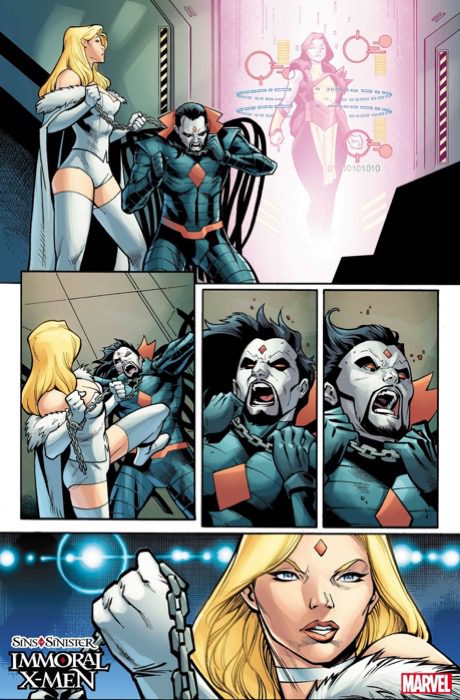
As Sins of Sinister continues to pump out distorted glimpses of a possible future, this week sees the arrival of the flagship book, Immoral X-Men. Kieron Gillen is one of the writers taking the lead for this big event and he’s bringing some of his favorite mutants along for the ride. Mr. Sinister is front and center for this book, but he’s also joined by a vicious Emma Frost. So what happens when two power houses go up against one another? Issue one gives us a little insight into that. Joining Gillen on this issue are Paco Medina on pencils, Jay David Ramos and Chris Sotomayor on colors and Clayton Cowles on letters.
WRITING
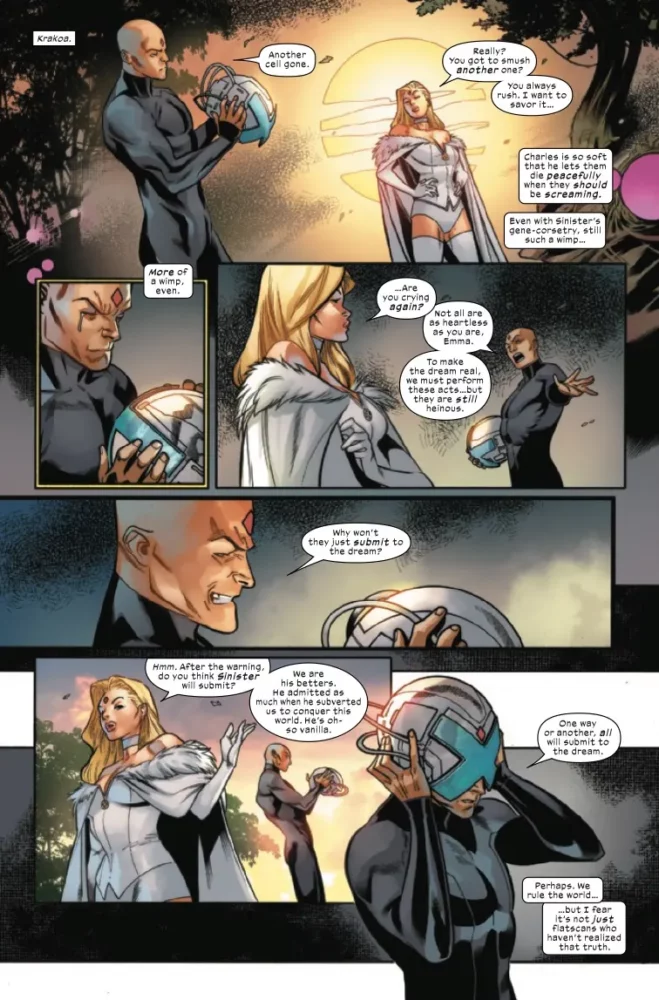
For as much as this would seem like it’s a Mr. Sinister title, it’s also Emma Frost’s book as well. Gillen makes Emma the point of view character as we read through the issue. Gillen gives us her internal monologue, which is helpful in seeing how dark she’s turned in this reality. As charles makes heroes jump to their death, Gillen shows us that Emma considers Charles soft for not torturing them. It should be no secret that Gillen loves to write Mr. Sinister. He made good use of the character when he wrote Uncanny X-Men with Cyclops’ extinction team. For this issue Gillen has the opportunity to turn the villain into somewhat of a hero as he scrambles to reset the timeline. Gillen gives a Sinister at his most vulnerable. He’s finally met people who are as disturbed and sneaky as he is. Isn’t there a saying about being careful what you wish for?
ART
The pencils are handled by Paco Medina this issue. Medina is a pro always turns in a good performance on whatever book he works on. One of the most important things Medina does in this issue is give us a lot of emotion from Mr. Sinister. He goes through the emotional ringer this issue as he get angry, stoic and even a little flustered. All of these pages needed to have a different look and feel, and Medina accomplished that. There is a page where Sinister shows off some of his new Chimeras. This is an important page because Medina has to mash up a couple of different mutants and make them look cool. Medina of course does a wonderful job, and the mutants do look unique and interesting.
The colors are split up between Jay David Ramos and Chris Sotomayor. The pair have similar styles and it’s hard to differentiate between the two. The backgrounds in this issue are a big tell in how a scene will play out. In the first few pages, human survivors are attempting to stop the mutants. The background is a dark maroon which can signify danger. Another example is when Mr. Sinister is mad about being locked out of his secret lab, the background is a bright orange, which can signify anger. Characters are colored nicely, specifically Emma Frost, who spends a lot of this issue in diamond form. The colorists allow her to shine on the page just like Gillen allows her to shine in the issue. For a pair of colorist working on one issue, Ramos and Sotomayor do a wonderful job of blending styles and making the pencils pop.
The letters by Clayton Cowles are very good this issue. His sound effects are top notch as he utilizes them multiple times throughout the issue. As Mr. Sinister is banging his head off of the table in frustration, Cowles lays down three “THUDS” to signify Sinister is doing it multiple times. There is also a panel where someone melts. Cowles makes sure to distort the word bubble as the character yells “No” to signify pain. This is effective and helps as we read what the character says. Cowles enhances the reading experience with his effective lettering and makes the issue more enjoyable.
CONCLUSION
Immoral X-Men is certified hit in the Sins of Sinister event. Kieron Gillen is weaving a tale of intrigue and betrayal as the mutants fight among one another. The art goes a long way in helping this issue come to life as well. If this quality writing keeps up, the X-Men will be ushering in the next great era for the mutants. Immoral X-Men #1 is available at a comic shop near you!
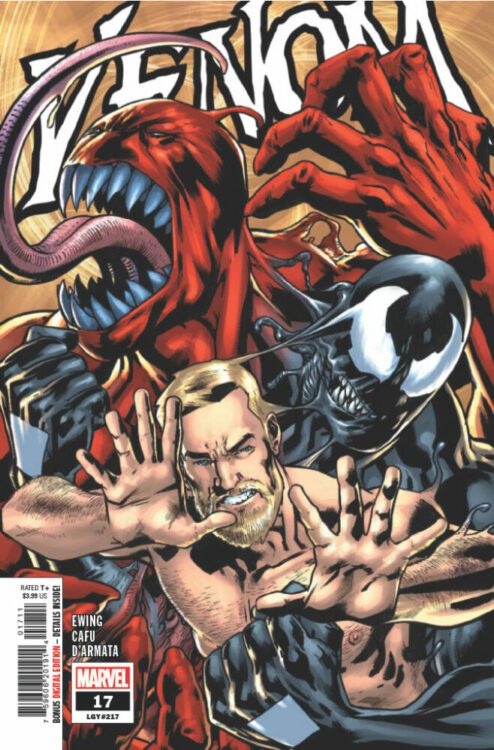
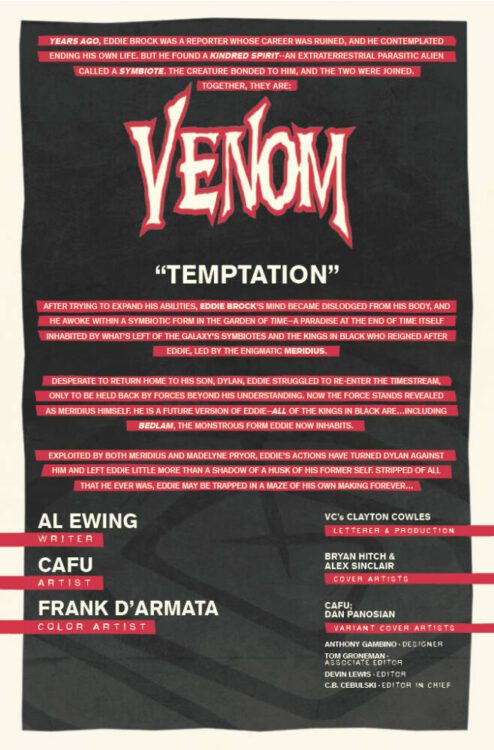
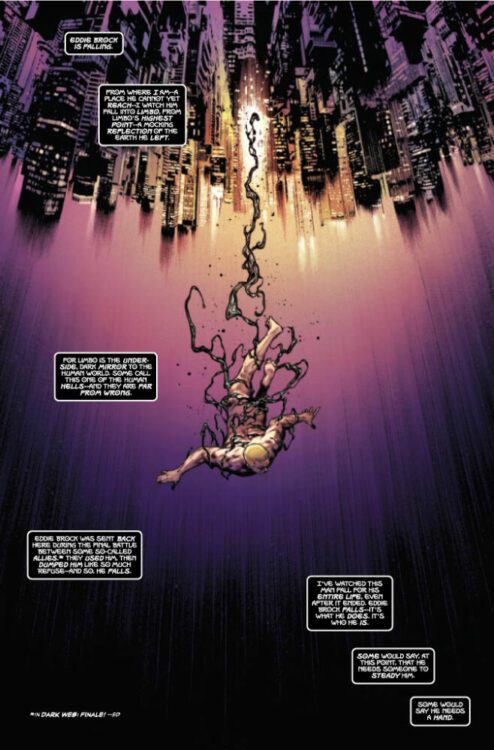
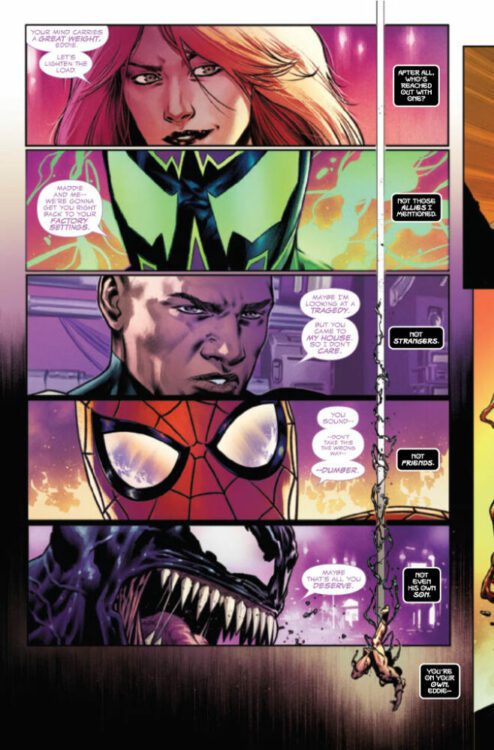
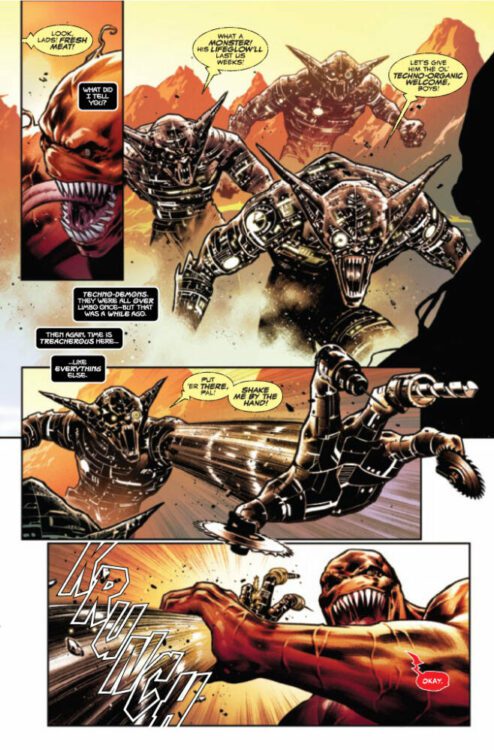
VENOM #17 hits your local comic book store on March 1st, but thanks to Marvel Comics, Monkeys Fighting Robots has an exclusive four-page preview for you!
About the issue: BEDLAM AND BEYOND! Eddie Brock has faced down many monsters in his time, but few have been as terrifying as the one born of his own rage called BEDLAM! In this issue, witness Bedlam’s return to the Garden of Time, and see what’s become of Eddie Brock after DARK WEB!
The issue is by writer Al Ewing and artist CAFU, with colors by Frank D’Armata, and letters by Clayton Cowles. The main cover is by Bryan Hitch and Alex Sinclair.
Check out the VENOM #17 preview below:
Are you reading Marvel’s VENOM? Sound off in the comments!
BETSY BRADDOCK:CAPTAIN BRITAIN #1 hits your local comic book shop next week from Marvel Comics. Is this issue a must-buy or a hard pass?
The book is written by Tini Howard, with art by Vasco Giorgiev, Erica D’Urso is the cover artist, Erik Arciniega drops the colors, and you will read Arinna Maher’s letter work.
About BETSY BRADDOCK: CAPTAIN BRITAIN #1: THE CAPTAIN COMES HOME!
And she’s got a whole new mission! With Otherworld settled, Braddock Manor restored, and her brother Captain Avalon at her side, you’d think things look pretty good for Betsy Braddock. Only it turns out, good ole Britain doesn’t want her back. No one wants a mutant menace carrying the shield of Captain Britain, and Betsy’s made more than a few enemies along her way. Quest-less and country-less, Betsy must define a role for herself. A fresh take on a beloved character, don’t miss the latest Tini Howard extravaganza and fan-favorite artist Vasco Georgiev’s Marvel debut!
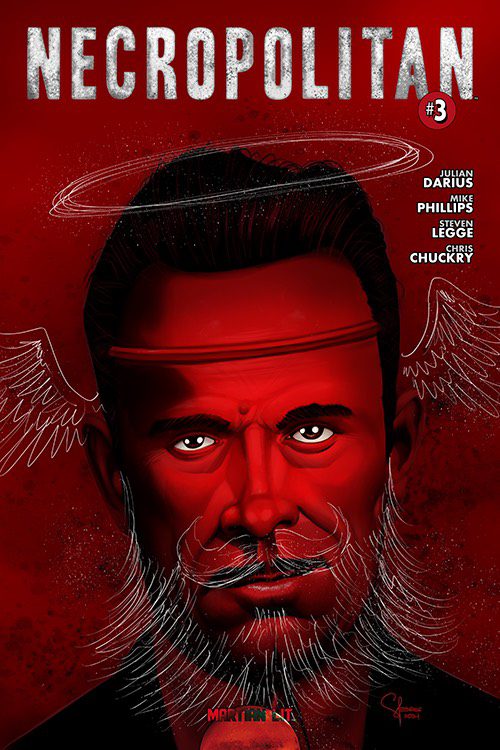
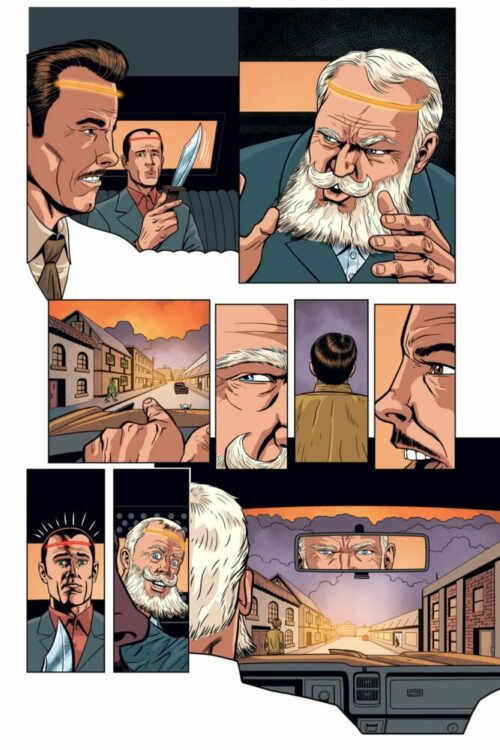
If you haven’t read Martian Lit’s Necropolitan yet, part of me really doesn’t blame you. Mike Phillips, Julian Darius, and Steven Legge’s vision of Hell is haunting. Calling a story about Hell “haunting” might seem a little obvious, but Necropolitan‘s way of unsettling you isn’t obvious at all. It sneaks up on you when you’re least expecting it. You’re likely not to sleep again after getting a peek at this particular underworld. Writers Phillips and Darius, along with artist Legge, hide the most disturbing facets of their take on Hell deep beneath the surface level death and torture. When you wade through all the blood and guts, what you find at the center of Necropolitan is a story about the lies we tell ourselves.
Writing
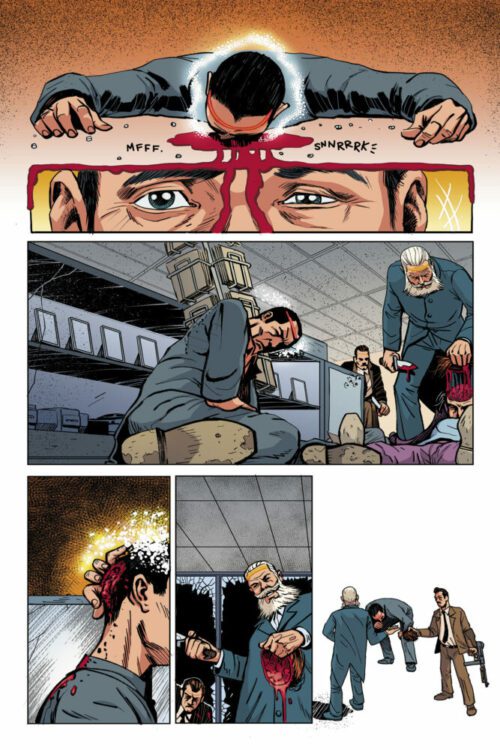
Phillips and Darius waste no time hitting you with the twisted wildness of their series. In the first page, we’re introduced to some poor sap who’s the newest resident of Hell. He’s being pushed out of a demonic birthing canal, tears streaming down his face. Before he can gather himself up, he’s mercilessly beaten by his soon-to-be guides, Jack the Ripper and Elizabeth Bathory. His hair is pulled and his throat is cut. The blood starts spraying right away in this series, and it rarely pauses for long. There’s torture, rape, murder, and characters who laugh and whoop in the face of all of these things. But believe it or not, these aren’t the moments that really stick with you.
No, the scenes that will keep you up at night happen in the quiet between instances of chaos. Roman orgies and gang wars won’t faze you as much as when Jack the Ripper chooses a woman to escort him home for the night. When you see people decapitated or shot up in battle, you’ll be able to shake it. You won’t be able to shake the way Elizabeth Bathory playfully taunts a woman who she’s planning to disembowel later. And soon, it’s clear that the main character of this series is just as self-deceived as the others. He thinks he was a good killer — a righteous man. Phillips and Darius almost seem to be asking us a question. “Waking up in Hell and still believing you’re a good person… that makes some kind of twisted sense, doesn’t it?” The heart-dropping, blood-freezing truth of it is: yes, it does.
Art
If you read Necropolitan without a credits page, you’d have to assume that the three issues were drawn by separate artists. The first issue mostly uses thin linework. It’s a fantastic style, but one that feels very detailed and anatomical. By issue #3, Necropolitan‘s art has taken on a much looser look. There are thicker lines, relaxed character designs, and an exciting push towards style over realism. The art of Necropolitan comes alive in a way it hadn’t before.
Every issue of Necropolitan is drawn by Legge, but the first and last issue came out several years apart from each other. Issue #1 came out in January of 2017, while issue #3 came out in the last month. It’s such a joy to see Legge’s art change and adapt in these pages, especially because the art starts in a brilliant and experimental place, as it is. In the first issue, Legge uses Roman archways as panel borders and has roads cut through the page layout to pull the story along. By issue #3, we have panels that teeter precariously through action sequences and pages that seamlessly blend one moment of time into another. Even the pages you ought to be shielding your eyes from — Legge renders them so beautifully, it’s impossible to look away.
Coloring
Donovan Yaciuk colors issues #1 and #2. Yaciuk’s creates a bleak and pale Hell. He uses a lot of browns, greys, faded blues, and unsaturated reds. His backgrounds almost look like there’s sand in the air. The greenish blue of the sky fades into a whiteish hue at the bottom of the page. With this, Yaciuk sets a lot of mood. Hell really feels like a place that the color has been sucked out of. Later, when the characters start traveling through a Roman section of Hell, Yaciuk gives everything a golden haze. It’s a perfect preamble to Phillips and Darius’ discussion of the “golden age” of the Roman empire that quickly follows.
Chris Chuckry takes over colors for issue #3 and the change is immediately noticeable. The first pages of issue #3 are a flashback, and Chuckry creates a great contrast between the characters and their environment. The characters look greyish blue and faded, while their environment is a warm mix of purple, red, and yellow. Throughout the rest of the issue, Chuckry often pushes the color palette into that warmer range. You get deep and bright colors. It perfectly coincides with the increase in pulpy action we see in this issue. But we also get the sense that our main character is starting to get used to his bleak atmosphere — maybe even seeing it a little differently. Both Yaciuk and Chuckry have great approaches to coloring this series, and the little ways that they set themselves apart from each other highlights the strengths of each colorist marvelously.
Lettering
Legge and Darius do the lettering for Necropolitan, and it’s clear they have lots of fun with it. Every sound effect looks handcrafted to fit the specific scenario it shows up in. All gunshots sound different, as do explosions or screams. Every sound has its own flavor. In the opening to the series, our main character gets a knee right to the face. The big “CRACK” we see fly across the page is written to look like glass that’s shattering. But it’s in issue #3 that all the stops really come out. The “GLUG GLUG” of Jack the Ripper downing some booze is perfectly fitted to fill the dead space of the panel. One page sees the sounds of bullets flying, windshields breaking, and cars crashing. Every noise is written in different fonts, colors, and angles. The resulting chaos is glorious.
Conclusion
Martian Lit’s Necropolitan is a meal to dig into. It may seem like your typical schlocky, shocking, gore-fest at first, but what’s hiding beneath that bloody façade is a narrative that’s deeply interested in the nature of evil. It’s thought provoking and disturbing in the best ways possible. You can get the first volume, collecting issues #1-3, from Martian Lit’s website, here.
The premise is simple: read one comic every day for the entire year. It seems like a simple task but there is no way that I read 365 comics last year, even if you count the individual issues in collections. So, this year, I am committing myself to this reading challenge, in the hope that I can broaden my reading habits and fully engage with my favorite hobby again.
No concept or organised plan for this week. Why don’t we just get straight into it.
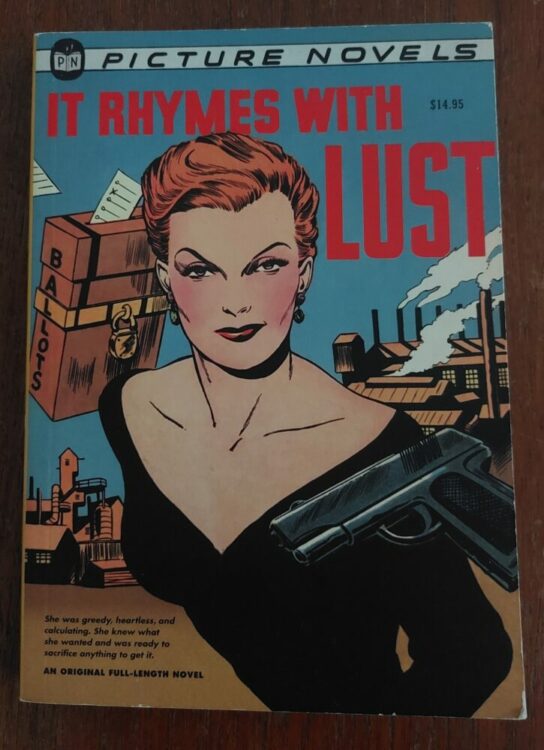
It Rhymes With Lust (2007 reprint) Credit: Dark Horse Books
Comic Number 43: It Rhymes With Lust
One of the reasons I decided to do this project was to force myself to find new comics to read. Not new in the sense of ‘just released’ but in the sense that I’ve not read them before or, occasionally, not even heard of them until now. New to me.
I first came across the “picture novel” It Rhymes With Lust in a book about the history of comics. It was part of a discussion about the origins of the graphic novel. This reprint copy then came up for sale at a local comic shop and I thought it must be fate. Obviously, I bought it. Knowing that the term “graphic novel” first appeared in the mid 1960’s and was made popular by Will Eisner in the late 1970’s, I was expecting this picture novel to be more of an illustrated text, but I was so wrong. At 128 pages long, with only the first page featuring an illustration next to a block of text, this book is exactly what I would call a graphic novel. It is an original story produced for a one-off publication, in a book-length format, featuring page after page of comic strip action. And it was first published in 1950. The first American style comic book was Famous Funnies in 1934; this book wasn’t far behind.
It Rhymes With Lust is a good old fashioned crime drama with a central character who gets embroiled in a complicated web of crime and corruption, playing off a number of femme fatales and slimy politicians. It’s got noir cliches dripping down the dark alley walls and enough violence and bloodshed to boil the bones of the Comics Code Authority. The panels are constructed from detailed fine lines and clever fading to reduce backgrounds and promote the central characters or focus of the narrative. This perfectly complements the hard edged script which is equally to the point and focused.
Both of the writers involved with this book went on to have great careers, with Leslie Waller writing a host of novels and Arnold Drake making a name in comics, co-creating the Guardians of the Galaxy, among others. The same is also true of the artists, Matt Baker and Ray Osrin. There is an impressive amount of talent working on this book.
I have read the first two chapters today but know I will finish it within the next 24 hours. It’s exactly the kind of comic I like and I’ve learned a bit of comics history to boot.
From Origin Of The Hobgoblin Credit: Marvel Comics
Comic Number 44: The Amazing Spider-Man #238 and 239
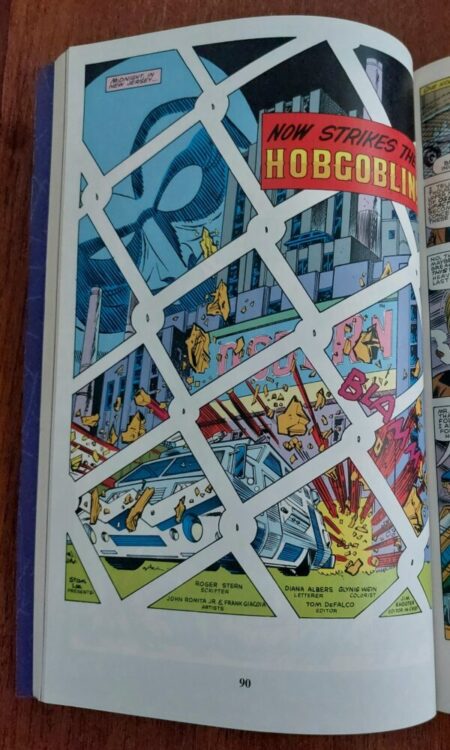
Back to some classic Spidey action to start off the week, and I’m continuing to read through The Origin of the Hobgoblin. Whereas the first three chapters in this collection set the scene and introduced the characters, these next two chapters introduce the Hobgoblin himself, in all his orange glory.
Roger Stern continues to deepen the mystery and link the new goblin to Spidey’s archnemesis, the Green Goblin, through a series of break-ins at Oscorp warehouses. The identity of Hobgoblin is wrapped in secrecy and he is always drawn hiding in the shadows or only in silhouette. This imposing dark figure is also shown to be much darker in character, willfully disposing of anyone who knows his true identity. These two chapters give us the mercenary side of Hobgoblin and demonstrate that he is not just another costumed super-villain. Mainly because it highlights that he has no enhanced abilities (yet) and has to distract Spider-Man during their first fight so that he can escape intact, but also that he has an intellect for planning.
John Romita Sr and John Romita Jr work together to produce the high-octane action sequences, but this is still the era of good soap opera in the Spider-Man comics, and the artists are just as successful at illustrating loving moments between families and lovers spats that may impact future narratives.
Supergirl: Plain Sight Credit: DC Comics
Comic Number 45: Supergirl: Plain Sight
With all this chatter on Twitter (and elsewhere) about the new Flash movie trailer and how a small section of the “fans” seem to already hate Sasha Calle’s version of Supergirl, I had an urge to pick up some Supergirl comics.
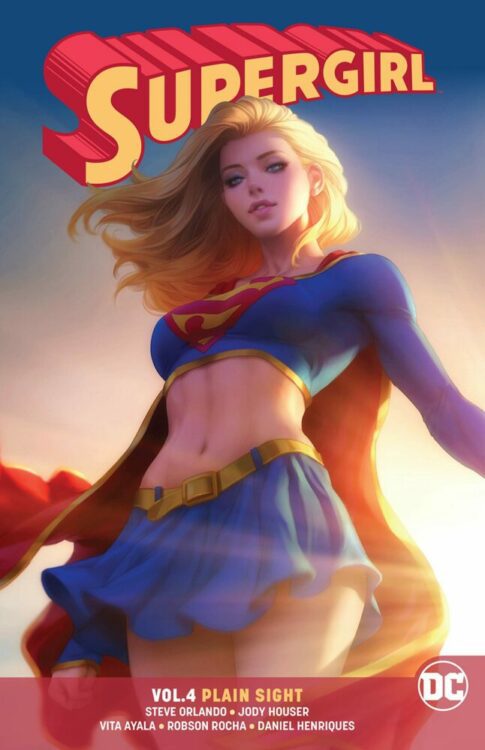
Plain Sight, written by Jody Houser and Steve Orlando, collects the final six issues of DC’s Rebirth Supergirl, first published in 2018. The narrative follows a monster-of-the-week format with a larger story building in the background. Houser and Orlando keep a perfect balance between superhero action and family drama; this comic is never just about one aspect of Supergirl, but covers every part of her life. This struggle to maintain both identities is at the heart of this story and, at moments, reflect the Spider-Man/Peter Parker dynamic I’ve been reading a lot of so far this year.
The overpowered super-villains are just a reflection of the school bullies and cruel administration that makes Kara Danvers’ normal life so difficult. The penultimate chapter in the storyline almost takes a step out of the narrative to tell a different story. It is an emotional, heartwarming story about how Supergirl touches the life of a non-binary teenager struggling to come to terms with who they are. They are bullied at school and scared about what others will think at home. Supergirl is there for Lee, without judgement, and helps them to accept themselves for who they are. It is a strong story and the fact that the day is saved by the hero just being a friend, listening and talking rather than punching and killing, is a powerful statement. Orlando and guest writer Vita Ayala demonstrate that Kara’s true strength comes from compassion and inclusion. She is there to protect and save everyone, and stand up for those who need a helping hand.
I read Supergirl comics more than I read almost any other DC comic. I find that most runs tend to start really strong and then slowly drift towards a formulaic narrative structure with the title character used as a foil for characters in other comics, with crossover following crossover. And the most annoying thing is the obsession with “glam” covers which, more often than not, sexualize Supergirl, turning her into a pin-up girl rather than a superhero. But there are some great Supergirl comics out there worth tracking down. The DC New 52 run was very good, for example. I’ll probably get to some of them later in the year, when the Flash movie comes out and that small section of “fans” once again start hating on a character they don’t seem to know anything about.
The Vault Of Horror Podcast
Comic Number 46: EC Comics Presents… The Vault Of Horror (podcast)
Wednesday was a difficult day for me, on a personal level. It was the first day this year where I found it difficult to find motivation to read any comic. I looked at my to-read pile and just didn’t fancy picking any of it up. There was an emptiness that couldn’t be filled by the offerings I had at hand. There was an urge in me to read The Cage by Martin Vaugh-James, but my copy was being elusive, almost as if it was hiding from me, teasing me with its absence.
However, for my birthday this year, I treated myself to a subscription to Audible in an attempt to catch up on the hundreds of books I have been meaning to read over the years. I have this belief that I have more time for listening to stuff than I do for reading, ignoring the fact that I subscribe to two podcasts and am several months behind on both.
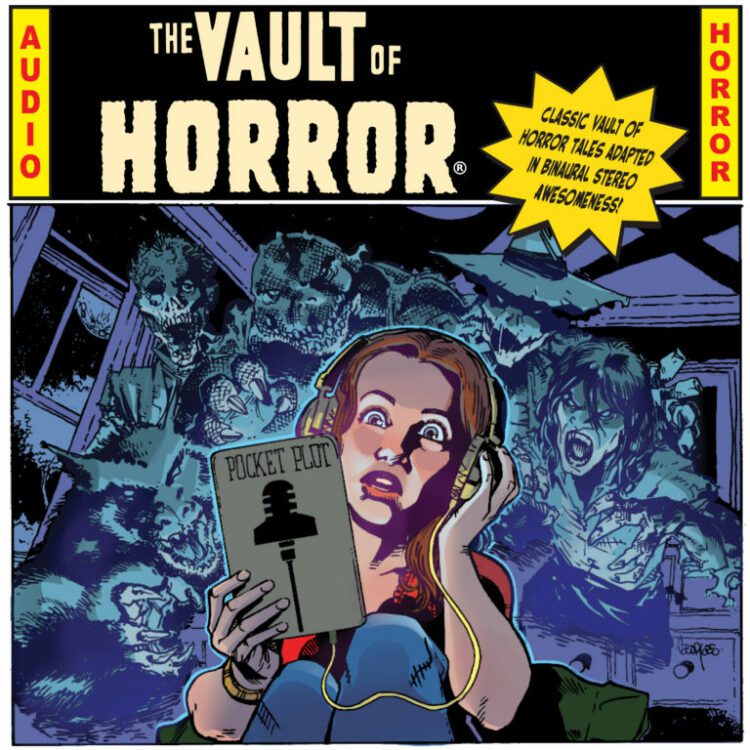
Anyway, while browsing Audible I came across The Vault Of Horror podcast: a radio dramatization of the classic EC horror comics. Each episode is hosted by the malevolent Vault Keeper, played by Kevin Grevioux, who gives an impressive over-the-top performance that is hilarious but, at the same time, holds a creepiness just below the jokes that reflects the gruesomeness of the tales. Grevioux perfectly captures the duality of the EC horrors, bringing out the light entertainment side while never drifting too far from the darkness buried in the human soul. Many of EC’s horrors were outlandish and gore orientated but many of them also had a more immediate message, a reflection of the society in which they were written, and this podcast manages to modernize the stories without having to change them in any significant way. From an adaptation point of view, The Vault Of Horror would make a fascinating study, as they have turned a very visual art, that of comics, into a drama without any visuals. At some point it would be interesting to make a comparison of the two.
This podcast from Pocket Universe Productions won several awards a few years ago, and after listening to the first four episodes, I can see why.
My Life Among Humans Credit: Oni Press
Comic Number 47: My Life Among Humans by Jed McGowan
I picked this little book up because there was something appealing about the simplicity of the cover. It seemed light-hearted and fun.
Published by Oni Press, McGowan’s book tells the story of a lone alien, sent to Earth to study humans and report his findings. Part of his mission is to remain a secret but this becomes increasingly difficult, as you would expect.
I enjoyed this quaint story and the relationship that McGown built between the lone alien and Will, the everyday Earthman. However, in places I found it to be almost bland. A combination of the art style, the often intrusive lettering, and the matter-of-fact alien voice-over, produced a flat, emotionless tone that was difficult to escape from. The book is about connections, but more often than not the reader has difficulty connecting with the narrative. I found myself reading the captions with a droning voice in my own head which is not a good sign. And there is a lack of emotion to many of the characters. They exist in the panels but it is difficult to get to know them, to understand who they are outside of what we are told by the aliens incessant voice over.
I picked this up because I liked the simplicity of the cover, unfortunately, for me, that simplicity flowed through the entire book.
From Origin Of The Hobgoblin Credit: Marvel Comics
Comic Number 48: The Amazing Spider-Man #244 and 245
More Spidey action, more Hobgoblin action, and more from Roger Stern. In #244, we see Peter Parker’s life get more and more complicated between his relationship with Black Cat, Mary Jane’s return to the city, and having to drop out of college in order to concentrate on photography to pay the bills. It’s lucky for Parker that he has Spider-Man to keep him distracted.
Spidey spends the issue chasing sightings of the orange villain, but the crafty Hobgoblin manages to escape him each time. Even his trusted spider-tracers can’t help him against this clever fiend. However, we readers are treated to information that Spidey isn’t a party to, and the mystery surrounding the Hobgoblin just gets bigger and bigger.
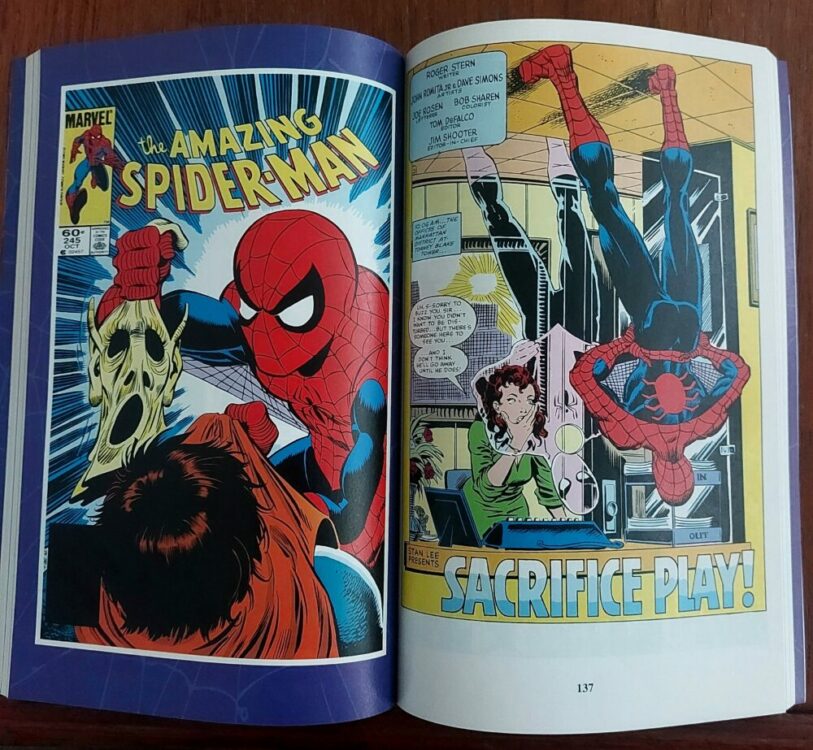
Sacrifice Play, the story in issue 245, is a classic misdirection narrative, leading both the reader and Spider-Man into a confrontation with the Hobgoblin that ends in revealing his face. But Spidey, and us readers, know that Lefty Donovan, the man Spidey un-masks, isn’t the man behind the villain. He is a patsy, a fall guy. And the mystery keeps on rolling.
I love this stuff. It’s classic superhero schmaltz. Roger Stern is so good at weaving Parker’s life around Spidey’s adventures and each issue is packed with story. Fight scenes stand out but the life dramas are where these issues excel. Love troubles, money troubles, career and education troubles; this is the stuff that made Spider-Man a popular title in the 1970s. The superhero element was always present but, by itself, it is nothing special. The excitement of reading Spider-Man lies in the soap opera and the mysteries. And John Romita Jr’s artwork is still bearable at this time, probably because he worked with other artists such as Dave Simons or Klaus Janson, who kept his style in check.
I’m nearly at the end of this collected Origin of the Hobgoblin but we all know that there’s more to come. So much more.
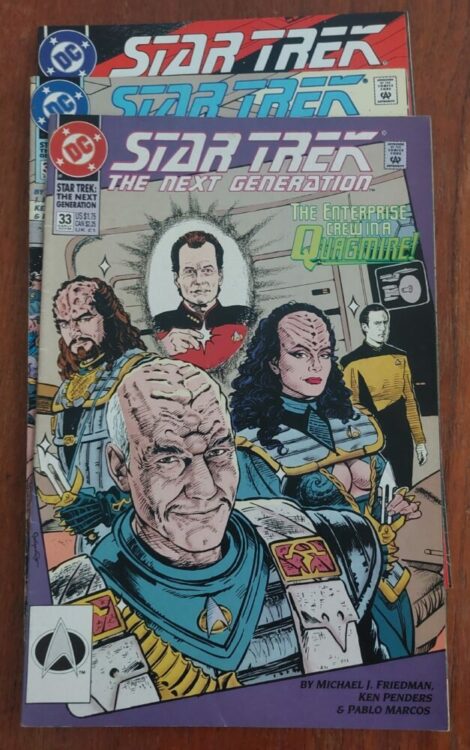
Star Trek: The Next Generation Credit: DC Comics
Comic Number 49: Star Trek: The Next Generation #33 (DC Comics 1992)
The new series of Star Trek: Picard has started (insert a meme of Kermit the Frog going ape here). So, what better time to drag out the few Star Trek comics that I own? Just like my favorite franchise, Doctor Who, I’ve never really got into the extended universe that surrounds these characters and their adventures, therefore my collection of comics is small. Issue 33, however, contains a whole bunch of my favorite things about TNG: Klingons running wild, Q causing chaos, and Miles O’Brien having lunch with Keiko. The writer of this issue — titled The Way of the Warrior (I’ve heard that title before) — Michael Jan Friedman does a really good job of capturing the characteristics of the Enterprise crew and boiling them down into a few panel snippets. The artwork by Kenneth Penders and Pablo Marcos isn’t quite as convincing, and if the various characters weren’t name-checked, it would be difficult to know who they are, especially when the transformation into Klingons happens.
However, the layouts are wonderful. The two-page spreads play with the normal directional reading that was, and is, still popular in mainstream comics. From the moment that Q shows up, the standard Z reading pattern is subtly altered to form S patterns, or N patterns, or a whole collection of lettered shapes. This inconsistency grows from the narrative and Q’s warping of the world around the Enterprise. As the characters are thrown out of their normal routine, so too is the reader forced to adapt to the new status quo. It turns an okay Star Trek comic into something more interesting, and more fascinating from a comics stand point.
And that was Week 7. I’ve nothing further to add except asking you to shout out in the comments below and let me know what you’ve all been reading. I’m always looking for recommendations, although access to comics is my biggest obstacle. Luckily, I have plenty of full boxes waiting to be re-read.