Home Blog Page 55

Project 365: One Comic Every Day, Week 25 (With More Apes)

A box of comics

The premise is simple: read one comic every day for the entire year. It seems like a simple task but there is no way that I read 365 comics last year, even if you count the individual issues in collections. So, this year, I am committing myself to this reading challenge, in the hope that I can broaden my reading habits and fully engage with my favorite hobby again.

What is your comic book holy grail? That one comic that, if money wasn’t an issue, you would buy and cherish more than your favorite child?* For me it would be Saru no Wakusei, the Japanese adaptation of Planet of the Apes written by Joji Enami and first published in 1968. The reason for this choice is that Apes is my favorite franchise when taking comics, books and related tie-ins into account, and this is the first comic of the franchise — published long before Marvel got in on the act.

As to why Planet of the Apes is my favorite franchise, I think Corinna Bechko sums it up best in her introduction to The Sacred Scrolls: Comics on the Planet of the Apes:

In the same way that a prism appears to be a simple lump of glass until it is held up to produce visible rainbows from invisible clear light, the seemingly simplistic setup of a world where apes evolved from men allows us to view every facet of society from a different angle with a fresh perspective.

So, with that in mind I’m going to read a bunch of different Ape comics, from various eras of publishing to see how they differ and what elements stay the same.

*If my kids are reading this, I love you both equally!
Planet of the Apes #1
Credit: Marvel Comics

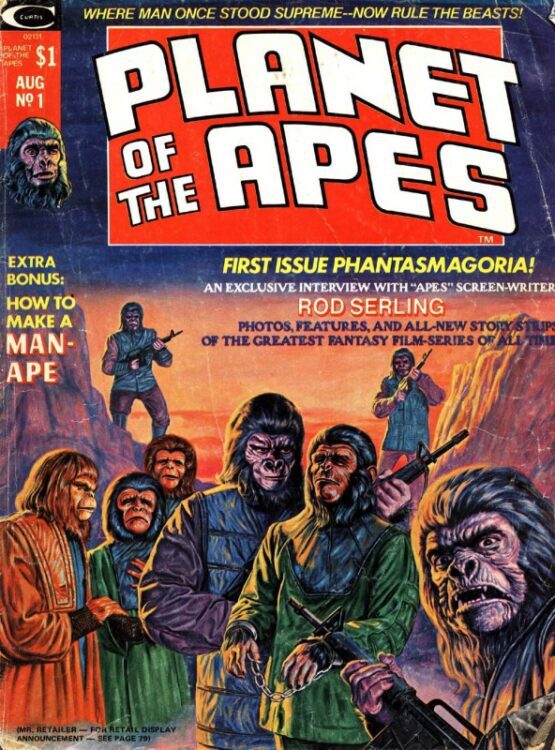
Comic Number 168: Planet of the Apes #1 (Marvel Comics 1974)

Over the years I have collected a number of Planet of the Apes comics. Most of the early Marvel ones that I own are from the UK weekly that included backup stories from other comics. However, thanks to the wonderful Hunter’s Planet of the Apes Archive website, you can access copies of the original comics as published, along with other, less known treats.

The original Marvel Apes products were published in a magazine format with a mix of text articles and comic strips. Issue 1 included the first part of Terror on the Planet of the Apes written by Doug Moench and illustrated by Mike Ploog. This is the start of one of the most famous comic book runs of the franchise, and from the very beginning you can see why it is much loved. The story is fast paced, thrilling, and populated with strong characters while the art is superb on every front.

After the first few chapters of Terror, the magazine has a few articles about the film series and an interview with original scripter Rod Serling, before concluding with the first part of Marvel’s adaptation of the first movie. Again the artwork is wonderful but it lacks the depth and finesse of Ploog’s work on the opening comic strip. The opening sequence with the crash of the Icarus onto the planet is dynamic and powerful and demonstrates the commitment the creators had to producing a good comic — not just an easy adaptation. Several pages of silent panels are dedicated to the scene-building suspense and setting the uncomfortable atmosphere that follows for most of the strip. Doug Moench, George Tuska, and Mike Esposito capture the spirit and pacing of the movie (if not the likenesses of the actors) in superb fashion, giving the readers a perfect stand-in for the actual movie, which had long since disappeared from the cinema.
Planet of the Apes #1 (2 and 3)
Credit: Malibu Comics

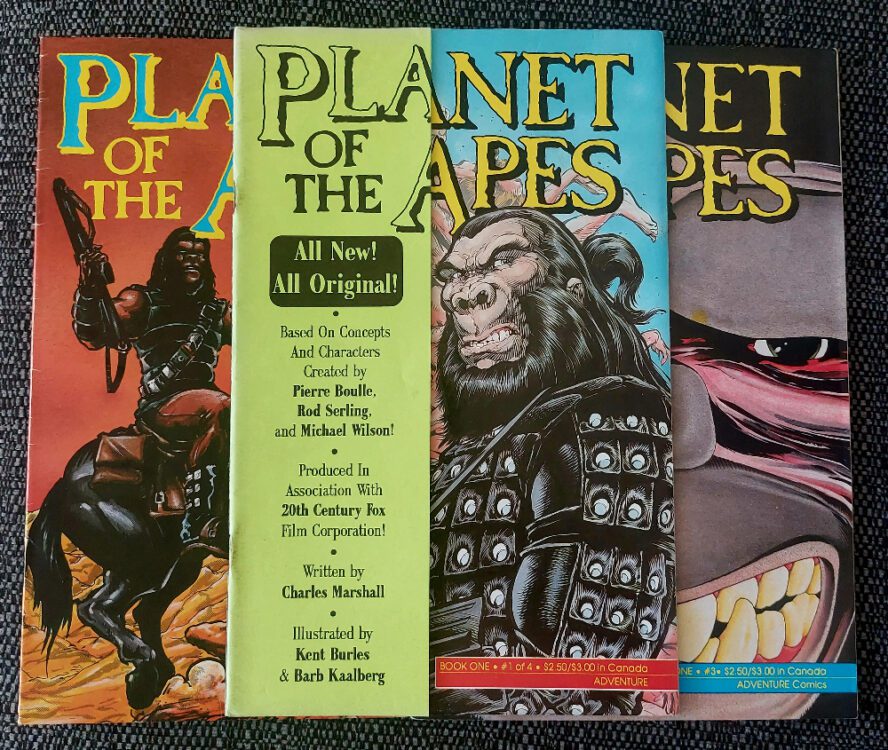
Comic Number 169: Planet of the Apes (Adventure Comics 1990) #1

After the end of the Marvel run, there was a long dry patch for Apes comics. From 1977 to 1990 there were no new Apes comics on the market unless you could read Hungarian*. Then, Malibu Graphics Inc bought up the license and Charles Marshall took the reins. Over the period of three years, Malibu would publish 50 plus Apes comics under their Adventure Comics imprint, with the main title, Planet of the Apes (obviously) taking up 24 of those issues.

On the opening arc, Charles Marshall worked with penciller Kent Burles and inker Barb Kaalberg to reinvent the look and tone of the Apes franchise. The visual element of the strip is the part that stands out most during this run, with the apes looking markedly different to their depiction in the movies and Marvel comics of the 1970s. I don’t think I would be out of place to suggest that the design of these apes was influenced by the late 1980s action movies and the overtly macho visual that was becoming a big part of the comic industry. The first few pages of this first issue contains a number of different ape characters and each one is heavily built with bulging muscles and an overpowering physical presence. Even the human characters, when they do turn up, are fairly buff, but the difference in size and stature is emphasized in every panel. Charles Marshall’s apes are true beasts.

Set shortly after the fifth movie, the Adventure Comics series has more aggressive apes with violence as a major component to the narrative. Some of the humans have speech and high intelligence, but others do not. A lot of the details of the world are not examined or explained but the physical planet itself, with various locations and features, is explored at great length, especially in some of the mini-series from this era (see below). As the story moves into the Forbidden Zone, grotesque mutants are introduced and new species of ape.

This iteration of Planet of the Apes is jarring compared to the other entries into the franchise, especially because of the visual direction that the creators took. It looks, feels, and reads like a small independent publication, with more stylistic artwork and a fast paced plot. There is the sense that everything has to be included at once because no-one is sure if they’ll get another issue. I personally am not a fan of the artwork, and I do find the scripting to be awkward at times. Some of the speech is real B-Movie standard, which is kind of fitting for the franchise, but it doesn’t read like a knowing nod to the heritage of the movies. Exposition is dropped into the speech and the captions to advance the story as quickly as possible.

Having said that, this series is a thrilling ride, if you can accept the artwork and speed through it at the same rate as the writer. Read it, don’t question it, enjoy it, and move on. Wasn’t that the mantra for 1990s comic industry?

*The original novel was adapted into a comic, A Majmok bolygója, and published in Hungarian in 1981. According to Wikipedia it has never been officially translated, however there are fan translations available online.
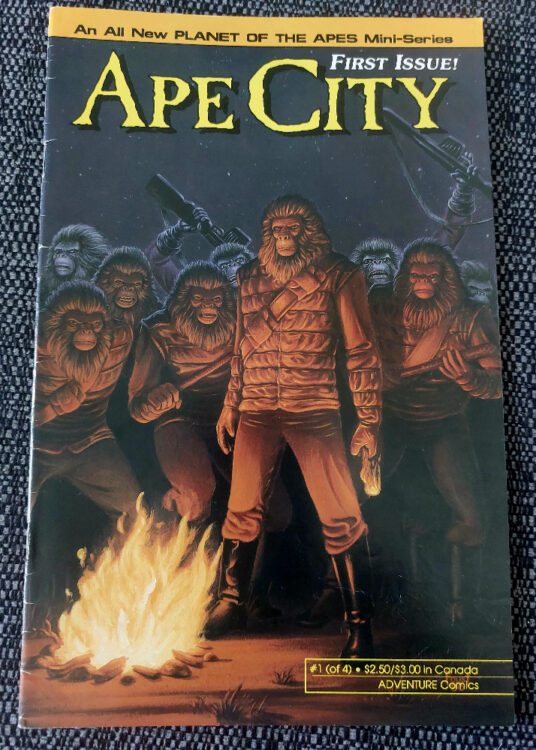
Ape City #1
Credit: Malibu Comics

Comic Number 170: Ape City #1

Adventure comics published 24 issues under the title Planet of the Apes. They also published a small collection of miniseries and annuals set on, or around, the same world. Ape City was their first spin-off and it was something a bit different, as Charles Marshall notes in the introduction: “Instead of more mean gorillas and apes shooting it up on horseback, I [Marshall] had a vision of a pack of gorillas on big, mean Harleys, tearing down a deserted highway like the Horsemen of the Apocalypse”.

The artists are different from the main title, with M.C. Wyman on pencils and Marvin Perry Mann on inks, which means that the look of the comic is also different. The apes are more in line with the movie visual, although they still suffer from broad shoulders and exaggerated physiques.

Set in Europe at roughly the same period as their other title, Ape City throws everything at the wall and doesn’t bother to stop and check if any of it sticks. There are ape lounge singers, ape gangsters, ape scientists, ape ninjas, and a time-traveling human suicide squad hell bent on killing 500,000 apes for reasons that don’t really matter. This comic is like a bag of frogs. Heavily armed frogs. Heavily armed, cliché-spouting frogs. With a guitar.

Out of all of the Apes comics I have read, this is the one that I feel people will either love or hate with no room for mixed feelings. It has some great qualities, the artwork is much better than the sister title, but it suffers from a plot that makes little sense and a pace that is nearly fast enough to send the daughter of George Taylor into the future to find her father. Oh yeah, that’s one of the narrative threads in this story.

They took a risk with Ape City and it succeeded to a point. It demonstrated that it was possible to tell stories in this franchise that were new and different from the original without drifting too far from the core element of the world. The more advanced city aspect of the narrative makes sense in this comic. An army of 1940s style gangster apes, less so.

But it’s all fun until the humans show up. The depiction of the humans in this miniseries is the one element that dates this comic. They are archetypes of the early 1990s comic book heroes, or anti-heroes depending on your viewpoint. Early Image Comics are full of these types of macho, weapon wielding, thugs. It’s not clear if you are supposed to be on their side or not. I think that Marshall was probably hoping the reader would support them in the same way that an audience is on the side of the Suicide Squad, but there is nothing to like about these characters. They take the fun out of an otherwise enjoyable romp.
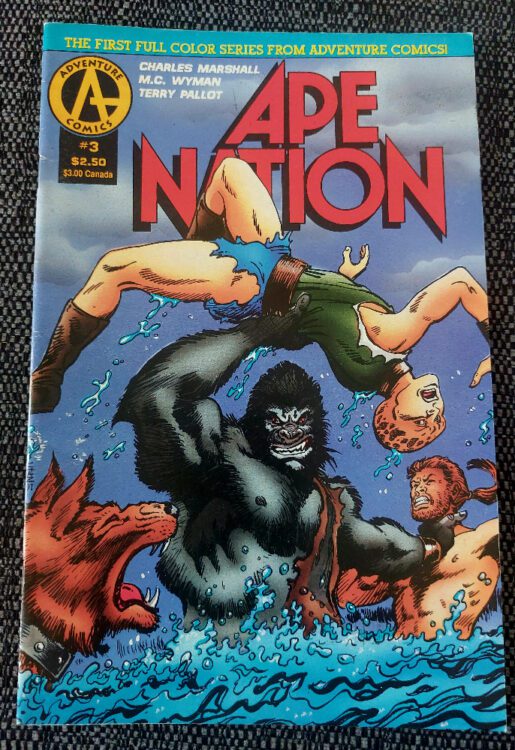
Ape Nation #1
Credit: Malibu Comics

Comic Number 171: Ape Nation #3

Ape Nation was another miniseries published by Adventure Comics. It was a four-issue crossover with another of their licensed properties, Alien Nation. I have included issue 3 because I only have this issue, however, the comic is quite fascinating. It is the first example of a cross-over with the franchise, something that BOOM! Studios would pick up and run with in the 2010s, and the first full-color series from the publisher.

From a narrative point of view, the inclusion of the Tectonese into the Planet of the Apes story makes perfect sense here. Marshall creates a credible plot and one that doesn’t really alter the timeline of the original movies (there is a sense of alternative dimensions from the narrative but without the other issues I never really followed it. To be honest, it actually doesn’t matter). Alien Nation was chosen as a partner for the apes partly due to ease (the publisher owned the rights to both), but also because the B-Movie nature of both franchises made them comfortable bedfellows. The outlandish stories both have the same contextual undergrowth: the examination of difference and racism. Unfortunately, that isn’t something that is really developed in this series but it lays the groundwork for future endeavors.

A quick word on the artwork: it is fantastic. M.C. Wyman and Terry Pallot use very fine lines and clearly love drawing individual strands of hair. The colorist is David de Vries and they are the one who makes this version of Planet of the Apes different and more exciting that the other Adventure Comics runs. There are clear contrasts between the species which are then made more subtle when dealing with particular characters. Each page immediately sets the scene, outside or inside, and the contrast between landscape and characters is immediately noticeable so that the reader can identify character and location before reading any of the text. The colors in this comic make it easier to follow the narrative and is a great addition to this era of ape stories.
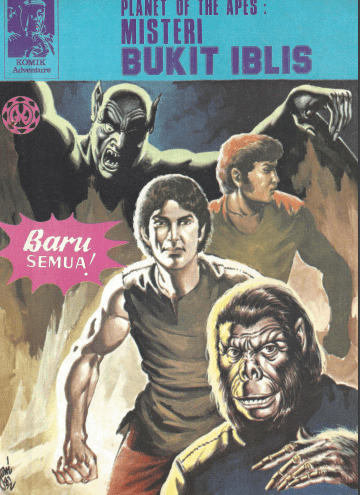
Misteri Bukit Iblis #4
Credit: Maranatha

Comic Number 172: Planet of the Apes #4 (Indonesian publication)

I have read a few of the Dark Horse Comics Planet of the Apes stories that follow the 2001 Tim Burton re-imaging movie but after skipping through a couple of issues today, they didn’t really grab me. They don’t appeal to me but that’s not a judgment on the writing or art, I just find them difficult to get excited about.

The Indonesian Planet of the Apes comics, however, are a different story. Oh boy, are they a wonder to behold. Back in 1981 Indonesian publisher Maranatha produced a number of issues telling stories of high adventure involving apes and humans traveling together in a similar vein to the television series. In fact, the first few issues are re-telling of some of the television episodes.

Translated versions can be found on the Hunter’s Archive site and I highly recommend checking them out. They are hilarious, mostly for the wrong reasons, and are like elaborate works of fan-fiction. You cannot fault the dedication that writer and artist Harry Mintareja puts into the comics and the artwork within the panels is very good. The layouts are simple, two panels per page, with explanatory caption boxes in practically every one. However, the actual stories, especially after the first two issues, are pretty dreadful. The dialogue is cringe worthy but I wonder if some of that is down to the translation process, but no amount of dialogue fixing would be able to save the narrative.

However, as examples of comic book history, and parts of the Planet of the Apes franchise, these comics prove to be fascinating. The appeal of the Apes franchise obviously stretched out from America and reached so many parts of the world that the concepts and stories were picked up and continued, even in unofficial formats. Mintareja was inspired by the previous movies, television shows, and comics enough to produce his own work. The result may not win any Eisner Awards but it does find a place in the hearts of fans, eager for more and more Apes stories. But it also gives researchers of popular culture another avenue to explore in relation to the phenomenon that is Planet of the Apes.
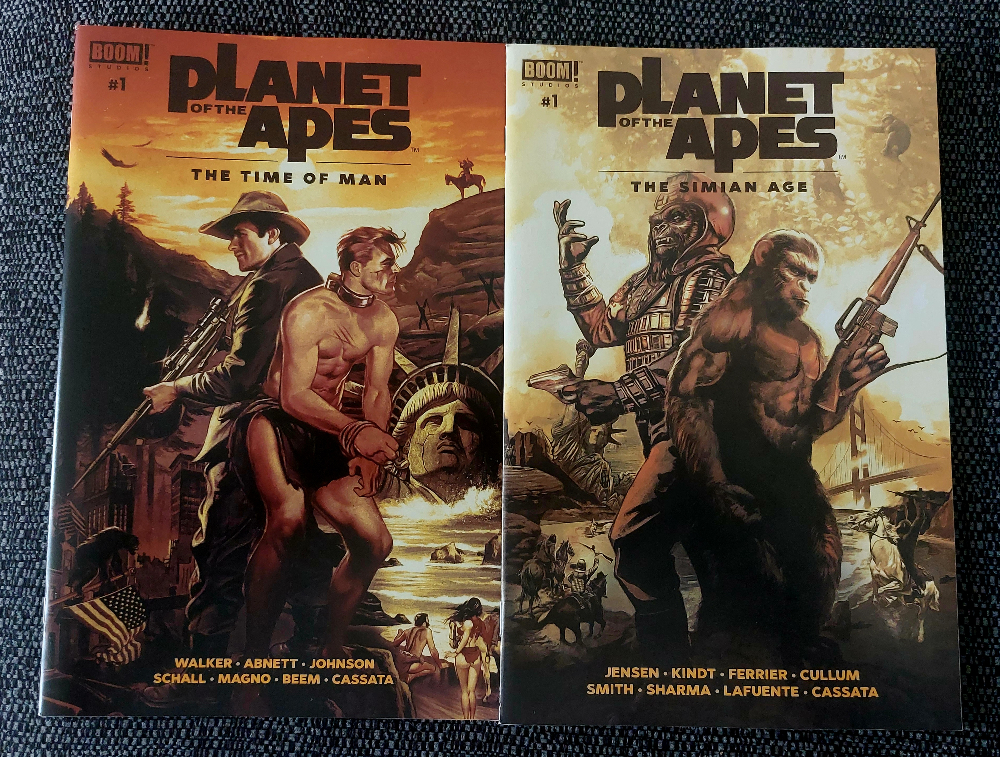
The Time of Man and The Simian Age
Credit: BOOM! Studios

Comic Number 173: The Time of Man and The Simian Age

These two are the newest comics in this week’s list. Both are BOOM! Studio annuals and are anthologies featuring several short stories set across a range of continuities. They are also the only comics I have read in the last two weeks that have any link with the rebooted Planet of the Apes movies, of which installment four is currently in the works. “Mountain” by Phillip Kennedy Johnson, Morgan Beem and Ed Dukeshire is a wonderful tale of humans hiding from the ape revolution. Fear is the enemy in this narrative and compassion is the hero. In contrast, “Cloud and Rain” by Ryan Ferrier, Lalit Kumar Sharma, Gabriel Cassara, and Ed Dukeshire demonstrates the power of hate and anger in manipulating the political and social worlds of ape and human.

The Time of Man features two more stories that both share an emotional outcome. One firmly set between the films Escape and Conquest, and the second set much later, detailing the treatment of human pets. This second story, written by Dan Abnett demonstrates the indifference that many of the ape’s have towards the humans, before the purge as depicted in other BOOM! Studios ape comics. But this is a reflection on the way that we, in our current society, treat our pets, wild animals, and to a certain degree the environment as a whole.

The Simian Age also contains three stories. One of them is about a rebellion born within a gorilla soldier who befriends some humans. However, it is the first story in the comic, Mother of Exiles, written by Jeff Jensen and illustrated by Jared Cullum that is the most interesting. The moving tale is helped along by the watercolor style artwork which creates a dreamy, wistful atmosphere. There is the sense of longing, of isolation, and then of hope. The ten page comic encapsulates the very best of Planet of the Apes, in references and emotional contexts. It stands above all of the other stories in these two comics despite each one being a worthy addition to Ape lore. The letters here are by Ed Dukeshire as well, who worked on all of these stories, which in itself is impressive. His work changes subtly between the era’s to reflect the slightly different tones and art styles. It’s fascinating to look at one creator’s work in conjunction with many others within one comic.
The Sacred Scrolls: Comics on the Planet of the Apes
Credit: Sequart

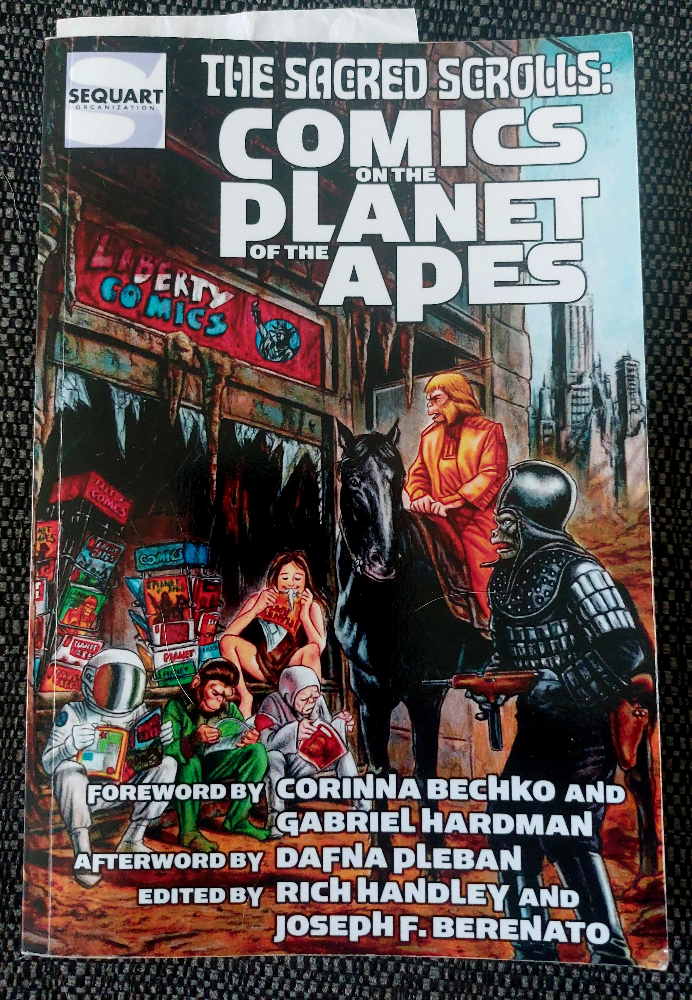
Comic Number 174: The Sacred Scrolls: Comics on the Planet of the Apes (published by Sequart)*

Over the last two weeks, while reading Planet of the Apes comics, I have also been reading books and essays about the franchise that have increased my fascination with it. For example, Susan Bridget McHugh’s article in the South Atlantic Review (Vol 65 No 2) entitled Horses in Blackface: Visualizing Race as Species Difference in “Planet of the Apes” took the racial depiction within the movie franchise to new levels that I’d not even considered before. I am also re-reading John Jakes’ adaptation of Conquest on the Planet of the Apes and noticing turns of phrase and details that I hadn’t previously. And, I re-read The Sacred Scrolls, a wonderful book about the history of the comics from the franchise.

Broken down into a collection of essays focusing on different runs of the comic, The Sacred Scrolls takes an in-depth look at the narrative and artistic qualities of the comics and how they fit into the grander scheme of the franchise. I don’t think there is a single stone left unturned as the book covers comics from all over the world as well as touching on comics that were never even published. If you have any interest in the comics relating to Planet of the Apes, this book is indispensable. It is conversational in tone and doesn’t delve too deeply into sociological or political readings of the texts but then it is designed as a guide to what’s available and succeeds perfectly at being just that.

*I know, it’s not a comic but another book about comics. But I read 40+ issues last week, surely I’m ahead of the curve at this point?
Monkeys Fighting Robots Youtube

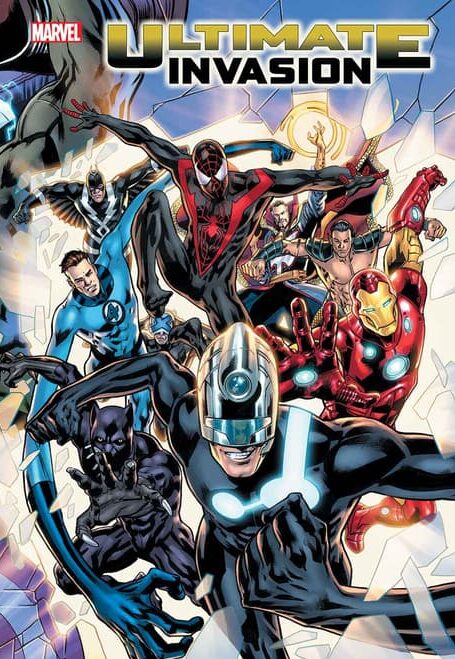
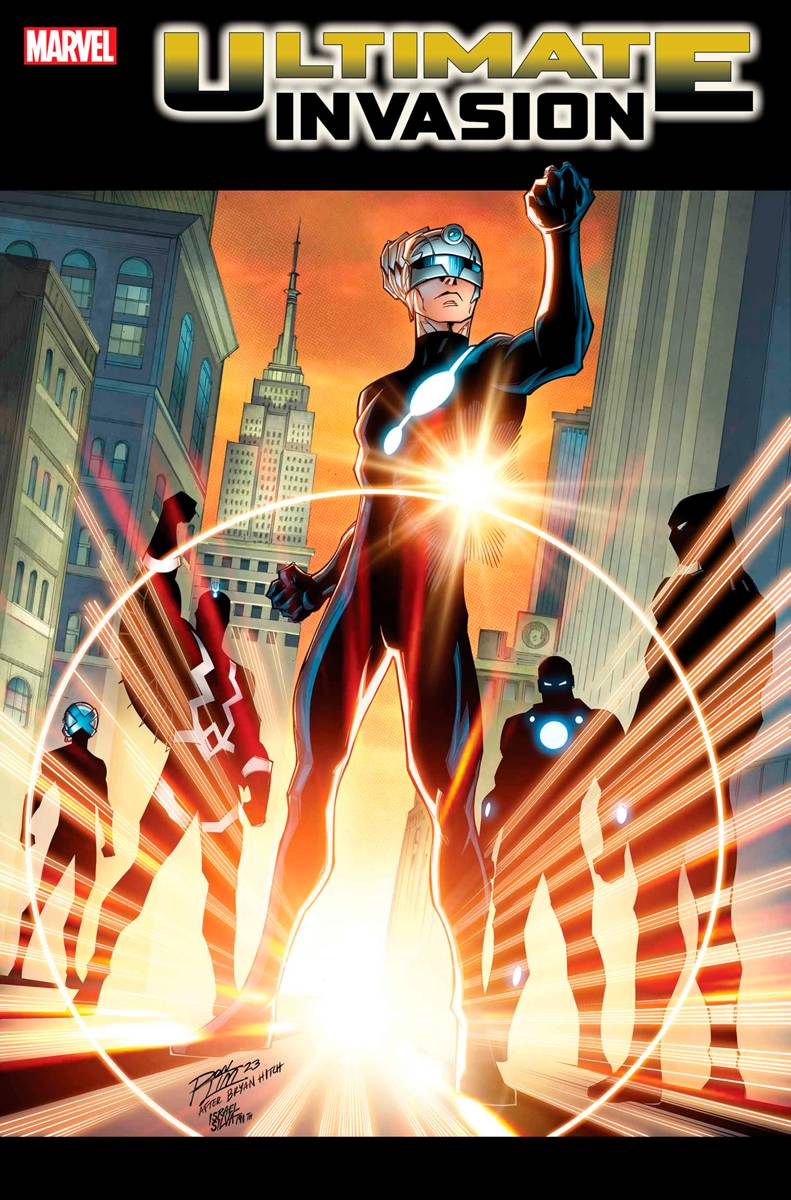
Review: Ingenuity, Insanity, and Inhumanity in ULTIMATE INVASION #1

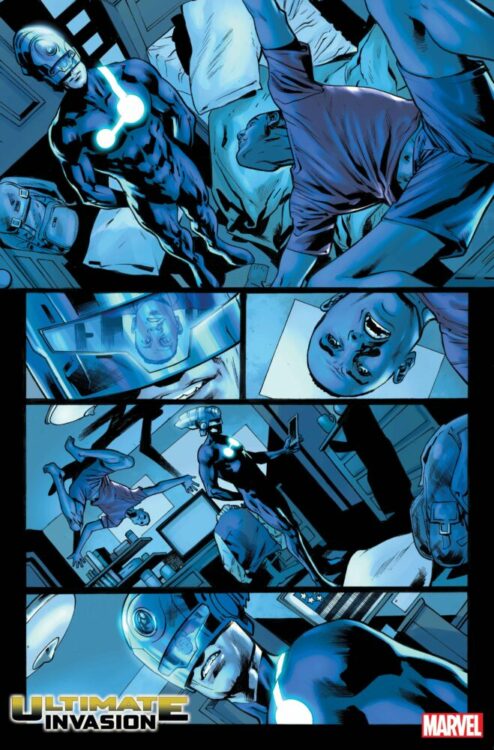
It’s hard not to just excitedly ramble on and on about Marvel Comics’ Ultimate Invasion #1. Writer Jonathan Hickman and penciller Bryan Hitch dive back into the characters and stories they’ve already left such an indelible mark on — along with inker Andrew Currie, colorist Alex Sinclair, and letterer Joe Caramagna. These creators have played in this sandbox before. They’ve created pure magic and gripping intrigue, and blown readers out of the water. In doing so, they’ve given themselves big shoes to fill with a comic like Ultimate Invasion. Thankfully, they absolutely deliver!

Writing

There are two amazing things at work in Hickman’s script. First, you get the sense that all of this has been years in the making — and that’s because it has. Hickman pulls characters, lore, and details from his runs on Fantastic Four, Avengers/New Avengers, Ultimate Comics: The Ultimates, and X-Men. For each story he references, Ultimate Invasion feels like a natural culmination of those plotlines. But that’s only the half of it.

What makes Hickman’s writing sing is that he balances his high stakes, thoroughly-planned, universe-altering plot with a grounded, personal center. This isn’t about the Ultimate universe. It’s not about dead worlds or clandestine power moves. Ultimate Invasion is about Mr. Fantastic and the Maker — each the Reed Richards of their own earth. The Maker is a dark version of the leader of the Fantastic Four that we all know and love, but he makes some strange, twisted sense. The Maker is inhuman and insane. Or is he? Maybe he’s just a version of Reed Richards that doesn’t care what other people think. Hickman knows that a return back to Earth-1610 might get our minds reeling. But it’s the warring ideologies of these haunted men that gets our hearts involved.

Art

Our introduction to Ultimate Invasion sees a strike team hitting some unknown location. There’s gunfire, explosions, and panic. Hitch and Currie lean into the chaos. Each panel focuses us in too close to see the whole of what’s going on. We see helmeted soldiers aiming at one another, rockets being launched, and explosions that obscure who it is exactly that’s blowing up. We’re often left wondering who is shooting at who, until it’s clarified a panel or two later. Hitch and Currie makes us feel like we’re right there, surrounded by the battle and unable to focus on anything other than dodging bullets and trying to get out alive.

In one particular scene, we see Miles Morales and the Maker have a brief conversation. In the background, the walls are covered in posters, windows, and square furniture. As the two stand in the foreground, the wall behind them looks ever so slightly like a comic book page. They look like characters who have jumped out of the panels and escaped the reality they were supposed to be confined to, which is especially fitting for refugees of a lost world.

Coloring

Sinclair brings so much intensity to the plot through color. Most scenes are cast in an overwhelming hue that changes all the colors in each panel to shades of a single color. When the soldiers enter the location they’re attacking, the alarms turn the entire place red. When they reach their destination, in the lower levels of the building, everything changes to a cool blue. We feel the blood-pumping action of the first scene change to what should be a relaxing aura. Except that Sinclair is playing with us here. We know that whatever these soldiers are after can’t be good, so the blues that are supposed to calm us actually make us lean further forward in our seats. Sinclair is telling us “everything is okay now” just so we can catch him in the lie and worry all the more. It’s a brilliant effect that elicits an incredible amount of dread. Sinclair makes use of this genius technique throughout.

Lettering

Caramagna takes a very grounded and minimalistic approach to lettering in this issue. There are no flourishes in the fonts or the word balloons. Everything is straightforward and downplayed. There aren’t even any sound effects. Bullets fly by silently, bombs go off with no fanfare, and people teleport in and out of places without a sound. The few things in the lettering that do stand out are still quite subtle — with one amazing exception. First, Caramagna draws our attention to the differences between the Maker and those around him. He’s from a different universe, and the font in which he speaks isn’t in all-caps like the rest of 616’s denizens. Elsewhere, a character is speaking as they melt away. Their font looks wobbly and uneven, though only slightly so, and their word balloon remains normal. But in the final moments of Ultimate Invasion #1 we get our first sound effect, written in big, thick, red letters. Caramagna draws our eyes to it to underline its significance and add to the drama with a final, exciting display.

Verdict

Ultimate Invasion has the unique distinction of having to meet big expectations — expectations set by the same people working on this very book. Luckily, Hickman, Hitch, Currie, Sinclair, and Caramagna rise to the occasion — even exceeding expectations — and give us a book that is both exciting and grounded at the same time. This is just the beginning of what I’m sure is going to be a wild ride to remember. Ultimate Invasion #1is out from Marvel Comics at a comic shop near you! Do not miss this unbelievable event, you will regret it.

Monkeys Fighting Robots Youtube

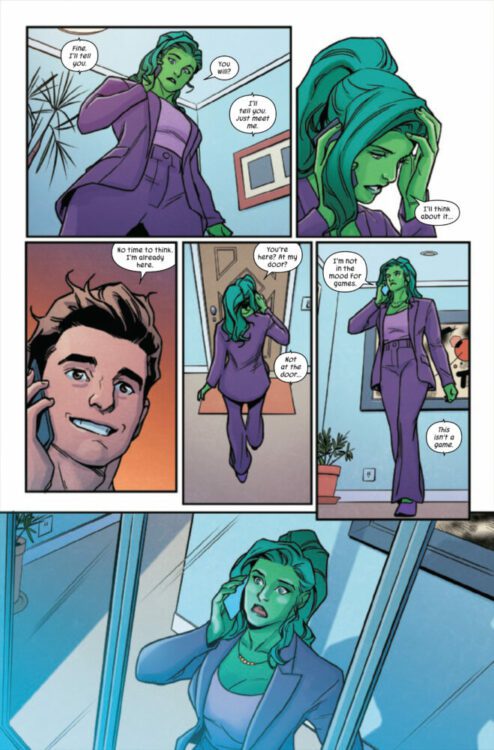
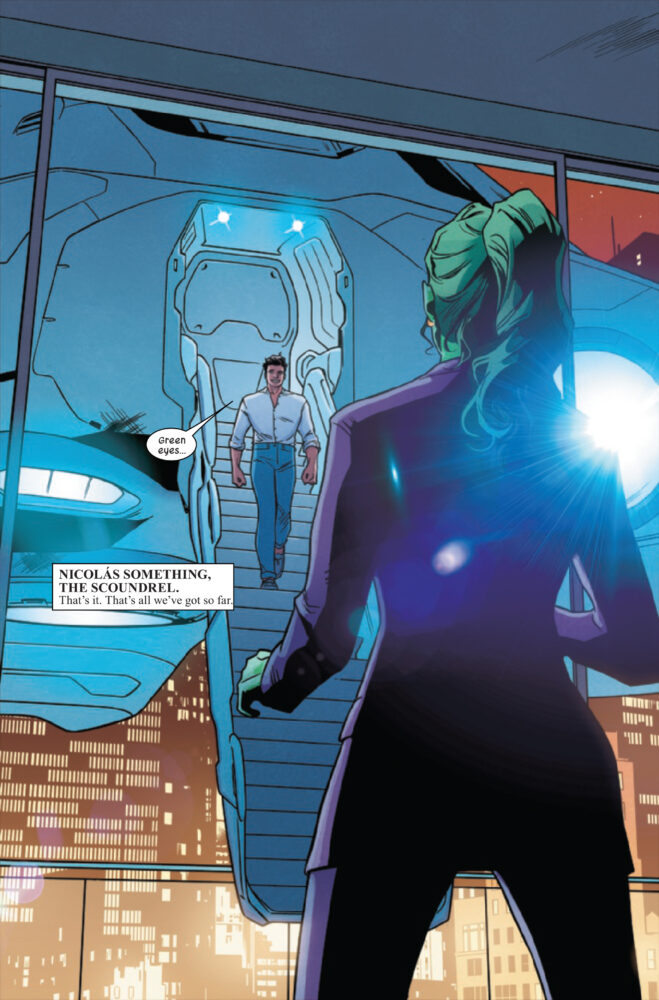
Marvel Comics Exclusive Preview: SHE-HULK #14

marvel comics exclusive preview she-hulk she hulk

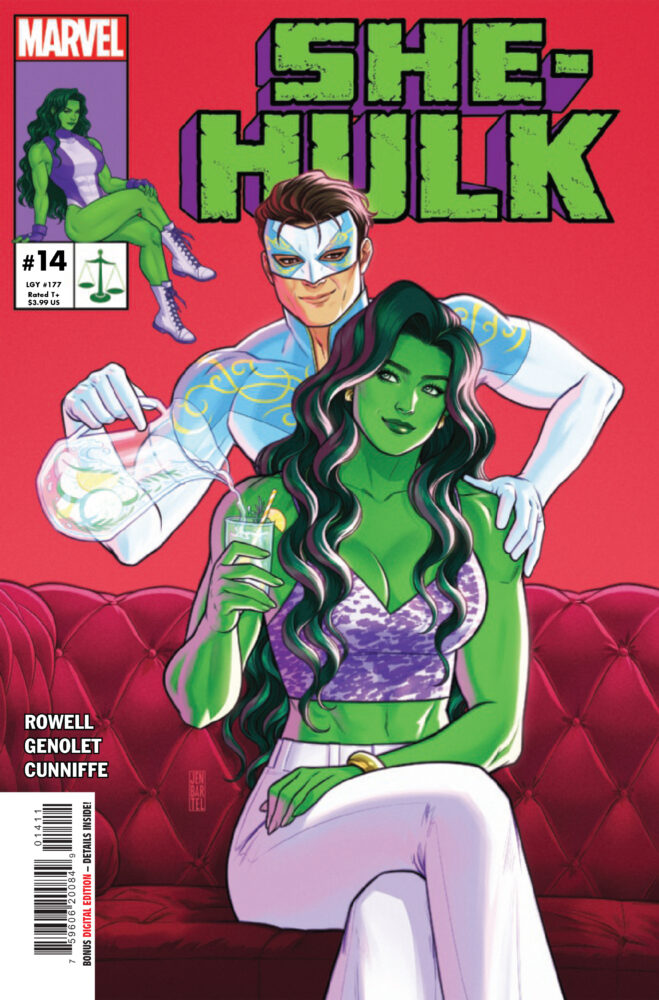
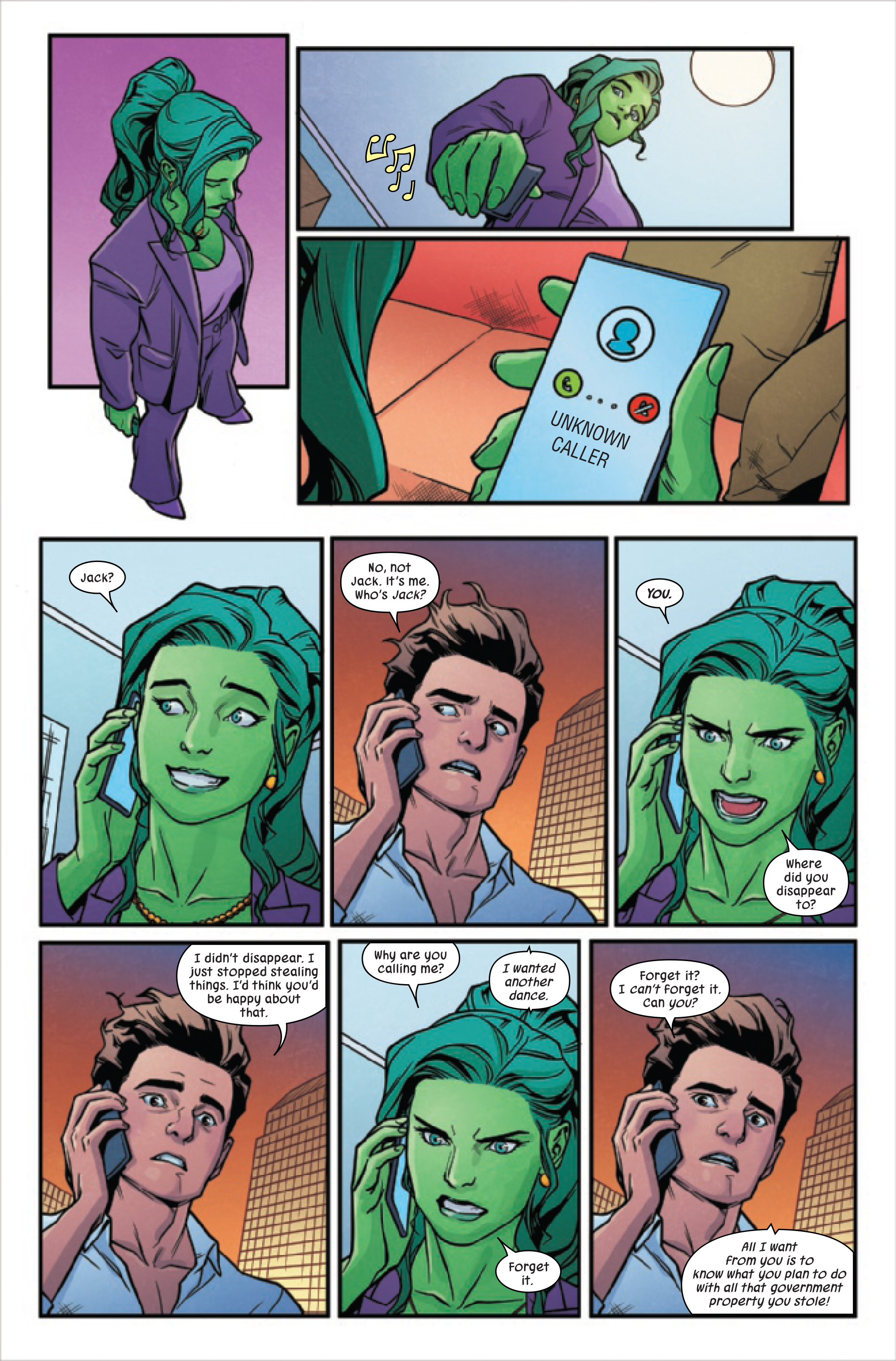
SHE-HULK #14 hits your local comic book store on June 28th but thanks to Marvel Comics, Monkeys Fighting Robots has an exclusive three-page preview for you!

About the issue:
The secret history of THE SCOUNDREL revealed! The coolest new villain of 2023 has been shrouded in mystery, but SHE-HULK is putting on her detective hat and getting to the bottom of it…

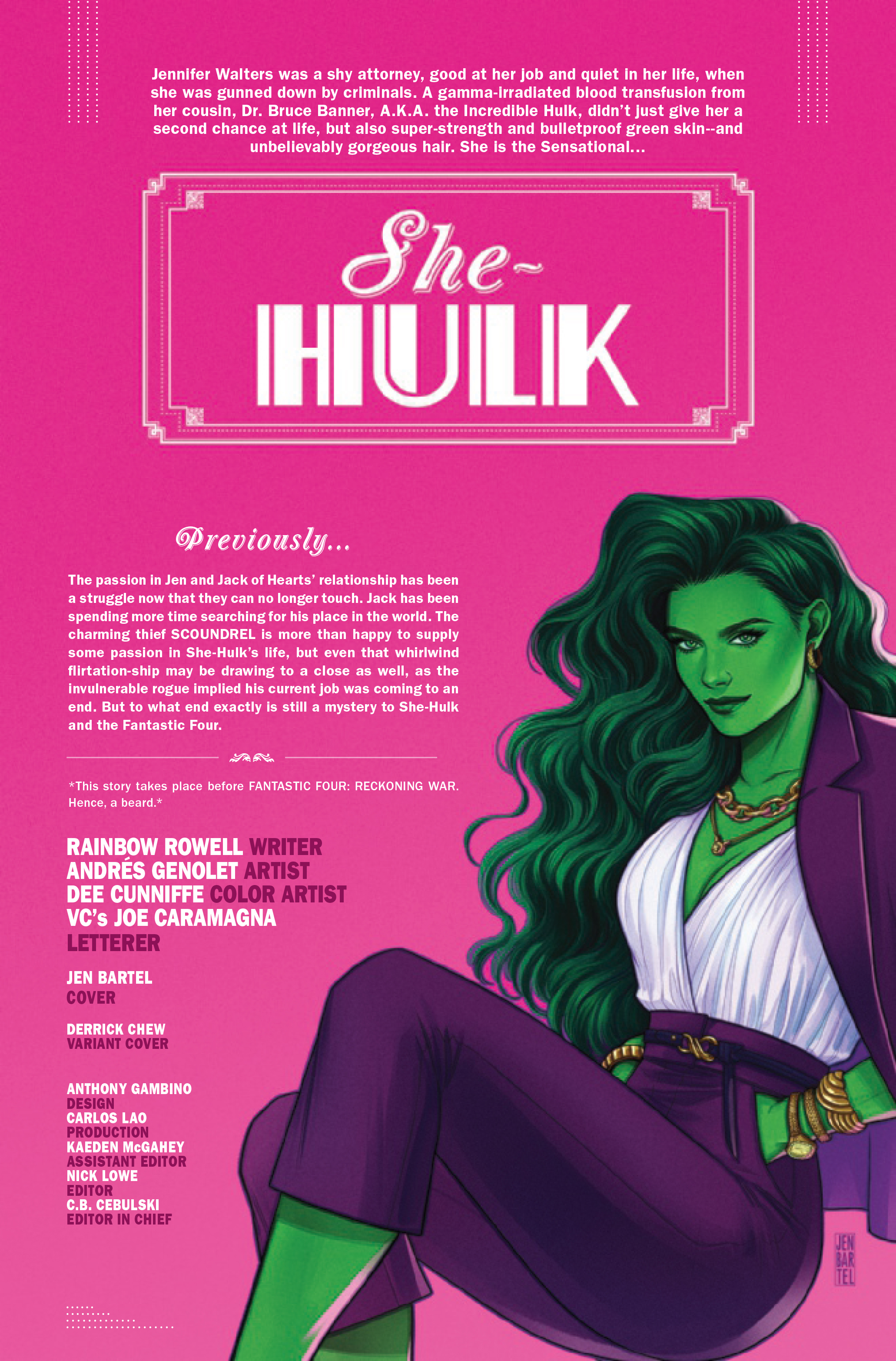
The issue is by writer Rainbow Rowell and artist Andrés Genolet, with colors by Dee Cunniffe, and letters by Joe Caramagna. The main cover is by Jen Bartel.

Check out the SHE-HULK #14 preview below:

marvel comics exclusive preview she-hulk she hulk

marvel comics exclusive preview she-hulk she hulk

marvel comics exclusive preview she-hulk she hulk

marvel comics exclusive preview she-hulk she hulk

marvel comics exclusive preview she-hulk she hulk


Are you reading Marvel’s current SHE-HULK comic? Sound off in the comments!

Monkeys Fighting Robots Youtube

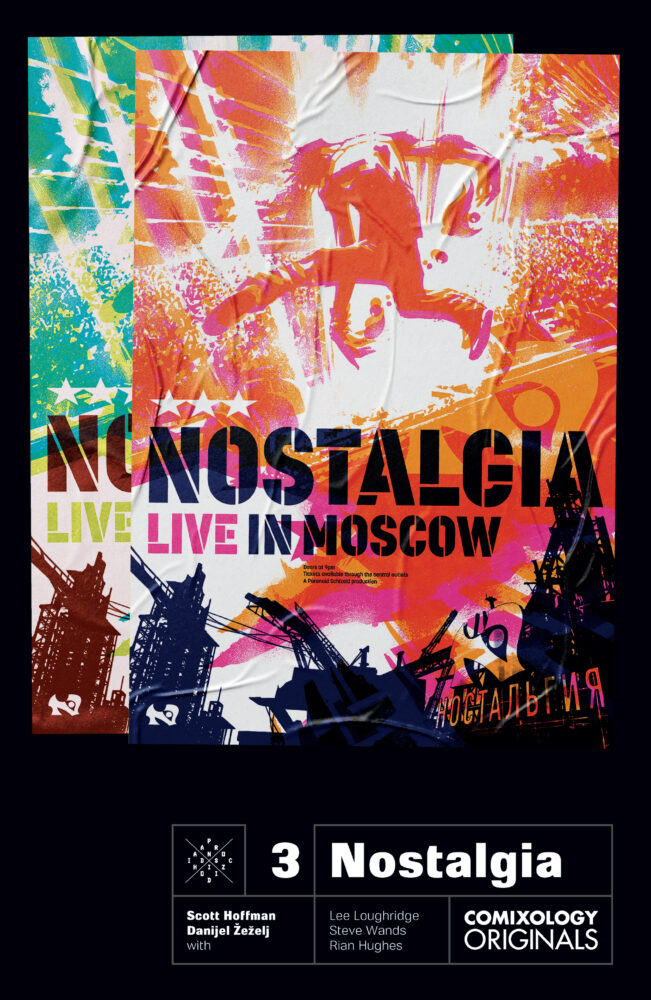
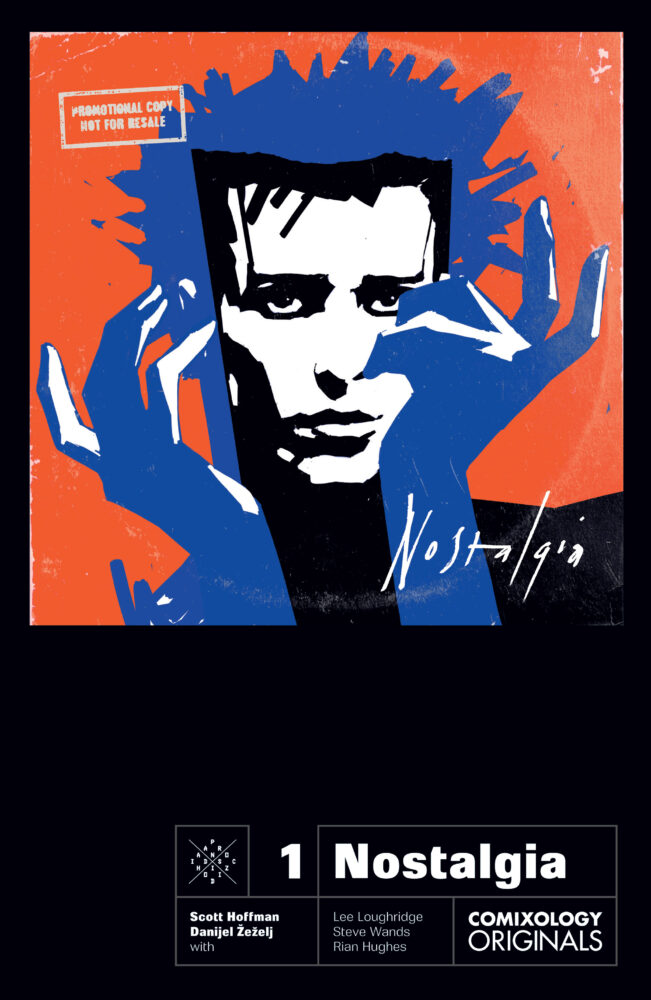
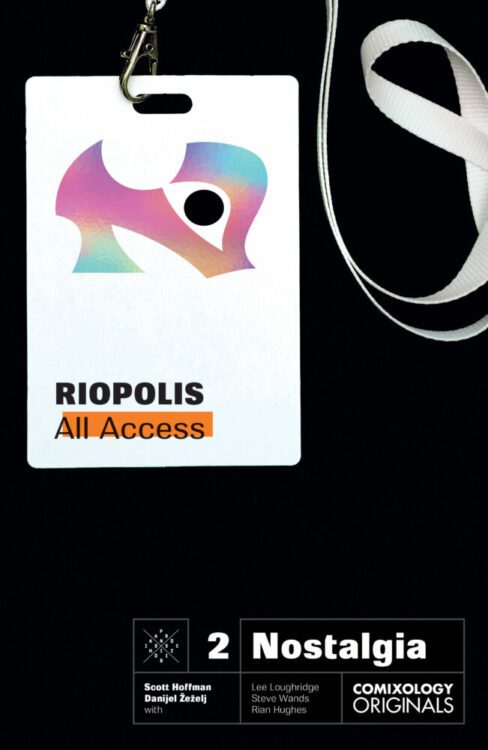
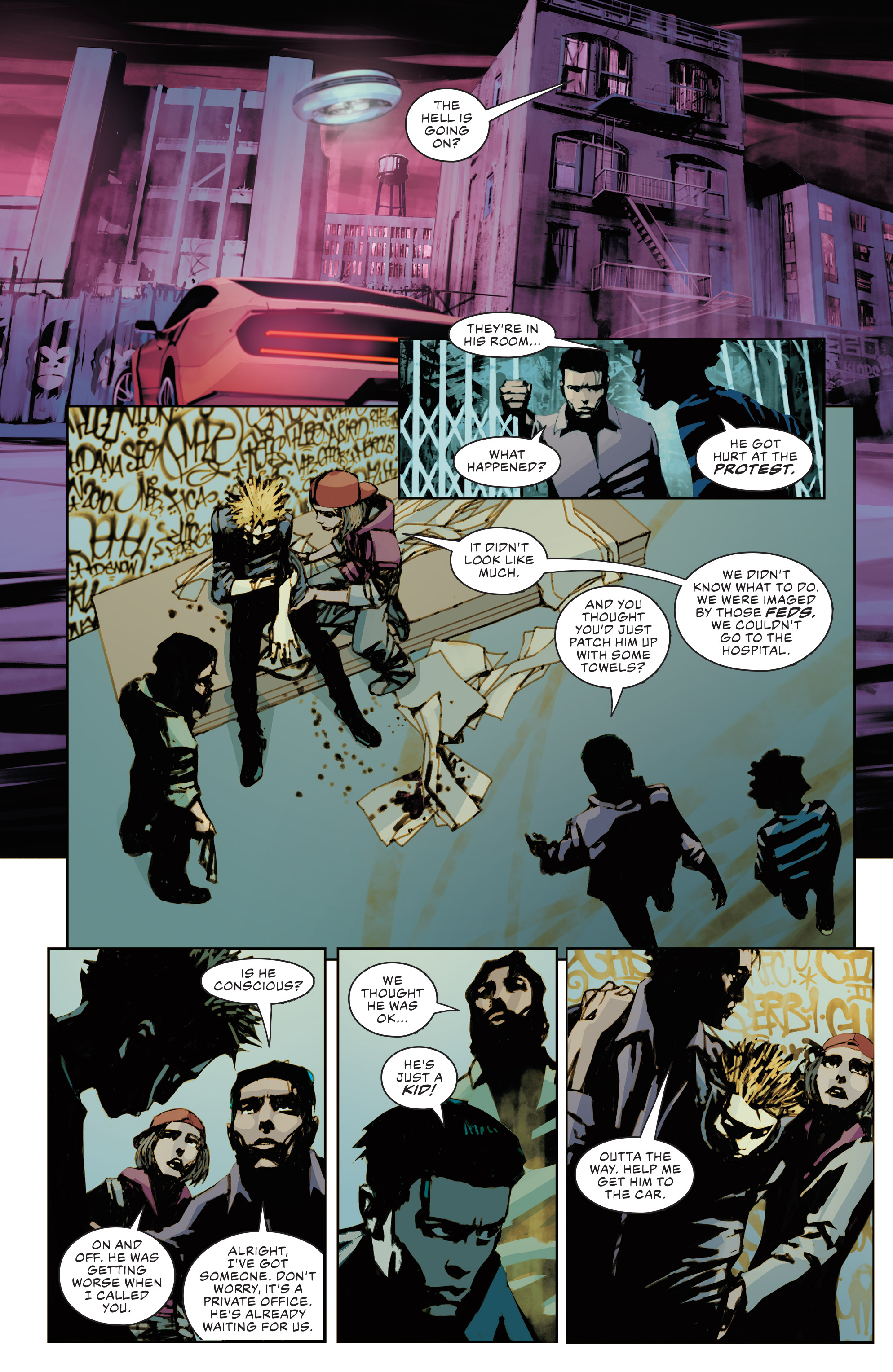
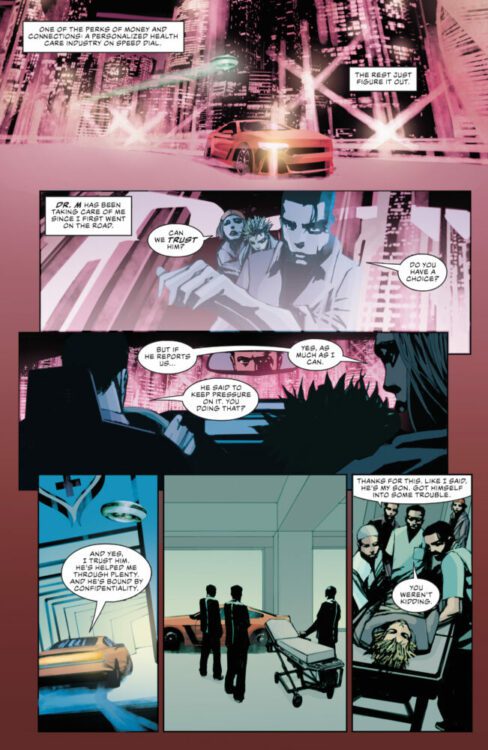
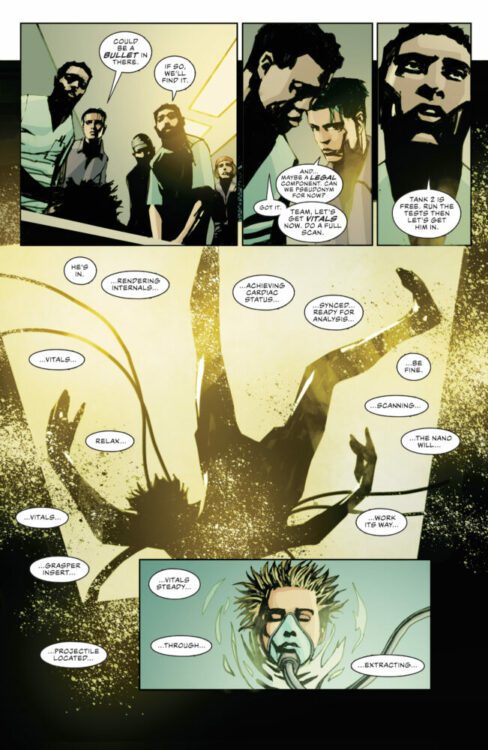
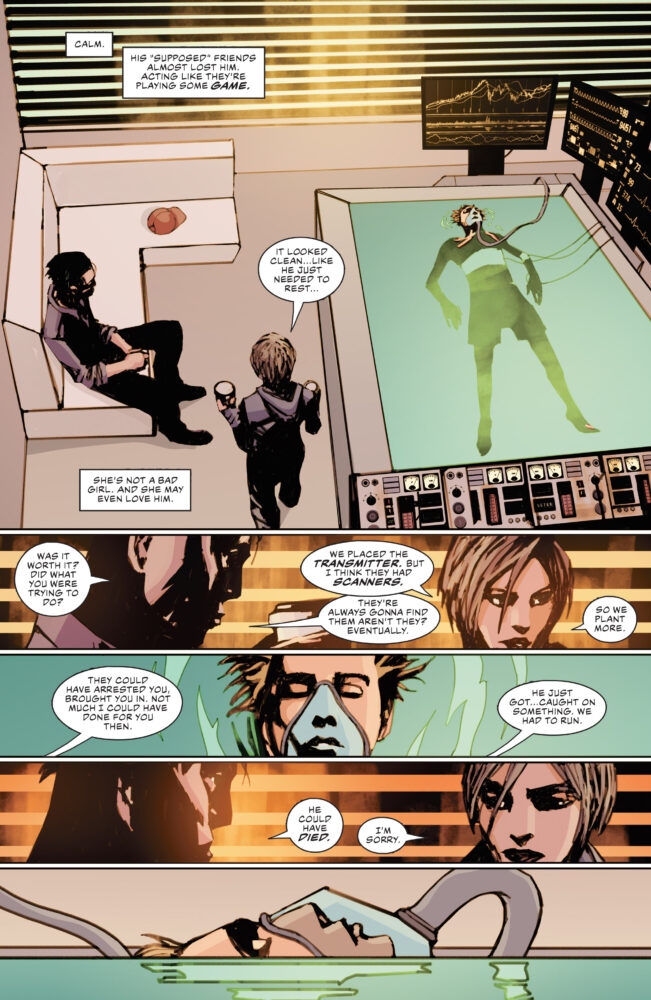
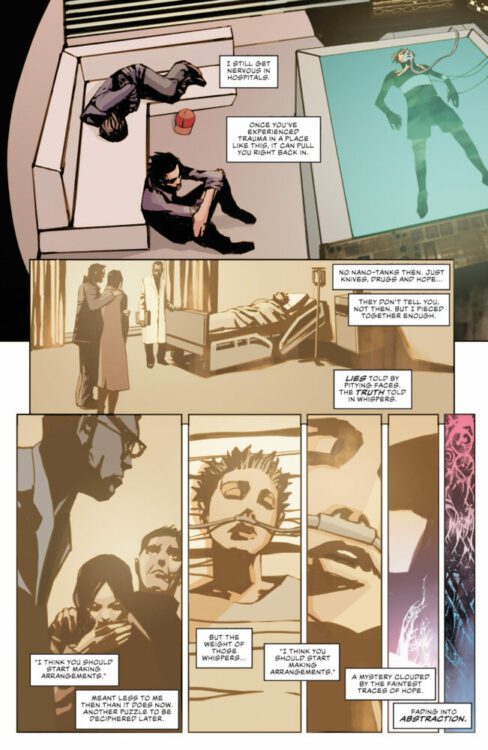
Read The First 5 Pages Of NOSTALGIA #3 (Comixology Originals)

comixology originals exclusive preview nostalgia scott hoffman scissor sisters Danijel Žeželj

NOSTALGIA #3 hits the digital space on June 27, thanks to Comixology, Monkeys Fighting Robots has a five-page preview for our readers. The book is written by Scott Hoffman, with art by Danijel Zezelj, Lee Loughridge drops the colors, and you will read Steve Wands letter work.

About the series:
Nostalgia, a reclusive rock star in a dystopian near-future, receives a mysterious package, addressed from a fan, that leads him to face a shadowy character from his past. As Nostalgia gets closer to Nathan and, hoping to sway him from his bad influences, invites him to stay with him; new faces emerge from Nostalgia’s past, leading them to visit an old friend on his space station.

Enjoy the preview below.

About the Creators:
Scott Hoffman (aka Babydaddy) is perhaps best known as the co-founder of the multi-platinum selling rock/disco/glam/pop band Scissor Sisters. Alongside Jason Sellards, aka Jake Shears, Scott co-wrote and produced the music, and from 2001-2012 the band toured worldwide, received (among others) an Ivor Novello and multiple Brit awards, garnered multiple top 10 singles and sold nearly 7 million albums worldwide. “I Don’t Feel Like Dancing,” one of their collaborations with Elton John, went to number one in 9 countries and was a top ten hit in many others. The band’s music was used in countless films and TV shows, and they wrote and recorded original songs for projects including the closing credits for the film “Party Monster” and a sequence in “Shrek: Forever After.”

As a writer/producer, Scott has worked alongside Jason with artists such as Bryan Ferry and Kylie Minogue (their collaboration “I Believe in You” was a worldwide hit, debuting at number 2 in the UK charts). Since the band’s hiatus, Scott has been working for/with other artists including Demi Lovato, Melanie Martinez, Tinashe, Chris Brown, Ariana Grande, additional work with Kylie Minogue, and FRENSHIP (whose “Capsize”, which he co-wrote, has earned over 550 million streams on Spotify alone).

In addition, he has written original music for films including “Kill Your Friends” and has scored three major television shows including “The Great Indoors” for CBS and “Hoops” for Netflix.

Danijel Žeželj is a graphic novelist, animator, illustrator and painter. He is the author of twenty five graphic novels and eight short animation movies. His work has been published by DC Comics, Marvel, Dark Horse, Heavy Metal, Image, Glénat, Dargaud, Eris Edizioni, The New York Times, Harper’s Magazine, etc. Since 1997 he has created a series of multimedia performances merging live painting with live music. They premiered in Europe and the USA. In 2001 in Zagreb, Croatia he co-founded a publishing house and graphic workshop Petikat. He lives and works in Brooklyn and Zagreb. For more head to: https://dzezelj.com/

Monkeys Fighting Robots Youtube

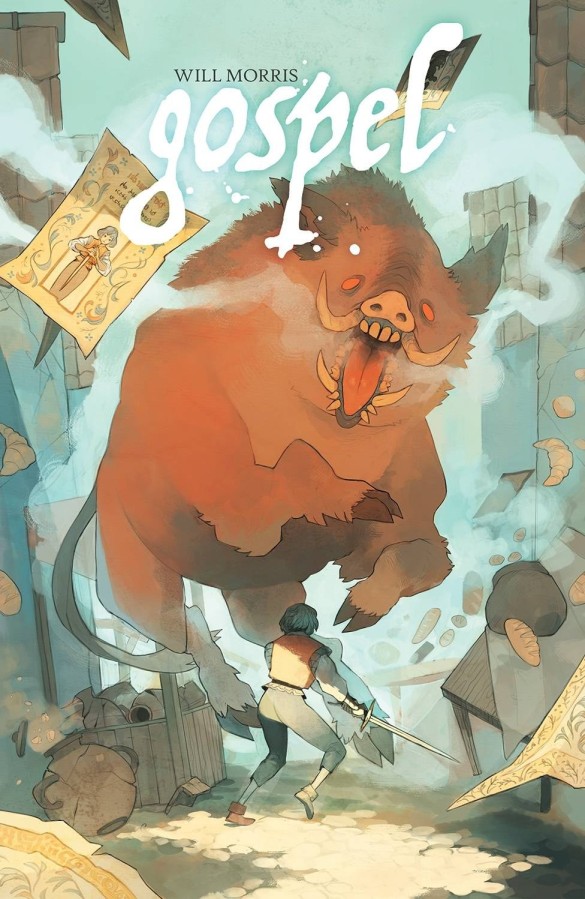
In Conversation with GOSPEL Creator Will Morris

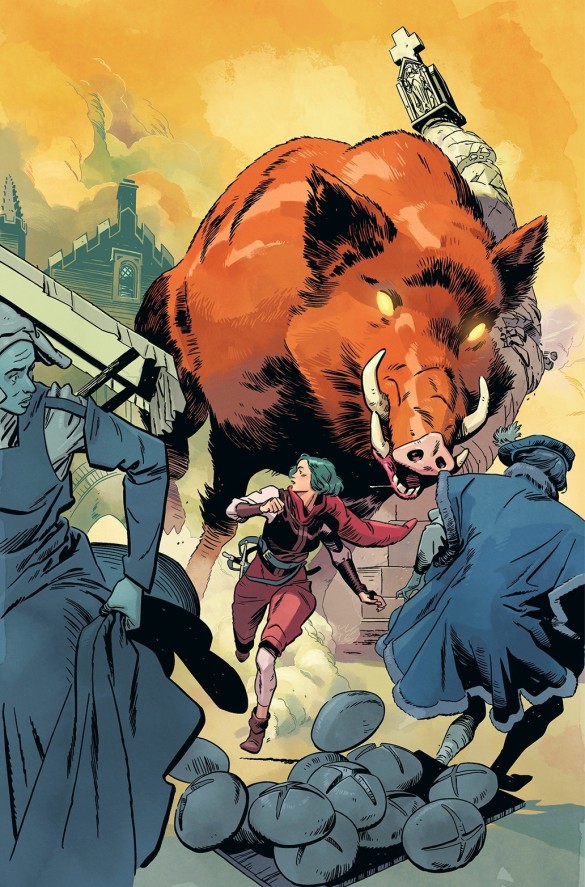
As one of the best comics of the last year, Gospel is a staggering blend of fantasy and historical fiction. A Studio Ghibli-inspired and deeply thematic story, Will Morris shows off an incredible range of creativity with this 6-issue mini-series.

I recently got to speak with Morris and talk about his process approaching the creation of this wonderful comic:

MFR: Gospel is the perfect blend of historical fiction and fantasy. How did you find the line between truth and fiction, and how did you know when to reel the story in either direction?

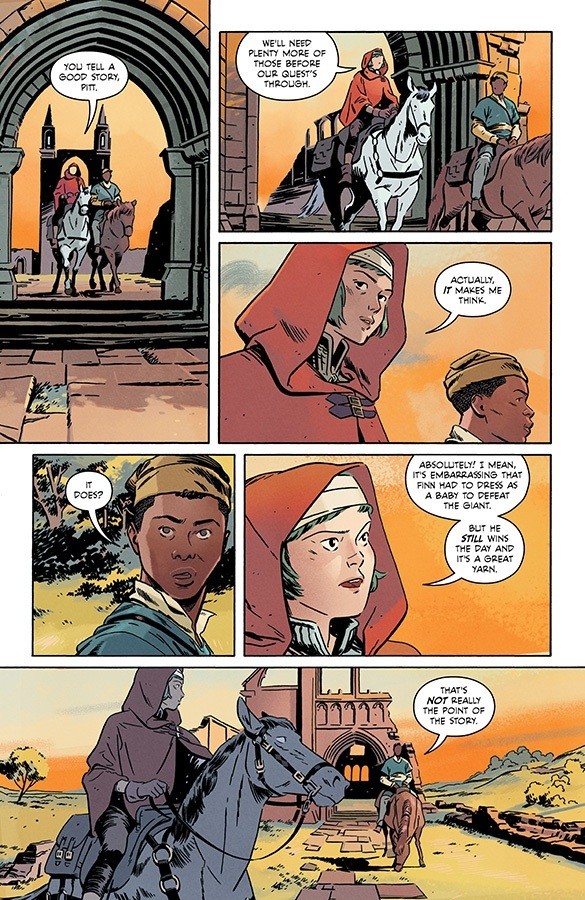
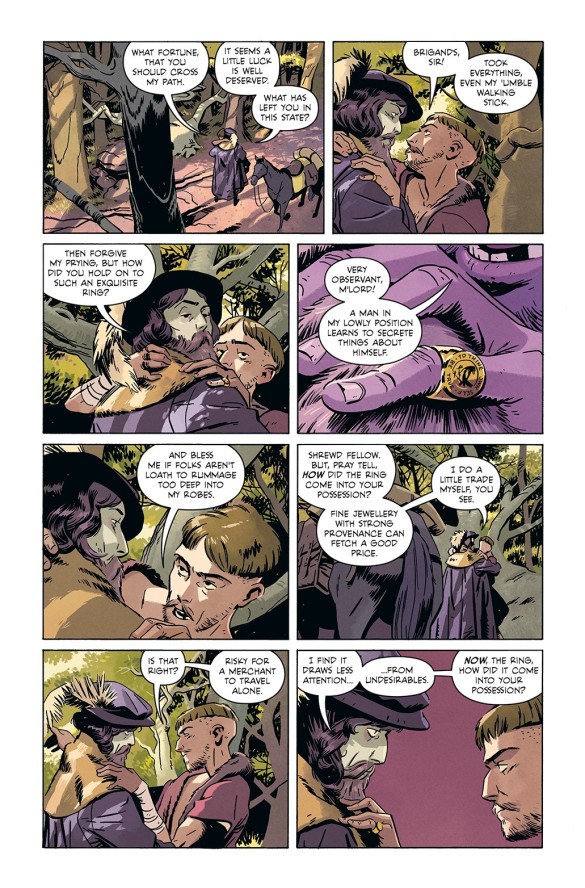
Morris: Thanks, Justin! I wonder how many people hit the back button at the mention of ‘historical fiction’. My interest has always been where history, art and stories meet. Devil’s simmering your soul for all eternity may seem the stuff of fantasy for most folk today, but likely felt a very real prospect for many in the 16th century. My guide for finding that line between historical accuracy and fantasy was simply telling Matilde and Pitt’s story the best I could. The English Reformation setting is a great context for the story because it was a time of turmoil, conflict and new ideas devouring old. That situation gives Matilde and Pitt a thrilling tightrope to walk. At the same time, the earliest spark for the story was stumbling across the legend of St. Michael and the devil, attached to a lonely hilltop church in Devon. These legends and tales paint more of a picture of how normal folk entertained themselves and made sense of the world. Trying to understand the meaning behind these stories is fascinating and at its heart Gospel is all about storytelling.

MFR: How much of the process behind Gospel was just research? Both in terms of historical facts and your use of period-correct dress and architecture?

Morris: There was a fair amount of research that went into Gospel. Even for things that are never fully explored in the story, such as trying to figure out the shipping route by which Pitt would have arrived at a Devonshire port.
Telling the story was much more important to me than ruthless historical accuracy (there are plenty of anachronisms in Gospel). Above all I wanted the world to feel believable. The town of Rumpstead, for instance, is a motley assortment of referenced architecture from all over the UK. Internet research was great for getting an overview of historical events, past times and societal structures etc. but diving into books really helped to flesh things out. Books about local legends, the daily lives of Tudor folk, church art, Black people in 16th-century England, arms and armour and depictions of devils…all of these were poured into the writing and drawing process.

MFR: How did the rest of the editorial team you worked with on Gospel help bring this story to life?

Morris: Working with Sebastian Girner as editor, and Colette Aburime and Aimee Lockwood as readers were some of the best calls I made in creating Gospel. I find writing exhausting! There comes a time when I’m so worn down by making decisions that I’m ready to tap out and submit to some lazy choices. Sebastian, Colette and Aimee didn’t just highlight these moments in the script they offered incredibly thoughtful solutions. Their suggestions brought something new and meaningful to the story. Even when working as a writer/artist I think comics are at their best when it’s a collaborative process.

MFR: What were some of your biggest storytelling influences going into Gospel?

Morris: Studio Ghibli and Hayoa Miyazaki are huge influences! Princess Mononoke in particular strikes a beautiful balance between history and fantasy and tells a story of complex people trying to do what they think is right. I read the manga of Nausicaä of the Valley of the Wind as I created Gospel and was awestruck by how believable the characters were. There are no villains for whom evil for evil’s sake is the goal. All of their motivations are totally understandable.
I love letting my drawing and storytelling evolve with fresh influences. There are moments within Gospel where I can precisely recall what I was reading at the time. I’d be interested to see if readers could pick out the moments when I was reading work by Katsuhiro Otomo, Becky Cloonan, Chris Samnee, Naoki Urasawa and Linnea Sterte.

MFR: Underneath the religious history and fantasy, there is a true sense of humanity in Gospel’s cast – specifically in Matilde and Pitt. How did you set about finding their humanity and maintaining the comic’s themes among the rest of the fiction?

Morris: Stories that take the time to understand their characters are the ones that speak the most to me. I think trying to express something personal that is experienced almost universally is a good foundation for finding the humanity in characters. In Pitt’s case, that comes with his struggle to overcome barriers to expressing himself. For Matilde, it’s that burning desire to feel accepted. I know both of those feelings. Sometimes you wish you could just get out of your way, but I suppose that’s what makes us who we are.

MFR: Every element of Gospel is a visual storytelling marvel. What about its inception and creation was trickiest to nail down?

Morris: Thanks, Justin, you’re very kind. Gospel is the most ambitious comic I’ve worked on to date and there was a lot I had to learn. Digital colouring is something I only had limited experience with and taking on 130+ pages was pretty unnerving. I chose to start the colouring process with issue two, so that reader’s first experience of the story wouldn’t be to see my steep learning curve. I’m pleased with how the colours turned out, but, as with your question on editing, it wouldn’t have been possible without other people in the comics and artistic community. Color and Light by James Gurney was incredibly helpful as were Kurt Michael Russell’s Youtube videos. I also borrowed a lot of ideas and techniques from interviews with Jordie Bellaire, Tamra Bonvillain and many more. Praise be for Marissa Louise’s WWAC interview series ‘Colorist on Color’.

Monkeys Fighting Robots Youtube

Review: Hunting the Innocent in WE WICKED ONES #2

From Writer LJ Duey and artist Paulo Mel comes the second chapter of this supernatural twist on superhero comics in We Wicked Ones #2. Featuring color art by Ander Zarate and lettering from Crank!, this issue continues the compelling story of the first by upping the stakes and introducing our group of Christian-fascist “superheroes” that will serve as the series’ antagonists – and making some frightening connections to the current political situation in America. With a stellar script and outstanding visual direction, this comic returns as one of the most compelling of 2023 so far.

“Riddled with guilt from carrying out a hit job on the only superhero who stood up for Witchkind twenty years ago, Celia decides to put her crossbow down for good. But when the government reassembles F.I.R.E., a team of supers tasked with bringing the one responsible for the death of their colleague and friend to justice, they mistake Lily for the enigmatic witch haunting Washington DC. Celia is determined to spare Lily the same fate their parents met, but it looks like the consequences of her actions might finally be catching up to her.”

Writing & Plot

LJ Duey fleshes out the story’s conflict and introduces readers to the cast of this comic’s religious Injustice League with We Wicked Ones #2. Just as Celia – the protagonist responsible for killing a beloved superhero in the first issue – decides to retire from being a hired killer, an old and powerful enemy returns. A group of government-controlled metahumans that were once responsible for the deaths of Celia’s own family has been reinstated, and now they’re after whoever killed their former compatriot. Only they have the wrong target, and now Celia finds herself on a rescue mission. While the first issue presented a moral problem for Celia, this issue is more about consequences. Duey shows the reader exactly what happened to Celia’s family and generates even more sympathy for her. However, her emotional distance and arrogance has had severe consequences. The central plot is deeply compelling, with Celia being one of the outright coolest – yet most human – protagonists in comics this year. Watching her be in love with her power and use it as a means of comfort has been great, but now she has to remember that she has a responsibility to help more than harm (there was saying some guy at Marvel made up that echoes this). Lily is a great juxtaposition for Celia. Her only concern is protecting her family, in a form of selfishness that is in service to them.

Arguably Duey’s greatest feat with this issue is how it connects to our own reality. The oppression and eradication of witches at the hands of a fascist regime and backed by an ill-informed mob hits a little too close to home for many right now. It’s a compelling plot point, but also a poignant one. Duey develops his characters through his stellar dialogue sensibilities, relaying each cast-member’s personality through how they interact with others. Celia’s increasingly shaky self-confidence is reflected in her internal narration, which also displays how complex a character she is. Once again, Duey pens an engaging and deeply powerful script for this politically charged story of meta-humans and the supernatural.

Art Direction

We Wicked Ones #2 will engage readers with its enticing story, but it will trap them with its astonishing visual work. Paulo Mel’s pencils are rife with character detail, with each person having a wholly unique and memorable aesthetic. Animations are sharp and fluid, with everything from a tense conversation to all-out battle drawing readers eyes into the action with ease. Mel’s sequential direction has an effortless flow to it, with quiet moments split up into smaller panels with the huge scenes gives dramatic splash pages. Every moment is given weight, with thoughtful focuses depending on the events going on in a certain page. The color art from Ander Zarate perfects this comic’s aesthetic. His use of deep, moody tones and a different palette for each character is the perfect touch for setting each scene. Celia’s alluring purple clothing adds to her dangerous charm, while Lily’s pure white reflects her style of magic. Every sequence uses lighting to the greatest possible effect. There’s a scene in a mega-church that uses spotlights and stage lighting to add a sense of foreboding to the supposedly “uplifting” religious iconography. Visually, We Wicked Ones #2 is another incredibly well-drawn chapter.

Verdict

We Wicked Ones #2 is a stellar follow-up chapter to the equally excellent opening issue. LJ Duey’s script is almost upsettingly poignant, but is also deviously clever and entertaining. The visuals from Paulo Mel and Ander Zarate are genuinely stunning, with great animations and a vivid color palette that will draw readers into the pages with ease. Be sure to grab this newest chapter when it hits shelves on July 5th!


Monkeys Fighting Robots Youtube

Dark Horse To Publish New Edition of Bendis and Oeming’s TAKIO: THE COMPLETE COLLECTION

takio complete collection brian michael bendis michael avon oeming dark horse comics exclusive

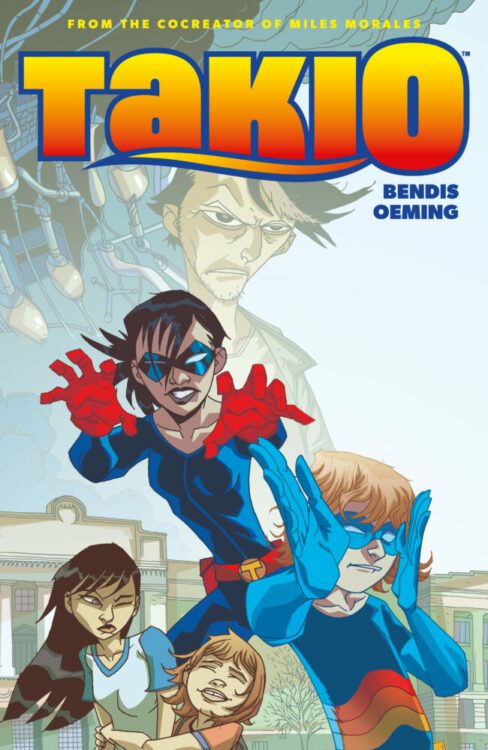
Monkeys Fighting Robots is pleased to announce that Dark Horse Comics will be publishing a new edition of Brian Michael Bendis and Michael Avon Oeming’s TAKIO: THE COMPLETE COLLECTION.

About TAKIO:
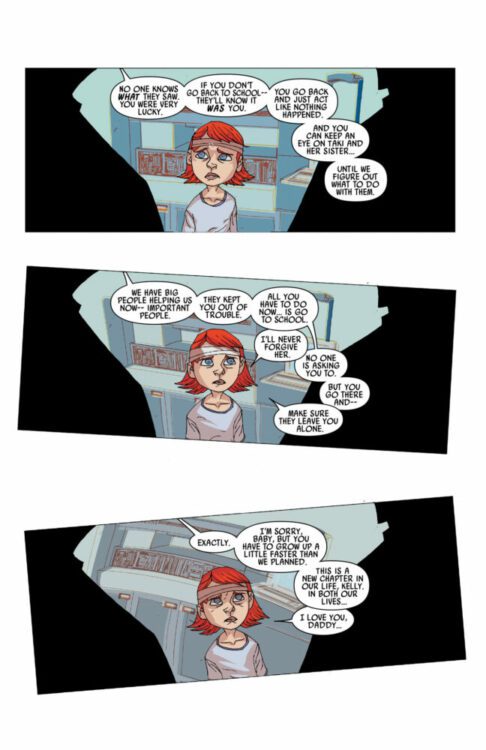
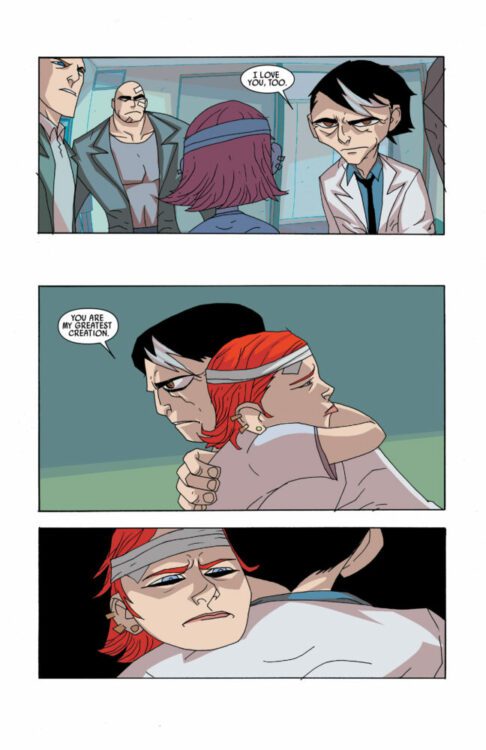
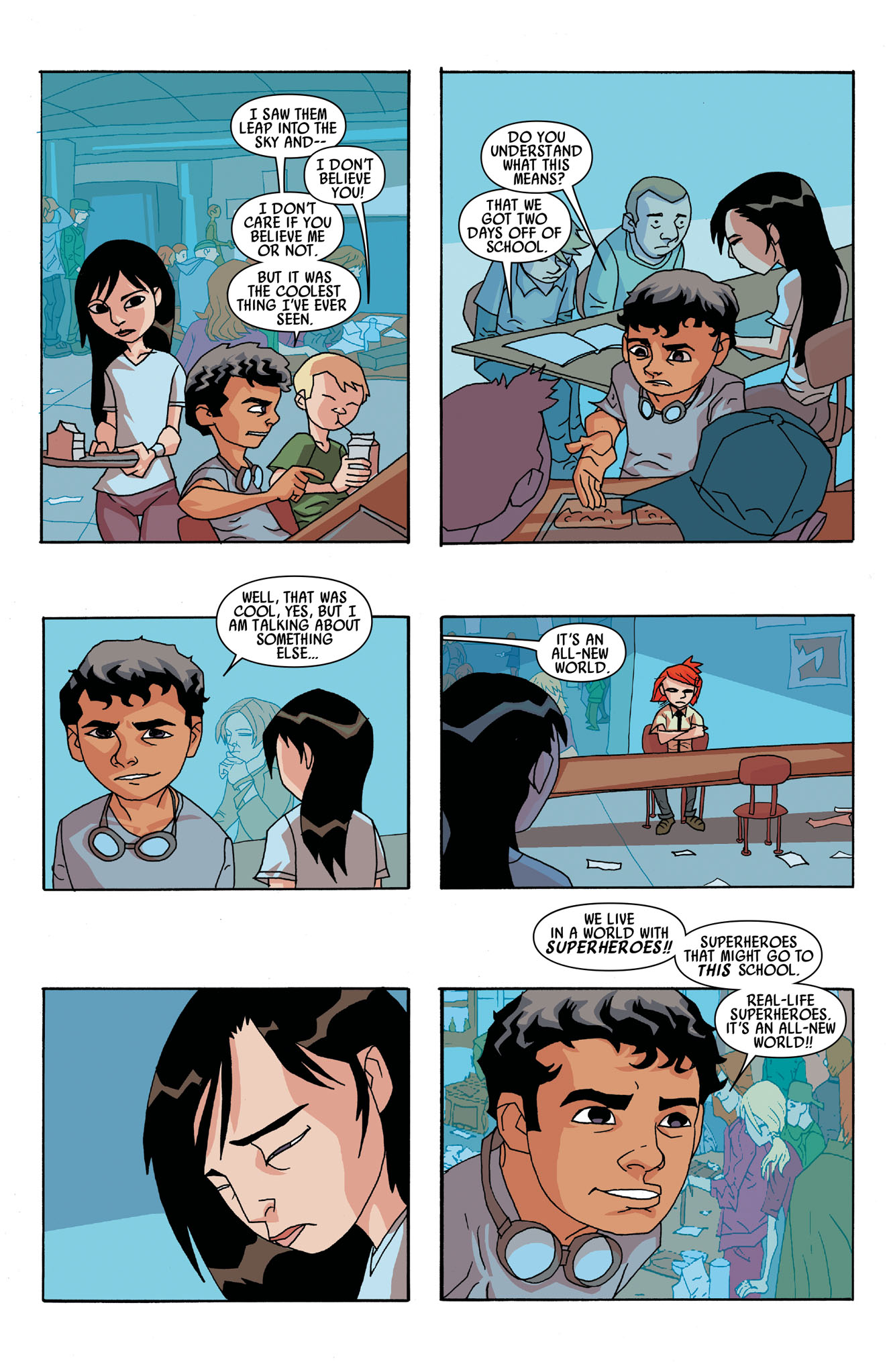
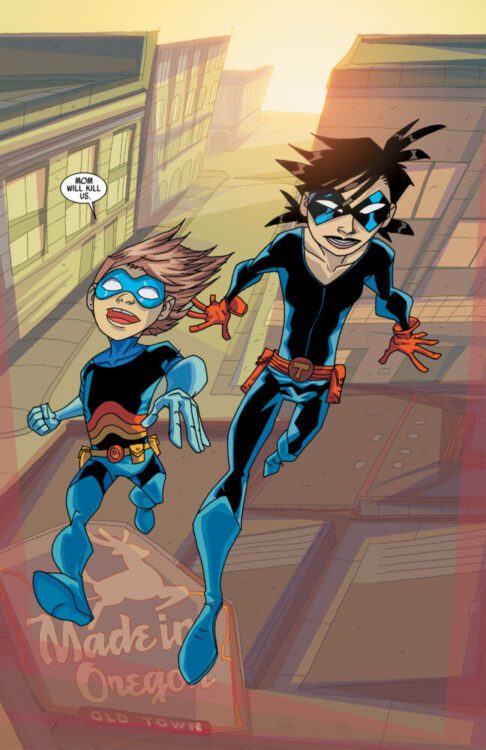
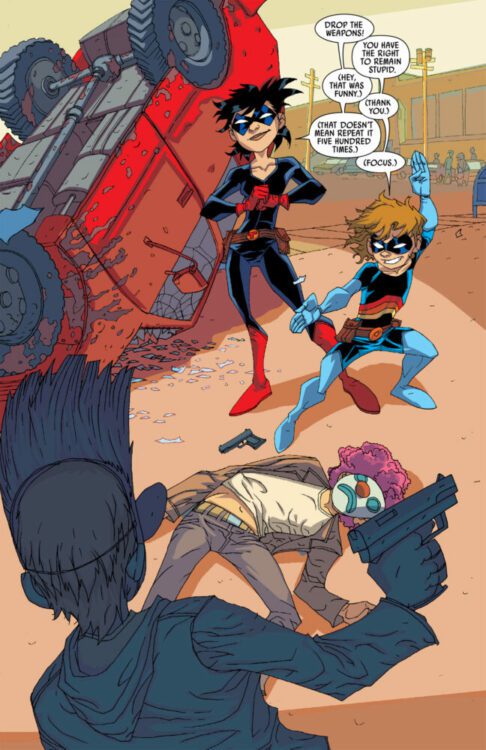
Taki and Olivia are sisters in an adoptive family–and they’re driving each other crazy! Every day, their overprotective mother makes them walk to school together, eat lunch together and play together–they can’t get away from each other!

But when a secret experiment goes catastrophically wrong, the squabbling siblings suddenly find that they have superpowers. They’re the first actual superheroes in the entire world–and it is awesome!

But are the girls ready to face the daunting challenges posed by their amazing new abilities? And is the rest of the world ready for real-life superheroes?

Takio: The Complete Collection is perfect for fans of Spider-Man: Into the Spider-
Verse, Invincible Iron Man: Ironheart, and Young Avengers.

The series is published under Bendis’ JINXWORLD imprint, home to award-winning titles like Powers, Pearl, Jinx, Torso, and more. TAKIO: THE COMPLETE COLLECTION will include both the original graphic novel and the four-issue sequel miniseries.

Takio is a true family affair and a labor of complete love made with the same energy and spirit of Miles Morales and Riri Wiliams,” said Bendis. “I know that fans of those characters will be delighted with this entre into a fun new superhero family. Wait till you meet the super sisters of Takio!”

Oeming continued, “Inspired by Brian’s daughter Olivia and my wife Taki, TakiO is one of our favorite creations because it literally came from our family!”

Get a look at TAKIO: THE COMPLETE COLLECTION here:

takio complete collection brian michael bendis michael avon oeming dark horse comics exclusive

takio complete collection brian michael bendis michael avon oeming dark horse comics exclusive

takio complete collection brian michael bendis michael avon oeming dark horse comics exclusive

takio complete collection brian michael bendis michael avon oeming dark horse comics exclusive

takio complete collection brian michael bendis michael avon oeming dark horse comics exclusive

takio complete collection brian michael bendis michael avon oeming dark horse comics exclusive

takio complete collection brian michael bendis michael avon oeming dark horse comics exclusive

takio complete collection brian michael bendis michael avon oeming dark horse comics exclusive

takio complete collection brian michael bendis michael avon oeming dark horse comics exclusive

takio complete collection brian michael bendis michael avon oeming dark horse comics exclusive

TAKIO: THE COMPLETE COLLECTION will be released in comic shops on February 14th, 2024, and in book stores a day earlier on February 13th. It’s currently available for pre-order.


Are you excited to pick up the new edition of Bendis and Oeming’s TAKIO? Sound off in the comments!

Monkeys Fighting Robots Youtube

Review: Thrills and Chills In CHERUBIM #1

90s comics are mostly remembered for their excess. It was a time of rippling muscles, overblown angst, and purple prose. It was the perfect era for the gothic melodrama of heroes like Ghost Rider or Spawn. Put a man in a war between Heaven and Hell, and of course he’ll speak every line with solemn self-importance. 90s creators were great at selling a kind of teenage malaise, gesturing towards the forces that run the universe in frustration and confusion. What does life really mean? Why are we here? And why do the forces that be keep telling me what to do? It’s that spookier, religious-themed brand of super-heroics which writer/colorist/letterer Brian Level and artist Matt Sparks pays homage to in Cherubim #1. Expect lots of monologues, graveyards and stained glass.

About Cherubim #1:

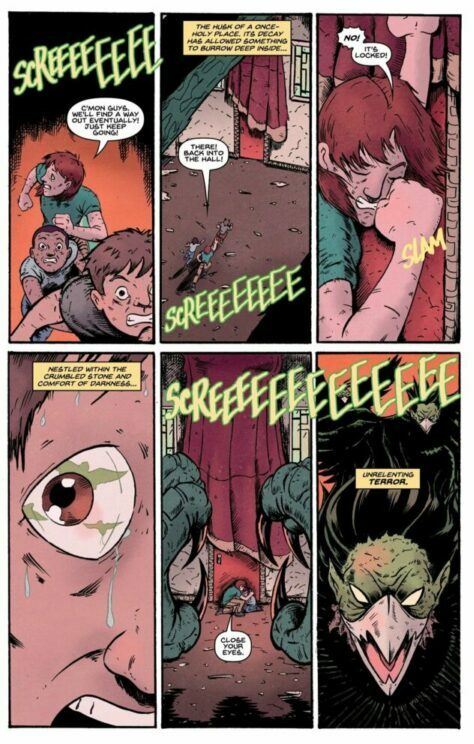
Cherubim #1 is split into two smaller stories, both established as taking place in a world nearing the Biblical end of days. The first, “Open Graves,” focuses on a villain named the Corpse-taker. He wastes no time living up to his name, paying some flunkies to help him in a little grave-robbing. But the mysterious Cherubim isn’t about to let him desecrate the dead. The second story, “Demon’s Nest,” involves a winged foe named Cardinal who’s cornered some children in a church with the help of some strange avian demons.

Writing

There’s a lot going on in the world of Cherubim. A biblical apocalypse, ancient cults, legions of demons trying to pick off the living… But aside from a single introductory paragraph,  Level and Sparks immediately throw readers into the deep end. The face behind Cherubim’s golden helmet isn’t even shown outside an exclusive trading card readers can procure. It’s a book that prefers to jump immediately into superhero action, letting readers piece together the lore on their own.

And make no mistakes: this is a superhero comic through-and-through. Much more a tribute to the mainstream spooky superheroes such as Night Force or 90’s Ghost Rider than the gore-soaked comics underground like Faust. Thing a dark and moody PG-13 with colorful weekly villains. It’s fun above all else, which is a pretty damn good reason for a comic to exist.

Though the issue’s multi-story action-first approach does come with a few sacrifices — the biggest being that the two tales on offer are both billed as “part 1.” So instead of one complete story, you get two half-stories. Both do a good job of showing off the main hero in action, but end rather abruptly with the promise of more. And the dynamic in play with Cherubim himself, a former photographer named Craig Angelo who communicates with the voice of God through his helmet, doesn’t get much focus. Certainly Cherubim’s voice changes based on who’s speaking through the mask, bouncing between sounding like a gruff average joe and talking in flowery biblical prose. It’s how Craig feels about having a holy voice inside his head that’s only hinted at. An average man joining a holy order and dealing with the literal voice of God in his head is a great setup for friction and drama, so I couldn’t help wanting a bit more. But still, this is only the first issue. A better feel for how the book will handle these characters should come with time.

Art

Matt Sparks handles art duties on the issue, and the immediate standout is the character designs. Again, there’s that strong superhero influence — colorful, theatrical designs that show what a character is about at a glance. From Cherubim’s golden armor dotted with false eyes and a stern glower, to the Cardinal’s steel talons and feathered hair. They also look damn cool, to boot.

But for all the comic’s 90s influences, the paneling is decidedly more old-school. Expect lots of rectangles arranged on a grid, with some splash pages and breakaways to keep things feeling exciting. The action is also handled with a methodical step-by-step approach emphasizing clarity. Dedicated closeups show the impact of each punch or kick, attention always given to when a character readies a weapon or prepares a trap.

Coloring

Brain Level approaches Cherubim’s coloring with lots of flat, bright colors. This might be a world teetering towards the apocalypse, but that doesn’t mean there’s no room for dominant reds, blues, and greens. Red is the color most associated with Cherubim himself, his incense burner often drenching the panel in it, while the supernatural foes and even Cherubim’s magic are associated with an unearthly neon green. It’s that classic use of heroic primary colors vs more unsettling, villainous secondary colors — which isn’t necessarily a hard and fast rule. You can’t have a villain named Cardinal without a whole lot of red. But it’s yet another connective tissue to superhero comics of old that keeps up the clear, brash storytelling.

Lettering

The lettering keeps the superhero theme going, done in rounded all-caps with a heavy use of bold to emphasize certain words. But the Voice of God gets its own style, speaking in a bright red serif font. It gives the voice a feeling of authority and tradition. Which goes even further with the occasional quoted bible verses, the only parts of the comic proper which eschew the all-caps comic stylings.

VERDICT

Cherubim #1 is a promising start to an ongoing series of spooky derring-do. There’s certainly some room for the comic to find its footing, but the simple thrills it offers can’t be denied. I’m looking forward to seeing where the comic goes next, and it’s definitely worth picking up. It can be found on Matthew Spark’s Gumroad page.

Monkeys Fighting Robots Youtube

Project 365: One Comic Every Day, Week 24 — On The Planet Of The Apes

A box of comics

The premise is simple: read one comic every day for the entire year. It seems like a simple task but there is no way that I read 365 comics last year, even if you count the individual issues in collections. So, this year, I am committing myself to this reading challenge, in the hope that I can broaden my reading habits and fully engage with my favorite hobby again.

“We were children in Eden. Too young to know how every paradise story ends.” – from Planet of the Apes #10 by Daryl Gregory and Carlos Magno

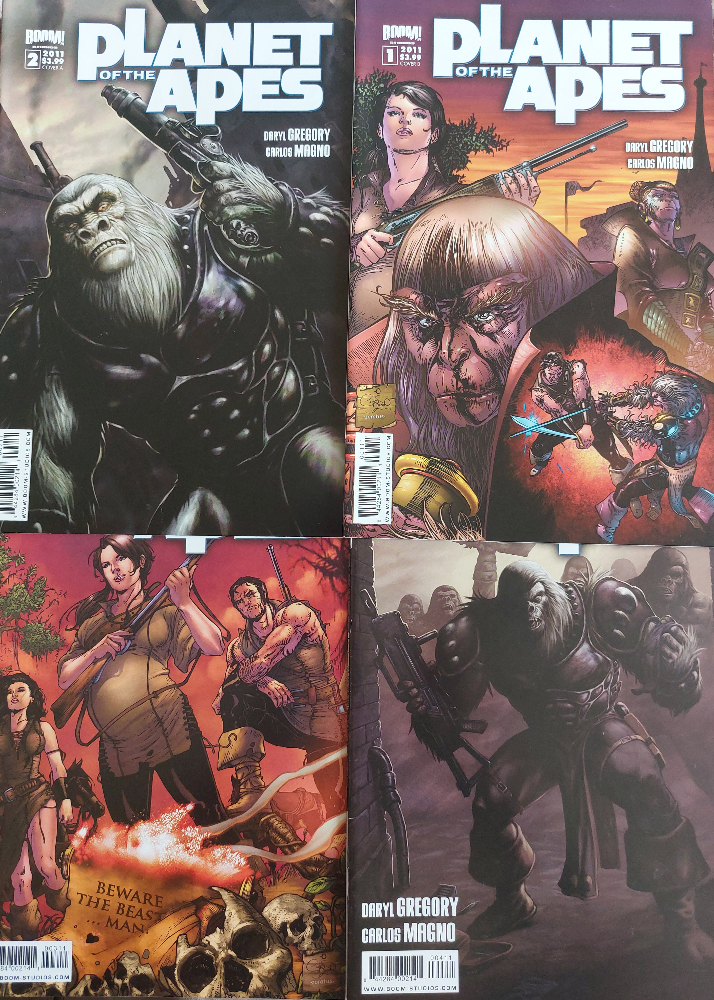
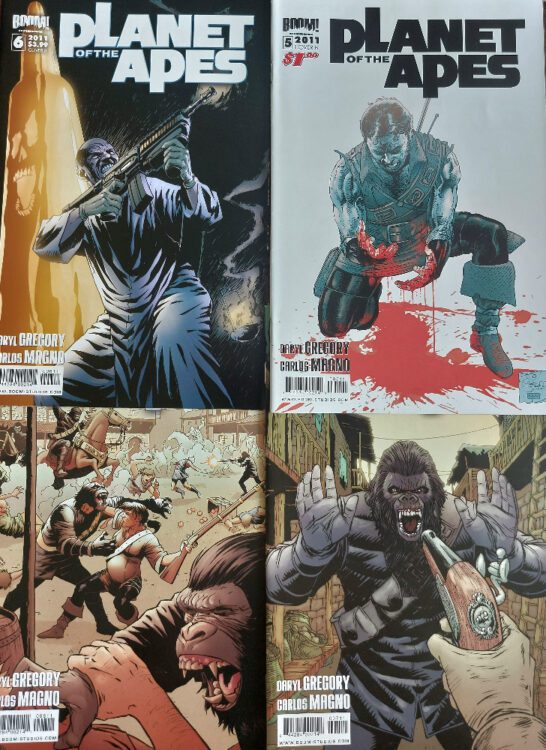
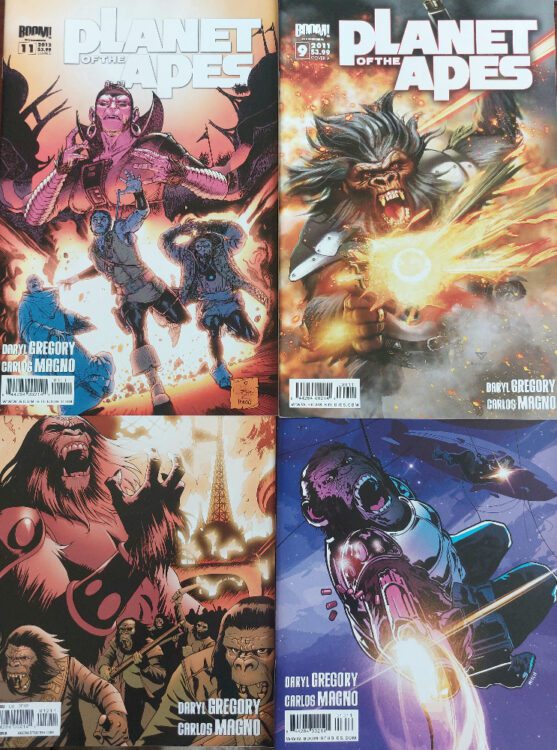
I think that the phrase “this week is going to be a little bit different” is becoming something of a mantra and “different” is quickly turning into the “norm.” However, I’m going to lump all of this week’s comics into one big pile of Planet of the Apes goodness. I started the week reading the first issue of Daryl Gregory’s 2011 run on BOOM! Studios’ Planet of the Apes thinking I’d read the first arc and use that as Comic Number 161. By the end of Monday I had read 15 issues, leaving only 1 of the monthly issues left and the 4 specials.

If you were to check my tiny bio on this website you’ll see that there are two franchises that I clearly love: Doctor Who and Planet of the Apes. I rarely talk about Doctor Who because I’m mainly a fan of the television show and haven’t found the same love for the extended universe of books, comics, etc. With Planet of the Apes, it’s completely different. I love the comics and the books (the ones that I have), I love the films and the television show (both live action and cartoon). Hanging with Doctor Z is one of my favorite YouTube channels.

Planet of the Apes issues 1 to 4
Credit: BOOM! Studies

There is something endearing about the extended franchise; 99% of the people involved with the tie-ins are clearly massive fans of the original movies. The themes and ideas introduced in the original movie, which to a large extent are taken from Pierre Boulle’s novel, strike a chord with storytellers and fans the world over. In the book Comics on the Planet of the Apes, Joseph F. Berenato writes “Planet of the Apes has long been successful not just because it’s a planet full of talking apes, but also because of the social commentary that has been weaved throughout the franchise.” Every piece of media that pops up relating to Planet of the Apes has, at its heart, something to say about the society in which it has been produced. And this is especially true of the comics. Each era of the comic draws inspiration from the cultural world around it and reflects that inspiration within the narratives and characters. To look at the first Marvel Apes comics is to see a world of mind bending experimentation and the dangers of segregation and bigotry. The violence and high tech gadgetry of the 1990’s comic industry is represented in the Malibu Apes comics which are presented in a less polished but creatively freer, indie style of product. And the BOOM! Studios comics explore relationships and the nature of good and evil, with a heavy focus on politics and conspiracy.

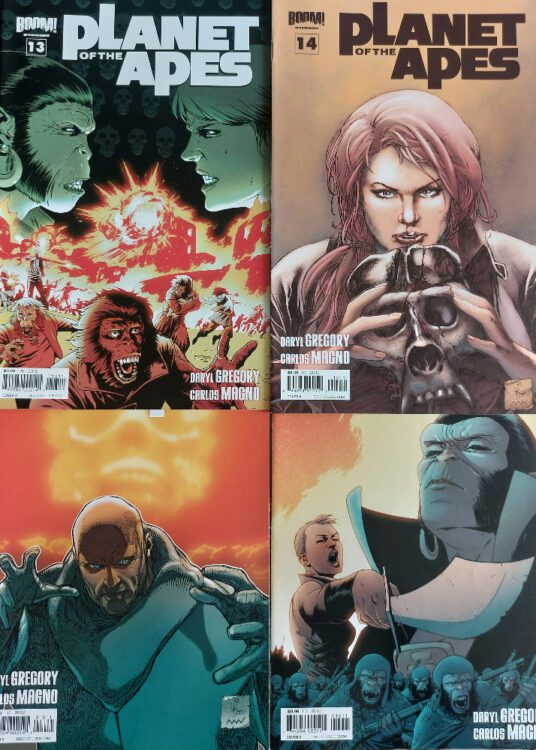
Daryl Gregory begins his run with The Long War, a story set in the shared Ape and Human city of Mak. It is set in 2680 A.D. — over a thousand years before Charlton Heston will arrive on the planet with his 1960s cynicism, and 600 years after Roddy McDowall threw a gorilla out of a tree. It starts strong and violent with the assassination of the Lawgiver by a ninja clad human wielding an assault weapon. This act is the first stone of an avalanche that will ultimately destroy the city and tear the central characters apart.

Planet of the Apes issues 5 to 8
Credit: BOOM! Studies

Gregory uses two adoptive sisters as the central characters, one human and the other ape. This allows him to continually show both sides of the story, meaning it is never a simple story of Ape Evil, Human Good, or vice versa. The reader has sympathies for both sides and more often than not, you find yourself wanting them to reconcile their differences instead of massacring each other.

The artwork on the initial 16 issues is by Carlos Magno, who captures the design of the original movies, but makes it very much his own. The characters are full of life, and the individualism is impressive. Every human and every ape is different in look, in stance, and in action. Magno populates his complex world with equally complex characters, and it is a pure joy to read. Each page is exquisitely detailed and no part of the city is left unexplored.

Planet of the Apes issues 9 to 12
Credit: BOOM! Studies

Between them, Gregory and Magno create a world that is believable and fits perfectly into the Apes franchise. It is difficult to pick out a favorite part of the narrative or a single character from the 16 issue run because it’s all so damn good. The leads Alaya (ape) and Sully (human) are the most explored characters, but the albino gorilla general Nix is a superb character with a long development arc. He’s unforgettable like the human Wyn, “the name and the game.” Wyn is adorable at first, a sneaky thief, but he bears witness to some atrocities that affect him mentally and then physically. He is literally scared by the war that transpires.

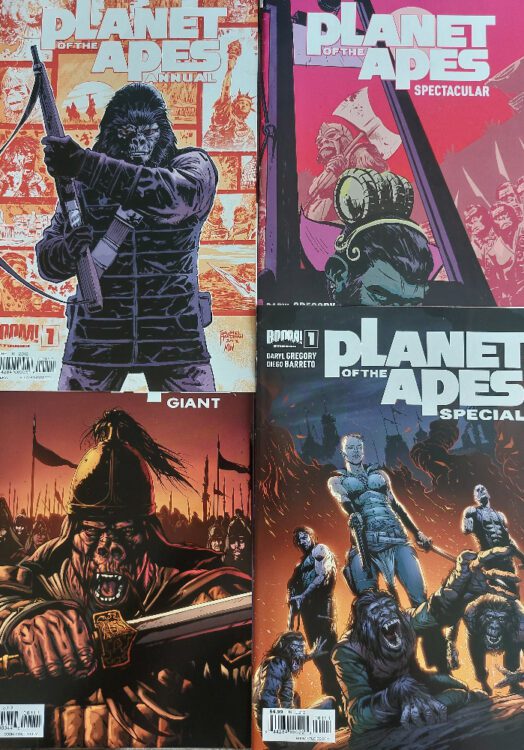
After the four-arc main series, Gregory finishes his story off in a collection of specials, each drawn by a different artist. I personally don’t think that the art reaches the same heady heights as Magno, but the conclusion is more than satisfactory and continues to match the themes and story beats of the Apes franchise. Destruction and hope are the uncomfortable bedfellows of 21st century Ape stories.

Planet of the Apes issues 13 to 16
Credit: BOOM! Studies

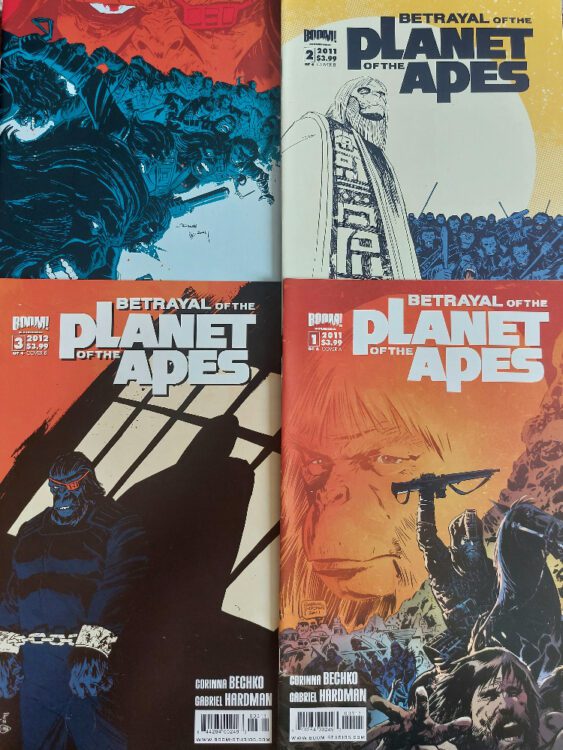
While Gregory and Magno are weaving their tale on the Planet of the Apes, BOOM! Studios started releasing another series in the franchise. Starting as a four-part miniseries, Corinna Bechko and Gabriel Hardman’s Betrayal on the Planet of the Apes is actually the start of another 20-issue story that starts 20 years before the setting of the first movie and rolls right up to the bitter end. Again, the characters are what makes the series although, due to the time period this is set, it is the conflict between the different ape factions that provides the drama. Humans play a part, but it is the apes who wield all the narrative power.

Bechko creates some very interesting and complex characters who don’t fall into the usual stereotypes of the ape casting. The central Gorilla, Aleron, is more than a military leader and turns out to be a humanist in a society tearing itself apart with hatred and racism. However, one of the strongest elements of this run is the way that Bechko incorporates characters and aspects of the original movie. Elements of the world glimpsed in the movie, or suspiciously not seen in the case of the Moon, are explored and the characteristics of the central cast are developed. By the end, characters like Zaius are perfectly rounded with histories that explain their behavior in the movie.

Betrayal on the Apes issues 1 to 4
Credit: BOOM! Studies

It must be said that Hardman’s artwork in the first two story arcs is outstanding. He has a strong, distinctive style that highlights characters in a panel while creating fascinating backgrounds that are more emotional than descriptive. The visuals are impactful, which owes a lot to Jordie Bellaire’s color work. Bellaire is one of the best in the business and it shows in these comics. The coloring stresses narrative points, but it also matches with the characters on the page. In later issues, as the conversation jumps from a group of chimpanzees to a group of orangutans, the color washes on the page switches from the green of the chimps’ tunics to the orange of the orangutans. Subtle plays on the page make massive differences to the reading experience. It helps to clarify characters while setting the mood and tone for the narrative.

This attention to detail and high quality work illustrates the love that creators have for this franchise. A number of movie/tv tie-ins are by the book creations, lacking in conviction and mere reflections of their moving image counterparts. In many ways, the Ape comic series are equal, if not superior, to the original movies because the creators treat the franchise with respect and admiration. It’s like highly polished fan fiction.

Exile of the Planet of the Apes issues 1 to 4
Credit: BOOM! Studies

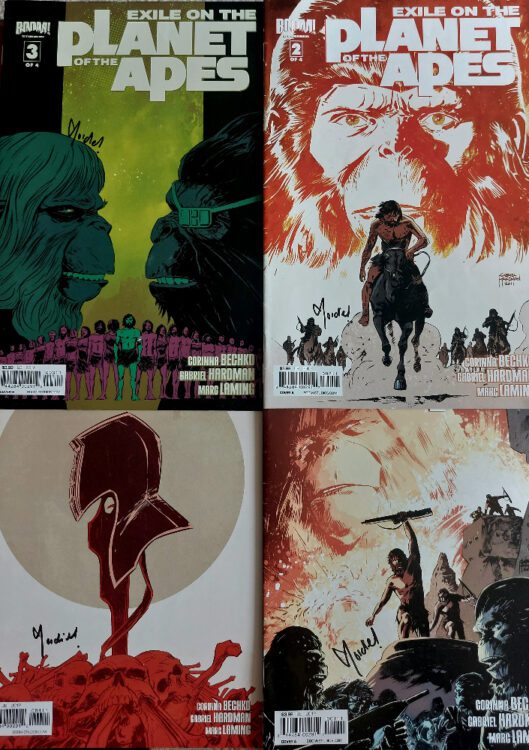
Betrayal (4 issues), Exile (4 issues), and finally Cataclysm (12 issues) is another superb run of comics that easily appeals to both fans and non fans of the series. Arguably there is more for fans of the franchise in this run than in Daryl Gregory’s run but there is nothing that would alienate readers. I love both series equally, and enjoy them each time I re-read them.

All in all, that’s 40 comics I’ve read this week. I’ll let you pick and choose which ones should be placed in the slots for this week’s comics numbered 161 to 167, as I have an urge to go and watch the Planet of the Apes T.V. series.

The Planet of the Apes Specials from BOOM! Studies

Come back again next week for PROJECT 365, Week 25!

Monkeys Fighting Robots Youtube

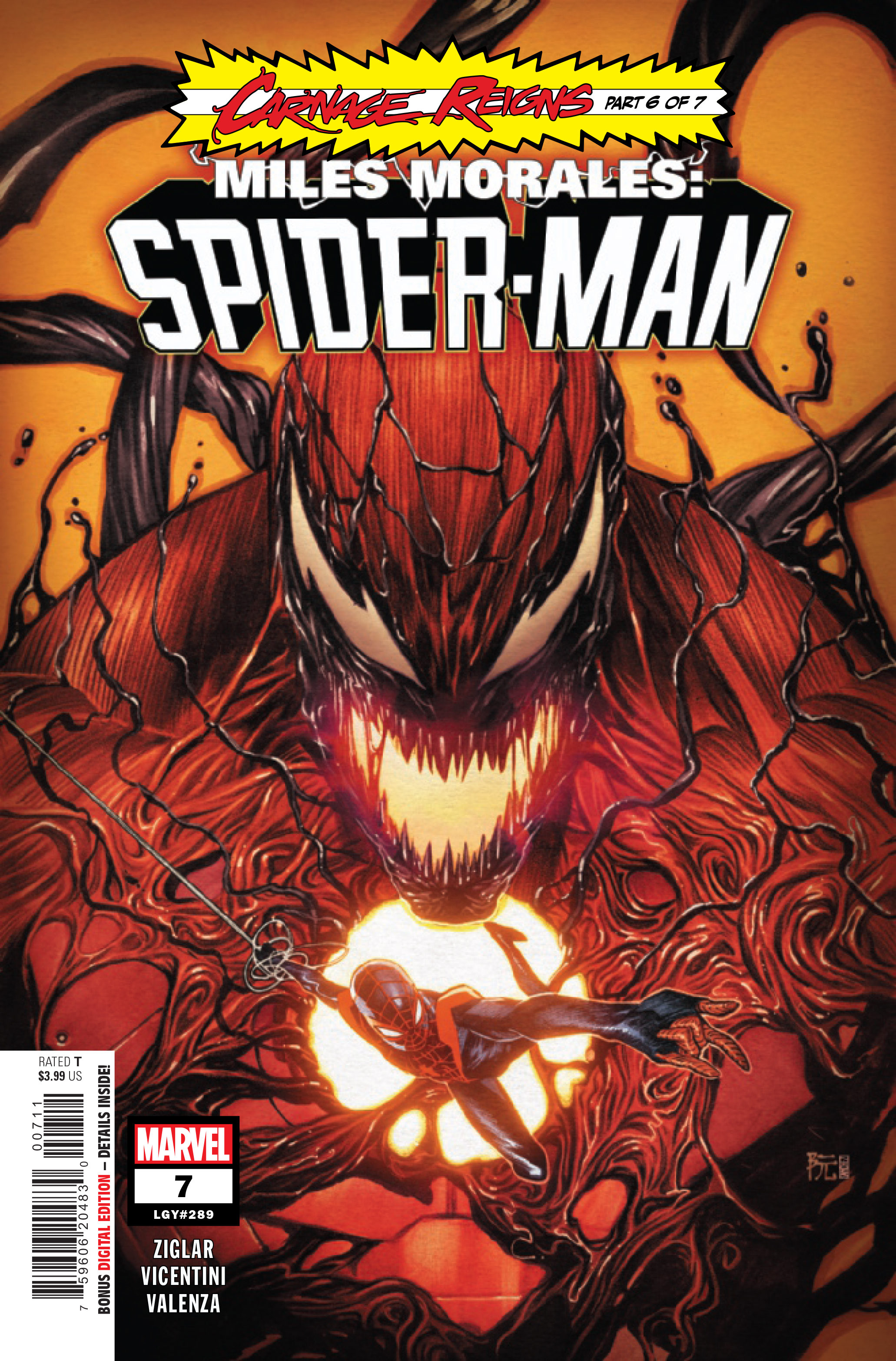
Marvel Comics Exclusive Preview: MILES MORALES: SPIDER-MAN #7

marvel comics exclusive preview miles morales spider-man

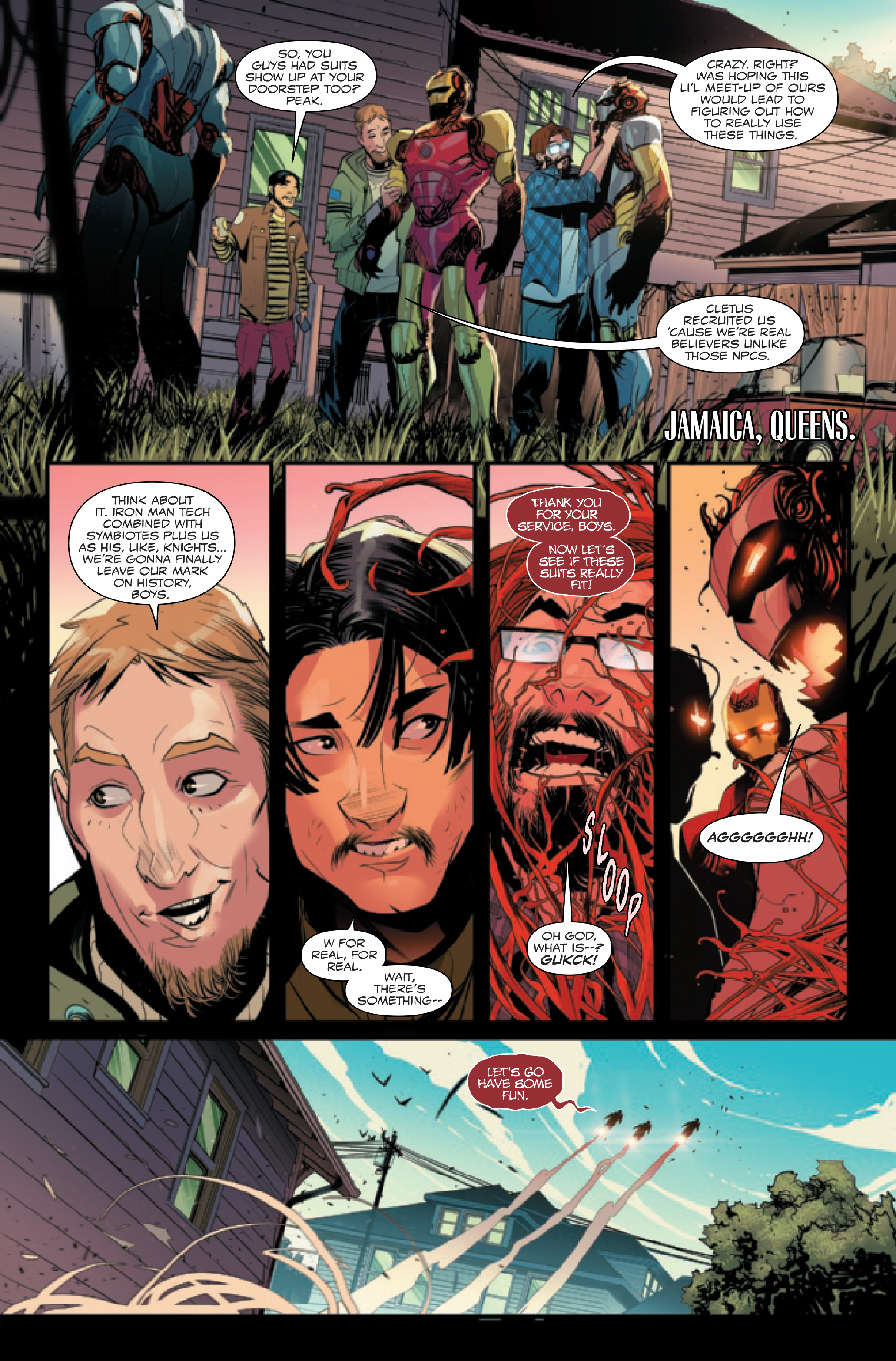
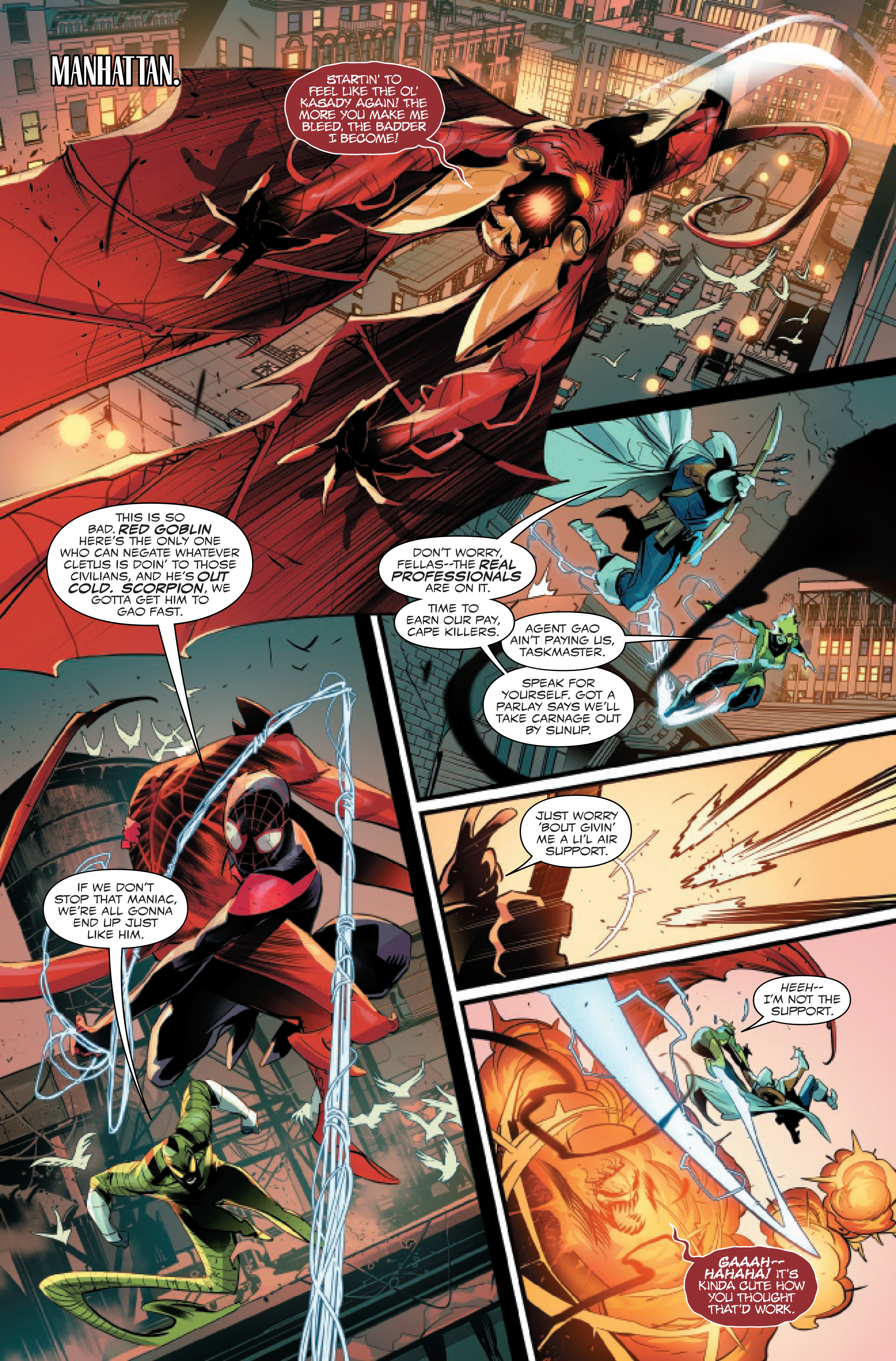
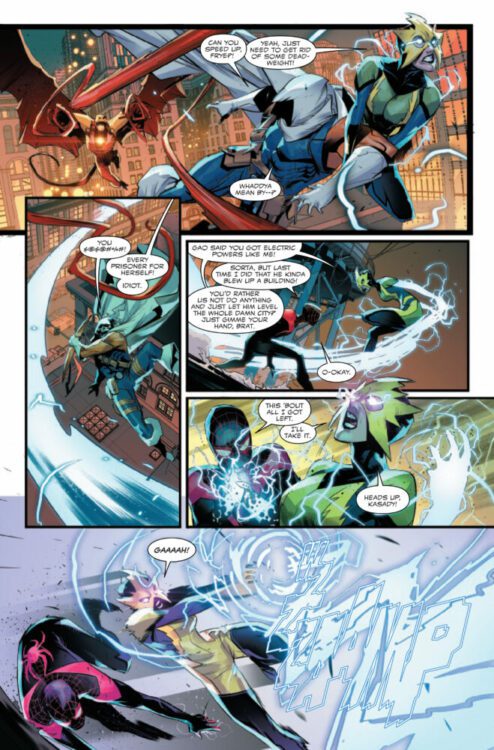
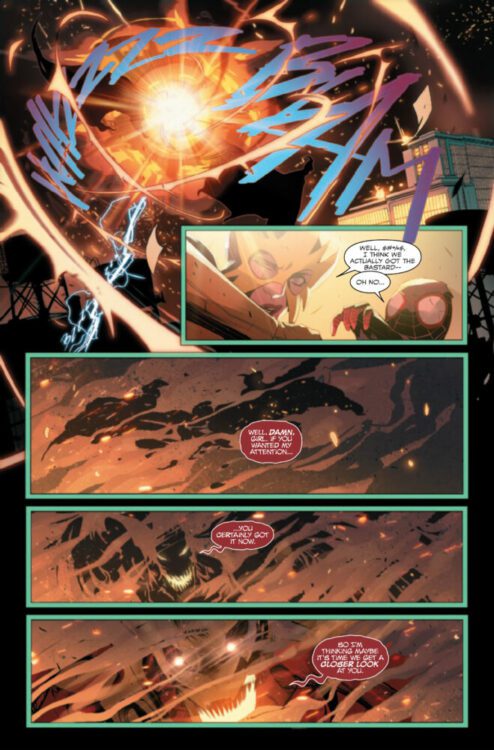
MILES MORALES: SPIDER-MAN #7 hits your local comic book store on June 21st, but thanks to Marvel Comics, Monkeys Fighting Robots has an exclusive four-page preview for you!

About the issue:
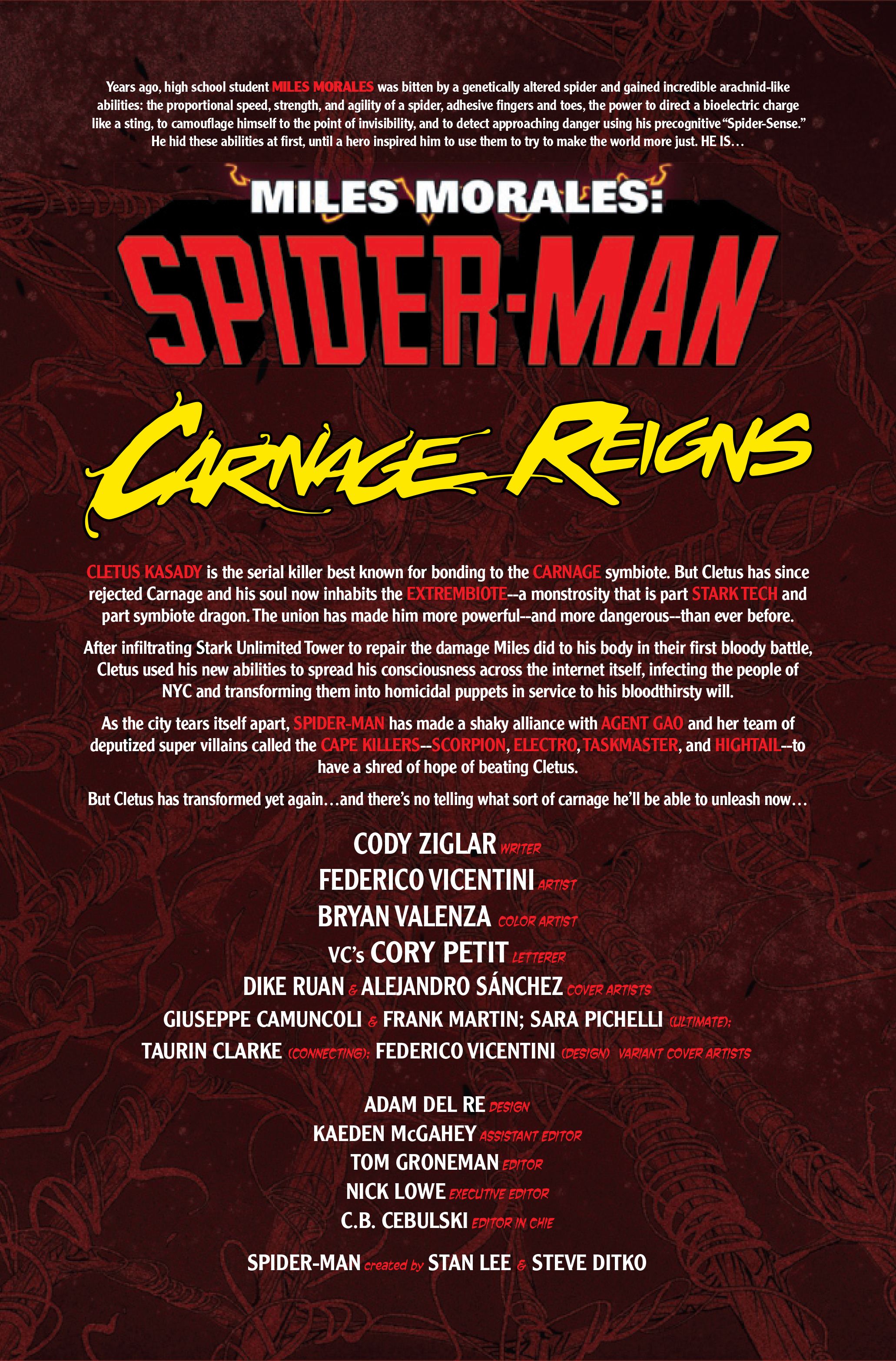
“CARNAGE REIGNS” – Part SIX!

CLETUS KASADY’s unleashed maximum carnage upon NYC with the awesome power of his new Extrembiote, and the only one left to stand in his way is MILES MORALES, who may have stumbled upon Cletus’ one weakness – which means Cletus will stop at nothing to put Miles down for good. To have a chance at stopping him, Miles will need help from the most unexpected allies…Cletus got an upgrade – why can’t Miles?!

The issue is by writer Cody Ziglar and artist Federico Vicentini, with colors by Bryan Valenza, and letters by Cory Petit. The main cover is by Dike Ruan and Alejandro Sánchez.

Miles Morales is currently co-starring in Spider-Man: Across the Spider-Verse, which is receiving acclaim from critics and fans alike.

Check out the MILES MORALES: SPIDER-MAN #7 preview below:

marvel comics exclusive preview miles morales spider-man

marvel comics exclusive preview miles morales spider-man

marvel comics exclusive preview miles morales spider-man

marvel comics exclusive preview miles morales spider-man

marvel comics exclusive preview miles morales spider-man

marvel comics exclusive preview miles morales spider-man


Are you reading MILES MORALES: SPIDER-MAN? Have you seen ACROSS THE SPIDER-VERSE yet? Sound off in the comments!
Monkeys Fighting Robots Youtube