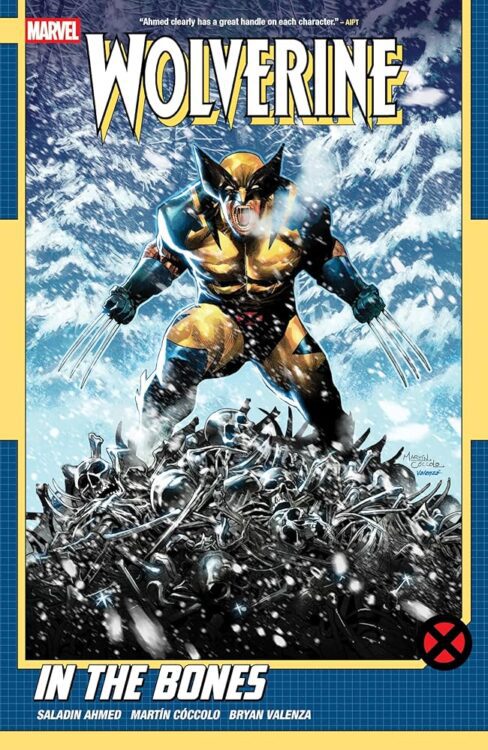
From the ashes of Krakoa, a new Wolverine series begins, from writer Saladin Ahmed, artist Martín Cóccolo, colorist Bryan Valenza, and letterer Cory Petit. Volume one, “In the Bones”, is in stores May 27th.
As the story opens, Wolverine has retreated to the wilderness and cut himself off from his family and friends. But when old threats resurface (with some fresh twists), the hero realizes that he can’t hide from the world forever.
“In the Bones” is a solid start to this new Wolverine run. In some ways, it feels very familiar: Logan isolates himself from the rest of the X-Men, viewing himself more as an animal than a human. He faces off against other adamantium-based villains who he has history with, and even a Wendigo. There’s a comfort to the familiarity. But then there are the aforementioned “fresh twists.” There’s a new puppet master behind the old villains, one who promises big changes for Wolverine’s story. The Wendigo, meanwhile, turns out to be a teenager who Logan decides to help instead of kill. These changes to the familiar keep the story interesting.
Ahmed is writing a smaller, more personal Wolverine story here—at least in this first arc—with a bigger action story building in the background. He leans heavily into the “animal instincts versus humanity” theme, and to great effect, especially with the addition of the Wendigo. Here, Ahmed gives Logan the opportunity to tame a savage beast and teach it how to be human again, a responsibility Logan does not take lightly given his own history. There’s plenty of action in this new Wolverine series, but the scenes of Logan helping the Wendigo are where the book shines. Sometimes they’re humorous, sometimes they’re heartfelt, but they always stand out and make you care about both characters.
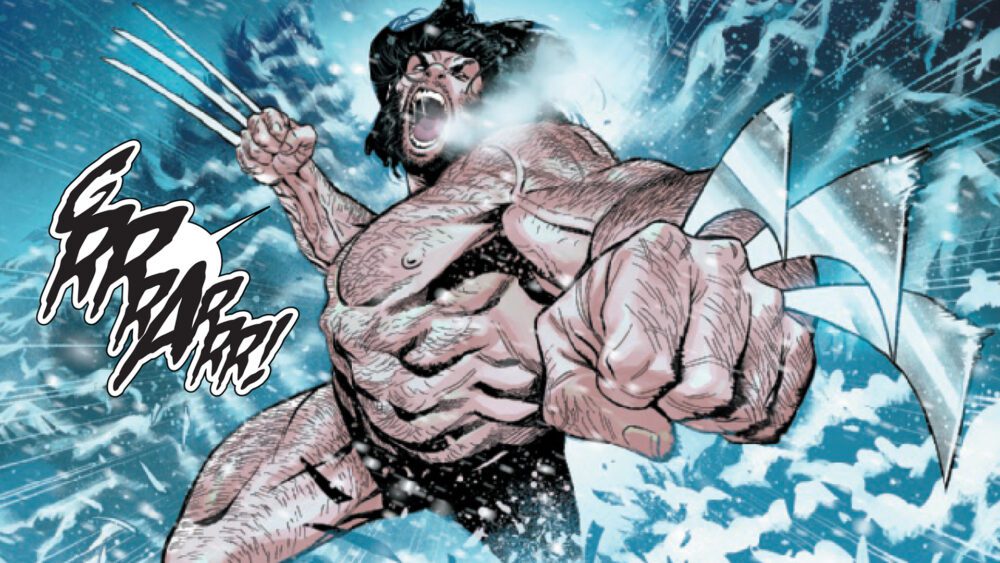
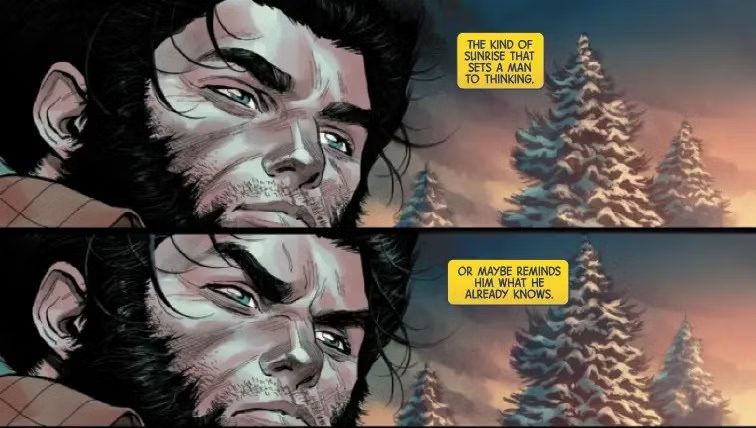
And that’s due in no small part to Cóccolo’s artwork. Yes, the action sequences are exciting and dynamic, and the motion is fluid, but the real story here is being told in the facial expressions and close ups. Cóccolo is able to say volumes through these characters’ eyes, especially Logan’s. Even when the cowl is up and his eyes are whited out, you can still feel the Wolverine’s rage. But when the cowl is down, there’s a softness to Cóccolo’s faces where you can almost read Logan’s mind through his eyes. You can sense his concern, his fear, and his pain. As mentioned, this is a more personal Wolverine story, and Cóccolo’s work is what builds the emotional connection with the readers.
Valenza’s colors set the atmosphere for the story. “In the Bones” largely takes place in the Canadian wilderness, so Valenza utilizes a heavy amount of blues, especially in the opening chapters. This adds a cold, isolating feeling to the book (while also allowing Wolverine to pop off the page in his yellow costume). When the action picks up and Valenza starts mixing in more reds and oranges, it creates an explosive sensation and adds an impact to the battles.
Ahmed, Cóccolo, Valenza, and Petit have started a Wolverine run here that seeks to explore all different facets of Logan’s being, and add new depth to the character’s long history. There’s plenty here to enjoy whether you’re an old fan or a new one, and you’ll definitely be coming back for volume two!
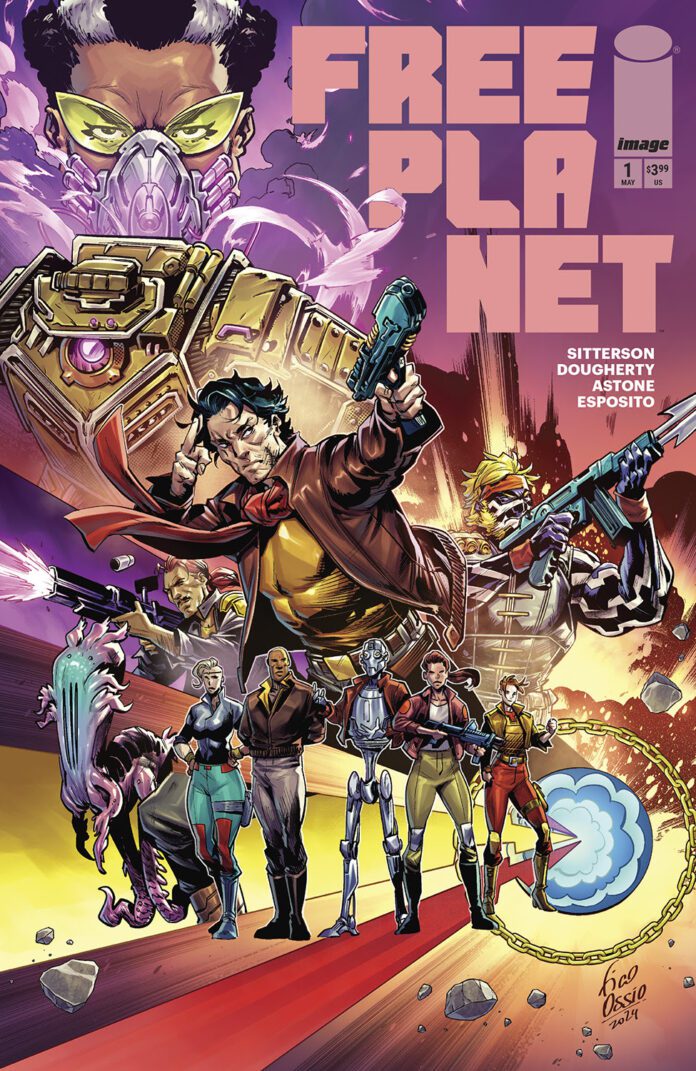
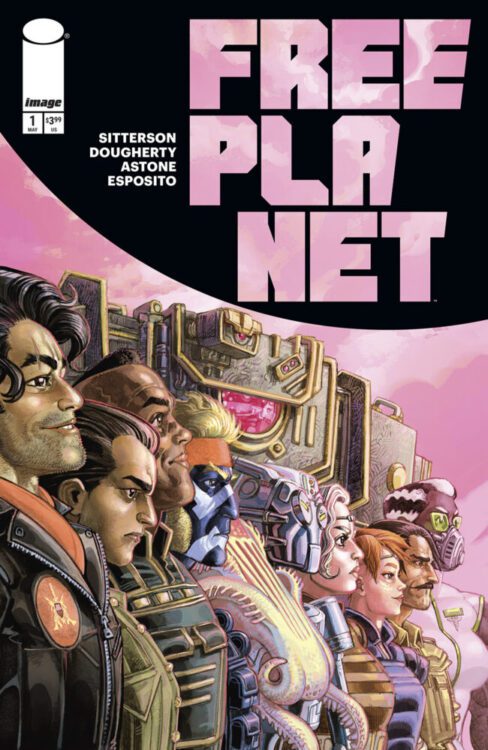
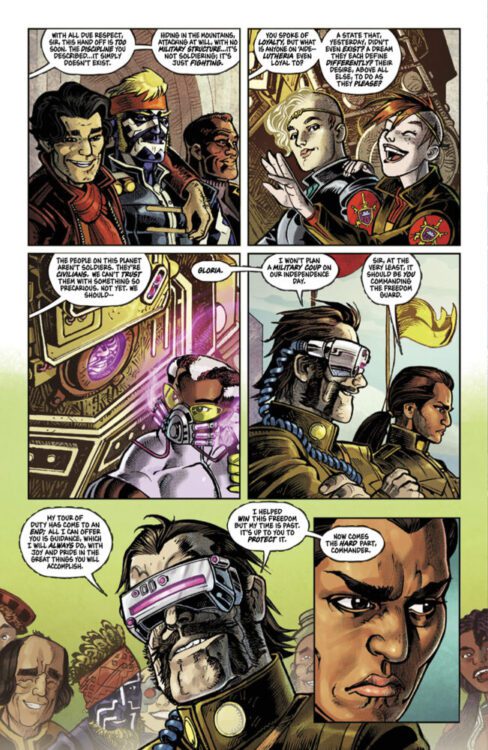
FREE PLANET #1 hits your local comic book shop this week from Image Comics The first issue is a dense world-building comic that feels like everything that happens after RETURN OF THE JEDI with a HEAVEY METAL meets DUNE twist.
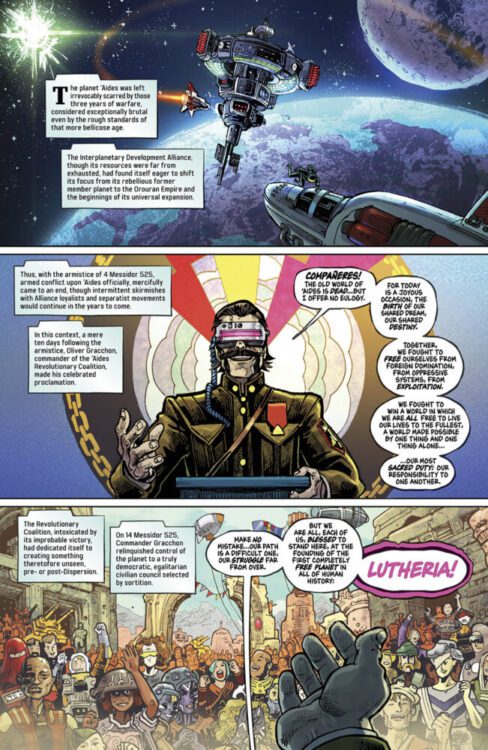
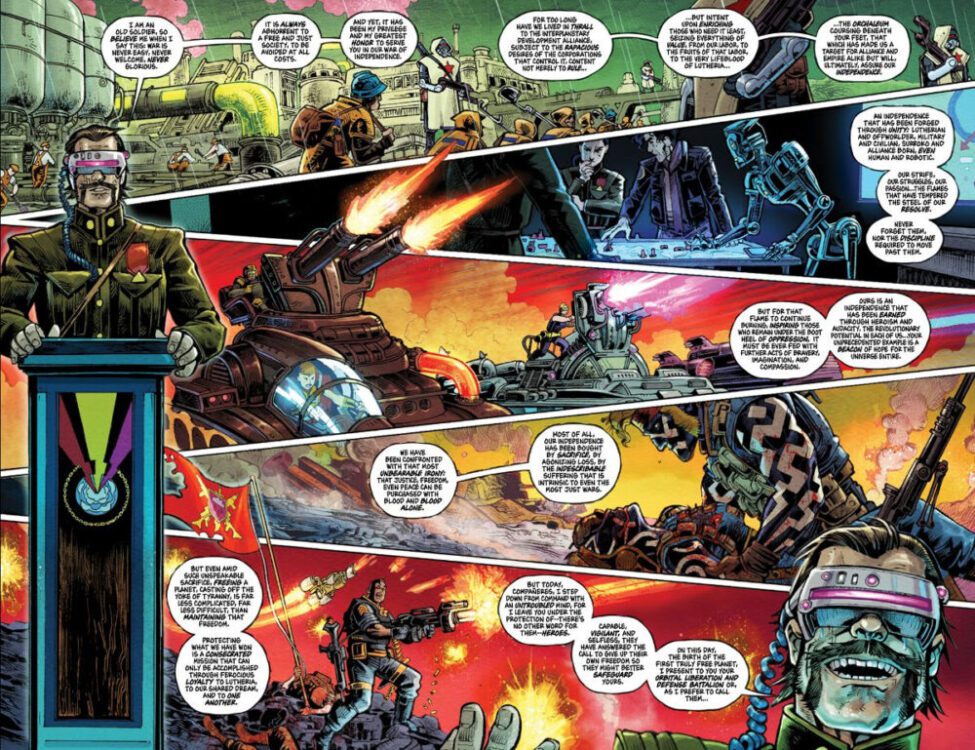
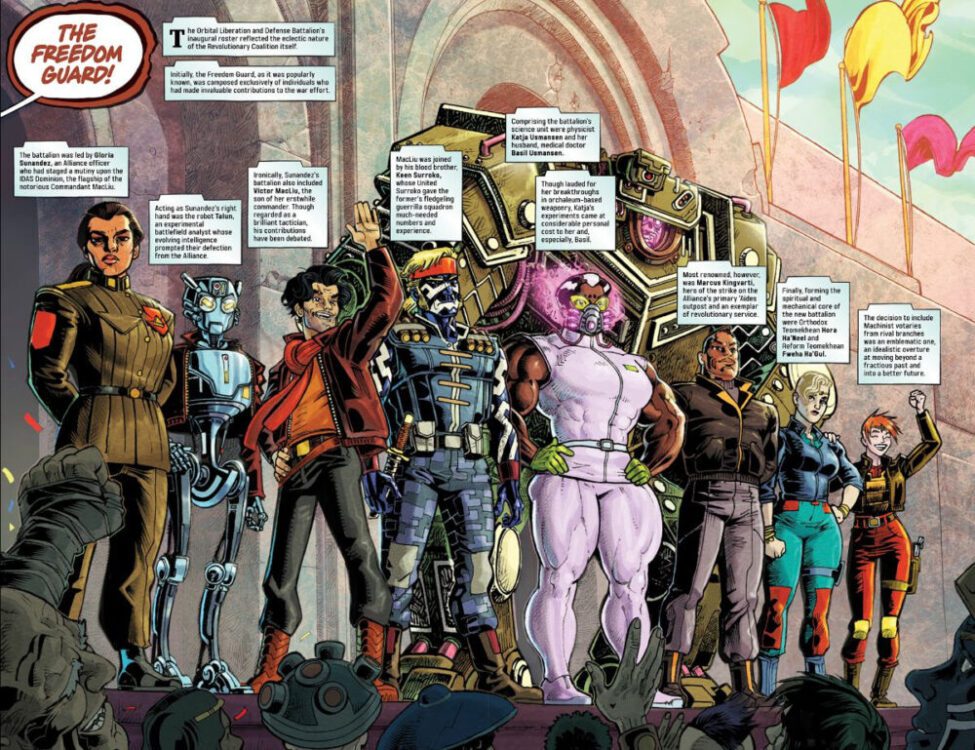
Matthew Sardo and Anthony Composto take a deep dive and examine every panel of the first five pages and try to find the hidden meaning in every detail. There is one double-page spread that is overwhelmingly good. Did you read FREE PLANET, what are your thoughts?
About FREE PLANET #1: The first completely free planet in human history has won its independence. Now, a group of revolutionary heroes must defend the planet’s unique energy source from a pair of hostile intergalactic powers while determining what complete freedom actually entails.
CREATIVE TEAM
Artist: Jed Dougherty
Writer: Aubrey Sitterson
Colorist: Vittorio Astone
Letterer: Taylor Esposito
Designer: Mark Kaufman
Doctor Who enters into horror territory with its latest episode, “The Well.”
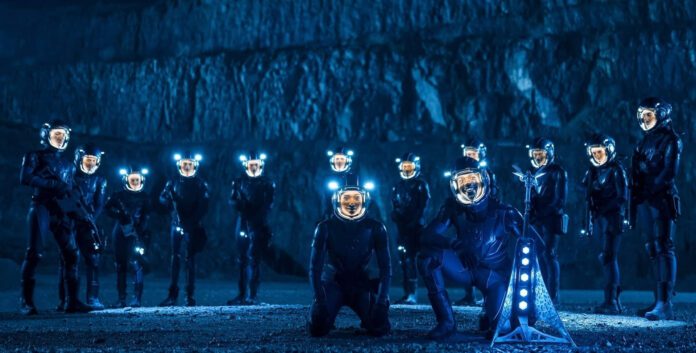
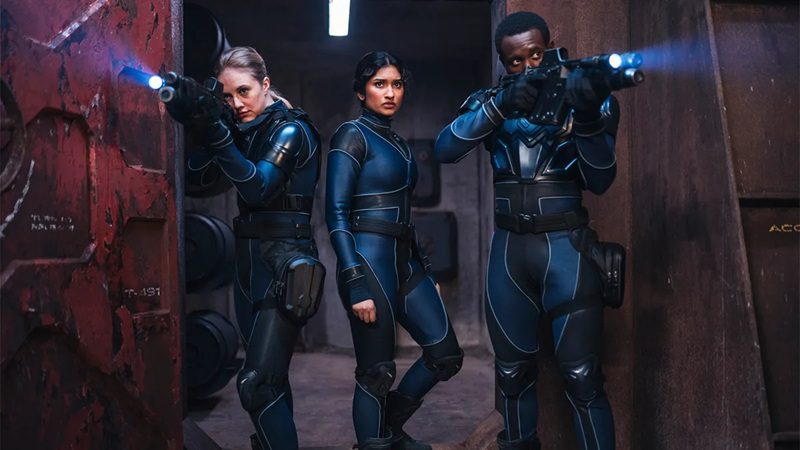
The Doctor and Belinda are still struggling to return to Earth in 2025. They end up on Planet 6767 with a platoon of soldiers investigating a mining colony that has stopped communicating. The only survivor is Aliss (Rose Ayling-Ellis), a deaf canteen worker, who has a strange entity attached to her.
“The Well” was a traditional “Monster of a Base” story. It’s a story template that the show has used many times before, and it has led to some great Doctor Who episodes, like “Dalek” and “Water on Mars.”
“The Well” can stand alongside those classics.
“The Well” had the same setup as Aliens, where a platoon of soldiers investigates an industrial space facility and finds out about a sort of catastrophe. Aliens was a great reference since it’s such a great movie, and “The Well” shared the industrial setting on a dark, desolate planet. “The Well” does have differences from Aliens since the episode was more of a mystery. The Doctor and soldiers came across a crime scene, and the entity was a supernatural being that caused fear to those around it.
The twist in “The Well” was the reveal that it was a sequel to “Midnight.” “Midnight” was a bottle episode, and it was considered one of the best episodes of Series 4, which was quite an achievement considering that season had ”Silence in the Library”, ”Forest of the Dead”, and “Turn Left.” “The Well” was a little more expansive than “Midnight” because of its setting, and the platoon could retreat and abandon Aliss if they wanted to. The use of soldiers going to an abandoned world did make “The Well” feel like another sequel episode, “The Time of Angels”/”Flesh and Stone,” which followed “Blink.” That Series 5 two-parter was a great follow-up to one of the most well-regarded Doctor Who episodes.
“The Well” still had a claustrophobic feel since most of the episode took place in one room as The Doctor, Belinda, and the soldiers tried to figure out the rules. There was a lot of tension and atmosphere throughout the episode. “The Well” was the most mature episode Doctor Who has produced in recent years since the humor and colors were dialed down, and the fear factor due to the characters sensing a presence. It was an episode that relied on fear of the unknown.
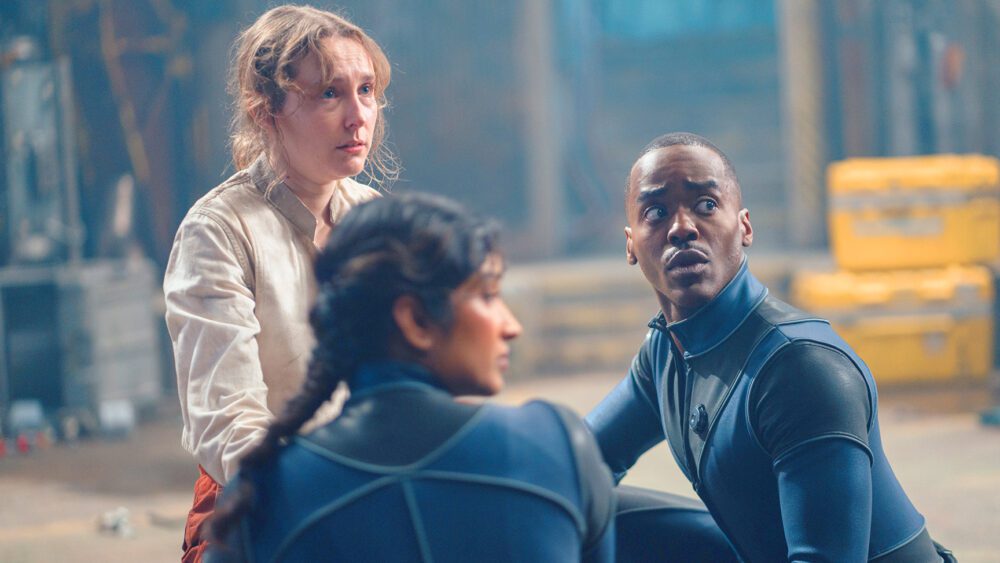
Ncuti Gatwa got to show his more dramatic side as The Doctor. He bonded with Shaya Costallion (Caoifhionn Dunne), the platoon leader. He experienced terror because he was facing a creature from his past. One of the most striking moments in the episode was when The Doctor spoke to the creature, and the reaction on his face said it all.
As well as being a strong horror story, “The Well” continued the season-long storyline. The Doctor and Belinda find out from the platoon what they didn’t know about Earth or human beings, and they deduce that something bad had happened to the planet. It was a classic mystery box, like ‘Bad Wolf’ in Series 1 and the disappearing planets in Series 4. The disappearance of Earth felt like the reverse of the Series 5 season arc, where cracks across the universe erase everything but Earth. Series 5 was my favorite season, so I am interested to see where this storytelling is going.
“The Well” was a simple, restrictive episode that had a lot of tension and could easily have filled in Russell T Davies’ first era of Doctor Who. It’s an episode that can win back audiences who have stopped watching. The IMDB score shows there’s a lot of love from the fans.
If there is one thing that will get fans of superhero comics talking and (most likely) arguing, it’s a big crossover event. Probably more than any other comic book run, a crossover event will divide a fandom and even entice non-fans to get in on the conversation. Unfortunately, a lot of the dialogue, especially in the internet age where anyone can post their thoughts online, comes from a negative place, often disparaging the story, criticising the character representation, and calling the publishers out for their blatant marketing ploy. However, the fact that the “event comic” exists at all is most likely a marketing ploy, mixed with a wider publishing decision, and it is this thought that shapes the event’s narrative and characters, not the decades of comics that came before it. The simple reason for this is that the publishers want to change something about the current direction of a particular comics series, or even their entire publishing line.
Do you think it was Jonathan Hickman’s idea to destroy the Marvel Multiverse and restart it? Was Mark Millar badgering the Marvel offices with his magnificent idea of forcing the superheroes to fight against each other? Did Geoff Johns and Andy Kubert hate the Flash so much they wanted him to run the multiverses to death? No. All of these, and most other event stories, were born out of publisher necessity or desire, and it was the creators who had to sell it to the readers.
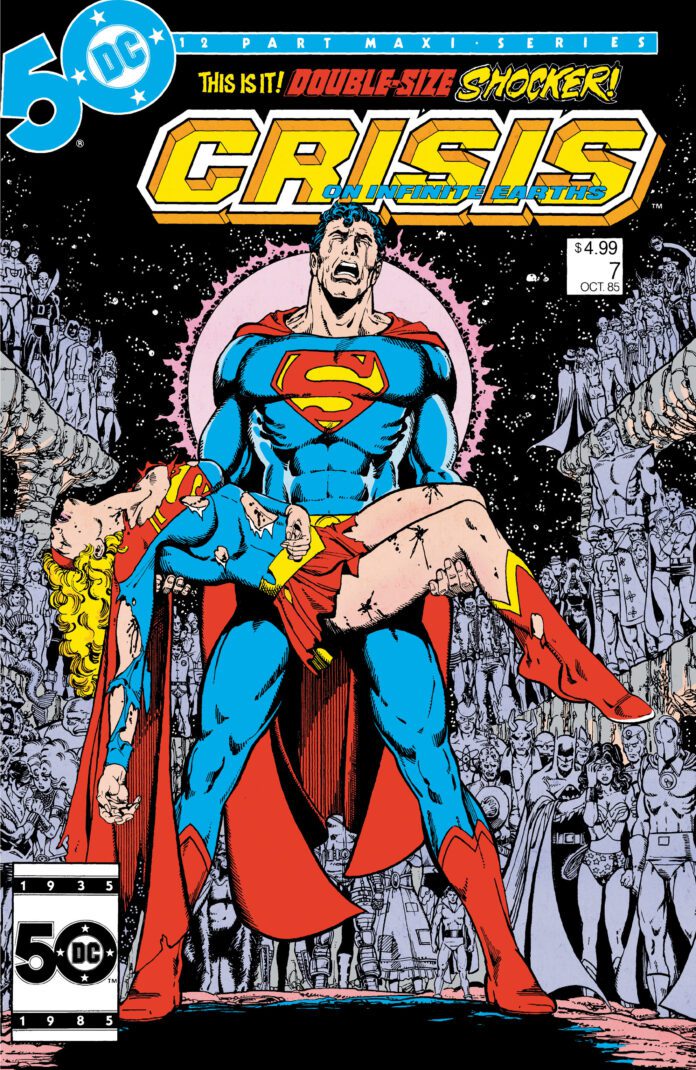
Crisis On Infinite Earths cover art Credit: DC
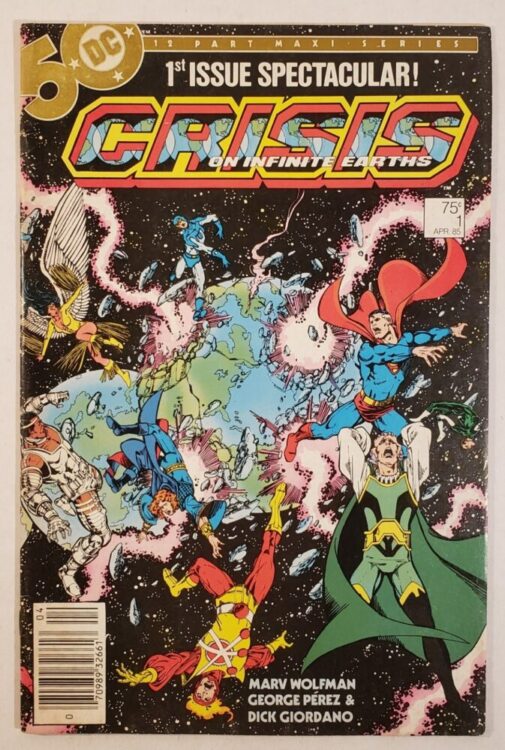
But before we start piling all of the blame on the publishers, let’s not forget that it was the fans, and the creators who grew up reading superhero comics, that necessitated the first in-world shake up event: Crisis on Infinite Earths. The story goes that in 1981 Marv Wolfman received a letter from a fan asking why a character did not recognise Green Lantern in a comic that he had edited, even though the characters had met before. Wolfman did not have an answer, but it did raise the issues of a) why he didn’t know, and b) why there was no way for him to check this information. After several decades of ongoing comic titles, continuity was becoming a problem, especially at DC, who hadn’t really linked their comics into a shared universe in the same way as Marvel. Benjamin Woo has noted that “Comics were not only sequestered from the media choices readily available to most people but also increasingly incomprehensible to anyone uninitiated into the culture of fandom” (1). This situation had occurred because of the changing comic book landscape in North America from the 1950s to the 1980s. Publishing had changed, distribution had changed, and fandom had changed.
From the very beginning of comic book publishing, money has been a driving force; “Comics as a medium in the United States have largely been produced within a business environment, where profit is the ultimate goal, and the creation of good comics is a by-product of that goal” (2). This can be seen dating back to the original comic strips, where the infamous Yellow Kid was so profitable that newspapers fought over the rights to publish it. Then, in the 1950s, the comic scare was used as a way for a small number of publishers to gain control of the market, introduce the Comics Code Authority, and force other publishers, most noticeably EC Comics, out of business. This shrinking of prominent publishers, along with the rise of the direct market and specialist comic shops that catered to a specific audience, created a fandom that was obsessed with characters, titles, and continuity, most notably for the main two publishers, Marvel and DC. By the early 1980s, most of the people working within the comic book industry had grown up with and been fans of comics. The comic book world was made up of “organised fan groups, professional collectors and sellers, and observable groups of readers” (3). This, ultimately, meant that when errors in continuity turned up in the monthly books, there were enough readers out there who would notice.
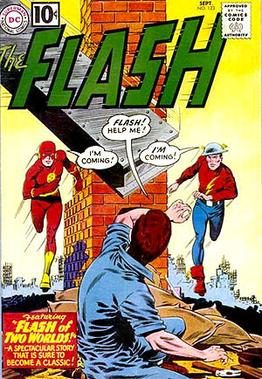
The Flash #123 Credit: DC
Marvel turned this continuity spotting into an unofficial competition and issued what they referred to as “No Prizes” to fans who wrote in. Marv Wolfman, however, was surprised that no one at DC had thought about doing something about the complex history of their characters. At first, he suggested The History of the DC Universe as a way of simplifying the decades long back catalogue, but, partially influenced by Flash of Two Worlds (an early comic and the start of all of DCs continuity problems), Wolfman’s comic evolved into DC’s first major event maxiseries and was to change the landscape of the DC universe.
Crisis on Infinite Earths was born out of a creator’s desire to simplify a publisher’s continuity, and make their comics more inviting and easier to follow. The publisher saw the opportunity to make changes to the entire line of comics, making it more streamlined and easier to sell to new readers. This housecleaning becomes the backbone of each successive big “Crisis” event story published by DC. The success of these event stories is debatable, but the driving force behind each one was the same: “The multiverse and the clean-up of it were attempts to deal with what it meant to have popular symbolic characters with long histories, but who were timeless in appearance” (4).
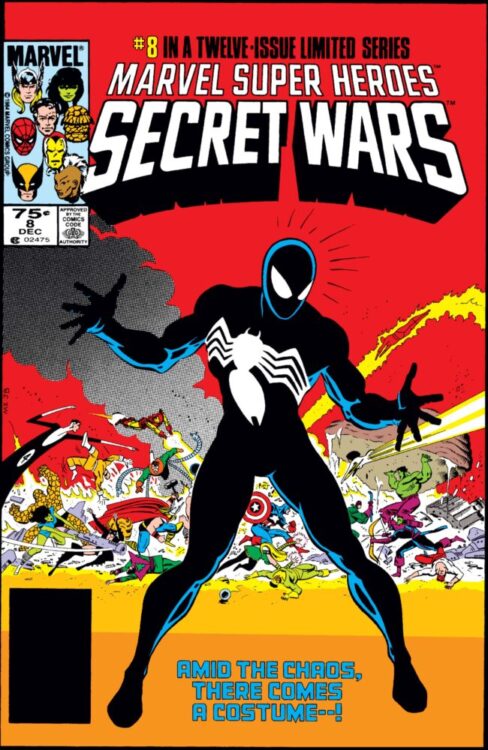
Secret Wars #8 Credit: Marvel Comics
In comparison, Marvel were less obvious with their clean ups than DC. Almost from the beginning, Marvel promoted the shared universe idea and seemed to keep a better in-house record of their history. However, this does not mean they did not make changes, even if a number of these were subtle, or relating to only one family of titles. Every time The Punisher‘s origin story was told, small changes would be made to make the story fit the era in which it was published. For example, the Vietnam War became the war in Afghanistan, and then finally an all-encompassing, unnamed war. Characters would have their histories rewritten, in story, so that they could return from the dead, or just become more interesting characters. See the Hobgoblin saga in the Spider-Man comics for an example of this, as that character’s real identity was revealed several times, each time rewriting the previous reveal.
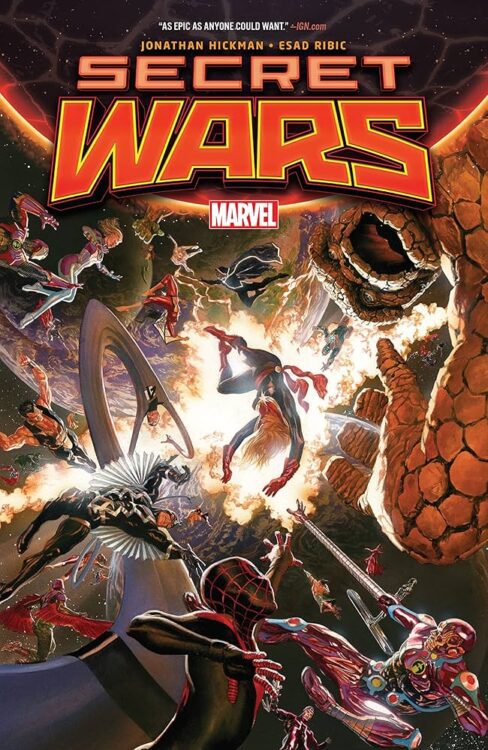
There are two big moments in modern Marvel history that were born out of the publishers desire to reinvigorate their comics and make them more appealing to a new audience: The Amazing Spider-Man: One More Day, and Jonathan Hickman’s Secret Wars. The former rewrote the central character’s history, basically stopping him from getting married, as it was deemed by the editors at the time that no one would be interested in a superhero who was married (they claimed it aged the character too much and made it less appealing to the younger fan base). The latter, meanwhile, was a sweeping event story, like Crisis on Infinite Earths, that allowed Marvel to streamline the history of their characters and, most importantly, merge several of their universes so that popular characters from their fringe comics could become a part of their mainline titles. Part of this shift was to allow the comic book universe to align more with the Marvel Cinematic Universe, which reaches a much larger audience. Marvel wanted the cinematic audience to be able to pick up a comic and understand and recognise the characters, making the transition from one medium to another as smoothly as possible.
This link between mediums and event comics is also not a new phenomenon. In fact, Marvel’s first crossover story, and arguably the starting point for Marvel’s love of event storytelling, only came about because of a deal with Mattel regarding a new line of Marvel based superhero toys. Just like The Transformers comic starting in 1984, the 1980s Secret Wars (not to be confused with the aforementioned comic of the same name) was actually a promotional pamphlet for the new line of toys, with Mattel providing guidance to the creators regarding the title of the comic and the design of the characters within it. The Secret Wars comic was an advert for toys, and this informed the way that the comic told its story, just like Crisis on Infinite Earths was an in-house restructuring of DC’s comic titles.
Secret Wars cover Art Credit: Marvel Comics
I started this article by saying that Jonathan Hickman wouldn’t have gone to Marvel with the idea of doing Secret Wars. However, evidence shows that Hickman originally conceived his concept of a shrinking multiverse and the inevitable end of all things for his Fantastic Four run. He even introduced the idea at the start of his Fantastic Four series. But at the time, Marvel didn’t want to use the idea for that comic. When they offered Hickman the Avengers titles a few years later, however, the concept was reintroduced, this time with the long term aim being the Secret Wars crossover. The aim suited Hickman’s ongoing narrative, and in fact produced a conclusion to his many Marvel comic series. It also suited the publisher. At the time Marvel wanted to promote something world shattering to a) compare to the cinematic universe, and b) create a situation where the publisher could bring back some much loved comics characters/stories from its past and reinvigorate or reboot the existing line of comics. It was a win/win situation for the creators and the publisher.
If you only look at the narrative of an event comic for insight into whether or not the series is successful, you are actually missing out on the real world events that led to the event and the aftermath of the short lived comic book series. In short, you are missing out on the very reason that particular comic exists. Those few issues may help form your opinion of the story, but that is different from whether or not the comic was a success. It has been 40 years since Crisis on Infinite Earths was released, and no matter what you think of the story, the fact it had such an impact on the comic industry, and the fact that people still talk about it today, means that on many levels the event was a success.
It is important to remember that “as much as readers might like to romanticize the comic book business, it’s still just that: a business” (5), and many academic books that you can read about the industry makes this point abundantly clear. In fact, one of the best is Comic Books Incorporated by Shawna Kidman, which delves into the murky backroom of the business side of the comic book industry. Love them or hate them, event comics exist for a number of reasons, and the reader’s enjoyment, which may seem like the most important, more often than not is actually quite low on that list. It is easy for people, especially reviewers, to focus on narrative and the art of a comic, but I think it is also important to look at the situation in which a particular comic was created, especially if we are looking back on old comics.
Remember, context is key.
Notes
1 from Comics Studies: A Guidebook edited by Charles Hatfield and Bart Beaty page 118,
2, 3, and 4 from Critical Approaches to Comics: Theories and Methods edited by Matthew J. Smith & Randy Duncan pages 145, 159, and 164
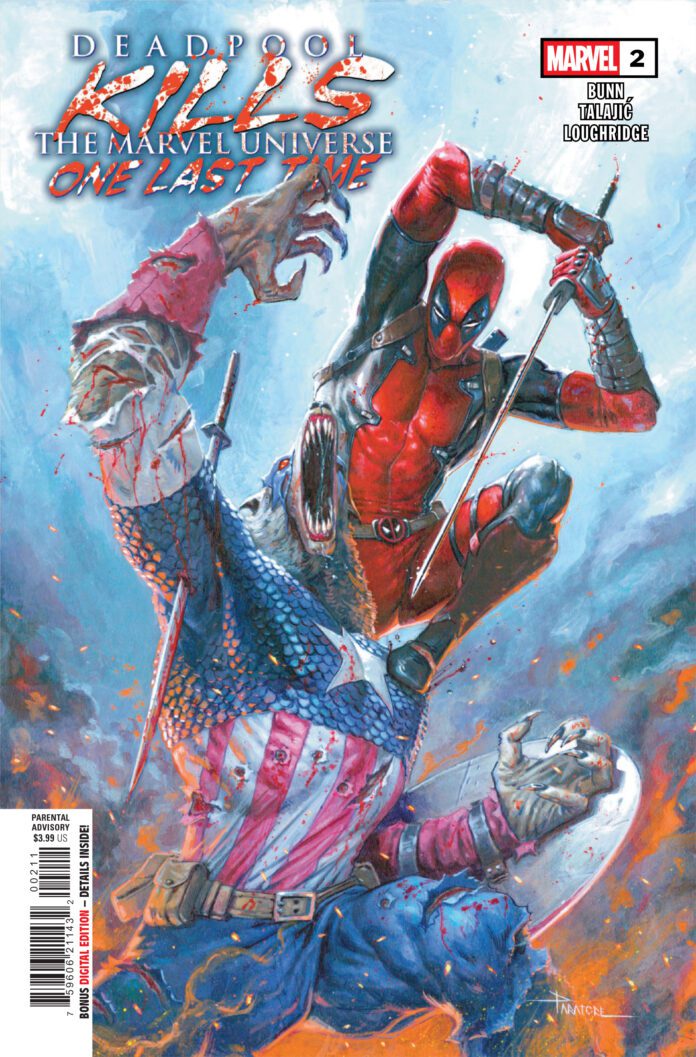
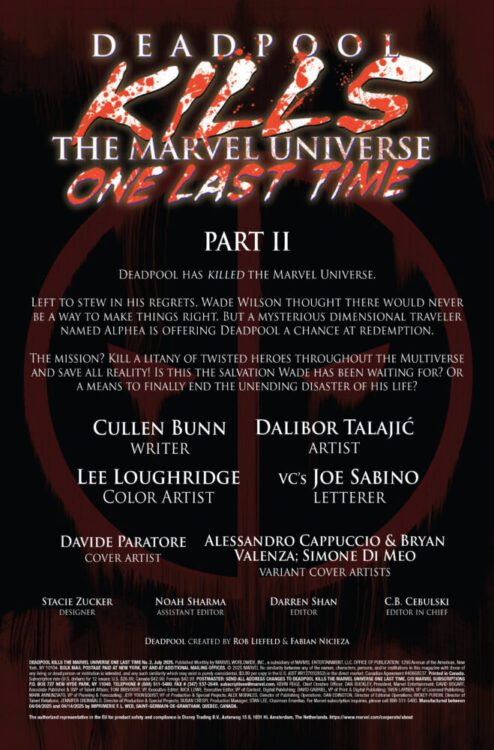
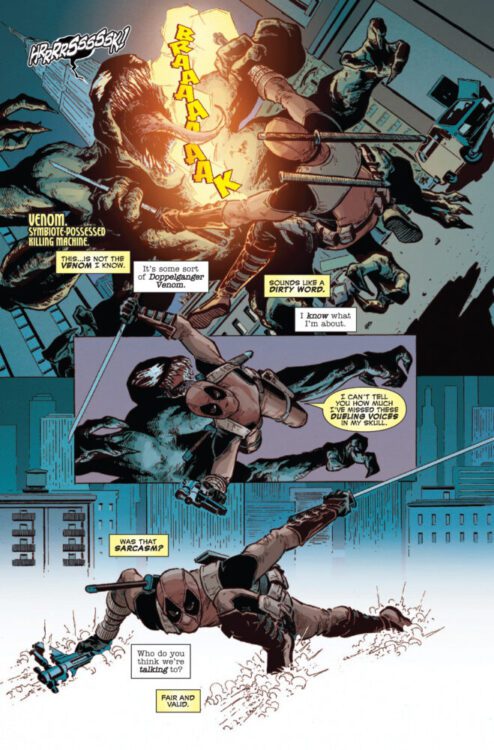
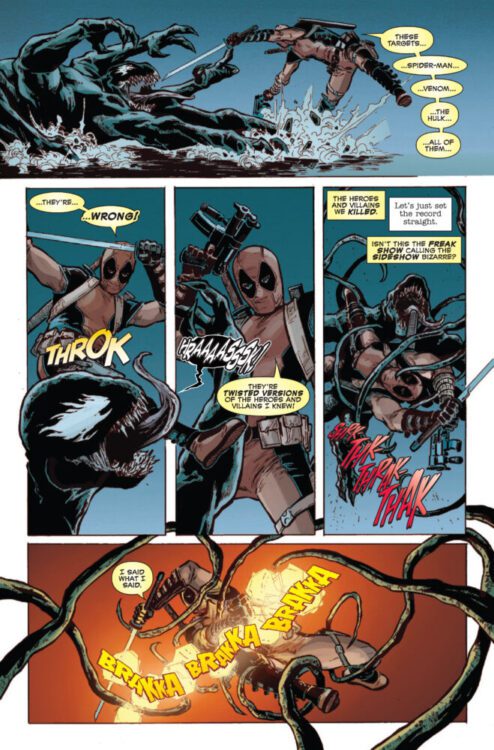
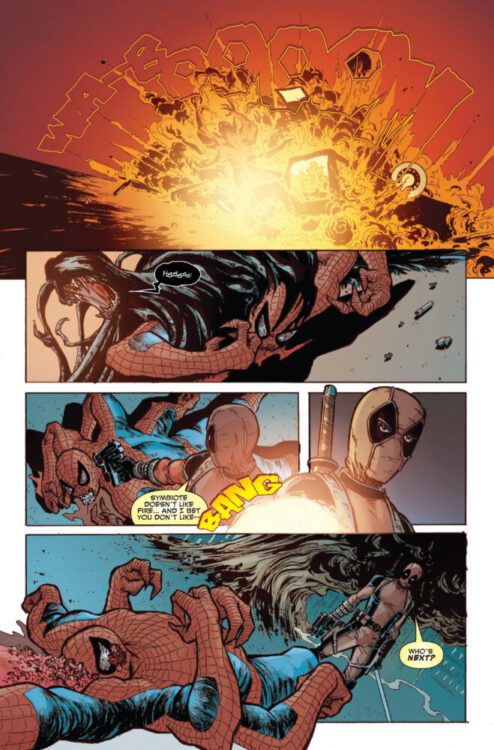
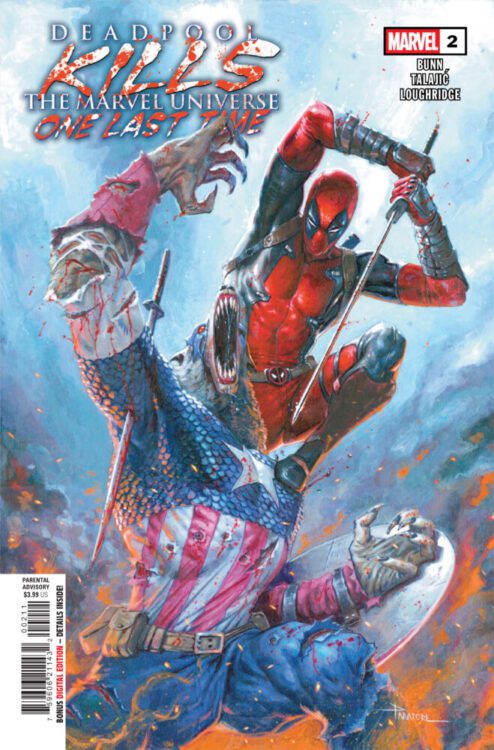
DEADPOOL KILLS THE MARVEL UNIVERSE ONE LAST TIME #2 hits your local comic book store on May 7th, but thanks to Marvel Comics, Monkeys Fighting Robots has an exclusive four-page preview for you!
About the issue: Wade Wilson has a lot weighing on his conscience, like a universe’s worth. In fact, like a specific universe’s worth… What kind of evil could Deadpool destroy to even that out? And why is this universe’s S.H.I.E.L.D. dressed in HYDRA unifo-? Oh… That’ll work.
The issue is by writer Cullen Bunn and artist Dalibor Talajić, with colors by Lee Loughridge, and letters by Joe Sabino. The main cover is by Davide Paratore.
Check out our DEADPOOL KILLS THE MARVEL UNIVERSE ONE LAST TIME #2 preview below:
Are you reading DEADPOOL KILLS THE MARVEL UNIVERSE ONE LAST TIME? Sound off in the comments!
Following a standard opening episode, the 15th season of Doctor Who continues with one of the series’ most ambitious episodes in a long time.
The Doctor is unable to take Belinda back to 2025, and he is forced to go the long way round. They land in Miami in 1952 and discover an abandoned movie theater where people had disappeared. The Doctor’s curiosity gets the better of him, and he wants to investigate.
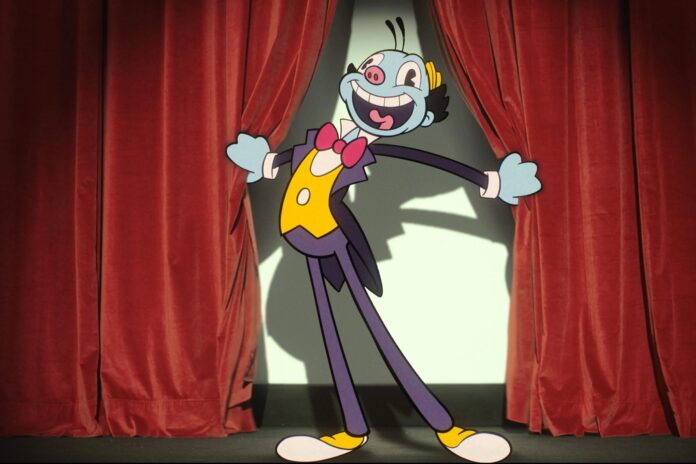
“Lux” was the episode in this season that I was most interested in. This was the episode that featured the cartoon character Mr. Ring-a-Ding (played by Alan Cumming), and the trailer made it look like Cuphead crossed with Ringu. It looked like the episode that this season spent a lot of money on. This was an episode with a lot of visual effects, animation, and a big-name guest star.
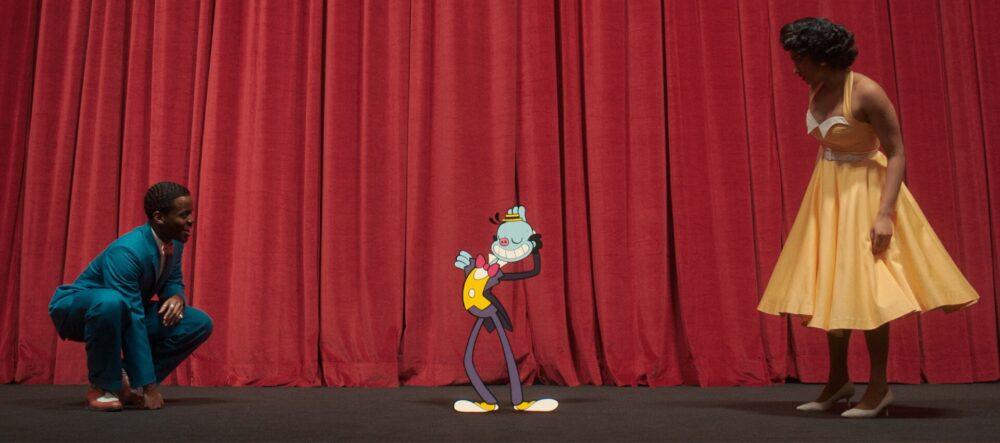
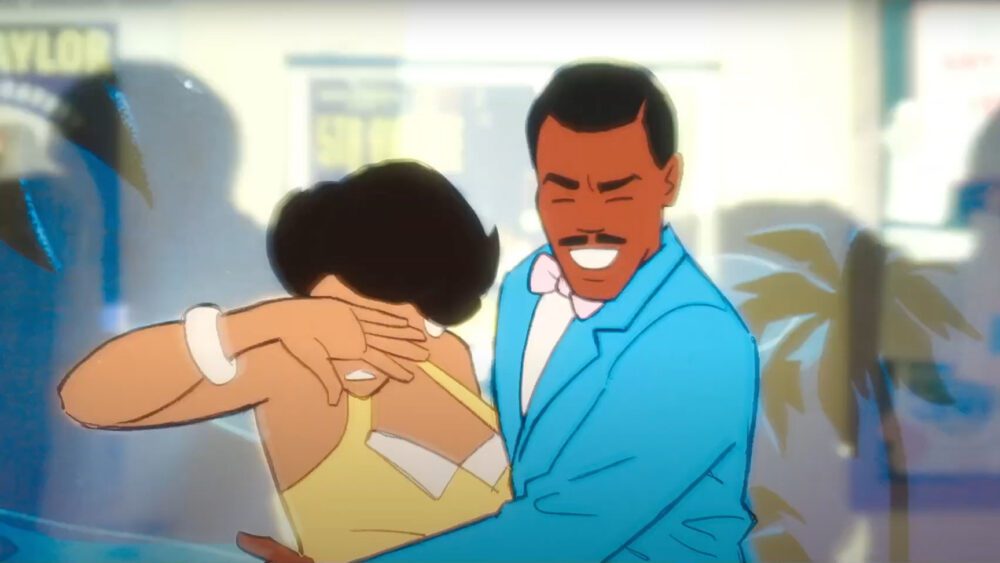
The episode was mostly confined to the movie theater, but it was still a technical achievement for Doctor Who. The mix of live-action settings and 2D characters looked fantastic, and could match family classics like Pete’s Dragon and Who Framed Roger Rabbit. Mr. Ring-a-Ding was influenced by 1930s animation, particularly the works of Fleischer Studios, and as stated, he looks like he could be a boss in a Cuphead game. Mr. Ring-a-Ding’s transformation will induce nightmares.
“Lux” was a continuation of the Pantheon of Discord storyline. Mr. Ring-a-Ding was really Lux, the God of Light craving light and a power source. Like The Toymaker and Maestro, Lux was a campy, theatrical villain, although the animated being could instantly turn more sinister. “Lux” did mirror “The Devil’s Chord”, since both were the second episode of their respective seasons and featured a villain who was entertainment adjacent. “The Devil’s Chord” had a fourth wall break at the beginning of the episode, and “Lux” doubled down on the meta-approach. The Doctor and Belinda ended up trapped in a movie world, which led to the Doctor breaking through a TV and finding himself in a living room with Whovian. It will be a divisive scene.
“Lux” was the most self-aware episode released by the Rebooted series. Yet, the episode does go down a familiar route when it comes to how The Doctor and Belinda overcome Mr. Ring-a-Ding. The resolution was a cop-out.
“Lux” was used as an opportunity for The Doctor and Belinda to get to know each other. Belinda was forced to go on an adventure since The Doctor couldn’t take her home. When The Doctor needed to confide in Belinda about him being the last of his people, it was given a narrative purpose, since he had to share personal information to get out of a trap. It was more than The Doctor just reciting information that fans of the show already know. Gatwa shows off his strengths as The Doctor: his enthusiasm and intelligence. When The Doctor found out about the mystery of the theater, his reaction was glee and childish enthusiasm. It was a puzzle to solve. He showed his awareness about the surroundings, picking up on small details others would miss. Belinda showed her compassionate side when she saw The Doctor’s injury, and her nursing training kicked in.
“Lux” was an episode that walked the tightrope between being ambitious and familiar, and it managed that for the most part. It was an entertaining episode due to the team facing an over-the-top villain and showcasing The Doctor figuring out a mystery. It was a strong family episode and an improvement over “The Robot Revolution.”
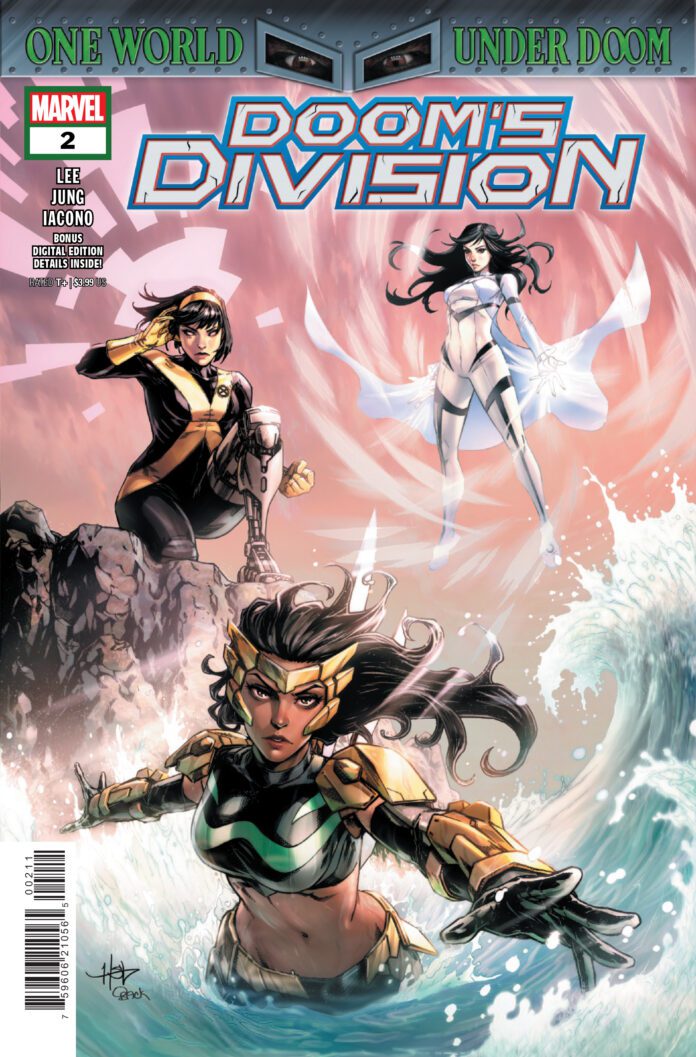
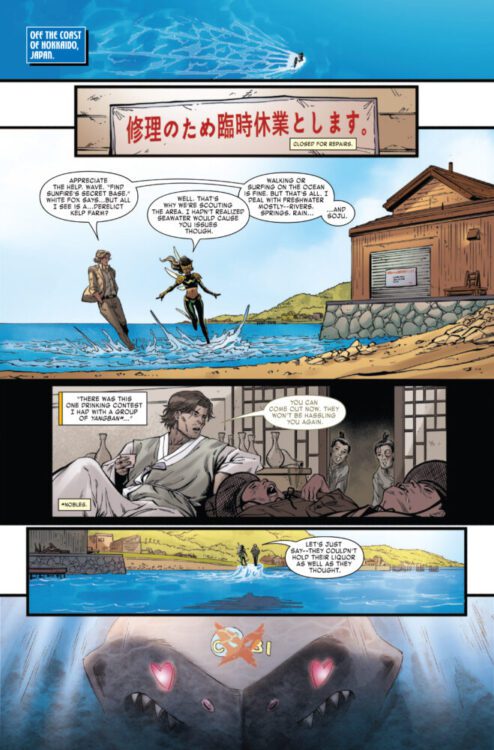
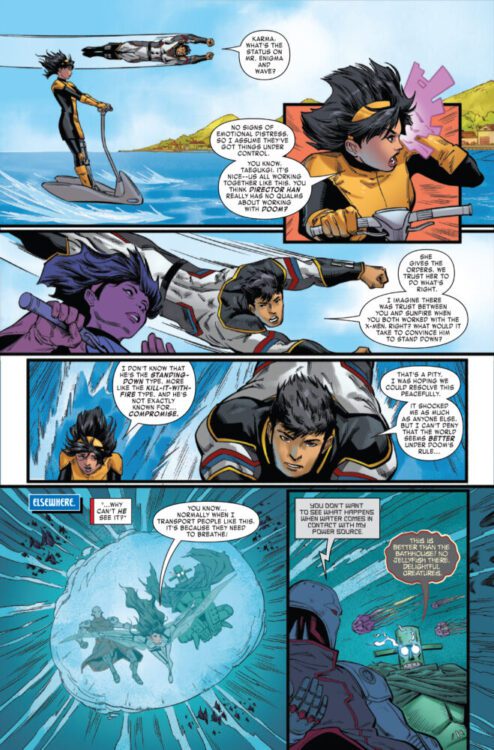
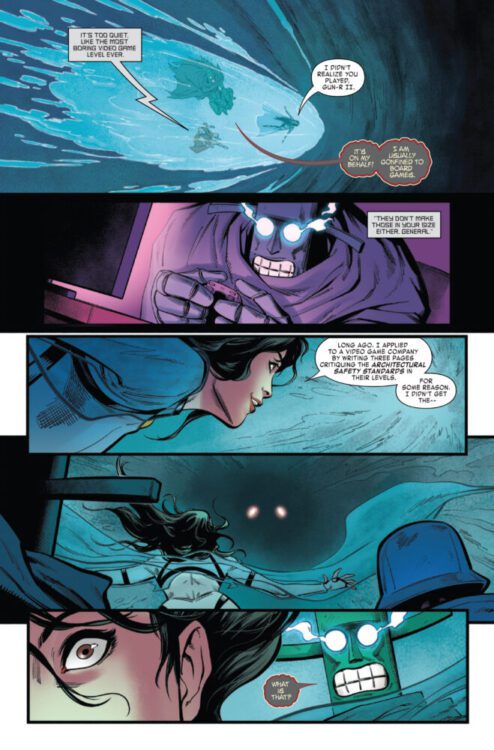
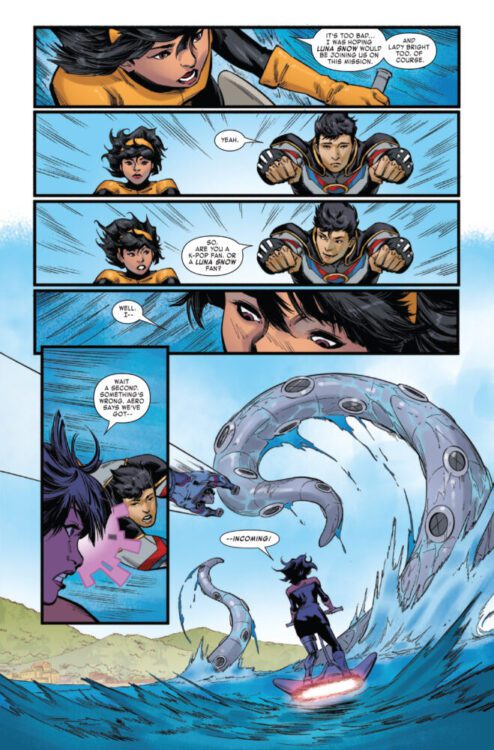
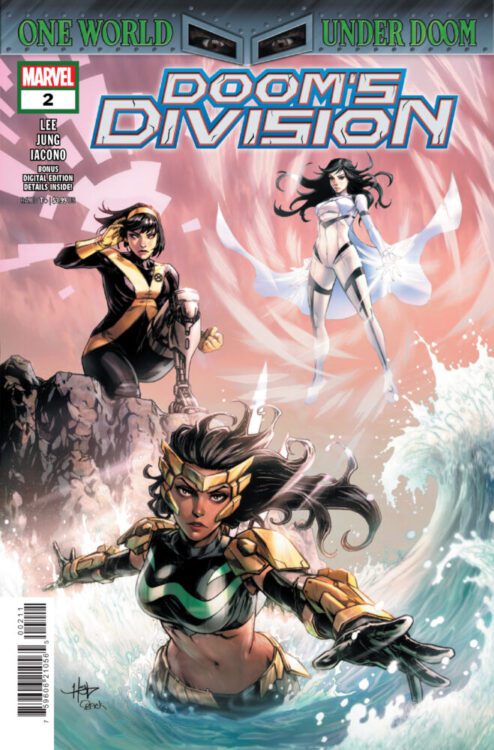
DOOM’S DIVISION #2 hits your local comic book store on April 30th, but thanks to Marvel Comics, Monkeys Fighting Robots has an exclusive four-page preview for you!
About the issue: AN ALL-NEW SUPER-TEAM UNITES!
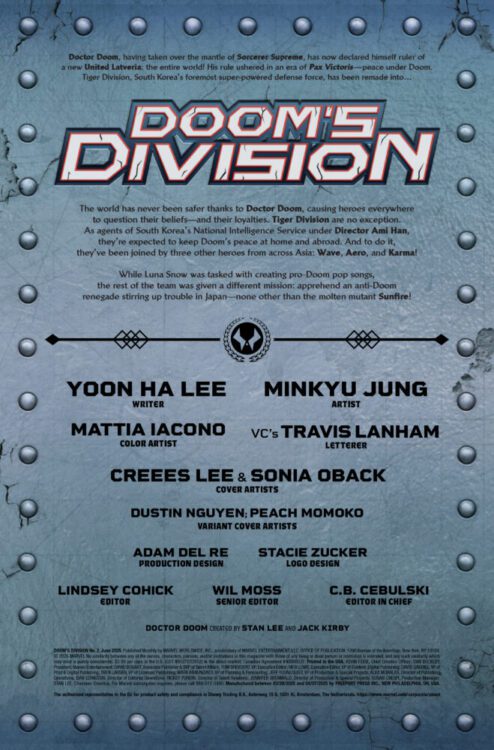
Under Doom, Tiger Division has three new members from across Asia: WAVE, KARMA and AERO! Their first mission brings them to Japan to stop a resistance being led by the molten mutant, SUNFIRE! But Sunfire isn’t the only danger that awaits them in the perilous waters off Japan’s coast…
The issue is by writer Yoon Ha Lee and artist Minkyu Jung, with colors by Mattia Iacono, and letters by Travis Lanham. The main cover is by Creees Lee and Sonia Oback.
Check out our DOOM’S DIVISION #2 preview below:
Have you been enjoying Marvel’s ONE WORLD UNDER DOOM? Sound off in the comments!
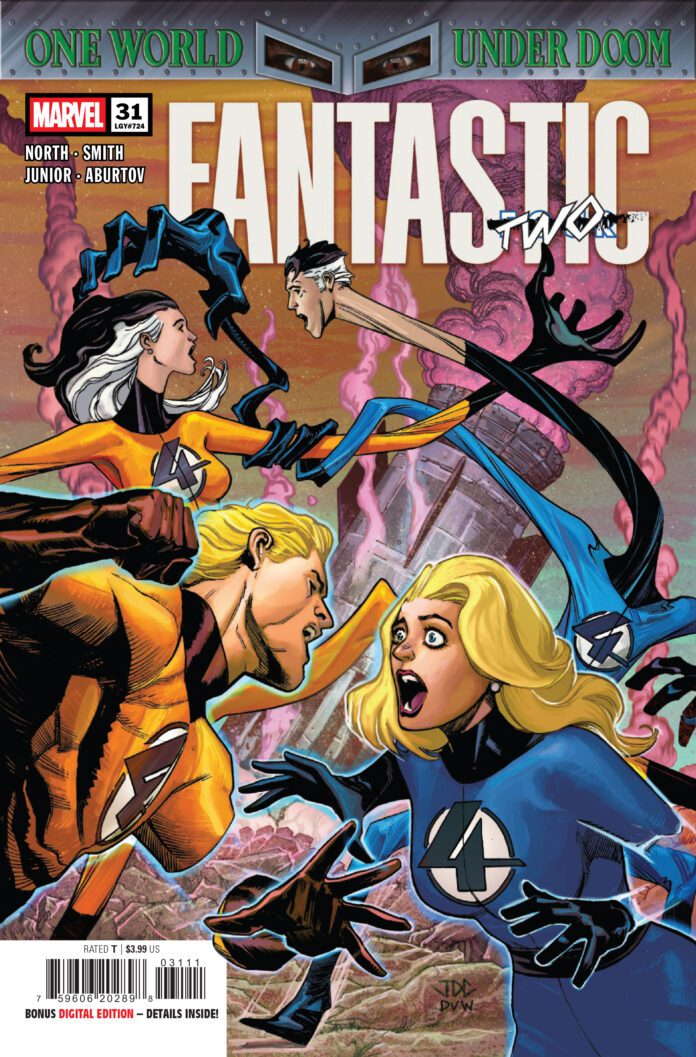
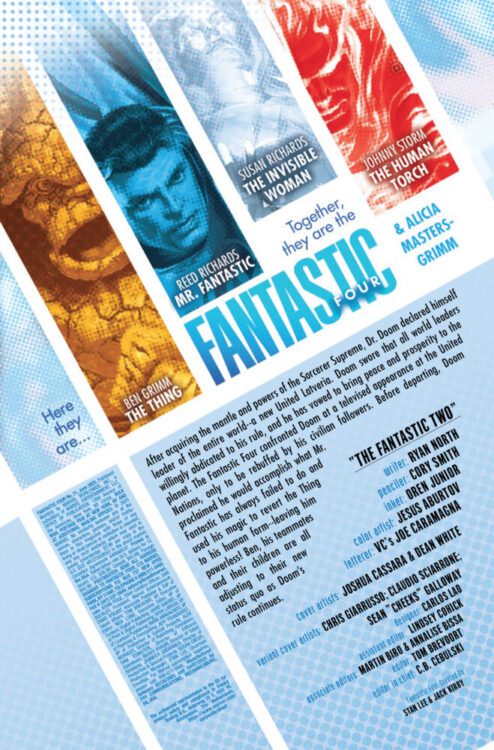
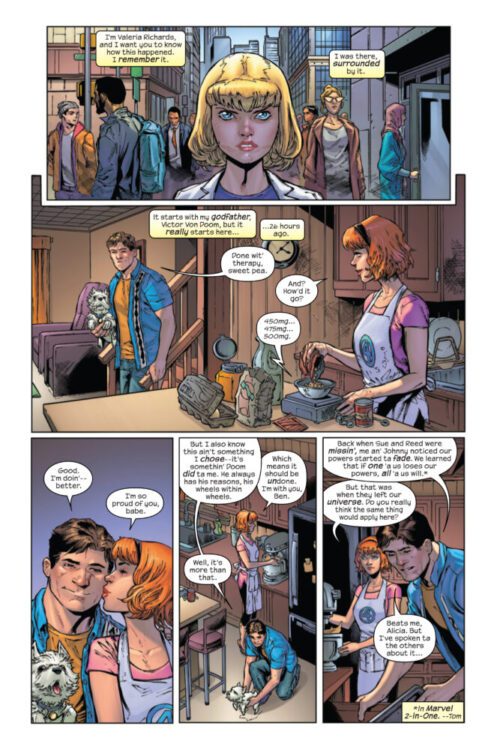
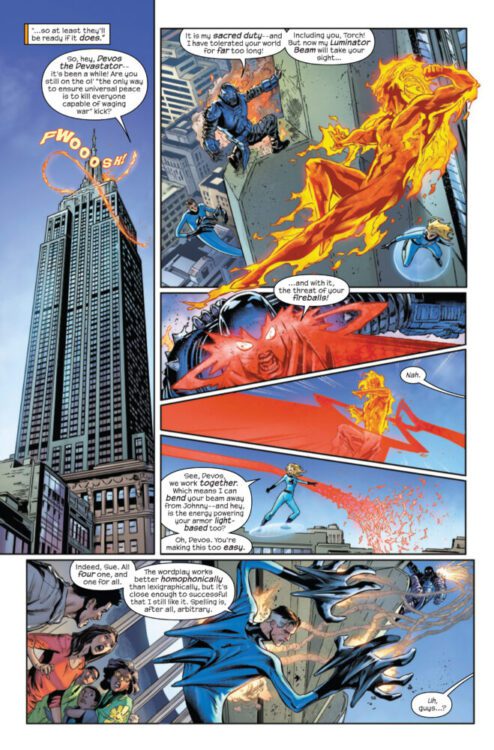
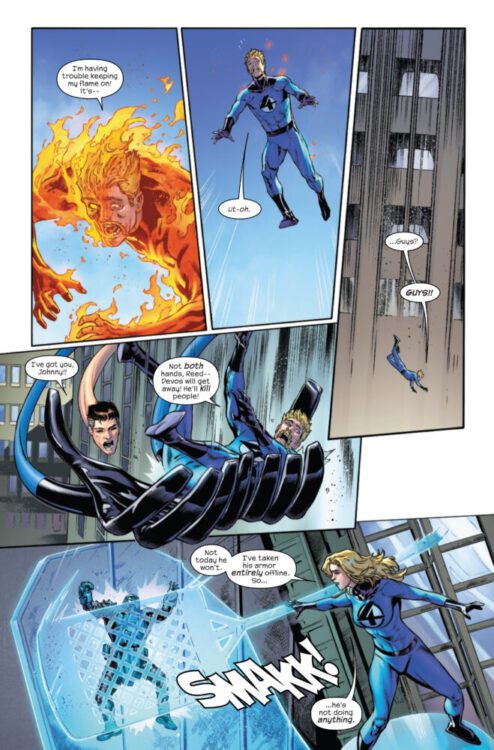
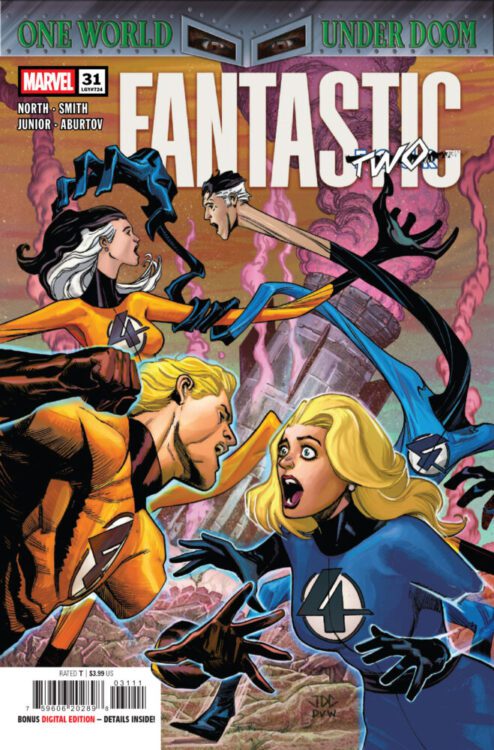
FANTASTIC FOUR #31 hits your local comic book store on April 30th, but thanks to Marvel Comics, Monkeys Fighting Robots has an exclusive three-page preview for you!
About the issue: FANTASTIC TWO!
As Ben recovers from what Doom has done to him, the Fantastic Four learn they’re losing their powers at the one time they need them the most desperately! If they can’t reverse the effect, they may be lost forever – and Doom will be unstoppable. But the family has an idea of how to get them back – and to do it safely. They need only recreate the circumstances that first gave them their powers. But when safety doesn’t get them results, there is a more desperate path available to the Four – and they take it.
It all comes down to this! A young woman. Her kid brother. The man she loves. His only friend… …and a desperate launch into space.
The issue is by writer Ryan North and artist Cory Smith, with inks by Oren Junior, colors by Jesus Aburtov, and letters by Joe Caramagna. The main cover is by Joshua Cassara and Dean White.
Check out our FANTASTIC FOUR #31 preview below:
Are you reading Marvel’s FANTASTIC FOUR? Sound off in the comments!
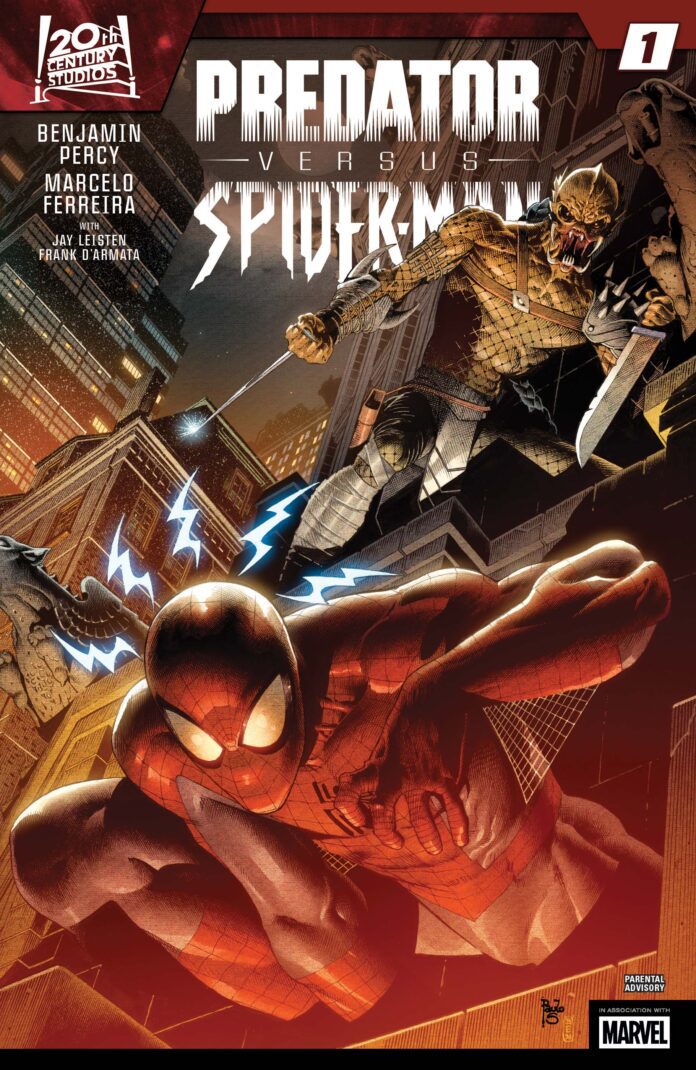
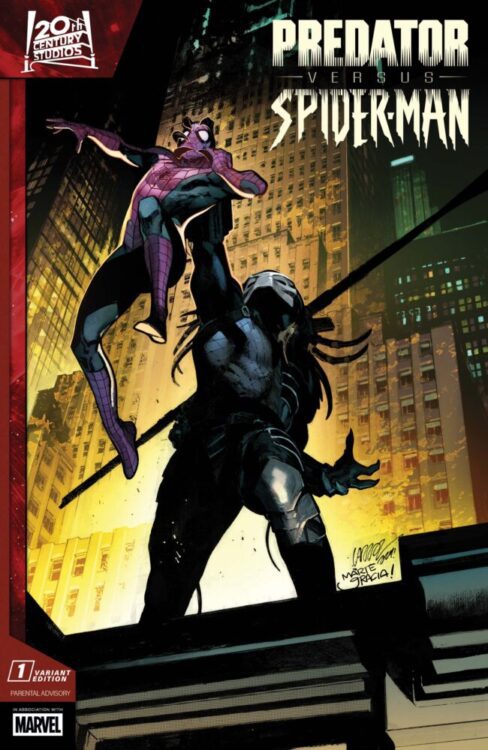
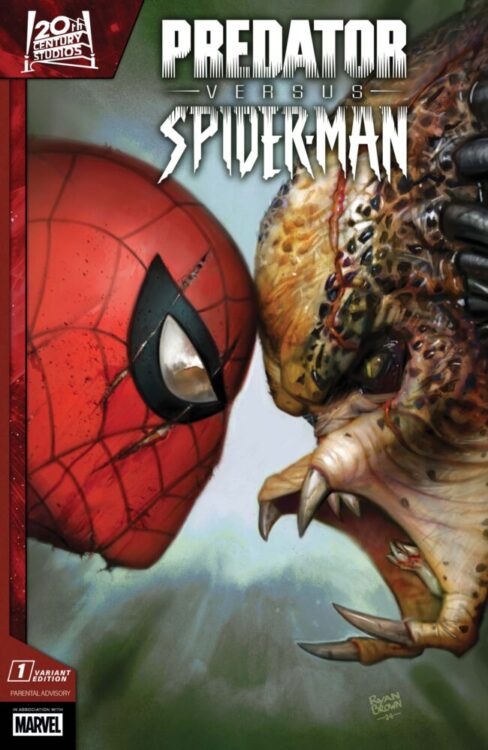
From writer Benjamin Percy (Ghost Rider, Wolverine) and artist Marcelo Ferreira comes a crossover we never knew we needed in Predator Versus Spider-Man #1. Featuring inks by Jay Leisten, color art by Frank D’Armata, and lettering from Clayton Cowles, this opening issue offers familiar yet still unique takes on both Spidey and the classic Predator formula. With a surprising and fun script and stellar visual work, this opening chapter is better than it has any right to be.
“A heat wave sends NYC into a blackout and Spider-Man on patrol as tempers boil across the city. But beneath its grimy sewers and subways lurks a threat unlike anything Peter Parker has faced before. Introducing “Skinner,” a Predator of no honor and no clan – only a thirst for blood.”
Writing & Plot
Benjamin Percy Gives readers a surprisingly brutal yet still fun and fresh take with Predator Versus Spider-Man #1. Spidey investigating a series of grisly murders and competing against a driven police detective sets up the perfect plot going into the great Predator reveal. This opening issue’s greatest accomplishment is how much it manages to feel like *both* a Predator film and a Spider-Man story. Percy’s love for the classic Predator movies is on clear display here. Setting the story during a boiling, crime-filled New York summer is clearly a tribute to 1990’s Predator 2. That being said, Percy still experiments with the Predator formula. “Skinner” is unlike any Yautja (canonical lore name for the Predator race) we’ve seen up to this point in that he’s clearly a little more bloodthirsty than his hunting brethren. These differences may annoy longtime Predator fans who wanted something a bit more straightforward, but this element works exceptionally well in the story. Percy manages to actively make this Predator feel like a potential Spider-Man villain, and not just another crossover/guest character. The setup with everything Spider-Man is doing to investigate these murders as well as support his community during this unrelenting Summer heat helps the book feel more like a true Spider-Man comic while also having the fleshed-out characterization found in older blockbuster films like, you know, Predator. Peter is true to character with his combination of wit and and genuine smarts, the Daily Bugle gets a great story beat, and the final page character reveal is the most “obvious that they’d show up in this crossover but I’m still freakin’ stoked” moment I’ve had in a recent mainstream comic. MJ feels a little underserved in these pages, but that should hopefully be remedied in future issues. Ben Percy has penned an awesome script for the first chapter of this franchise event.
Art Direction
Marvel Comics veteran Marcelo Ferreira is on hand to deliver a stellar visual experience to the pages of Predator Versus Spider-Man #1. The former Strange and Amazing Spider-Man artist crafts a reading experience that combines the kinetic action and character of a Spidey book with the brutal bloodshed of a Dark Horse Predator comic. Ferreira’s work here sets itself apart from any other Spider-Man comic in recent memory, really selling the idea that there is something more sinister and deadly at play here in this crossover. His angular, ore hatch-heavy work feels like something that would have been drawn 20 years prior – and this works in the book’s favor. The Spider-action sequences still feel like proper Spider-Man with his usual sinewy acrobatics – it’s the rest of the book that feels markedly different. The gruesome corpses, grim crime scenes, and tense character moments are all presented in a way that feels less like a Marvel comic and more like an R-rated 90’s action flick (you know, like Predator 2). The design of the new Predator works in favor of the story, and feels a bit timely considering the trailer that just dropped. Frank D’Armata’s color art is the main contributor to the unrelenting atmosphere of this comic. Every panel feels like it’s sweating from summer heat, with the color work adding texture as much as does depth. Between the hazy yellow of the blazing sun and the crimson-tinged gore found in the dank rooms where the new hunter leaves its victims, D’Armata crafts an experience that matches the tone of this story and the stories this issue pays tribute to.
Verdict
Predator Versus Spider-Man is a blast of an opening chapter that is far better than it has any right to be. Ben Percy’s script combines the familiarity of both Spider-Man comics and Predator films into something that takes unique liberties with both properties, creating something new and promising. The visuals from Marcelo Ferreira and Frank D’Armata are well-directed, detailed, and brutally atmospheric, paying tribute to both a specific vision of Spidey and the era of films that the Predator made its debut in. Be sure to grab this new issue when it hits shelves on May 23rd!
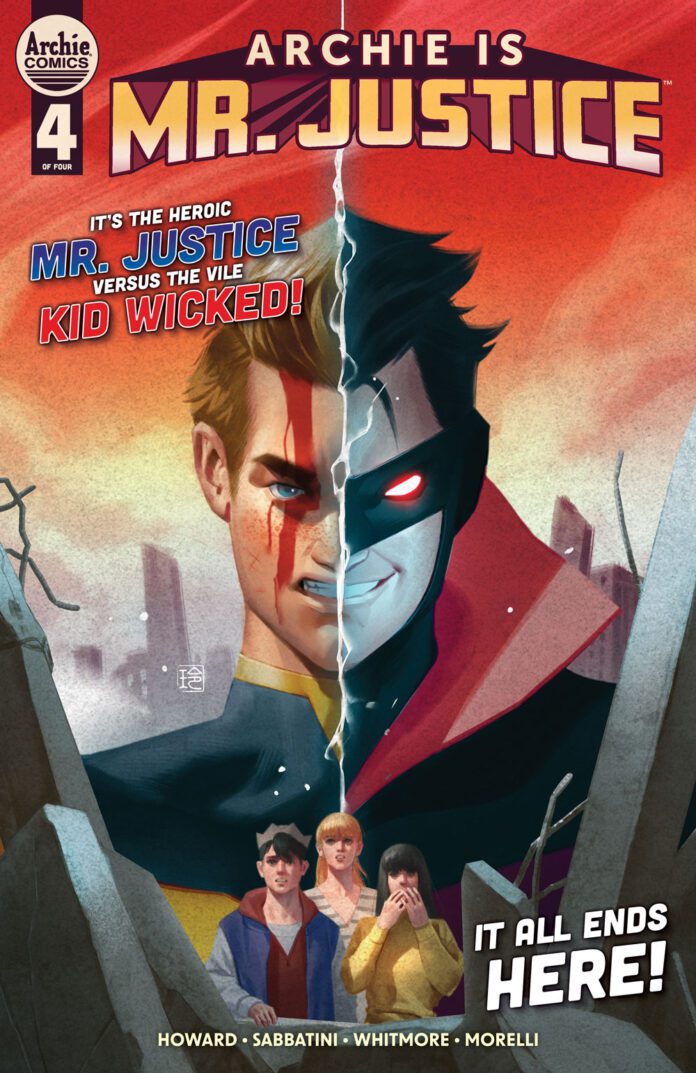
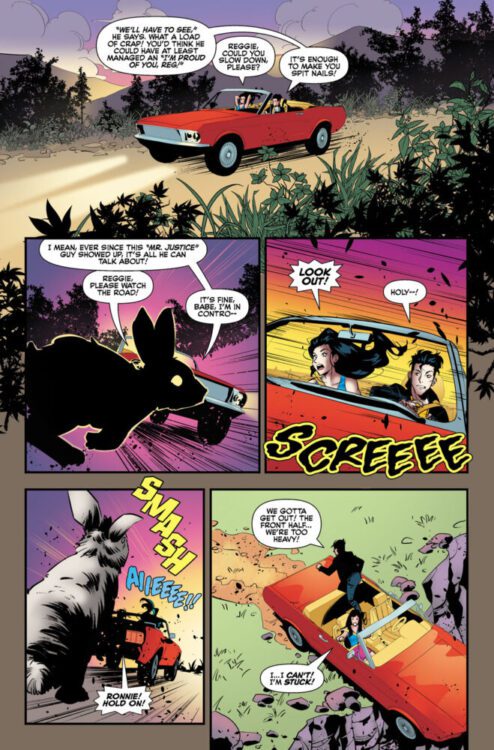
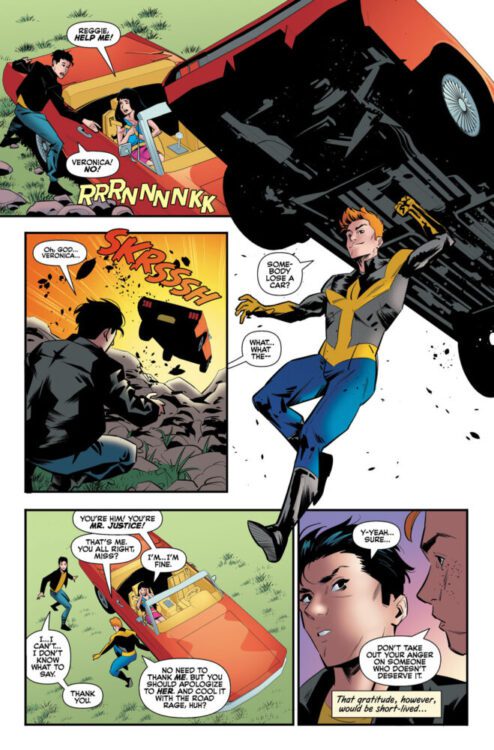
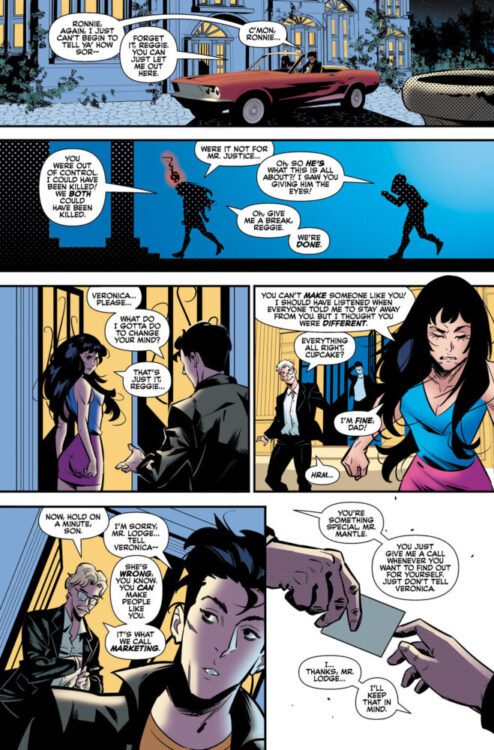
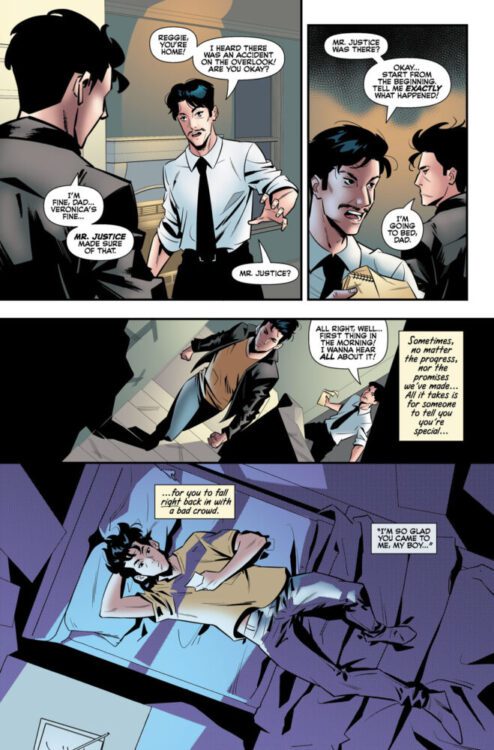
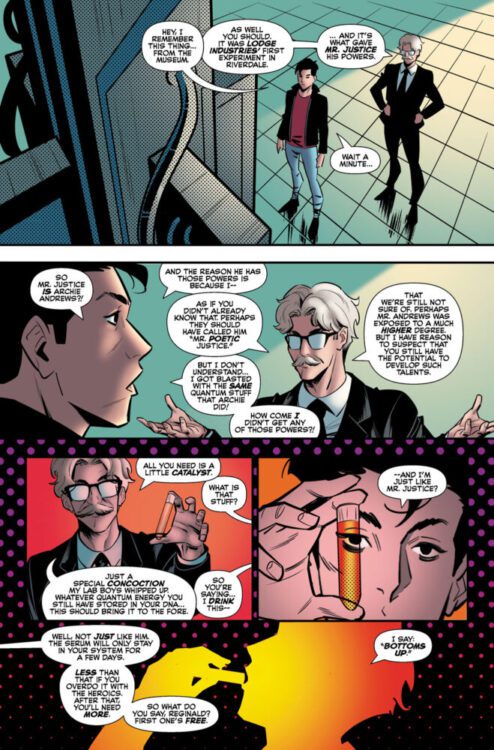
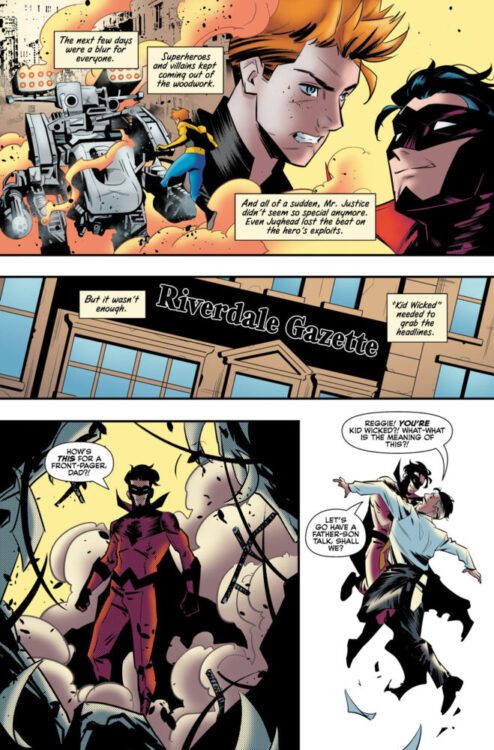
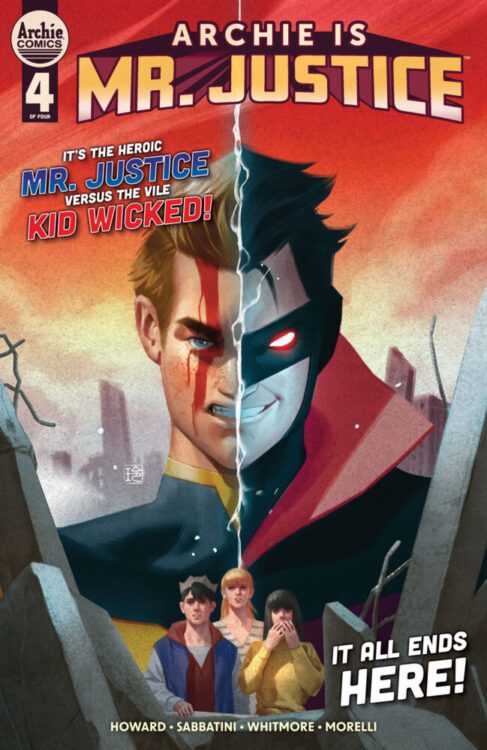
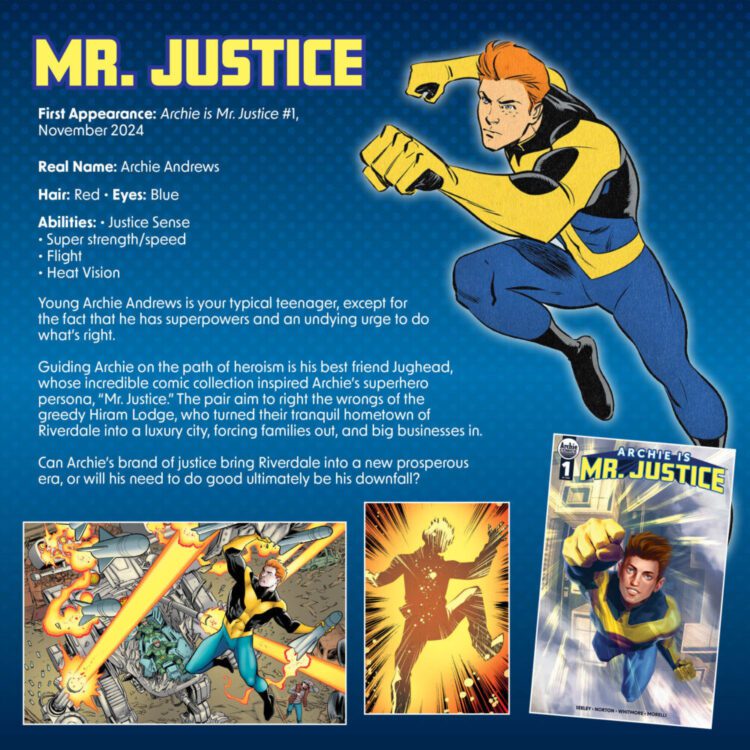
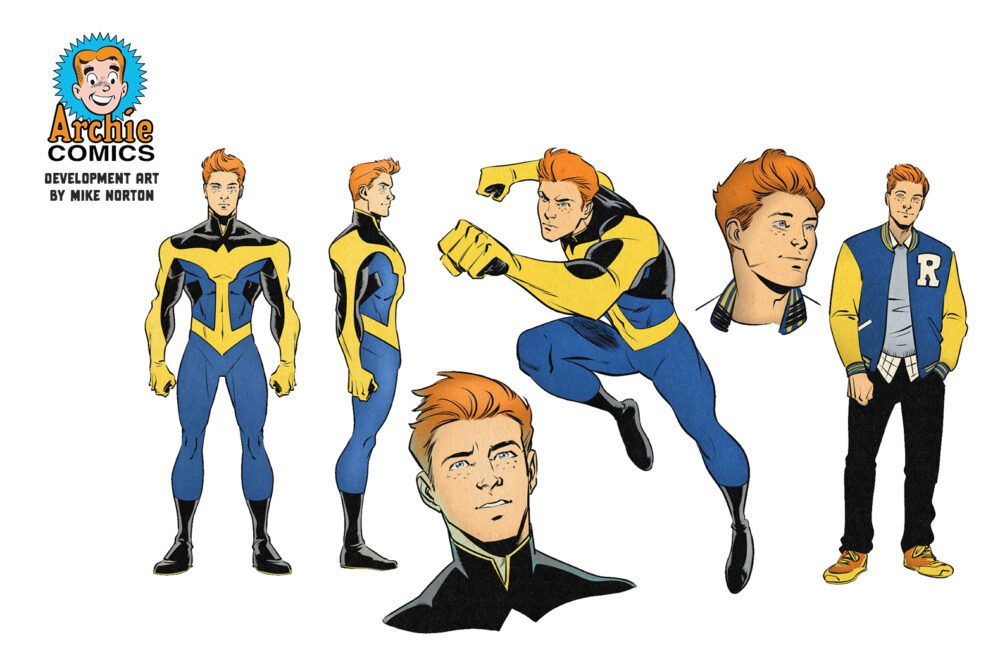
ARCHIE IS MR. JUSTICE #4 hits your local comic book store on May 21st, but thanks to Marvel Comics, Monkeys Fighting Robots has an exclusive six-page preview for you!
About the issue: This is it—the heart-wrenching conclusion to the epic four-part series is here.
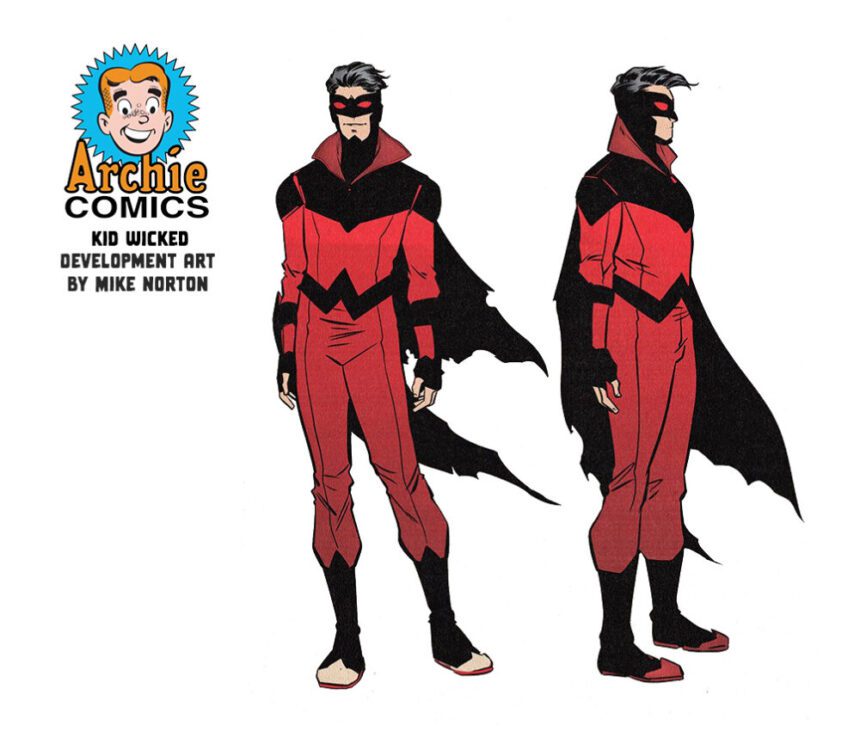
We finally get the perspective of Archie’s lifelong friend-turned-enemy Reggie Mantle. What went wrong that sent these two young men on such different paths? And can the power of jealousy, resentment, and fear be the most destructive of all?
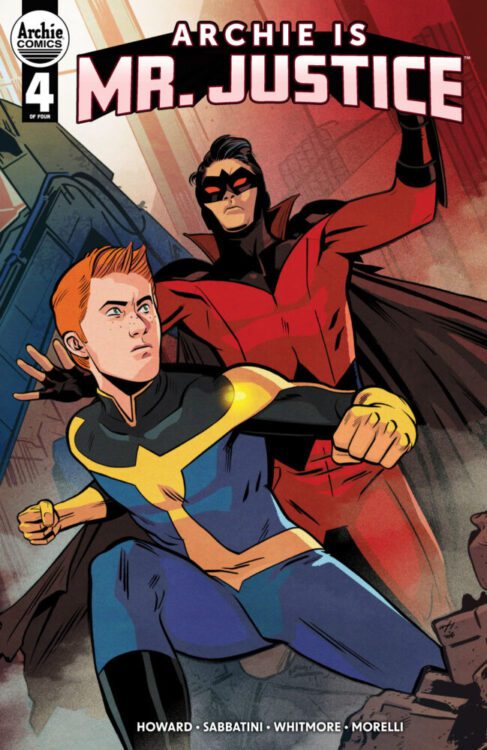
The issue is by writer Blake Howard and artist Federico Sabbatini, with colors by Glenn Whitmore, and letters by Jack Morelli. The main cover is by Reiko Murakami, and there will be two variant covers: one by Wilfredo Torres & Matt Herms, and the other by Matt Talbot.
Hear what the creators have to say about the issue:
Writer Blake Howard: “I am a huge fan of ‘Whatever Happened to the Man of Tomorrow’ by Alan Moore — when the project was pitched, it was very much presented as such, a retrospective on how the lives of the people of Riverdale were all affected by Mr. Justice. It is a beautiful yet bittersweet story, and being responsible for the climax of that was a rather daunting task. I can only hope the finale packs as much of a punch for you as it did for me!”
Artist Federico Sabbatini: “The path Reggie takes is really interesting and Blake was skillful in telling us readers all the key passages to emphasize with him. Growing up knowing that Reggie made such a big mistake and living in the shadow of Mr. Justice made it a big challenge for me, to bring that kind of feeling and emotion into the drawing. One of my favorite scenes is undoubtedly when Reggie is offered a chance to finally be Mr. Justice’s equal; Reggie’s last moments of humanity before the genesis of Kid Wicked was completed.”
And check out our ARCHIE IS MR. JUSTICE #4 preview below:
Additional artwork:
Have you been reading ARCHIE IS MR. JUSTICE? Sound off in the comments!