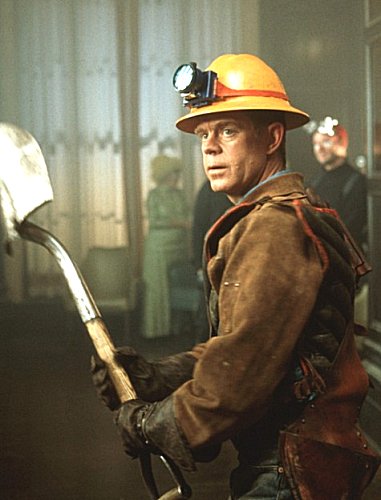
There’s a revolving door of death in comics today. When a character dies, especially a major player, fans expect him or her to return within the year. It’s not a terrible plot device, but it has to be used scarcely and skillfully, like in the case of Barry Allen. Unfortunately, more often than not, it comes off as repetitive and predictable.
Creators have an incredible power over life and death, and with great power must also come great responsibility. Killing a character only to revive them in time for a movie release may not be the best use of that power. Instead, bring back a hero that deserves it:
Richard Rider, the original Nova.
This guy. The badass who defeated Annihilus by literally ripping his insides out. He’s been absent from Marvel Comics since January 2011, when he sacrificed himself, alongside Star-Lord, to defeat Thanos. It was sad, but it was also a glorious death, and one worthy of a true hero.
Then you went ahead and retconned it, bringing Peter Quill and Thanos back to life just in time for Guardians of the Galaxy to hit theaters. Yet, Rider remained M.I.A. without an explanation. When you did finally explain his absence, you desecrated his remains by putting the story in the hands of a man who couldn’t even spell his name correctly.
Nope, because Richard “Ryder” never existed.
Nova deserved better than that.
Sure, maybe he was derived from Peter Parker, with his teenage origin, and his alliterative name, but he was never a rip-off. He was an homage, and he developed into a character all his own, far from his roots. While Spider-Man was flip-flopping sides during Civil War, Nova was leading the charge against the Annihilation Wave to save the galaxy. He managed the entirety of the Xandarian Worldmind, something that had previously driven Nova Corpsmen insane.
Now, you’ve already introduced a new Nova, Sam Alexander. Sam’s great in his own way; he’s an Avenger. His solo title is a great mix of fun and touching. We’re not saying to bench Sam to play Rich, but why not put both in the game at the same time?
Once more, let’s use Spider-Man as a baseline. The end of Secret Wars brought Miles Morales, the Ultimate Spider-Man, to the mainstream Marvel Universe, where Peter Parker is still alive. So there are now two Spider-Men in the world, but they’re not cramping each other’s style. Peter is dealing with major threats to the world while Miles is handling street level crime.
Always two, there are. A master and an apprentice.
Sam can still be an Avenger and continue to handle Earth’s problems, along with his family drama. Richard Rider belongs among the stars anyway; it’s where he thrives. His best stories were told in the Abnett & Lanning era, between Annihilation and The Thanos Imperative, and he barely sets foot on Earth in that time. This is where he proved himself to be a leader, a warrior, and one of the best characters in the Marvel Universe. Plus, he can always make an Earthbound cameo to serve as Sam’s mentor.
This is our plea. You’ve killed and revived Jean Grey fifty-seven times already (at least it feels like it). Please bring Nova back once.
(Plus, he’s from Long Island. Long Islanders need characters like Richard Rider to prove that we’re they’re not all yuppies.)
This week’s The Walking Dead episode was enjoyable. Not to say the show’s never been enjoyable to watch, but this episode’s energy was totally different than normal. Sure, there was some death and sadness going on, but this episode took a much more lighthearted tone. Every episode treats us to the grime and sadness that the zombie apocalypse has brought to everyday Southern life, but now we get a glimpse into what Rick/“Jesus” were talking about – the next world.
“The Next World” picks up a couple weeks after last week’s episode, a time-jump that means most everyone’s over the death of the Andersons (Rick especially, but we’ll get to that). Rick and Daryl go out to check for supplies, and maybe get a soda for Denise. Carl has become understandably a bit more authoritative and hopeless, just enough to chase Enid back home. Michonne helps Spencer and his shovel get all the way over Deanna, as it turns out she was zombified before being eaten. Maggie is trying to adopt Enid, Eugene is a big corn guy, and Michonne needs toothpaste. Everyone’s far less concerned with the zombie struggle than they’ve been in the past. They now have a chance to think about regular world problems.
All of these interactions were about the dynamics between the survivors, and how the Alexandrian crew are really starting to mesh more with The Walking Dead’s leads. It’s touching in a new way, as this episode is building up hope. It makes so little sense that everyone survived the zombie attack last week, but now that they have, they all have that hope. It’s what adds more charm to this episode. It’s more like an episode of iZombie this week, with a focus more on finding love and hope, rather than the grim reality that zombies may eat and kill all humans.
As for the comedy? That comes from the addition of Kung-Fu Grip Jesus. Sure, it was funny when Daryl was skeptical of Denise & Eugene & Rick’s radio jams, but it was Jesus who somehow turned a gritty zombie show into a Dukes of Hazzard farce, as Jesus keeps stealing the truck full of supplies. He somehow gets himself on the roof of the van, despite being tied up and left by the wayside. And when the truck ends up drifting into the lake? Classic. Almost Tom & Jerry-esqe. His place in the camp sets up two possibilities – either his goofiness wins over the rest of the survivors, or he turns out to be a twisted henchmen of Negan. Or maybe he’ll be more like Morgan’s captured Wolf friend – he’s certainly got the hair for it.
Then came the big twist of Rick and Michonne kissing. Apparently, the show runners don’t care whether or not we miss Jessie, instantly replacing her as the love interest. I guess that’s part of what the time jump was for – making sure no one, including the audience, cares anymore about Jessie (but still care about Deanna). I’d be more mad about it if it weren’t for the fact I saw it coming for a couple seasons now. The Jessie romance didn’t exactly feel forced, but Rick & Michonne meshed beautifully with the history these two have had. They’ve been tight for years now, and Carl already sees her as a stand-in mother.
The fact that this episode of The Walking Dead feels so different is what really makes it work. We’ve seen a lot of people being sad, walking around in the woods, waiting for another side-character to get chomped on. We get to see characters have legitimate moments of happiness and care for each other. The Richonne moment almost felt like a sit-com, as the mother-father characters talk about their days before finding comfort in each other. It highlights the central conflict of the show – how do the characters of The Walking Dead survive the apocalypse, while retaining their humanity? It’s been a while since we’ve seen an episode highlight this aspect of the show, and it’s a welcome change.
Fasten your seatbelts buckaroos, the DC Cinematic Universe is quickly becoming a reality with today’s announcement that Justice League Part 1 will begin filming on April 11, two weeks after the release of Batman v Superman: Dawn of Justice.
“The idea that we could begin to boot up a Justice League concept was a cool thing. It was a little bit of an ‘about time’ moment, and I don’t blame [the studio] for feeling that way, because it’s a long time coming. But I do feel like it’s a little bit of a creative hurdle. It seems like an easy thing to do at first glance, the idea that, ‘Oh, we just get the rest of the superheroes in there.’ But you have to [establish] a world where they can exist,” said Zack Snyder to EW.
All the members of the Justice League will make cameos in Batman v Superman (Ezra Miller as the Flash, Jason Momoa as Aquaman, and Ray Fisher as Cyborg) as Snyder builds towards a battle with Darkseid.
According to the EW report, Justice League will shoot at the Warner Bros. Leavesden studios in southeast England, as well as various locations around London and in Iceland.
DC Comics Cinematic Universe Schedule:
2016
March 25: Batman V Superman: Dawn of Justice
August 5: Suicide Squad
2017
June 23: Wonder Woman
November 17: Justice League Part 1
2018
March 23: The Flash
July 27: Aquaman
2019
April 5: Shazam
June 14: Justice League Part 2
Robert Eggers’ film, The Witch, contains horrific images, deals with unsettling subject matter and is designed to create moments fraught with tension. All this conforms to create what can be considered a “scary movie”. Right under this surface lies something as insidious as a New Idea. The Witch plays in scares and suspense in order to let the witness dig in and create belief in the bravest of all human endeavors: self-realization and individuality.
[Warning: Major spoilers ahead!]
Set in 1630s New Hampshire, The Witch throws us into a world where the demons at the door are literal and God is as close as the faintest wind. This was the reality of Puritanical society. Those who left England did so in order to practice religion as wildly as they so desired, which is entirely within their right as humans. It’s difficult for a modern audience to directly empathize with the situation but it isn’t unlike many current worries. Instead of witches in the woods testing our temptation, we have Big Brother and his all-seeing eye threatening our right to self. Both of those fears work in very similar ways and construct their own specific set of monsters. In The Witch, the overriding theological society acts as today’s Big Government or so-called “securities” agencies. Both of these groups aren’t uniformly evil but are powerful enough to establish fear in dissenters despite attempting to promote safety. To the film’s William, these particular Puritans are stifling his personal beliefs in safety and freedom. So they kick William, his wife Katherine and his five children, Thomasin, Caleb, twins Mercy and Jonas and newborn Sam out into the wild to fend for themselves.
In reality, William sends his family into the mouth of madness where clinging too tightly to to an unfair standard designed only for himself conjures destruction. William is warned early on their budding farmland when his newborn is stolen right out from under the eyes of his eldest daughter, Thomasin. The child is lost as punishment for putting this person, completely incapable of making a decision for themselves, in such a dangerous situation. For Thomasin, this is the first moment of awakening that the teachings of the father might not hold water so holy. Her mother then blames her for the disappearance, projecting the fear that Thomasin is mature enough to unravel this precarious family.
Then we see that baby Sam is muddled into an infant mojito paste and slathered across a wilting broomstick to send a wretched old crone flying into the night.
This is where the thematic endeavors of a piece of art intertwine with genre. If Puritan society and extremist religion are supposed to be the antagonists here, why is a baby killed by a witch whose beliefs I purport to represent the self-actualized? This is designed to cement the goals of the film as trying to portray the experience of becoming an individual as something that can be truly terrifying. Yes, having a baby brutally sacrificed is horrible imagery but it also establishes the stakes of the film as something tangible and not just spiritual. As a movie, creating this tension is the ultimate goal for a good cinematic experience. When we only have physical stakes of life and death or only the emotional journey of our characters at hand, it doesn’t feel like a fulfilling experience. This is why movies where “it was all just a dream” are such dramatic vacuums. There was a change in our character(s), a moment of self-realization if you will, but there were no stakes. The ultimate “it was all a dream” film, Inception, proves that stakes can be created even if we are only dealing with (maybe) one subconscious by defining the madness that can suffocate its characters for eternity. And movies that are based entirely on the physicality of survival like The Revenant (Leo sure does span the spectrum of cinema) with its two main characters already emotionally realized aren’t also a complete journey.
The killing of Sam at the beginning of the film is simply masterful storytelling.
The downfall of William is, as he admits in the film, his pride. Only, it isn’t God who is punishing him. God has forsaken William, leaving him to the judgment of The Adversary and individualistic life incarnate, Black Phillip the goat*. William is unwilling to part ways with his need to include his family in his tempestuous beliefs. He goes so far as to desecrate the trust of his wife, stealing her silver cup heirloom in order to sell it for goods. The difference when it comes to William is prideful selfishness as opposed to individualism which ultimately leads to his undoing with a good push from Black Philip into his immensely crumbling pile of chopped wood.
Coming at the opposite end of the spectrum is Thomasin, a young woman coming of age sexually and psychologically. Thomasin constantly lays her needs down in order to suit those of her family’s. She is at the distinct point in life where she questions whether all this torture for the benefit of her father’s beliefs is worth it.
As the family continues to succumb to the nature of William’s selfishness, Thomasin’s awakening becomes fully-formed. When her brother, Caleb, gives in to his sexual temptation in the form of The Witch, he is punished not for that but for the upholding of his father’s selfish upbringing in lying to his mom about going picking for apples (hence the apple lodged in his throat). In the end, he chooses the realization of God and forfeits his chance at an individual, earthly life.
After having been outed for talking with Black Phillip about nefarious spirituality it is decided the twins are harboring evil and are cast out of the house along with Thomasin to sleep with the goats. Our residential hag makes another appearance in her truly disgusting form (also the form the twins most believe exists which might not actually represent the truth) as Thomasin sleeps and the twins scream in fear as she feasts on a goat in front of them. In the morning, Thomasin awakes to see the twins gone, but two white goats laying dead near her, their throats ripped out. This, I believe, represents the twins being killed for speaking against Black Phillip, spiting the relationship he created with them earlier in the film. Although I also think the movie leaves their actual fates muddled for a reason, suggesting that they could have been given a chance at choosing a life for themselves elsewhere (though, I’m pretty sure the hag split their throats wide because… Good.)
All Thomasin has left to do is embrace the spirit of her individuality, which also comes in the form of destroying her persecutors. In this case, it’s her mother who believes Thomasin to be evil and forces Thomasin’s hand to grab a knife when a fight escalates into a life-threatening situation. The blood of her mother dribbling onto Thomasin’s face is the final sacrifice necessary in coming face to face with Lucifer** who gives Thomasin an enticing choice.
In Christianity, it is the temptation of choice that most believe makes Lucifer evil. The choosing of self over humility to God is a sin and to the Puritans, it is the utmost evil. Regardless of personal religious views, this choice of a humble life in the eyes of God is also one against self-realization and becoming an individual. To choose one or the other isn’t cause for judgment in our world (well, thousands and thousands of years of Holy Wars would tell us different. It’s just more objective in our world, with an obvious choice yet to be decided) but in the world of The Witch, the plight of the individual is paramount.
When Thomasin inevitably signs the Devil’s Book, her soul is given over to Lucifer but her life is now her own. She follows Black Phillip (back in goat form) naked into the woods and onto a witches’ convent; a newborn into a world where anything is possible. The chanting witches at the fire begin to ascend the treetops of the imposing New England forest and Thomasin cackles with joy for her life is now anything she wants it to be. That, I think, is beautiful.
The Witch presents the hardest choices in life at face value. They’re scary! Life is scary! Choosing to overcome those who persecute you and the selfishness of others who try to impose their will upon you is indescribably difficult. Robert Eggers has staged a film that, in the face of deep period with dialogue practically Shakespearean and about a witch in the woods, is a profoundly human and engrossing experience. Here’s to individuality, a free life and signing the Devil’s Book.
*The goat has long been used to symbolize the Satanic and the Sigil of Baphomet has been adopted by groups such as The Satanic Temple and The Church of Satan (groups with wildly different ideology while interpreting mostly the same material).
**The movie clues us into believing it’s Lucifer who is Black Phillip, but it is the pagan entity Baphomet who introduced the symbolic goat figure into Satanism. Baphomet is also not a deity bound to Christianity, which could further complicate the religious nature of the film. It’s all fairly confusing to me and I don’t believe the movie gives us any good insight, so I’ll just go with Lucifer. Just know that I’m not entirely happy with that generalization.
As we inch closer to the release of Captain America: Civil War, the promotion machine starts to churn, and Empire Magazine is usually the first stop.
Empire released some stills of the film in advance of this week’s issue. They give us the best look so far of Frank Grillo’s Crossbones, the wildcard of the movie, Elizabeth Olsen’s Scarlet Witch is also featured.
In the comics, Crossbones plays a pivotal role in Mark Millar’s Civil War.
Check out the gallery below.
Captain America: Civil War is directed by Anthony & Joe Russo from a screenplay by Christopher Markus & Stephen McFeely, Captain America: Civil War picks up where Avengers: Age of Ultron left off, as Steve Rogers (Chris Evans) leads the new team of Avengers in their continued efforts to safeguard humanity. After another international incident involving the Avengers results in collateral damage, political pressure mounts to install a system of accountability and a governing body to determine when to enlist the services of the team. The new status quo fractures the Avengers while they try to protect the world from a new and nefarious villain.
The film stars Chris Evans, Robert Downey Jr., Scarlett Johansson, Sebastian Stan, Anthony Mackie, Paul Bettany, Jeremy Renner, Don Cheadle, Elizabeth Olsen, Paul Rudd, Chadwick Boseman, Emily VanCamp, Daniel Brühl, Frank Grillo, William Hurt, and Martin Freeman.
Captain America: Civil War is set for release on May 6.
The Joint Counter-Terrorist Centre will play a significant role in Captain America: Civil War and at the head of the JCTC is Everett Ross, played by Martin Freeman, according to Empire Magazine.
In the comics Everett Ross worked for the U.S. State Department; his job was to escort foreign diplomats on American soil.
The article also states that Captain America will return to Germany. Co-director Joe Russo is promising that the return to Germany will bring Steve Rogers “full circle”, sending him back to where it all began in a way that will no doubt be emotionally challenging for Steve.
Captain America: Civil War is directed by Anthony & Joe Russo from a screenplay by Christopher Markus & Stephen McFeely, Captain America: Civil War picks up where Avengers: Age of Ultron left off, as Steve Rogers (Chris Evans) leads the new team of Avengers in their continued efforts to safeguard humanity. After another international incident involving the Avengers results in collateral damage, political pressure mounts to install a system of accountability and a governing body to determine when to enlist the services of the team. The new status quo fractures the Avengers while they try to protect the world from a new and nefarious villain.
The film stars Chris Evans, Robert Downey Jr., Scarlett Johansson, Sebastian Stan, Anthony Mackie, Paul Bettany, Jeremy Renner, Don Cheadle, Elizabeth Olsen, Paul Rudd, Chadwick Boseman, Emily VanCamp, Daniel Brühl, Frank Grillo, William Hurt, and Martin Freeman.
Captain America: Civil War is set for release on May 6.
As snowstorm Jonas hit the East Coast of the United States this past January, dropping over 30 inches of snow in some areas, the theory of “last snow ever” does not sound so bad. (Especially for those of us who lost three days t that record-breaking storm.) But in the world of Joe Harris and Martin Morazzo’s Snowfall #1 it may be exactly that.
It is the year 2045. The last snow fall was nearly 10 years ago. Weather is limited, monitored and controlled. It is no mystery we have been destroying the planet, but it is now up to us to correct our mistakes. The private sector and the government have come together to work on the growing and continuing climate issue: To bring back the snow. But, to many, they are moving too slow. And these frustrations may be leading some to take the weather into their own hands.
Joe Harris (X-Files: Season 11) plays on our basic fears with this politically directed statement towards the environment. Harris uses a mix of fact and hypothetical’s to build a future that may very well be Earth’s next step. With the technical language, you cannot help but read further into why Snowfall’s world has so drastically changed. Though the likelihood of such an event, including enhanced human-cybernetics, in our reality is unrealistically immediate, the possibility of the eventualities is humbling.
Only tip to the read: Stay focused! Snow Fall is by no means difficult to comprehend. But the back and forth of the book can turn you around if not properly paying attention. The concept of the weather-worn planet is indeed deep and easily recognizable. Yet, if straying too far off into personal quandary or flipping a few pages backwards or forwards to make sure you read something accurately, you may lose your place. Take your time and read this book. Enjoy it!
Martin Morazzo’s (Great Pacific) grizzled art is a mix between Frank Quitely’s (We3) crease and muscular line-work and Jason Howard’s (Trees) circular definition. With the playful colors of Kelly Fitzpatrick (Bitch Planet), the story reads like a politically yet emotionally driven play. It is mesmerizing. There are even a few times when the art over-powers the storytelling. With the attention demanding language, the art can distract from the momentum.
There is a beautiful yet telling tale behind Image Comic’sSnowfall #1. It may sometimes be difficult to stay directly focused on the story due to the deep context and drifting storyline, but it is a fascinating topic and a realistic possibility. It can be politically directed but is an immersive story with wonderful art. Definitely is worth the pick-up.
Make sure to stop by your local comics retailer and pick up Snowfall #1.
During tonight’s Wonderful World of Disney: Disneyland 60 special, a fantastic teaser trailer for Pete’s Dragon debuted. The teaser trailer gave us our first look at Elliot the dragon in the live-action/CGI remake of the 1977 Disney film. Check out the trailer!
https://www.youtube.com/watch?v=PSfytd16wmA
Here’s the synopsis:
A reimagining of Disney’s cherished family film, “Pete’s Dragon” is the adventure of an orphaned boy named Pete and his best friend Elliott, who just so happens to be a dragon. “Pete’s Dragon” stars Bryce Dallas Howard (“Jurassic World”), Oakes Fegley (“This is Where I Leave You”), Wes Bentley (“The Hunger Games”), Karl Urban (“Star Trek”), Oona Laurence (“Southpaw”) and Oscar® winner Robert Redford (“Captain America: The Winter Soldier”). The film, which is directed by David Lowery (“Ain’t Them Bodies Saints”), is written by Lowery & Toby Halbrooks based on a story by Seton I. Miller and S.S. Field and produced by Jim Whitaker, p.g.a. (“The Finest Hours,” “Friday Night Lights”), with Barrie M. Osborne (“The Lord of the Rings: The Fellowship of the Ring,” “The Great Gatsby”) serving as executive producer.
For years, old wood carver Mr. Meacham (Robert Redford) has delighted local children with his tales of the fierce dragon that resides deep in the woods of the Pacific Northwest. To his daughter, Grace (Bryce Dallas Howard), who works as a forest ranger, these stories are little more than tall tales…until she meets Pete (Oakes Fegley). Pete is a mysterious 10-year-old with no family and no home who claims to live in the woods with a giant, green dragon named Elliott. And from Pete’s descriptions, Elliott seems remarkably similar to the dragon from Mr. Meacham’s stories. With the help of Natalie (Oona Laurence), an 11-year-old girl whose father Jack (Wes Bentley) owns the local lumber mill, Grace sets out to determine where Pete came from, where he belongs, and the truth about this dragon. Disney’s “Pete’s Dragon” opens in U.S. theaters on August 12, 2016.
This episode of American Crime Story establishes how the complicated issue of race became of the centerpiece of O.J. Simpson’s trial. Marcia Clark put this best when suggesting the jury at Simpson’s trial should consist of, “rich, middle-aged white men.” These are Simpson’s peers, and nothing says it better than his Dream Team of lawyers. Each of them has a different set of motivations. Shapiro, for example, knows that his client is probably guilty. Shapiro of course doesn’t care. Seeing Shapiro react to what people say, especially when he talks to John Cochran, is astounding. John Travolta does an excellent job at conveying these subtle moments.
Robert Kardashian has a bit of a spotlight in this episode, and he’s just as clueless, if not outright in denial, about Simpson’s guilt. His wife knows that Simpson killed Nichole, but that doesn’t matter to Kardashian. It plays into the whole concept of women not being believed. A man can beat women like Jian Gomeshi, a man can rape women like Bill Cosby, and a man can even kill his ex-wife like O.J. Simpson, but because they’re celebrities it can’t be true. All the evidence is there, but no one will believe these women. It’s one of the longest-running double standards in our society.
This is why Marcia Clark stands by her case, and is determined to believe a dead woman’s cries for help. Clark read the initial transcripts for Nichole’s 911 calls. She doesn’t just see Nichole as a single mother brutally murdered. Clark also sees a woman who couldn’t be believed. Here is where O.J.’s privilege comes back into play, because he’s treated with the same privilege as Kardashian would have. Simpson is miffed that his country club buddies won’t visit him in jail. He’s on trial for murder, and that’s his biggest concern?
Marcia Clark is surrounded by white privilege in her male coworkers. Often it seems like Clark’s male coworkers dismiss her passion for melodrama. But Clark didn’t get where she is without serious tenacity, and she knows that Simpson’s Dream Team has serious pull. She sees the pitfalls where her colleagues don’t. Clark immediately finds an ally in Christopher Darden. Darden was the first to point out Simpson’s white privilege-like social status in Episode 1. Darden also sees the white privilege advantage in Shapiro, Kardshian, and Bailey. The three rich white men know how to play the game with racial politics, and that’s their advantage from being on the outside looking in.
If you were at the BATMAN: THE DARK KNIGHT RETURNS 30th Anniversary book signing yesterday in Los Angeles, you were in for a treat of epic proportion. Stan Lee stopped by the Barnes and Noble to surprise Frank Miller at the soldout signing and discussion.
“Glad I finally got to convert Stan Lee,” said Miller on social media.




 As snowstorm Jonas hit the East Coast of the United States this past January, dropping over 30 inches of snow in some areas, the theory of “last snow ever” does not sound so bad. (Especially for those of us who lost three days t that record-breaking storm.) But in the world of Joe Harris and Martin Morazzo’s Snowfall #1 it may be exactly that.