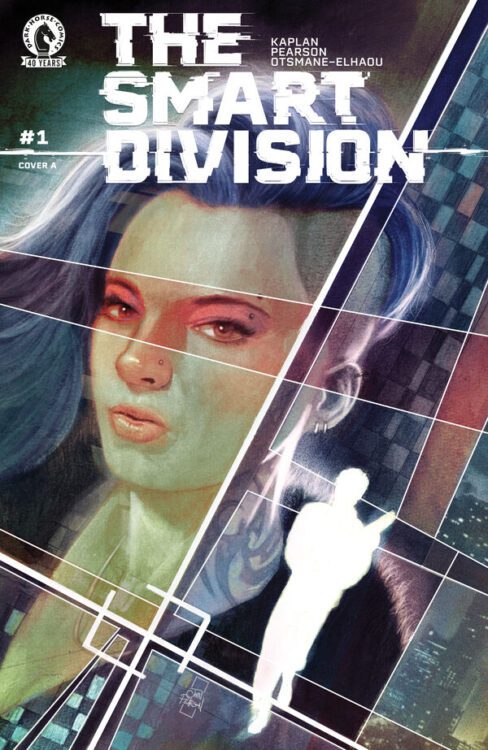
From writer Zack Kaplan (Port of Earth, Kill All Immortals) and artist John J. Pearson (The Infernals) comes a crime tale that questions our own place alongside the very tech that’s being forced into our lives in the pages of The Smart Division #1. Featuring lettering by Hassan Otsmane-Elhaou, this opening issue puts readers in the middle of a fascinating, tech-driven FBI murder case while simultaneously offering thoughts on our place in reality at the moment. With a sharp, compelling script and outstanding visual work, The Smart Division is off to a brilliant start.
“A dark and modern sci-fi detective series set five minutes in the future. When a mysterious new predictive artificial intelligence program appears responsible for assisting someone in the perfect murder, a pair of unlikely investigators, a chaotic Gen-Z savant and a veteran FBI agent, must hunt down the killer by starting the FBI’s first AI crimes division.”
Writing & Plot
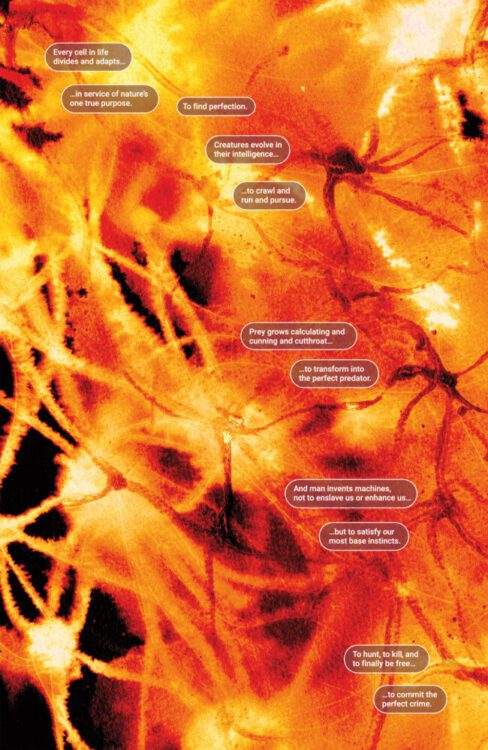
The Smart Division #1 isn’t the first time that writer Zack Kaplan has toyed with the concepts of A.I. and smart technology turning against us (see his and Pearson’s prior collaboration in Mindset). However, there is a biting sense of urgency and relevance in his script here that sets this book apart from his previous stories. The opening narration warns us of the dark path our reality has stumbled upon, and how it’s unclear if our trajectory can be stopped. This sequence may come off as a bit preachy in isolation, but not only is it relevant (we’re also way past the need for subtext in 2026), but the rest of the story proper makes this opening work incredibly well. A pair of total opposite FBI agents – a tired veteran and a young tech & AI guru – are teamed up to investigate the murder of an AI developer. As this mystery unfolds, it becomes clear that an actual AI program may have orchestrated this murder. This first issue does a phenomenal job of establishing the series’ tone as well as familiarizing us with the leading pair of characters. Their respective humanity and personalities are well fleshed out, and their distinct levels of expertise as well as their clashing personalities make aspects of this comics feel like a buddy-cop flick but with a much more sinister tone. Kaplan’s dialogue is sharp, and goes a long way to make this story all the more compelling. In many ways, this comic feels like a modern version of some of Warren Ellis’s best work. Kaplan’s work here is thematic and heavy while still offering excellent character-writing. The Smart Division is off to a phenomenal start with this script.
Art Direction
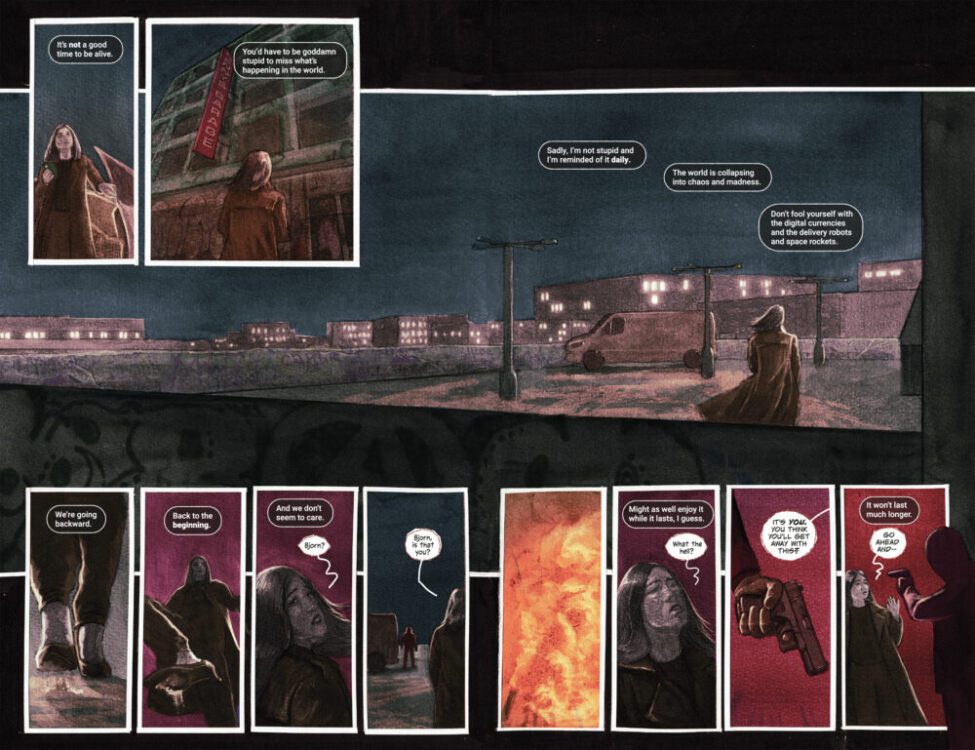
John J. Pearson’s visual style is the perfect medium through which to tell this mystery thriller in the pages of The Smart Division #1. Each page offers a unique variation of artistic approach, with some pages being rough sketches of singular figures or crowds while others contain painstakingly painted scenery or collages of raw color. His character close-ups are stunningly rendered with precise penciling that gets all the nuances of each person’s appearance in every panel. Pearson’s use of color is just as striking as his penciling, with characters or items of focus often being grey or left otherwise uncolored against colored, painted backgrounds. This effect creates a focus and tone that perfectly encapsulates the sort of loneliness that this comic is hinting at. Pearson’s sequential direction is every bit as thoughtful as every other aspect of the visual experience. There’s a huge variation in the use of panels throughout this book, from tone-setting splash pages to smaller, film reel-esque panels capturing the minutiae of an interaction. Finally, Hassan Otsmane-Elhaou’s lettering offers a stellar reading experience for each page. His standard word-balloon work is easy to read and uses bolded words to maintain a steady flow, and his digital text-looking font for the overhead narration pieces makes perfect sense. Overall, The Smart Division is a phenomenal experience from a visual storytelling standpoint.

Verdict
The Smart Division #1 is a astonishingly compelling first chapter in this new mini-series. Zack Kaplan’s script is both a dire warning and an excellent crime story, with sharp character work and a thematically rich core. John J. Pearson’s visual work is a collage of unique visual approaches that expertly capture the tone of the story that is being told in these panels. Be sure to grab this debut issue, available now!