


Comics in the 90’s were in a strange place. Beneath the wave of the “Extreme” era brought on by that era of Marvel comics and the Image boom that followed, a stranger breed of comics was being published over at DC. Vertigo, DC’s home for more mature, complex, and original comics, was going strong with some of the most unique creations in the medium. Among these was a revival of a Golden Age pulp crime-fighter in the pages of Sandman Mystery Theatre. Written by Steven T. Seagle & Grendel creator Matt Wagner and drawn primarily by future B.P.R.D. artist Guy Davis, Mystery Theatre is a pulpy neo-noir crime series that is also one of the most insightful and tonally unique comics in its genre. Taking place in the late 1930’s, Mystery Theatre tackles corruption and murder in New York City in the face of post-Great Depression class disparity and the looming specter of World War II. Despite a premature ending, Sandman Mystery Theatre is one of the greatest and most underrated comics of the 1990’s.
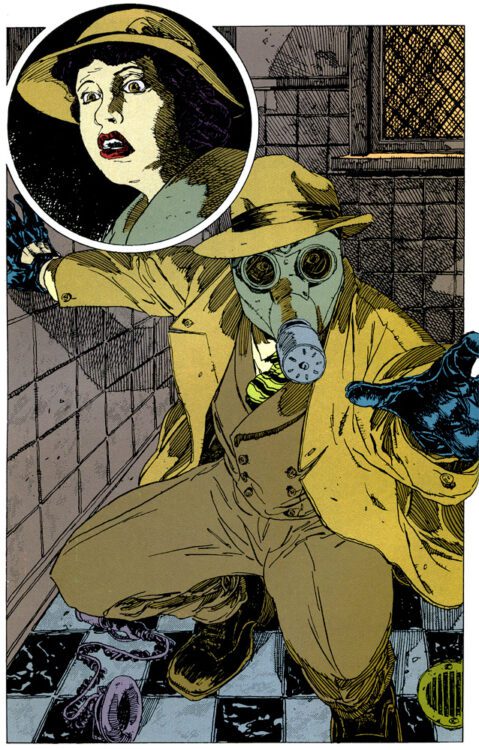
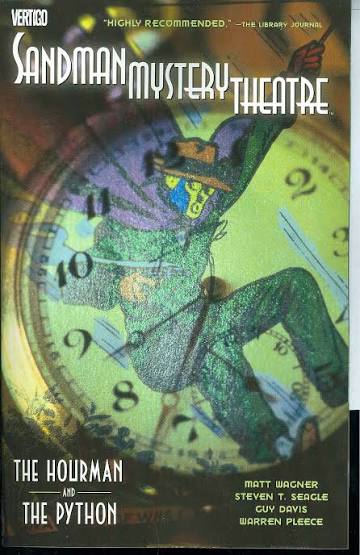
Sandman Mystery Theatre stars Wesley Dodds, a bespectacled investor who returns to New York after growing up in China. Unlike most of his crime-fighter contemporaries, Dodds is a rather unremarkable-looking man. He’s a tad paunchy, he isn’t muscular, and his weapon of choice isn’t his martial arts abilities but rather a gun that fires sleeping gas. He is compelled to action by prophetic dreams – or nightmares – that hint at the murders being committed in the dark corners of New York. In the process, Dodds uncovers the cycles of corruption, organized crime, and abuse being perpetrated by some of the city’s most powerful people. Dodds is joined by Dian Belmont, a driven and intelligent young woman who also happens to be the daughter of New York’s District Attorney. Her joie de vivre and love of a good party never gets in the way of her uncanny ability to sus out mysteries and offer sharp commentary on ongoing issues. This naturally puts her directly in the path of the Sandman, and by extension Wesley Dodds. Thus begins one of the most compelling romances in comics. In true noir spirit, Wagner and Seagle also write a ton of overhead narration throughout each comic panel. However, instead of providing Dodds’ and the supporting cast’s commentary on what they’re experiencing, these passages deal with the internal ideological struggles that these characters are facing and that are challenged by the cases they work to solve. Both Dodds and Dian work as protagonists in this series, and thanks to Seagle and Wagner’s stellar plotting and character writing, this decision pays off in spades. While their romance is a turbulent delight to behold, their dynamic outside of their love life makes for a series of great A and B plot storytelling. While Wesley is investigating murders and the individuals that may be involved, Dian is often finding herself engaged in other social or philosophical issues that end up tying back into the main plot. It’s through this writing that the story feels lived in and the characters – even ones who only appear for one page – feel real. Other supporting characters such as Dian’s cheerful father Larry Belmont and the deeply flawed but damned competent detective Lt. Anthony Burke all add depth to each arc and the world as a whole. The story also nods to other Golden Age characters, as the likes of The Hourman and Starman make appearances in the pages of this series.
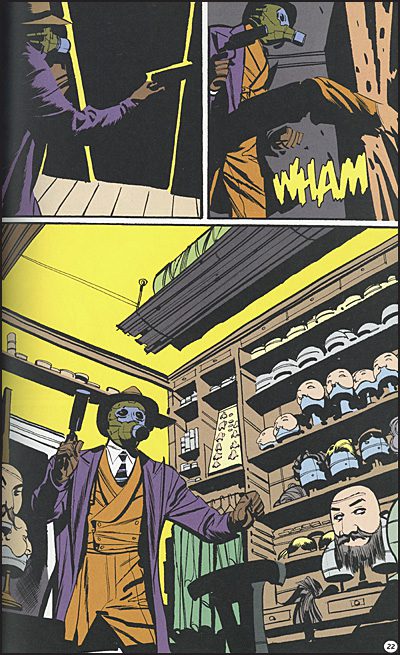
Structurally, Mystery Theatre is a series of 4-issue arcs that also develop the overall narrative. Every arc is a murder-mystery story, but they also tend to explore some overarching theme that asks questions of both the audience and the very characters themselves. Stories like “The Tarantula” and “The Brute” come across as more traditional (albeit brutally twisted) pulp murder stories, whereas arcs such as “The Phantom of the Fair” and “The Blackhawk” pose genuine moral and sociopolitical questions that feel relevant to this day. From criticism of centrism and isolationism to coming to grips with masculinity and insecurity, Mystery Theatre leaves its class and corruption-based genre origins to ask questions regarding how you see and interact with everyday people. The excellent human character and dialogue writing allows the series to have some tonal range (there’s a fair bit of comedy and heart amidst the murder). There’s also a slight element of supernatural horror in this series as well, stemming from the messages in nightmare form that Wesley gets. Newcomers are probably wondering: is Sandman Mystery Theatre connected to Sandman? After all, the newest collections of Mystery Theatre are actually labeled as part of the “Sandman Universe.” The answer here is yes, they are connected – but not in any way that actually consequential. As is explored in a crossover issue, Dodds actually gets his premonitions as a side effect of Morpheus’s imprisonment at the beginning of Sandman. Most importantly for 2026, Gaiman had absolutely no creative input on Mystery Theatre. Those reluctant to spend money on a series with the Sandman label on the cover can rest easy.
Just as 90’s Vertigo was an anti-attitude to the creative tendencies of more mainstream 90’s comics, Guys Davis’s visual work sits on the exact opposite end of the creative spectrum to the more popular artists of the era. Davis’s rough pencils and use of shading gives Mystery Theatre a sort of rough-hewn, unpolished aesthetic that, while not uncommon at Vertigo, was odd coming from a major comics publisher. Davis’s brand of visual storytelling immediately sets a unique tone for this neo-noir; the grime and grit of New York’s underbelly intertwines with the slight supernatural horror elements that permeate the ongoing story. Despite how well Davis’s art captures these dark elements, his brighter character interactions also feel natural within the story. The touching moments between Wesley and Dian are so effective because of Davis’s framing. Tension in each arc is ratcheted up due to the comic’s consistent, almost cinematic sequential direction. While there are other, “cleaner” guest artists who take over for certain arcs (including Gotham Central artist Michael Lark on “The Cannon”), it’s easy to feel like the book is missing something when Davis isn’t the one behind Mystery Theatre’s visual storytelling.
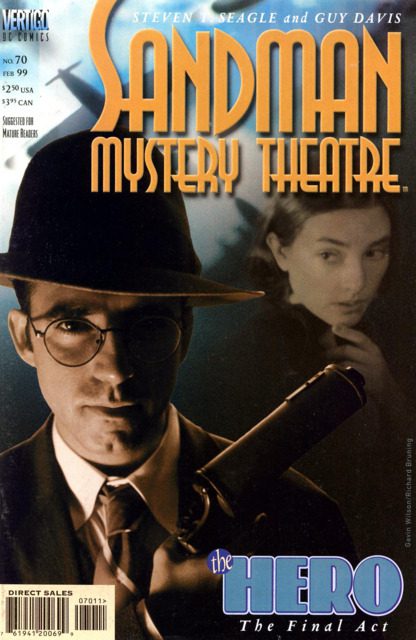
Sandman Mystery Theatre’s only real weakness is its unfortunately sudden ending. While still in production of issue #69, DC editorial at the time told the creative team that the next issue would be the last. Mystery Theatre was cancelled suddenly due to poor sales, leaving Seagle, Wagner, and Davis to rush an ending they weren’t planning on this soon. Still, 70 issues is a hell of a run. Mystery Theatre still stands as one of the best and most unique comics from Vertigo’s golden age, and one of the most interesting comics of the 1990’s.
How to Collect: After being largely uncollected for the decades after its released, DC recently collected the entire series across a pair of softcover Compendiums. This is an easy to obtain and cost-effective format that you can grab online or from your local comic shop.
