While the comic book genre has provided us with plenty of entertaining television series, possibly the most exciting project is Marvel’s Inhumans. The upcoming series is Marvel Entertainment’s most ambitious so far as it is not only filmed with IMAX cameras but will premiere on IMAX screens.
Ahead of the show’s September premiere date, Marvel has released the first official poster. The poster highlights three of the show’s central characters including Maximus, portrayed by Game of Thrones star Iwan Rheon. We also get a new look at Anson Mount (Hell on Wheels) and Serinda Swan (Ballers), as the Inhuman king and queen, Black Bolt and Medusa.
Check out the poster below!
Marvel’s Inhumans stars Anson Mount as Black Bolt, Iwan Rheon as Maximus, Serinda Swan as Medusa, Eme Ikwuakor as Gorgon, Isabelle Cornish as Crystal, Ken Leung as Karnak, Ellen Woglom as an undisclosed character, Sonya Balmores as Auran and Mike Moh as Triton. The series will premiere on in IMAX theaters on Friday, September 1.
Sony Pictures released a featurette for ‘The Dark Tower’ Sunday night, explaining the history and the power of the Gunslinger. Idris Elba brings a moxie to the role of the Gunslinger that is intoxicating. If we get a ‘True Detective’ performance from Matthew McConaughey as the Man in Black, ‘The Dark Tower’ could be a true gem of the 2017 summer blockbuster season.
Watch ‘Legacy of the Gunslinger’ below:
About ‘The Dark Tower’ There are other worlds than these. Stephen King’s The Dark Tower, the ambitious and expansive story from one of the world’s most celebrated authors, makes its launch to the big screen. The last Gunslinger, Roland Deschain (Idris Elba), has been locked in an eternal battle with Walter, also known as the Man in Black (Matthew McConaughey), determined to prevent him from toppling the Dark Tower, which holds the universe together. With the fate of the worlds at stake, good and evil will collide in the ultimate battle as only Roland can defend the Tower from the Man in Black.
The film is directed by Nikolaj Arcel, from a screenplay by Akiva Goldsman & Jeff Pinkner, and Anders Thomas Jensen & Nikolaj Arcel. ‘The Dark Tower’ is based on the novels by Stephen King.
The film stars Idris Elba, Matthew McConaughey, Tom Taylor, Claudia Kim, Fran Kranz, Abbey Lee, and Jackie Earle Haley
‘The Dark Tower’ hits theaters on August 4.
Are you going to see ‘The Dark Tower’ opening night? Comment below.
Last weekend, all across the world, millions of people celebrated, spectated, and otherwise paraded for LGBTQ+ pride, in remembrance of the Stonewall uprising. These celebrations, and Pride Month as a whole, stand as symbols of LGBTQ+ history and dignity, the free expression of sexual and gender identities of all people, and the ongoing fight against oppression. It’s also a fantastic time to celebrate the great LGBTQ+ comics currently abound.
Perhaps you went to such a celebration yesterday, and are now ready to curl up with a good book. Or maybe you just now realized, upon reading this article, that it was Pride Month, and have some catching up to do. Fear not, because we’ve compiled a list of 10 excellent comics. Below are our recommendations for diverse and inclusive comics that are so good you should’ve already been reading them. Get on it.
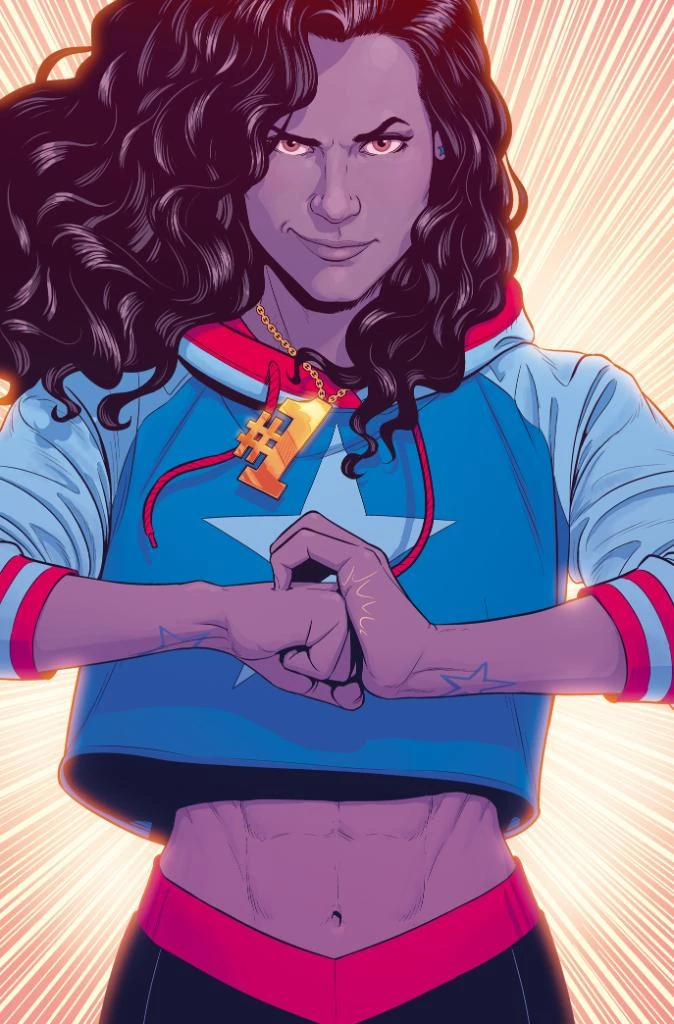
Where better to start than with the dimensional-hole-punching America Chavez, in her first ever solo series. The series follows America as she enrolls in an inter-dimensional college to practice some self-growth after a painful breakup with her girlfriend. She encounters some typical fare: sorority recruitment, lecture halls, time traveling, etc. Oh yeah, that last one is for a school project, and as a result she gets to punch Hitler. Writer Gabby Rivera, herself a queer Latina, has a lot of fun with history shenanigans. But she also dives deep into America’s character, exploring her relationship with her mothers, her Latina identity, and being a young, single, queer woman. Each issue is brought to life by Jose Quinones, who captures America’s character, both powerful and often unsure. Grab this one ASAP.
9. Jughead (Archie Comics)
Chip Zdarsky (writer), Erica Henderson & Jack Morelli (artists)
We’re living in a weird time where Archie and his Riverdale crew are once again relevant, thanks both to the Archie Comics reboot in 2015 and the hit Riverdale show on The CW. Much of that success is due to the ever lovable Jughead. Writer Chip Zdarsky and artists Erica Henderson and Jack Morelli have created a delightful comic that centers around Jughead’s side-character status. While other Riverdale High students are busy with their frivolous dramas, Jughead is tirelessly exploring the possible discrete invasion of their high school by outside forces. Because…why not? In that same spirit, the creative team also revealed Jughead’s asexuality, making him the highest profile asexual character in comics. Grab this book and spend some time with your favorite crown-wearing, cheeseburger loving Riverdale High student.
Like Speed Racer meets Death Race except leagues better. Domino Swift is part of a worldwide motorcycle racing league, dealing with league rules, paparazzi, and fans. But that’s only by day. At night, she races under an alter ego in illegal, violent bike gang races for an illicit motorcycle drug: Crush. And that’s literally just the beginning of Domino’s secrets. In just six issues the creative team from Batgirl of Burnside create a world as beautifully drawn and colored as it is rich in depth. Their protagonist is a queer black woman because why wouldn’t she be? But her identity isn’t the narrative. It’s just who she is. The Burnside team has crafted a real gem here, and if you’re not hooked by the description of their weird world, at least pick it up for the beautiful father-daughter relationship.
7. The Woods & The Backstagers (Boom! Studios)
James Tynion IV (writer), Michael Dialynas (artist, Woods), Rian Sygh (artist, Backstagers)
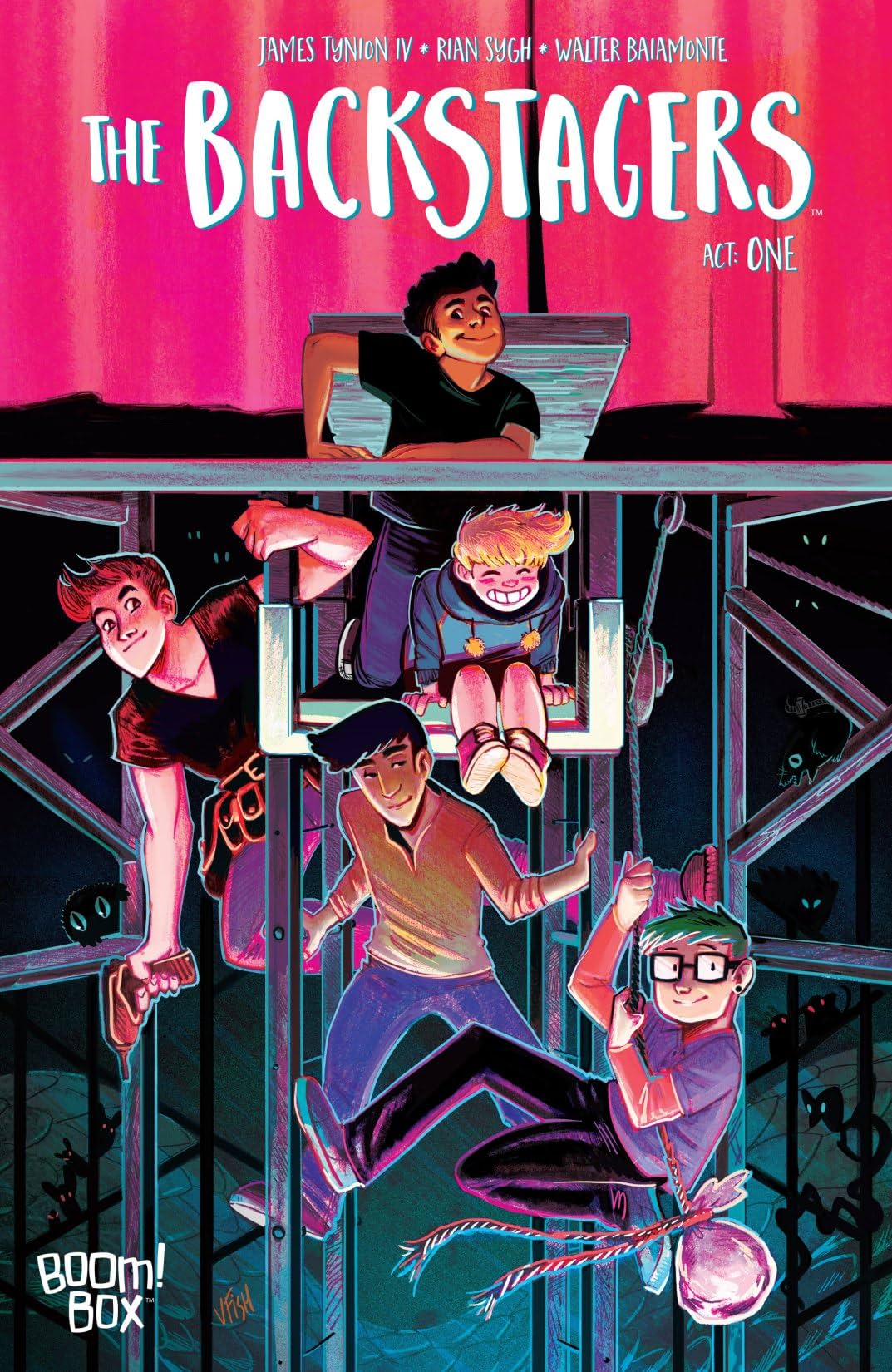
Ok so we cheated a little: this is two books. But that’s double the fun. Both are by DC alumnus and former Scott Snyder protege James Tynion IV. So naturally, both books are wonderful. Tynion identifies as bisexual, and his commitment to creating LGBTQ+ characters is apparent in these titles. In The Woods, the entirety of Bay Point Preparatory High School vanishes without a trace from Milwaukee, Wisconsin. Light years away, the entire school finds themselves in a primordial wilderness. It’s a teen-conspiracy style story, with a small-town spooky feel reminiscent of Stephen King. On the complete opposite of the coin, The Backstagers follows Jory, who has just transferred to an all-boys private school, and joins the stage crew. There, he discovers a door backstage that leads to different worlds. Adorable and magical adventures ensue. Both comics feature casts stuffed with gay, bi, and trans characters, all captured in excellent visually distinctive art. Look no further for comic series appropriate for young ones that is LGBTQ+ celebratory.
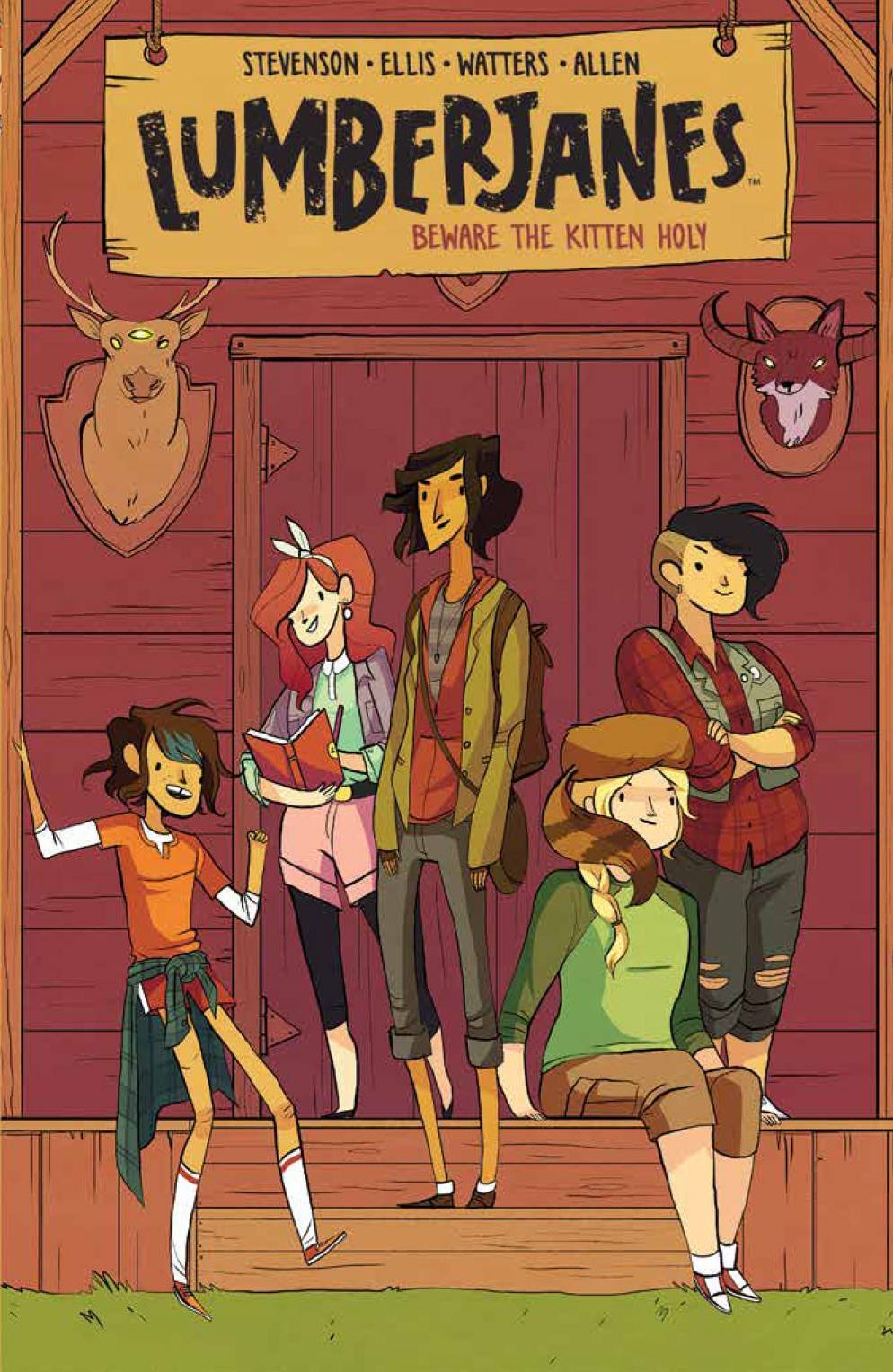
6. Lumberjanes (Boom! Studios)
Shannon Watters, Grace Ellis, Noelle Stevenson (writers), Brooke A. Allen (artist)
It’s pretty hard to find an all-ages, woman-led, woman-created comic (or book, or film, or…anything). It’s even harder to fine one that includes LGBTQ+ characters. Luckily, Lumberjanes saves you the hassle of looking. It follows Jo, April, Mal, Molly and Ripley, five best pals who have spend the summer together at camp doing normal summer camp things. Like dealing with supernatural creatures, for instance. Boom! Studios called it Buffy the Vampire Slayer meets Gravity Falls, and if that doesn’t pull you in then it’s hard to say what would. The creative team has worked to create a light-hearted tale of friendship that, like it’s spiritual siblings The Woods and The Backstagers, appeals to all. There are six volumes available already, so grab them quick and have yourself a marathon.
Imagine: During WWII, Nazi Germany begins exploring the use of magic and monsters to help win the war. In response, Amanda Waller puts together a covert team of superpowered women called The Bombshells. Included in this team is: Batwoman, Zatanna, Batgirl, Vixen, Mera, Wonder Woman, Catwoman, Huntress, Supergirl, Stargirl, Big Barda…and literally dozens more of what amounts to a who’s who of DC super-women. The coolest part: these heroes came first. Batwoman isn’t so named because of Batman – she actually saves Thomas and Martha Wayne from dying – but rather because she is a baseball player. Marguerite Bennett’s world is fascinating, but her characters are even better: strong, varied, and many of them queer and trans. And it requires no knowledge of DC universe. Grab volumes 1-4 now before the sequel series comes out in August.
4. Kim & Kim (Black Mask Studios)
Magdalene Visaggio (writer), Eva Cabrera (artist)
Best friends Kim Quatro and Kim Dantzler are intergalactic bounty hunters, called the Fighting Kims, and go on an intergalactic road trip to get their marks and make some cash. It’s not just an awesome space romp: it features a wide cast of queer characters, including one of the Kims who is trans. The result is a deeply personal story: while writing it, Magadalene Visaggio was going through her own transition process. Eva Cabrera’s art has a punk rock style that makes the series, and Kims, pop. There are few trans characters in comics, and even fewer trans creators. Take some time and check out a series that includes both. P.S. It also received a 2017 GLAAD nomination!
3. Midnighter/ & Apollo (DC Comics)
Steve Orlando (writer), ACO, Fernando Blanco, et al. (artists)
Steve Orlando penned DC’s first comic led by a gay man, and the result was nothing but violent delight. Midnighter is often compared to Batman, probably because they’re both attractive dark costume wearing men. But he’s so much more: he practices a more murderous brand of justice, and he loves what he does. He also has a very active, if sometimes disastrous, dating and sex life. In the sequel miniseries, Midnighter and Apollo, Midnighter is reunited with his long-time partner Apollo (often compared to Superman) as they go to hell. Literally. The result is an action packed and prominently gay story, from a bisexual creator. If you’ve always wondered what Batman and Superman’s love would be like, then it’s time pick up Midnighter and Midnighter and Apollo.
2. BingoLove(Inclusive Press)
Tee Franklin (writer), Jenn St-Onge (artist)
Ok so this one is technically cheating again because Bingo Love isn’t currently available – but it will be soon! Bingo Love is a romance story that spans 60 years. After meeting at church bingo (ah ha!) in 1963, Hazel Johnson and Mari McCray develop feelings for each other. But they are separated, don’t see each other for decades. Luckily they are reunited, and make plans to spend the rest of their lives together. Writer Tee Franklin is new to comics, but is an outspoken advocate of representation in the industry, including creating #BlackComicsMonth panels at NYCC. Artist Jenn St-Onge, who previously worked on Jem & the Misfits, is responsible for the addictingly cute aesthetic of the book. More than just adorable, Bingo Love fills a niche rarely seen in media: LGBTQ+ relationships between older individuals. You can preorder the book here!
1. Love is Love (IDW Publishing)
Various writers and artists
After the tragic shooting at Pulse Nightclub in Orlando, FL, IDW Publishing gathered writers, artists, and creators from all over world to build Love is Love. The result is an anthology of memoirs, fiction, poetry and images dedicated to celebrating love in all forms. DC, Archie, Devil’s Due and more lent their characters and talent to the project. Each entry is only 1-2 pages, making up 144-page tribute and celebration of the LGBTQ+ community. All proceeds from sales of the comic go to EQUALITY FLORIDA, an organization dedicated to securing justice and equality for Florida’s lesbian, gay, bisexual and transgender community. This is an absolute must read for you and everyone you know.
The season premiere of Preacher makes a statement about its second season. But it also launches with a wonderful five-minute cold open. From a discussion of foreskin to a shootout with the Saint of Killers(Graham McTavish), it highlights the range of tones the show explores.
This, according to executive producers Seth Rogen and Evan Goldberg, was objective of the sequence.
“We wanted to start where we left off, but start with something that was shocking and exciting,” Goldberg explained at a recent press conference. He also hoped to “give a taste” of the season to come.
For Rogen, the show’s ability to shift tones is one of the primary joys of working on the series. “[Preacher] can be funny; kind of ironic almost. Sometimes [it is] scary and shocking.” Though challenging, Rogen wanted to “show the full range” of “all those things before the credits started.”
“Tone is not something people play with as much as we do,” he added. “And that’s all from the comics.”
To Goldberg, the differences in tone emulated the very different styles of cover artist Glenn Fabry and artist Steve Dillon, who drew the bulk of the original comic series. “That gives you a different emotional attachment to the art,” he explained.
As the directors of the first two episodes, it also allowed them to “lean into” their budget constraints. Half-way into the sequences, Tulip (Ruth Negga) took a police department on a high speed chase. As Rogen explained, they wanted to make it “look bad” and call out their own limitations. “If we can’t take five days and shoot a good car chase, let’s take half a day and let everyone know we’re not trying to make this look good.” Though somewhat indulgent, Rogen said the choice also worked for the story as Tulip, Jesse (Dominic Cooper) and Cassidy (Joseph Gilgun) are united in the same mood.
“We had a lot of conversations about it,” he continued. “And if we had unlimited budget, it probably wouldn’t look like that. Sometimes logistics dictate those decisions, but it’s about taking ownership of it. We’re not the most expensive show on television, but we try to do whatever we want and never tell the writers to limit themselves.”
“When I look at it, I think it’s a lot cooler,” Rogen added.
Do you agree with Rogen? Let us know in the comments below.
So … that happened. Atomic tests, time loops and New Mexico all made for the most unusual episode of Twin Peaks ever.
The Case
Bad Cooper and Ray continued their trek to somewhere called “The Farm.” Along the way, Bad Coop’s attempt to extract information from Ray got him shot. Not that it meant a whole lot as Ray’s attempt at a deathblow was stopped by the shadowy prospector men.
As Ray looked on in horror, the shadowy men seemed to make Bad Coop’s situation worse. He also glimpsed BOB somewhere inside Bad Coop.
Ray skedaddled as quick as he could to call Phillip Jeffries, but never looked back to see Bad Coop get up. At least, we think it’s Bad Coop.
The Updates
Someone at the Road House is an amazing booker. They managed to get The Nine Inch Nails to play a set.
The Questions
Were the shadowy men born in the White Sands atomic test in 1945?
Was BOB born in the same test? Or was he the bug hatched in the 1950s?
If all of the black &white footage took place in the past, how did The Giant conjure the soul of Laura Palmer?
Was that tower on the purple ocean the White Lodge? Or will Child Roland be looking for it soon?
Will any of the New Mexico characters matter?
Is BOB now in control of Bad Coop’s body?
Not about Judy
Though the rest of the episode was a major detour for the series, we learned at least one thing about Phillip Jeffries: Ray has been working for him all along. Though his attempt to call Jeffries led to voicemail, he mentioned the scene with the shadowy men. He even suggested the thing he saw inside Bad Coop might be the source of all the recent angst. But, to add one more question, is Jeffries aware of BOB in particular or has he always been looking for shadowy men?
Atomic Blasts
Part 8 represents the greatest stylistic departure thus far for Twin Peaks. More so than Dougie or the Buckhorn murder, this episode felt like scenes from a different David Lynch project. And yet, BOB was very much at the center of it.
With actor Frank Silva dead for decades at this point, many wondered how Twin Peaks would confront the absence of its principle antagonist. Some of it is easy to do as BOB was, in effect, a passenger demon. Any actor can, ultimately, play him. But by introducing the idea of the doppelganger, BOB’s position in the Black Lodge came into doubt. We know he rode out with Bad Coop, but it seems he was trapped inside the doppelganger. Thanks to Part 8, he feels vital to the story again despite being a digital ghost.
The shadowy men themselves finally carved a place for themselves in the story. Based on the way they killed a couple of the townsfolk in this episode, it is safe to assume one of them killed the couple in New York back in Part 1. Of course, since the entire episode felt like a spice-dream from Lynch’s Dune, it is hard to tell if they are also Black Lodge creatures or some whole new element.
Similarly, the Giant’s appearance only furthered the mystery. At the very least, the black & white photography suggested his scene with Cooper in Part 1 also takes place in the past. Or, at least, the past outside of the original TwinPeaks, the film, and its current manifestation. It also seemed that time worked differently there, with a golden Phantasm ball appearing with Laura’s face inside of it. Presumably, the Giant gained possession of her soul. And, if we take the dream logic of the scenes at face value, she was sent to the past.
But with the lack of town scenes and the extended 2001-esque sequence, Part 8 is the single most challenging and bewildering episode of Twin Peaks to date. As we’ve always followed the path of Phillip Jeffries, tonight still felt like forward movement. What do you think? Did this episode break your love of Twin Peaks in half? Will you still be watching when the show returns in two weeks?
Since then, Bell has updated his account with other posts, one of which has three images, and with the other that has two. See if you can spot the reference.
It’s not common for actors to use social media, especially Twitter, to promote their upcoming roles. Although it looks like Bell is telling us that he just might be alongside Ben Affleck in the DCEU soon, nothing is known for sure at this point.
Would Bell make a good Robin? Do you think he’ll end up playing the character? Comment below, let us know.
With Major taking the majority of the baseball anime scene, other anime have fallen to the side. With Diamond no Ace also trying to make a move on the genre, anime like Ookiku Furikabutte have been lost. Despite this, I believe that Ookiku Furikabutte had potential to equal that of Major.
Okkiku na Summary
Mihashi, previously a starting pitcher at Mihoshi High School, had been seen as the cause of a losing team. Thanks to constant criticism and bullying Mihashi found himself changing schools and almost quitting baseball. Yet upon going to see what the baseball team was like he runs into their coach, Momoe. With her going full throttle, Mihashi tells her that he is a pitcher, thus sealing his fate. While he does have a slow pitch, everything else he can do is levels above average. Along with his newfound teammates and a bit more confidence, they aim to reach Koshien as a team.
A Different View of Baseball
What Ookiku Furikabutte has to offer isn’t the most proactive main character unlike Major. Instead what we get is a frail main character that we want to cheer on. We don’t get the overpowered character that we know has every capability given to him from genetics or family history. Instead, we get the earnest hard working type that puts everything into his game. Maybe I am a bit biased, but when it comes to innate talent over hard work, I will always support the effort.
While I still consider Major to be the greatest sports anime of all time it may be due to its story. Everything about it is complete, something that Ookiku Furikabutte can’t compete with. Maybe if the series had just as many seasons as Major, the two would be closer. Even though this isn’t the case I find myself still doing the same between the two anime. Supporting the Ookiku Furikabutte since it truly is a good anime.
Your Name blends beautiful animation with a heartwarming story and fleshed out characters to deliver a solid overall film.
Although more complex, the story essentially revolves around two teenagers, Mitsuha and Taki, who magically swap bodies one day. It’s a fascinating premise as it allows the writer to not only give standard character development to the leads, but tinker with how each character acts while in the other’s body. It’s complex, but works well.
Your Name has an art style I adore. It’s akin to classic Ghibli movies, but modernized with certain visuals that are simply spectacular. Shots of things like the sky and open fields are incredibly well done, and I can tell that the animators worked endlessly on the detail.
In terms of score, the film has a subtle, but good one. The music isn’t overpowering, but definitely adds flare and meaning to certain scenes that otherwise wouldn’t have it. When I look at some of my favorite anime films of all time, like My Neighbor Totoro, The Girl Who Leapt Through Time, and Akira, the music is a major positive, rather than a supplementary filmmaking device; to me, this is what sets the amazing apart from a picture that is good, or even great.
A major flaw in Your Name comes at the end. I won’t spoil anything, but the ending didn’t give fans enough credit. When a movie allows the audience to think about what happens to character, rather than giving them a drawn out and cliche ending, it’s more effective. Your Name falls trap to not letting its audience think about the story they had just seen, its details, and make a hypothesis on what might’ve happened based on that knowledge.
Overall, the film is pretty great. It’s not the greatest anime movie of all time, like My Anime List presents it as, but it’s definitely a solid film for anyone looking to watch an uplifting, and funny, story between two relatable teens.
If the ‘Step Up’ franchise can squeeze out five films, it’s a no-brainer that ‘Pitch Perfect 3’ comes out this holiday season. The first film had a budget of $17 million, and the girls look to destroy all the goodwill they earned with an obnoxious $65 million budget for ‘Pitch Perfect 3.’ I think this film is still about acapella and doesn’t require a giant CGI monster, but if Fat Amy wants to blow all the money on hookers and coke, you let her. Also, John Lithgow makes a surprise appearance!
After the highs of winning the World Championships, the Bellas find themselves split apart and discovering there aren’t job prospects for making music with your mouth. But when they get the chance to reunite for an overseas USO tour, this group of awesome nerds will come together to make some music, and some questionable decisions, one last time.
Trish Sie directs the film, Sie also directed ‘Step Up: All In’ and three OK GO videos. Anna Kendrick, Rebel Wilson, Hailee Steinfeld, Brittany Snow, Anna Camp, Hana Mae Lee, Ester Dean, Alexis Knapp, Chrissie Fit, Kelley Jakle, Shelley Regner, Elizabeth Banks and John Michael Higgins all return and are joined by additions including John Lithgow and Ruby Rose.
What makes comics unique? That question has fueled Hass Otsmane-Elhaou for many years. If you haven’t been following Hass’s work over at Strip Panel Naked, then you’ve been missing out on arguably the premier analysis of the comics medium. Formerly of the now defunct Comics Alliance, Hass has long championed the need for a more reflective brand of comics journalism. Sites have too often focused on the fandom side of the industry over the art-form itself, how it came about, and what it means. Indeed, a fatal gap in comics journalism has been the failure to engage with creators on the process of making comics beyond a surface level discussion. Hass’ latest editorial and journalistic endeavour is a digital magazine that aims to fulfill the need. Panel x Panel provides a refreshing break from the current trend in comics journalism by promising an in-depth take on what makes the medium unique and what drives the creators that make it possible.
Panel x Panel, like many great literary magazines, splits its attention between featured and regular sections. However, whereas others have a multitude of features offering insights into different works, it opts instead to examine a single book. For this inaugural edition, we are invited to discuss Beautiful Canvas #1 (in-stores June 28th) by Ryan Lindsay and Sami Kivela with colours by Tríona Farrell and letters by Ryan Ferrier. In this way, both author and reader have a common frame of reference. Our first substantive piece is an interview with the books co-creators as they walk us through their partnership which has endured over four projects. Its a fascinating look into their creative process and how they conceive the structure of a comics. Everything from panel composition to the utility of dramatic devices and purpose of genre is given space. Lindsay and Kivela revel in the chance to welcoming the reader into their workshop and pulling back the curtain without spoiling the magic. This opening interview ends with what is promised to be a re-occurring question of the Inside the Actors Studio variety. “Why does this story need to be told in comics?” That question is one we all should ask when picking up our weekly pull-list and oddly, its one that some creators struggle to come to terms with. Their answer is as instructive as it is enlightening.
Panel x Panel’s consideration of Beautiful Canvas is bolstered by articles focusing on shamefully neglected work of colourists, the role of the femme fatale in fiction and a breakdown of its hidden meaning in its visuals. These contributions by Tríona Farrell, Laura Fagan, Deniz Camp, and Hass himself all add to our appreciation of the base work. They are academic in the sense that they seek to thoroughly dissect these various elements of the comic and in doing so, understand it. To say they are academic is not to say that they are exclusionary. The language and reference used is welcoming for the lay observer. Panel x Panel merely asks that you meet it halfway and think critically about the media you consume.
The magazine’s regular items are a joy to peruse. For those who think that there is too much talk about comics and little of them, fear not. The issue features a short 14-page comic entitled Time is of the Essence by Romain Brun, Deniz Camp and Julien Brun. This heartbreaking tale examines the theme of love through a sci-fi lens and asks what lengths we are willing to go to experience it, even for a short amount of time. It is stunningly rendered. Each panel practically oozes with character, adding to the world these individual occupy. It is a fine example of why this medium excels and a fitting companion piece to this issue. It alone is worth the price of entry.
Panel x Panel is rounded off by a number of compelling articles. Comics Showcase sees creators, journalists, and others industry professionals give their recommendations of books to pick up. Its more than a mere reading list, each paragraph is an mini-essay on why a given book has effected them as it has. Its always inspiring to hearing passion people speak to what currently inspires them. Anyone in need of a break from the deluge of the Big Two owes themselves to add some of these titles. Craft Corner finally gives letterers their due and to prove why it can make or break a comic. Lettering is often a character in and of itself. It subliminally adds to the world the creative team is building. Few have managed to convey their importance than Aditya Bidikar in this issue. The two further interview sections, Five Question With… and Creator x Creator respectively, are utterly fascinating. The former emulates Inside the Actors Studio even more so than the featured interview allows Ibrahim Moustafa to gush about his comic influences. The latter is a truly unique relay format where one creator interviews another of their choice on a topic of their choice. The interviewee then morphs into the interviewer for the next issue and follows suit. The premiere installment sees Ollie Masters interview Rob Williams about the drafting and scripting processes. It is required reading for anyone even somewhat interested in writing their own comics.
At a glance, this may seem like magazine for creators by creators. However, it is anything but a private club. Panel x Panel is for anyone who is drawn to comics in more than a passive sense. It is for those who wish to understand the creative background that goes into making comics. Each article is bursting with information about why comics are so special and why they only continue to grow. Like the medium it champions, it welcomes its reader without ever talking down to them.Discussions which may have previous been the reserves of creators is now squarely open to the public. Panel x Panel is our answer to The Economist or the London Review of Books and it has been long overdue.
Panel x Panel launches on June 28th and is available for pre-order. An advanced review copy was kindly provided by the editor.




 Like Speed Racer meets Death Race except leagues better. Domino Swift is part of a worldwide motorcycle racing league, dealing with league rules, paparazzi, and fans. But that’s only by day. At night, she races under an alter ego in illegal, violent bike gang races for an illicit motorcycle drug: Crush. And that’s literally just the beginning of Domino’s secrets. In just six issues the creative team from Batgirl of Burnside create a world as beautifully drawn and colored as it is rich in depth. Their protagonist is a queer black woman because why wouldn’t she be? But her identity isn’t the narrative. It’s just who she is. The Burnside team has crafted a real gem here, and if you’re not hooked by the description of their weird world, at least pick it up for the beautiful father-daughter relationship.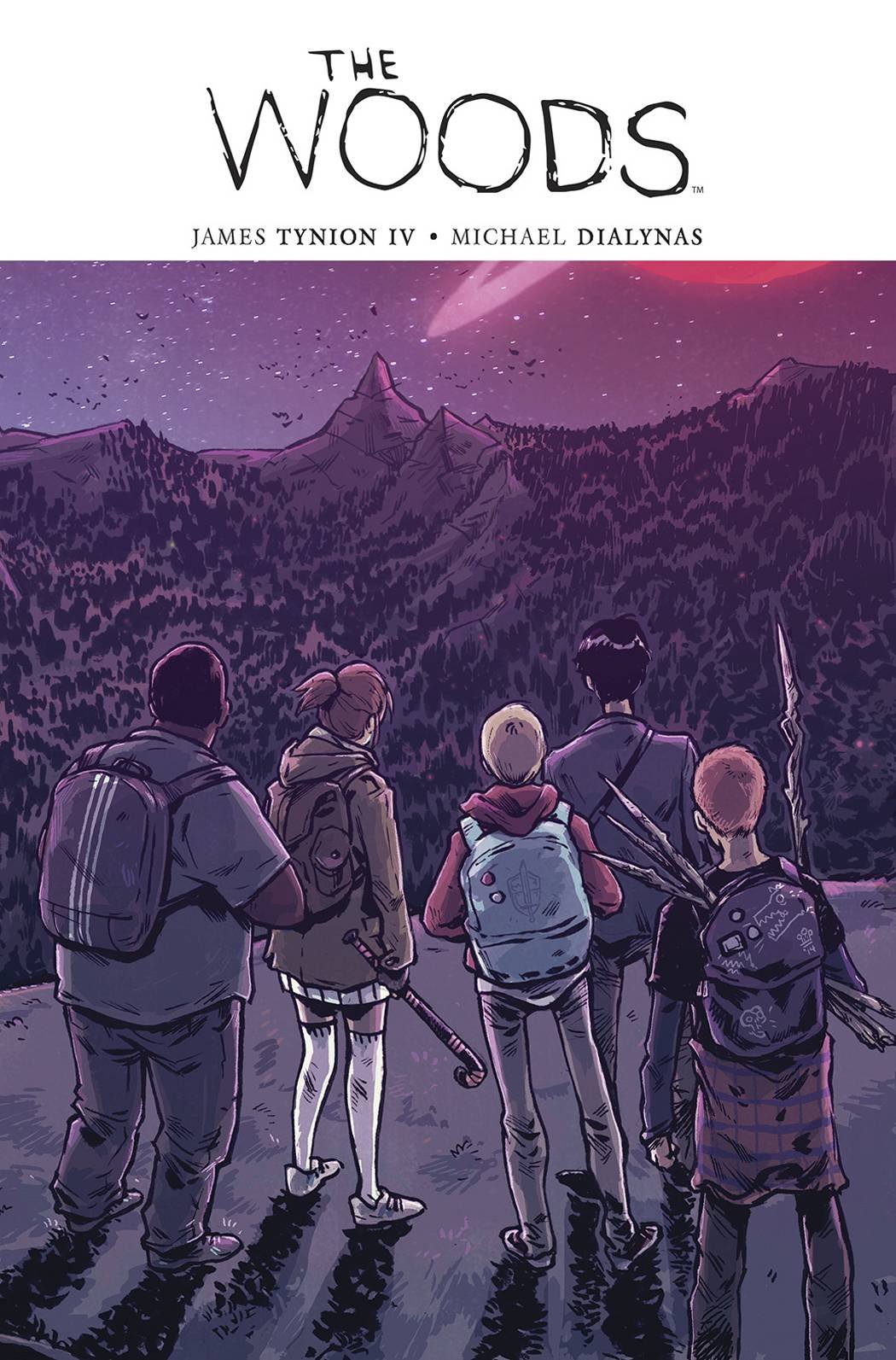
 Steve Orlando penned DC’s first comic led by a gay man, and the result was nothing but violent delight. Midnighter is often compared to Batman, probably because they’re both attractive dark costume wearing men. But he’s so much more: he practices a more murderous brand of justice, and he loves what he does. He also has a very active, if sometimes disastrous, dating and sex life. In the sequel miniseries, Midnighter and Apollo, Midnighter is reunited with his long-time partner Apollo (often compared to Superman) as they go to hell. Literally. The result is an action packed and prominently gay story, from a bisexual creator. If you’ve always wondered what Batman and Superman’s love would be like, then it’s time pick up Midnighter and Midnighter and Apollo.
 Ok so this one is technically cheating again because Bingo Love isn’t currently available – but it will be soon! Bingo Love is a romance story that spans 60 years. After meeting at church bingo (ah ha!) in 1963, Hazel Johnson and Mari McCray develop feelings for each other. But they are separated, don’t see each other for decades. Luckily they are reunited, and make plans to spend the rest of their lives together. Writer Tee Franklin is new to comics, but is an outspoken advocate of representation in the industry, including creating #BlackComicsMonth panels at NYCC. Artist Jenn St-Onge, who previously worked on Jem & the Misfits, is responsible for the addictingly cute aesthetic of the book. More than just adorable, Bingo Love fills a niche rarely seen in media: LGBTQ+ relationships between older individuals. You can preorder the book
  After the tragic shooting at Pulse Nightclub in Orlando, FL, IDW Publishing gathered writers, artists, and creators from all over world to build Love is Love. The result is an anthology of memoirs, fiction, poetry and images dedicated to celebrating love in all forms. DC, Archie, Devil’s Due and more lent their characters and talent to the project. Each entry is only 1-2 pages, making up 144-page tribute and celebration of the LGBTQ+ community. All proceeds from sales of the comic go to
  at Mihoshi High School, had been seen as the cause of a losing team. Thanks to constant criticism and bullying Mihashi found himself changing schools and almost quitting baseball. Yet upon going to see what the baseball team was like he runs into their coach, Momoe. With her going full throttle, Mihashi tells her that he is a pitcher, thus sealing his fate. While he does have a slow pitch, everything else he can do is levels above average. Along with his newfound teammates and a bit more confidence, they aim to reach Koshien as a team.

 Panel x Panel, like many great literary magazines, splits its attention between featured and regular sections. However, whereas others have a multitude of features offering insights into different works, it opts instead to examine a single book. For this inaugural edition, we are invited to discuss Beautiful Canvas #1 (in-stores June 28th) by Ryan Lindsay and Sami Kivela with colours by Tríona Farrell and letters by Ryan Ferrier. In this way, both author and reader have a common frame of reference. Our first substantive piece is an interview with the books co-creators as they walk us through their partnership which has endured over four projects. Its a fascinating look into their creative process and how they conceive the structure of a comics. Everything from panel composition to the utility of dramatic devices and purpose of genre is given space. Lindsay and Kivela revel in the chance to welcoming the reader into their workshop and pulling back the curtain without spoiling the magic. This opening interview ends with what is promised to be a re-occurring question of the Inside the Actors Studio variety. “Why does this story need to be told in comics?” That question is one we all should ask when picking up our weekly pull-list and oddly, its one that some creators struggle to come to terms with. Their answer is as instructive as it is enlightening.