With DC’s latest crossover event (Convergence) over, creators have used this opportunity to start fresh with some of its properties. There’s a feeling of a clean slate here, DC is more focused on character specific stories, rather than crafting a large universe with multiple crossover events that are just confusing. The new run, DC You, is crafting fun, exciting, and intriguing stories by going deeper with each character, and making them more appealing to a wider audience.
And it’s about damn time.
The New 52 had some fun and worthwhile stories, but there always was an excessive amount of editing that constrained the writers. It felt like DC was trying to recapture the success of Blackest Night, and Flashpoint, so there was more emphasis on building up to bigger event stories. Sometimes it worked like with Forever Evil and some times it didn’t like with Trinity War.
This new launch (as stated before) puts the focus back on the characters, and the writers aren’t so worried about connecting everything to a larger universe anymore. And it’s definitely a positive influence for the market: sales are higher, reviews are better, and customers are happier. Now there’s probably some big crossover event coming up, but now, we as readers can enjoy these comics without worrying about the larger connected universe.
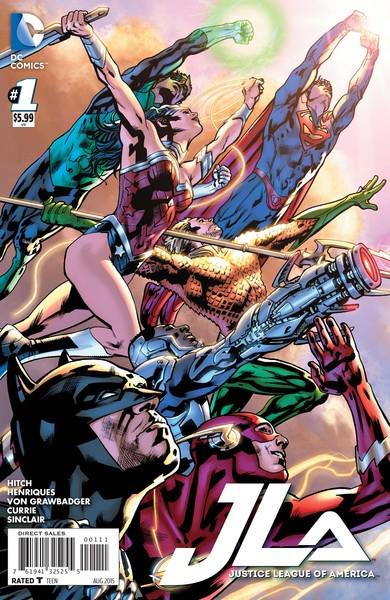
A great example of this is JLA #1. The comic features the seven main Justice League members, but it doesn’t worry about the current continuity. It is completely self-contained and easy to hop into for newer and older fans. It’s nice to have a book that is independent of the main continuity, and fun to read. There’s no need to pick up any other books, because all you need to know is right in the comic. And this book is definitely worth picking up. It reads like an episode of the Justice League cartoon, but with bigger stakes.
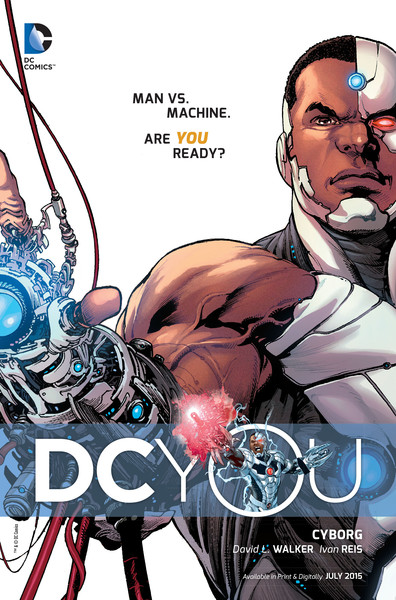
There’s also an emphasis on re-imagining certain superheroes, and giving them their own books. For example, fan favorites like Starfire and Cyborg are finally headlining their own solo series. Rather than just give well-known superheroes a gender swap, or randomly reinvent them with no real purpose, or claim to shake up the status quo for shock value, DC is now focusing on characters that have had established fan bases and giving them the chance to shine to a hungry audience.
Characters like the aforementioned Starfire and Cyborg are known for having a huge fan base from the Teen Titans show. The two characters are now being crafted more like their TV counter parts than what they were like before hand. So, we will no longer have to endure the awful writing on Starfire Scott Lobdell gave us in Red Hood and the Outlaws. DC is going back to basics with these wonderful characters that we as an audience have asked to see for a while. The creators aren’t planning to create some strange new crossover event, they’re giving us character specific stories with their own problems and issues.
Not every comic has to build up to some Death of the Family level event. Instead we can see some of the characters that don’t get into the limelight very often. Starfire’s series just came out last week, and it’s already an improvement from when we saw her before. It’s a much more fun, and colorful series.
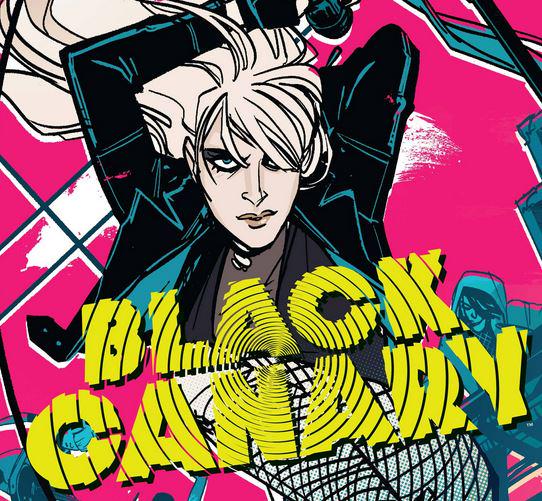
And it hasn’t been stopping there. Longtime Superman villain, Bizarro is in his own book. The dimwitted super villain is on a cross-country trip with Jimmy Olsen. It’s a hilarious comic that involves every mishap imaginable, and is very much written like a Tommy Boy esque buddy movie. Not every comic is a silly, fun series. Black Canary is also in her own book now, as the leader of a rock band that she constantly needs to defend with some awesome kung fu. And to go even further, the solemn Martian Manhunter is now headlining his own book that’s filled with an intricate intergalactic mystery that’s a real page turner.
The beauty of these books is that DC Comics is going back to the core of these characters. They aren’t worried about a larger universe, or shaking things up, or attracting a new market. They are letting these characters speak for themselves, and growing from that. This could lead a new age of fun comics that don’t need a gimmick, or a massive change to make themselves look better. They just need to go deeper with some of their properties and see how to evolve them.
Now, to be fair, its way too early to tell how this is going to play. It could fizzle out due to low sales, or poor reviews, or more editor meddling. But, now, it’s great to see DC comics have more fun, and exciting books to read. It’s a great new step for them to take, and it’s probably the best time for new readers to get into comics.
Constantine, the popular, blue collar mage, has been through many changes. He has been John Constantine: Hellblazer, a member of Justice League Dark, the solo Constantine, and now Constantine: The Hellblazer, according to a Monkeys Fighting Robots earlier report.Constantine, the Keanu Reeves outing and NBC’s Constantine, sadly showed that John is a hard man to reproduce. However, DC Comics promised that the new Constantine comic would be a return to his edgier, Hellblazer days. It even has Hellblazer in the title again.
So, how does Constantine: The Hellblazer measure to the over 300 comics about the DC / Vertigo Comics master(Petty Dabbler) of the dark arts? Read on to find out more, but proceed with caution. Heavy spoilers are ahead.
One thing that has been pointed out about the new Constantine comic, and debuted in one of the later volumes, was John Constantine’s sexual preference. Some will point out that Constantine: The Hellblazer has a subtle reference to it, such as the Geekiary, but this writer would argue otherwise. From the second page of the new Constantine comic until around page 4, it hits you like a ton of bisexual bricks.
To be fair, Constantine writer Ming Doyle is bisexual, and wanted to represent him as such. So, therefore, it was meant to be in your face. If this bothers you, or ruins your opinion of Constantine, move on. Though, by the end of Constantine: The Hellblazer, you will probably forget all about it.
Constantine’s smoking is moderate, but not non-existent like the first few episodes of the NBC series. However, his attire is one of the most striking, distinct differences. There is NO trench coat. This has been a concern when the first artwork dropped. There is an initial scene in the comic deals with this, but only briefly.
The artwork is…interesting. John Constantine looks like doe-eyed, British gent. Other characters and scenery look pretty sharp, like the former demon businesswoman. You’ll need to read it for more details. There will be no spoiling of the plot. There is also an interesting several circles of hell two-page layout of the demon’s business that certainly lends to Riley Rossmo’s style. This writer would not mind see more of that.
Another notable difference is John’s confidence. It is true that his magic is often solely referred to as his always thinking he has every situation under control, but in Constantine: The Hellblazer it is more than just bravado.
His Hellblazer ghosts following him around, and leaving him a stern warning that will carrying on into subsequent issue was a nice touch that all Hellblazer fans will appreciate.
So, should you read the new Constantine? Yes. There is not enough negative to merit abandoning it at this point.
AMC Friday afternoon, released a teaser for Fear The Walking Dead called Nick’s Escape.
Fear the Walking Dead will be set in Los Angeles and focused on new characters and storylines. The show’s first season will consist of six one-hour episodes and premiere on AMC in August. The show’s second season will air in 2016.
Robert Kirkman, Gale Anne Hurd, Greg Nicotero and David Alpert from “The Walking Dead” are executive producers of the new series, which, like the original, is being produced by AMC Studios. Dave Erickson (“Marco Polo,” “Sons of Anarchy”), who co-created and co-wrote the pilot with Kirkman, is an executive producer and showrunner. The series will star Cliff Curtis (“Missing,” “Gang Related”), Kim Dickens (Gone Girl, “Sons of Anarchy”), Frank Dillane (Harry Potter and the Half-Blood Prince) and Alycia Debnam Carey (Into the Storm).
Nick and Zack Keller spoke with Matthew Sardo about their new book from Dark Horse Comics, Death Head #1. The brothers went into detail about what it takes to create suspense in a comic book and why they choose the Plague Doctor as their iconic villian.
Death Head #1
Writers – Nick Keller, Zack Keller
Artist – Joanna Estep
Who is the Plague Doctor? What does he want? And how will the family survive?
Zack Keller (cocreator of Dick Figures, the Streamy, IAWTV, and Annie Award–nominated web series with 650 million+ YouTube views) and Nick Keller (Turner of the Century) deliver a supernatural-horror thriller about family and creeping, terrifying murder!
When Niles and Justine Burton go camping to get a break from their stressful lives, they expect to find peace . . . not an abandoned village hiding an ancient evil. In a turn of events ripped straight from a horror movie, a brutal killer wearing a plague doctor’s mask begins hunting Niles, Justine, and their two kids.
Death Head #1 will be in your local comic book store on July 15.
It hasn’t been an easy year for Simpsons fans. First, we saw the much mourned passing of one of the show’s most influential voices, series co-creator Sam Simon. Then it was the announcement by Harry Shearer—via his own Twitter account, no less—that he would not be returning to the series after a 26-year run. And now the internet is abuzz with the notion that Homer and Marge will soon be ending their long and loving—though oft-perilous—marriage in the upcoming 27th season.
It’s that last one that gets me. I’ve actually liked most of the think pieces that have popped up on the importance of Homer and Marge staying together, such as our very own Sarah Yeazel’s piece on Homer and Marge’s divorce. It’s sweet to know that a cartoon can elicit such strong emotions from people, proving that animation isn’t just “kid stuff”. These reaction are also ending up as this interesting commentary on how we view marriage in the modern-day, but that’s a different post entirely. To my point, anyone who’s kept up with the show over it’s long–and sometimes bloated–history, knows not to expect any “game changers” to last longer than the 22-minute length of the given episode. Sure, we saw Maude Flanders die in season eleven’s “Alone Again, Natura-diddily”, but that was largely due to a parting of the ways between Maude’s voice actor at the time and FOX. Bart’s teacher Edna Krabappel, has had a similar fate–albeit much more quiet and dignified—because her voice actor passed away several years ago. We’ve seen side-line relationships ebb and flow over the years—Edna and Principal Skinner, Edna and Ned Flanders, Milhouse’s parents—but there’s never been a true, status-quo altering change at the core of the Simpson family. Need proof? Here are some of the most wild changes to the Simpsons family which were tied up in a nice package by the end of the episode, or simply never discussed again.
5. Homer’s Intellect – (“HOMR”/”Bart’s New Friend”)
While Homer’s intelligence has varied wildly over the breadth of the series, no two episodes have tinkered with his brain functions to serve the plot, more than these.
In season twelve’s “HOMR”, our constantly lampooned everyman realizes that his sub-par intellect has come from years of having a crayon lodged in his brain. When the doctors remove it, Homer’s IQ jumps up by 50 points or so and he’s finally able to connect with Lisa in a way that he hasn’t before. It’s a truly great episode amongst a sea of crap—season twelve is the show’s lowest point, in my humble opinion—and it all comes from a radical plot change. Still, by the end of the episode, after Homer has dealt with the realities of being a smart person in an oft-dumb world, he decides to have the operation rescinded, going back to his original state and setting the show itself back to the status quo. Homer and Lisa’s bond has grown in our estimation, but it won’t be brought up again by the characters, unless for some sort of neo-Simpsons meta-joke, which doesn’t quite count.
This most recent season’s “Bart’s New Friend”—the episode brandied about as Judd Apatow’s baby–has a similar trajectory, but instead focuses on the underpinnings of Homer and Bart’s relationship. Through a series of events, Homer ends up in the hands of a hypnotist, who throws his mindset back to that of his ten-year-old self. Homer retains no memory of his family or his job, but his relationship with Bart grows into a friendship. Once more, Homer ends up back at square one by the end of the episode, brought back to his adult mindset when the family and police finally catch up with the escaped hypnotist. Much like Lisa and Homer in “HOMR”, here we see that father and son have grown to respect and appreciate each other in a new way, even if Homer isn’t aware of what happened while he was hypnotized.
4. Lisa and Bart’s Education – (“Separate Vocations”/”Bart vs. Lisa vs. the Third Grade”)
Bart and Lisa’s school situation has also fluctuated wildly in certain episodes, from role reversals to role extremes.
Season three’s “Separate Vocations”, finds Lisa and Bart’s educational goals and futures turned upside down, after the results of a school-wide occupation test point to Lisa becoming a homemaker and Bart being best suited for law enforcement. The kids squirm, evolve and adapt to their new roles, each taking the original path of the other, in some ways. Bart’s ultimate sacrifice—taking the fall for Lisa, after she steals numerous teachers’ text books—not only brings us back to the status quo, but gives us one of those sweet sibling moments that no other show seems to handle with such care. Lisa blows her sax in the foreground while Bart is back at the chalkboard, everything right with the world once more.
While season 14’s “Bart vs. Lisa vs. the Third Grade”, handles that sibling affection much less gingerly, it does throw the kids into a similar grinder, looking to see if they make it out unscathed. A school-wide test—nothing to shake up the school system more than standardized tests, I guess—finds Bart to be too inept to stay in fourth grade and Lisa too smart to languish in second. Of course, they both end up in the same class when they’re moved to third grade, leading to a natural rivalry between the two. Eventually, Bart and Lisa have to work together to get out of a rough situation, patching up whatever grievances were caused in the midst of the episode. Meanwhile, Principal Skinner outright states that things should go back to the “status-quo”, which they quickly do.
3. The Family Incarcerated – (“Marge in Chains”/”Bart Mangled Banner”)
You’d think that a family member—or members—being thrown in jail, would resonate over a series’ lifetime, but not so with these two episodes.
In “Marge in Chains”, when Marge becomes increasingly exhausted after caring for her ill and dependent family, she accidentally shoplifts a bottle of bourbon from the Kwik-E-Mart and is promptly arrested. After a lousy trial–Marge in the hands of the not-quite-capable Lionel Hutz–the family matriarch is sent to 30 days in a women’s prison. What could be a fish-out-of-water tale, cleverly betrays that notion, portraying Marge as a woman who gets along quite well in the prison, despite her gentle, homemaker ways. Meanwhile, not only does the Simpsons clan feel Marge’s absence, but the entire town is effected by her incarceration, due to a bake-sale gone wrong. Once again, we’re back at square one; Marge reinstated in her role in her household and her community. The episode gives us a chance to see Springfield sans Marge, and not only points out her contribution to her family–a tried and true motif running through The Simpsons–but the way she helps to shape Springfield at large.
Season 15’s “Bart Mangled Banner” is certainly more slap-dash, dealing in long and winding plot twists which are hardly sensical or purposeful. Nevertheless, the Simpsons family en masse eventually winds up in a prison; the “Ronald Reagan Re-Education Center” (actually Alcatraz). The way they get out, is less important than the simple fact that they do escape, and while the episode sees them off to France of all places at one point, the lackadaisical conclusion finds the Simpsons family boarding a boat and immigrating back to America. It’s the kind of plot line that succinctly defines the post-classic Simpsons era in its sheer zaniness, but it still wraps everything up by the end, assuring us that next week the family will be back where we found them. To be fair, even with 20 different plot twists thrown in its path, “Bart Mangled Banner” manages to make a similar point about an individual’s–or in this case a family’s–effect on a community, albeit in an altogether negative light this time around.
2. Homer’s New Job – (“Deep Space Homer”/”You Only Move Twice”)
At some point, Homer’s weekly job shift–from truck driver, to Navy man, to tomacco planter, to etc.–became indicative of the declining quality of the show, the writers never taking any of these scenarios seriously. From the beginning of the series though, there are plenty examples of classic episodes revolving around Homer engaging in a 22-minute long career switch, only to end up at the Power Plant again in the next outing.
Season four’s “Deep Space Homer” lives in the absurd: NASA decides to shoot two “Joe Schmoes” into space for a ratings grab, Homer saves the day with an inanimate carbon rod–which gets all the credit–and Barney becomes sober for a few minutes. All this and the family is still back on the couch at the end of the episode, Homer lamenting others’ lack of appreciation for him, just as he was in the first act. “Deep Space Homer” still has some of the most iconic scenes in the show’s history, including the one with Homer floating through the shuttle’s cockpit, gracefully munching on airborne potato chips. This very scene was even directly lifted for a recent episode involving even crazier, outer-space Simpson family adventures.
If you’re still not getting it, check out “You Only Move Twice”, an episode from the eighth season where Homer uproots the Simpsons family for a spiffy new job working for a likable tycoon bent on world domination, Hank Scorpio. While Homer mystically climbs his way up the corporate ladder–at one point, his central job is to tell a handful of programmers to work harder–the rest of the family isn’t so lucky. With a self-cleaning house, Marge feels useless and turns to drinking, Lisa develops an allergy to the local pollens and Bart gets pushed back a grade in a school much more discerning than Springfield Elementary. All this begs the question, is one’s own happiness and success worth the price of their family’s misery? Homer makes the right decision at the end of the day, bringing his family back to Springfield and setting everything back to normal.
1. The Simpsons’ Marriage Woes – (“The War of the Simpsons”/”Secrets of a Successful Marriage”/Countless others)
Last but not least, comes the category most prudent; episodes revolving entirely around Homer and Marge’s crumbling relationship. That’s right. Before potential divorce, there was marriage counseling, separation and even Marge moving out.
“The War of the Simpsons” is one of those second season episodes that was an instant classic. When the family throws a late-night party for friends, Homer gets wasted post-haste and embarrasses Marge in a number of ways, mainly by openly ogling Maude Flanders. The next morning, Marge decides that a Church-sponsored couple’s retreat is the last beacon of hope for their flailing marriage. Homer follows through–albeit grudgingly–and quickly takes to stories of a mythological fish that’s said to live in the same lake that the retreat takes place at. By the end of the episode, Homer is forced to choose between the fish–his selfish need to be idolized by others–and Marge–his appreciation for what he already has. In true Simpsons fashion, he chooses Marge and she forgives him for his earlier indiscretions. While this wasn’t the first time we delved into the problems of the couple’s marriage, “The War of the Simpsons” still exists as the blueprint for most of the “Homer/Marge relationship” stories that came after it.
Season five’s “Secrets of a Successful Marriage” is just such an episode, although it’s arguably a better and more thorough dissection of Homer and Marge’s marital issues. When Homer becomes a teacher of an adult education course on marriage, he finds himself most revered by his students when he tells gossipy secrets about his and Marge’s relationship–she dyes her hair, she likes Homer to nibble on her elbow, etc. Soon word gets around town and Marge is made the fool, as countless Springfield citizens joke with her about her innermost secrets. “Secrets of a Successful Marriage” is such a milestone of the series because it delves into the rotten core of Marge and Homer’s problems as a couple; Homer’s love for himself and his willingness to do anything for a fleeting moment of acceptance by the outside world. By the end of the episode, Homer proves that he’s come to realize the importance of Marge’s love in his general well-being. In tattered clothes, with shaggy facial hair and unkempt, Homer kneels before Marge and begs her to take him back. It’s a moment as real and true as the Simpsons ever gives, and–here’s a shocker–things are once more back as they were at the beginning of the episode, Homer having learned something in the process. At least this time.
Season after season has seen the Simpsons family go through numerous wild changes to the status quo, only to be brought back to business as usual by the end of a given episode. In the best of these instances, it’s familial relations that are poked, prodded and analyzed amidst said “game changers”. Though the scenarios may only last 22-minutes, what they teach us about the Simpsons family–Homer’s capacity to bond with his kids (given the right circumstances), Bart and Lisa’s sweet appreciation for each other when the going gets tough and Marge’s ability to forgive her husband (despite all his flaws) in the name of love–sticks with us, and is ultimately what brings us back week after week (for those of us still sticking it out, that is).
I’m not saying that this upcoming season’s divorce-related episode is going to have the same kind of impact. I’m not even saying that it will be good, or even tasteful. One has to hope though, that the writer’s have every intention of pointing out the strength of Homer and Marge’s relationship, rather than making light of how quickly 26 years of devotion can turn to dust. A show that’s had as rocky a year as the last one, could certainly use Homer and Marge’s resolve to keep putting up the good fight, in spite of the words of naysayers.
The teaser for the second season of True Detective came out a few months ago, and one of the most intriguing aspects of the perfect teaser was the mysterious, hauntingly beautiful song underlining the somber visuals. The internet went nuts trying to figure out who sang it, what it was called, and where they could buy it and listen to it over and over.
A few days ago, HBO published Lera Lynn’s “The Only Thing Worth Fighting For” on YouTube, with the note that the music from the second season is available to pre-order from iTunes.
Here is the song on YouTube for you to listen to over and over:
Colin Farrell talks to Jimmy on the Tonight Show about what persuaded him to leave the big screen to star in the second season of HBO’s True Detective.
Episode 1 – The Western Book of the Dead The disappearance of a city manager disrupts a lucrative land scheme and ignites an investigation involving three police officers and a career criminal who is moving into legitimate business.
The second season of True Detective starts this Sunday on HBO.
True Detective returns June 21
A bizarre murder brings together three law-enforcement officers and a career criminal, each of whom must navigate a web of conspiracy and betrayal in the scorched landscapes of California when TRUE DETECTIVE returns for its eight-episode second season SUNDAY, JUNE 21 (9:00-10:00 p.m. ET/PT), followed by other episodes debuting subsequent Sundays at the same time, exclusively on HBO.
Colin Farrell (Golden Globe winner for “In Bruges”) plays Ray Velcoro, a troubled detective whose allegiances are torn between his masters in a corrupt police department and the mobster who owns him. Vince Vaughn (“Wedding Crashers”) portrays Frank Semyon, a criminal and entrepreneur in danger of losing his empire when his move into legitimate enterprise is upended by the murder of a business partner. Rachel McAdams (“Midnight in Paris”) plays Ani Bezzerides, a sheriff’s detective whose uncompromising ethics put her at odds with others and the system she serves. Taylor Kitsch (HBO’s “The Normal Heart”) portrays Paul Woodrugh, a war veteran and a highway patrol motorcycle officer, running from a difficult past and the sudden glare of a scandal that never happened.
The cast also includes Kelly Reilly (“Sherlock Holmes: A Game of Shadows”) as Jordan Semyon, Frank’s wife, a former D-list actress who is a full partner in his enterprises and ambitions; Christopher James Baker (“Gotham”) as Blake Churchman; Afemo Omilami (“The Hunger Games: Catching Fire”) as Police Chief Holloway; Chris Kerson (“CSI: Crime Scene Investigation”) as Nails; and James Frain (HBO’s “True Blood”) as Lt. Kevin Burris.
Among the guest stars this season are Lolita Davidovich (“Raising Cain”), W. Earl Brown (HBO’s “Deadwood”), David Morse (HBO’s “Treme”) and Rick Springfield (“Hard to Hold”).
Here is your first look at Melissa McCarthy, Kristen Wiig and Kate McKinnon in costume and on set of the new Ghostbusters by Paul Feig.
The film was written by Feig and Katie Dippold; and stars Melissa McCarthy, Chris Hemsworth, Kristen Wiig, Kate McKinnon, Cecily Strong, and Leslie Jones.
The plot is still unknown but they’re probably going to bust some ghosts.
FX acquired Southern Bastards by Jason Aaron and Jason Latour according to Deadline.
Aaron and Latour will serve as executive producers and will adapt the story for television. Southern Bastards will be a perfect fit for FX in the vain of Justified and Son of Anarchy.
Southern Bastards, a Southern fried crime drama based on a graphic novel about a power struggle between the son of a former sheriff of Craw County, Alabama who returns to a hometown controlled by a local criminal and revered head coach of the powerhouse high school football team.
Digitalsmiths conducted a survey quizzing 3,144 consumers in the U.S. and Canada for its Q1 2015 Video Trends Report. Above is the results of the survey, they also reported that the average person watches 17 channels.
As a fan of the DC Comics TV shows it is worrisome to see less than 20% of the people surveyed would pit up the The CW. Other standouts from the survey are the popularity of the Discovery Channel, History Channel, and National Geographic.