Home Blog Page 140

Review: CANDYMAN Expands Legend Through Brilliant World Building

Nia DaCosta’s Candyman holds strong connections to Bernard Rose’s classic while carving a fresh take on the original story. Deciding to expand on the legend of Daniel Robitaille by incorporating another story similar to his. This iteration of Candyman is less subtle in expressing its themes, but the powerful direction, impressive world-building, and top-notch performances keep it afloat. Candyman is a unique spin that never grows dull and carries this feeling of dread and unease throughout.

The themes of injustice are on display just like they were in Rose’s 1992 film. However, the subtly in Rose’s film is missing from this new iteration, but it still stands strong on its own. The transfer between not only racial perspectives, but the ties it shares to the events of the original, is chilling to watch unfold. Directed and co-written by Nia DaCosta, who teams with Jordan Peele and Win Rosenfield to pen the screenplay. Candyman stars Yahya Abdul-Mateen II, Colman Domingo, Nathan Stewart-Jarrett, Rebecca Spence, Teyonah Parris, Vanessa Williams, and Tony Todd. The film centers on Anthony McCoy (Mateen) and his partner Brianna Cartwright (Parris), who moved into the gentrified Cabrini. Anthony’s artistic career becomes revived after he learns about Candyman, but this unlocks a viral wave of violence.

Yahya Abdul-Mateen II as Anthony McCoy in Candyman, directed by Nia DaCosta.

DaCosta’s vision never strays from the original lore and builds on it in ways that by rewatching the original you will notice certain moments pointing to the events in this new film. The lovable bond established between Anthony and Brianna early on makes them a likable pairing. Brianna is an art gallery director, while Anthony is struggling to maintain his status as an artist in Chicago. Upon learning about Candyman from an old-timer in Cabrini, William Burke (Domingo). Anthony’s new macabre depictions in the art gallery lead to gruesome murders connected to his new artwork. Candyman does feel like it’s being held back by its runtime, clocking in at just over 90 minutes long. The characters can feel underdeveloped, but the emotional distress they endure makes for a very uncomfortable watch. Anthony and Brianna both have trauma they are dealing with, but Anthony’s trauma had been locked away his entire life.

Love is evident between the two, so audiences will feel for the pair when it begins to crumble. It’s a complete contrast to Helen Lyle’s relationship crumbling because her husband was disloyal. The writers position Brianna as being highly intelligent, it’s great to see a character maintain common sense throughout the film. She is written in a way that subverts tropes that would have lead to a character’s death. Candyman does have some hit-or-miss dialogue along the way, which makes the racial themes come off aggressive at times. While crucial to the narrative, it could have been written better. Peele’s touch is felt when the humorous dialogue is present, but it’s never overdone. The film suffers from being more focused on its message than spending time developing the characters on screen.

(from left) Anthony McCoy (Yahya Abdul-Mateen II) and Anne-Marie McCoy (Vanessa Williams) in Candyman, directed by Nia DaCosta.

Mateen’s performance as Anthony McCoy is unnerving to watch. The second he summons Candyman, audiences are in for a gripping descent into madness. Anthony is the young child Helen saved towards the end of the original, but he has been raised on lies to keep him safe. His interactions with his mother, Anne-Marie McCoy (Williams), are disheartening for his character because he must confront the knowledge of Candyman always being after him. Williams’ brief return as Anne-Marie is satisfying enough, and her chemistry with Mateen makes them believable as mother and son. Parris shines as Brianna, the gallery director who tries to protect Anthony from his pending demise. The trauma Brianna holds onto from her childhood makes it easy for audiences to side with her during this ordeal.

Dacosta’s direction is superb, the script is muddled, and most of the characters are hollow, but her unique camerawork is undeniable. The use of mirrors to capture the kills in Candyman is done tremendously. She creates this atmospheric feeling of dread from the moment the film starts with the shots of Cabrini while Robert Aiki Aubrey Lowe’s score chimes in to amplify the uncomfortable feeling established. Capturing the kills through reflections, the gore is in great supply, and some of the kill sequences/body horror are so well shot. Dacosta’s depiction of body horror will have viewers wincing in their seats. Candyman features gorgeous visuals, its cinematography creates an appealing scenery for the kills when they occur. 

Teyonah Parris as Brianna Cartwright in Candyman, directed by Nia DaCosta.

This spiritual sequel doesn’t surpass the original, but what it manages to do through expanding the mythos is incredible. Daniel Robitaille (Todd) is still Candyman, but the film explores how this character has adapted to stay relevant. Dacosta’s direction combined with the disturbing visuals and stellar performances makes this the best follow-up to Rose’s superior film. Being held back by its short runtime and the clunky script doesn’t ruin the stronger aspects. Candyman is a worthy continuation that fans of the original can appreciate.
 

Monkeys Fighting Robots Youtube

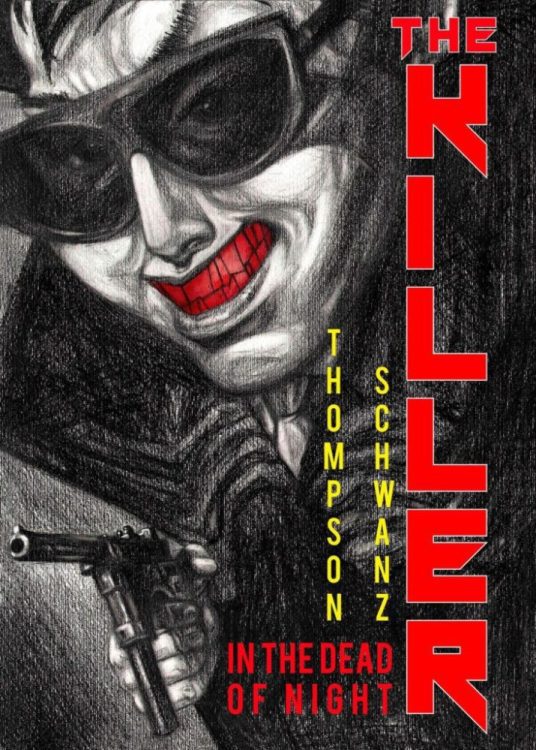
Self-Published Spotlight: THE KILLER-IN THE DEAD OF NIGHT Artist Atilla Schwanz

The Killer

Welcome to Self-Published Spotlight, a regular interview column where I will be highlighting self-published comics and the creators and small print publishers who make them.

*This interview has been edited and formatted slightly for clarity.


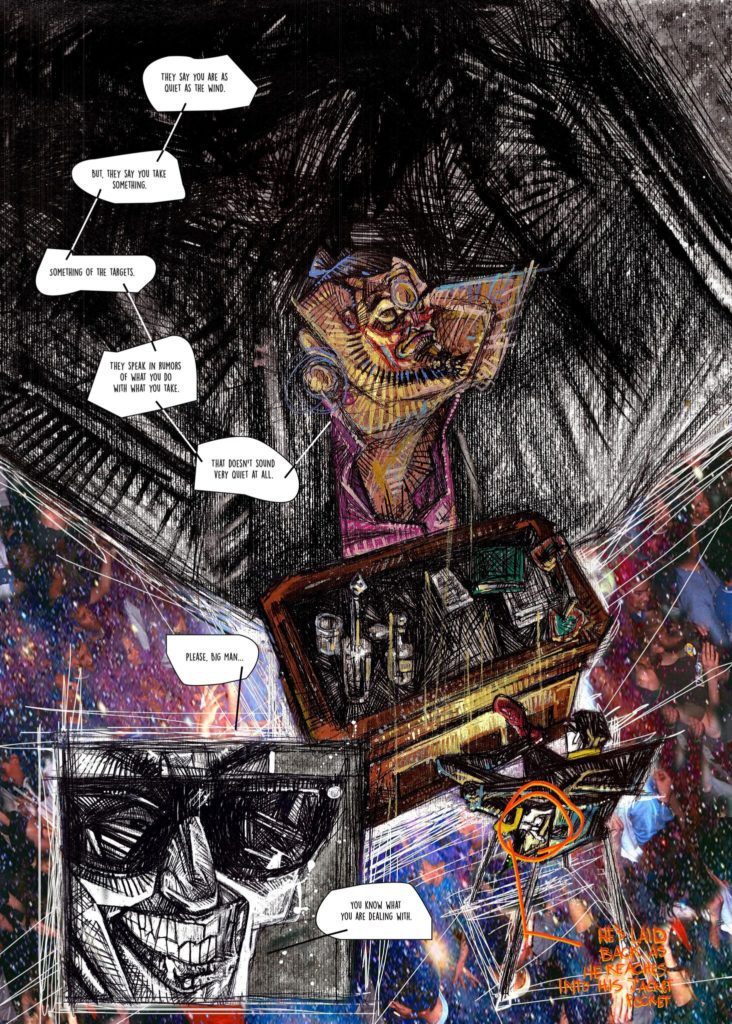
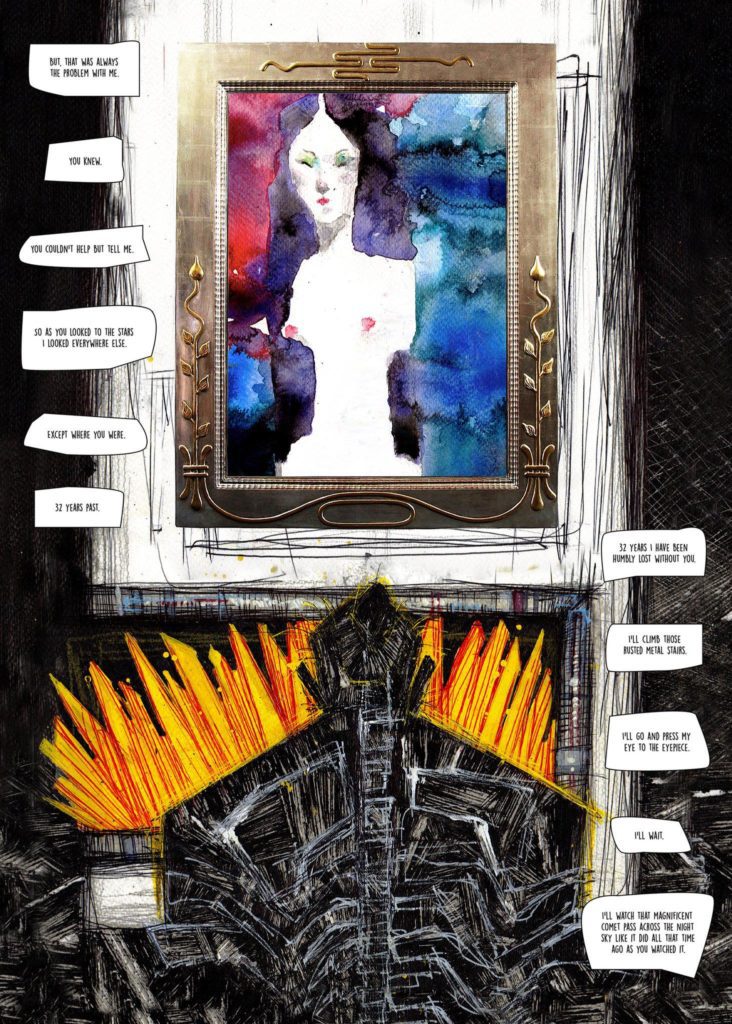
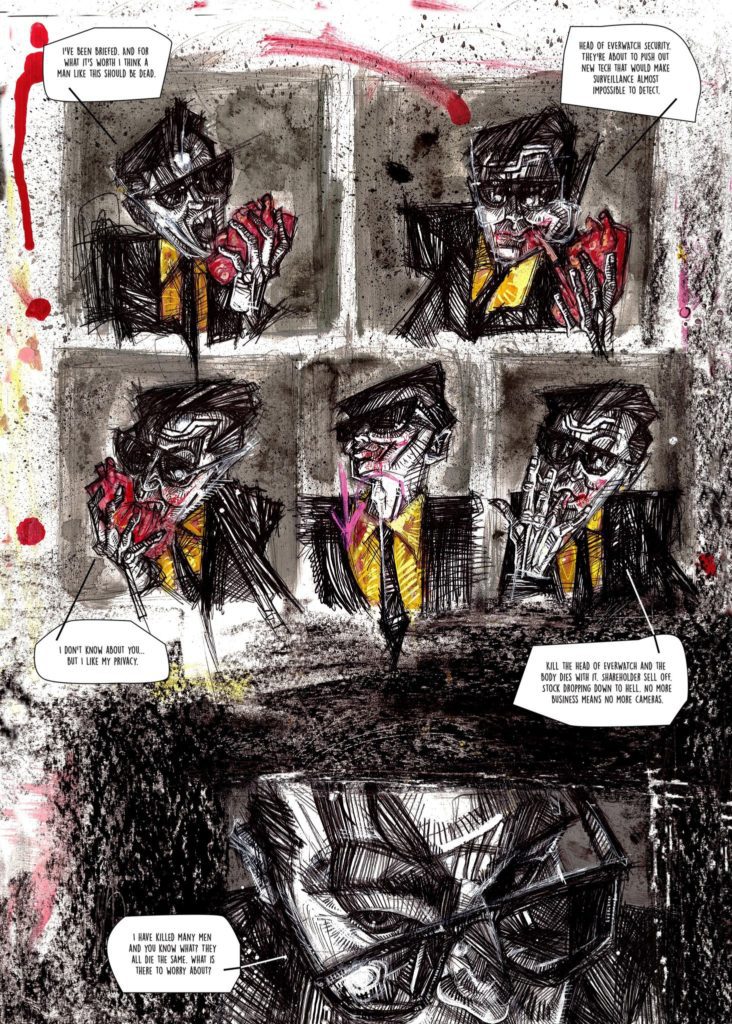
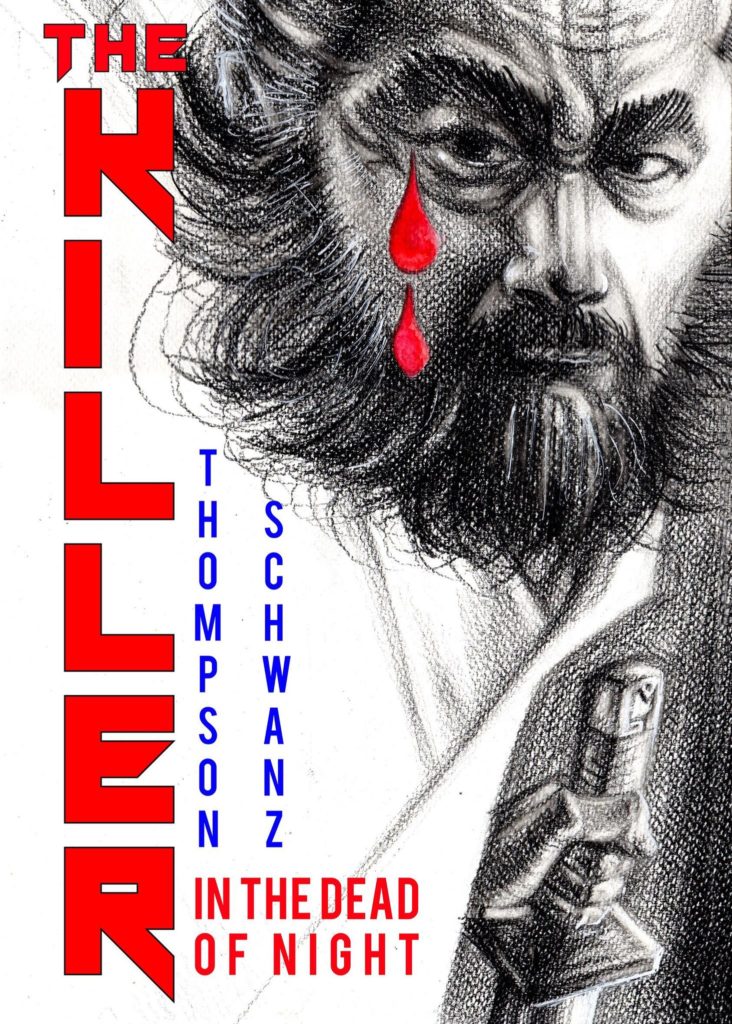
Atilla Schwanz is the artist behind writer Jonathan Thompson’s (Tales From The Dead Astronaut, Burn Residue, A Game Of Doubles) latest Kickstarter campaign, the graphic novel, The Killer-In The Dead of Night. With just days to go before the campaign ends, the very busy artist (hailing from Itlay!) sat down with us for a bit to talk to about his amazing artistic approach and style to this riveting comic narrative. Check out the interview below and make sure to support the Kickstarter campaign so we can all get our hands on this book!

Monkeys Fighting Robots: Atilla, first of thanks for taking the time to talk to us. I know the campaign deadline is days away. I’m sure you are busy! So this is always my first question: What’s your comic book origin story? How did you get into comics?
Attila: I don’t have a precise moment. I have loved art from a young age.  I remember that I have always loved comics. Since being a  child I read every kind of comic. I began with mangas and classic American comics like Image, Marvel and DC. Now I’m more interested in graphic novels and short stories.
 
MFR: Who or what would you say are your biggest influences?
Attila: My influences arrive from all the arts. My masters are H.R. Giger (He’s god for me), Gustav Klimt, Caravaggio, Sergio Toppi, Dave Mckean, Vangelis, Bjork, Klaus Schulze, Matthew Barney, Arnaldo Pomodoro, Hans Zimmer, Philip Glass, David Cronenberg, David Lynch, J.R. Tolkien, Philip Dick, William Shakespeare, Alan Moore, Neil Gaiman and many others! I love, no, I live for art! The Killer
MFR: And did The Killer: Dead of Night have any specific artistic influences?

Attila: The principal influence is Japanese cinema. I also looked at classic Japanese art. But in general, I study different sources for any page. I follow winds of chaos and distinct emotional situations!

MFR: Can you tell us a little about your artistic background? When did you start creating art?

Attila: I was possessed by a Daemon of Art when I’m 6 years old: I saw Walt Disney’s Little Mermaid at the cinema and everything changed! I graduated in Visual Arts from Brera Academy of Milan. I won different contemporary art prices and exhibited in different European cities. In 2018 I found the KNOT the artist collective. My work ranges from artistic installation to painting, to illustrations, comic books and graphic design. I love the potential and flexibility of the ballpoint pen, especially when used in contrast to the materiality of elements and pigments. I work above all with ink, watercolor, acrylic color and pastel. Sometimes, I work with a graphics tablet. The main focus of my work is the influence that the visual image has on man and society. I’m particularly interested in the body, rendered a fetish by the obsession of appearance; evaluating and examining spectators’ reaction and transformation with this ‘metamorphosis’. All this is expressed, in most cases,  by the figure of the “monster”, for its dramatic potential and its changing character.

MFR: Doing research for this interview, I came across your previous work Symposium Club. Can you tell us a bit about this project?
Atilla: Symposium Club is a graphic novel written by Andrea Cavaletto and issued in Italy by Edizioni Inkiostro. It is a new interpretation of Greek mythology with a splatter-punk and horror pulp style. The book talks about this couple of hedonists looking for a mythical and mysterious club (the Symposium Club) where every desire is reality. During the investigation, they meet several interesting characters.The Killer
 
MFR: How did you get connected with Jonathan on this project? Where you aware of each other as creators?

Attila: He saw my work thanks to Rossano Piccioni, his partner on Burn Residue. He thought that I was the perfect artist for this project. I thank Jonathan for having wanted to involve me in this fantastic work!

MFR: Can you describe The Killer to readers? What’s your elevator pitch on the book?
Attila: THE KILLER – IN THE DEAD OF NIGHT is a horror graphic novel about a bloodthirsty serial killer working as a hitman for the Yakuza and his target, an old, life-worn samurai ready to commit his final act. THE KILLER is an homage to the insanity of Japanese Noir films like BRANDED TO KILL, TOKYO DRIFTER, PALE FLOWER and the daring art of Marcel Duchamp, Dave McKean, Liam Sharp, and Bill Sienkiewicz. For fans of ARKHAM ASYLUM, BLUE IN GREEN, FROM HELL, and DEPARTMENT OF TRUTH.

 MFR: How would you describe your style on The Killer? Google seems to want to put you under the ‘fumetto’ label?
Attila: I don’t know! I try to communicate emotions and sentiments. So I change my style and technique in accord with this purpose.
 
MFR: What was the working process with you and Jonathan? What kind of system did you guys have to get these amazing pages done?
Attila: It’s a freeing work system. Jonathan describes the pages and dialogue. After seeing my sketches or paintings, he then changes texts or adds new scripts. We influence each other with our works. The keywords are “no restrictions”.The Killer
 
MFR: Do you have a favorite moment, image or page from The Killer
Attila: I love the Killer. All moments where madness and chaos rule are my favorites!
 
MFR: Your work has so much to it. What kind of tools and processes did you use to create? Was it a different process than what you have done before?
Attila: Thank you! I follow the winds of chaos! I work with different techniques. New for me is the use of watercolor with a classic style.
 
MFR: Where can those interested find your work? 
Attila: I’m on the most popular social media, like Facebook and Instagram. Soon I will have my website. It’s under construction.
 
MFR: Anything final you would like to share with our readers?
Attila: Yes! Support and donate for THE KILLER-IN THE DEAD OF NIGHT Kickstarter project, please! There are many surprises and gifts for supporters. For any news follow me and Jonathan Thompson on our social media accounts.
The Killer
 
Monkeys Fighting Robots Youtube

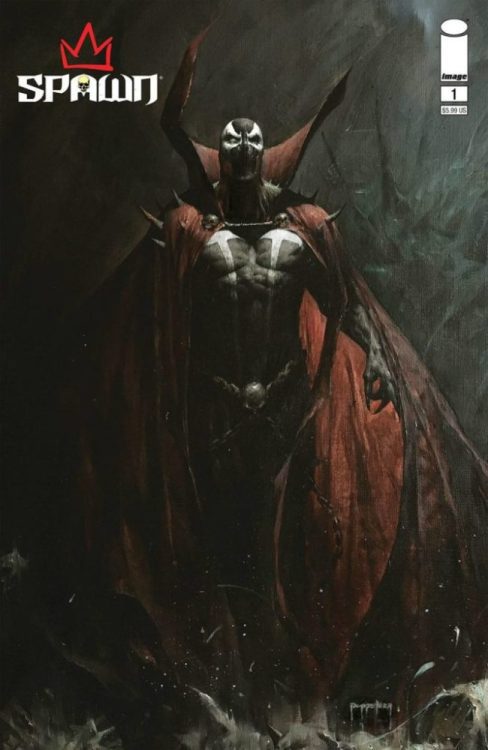
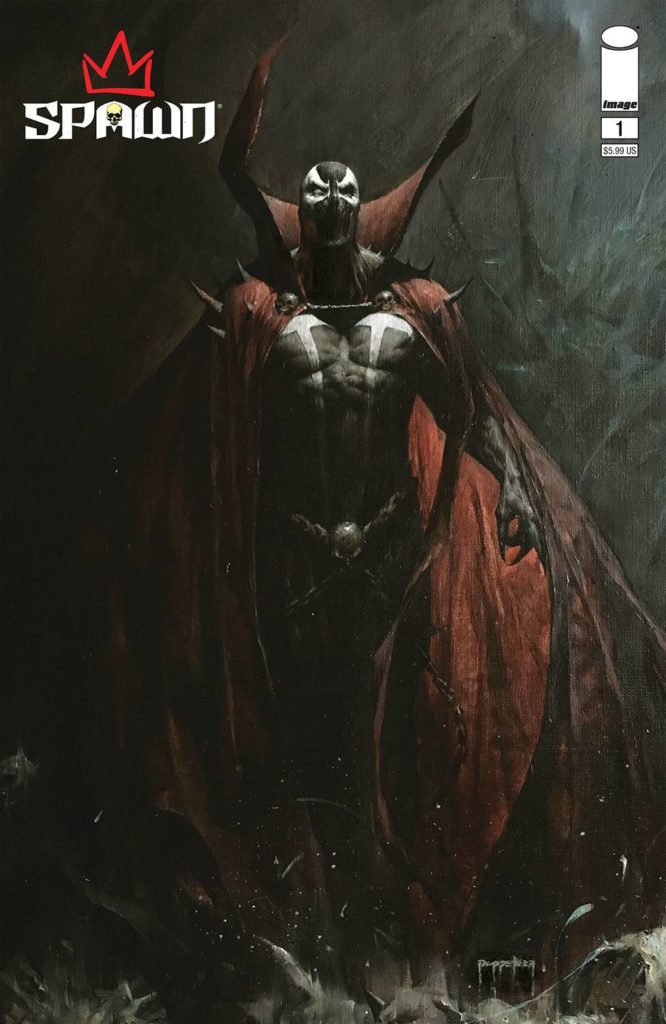
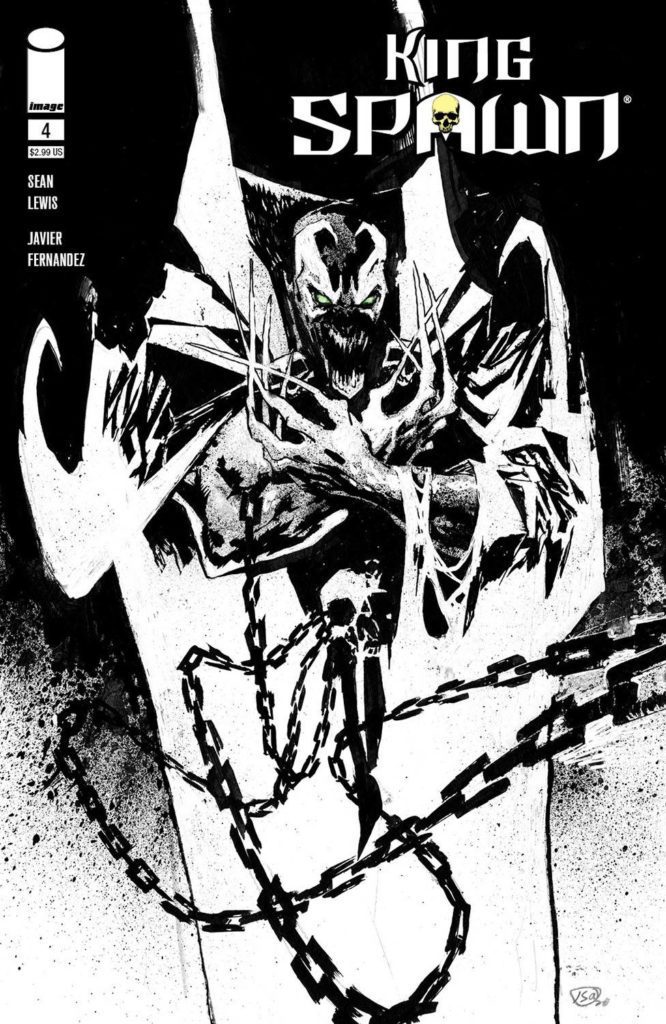
Review: KING SPAWN #1- Welcome to Supernatural Noir

A dark mystery is brewing in the world of Spawn. Sean Lewis, with help from Spawn creator Todd McFarlane, crafts a brilliant supernatural crime to expand on that mystery. This tale is great for those who are well versed in McFarlane lore as well as those who are looking for a good place to jump in.

KING SPAWN #1 is out on August 25th from Image Comics. This first issue’s central story is scripted and plotted by Sean Lewis, and Todd McFarlane provides additional dialogue and backup stories. The King Spawn main story’s art is handled by Javi Fernandez, and colors are provided by FCO Plascencia. Finally, Andworld Designs crafted the lettering.


STORY

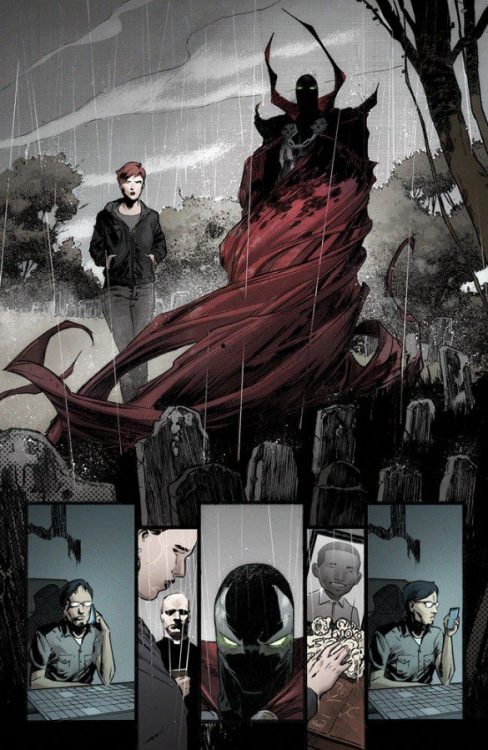
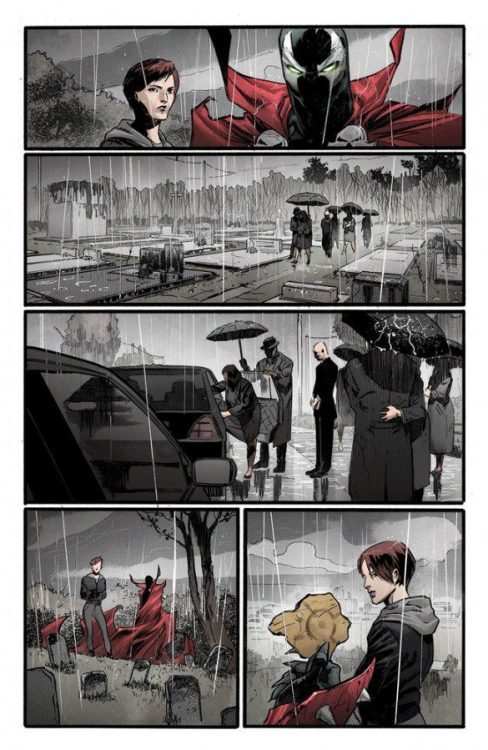
The story is dark and packs an emotional punch right at the get go. It is clear that, in some ways, this is a traditional Spawn story. There are battles between Heaven and Hell, where no one appears too morally righteous. There are elements of social commentary that track all the way back to the first issue of the original series, nearly 30 years ago. However, Sean Lewis is able to be a new voice in McFarlane’s world and open it up for new readers. In the space of a single issue, Lewis introduces the world and a plethora of characters. Of course we have our hero, Spawn. While we do not have his entire origin, we see enough into his character to understand he is gruff and that he’s the middle voice in the supernatural war. Spawn is a character with heart, who cares about this issue’s central mystery. The story also gives a supporting cast featuring She-Spawn, Sam and Twitch. While their time in front of the reader is minimal, they make an impression. If you’ve never met them, you’ll get a taste. If you have read Spawn before, it is nice to see your old friends.

The tone of the story is great as well. Lewis does a great job spinning a tale that feels like a supernatural crime noir. It is a mystery, and it is dark. Spawn is reminiscent of a 1950’s tough-as-nails PI. The crime is big and hard to comprehend. It is a gut punch, and you are cheering for the good guys to solve the crime. However, you are worried that Spawn and his supporting cast won’t be able to find out who is behind this. The villain or villains are playing many people like pawns. When our protagonist and the reader think they have figured it out, the rug is pulled out beneath them. But you don’t feel cheated or lied to. You want to keep reading, and the next issue can not get here soon enough

ART

Javi Fernandez handles the elements of the story masterfully. It feels gritty, dark, and rough. The pencils feel steeped in the tradition of McFarlane but still fresh and full of the artist’s own voice. The opening crime is depicted with victims that say little to nothing but, due to how they are rendered, they feel like real people. Fernandez also has two amazing splashes in the book. One feels new and does a great job constructing a piece that wrestles with the reality of radicalization on the internet, and the role that technology and social media plays. On its own it can stand as a piece of art that would make you think. The other is very familiar to those who have read Spawn. It is the usual three news networks the title depicts spinning the events in the world. This piece feels like a great tribute to what has come before, and really makes this comic feel connected to the larger Spawn narrative. Fernandez’s art is really strong, fresh, yet familiar to those who have been on the thirty year journey.

COLORING

FCO Plascencia’s colors do the world and story justice. The colors help set the crime noir tone for the book. They are dark and the backgrounds are various stages of gray, while the characters are vibrant and colorful. This helps them jump off the page and puts them in contrast to the harsh environment they are inhabiting. It is not as drastic as Frank Miller’s use of a single color in the black and white Sin City stories, but it invokes a similar construction.

LETTERING

Andworld Designs lettering does exquisite work, using a variety of fonts to differentiate the voices of the characters on the page. The character of Spawn has his constant rough letters, letting you hear his gravely voice. There are traditional characters that have very standard letters. Then a villain has a font that feels sleek but grows to show the sinister nature of the plot. The lettering offered is a cornucopia of styles but it never feels disconnected.

CONCLUSION

KING SPAWN #1 is well executed first issue in an established world. It tells a wonderfully sublime supernatural crime noir tale that should delight long time readers and invite new patrons to the party.

Monkeys Fighting Robots Youtube

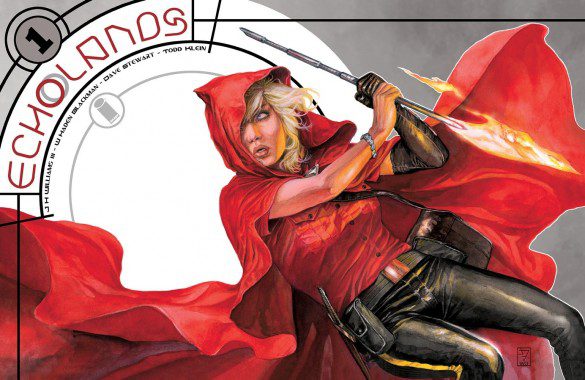
Review: Mind-bending Fantasy In ECHOLANDS #1

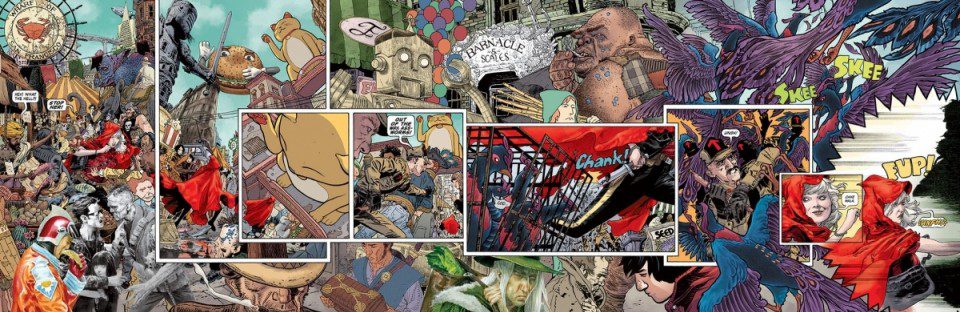
Creators J.H. Williams III (Sandman: Overture, Promethea) and W. Haden Blackman bring us fantasy and pure comics magic. Echolands #1, colored by Dave Stewart and lettered by Todd Klein, is a stunning and mystifying opening chapter into a new reality. With effective minimalist writing that mixes and shifts styles and absolutely mind-boggling visuals, this is magical fantasy in comics done to perfection.

“In a bizarre future world that has forgotten its history, a reckless thief, Hope Redhood, holds the key to excavating its dark, strange past—if only she and her crew can escape a tyrannical wizard and his unstoppable daughter. But fate will send them all on a path leading to a war between worlds.”

Writing & Plot

The success of the writing in Echolands #1 is due to the creators trusting the audience to guide themselves through this story. Williams and Blackman introduce us to a world bustling with the unknown and the bewildering. Instead of explaining how the world and its characters work however, they simply grab our hands and drag us along for the ride. This is my favored style of fantastical storytelling. Much like Saga or East Of West, the rules and stakes are explored through events in the book. Dialogue is minimal, sticking entirely to diegetic speech and sounds. We learn the who’s and what’s of the world via how characters interact. The dialogue itself is snappy and naturalistic, sticking to a plain-spoken vernacular despite the comic’s fantastical cast.

There are passages of vague, poetic narrative sprinkled in the earlier pages as well. These writings increase the intrigue and mystery of this fantasy comic, hinting further at the surrounding mysticism. The latter pages of the book turn from comic panels into in-universe prose and articles. I found this to be a fantastic and fascinating way to find out more info about the world Williams and Blackman have created. However, I’m also aware people coming into this comic may not appreciate the sudden bulk of reading. If you’re ready for it though, it’s truly fascinating material. This is a masterclass in trusting your audience and letting the comics medium work to tell such a massive fantastical tale.

Art Direction

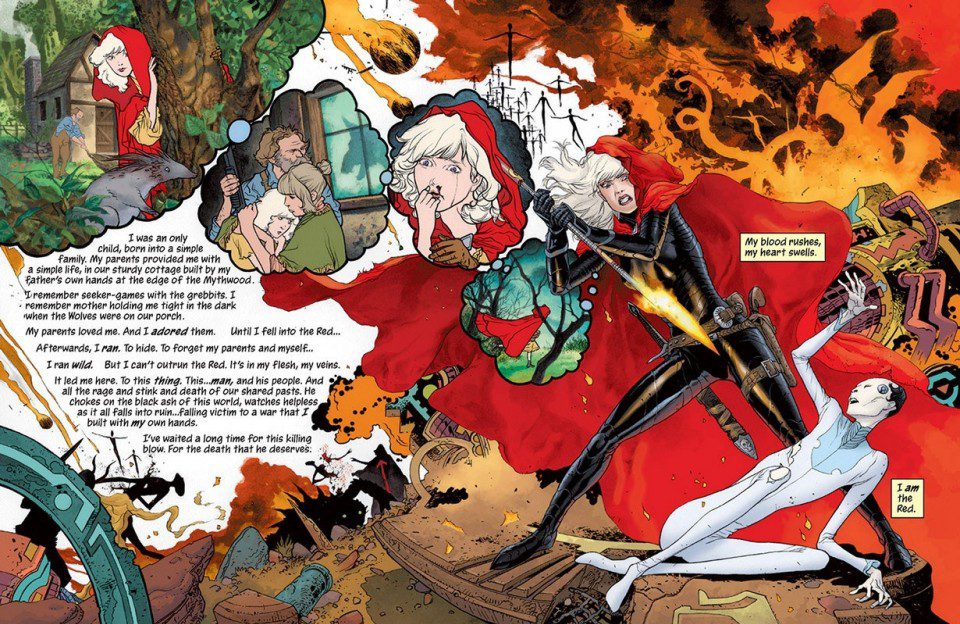
My temptation for judging the art in Echolands #1 is just to say “it’s J.H. Williams III and Dave Stewart,” give it 5-stars and just leave it at that. In all seriousness however, I gotta talk about how unbelievable the visuals here are. For those who may not know, Williams  previously performed his brand of wizardry on Sandman: Overture and Promethea. Since both of these comics annihilate any and all preconceived notions of how comic art can look, I’m sure you can guess what to expect here. Williams’s visuals are a staggering menagerie of finely detailed fantastic magical beings. He crafts a collage out of mythical concepts, some familiar, others uniquely original, all completely stunning. There’s one figure in particular, this issue’s main villain, whose design is so disturbingly intricate I had to stop and stare for several moments every time it appeared.

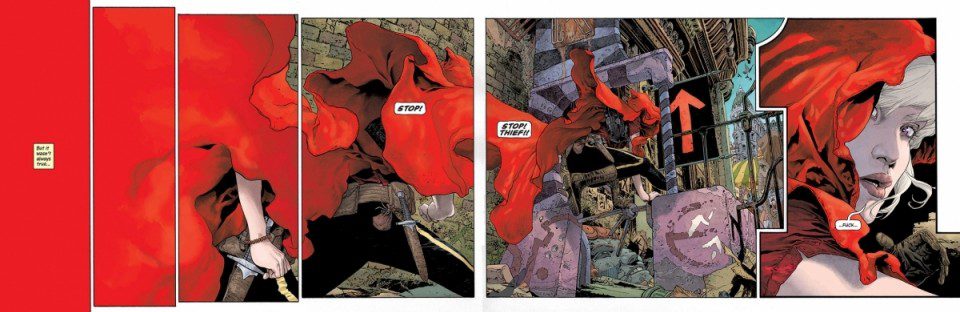
Williams’s pencils are filled and complimented by Dave Stewart’s colors. The veteran colorist perfectly invigorates the outlandish visuals with a rich palette full of variety. His work is so vibrant that it almost seems like an illusion itself. The rich reds of Hope’s cloak make it appear almost alive. The juxtaposing and blending hues that touch every being and surface in the panels brings an unmatched vividness to this comic’s incredible visuals. Yet another Sandman alum joins Echolands with letterer Todd Klein. Klein’s style remains unmatched, as he uses a wide swath of wavering fonts for each character. His narration and dialogue letters perfectly capture the feel of the reading experience. This comic book is nothing less than an absolute marvel to read.

Verdict

Echolands #1 is a blast of immersive fantastical originality. The story J.H. Williams and W. Haden Blackman have come up with is rife with mystery and suspense, and delivered with masterful precision. Williams and Dave Stewart’s visuals are inconceivably wild and wonderful, matched only by the pair’s other works. Be sure to grab this incredible first issue when it hits shelves on 8-25!

Monkeys Fighting Robots Youtube

Review: SHANG-CHI Introduces New Hero With Insane Action Sequences

Shang-Chi and the Legend of the Ten Rings will be remembered for its top-tier action sequences and solid introduction to a new MCU hero. Drenched with everything Marvel fans should expect and more, it exceeds expectations and delivers a promising future for what’s to come next. Shang-Chi and the Legend of the Ten Rings go all out with its action sequences and that alone is enough to consider watching this film. Only suffering from small script issues along the way, Shang-Chi and the Legend of the Ten Rings is a phenomenal film.

It can’t be stated enough how this MCU film rises to the top in terms of the action that unfolds. The choreography put on display is some of the best Marvel has to offer. Providing well-written characters only add to the intense fighting that occurs later on. Shang-Chi and the Legend of the Ten Rings balances a heartwarming origin story with humor and stunning visuals that will keep audiences engaged for this exceptionally crafted movie. Directed by Destin Daniel Cretton and written by Dave Callaham and Andrew Lanham. Shang-Chi and the Legend of the Ten Rings stars Simu Liu, Awkwafina, Tony Leung Chiu-wai, Fala Chen, Florian Munteanu, and Michelle Yeoh. In the film, Shang-Chi (Liu), is forced to confront his past after being drawn into the Ten Rings organization. His unarmed weaponry-based Kung Fu creates a problem for those that cross his path.

Shang-Chi (Simu Liu) in Marvel Studios’ SHANG-CHI AND THE LEGEND OF THE TEN RINGS. Photo by Jasin Boland. ©Marvel Studios 2021. All Rights Reserved.

The characters truly make this film a thrilling experience to watch play out on the biggest screen. Shang-Chi, a trained assassin, abandoned his family at a young age, and now attempting to live in hiding. His backstory unravels in a way to reveal what he went through was more than a child should have to deal with. Consumed by shame and sadness, he works as a parking valet with his friend Katy (Awkwafina). Their friendship is one of the more heartwarming aspects, and Katy is the comic relief for the film. Her humor is never out of place and is balanced with the more gutwrenching moments. Shang-Chi and the Legend of the Ten Rings give Shang-Chi an origin story rooted in loss and misguidance. Making his character relatable and sympathetic.

Shang-Chi and the Legend of the Ten Rings excel at focusing on repairing a family dynamic. Shang-Chi’s past can’t be avoided forever, but audiences will be filled in on why he ran, to begin with. Told through flashbacks, a young Shang-Chi was manipulated and trained for horrific intentions. Putting the past behind you is an overused way to push a character forward. However, Shang-Chi’s approach makes for a compelling watch, as he rekindles broken relationships. The MCU’s newest origin story unpacks itself through stellar world-building to provide an enchanting experience for audiences.

(L-R): Wenwu (Tony Leung), Xialing (Meng’er Zhang), Shang-Chi (Simu Liu) and Katy (Awkwafina) in Marvel Studios’ SHANG-CHI AND THE LEGEND OF THE TEN RINGS. Photo by Jasin Boland. ©Marvel Studios 2021. All Rights Reserved.

Liu’s performance as Shang-Chi is incredible to witness and Marvel fans should be excited to see what he brings to the table. He doesn’t steal the show though, Tony Leung’s acting is on another level. He’s a layered villain that is heavily influenced by heartbreak and disappointment. The chemistry the actors share assists in keeping audiences invested in their progressions. Cretton’s direction keeps the viewer on the edge of their seat, but the pacing can be slow at times. It’s an action-packed spectacle that he captures wonderfully. Even when punches aren’t being thrown, the time spent getting to know the characters isn’t a bore. Visually, Shang-Chi and the Legend of the Ten Rings is mesmerizing to look at. The choreography accompanied by its hard-hitting soundtrack amplifies the experience.

(L-R): Katy (Awkwafina) and Shang-Chi (Simu Liu) in Marvel Studios’ SHANG-CHI AND THE LEGEND OF THE TEN RINGS. Photo by Jasin Boland. ©Marvel Studios 2021. All Rights Reserved.

Shang-Chi and the Legend of the Ten Rings is one of Marvel’s best films. Equally thrilling, humorous, heartwarming, and packed with action sequences that will leave you breathless. It only suffers from certain writing choices that feel unnecessary, specifically the inclusion of a certain character. The cast should be proud of what they have crafted together, and Marvel fans will get to experience it later this week.

Monkeys Fighting Robots Youtube

Review: SUICIDE JOCKEYS #1 — Can An Escapist Fantasy Fix The World?

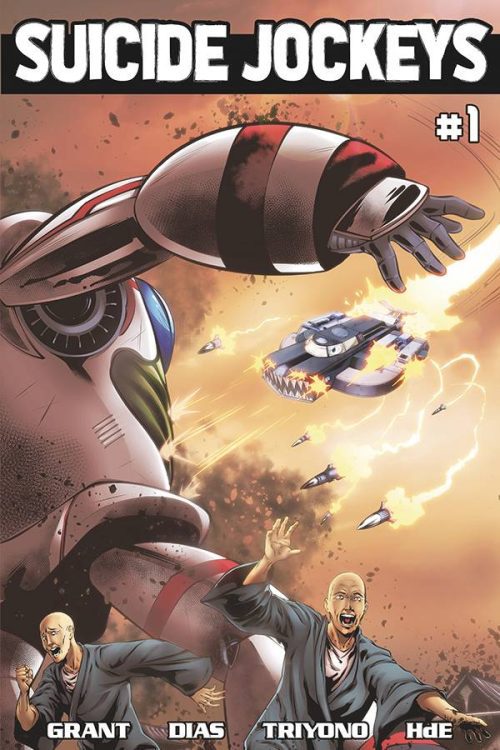
Suicide Jockeys #1 Cover

Suicide Jockeys #1 begins a new indie comic series from Source Point Press. Writer Rylend Grant crafts a world that’s full of kaijus and mechas, but still feels rather similar to our own. The mechanical designs by artist Davi Leon Dias are something to behold. Colorist Iwan Joko Triyono makes more than a few elements stand out. Finally, letterer HdE keeps the story flowing smoothly.

Suicide Jockeys #1: More Than Escapist Fantasy

Suicide Jockeys #1 intro
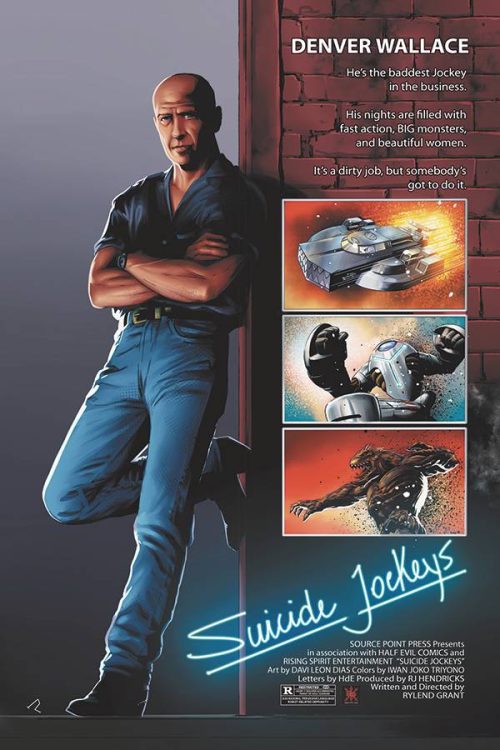
On first glance, Suicide Jockeys #1 looks like your usual escapist fantasy full of mechs and time travel, but it’s actually a series that’s specifically about escapism. “Suicide Jockeys” are the closest thing this series has to superheroes, battling aliens, kaiju, and other threats with their specially designed armored vehicles. But, as exemplified by lead character Denver Wallace, a Suicide Jockey’s life is full of PTSD, burned bridges, and burnout. If anything, Denver seems like he’d rather go out in a blaze of glory. If given the choice to live in a world like ours, he’d rather live in some escape fantasy.

But… what if this fantasy had the chance to fix everything? Suicide Jockeys #1 engages the reader and Denver with an offer too tempting to refuse: time traveling back to the point where everything went wrong for Denver and his crew. Their last job was the first domino in a series of bad events, like the earthquake before a tsunami. Why wouldn’t Denver want to prevent a personally traumatic event when he has everything to gain from it?

Art

Dias’ penciling shows some incredible mechanical designs. The giant robot Denver’s crew is fighting against is a marvel to behold. It’s got a sleek, showy design, and bright coloration by Triyono that tells us more about its billionaire pilot than her actual appearance ever would. Compare this to Denver’s paramilitary unit, which pilots more practical armored vehicles with a darker color scheme. They don’t look too impressive at first, but their combined form, Big Mama, looks like it should be turned into a collectible model.

HdE’s lettering sets the pace of Suicide Jockeys #1. Between the faster motion of the robot battle, and the slower beat of the conversational scenes, the captions and word balloons flow very smoothly. It almost feels like watching a movie instead of reading a comic book.

Gear Up In Suicide Jockeys #1

Suicide Jockeys #1 entices readers with an escapist fantasy anyone in a post-2020 world would want to dive into. Reading Suicide Jockeys #1 feels like experiencing a science-fiction action movie firsthand! Pick up Suicide Jockeys #1, out from Source Point Press August 25th, at a comic shop near you.

Monkeys Fighting Robots Youtube

INTERVIEW: Composer David Benjamin Steinberg On Catch And Kill: The Podcast Tapes For HBO

Catch and Kill: The Podcast Tapes is a documentary series on HBO that examines the bombshell reporting of journalist Ronan Farrow by adding a visual layer to the story. Along with that new layer is a richly diverse score from composer David Benjamin Steinberg.

In 2019, Ronan Farrow released the book Catch and Kill: Lies, Spies, and a Conspiracy to Protect Predators, which recounts the challenges he faced in unveiling one of the biggest stories of 2017. The story was about sexual abuse allegations against movie mogul Harvey Weinstein. It was a report that helped make #MeToo a worldwide movement. Farrow followed up the book’s release with a podcast that included interviews with victims, whistleblowers, and other sources for his book.

PopAxiom talked with composer David Benjamin Steinberg about collaboration, the docuseries Small Town News, and adding a sonic layer to the incredible stories at the heart of Catch And Kill: The Podcast Tapes.

Thrive

David doesn’t “remember a time when there wasn’t music in the house while I was growing up. My dad was really into musicals. West Side Story was the holy grail. My mom was a school teacher and a good piano player who played classical music and the American songbook. When I started to write musical features for Ru Paul’s Drag Race, it came pretty easily. I think it was part of my DNA from growing up listening to them.

David’s musical career started “in rock bands and as a session drummer in my teens and into my early 20s in LA. My dream was to be a session musician playing in the studios in LA, but there were so many amazing session drummers when I was coming up…that I just felt like I was never going to be able to make it at that level, so I started focusing more on writing and producing.

The switch to composing happened gradually and began with an “opportunity to write music for advertising,” he says. “I developed a good client in ad agency Chiat/Day; they were famous for creating the 1984 Apple spot. They were arguably the best ad agency in the world at that time. So I did a couple of things for them, and it led to a fairly long relationship.”

“I liked the whole dynamic of that,” he adds about working in the ad business. “I learned how to work with a creative team, how to come up with music concepts to tell a story and compose really tightly to picture. “The collaborative process is something I really enjoy.”

ronan farrow-hbo-composer-interview

About Catch and Kill: The Podcast Tapes

David became a part of the Catch and Kill-team through a longtime working relationship. “I’ve worked with the owners of World of Wonder, Randy Barbato and Fenton Bailey, for close to a couple of decades. They approached me about writing the music for an HBO version of Ronan Farrow’s audio podcast series that they were directing.”

“I started by listening to the podcasts,” he says about his preparation for the project. “I went through the series and got familiar with the episodes that we were going to be working on.”

As with any project, David’s job in creating the underscore is to “Support the story,” but he adds, “I just really didn’t want to f*ck it up.”

So, how did choosing to tell the sonic story occur? “There is a lot of dialogue in a podcast of course, so it was about discovering how big the score was going to be. Initially, I sold the directors on my writing minimalist cues without many melodies, I wanted the podcast’s voices to be the lead lines. But as the edit developed, we felt like it wasn’t enough, so the music became more prominent, and I started adding more melodic layers. In fact, once I wrote the title theme, we started using that as a motif to thread throughout the stories. So we ended up making the theme a strong element of the score.”

However, finding that perfect balance is a tricky game. Collaborations involve time and toiling. “Going back to what I learned in the ad business, we had HBO and their team weighing in about cues which they felt were too aggressive and wanted something more understated. I think the directors felt this was a TV version of a podcast, and it needed more ‘oomph’, so it was about finding that common ground that makes everybody happy.”

“As the episodes go on,” he explains, “the series shifts into a real spy thriller, so I wrote cues that supported that part of the story. I used a lot of analog-y sounding synths and the score took on a bit of a Vangelis vibe in spots.”

small town news-hbo-interview-composer

Small Town News

Catch and Kill isn’t the first World of Wonder production for David, and it wasn’t going to be the last. The longtime collaborators brought another project to him — Small Town News. “I had done another documentary for HBO about Heidi Fleiss over ten years ago that took place outside of Vegas in a small town called Pahrump. While shooting there, the directors came upon a small, independently owned television station called KPVM. They got to know the people that worked there and wanted to do a documentary series on this entrepreneurial TV station that was a fish-out-of-water story with a diverse gaggle of employees trying to grow their business.” I must be the only composer around to have done two HBO docs taking place in Parumph, Nevada!

David worked on the music for the pitch to HBO and joined the crew after the green light. “It’s a docuseries, but it plays like a comedy.

Like any project past, present, or future, it’s “about finding the appropriate tone,” he continues, “we didn’t want it to feel like a reality show. We didn’t want it to feel like we were laughing at the people in this small town, and It had to have a rural feeling to it. It’s Pahrump; it’s not exactly a big city.”

“In the same way as Catch and Kill,” he says about the process, “you start to write, and you get closer and closer to finding the tone that captures the players and helps tell the story.”

Despite a rural setting, the music finds its roots through a composer from a faraway land. “Some of the music was inspired by a Vivaldi piece that I discovered. I ended up using organic instruments like mandolins and guitars, which had the effect of elevating the comedic moments. It had a whimsical tone to it that never poked fun at the subjects.”

“I’m proud of the theme,” he declares, “because it was inspired by the old News of the World film Newsreels. A sort of morse code motif that works its way through.”

Here’s A Story

David scored a project that’s wildly different from the other two discussed today. “It was fun,” he says about Ru Paul’s Drag Race/Brady Bunch crossover. “They recreated an iconic Brady Bunch episode, pretty much shot for shot.”

The Brady Bunch featured a famous theme song but also an underscore from legend Frank De Vol. “De Vol’s orchestrations and comedy sense are so sophisticated. It was impressive, and a little intimidating going back and listening to his work.”

“I recorded our new cast members singing the original theme,” he explains, “The underlying cues I composed inspired by the vibe of the original music. About a third of the rest of the score was licensed from the original 1960’s broadcasts, and I re-recorded the master tracks.”

Wrapping Up

David grew up on a healthy dose of a lot of music from around the world. But he says without a doubt, “My idols were the Beatles.” He adds, “I went through my heavy jazz period, too.”

“Film score-wise,” continues, starting with one above all, “Bernard Herman has been my main man since I was very young. I was obsessed with the Ray Harryhausen movies that he scored, like The 7th Voyage of Sinbad. I still watch those. I love Mike Abels and Thomas Newman. Trent Reznor is doing incredible stuff of course and Cliff Martinez.”

“Working with the Coen Brothers,” he says about a dream project, ” their films with Carter Burwell are favorites of mine.”

But for David, he’s living the dream. “I feel lucky that I am keeping busy with a fun mix of projects. I’m always inspired by new bands and new music…this is a golden time to be writing for TV.

Are you watching Catch and Kill: The Podcast Tapes on HBO?

Thanks to David Benjamin Steinberg and Impact24 PR
for making this interview possible.

Find more interviews like this right here!

Monkeys Fighting Robots Youtube

Review: FREE GUY Might Be The Best Video Game Movie Ever

Free Guy is the best video game movie to date and feels like it combines Ready Player One with Grand Theft Auto. A unique premise that delivers humor and a surprisingly clever love story. The film’s high concept may never reach its full potential, but what it does in between brings an engaging experience for families and die-hard gamers. Free Guy is a hilarious ride that relies on internet culture to catapult itself to the top as a must-see summer hit.

The life of an NPC (Non-Playable Character) can be difficult in the world of video games. Online players can be cruel and you have no control over them. Free Guy examines the gaming experience from the perspective of a highly intelligent NPC. Directed by Shawn Levy and written by Matt Lieberman and Zack Penn. Free Guy stars Jodie Comer, Lil Rel Howery, Joe Keery, Taiwan Waititi, Utkarsh Ambudkar, and Ryan Reynolds. The film centers on Free City, an open-world video game where Guy (Reynolds), an NPC who discovers his status and uses the knowledge to save his world from the game creators.

Free Guy handles humor, action, romance, and its brief social commentary quite well. Never filling overstuffed with an uninteresting romance angle, and provides several likable characters audiences can root for. Outside of Free City, we have Millie (Comer) and Walter (Keery) as the film’s protagonists. Both worked together to develop a game called Life Itself, and its code was stolen by Soonami Games to create Free City. While attempting to expose the truth, Millie’s adventures in Free City as Molotov Girl creates a problem. Penn and Lieberman’s screenplay truly is thought-provoking, having the narrative carried by an NPC is bound to make gamers reconsider the value of these characters.

Guy works as a bank teller, gets robbed daily, and goes through the motions of life. His encounter with Millie unlocks the intelligence that becomes useful in getting Millie and Walter the recognition they want. Free Guy taps into its emotional/romance aspect once Guy discovers he isn’t real, so it sends him on a downward spiral. It’s a difficult moment to sit through at times because he has become a viral sensation that audiences are sure to grow attached to. The commentary on online trends and their influence speaks to the current internet culture.

Reynolds delivers a heartwarming performance as Guy. His uplifting voice mixed with childish innocence makes the character easy to care for. The chemistry between him and Comer amplifies the romantic attraction Guy has towards Millie. Comer is a scene-stealer every time she’s on-screen, her online persona seems to speak to the inner strength she hopes to possess. Keery’s portrayal as Walter, who works with Soonami to expose his stolen codes, is adequate. He’s the romantic interest Millie doesn’t recognize so audiences will feel for his character.

Levy makes the film energetic and fast-paced for most of the runtime. The pacing never feels like it’s dragging because of the well-written characters that are carrying the narrative. Free City is a visually stunning creation to watch come to life through the perspective of Guy. Its larger-than-life landscape is a great escape from the reality, Millie and Walter, deal with. Christophe Beck’s score assists in elevating the film’s romantic moments, as well as the more action-packed sequences. During Free Guy’s finale, Guy’s race to expose the truth about Free City will have audiences on the edge thanks to Beck’s tremendous score.

Free Guy is a video game movie experience that needs to be seen on the big screen. If you find yourself feeling bad about NPC’s you’ve killed in the past, then the movie has effectively gotten its point across. Reynolds is giving one of his best performances here and families of all sizes will have fun in the world of Free City.


Monkeys Fighting Robots Youtube

THIS WAY UP SEASON TWO | TV Review

Aisling Bea’s This Way Up has returned for a second season on Hulu in the US and Channel 4 in the UK and Ireland. The second season looks at the issues and relationships facing two Irish sisters in London.

Aine (Bea) is now in a relationship with Richard (Tobias Menzies). She gets an offer from her boss, James (Ekow Quartey), to start a business. But her relationship with Richard could raise a complication for her business. Shona (Sharon Horgan) prepares for her wedding but has to deal with the fallout of having sex with Charlotte (Indira Varma).

The second season of This Way Up can be described as decent if unremarkable television. It falls into the trap that many dramedies do where the drama overshadows the comedy. The focus of This Way Up was Aine’s struggles with mental health and Aine and Shona’s relationships. Aine and Shona were both navigating minefields throughout this season.

Shona had the most interesting storyline of the season. She was alone for most of the season because Vish (Aasif Mandvi) was in New York City and her relationship with Charlotte with fraught. The two women had to work together but tensions remain since Charlotte felt like Shona ditched her. Shona had to repair her relationship with Charlotte and maintain her engagement with Vish. It was a ticking time bomb that lingered over the season.

Aine’s story was about her relationships. She spent more time with Richard, James, and Bradley (Kadiff Kirwan). They all ended up being interlinked. Aine was dating the father of one of her students which led to complications with her boss. As the series progresses Aine gets closer to Bradley: she helps him during a fundraiser for the Windrush generation and Bradley supports Aine during a tragic event in the season finale. They could get even closer if there’s a third season.

The other relationship in the season was between Aine and Tom (Ricky Grover). Tom doesn’t appear until the fourth episode but their interaction became significant in the season finale. The impact of his actions forces Aine to reflect on her past and does make some important actions for her future. It was one of the best episodes the series has produced because it felt real when handling the issues presented.

The third episode was also a strong entry in the series. This episode focused on Aine and James making their business plan and Aine feeling she wasn’t being supported by her sister. The second half of that episode was relatable as Aine struggled to write a revised business plan and suffered from a depression spiral.

The comedy in This Way Up’s second season can be best described as light humor. The comedy came from witty exchanges between the characters, particularly between Aine and Shona. Some of the most notable exchanges were the first scene where Shona and Aine go into a sauna, when the sisters try to embarrass Vish during a video chat, and when the pair visit a bridal shop. But it wasn’t a show that produces belly laughs, more small chuckles.

This Way Up is a show about its characters and interactions. Aine and Shona had strong character journeys due to their relationships. But it was a show that suffered from some lulls.

Monkeys Fighting Robots Youtube

Kickstarter Advance Review: Massive Mythology & Sci-Fi Action In JACIN AND THE OLYMPIANS

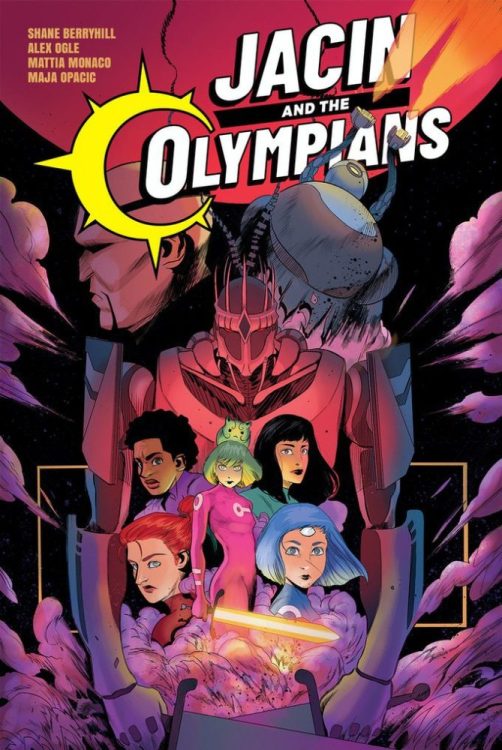
From writer Shayne Berryhill (Chance Fortune and the Outlaws) and artist Mattia Monaco, and co-created by Alex Ogle and colorist Maja Opac, comes an all-audiences friendly Kickstarter graphic novel of massive proportions. Jacin And The Olympians is an immensely ambitious and entertaining read with tons of lore and infectious energy. With outstanding visuals and an intriguing setup, Jacin and the Olympians will be the Kickstarter to back before its release.

“In the near future, the titans of myth return, revealing the dark, alien truth behind their legend. The remnants of humanity escape aboard the Olympia, a spacefaring ark. Now, teen prodigy Jacin Mukai and her fellow Olympians search for a way to activate the robot Colossi, hoping to unite them to create their one hope for survival against the titan menace–the giant robot protector, Talos.”

*Critic’s Note*

I received a preview version of Jacin from the author. While it is a solid representation of what the graphic novel will be, it is not a finished product. I intend to appraise this book based on what I’ve seen and give my opinion on its current quality and how entertaining the finished product will be.

Writing & Plot

What Shayne Berryhill and Alex Ogle have created here feels like a mixture of a YA novel and a Toonami-era anime. Jacin and the Olympians’s opening sequence is exhilarating and is a familiar yet engaging introduction to the world and stakes. The fusion of Greek mythology and sci-fi/space opera is a delightful new experience. Jacin herself is a great young protagonist. Berryhill takes many of the gifted child tropes and throws them in a blender to craft a driven mad-genius of a teenage hero.

The Percy Jackson meets Star Wars meets Voltron feel emanates through every aspect of this book’s writing. This creates a couple of problems. First, there is a massive amount of lore and backstory that the reader is just thrown into. Second, each segment of the book was separated by an unspecified time jump that introduces new characters and concepts with no introduction. Again though, I received an unfinished preview version. This could easily just be an issue only I ever see. Regardless, the unique blending of mediums and styles keep this a delightful read on the storytelling side.

Art Direction

The most obvious draw upon first glance at Jacin And The Olympians is the incredible artwork. Mattia Monaco and Maja Opac create a visual experience that is stunningly detailed and energetic. Monaco’s pencils are reminiscent of the likes of James Stokoe or Daniel Warren Johnson. There’s an obvious manga/anime influence in his work. This makes itself especially apparent in his character and environmental designs. Every surface is laden with crosshatching, which gives it that 80’s worn future aesthetic. This is not to say that Monaco’s work is purely manga inspired. On the contrary, it’s a perfect fusion of eastern influences and western art direction.

Monaco’s character designs are intricately drawn love-letters to this comic’s named influences while still staying unique to this story. The massive blend of mythologic and space opera visuals are neatly tied together by the artistic vision. Monaco fuses 80’s-esque geometric designs with elements indescribably alien. His characters are expressive and all uniquely drawn in a way that will make them instantly recognizable in a crowded panel.

While much of the preview I received wasn’t colored yet, there was enough work completed that I can honestly say Maja Opac’s work here is equally spectacular. She matches Monaco’s aesthetic language by utilizing a dark vaporwave styles color palette. There are dark pinks and purples on almost every panel, punctuated by darkness. This creates the almost inescapable feeling of claustrophobia when living on a spaceship. This is interrupted however by the brightness the characters bring. Jacin herself is a sort of unspoken beacon of hope and progress. She lights up every panel she’s in. This could be a totally accidental effect, but regardless it is a delightful detail. This graphic novel has an infectious visual energy that is worth the price of admission on its own.

Verdict

Jacin And The Olympians is a unique and immensely enjoyable graphic novel. Shayne Berryhill and Alex Ogle have crafted a story that anyone can enjoy. This comic takes concepts from mythology and timeless space operas, wraps them in a Saturday morning cartoon and manga wrapper and succeeds in spades. The visuals from Mattia Monaco and Maja Opac are full of thoughtful detail and booming energy. This is a Kickstarter well worth backing, so make a pledge by September 12 to reserve a copy!

Monkeys Fighting Robots Youtube